The Ultimate Cherry Blossom Festival Travel Guide, Washington D.C
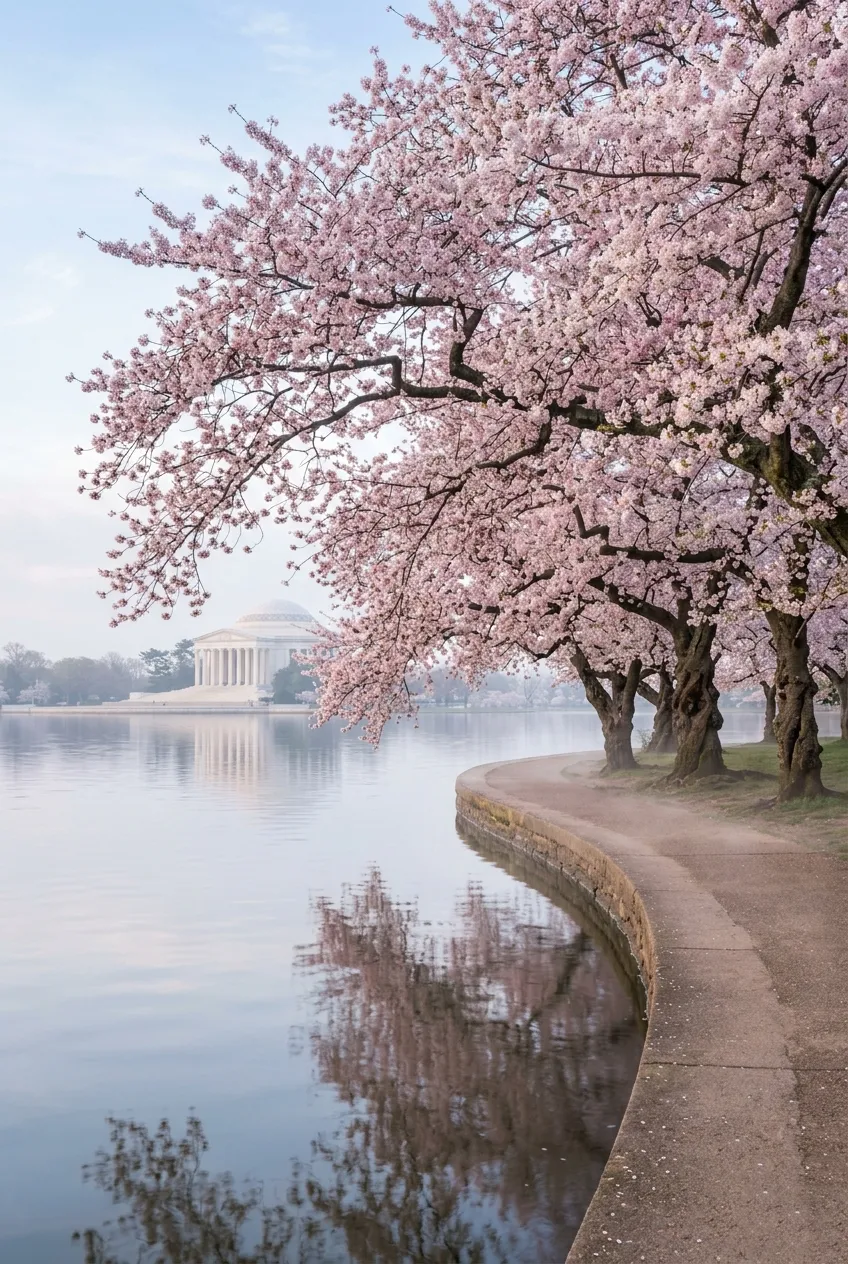
Because every year, a quietly magical thing happens in Washington, D.C. The city ditches its power-suit swagger and becomes soft pink poetry as thousands of blooming cherry trees encircle the city’s Tidal Basin, as if nature decided to show off for a little while.
And at the middle of it all is the legendary National Cherry Blossom Festival, which seems to be part cultural festival, part photographer’s dream, and part logistical nightmare.
I’ve been through it several times. I’ve tried to follow peak bloom as it owed me money, gotten stuck in traffic that didn’t budge for an hour, and once arrived, a week late, as the trees were dropping their petals like confetti from a parade.
So here’s everything, you heard me, everything, you need to know to do this right.
Recommended Travel Items for Your Trip
The Big Picture (What You’re Actually Planning For)
So, let’s pull back a bit before we zoom in, shall we? Because that’s where most people get this whole thing wrong.
The National Cherry Blossom Festival is usually from March 20th to April 12th. However, the trick is that the festival’s timing is just a backdrop. The main event, the cherry blossoms, has its own timing, which is unpredictable.
Peak Bloom is supposed to be between late March and early April, when 70% of the blossoms are in bloom. This is when the city is painted pink, and it’s a magical sight. However, this doesn’t last forever.
This “perfect window” is only between 4 to 7 days, or even less if the weather is being dramatic.
So, a warm weather front might make the blossoms come early, or a cold front might make them come late. A bad storm might come through and drop all the blossoms, ruining your “perfect” shot.
However, the part that most travel guides don’t want to tell you is this:
You’re not planning a vacation. You’re gambling against the weather. And the weather doesn’t make deals. So, the best thing you can do is stop trying for “perfect” and start thinking of your vacation as a net, not a dart.
How Many Days Do You Actually Need
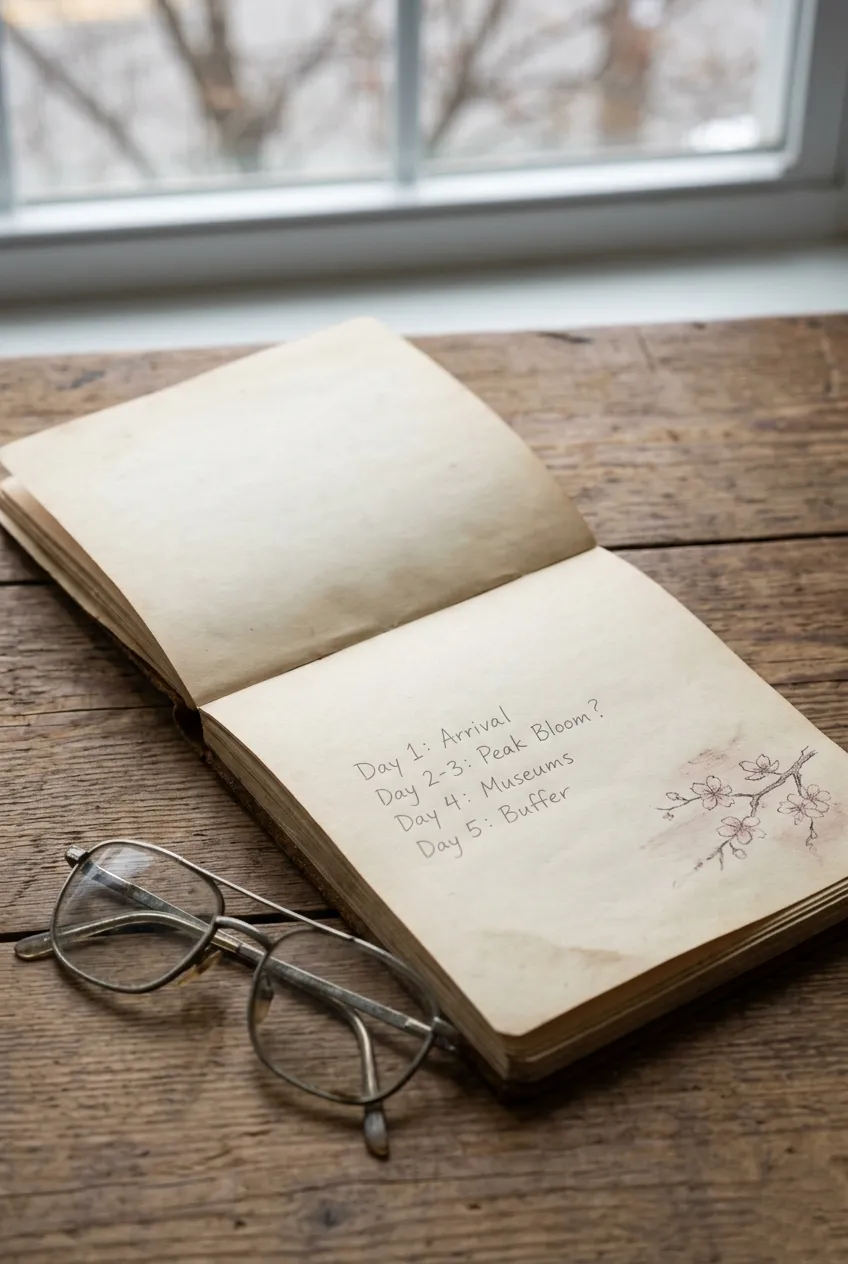
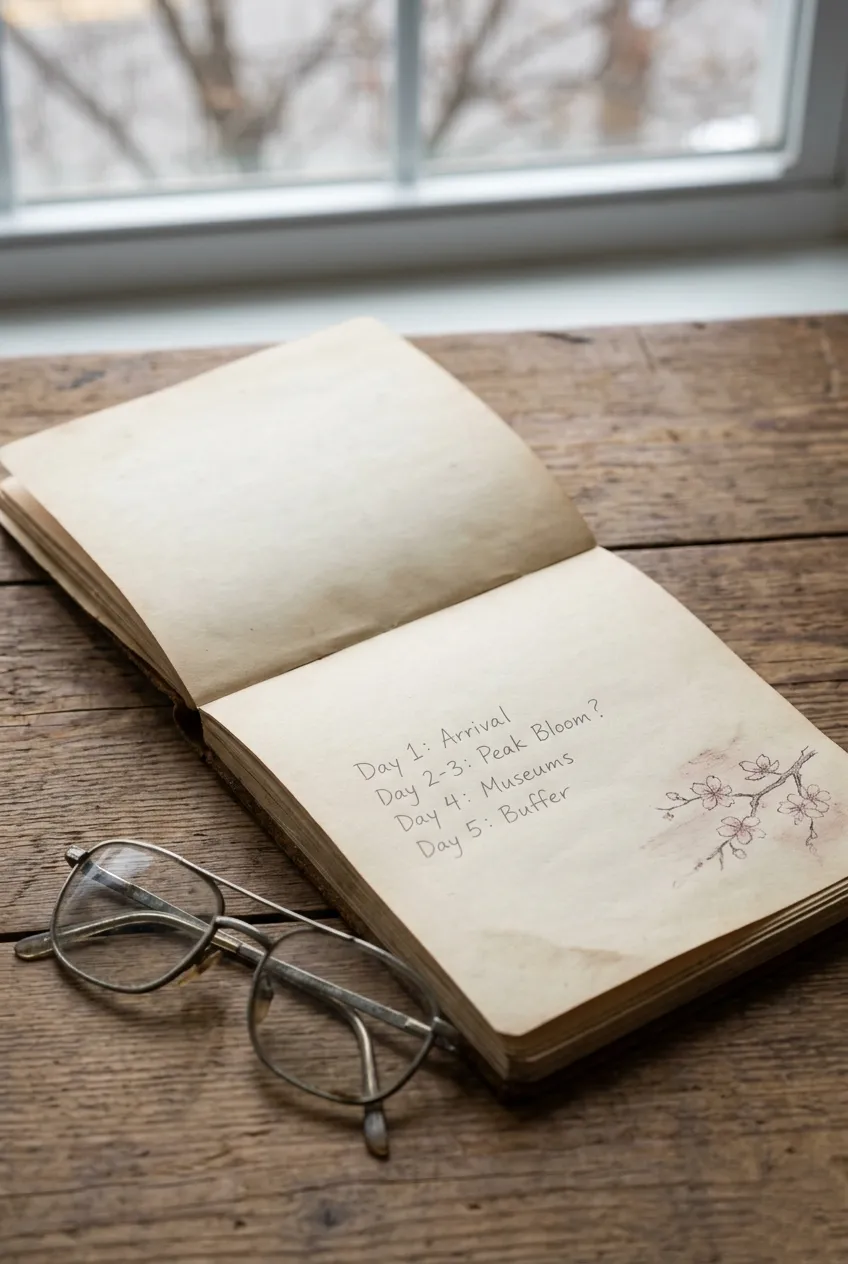
If you want to enjoy the blossoms without stress, disappointment, or that nagging “I should have stayed a day longer” feeling, the sweet spot is 4 to 5 days.
If you plan for anything less, you’re taking a risk.
Here’s how this translates in real life:
- Day 1: Arrival + Orientation: You arrive, check in, and take a light stroll around Washington, D.C. No need to get too excited; just get a feel for the place, understand the layout, and get a sense of the environment. This is your warm-up lap, so to speak.
- Days 2 & 3: Blossom Viewing (Your Core Mission): This is where you get your core mission accomplished. Wake up early, head over to the Tidal Basin, and get a good view from different angles. You might even want to come back in the evening for a sunset view. Two days are important because you never know what might happen on the first day. Your second day is not a luxury; it’s a necessity.
- Day 4: Events + Museums: This is where you get a chance to really take in the whole festival experience. You can check out some of the other events, maybe some museums, or even some other blossoming spots.
- Day 5: Buffer Day (Your Safety Net): This is your get-out-alive card in case everything goes awry. Inclement weather? Missed the peak viewing by a day? Too packed out for you to get a good viewing? This day is your savior.
Can you do that in 2 days? Technically, yes. It’s like going to a theater and watching a movie halfway through, hoping that you’ll get the whole story. You might see something beautiful, but you’re counting on luck alone.
And in cherry blossom season, that’s not a very good idea.
Where to Stay (This Changes Everything)
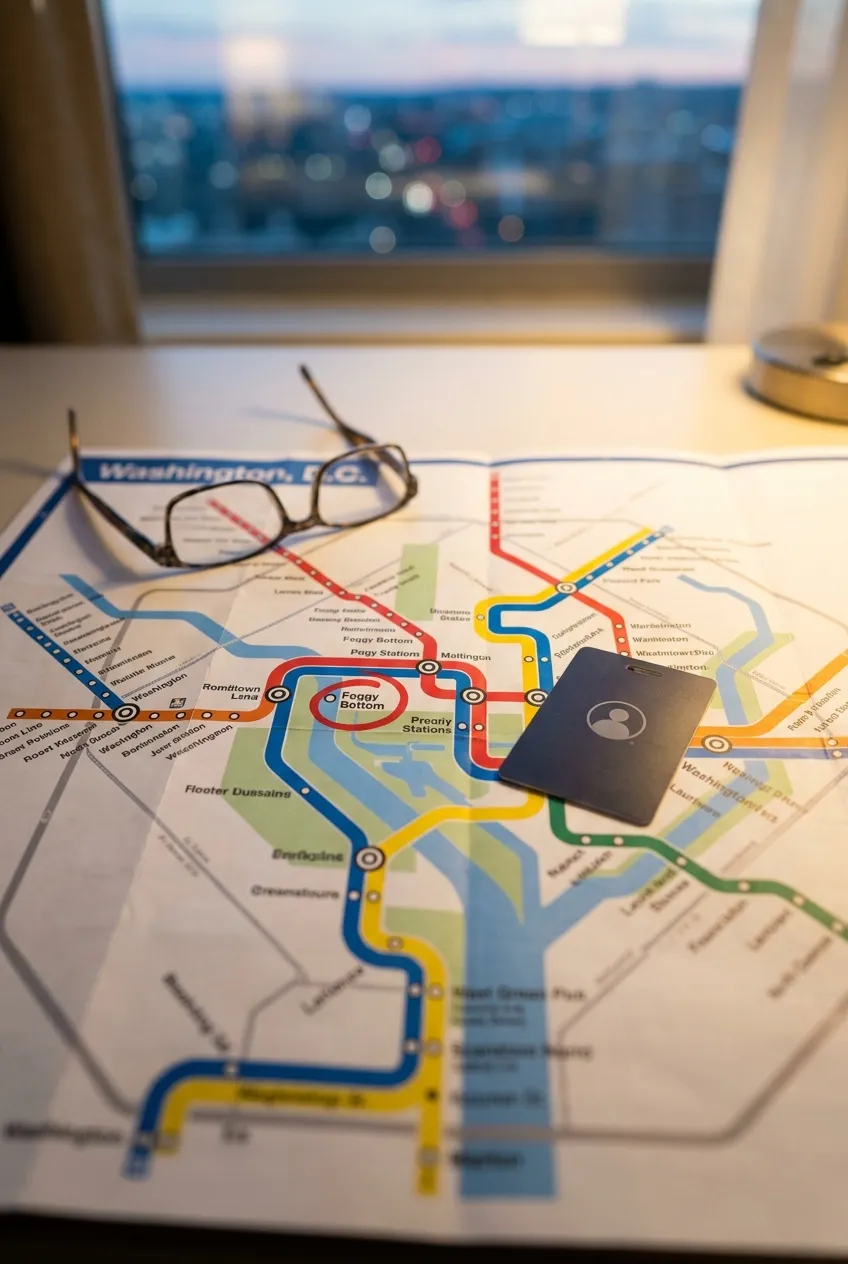
It’s not just a matter of comfort; it’s a matter of location.
If you stay at the wrong place, you’ll spend your time stuck in traffic, watching the clock tick away while the petals fall. If you stay at the right place, the city becomes walkable, enjoyable, and surprisingly peaceful.
Best Areas
Try to find a hotel near:
- The National Mall
- Dupont Circle
- Foggy Bottom
These areas will put you within walking distance of the action. And during peak bloom, within walking distance means survival.
When the roads are shut down and ride-share prices soar, being able to simply step out and walk toward the blossoms is a superpower.
Smart Strategy (From Experience)
Here’s what actually works:
- Book 2–3 months early: Prices increase rapidly as the blooming season is approaching, and the best spots sell out early.
- Stay close to a Metro station: This is a good idea even if you plan on walking, as having access to the Metro is always a good backup plan.
- Don’t stay far out, thinking you’ll “Uber in.” This sounds great in theory, but in reality, you’ll get caught in a slow-moving puzzle with no solution in sight.
I’ve done this once, and that was enough.
Secret Tip
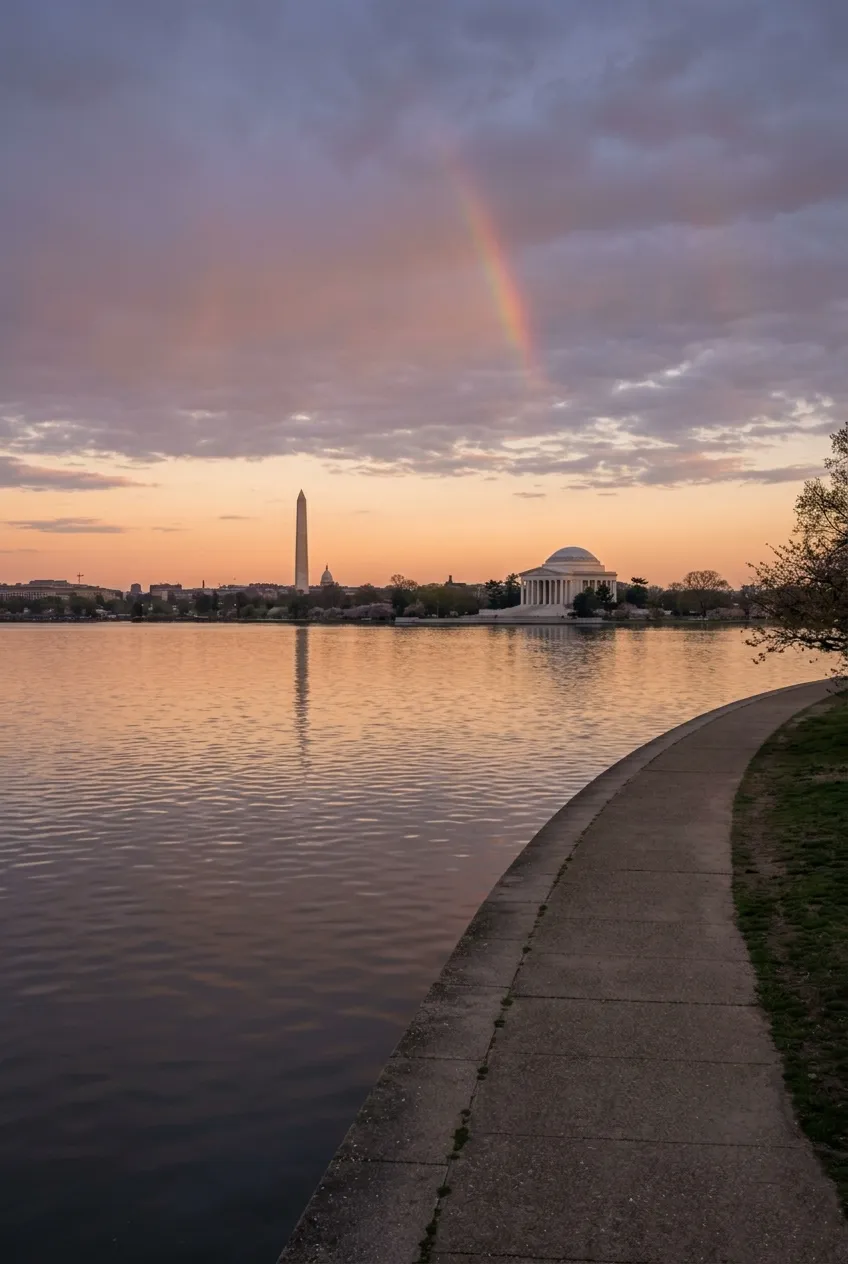
If you find downtown hotels too pricey, look across the river for Arlington or Crystal City.
So, here are all the reasons why these places work so well for visitors:
- Hotel prices are often more reasonable
- They have direct Metro access, so you can be in the city in no time
- And you avoid all the touristy traffic
It’s like staying outside the storm, but enjoying the rainbow.
If you’re already exploring the East Coast during cherry blossom season, consider extending your trip with this NYC to Niagara Falls overnight adventure for a completely different natural spectacle.
Getting Around Without Losing Your Sanity
Let’s talk movement, because during cherry blossom season, how you get around can either feel like a smooth dance… or a full-blown obstacle course.
Best Option: Metro
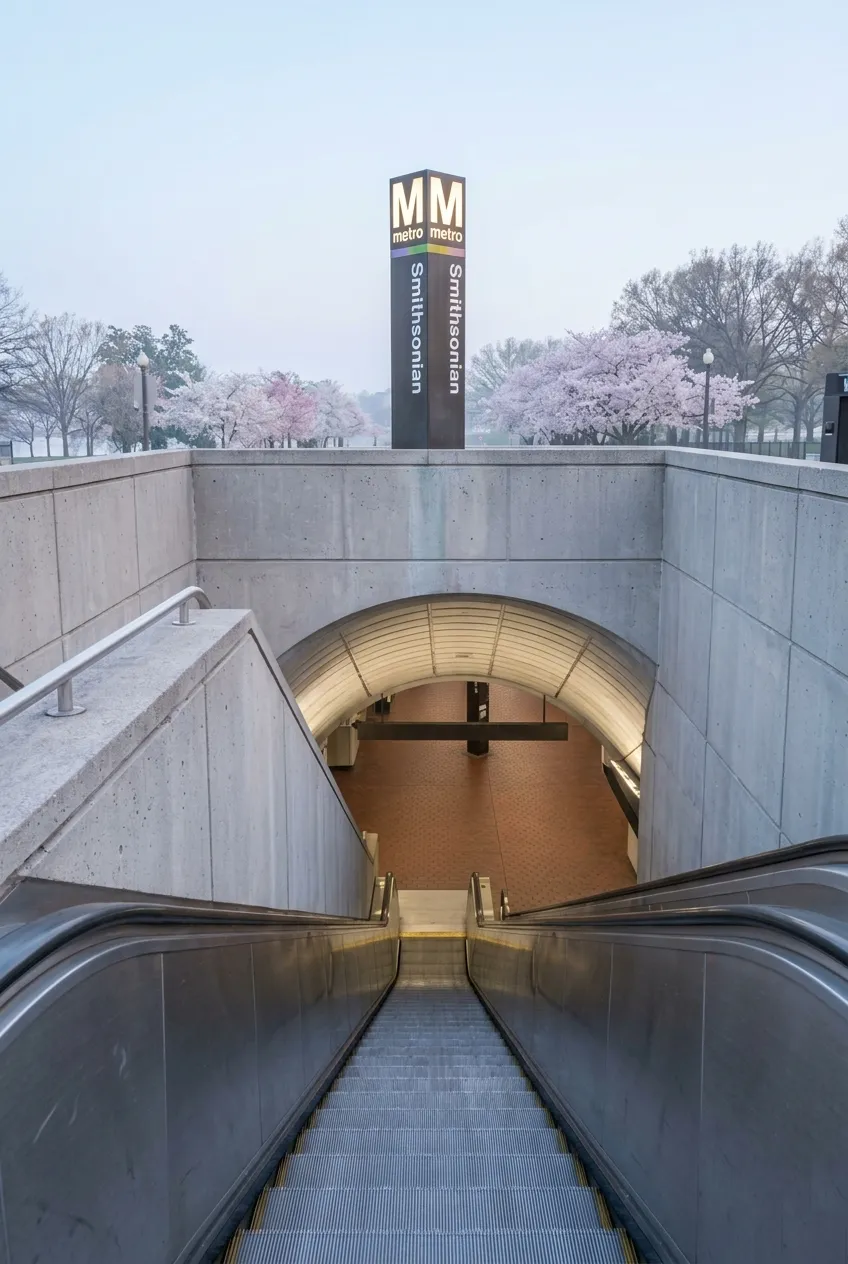
Washington D.C.’s Metro system is not only convenient; it’s your golden ticket to staying sane.
Hop on the Metro; take it to the Smithsonian stop; and from there, it’s a 20-25 minute walk to the blossoms. And the walk?
It’s not a chore; it’s part of the experience.
You’ll walk through the nation’s landmarks and other people walking towards the same destination: the blossoms.
And the best part?
You’re gliding by all the chaos going on above ground.
No honking horns; no traffic jams; no circling around for a parking spot like a character stuck in a loop.
Just a nice, easy ride to take you exactly where you need to go.
Worst Option: Driving
However, let’s tackle the tempting thought: “What if I just drive?”
Short answer: Don’t.
Long answer: Driving during peak bloom is a bold move… but not in a heroic sense. More so like intentionally running through a maze where all the paths will only lead to more frustration.
Here’s what will actually happen:
- Parking spots will disappear before the sun rises
- Roads will be closed without much, if any, prior notice
- You’ll be stuck in a crawl that barely passes for movement
You’ll be spending more time looking at the rear lights of other cars than the blossoms themselves… and that’s not the memory you want to take away.
You can think of it this way: While other people are strolling under blooming trees, you’ll be stuck in a metal standoff, staring at the same intersection for 20 minutes straight.
Don’t bother; take the Metro. Walk. Breathe.
If you love structured sightseeing, this immersive New York walking tour offers a perfect companion experience to your D.C. visit.
Where to See the Blossoms (Beyond the Instagram Hotspot)
Now that you know how to get there, let’s talk about where to go, because not all blossom views are created equal.
The Iconic Spot: Tidal Basin
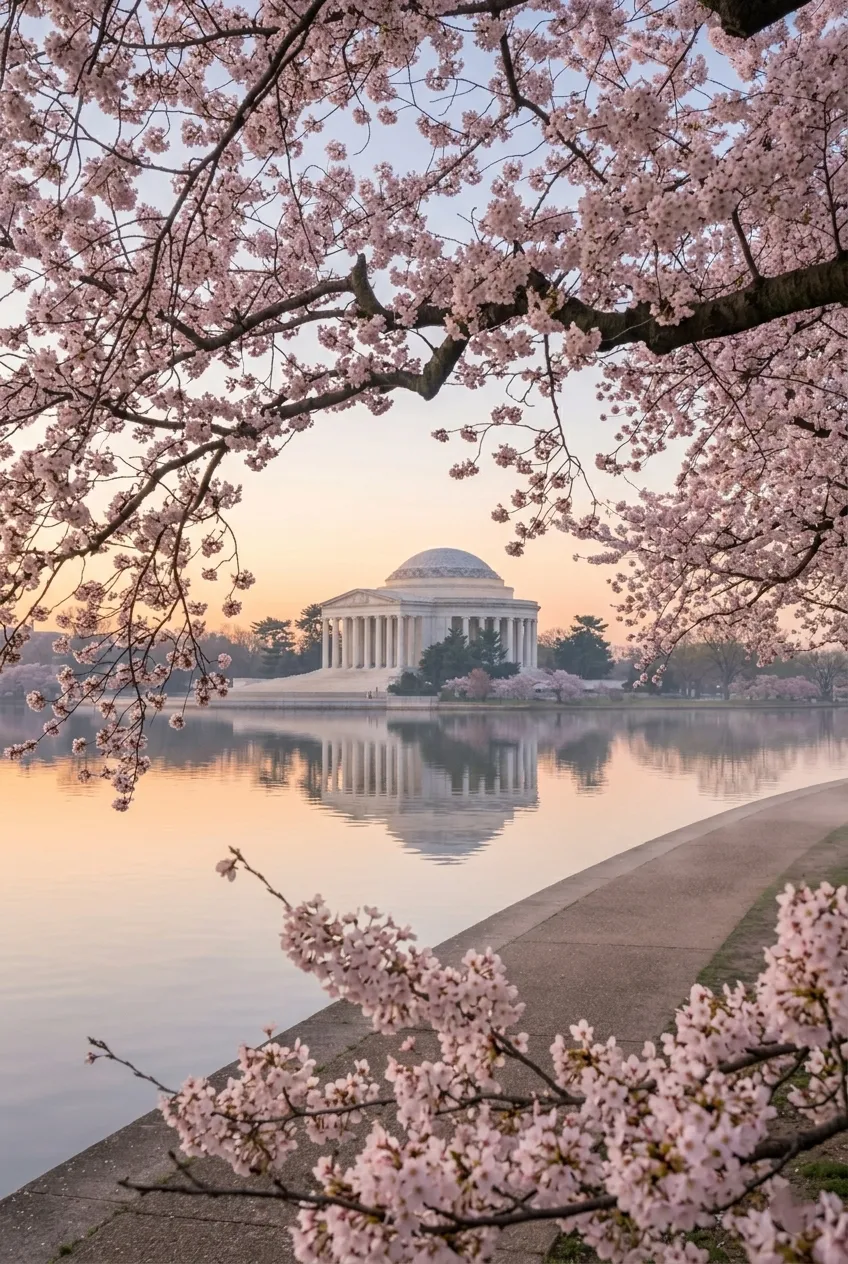
This is the scene you’ve seen everywhere, and yes, it’s every bit as beautiful in real life.
The cherry blossom trees around the Tidal Basin curve gently over the water, creating a soft pink ceiling over the lake. It’s almost too beautiful to believe.
And then there’s the Jefferson Memorial, standing peacefully in the background, basking in the soft light of day like it knows it’s part of something special.
It’s the postcard. It’s the movie. It’s the reason people travel halfway around the world.
It’s also… crowded.
Very crowded.
Especially during peak viewing times, the path around the Tidal Basin is like a slow-moving river of tourists. It’s still beautiful to see, but you’ll be seeing it with thousands of others who are doing exactly the same thing.
Hidden Gems (Your Escape Routes)
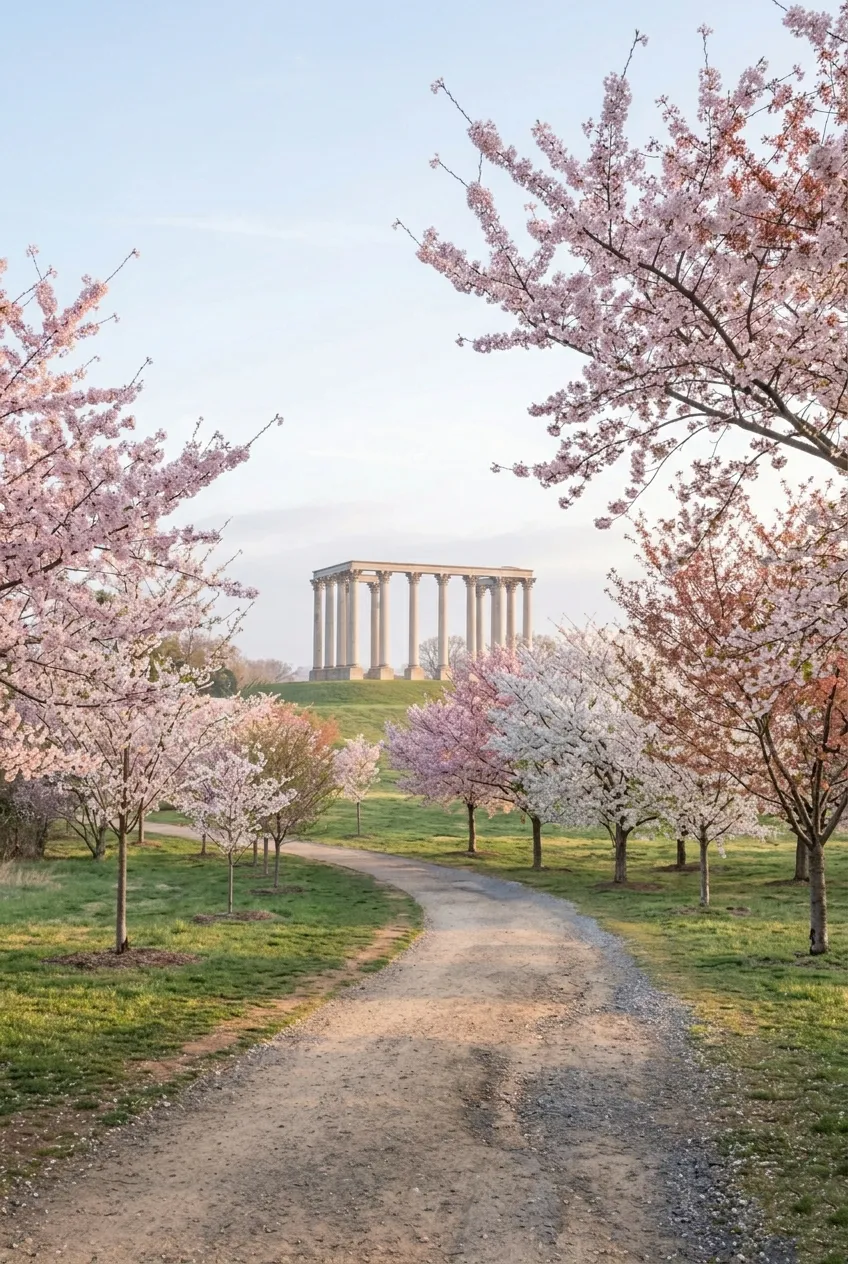
And here’s where experience comes into play.
If you’re finding the Tidal Basin area too overwhelming, take a break at these places, which are often off the beaten path for visitors:
- United States National Arboretum
Wide open spaces, fewer people, and flowers that seem like they are all for you. - Hains Point
A more peaceful area with long paths, ideal for a stroll without running into people every two seconds. - Dumbarton Oaks Gardens
A more secluded area, nicely decorated, which feels more like stepping into a secret garden than a tourist area.
In these places, you can experience something rare during peak bloom time: peace, quiet, and actually feeling like you’re experiencing it.
It’s like going to a concert at a packed stadium versus going to an intimate acoustic performance.
Planning a broader East Coast itinerary? Don’t miss the best things to do Southie for a mix of local charm and coastal vibes.
What to Actually Do at the Festival
While the blossoms are clearly the star of the show, the National Cherry Blossom Festival is an entire celebration built around them.
It’s a city-wide stage where culture, history, and happiness all get a turn in the spotlight.
Must-See Events
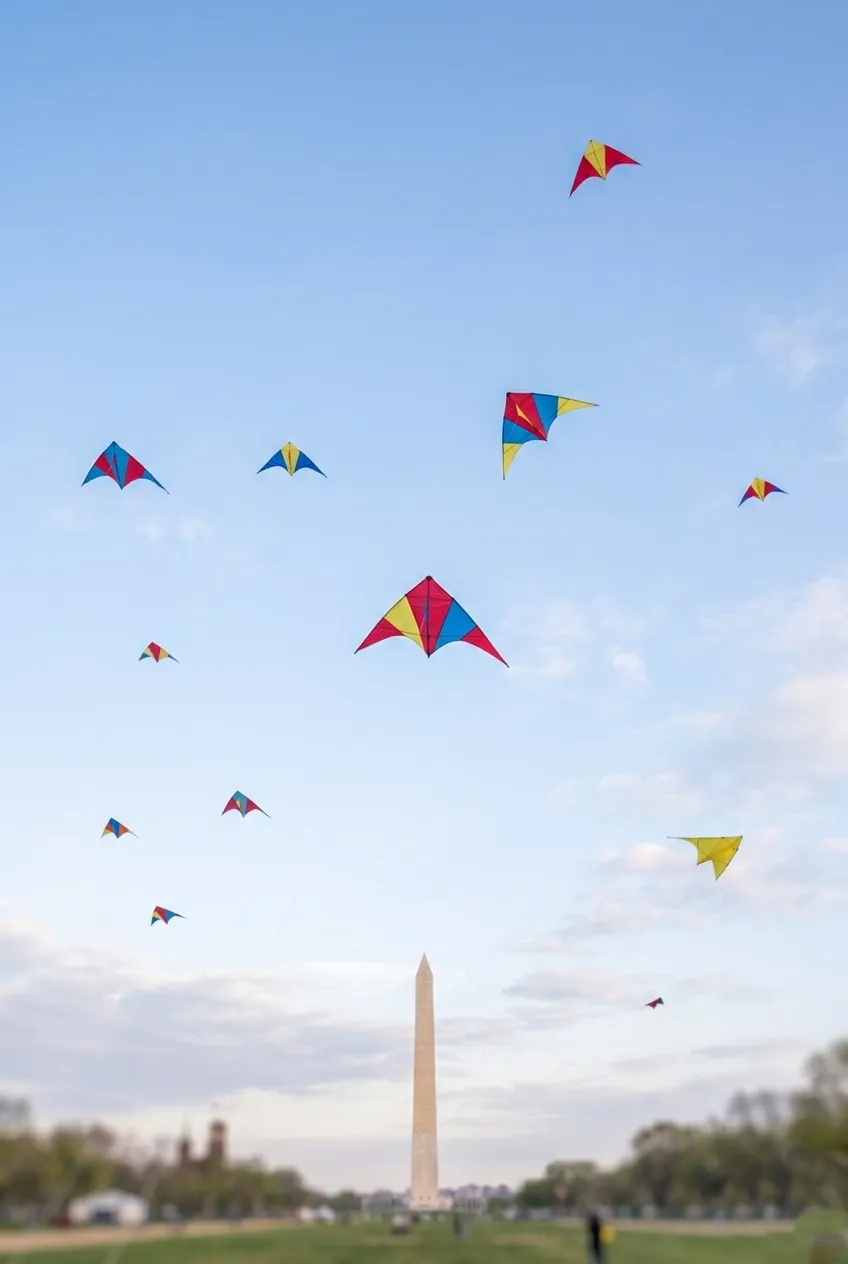
There are a few events that truly define the festival experience:
- Opening Ceremony: a cultural kickoff with performances and traditions
- Blossom Kite Festival: skies filled with color, movement, and pure childhood energy.
- Petalpalooza: music, art, and fireworks combining into one lively night
- National Cherry Blossom Parade: floats, performances, and a festive atmosphere
- Sakura Matsuri Japanese Street Festival: food, culture, and street energy
Each one brings a different flavor, some loud and celebratory, others cultural and immersive.
Together, they turn the city into something that feels alive in a completely different way.
What Most People Miss
And here’s the secret: the best memories are often the quiet ones.
Of course, people come in crowds for the big events, but there are also smaller, quieter experiences waiting for you to find them:
- Evening lantern walks, where the light and blossoms combine for a quiet, almost dreamlike ambiance
- Paddle boating, where you float lazily through the trees, surrounded by falling blossoms
- Museum events, which provide a quiet refuge from the crowds but keep you connected to the festival experience
These are not noisy, attention-grabbing experiences, but they will stay with you longer. They feel more personal, less touristic.
Timing Is Everything (Seriously)
If there’s an invisible thread that runs through this whole experience, it’s timing.
Get that right, and everything will flow like a dream. Get it wrong, and even the most beautiful place will become overwhelming.
Best Times to Visit
- Sunrise
This is the time of day when the city still appears to be waking up. The light is soft, the air is still quiet, and the crowds haven’t yet arrived. It’s a peaceful scene, almost surreal, as if you’re getting a personal preview. - Evening
As the day comes to a close, the mood changes. The light is warm, the crowds are smaller, and the mood is more relaxed.
These two times of day share a benefit the middle of the day can only dream of: space.
Worst Time
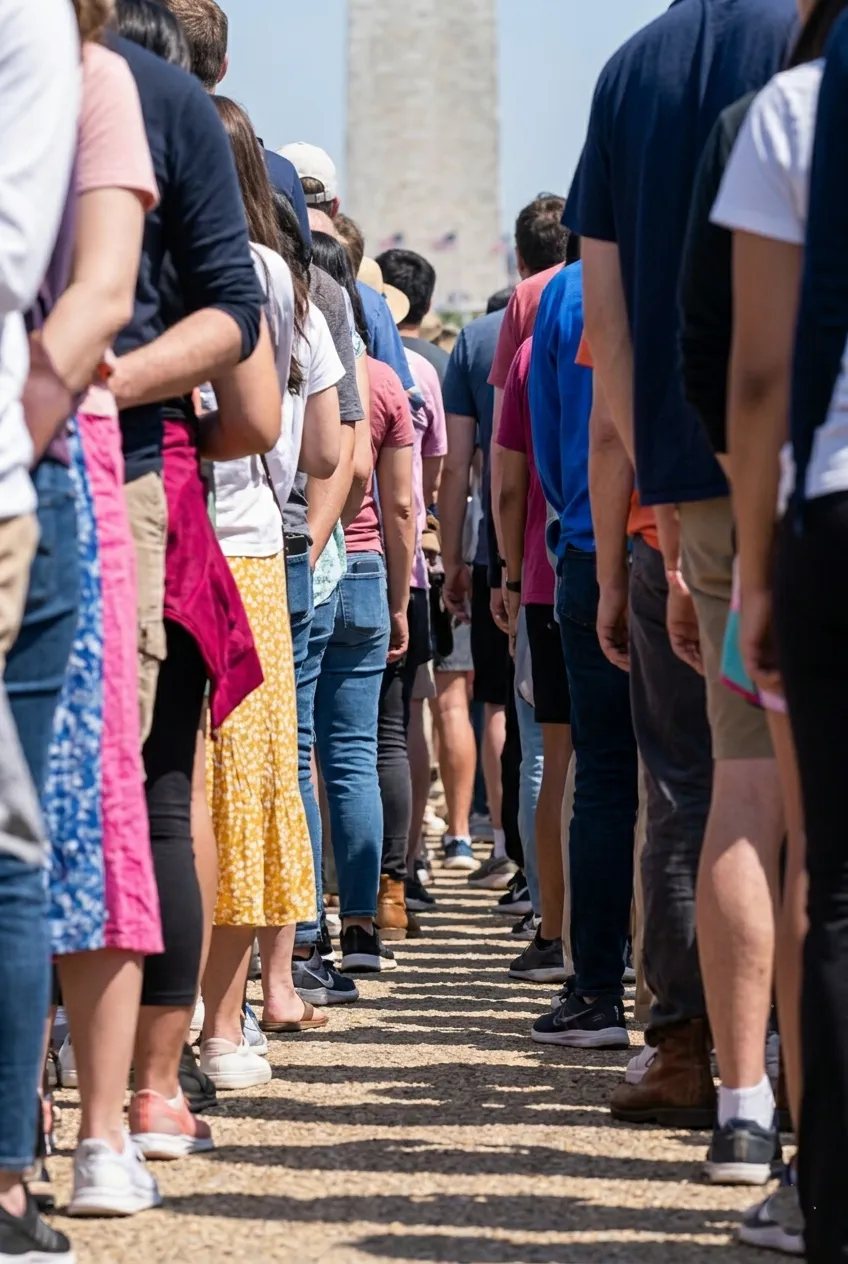
But between 11 AM and 4 PM, the scene changes.
More people arrive, the trails fill up, the pace slows to a shuffle. What was once peaceful now feels like trying to walk through a bustling street market.
The blossoms are still there, mind you, but the experience is different.
Golden Rule
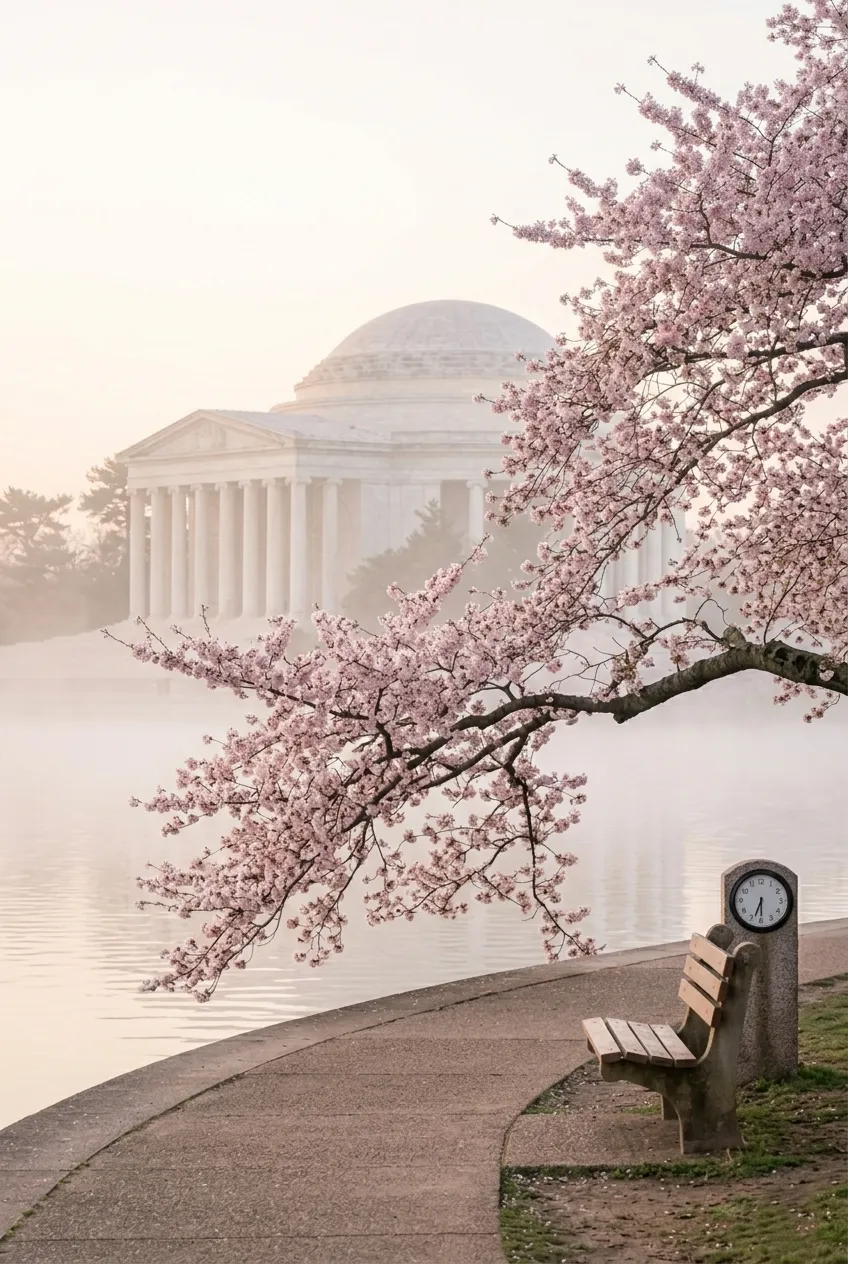
If there was one rule to follow, this would be it:
If you are not there by 7 AM, you are already late.
It may sound crazy, but trust me, once you see the difference between the early morning and the middle of the day, you will see that this makes perfect sense.
It’s not just about the blossoms, after all, it’s about the experience of the blossoms, the magic of the blossoms.
If your travels take you west after the festival, this detailed San Francisco itinerary helps you experience the city like a pro.
The Problems You’ll Face (And How to Outsmart Them)
Cherry blossom season appears easy, breezy, and serene in photos. The truth is, it’s a balancing act of timing, patience, and a little bit of unavoidable chaos. Once you know what’s coming, however, you can breeze through it like a pro.
1. The Crowds
Let’s face it, this is not a subtle, under-the-radar experience. Every year, hundreds of thousands of people descend upon Washington, D.C., all vying for a glimpse of the coveted blooms.
At peak times, walking along the paths at the Tidal Basin is more like a slow-moving parade you didn’t sign up for
How to outsmart it:
- Arrive early. The early bird gets the worm, or in this case, the blossoms. The sun rises early, and so should you.
- Weekdays are better than weekends. Just trust us on this one.
- Consider other, lesser-known spots like the Arboretum or Hains Point.
The key is to avoid the crowds, not compete with them.
2. Bloom Timing Stress
This one creeps in on you quietly, then sticks around for the long haul.
“Did I miss it?”
“Am I too early?”
“Is tomorrow the day?”
It’s a lot like checking the weather report hourly for a big event, except the event isn’t as important as the blossoms.
How to outsmart it:
- Get your bloom forecasts 7-10 days before your trip
- Be flexible, because that’s your best friend
Rather than trying to control the blossoms, plan for a large window of time in which you can adapt. The goal isn’t perfection; it’s catching the moment within a certain range of time.
3. Weather Drama
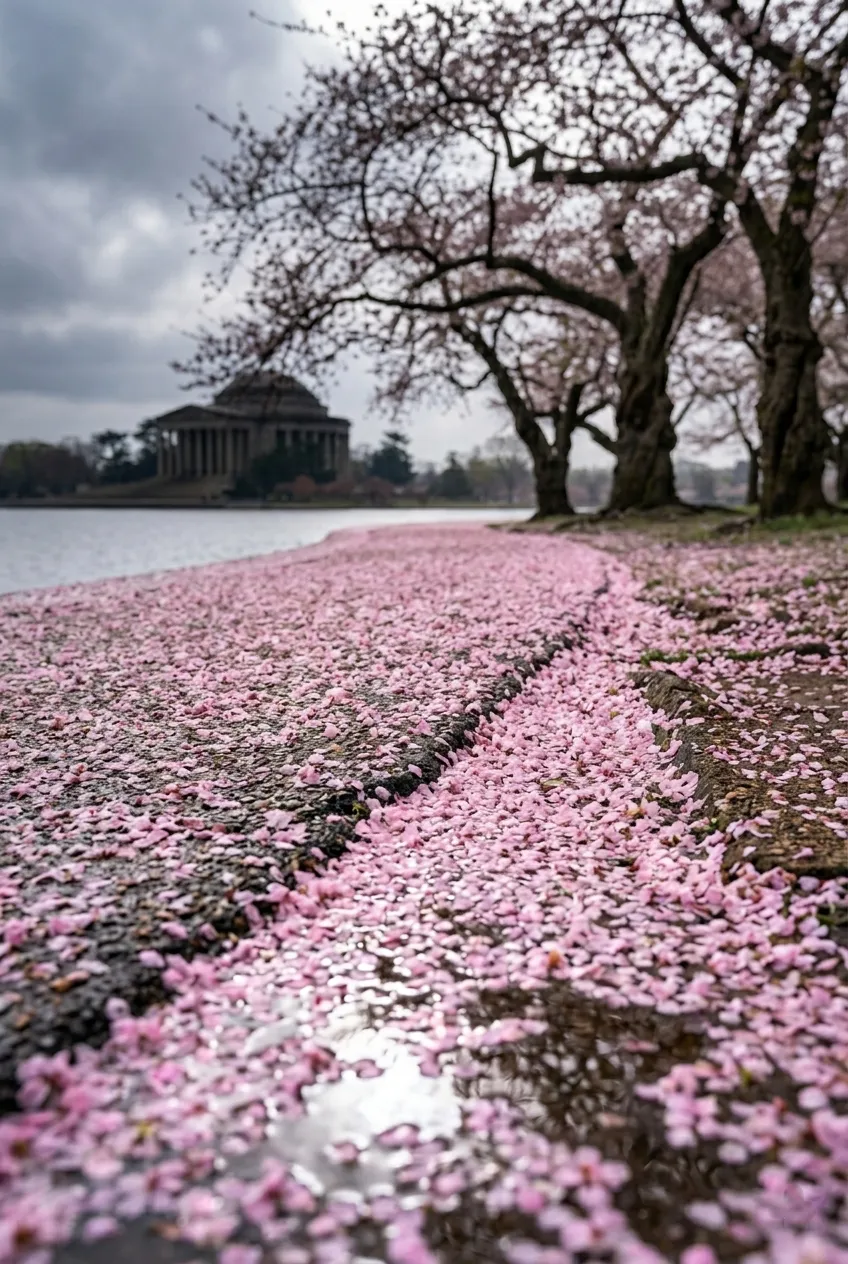
Nature loves a dramatic entrance, especially during blossom viewing.
A small storm can roll in and destroy the blossoms in a single night, transforming a beautiful, vibrant display of pink petals into a soft pink carpet on the ground.
It’s beautiful in its own way, but not exactly what you want to see.
How to outsmart it:
- Plan your blossom viewing early in your trip
- Save the later days for a backup plan
Your first day out should be your main event, and everything after that should be a bonus.
4. Walking Exhaustion
Here’s something that’s not being taken into account: this is a walking marathon, not a sightseeing tour, disguised as a walking tour.
How to outsmart it:
- Wear comfy shoes, preferably ones that have already been broken in
- Take advantage of museums as a place for a quick break (they’re quiet, free, and really cool)
Slow down. The blossoms aren’t going anywhere for a few days.
Cherry blossom season is just one highlight; explore more places to visit in April across the U.S. for a perfectly timed spring getaway.
How Much Does This Trip Actually Cost
Now let’s talk numbers, because beauty may be free, but getting there isn’t.
Flights
- Domestic: $150 to $500
- International: $600 to $1200+
Hotels (per night)
- Budget: $120 to $200
- Mid-range: $200 to $350
- Luxury: $400+
Food
Expect to spend around $30 to $80 per day, depending on how indulgent you feel.
Transportation
Public transport is refreshingly affordable:
- $10 to $20 per day
Events
Most events during the National Cherry Blossom Festival are free, which is a rare and welcome surprise. A few special experiences may require tickets, but they’re usually reasonably priced.
Total for 4–5 Days
- Budget trip: $800 to $1500
- Comfortable trip: $1500 to $3000
It’s one of those trips where careful planning can save you a lot, or a little splurging can elevate everything.
The Perfect 4-Day Plan
A good itinerary during cherry blossom season isn’t packed, it’s balanced.
Day 1: Arrival & Soft Start
- Check into your hotel
- Take an easy evening walk around the monuments
- Scout routes for the next morning
No rushing. Just easing into the city’s rhythm.
Day 2: Prime Blossom Day
- Head to the Tidal Basin at sunrise
- Walk the loop, take photos, and soak in the views
- Pause in the afternoon with a museum visit
- Return in the evening for softer light and a calmer atmosphere
This is your main event, the day you’ve been waiting for.
Day 3: Explore & Experience
- Visit a quieter location like the United States National Arboretum
- Attend a festival event
- Try local food or street vendors
This day adds depth to your trip beyond just the blossoms.
Day 4: Flex Day
- Revisit the blossoms if needed
- Explore neighborhoods or hidden spots
- Slow down and enjoy the city without a schedule
This is your breathing space, the day that ties everything together.
Insider Tricks You Won’t Find in Typical Guides
Some things you learn through life, and possibly a handful of mistakes.
- Peak bloom isn’t always the best time to visit; a day before or after may be more serene and just as lovely
- Take a step back from the trees for a better photo instead of standing under them
- Grab a coffee and sit for a bit; this is not a race
- Walk counter-clockwise to flow with the lighter foot traffic
- Bring snacks; food lines may take longer than you expect
These subtle changes can change your entire experience from frenzied to fluid.
Final Thoughts: What This Trip Is Really About
Yes, the blossoms are beautiful. They are worthy of all the accolades they receive.
What makes this experience so unforgettable, though, isn’t so much the beauty or the views, but the transience of the whole thing.
For a brief, fleeting period, Washington, D.C., slows down a bit. The pace isn’t so frantic, and even the landmarks seem different, as though they’ve emerged from a history book and into a more vibrant, more evanescent world.
And then, almost as quickly as it started, it’s over.
The petals drop, the trees regain their green, and the experience disappears.
That, of course, is the charm.
Plan well, wake early, and be ready for anything.
And then, once you’ve finally managed to arrive in a spot beneath the blossoms, don’t rush by as though it were another stop on a tour.
Take a moment, breathe, and let it linger.
This isn’t a trip, you see; this is a moment that can’t be rewound.