European Vacation Outfits for Every Season: Complete Style Guide for Men and Women
Packing for Europe is exciting until you stand in front of your suitcase wondering what actually works. Different countries, changing weather, long walking days, café evenings, museum visits, and photo opportunities everywhere. The right outfits make the trip smoother, lighter, and far more enjoyable.
This guide breaks down European vacation outfits for every season, with separate outfit ideas for women and men, practical fabric advice, regional style notes, and smart packing strategies. No guesswork. Just real travel-ready styling.
Recommended Travel Items for Your Trip
European Style Basics: What to Know Before Packing
Before diving into seasons, it helps to understand one universal truth about European fashion: simple always wins.
Across most European cities, locals lean toward:
- Neutral and earthy colors
- Clean, fitted silhouettes
- Minimal branding
- Comfortable but stylish footwear
- Layered outfits instead of bulky pieces
You do not need a brand-new wardrobe. You need versatile pieces that mix easily, photograph well, and keep you comfortable through long days.
What to Wear in Europe During Summer (June to August)
Summer in Europe ranges from Mediterranean heat to mild Northern breezes. Breathable fabrics and polished simplicity are key.
Women’s Summer Outfit Ideas

For daytime sightseeing:
- Linen or cotton sundresses
- Midi skirts with light tops
- Loose-fit shorts with tucked-in blouses
- Comfortable walking sandals or white sneakers
For evenings:
Accessories to pack:
Style tip: Europeans favor airy dresses and structured basics over overly sporty outfits in city centers.
Men’s Summer Outfit Ideas

For daytime exploring:
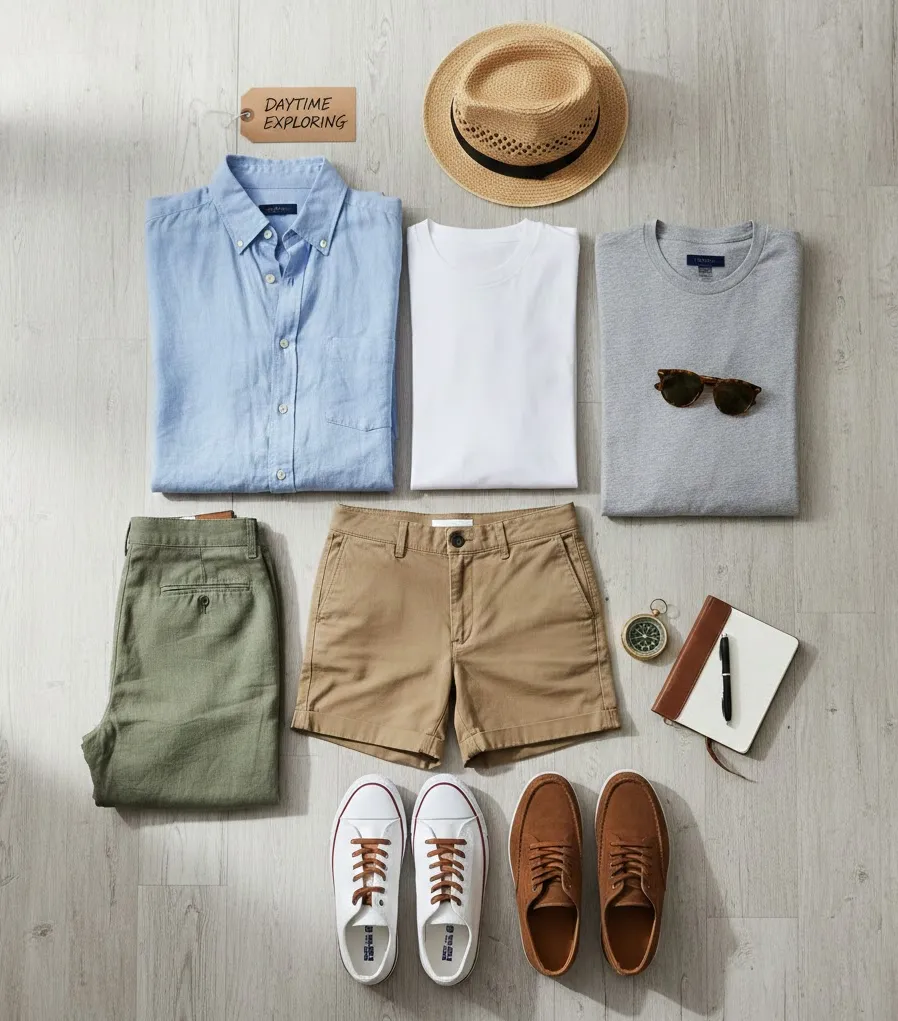
- Linen or cotton button-down shirts
- Plain t-shirts in neutral tones
- Chino shorts or lightweight trousers
- Canvas sneakers or loafers
For evenings:
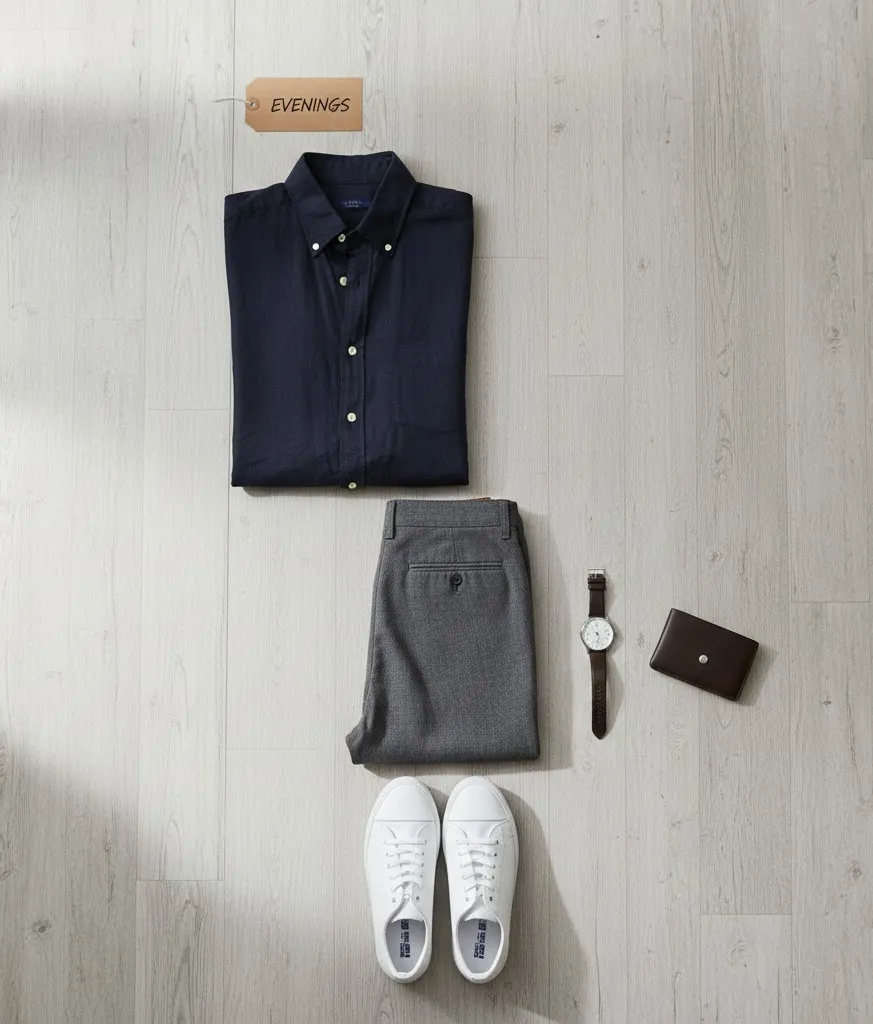
Beach days:

Style tip: Avoid gym wear or loud prints for city sightseeing. Clean, simple pieces blend in best.
What to Wear in Europe During Spring (March to May)
Spring weather can change quickly. Layering keeps you comfortable from chilly mornings to warm afternoons.
Women’s Spring Outfit Ideas

Core pieces:
- Light trench or denim jacket
- Long-sleeve tops
- Midi dresses with tights
- Jeans or tailored trousers
- Ankle boots or sneakers
Rain-ready essentials:
Style tip: Soft neutral colors photograph beautifully against spring landscapes.
Men’s Spring Outfit Ideas
Core pieces:
- Lightweight jacket or bomber
- Casual button-down shirts
- Sweaters or pullovers
- Chinos or dark jeans
- Leather sneakers or boots
Rain-ready essentials:
Style tip: Layers add flexibility without overpacking.
What to Wear in Europe During Autumn (September to November)
Autumn brings cooler temperatures and beautiful scenery. Cozy layers and richer tones work perfectly.
Women’s Autumn Outfit Ideas

Core pieces:
Accessories:
Evening option:
Style tip: Warm, earthy colors complement autumn backgrounds beautifully in photos.
Men’s Autumn Outfit Ideas

Core pieces:
Accessories:
Style tip: Autumn is ideal for layering textures like wool, denim, and cotton.
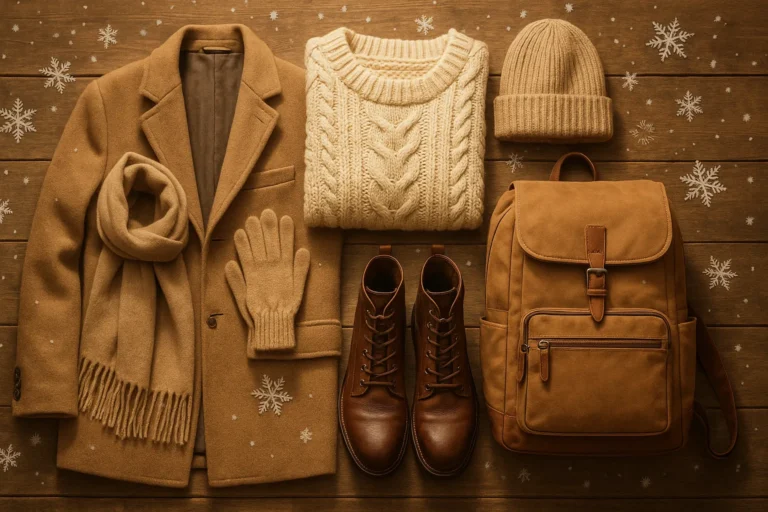
What to Wear in Europe During Winter (December to February)
Winter temperatures vary, but warmth and waterproof layers matter everywhere.
Women’s Winter Outfit Ideas

Core pieces:
Accessories:
Evening option:
- Dress with thermal tights and a long coat
Fabric tip: Wool and merino retain warmth even in damp conditions.
Men’s Winter Outfit Ideas

Core pieces:
- Thermal undershirts
- Chunky knit sweaters
- Heavy coat or parka
- Jeans or wool trousers
- Waterproof boots
Accessories:
Packing tip: Good socks matter more than extra shirts in cold climates.
Regional Style Differences in Europe
Understanding regional differences helps refine your packing list.
Southern Europe:
- Lighter fabrics
- Brighter tones
- Open footwear in warm months
Northern Europe:
- Strong focus on layers
- Darker neutrals
- Waterproof outerwear
Western Europe:
- Classic, tailored pieces
- Neutral color palettes
Eastern Europe:
- Practical and warm clothing
- Sturdy footwear
Planning outfits based on your route prevents overpacking.
Smart Packing Strategy for Europe
To pack efficiently:
- Build a capsule wardrobe with mix-and-match pieces
- Choose items that work in at least three outfits
- Pack one versatile jacket
- Prioritize comfortable walking shoes
- Use layers instead of bulky sweaters
- Plan one evening outfit
- Leave space for souvenirs
Hand-washing basics during your trip allows lighter luggage.
Comfort Meets Style: Footwear Advice
European vacations involve extensive walking. Shoes should be:
- Cushioned
- Broken-in
- Stylish enough for restaurants
- Weather-appropriate
Pack one main walking shoe and one secondary option.
Cultural Dress Considerations
Some locations require modest clothing:
- Churches and cathedrals
- Religious sites
- Traditional villages
Carrying a light scarf or jacket solves this easily.
Quick Seasonal Packing Checklist

All Seasons
- Neutral tops
- Versatile bottoms
- Comfortable shoes
- Crossbody or backpack
- Light scarf
Summer
- Sundress or linen shirt
- Shorts or chinos
- Sandals
Spring
- Light jacket
- Long sleeves
- Waterproof layer
Autumn
- Sweaters
- Boots
- Mid-weight coat
Winter
- Thermal layers
- Heavy coat
- Gloves and scarf
Final Thoughts
Packing for Europe does not require overthinking. Focus on comfort, neutral colors, breathable fabrics, and layered outfits. Separate outfit planning for men and women ensures better fit, comfort, and confidence.
Whether you are strolling Parisian streets, exploring Roman ruins, or wandering snowy Alpine towns, the right outfits let you enjoy the experience instead of worrying about your suitcase.