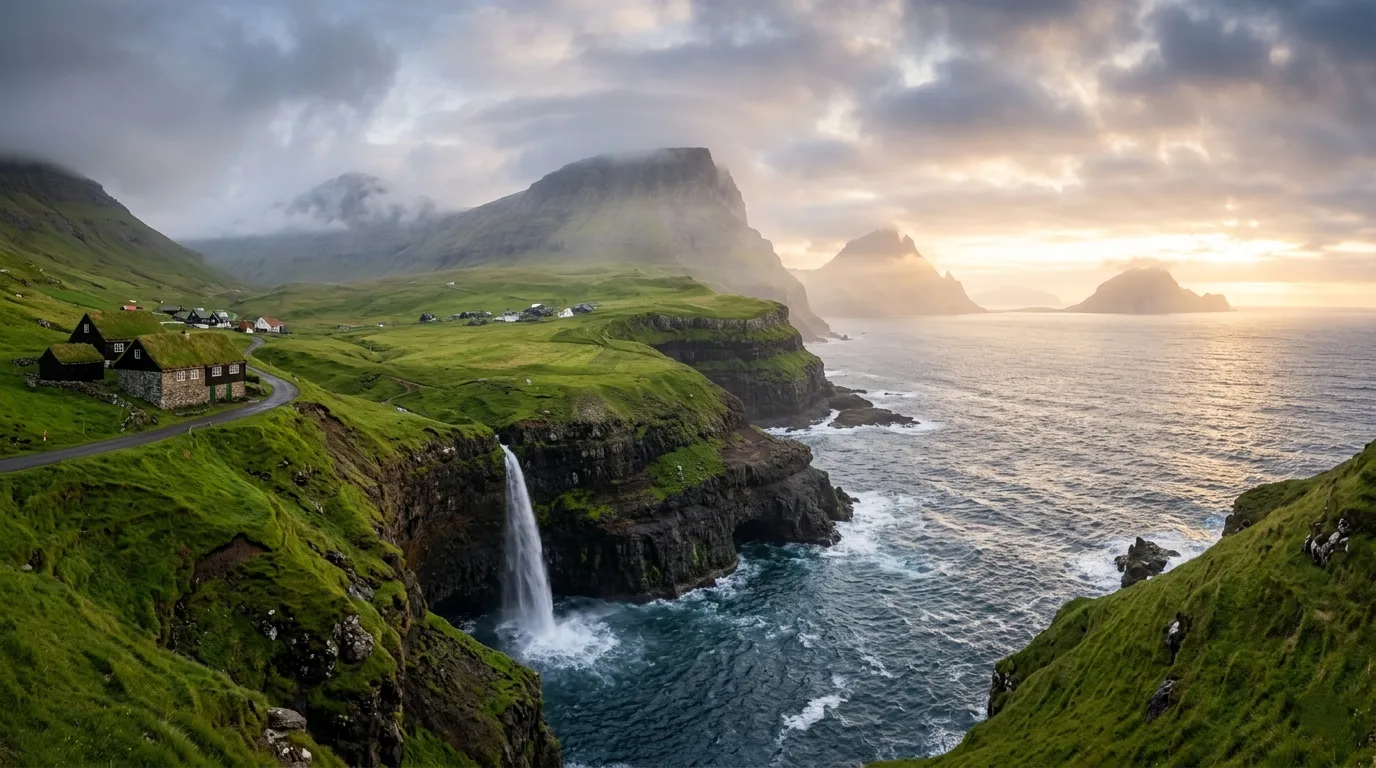
Exploring the Faroe Islands: The Ultimate Ethereal Adventure
I didn’t know the Faroe Islands existed until about three years ago. Saw a photo of a lake sitting on top of a cliff with the ocean below it. Thought “nice composite work” and scrolled past.
Then I saw another photo. And another. Different angles, different times of day, different photographers. Same impossible lake on a cliff. Turns out it’s real. It’s called Sørvágsvatn and it’s one of the least weird things about the Faroe Islands, which is saying something.
The Faroes are 18 volcanic islands halfway between Iceland and Norway. About 50,000 people live there. The landscape looks like someone took the dramatic parts of Iceland and New Zealand, compressed them into a smaller area, and cranked up the green. Then added fog. Lots of fog.
I finally went last summer. Spent two weeks driving narrow tunnels through mountains, hiking to villages you can only reach on foot, and trying to photograph places that look fake even when you’re standing in them.
This isn’t a normal travel destination. There are no beaches. Weather changes every 20 minutes. You might drive an hour to see something and find it completely socked in by fog. But if you’re okay with that, it’s one of the strangest places I’ve been.
Recommended Travel Items for Your Trip
Why the Faroe Islands Feel Different
Most places you visit, there’s infrastructure built around tourism. Hotels, restaurants, tour buses, the whole thing. The Faroes have some of that now but it still feels accidental. Like tourism happened to them and they’re dealing with it.
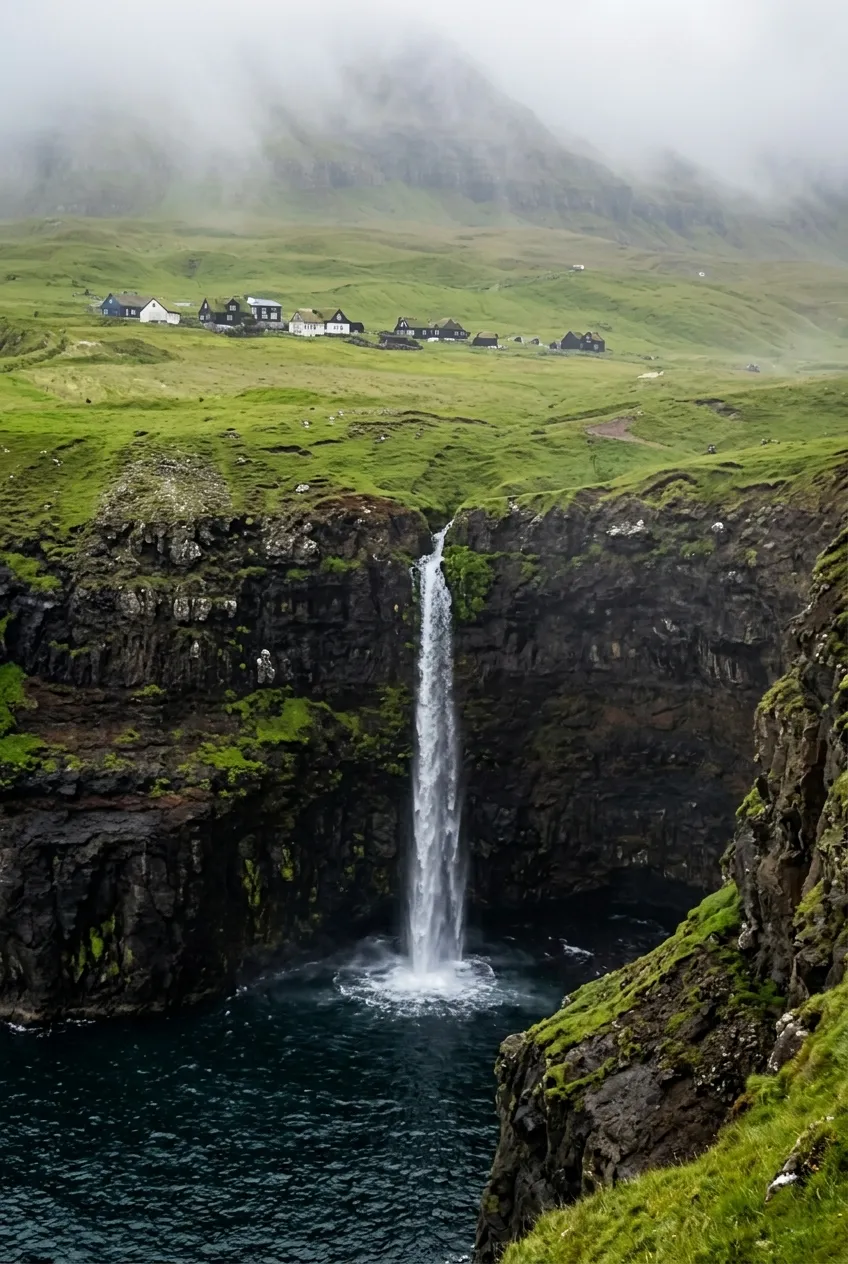
Example: I wanted to visit Gásadalur, a village of about 16 people on the western edge of Vágar island. Until 2004 the only way there was hiking over a mountain or taking a helicopter. They built a tunnel in 2004 and suddenly tourists could drive there. The village now has a small parking area and a porta-potty. That’s it. No gift shop, no cafe, no visitor center. Just a handful of grass-roofed houses and a waterfall that drops straight into the ocean.
The whole archipelago feels like that. Infrastructure exists but it’s minimal. You’re expected to be self-sufficient and respectful. Don’t expect anyone to hold your hand.
The Weather Situation
People told me before I went: the weather in the Faroe Islands is unpredictable. I thought “yeah yeah, I’ve been to Scotland, I get it.”
I didn’t get it.
The Faroes have their own level of weather chaos. You can experience four seasons in an hour. I watched it go from sunny to foggy to rainy to sunny again while eating lunch. Forty-five minutes.
The fog is something else. It doesn’t roll in gradually like normal fog. It appears. One minute you’re looking at a valley, next minute it’s gone. Then five minutes later it’s back. You learn to just wait it out.
Rain comes horizontally because the wind is constant. Umbrellas are useless. You need a good waterproof jacket and you need to make peace with being wet.
But here’s the thing – the weather is part of why it looks the way it does. The fog creates these layers of visibility where you can see the foreground, then nothing, then mountains appearing in the distance. The rain keeps everything intensely green. The clouds move so fast that light changes constantly.
I’m not saying the weather is fun. I’m saying it’s part of the experience and you can’t really separate the two.
And if island-hopping is your calling, the Amazing Islands Europe guide expands your adventure list with breathtaking coastal destinations across the continent.
Getting Around (It’s Complicated)
The islands are connected by tunnels, bridges, ferries, and helicopters. Yes, helicopters. There’s a subsidized helicopter service that connects remote villages. Costs about the same as a bus ticket.
You absolutely need a car. Public buses exist but they’re limited and schedules don’t always align with what you want to see. Rental cars aren’t cheap (nothing in the Faroes is cheap) but there’s no alternative.
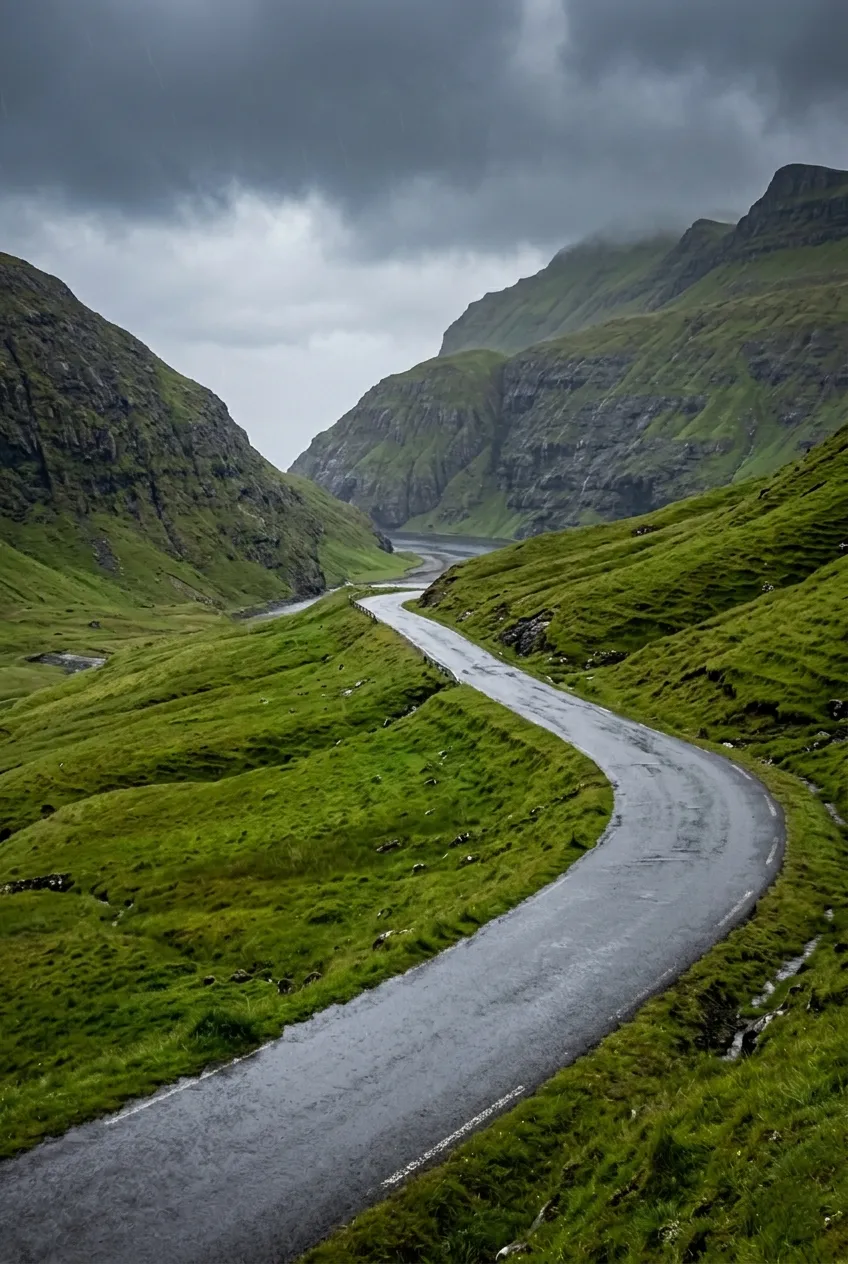
Driving is… interesting. Roads are narrow. Like “pull over to let oncoming traffic pass” narrow. Sheep wander wherever they want. Tunnels through mountains are one lane with passing spots. You have to check which direction has priority before entering.
Some tunnels have roundabouts inside them. Underwater. It’s surreal.
The longest tunnel is about 11 km and connects three islands via an underwater roundabout 150 meters below sea level. First time through I kept thinking “this seems insane” and also “this is incredible engineering.”
GPS works but it doesn’t always account for ferry schedules or tunnel closures. I learned to have a paper map as backup.
Sørvágsvatn – The Lake That Breaks Your Brain
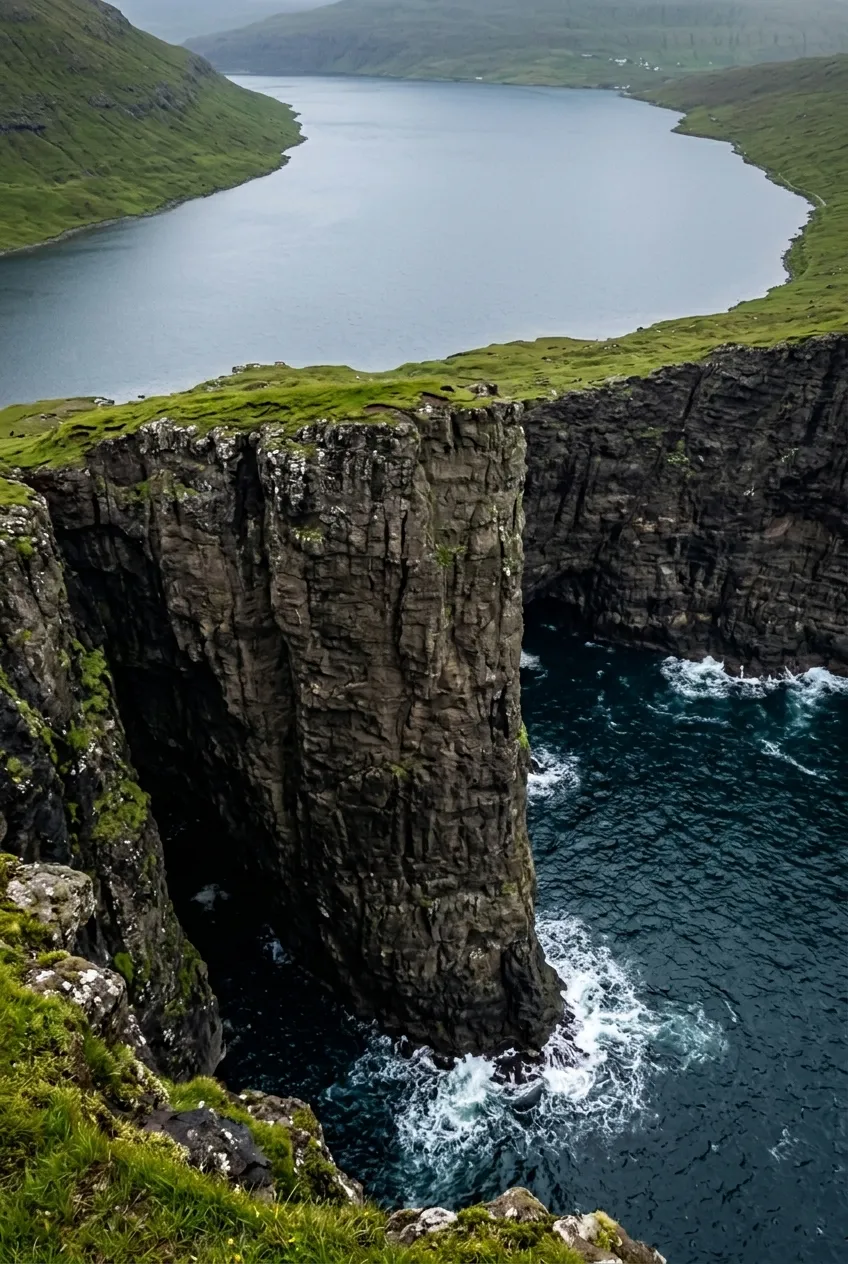
Might as well start with the photo that got me interested.
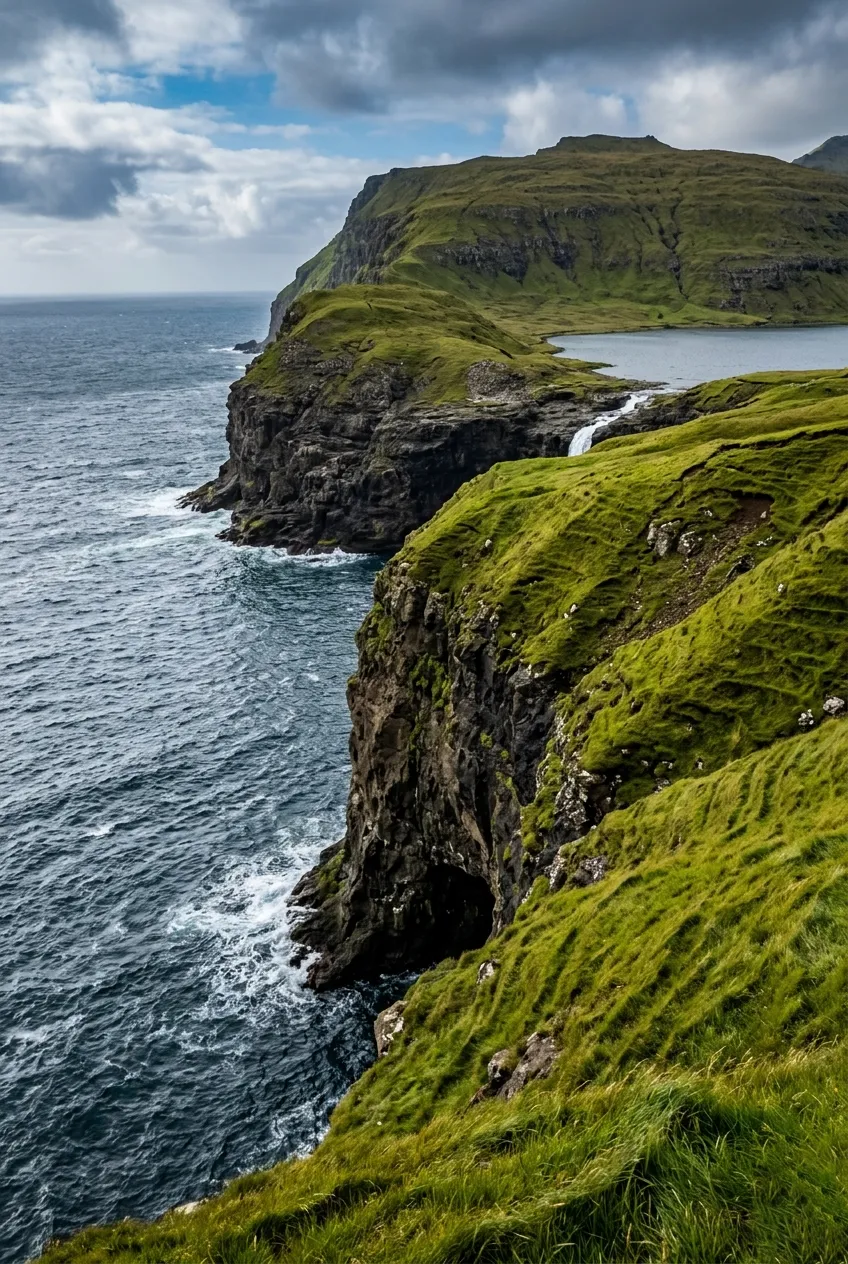
Sørvágsvatn is a lake that sits about 40 meters above sea level. The cliff it sits on drops straight down to the ocean. From certain angles it looks like the lake is hovering way higher than it actually is. It’s an optical illusion caused by perspective but knowing that doesn’t make it look less impossible.
The hike to the viewpoint is about 2 km from the parking area. Easy trail, relatively flat. Gets crowded in summer because everyone wants that photo. I went at 7 am and had it to myself for about 20 minutes before other people showed up.
What photos don’t show is how windy it gets. You’re on a cliff edge with nothing blocking the wind coming off the Atlantic. I’m not particularly afraid of heights but lying down to get the angle for the photo while the wind is trying to push me around was… memorable.
Also there’s a waterfall (Bøsdalafossur) where the lake drains over the cliff into the ocean. You can get closer to the waterfall but the rocks are slippery and people have died there. I stayed back.
Múlafossur – The Waterfall Everyone Photographs
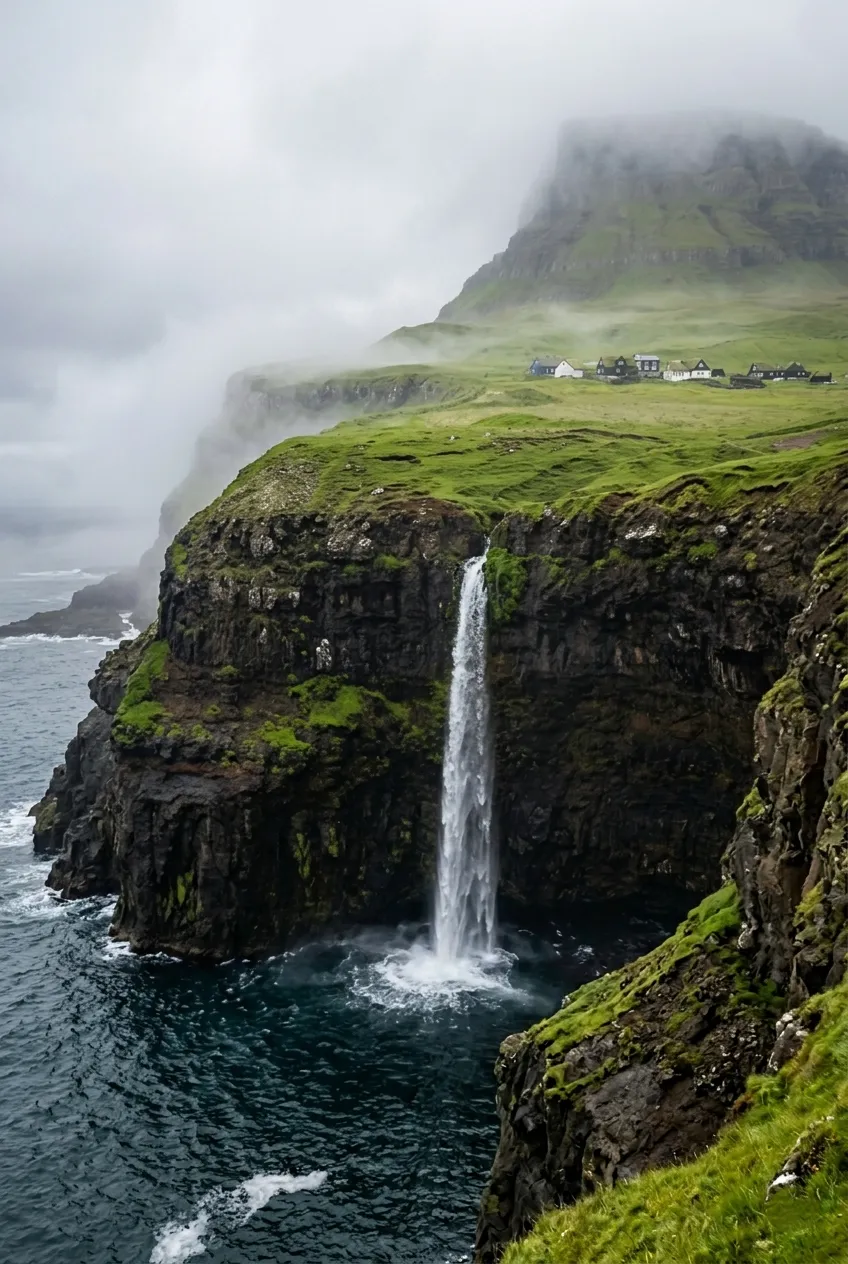
Gásadalur, the village I mentioned earlier, has a waterfall that drops about 30 meters straight into the ocean. It’s called Múlafossur and it’s probably the most photographed spot in the Faroes.
The village sits in a natural amphitheater of mountains. The waterfall is visible from the road into the village. You can hike down to the beach for a different angle but the path is steep and slippery.
I got there late afternoon when the light was decent. Spent about an hour taking photos and just watching the waterfall. Maybe saw 15 other tourists the whole time. The locals were just going about their day, probably tired of photographers.
The grass roofs on the houses are traditional. They insulate and they’re maintained by sheep that graze on them. Sounds made up but it’s real. You’ll see sheep on roofs.
Travelers considering relocation or long stays will love the Stunning Areas of France guide, packed with picturesque regions full of charm and lifestyle appeal.
Kallur Lighthouse – The Hike That Filters People Out
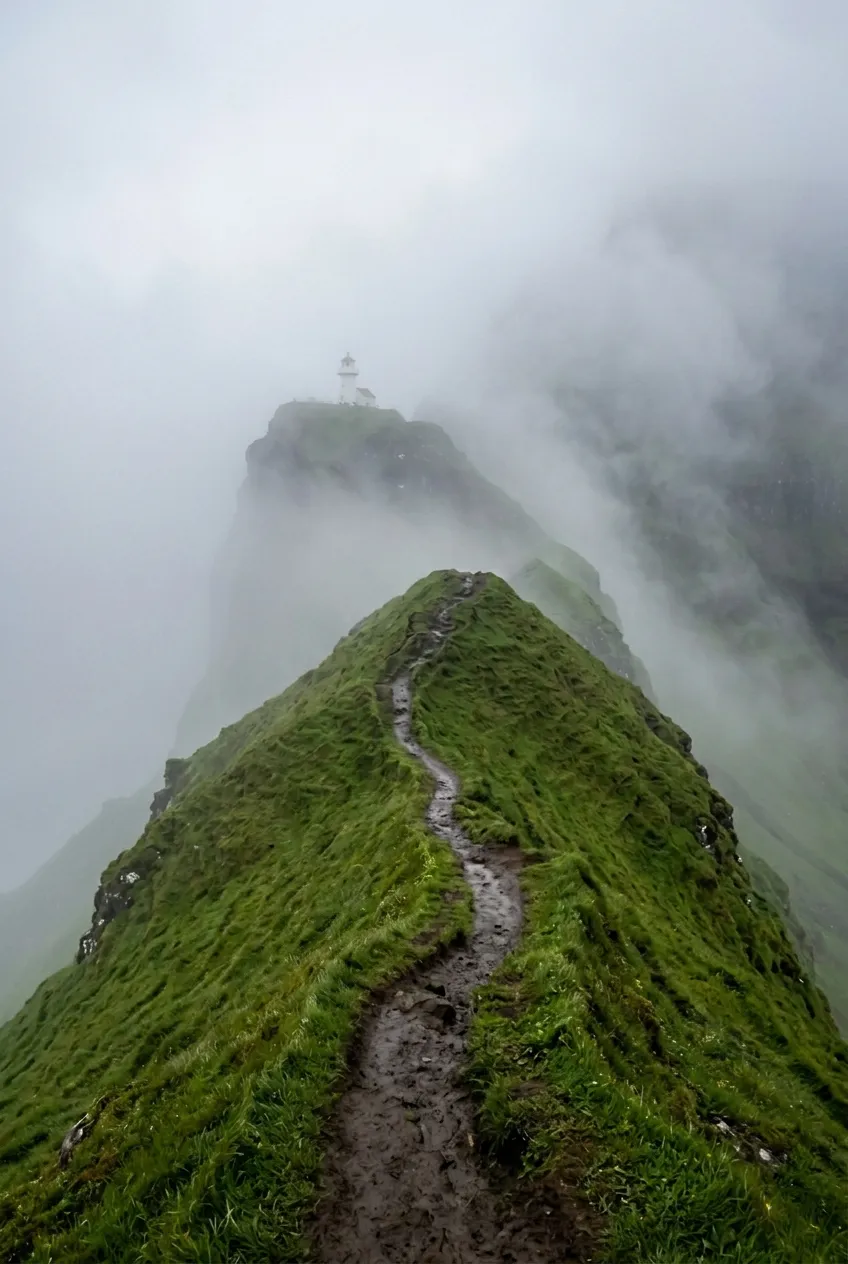
Northern tip of Kalsoy island. You take a ferry to the island, drive through four one-lane tunnels, park in the village of Trøllanes (population: maybe 15), then hike about 5 km round trip to the lighthouse.
The hike starts easy then gets steep. The final ridge to the lighthouse is narrow with steep drops on both sides. Ropes are installed for the sketchy parts. Not technically difficult but you need to be comfortable with exposure.
I went on a partly cloudy day. The wind was strong enough that I had to lean into it. The final approach to the lighthouse had me genuinely questioning my choices.
But the view from the lighthouse is absurd. Sheer cliffs dropping into the ocean on three sides. Sea stacks jutting out of the water. On a clear day you can see other islands. I was there for about 30 minutes before fog rolled in and visibility dropped to about 10 meters.
The hike filters out casual tourists which means the people you meet on the trail are usually serious hikers or photographers. Met a guy from Germany who’d been trying to get there for three days but weather kept stopping him. This was his last chance before flying home.
Gjógv – The Gorge Village
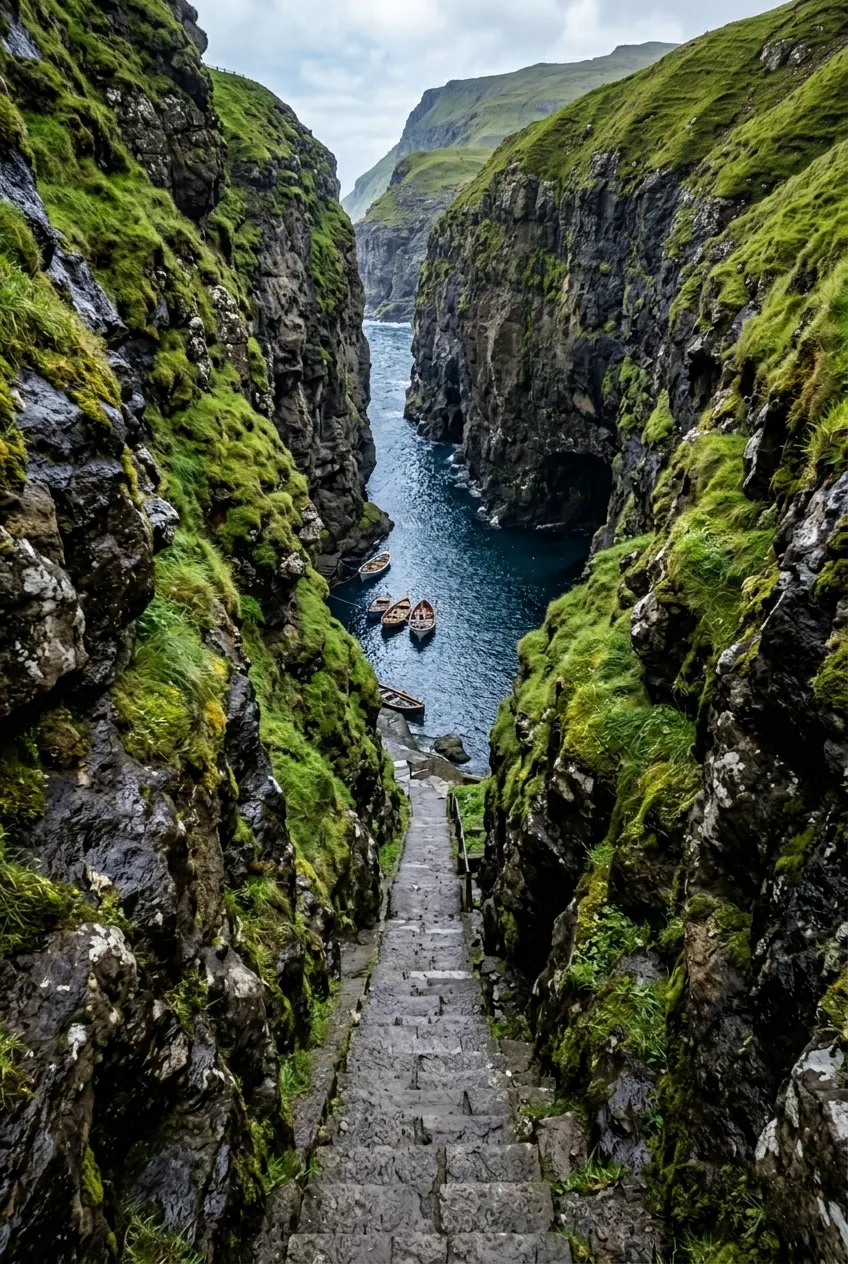
Gjógv (pronounced something like “jegv”) is a village of about 50 people built around a natural gorge that creates a small harbor. The gorge is maybe 200 meters long, carved by the sea into the rock.
The village is absurdly picturesque. Colorful houses, grass roofs, mountains behind it, gorge in front. Looks like someone designed it to be photographed.
There’s a small guesthouse and a restaurant that’s only open certain hours. I had lunch there – lamb that was probably grazing nearby a week earlier. Best meal I had in the Faroes.
You can walk down into the gorge at low tide. The walls are steep and covered in bird nests during breeding season. At high tide the ocean fills it completely.
The village has a population that’s been slowly declining. Young people leave for education and jobs. But the houses are maintained and people still live there year-round which is more than you can say for some remote villages.
Tórshavn – The “Big City”
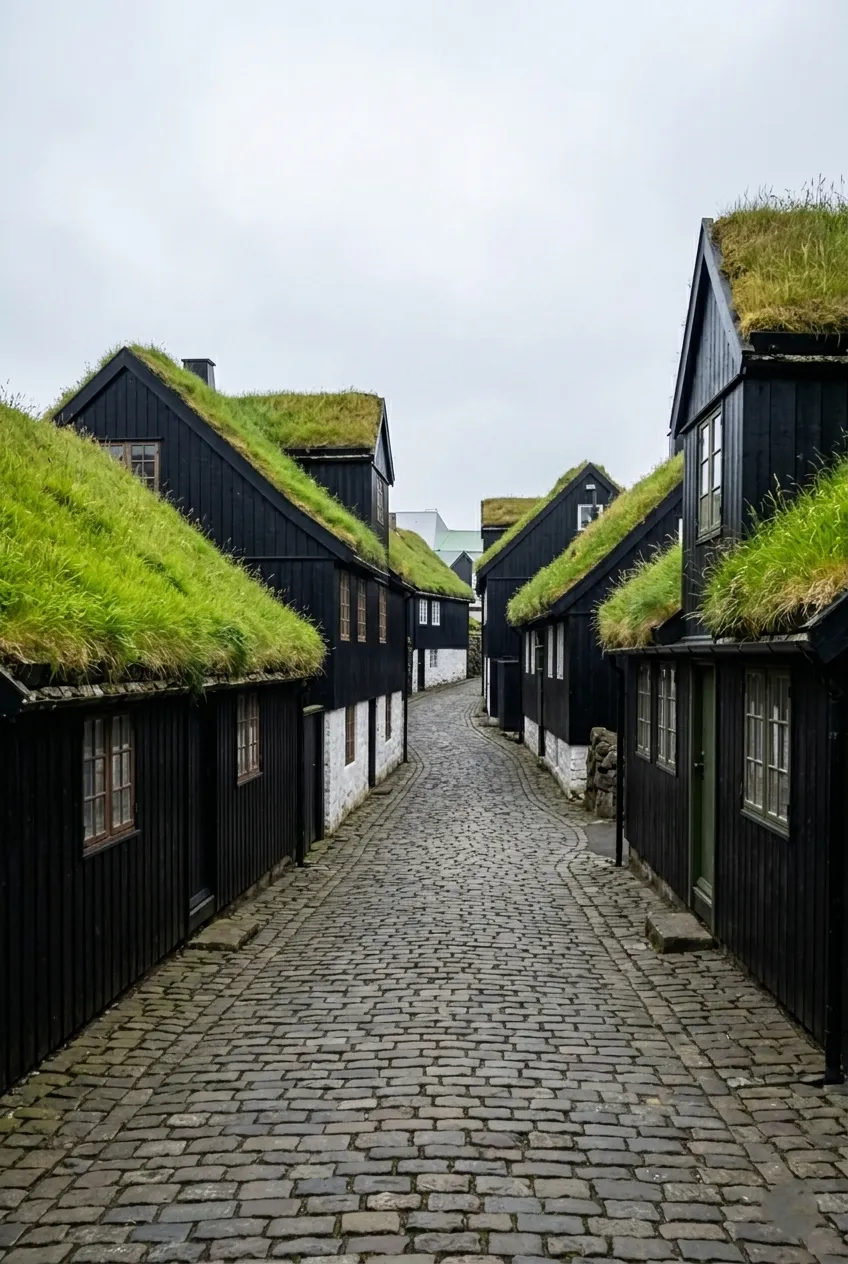
The capital has about 20,000 people. By Faroese standards that’s huge.
The old town (Tinganes) has grass-roofed buildings from the 16th century that are still used as government offices. You can walk through it. It’s tiny – takes maybe 15 minutes to see the whole thing.
There are actual restaurants in Tórshavn. Grocery stores. A swimming pool. It feels normal after being in villages of 12 people.
KOKS is the fancy restaurant everyone talks about. Two Michelin stars, uses all local ingredients, very expensive. I didn’t go (couldn’t get a reservation and also couldn’t justify the cost) but people who did said it was wild. Lots of fermented things and ingredients you’ve never heard of.
The city is worth a day but I wouldn’t spend more than that there. You’re not going to the Faroes for urban experiences.
If you’re mixing remote escapes with vibrant cities, the 3-Day Madrid Itinerary is perfect for balancing culture, food, and fast-paced urban energy.
Vestmanna Bird Cliffs
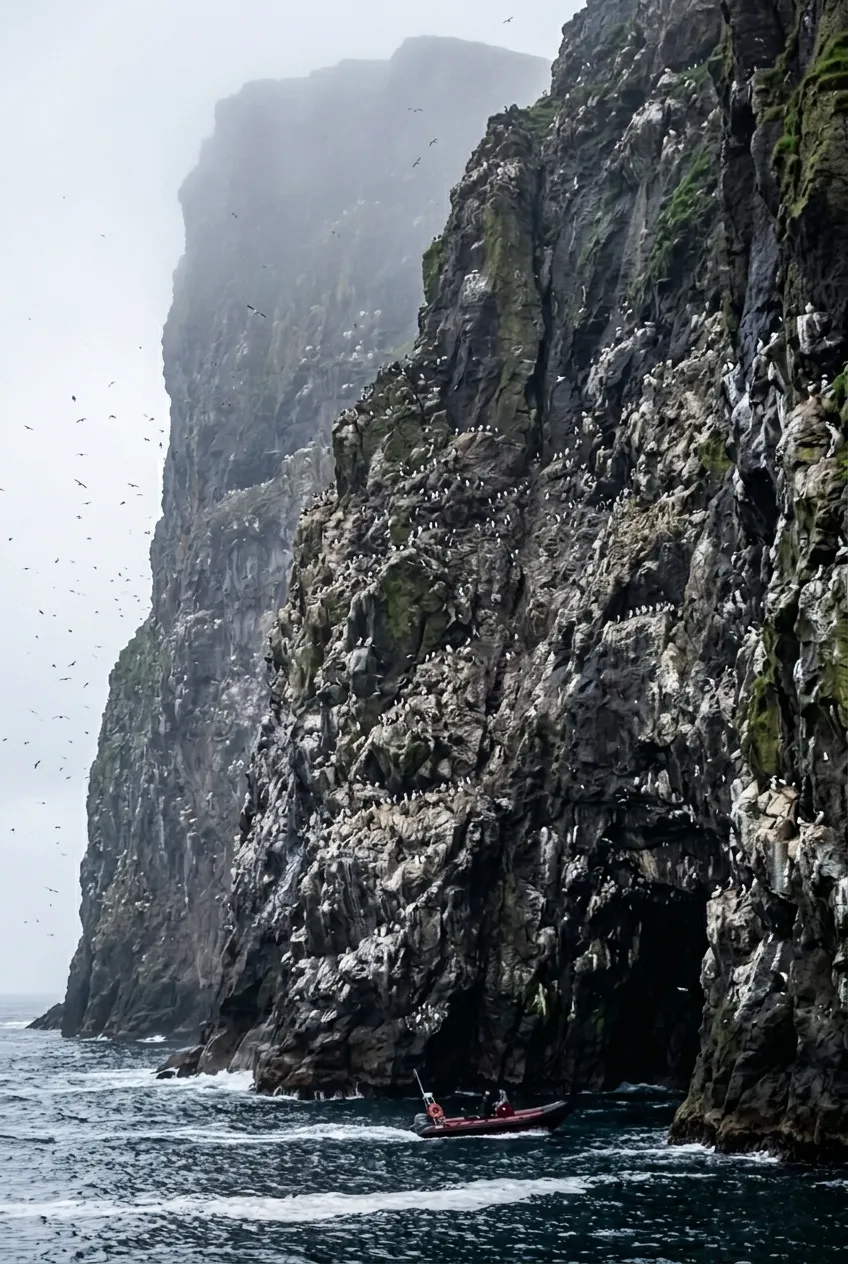
The western coast of Streymoy has cliffs that go straight up from the ocean for about 600 meters. Thousands of seabirds nest there during breeding season (roughly May through August).
You can take a boat tour that goes into some of the sea caves and along the base of the cliffs. The boats are small, maybe 12 people. The captain gets surprisingly close to the cliff walls.
The sheer number of birds is overwhelming. Puffins, guillemots, fulmars, kittiwakes. The noise is constant. The smell is… present.
I went in July which is peak breeding season. The cliffs were covered in birds. The water had birds. The air had birds. Just birds everywhere.
If you’re into birds this is probably the highlight of the Faroes. If you’re not into birds it’s still impressive just from a scale perspective.
Drangarnir and Tindhólmur – The Sea Stacks
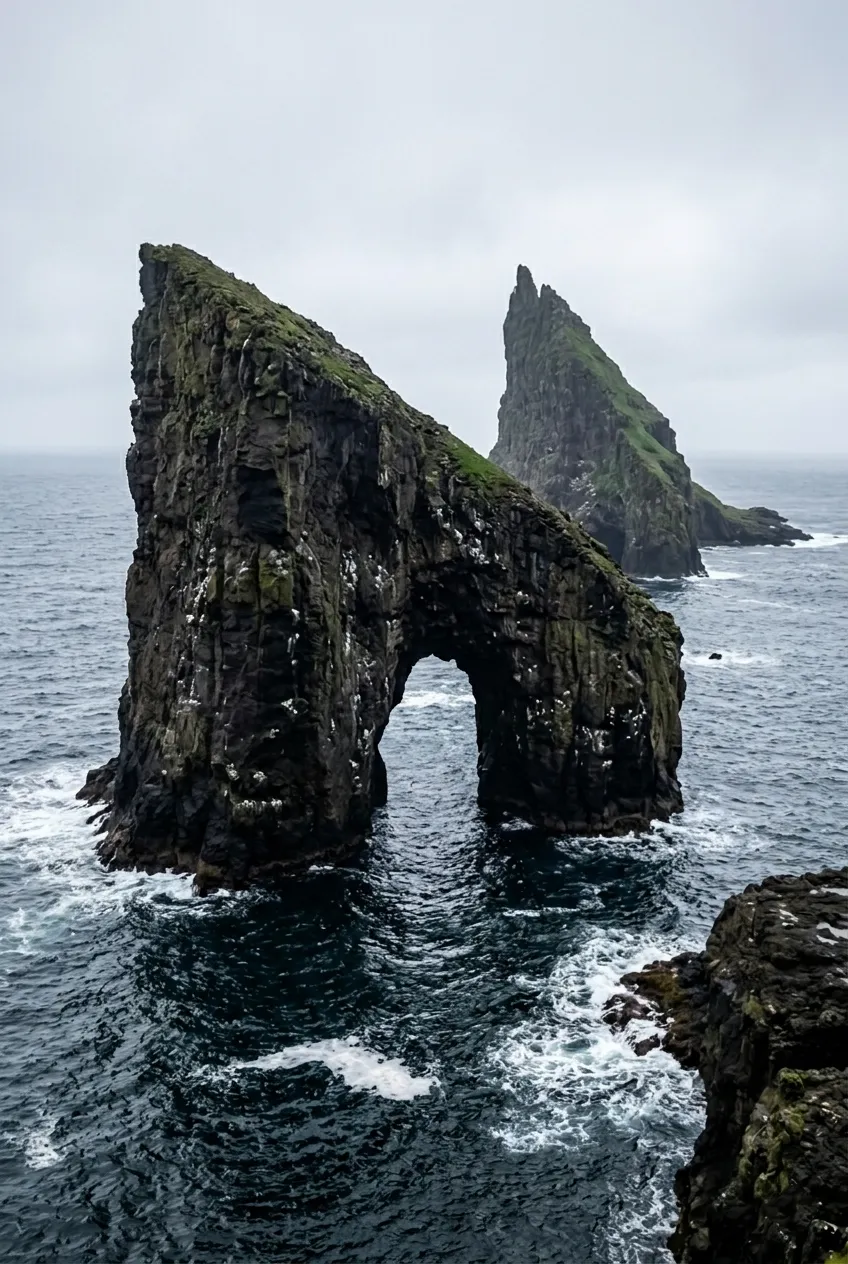
Off the coast of Vágar there are these dramatic sea stacks and a natural arch. Drangarnir is the arch, Tindhólmur is the pointy rock formation nearby.
You can see them from a viewpoint on Vágar but the real experience is hiking to a closer viewpoint on the island of Tindhólmur. Except you can’t just go there. It’s private land and you need permission from the owner.
Some tour companies have arranged access and run guided hikes. I didn’t do it (weather was bad when I had time, time was bad when weather was good) but I talked to people who did. They said it’s one of the best hikes in the Faroes but also one of the most exposed and sketchy.
From the regular viewpoint on Vágar the formations are still impressive. Best light is late evening in summer when the sun is low and the rocks glow orange.
Saksun – The Hidden Village
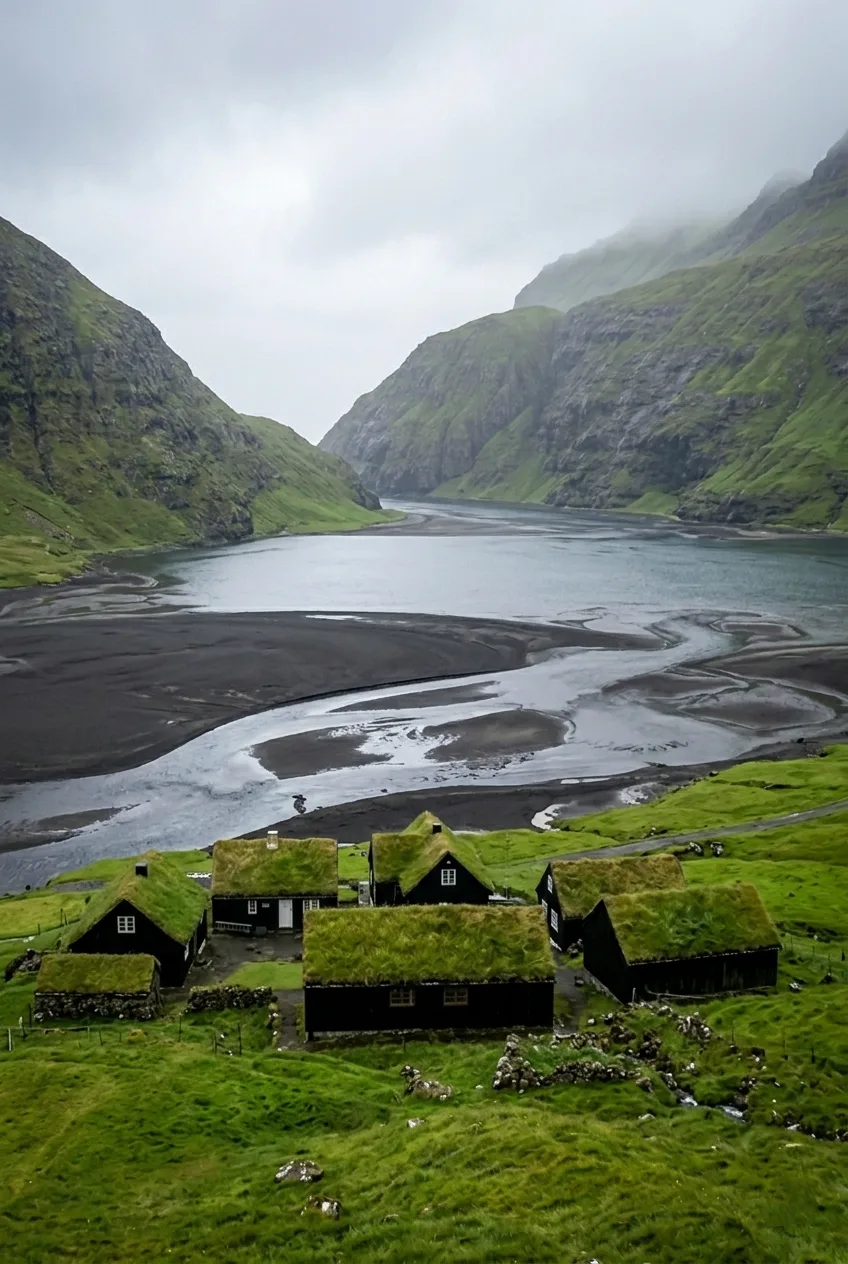
Saksun sits at the end of a valley on the northwest side of Streymoy. The road in is narrow and winding. The village has maybe 10 permanent residents.
There’s a tidal lagoon that’s beach at low tide and water at high tide. Mountains surround it on three sides. A cluster of grass-roofed houses sits above the lagoon. The church dates to the 19th century.
I got there at low tide and walked out onto the black sand beach. The lagoon was mostly empty except for a shallow stream. Mountains disappeared into fog.
An older man was working on a grass roof. I watched for a bit and he came over to talk. Turned out he was from Denmark, bought a house there in the 80s, spends summers maintaining it. Said tourism has picked up a lot in the last five years. Used to be he’d go days without seeing anyone. Now there are cars every day in summer.
There’s a small museum in one of the old houses. Costs maybe $5 to enter. Shows how people lived there in the 19th century. Pretty basic – one room for the family, one room for animals. The guide said winters were brutal before modern heating.
The Hiking Culture
Faroese people hike. A lot. Not like “occasional weekend hike” hiking. Like “we hike to visit our neighbors because that’s how you get there” hiking.
Some villages are still only accessible on foot. Saksun used to be one of them until they built a road in the 1960s. Gásadalur was only accessible by foot or helicopter until 2004.
Trail markings exist but they’re minimal. Often just cairns. Sometimes the trail is obvious, sometimes it’s just “walk in that general direction and figure it out.”
I did several hikes where I didn’t see another person for hours. That doesn’t happen much in Europe anymore. The Faroes still have it.
Weather can change hiking plans instantly. I had to turn back from two hikes because fog got too thick to navigate safely. That’s just how it goes there. You try again another day or you don’t.
Local hiking culture is serious about preparation. People carry extra clothes, food, emergency supplies even for short hikes. Weather can trap you out there. Cell service is spotty. You need to be self-sufficient.
For those enchanted by rugged northern beauty, the Dreamy Places Scotland article explores locations that echo the same misty magic and wild landscapes.
The Food Situation
Traditional Faroese food is… acquired taste territory.
Lots of lamb. Lots of fish. Lots of fermented things. Ræst is meat or fish that’s been hung to ferment/dry for months. It smells intense. Tastes intense. I tried it. Once was enough.
Skerpikjøt is wind-dried mutton. Also intense. Less fermented-tasting than ræst but still very strong.
Fresh fish is excellent. The ocean’s cold and clean and the fish tastes like it. Salmon, cod, whatever they caught that day.
Restaurants in Tórshavn serve more accessible food. Outside Tórshavn your options are limited. Small villages might have one restaurant that’s open for lunch on Tuesdays and Thursdays or something.
I packed snacks. Lots of snacks. Grocery stores exist in bigger towns but they’re expensive. Like “this apple costs $3” expensive.
If you’re vegetarian or vegan, plan ahead. Options exist in Tórshavn. Outside that, you’re mostly dealing with potatoes and whatever vegetables made it to the island.
The Tunnels (They Deserve Their Own Section)
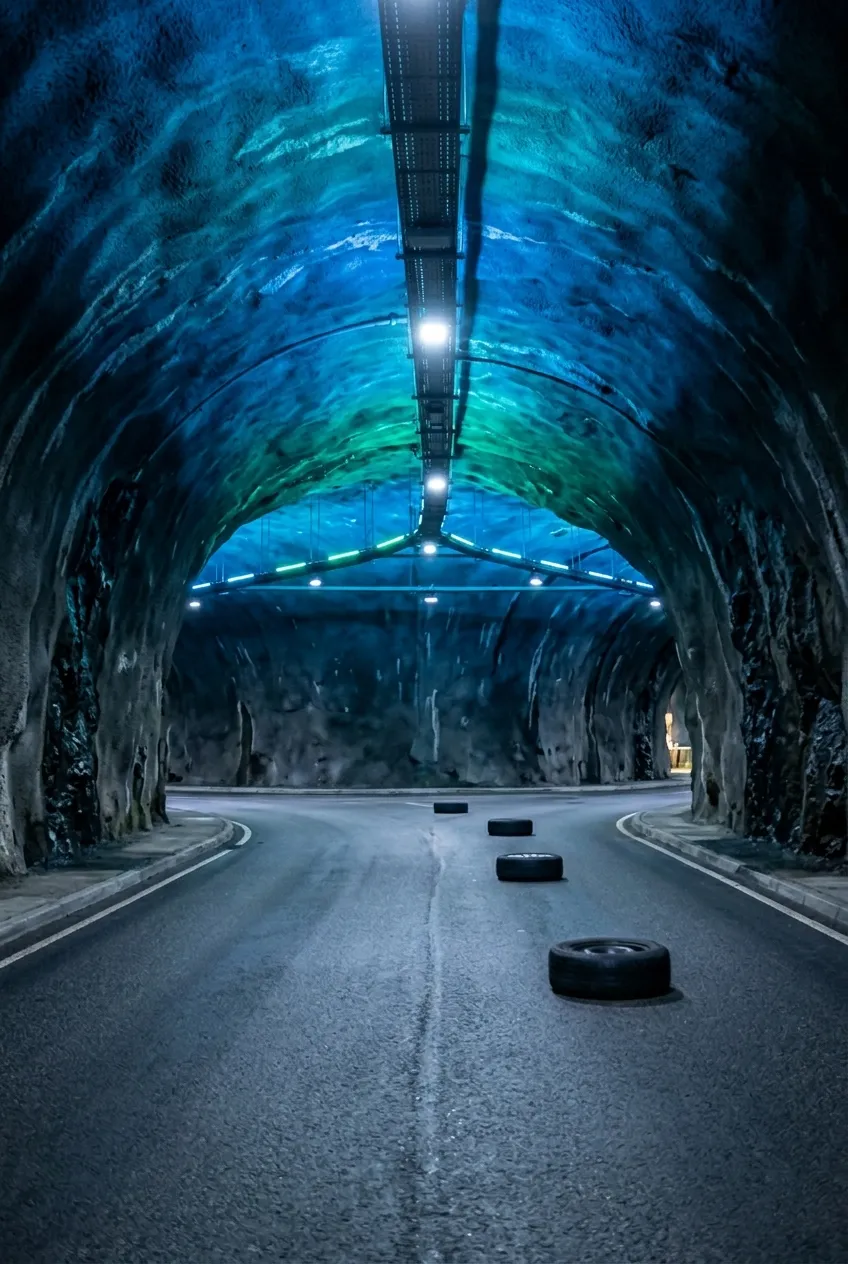
The Faroes have 19 tunnels. Some are subsea. Some go through mountains. Some are lit, some aren’t. One has a roundabout in it.
The newest is the Eysturoyartunnilin which opened in 2020. It’s about 11 km long, goes under the ocean, and has a roundabout 187 meters below sea level. It also has this wild light installation in the roundabout that’s supposed to represent Faroese folklore. Looks like you’re driving into another dimension.
Tunnels make getting around way easier. Before them you had to take ferries everywhere or just couldn’t reach certain islands. But they’re also kind of spooky. Long unlit tunnels through mountains where you can’t see the end. One-lane sections where you hope nobody’s coming the other way.
The older tunnels are rougher. Literally rough – the walls are just blasted rock, not smooth concrete. Water drips from the ceiling. It feels very “we dug a hole through this mountain and called it good.”
Some tunnels have tolls. You don’t pay at the tunnel. You register your license plate online or at a gas station and pay later. If you don’t pay you get a fine mailed to you. Very trust-based system.
What It Actually Costs
Nothing in the Faroes is cheap. It’s an isolated archipelago that imports most things. Prices reflect that.
Rental car: $80-150 per day depending on season and vehicle type Gas: About $8-9 per gallon Basic hotel: $150-250 per night Hostel bed: $40-60 per night Meal at restaurant: $25-40 for something basic Grocery store basics: About 2-3x what you’d pay in mainland Europe Beer at bar: $12-15
Ferries and helicopters are subsidized for residents but tourists pay more. Still relatively affordable compared to the rest of the costs.
I budgeted about $200 per day and that covered car, accommodation, food, and gas with a bit left over. Didn’t do fancy restaurants or tours.
You can do it cheaper by camping (which is allowed in some areas) and cooking your own food. You can do it way more expensive by staying in nice hotels and eating out every meal.
The Practical Stuff Nobody Tells You
Bring layers. All the layers you own. Temperature might be 50-60°F in summer but wind makes it feel colder. I wore a base layer, fleece, and rain jacket most days.
Waterproof everything. Jacket, pants, boots, camera bag. If it’s not waterproof it will get wet.
Download offline maps. Cell service exists but it’s not everywhere. Google Maps lets you download regions for offline use.
Book accommodation ahead in summer. There aren’t that many places to stay. Popular spots fill up.
Learn a few words of Faroese. Most people speak English well but they appreciate effort. “Takk” (thanks) gets used a lot.
Respect the sheep. They’re everywhere. They’re not aggressive but they’re also not afraid of cars. They’ll stand in the road. You wait for them to move.
The sun barely sets in summer (June-July). It gets twilight around midnight then starts getting light again. Brings weird energy. I had trouble sleeping until I got blackout curtains.
Winter is dark. Like 4-5 hours of daylight dark. And stormier. Summer is the obvious choice unless you really want darkness and isolation.
If you’re drawn to Europe’s quieter corners, the Hidden Gems Italy guide reveals lesser-known spots that feel just as surreal as the Faroe Islands.
Why Go to the Faroe Islands?
Good question. It’s expensive, weather is bad, it’s hard to get to, and there are no beaches or traditional attractions.
But if you want to feel isolated in a landscape that looks like it’s from another planet, it’s hard to beat.
There’s something about places where nature is still dominant and humans are just kind of dealing with it. The Faroes feel like that. People live there but they haven’t tamed it. The weather does what it wants. The ocean does what it wants. You work around it.
Also it’s beautiful in a way that’s hard to describe. Not “pretty postcard” beautiful. More like “this feels ancient and powerful” beautiful. Cliffs and waterfalls and fog and green that’s so intense it doesn’t look real.
I spent two weeks there and didn’t see everything. Didn’t even come close. There are islands I never made it to. Hikes I didn’t have time for. Villages I missed.
Would I go back? Yeah probably. Different season maybe. See how it looks when it’s not green. Or maybe summer again because I didn’t get enough of the midnight sun weirdness.
The Tourist Impact Question
Tourism in the Faroes has increased a lot. Like 300-400% over the last decade. Instagram effect plus better infrastructure plus more flights.
The islands aren’t really built for mass tourism. Roads are narrow. Parking is limited. Small villages aren’t set up to handle 50 people showing up at once.
There’s tension between wanting tourist money and wanting to preserve the culture and landscape. The government has been trying to manage it with campaigns about responsible tourism and “voluntourism” programs where tourists help maintain trails.
Some locals I talked to appreciate tourists bringing money and attention. Others are tired of people parking wherever, flying drones everywhere, and treating their home like a theme park.
Basic rule: be respectful. Don’t trespass. Don’t fly drones near birds or over private property without permission. Pack out trash. Don’t park in places that block residents.
The Faroes will probably get more touristy. That’s the trajectory. But right now it still feels relatively unspoiled compared to Iceland or Norway’s popular spots.
Final Thoughts
The Faroe Islands aren’t for everyone. If you need sunny weather, beaches, and reliable plans, go somewhere else.
But if you’re okay with uncertainty and weather that does whatever it wants and landscapes that look impossible, it’s worth the hassle.
I came back with hundreds of photos and most of them look fake even though I barely edited them. That’s just how the place looks.
Also came back with a different relationship with weather. Rain doesn’t bother me as much anymore. If I could handle horizontal rain on a cliff edge in the Faroes, I can handle a drizzle walking to the store.
Go in summer if you want long days and less severe weather. Go in winter if you want darkness and isolation and possibly the northern lights. Don’t go expecting tropical anything.
And bring a good rain jacket. Seriously.