Salar de Uyuni Travel Guide: My Journey to the World’s Largest Salt Flat in Bolivia
I had seen photos before. Endless white land. Reflections that look like the sky melted onto the earth. But nothing really prepares you for standing there in person.
This is the story of my journey to Salar de Uyuni. No exaggeration. Just what I experienced, what I learned, and what you should know if you are planning the same trip.
Recommended Travel Items for Your Trip
Starting Point: La Paz, One of the Highest Cities in the World
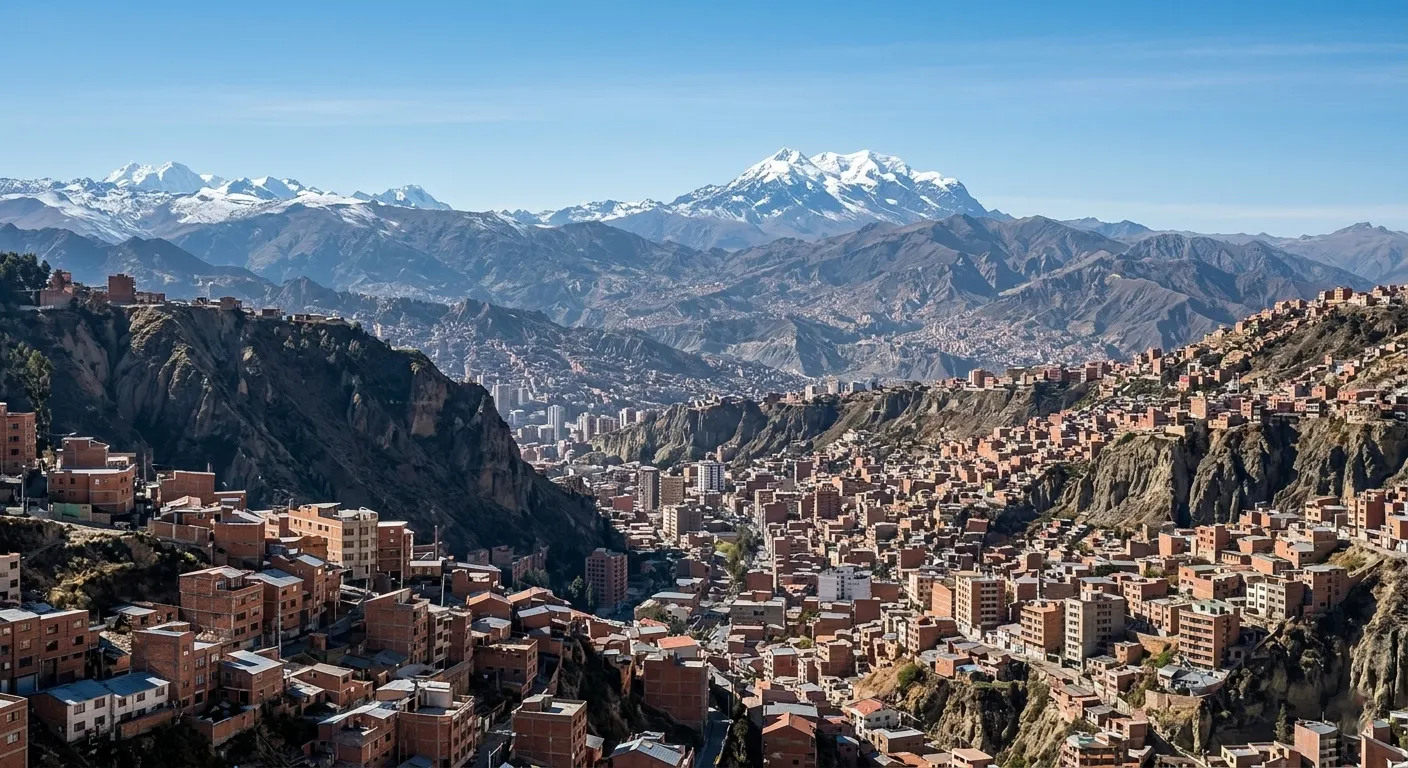
I started my journey from La Paz, which sits at a very high altitude. Along with El Alto, it is considered one of the highest urban areas in the world.
You feel it the moment you arrive. Breathing is slightly harder. Walking feels heavier than usual. If you are not used to high altitude, give your body some time here before heading further.
My plan was simple. Reach Uyuni overnight and explore the salt flats the next day.
Overnight Bus Journey from La Paz to Uyuni
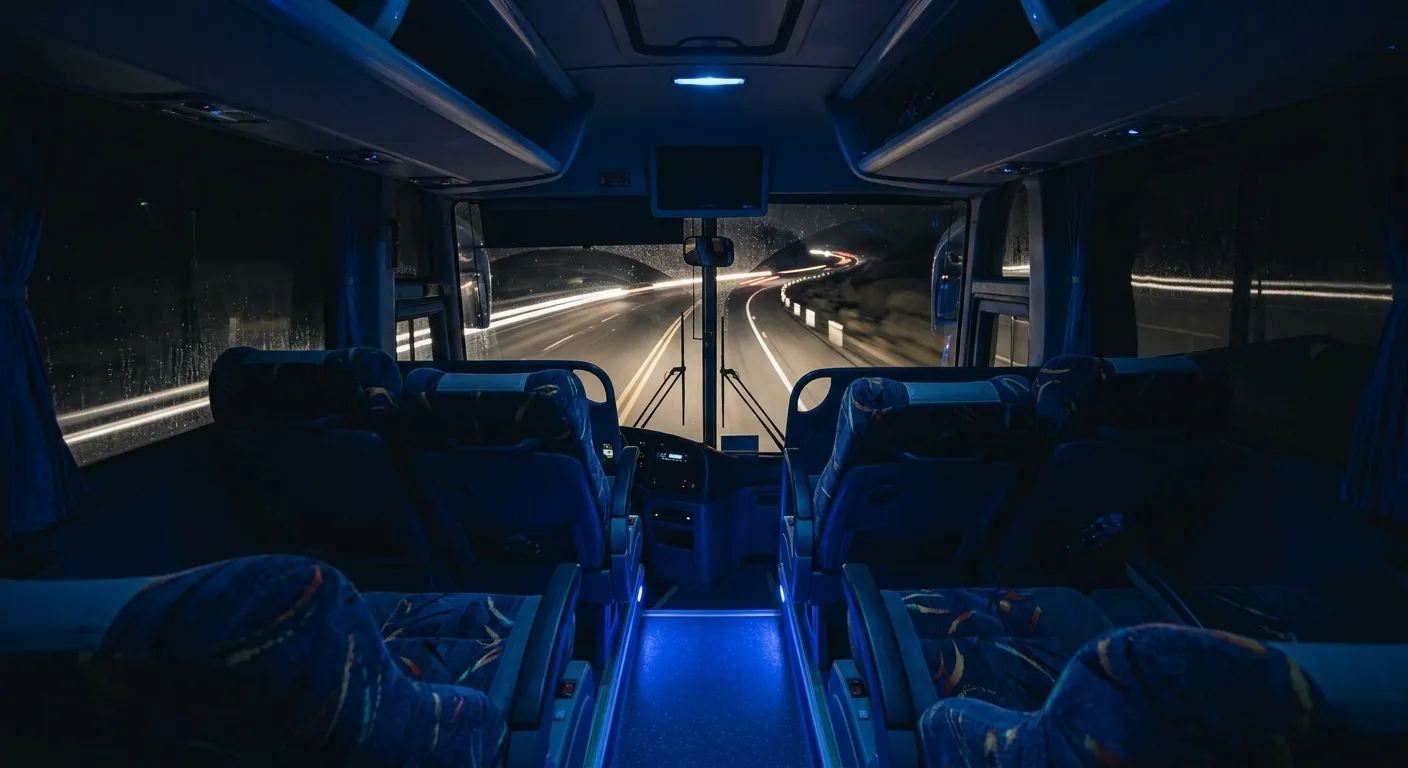
The distance between La Paz and Uyuni is around 550 kilometers. It does not sound like much, but the journey takes about 9 to 10 hours.
I booked a bus from the main terminal in La Paz. The bus station was surprisingly well-organized and clean, even though it was crowded. There were dozens of bus companies operating from there, not just within Bolivia but also to neighboring countries like Peru, Brazil, Argentina, and Chile.
One important thing I learned here. Book your ticket in advance.
Many people book their seats one or even two weeks earlier. I booked mine just a few hours before departure and still got a seat, but the bus was completely full by night.
The bus itself was better than expected. Reclining seats, snacks, water, and decent space. It was not luxurious, but it was comfortable enough for an overnight journey.
If you are planning to explore more of South America after Bolivia, this Peru travel guide will help you prepare better for your journey.
Arriving in Uyuni: A Town Built for One Purpose
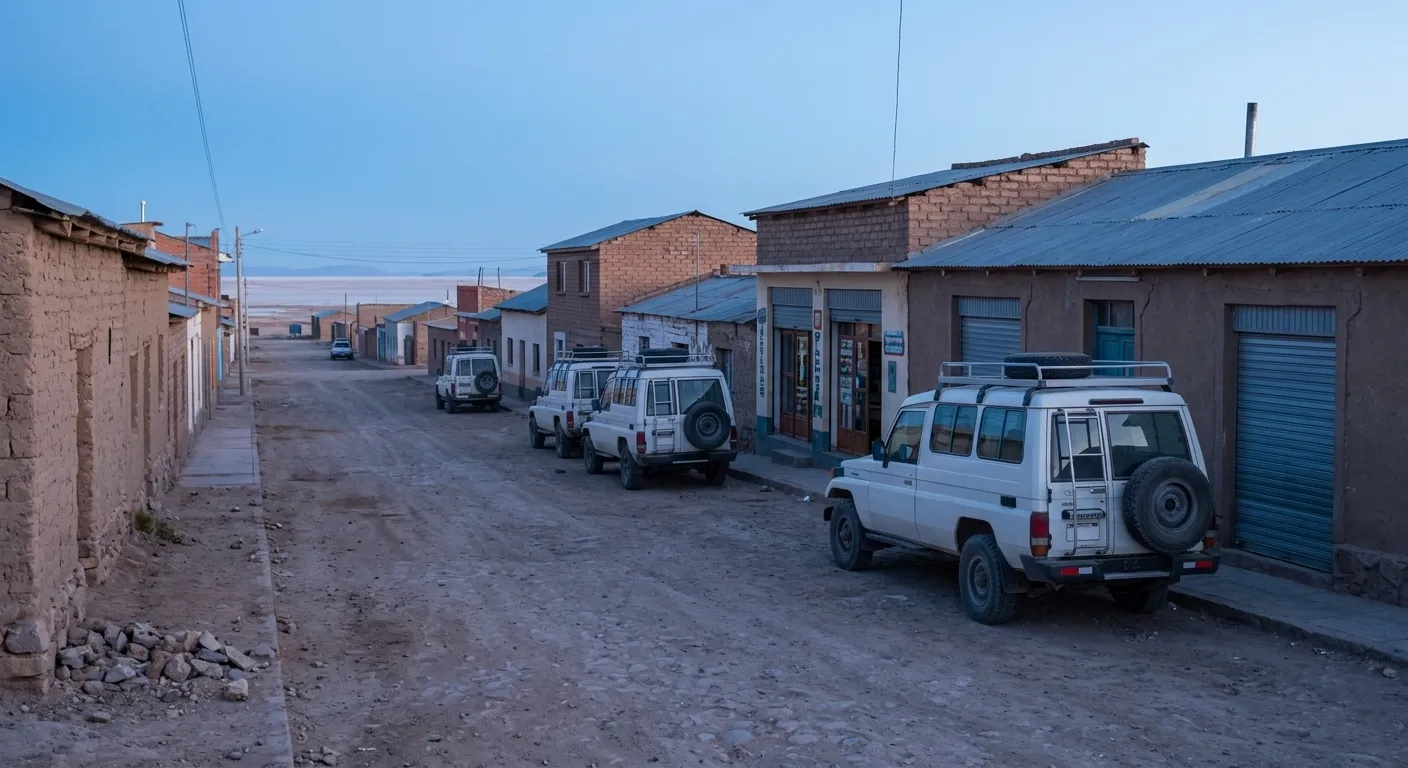
We reached Uyuni early in the morning.
The first impression was simple. This is not a big city. It feels more like a small town built specifically to support tourism around the salt flats.
The population is small, around 30,000 people. Roads are basic, often made of stone. You will see small shops, local eateries, and people starting their day early.
It felt very different from La Paz. Slower. Simpler.
But there is one thing you should be prepared for here. The altitude.
Uyuni sits at around 3,700 meters above sea level. I personally felt the effect. I had a slight fever, headache, and body pain. Not everyone experiences this, but many travelers do.
So if you feel unwell, do not ignore it. Rest, hydrate, and take it slow.
Finding Food and Staying in Uyuni

After reaching, I walked to my hostel. It was not far from the bus station. Most accommodations are within walking distance.
I stayed in a budget hostel for one night. It was simple but comfortable.
Food options in Uyuni are limited, especially for breakfast. Many restaurants open later in the day. I found a small place where I had a basic breakfast. Bread, eggs, butter, and tea.
One interesting thing here. Some restaurants cater more to tourists, while locals prefer their own spots.
Also, prices here can feel slightly higher compared to other parts of Bolivia, since this is a tourist-focused town.
Salar de Uyuni often feels unreal, much like the destinations featured in these places that look fake but actually exist.
Booking the Salar de Uyuni Tour
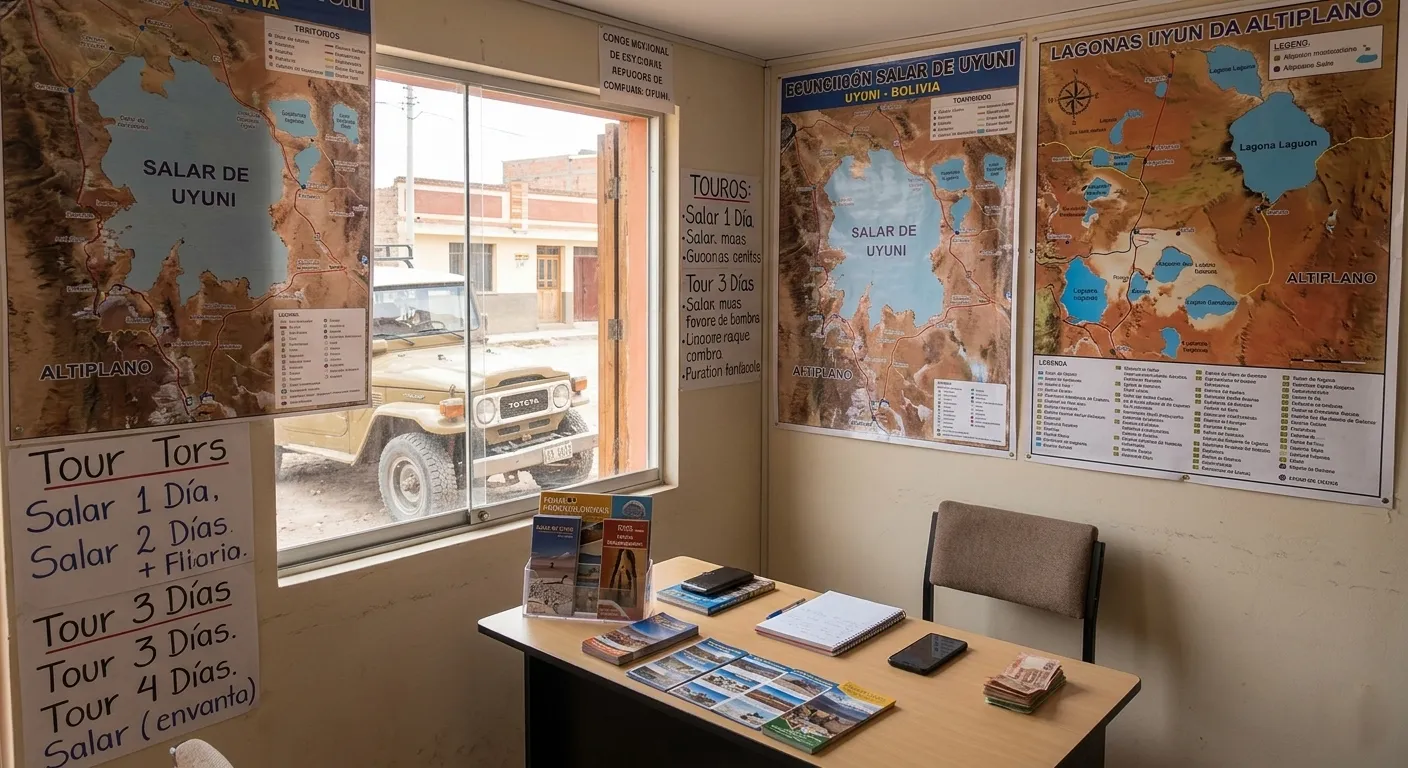
You do not need to plan too much in advance for the salt flats tour. As soon as you arrive in Uyuni, you will see many tour agencies offering packages.
I booked a one-day tour for around 200 Bolivianos. It included transport and lunch.
The tour started around 10:30 in the morning and lasted almost 10 hours. We were a group of six people in a 4×4 vehicle.
First Stop: Train Graveyard
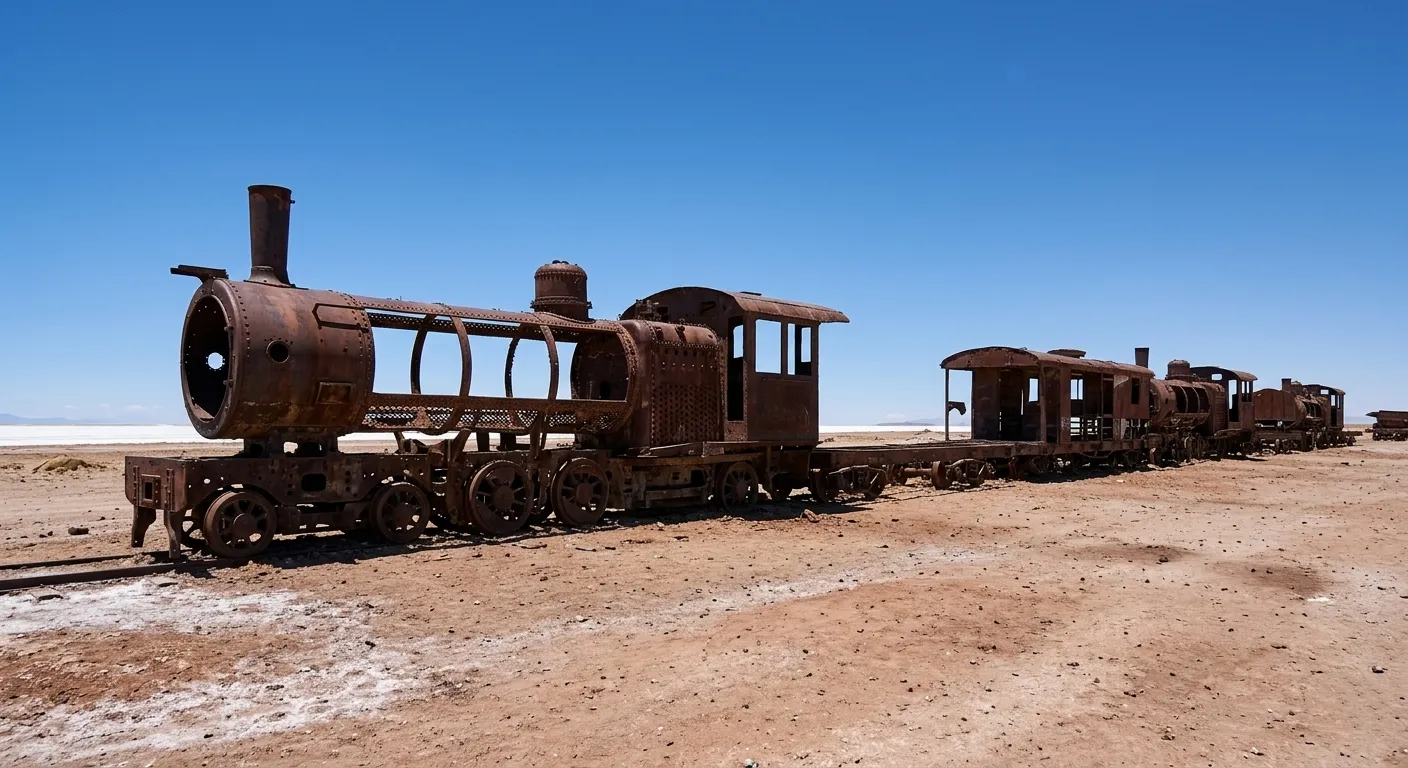
Before reaching the salt flats, we stopped at the Train Graveyard.
This place has old trains and railway equipment that dates back more than 100 years. These trains were once used to transport minerals across Bolivia.
But the railway system shut down long ago, and now the trains are left to rust in the open.
You can walk around, take photos, and even climb on some of them. It is a popular stop, so expect crowds.
Finally Reaching Salar de Uyuni
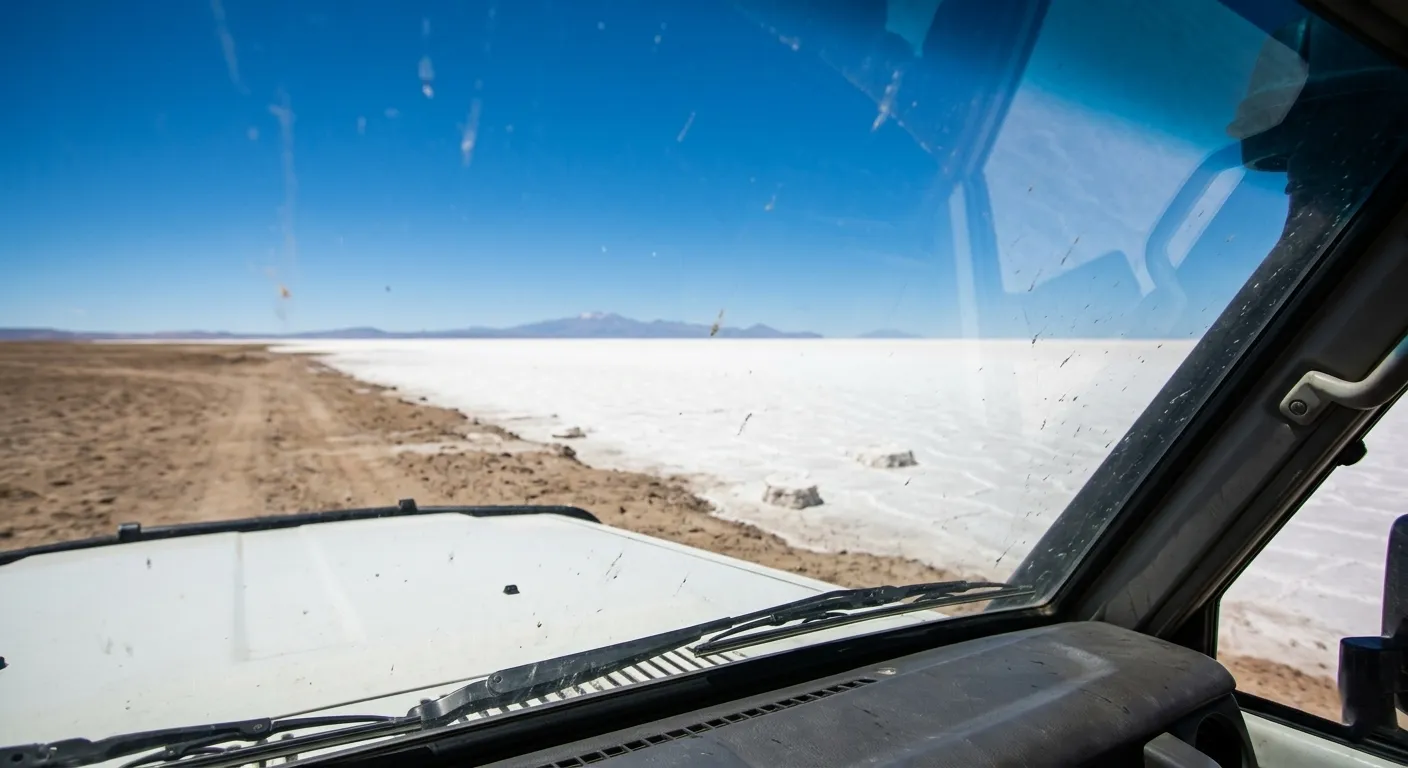
After the train graveyard, we drove toward the main destination.
And then suddenly, everything changed.
The land turned completely white. As far as I could see, there was nothing but salt.
Salar de Uyuni covers more than 10,000 square kilometers. It is the largest salt flat in the world.
Millions of years ago, this area was covered by a lake. Over time, the water dried up, leaving behind thick layers of salt.
Even today, there are billions of tons of salt here.
If you enjoy detailed and practical itineraries, this complete Maine travel guide offers a very different but equally insightful travel experience.
The Mirror Effect: Best Time to Visit Salar de Uyuni
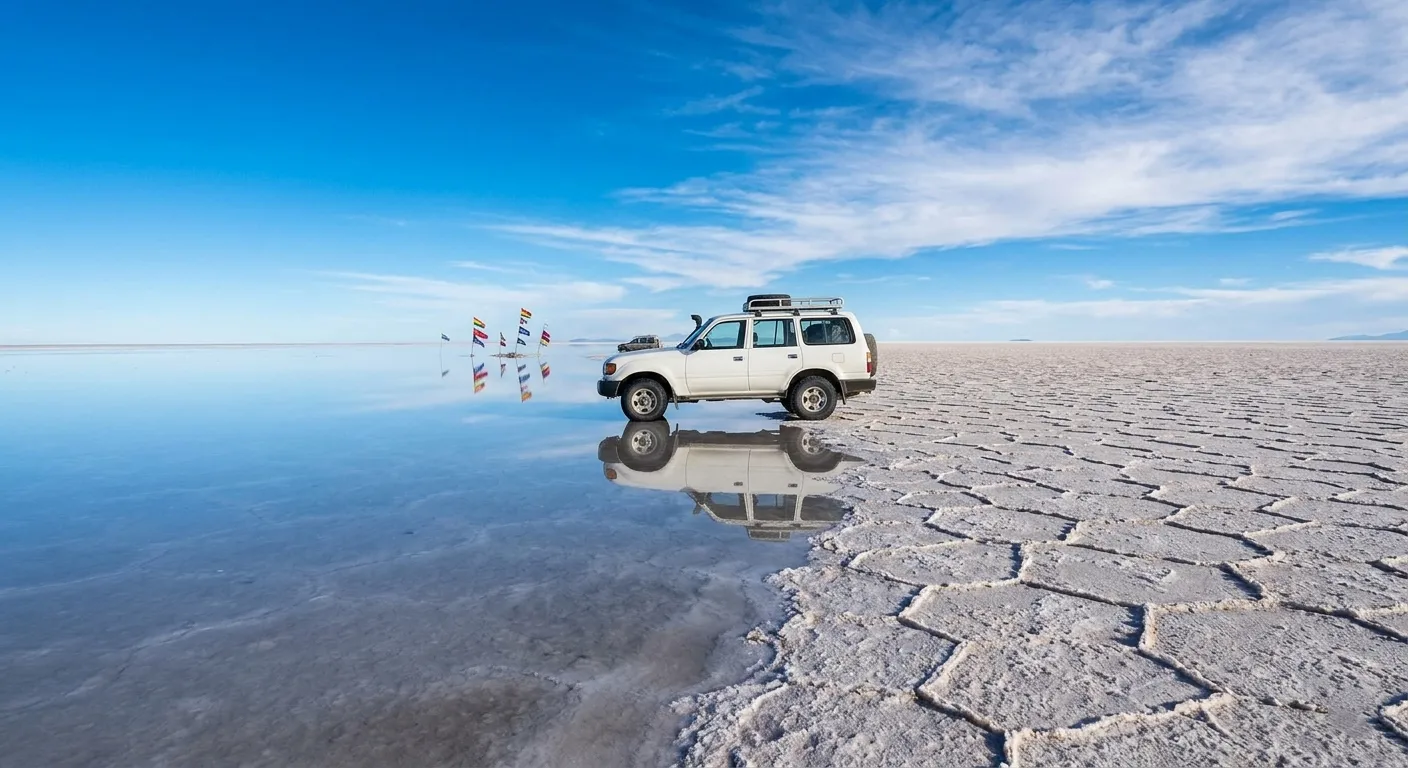
If you visit between January and March, the salt flat gets covered with a thin layer of water.
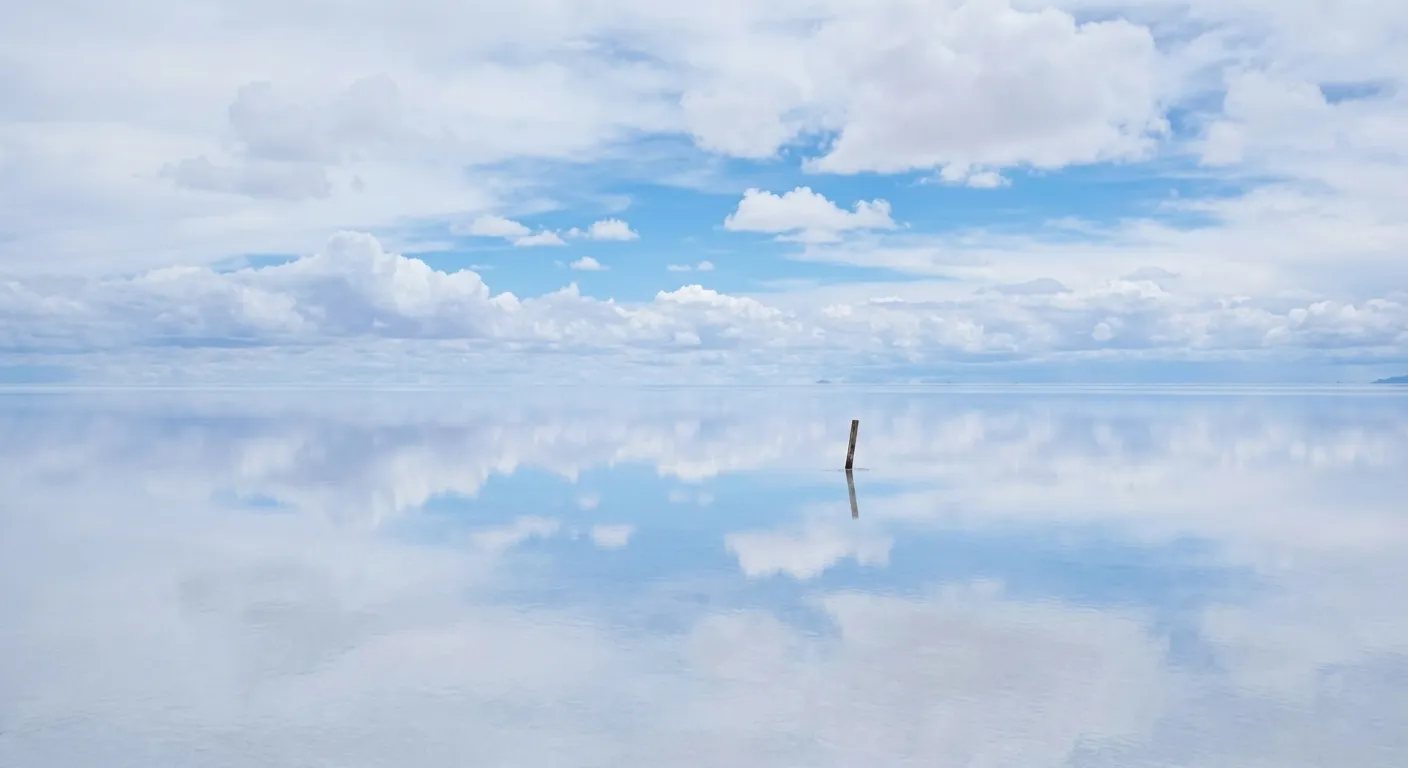
This creates a natural mirror effect. The sky reflects perfectly on the ground, making it look like the earth and sky are meeting.
I visited when the surface was partially wet, so I got to see a bit of that reflection. It is simple, but very unique.
What It Feels Like to Be There
Standing in the middle of the salt flat feels strange.
There are no landmarks. No buildings. No clear direction. Just white land stretching endlessly.
At times, it is so bright that it becomes uncomfortable to look without sunglasses. Most people wear them for protection.
The ground itself is made of salt crust, and in some areas, it can be wet.
The tour company provided protective covers for shoes so they would not get wet or damaged.
Salt Extraction and Local Use
One interesting thing I noticed is that locals still extract salt from this area.
The salt is processed and used in food across Bolivia. So there is a high chance that if you eat in Bolivia, you are consuming salt from this very place.
Visiting a Salt Hotel
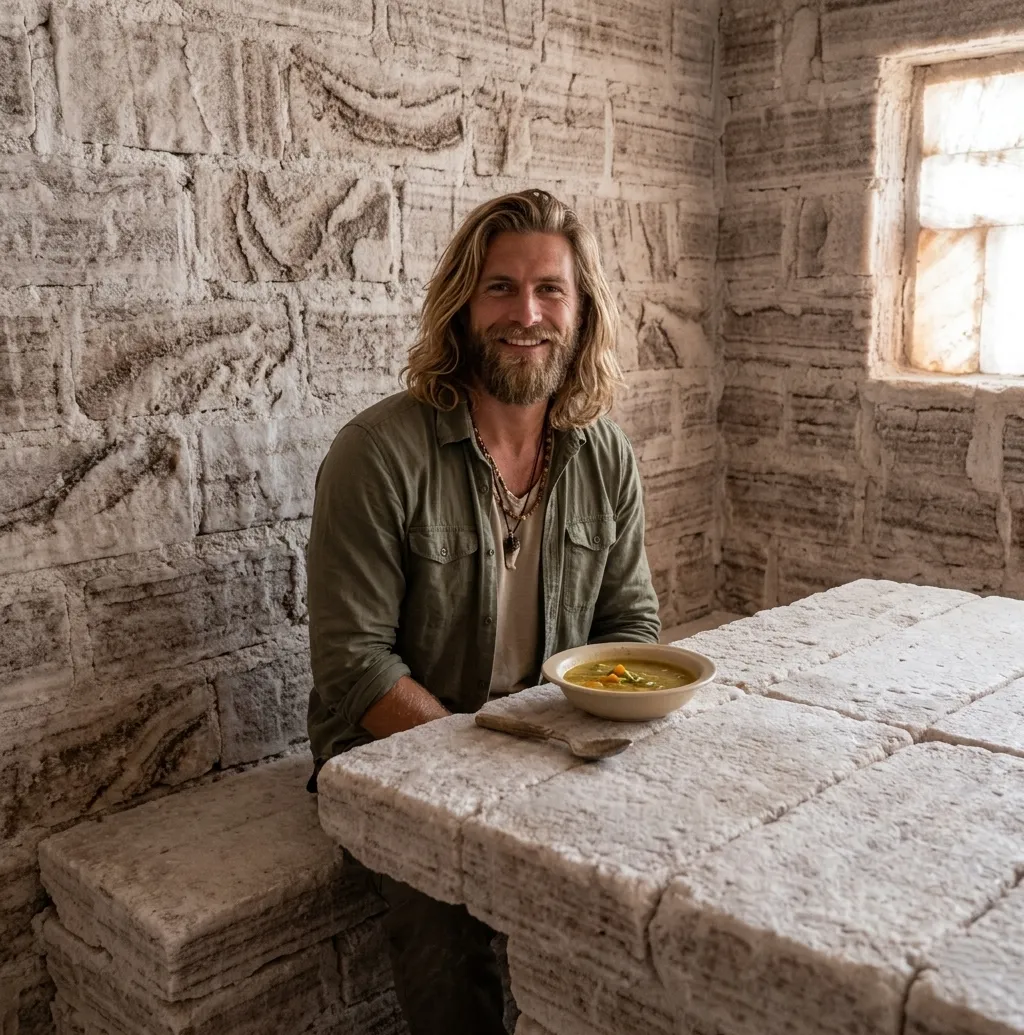
During the tour, we stopped at a structure built almost entirely from salt.
Walls, tables, and even some decorative elements are made from salt blocks.
Inside, we had lunch. The food was simple but filling. Rice, vegetables, salad, and other basic items.
It is not about luxury. It is about experiencing something different.
For travelers who prefer structured city exploration, this New York walking tour guide provides a completely different pace and vibe.
Important Travel Tips for Salar de Uyuni
Prepare for Altitude
Altitude sickness is real here. Headaches, fatigue, and nausea are common. Drink water and avoid overexertion.
Carry Essentials
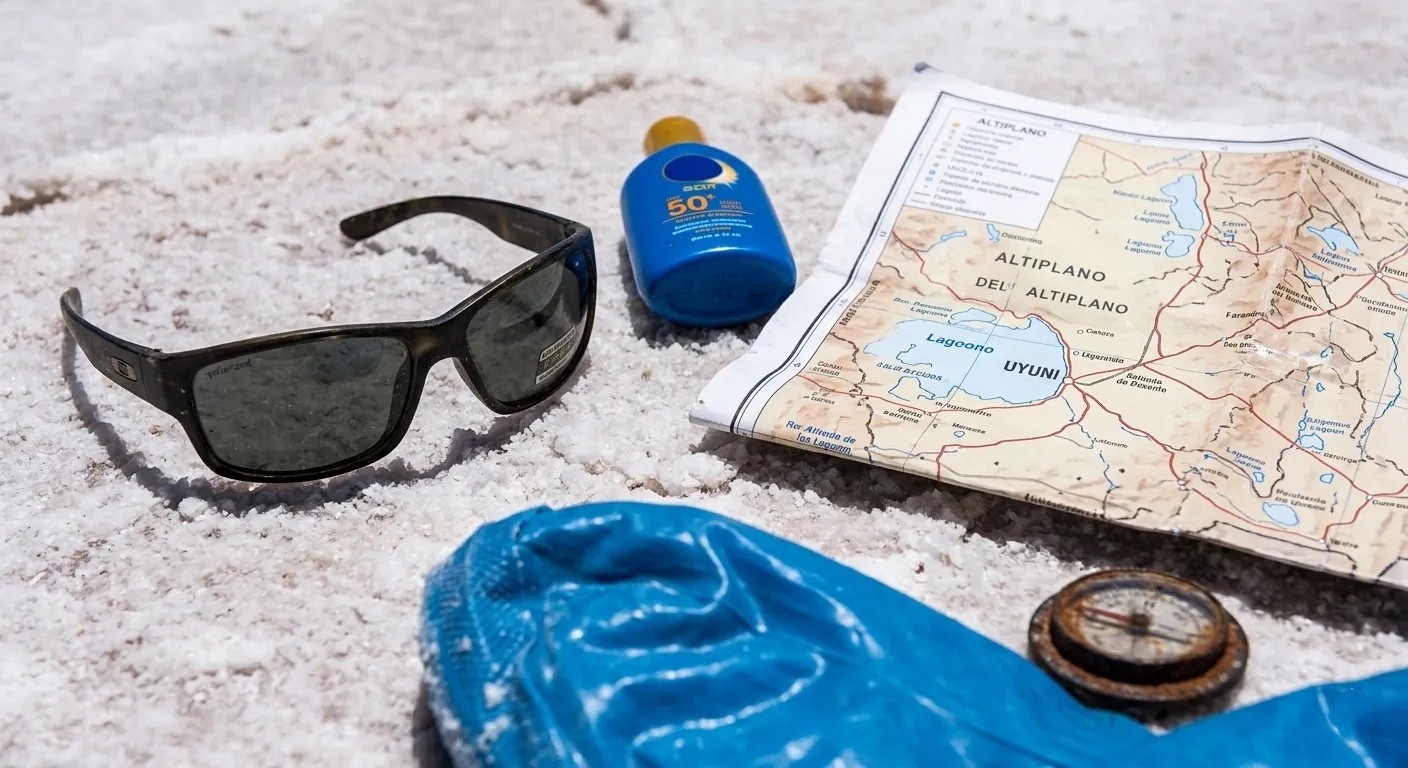
Bring sunglasses, sunscreen, and warm clothes. Even if it feels warm during the day, temperatures can drop quickly.
Book Smartly
Tours are easily available, but check what is included. Some include meals, others do not.
Expect Basic Facilities
Uyuni is not a luxury destination. Facilities are simple. The Internet can be slow. Roads are not perfect.
Ending the Day in Uyuni
We returned to Uyuni around 8:30 in the evening.
After a long day, I had a simple hot soup for dinner. I was not feeling very well due to the altitude and fatigue, so I rested early.
The next morning, I had to leave for another country. I wanted to explore more of Bolivia, but time did not allow it.
Since conditions here can be challenging, investing in luxury travel gadgets can make your trip more comfortable and efficient.
Final Thoughts on Visiting Salar de Uyuni
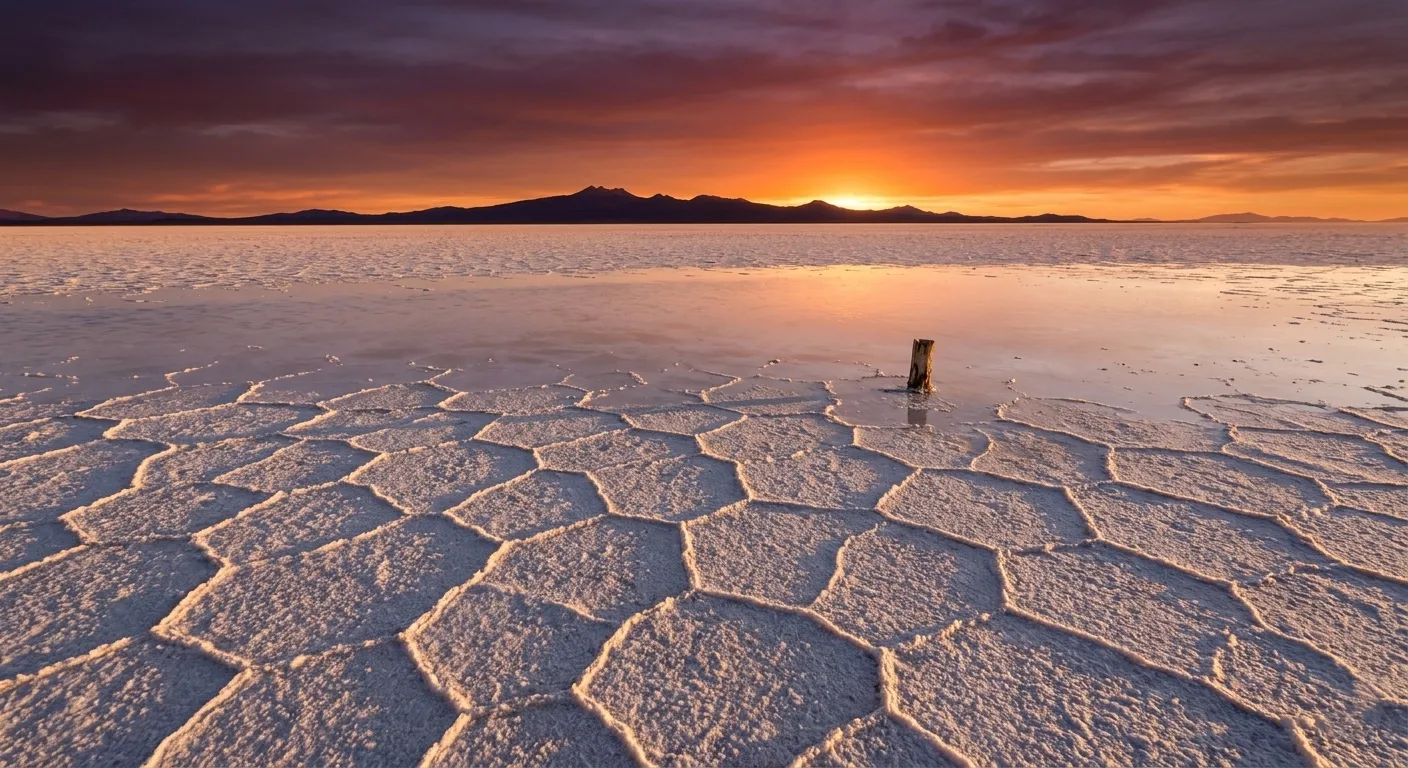
Salar de Uyuni is not a place filled with activities. It is not about doing many things. It is about seeing something that does not exist anywhere else at this scale.
The journey is not always comfortable. The town is simple. The conditions can be tough. But the experience is worth it.
If you are planning to visit, go with realistic expectations. Do not expect luxury. Expect something raw, quiet, and different. And sometimes, that is exactly what makes a place unforgettable.