The Ultimate Guide to the Best Travel Cameras of 2026: Find Your Perfect Travel Companion
Why Your Travel Camera Choice Matters More Than You Think
After decades of traveling across 47 countries and countless airports, train stations, and dusty backroads, I’ve learned one universal truth: your camera can make or break your trip. I’ve lugged heavy DSLRs through humid jungles (regretting every ounce), missed shots because my camera was too slow, and watched fellow travelers struggle with gear that simply wasn’t right for their journey.
The perfect travel camera isn’t about having the biggest sensor or the most megapixels. It’s about finding the sweet spot between image quality, portability, durability, and your personal travel style.
After testing dozens of cameras in real-world travel conditions throughout 2025 and early 2026, I’ve narrowed down the absolute best options for different types of travelers. Whether you’re backpacking through Southeast Asia, on a luxury European tour, or hiking Patagonia, there’s a perfect camera waiting for you.
Quick Comparison: At-a-Glance Overview
| Camera | Best For | Weight | Zoom Range | Video Quality | Durability | Price Range |
| Sony RX100 VII | All-around travelers | 302g | 24-200mm | 4K HDR | Good | $$$$ |
| DJI Osmo Pocket 3 | Vloggers & video creators | 179g | Fixed wide (20mm) | 4K/120fps | Moderate | $$$ |
| OM System Tough TG-7 | Adventure seekers | 249g | 25-100mm | 4K | Excellent (waterproof) | $$ |
| Fujifilm X100VI | Photo enthusiasts | 521g | Fixed 35mm | 4K | Good | $$$$ |
| Sony a6700 | Interchangeable lens lovers | 493g (body only) | Lens dependent | 4K/120fps | Good | $$$ |
| GoPro HERO 13 Black | Budget adventurers | 154g | Fixed ultra-wide | 5.3K | Excellent (waterproof) | $$ |
In-Depth Reviews: The 6 Best Travel Cameras for 2026
1. Sony Cyber-shot RX100 VII: The Ultimate All-in-One Travel Companion
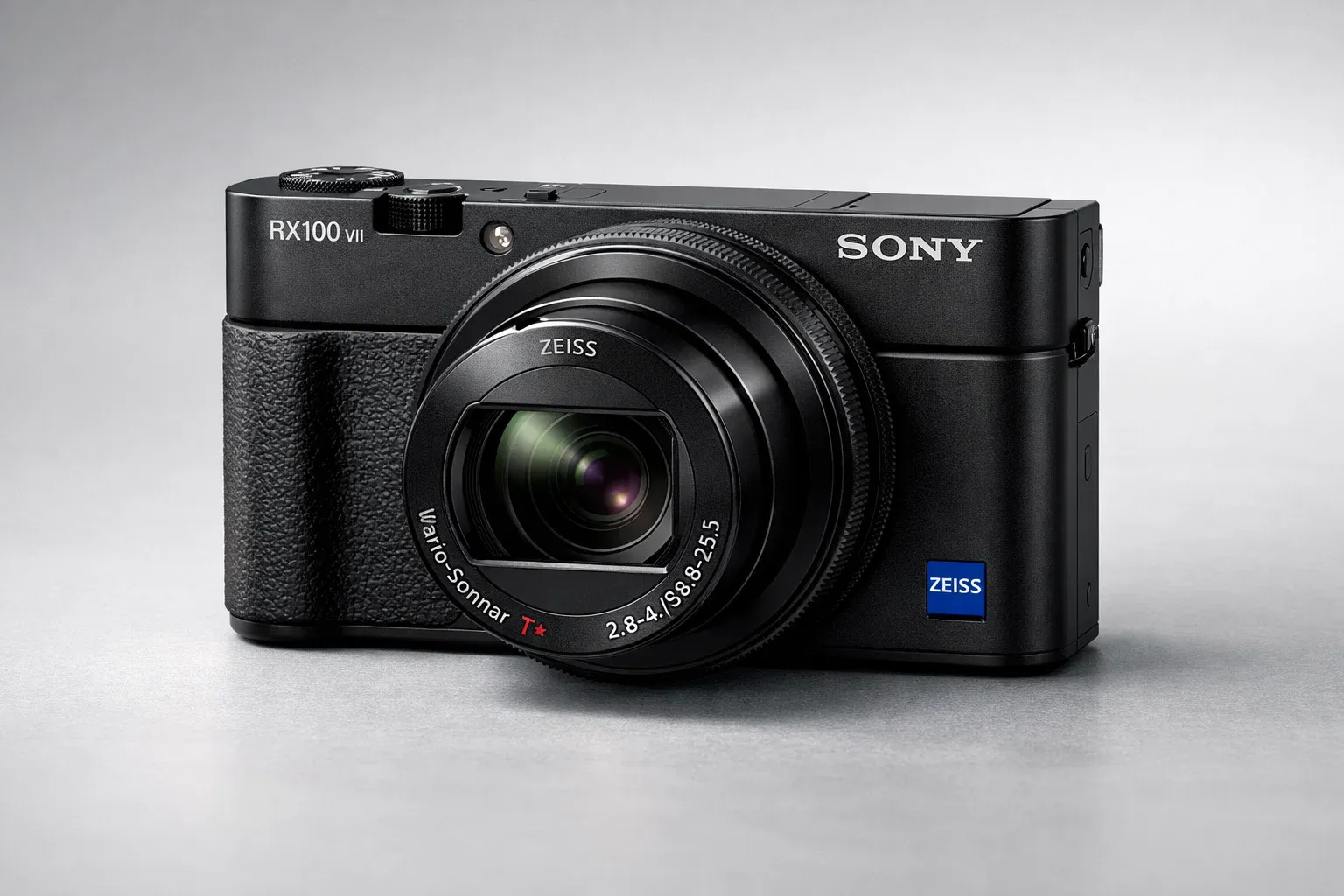
Best for: Travelers who want one device for everything
The RX100 VII is what I call the “Swiss Army knife” of travel cameras. I took this little powerhouse on a three-week trip through Morocco, and it handled everything from the bustling souks of Marrakech to the starry skies of the Sahara without missing a beat.
What Makes It Special:
The magic lies in its 24-200mm zoom lens packed into a pocket-sized body. That’s the equivalent of carrying a wide-angle lens for landscapes and a telephoto lens for wildlife, all without changing lenses or carrying extra weight. The real-time tracking autofocus is borrowed from Sony’s professional cameras, meaning it sticks to your subject like glue—perfect for photographing moving subjects or street photography.
Real-World Travel Performance:
- Low Light: The 1-inch sensor performs admirably in dimly lit restaurants and evening city walks
- Battery Life: Expect about 260 shots per charge; carry at least one spare for full-day shooting
- Handling: The pop-up electronic viewfinder is a lifesaver in bright sunlight
- Speed: 20fps burst shooting captures perfect moments every time
The Traveler’s Verdict:
If I could only own one camera for all my travels, this would be it. Yes, it’s expensive, and the controls can feel cramped if you have large hands, but the versatility is unmatched. It disappears into a pocket but delivers images that rival much larger cameras.
Perfect for: City breaks, wildlife encounters, family vacations, and travelers who want “just one camera” that does everything well.
Potential Dealbreakers:
- Small buttons can frustrate users with larger fingers
- The menu system is complex (though customizable)
- Not weather-sealed, so keep it dry
2. DJI Osmo Pocket 3: The Vlogger’s Dream Machine
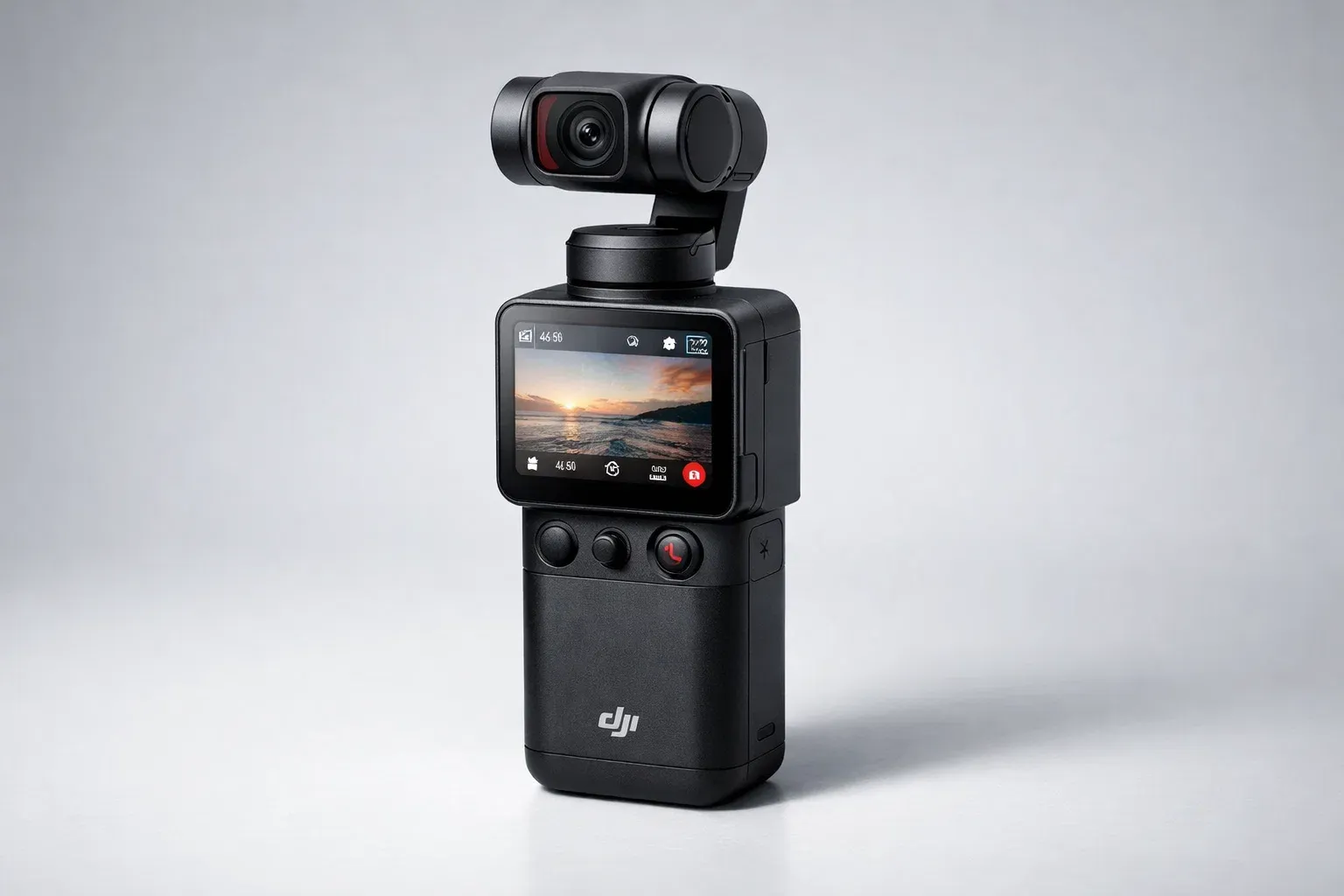
Best for: Solo travelers and content creators who prioritize video
I’ll admit it—I was skeptical when I first saw the Osmo Pocket 3. A camera with a built-in gimbal that fits in your palm? It sounded too good to be true. Then I used it to film myself walking through the colorful streets of Burano, Italy, and watched the footage later. It looked like I had a professional camera operator with me.
Why Video Creators Love It:
The 1-inch sensor is a massive upgrade from previous versions, delivering excellent image quality even in challenging light. But the real star is the mechanical 3-axis gimbal. Your walking footage becomes glide-cam smooth, and the ActiveTrack 6.0 feature locks onto you and keeps you perfectly framed as you move—revolutionary for solo travelers.
Standout Features for Travel:
- Flip Screen: The 2-inch touchscreen flips up for selfie mode, automatically switching to front-facing camera and enabling subject tracking
- Quick Launch: Pull it from your pocket, and it’s recording in seconds
- Magnetic Mounts: Stick it on metal surfaces for creative angles
- 4K/120fps: Slow-motion capabilities for dramatic travel videos
Real-World Limitations:
The fixed 20mm equivalent lens is great for vlogging and landscapes but won’t zoom in on distant subjects. And while the image quality is impressive for its size, it doesn’t match dedicated still cameras for photography.
The Traveler’s Verdict:
For travelers who prioritize video memories over still photos, this is non-negotiable gear. It’s transformed how I document my journeys, and the compact size means I actually carry it everywhere.
Perfect for: Solo travelers, YouTubers, Instagram creators, and anyone who wants cinematic video without the bulk.
Potential Dealbreakers:
- Not ideal for photography-focused travelers
- Fixed wide lens limits versatility
- Battery built-in (no swapping on long days without a power bank)
3. OM System Tough TG-7: The Indestructible Adventure Companion
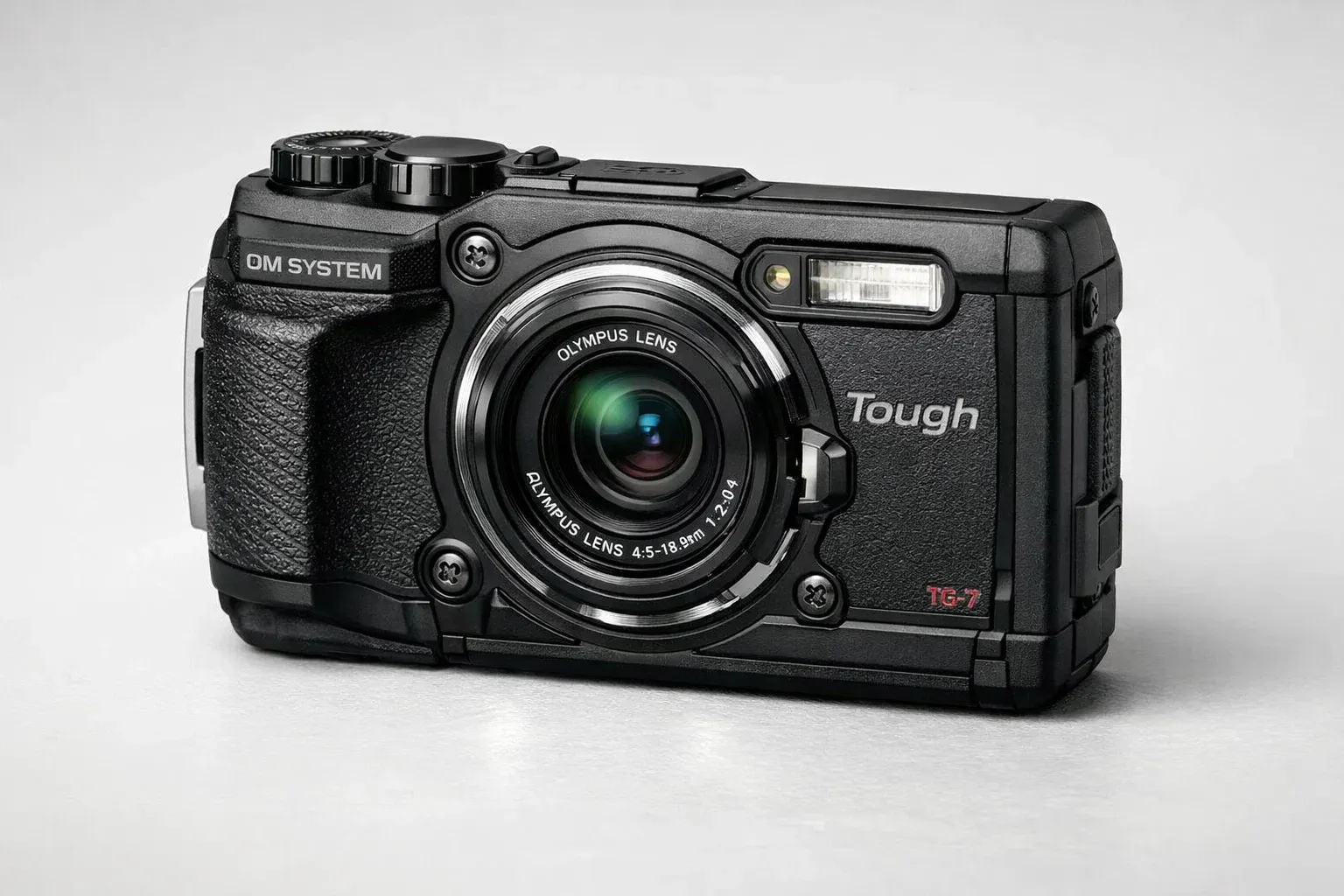
Best for: Adventure travelers, snorkelers, hikers, and families with kids
I’ve dropped this camera in rivers, taken it snorkeling in the Maldives, and watched a fellow traveler accidentally run it over with a rental car in Iceland. The TG-7 didn’t just survive—it kept shooting perfectly. This isn’t hyperbole; it’s the only camera I genuinely don’t worry about.
Built for the Elements:
- Waterproof: 15 meters (49 feet) without an external housing
- Shockproof: Withstands drops from 2.1 meters
- Crushproof: Can handle 100kg of force
- Freezeproof: Works down to -10°C
- Dustproof: Sealed against sand and dirt
Surprising Photography Capabilities:
Don’t let the rugged exterior fool you—this camera has serious photographic chops. The microscope mode lets you focus as close as 1cm from your subject, revealing incredible details in flowers, insects, or textures. The field sensor system displays altitude, depth, and GPS coordinates on your images—perfect for documenting exact locations of your adventures.
Underwater Excellence:
With multiple underwater white balance modes, the TG-7 produces accurate, vibrant colors beneath the surface without requiring expensive filters or post-processing. The dual fisheye lens accessory even enables stunning underwater macro photography.
The Traveler’s Verdict:
This is the camera I recommend to anyone planning physically demanding travel. It’s not about having the absolute best image quality—it’s about having any images at all. When conditions get tough, the TG-7 keeps shooting while other cameras stay safely packed away.
Perfect for: Snorkeling and diving trips, mountaineering, desert travel, family vacations with kids, and travelers who are rough on gear.
Potential Dealbreakers:
- A smaller sensor means less impressive low-light performance
- Image quality is good but not great compared to larger-sensor cameras
- The menu system takes some getting used to
4. Fujifilm X100VI: The Photographer’s Soul Camera
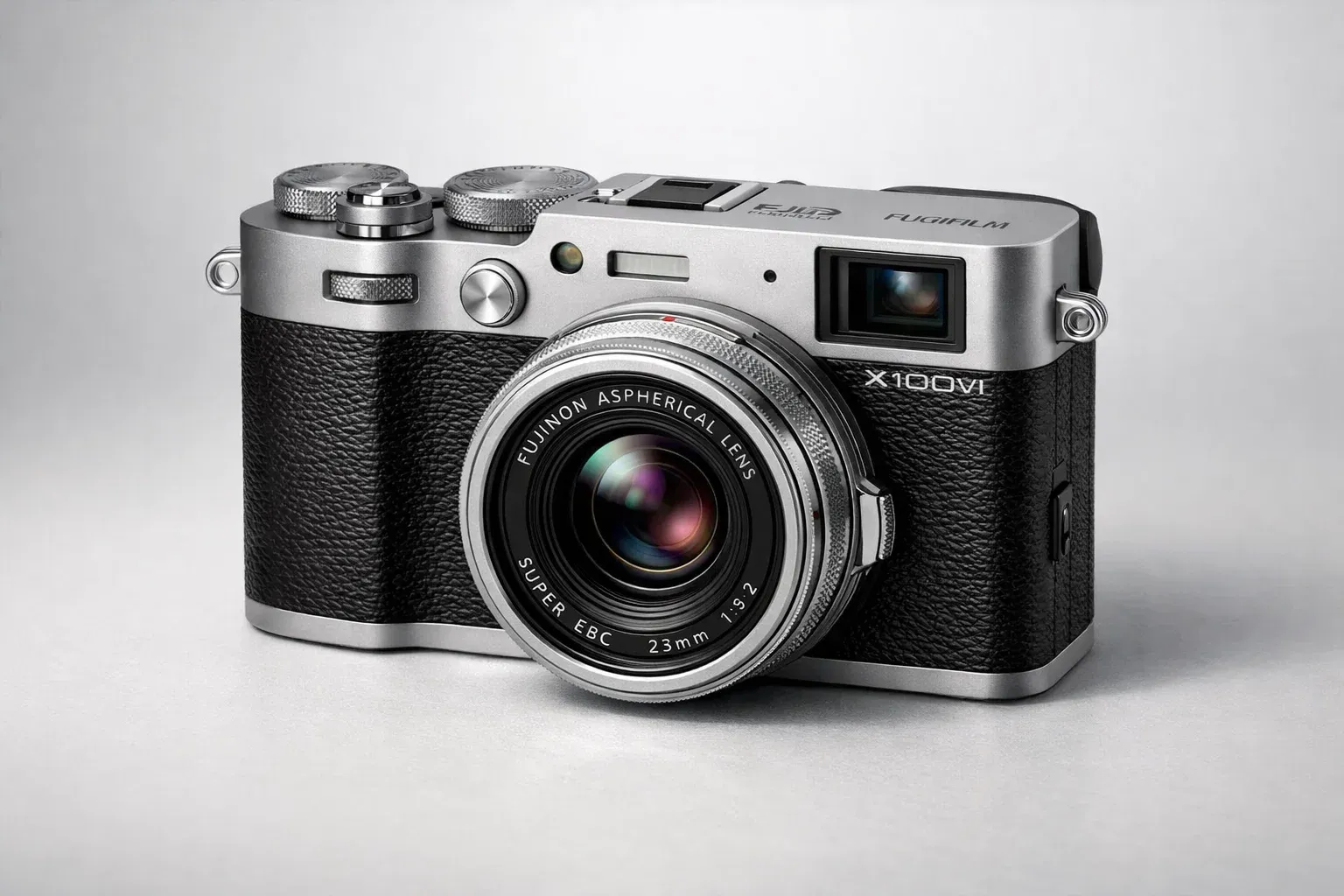
Best for: Enthusiasts who want stunning images straight from the camera
Some cameras are tools. The Fujifilm X100VI is an experience. From the moment you hold its magnesium-alloy body with precision-machined dials, you understand this is something special. I spent a month with this camera in Kyoto, and it fundamentally changed how I approach travel photography.
The Magic of Fixed Lens:
Yes, the fixed 35mm equivalent lens (in full-frame terms) means you can’t zoom. But here’s the secret: that “limitation” forces you to move your feet, to compose carefully, to really see what you’re photographing. My images from that trip are among the best I’ve ever taken because I had to work for them.
Film Simulations: The Game Changer:
Fujifilm spent decades perfecting analog film stocks. They’ve poured that knowledge into the X100VI’s 20 film simulations. Set it to Classic Chrome or Provia, and your JPEGs look like they came from a film camera—rich, textured, deeply pleasing. I barely edited any photos from my travels; they were ready to share immediately.
What’s New in 2026:
- 40.2MP X-Trans CMOS 5 HR sensor for incredible detail
- Improved autofocus that finally competes with Sony
- 6-stop in-body image stabilization (a first for the X100 series)
- Enhanced weather sealing for braving the elements
The Traveler’s Verdict:
This camera is for travelers who love photography as an art form. It slows you down, makes you thoughtful, and rewards you with images you’ll treasure forever. It’s not practical—it’s passionate.
Perfect for: Street photographers, fine art travel enthusiasts, anyone who wants beautiful images without heavy editing, and travelers who appreciate beautiful design.
Potential Dealbreakers:
- A fixed lens means no zoom capability
- Premium price and limited availability
- Heavier than pocket cameras
- Not ideal for video-focused travelers
5. Sony a6700: The Compact Powerhouse for Lens Lovers
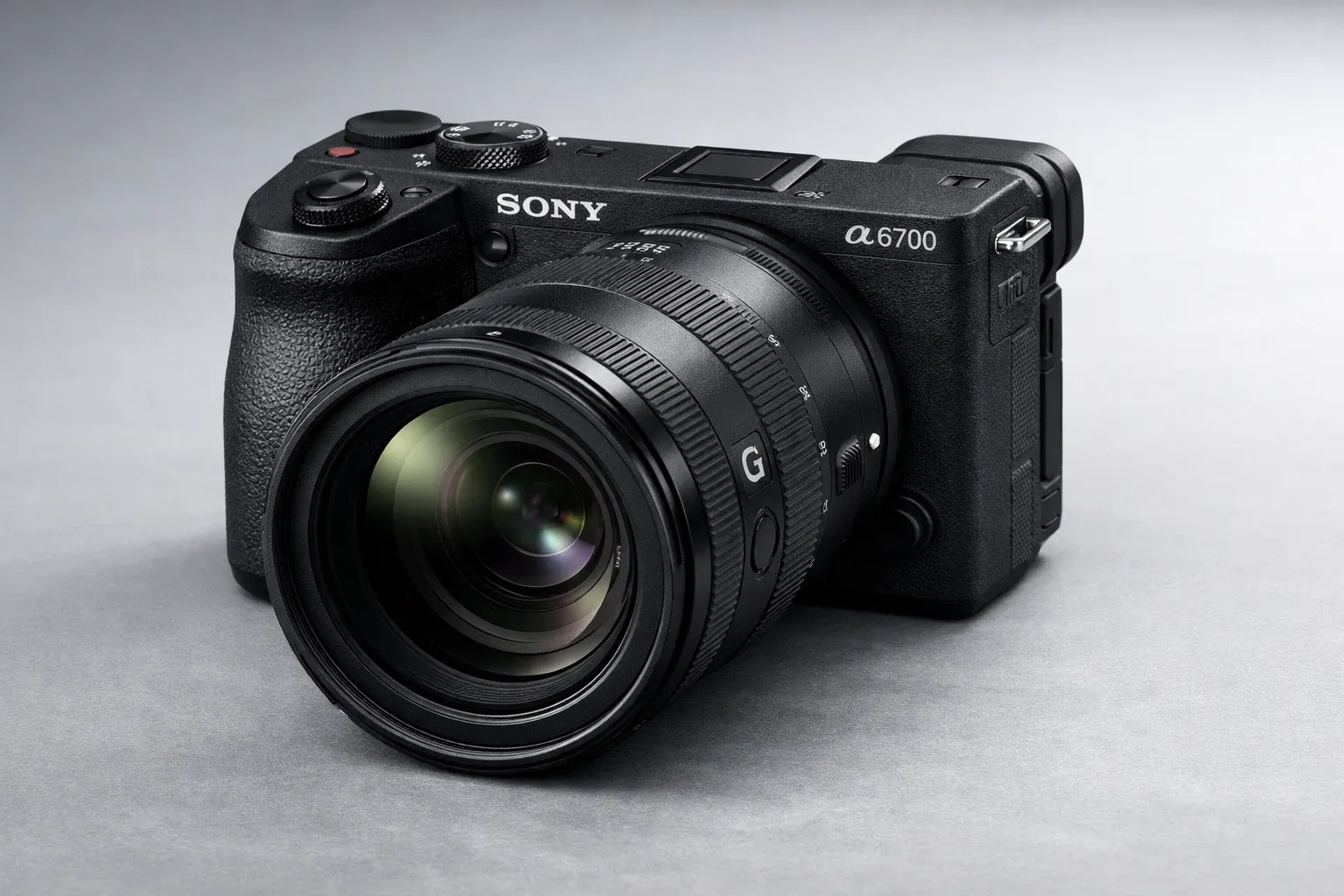
Best for: Photographers who want flexibility without the bulk
Full-frame cameras produce gorgeous images, but they’re heavy. The a6700 proves you don’t need full-frame for professional results. This APS-C mirrorless camera packs Sony’s latest technology into a body that won’t break your back or fill your bag.
Why It’s Perfect for Travel:
The secret is the lens ecosystem. Pair the a6700 with the Sony 18-135mm f/3.5-5.6 OSS lens, and you have a 27-202mm equivalent zoom range in a package lighter than many full-frame bodies alone. Swap to the Sigma 16mm f/1.4 for stunning low-light shots, or the Sony 70-350mm for wildlife—all while keeping your kit surprisingly compact.
Cutting-Edge Performance:
- AI Processing Unit: Dedicated chip for human, animal, and bird recognition
- Real-time Tracking: Locks onto subjects and never lets go
- 4K/120fps Video: Professional video capabilities in a travel-friendly body
- 5-axis Stabilization: Sharp handheld shots in challenging conditions
Real-World Travel Experience:
I carried the a6700 through the chaos of Delhi’s streets and the tranquility of Kerala’s backwaters. The autofocus never missed, the image quality satisfied my most demanding clients, and at the end of long shooting days, my shoulders didn’t ache. The flip-screen and improved menu system made it accessible even in fast-changing situations.
The Traveler’s Verdict:
This is the camera for serious photographers who refuse to compromise on quality but also refuse to carry heavy gear. It’s the perfect balance point between capability and portability.
Perfect for: Enthusiast photographers, semi-professionals, travelers who want to grow their skills, and anyone wanting to use multiple lenses without the weight penalty.
Potential Dealbreakers:
- Requires carrying and changing lenses
- Investment grows as you add lenses
- Smaller viewfinder than full-frame competitors
6. GoPro HERO 13 Black: The Budget-Friendly Action Hero
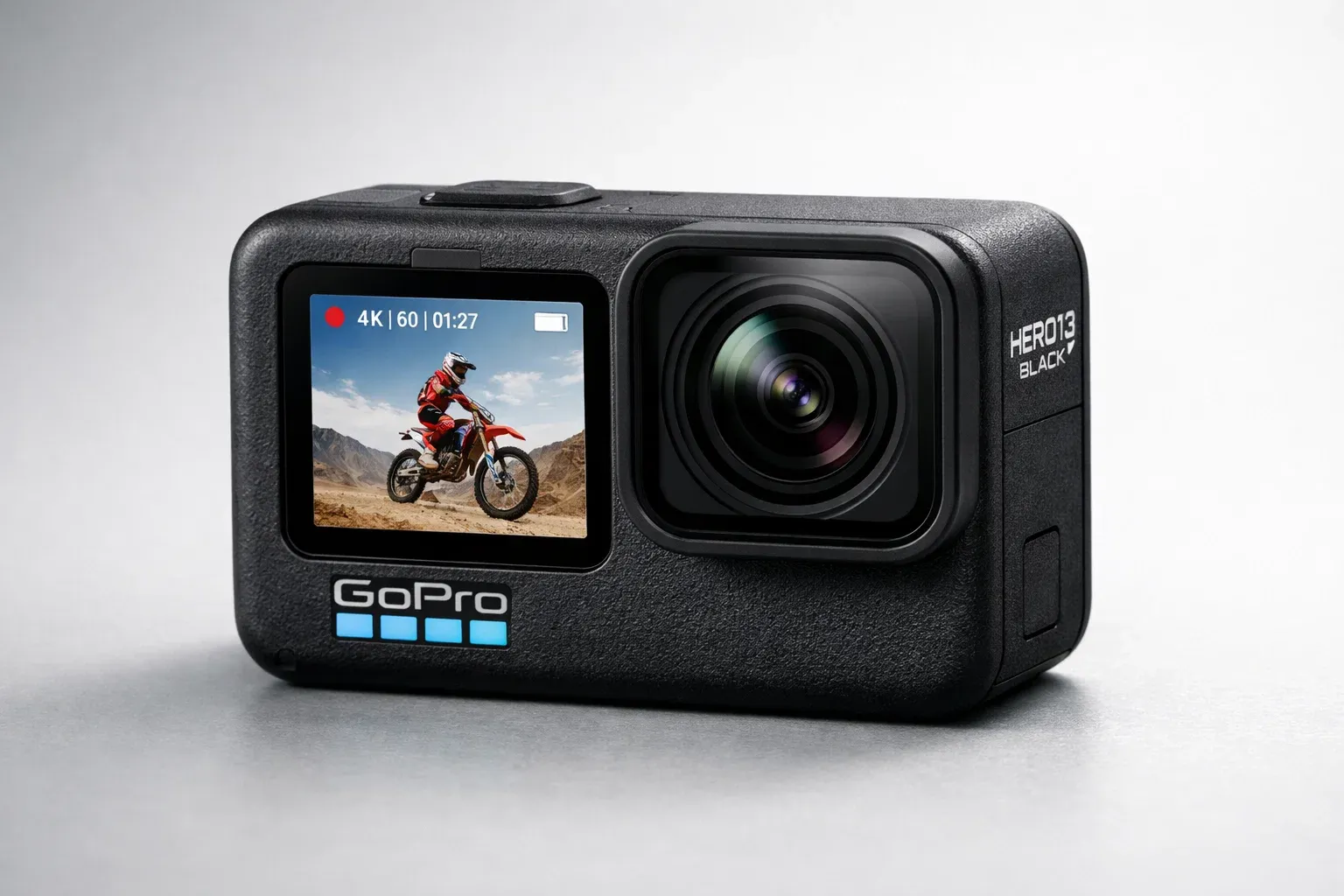
Best for: Active travelers on a budget who want maximum versatility
Sometimes the best camera for travel isn’t a traditional camera at all. The GoPro HERO 13 Black has evolved far beyond its action-sports roots into a legitimate travel tool that costs less than half of some options on this list.
What You Get for Your Money:
For under $400, you get a camera that’s waterproof to 10 meters, shoots 5.3K video, captures 27MP photos, and fits in your smallest pocket. But the real value is in the versatility. With the right mounts, it becomes a hands-free POV camera, a time-lapse machine, an underwater explorer, or a vlogging tool.
Game-Changing Travel Features:
- HyperSmooth 6.0 Stabilization: Best-in-class, makes every video look professional
- TimeWarp 3.0: Creates mesmerizing moving time-lapses automatically
- 10-Bit Color: More color information for better editing flexibility
- Easy Mounting: Sticks to everything, goes anywhere
- Live Streaming: Share adventures in real-time
The “Just in Case” Camera:
Here’s my travel hack: even when I bring my “real” camera, I always pack a GoPro. Why? Because there are situations I won’t risk my expensive gear—kayaking, sandstorms, crowded clubs, torrential rain. The GoPro captures those moments without anxiety. It’s my insurance policy against missed memories.
The Traveler’s Verdict:
For the price of a good lens, you get a complete camera system that handles conditions that would destroy other gear. It’s not the best for artistic photography, but it’s the best for capturing experiences regardless of conditions.
Perfect for: Budget travelers, adventure sports enthusiasts, families, and as a secondary camera for risky situations.
Potential Dealbreakers:
- Small sensor struggles in low light
- Distinctive “action cam” look may not suit all tastes
- Battery life requires multiple spares for full-day shooting
- Menus are best navigated via phone app
How to Choose Your Perfect Travel Camera: A Decision Framework
After reading about these six excellent options, you might feel overwhelmed. Here’s a simple framework I use when helping fellow travelers choose:
Step 1: Define Your Primary Use
Ask yourself: What will I photograph most?
- Landscapes and cityscapes: Prioritize zoom range and resolution (Sony RX100 VII, Fujifilm X100VI)
- People and street scenes: Focus on autofocus and low-light performance (Sony a6700, Fujifilm X100VI)
- Myself (vlogging): Look for flip screens and stabilization (DJI Osmo Pocket 3, GoPro HERO 13)
- Adventure activities: Durability is non-negotiable (OM System TG-7, GoPro HERO 13)
Step 2: Be Brutally Honest About Your Habits
I can’t tell you how many travelers buy cameras they never use because they’re “too nice to risk” or “too heavy to carry.” Be honest:
- Do you actually carry gear all day, or does it stay in the hotel?
- Will you baby a delicate camera, or do you need something rugged?
- Are you willing to edit photos, or do you want great results straight from the camera?
Step 3: Consider the Total System Cost
The camera body is just the beginning. Factor in:
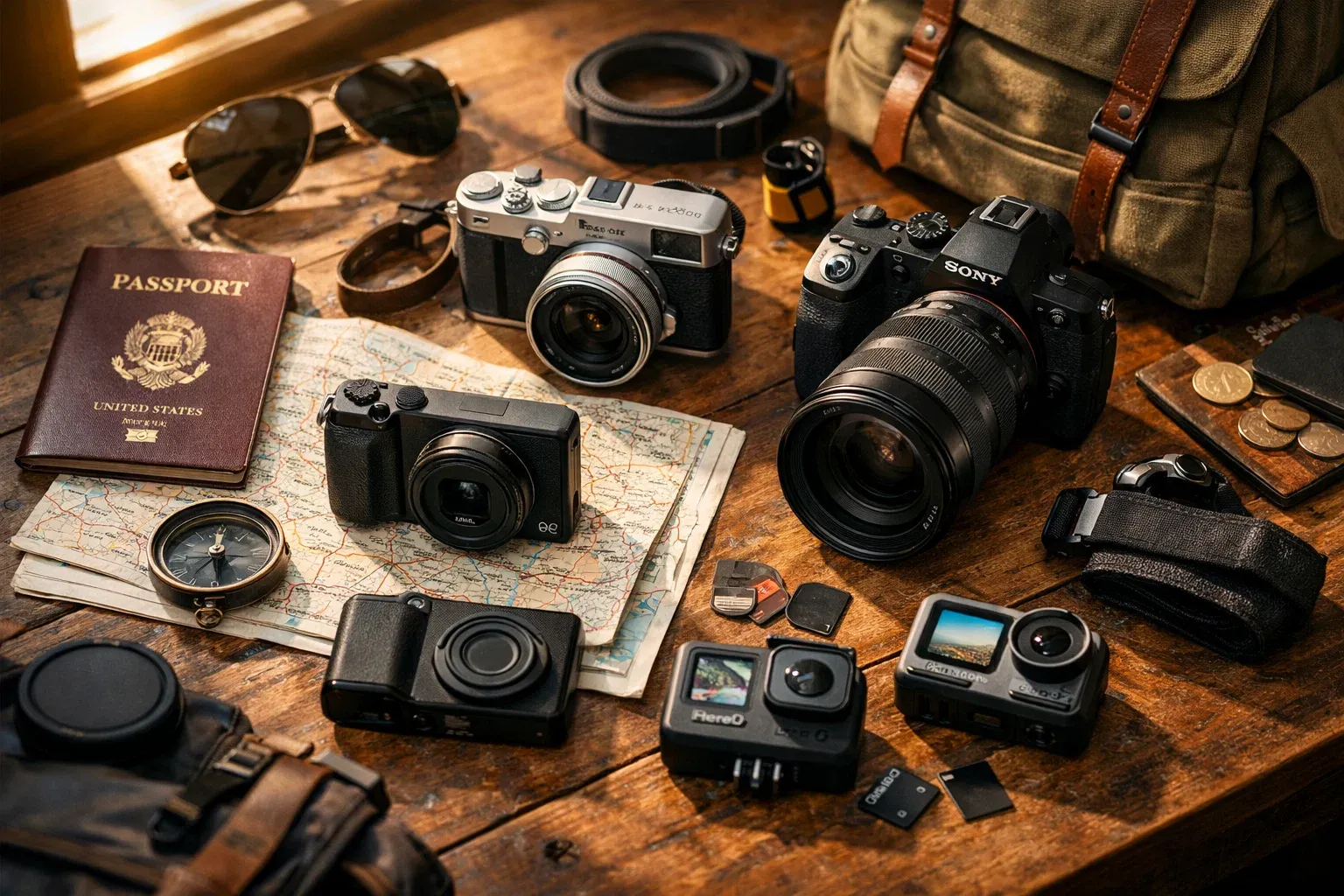
- Memory cards (at least two, from reputable brands)
- Extra batteries (essential for full-day shooting)
- Protection (cases, straps, cleaning kits)
- Lenses (if choosing interchangeable lens systems)
- Storage solutions (portable hard drives for long trips)
Step 4: Match Camera to Trip Type
| Trip Type | Recommended Camera | Why |
| Weekend city break | Sony RX100 VII or Fujifilm X100VI | Pocketable, great for streets and restaurants |
| 3-week backpacking | Sony a6700 with 18-135mm lens | Versatile without weighing you down |
| Beach vacation | OM System Tough TG-7 | Sand and water proof |
| Hiking/camping | OM System Tough TG-7 or GoPro HERO 13 | Light, durable, weatherproof |
| Safari/wildlife | Sony RX100 VII (200mm zoom) or Sony a6700 with telephoto | Reach matters for animal shots |
| Cruise | Sony RX100 VII | One camera for ports, dinners, and ship life |
| Ski trip | GoPro HERO 13 | Cold-proof, mountable, rugged |
Essential Accessories Every Travel Photographer Needs
The right accessories transform a good camera into a great travel companion. Here’s what I never leave home without:
1. The Battery Trinity
- At least two spare batteries for any camera (three for heavy shooters)
- Portable power bank with fast-charging capabilities
- A multi-charger that charges multiple batteries simultaneously overnight
2. Storage Strategy
- Multiple small-capacity cards (64GB) rather than one giant card—if a card fails, you lose fewer images
- Waterproof card case to protect your memories
- Portable SSD for backing up photos on longer trips (I use a 1TB Samsung T7)
3. Protection and Comfort
- Peak Design Capture Clip for hands-free carrying (game-changer for hiking)
- Peak Design Cuff or Clutch strap for security without bulk
- Microfiber cloths (multiple) for dust, rain, and lens cleaning
- Small rocket blower for sensor cleaning on interchangeable lens cameras
4. Creative Tools
- Small tabletop tripod (Joby GorillaPod is my favorite)
- Variable ND filter for video and creative effects
- Lens cleaning pen for quick touch-ups
Travel Photography Tips from 20+ Years on the Road
After two decades of making every mistake possible, here’s what I’ve learned about photographing your travels:
The Golden Hours Are Golden for a Reason
The hour after sunrise and the hour before sunset transform ordinary scenes into magic. Plan your most important shoots during these times. The harsh midday sun creates unflattering shadows and blown-out highlights.
Shoot in RAW + JPEG
Set your camera to save both formats. JPEGs are immediately shareable, but RAW files give you editing flexibility for the photos that really matter. Storage is cheap; memories are priceless.
Pack for Security
In crowded tourist areas, keep your camera wrapped around your wrist or neck, not dangling. Use bags that don’t scream “camera inside.” Insure your gear before international trips—it’s worth every penny.
The 3-Second Rule
After taking a photo, hold your camera steady for three seconds. This covers you for handheld shots and ensures you don’t miss the moment because you moved too quickly.
Back Up Daily
Every evening, back up your day’s photos to both your portable drive and cloud storage (when WiFi is available). I’ve seen too many travelers lose irreplaceable images to corrupted cards or stolen gear.
Less Is Often More
The best travel photographers aren’t the ones with the most gear. They’re the ones who know their single camera intimately, can adjust settings without looking, and never miss a moment because they’re fiddling with equipment.
Final Thoughts: The Best Camera Is the One You Have With You
After testing hundreds of cameras across every continent, I’ve arrived at this simple truth: the perfect travel camera doesn’t exist, but the perfect camera for you absolutely does.
The Sony RX100 VII offers unmatched versatility for travelers who want one device for everything. The DJI Osmo Pocket 3 revolutionizes solo video creation. The OM System Tough TG-7 survives where other cameras fail. The Fujifilm X100VI creates soulful images that need no editing. The Sony a6700 provides professional flexibility without professional bulk. And the GoPro HERO 13 delivers incredible value for active travelers on a budget.
Your job isn’t to find the “best” camera on paper. It’s to find the camera that disappears into your travel style, that you’ll actually carry every day, that captures your memories without becoming a burden.
My recommendation: Be honest about your priorities, handle cameras in person if possible, and remember that the greatest camera feature is the one that makes you want to take pictures.
Now get out there and create some memories. The world is waiting.
Have questions about choosing your travel camera? Drop them in the comments below, and I’ll help you find your perfect match. Safe travels!
Disclaimer: This article is based on personal testing and experience. Some links may be affiliate links, meaning I earn a small commission if you purchase through them—at no extra cost to you. This helps support the creation of more in-depth travel gear guides.