10 Places on Earth That Look Completely Fake (But Aren’t)
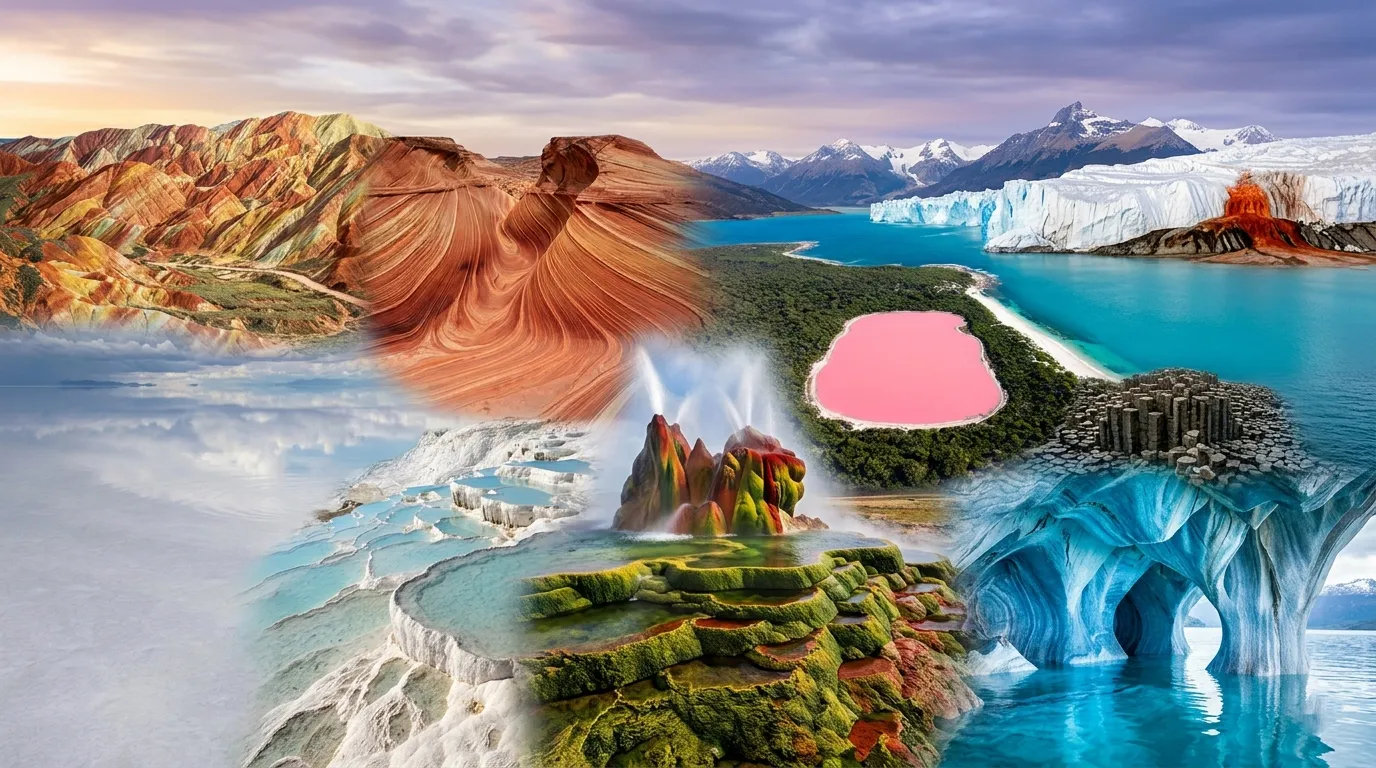
So I was scrolling through travel photos last year and saw this image of a salt flat in Bolivia. The entire sky was reflected on the ground. Clouds below your feet, horizon just… gone. I thought “Nice Photoshop work,” and kept scrolling.
Turns out it’s real. Completely, legitimately real.
That sent me down a rabbit hole. Spent way too many nights looking up places that seem impossible. Pink lakes. Striped mountains. Caves that glow blue. The planet we live on is strange in ways most people don’t realize.
Here are ten places that made me do a double-take. Some I’ve visited. Some I’ve only seen in photos and really want to get to. All of them mess with your sense of what’s actually possible.
Recommended Travel Items for Your Trip
1. Salar de Uyuni, Bolivia – When the Ground Becomes Sky
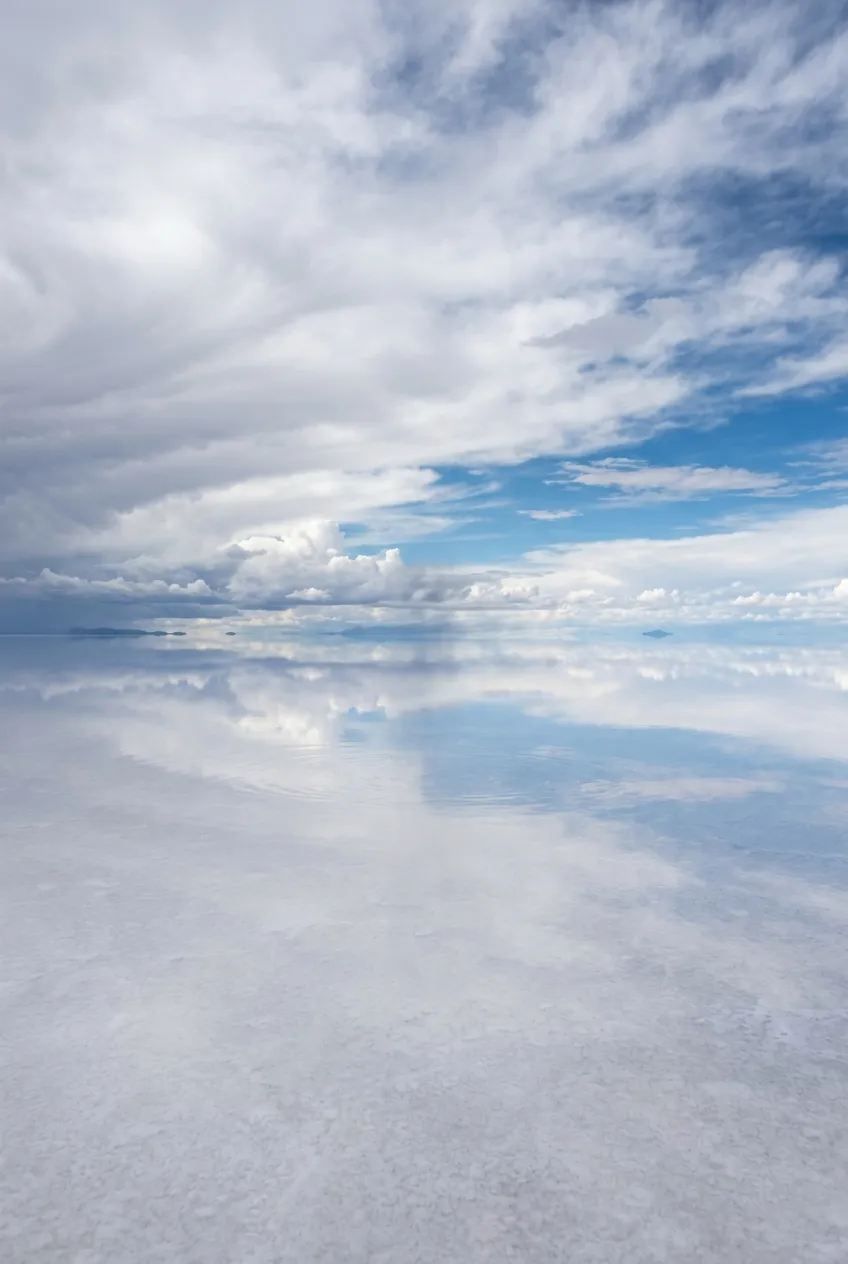
The first time you see photos of Salar de Uyuni during the rainy season, your brain just rejects it. Can’t be real. Has to be some mirror trick or digital effect.
It’s a salt flat. About 4,086 square miles of it is in southwest Bolivia. Most of the year, it’s just white salt crust going on forever, which is already pretty weird. But between November and March, when it rains, a thin layer of water covers everything and creates a reflection so perfect that up and down stop meaning anything.
People who’ve been there talk about getting dizzy. Your spatial awareness quits working when you can’t tell where the earth ends. The clouds are below you and above you, and your brain is trying to figure out which way is which.
This thing formed around 40,000 years ago when prehistoric lakes dried up. Left behind about 10 billion tons of salt and something like half the world’s lithium (which is why it comes up in electric car conversations).
Most people fly into La Paz, then take a bus or catch a small plane to Uyuni town. Tours run 3 days usually, covering the salt flats and some nearby lagoons and rock formations that are also pretty wild. December and January give you the mirror effect, but you’re sharing it with more people. The altitude is around 12,000 feet, so don’t rush your acclimatization unless you enjoy headaches.
The weird thing is how your photos look fake even when you haven’t touched them. I know someone who posted straight-from-camera shots and got accused of heavy editing. The place just doesn’t look real.
If you enjoy surreal landscapes across the continent, check out Best Countries Europe 2026 for a curated list of must-visit destinations in Europe.
2. Zhangye Danxia, China – Geology Went to Art School
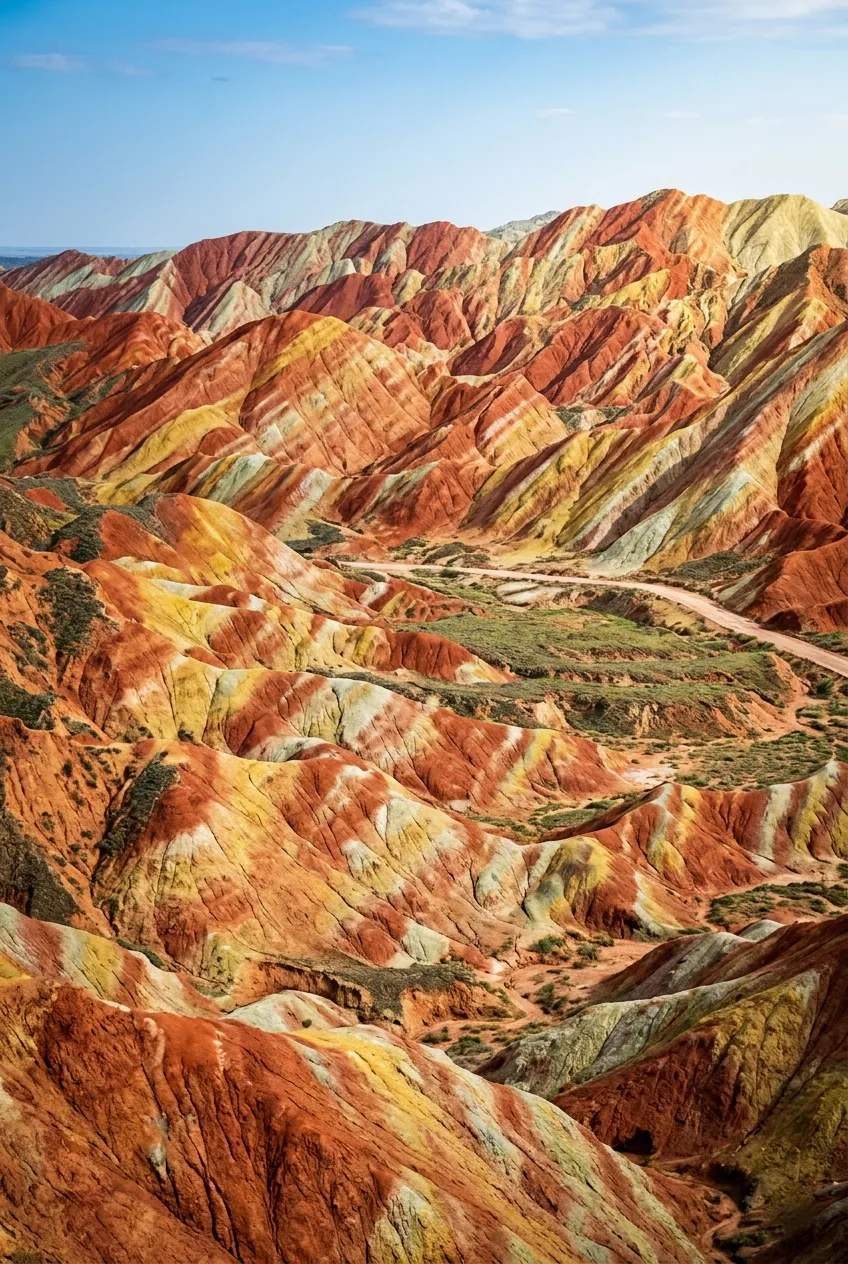
Imagine mountains decided to be every color at once. Red, yellow, orange, green, blue, all in horizontal stripes like someone was testing paint samples and just kept going.
The Zhangye Danxia formations in Gansu Province look insane. Like a desktop background someone made after discovering the saturation slider for the first time. Except you can walk through them.
The colors come from different minerals deposited over about 24 million years. Then tectonic plates compressed and tilted everything. Erosion exposed the layers. Iron oxide made the reds and yellows. Copper gave the greens and blues. Each stripe is a different geological period.
What gets me is the saturation. Landscapes are supposed to be subtle, muted. These mountains look like they belong in a cartoon.
You can fly to Zhangye or take the train from Lanzhou. The viewing platforms are maybe 40 km outside the city. Summer has decent weather but brings crowds. Early morning or late afternoon light makes it even more intense, though it’s pretty wild anytime. China built proper platforms after UNESCO designated it in 2010, so you can’t just wander around touching things anymore. Probably for the best.
3. The Wave, Arizona – Why You Can’t Just Go There
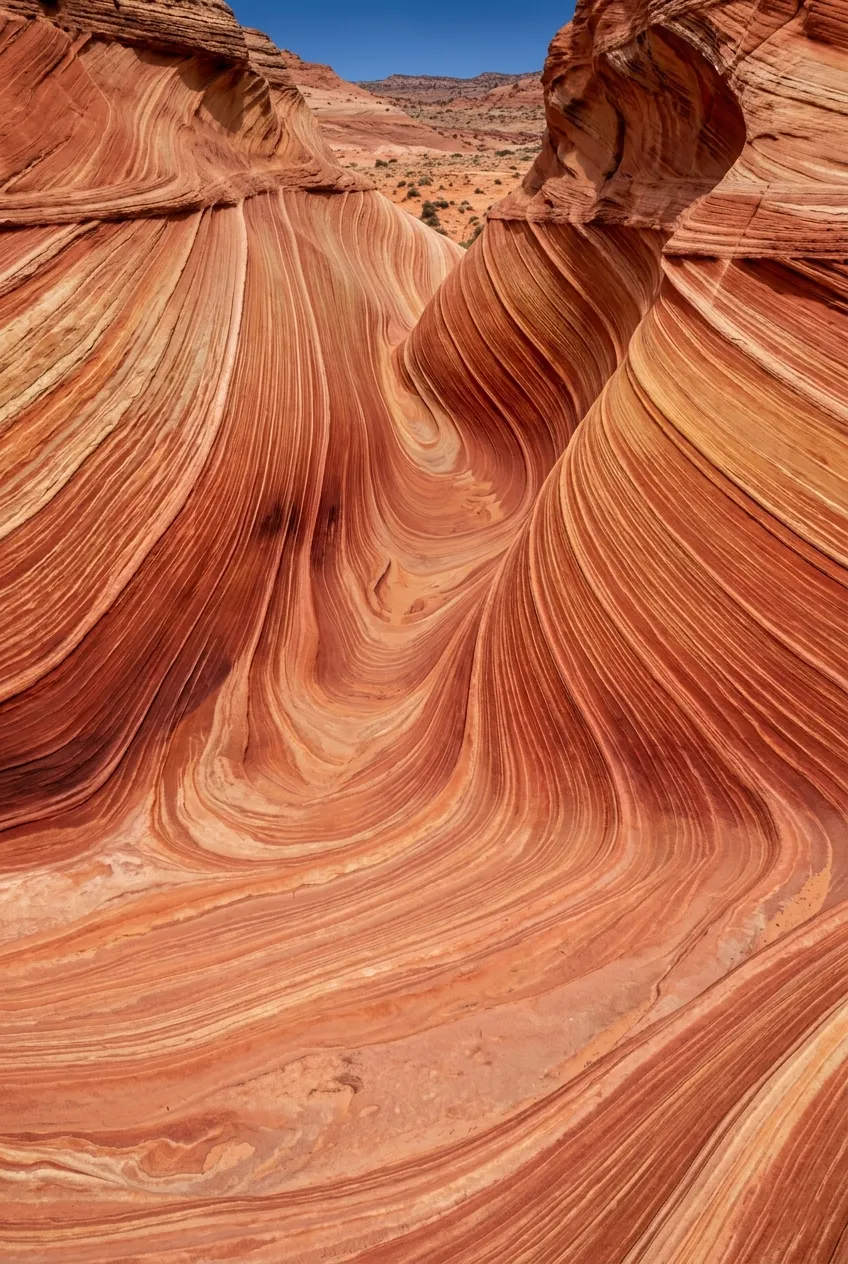
Getting a permit for The Wave is harder than getting Taylor Swift tickets. The Bureau of Land Management gives out exactly 20 permits per day. 10 through an online lottery, 10 through a walk-in lottery the day before. Your odds are somewhere between 5% and 10%.
Why so strict? Because it’s fragile, it’s in the middle of the desert with no water, cell service is garbage, and people have died from dehydration trying to find it.
But if you get in, you’re looking at red sandstone carved into curves so smooth they look machined. The formations go back to the Jurassic period, like 190 million years ago. Wind and water carved the Navajo sandstone into these parallel wave patterns.
Colors change depending on time of day and time of year. Morning brings out reds and oranges. Midday shows yellows and creams. After rain (doesn’t happen often) the colors get deeper and the rock gets this weird sheen.
You need a permit. No way around it. Apply online four months ahead at recreation.gov or show up in Kanab, Utah for the walk-in lottery. The hike’s 6 miles round trip through unmarked desert. Bring so much water. More than makes sense. GPS helps because there’s literally no trail.
I know someone who applied every month for two years before getting a permit. She said it was worth it but she probably wouldn’t do the lottery thing again. Once was enough.
For budget-friendly wanderlust ideas that feel almost unreal, the Cheap Europe Vacations guide breaks down stunning trips that won’t drain your wallet.
4. Lake Hillier, Australia – Seriously, It’s Pink
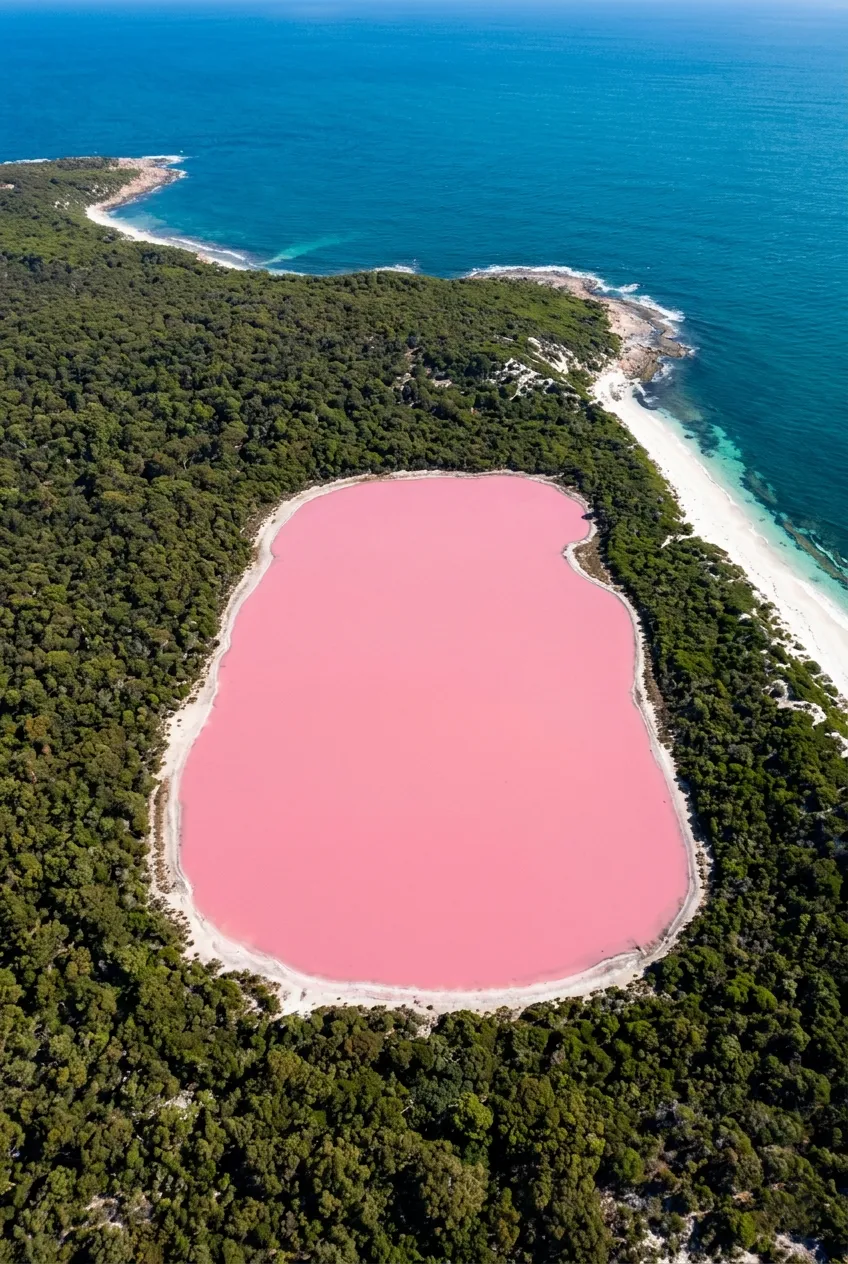
Middle Island off Western Australia has a lake that’s pink. Not “oh in certain light you can see a pink tint.” Actually pink. Pepto-Bismol pink.
Lake Hillier’s been pink since someone discovered it in 1802. Scientists spent forever trying to figure out why. Best theory right now involves algae called Dunaliella salina and bacteria called Halobacteria. Both produce pink and red pigments. The lake’s super salty (saltier than the ocean) which creates the perfect environment for these microorganisms.
Here’s the strange part – if you take water out of the lake and put it in a jar, it stays pink. Not a reflection. Not a trick of light. The water itself is pink.
You can’t visit Lake Hillier on foot. Middle Island’s protected; nobody’s allowed to land. The only option is a scenic flight from Esperance. Tours run year-round, but summer (December to February down there) gives you clearer skies.
There are other pink lakes around the world, but most of them are seasonal or have faded as conditions changed. Hillier stays pink all year, which makes it kind of unique.
5. Fly Geyser, Nevada:
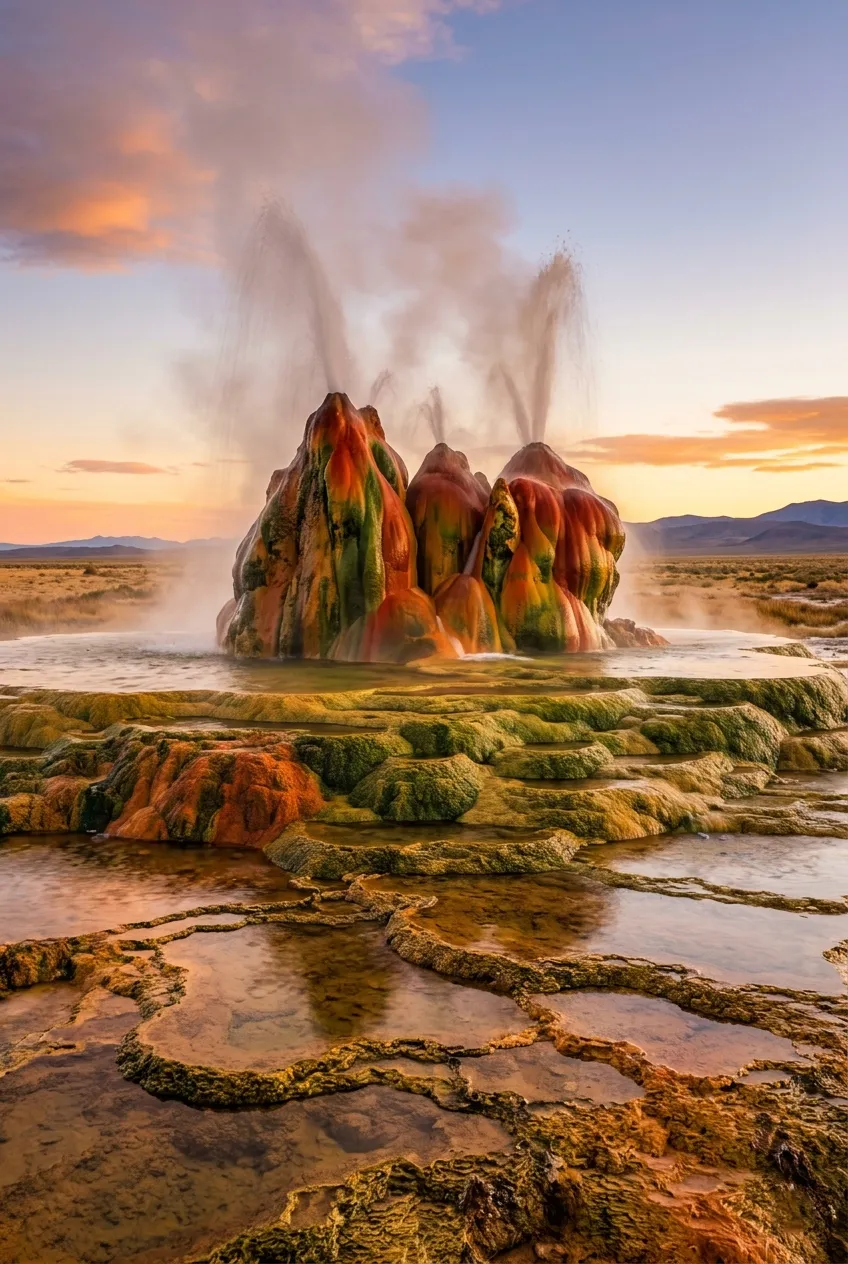
Most natural wonders take millions of years. Fly Geyser took about 50 years, and it’s a complete accident.
In 1964, a geothermal company was drilling for water in Nevada’s Black Rock Desert. They hit a geothermal pocket and didn’t seal the well properly when they abandoned it. Scalding water started shooting up, depositing calcium carbonate and building a cone. Minerals in the water, plus thermophilic algae, created these red and green terraces that keep growing.
The geyser’s on private land (Burning Man Project owns it now, which kind of fits). Sprays water maybe 5 feet high from three main cones. Surrounded by terraces that look alien. The colors shift with seasons as different algae populations grow and die.
What I find interesting is that it’s still growing. Not finished. Visit now, visit in ten years, it’ll look different.
Access is limited since it’s private property. Burning Man Project does tours through Friends of Black Rock High Rock, usually from April through October. You have to book way ahead. No drones, and you can’t get close because the ground’s unstable and the water will burn you.
Some of the best photos you’ve seen are from before access got restricted, when photographers could basically camp next to it. Those days are over.
If your idea of magic includes winter sun and soft golden skies, the Warm Winter Europe Places article is perfect for planning your next escape.
6. Antelope Canyon, Arizona – When Light Gets Weird
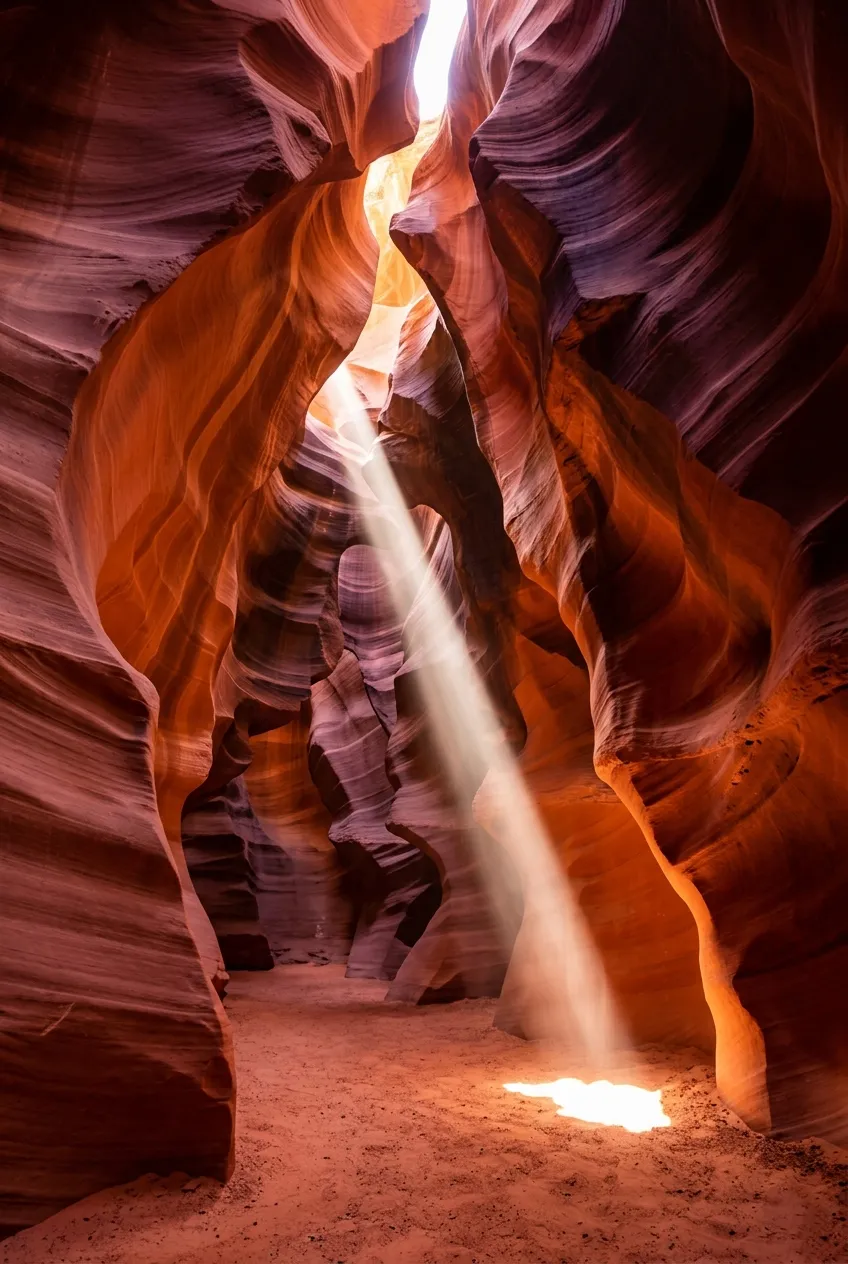
Antelope Canyon does something strange to light. Sunlight coming from above gets bounced around by the narrow sandstone walls and creates these beams that look almost solid. The walls themselves curve and flow like frozen water, carved by flash floods over thousands of years.
The canyon’s on Navajo land near Page, Arizona. Upper Antelope is the most photographed part, where those famous light beams happen. Lower Antelope is narrower, requires climbing, usually less crowded.
Upper Antelope’s light beams happen mid-March to early October, roughly 11 am to 1 pm. That’s when the sun’s high enough to send direct beams down through the narrow openings. The beams last maybe an hour, sometimes less. Miss the window and you still see a beautiful canyon, just not the light show.
You must go with a Navajo guide. Non-negotiable. Tours book up months ahead for peak season. Upper Antelope’s easier (no ladders) but pricier and packed. Lower Antelope needs climbing on metal stairs and ladders, but you get more room to move.
Photography tours cost way more than walking tours, but give you more time to set up. The canyon floor is sandy and uneven, and you’re in a slot that’s sometimes only a few feet wide.
The place is kind of a victim of Instagram. Ten years ago, you could get a semi-private tour. Now you’re in a timed group moving at a pace that doesn’t always let you get the shot you want. But even with crowds, those light beams hit different in person.
7. Pamukkale, Turkey – Cotton Castle Made of Rock
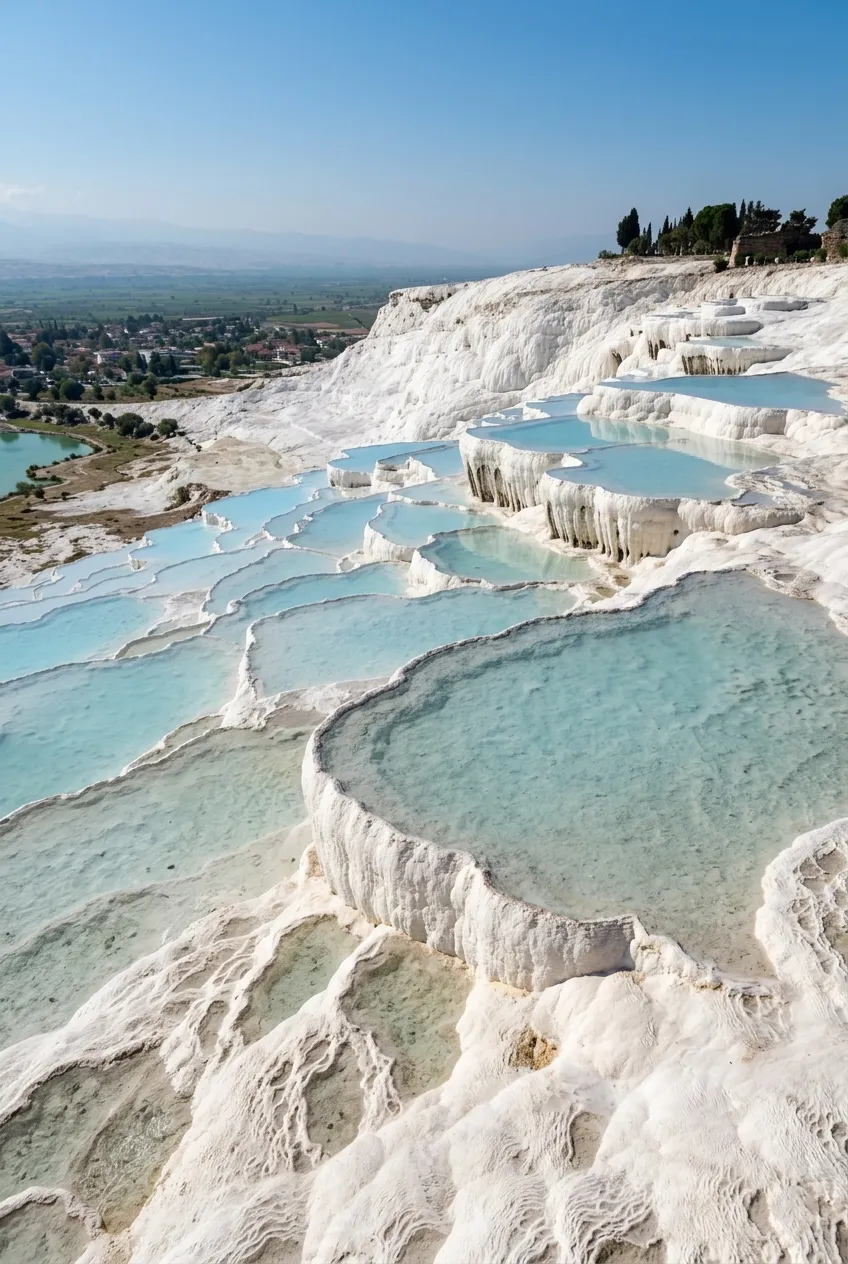
Pamukkale means “cotton castle” in Turkish. Makes sense when you see it. White terraces cascading down a hillside like frozen waterfalls. Except they’re travertine, a sedimentary rock deposited by calcium-rich thermal springs that have been flowing here for thousands of years.
Hot springs at the top send water over the edge. As it cools, calcium carbonate precipitates out and hardens. Over thousands of years this builds the terraces and pools.
The site almost got destroyed by tourism in the 20th century. Hotels built directly on the travertine. Pools drained for swimming. People drove motorcycles over it. By the 1980s some terraces had turned gray from pollution and damage.
Turkey’s done restoration since then. Hotels are gone. You have to take shoes off to walk on the travertine. Water flow is managed to keep formations white and active. Some terraces that were dead for decades are growing again.
Fly to Denizli, then drive or bus about 20 km to Pamukkale village. You can walk barefoot through the shallow thermal pools (water’s warm, around 95°F). Bring sunglasses because the white travertine is blinding on sunny days. Go early or late to avoid crowds and heat.
The thermal waters supposedly have healing properties. Can’t verify that but the Romans thought so, which is why there’s a whole ruined city at the top.
For cozy foliage, charming towns, and seasonal beauty, the Berkshires Fall Guide 2026 will help you experience autumn at its most cinematic.
8. Marble Caves, Chile – Blue That Doesn’t Seem Real
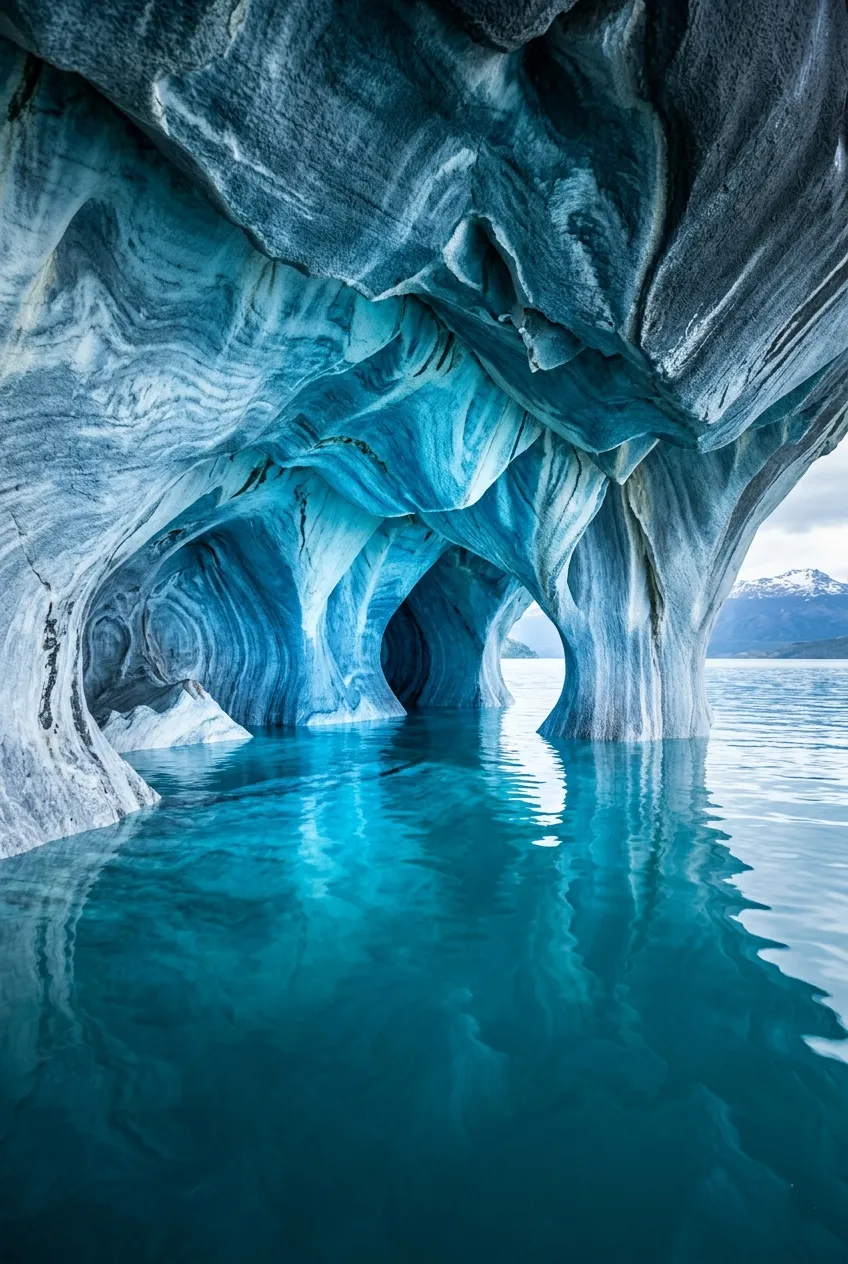
General Carrera Lake sits on the Chile-Argentina border. The water’s turquoise from glacial minerals. Along the shore, 6,000 years of waves have carved caverns into marble outcroppings. The caves seem to glow from within.
The marble itself is white and gray with pink streaks, but reflected light from the water turns everything inside into shades of blue that look impossible. Color changes with season and water level. Spring and summer (November through February in Chile) show the most intense blues because glacial melt increases mineral content.
You need a boat or kayak. No land access. Tour operators run trips from Puerto Rio Tranquilo on the Chilean side. The lake’s in Patagonia which means weather’s unpredictable even in summer. Wind picks up afternoon, so morning tours are safer.
Fly to Balmaceda, then drive maybe 200 km south to Puerto Rio Tranquilo (the drive’s gorgeous if you’re into mountains and glaciers). Boat tours and kayak rentals in town. Caves are about 30 minutes offshore. Water’s cold all year and weather changes fast.
Most photos are from kayaks, which can get deeper into the caves than motorboats. If you kayak, bring dry bags because waves splash up.
9. Giant’s Causeway, Northern Ireland – Nature Does Geometry
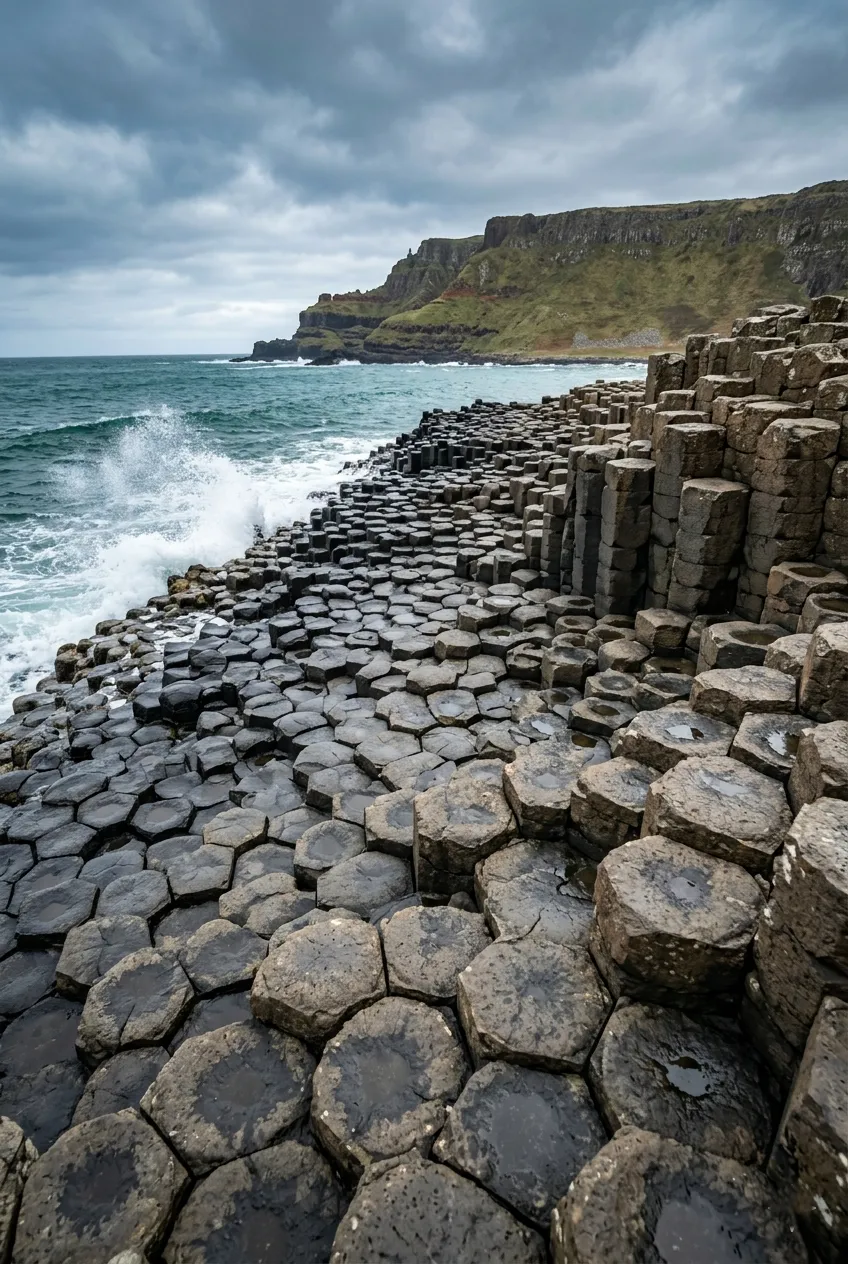
About 40,000 basalt columns sticking out of the sea on the Northern Ireland coast. Most of them perfectly hexagonal, fitting together like manufactured tiles. Irish legend says the giant Finn MacCool built it as a causeway to Scotland so he could fight another giant.
Real explanation’s almost as impressive. Around 50 to 60 million years ago, volcanic eruptions created lava flows that cooled so rapidly and evenly that the basalt contracted into precise geometric columns. Hexagonal shape is the most efficient way for material to fracture as it cools and shrinks.
Similar formations exist at Fingal’s Cave in Scotland and a few other spots, but Giant’s Causeway is the most extensive and easiest to reach.
The column tops form stepping stones extending from cliffs into the sea. Some columns are short enough to sit on. Others are taller than a person. The precision gets people. Show someone photos without context and they’d assume it’s manufactured.
About 2 hours north of Belfast by car or bus. Free to walk to the causeway (park at the visitor center and hike down) but parking costs money. Walk from parking to main causeway is about a mile, mostly downhill (uphill back).
Summer gets packed with tour buses. Winter has fewer crowds but worse weather and shorter days. Wear good shoes because basalt’s slippery when wet, and it’s wet a lot because Ireland.
And if you love compact European getaways full of history and elegance, the Weekend in Windsor Guide is a perfect quick-trip inspiration.
10. Blood Falls, Antarctica – The Glacier That Bleeds
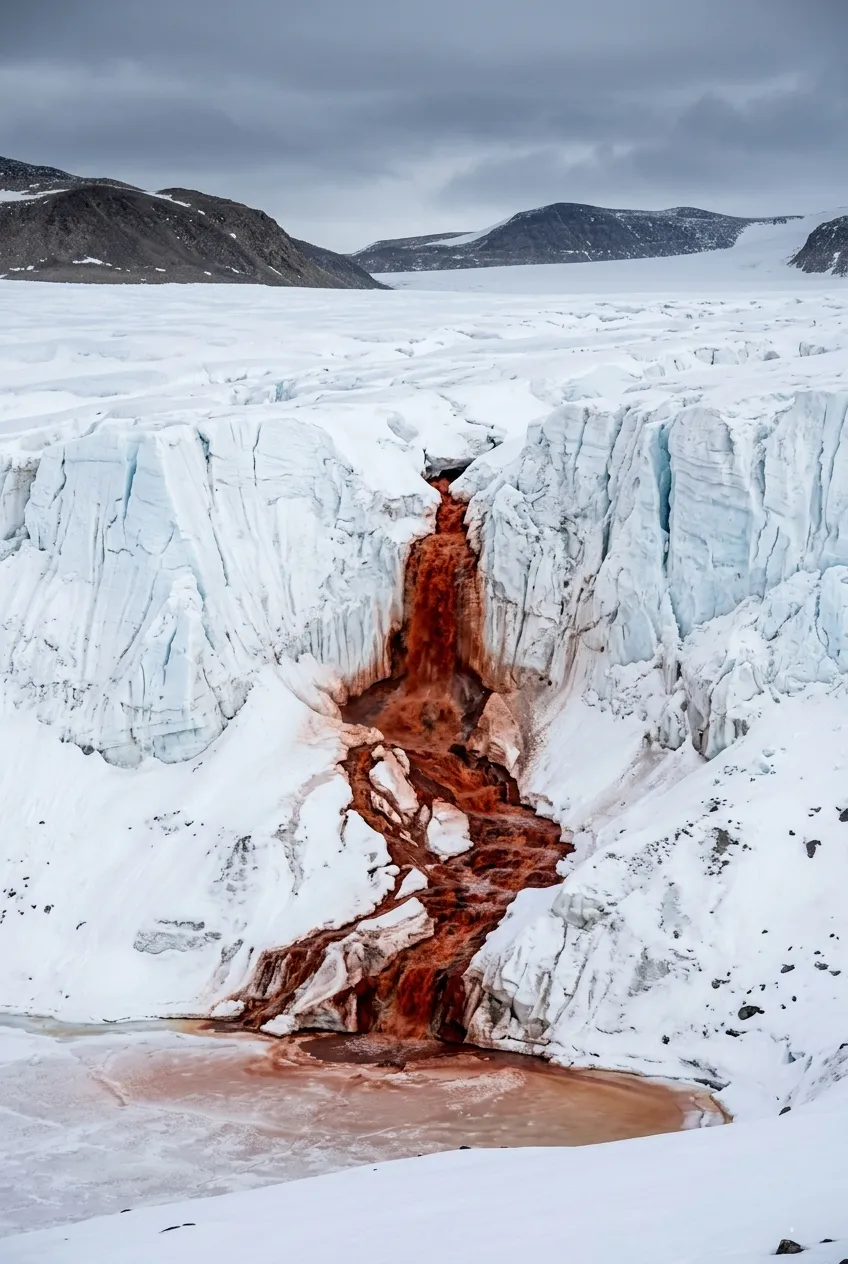
Taylor Glacier in Antarctica’s McMurdo Dry Valleys has a waterfall that runs red. Bright red. Like something’s bleeding from the ice.
Scientists spent years trying to figure it out. Answer’s weirder than most theories.
About 2 million years ago rising sea levels flooded East Antarctica. When water receded, some got trapped under Taylor Glacier. This subglacial lake’s been sealed under 1,300 feet of ice ever since, completely isolated from outside.
The water’s incredibly salty (three times saltier than ocean) which keeps it from freezing despite being below 23°F. Also full of iron. When the water breaches through a fissure in the glacier and hits oxygen, the iron oxidizes instantly. Creates rust-red waterfalls.
But here’s the truly strange part – the water contains microbes isolated for 2 million years. They survive in complete darkness with no oxygen, using sulfur and iron compounds for energy. One of the best examples we have of life finding a way in conditions that seem impossible.
You can’t just visit Blood Falls. It’s in one of the most remote parts of Antarctica, only reachable by helicopter from research stations. A few luxury expedition cruises offer helicopter flyovers but they’re expensive and don’t run every year. Most people experience this through photos and documentaries.
The falls don’t run constantly. Depends on subglacial pressure and temperature. Sometimes researchers camp there for weeks and don’t see flow. Other times it’s actively running. No predicting it.
What Makes These Feel Impossible?
I’ve thought about this more than is probably healthy. What tips a place from “unusual” to “wait, that can’t be real”?
Part of it’s color. We expect earth to be brown, gray, green. When we see bright pink or perfectly striped mountains or glowing blue caves, something feels off. Our brains have been trained by experience to expect certain colors from nature and these violate those expectations.
Scale matters. The salt flats mess with distance because there’s no reference point. The Wave’s curves are too perfect. Giant’s Causeway looks manufactured because nature doesn’t usually do geometric precision.
And rarity. Most people will never see bioluminescent plankton or a total eclipse or the Northern Lights. When something’s rare enough it starts feeling mythical even when it’s completely real and explainable.
If You Actually Want to Visit These
Some practical stuff after spending too much time researching:
Timing matters way more than you’d think. The Wave without a permit is just desert. Salar de Uyuni without rain is just salt. Antelope Canyon without light beams is just a slot canyon (still pretty but not the same). Research when each place delivers what you’re hoping for.
Permits and restrictions exist for reasons. The Wave would be destroyed without daily limits. Lake Hillier stays pink partly because humans can’t reach it. Sometimes preservation means viewing from a distance or not visiting at all.
Photos never quite get it. Sounds cliche but it’s especially true here. The mirror effect at Salar de Uyuni or light beams at Antelope create experiences cameras struggle with. Photos show what it looks like but not how it makes you feel when your spatial orientation quits working.
Remote usually means expensive. Getting to Antarctica or Middle Island or the Marble Caves requires serious budget and time. These aren’t weekend trips. Sometimes the research and planning is its own kind of travel.
What I Didn’t Include
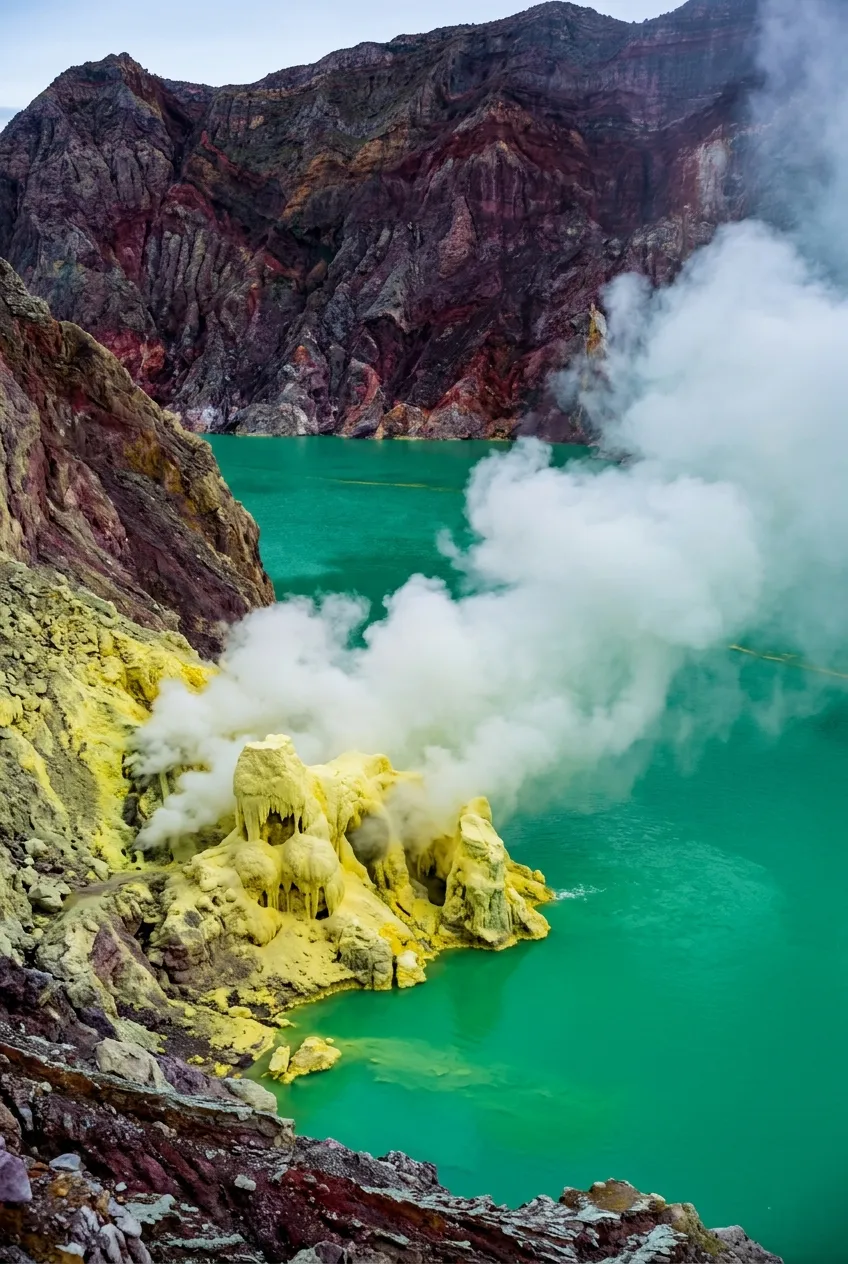
Dozens of other spots could’ve made this list. The Door to Hell in Turkmenistan (gas crater burning since 1971). Kawah Ijen in Indonesia (volcano with electric blue flames). Waitomo Glowworm Caves in New Zealand. The Chand Baori stepwell in India (3,500 steps in perfect geometric symmetry). Iceland’s ice caves that form and melt every year.
The planet’s full of places where geology or chemistry or biology did something unexpected. We’re lucky to live when we can see photos of most of them, visit some, and at least know they exist.
We’re still finding new ones. Satellite imaging and drones keep revealing formations nobody knew about. Some have been seen by fewer than a thousand people. Others get millions of visitors and still surprise everyone.
Why This Matters (Maybe)
I started looking into weird places and ended up thinking about why they matter.
We spend most of life in environments we understand. Predictable. Mapped. These spots remind us the world can still surprise us. That we haven’t figured everything out.
Not trying to get deep here. Just saying there’s something good about that “wait, what?” moment when your brain can’t immediately process what you’re seeing. Keeps things interesting.