Winter Camping Outfits That Keep You Warm All Day
Gear up, layer right, and actually enjoy the cold instead of just tolerating it.
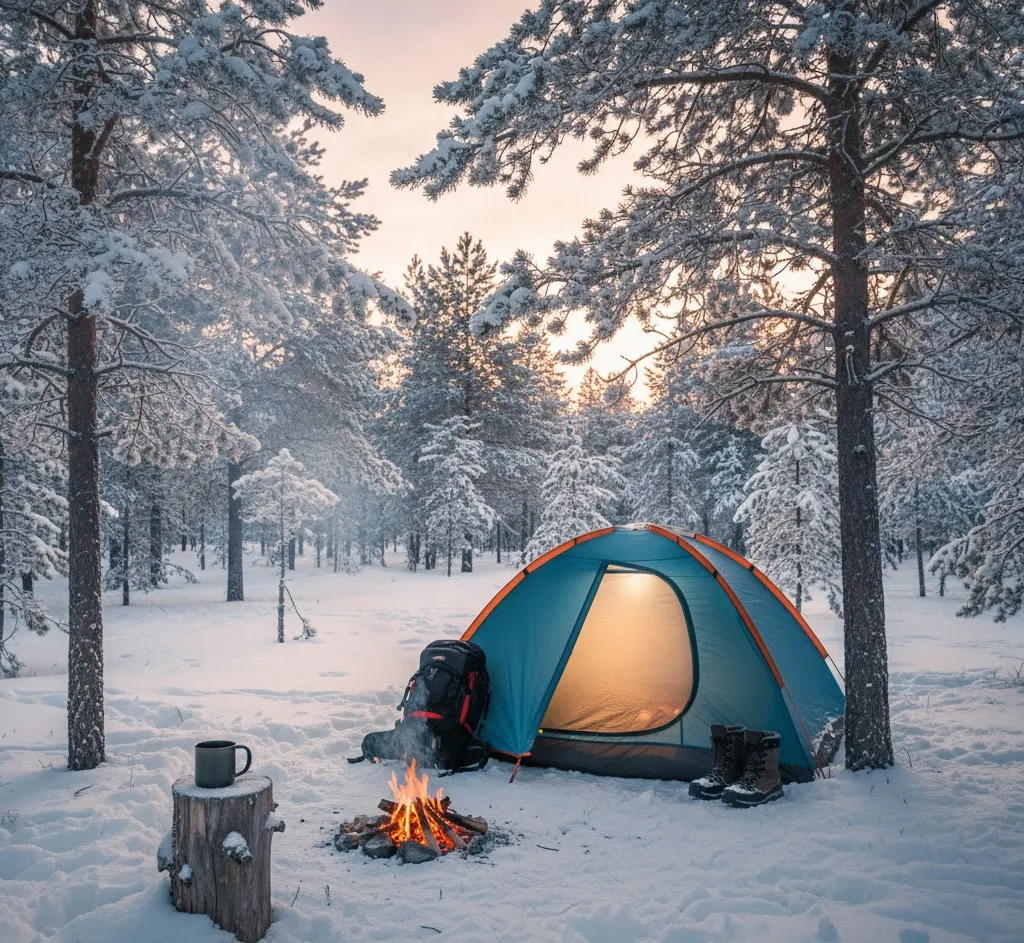
Picture this: you wake before sunrise, the world is hushed, frost cracks under your boots, and you’re sipping hot cocoa by the fire while your friends shiver in silence.
No? Me neither.
But with the right outfit, winter camping can feel amazing; not like a frozen endurance challenge.
Here’s the deal: cold weather isn’t the enemy. Poor clothing choices are. Get your outfit right, and everything gets better; comfort, confidence, and that warm-and-toasty feeling (literal and emotional).
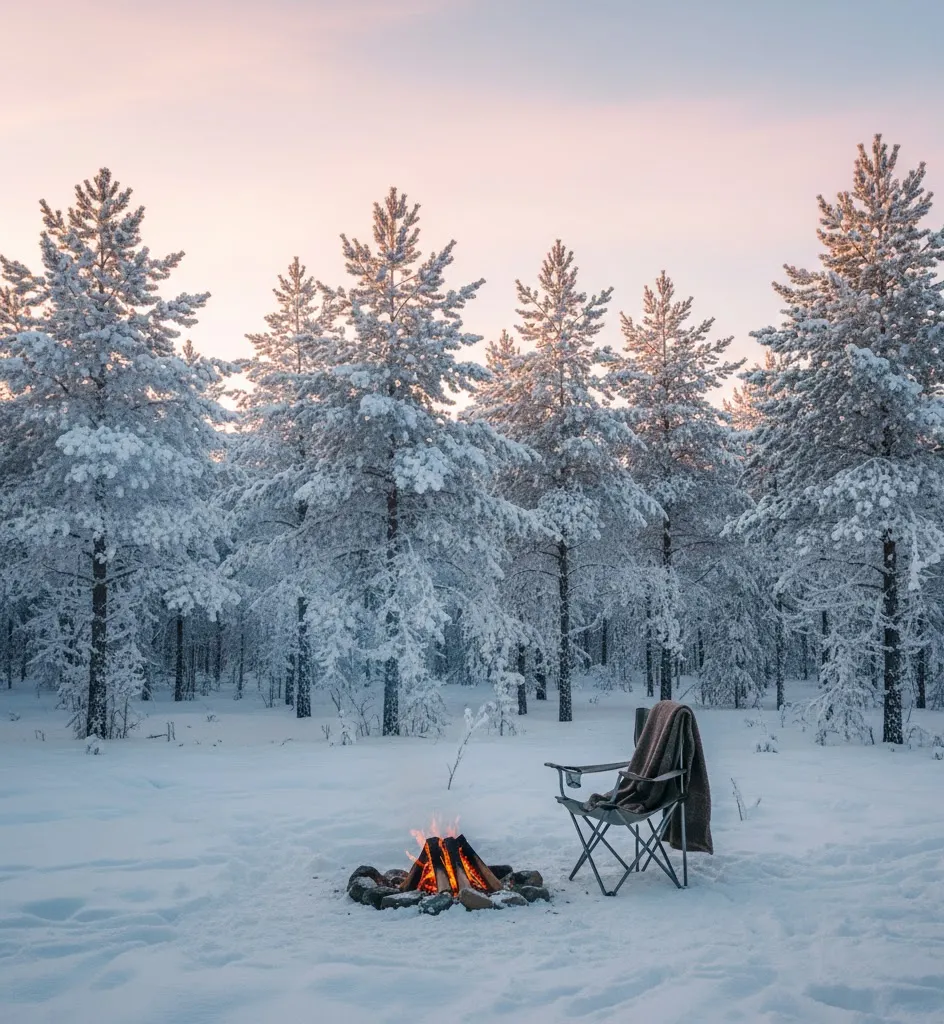
Let’s break down what works, what doesn’t, and how to assemble outfits that keep you warm from dawn hikes to star-filled nights.
Why Winter Camping Is Different; Seriously

Cold weather camping isn’t just “regular camping but colder.”
Here’s why it matters:
- You lose heat fastest through head, feet, and body core
- Sweat + cold = a recipe for hypothermia
- Puffy jackets feel warm at rest but can make you sweat while moving
- Layers are everything (and I mean everything)
Good news: you don’t need a 100-pound suitcase of clothes; just smart choices.
The Golden Rule of Cold Weather Clothing
Layer smart, stay dry, and trap warm air.
That’s the magic formula. We’ll take it layer by layer so you get it right; no uneccesary jargon, just real-world guidance.
Base Layers; The Invisible Warmth Foundation
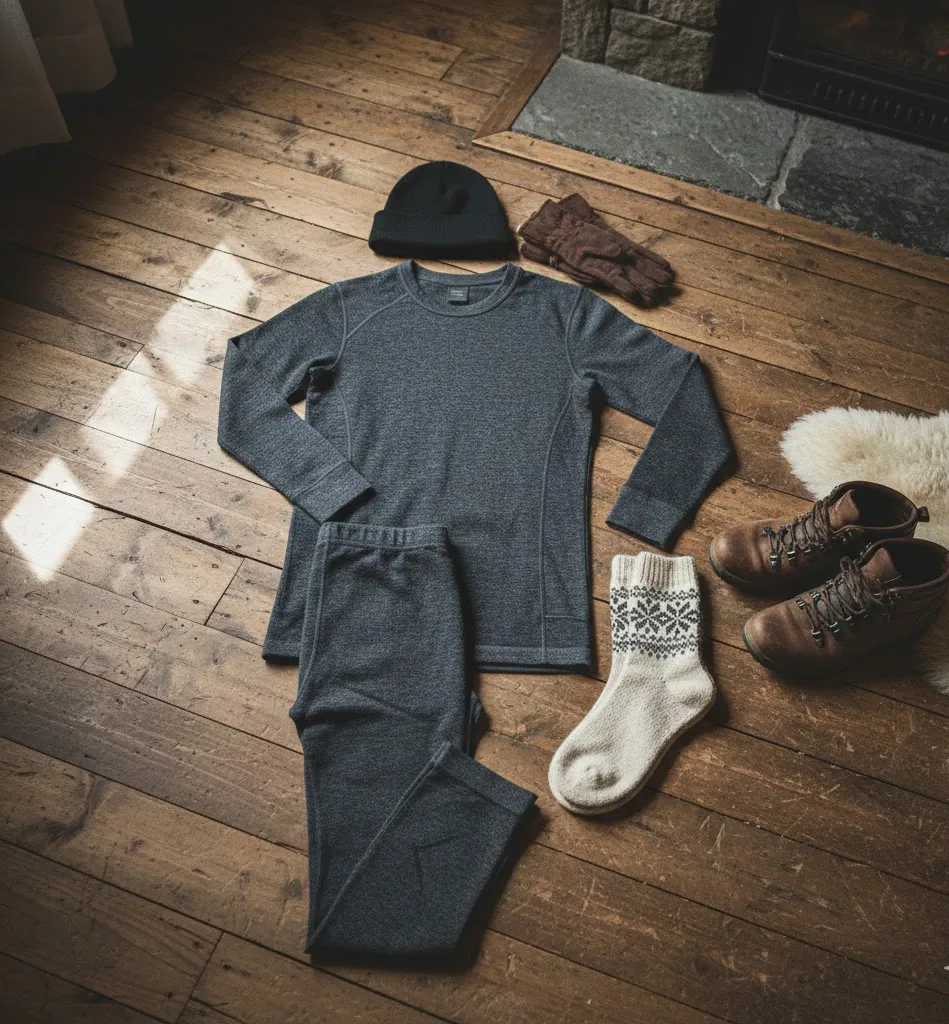
Think of base layers as your body’s close allies.
They do one critical job: wick moisture away from your skin so sweat doesn’t make you cold.
Avoid cotton like the plague here. Cotton holds moisture and pulls heat away faster than you can say “ice chest.”
What to Wear Here:
- Merino wool base layer (top + bottom); soft, warm, odor-resistant
- Synthetic wicking base layers; polyester blends that keep sweat off skin
💡 Pro tip: Merino is pricier but worth it. If you’re camping hard and long, no regrets.
Example base setup: Merino long-johns + Merino long-sleeve tee.
Mid Layers; The Warmth Factory
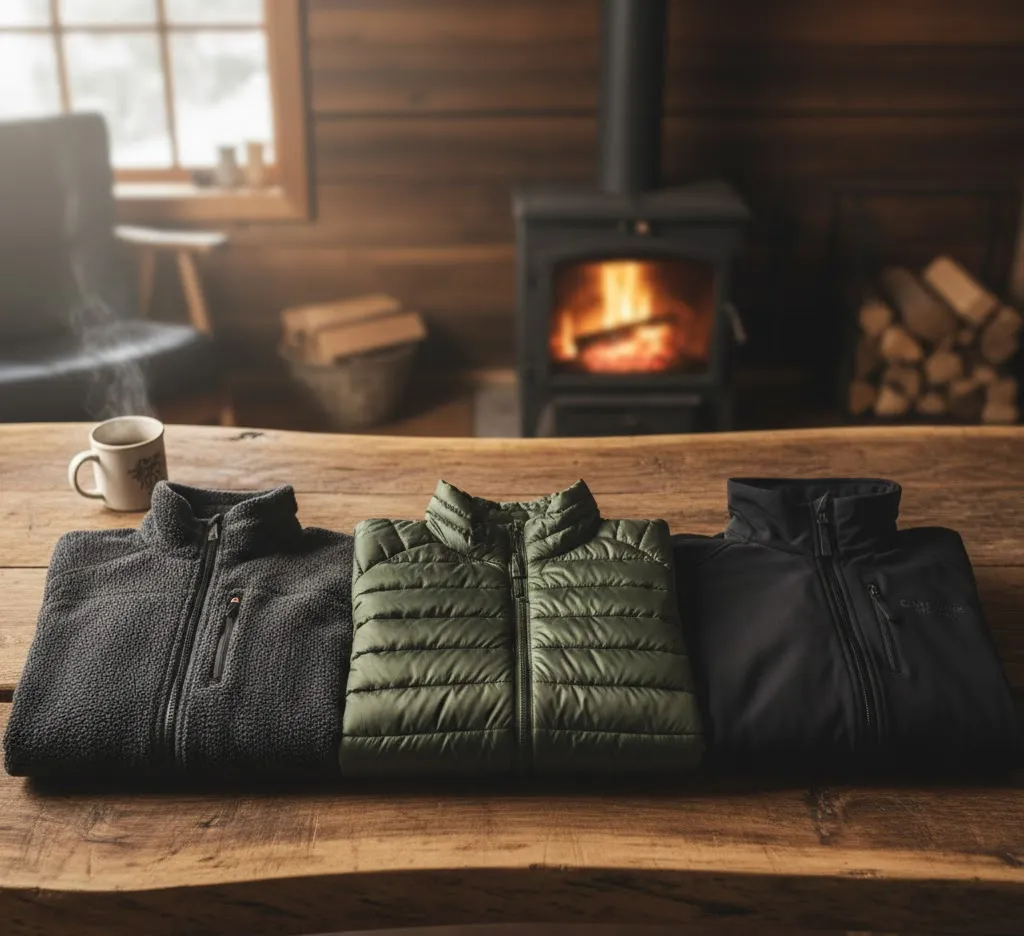
Mid layers are your insulation. They trap heat while letting moisture escape. Think of them as warm bubbles around your body.
Best Mid Layers:
- Fleece jacket or pullover; classic, cozy, and breathes well
- Lightweight puffy jacket; great for trapping heat without bulk
- Softshell jacket; for windy winter hikes
This is where you adjust more than one layer. If you’re moving a lot (hiking or cutting wood), a light fleece might be enough. If you’re standing around or chilling in the snow, add a puffy.
💡 The goal: trap warm air between your base layer and outer shell.
Outer Shell; Your Shield Against the Elements
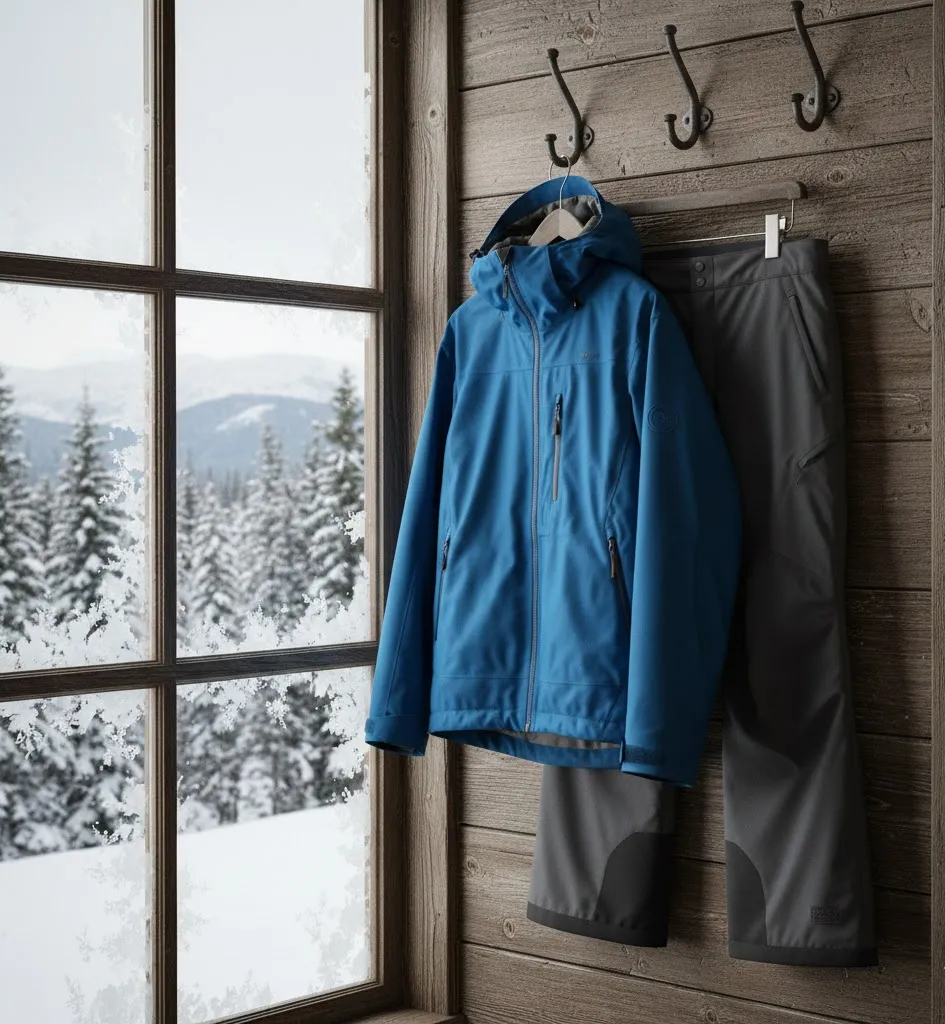
Your outer layer doesn’t make heat; it keeps warmth in and weather out.
There are two kinds:
- Insulated shells (with built-in filling); best for super cold days
- Hard shells (windproof + waterproof); best for wet, windy, snowy weather
Even if it’s dry out, wind will strip heat quickly. A shell keeps you warm when the world tries to steal your body heat.
Must-haves:
- Waterproof
- Windproof
- Breathable (so trapped sweat doesn’t stay inside)
Your Head; Tiny but Mighty

About 50% of your body heat escapes through your head if you leave it uncovered. Ridiculous, but true.
Keep your head warm with:
- Thermal beanies
- Balaclavas or neck gaiters
- Helmet liners (if you’re riding sleds or winter bikes)
💡 A buff or gaiter is like a Swiss Army knife for your face, neck, or ears in winter.
Hands; Don’t Forget the Gloves

Cold fingers = bitterness. Simple.
Put these on your hands:
- A good glove liner (thin, synthetic or merino)
- Insulated gloves or mittens
- Waterproof shell gloves if it’s wet snow
Mittens trap heat better than gloves, but gloves are more practical for tasks. Many folks carry BOTH and switch depending on activity.
Socks & Feet; Your Winter MVPs
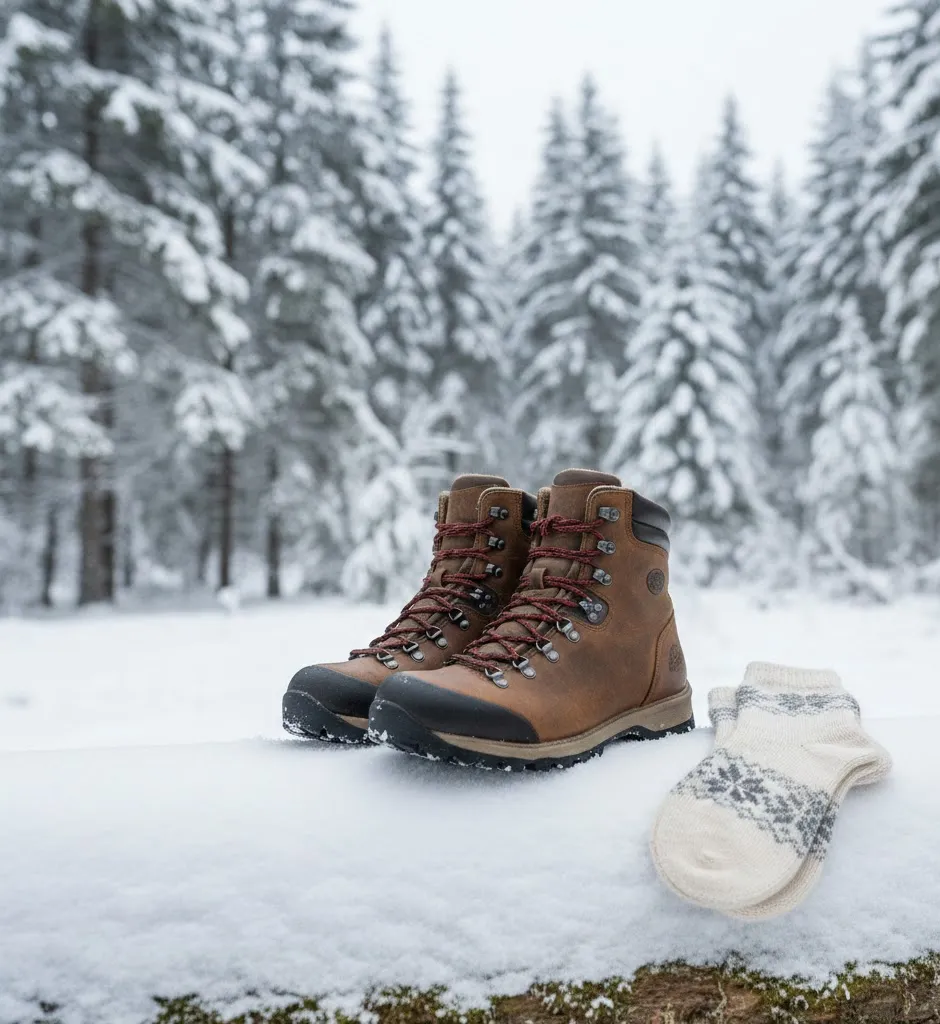
Your feet do a lot in winter; and cold feet ruin everything.
Never wear cotton socks camping in winter.
Best sock game:
- Merino wool socks; warm, moisture-wicking
- Double layering: thin liner + thick wool sock
If your boots are snug, try just one thicker sock. Too tight and circulation drops, making feet cold.
💡 Foot warmers only help if your feet aren’t already wet.
Boots; Warmth Starts at the Ground
Winter boots are different from hiking boots.
What to look for:
- Insulation rating; colder climates need warmer boots
- Waterproof membrane; snow melts and soaks gear quickly
- Good tread; snow and ice require traction
You don’t need mountaineering boots unless you’re hiking glaciers. A solid winter hiking boot will do almost everything else.
Quick Layering Cheat Sheet
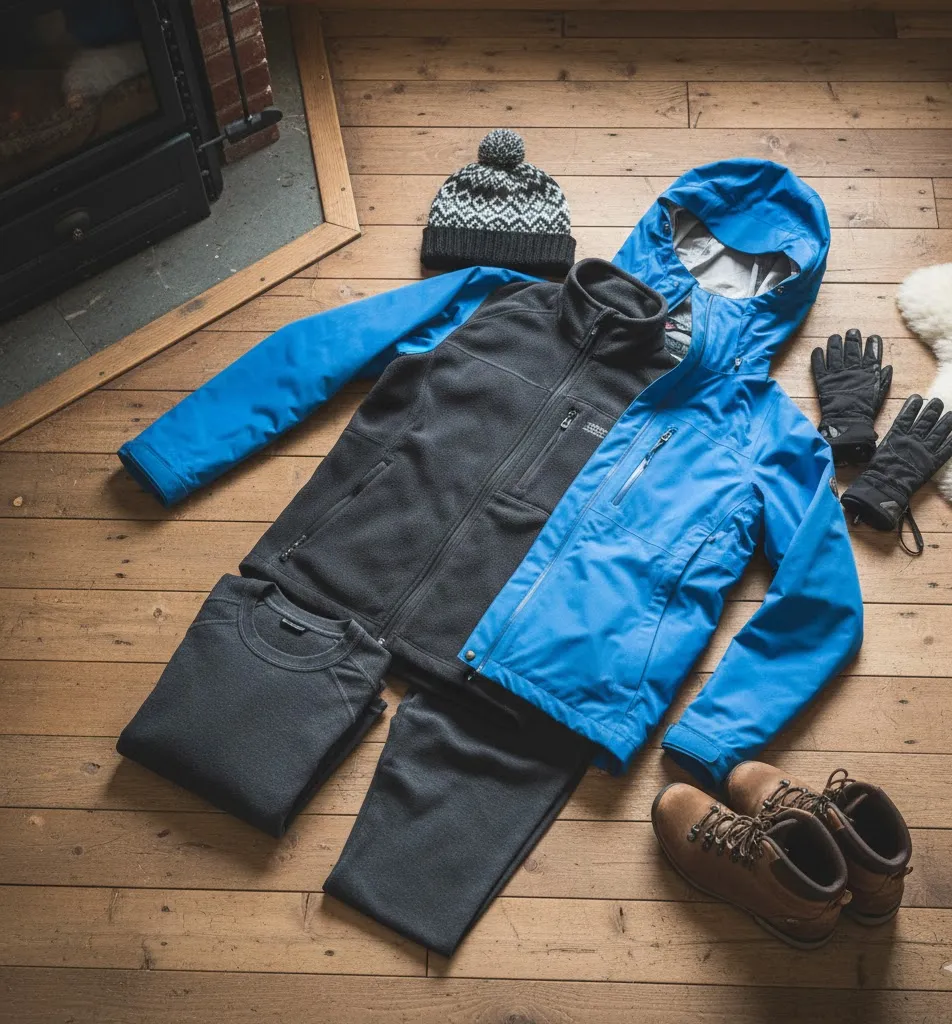
Here’s the layering logic in one glance:
- Base Layer: Merino wool or synthetic
- Mid Layer: Fleece or light puffy
- Outer Shell: Waterproof + windproof
- Head: Beanie + gaiter
- Hands: Liner + insulated gloves
- Feet: Merino socks + winter boots
What NOT to Wear (Let’s Be Honest)
Here’s the short list of no-go clothes for winter camping:
❌ Cotton (t-shirts, sweatpants)
❌ Jeans; absorb moisture, dry slowly
❌ Non-waterproof shoes
❌ Bulky one-piece outfits that aren’t breathable
❌ Anything that makes you sweat crazy fast
If it doesn’t wick moisture or let heat escape when you’re working, it’s hurting you more than helping.
Outfit Ideas You Can Actually Wear
Let’s be real; explaining clothes is one thing. Giving you real outfits is another.
Here’s how a day could look:
Cold Morning Hike
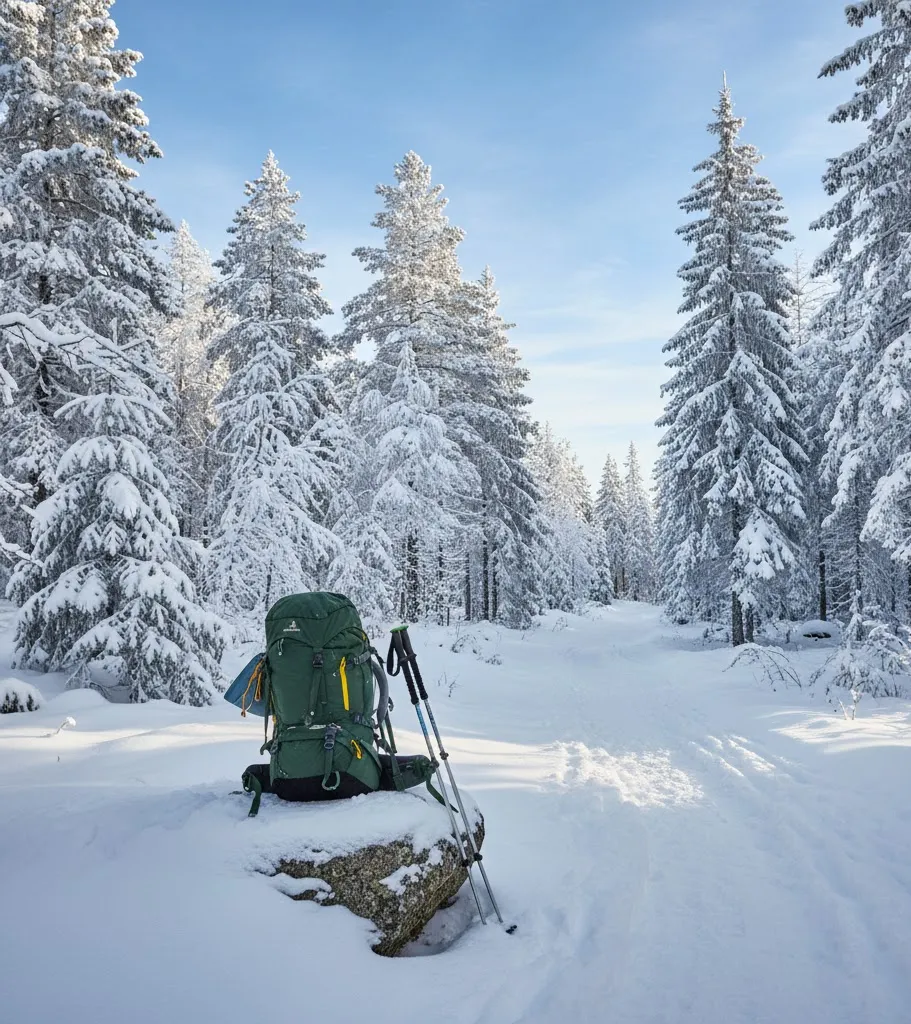
- Merino base layer (top + bottom)
- Fleece mid layer
- Waterproof shell
- Insulated winter boots with merino socks
- Beanie + neck gaiter
- Glove liners + insulated gloves
You’re warm, mobile, and dry.
Snow Play + Hanging at Camp
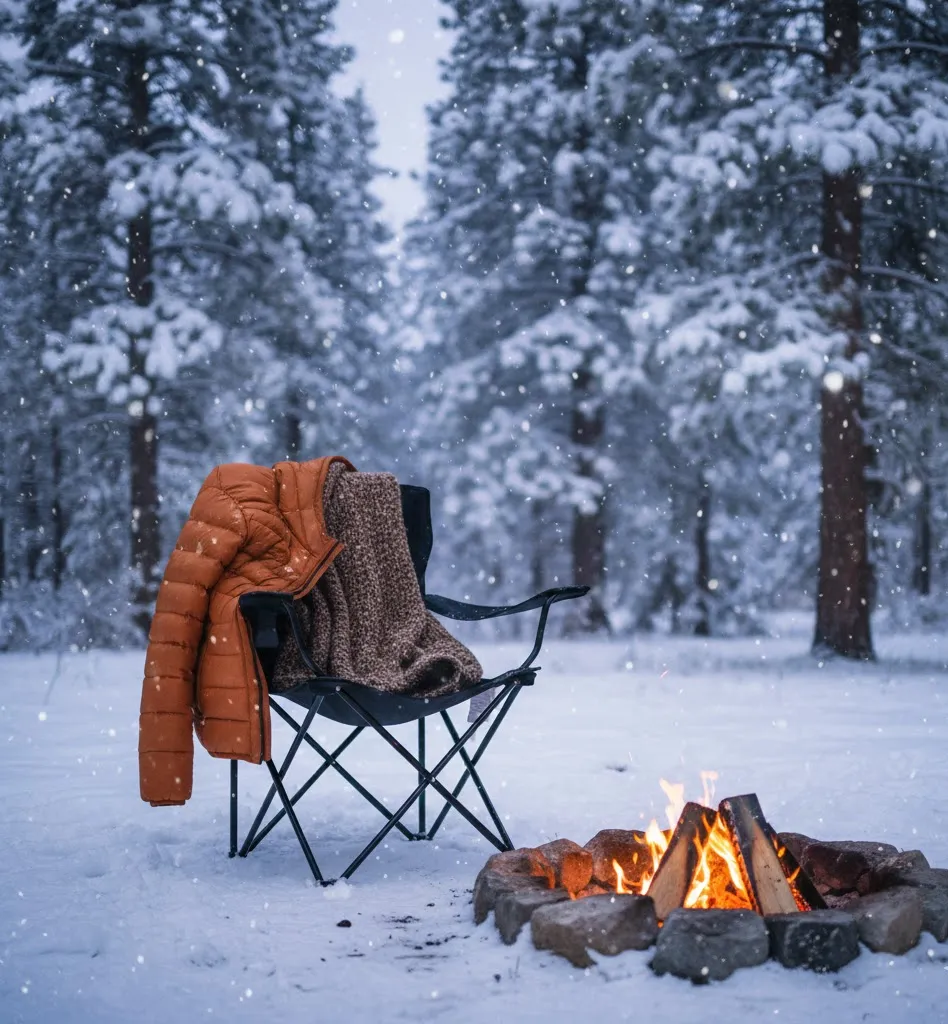
- Merino base
- Puffy insulated jacket (thicker than fleece)
- Waterproof pants over base layer
- Warm boots
- Night socks for camp
You’re cozy, happy, and not regretting life.
Windy Summit or Ridge Hike
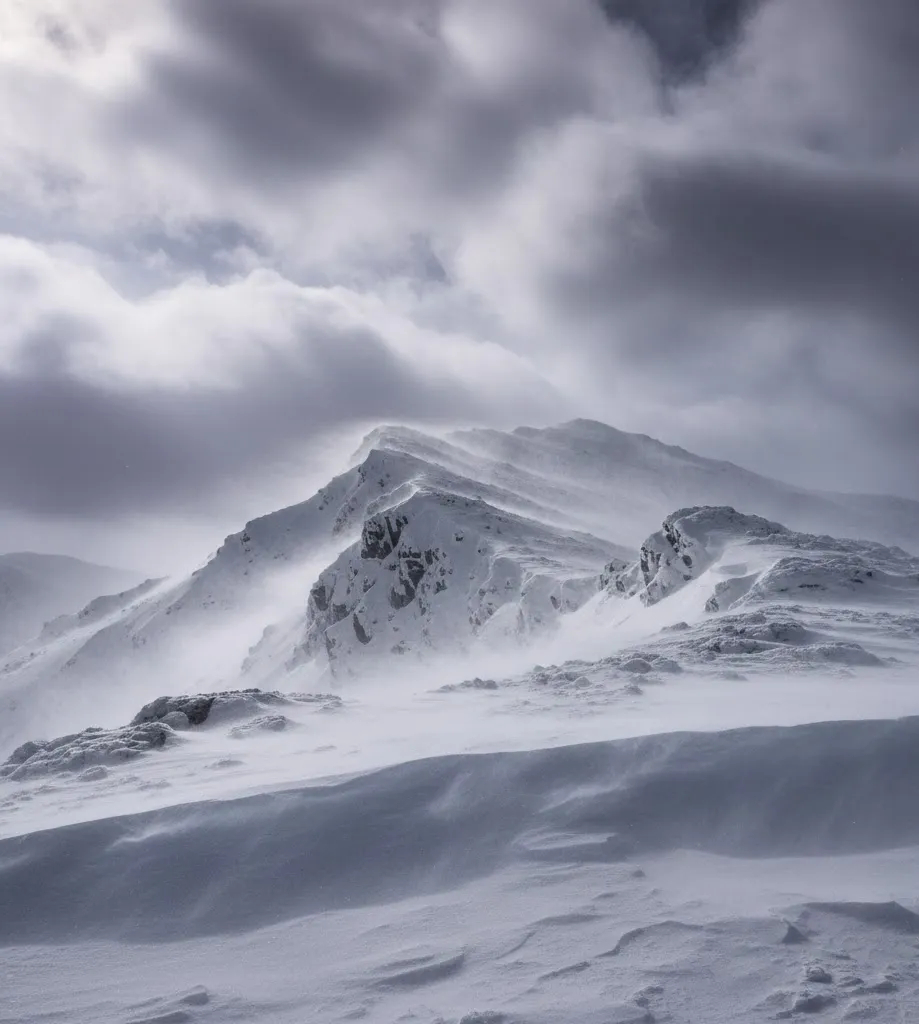
- Merino base
- Shell mid layer + heavy puffy
- Windproof outer
- Helmet liner (if windy)
- Gloves with weatherproof shells
Wind can steal heat fast; layer up.
Real-World Tips That Matter
Here’s the stuff no one tells you until it’s too late:
1) Layer EARLY; Not When You’re Cold
By the time you feel cold, heat is already lost. Add layers before it gets uncomfortable.
2) Don’t Overdress While Moving
You might want to bundle up, but if you’re hiking hard, heavy jackets can make you sweat. Start cool, add heat.
3) Keep Dry Clothes for Camp
Pack a separate set of socks and a comfy hoodie for when you’re done. Wet clothes = cold nights.
4) Protect Skin
Lips chap. Faces sting. Seriously, carry a good lip balm and face cream. Sun + wind in winter can surprise you.
5) Pack a Beanie for Every Mood
One thicker one for cold mornings, one thinner one for milder temps. They pack small but make huge difference.
Packing List (Copy-This-List Edition)
Instead of guessing, here’s what you should have:
Clothing
✔ Merino tops + leggings
✔ Fleece jacket
✔ Puffy jacket (insulated)
✔ Waterproof shell jacket
✔ Waterproof pants
✔ Insulated winter boots
✔ Merino wool socks (2 pairs)
✔ Glove liners + warm gloves
✔ Neck gaiter / balaclava
✔ Beanie(s)
Extras
✔ Hand warmers (use as backup)
✔ Extra socks
✔ Camp shoes (dry sneakers/slides)
✔ Moisture-wick underwear
Outfit Mistakes That Actually Ruin Trips
Let’s keep it real; I’ve seen all these in the woods:
🙈 Wearing cotton long underwear
🙈 Jeans as hiking pants
🙈 Only one pair of socks
🙈 No waterproof layer
🙈 Heavy sweatshirt instead of real mid layer
Each one will leave you cold and frustrated.
What to Wear for Specific Winter Activities
Because not all winter camping is the same vibe:
Snowshoeing
Base + mid + shell + puffy + gaiter + sturdy boots
You’ll warm up fast, so keep layers adjustable.
Ice Fishing
Heavy puffy day + waterproof bottom + thick socks + insulated boots
You’ll be standing still; insulation is your best friend.
Snowboarding / Ski Lodges
Think flexible: base layer + light puffy for riding + cozy camp outfit for evenings.
Common Questions People Forget to Ask
Q: Should I wear leggings under jeans?
A: Nope. Jeans don’t trap heat well and get cold when they’re wet.
Q: Do I need technical gear?
A: You don’t need the most expensive gear, but you do need gear that works for winter weather; breathable, insulated, and water-resistant.
Q: How much layering is too much?
A: When you’re struggling to move, that’s too much. Less is more if you layer smart.
Final Thought
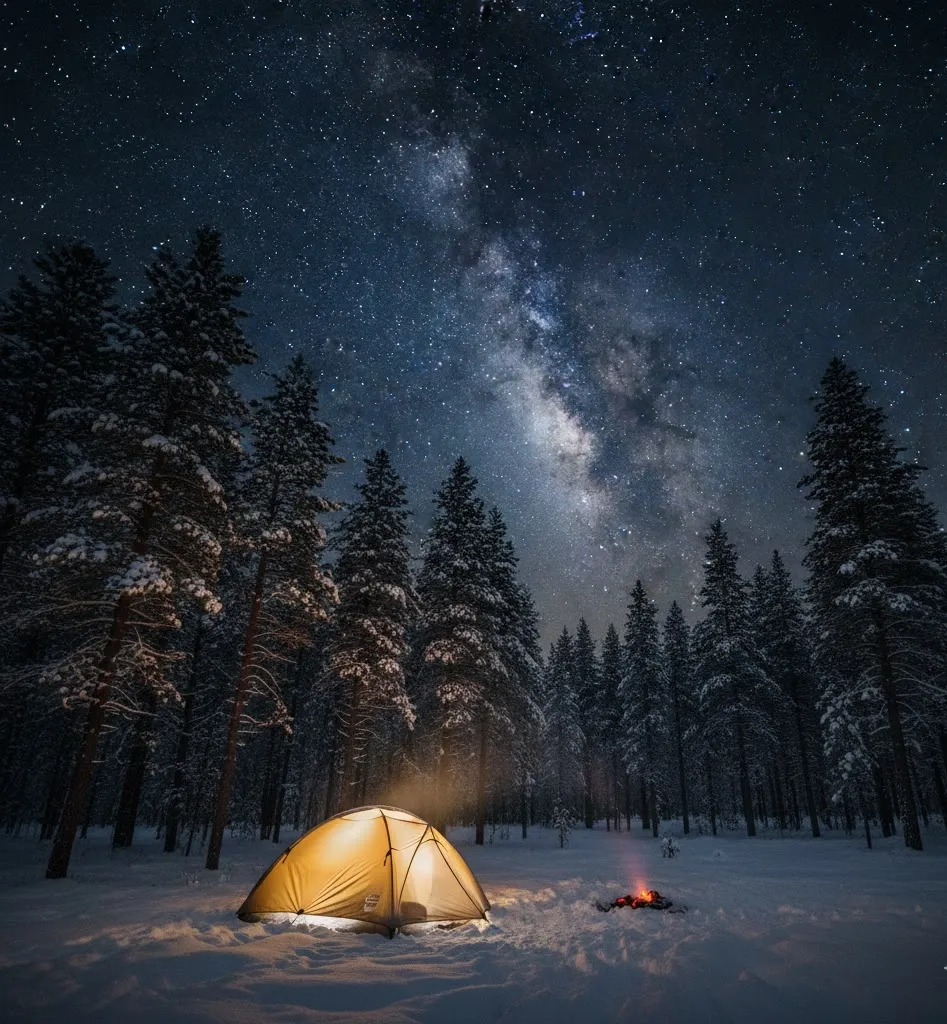
Winter camping doesn’t have to be a game of suffering. It can be peaceful, cozy, even magical; if you dress right.
The cold isn’t the enemy.
Being unprepared is.
Get your layers down. Stay dry. Watch the sunrise through frost-covered pines. Make snow angels at sunrise. Drink hot cocoa by your campfire and laugh about nothing in particular.
That’s winter camping done right.