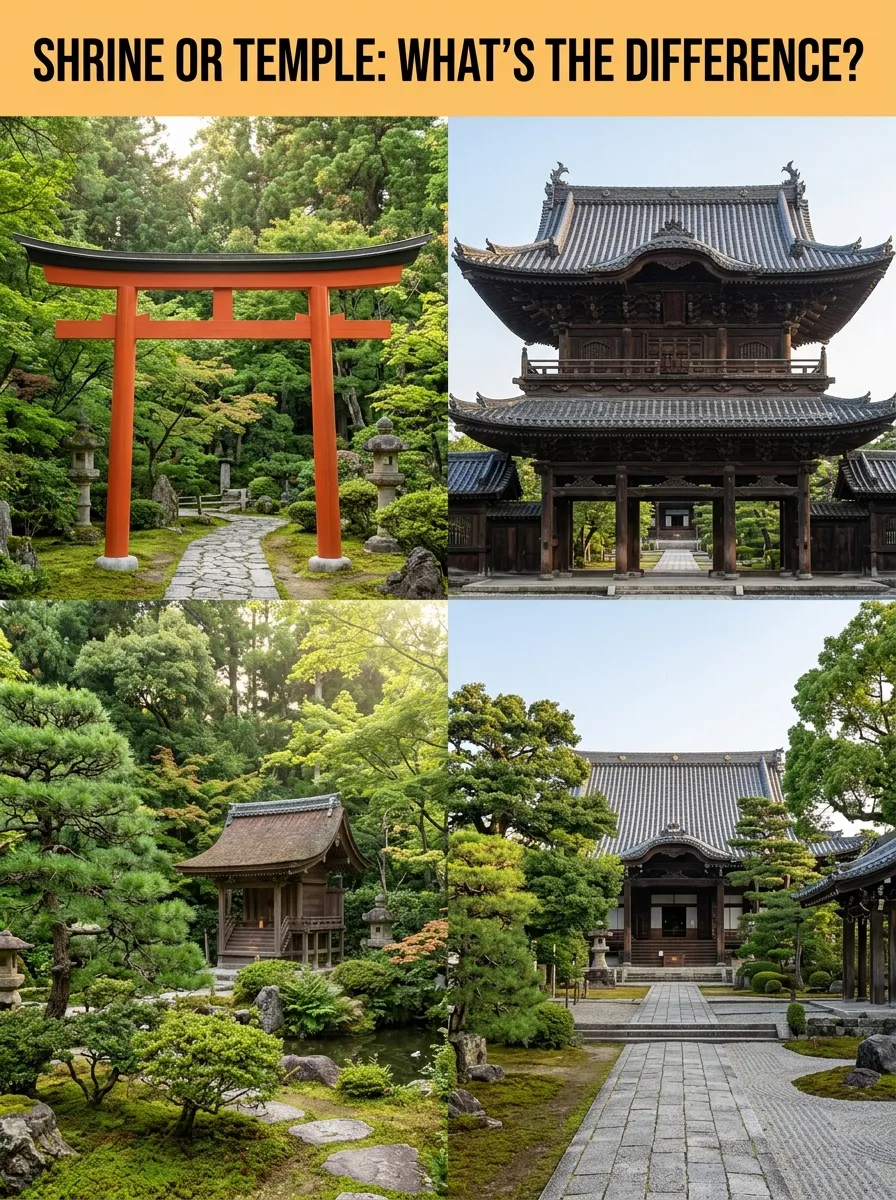
13 Best Traditional Shrines & Temples To Visit In Japan
Japan has a remarkable way of making history feel alive.
You can walk through a giant orange torii gate in Kyoto, climb stone steps through an ancient cedar forest in Nikko, stand beneath a huge temple gate in Nara, or watch the sea roll beneath a floating shrine gate on Miyajima.
Japan’s traditional shrines and temples are not simply beautiful buildings. They are places connected to Shinto, Buddhism, Japanese history, mythology, pilgrimage traditions, festivals and everyday spiritual life.
And there is an important distinction to understand before you start visiting them.
Shrines are associated with Shinto, Japan’s indigenous religious tradition, while temples are associated with Buddhism. Torii gates are a familiar feature of Shinto shrines, while Buddhist temples traditionally use gates such as the sanmon.
Some destinations also reflect Japan’s long history of Shinto and Buddhist traditions existing alongside one another.
If you’re planning your first Japan trip, these 13 traditional shrines and temples offer a wonderful introduction to the country’s architecture, spirituality, history and landscapes.
Recommended Travel Items for Your Trip
1. Fushimi Inari Taisha, Kyoto
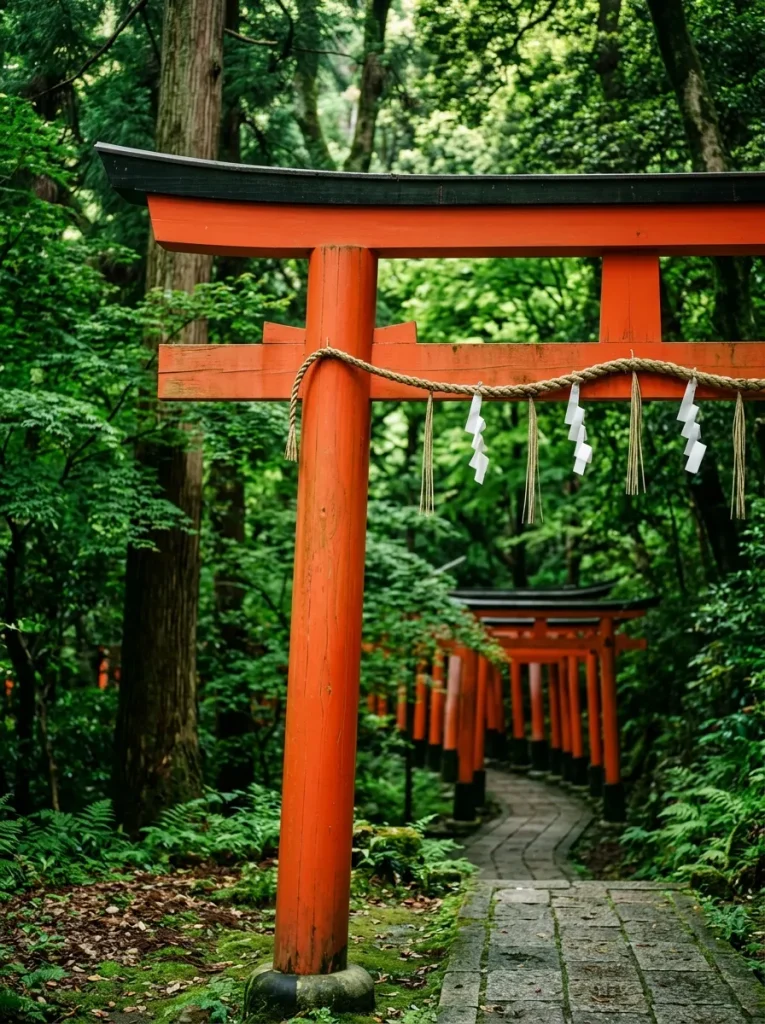
If you have seen a photograph of thousands of orange-red torii gates winding through a Japanese forest, there is a good chance you were looking at Fushimi Inari Taisha.
Located in southern Kyoto, Fushimi Inari is dedicated to Inari, a deity associated with rice, harvests and business success. It is regarded as the head shrine of Japan’s many Inari shrines.
The famous Senbon Torii section creates the visual that has made this shrine one of Japan’s most recognizable sights.
But don’t stop at the first tunnel of gates.
The shrine’s paths continue up Mount Inari, which rises about 233 meters. JNTO notes that the full mountain circuit can take around two to three hours and includes smaller shrines, stone altars, viewpoints and rest stops.
What makes it special
- Thousands of vermilion torii gates
- Fox statues throughout the grounds
- Forest hiking
- Numerous smaller shrines
- Easy access from Kyoto Station
The fox is particularly important here because foxes are considered messengers of Inari.
Best for
Photographers, first-time visitors and travelers who want a shrine experience combined with a hike.
2. Kiyomizu-dera, Kyoto
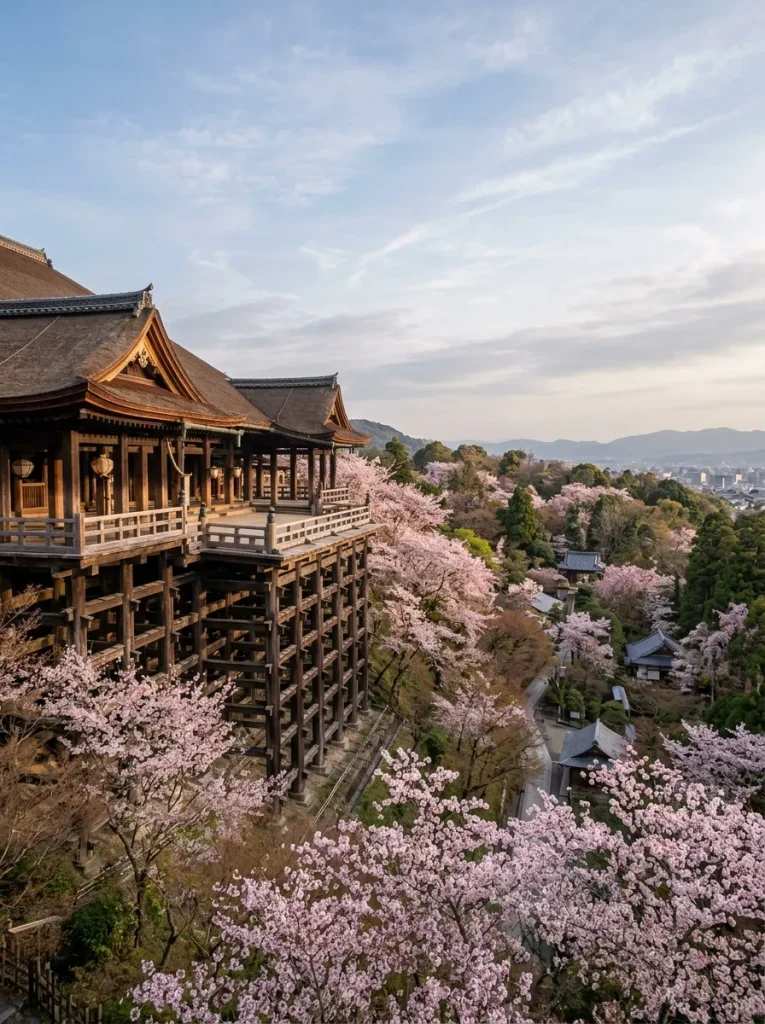
Kiyomizu-dera is one of Kyoto’s most famous Buddhist temples, and its setting is almost as impressive as the temple itself.
The temple sits on the wooded slopes of Mount Otowa and dates back more than 1,250 years. Its present Main Hall was reconstructed in 1633, and the complex forms part of the Historic Monuments of Ancient Kyoto UNESCO World Heritage site.
The famous wooden stage attached to the Main Hall provides sweeping views across Kyoto.
Below it is Otowa Waterfall, where visitors traditionally collect water from three streams associated with different benefits and prayers.
The surrounding streets of Higashiyama also make this an excellent stop for exploring traditional Kyoto architecture, small shops and old lanes.
What makes it special
- Historic wooden Main Hall
- Mountain setting
- Kyoto city views
- Otowa Waterfall
- Traditional Higashiyama surroundings
Best for
Architecture, photography, traditional Kyoto and first-time Japan visitors.
3. Senso-ji, Tokyo
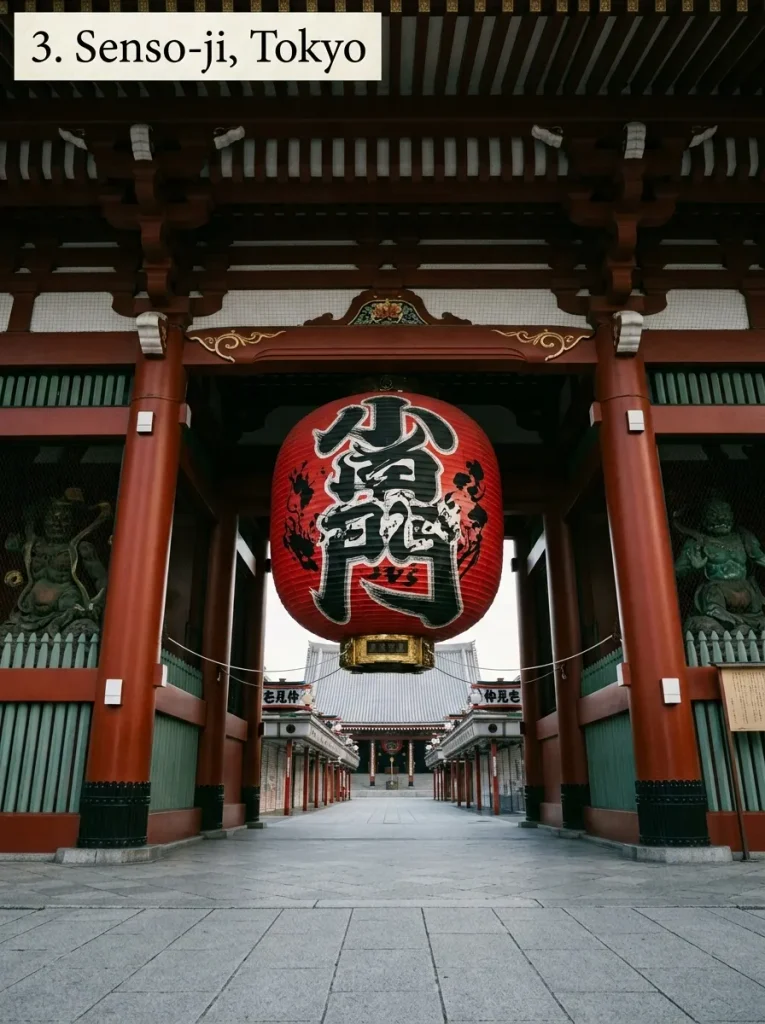
Senso-ji gives you a completely different experience.
Instead of escaping into the mountains, you can find this ancient Buddhist temple right in the middle of Tokyo’s urban landscape.
The approach begins at Kaminarimon, the famous Thunder Gate, before continuing along Nakamise, a traditional shopping street leading toward the temple grounds.
The contrast is fantastic.
Modern Tokyo is all around you, yet the temple complex creates a strong sense of historical continuity.
Take your time walking through the approach rather than treating Senso-ji as a quick photo stop.
Look at the gates, lanterns, traditional shops and surrounding streets.
What makes it special
- One of Tokyo’s most recognizable temples
- Huge entrance gates
- Traditional shopping street
- Easy access
- Strong contrast between old and new Tokyo
Best for
First-time Tokyo visitors, architecture lovers and travelers who want traditional Japan without leaving the city.
4. Todai-ji, Nara
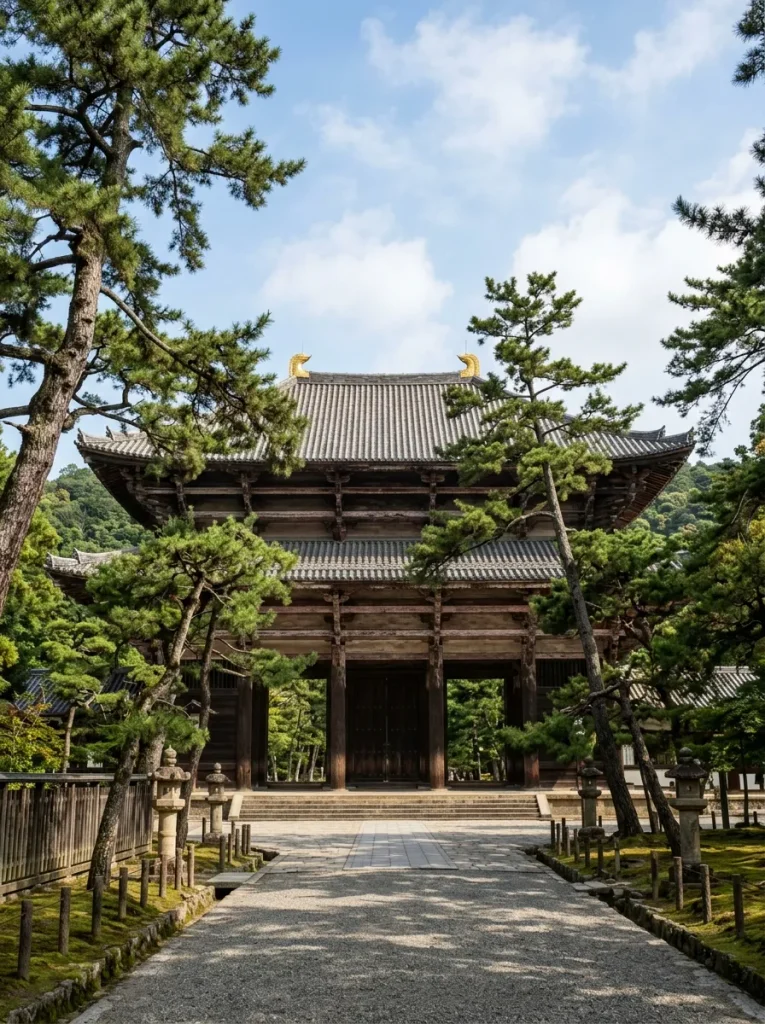
Todai-ji is the temple to visit when you want scale.
The temple’s Great Buddha Hall is one of the most famous Buddhist buildings in Japan, and the giant bronze Buddha inside makes the experience even more impressive.
But Todai-ji isn’t only about the building.
Its location in Nara Park means you can combine the temple with a day exploring historic Nara, where deer roam freely around many of the city’s major attractions.
This makes Todai-ji particularly easy to include in a first Japan itinerary.
Spend the morning exploring the temple and surrounding grounds, then continue through Nara Park toward Kasuga Taisha.
What makes it special
- Enormous Buddhist architecture
- Giant Buddha statue
- Nara Park setting
- Historic atmosphere
- Easy combination with other Nara sights
Best for
History lovers, families and travelers visiting Nara for the first time.
5. Kinkaku-ji, Kyoto
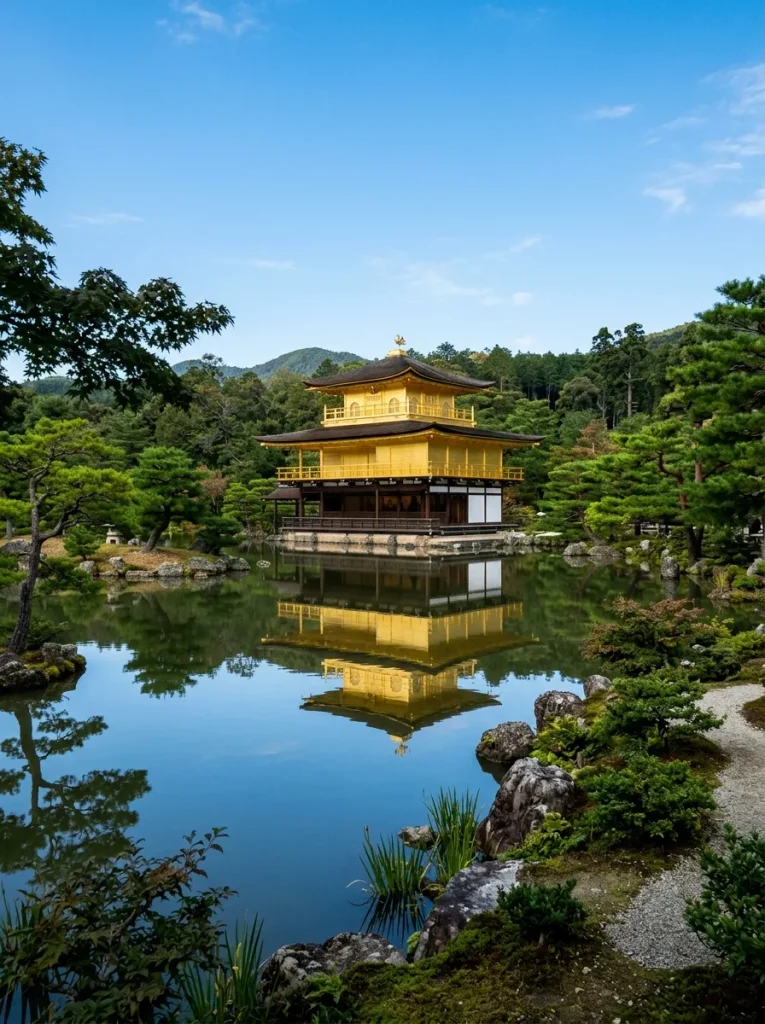
Kinkaku-ji, commonly known as the Golden Pavilion, is one of those places where photographs barely prepare you for the real thing.
The upper levels of the pavilion are covered in gold leaf, and the building sits beside a reflective pond surrounded by carefully arranged gardens.
The result is less about a single architectural detail and more about the entire composition.
Building.
Water.
Trees.
Sky.
Reflection.
It is quintessentially Japanese garden design turned into a postcard.
JNTO lists Kinkaku-ji among Kyoto’s major historical Buddhist attractions.
What makes it special
- Gold-covered pavilion
- Reflective pond
- Traditional Japanese garden
- Strong seasonal scenery
- One of Kyoto’s most recognizable landmarks
Best for
Photography, gardens and classic Kyoto sightseeing.
6. Meiji Jingu, Tokyo
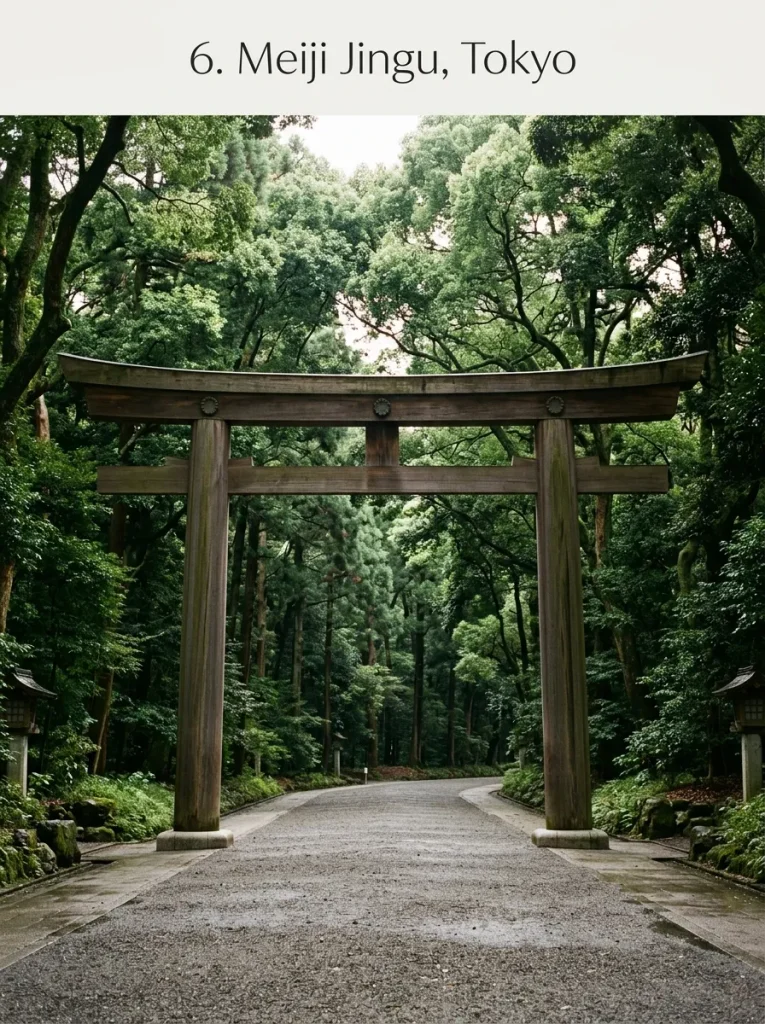
Meiji Jingu provides one of the most surprising shrine experiences in Japan.
You are in central Tokyo, close to Harajuku, and yet the moment you enter the forested approach, the noise of the city begins to disappear.
The shrine was completed in 1920 in honor of Emperor Meiji and Empress Shoken. More than 100,000 trees were donated from across Japan to create the forest surrounding the shrine.
That forest is a major part of the experience.
Meiji Jingu also gives visitors a chance to observe and participate respectfully in familiar Shinto customs, including making offerings, praying, writing wishes on an ema and obtaining amulets or fortunes.
What makes it special
- Huge forest in central Tokyo
- Important modern-era shrine
- Traditional Shinto rituals
- Easy combination with Harajuku and Shibuya
- Seasonal ceremonies and festivals
Best for
Travelers who want to experience Shinto traditions while staying in Tokyo.
7. Nikko Toshogu Shrine, Nikko
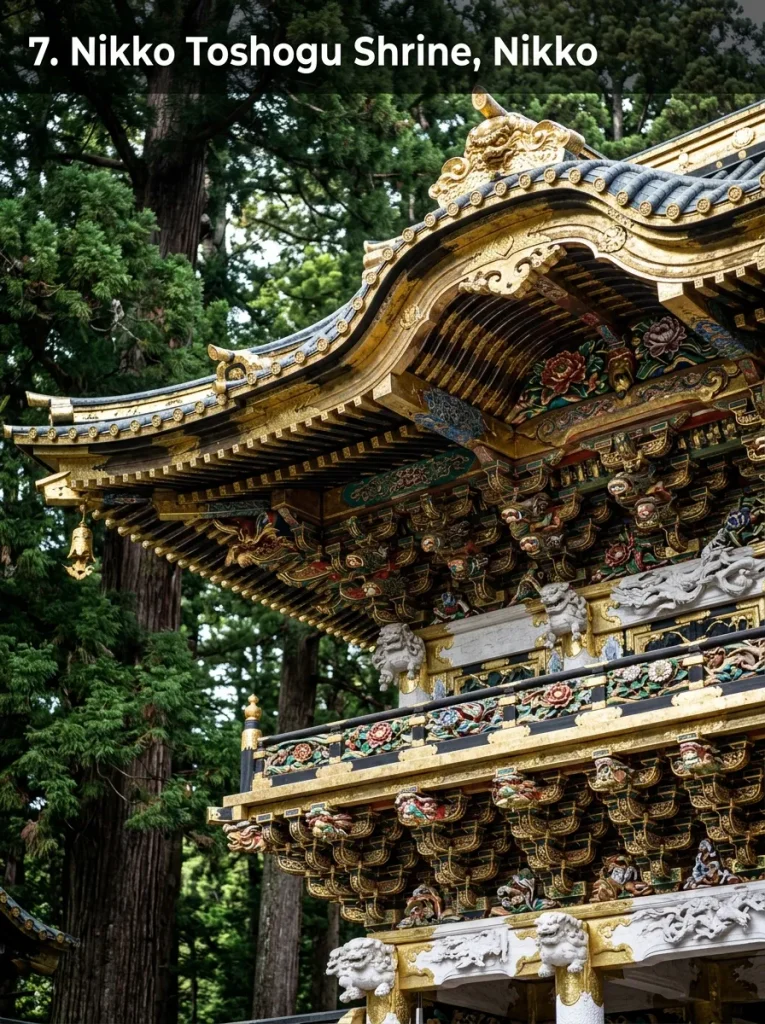
Nikko Toshogu is unlike almost every other shrine on this list.
Where many traditional Japanese religious buildings emphasize simplicity, Toshogu is flamboyant.
Colorful carvings, gold details, elaborate gates and intricate decorations cover the complex.
The shrine is dedicated to Tokugawa Ieyasu, founder of the Tokugawa shogunate. The surrounding Shrines and Temples of Nikko form a UNESCO World Heritage site containing 103 buildings and structures.
One of the highlights is Yomeimon Gate, covered in elaborate carvings and decoration.
You’ll also find the famous three monkeys associated with the “see no evil, hear no evil, speak no evil” imagery.
And don’t rush through the forested grounds.
The contrast between the elaborate architecture and towering cedar trees is part of what makes Nikko so memorable.
What makes it special
- Elaborate Edo-period architecture
- Yomeimon Gate
- Five-story pagoda
- Tokugawa history
- Cedar forests
- UNESCO World Heritage setting
Best for
History buffs, architecture lovers and anyone wanting to see a different side of Japanese shrine design.
8. Kasuga Taisha, Nara
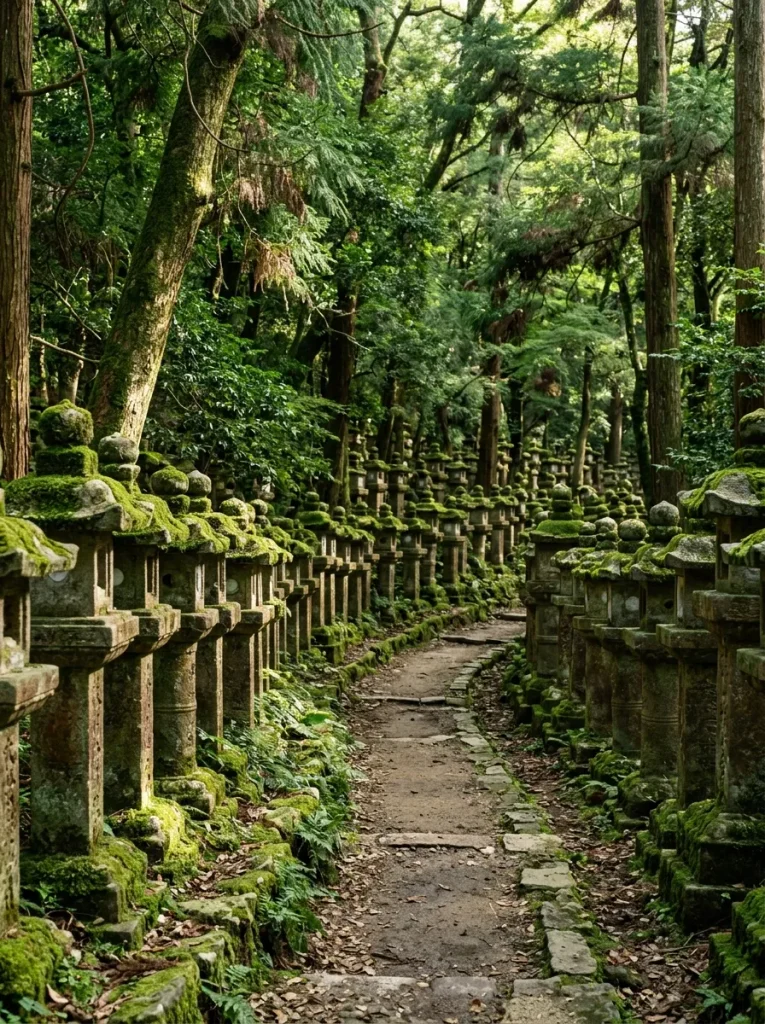
If Fushimi Inari is famous for torii gates, Kasuga Taisha is famous for its lanterns and forest setting.
The shrine was established in 768 and is associated with four principal deities. It sits near Nara Park and the sacred Kasugayama Primeval Forest.
Thousands of stone and bronze lanterns are found around the shrine complex.
During special lantern festivals, many of them are illuminated, creating an atmosphere that feels completely different from an ordinary daytime visit.
The approach through the forest is also part of the experience.
Deer wander through the surrounding Nara landscape, reflecting the traditional association between deer and the sacred world of Kasuga.
What makes it special
- Lantern-lined paths
- Ancient forest
- Vermilion architecture
- Sacred deer
- Connection to Nara’s early history
Best for
Nature lovers, photographers and travelers spending a full day in Nara.
9. Itsukushima Shrine, Miyajima
Few Japanese shrines have a more recognizable setting than Itsukushima Shrine.
Its famous torii gate appears to float in the sea during high tide, creating one of Japan’s most iconic landscapes.
The shrine is located on Miyajima, an island near Hiroshima, and can be reached by a short ferry ride from the mainland. JNTO describes it as an important cultural property and notes its long association with traditional Gagaku court music performances.
The experience changes throughout the day.
At high tide, the shrine appears to rise from the water.
At low tide, the shoreline can become accessible around the gate.
That changing relationship with the sea is what makes Itsukushima so visually interesting.
What makes it special
- Famous floating torii
- Island setting
- Sea views
- Traditional architecture
- Easy addition to a Hiroshima itinerary
Best for
Photography, couples, first-time visitors and anyone interested in Japan’s coastal landscapes.
10. Ise Jingu, Mie
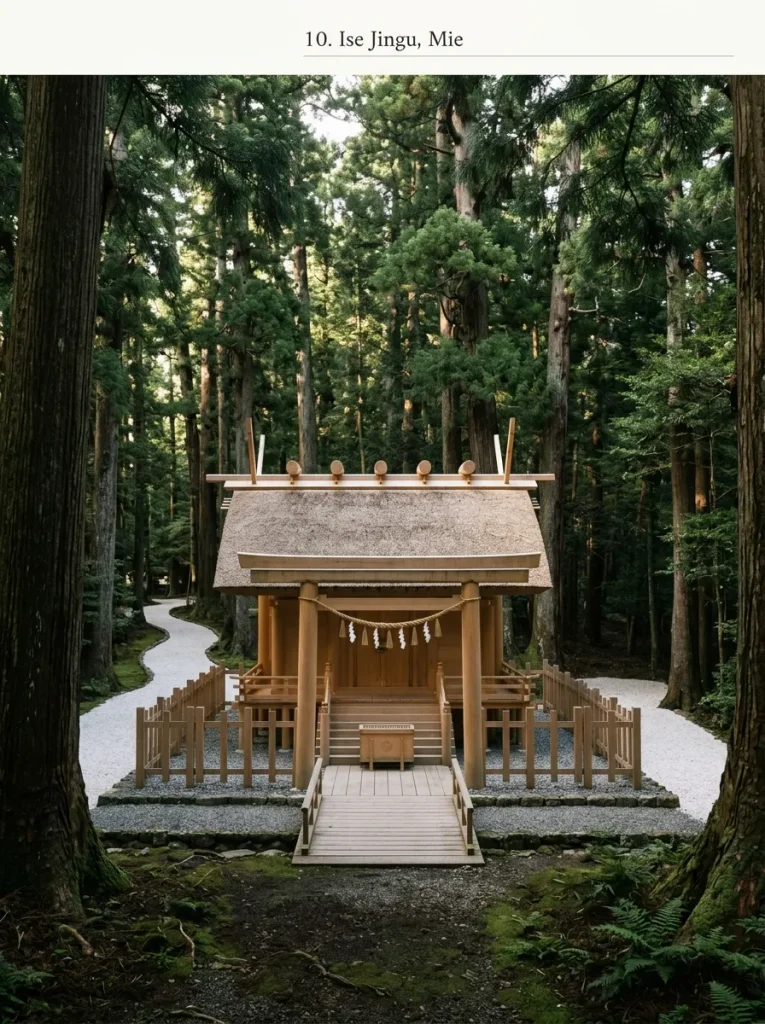
If you want to understand the spiritual importance of Shinto, Ise Jingu should be high on your itinerary.
The Inner Shrine, Naiku, is dedicated to Amaterasu Omikami and is considered the most sacred Shinto shrine in Japan.
The approach through the sacred forest is intentionally restrained.
There is none of the gold-covered spectacle of Toshogu.
Instead, the experience is about simplicity, nature, ritual and atmosphere.
The wider Ise Jingu complex includes the Outer Shrine, Geku, as well as Naiku.
After visiting the shrine, explore the nearby Oharaimachi district for traditional food and shops.
What makes it special
- One of Japan’s most sacred Shinto sites
- Forest setting
- Deep connection to Japanese mythology
- Traditional architecture
- Historic pilgrimage atmosphere
Best for
Travelers interested in Shinto, Japanese history and spirituality.
11. Izumo Taisha, Shimane
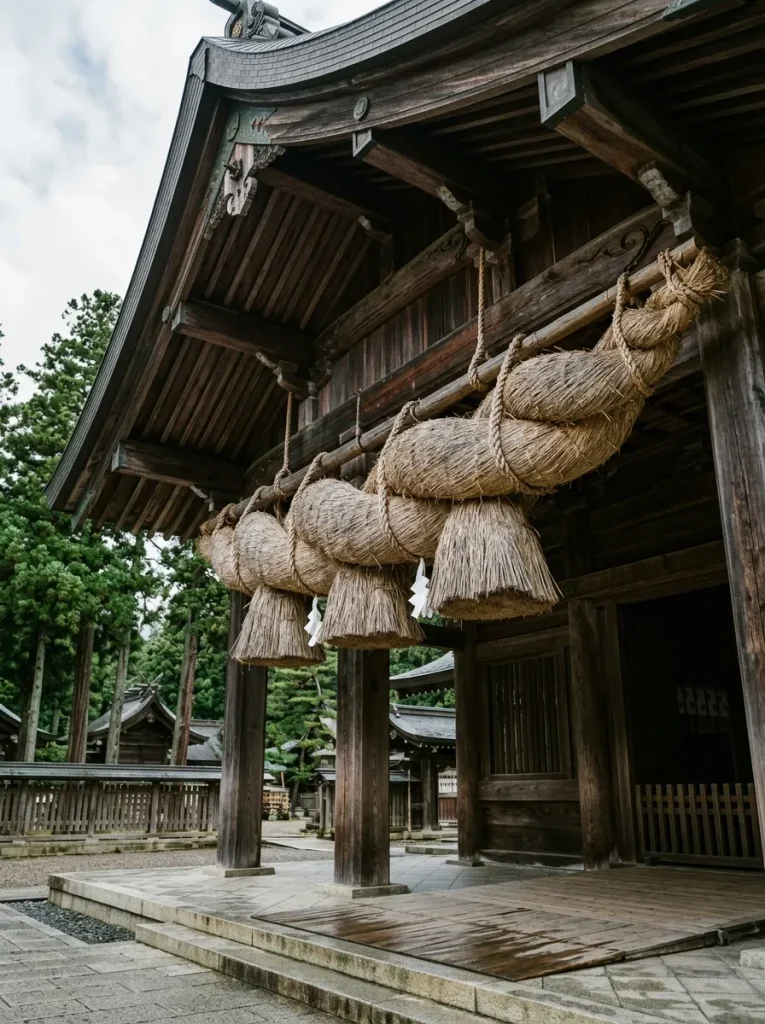
Izumo Taisha takes you away from the usual Tokyo-Kyoto-Nara circuit.
Located in Shimane Prefecture, Izumo is deeply connected to Japanese mythology and ancient Shinto traditions. JNTO describes Izumo as one of the oldest and most important spiritual areas in Japan.
Izumo Taisha is dedicated to Okuninushi, a deity strongly associated with relationships and marriage.
One of the most recognizable features is the enormous shimenawa, or sacred straw rope, hanging at the Kaguraden hall. JNTO lists it at about 13.6 meters long and 5.2 tons.
There is also a fascinating local tradition surrounding the shrine.
According to Japanese mythology, the deities from across Japan gather at Izumo during the tenth month of the lunar calendar, roughly corresponding to November.
What makes it special
- Ancient mythology
- Enormous shimenawa
- Important Shinto traditions
- Quieter regional setting
- Connection to love and relationships
Best for
Travelers who want to go beyond Japan’s most obvious tourist routes.
12. Kumano Nachi Taisha, Wakayama
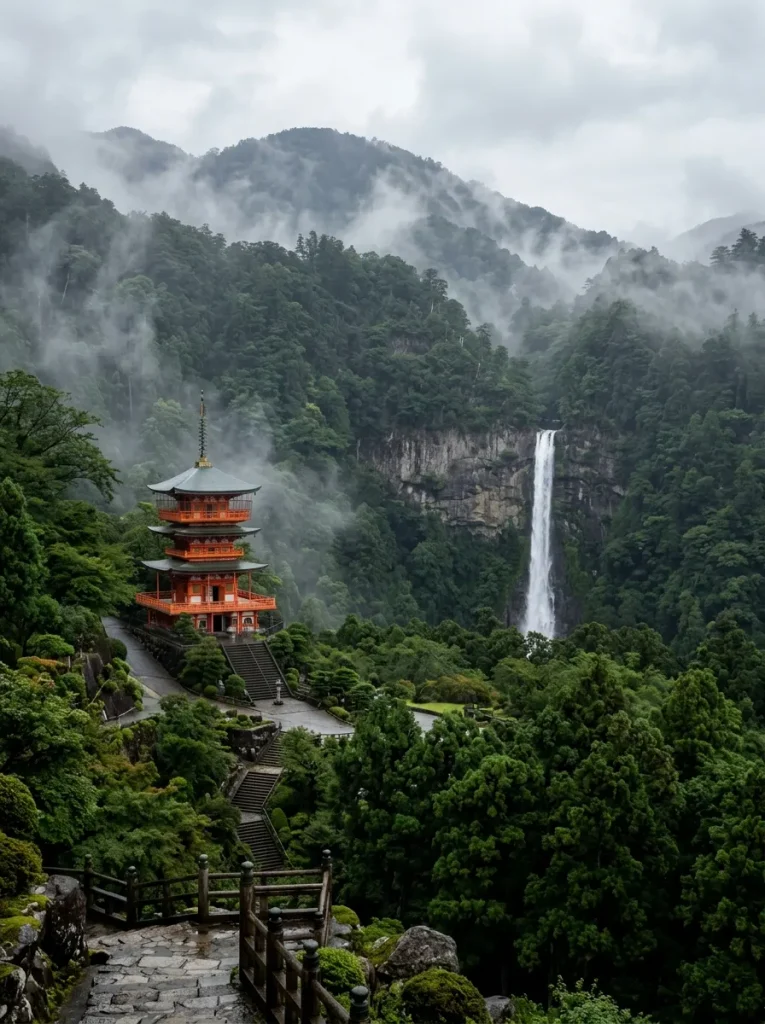
This is the shrine for travelers who like dramatic landscapes.
Kumano Nachi Taisha sits high on Mount Nachi near the spectacular Nachi Falls.
The shrine forms part of the Kumano Sanzan, one of Japan’s most important pilgrimage centers, and is closely connected with the historic Kumano Kodo pilgrimage routes.
The approach is particularly atmospheric.
Instead of simply walking from a train station into a shrine complex, you can approach through the forest along the historic Daimonzaka route.
The orange shrine buildings, forest and waterfall create one of the most dramatic combinations of nature and religion in Japan.
Next door is Seigantoji Temple, creating an unusual surviving example of the historical relationship between Shinto and Buddhism.
What makes it special
- Nachi Falls
- Mountain setting
- Kumano Kodo pilgrimage
- Forest approach
- Shinto and Buddhist sites beside each other
Best for
Hikers, photographers and travelers who want spirituality combined with nature.
13. Hasedera Temple, Nara
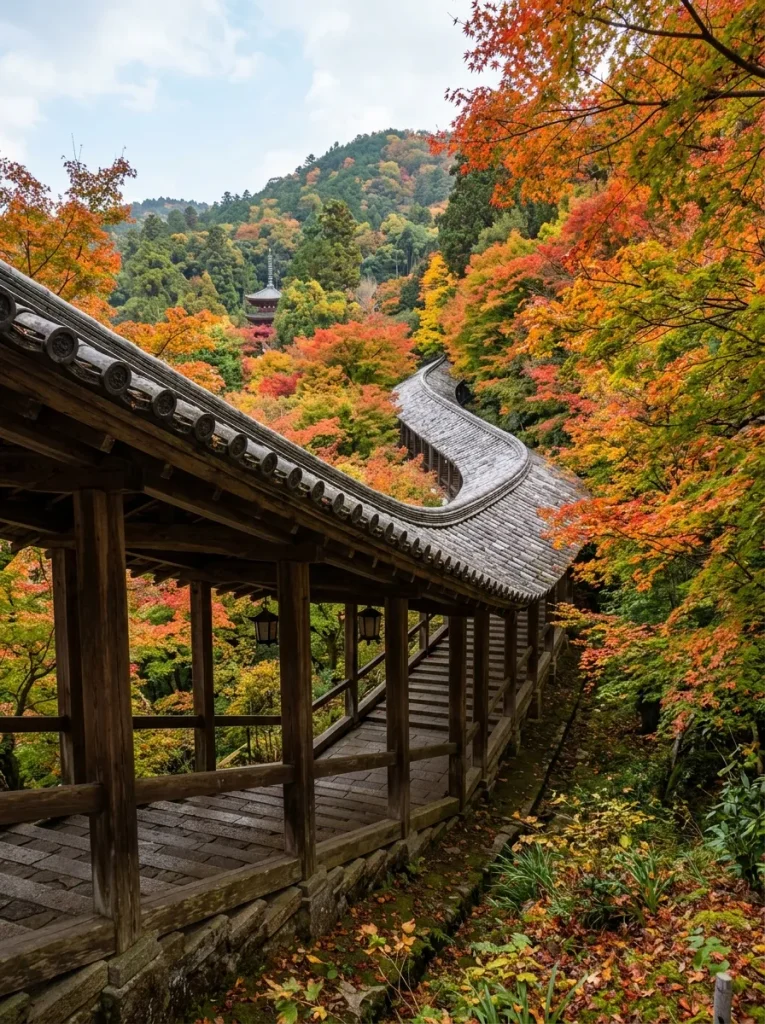
Hasedera is a wonderful choice if you want something quieter and more atmospheric than the major temples of central Nara.
The temple dates back to 686 and sits on a mountainside in Sakurai, southeast of Nara City.
The journey through the temple is part of the attraction.
A covered staircase rises 399 steps toward the Main Hall, with seasonal flowers and mountain views along the way. In spring, peonies line the approach, while autumn brings colorful foliage.
At the top, the temple’s elevated stage provides broad views across the surrounding valley.
It feels less like visiting a single monument and more like walking through a living mountain temple complex.
What makes it special
- 399-step covered staircase
- Mountain setting
- Spring peonies
- Autumn foliage
- Historic Buddhist atmosphere
- Panoramic views
Best for
Slow travelers, photographers and anyone looking for a quieter temple experience.
Shrine Or Temple: What’s The Difference?
This distinction makes visiting Japan much more interesting.
| Feature | Shinto Shrine | Buddhist Temple |
| Religion | Shinto | Buddhism |
| Entrance | Usually torii gate | Usually sanmon or temple gate |
| Sacred figures | Kami | Buddhas, bodhisattvas and other Buddhist figures |
| Common rituals | Purification and prayer | Prayer, incense and Buddhist practices |
| Architecture | Shrine buildings, torii, sacred ropes | Halls, pagodas, gates and statues |
| Common visual symbol | Torii | Pagoda or temple gate |
| Examples | Fushimi Inari, Meiji Jingu, Ise Jingu | Kiyomizu-dera, Todai-ji, Hasedera |
The distinction is useful, but Japanese religious history is not always neatly divided.
For centuries, Shinto and Buddhism existed together in Japan. The Kumano region provides one of the clearest examples, where shrine and Buddhist traditions remained physically and culturally connected even after the formal separation of the religions in the 19th century.
How To Behave At Japanese Shrines And Temples
You don’t need to be an expert in Japanese religion to visit respectfully.
A few simple habits go a long way.
At A Shinto Shrine
Before entering through a torii gate, it is customary to bow once.
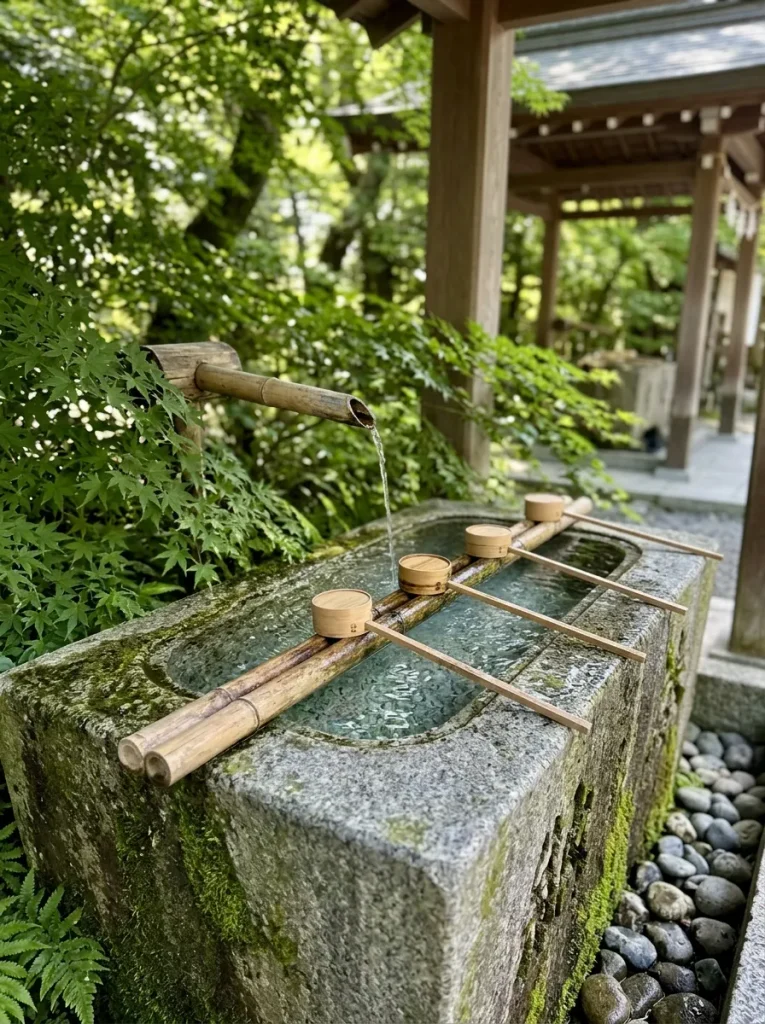
At the purification fountain, follow the posted procedure if one is available.
Approach the main shrine respectfully and follow the local prayer method.
Different shrines can have different customs. For example, Izumo Taisha uses a distinctive prayer sequence of two bows, four claps and one bow.
At A Buddhist Temple
Behaviors vary by temple, but you may encounter incense, prayer halls, Buddhist statues and areas where photography is restricted.
Look for signs.
If photography is prohibited, don’t sneak a quick phone picture because you think nobody noticed.
They noticed.
General Etiquette
- Keep your voice low
- Follow marked paths
- Don’t touch sacred objects
- Don’t climb on structures
- Respect photography restrictions
- Dress appropriately
- Avoid blocking worshippers
- Don’t treat ceremonies as performances
- Follow instructions from staff
Remember that these are active religious places, not just heritage attractions.
Which Japanese Shrines And Temples Should You Visit?
The answer depends on the kind of experience you want.
| If you want… | Visit |
| Famous torii gates | Fushimi Inari |
| Classic Kyoto scenery | Kiyomizu-dera |
| Tokyo tradition | Senso-ji |
| Huge Buddhist architecture | Todai-ji |
| Golden architecture | Kinkaku-ji |
| Shinto in central Tokyo | Meiji Jingu |
| Elaborate shrine architecture | Nikko Toshogu |
| Lanterns and deer | Kasuga Taisha |
| Floating shrine gate | Itsukushima |
| Deep Shinto spirituality | Ise Jingu |
| Japanese mythology | Izumo Taisha |
| Mountains and waterfalls | Kumano Nachi Taisha |
| Quiet mountain temple | Hasedera |
You don’t need to visit all 13.
Even three or four can give you a remarkably broad introduction to Japanese religious architecture.
A Simple 7-Day Shrine And Temple Itinerary
If you’re building your first Japan trip around traditional religious sites, you could structure it like this.
Days 1-2: Tokyo
Visit:
- Meiji Jingu
- Senso-ji
Use the remaining time for neighborhoods such as Harajuku, Asakusa and Shibuya.
Days 3-5: Kyoto
Visit:
- Fushimi Inari
- Kiyomizu-dera
- Kinkaku-ji
You can also add other temples and shrines depending on your energy.
Day 6: Nara
Visit:
- Todai-ji
- Kasuga Taisha
- Hasedera if you want to extend the day
Day 7: Choose A Regional Experience
If you have more time, consider extending your trip to:
- Nikko
- Hiroshima and Miyajima
- Ise
- Izumo
- Kumano
A longer Japan itinerary is where the country’s regional differences really begin to emerge.
When Is The Best Time To Visit Japanese Shrines And Temples?
Every season offers something different.
Spring
Cherry blossoms transform temple and shrine grounds into some of Japan’s most photographed landscapes.
Kiyomizu-dera, Hasedera and many Kyoto temples can be especially beautiful during this period.
Summer
Summer brings lush greenery and festival activity.
The heat can be intense, especially when climbing shrine and temple paths.
Autumn
This is one of the best seasons for combining temples with nature.
Nikko, Kyoto, Nara and Hasedera can all be spectacular when the leaves change.
Winter
Winter provides a different mood.
Snow-covered temple roofs, quieter paths and crisp air can create an almost minimalist atmosphere.
If you enjoy seasonal travel ideas, our winter bucket-list content can also provide inspiration for building a broader cold-weather itinerary.
How To Photograph Shrines And Temples Without Making Them Look Like Everyone Else’s
Japan’s most famous religious sites have been photographed millions of times.
That doesn’t mean your photographs have to look identical.
Try changing your perspective.
Instead of photographing the entire building, focus on:
- Roof details
- Lanterns
- Stone paths
- Wooden carvings
- Reflections
- Torii tunnels
- Sacred ropes
- Cedar forests
- Seasonal flowers
- Architectural symmetry
Early morning can also help you photograph popular sites before the largest crowds arrive.
And don’t forget to put the camera down occasionally.
Some of the most memorable moments at these places won’t fit into a 4:3 rectangle.
Combining Japan With Other Asian Cultural Destinations
If Japan is part of a longer Asia trip, these shrines and temples can fit into a much larger journey through traditional cultures and island landscapes.
For example, travelers interested in Southeast Asian island culture can continue their research with the Bangka Island Travel Guide, where beaches, local food and Malay-Chinese cultural influences create a very different island experience.
For a stronger cultural and mountain experience, the Wae Rebo Village Guide explores a traditional village in Flores where the landscape and local architecture are central to the journey.
Travelers who prefer remote islands can also explore the Buton Island Travel Guide.
And if you want a much easier introduction to Indonesian island travel before heading deeper into Southeast Asia, the Sanur Bali Travel Guide is a useful starting point.
The architecture is different.
The religions are different.
The landscapes are different.
But the broader idea is similar: some of Asia’s most memorable travel experiences come from places where history, landscape and local traditions are still woven together.
Tips For Planning A Shrine And Temple Trip
Don’t Pack Too Many Into One Day
Three major temples can sound reasonable on paper.
By the third one, your feet may file a formal complaint.
Give yourself time to actually experience each place.
Check Seasonal Events
Some shrines and temples have major festivals, special openings or seasonal illuminations.
Kiyomizu-dera, for example, publishes annual schedules for special viewings and events, including seasonal night openings.
Go Early For Famous Sites
Fushimi Inari and other major attractions can become busy.
Early mornings are particularly useful if photography and atmosphere matter to you.
Wear Comfortable Shoes
Some of these places involve:
- Long approaches
- Stone paths
- Hills
- Stairs
- Mountain trails
Fushimi Inari can take several hours if you hike the mountain, while Hasedera’s route to the Main Hall includes 399 steps.
Use Public Transportation
Japan’s rail and bus network makes many major religious sites relatively easy to access.
For more remote places such as Kumano or Izumo, allow more time for connections.
The Best Thing About Visiting Japan’s Traditional Shrines And Temples
The buildings are beautiful. The history is fascinating. The gardens are immaculate. The photographs can be spectacular.
But those aren’t the only reasons to visit. What makes Japan’s shrines and temples special is the way they connect architecture with landscape and tradition.
At Fushimi Inari, a forest path becomes a tunnel of torii gates. At Kiyomizu-dera, a wooden temple stage overlooks Kyoto.
At Nikko, elaborate carvings emerge from a cedar forest. At Nachi, a sacred waterfall towers beside a shrine.
At Itsukushima, a torii appears to float on the sea. At Ise, simplicity and forest create a sense of quiet.
And at Izumo, ancient mythology remains part of the identity of a living shrine. That variety is the real reason to explore beyond the usual checklist.
Japan doesn’t have one single style of traditional spirituality. It has thousands of years of stories, rituals, architecture and landscapes layered together. And these 13 places offer an excellent way to start exploring them.
Frequently Asked Questions About Japanese Shrines And Temples
What is the difference between a Japanese shrine and temple?
A shrine is associated with Shinto, while a temple is associated with Buddhism. Torii gates are characteristic of Shinto shrines, while Buddhist temples commonly have gates such as the sanmon.
Which shrine is the most famous in Japan?
Fushimi Inari Taisha in Kyoto is among Japan’s most recognizable shrines, particularly because of its long tunnels of vermilion torii gates.
Which temple should first-time visitors see in Kyoto?
Kiyomizu-dera and Kinkaku-ji are two of Kyoto’s most recognizable Buddhist temples, while Fushimi Inari provides a major Shinto experience.
Are Japanese shrines free to enter?
Many shrine grounds can be entered without a general admission fee, but some areas, gardens, museums or special experiences may charge separately. Always check the individual site’s current information.
Can tourists participate in Japanese shrine rituals?
Visitors can generally observe and, where appropriate, participate in basic shrine customs such as purification and prayer. Follow the instructions posted at each shrine because specific rituals can vary.
Can you take photos inside Japanese temples?
Photography rules vary. Outdoor grounds may allow photography while particular halls, religious objects or ceremonies may prohibit it. Always follow posted restrictions.
What is the best season for Japanese temples?
Spring and autumn are particularly popular because of cherry blossoms and fall foliage. Winter can be quieter and atmospheric, while summer offers lush greenery and festivals.
Is Nikko worth visiting for temples and shrines?
Nikko offers a particularly rich combination of elaborate religious architecture and forest scenery. Its World Heritage site includes 103 buildings and structures associated with Toshogu, Futarasan-jinja and Rinnoji.
Which Japanese shrine is famous for a floating torii?
Itsukushima Shrine on Miyajima is famous for its torii gate appearing to float in the sea at high tide.
Which shrine is associated with marriage and relationships?
Izumo Taisha is dedicated to Okuninushi, a deity associated with relationships and marriage in Japanese tradition.
Which Japanese religious site is associated with a waterfall?
Kumano Nachi Taisha is located near Nachi Falls and forms part of the historic Kumano pilgrimage landscape.
How many shrines and temples should you visit on a Japan trip?
There is no magic number. For a first trip, choosing three to six that fit your route is usually more enjoyable than racing around the country trying to collect all 13.