Skardu and Hunza Valley: The Complete 2026–27 Guide to Pakistan’s Karakoram Wonderland
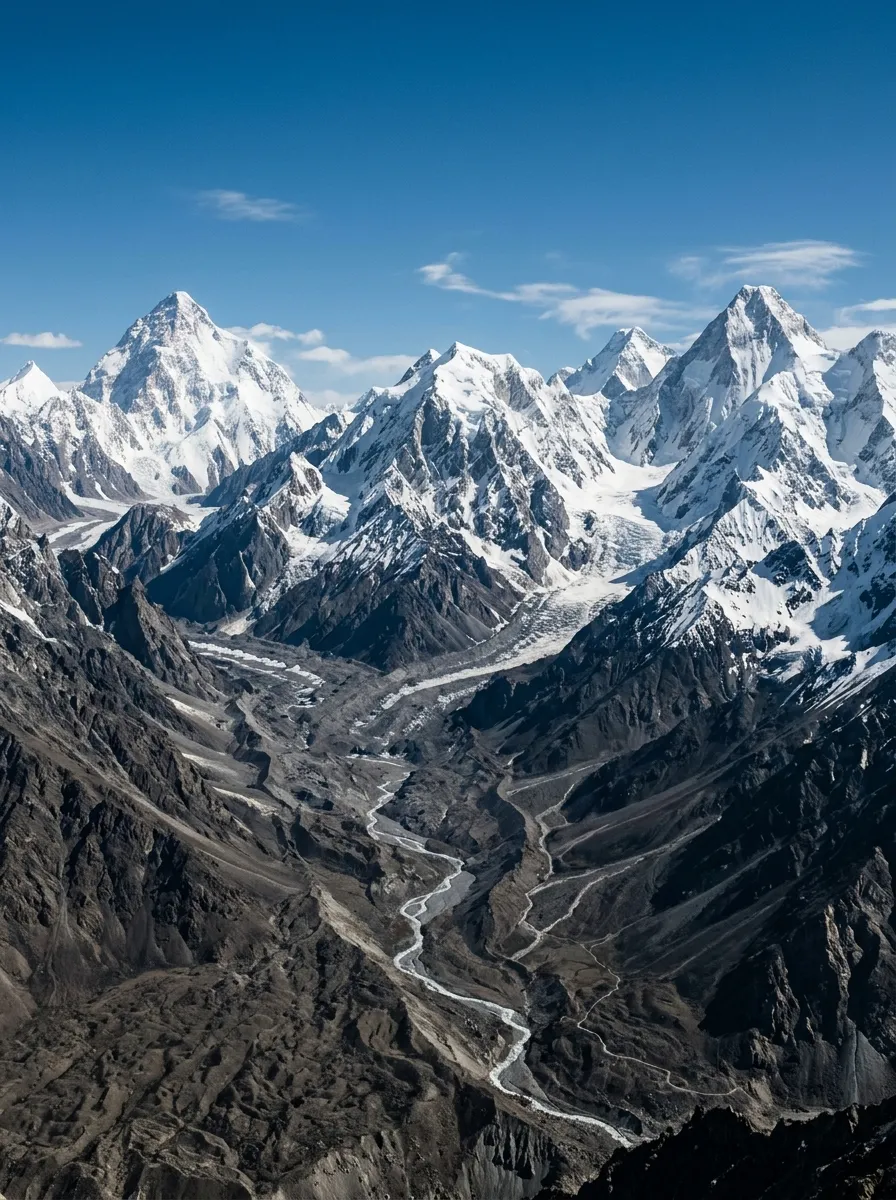
Nothing quite prepares you for the scale of Pakistan’s north. This is where the Karakoram, Himalaya and Hindu Kush ranges converge in a knot of geography that holds more peaks above 8,000 meters than anywhere else on Earth, where a 2010 landslide dammed a river overnight and left behind a 21-kilometer turquoise lake, and where a valley so lush and orchard-lined that early British travelers believed it inspired James Hilton’s mythical “Shangri-La” sits a genuinely reasonable flight from Islamabad. Hunza and Skardu are two distinct valleys with two distinct personalities — Hunza green, compact and welcoming; Skardu vast, raw and rugged, the launching point for expeditions to K2 itself — and together they form the single most rewarding mountain travel circuit in South Asia.
This guide covers Skardu and Hunza Valley for the rest of 2026 and into 2027, and it’s built to answer the questions that come up first for most travelers, especially Americans: is it actually safe to go, what does the visa process involve, and how do these two valleys actually differ from each other. The honest answer on safety is nuanced enough to deserve its own dedicated section below, but the short version is this: Gilgit-Baltistan, the region containing both Hunza and Skardu, has built a genuine, well-established tourism infrastructure and a strong recent safety record, even as the US State Department maintains a broader Level 3 advisory for Pakistan as a whole, driven almost entirely by conditions in regions far from the areas most travelers actually visit.
Whether you’re planning a Karakoram Highway road trip past Rakaposhi’s snow-capped summit, a boat ride on Attabad Lake’s impossible turquoise water, or a genuine expedition toward K2 Base Camp from Skardu, this guide breaks down what’s actually worth your time, current 2026 visa and safety information, and how to build a realistic itinerary across two of the most visually overwhelming valleys anywhere in the world.
Recommended Travel Items for Your Trip
AT A GLANCE: SKARDU AND HUNZA VALLEY
- Best overall time to visit: June through September for full road and pass access; April for cherry blossoms
- Best base in Hunza: Karimabad, walkable to Baltit Fort and the bazaar
- Best base in Skardu: Skardu town, gateway to Deosai, Shigar and K2 Base Camp treks
- Signature Hunza landmark: Attabad Lake, formed by a 2010 landslide
- Signature Skardu landmark: Deosai National Park, one of the world’s highest plateaus
- 2026 entry requirement: A Pakistan e-visa ($75–100) is required for most nationalities; the free Visa Prior to Arrival program was suspended January 1, 2026
- Current US travel advisory: Level 3, “Reconsider Travel,” for Pakistan overall — Gilgit-Baltistan is not among the specifically flagged Do Not Travel regions
- Ideal trip length: 10–14 days to properly cover both valleys; 5–7 days for one valley alone
Hunza and Skardu at a Glance
Though both sit within Gilgit-Baltistan and are often combined into a single trip, Hunza and Skardu offer genuinely different experiences.
| Aspect | Hunza Valley | Skardu Valley |
| Character | Green, pastoral, compact and walkable | Vast, raw, dramatic, more spread out |
| Elevation | About 2,438 m (Karimabad) | About 2,500 m |
| Access from Islamabad | Road via Karakoram Highway (14–18 hrs) or flight to Gilgit + 2.5-hr drive | Direct flight (about 1 hr) or road (15–18 hrs) |
| Signature sight | Attabad Lake and the Passu Cones | Deosai Plains and K2’s gateway |
| Best for | First-time visitors, a rounded introduction to the region | Serious trekkers, wilder, more remote landscapes |
| Local culture | Predominantly Ismaili Muslim, Burushaski and Wakhi speakers | Balti culture, historically tied to Tibet |
Why Skardu and Hunza Are Pakistan’s Crown Jewels
Northern Pakistan holds a genuinely unmatched concentration of extreme geography: more peaks above 8,000 meters than anywhere else on the planet, glaciers stretching 70 kilometers, and a landscape so varied it swings from sand dunes at altitude to permanent snowfields within a single valley. Hunza and Skardu sit at the heart of that geography, but with very different personalities — Hunza feels welcoming and layered, with a compact main town, excellent cafés and centuries-old forts within walking distance of each other; Skardu feels vast and largely undomesticated, the kind of place where distances between attractions are real and a vehicle is essential. Most travelers who’ve done both describe the pairing as complementary rather than redundant, and increasingly, tour operators route directly between the two along the Karakoram Highway.
Is It Safe? Current Travel Advisories and What They Actually Mean
This deserves direct, honest treatment rather than a glossed-over caveat. As of a March 2026 update, the US State Department maintains Pakistan at Level 3, “Reconsider Travel,” citing armed conflict, terrorism, crime and kidnapping risk nationally. Within that advisory, the Department explicitly designates Balochistan Province, Khyber Pakhtunkhwa Province (including the former Federally Administered Tribal Areas) and the immediate vicinity of the Line of Control as “Do Not Travel” zones — none of which include Gilgit-Baltistan, the region containing both Hunza and Skardu. Multiple current travel-safety analyses specifically single out Gilgit-Baltistan as the most tourism-developed and best-established part of the country for foreign visitors, with a strong recent safety track record and active, tourism-specific security infrastructure. Pakistan received roughly 965,000 international visitors in 2024, with the majority heading to these northern valleys specifically.
That said, “reasonably safe relative to the rest of the country” isn’t the same as “risk-free,” and a few practical realities are worth planning around: all foreign nationals must register with local authorities in Gilgit-Baltistan, some routes benefit from (or require) security coordination through local tour operators, and altitude-related medical risk is a genuine concern given how high some of the region’s passes and treks climb. Practically, this means booking through an established local operator, carrying travel insurance with medical evacuation coverage, checking your own government’s current advisory before finalizing plans, and registering your itinerary with someone outside the country — standard precautions for remote, high-altitude travel anywhere, not unique red flags specific to this region.
If a broader look at planning a Pakistan trip — safety context, itinerary structure, and what a full circuit through the country actually looks like — would help before diving into Hunza and Skardu specifically, this complete guide to travel in Pakistan with a 15-day itinerary and safety tips is worth reading first.
Visa and Entry Requirements for 2026
A significant change affects nearly every visitor planning a 2026 trip: Pakistan’s free Visa Prior to Arrival (VPA) program, which had covered 126 countries, was suspended on January 1, 2026. All nationalities must now apply through the standard paid e-visa system at the official portal (visa.nadra.gov.pk), which involves creating an account, completing the application, uploading a passport scan and photo, paying by credit card, and receiving a Visa Grant Notice via email to present at immigration on arrival. For US citizens specifically, this typically runs $75–100 and takes 7–10 business days to process — apply well ahead of your travel dates rather than assuming quick turnaround. A valid passport with at least six months’ remaining validity and at least two blank pages is standard practice. Note that reaching Hunza and Skardu themselves requires only the standard tourist e-visa (no special permit needed for Karimabad, Attabad Lake, Gulmit or Passu), though traveling specifically to Khunjerab Pass at the China border requires an additional permit, obtainable in Sost or Gilgit.
When to Visit: Seasons, Cherry Blossoms and Pass Access
Late 2026: What’s Left on the Season
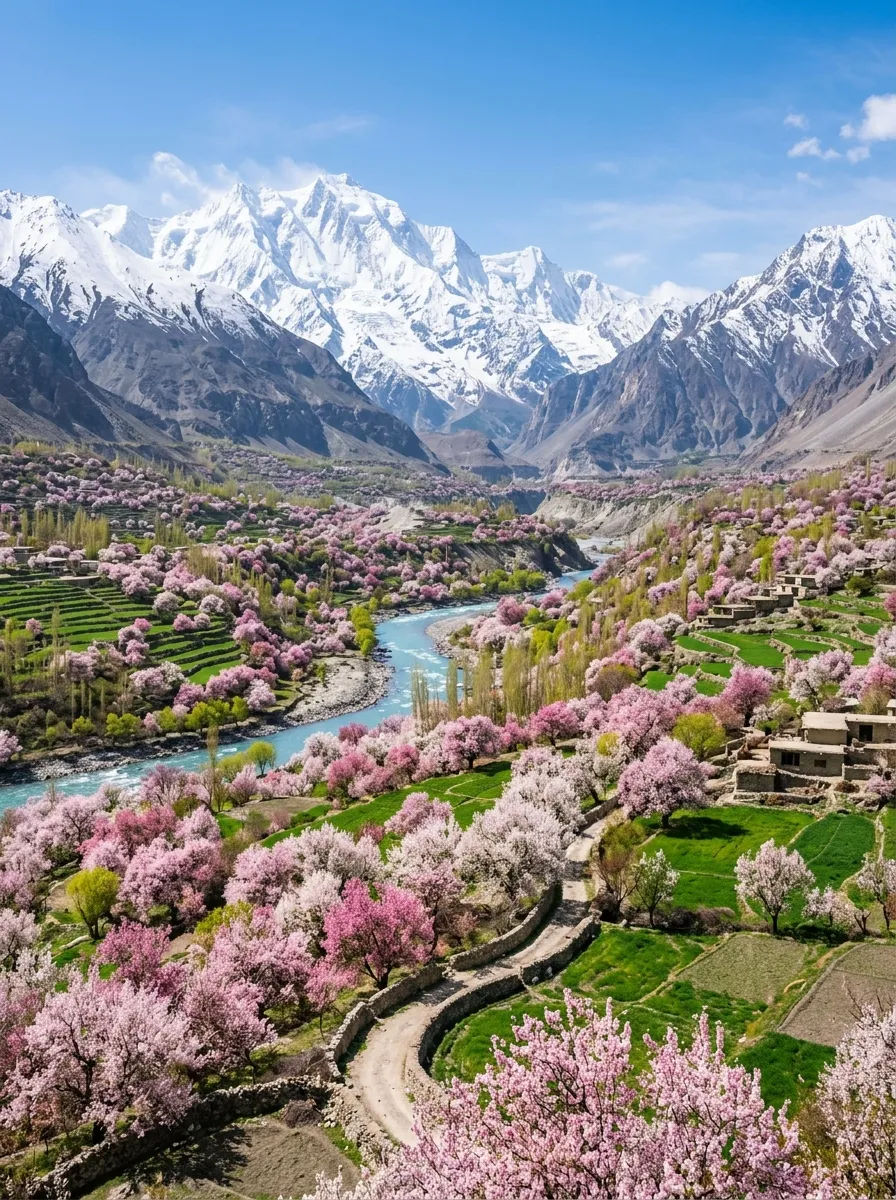
If you’re planning a trip for the remainder of 2026, September remains a strong option — comfortable daytime temperatures, clearer mountain visibility than the hazier summer months, and the Khunjerab Pass still open (it typically closes with the onset of winter, generally by late November). Autumn foliage peaks from mid-October through November across Hunza specifically, turning the valley’s orchards a genuinely striking gold and red against the surrounding peaks — a strong, less-crowded alternative to the famous spring bloom.
Spring: Cherry Blossom Season
Hunza’s cherry blossom season typically runs mid-March through late April, with lower Hunza flowering first, and it’s become an increasingly popular reason to visit outside the traditional summer peak — a genuinely beautiful counterpoint to the valley’s greener summer look.
Summer: Peak Season and Full Access
June through August brings peak season for both valleys: full road access, all passes open, and the widest range of tour operator departures. In Skardu specifically, Deosai National Park’s road opens in mid-June and closes with the first heavy snowfall in October, and July and August are peak for wildflowers and the plateau’s famous brown bear sightings.
2027 Planning
Expect similar seasonal patterns for 2027 — cherry blossoms in Hunza from mid-March, Deosai’s road opening around mid-June, and the Khunjerab Pass remaining accessible roughly May through November. Confirm current road and pass conditions with a local operator before finalizing dates, since exact opening and closing windows shift slightly year to year based on snowfall.
Hunza Valley: Karimabad and Baltit Fort
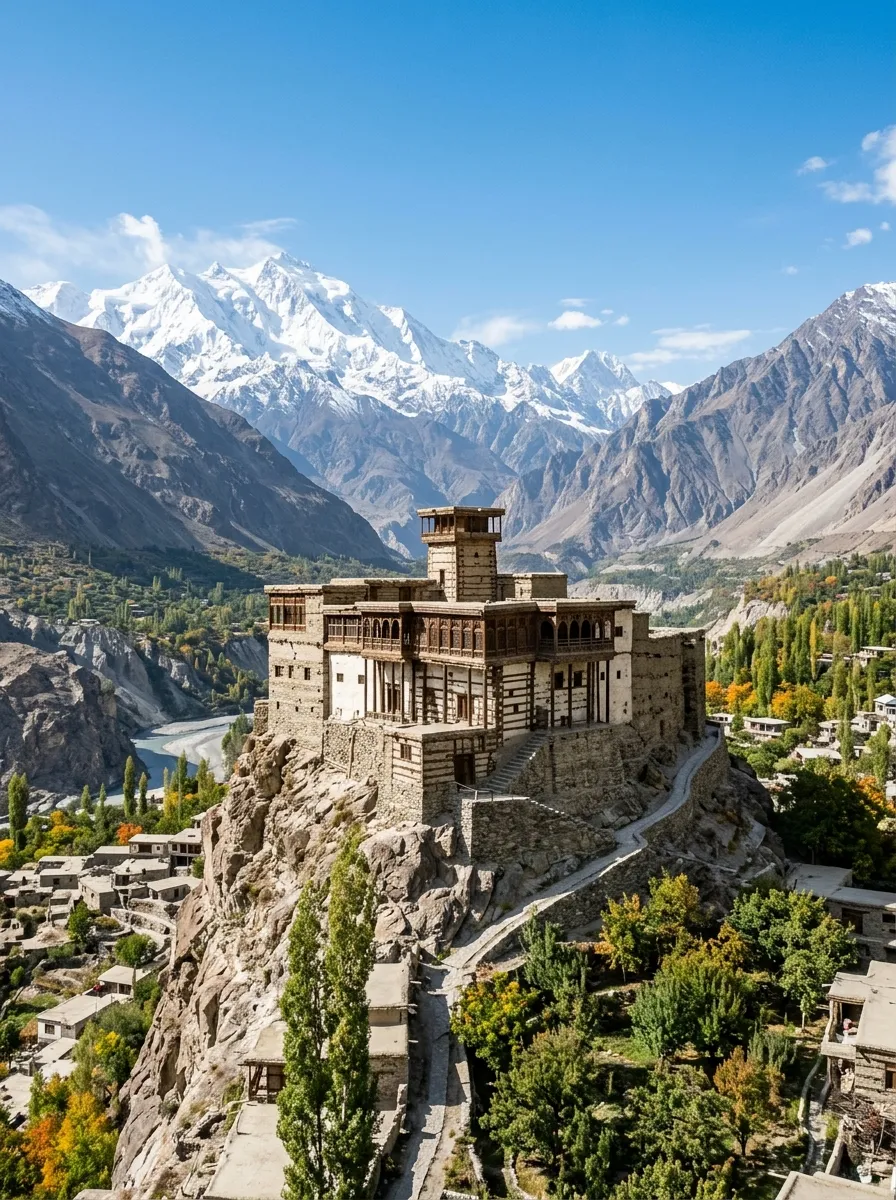
Karimabad, sitting at roughly 2,438 meters with direct views of Ultar Sar and Rakaposhi, is Hunza’s main town and the ideal first-time base — within walking distance of the bazaar, dozens of guesthouses across every budget, and Baltit Fort itself. The fort ruled the former Hunza princely state for more than 700 years before Hunza acceded to Pakistan in 1974, and it remains open to visitors with a local guide included, offering a genuinely rich look into the region’s royal history against a backdrop of the surrounding Karakoram peaks.
Altit Fort
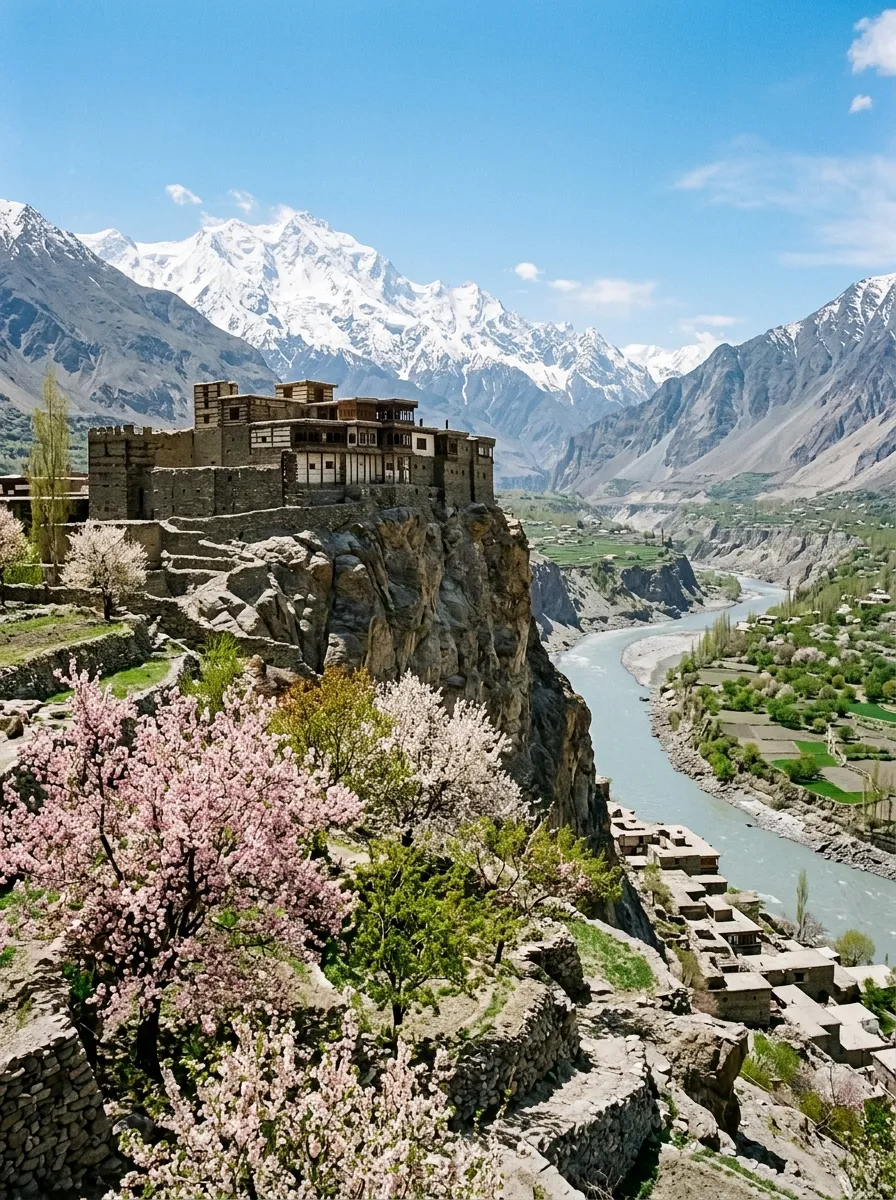
Even older than its more famous sister, Altit Fort in neighboring Altit Village dates back more than 900 years, perched on a cliff-edge overlooking the river that once served as the first stronghold of Hunza’s ruling Mirs. The beautifully restored fort and its terraced gardens, planted with apricot trees, offer one of the most serene stops in the entire valley — a quieter counterpoint to Baltit Fort’s greater fame.
Attabad Lake
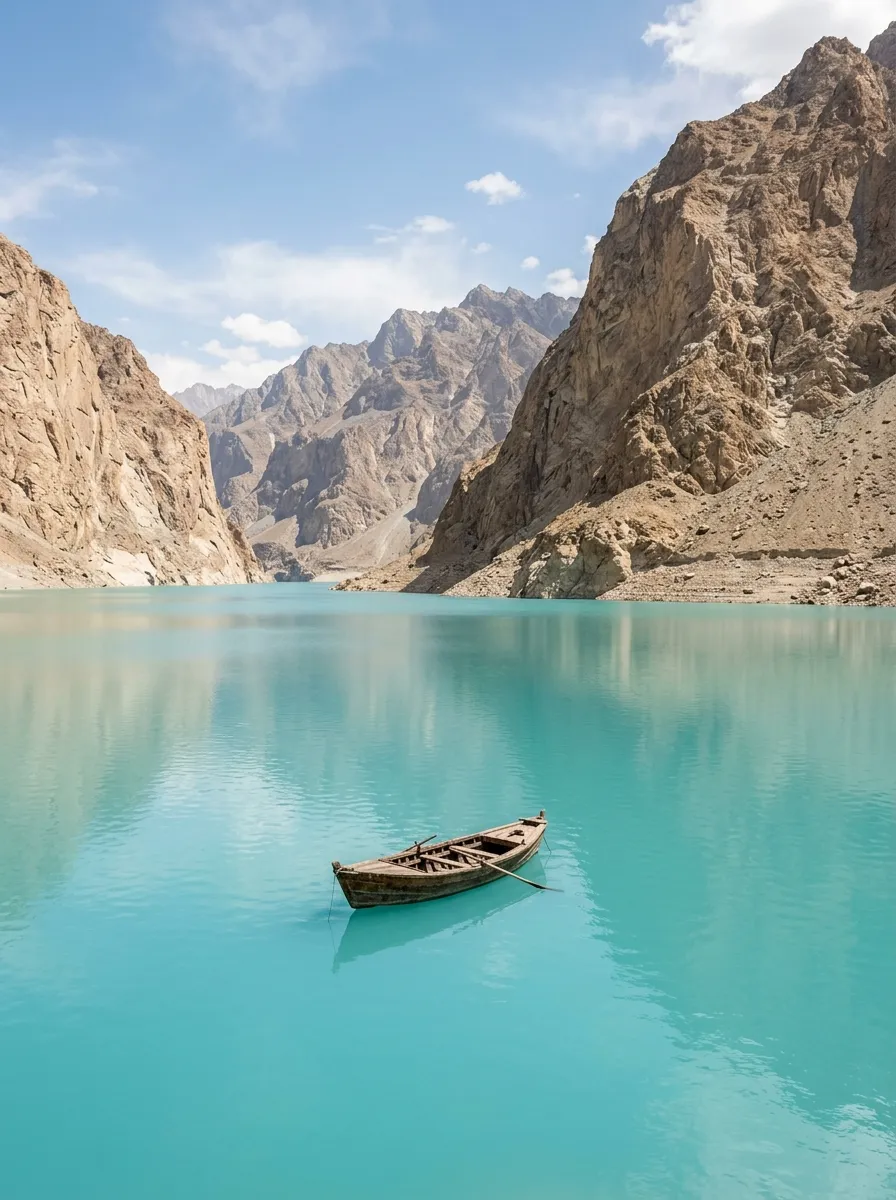
Arguably the most photographed single location in all of Pakistan, Attabad Lake formed in January 2010 when a massive landslide near Attabad village dammed the Hunza River overnight, swallowing a 19-kilometer stretch of highway and creating a turquoise lake that now stretches 21 kilometers. Boat rides here (roughly PKR 500–2,000 depending on activity, with park entry around PKR 100–200) let visitors take in the stark, almost unreal contrast between the impossibly blue water and the barren surrounding mountains — a genuinely surreal sight that photographs don’t fully prepare you for in person.
Passu Cones and Hussaini Suspension Bridge
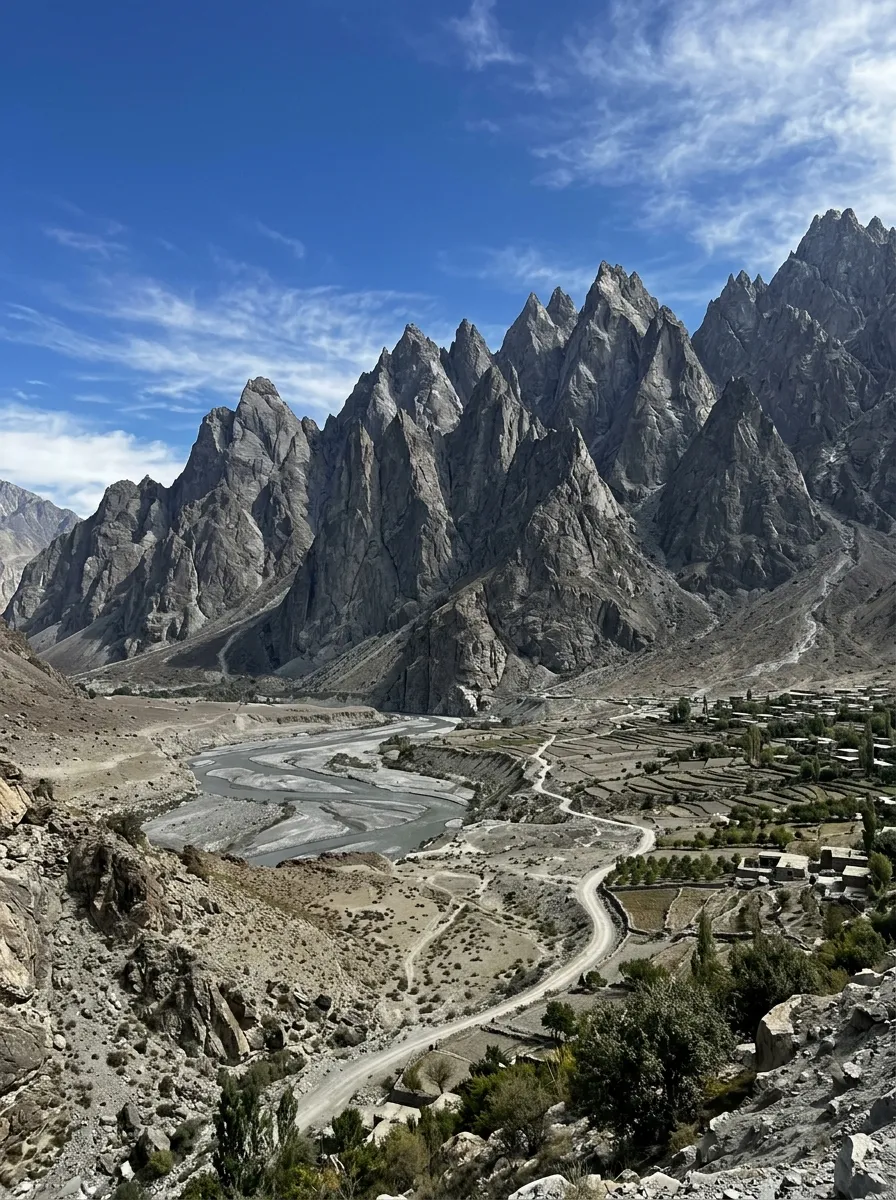
Past Attabad Lake, the valley narrows into Gojal (Upper Hunza), where the Karakoram Highway threads through lakeside tunnels toward Gulmit and Passu. Here, the jagged Passu Cones — nicknamed the “Teeth of the World” — rise 6,106 meters straight out of the valley floor, among the most instantly recognizable peaks in the entire region. Nearby, the Hussaini Suspension Bridge offers a genuinely thrilling (and slightly unnerving) crossing over the Hunza River on a hanging rope-and-wood span that sways with every step — crossing it is optional, but most visitors at least walk out partway for the photo.
Eagle’s Nest (Duikar)
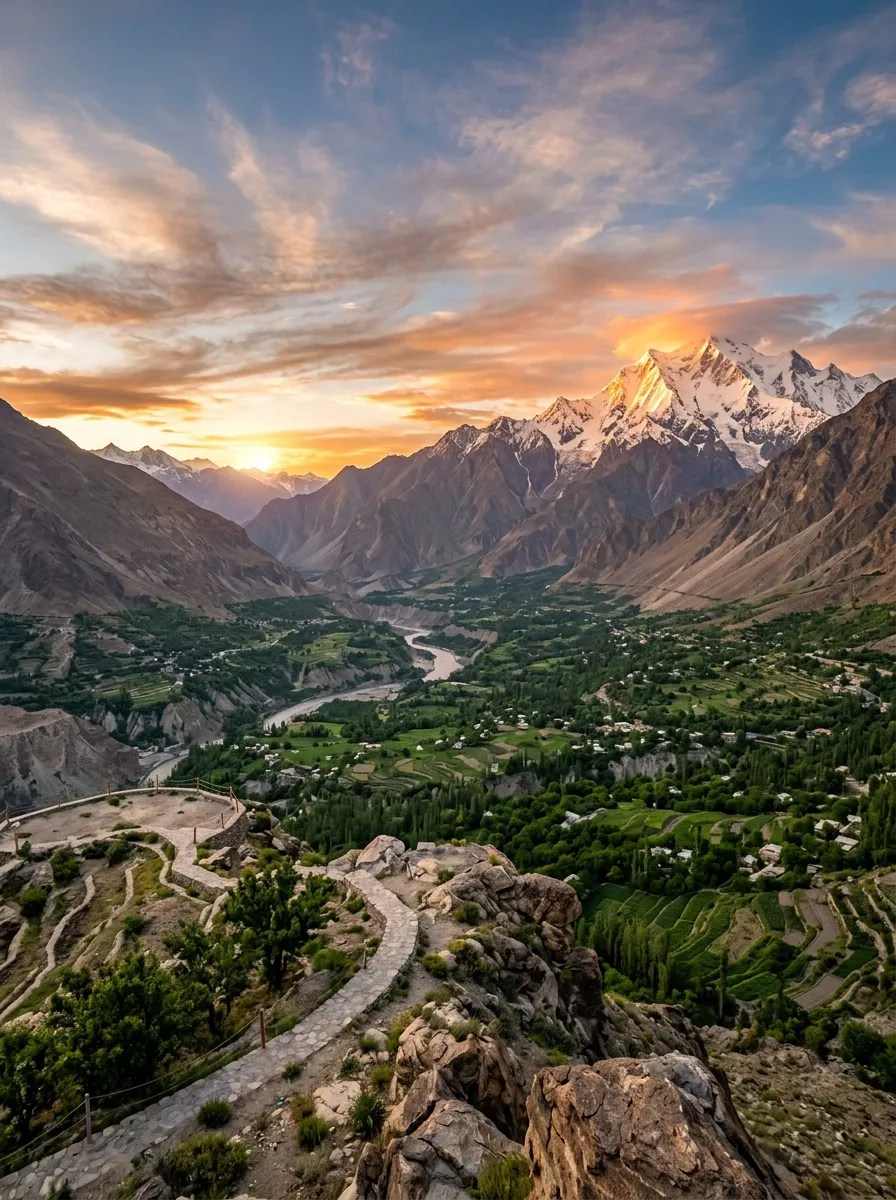
For the single best panoramic view of the entire valley, Eagle’s Nest — also known as Duikar — delivers a sweeping vantage over both Hunza and Nagar valleys, with a spectacular sunset over Rakaposhi that ranks among the most talked-about moments of a Hunza trip. Many operators build in an overnight stay here specifically to catch both sunset and the following sunrise from the same spot.
Khunjerab Pass and the Karakoram Highway
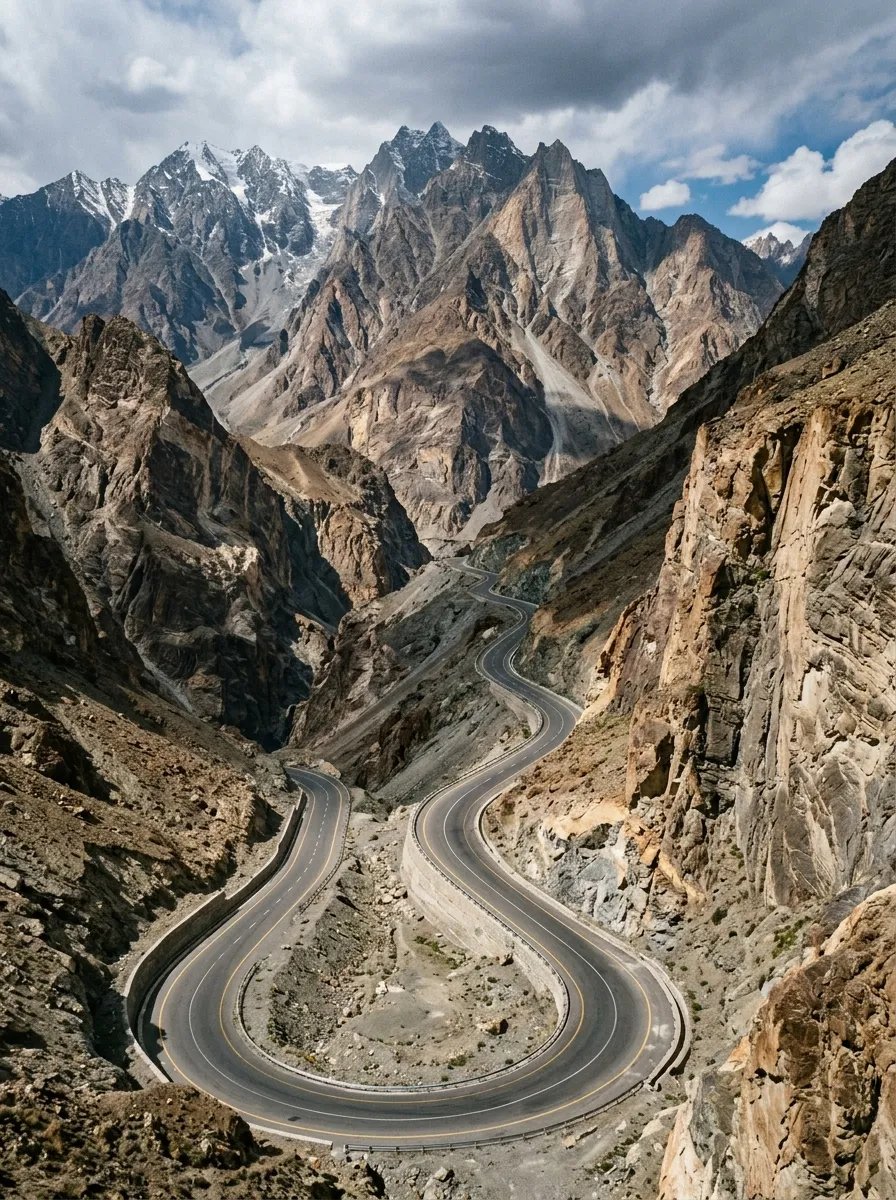
The Karakoram Highway itself — often called the eighth wonder of the world by those who’ve driven it — climbs from Karimabad through Khunjerab National Park, home to snow leopards, ibex and Marco Polo sheep, before reaching the 4,733-meter Khunjerab Pass, the physical border between Pakistan and China’s Xinjiang region. It’s one of the highest paved international border crossings anywhere in the world, and the drive alone — through some of the most dramatic high-altitude scenery on the planet — justifies the extra permit required to reach it.
Skardu: Gateway to K2
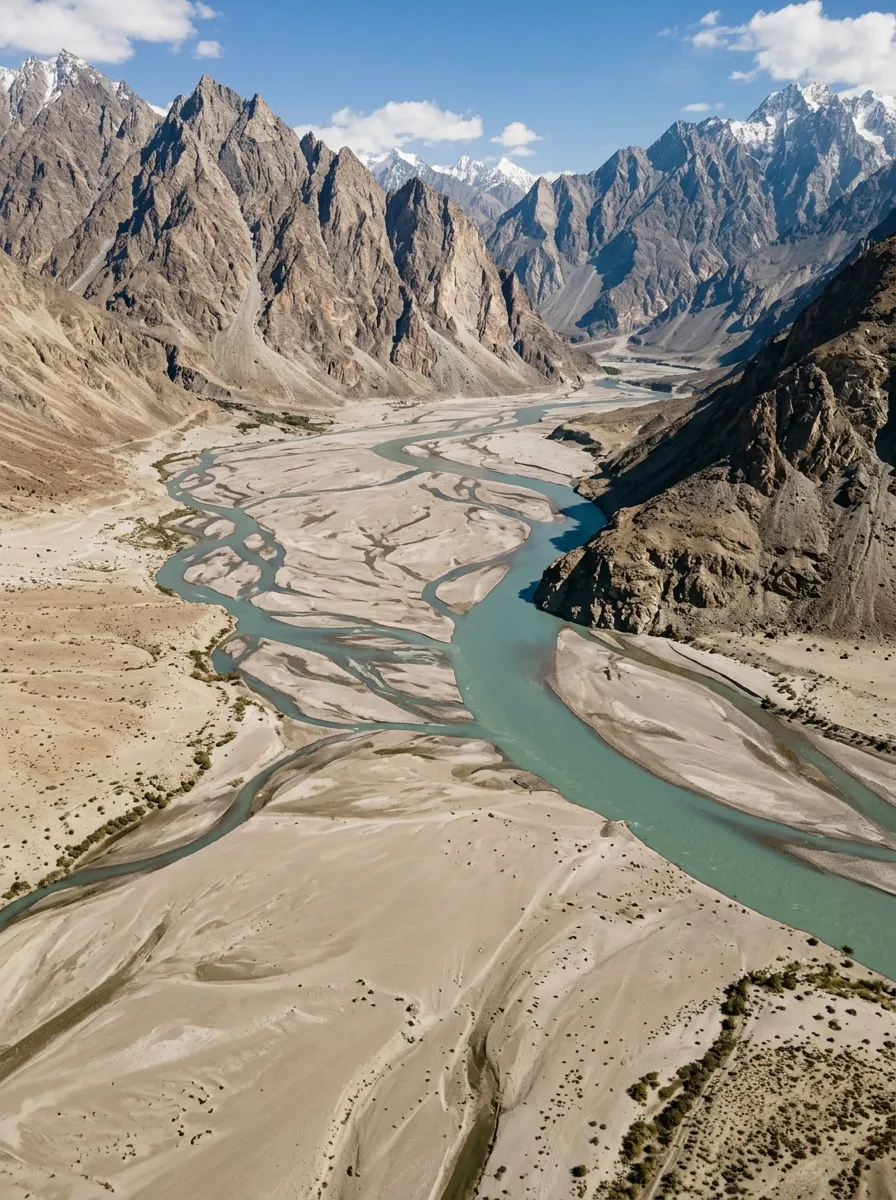
Where Hunza feels green and pastoral, Skardu is rawer — a confluence of vast river valleys, cold deserts, ancient fortresses and mountains large enough to genuinely reshape your sense of scale. Sitting at around 2,500 meters at the meeting point of the Indus and Shigar rivers, surrounded on all sides by the Karakoram Range, Skardu is the capital of Baltistan, a region with its own language, history and culture shaped partly by centuries of connection with Tibet and partly by the isolation that persisted here until the Karakoram Highway finally arrived. This is where the world’s second-highest peak, K2, effectively begins — the last major town before expeditions head into the Baltoro Glacier region.
Deosai National Park
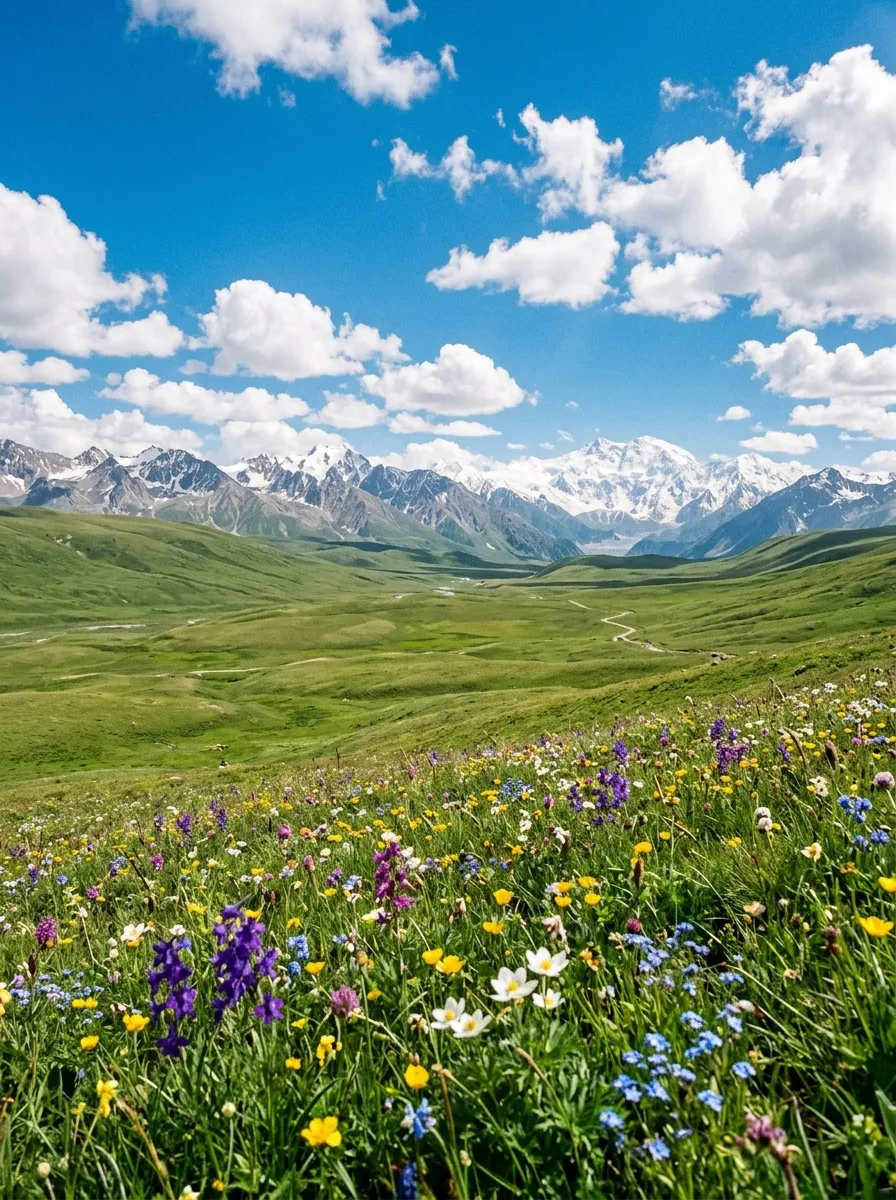
Widely considered the defining Skardu experience, Deosai National Park sits at 4,114 meters, one of the highest plateaus in the world, spanning 3,000 square kilometers of rolling grassland and wildflower meadows. It offers the most reliable brown bear viewing in Pakistan, alongside wildflowers that peak in July and August. The road into Deosai opens in mid-June and closes with the first heavy snowfall in October, and a visit is realistically a full day from Skardu given the plateau’s scale.
Shigar Valley and Shigar Fort
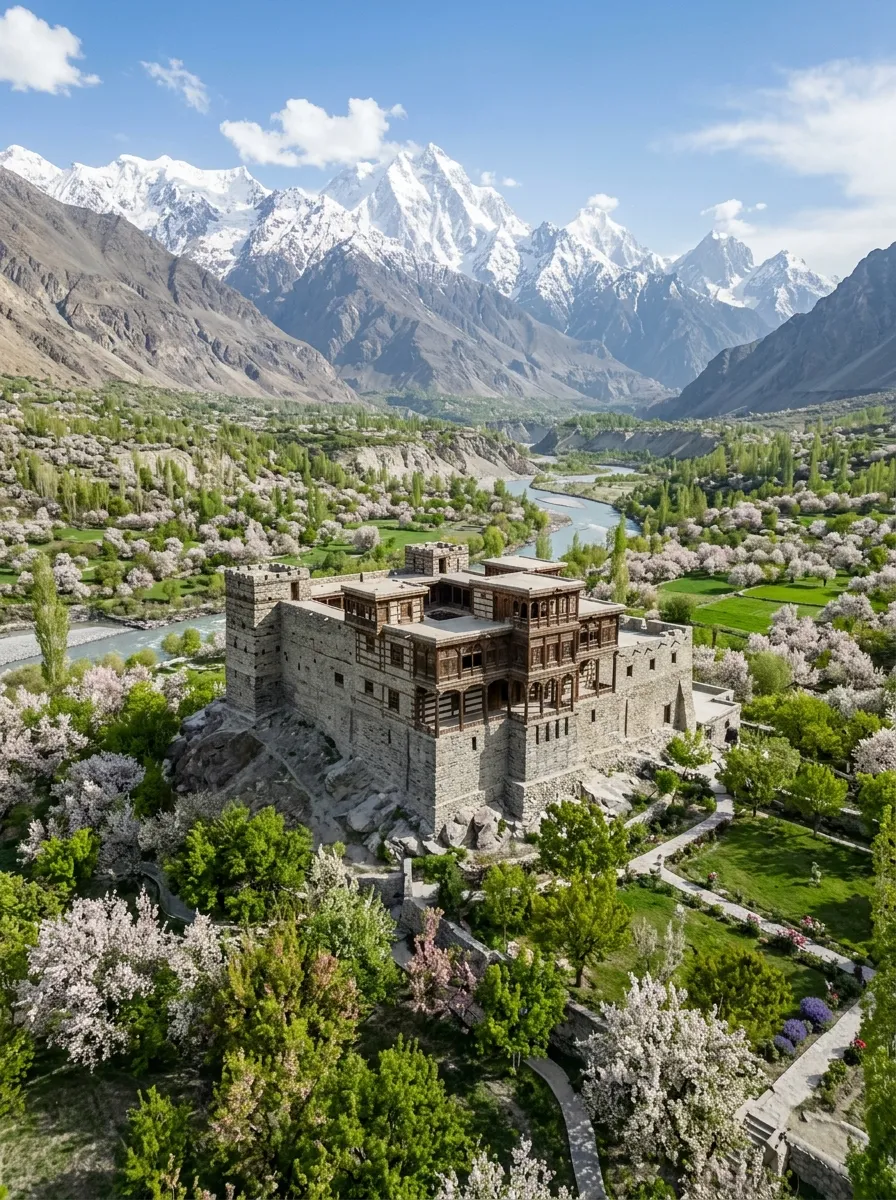
About 30 minutes east of Skardu, the Shigar River runs through apricot orchards and poplar-lined lanes toward one of Pakistan’s finest heritage hotels: Shigar Fort Palace, a 400-year-old Balti fort beautifully restored by the Aga Khan Trust for Culture. It’s a genuinely special overnight stop for travelers wanting a slower, more atmospheric alternative to Skardu town itself, and the valley’s fruit orchards make for excellent wandering regardless of where you’re staying.
Kachura Lakes and Shangrila Resort
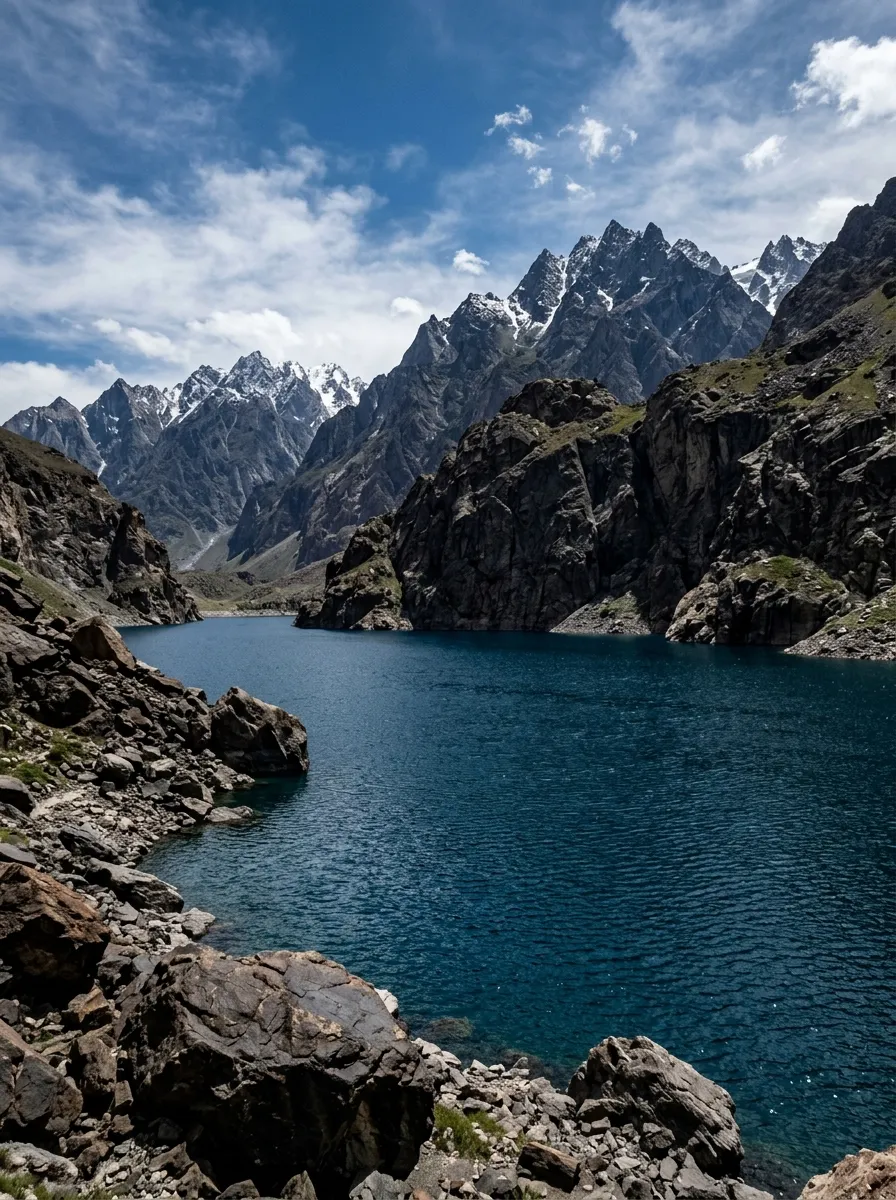
Upper Kachura Lake offers an almost wild, largely undiscovered beauty thanks to its limited infrastructure and rugged surroundings, while nearby Lower Kachura Lake is home to the well-known Shangrila Resort, offering boating and a more developed lakeside stop. Both lakes make for a scenic, relatively easy half-day addition to a Skardu-based itinerary.
Sarfaranga Cold Desert
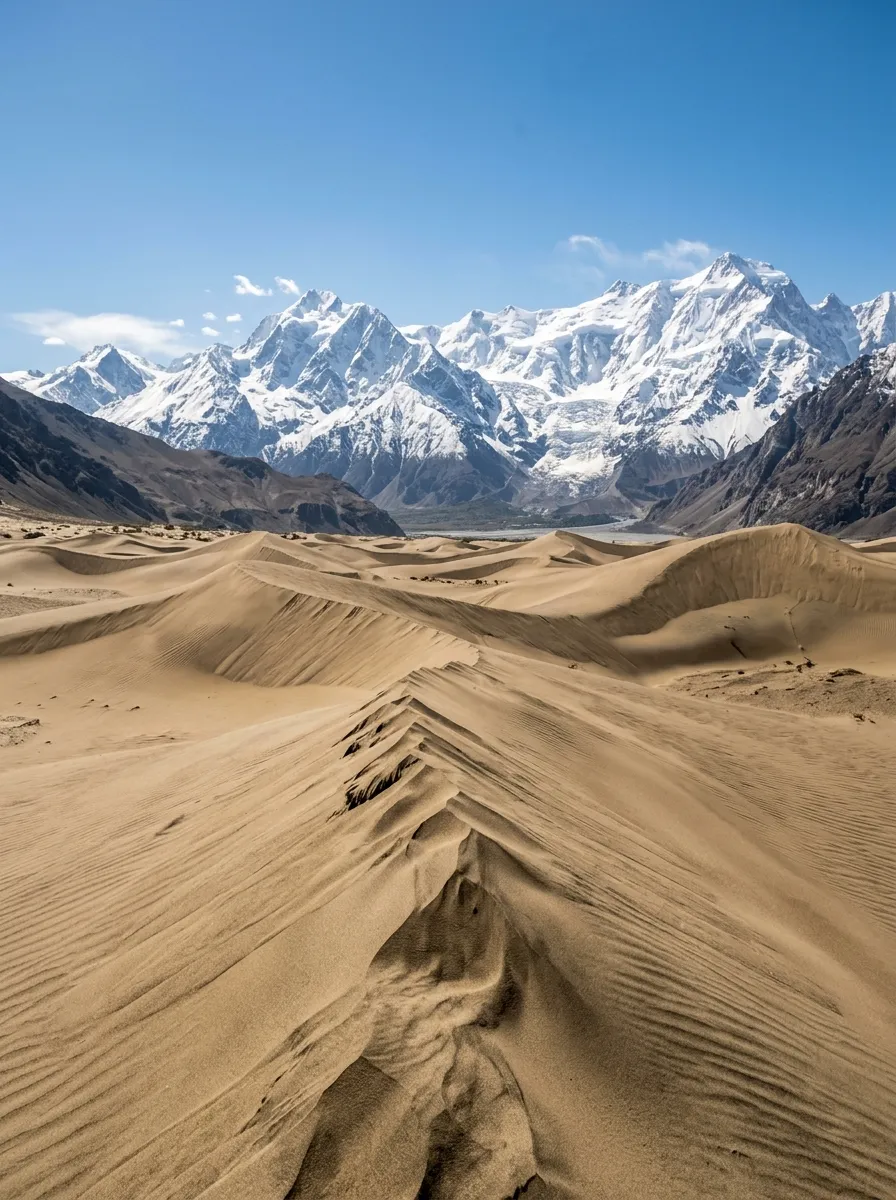
About 20 minutes beyond Shigar Fort, the Sarfaranga Cold Desert delivers a genuinely surreal juxtaposition — sand dunes at high altitude, with permanent snowfields visible as a backdrop. It’s one of the more unusual landscapes in a region already defined by extremes, and a strong stop to pair with a Shigar Valley day.
K2 Base Camp Trekking
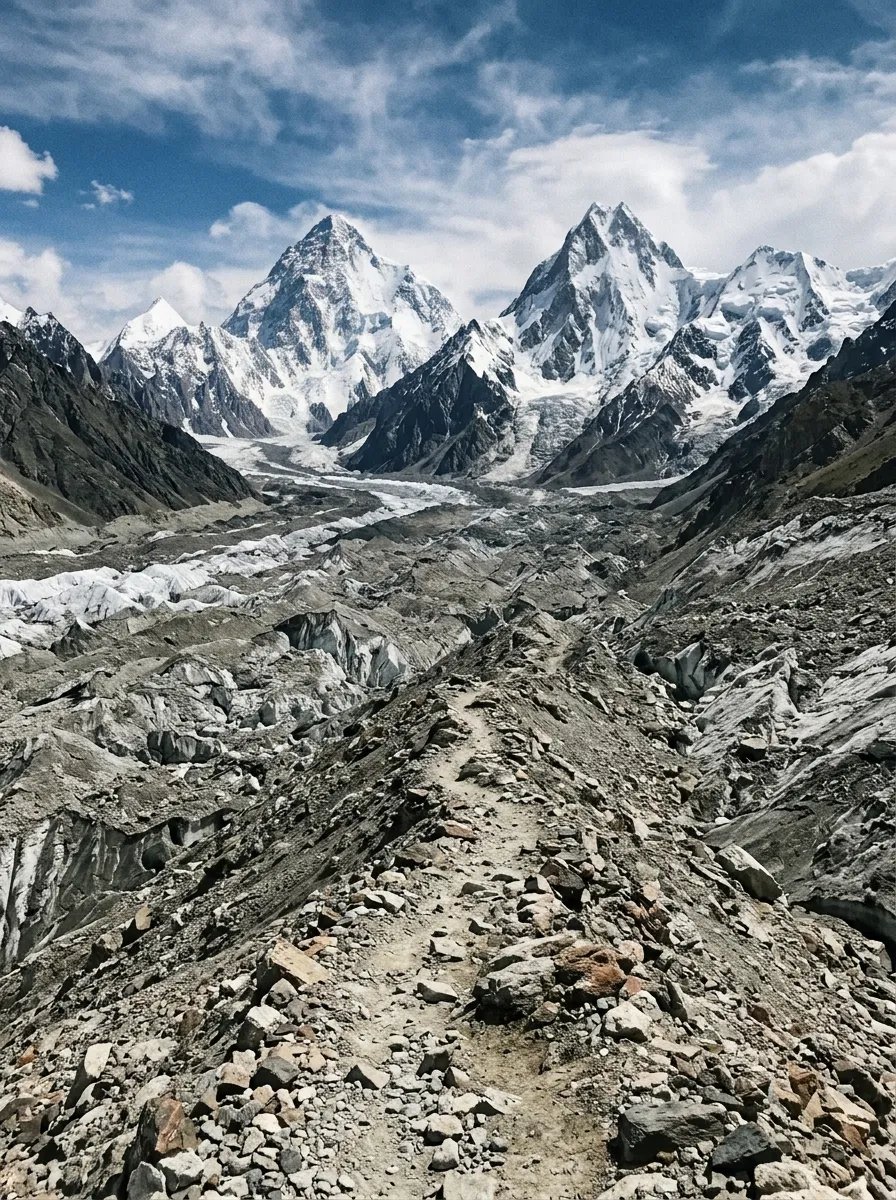
For serious trekkers, Skardu is the launching point for one of the world’s great high-altitude treks: the multi-day journey to K2 Base Camp across the Baltoro Glacier, often combined with a crossing of the Gondogoro La pass for those attempting the full loop back rather than retracing their steps. This is a genuinely demanding, multi-day expedition — commonly run as a 14-day trip when combined with the Gondogoro La crossing — requiring a licensed guide, porters and serious physical preparation, but it delivers access to some of the most dramatic high-altitude scenery on Earth, surrounded by four of the world’s fourteen 8,000-meter peaks.
There’s a particular kind of language that only trekkers and mountaineers seem to fully understand — the pull of a summit, the strange comfort of physical exhaustion at altitude — and it’s worth having some of that spirit in your back pocket before setting out toward K2 Base Camp; this collection of 100 favorite hiking quotes to inspire adventure is a fitting companion for the trail, whether you’re headed to the Baltoro Glacier or somewhere closer to home.
Local Culture: Ismaili Hunza and Balti Skardu
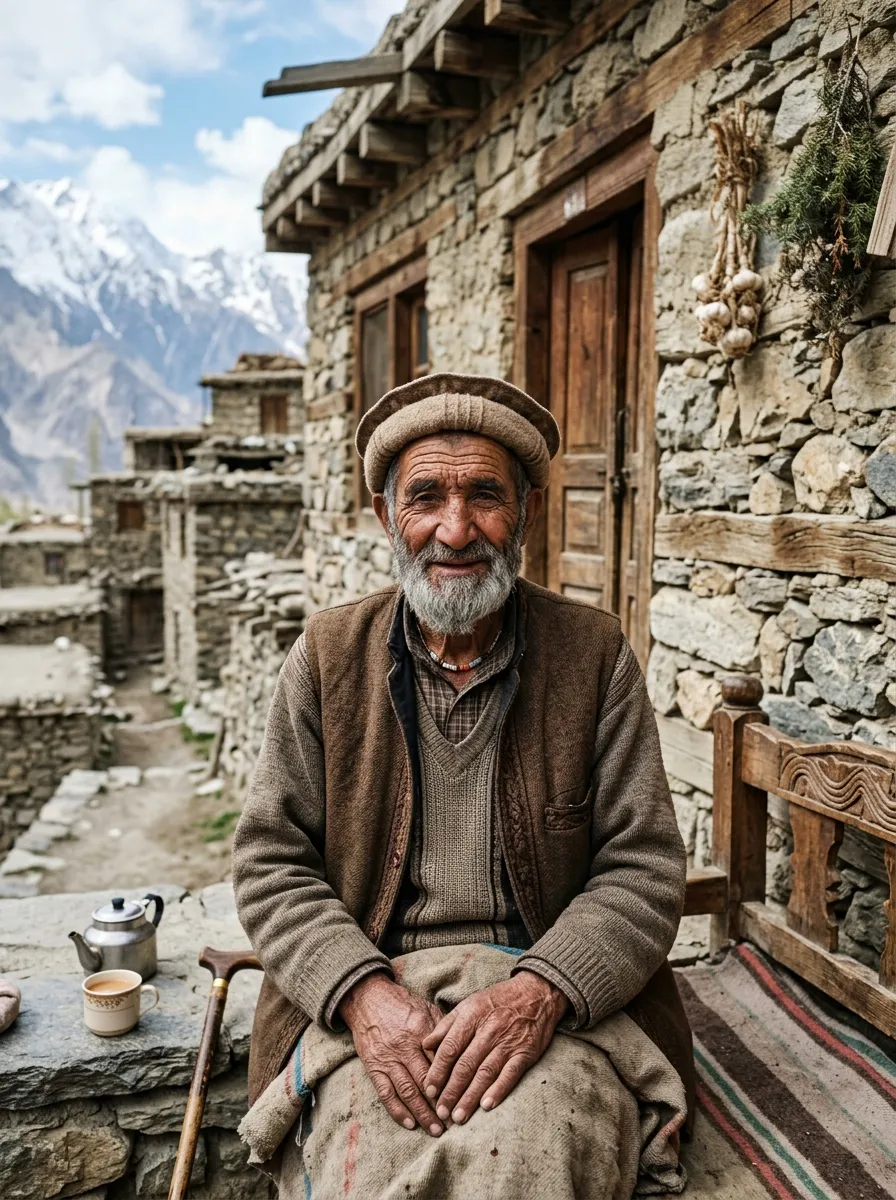
The two valleys’ cultural identities are genuinely distinct. Hunza’s majority population is Ismaili Muslim, followers of the Aga Khan, and this shapes the valley visibly — women move freely in public, run guesthouses, work in schools and shops, and engage with foreign visitors without restriction, and the Aga Khan Development Network has invested heavily in education and health infrastructure here for decades. Skardu and the wider Baltistan region carry a different cultural lineage, rooted in centuries of connection with Tibet, reflected in the local language, architecture and cuisine. Both regions are widely described as genuinely welcoming to travelers, including solo women, though standard modest-dress guidance and cultural courtesy (asking before photographing locals, for instance) apply throughout.
If the idea of encountering genuinely distinct cultural traditions within a short distance of each other appeals to you, that same richness runs through much of South Asia — this guide to experiencing India’s rich culture and this guide to must-visit cities across the heart of Asia are both worth reading if a broader regional trip is part of your plans.
How to Get to Hunza and Skardu
To Hunza: Fly to Gilgit (about 1 hour from Islamabad) followed by a 2 to 2.5-hour drive, or travel the full distance by road via the Karakoram Highway, generally 14 to 18 hours split over two days with an overnight stop in Chilas.
To Skardu: Unlike Hunza, Skardu has its own airport, making it directly accessible via roughly a 1-hour domestic flight from Islamabad, and increasingly from Lahore and Karachi as well — genuinely the fastest way in given the region’s remoteness. The road alternative runs approximately 630 kilometers from Islamabad, 15 to 18 hours by car.
Between the two: A popular combined route runs Islamabad to Hunza (by road or via Gilgit), then overland from Hunza to Skardu along the Karakoram Highway, or the reverse. Flights between the two valleys directly aren’t standard; the road connection via Gilgit is the usual link.
BOOKING TIP
Domestic flights to both Gilgit and Skardu are notoriously weather-dependent and subject to delays or cancellations, since they rely on clear mountain visibility. Build at least one buffer day into your itinerary around flight days, and never book a same-day international connection immediately after a flight out of either airport.
Combining Hunza and Skardu
For most first-time visitors, Hunza offers the more rounded, accessible introduction to Gilgit-Baltistan — better tourist infrastructure, shorter distances between attractions, and a gentler learning curve. Skardu rewards travelers with more time and a taste for wilder, more remote landscapes, or those specifically drawn by K2 and the Baltoro Glacier region. If you can only choose one, let that distinction guide the decision; if you have 10 days or more, combining both along the Karakoram Highway delivers the fullest possible picture of what makes this region so extraordinary.
Where to Stay
Karimabad (Hunza): The best all-around base, walkable to Baltit Fort, the bazaar and dozens of guesthouses spanning every budget.
Passu or Gulmit (Hunza): Better suited to travelers prioritizing proximity to Attabad Lake and the Passu Cones over Karimabad’s fuller amenities.
Skardu town: The practical base for Deosai, Shigar Valley day trips and K2 Base Camp trek logistics.
Shigar Fort Palace: A genuinely special overnight option for travelers wanting a slower, heritage-hotel experience near Skardu.
How Many Days Do You Need?
Five to seven days suits a single-valley trip well — enough time to properly cover Hunza’s forts, lakes and viewpoints, or Skardu’s Deosai Plains, Shigar Valley and lakes. A full 10 to 14 days allows a proper combined circuit through both valleys, and adding a K2 Base Camp trek extends that further still, typically requiring an additional 12 to 14 days on top of the standard sightseeing circuit.
A 12-Day Hunza and Skardu Itinerary
Days 1–2: Arrive in Islamabad, fly or drive to Hunza via Gilgit.
Days 3–4: Karimabad — Baltit Fort, Altit Fort, the bazaar, Eagle’s Nest for sunset.
Day 5: Attabad Lake, Hussaini Suspension Bridge, Passu Cones.
Day 6: Drive along the Karakoram Highway toward the Khunjerab Pass (with the required additional permit).
Day 7: Travel from Hunza to Skardu via the Karakoram Highway.
Days 8–9: Skardu town, Kachura Lakes, Shigar Valley and Shigar Fort, Sarfaranga Cold Desert.
Days 10–11: Full day at Deosai National Park.
Day 12: Fly back to Islamabad, departure.
Budget Travel in Hunza and Skardu
A realistic 5-day independent budget in Hunza runs roughly PKR 18,000–30,000 (approximately $65–110), covering transport from Islamabad, budget guesthouse accommodation, local meals and day trips to Eagle’s Nest and Attabad Lake — genuinely excellent value by international standards. Costs in Skardu run broadly similar, with domestic flights representing the single largest line-item expense for travelers prioritizing speed over the long overland route.
Altitude and Health Considerations
Both valleys sit at elevations that generally cause few issues for most travelers — Karimabad at 2,438 meters and Skardu at 2,500 meters rarely trigger altitude symptoms — but higher points along a standard circuit demand real caution. The Khunjerab Pass at 4,733 meters and Deosai’s plateau at 4,114 meters can bring mild headache, nausea or breathlessness for some travelers, and any K2 Base Camp trekking pushes considerably higher still. Build in a rest day on arrival at elevation, stay well hydrated, and treat worsening symptoms as a reason to descend rather than push through.
Local Cuisine and a Different Side of South Asia
Hunza cuisine in particular stands out as mild, organic and considerably less spicy than typical Pakistani food, reflecting the valley’s apricot-and-orchard-driven agriculture and Ismaili culinary traditions — apricot everything, from soup to oil to dried snacks, alongside hearty wheat and barley dishes suited to the altitude. It’s a genuinely different food experience from what many travelers expect walking in with assumptions shaped by South Asian cuisine more broadly.
If Hunza and Skardu spark a broader curiosity about South Asia’s regional diversity, it’s worth knowing the range extends well beyond Pakistan’s mountains — this Kerala travel guide covers a tropical, coastal side of the subcontinent about as different from the Karakoram as travel gets, worth bookmarking for a future trip.
Skardu and Hunza Packing Checklist
- A down or synthetic insulated jacket, plus a waterproof outer layer, for temperature swings above 3,500 meters
- Sturdy walking or hiking footwear
- Strong sun protection, given significant UV intensity at altitude
- A printed or downloaded copy of your Pakistan e-visa Grant Notice
- Travel insurance documentation with medical evacuation coverage
- Cash in Pakistani rupees for smaller guesthouses, boat rides and local markets
- A portable charger, given inconsistent power reliability in remote areas
- Modest clothing appropriate for the region’s cultural norms
Frequently Asked Questions About Visiting Skardu and Hunza Valley
Is it safe to travel to Hunza and Skardu?
Gilgit-Baltistan, which contains both valleys, is not among the specific “Do Not Travel” regions flagged by the US State Department’s broader Level 3 Pakistan advisory, and it has a strong recent tourism safety record. Standard precautions — using established local operators, travel insurance with evacuation coverage, and checking current advisories before departure — remain sensible for any remote, high-altitude trip.
Do US citizens need a visa for Pakistan?
Yes — as of January 1, 2026, the free Visa Prior to Arrival program was suspended, and US citizens must apply for a standard paid e-visa (roughly $75–100), processed in 7–10 business days through the official portal.
What is the best time of year to visit Hunza and Skardu?
June through September for full road and pass access, or mid-March through late April for Hunza’s cherry blossom season.
How do I get to Hunza and Skardu?
Fly to Gilgit and drive roughly 2.5 hours to Hunza, or fly directly to Skardu’s own airport (about 1 hour from Islamabad). Both are also reachable overland via the Karakoram Highway, generally 14–18 hours.
How many days do I need for Hunza and Skardu?
Five to seven days suits a single valley; 10 to 14 days allows a proper combined circuit through both.
What is Attabad Lake?
A 21-kilometer turquoise lake in Hunza Valley formed in January 2010 when a landslide dammed the Hunza River overnight — now one of the most photographed spots in Pakistan.
Do I need a special permit to visit Hunza or Skardu?
No special permit (NOC) is needed for standard sightseeing in either valley with a regular tourist e-visa; traveling specifically to Khunjerab Pass requires an additional permit obtainable in Sost or Gilgit.
Is Skardu the gateway to K2?
Yes — Skardu is the last major town before expeditions head toward the Baltoro Glacier and K2 Base Camp.
What is Deosai National Park known for?
One of the world’s highest plateaus at 4,114 meters, known for wildflower meadows and the most reliable brown bear viewing in Pakistan, generally accessible mid-June through October.
Which valley should I visit if I only have time for one?
Hunza offers the more accessible, rounded introduction to the region for first-time visitors; Skardu suits travelers seeking wilder landscapes or planning serious trekking.
Is Hunza safe for solo female travelers?
Yes, widely regarded as one of the safest and most welcoming regions in Pakistan for women traveling alone, with standard precautions (avoiding night travel on mountain roads, modest dress) still recommended.
Is altitude sickness a concern?
Karimabad and Skardu town themselves rarely cause issues, but higher points like Khunjerab Pass (4,733 m) and Deosai (4,114 m) can cause mild symptoms — stay hydrated, ascend gradually, and treat worsening symptoms seriously.
What’s the biggest mistake first-time visitors make?
Underestimating travel time between attractions (especially in Skardu, where distances are real) and not building buffer days around weather-dependent domestic flights.
Is K2 Base Camp trekking realistic for most travelers?
Only for those with genuine trekking experience and fitness — it’s a serious multi-day, high-altitude expedition requiring licensed guides and porters, not a casual add-on to a sightseeing trip.
Final Thoughts on Visiting Skardu and Hunza Valley
Skardu and Hunza reward travelers willing to look past the headline caution around Pakistan as a whole and understand the actual, current picture: a well-established, genuinely welcoming tourism circuit through some of the most extraordinary mountain scenery on the planet, sitting in a region the US State Department’s own advisory doesn’t specifically flag alongside the country’s genuinely higher-risk provinces. Hunza delivers a compact, accessible introduction — forts, orchards, an impossible turquoise lake — while Skardu opens onto something wilder: a plateau at 4,000-plus meters, the launching point for K2 itself, and a scale of landscape that genuinely reshapes how you think about mountains.
If you’re building a first trip here, anchor it in Hunza for the gentler introduction, and extend into Skardu if a full 10-plus days and a taste for more rugged terrain are both on the table. However you build it, Skardu and Hunza Valley deliver one of the most genuinely awe-inspiring, still-underexplored travel experiences available anywhere in the world — a place where “Shangri-La” isn’t just a marketing line, but the closest comparison early travelers could find for what they were actually seeing.