Bali Travel Guide: The Ultimate Island Adventure Through Temples, Rice Terraces, Beaches and Hidden Villages
Bali is often presented as a tropical escape made of infinity pools, floating breakfasts and sunset beaches.
That version exists, but it is only the glossy cover.
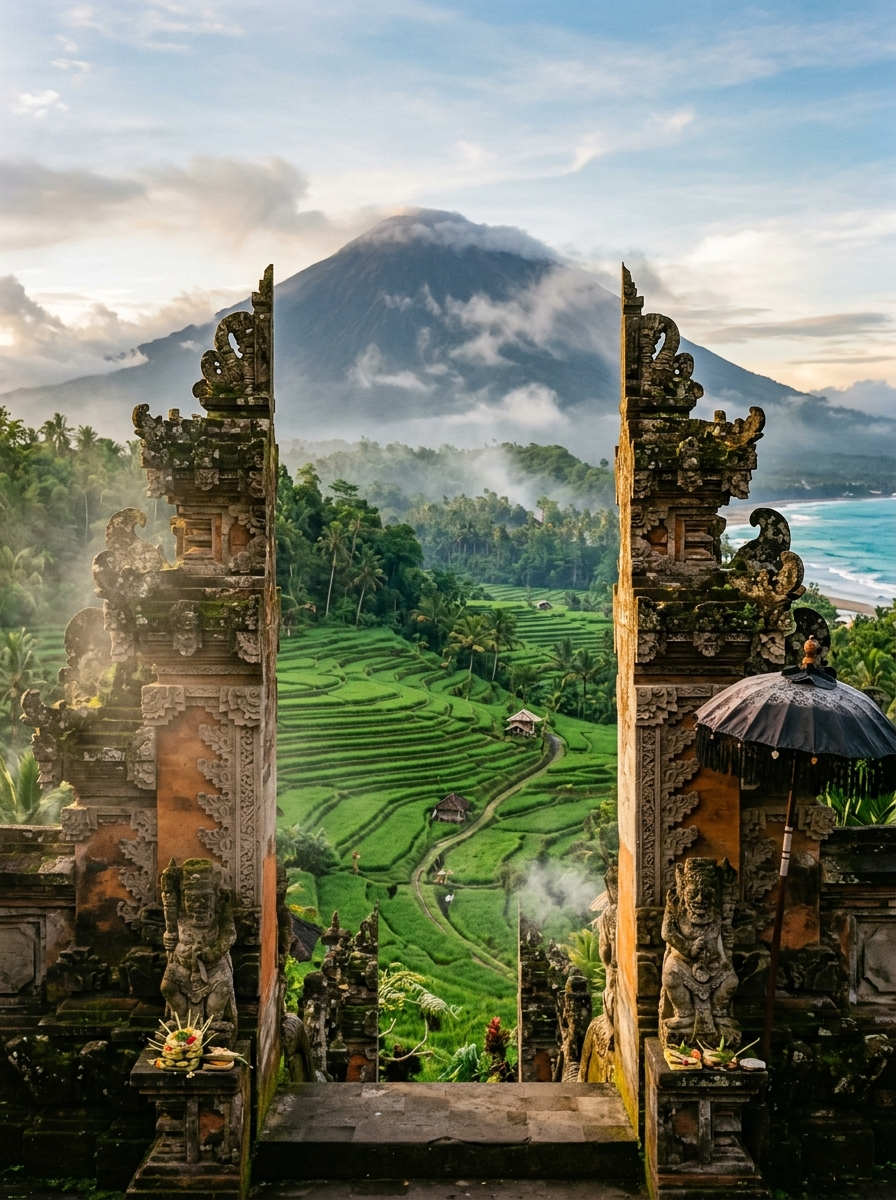
Beyond the resort gates, Bali is an island of temple ceremonies, volcanic mountains, flower offerings, intricate stone gateways and rice terraces shaped by generations of farmers. Incense drifts across pavements in the morning. Processions temporarily stop traffic. Temple music rises from village courtyards, while scooters stream through streets that seem to operate according to their own tropical mathematics.
Bali can be peaceful, chaotic, spiritual, commercial, beautiful and frustrating within the same afternoon.
The island rewards travelers who explore beyond one beach town. Ubud offers temples, dance performances and rice-field walks. Sidemen feels slower and more rural. Uluwatu brings cliff scenery and powerful surf, while Amed offers snorkeling beneath the shadow of Mount Agung. North Bali replaces beach clubs with waterfalls, coffee farms and cooler mountain air.
This Bali travel guide covers the best places to visit, where to stay, how long you need, transportation, seasonal weather, cultural etiquette, common scams, suggested itineraries and the practical entry requirements travelers should check before departure.
Recommended Travel Items for Your Trip
BALI AT A GLANCE
Country: Indonesia
Best overall months: May, June and September
Dryer season: Generally April through October
Rainier season: Generally November through March
Ideal first trip: 10 to 14 days
Main airport: I Gusti Ngurah Rai International Airport
Best cultural base: Ubud
Best beach areas: Uluwatu, Sanur and Nusa Dua
Best quieter region: Sidemen or Munduk
Best island extension: Nusa Lembongan or Nusa Penida
Currency: Indonesian rupiah
Best transportation: Private driver, taxi apps and selected boat transfers
Why Bali Is More Than a Beach Destination
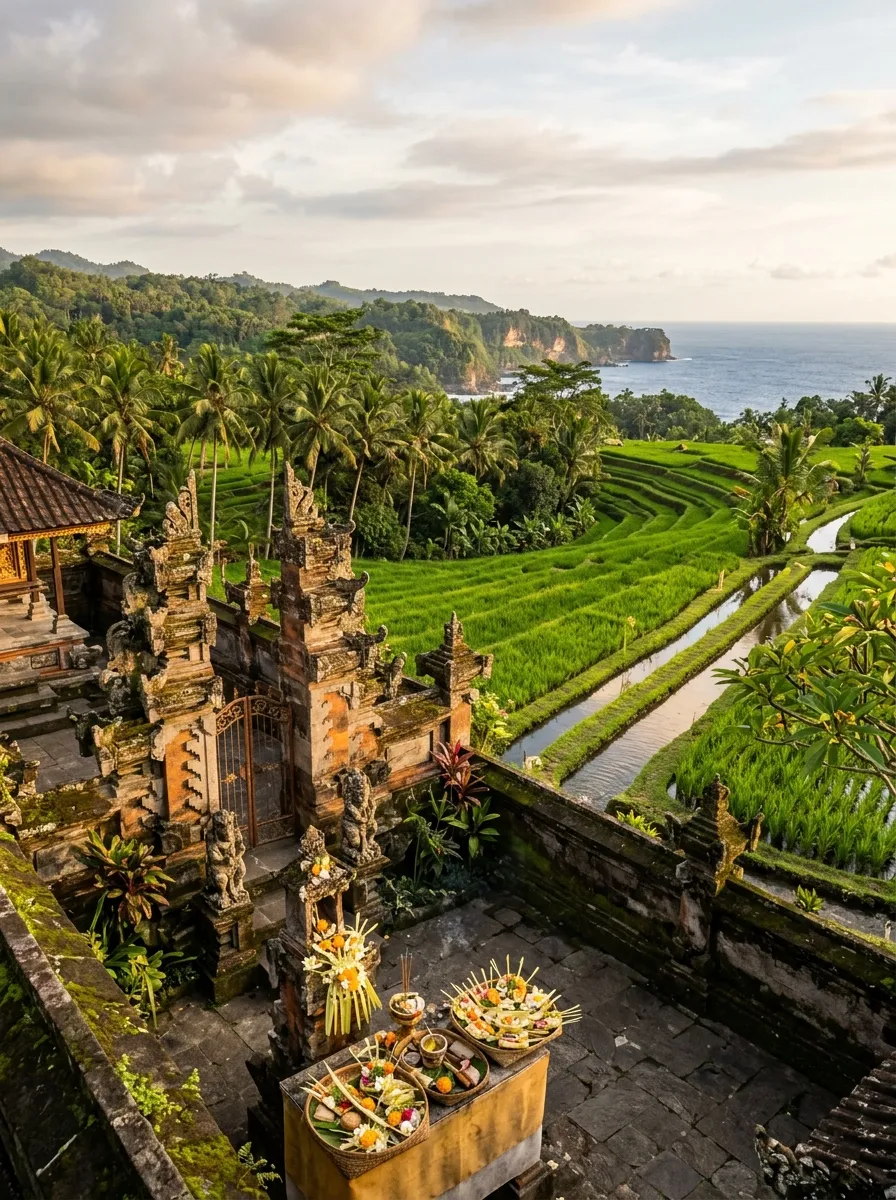
Bali’s appeal comes from the concentration of different landscapes and experiences across a relatively compact island.
Travelers can move from southern beaches to Ubud’s forested valleys, continue through volcanic highlands and eventually reach quieter fishing communities in the east or north. Indonesia’s official tourism platform highlights Bali’s beaches, temples, terraced rice fields, traditional arts and ceremonies as central parts of the island’s identity.
The island is predominantly Hindu, giving it a cultural landscape that differs visibly from most other Indonesian provinces. Temples appear in villages, family compounds, fields, markets and coastal headlands.
Rice farming is also connected with religion and community organization. Bali’s UNESCO-listed cultural landscape includes rice terraces and water temples managed through the traditional subak irrigation system, whose roots extend back centuries.
Bali is therefore most rewarding when treated as a living cultural destination rather than a tropical stage set.
Travelers interested in the deeper character of Asian destinations can also explore these cultural cities in the Middle East, where architecture, religion, food and traditional neighborhoods similarly shape the travel experience.
Best Places to Visit in Bali
1. Ubud
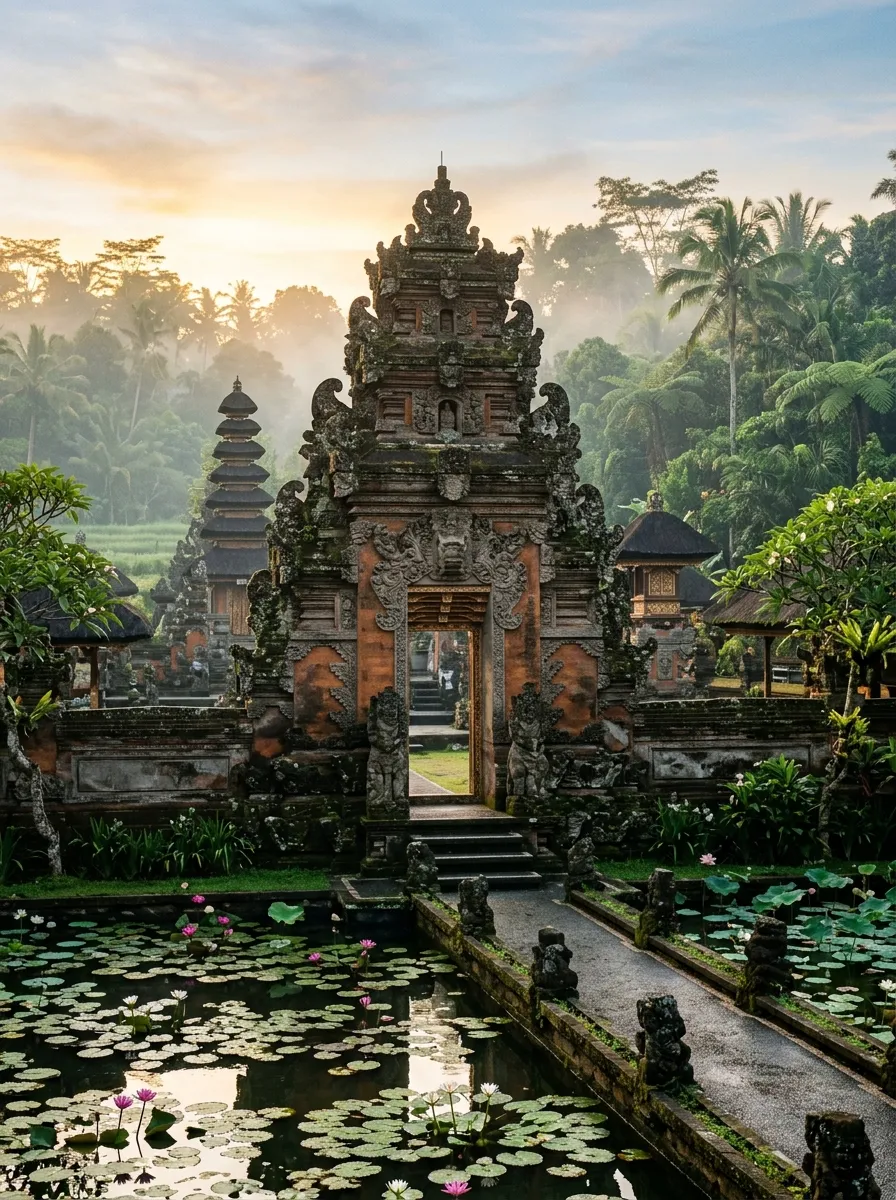
Ubud is Bali’s most famous cultural center and the best first base for travelers who want temples, traditional performances, art, wellness and inland scenery.
The central streets are busy, particularly around Ubud Palace and the market. Yet peaceful landscapes still survive beyond the traffic. A short journey leads to rice fields, village roads, river valleys and traditional craft communities.
Best Things to Do in Ubud
- Visit Ubud Palace
- Watch a traditional dance performance
- Explore Saraswati Temple
- Walk the Campuhan Ridge
- Visit the Sacred Monkey Forest
- Explore art museums and galleries
- Take a Balinese cooking class
- Visit nearby rice terraces
- Join a temple and waterfall day trip
- Browse local craft shops
Ubud Monkey Forest is one of the area’s best-known attractions. Visitors should secure sunglasses, phones, food and loose belongings because the resident macaques can be exceptionally skilled freelance collectors. Indonesia’s official tourism guide specifically advises visitors to secure their bags and belongings.
How Long to Stay
Spend at least three nights in Ubud.
Four or five nights are better if you want to visit temples, waterfalls and rice-growing areas without spending every day in a vehicle.
UBUD TRAFFIC WARNING
Central Ubud can become heavily congested. Choose accommodation within walking distance of restaurants and major sights, or stay slightly outside town if tranquility matters more than convenience.
2. Tegalalang Rice Terraces
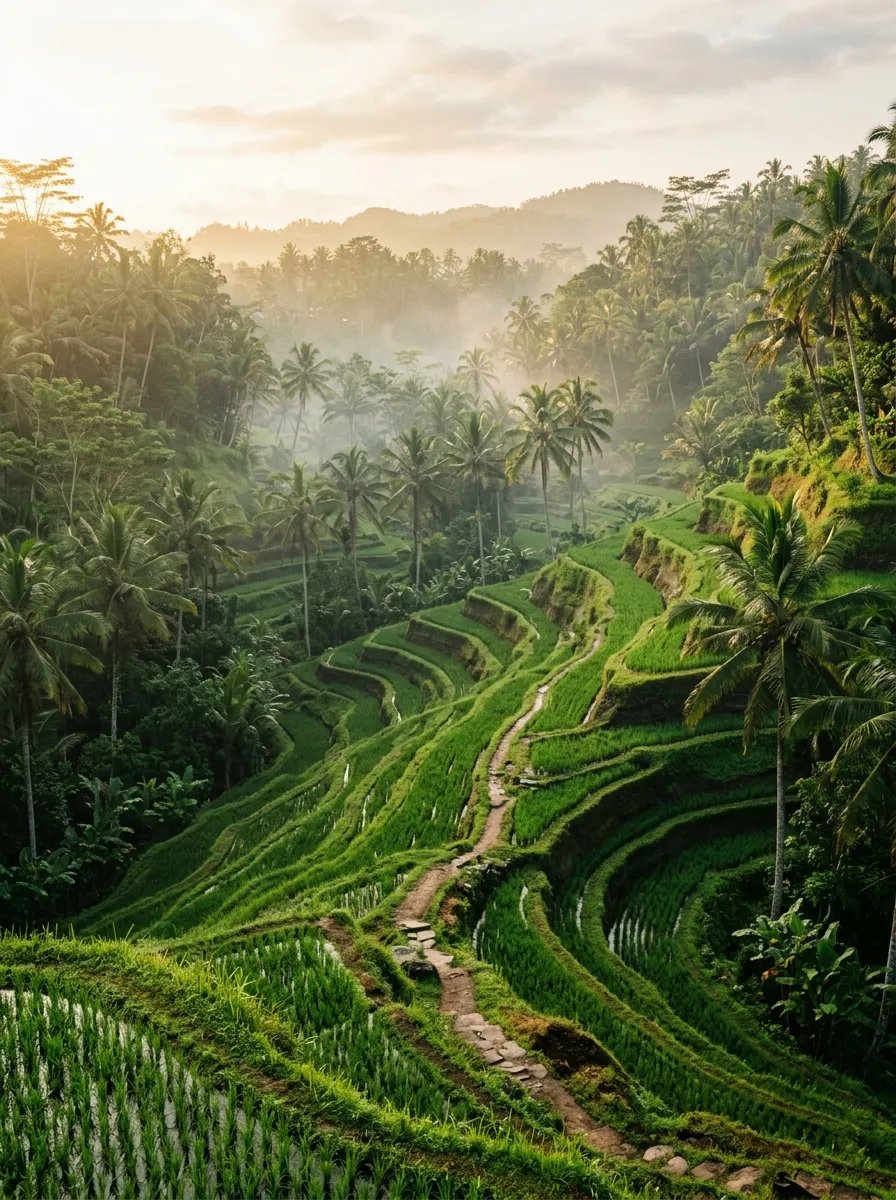
Tegalalang is one of Bali’s most photographed rice-growing landscapes.
The terraces descend through a steep green valley north of Ubud. Narrow paths, viewpoints and cafés overlook the fields, while swings and photography platforms have transformed parts of the area into a major commercial attraction.
Arrive shortly after sunrise for cooler temperatures, softer light and fewer tour groups.
Tegalalang is beautiful, but it should not be mistaken for an untouched farming valley. Entry points, paths and photography areas may involve separate local payments.
Responsible Visiting Tips
- Remain on established paths
- Do not damage rice plants
- Ask before photographing farmers
- Carry small notes for local access payments
- Avoid blocking narrow paths
- Visit working fields respectfully
For a quieter terrace experience, consider Jatiluwih or countryside around Sidemen.
3. Jatiluwih Rice Terraces
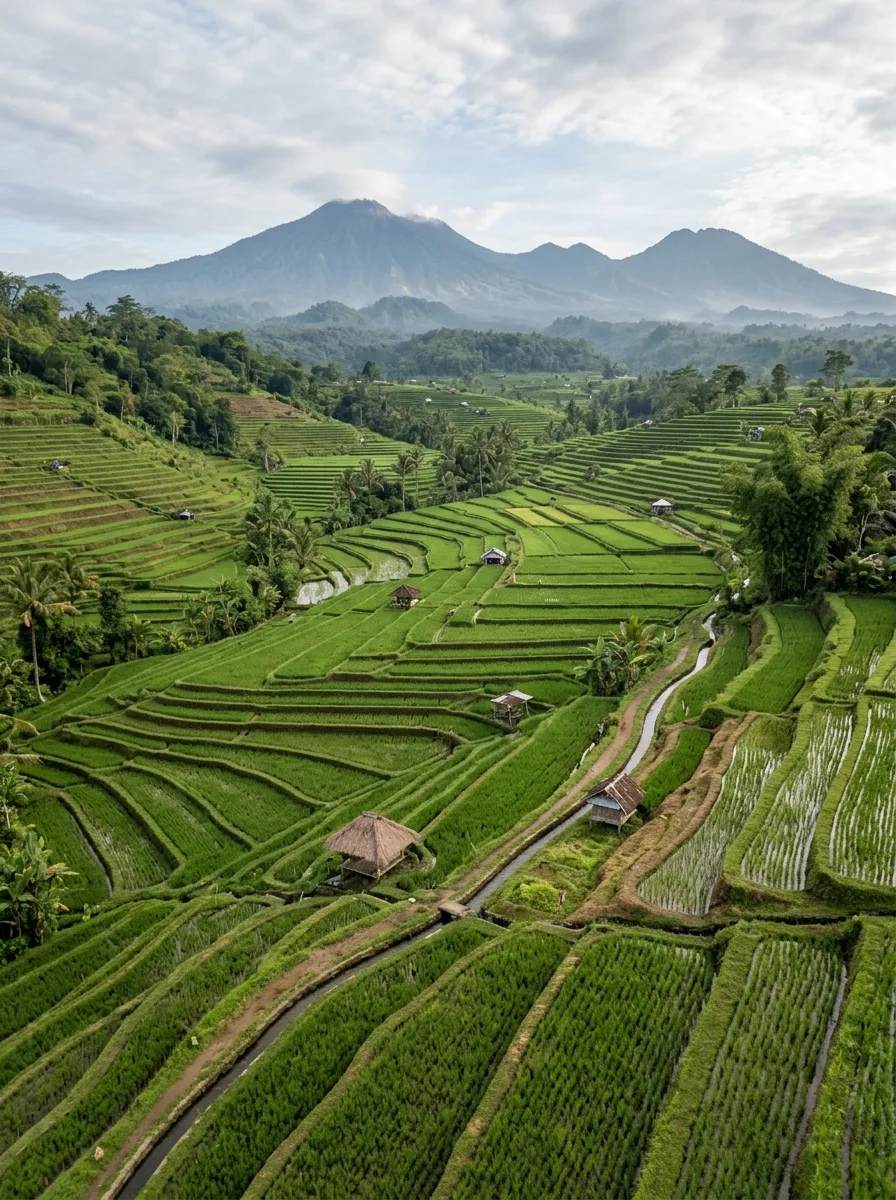
Jatiluwih offers a broader and more peaceful rice-field landscape than Tegalalang.
Terraces spread across the foothills beneath distant mountains, with walking and cycling routes passing irrigation channels and farming communities.
The area forms part of Bali’s UNESCO-listed cultural landscape associated with the cooperative subak water-management system. UNESCO describes the protected landscape as including five rice-terrace areas and their water temples across approximately 19,500 hectares.
Why Visit Jatiluwih?
- Wider landscape views
- Longer walking routes
- Fewer tightly packed attractions
- Better understanding of rice agriculture
- Cooler highland conditions
- Easy combination with temples and mountain lakes
Allow at least two hours, and longer if you plan to walk one of the extended routes.
4. Sidemen
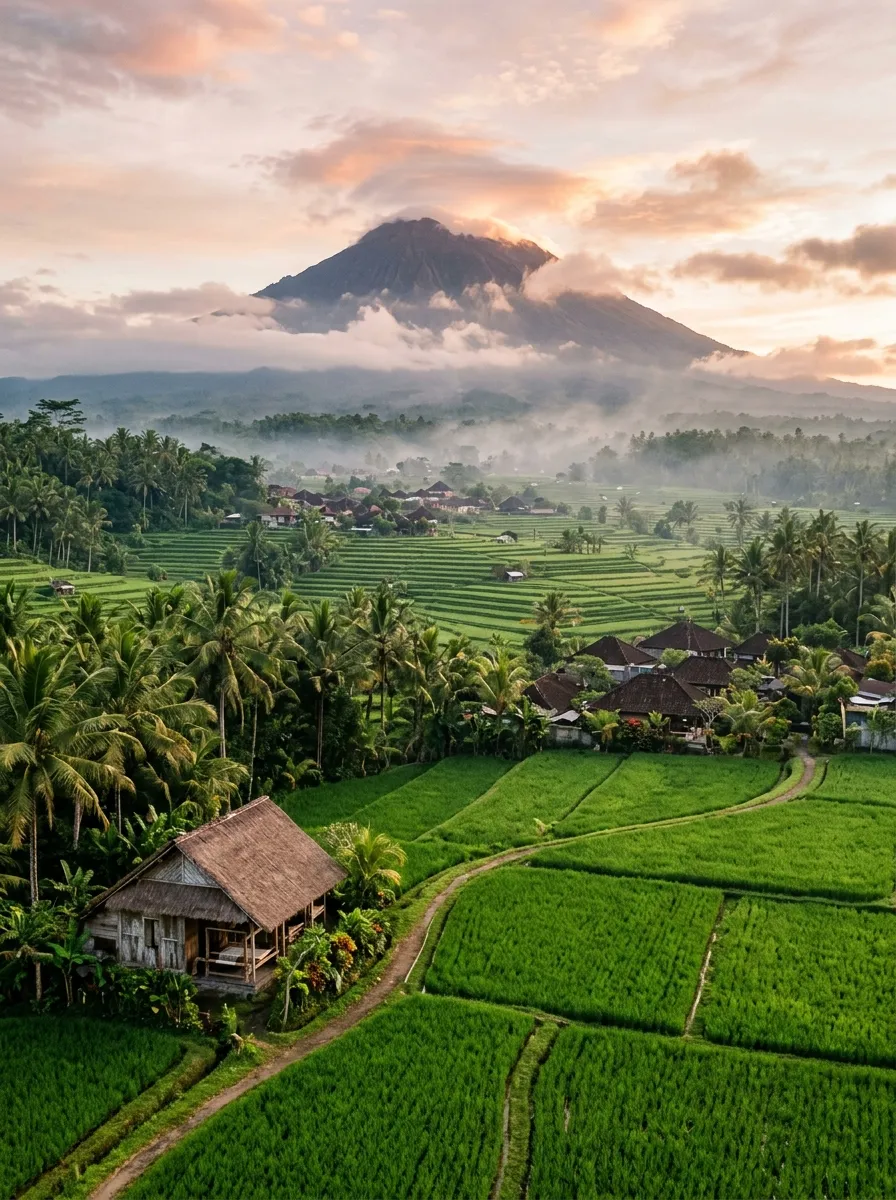
Sidemen is the Bali travelers hope still exists.
Rice fields spread across a broad valley beneath Mount Agung. Small roads pass weaving workshops, family compounds and quiet accommodation surrounded by palms and farmland.
The region is increasingly popular, but it remains calmer than Ubud or southern Bali.
Best Things to Do in Sidemen
- Walk through rice fields with a local guide
- Visit weaving workshops
- Join a cooking class
- Take a traditional massage
- Explore village roads
- Visit nearby temples
- Photograph Mount Agung at sunrise
- Stay in a valley-view guesthouse
Sidemen is ideal for two or three nights of slow travel.
It is also a strong example of why Bali can still feel surprisingly affordable away from the most fashionable resort zones. Travelers looking for similar value may enjoy these underrated cheap destinations around the world.
5. Uluwatu
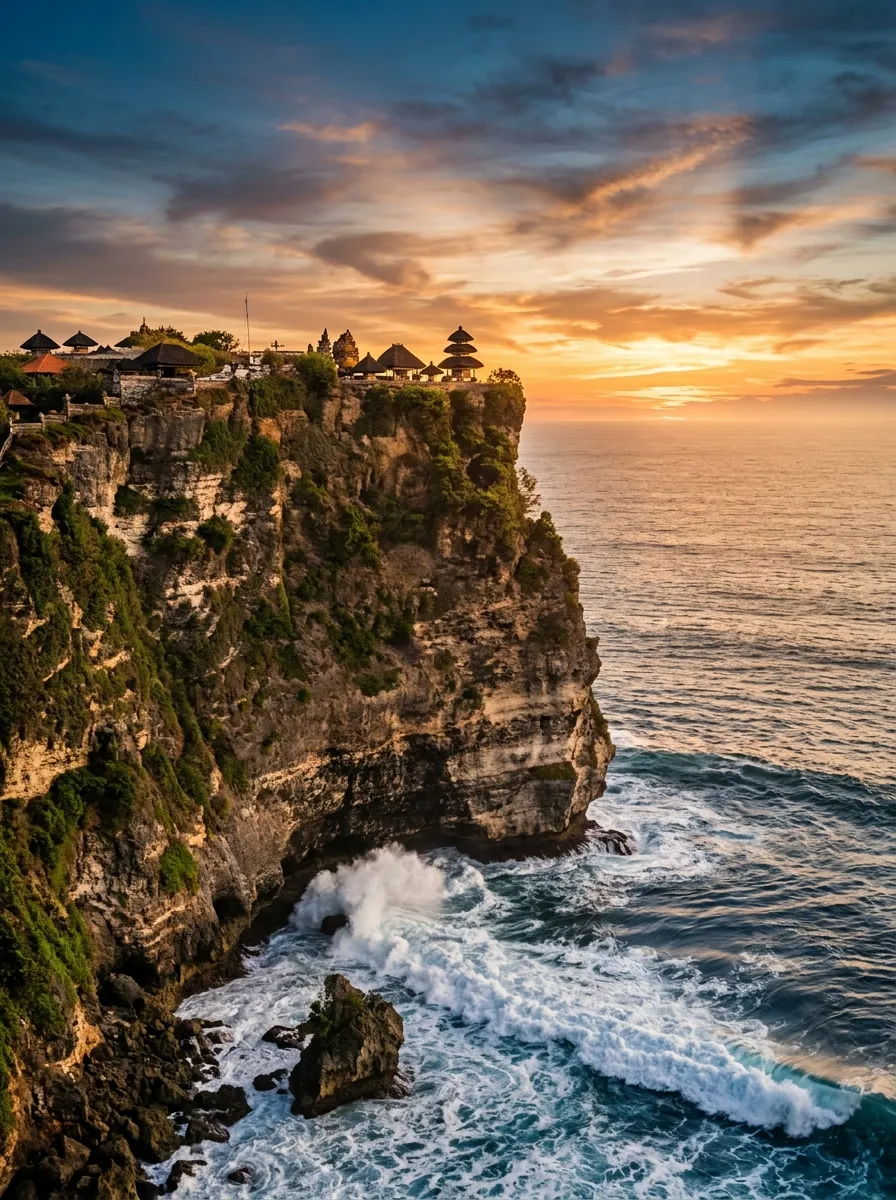
Uluwatu occupies the limestone peninsula at Bali’s southern edge.
Cliffs drop toward powerful surf breaks, roads connect beaches hidden beneath steep staircases and sunset venues overlook the Indian Ocean.
The area is more spread out than Seminyak or Canggu, so accommodation location matters.
Best Things to Do in Uluwatu
- Visit Uluwatu Temple
- Watch the Kecak dance
- Relax at Padang Padang Beach
- Explore Bingin Beach
- Visit Balangan Beach
- Watch surfers at Suluban
- See sunset from the cliffs
- Explore quieter southern beaches
Uluwatu Temple stands on a cliff above the sea and is one of Bali’s most dramatic religious sites.
Monkeys live around the temple paths and may grab glasses, hats or other loose objects. Secure everything before entering.
TEMPLE MONKEY WARNING
Do not encourage monkeys with food or attempt to retrieve stolen items aggressively. Ask temple staff for assistance.
6. Seminyak
Seminyak is one of Bali’s most developed beach districts.
It offers stylish hotels, restaurants, shops, spas and sunset venues. The beach is wide and easy to access, although swimming conditions can vary because of waves and currents.
Seminyak works best for travelers who value dining and convenience more than solitude.
Best For
- First and final nights
- Restaurants and shopping
- Beach sunsets
- Spa treatments
- Upscale accommodation
- Easy airport access compared with inland regions
Stay two or three nights, or use Seminyak only as a transition point before exploring quieter parts of Bali.
7. Canggu
Canggu became famous for surf breaks, cafés, coworking spaces and long-stay international communities.
The area combines rice-field remnants with intense development. Traffic is heavy, construction is common and the atmosphere is more international lifestyle hub than traditional Balinese village.
Best Things to Do
- Surf at Batu Bolong
- Walk along Echo Beach
- Explore cafés and restaurants
- Visit nearby Tanah Lot
- Join fitness and wellness classes
- Watch sunset from the coast
Canggu suits social travelers, remote workers and visitors interested in modern café culture.
Those considering a longer stay in the region can compare Bali with these Southeast Asian places to live, which examine other destinations offering tropical scenery, community and comparatively manageable living costs.
8. Sanur
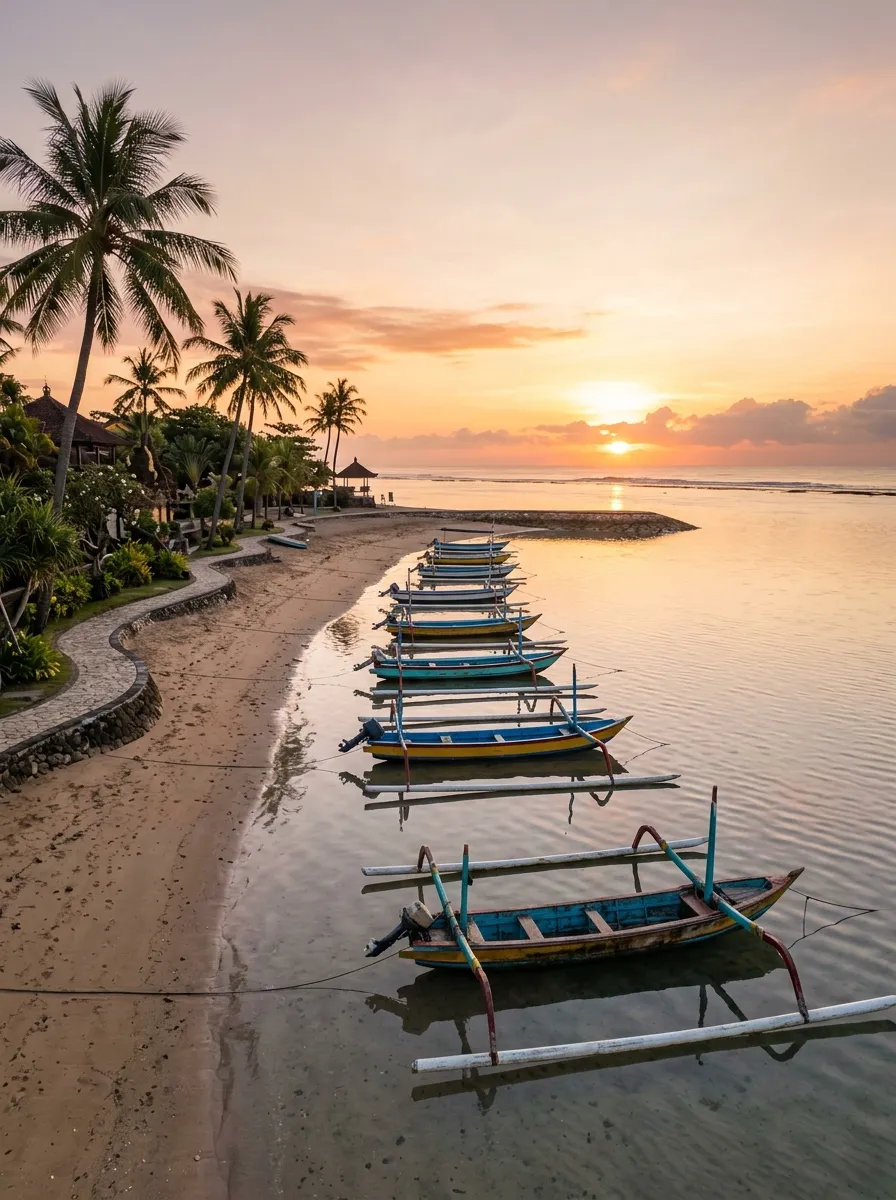
Sanur is calmer than Bali’s western beach towns.
A long promenade follows the coast past hotels, restaurants and sections of beach protected by offshore reefs. Sunrises replace the west coast’s famous sunsets.
Sanur is particularly convenient for families, older travelers and visitors catching boats to Nusa Lembongan or Nusa Penida.
Why Stay in Sanur?
- Walkable waterfront
- Calmer atmosphere
- Sunrise views
- Easy boat connections
- Family-oriented accommodation
- Convenient access to the airport and eastern Bali
Spend two or three nights if you want a relaxed coastal base.
9. Nusa Dua
Nusa Dua is Bali’s most polished resort zone.
Landscaped grounds, large hotels and maintained beaches create a comfortable but less locally immersive experience. Security and infrastructure are generally strong within the tourism complex.
Best For
- Resort holidays
- Families
- Honeymoons
- Travelers prioritizing convenience
- Calm beach time
- Short luxury escapes
Nusa Dua is not the right choice for travelers seeking village life or spontaneous street exploration.
10. Tanah Lot
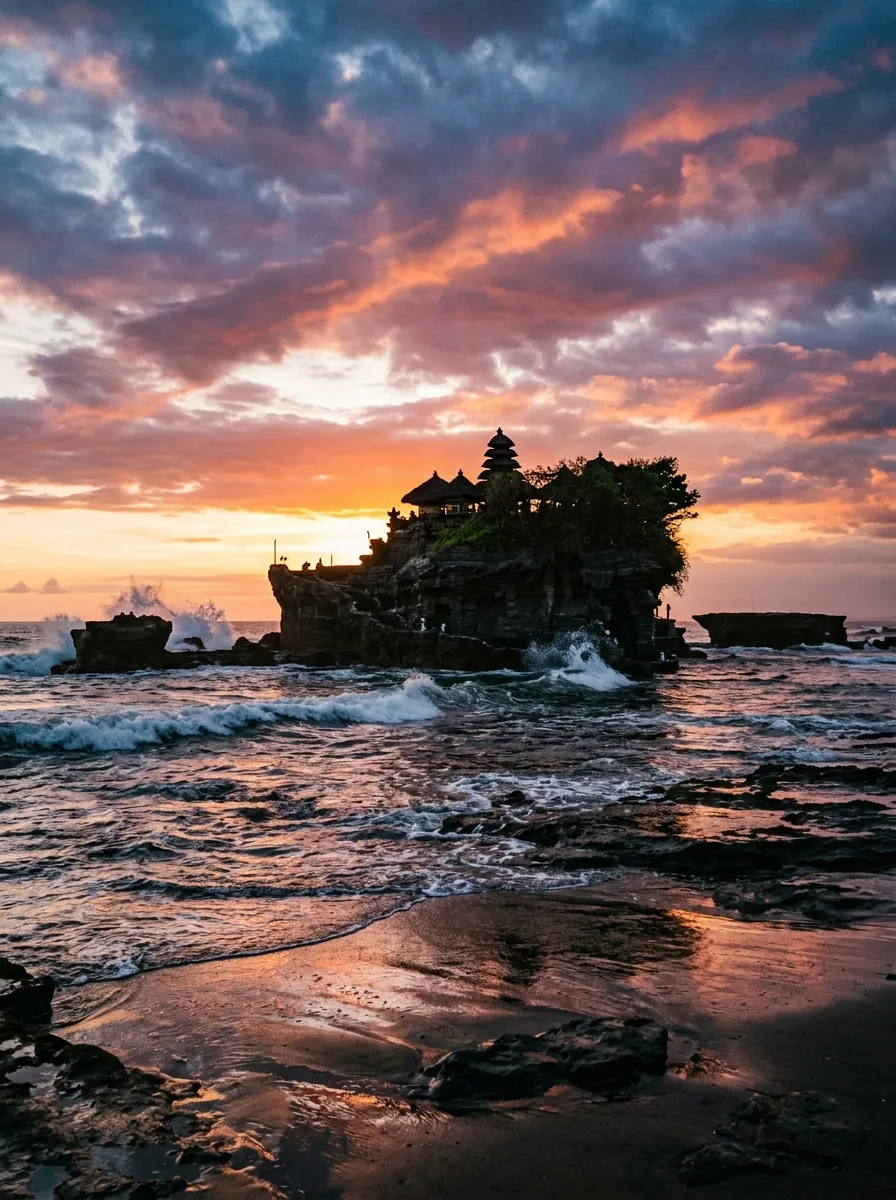
Tanah Lot is one of Bali’s most recognizable coastal temples.
The shrine sits on a rocky formation surrounded by water during higher tides. The wider complex includes walkways, viewpoints, shops and additional temple structures.
Sunset is the famous time to visit, but it is also the busiest.
Arrive earlier in the afternoon to explore before the main crowds gather.
Photography Tip
The classic view appears from the coastal paths rather than directly beside the temple. During low tide, visitors may be able to approach the base, but access to sacred areas remains restricted.
11. Munduk
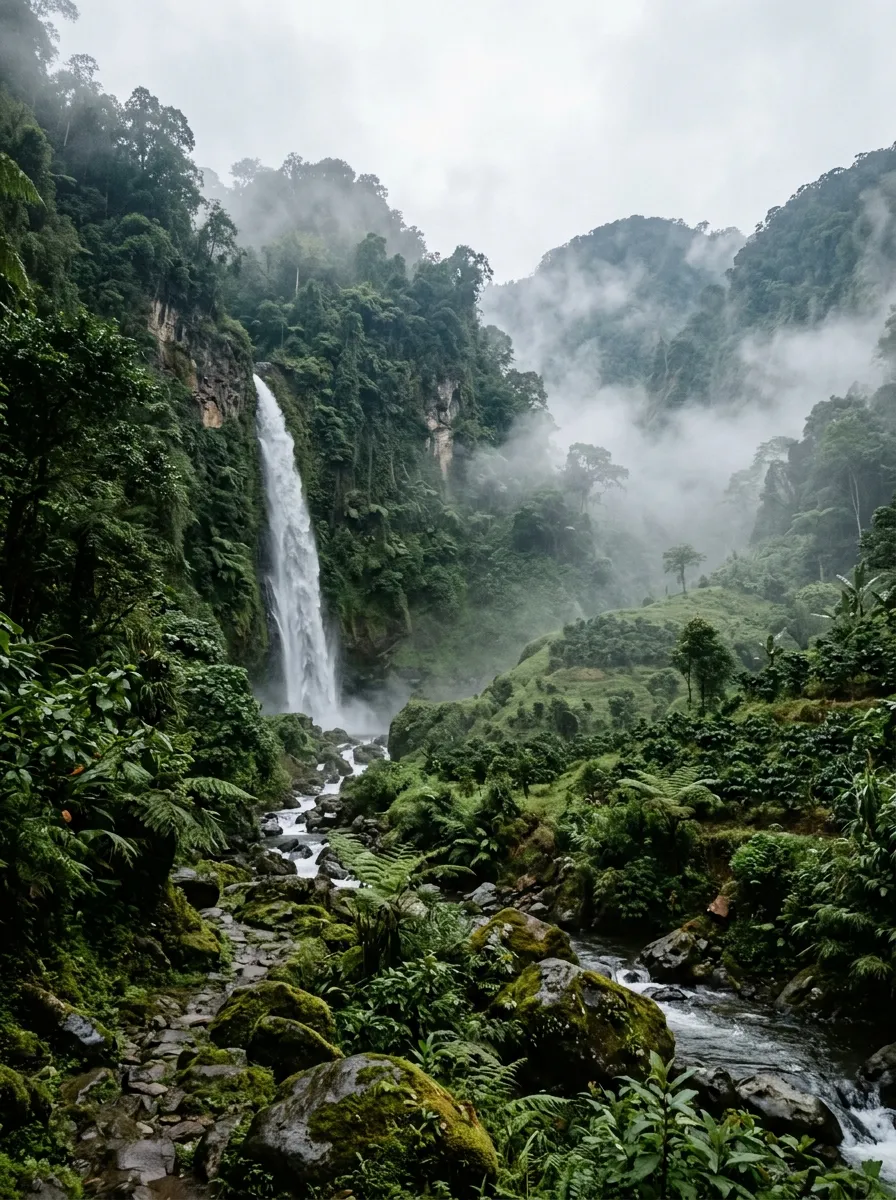
Munduk offers cool mountain air, waterfalls, plantations and quiet forested slopes.
The village sits in North Bali’s highlands, far from the heat and traffic of the southern coast. Mist frequently drifts across the hills, creating an atmosphere closer to a mountain retreat than a tropical beach escape.
Best Things to Do in Munduk
- Hike between waterfalls
- Visit coffee and spice farms
- Explore village paths
- See mountain lakes
- Visit nearby temples
- Enjoy cooler evenings
- Stay in a valley-view lodge
Official Indonesian tourism guidance highlights North Bali for waterfalls, mountain scenery, dolphin excursions and access to outdoor adventures.
Spend two or three nights.
12. Bedugul and Ulun Danu Beratan Temple
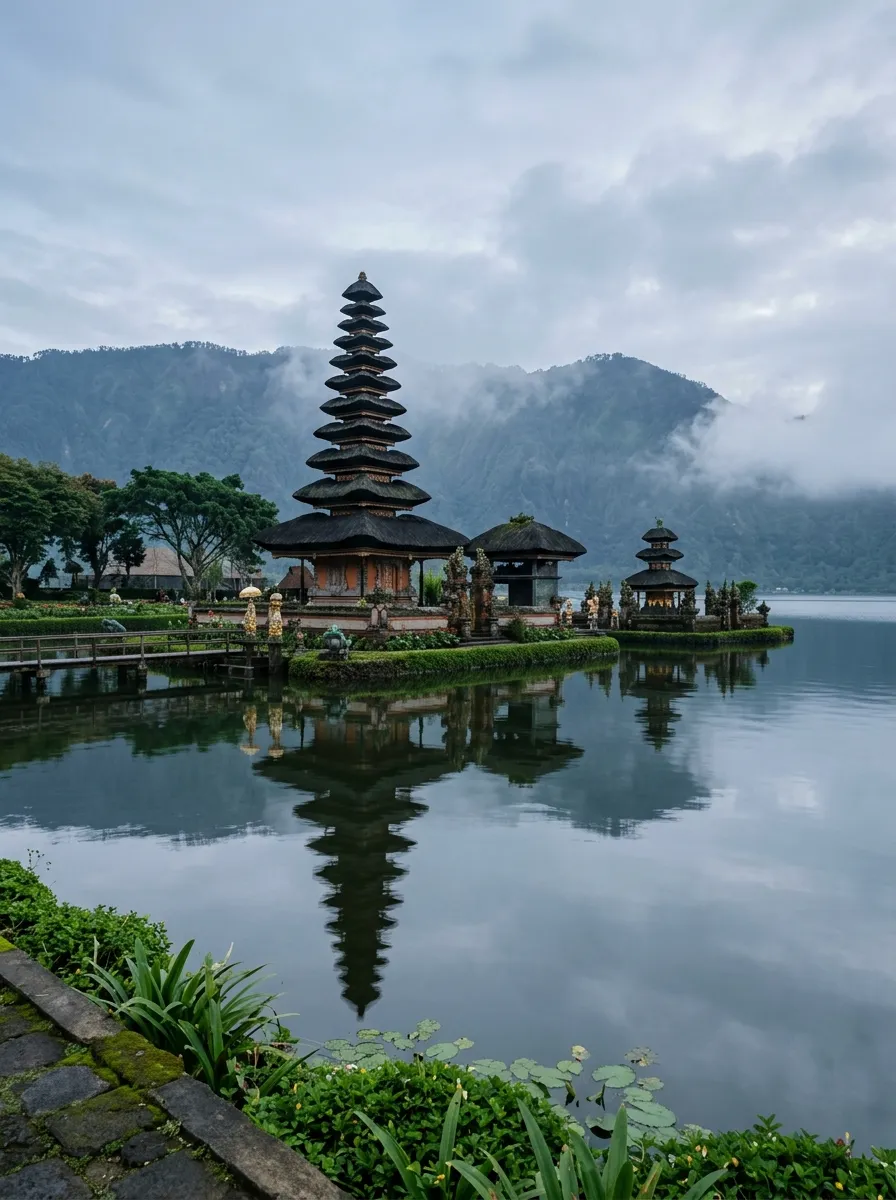
Bedugul lies in Bali’s central highlands near lakes, gardens and agricultural areas.
Its most famous landmark is Ulun Danu Beratan, a water temple positioned beside Lake Beratan. Misty mountains and shifting lake levels create the illusion that parts of the temple float.
Combine Bedugul With
- Handara Gate
- Munduk
- Jatiluwih
- Bali Botanic Garden
- Lake Buyan
- Lake Tamblingan
The region is cooler and wetter than the southern beaches, so carry a light waterproof layer.
13. Amed

Amed is a chain of fishing communities and coastal settlements in eastern Bali.
Black volcanic beaches, coral reefs and views of Mount Agung define the area. The pace is slower than in southern Bali, although tourism has grown significantly.
Best Things to Do in Amed
- Snorkel from the shore
- Visit the Japanese shipwreck site
- Dive local reefs
- Watch sunrise over the sea
- Photograph Mount Agung
- Explore fishing villages
- Take a day trip to nearby temples
Amed is ideal for three nights, particularly for divers and snorkelers.
MARINE SAFETY NOTE
Currents and sea conditions vary. Use reputable operators, check local conditions and do not assume every calm-looking bay is safe for inexperienced swimmers.
14. Mount Batur and Kintamani

Mount Batur is one of Bali’s most popular sunrise hikes.
Tours usually begin during the night so hikers can reach the volcanic ridge before dawn. The climb is manageable for many active travelers but involves darkness, loose ground and steep sections.
Official tourism guidance recommends using a licensed guide, carrying water and wearing warm layers.
Alternatives to the Sunrise Hike
- Watch sunrise from a Kintamani viewpoint
- Visit volcanic hot springs
- Explore nearby villages
- Have breakfast overlooking the caldera
- Visit Pura Ulun Danu Batur
The viewpoint option provides dramatic scenery without beginning the day at an hour normally reserved for airport alarms.
15. Besakih Temple
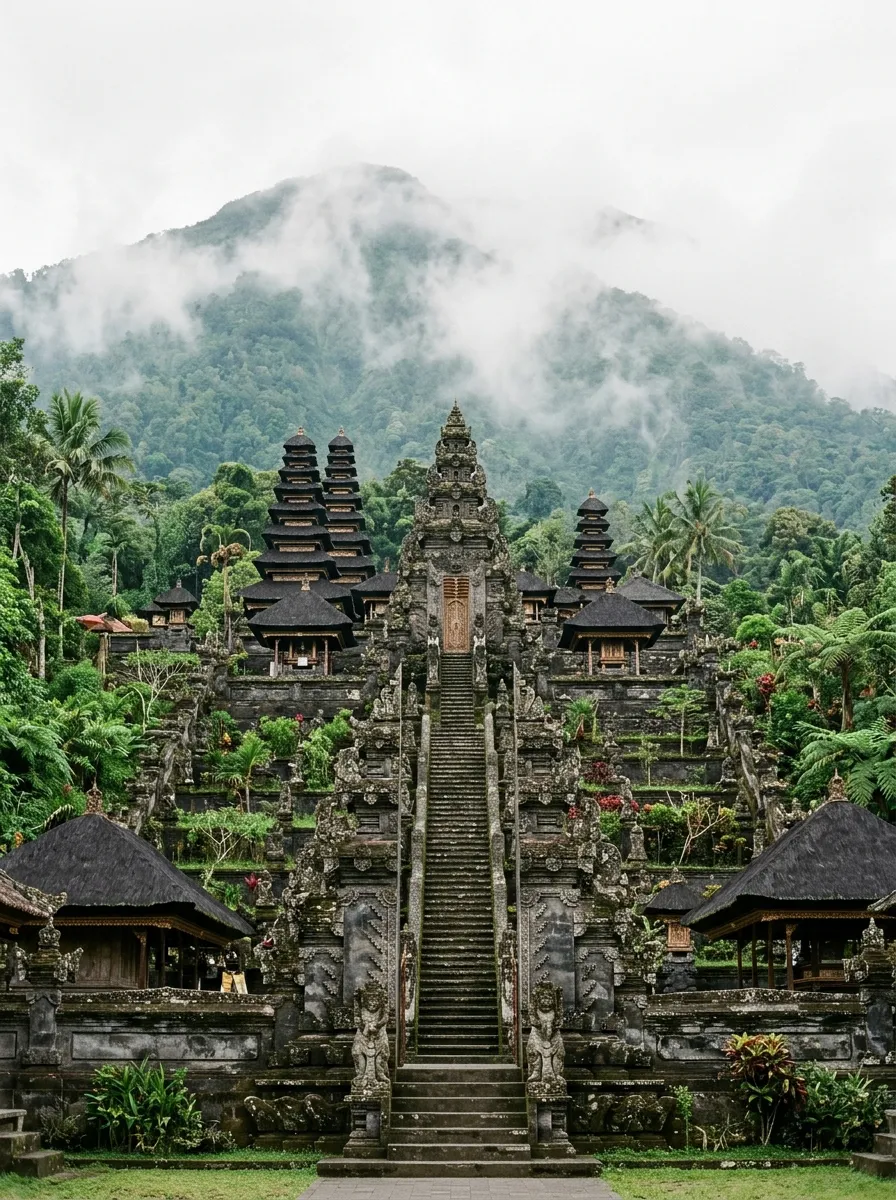
Besakih is Bali’s largest and most important temple complex.
It spreads across the slopes of Mount Agung and contains multiple courtyards, shrines and stairways used for major religious ceremonies. Indonesia’s tourism authority identifies Besakih as the island’s largest and oldest temple complex.
Visitors should dress respectfully and follow local access rules.
Hiring an official local guide can help explain the complex’s religious importance and prevent confusion around entrances and restricted areas.
16. Nusa Lembongan and Nusa Ceningan
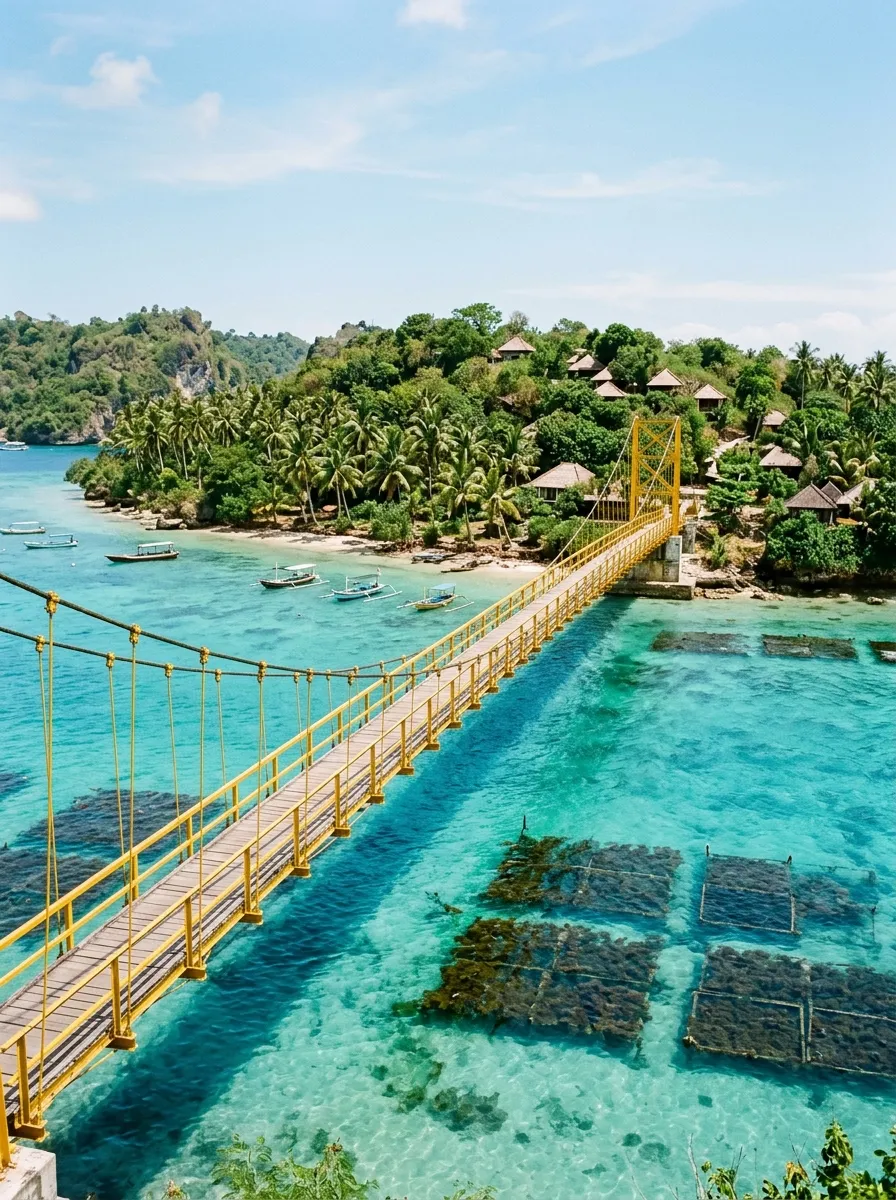
Nusa Lembongan and neighboring Nusa Ceningan provide a relaxed island escape southeast of Bali.
Small roads pass beaches, seaweed farms and coastal viewpoints. A yellow suspension bridge connects the two islands.
Best Experiences
- Snorkeling
- Mangrove tours
- Coastal walks
- Surfing
- Sunset viewpoints
- Exploring by scooter or local driver
- Visiting Devil’s Tear carefully
Lembongan is easier to navigate than Nusa Penida and works well for a two-to-four-night stay.
17. Nusa Penida
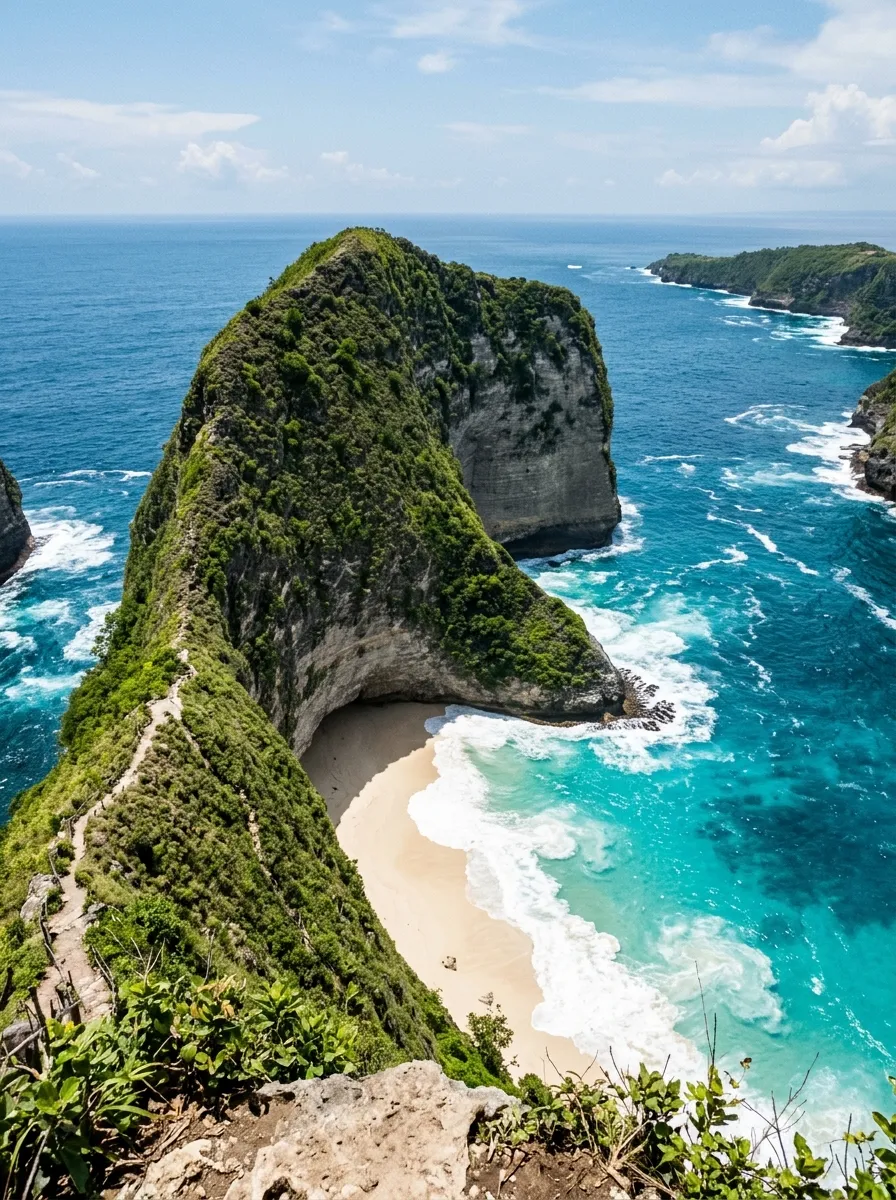
Nusa Penida is famous for enormous cliffs, hidden beaches and intensely blue water.
Kelingking Beach, Diamond Beach, Broken Beach and Angel’s Billabong appear across social media, but travel between them can be slow. Roads are steep and narrow, and day-trip schedules are often rushed.
Best Nusa Penida Tips
- Stay overnight rather than taking a frantic day trip
- Choose either the east or west side each day
- Hire an experienced local driver
- Wear proper footwear
- Carry water and sun protection
- Avoid cliff edges
- Respect barriers
- Do not swim where currents are dangerous
The island is one of Bali Province’s major offshore destinations and includes dramatic beaches, cliffs and marine attractions.
Nusa Penida also belongs among the most visually dramatic destinations in the region. Travelers planning photography-focused journeys can explore more Instagrammable places in Asia.
Bali Destination Comparison Table
| Destination | Best For | Recommended Stay | Atmosphere | Transport Needs |
| Ubud | Culture, art and inland trips | 3–5 nights | Busy but cultural | Driver or taxi |
| Tegalalang | Quick rice-terrace visit | 2–3 hours | Popular and commercial | Driver |
| Jatiluwih | Walking and rice landscapes | Half day | Rural and spacious | Driver |
| Sidemen | Slow travel and countryside | 2–3 nights | Quiet | Driver |
| Uluwatu | Cliffs, beaches and surf | 3–4 nights | Spread out | Scooter or driver |
| Seminyak | Dining and convenience | 2–3 nights | Urban resort area | Taxi apps |
| Canggu | Surf and social scene | 2–4 nights | Busy and youthful | Scooter or taxi |
| Sanur | Families and island transfers | 2–3 nights | Relaxed | Walking and taxi |
| Nusa Dua | Resort holiday | 2–4 nights | Polished | Taxi |
| Munduk | Waterfalls and mountains | 2–3 nights | Peaceful | Driver |
| Amed | Diving and snorkeling | 3 nights | Coastal and relaxed | Driver or scooter |
| Nusa Lembongan | Easy island escape | 2–4 nights | Casual | Scooter or local taxi |
| Nusa Penida | Dramatic cliffs | 2–3 nights | Rugged | Local driver |
The Perfect 10-Day Bali Itinerary
Days 1–3: Ubud
Base yourself in or just outside Ubud.
Visit Ubud Palace, Saraswati Temple, the Monkey Forest and the Campuhan Ridge. Use one day for Tegalalang, Tirta Empul and nearby villages.
Days 4–5: Sidemen
Travel east to Sidemen.
Walk through rice fields, visit a weaving workshop and enjoy a slower day overlooking Mount Agung.
Days 6–7: Amed
Continue to the east coast.
Snorkel, relax beside the water and watch sunrise. Add a temple excursion if you prefer more sightseeing.
Days 8–10: Uluwatu
Finish in southern Bali.
Visit Uluwatu Temple, explore several beaches and stay close enough to the airport for departure day.
The Perfect Two-Week Bali Itinerary
Days 1–4: Ubud
Explore central Bali, temples, rice fields and arts.
Days 5–6: Munduk
Travel north for waterfalls, cooler weather and mountain lakes.
Days 7–8: Sidemen
Slow down in the eastern countryside.
Days 9–11: Nusa Lembongan
Take a boat from Sanur and enjoy snorkeling, coastal walks and island life.
Days 12–14: Uluwatu or Sanur
Finish with beaches, temples and easy airport access.
BETTER-PACED OPTION
Do not change accommodation every night. Bali traffic can turn a short-looking transfer into half a day of brake lights and philosophical reflection.
A Seven-Day Bali Itinerary
For a shorter first trip:
Days 1–3: Ubud
Focus on culture, temples and inland scenery.
Days 4–5: Uluwatu
Explore beaches, cliffs and Uluwatu Temple.
Days 6–7: Sanur or Seminyak
Finish with an accessible coastal stay near the airport.
Seven days are enough for two or three areas. Attempting Ubud, North Bali, East Bali, Nusa Penida and the entire southern coast in one week produces more luggage handling than enlightenment.
Best Time to Visit Bali
Dry Season: April to October
The drier months are generally the easiest for beaches, hiking, sightseeing and island transfers.
July and August are among the busiest periods, bringing higher accommodation prices and heavier traffic.
May, June and September often provide a better balance of weather and crowds.
Rainy Season: November to March
Bali’s rainy season usually brings higher humidity, tropical downpours and greener landscapes.
Rain does not necessarily continue all day. Mornings may be clear before heavy showers arrive later.
Boat journeys, hikes and waterfall paths can be affected by rough seas or slippery conditions.
Christmas and New Year
Late December and early January form another major peak period.
Hotels, restaurants, drivers and popular attractions should be booked well ahead.
Nyepi
Nyepi is Bali’s annual Day of Silence.
The date changes each year according to the Balinese calendar. For approximately 24 hours, the island shuts down: roads become empty, businesses close, lights are restricted and the airport normally suspends operations.
Visitors must remain inside their accommodation and follow local rules.
Nyepi can be an extraordinary experience, but flight dates and hotel plans must be arranged carefully.
Getting to Bali
Most international travelers arrive through I Gusti Ngurah Rai International Airport near Denpasar.
Direct and connecting flights link Bali with major cities across Asia, Australia and the Middle East.
The airport is close to southern Bali geographically, but travel time varies sharply with traffic.
Approximate conditions can make journeys to:
- Kuta relatively short
- Seminyak considerably longer during peak traffic
- Canggu unpredictable
- Ubud one to two hours or more
- Amed several hours
- Munduk several hours
Arrange an airport transfer in advance when arriving late or traveling directly to a distant region.
Indonesia Entry Requirements
Entry rules depend on nationality and can change.
Use Indonesia’s official immigration portal to confirm whether you qualify for visa-free entry, Visa on Arrival, electronic Visa on Arrival or another visa category.
Indonesia’s official eVisa portal currently states that travelers must submit the required arrival card within three days before entering the country. Passport and visa conditions vary by category.
A commonly used Visa on Arrival permits tourism stays of 30 days and may be extendable once for another 30 days for eligible nationalities, but travelers should verify their own passport’s eligibility and the exact visa conditions before departure.
VISA WARNING
Tourist visas do not authorize employment. Teaching classes, providing paid services or carrying out commercial work may require a different permit. Indonesian authorities have continued enforcing visa conditions.
Bali Tourist Levy
International tourists visiting Bali are required to pay a provincial tourist levy of IDR 150,000 per person.
The levy is separate from Indonesia’s visa charges and is generally paid cashlessly through the official Love Bali platform or designated facilities. Travelers should retain the digital voucher as proof of payment.
Use only the official provincial platform or an authorized payment channel. Avoid unofficial websites imitating the levy portal.
Getting Around Bali
Private Driver
Hiring a private driver is one of the easiest ways to explore Bali.
It works particularly well for:
- Temple day trips
- Waterfall routes
- Family travel
- Moving between hotels
- North and East Bali
- Travelers uncomfortable riding scooters
Agree on price, hours, route and parking costs before departure.
Taxi and Ride-Hailing Apps
Metered taxis and app-based services operate in many tourist areas.
Availability may be restricted around certain transport hubs or villages. Confirm the pickup point through the app and check that the vehicle details match.
Scooter
Scooters provide flexibility but carry serious risks.
Only ride when you:
- Hold the correct license
- Have valid insurance
- Are experienced in dense traffic
- Wear a proper helmet
- Understand local road behavior
- Avoid driving after drinking
- Can handle rain and poor surfaces
Do not use Bali as a place to learn scooter riding between trucks, dogs, ceremonies and an optimistic navigation arrow.
Boats
Fast boats connect Bali with Nusa Lembongan, Nusa Penida, the Gili Islands and Lombok.
Sea conditions, operators and safety standards vary.
Choose reputable companies, confirm luggage rules and avoid tight same-day flight connections after a boat transfer.
Where to Stay in Bali
Stay in Ubud for Culture
Choose Ubud for temples, dance, art, wellness and central day trips.
Stay near the center for walkability or outside town for rice-field views and quieter nights.
Stay in Uluwatu for Cliffs and Beaches
Uluwatu suits surfers, couples and travelers seeking dramatic coastal scenery.
A scooter or driver is usually necessary because beaches and restaurants are spread across the peninsula.
Stay in Sanur for Convenience
Sanur is ideal for families, relaxed beach walks and island transfers.
It is calmer than Canggu and Seminyak.
Stay in Sidemen for Peace
Sidemen is best for countryside, rice-field walks and slow travel.
Evening entertainment is limited, which is either the problem or the entire point.
Stay in Munduk for Mountains
Munduk suits hikers, nature lovers and travelers escaping coastal heat.
Stay in Amed for the Sea
Amed is ideal for snorkeling, diving and quiet mornings.
Bali Travel Budget
Bali can suit backpacking, mid-range and luxury budgets, but costs vary enormously by neighborhood.
Canggu, Seminyak, Uluwatu and premium Ubud resorts can be expensive. Local guesthouses, family-run restaurants and quieter regions remain far more affordable.
Budget-Saving Tips
- Stay in locally owned guesthouses
- Eat at reputable local warungs
- Use one base for several nights
- Split private-driver costs with companions
- Travel outside July, August and late December
- Avoid unnecessary hotel changes
- Confirm prices before services
- Carry smaller rupiah notes
- Use official ticket counters
- Choose free walks and beaches between paid attractions
| Expense | Budget Approach | Higher-Cost Approach |
| Accommodation | Guesthouse or homestay | Private villa or resort |
| Food | Local warung | International restaurant |
| Transport | Shared transfer or app taxi | Private driver |
| Activities | Temples and self-guided walks | Private tours and spa packages |
| Islands | Standard fast boat | Private charter |
| Wellness | Local massage studio | Luxury resort spa |
Balinese Temple Etiquette
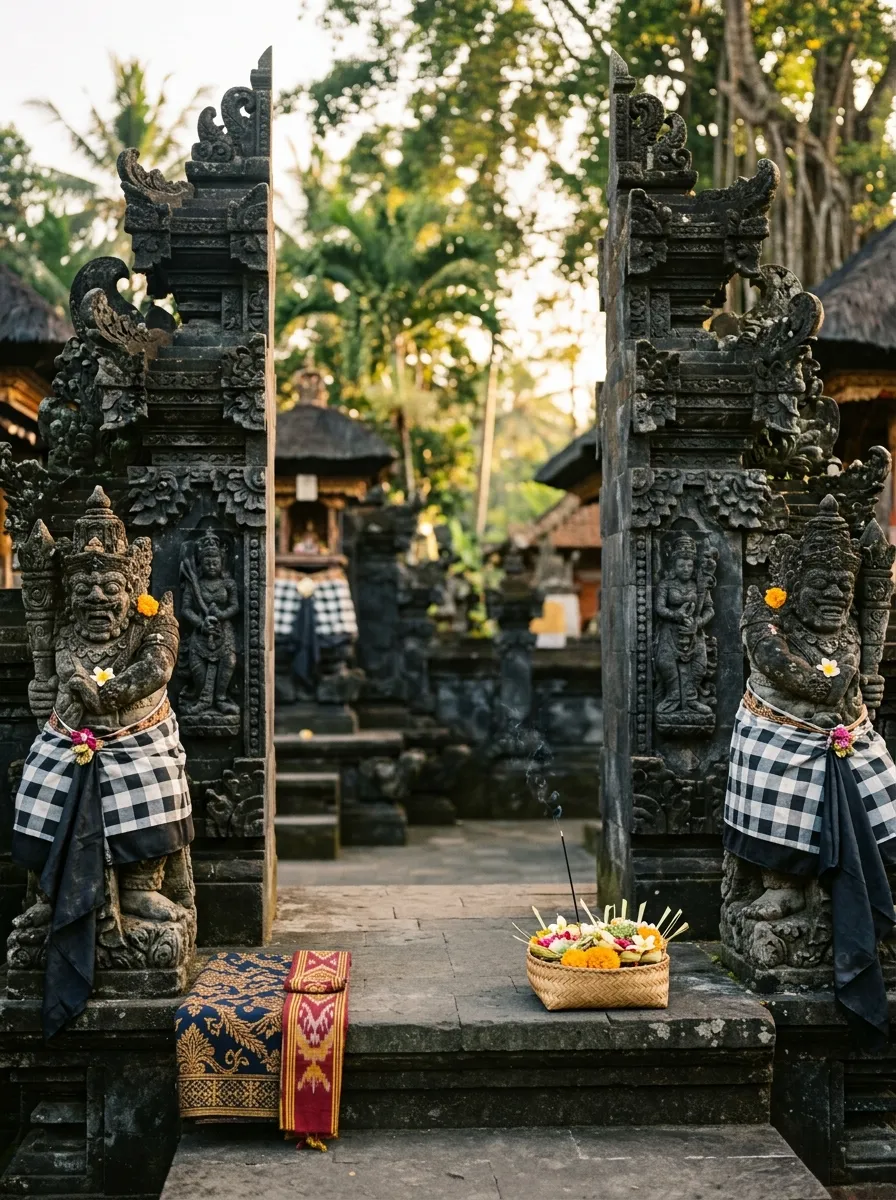
Temples are active religious spaces rather than decorative attractions.
Follow These Rules
- Wear a sarong and sash when required
- Cover shoulders and knees
- Remove shoes where instructed
- Do not climb sacred structures
- Avoid interrupting ceremonies
- Ask before photographing worshippers
- Keep your head below sacred objects when directed
- Do not step on offerings
- Respect areas closed to visitors
Women may encounter traditional restrictions regarding temple access during menstruation. Follow posted guidance and local instructions respectfully.
Small offerings called canang sari are placed outside homes, shops and temples. Watch the ground when walking so you do not step on them.
Food to Try in Bali
Bali’s food scene ranges from simple family-run kitchens to elaborate international restaurants.
Balinese Dishes to Look For
- Nasi campur
- Nasi goreng
- Mie goreng
- Gado-gado
- Lawar
- Sate lilit
- Ayam betutu
- Bebek betutu
- Tempeh dishes
- Pisang goreng
- Fresh tropical fruit
Ask about ingredients when you have dietary restrictions because sauces, broths and garnishes may contain ingredients that are not immediately visible.
Choose busy restaurants with good food-handling practices and drink sealed, filtered or safely treated water.
Bali Packing Checklist
Year-Round Essentials
- Lightweight breathable clothing
- Sarong
- Comfortable walking sandals
- Shoes with good grip
- High-SPF sunscreen
- Insect repellent
- Reusable water bottle
- Portable charger
- Dry bag or waterproof pouch
- Copies of travel documents
- Tourist levy voucher
- Travel insurance information
Rainy-Season Extras
- Lightweight rain jacket
- Quick-drying clothes
- Waterproof footwear
- Bag cover
- Extra mosquito protection
Hiking and Highlands
- Warm layer
- Hiking shoes
- Headlamp
- Water
- Small first-aid kit
- Sun hat
Island Trips
- Motion-sickness medication
- Reef-conscious sun protection where appropriate
- Secure sandals
- Swimwear
- Waterproof phone case
Common Bali Travel Mistakes
Staying in Only One Area
Bali’s regions feel very different.
A week spent only in Canggu or one resort does not represent the whole island.
Planning Too Many Day Trips
Traffic makes distances deceptive.
Move accommodation strategically rather than driving across the island every day.
Underestimating the Sun
Cloud cover does not prevent sunburn near the equator.
Use sun protection throughout the day.
Riding a Scooter Without Experience
Dense traffic, poor road surfaces and unfamiliar rules create serious accident risks.
Hire a driver instead.
Ignoring Temple Etiquette
Sacred sites are not fashion backdrops.
Dress appropriately and follow instructions.
Expecting Every Beach to Be Swimmable
Surf, currents, tides and rocks affect many beaches.
Follow flags and local warnings.
Treating Animals as Props
Do not handle wildlife for photographs or support attractions with poor welfare practices.
Staying Safe in Bali
Road Safety
Traffic accidents are among the most significant practical risks for visitors.
Wear seat belts, helmets and appropriate protective clothing.
Petty Theft
Keep phones and bags secure near roads because opportunistic snatching can occur.
Avoid holding a phone loosely toward passing traffic.
Ocean Safety
Strong currents and waves affect beaches around Bali and the offshore islands.
Swim only in suitable areas and follow local advice.
Volcanoes and Natural Hazards
Bali lies in a geologically active region.
Volcanic activity, earthquakes, landslides, flooding and rough seas can disrupt plans. Follow instructions from Indonesian authorities and airlines.
Monkeys and Dogs
Do not touch or feed unfamiliar animals.
Seek medical advice promptly after any bite or scratch.
Drink Safety
Purchase beverages from reputable businesses and never leave a drink unattended.
Travel insurance should include medical treatment, evacuation and planned activities such as diving or hiking.
Responsible Travel in Bali
Tourism provides livelihoods, but it also contributes to traffic, waste, water pressure and rapid development.
Travel more responsibly by:
- Staying in locally owned accommodation
- Hiring local guides
- Refilling water bottles
- Avoiding single-use plastics
- Respecting ceremonies
- Supporting traditional crafts directly
- Staying on marked rice-field paths
- Choosing ethical wildlife experiences
- Reducing unnecessary hotel changes
- Avoiding geotagging fragile hidden locations
- Paying entrance fees without hostility
- Dressing appropriately in villages and temples
Adventure travelers looking for active experiences beyond Bali can continue with these adventure travel destinations, featuring mountains, islands and wilderness journeys across the world.
Frequently Asked Questions
How many days do you need in Bali?
Ten to fourteen days are ideal for a first visit. Seven days work for two or three regions, while three weeks allow time for North Bali, East Bali and an offshore island.
What is the best month to visit Bali?
May, June and September often provide a strong balance of drier weather and more manageable crowds.
Is Bali expensive?
Bali can be affordable or extremely expensive. Guesthouses and local meals remain accessible, while private villas, premium restaurants and beach clubs can rival prices in major international destinations.
Is Bali safe for solo travelers?
Many solo travelers visit Bali successfully. Use reputable transport, protect drinks and belongings, avoid isolated areas after dark and prepare carefully before hiking or riding a scooter.
Is Bali suitable for families?
Yes. Sanur, Nusa Dua and selected Ubud resorts are especially family-friendly. Choose accommodation with safe pools, easy transport and suitable meal options.
Is Bali good for a honeymoon?
Yes. Ubud, Sidemen, Uluwatu, Nusa Dua and Nusa Lembongan offer romantic hotels and scenic experiences.
Should I stay in Ubud or Canggu?
Choose Ubud for culture, temples and inland scenery. Choose Canggu for surfing, cafés, social life and coworking.
Is Nusa Penida worth visiting?
Yes, but staying overnight creates a better experience than a rushed day tour. Roads and distances make it difficult to visit every famous viewpoint in one day.
Do I need a scooter in Bali?
No. Private drivers, taxis and ride-hailing services can cover most trips. A scooter should be used only by properly licensed and experienced riders.
Can you drink tap water in Bali?
Visitors generally use filtered, safely treated or sealed bottled water. Many accommodations provide refill stations.
Is Bali crowded?
Southern Bali and central Ubud can be extremely busy. Sidemen, Munduk, West Bali and parts of the north and east offer quieter alternatives.
Is the Bali tourist levy included in the visa fee?
No. The IDR 150,000 Bali tourist levy is separate from Indonesian visa charges.
Can tourists work remotely in Bali?
Immigration rules depend on the exact activity and visa. A tourist visa does not authorize local employment or paid commercial services. Confirm the correct visa category through Indonesia’s official immigration system.
What should I avoid doing in Bali?
Avoid disrespecting temples, stepping on offerings, riding illegally, trespassing on rice fields, approaching dangerous cliffs, feeding wildlife and treating religious ceremonies as entertainment created for visitors.
Final Thoughts
Bali is most memorable when you stop asking it to match the postcard.
The beaches may be crowded. Ubud traffic may test the serenity promised by every wellness brochure. Rain may arrive during a carefully planned sunset, and a rooster may begin discussing sunrise several hours early.
Yet the island repeatedly restores the journey.
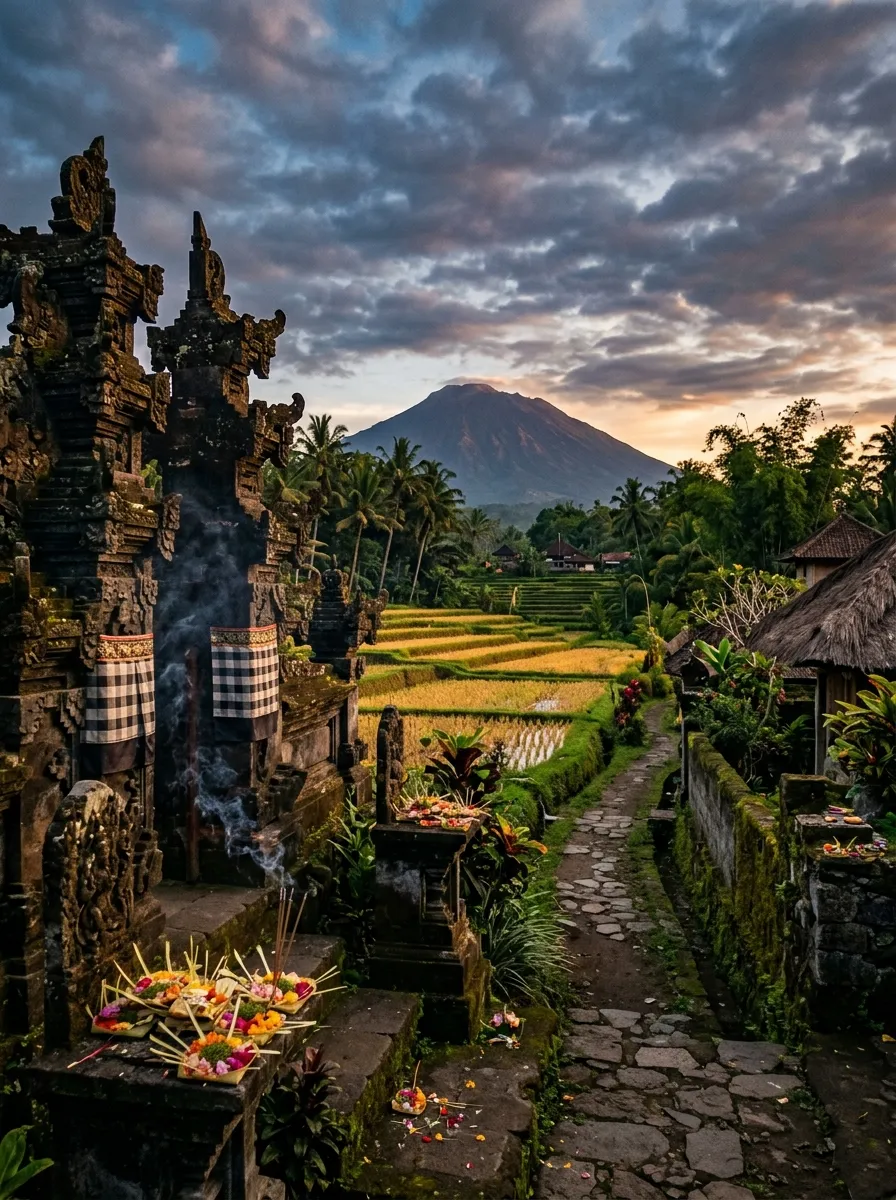
A procession appears beside the road. Incense drifts from a temple gate. Mount Agung emerges from clouds above rice fields. A family-run restaurant serves a meal that becomes more memorable than the expensive reservation you planned weeks before.
Travel slowly enough to notice these moments.
Divide the trip between different regions. Spend time in villages as well as beach towns. Learn why water temples matter, dress respectfully and remember that Bali is not a resort island occasionally interrupted by local culture.
The culture is the island.
The villas, cafés and infinity pools are merely recent decorations around something much older, stranger and more beautiful.