Best Travel Power Banks for Winter Trips: Stay Charged in the Cold
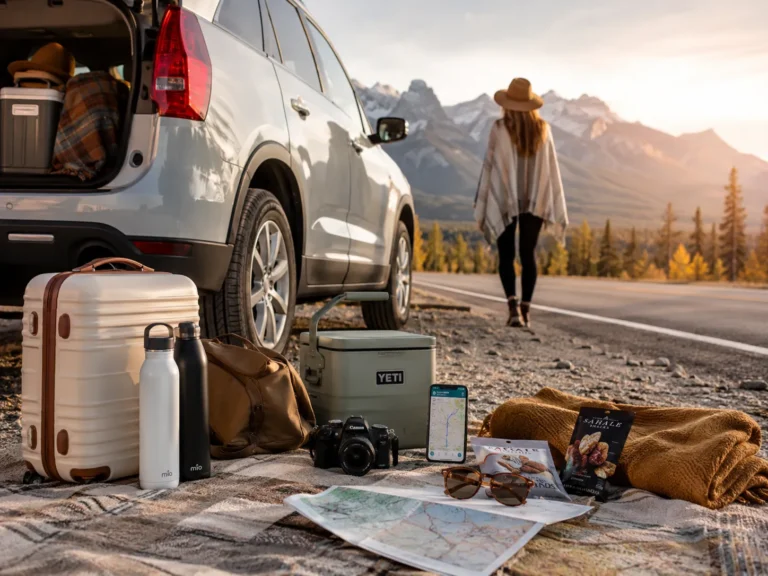
Winter travel brings incredible experiences, from snowy mountain roads and Northern Lights tours to Christmas markets and cozy weekend escapes. But cold weather can be tough on your phone battery. A device that lasts all day at home might lose charge quickly while you’re taking photos outdoors, following navigation, or waiting for a delayed flight.
That is where a reliable travel power bank becomes an essential packing item. The right model can keep your phone, camera accessories, earbuds, and other devices powered when wall outlets are nowhere to be found.

However, not every power bank is ideal for winter travel. Capacity, charging speed, weight, cold-weather handling, and airline restrictions all matter when choosing one.
In this guide, we’ll look at the best travel power banks for winter trips, explain what features are worth paying for, and help you choose the right option for your next cold-weather adventure.
Recommended Travel Items for Your Trip
Why You Need a Power Bank for Winter Travel
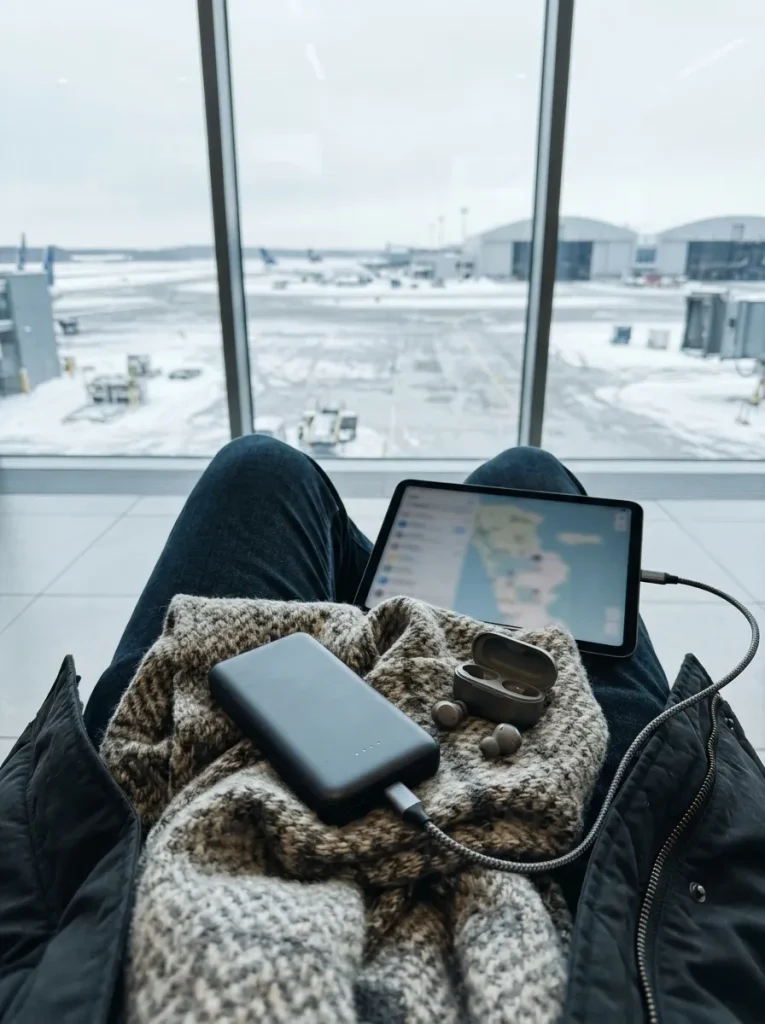
Cold weather can temporarily reduce the performance of lithium-ion batteries. Your phone may drain faster than usual, display a lower battery percentage, or shut down unexpectedly when exposed to very low temperatures.
This can become more than an inconvenience when you’re traveling. Your phone might be your map, boarding pass, hotel reservation, translation tool, camera, and emergency contact device.
A power bank provides a backup source of energy when your phone battery starts struggling.
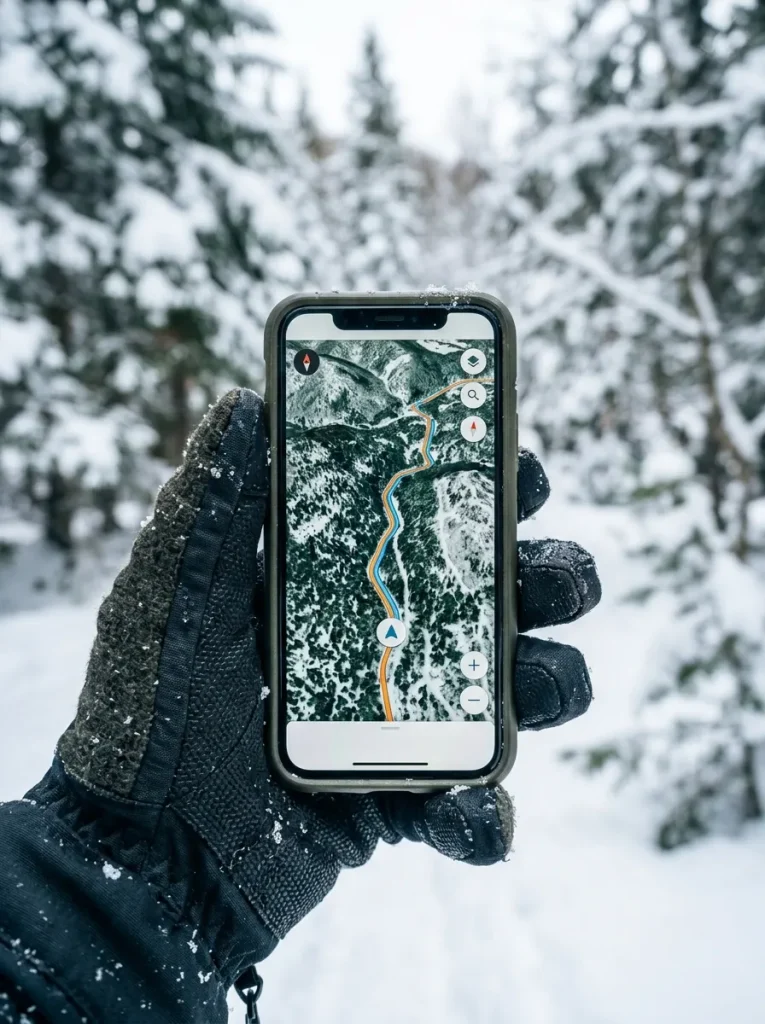
Here are a few situations where one can make a real difference:
- Winter road trips: Keep navigation running while driving through snowy destinations, especially when mobile coverage is limited and you rely on downloaded maps.
- Northern Lights tours: Capture photos and videos during long outdoor waits without worrying about your phone dying.
- Skiing and snowboarding: Recharge your phone after spending hours on the slopes.
- Christmas market visits: Use maps, digital tickets, mobile payments, and your camera throughout a long day.
- Airport delays: Keep your devices ready when charging outlets are occupied or unavailable.
- Winter hiking: Maintain access to navigation and emergency communication tools, although a power bank should never replace proper cold-weather safety equipment.
A power bank will not prevent cold-weather battery problems entirely. Keeping your phone warm is equally important.
Best Travel Power Banks for Winter Trips
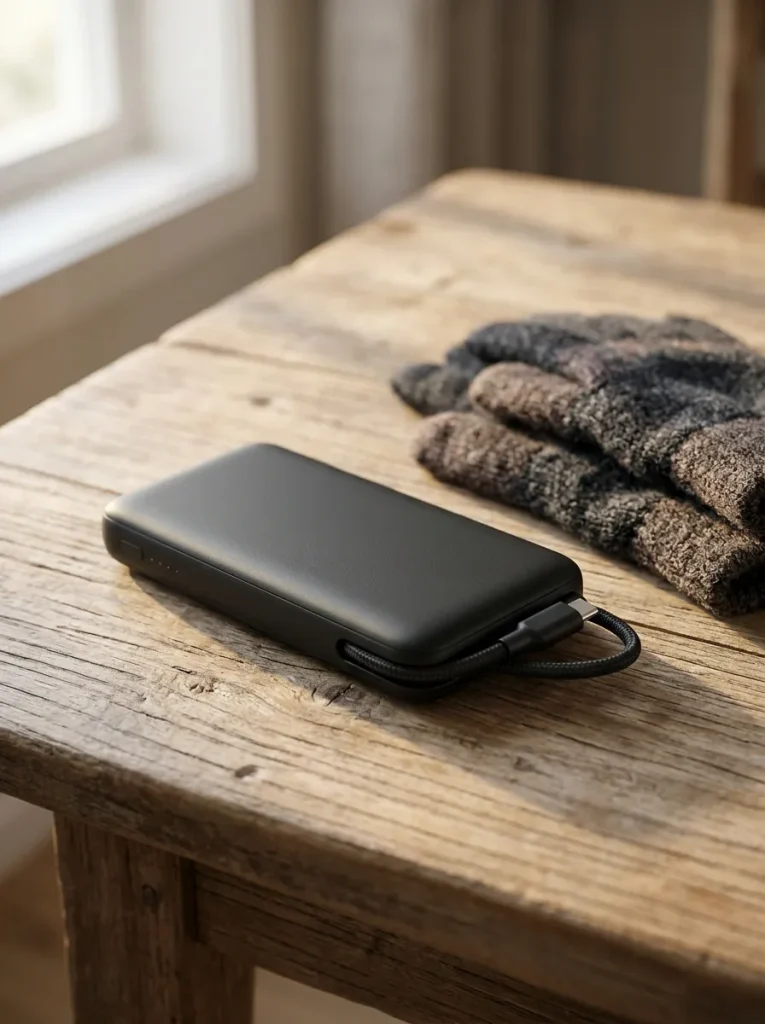
The best choice depends on how you travel. A lightweight power bank may be perfect for a weekend city break, while a higher-capacity model makes more sense for a long flight or a trip involving several electronic devices.
The following models are worth considering. Specifications and product availability can vary by version, so confirm the exact model before purchasing.
1. Anker 20,000mAh Power Bank with Built-In USB-C Cable: Best Overall
For most winter travelers, a 20,000mAh power bank offers a useful balance of capacity, charging speed, and portability.
Anker’s 20,000mAh models are worth considering because some versions offer fast USB-C charging and a built-in cable. That integrated cable is especially convenient when you’re wearing gloves, switching between airport terminals, or trying to pack efficiently.
A capacity of 20,000mAh is generally enough for several smartphone recharges, depending on your phone’s battery size, charging losses, and usage. Compatible models can also provide a useful top-up for certain USB-C laptops and tablets.
Why it works for winter travel:
- Large enough for a full day of sightseeing and photography.
- Useful for long-haul flights and multi-stop itineraries.
- Fast charging on compatible devices.
- Built-in cable on selected versions means one less accessory to pack.
- A practical choice for travelers carrying a phone, earbuds, and other small electronics.
Potential drawback: A 20,000mAh power bank is heavier than a compact 10,000mAh model. It also won’t necessarily charge every laptop, so check the output wattage and your laptop’s power requirements.
Best for: Travelers who want one dependable power bank for most winter vacations.
Available on Amazon:
2. Anker Nano 10,000mAh Power Bank: Best Compact Option
If you prefer to travel light, a 10,000mAh power bank is a sensible alternative.
The Anker Nano range includes compact models designed for everyday portability. Some versions feature built-in USB-C cables, while others use different connection designs, so check the precise model.
A 10,000mAh unit typically provides around one to two full smartphone charges in real-world use, although the result depends on your phone and how you use it.
Its smaller size makes it easier to carry in a jacket pocket, daypack, or small crossbody bag.
Why it works for winter travel:
- Convenient for city breaks and weekend trips.
- Takes up less space in a small day bag.
- Useful for topping up a phone between hotel visits.
- Generally lighter than higher-capacity alternatives.
Potential drawback: Capacity may be insufficient for several days away from power outlets or for charging multiple devices repeatedly.
Best for: Travelers who prioritize low weight and mostly need emergency phone charging.
3. Anker Prime 27,650mAh Power Bank: Best for Laptops and Multiple Devices
Some winter trips involve more than a smartphone. You might be working remotely from a mountain lodge, editing photos in a hotel room, or carrying a laptop for a longer journey.
The Anker Prime 27,650mAh power bank is a high-capacity option designed for demanding charging needs. Its published energy rating is approximately 99.5Wh, although you should always verify the rating printed on the exact unit.
Depending on the model and connected device, its high USB-C output can support fast charging for compatible laptops, tablets, and phones.
Why it works for winter travel:
- Higher capacity for extended trips.
- Powerful USB-C charging for compatible laptops.
- Useful for charging more than one device.
- A practical option for digital nomads and travel photographers.
Potential drawback: It is relatively heavy and expensive compared with smaller power banks. It may be excessive if you only need to recharge a phone once or twice.
Best for: Remote workers, photographers, and travelers who need substantial charging capacity away from outlets.
4. Nitecore NB10000 Series: Best for Winter Hiking and Backpacking
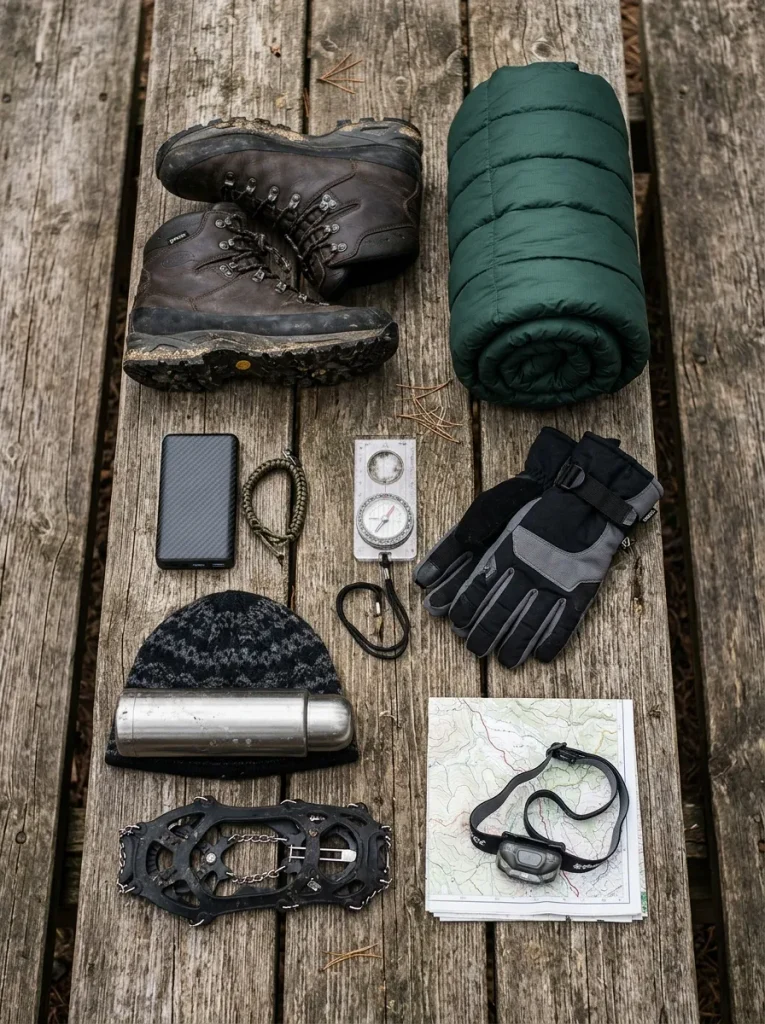
For travelers who spend long hours outdoors, a lightweight power bank can be more appealing than a large, heavy model.
Nitecore’s NB10000 series is known for its lightweight design and focus on outdoor use. Exact weights, outputs, and features depend on the generation you choose.
A 10,000mAh-class power bank can provide useful backup power without taking up too much room in a hiking pack.
Why it works for winter travel:
- Designed with portability in mind.
- Suitable for hiking, backpacking, and active travel.
- Helpful when every gram matters.
- Convenient for charging a phone between outdoor activities.
Potential drawback: The smaller capacity may not be enough for extended trips, and a lightweight design does not automatically make a power bank suitable for freezing conditions. Check its operating-temperature specifications before using it outdoors in severe cold.
Best for: Hikers and backpackers who want a compact backup battery.
5. A 20,000mAh USB-C Power Bank from UGREEN or Another Reputable Brand: Best Alternative
You don’t have to choose Anker to find a capable travel power bank. UGREEN and other established manufacturers offer models with USB-C Power Delivery, multiple charging ports, and capacities suitable for travel.
When comparing alternatives, look beyond the brand name and advertised capacity. Check the maximum USB-C output, recharge time, weight, safety certifications, and whether the power bank clearly states its watt-hour rating.
For winter trips, a model with a clear battery percentage display can also be useful. It helps you estimate how much backup power remains before heading out for another day of sightseeing.
Why it works for winter travel:
- Several capacity and charging-speed options are available.
- Multiple ports can help when carrying different devices.
- Some models offer displays or integrated cables.
- Competition between brands can provide more choices at different budgets.
Potential drawback: Specifications vary considerably between models. A 20,000mAh power bank with slow output may not be suitable for someone who needs to charge a laptop quickly.
Best for: Travelers comparing features and prices before making a purchase.
Quick Comparison: Which Power Bank Should You Choose?
| Power bank type | Main advantage | Best for |
| 10,000mAh compact model | Lightweight and easy to carry | Weekend trips and city breaks |
| 20,000mAh USB-C model | Balanced capacity and portability | Most winter vacations |
| 25,000mAh-class laptop model | More energy and stronger charging options | Remote work and multiple devices |
| Lightweight outdoor model | Reduced pack weight | Hiking and backpacking |
| High-capacity premium model | Greater charging capacity and high output | Laptop users and longer journeys |
For most travelers, a 20,000mAh USB-C power bank is the best starting point. Choose a smaller one if weight matters most, or a more powerful model if you genuinely need to charge a laptop.
What to Look for in a Winter Travel Power Bank
Before buying, compare the following features. A big battery number alone doesn’t guarantee a useful travel companion.
1. Battery Capacity
Power bank capacity is usually advertised in milliamp-hours, or mAh.
Here’s a general guide:
- 5,000mAh: A small emergency top-up for a phone.
- 10,000mAh: Suitable for light daily use and short trips.
- 20,000mAh: A good balance for most travel needs.
- 25,000 to 27,650mAh: Useful for heavier device use and some laptop charging needs.
These are broad categories rather than guaranteed charging counts. Energy is lost during charging, and the usable capacity depends on the power bank’s design and the device being charged.
A higher capacity also usually means more weight. Think about how many days you will spend away from a reliable power outlet before buying the largest model available.
2. USB-C Power Delivery
USB-C Power Delivery, commonly called USB-C PD, allows compatible devices to charge at higher power levels.
If you only need to recharge a phone, a modest output may be enough. If you want to charge a tablet or laptop, you need to check the power bank’s maximum output and the device’s charging requirements.
A high-capacity battery with low output might take a long time to charge a laptop. Match the power bank to the device rather than relying on the mAh figure alone.
3. Size and Weight
Winter clothing already adds bulk to your luggage. Thick jackets, thermal layers, gloves, boots, and accessories can quickly fill a suitcase.
Choose a power bank you can comfortably carry throughout the day. A compact model is ideal for short outings, while a heavier unit may be worthwhile for a long trip with multiple devices.
If you travel with a small daypack, check the power bank’s dimensions and weight before ordering.
4. Built-In Cables and Multiple Ports
A built-in cable reduces the number of accessories you need to carry. It can also make charging more convenient when you are standing in a crowded airport or wearing gloves.
Multiple ports are useful if you need to charge a phone and earbuds together. However, remember that the available output may be shared between devices.
Check whether the power bank supports the cable and charging standard your devices require.
5. Safety Features and Clear Specifications
Choose a reputable manufacturer and check for protections against overcharging, overheating, overcurrent, and short circuits.
Look for clear capacity and watt-hour information on the product or its documentation. Read recent reviews, verify the exact model number, and check for relevant recalls before purchasing.
Avoid suspiciously cheap products with exaggerated capacity claims or unclear specifications.
How Cold Weather Affects Your Power Bank and Phone
Buying a power bank is only part of the solution. You also need to handle your devices properly when temperatures drop.
Lithium-ion batteries can deliver less power in the cold because the chemical processes inside the battery slow down. This effect is often temporary, meaning a phone may recover some of its normal performance after warming up.
However, extremely low temperatures can still cause problems, and operating limits differ between products.
Keep Your Phone Close to Your Body
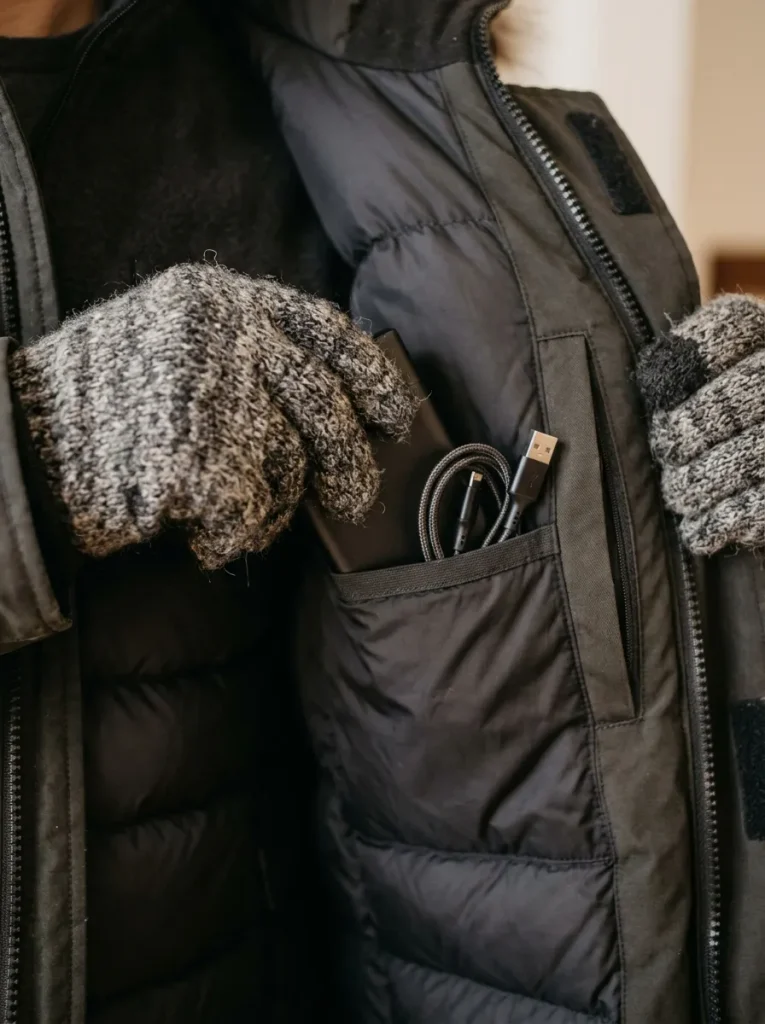
Your phone is usually better protected inside an inner jacket pocket than in an exposed backpack pocket.
During outdoor activities, keep it insulated from cold air whenever possible. Take it out briefly for photos or navigation, then return it to a warmer place.
This simple habit can help preserve battery performance.
Keep the Power Bank Insulated
Store your power bank in an inside pocket or an insulated compartment rather than leaving it exposed to snow, wind, or freezing air.
If you’re hiking or skiing, keep it somewhere accessible but protected. Avoid placing it directly against wet clothing or snow-covered equipment.
Check the manufacturer’s operating-temperature guidance, especially if you’re visiting destinations with severe winter conditions.
Let Cold Devices Warm Up Gradually
If a power bank or phone becomes very cold, don’t immediately try to charge it if it is outside the manufacturer’s permitted temperature range.
Move it to a dry, sheltered place and allow it to warm gradually. Avoid direct contact with heaters, radiators, open flames, or other strong heat sources.
Never charge a battery that is swollen, damaged, leaking, or behaving unusually.
Carry a Short Charging Cable
Even if your power bank has a built-in cable, a short spare cable can be helpful if you use multiple devices.
Keep cables dry and untangled, and avoid forcing connectors when they are wet or icy.
Can You Take a Power Bank on a Plane?
Usually, yes, provided it meets the applicable airline and aviation requirements. However, power banks contain lithium-ion batteries, so they are subject to specific rules.
For travelers flying in the United States, the general FAA guidance allows power banks rated at up to 100 watt-hours (Wh) in carry-on baggage without special airline approval. Batteries between 101Wh and 160Wh may require airline approval, while batteries above 160Wh are generally not permitted on passenger aircraft.
Power banks must be packed in carry-on baggage, not checked luggage. If your carry-on bag is taken at the gate and placed in the aircraft hold, remove your power bank and keep it with you in the cabin.
Airlines may impose stricter limits on quantity, storage, or in-flight use. Policies have also been changing, so confirm the current rules with every airline on your itinerary, particularly for international flights and connecting journeys.
How to Calculate Watt-Hours
If a product lists its capacity in mAh but not Wh, you can estimate its watt-hours using this formula:
Wh = (mAh × nominal battery voltage) ÷ 1,000
For example, a 20,000mAh power bank using cells rated at 3.7V works out to approximately 74Wh.
Use the watt-hour rating printed by the manufacturer when available, and do not assume that every battery with the same mAh capacity has the same energy rating.
How to Pack a Power Bank for a Winter Trip
A little preparation helps keep your power bank accessible and protected.
Use this checklist before leaving:
- Charge the power bank fully before departure.
- Pack the correct cable for your phone or other devices.
- Keep the power bank in your carry-on bag.
- Protect it from moisture, snow, and physical damage.
- Store it somewhere insulated when spending time outdoors.
- Check airline restrictions before flying.
- Confirm the power bank’s watt-hour rating and model number.
- Check that the product has no damage or signs of battery swelling.
- Download offline maps and save important travel documents.
- Bring a wall charger for recharging the power bank at your hotel.
For a long winter trip, consider bringing a wall charger with enough output to recharge both your phone and power bank efficiently. This can reduce the time you spend waiting for devices to charge between outings.
Common Mistakes to Avoid
Buying the Biggest Power Bank Without Considering Weight
A very large power bank may seem reassuring, but you might end up carrying extra weight you never use. Choose capacity based on your devices and daily charging needs.
Leaving Your Phone in the Cold
A power bank cannot fully compensate for a phone battery that is exposed to freezing conditions for hours. Keep both devices protected.
Assuming Every USB-C Port Charges at the Same Speed
USB-C describes the connector, not the charging speed. Check the actual output rating and compatibility with your device.
Packing a Power Bank in Checked Luggage
Spare lithium batteries generally belong in the cabin. Keep your power bank with you and check the rules for your airline.
Waiting Until Your Phone Is Nearly Dead
Charge your phone when convenient, especially before heading into remote areas. Keeping a reserve of battery power is better than discovering you need a charge when your phone is already shutting down.
Frequently Asked Questions
What is the best power bank capacity for winter travel?
For most people, 20,000mAh is a practical choice. It provides more backup energy than a compact 10,000mAh model without requiring the size and weight of some larger laptop-focused batteries.
Choose a smaller unit for light travel or a higher-capacity model if you need to charge multiple devices or a compatible laptop.
Do power banks work in freezing temperatures?
They may work, but cold conditions can reduce battery performance and charging capability. The exact operating limits depend on the model.
Keep your power bank insulated and follow the manufacturer’s temperature guidance. Avoid charging it when it is colder than the permitted charging range.
Can a power bank charge a phone while I am skiing?
Yes, if the power bank and phone are compatible. However, keep both devices protected from snow, moisture, and freezing air.
A small power bank in a secure inner pocket is usually more convenient than carrying a large model.
Is a 10,000mAh power bank enough for a winter vacation?
It can be enough for a short city break or a day of sightseeing, especially if you use your phone moderately. If you take lots of photos, record videos, use navigation for long periods, or travel for several days without regular access to outlets, 20,000mAh may be a better choice.
Can I charge my laptop with a travel power bank?
Some power banks can charge compatible laptops, but not all can. Check the power bank’s USB-C output wattage and the laptop’s charging requirements before buying.
Laptop charging can also consume a large portion of the power bank’s stored energy.
Should I keep my power bank in my checked suitcase?
No. Power banks are generally required to travel in carry-on baggage because they contain lithium-ion batteries. If your cabin bag is checked at the gate, remove the power bank and keep it with you, following your airline’s instructions.
How many times can a 20,000mAh power bank charge a phone?
It depends on the phone’s battery capacity, charging efficiency, and usage during charging. A 20,000mAh power bank may provide roughly three to four charges for some phones, but actual results can be lower. Check independent reviews if charging performance is important to your purchase.
Conclusion
The best travel power bank for a winter trip is one that gives you enough backup energy without adding unnecessary weight to your luggage.
For most travelers, a 20,000mAh USB-C model offers the best balance of capacity and portability. A 10,000mAh option is better for lightweight city breaks, while a higher-output model makes more sense for laptops and multiple devices. Outdoor travelers may prefer a lightweight design that fits comfortably in a backpack.
Whatever model you choose, remember that cold-weather battery performance depends on how you handle your devices as well as what you buy. Keep your phone and power bank insulated, protect them from moisture, and follow the manufacturer’s temperature instructions.
With a little preparation, you can spend less time searching for an outlet and more time enjoying snowy landscapes, winter markets, mountain trails, and the experiences that made you plan the trip in the first place.