How To Spend 1 Day In Yosemite National Park: The Perfect Itinerary
Yosemite National Park is one of those places where one day sounds completely unreasonable until you realize how much you can actually see with a good plan.
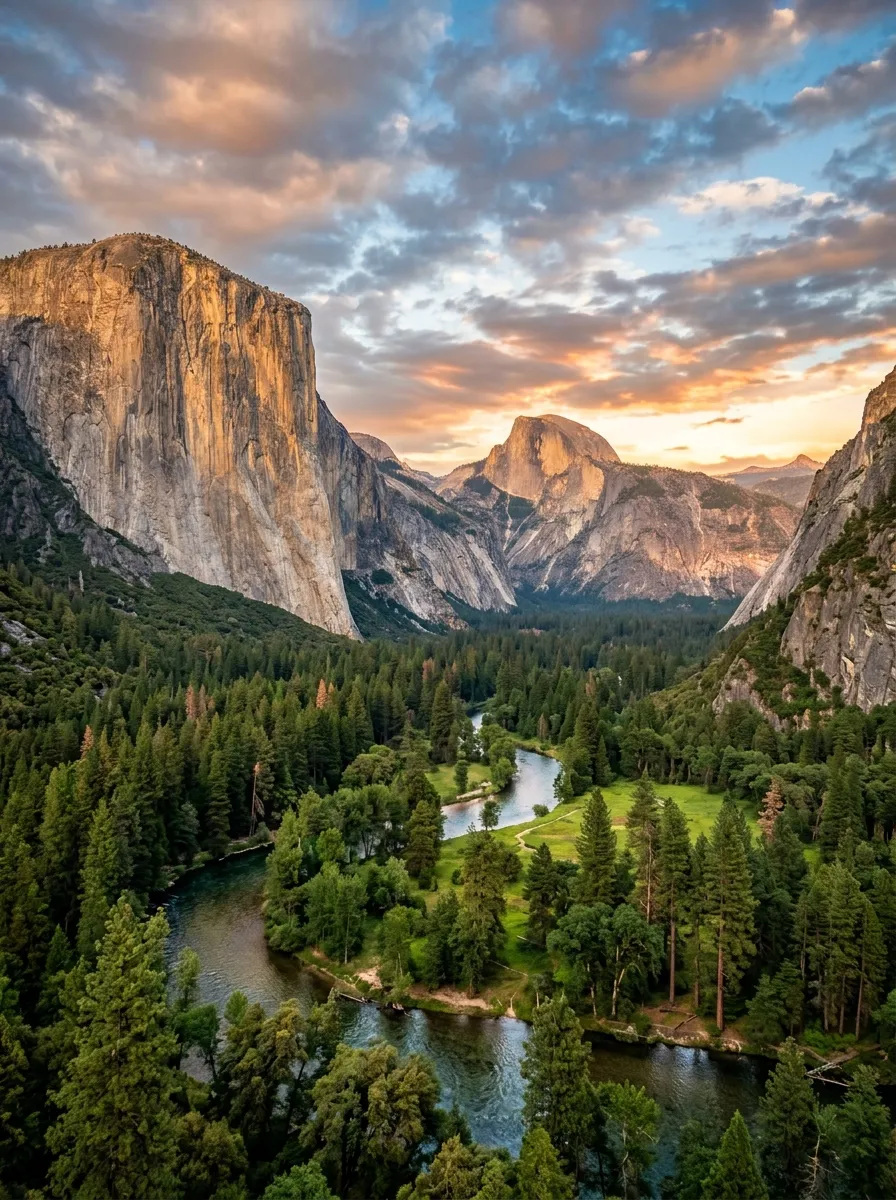
The park covers nearly 1,200 square miles, but most first-time visitors naturally gravitate toward Yosemite Valley, where granite cliffs, waterfalls, meadows, and the Merced River come together in one spectacular landscape.
If you only have one day in Yosemite, don’t try to see everything. You will spend half your trip driving and the other half wondering where the day went.
Instead, focus on the places that give you the biggest Yosemite experience in the shortest amount of time.
This one-day Yosemite itinerary starts early with Tunnel View, continues into Yosemite Valley, includes Yosemite Falls and El Capitan, and finishes with either Glacier Point or a beautiful sunset viewpoint depending on the season and road conditions.
Recommended Travel Items for Your Trip
Is One Day Enough for Yosemite National Park?
One day is not enough to experience all of Yosemite, but it is enough to see several of its most famous landscapes.
The key is to stay focused.
For a first visit, I would prioritize:
- Tunnel View
- Yosemite Valley
- Yosemite Falls
- El Capitan Meadow
- Merced River viewpoints
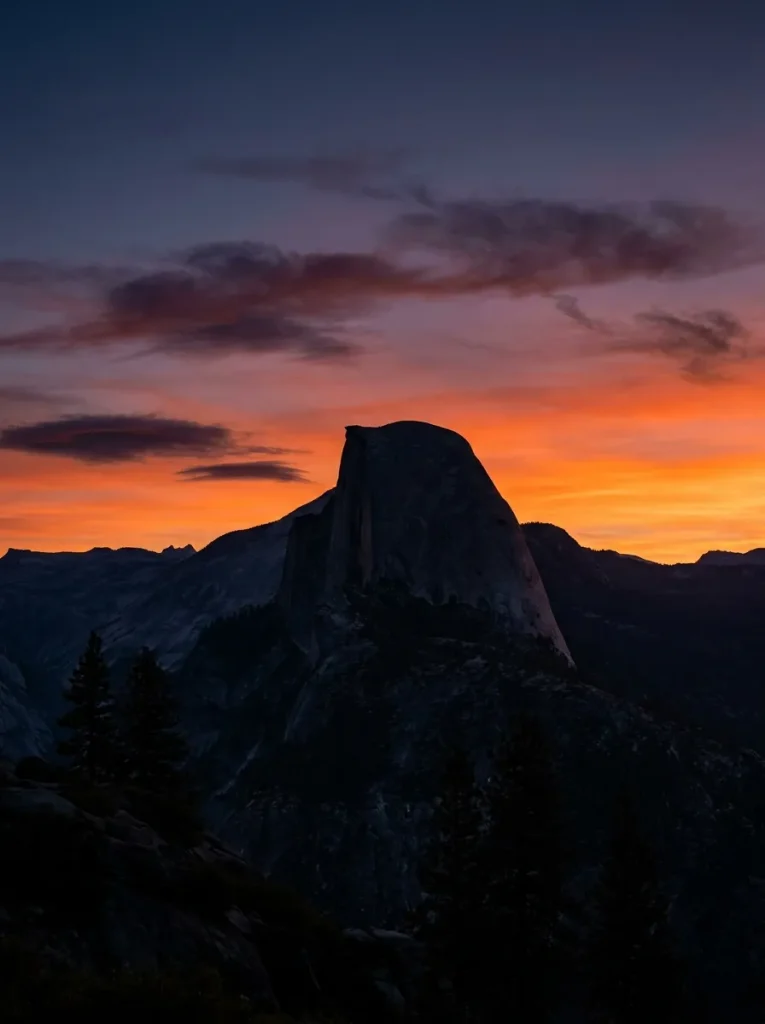
- Half Dome views
- Glacier Point when the road is open
- A short Yosemite Valley walk or hike
You should also expect traffic, especially during the busiest months. The National Park Service recommends arriving before 9 a.m. or after 5 p.m. to avoid some of the worst congestion.
If you have previously visited the Canadian Rockies, Yosemite can feel familiar in one way: the scenery is so dramatic that you can spend an entire day simply moving from viewpoint to viewpoint.
For another mountain adventure, take a look at these stunning Jasper sights or explore these must-do hikes in Banff.
Yosemite One-Day Itinerary at a Glance
| Time | Stop | What to Do |
| 6:00–7:00 AM | Enter Yosemite | Start early and beat traffic |
| 7:00–7:30 AM | Tunnel View | Sunrise and panoramic valley view |
| 8:00–8:30 AM | Yosemite Valley | Park and begin exploring |
| 8:30–10:30 AM | Yosemite Falls area | Walk, photograph and explore |
| 10:30 AM–12:00 PM | Yosemite Village/Curry Village | Breakfast, rest and shuttle |
| 12:00–2:00 PM | Valley Loop highlights | El Capitan, Cathedral Beach and Merced River |
| 2:00–3:00 PM | Lunch | Picnic or park dining |
| 3:00–5:00 PM | Glacier Point | Panoramic views if road is open |
| 5:00–7:00 PM | Valley or viewpoint | Sunset and final photographs |
| Evening | Leave Yosemite | Drive back before you’re exhausted |
You can adjust this depending on where you are staying and the time of year.
Before You Visit Yosemite for One Day
A little preparation makes a huge difference when you only have one day.
You Don’t Need an Entrance Reservation in 2026
As of 2026, Yosemite does not require a reservation simply to enter the park. You still need to pay the entrance fee.
A private vehicle entrance pass costs $35 and is valid for seven consecutive days. The park is cashless, so plan to use a card or another accepted electronic payment method.
There is also an additional $100 nonresident fee for visitors aged 16 and older who are not covered by an eligible annual or America the Beautiful pass. Check the official fee information before your trip because national park fee rules can change.
Check Road Conditions Before Leaving
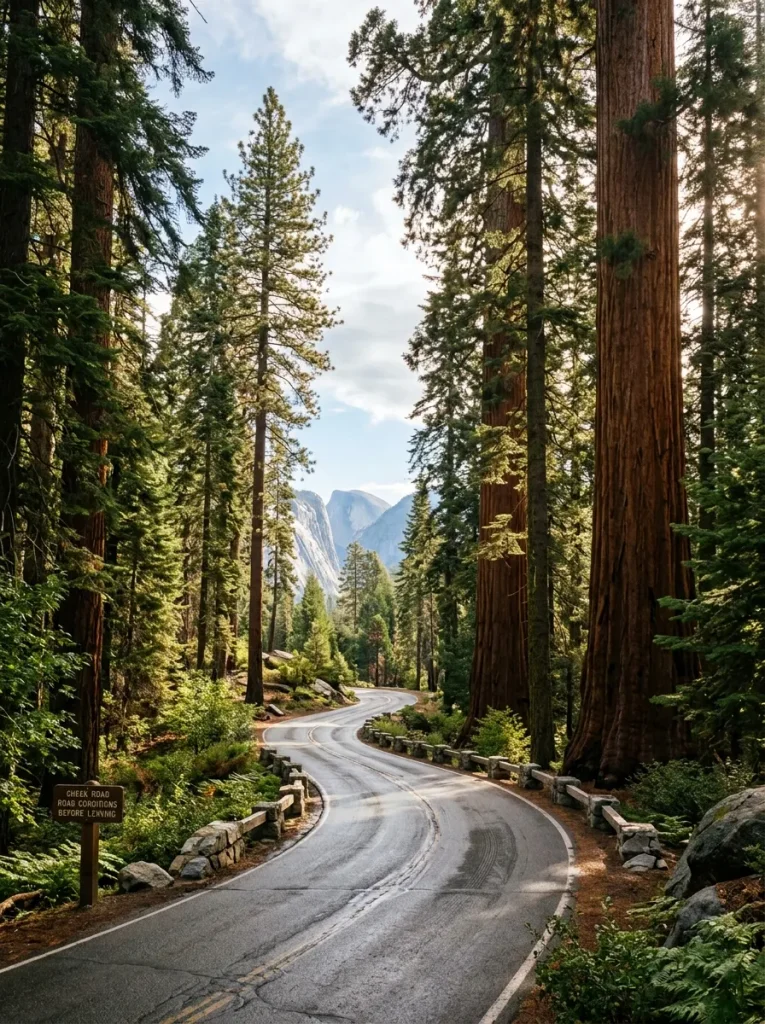
This is particularly important in Yosemite.
Roads, mountain passes and hiking trails can close because of snow, ice, rockfall, construction, fire or other hazards. The National Park Service’s current conditions page is the place to check before you drive into the park.
If you are visiting outside summer, don’t assume that every part of this itinerary will be accessible.
Start Early
This is probably the single most important piece of advice for a one-day Yosemite trip.
Getting into the park early gives you:
- Easier driving
- Better parking chances
- Cooler temperatures
- Fewer crowds at viewpoints
- More time for hiking
- Better morning light for photography
Yosemite is much easier to enjoy when you aren’t spending your morning sitting behind a line of cars.
6:00–7:00 AM: Enter Yosemite National Park
Try to enter the park around sunrise if your schedule allows.
The exact time will depend on your entrance, lodging location and season. The park’s major entrances are open around the clock, although road conditions can affect your route.
If you’re approaching from Highway 41, Highway 140 or another western/southern route, plan your drive so that your first major stop is Tunnel View.
Don’t rush through the entrance. This is the moment when the day starts.
Have water, snacks, a full phone battery and offline maps ready. Cell service can be limited in Yosemite, so the National Park Service recommends downloading offline information before arriving.
7:00–7:30 AM: Stop at Tunnel View
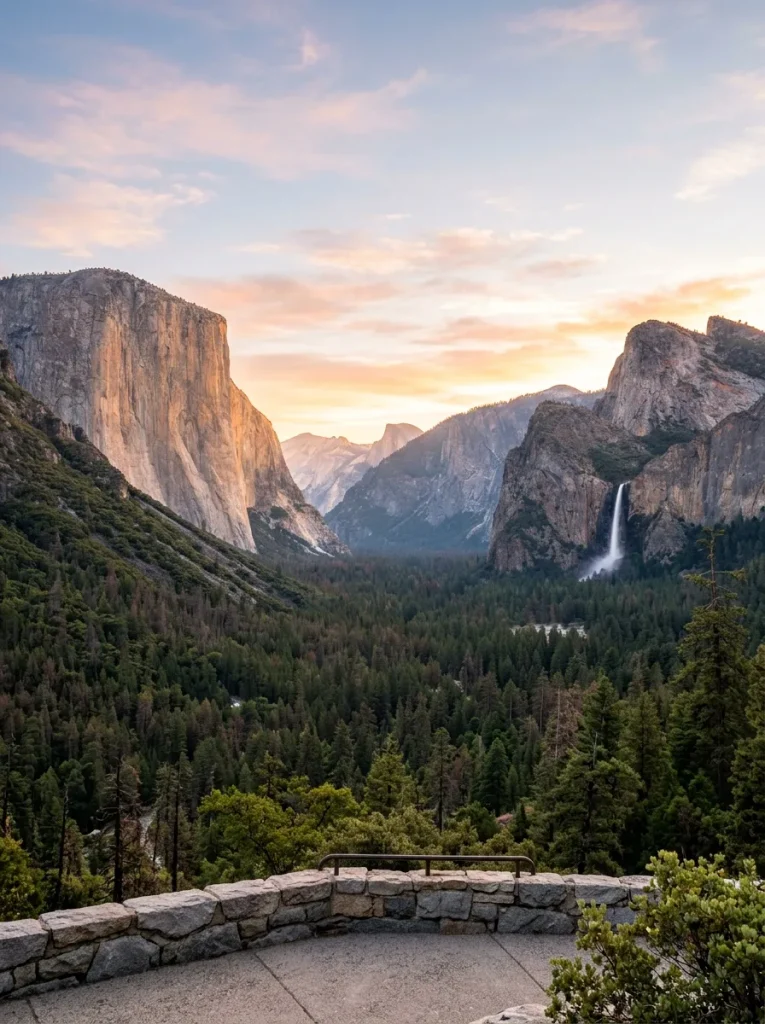
Tunnel View is arguably the perfect introduction to Yosemite.
From the viewpoint, you can see Yosemite Valley framed by enormous granite walls, with El Capitan and Bridalveil Fall in the landscape and Half Dome farther in the distance.
If you arrive around sunrise, the granite walls can gradually change color as the morning light reaches the valley.
Give yourself at least 20 to 30 minutes here.
You don’t need a long hike. The whole point is to stop, take in the view and let Yosemite announce itself properly.
Photography Tip
Don’t take just one photograph.
Take a wide landscape shot, then zoom toward Half Dome and the valley floor. The scene changes dramatically as the morning light moves across the granite.
8:00–10:30 AM: Explore Yosemite Valley
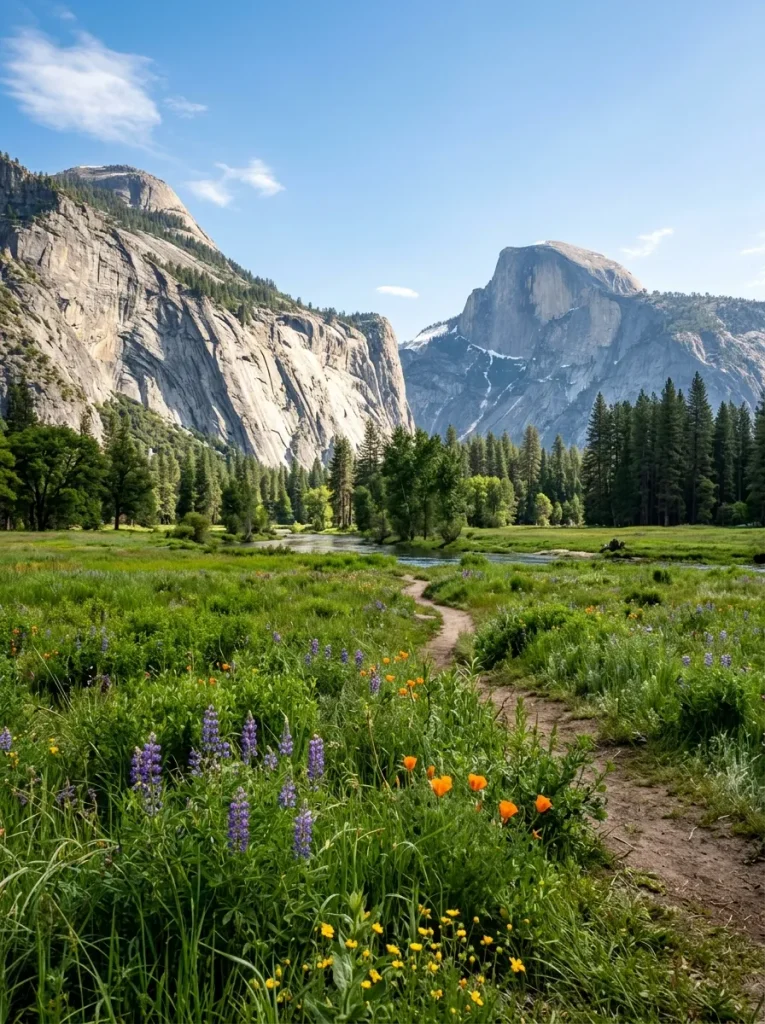
After Tunnel View, drive toward Yosemite Valley.
This is where you should slow down.
Yosemite Valley contains many of the park’s iconic landmarks, including El Capitan, Yosemite Falls, Half Dome and the Merced River.
Once you park, consider using the free Yosemite Valley shuttle rather than repeatedly moving your car.
The shuttle serves major valley destinations, including lodging, food areas, campgrounds and trailheads. Current NPS information lists Valleywide service roughly from 7 a.m. to 10 p.m., with buses arriving regularly throughout the day.
Walk Around Yosemite Falls
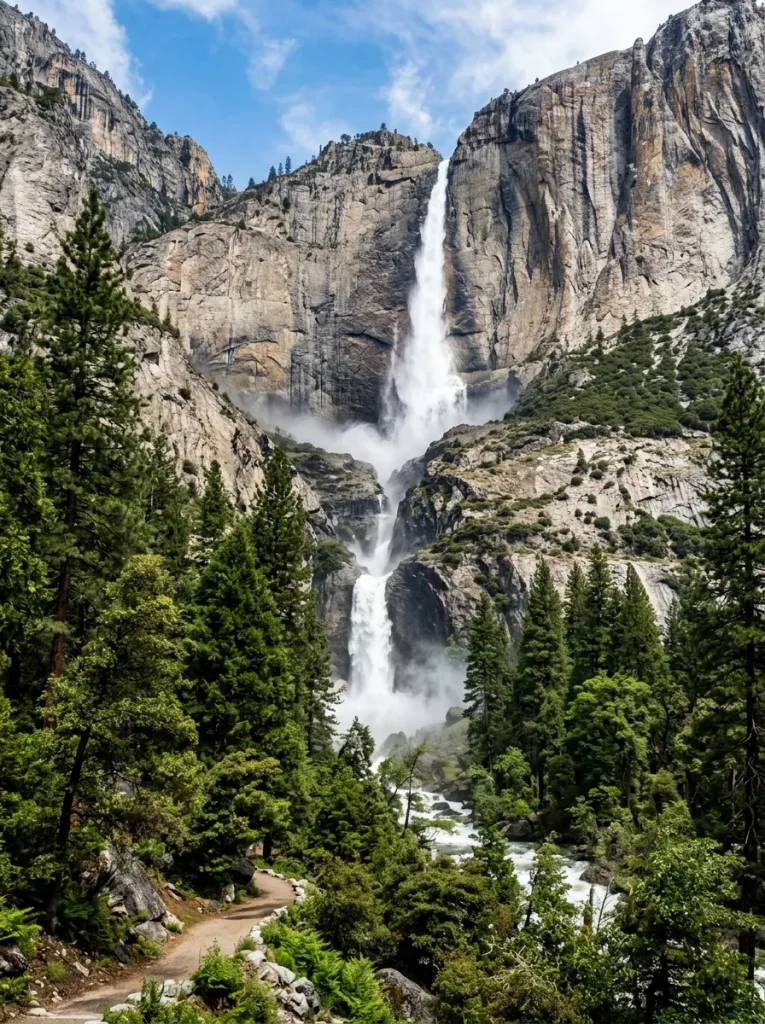
Yosemite Falls is one of the first places I would prioritize during a one-day visit.
The waterfall is actually made up of Upper Yosemite Fall, the middle cascades and Lower Yosemite Fall.
The amount of water changes dramatically through the year. Spring is usually the most impressive period because of snowmelt, while the falls can have little or no water later in summer and fall.
You don’t need to tackle the strenuous Yosemite Falls trail on a one-day sightseeing trip.
Instead, take a shorter walk around the Lower Yosemite Fall area and enjoy the views from the valley floor.
That gives you the Yosemite Falls experience without consuming half your day.
10:30 AM–12:00 PM: Yosemite Village and Curry Village
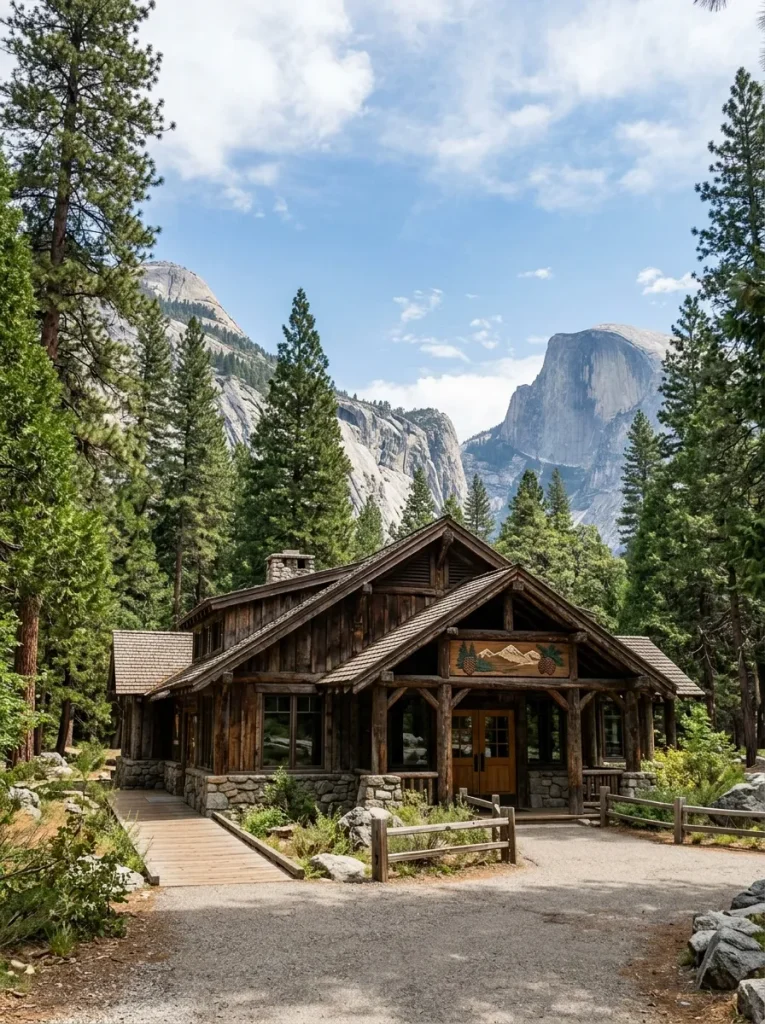
After your morning walk, head toward Yosemite Village or Curry Village.
This is a good time for:
- Breakfast or an early snack
- Coffee
- Restrooms
- Refilling water
- Checking trail conditions
- Taking a short break from the sun
The Yosemite Valley Welcome Center is open year-round and provides visitor information, maps and exhibits.
Don’t underestimate this break.
One-day national park itineraries have a nasty habit of turning into “why are my legs made of concrete?” by lunchtime.
12:00–2:00 PM: See El Capitan and the Merced River
Now explore some of the classic Yosemite Valley viewpoints.
El Capitan Meadow
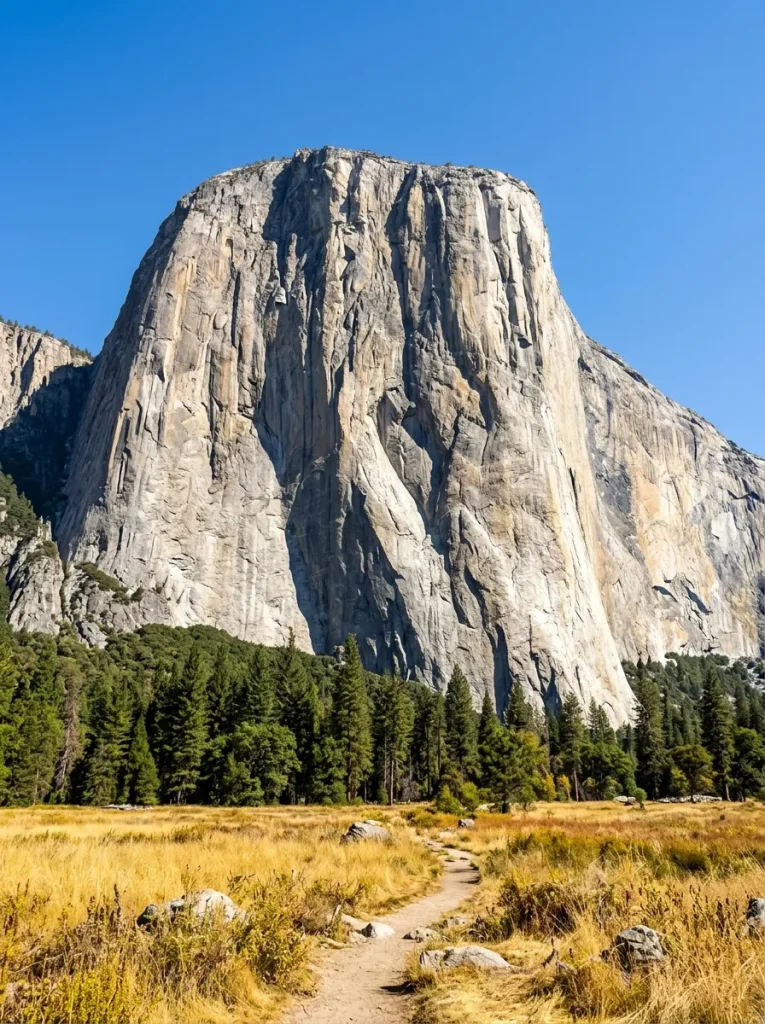
El Capitan is one of Yosemite’s most recognizable granite formations.
From El Capitan Meadow, you can look almost straight up at the massive granite wall. The meadow also gives you a better sense of just how enormous Yosemite’s cliffs really are.
This is one of those places where a wide-angle camera lens can still struggle to capture the scale.
Cathedral Beach
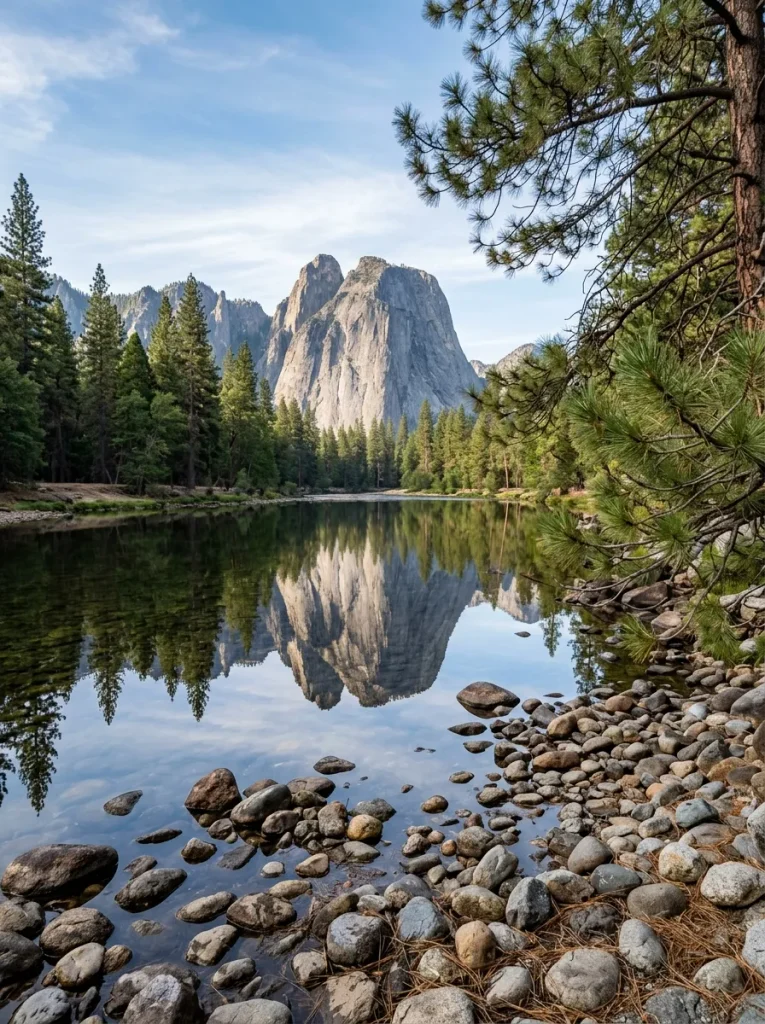
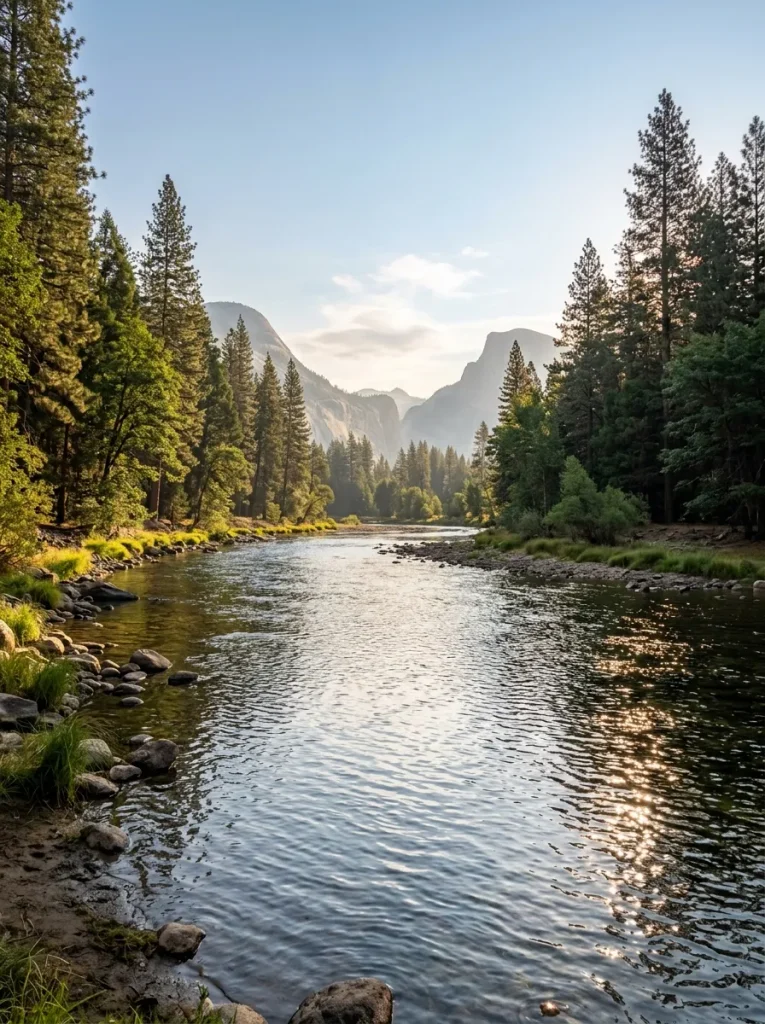
Continue toward the Merced River and look for quieter spots along the river.
Cathedral Beach can provide beautiful views of Yosemite’s granite scenery reflected in the water, depending on conditions.
Sentinel Bridge
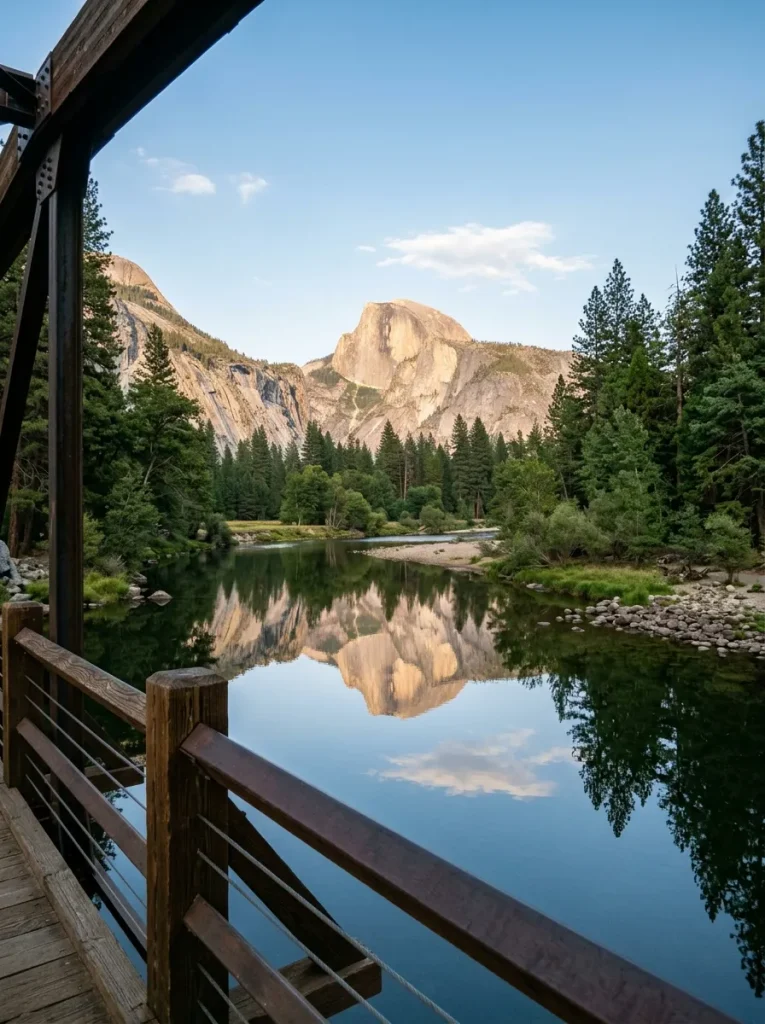
Sentinel Bridge is another excellent photography stop.
It is particularly famous for views of Half Dome reflected in the Merced River.
If the water is calm, this can be one of the best photographs of the day.
2:00–3:00 PM: Have Lunch
Keep lunch simple.
A picnic is ideal because it doesn’t require leaving the park or spending a large chunk of your afternoon in a restaurant.
Pack:
- Sandwiches or wraps
- Fruit
- Trail snacks
- Plenty of water
- Coffee or another morning drink
- A small cooler if practical
Remember that Yosemite has bears and other wildlife. Keep food secured and never feed wildlife.
The National Park Service specifically warns visitors not to approach or feed animals, noting that even squirrels and deer can injure visitors.
3:00–5:00 PM: Drive to Glacier Point
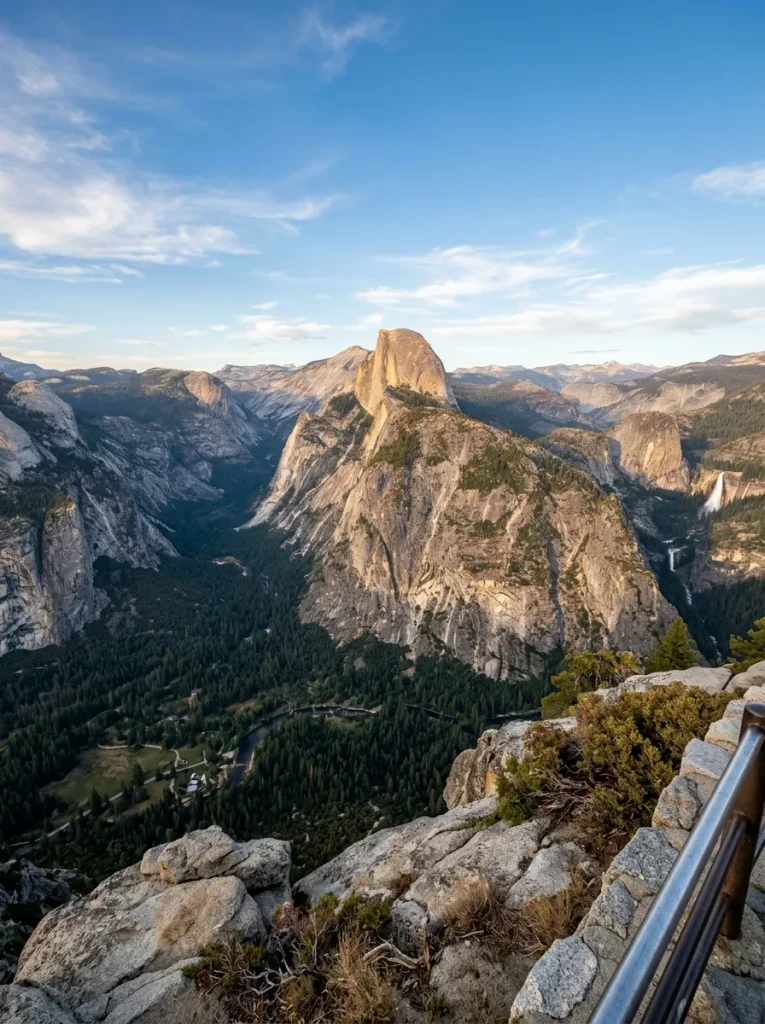
If Glacier Point Road is open, this is where your Yosemite day gets a serious upgrade.
Glacier Point sits about 3,214 feet above Yosemite Valley and provides enormous views toward Half Dome, Yosemite Falls and the high Sierra.
The drive from Yosemite Valley is approximately one hour each way, so this isn’t something you should casually add without considering your schedule.
But if the road is open and you have enough daylight, the payoff is substantial.
The National Park Service says Glacier Point Road is generally open to cars from around late May through October or November, depending on conditions.
At Glacier Point, you can take the short paved walk from the parking area to the overlook.
The official distance is only about 300 yards one way, with a gentle incline.
Should You Choose Glacier Point or More Yosemite Valley?
For a first-time visitor with only one day, I would structure the trip around both, but keep Glacier Point optional.
Choose Glacier Point if:
- The road is open
- You have a car
- You aren’t dealing with major traffic delays
- You want the huge panoramic view
- You don’t need a long hike
Skip it if:
- Road conditions are poor
- You arrive late
- Traffic has eaten too much time
- You prefer hiking
- You want a slower afternoon in the valley
There is no regular free shuttle between Yosemite Valley and Glacier Point. A seasonal Glacier Point Tour may operate when the road is open, but reservations are required.
5:00–7:00 PM: Return to Yosemite Valley for Sunset
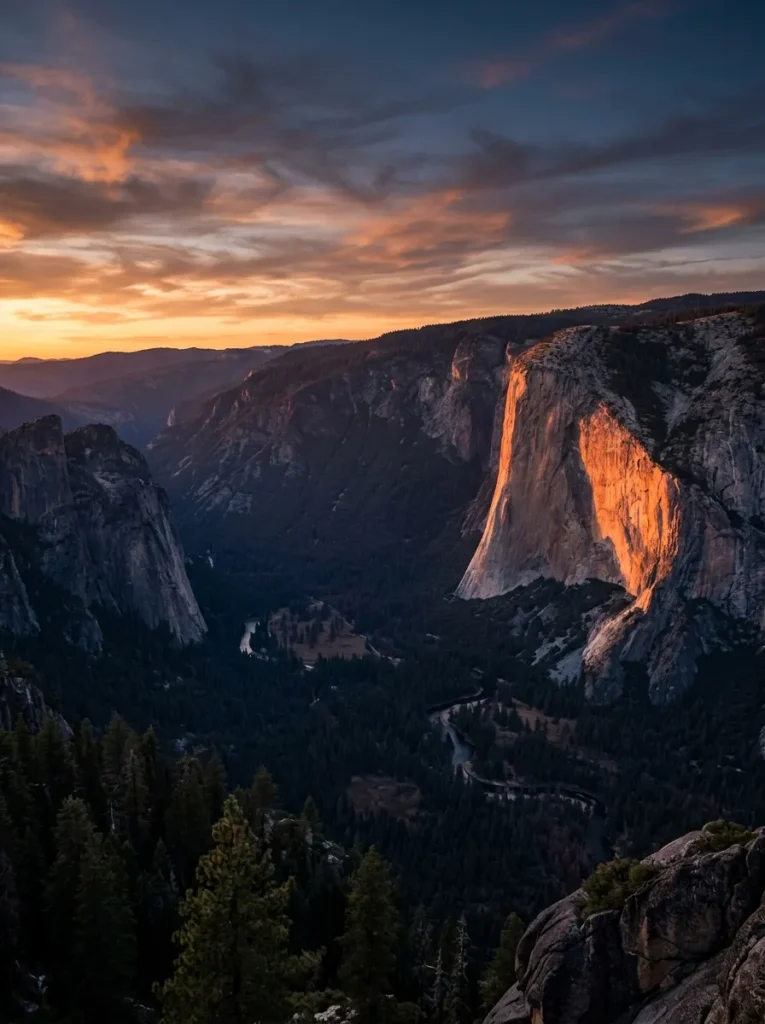
After Glacier Point, return toward the valley.
If you have enough daylight, stop at another viewpoint along the way or return to the Merced River.
Valley View is particularly attractive toward the western end of Yosemite Valley. The National Park Service recommends it as a viewpoint along Northside Drive when leaving the valley.
This is also a good time to revisit a favorite location from earlier in the day.
Yosemite looks completely different in evening light.
The same granite wall that looked bright and imposing at noon can become soft, golden and shadowed toward sunset.
What If You Don’t Want to Visit Glacier Point?
That’s completely fine.
A one-day Yosemite trip doesn’t have to become a driving marathon.
Instead, spend the afternoon hiking and exploring Yosemite Valley.
Easy Option: Valley Loop Sections
Walk along portions of the Valley Loop Trail and connect viewpoints as your energy allows.
Moderate Option: Mist Trail Area
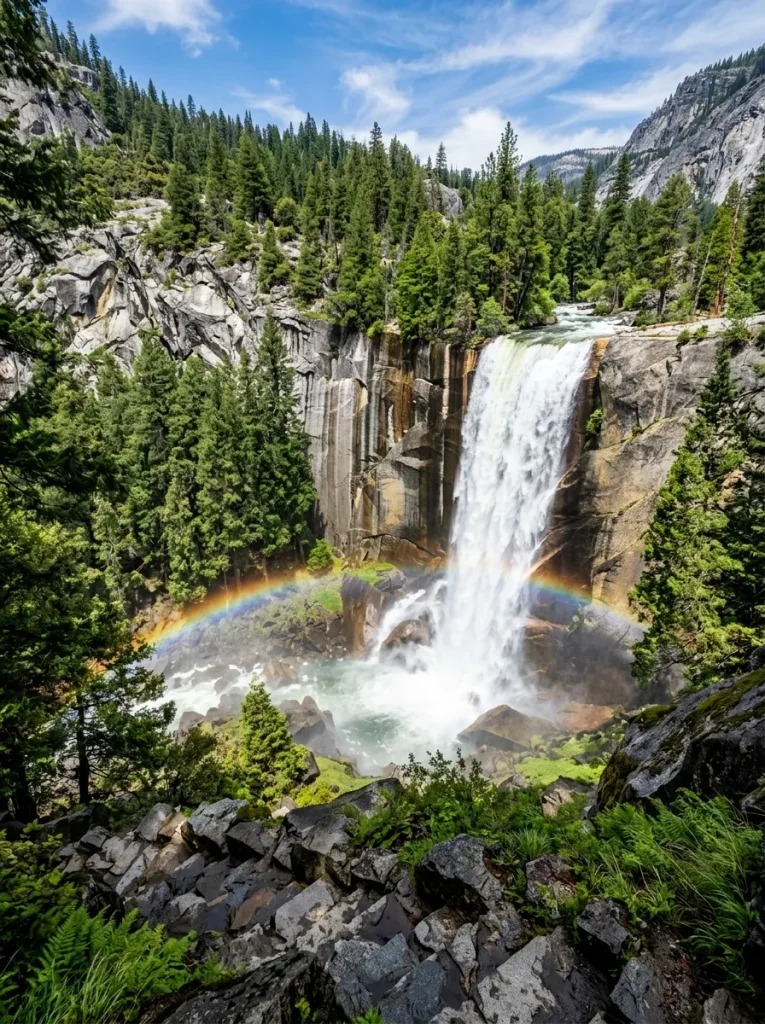
If conditions and seasonal trail access allow, you can explore the Mist Trail area around Vernal Fall.
Check current trail conditions before starting because Yosemite trails can close or become hazardous due to rockfall, snow, ice, fire or construction.
Ambitious Option: Yosemite Falls
If you’re an experienced hiker and arrive very early, you could dedicate much of the day to the Yosemite Falls trail.
But I wouldn’t recommend trying to squeeze a major hike into an already packed sightseeing itinerary.
One day in Yosemite works better when you leave some breathing room.
What About Half Dome?
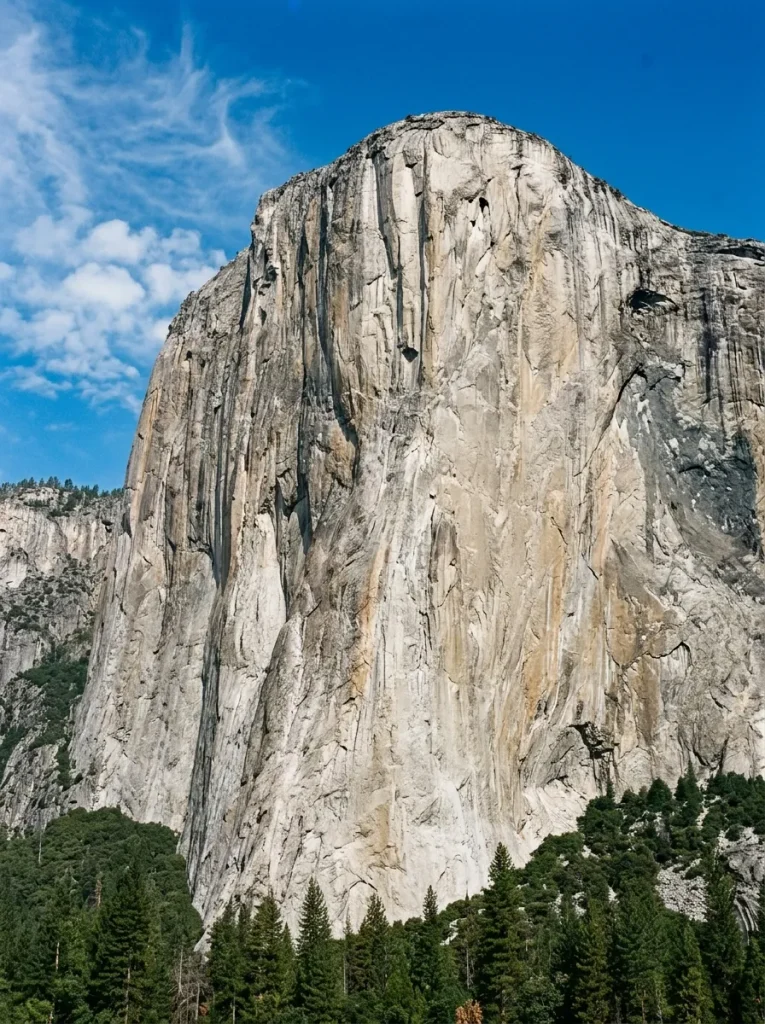
Save Half Dome for another trip.
The Half Dome hike is a major undertaking, not a casual add-on to a one-day Yosemite itinerary. The round trip via the John Muir Trail is about 16.2 miles with approximately 4,830 feet of elevation gain, and a permit is required when the cables are up.
If Half Dome is your main goal, build your Yosemite trip around it rather than trying to combine it with everything else.
Yosemite One-Day Itinerary Without a Car
You can visit Yosemite without driving your own vehicle, but your options are more limited.
The free Yosemite Valley shuttle makes getting around the valley relatively straightforward.
YARTS also provides seasonal bus service connecting Yosemite with surrounding communities.
The important catch is Glacier Point.
There is no regular public shuttle between Yosemite Valley and Glacier Point. A fee-based Glacier Point Tour may operate seasonally when the road is open.
For a car-free one-day trip, I would concentrate on Yosemite Valley rather than trying to cover the entire park.
Best Time to Spend One Day in Yosemite
Your ideal itinerary changes with the seasons.
| Season | What to Expect | Best For |
| Spring | Strong waterfalls, changing conditions | Waterfalls and photography |
| Summer | Warm weather, more access, crowds | Full sightseeing itinerary |
| Early Fall | Cooler temperatures, changing scenery | Hiking and fewer summer crowds |
| Late Fall | Some roads and services change | Quieter visits |
| Winter | Snow and seasonal closures | Winter scenery and solitude |
Yosemite receives most of its precipitation between October and May, and much of the park can be covered in snow during winter.
Glacier Point Road is also normally closed during part of the winter and shoulder season, depending on conditions.
If waterfalls are your main priority, spring deserves special consideration because snowmelt can dramatically increase waterfall flow.
For another seasonal travel idea, check out these best US places in September.
What to Pack for One Day in Yosemite
You don’t need expedition gear for a normal Yosemite sightseeing day, but a few basics can save the trip.
Yosemite Day Trip Checklist
- Comfortable hiking shoes
- Reusable water bottle
- Snacks or picnic lunch
- Sunscreen
- Sunglasses
- Hat
- Light jacket
- Portable battery
- Offline maps
- Camera
- Small backpack
- Binoculars if you enjoy wildlife watching
- Basic first-aid supplies
Bring layers because temperatures can change considerably between morning, afternoon and evening.
If you plan to hike, bring more water than you think you’ll need and check trail conditions before setting out.
Yosemite Safety Tips
Yosemite is beautiful, but it is still a wild mountain environment.
Stay on established trails and obey closure signs. Trails can contain hazards even when officially open.
Keep away from cliff edges and fast-moving water.
Never feed wildlife.
Keep food and scented items properly secured.
Don’t rely completely on your phone for navigation because cell service can be limited.
And don’t build your itinerary around catching every possible attraction. Yosemite rewards flexibility.
How Much Does a One-Day Yosemite Trip Cost?
For a private vehicle, the standard Yosemite entrance fee is currently $35 and covers the vehicle and passengers for seven consecutive days.
Your approximate budget might look like this:
| Expense | Approximate Cost |
| Park entrance | $35 per vehicle |
| Food | 15–40+ per person |
| Gas | Depends on starting point |
| Parking | Generally included where available |
| Valley shuttle | Free |
| Optional Glacier Point tour | Additional |
| Accommodation | Varies widely |
If you’re a non-US resident aged 16 or older, check the current additional nonresident entrance fee before your trip.
A More Relaxed Yosemite One-Day Plan
If the itinerary above feels too packed, simplify it.
Try this version:
Morning
Tunnel View → Yosemite Valley → Yosemite Falls
Midday
Yosemite Village → lunch → El Capitan Meadow
Afternoon
Merced River → Sentinel Bridge → Valley viewpoints
Evening
Valley sunset → leave the park
This version sacrifices Glacier Point but gives you more time to actually enjoy Yosemite Valley.
And honestly, that’s not a bad trade.
Can You Combine Yosemite With Other National Parks?
Absolutely, but give Yosemite enough time to breathe.
If you’re planning a larger North American road trip, you could pair Yosemite with other California destinations or build a longer western national parks route.
And if you’re comparing mountain destinations around the world, the Canadian Rockies make an interesting companion trip. You can continue the adventure with these stunning sights in Jasper and these epic Banff hiking trails.
If your travel plans extend beyond North America, you can also use this one-week Australia itinerary for inspiration.
Frequently Asked Questions About One Day in Yosemite
Can I see Yosemite in one day?
Yes. One day is enough to see several of Yosemite’s most famous landmarks, especially Yosemite Valley, Tunnel View, Yosemite Falls and El Capitan. You simply won’t be able to experience the entire park.
What time should I arrive at Yosemite?
Earlier is better. The National Park Service recommends arriving before 9 a.m. or after 5 p.m. to help avoid peak traffic congestion.
For a one-day itinerary, I would aim for sunrise or shortly afterward.
Do I need a reservation for Yosemite in 2026?
No reservation is currently required simply to enter Yosemite in 2026, although entrance fees still apply. Lodging, camping and certain activities can have separate reservation or permit requirements.
Is Glacier Point worth visiting for one day?
If Glacier Point Road is open and you have enough time, it can add an excellent panoramic perspective of Yosemite Valley, Half Dome and Yosemite Falls. Glacier Point is about an hour’s drive from Yosemite Valley.
Can I visit Yosemite without hiking?
Yes. Yosemite is one of the better national parks for sightseeing without committing to long hikes. Tunnel View, Glacier Point, El Capitan Meadow and several valley viewpoints can all be enjoyed with relatively little walking.
Can I visit Yosemite Valley by shuttle?
Yes. The free Yosemite Valley shuttle connects major locations throughout the valley and is useful for avoiding repeated driving and parking.
Is one day enough for Yosemite with kids?
Yes, especially if you keep the schedule flexible. Focus on viewpoints, short walks, waterfalls and picnic areas rather than trying to complete strenuous hikes.
Is Yosemite worth visiting for just one day?
Absolutely, provided you accept one important limitation: you’re getting a highlight reel, not the whole park.
The best one-day Yosemite trip is not about collecting the largest number of stops.
It is about seeing the valley wake up, standing beneath El Capitan, watching Half Dome appear between the trees, hearing a waterfall crash somewhere beyond the forest and getting at least one panoramic view that makes you stop talking for a minute.
Start early, keep your route simple, check road and trail conditions, and leave enough time to actually look around.
Yosemite will still have plenty left to show you on your next visit.