Travel to Sedona: The Ultimate Guide to Red Rock Hikes, Scenic Drives, Vortexes and Desert Adventures
Sedona does not ease quietly into view.
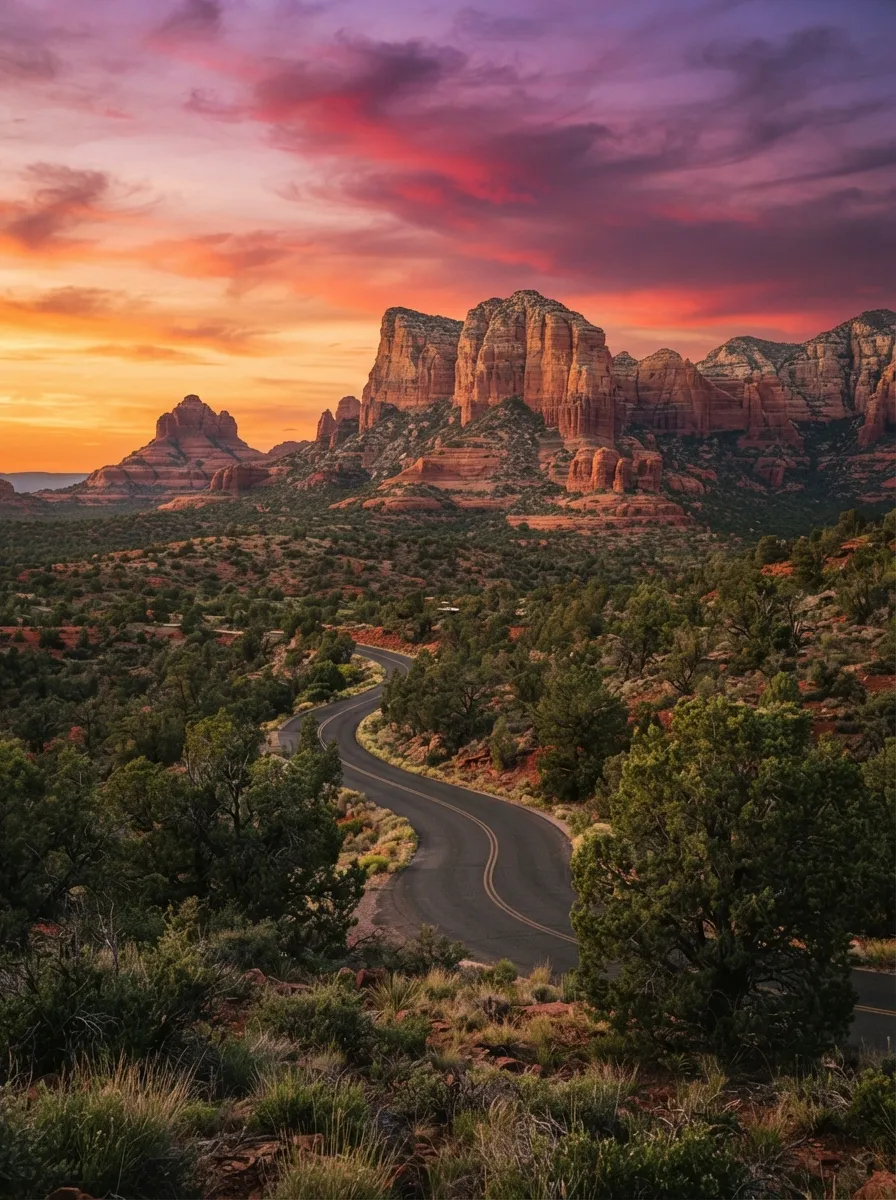
The landscape arrives in a blaze of rust-red cliffs, sandstone towers and enormous buttes rising above juniper-covered desert. Roads curve between formations that look carved for a fantasy kingdom, while the light continuously repaints the rocks from burnt orange to copper, crimson and deep violet.
This northern Arizona town is famous for hiking, spiritual retreats and so-called energy vortexes, but its appeal stretches well beyond any single experience. You can scramble toward Cathedral Rock at sunrise, wander through art galleries after lunch, drive beneath the cliffs of Oak Creek Canyon and finish the day watching the desert turn pink from an open-air overlook.
Sedona is also more popular than its modest size suggests. Trailhead parking fills quickly, traffic can become stubborn, and spring or fall weekends sometimes feel as though half the Southwest has arrived with hiking poles.
A successful Sedona trip therefore requires more than choosing a few photogenic trails. You need to understand where to stay, when to use the free shuttle, which hikes suit your ability, how desert weather changes through the year and why apparently short drives may take far longer than expected.
This complete Sedona travel guide covers the best things to do, recommended hikes, scenic drives, vortex sites, lodging areas, itineraries, transportation, packing essentials and practical advice for protecting the landscape.
Recommended Travel Items for Your Trip
SEDONA AT A GLANCE
State: Arizona
Nearest major airport: Phoenix Sky Harbor International Airport
Closest regional airport: Flagstaff Pulliam Airport
Ideal first visit: Three to four days
Best overall seasons: Spring and fall
Quietest value period: Winter outside holiday weekends
Best activity: Red-rock hiking
Best scenic drive: Oak Creek Canyon
Best sunrise area: Airport Mesa or Bell Rock
Best sunset views: Airport Mesa, Cathedral Rock area and Red Rock Crossing
Best transportation: Rental car combined with the Sedona Shuttle
Main challenge: Traffic and trailhead parking
Why Travel to Sedona?
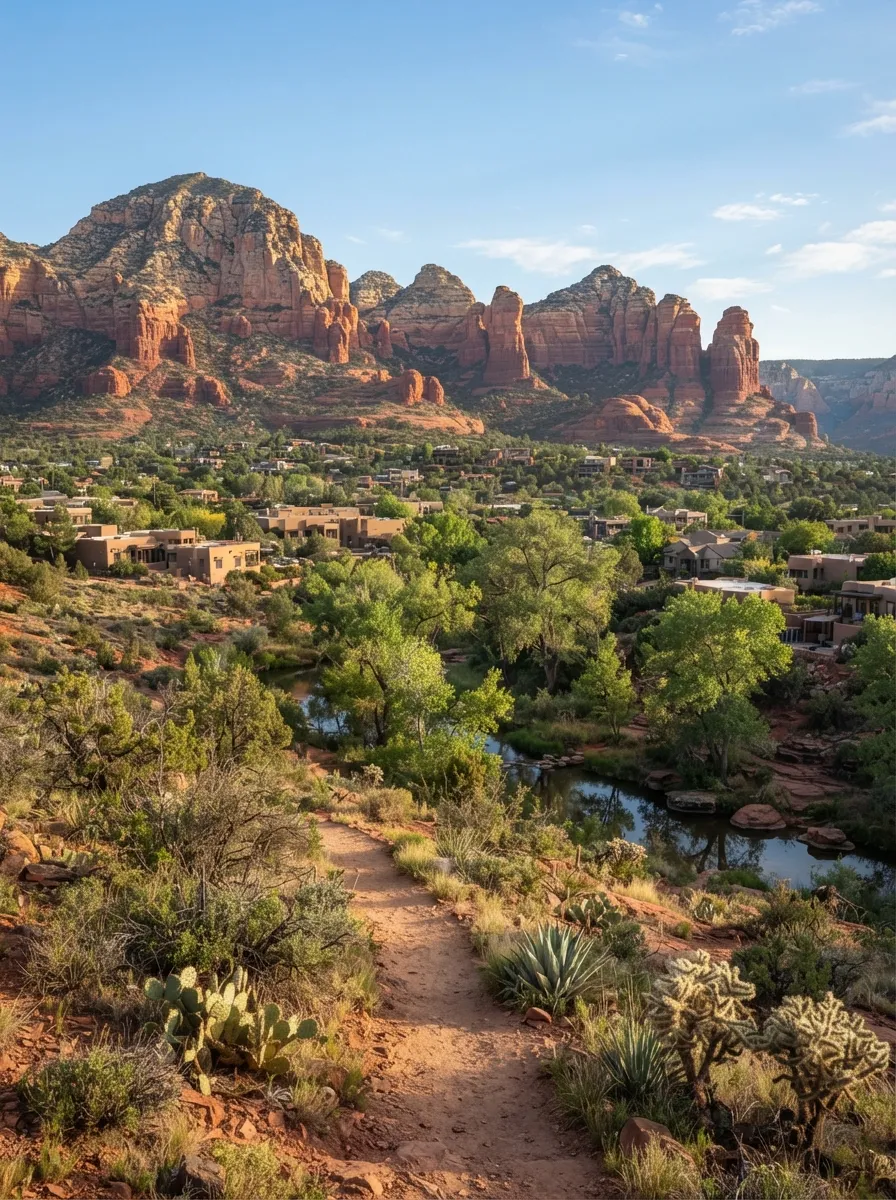
Sedona combines accessible wilderness with the comforts of a well-developed vacation town.
Within one trip, you can hike through red-rock canyons, explore historic sites, attend a meditation session, browse Southwestern art and dine beneath sandstone cliffs. The surrounding landscape lies largely within Coconino National Forest, placing miles of trails and recreation areas close to hotels, restaurants and residential neighborhoods.
The destination works particularly well for:
- Hikers
- Photographers
- Couples
- Wellness travelers
- Solo travelers
- Families with active children
- Road-trippers
- Art lovers
- Mountain bikers
- Travelers seeking a Phoenix or Grand Canyon extension
Sedona’s terrain also feels dramatically different from many classic desert destinations. Oak Creek introduces ribbons of water, cottonwood trees and shaded canyon environments, while higher elevations can receive frost or snow during winter.
The visual drama recalls some of the world’s most theatrical scenery. Travelers drawn to landscapes that seem almost digitally invented may also enjoy these Scottish landscapes and castles, where mountains, ruins and stormy skies create an entirely different species of grandeur.
Where Is Sedona?
Sedona sits in Arizona’s Verde Valley, roughly between Phoenix and Flagstaff.
The city spreads across Coconino and Yavapai counties and is surrounded by public lands, canyons and red sandstone formations. It is commonly combined with trips to Flagstaff, the Grand Canyon, Jerome, Cottonwood and other parts of northern Arizona.
Approximate driving patterns are:
- Phoenix to Sedona: about two hours in ordinary conditions
- Flagstaff to Sedona: roughly 45 minutes to one hour
- Grand Canyon South Rim to Sedona: approximately two to three hours
- Las Vegas to Sedona: around four and a half to five hours
- Albuquerque to Sedona: roughly five hours
Traffic, construction, weather and stops along Oak Creek Canyon can increase these times significantly.
Best Things to Do in Sedona
1. Hike Cathedral Rock
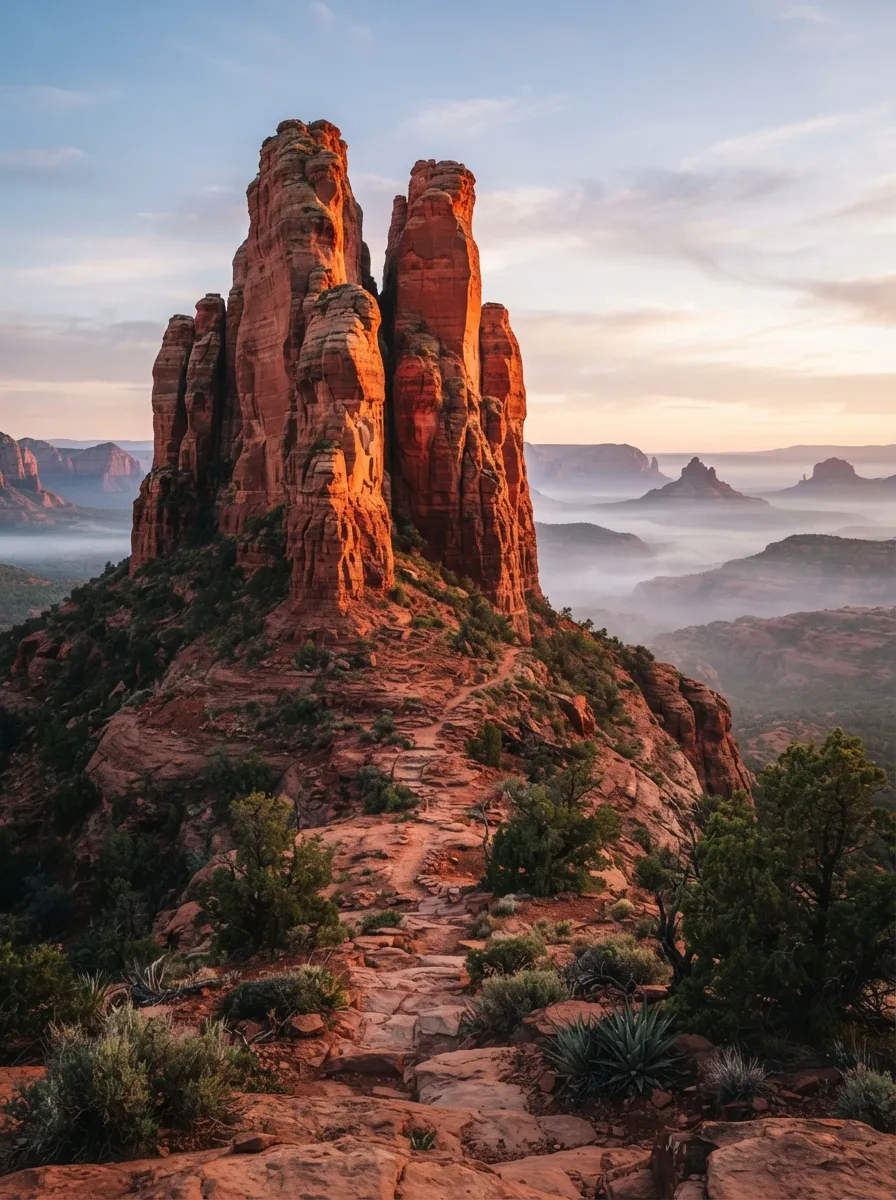
Cathedral Rock is Sedona’s signature formation and one of its most photographed landmarks.
The main trail is short in distance but steep in character. Several sections involve hands-on scrambling over smooth sandstone, and the final saddle offers expansive views over red-rock country.
This is not a gentle walk despite its modest mileage. Travelers uncomfortable with exposed rock, steep inclines or using their hands may prefer viewing Cathedral Rock from Red Rock Crossing instead.
Cathedral Rock Hiking Tips
- Begin early to avoid heat and crowds.
- Wear shoes with strong traction.
- Carry more water than the short distance suggests.
- Do not attempt exposed sections during rain or lightning.
- Follow established trail markers.
- Descend before darkness unless properly equipped.
- Use the official shuttle when trailhead service is operating.
Cathedral Rock is served through Sedona’s trailhead transportation system on scheduled operating days, reducing the need to compete for limited parking. Current routes and operating days should be verified before departure because service changes can occur.
2. Explore Bell Rock
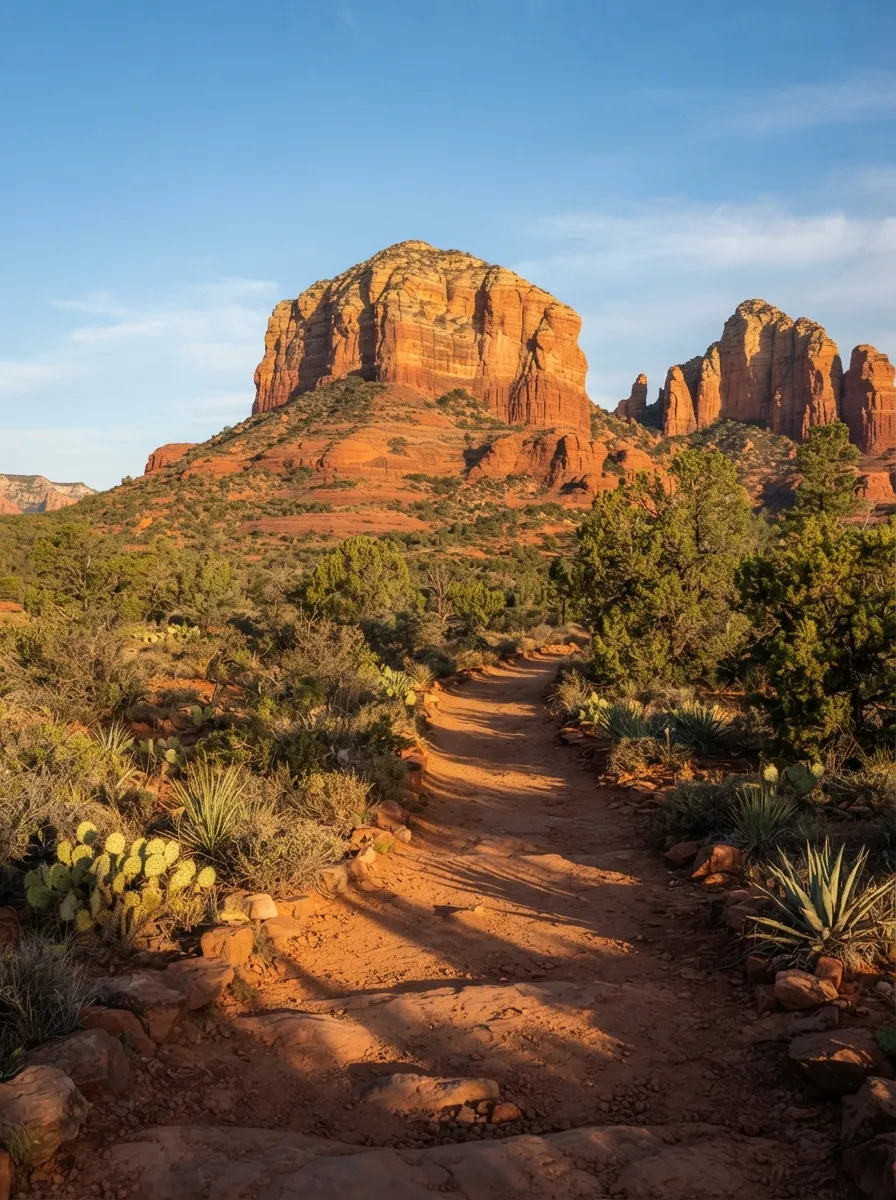
Bell Rock rises near the Village of Oak Creek and provides one of the easiest introductions to Sedona’s landscape.
A network of paths allows visitors to choose anything from a short scenic walk to a steeper climb on the formation’s lower slopes. The surrounding trails connect with Courthouse Butte and other viewpoints.
Bell Rock is especially attractive around sunrise, when early light warms the sandstone and temperatures remain comfortable.
Best For
- First-time visitors
- Sunrise walks
- Families
- Short hikes
- Trail running
- Mountain biking
- Travelers staying in the Village of Oak Creek
Stay on recognizable routes rather than creating new tracks across fragile desert soil.
3. Hike Devil’s Bridge
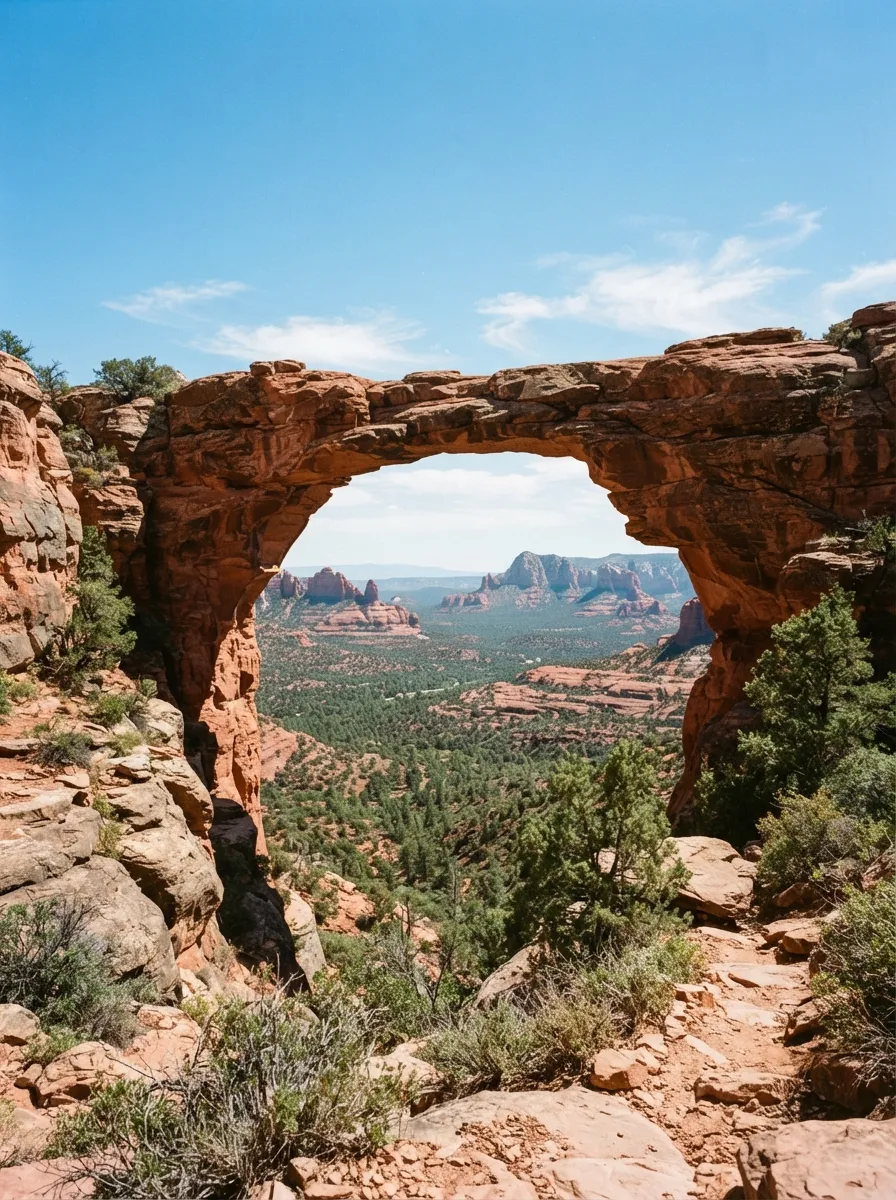
Devil’s Bridge is the largest natural sandstone arch in the Sedona area and one of its most popular photo locations.
The hike varies in length depending on your starting point and whether seasonal shuttle access affects parking. The final approach includes rock steps and a climb toward the arch.
Visitors often form a line to walk onto the bridge for photographs. The arch is wider than certain camera angles make it appear, but the drop remains real and potentially deadly.
CLIFF SAFETY WARNING
Never step backward near an edge while framing a photograph. Wind, loose gravel and distraction are an ugly trio. No image is worth crossing barriers or approaching unstable ledges.
4. Walk Through Boynton Canyon
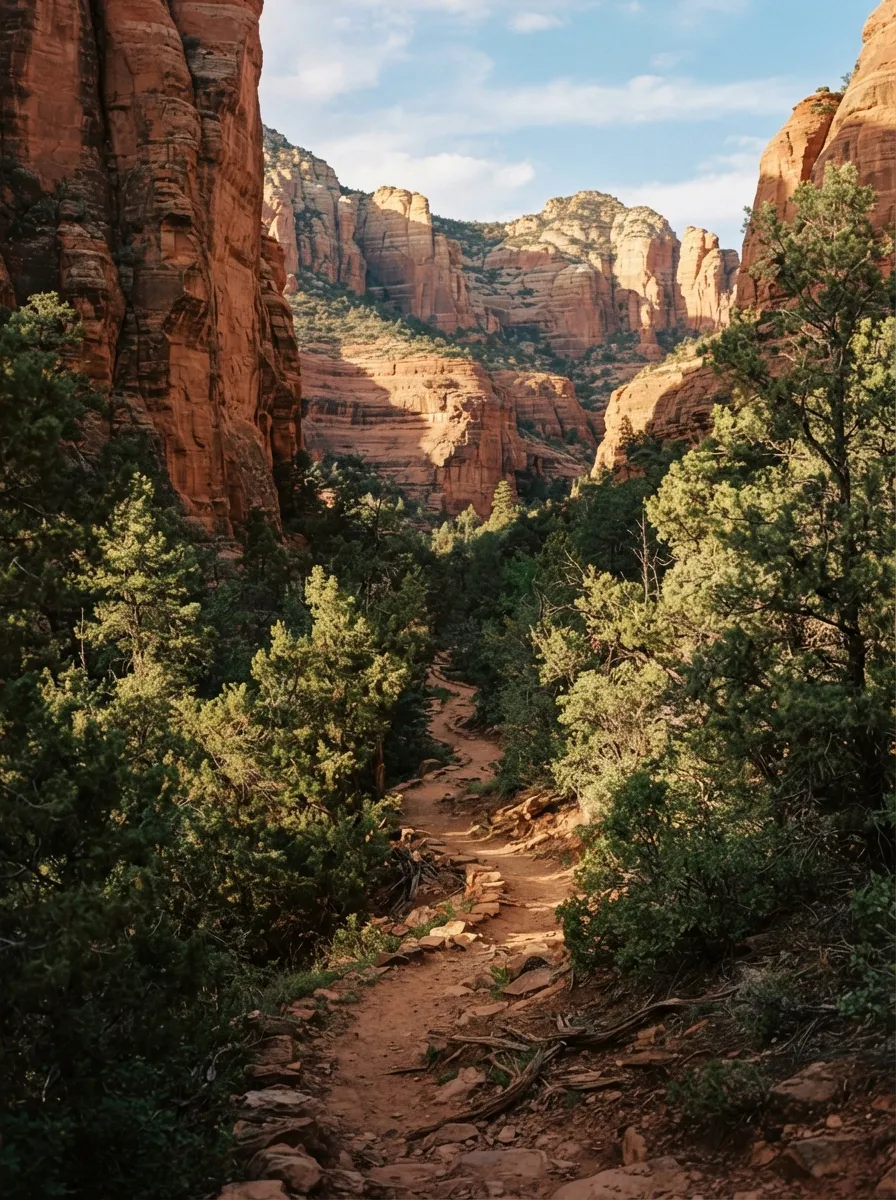
Boynton Canyon combines red cliffs, forested sections and a long canyon environment that feels removed from central Sedona.
The main trail is longer than many famous Sedona hikes but generally less scramble-heavy than Cathedral Rock. Visitors may also seek out the nearby Boynton Pass or vortex-associated areas.
Because part of the route passes near resort property, the opening section may feel developed before the landscape becomes quieter.
Carry adequate water and begin early during warm months.
5. Discover Soldier Pass
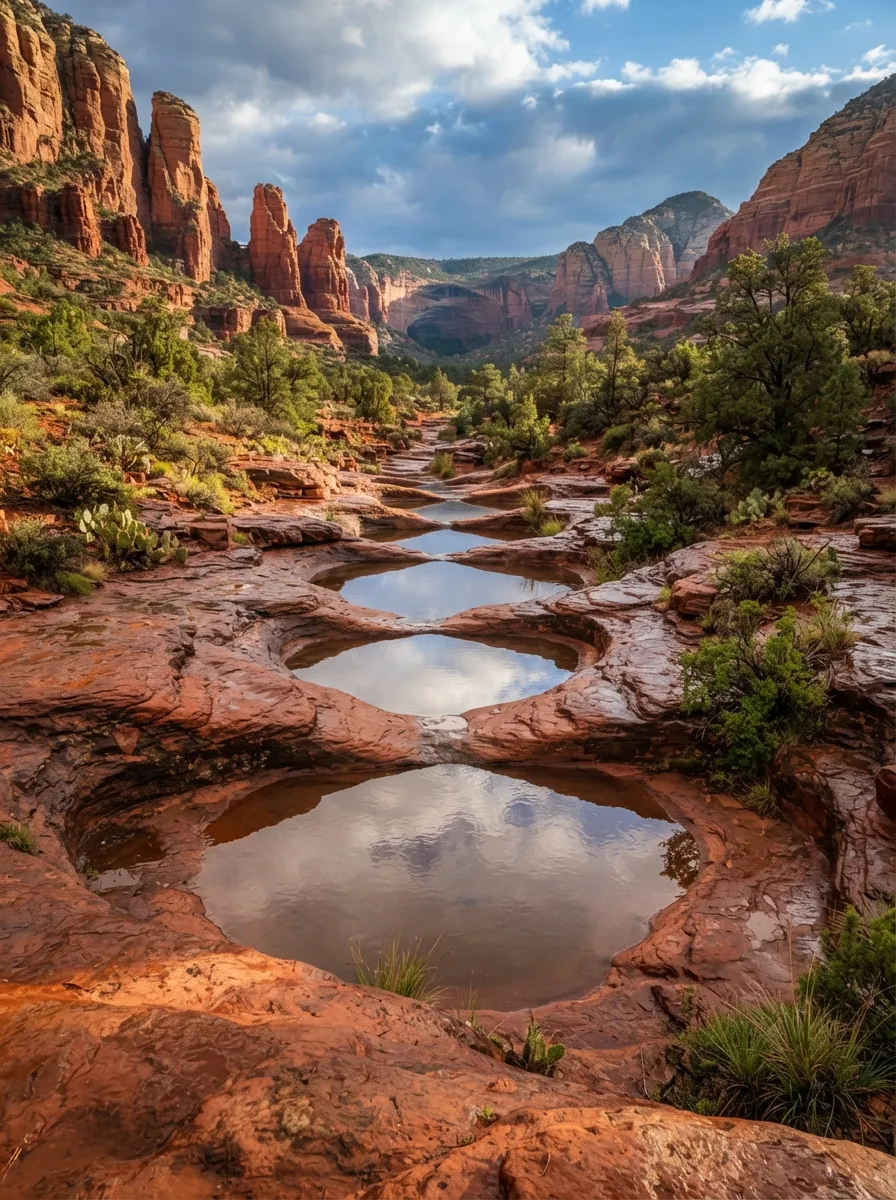
Soldier Pass packs several distinctive features into a relatively compact hiking area.
Highlights include:
- Devil’s Kitchen sinkhole
- Seven Sacred Pools
- Red-rock views
- Forested sections
- Access toward Brins Mesa
- Optional side routes
Trailhead parking and neighborhood congestion have led Sedona to manage access carefully. Shuttle routes and closures may change, so review current transportation information instead of relying on an old map or saved social-media post. The Sedona Shuttle operates free trailhead routes on selected days, although individual routes may temporarily pause.
6. Hike West Fork of Oak Creek
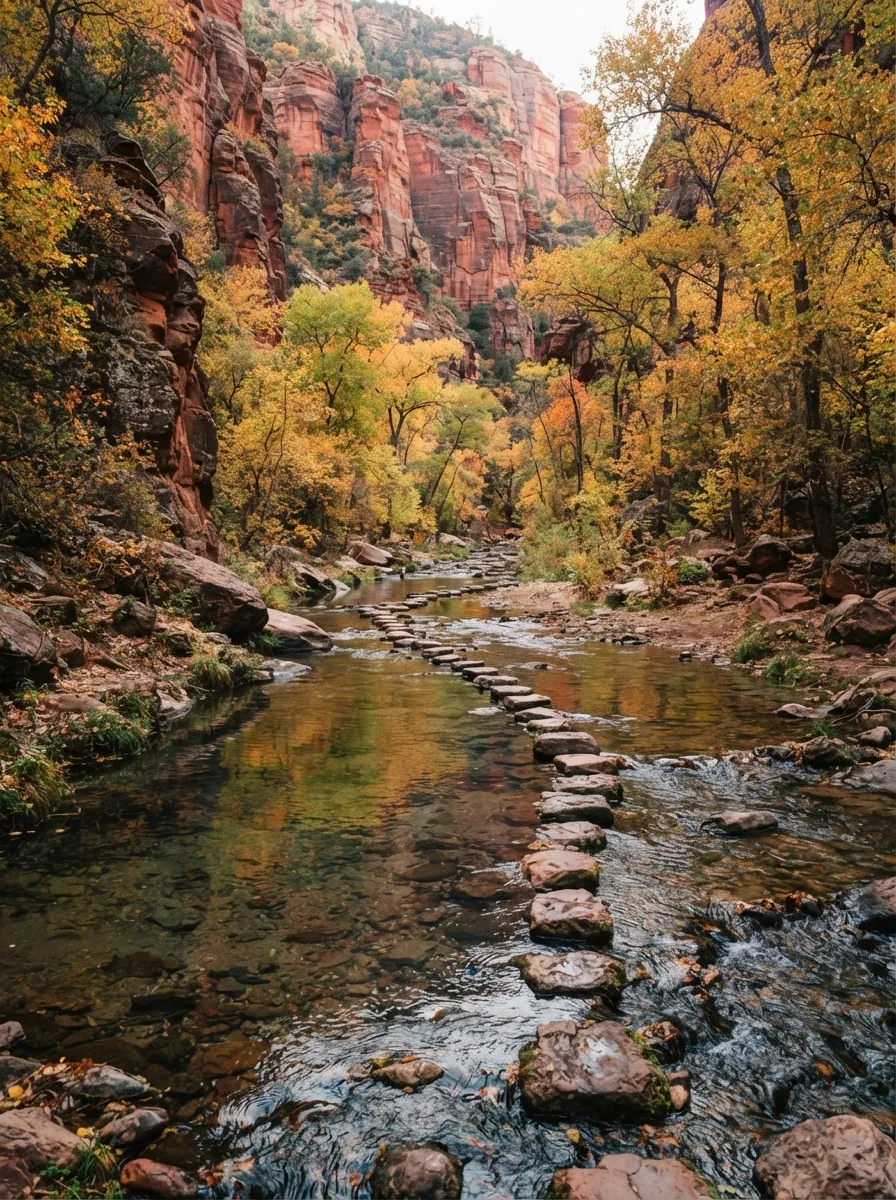
West Fork offers a completely different side of Sedona.
Instead of exposed red-rock slopes, the trail follows a creek through a shaded canyon with trees, water crossings and steep walls. It is especially popular during autumn, when foliage adds yellow and orange to the canyon.
The route includes repeated creek crossings, so waterproof footwear or shoes that dry quickly are useful.
Parking at the Call of the Canyon recreation area is limited and often fills early. Arrive near opening time and prepare for seasonal crowds. Oak Creek Canyon attractions can experience extensive roadside congestion during busy summer periods.
7. Visit Red Rock Crossing
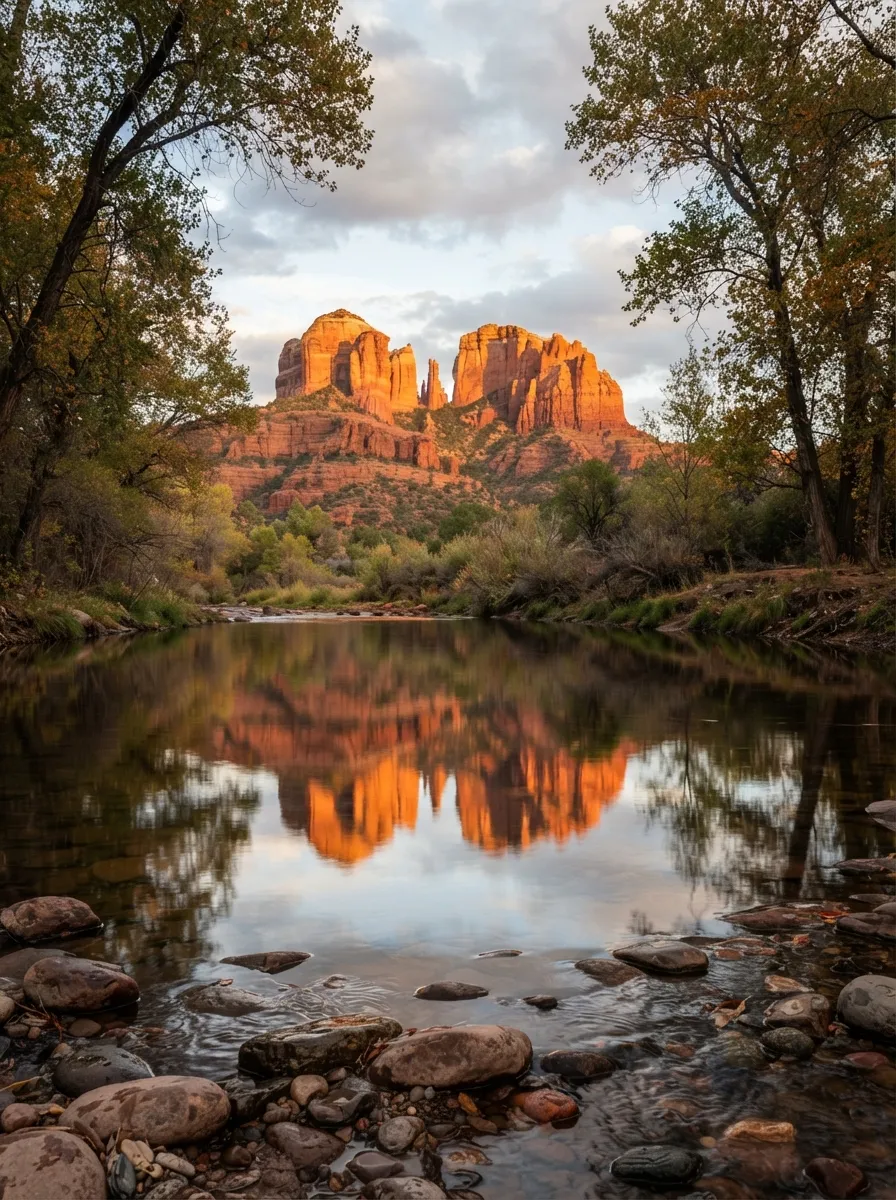
Red Rock Crossing provides one of the classic views of Cathedral Rock reflected near Oak Creek.
The landscape is gentler than the Cathedral Rock summit trail, making it a strong choice for:
- Families
- Picnics
- Sunset photography
- Travelers with limited hiking time
- Visitors who prefer creek scenery
- Anyone avoiding steep scrambling
Water levels and reflections vary by season. Late-day light frequently produces the most dramatic color on Cathedral Rock.
8. Watch Sunset from Airport Mesa
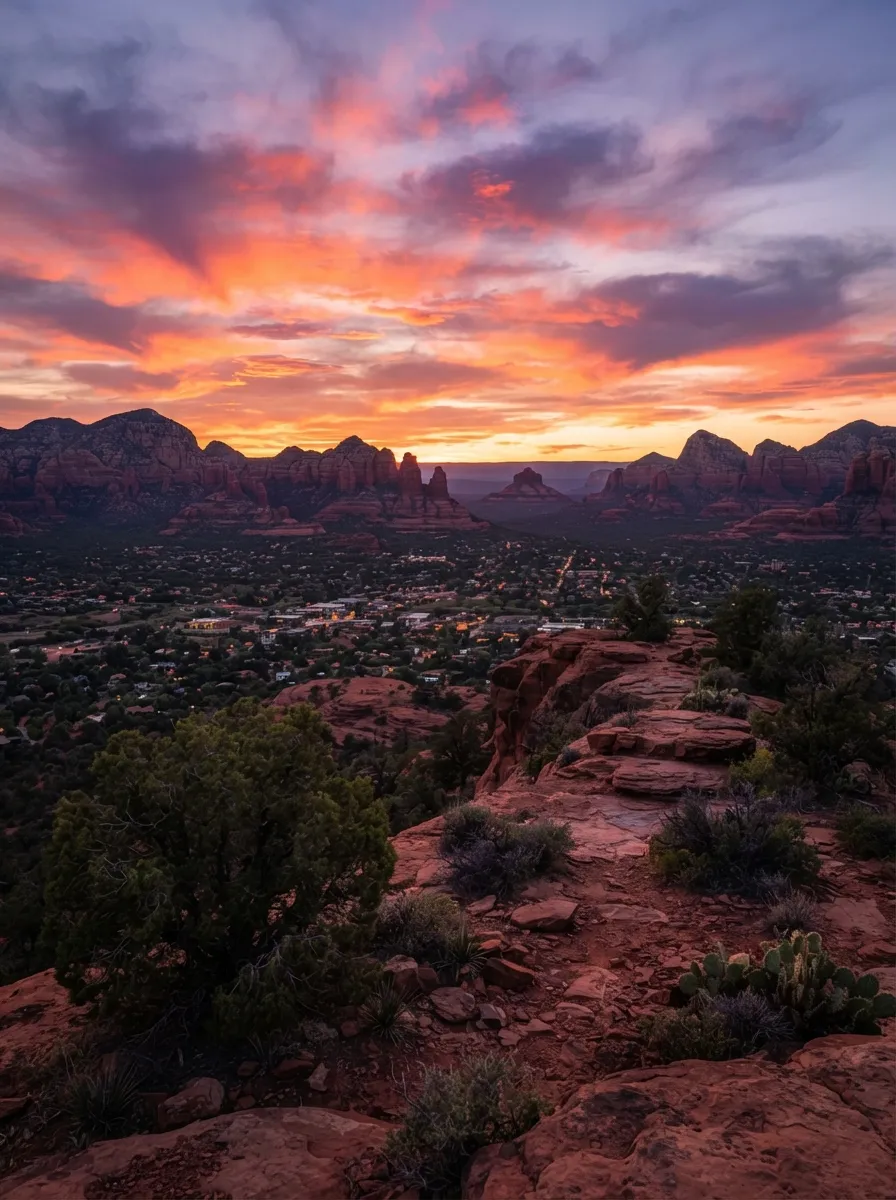
Airport Mesa is one of Sedona’s most accessible elevated viewpoints.
A short walk leads to broad views of the town and surrounding formations. The area is commonly associated with one of Sedona’s best-known vortex locations and becomes extremely busy near sunset.
Parking directly beside the viewpoint is limited. A larger paid lot farther up the road can provide an alternative, but allow enough time to walk and settle before the light changes.
Arrive early rather than attempting a sunset parking duel with fifty rental cars.
9. Drive Through Oak Creek Canyon
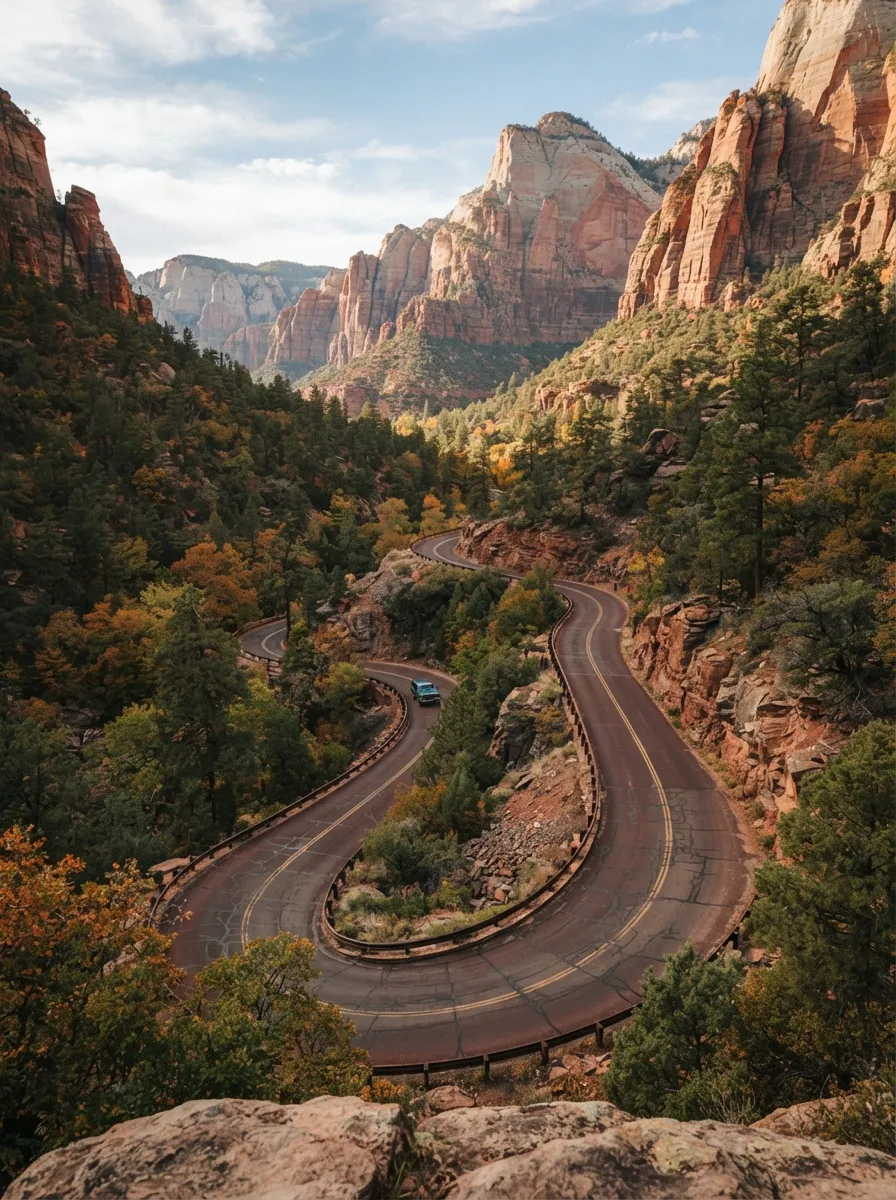
State Route 89A between Sedona and Flagstaff winds through Oak Creek Canyon, one of Arizona’s most scenic drives.
The route passes forests, creekside recreation areas, picnic sites and dramatic canyon walls before climbing through switchbacks toward Flagstaff.
Popular stops include:
- Midgley Bridge
- Grasshopper Point
- Slide Rock State Park
- West Fork
- Oak Creek Vista
- Forest pullouts where permitted
The road can become congested during weekends, summer and autumn foliage season. Winter storms may also affect driving conditions near the higher Flagstaff end.
10. Visit Slide Rock State Park
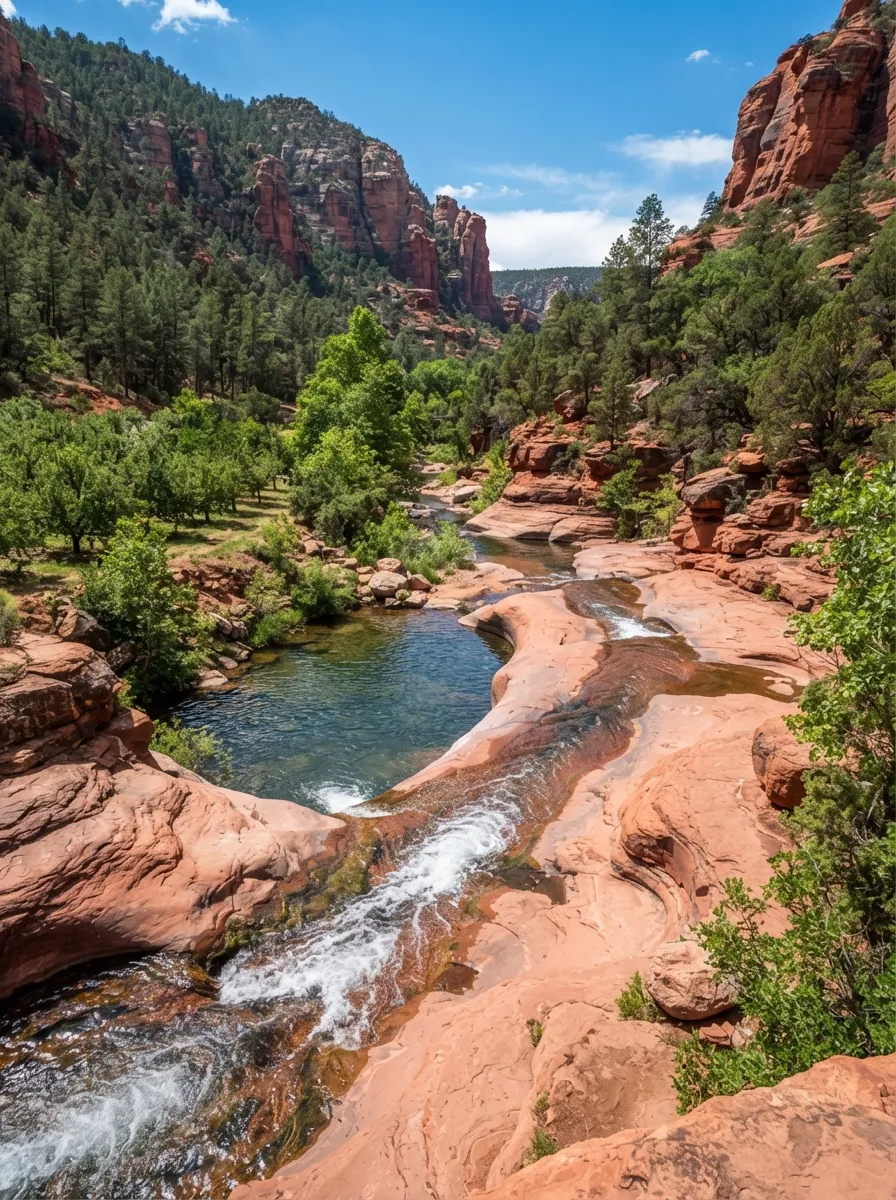
Slide Rock State Park is famous for a natural sandstone water chute formed along Oak Creek.
Visitors slide and swim in cold water surrounded by canyon scenery. The park also preserves part of a historic orchard established in the early 20th century. It is exceptionally popular during warm weather and can reach capacity.
Before Visiting Slide Rock
- Check current water and weather conditions.
- Wear secure water shoes.
- Expect slippery algae-covered rock.
- Supervise children closely.
- Arrive early during summer.
- Do not bring glass containers.
- Follow posted swimming restrictions.
Water can remain startlingly cold even when the Arizona sun is performing at full volume.
11. Explore Chapel of the Holy Cross
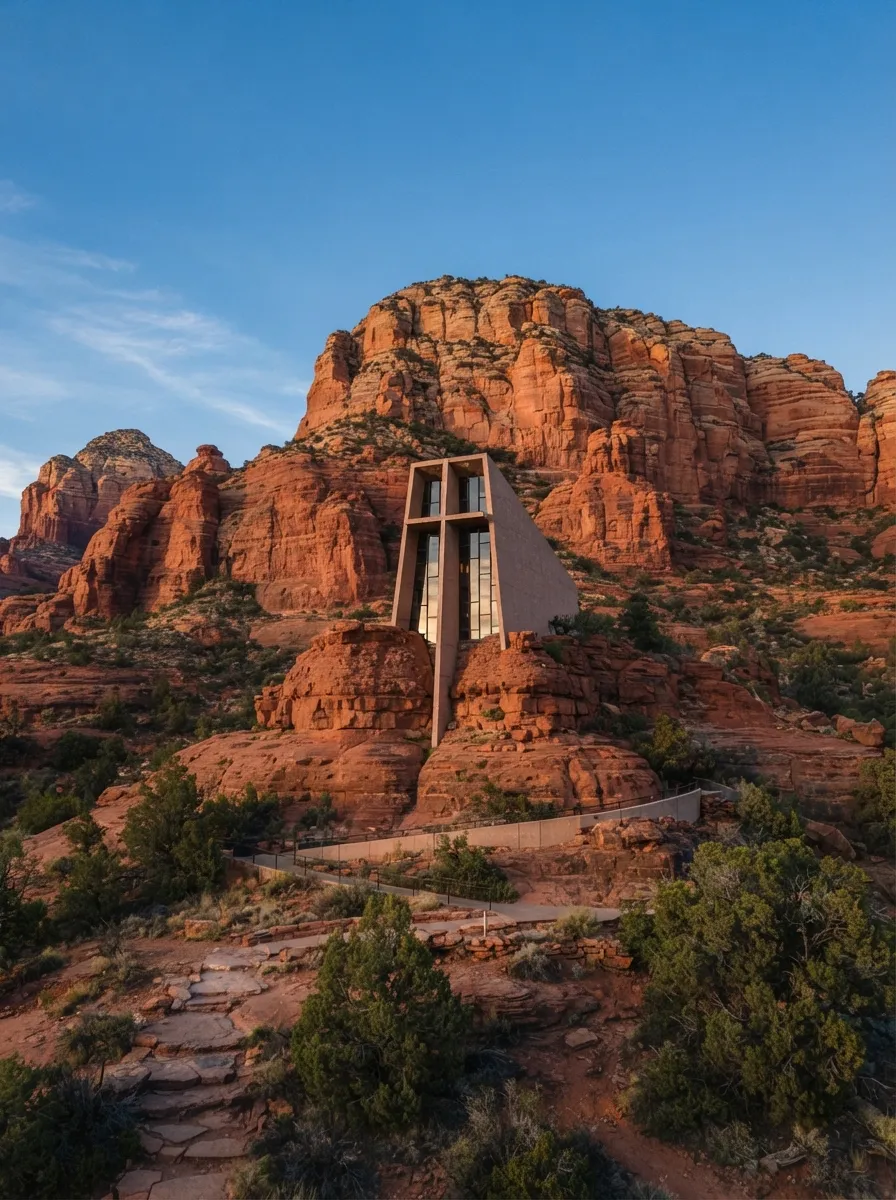
The Chapel of the Holy Cross is built into Sedona’s red rocks and offers both architectural interest and broad views.
The chapel remains an active religious site, so visitors should maintain a respectful atmosphere even when the overlook is busy.
Parking is limited and located along a sloped access road. Shuttle carts may operate for visitors who need assistance, but availability can vary.
Dress appropriately, speak quietly and avoid treating the interior solely as a photography set.
12. Wander Through Tlaquepaque Arts and Shopping Village
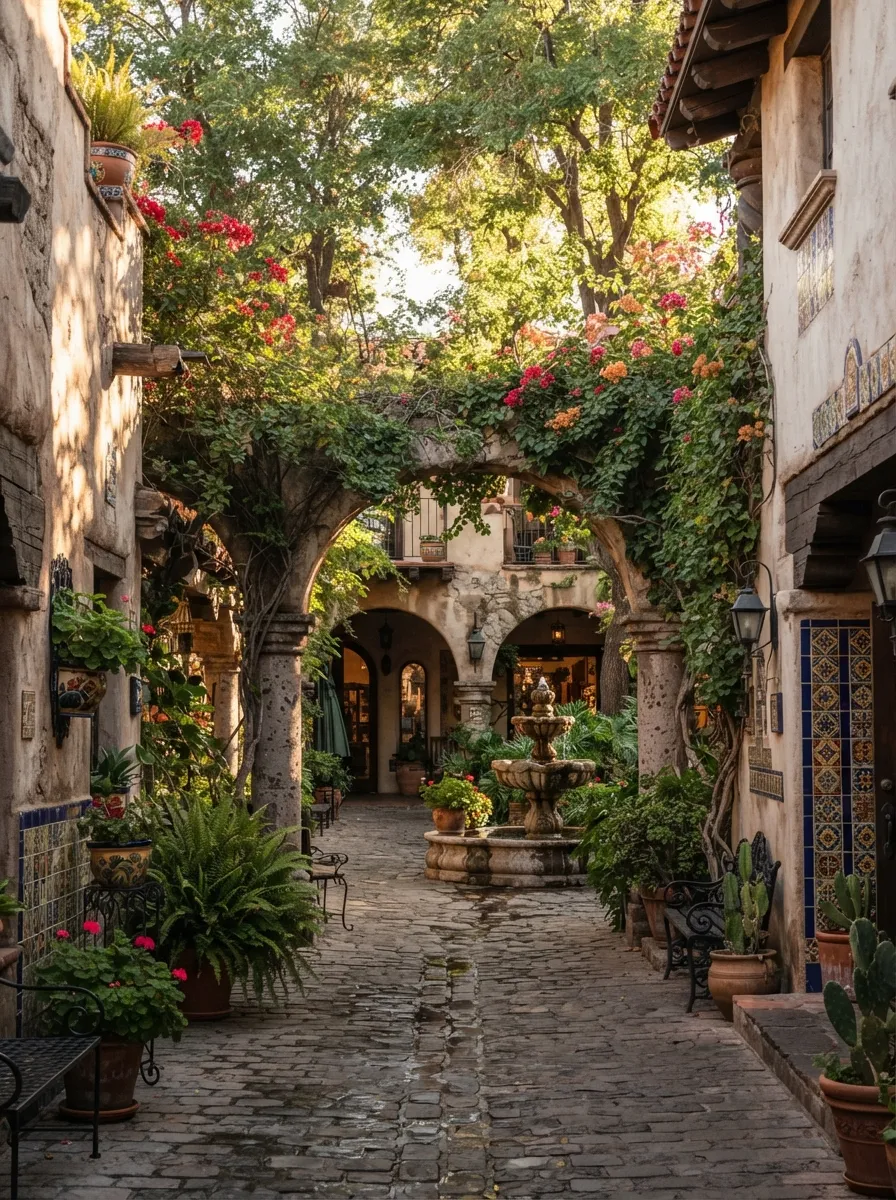
Tlaquepaque is a pedestrian-oriented complex of courtyards, stone walkways, arches, galleries and specialty shops.
It provides a pleasant break between hikes, especially during hot afternoons or bad weather.
Visitors can browse:
- Southwestern art
- Jewelry
- Ceramics
- Photography
- Gifts
- Clothing
- Restaurants and cafés
The design draws inspiration from traditional Mexican architecture, creating a leafy, intimate atmosphere beside Oak Creek.
13. Explore Uptown Sedona
Uptown is Sedona’s busiest commercial district.
It contains tour offices, restaurants, galleries, souvenir shops and views toward surrounding formations. This is where many jeep tours and organized excursions begin.
Uptown works well for travelers who want to walk to restaurants and shops, but traffic and crowds make it less peaceful than West Sedona or the Village of Oak Creek.
Use designated parking lots and explore on foot rather than repeatedly moving the car.
14. Join a Jeep Tour
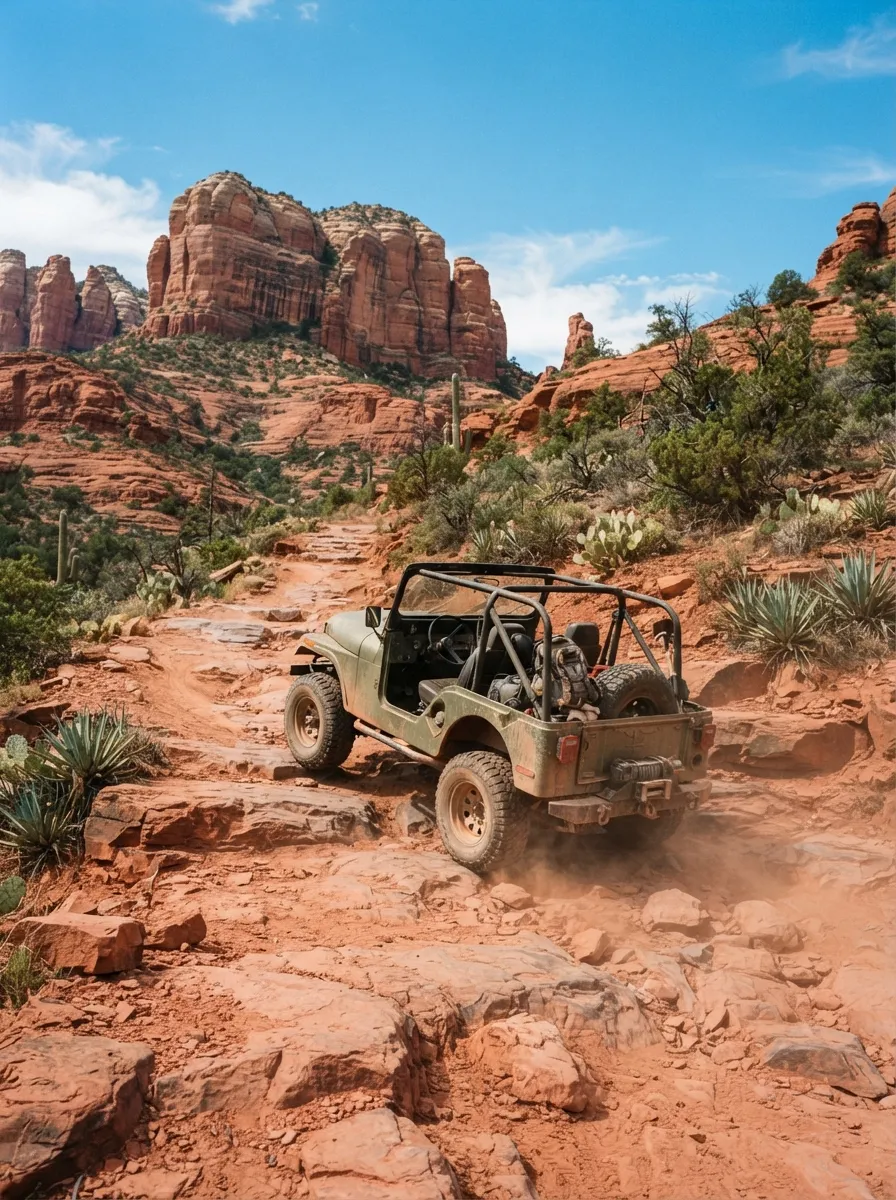
Guided off-road tours provide access to rugged scenery without requiring visitors to navigate unpaved routes themselves.
Tours range from gentle scenic outings to extremely bumpy backcountry rides. Read the difficulty description carefully, particularly when traveling with young children, older adults or anyone with neck, back or mobility concerns.
Ask Before Booking
- How rough is the route?
- How long is the tour?
- Is shade available?
- Are car seats provided or permitted?
- What happens during rain?
- Does the tour include cultural interpretation?
- What is the cancellation policy?
A guided tour can also reduce pressure on popular parking areas.
15. Experience Sedona’s Vortex Sites
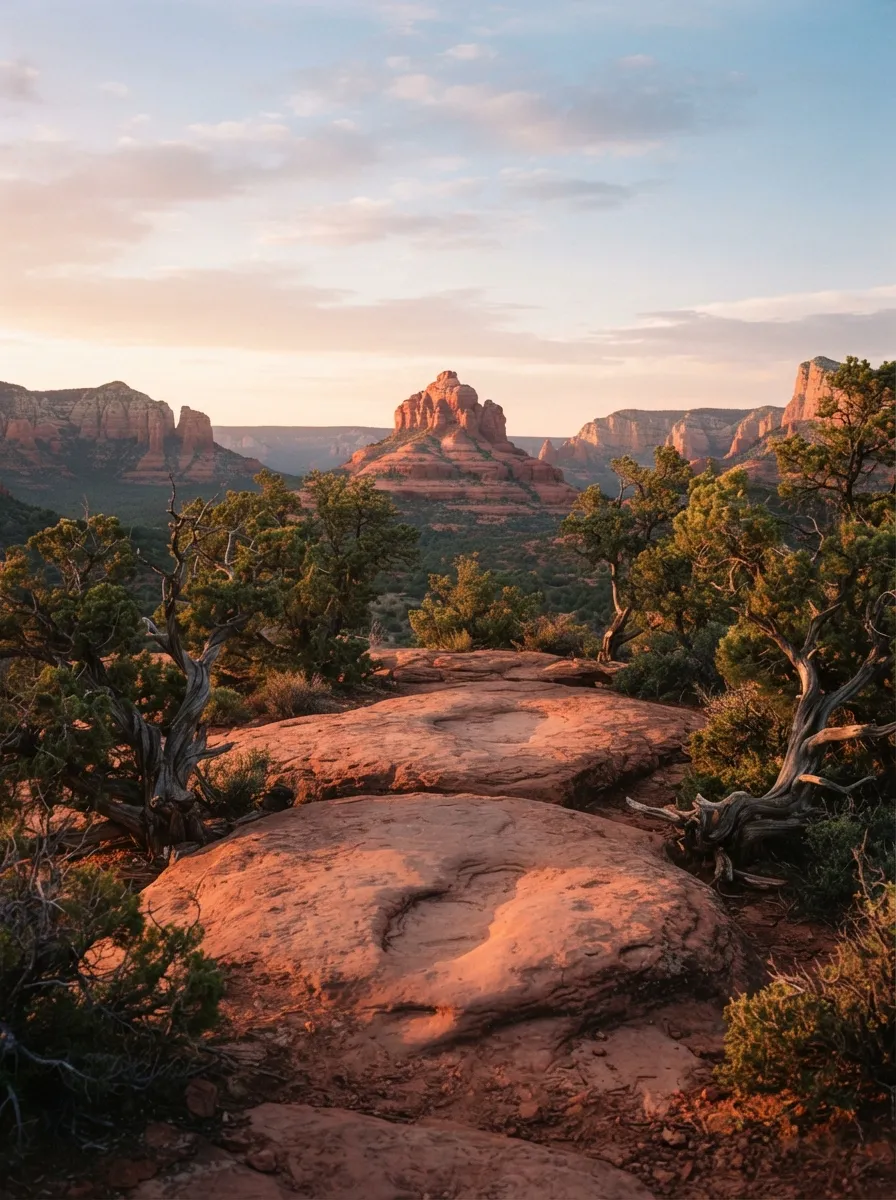
Sedona is widely associated with energy vortexes, locations that some visitors believe possess concentrated spiritual or healing energy.
Commonly discussed vortex areas include:
- Airport Mesa
- Bell Rock
- Cathedral Rock
- Boynton Canyon
There is no universally measurable scientific definition of a Sedona vortex. For many travelers, however, the experience is less about proving an invisible force and more about meditation, quiet reflection and spending deliberate time in an extraordinary landscape.
Approach the subject with curiosity rather than mockery or automatic certainty.
You may feel transformed, deeply relaxed or simply impressed by the geology. Sedona accepts all three outcomes.
16. Go Stargazing
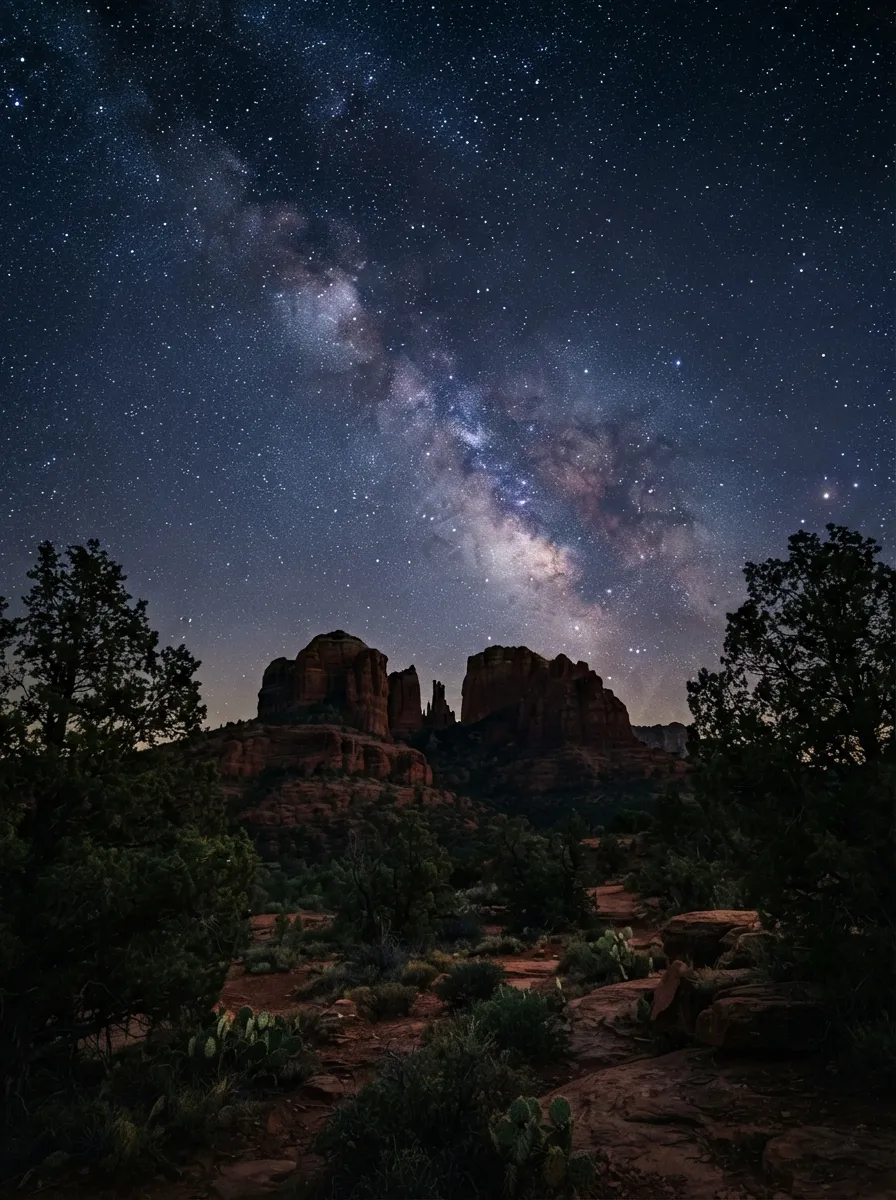
Sedona’s desert setting and community attention to night-sky preservation make it an appealing stargazing destination.
Clear nights may reveal:
- The Milky Way
- Planets
- Meteor showers
- Constellations
- Bright lunar landscapes
- Silhouetted red-rock formations
Join a guided astronomy experience or drive to a legal, open area away from commercial lighting.
Use red-light mode where possible, avoid shining bright lights toward other visitors and never park illegally along dark roads.
17. Explore Nearby Verde Valley Towns
Sedona can serve as a base for exploring the wider Verde Valley.
Cottonwood
Old Town Cottonwood offers tasting rooms, restaurants and a walkable historic district.
Jerome
Jerome clings dramatically to Cleopatra Hill and is known for mining history, galleries and steep streets.
Clarkdale
Clarkdale provides access to the Verde Canyon Railroad and lies near Tuzigoot National Monument.
Camp Verde
Camp Verde is convenient for Montezuma Castle National Monument and Montezuma Well.
These towns can provide more affordable lodging than central Sedona during busy periods.
Best Sedona Hikes by Difficulty
| Trail | General Difficulty | Best Feature | Main Consideration |
| Bell Rock Pathway | Easy to moderate | Flexible red-rock views | Busy parking areas |
| Fay Canyon | Easy to moderate | Shaded canyon walk | Limited dramatic summit views |
| Airport Mesa Loop | Moderate | Panoramic views | Exposed sun |
| Doe Mountain | Moderate | Mesa-top panorama | Steep ascent |
| West Fork | Moderate | Creek and canyon scenery | Water crossings |
| Devil’s Bridge | Moderate | Natural sandstone arch | Crowds and exposed edges |
| Boynton Canyon | Moderate | Long canyon landscape | Length and heat |
| Soldier Pass | Moderate | Pools and sinkhole | Managed access |
| Cathedral Rock | Difficult | Iconic saddle view | Steep scrambling |
| Bear Mountain | Difficult | Expansive high views | Long, exposed and strenuous |
Trail conditions, closures and access rules can change because of weather, fire risk, construction or resource protection. Check current Coconino National Forest information before beginning any hike.
Understanding the Red Rock Pass
Some Coconino National Forest recreation sites around Sedona require a parking pass.
The Red Rock Pass program covers designated fee areas rather than every roadside or trailhead parking space. Daily, weekly and annual options are available, and federal recreation passes may be accepted at certain standard-amenity fee sites. Rules vary at concession-operated areas and developed day-use sites.
Before parking:
- Look for posted fee signs.
- Confirm which pass the location accepts.
- Display the pass correctly when required.
- Do not assume a hotel parking permit covers federal land.
- Verify separate fees for places such as West Fork or developed parks.
PASS PLANNING NOTE
A Red Rock Pass is not a magical golden ticket for every attraction in the region. State parks, national monuments and certain concession sites may charge separately.
How the Sedona Shuttle Works
Sedona operates free trailhead shuttle routes to reduce traffic and parking pressure at several popular hikes.
Trailhead routes generally run year-round from Thursday through Sunday, with expanded service possible during busy periods. No reservation is normally required for standard trailhead service. Current routes, temporary suspensions and operating hours should always be checked on the official shuttle website.
Using the Shuttle
- Park at the designated Park & Ride location.
- Confirm the route number for your trail.
- Check the final return time.
- Bring everything needed for the hike.
- Allow room for busy return trips.
- Keep muddy equipment controlled.
- Never miss the last shuttle.
The shuttle is free, reduces neighborhood congestion and saves visitors from circling full trailheads like mildly sunburned hawks.
The Perfect Three-Day Sedona Itinerary
Day 1: Bell Rock and Central Sedona
Begin at Bell Rock shortly after sunrise.
Walk the Bell Rock Pathway or combine it with part of the Courthouse Butte Loop. Afterward, visit the Chapel of the Holy Cross.
Spend the afternoon exploring Tlaquepaque and Uptown Sedona. Finish at Airport Mesa or another west-facing viewpoint for sunset.
Day 2: Cathedral Rock and Oak Creek
Use the shuttle or arrive early for Cathedral Rock.
After the hike, relax near Red Rock Crossing and enjoy views of the same formation from below.
Continue through Oak Creek Canyon in the afternoon. Depending on the season, stop at Slide Rock, Midgley Bridge or a creekside picnic area.
Day 3: Boynton Canyon and West Sedona
Hike Boynton Canyon, Doe Mountain or another West Sedona trail.
Spend the afternoon on a jeep tour, at a spa or exploring galleries. Finish with stargazing away from central lighting.
The Perfect Five-Day Sedona Itinerary
Day 1: Arrival and Sunset
Check in, explore Uptown and watch sunset from Airport Mesa.
Day 2: Cathedral Rock
Hike Cathedral Rock early, visit Red Rock Crossing and spend the afternoon at Tlaquepaque.
Day 3: West Fork and Oak Creek Canyon
Drive north early for West Fork, then visit Slide Rock or continue toward Flagstaff.
Day 4: Boynton Canyon and Wellness
Hike Boynton Canyon in the morning. Reserve the afternoon for a massage, meditation class or relaxed gallery visit.
Day 5: Verde Valley Day Trip
Visit Tuzigoot, Cottonwood and Jerome, or travel south toward Montezuma Castle.
Tuzigoot preserves a hilltop pueblo containing more than 100 rooms, while Montezuma Castle protects an impressive multiroom cliff dwelling associated with Indigenous communities of the Verde Valley.
A One-Day Sedona Itinerary
One day provides only a bright red sample spoon of Sedona, but it can still be worthwhile.
Morning
Arrive early and hike Bell Rock or Doe Mountain.
Late Morning
Visit the Chapel of the Holy Cross.
Lunch
Eat in Uptown, West Sedona or the Village of Oak Creek.
Afternoon
Drive through Oak Creek Canyon or take a guided jeep tour.
Sunset
Choose Airport Mesa or Red Rock Crossing.
Avoid attempting Cathedral Rock, Devil’s Bridge, West Fork, Slide Rock, Uptown and Jerome in the same day. That itinerary belongs in a teleportation brochure.
Best Time to Travel to Sedona
Spring: March to May
Spring brings comfortable hiking temperatures, flowering desert plants and large visitor numbers.
It is one of Sedona’s peak seasons, particularly during weekends and school breaks. Lodging prices rise, popular trailheads fill early and restaurants become busy.
Book accommodation well ahead and plan major hikes for weekday mornings.
Summer: June to August
Summer days can be extremely hot, especially on exposed sandstone trails.
July and August also bring Arizona’s monsoon pattern, with afternoon thunderstorms, lightning, flash flooding and rapidly changing skies.
Summer advantages include:
- Potentially lower lodging rates
- Longer daylight
- Creek recreation
- Dramatic storm clouds
- Quieter midday trails, although heat explains why
Hike around sunrise, stop before peak heat and never enter narrow canyons when storms threaten.
Fall: September to November
Fall is one of the best periods for Sedona.
Temperatures become more comfortable, skies are often clear and autumn color appears around Oak Creek. The season is also popular, especially during October weekends.
Visit midweek for a better balance of weather and crowd levels.
Winter: December to February
Winter offers cooler hiking weather, lower visitor numbers and occasional snow dusting the red rocks.
Sedona is lower and generally warmer than nearby Flagstaff, though nights can fall below freezing and winter storms may affect roads or trails. Official tourism information notes Sedona’s elevation is around 4,500 feet, compared with Flagstaff at roughly 7,000 feet.
Winter mornings may be icy, particularly on shaded trails. Carry traction aids when conditions warrant.
Where to Stay in Sedona
Uptown Sedona
Uptown is best for first-time visitors who want shops, restaurants and tour departures within walking distance.
Advantages
- Central location
- Walkable dining
- Easy tour access
- Strong red-rock views
Drawbacks
- Heavy traffic
- Tourist crowds
- Higher prices
- Less solitude
West Sedona
West Sedona offers practical access to grocery stores, restaurants and trails such as Boynton Canyon, Soldier Pass and Devil’s Bridge routes.
It often feels more residential and functional than Uptown.
Village of Oak Creek
The Village of Oak Creek lies south of central Sedona near Bell Rock and Courthouse Butte.
It is a strong choice for:
- Early Bell Rock hikes
- Quieter evenings
- Easier access from Phoenix
- Golf
- Families
- Travelers avoiding Uptown congestion
Oak Creek Canyon
Cabins and lodges along Oak Creek provide forest scenery and creek access.
The area can feel wonderfully removed from town, but restaurant choices and mobile service may be limited. Traffic along State Route 89A can also affect travel times.
Cottonwood or Camp Verde
These nearby communities can offer lower accommodation prices.
They work well for travelers with a car who do not mind driving into Sedona each day.
Getting to Sedona
From Phoenix
Phoenix Sky Harbor is the most practical major airport for many visitors.
Renting a car provides the greatest flexibility. Shuttle services also connect the airport region with Sedona, but a vehicle remains useful for exploring trailheads and nearby towns.
From Flagstaff
Flagstaff Pulliam Airport is closer but offers fewer flight options.
The drive through Oak Creek Canyon is scenic, though winter weather or congestion can slow the journey.
From Las Vegas
The drive from Las Vegas can be combined with stops near the Grand Canyon, Hoover Dam or northern Arizona.
Allow extra time and avoid arriving after dark if unfamiliar with mountain roads.
Getting Around Sedona
A car is useful, but it should not be your answer to every movement.
Combine:
- The free trailhead shuttle
- Hotel walking access
- Guided tours
- Rideshare or taxis where available
- A rental car for scenic drives and day trips
Traffic is often worst around:
- Uptown
- The “Y” intersection of Routes 89A and 179
- Oak Creek Canyon
- Popular trailheads
- Holiday weekends
- Spring and autumn peak periods
Group activities geographically rather than crossing town repeatedly.
Sedona Travel Budget
Sedona is not generally a cheap destination, especially during spring and fall.
Accommodation forms the largest expense, followed by tours, restaurants and rental transportation.
| Expense | Budget Approach | Higher-Cost Approach |
| Accommodation | Cottonwood motel or campground | Red-rock resort |
| Hiking | Free trails with required parking pass | Private hiking guide |
| Transport | Shuttle and shared costs | Rental SUV and tours |
| Food | Grocery picnic and casual cafés | Resort dining |
| Wellness | Self-guided meditation | Spa treatment |
| Sightseeing | Scenic drives | Jeep or helicopter tour |
Ways to Save Money
- Visit in winter or summer shoulder periods.
- Stay in Cottonwood or the Village of Oak Creek.
- Travel Sunday through Thursday.
- Use the free Sedona Shuttle.
- Pack breakfast and trail snacks.
- Choose free hikes and overlooks.
- Avoid changing hotels frequently.
- Reserve refundable lodging early.
- Split guided-tour costs with companions.
Travelers prioritizing beauty at a manageable cost may also enjoy these underrated affordable destinations, which stretch travel budgets across lesser-known cities, valleys and historic towns.
What to Pack for Sedona
Year-Round Essentials
- Supportive hiking shoes
- Refillable water bottle or hydration pack
- High-SPF sunscreen
- Sunglasses
- Wide-brimmed hat
- Lightweight layers
- Trail map or offline navigation
- Portable phone charger
- Small first-aid kit
- Salty snacks
- Red Rock Pass when required
- Reusable bag for litter
Summer Extras
- Electrolytes
- Cooling towel
- Lightweight long-sleeved shirt
- Rain shell
- Waterproof bag for electronics
- Early-morning hiking plan
Winter Extras
- Insulated jacket
- Gloves
- Warm hat
- Traction devices
- Extra socks
- Windproof outer layer
Photography Gear
- Lens cloth for dust
- Extra battery
- Small tripod where permitted
- Polarizing filter
- Protective camera pouch
Sedona Hiking Safety
Carry Enough Water
The dry air can hide how quickly you are losing moisture.
Do not rely on finding water along the trail.
Begin Early
Early starts reduce exposure to heat, crowds and afternoon storms.
Check the Forecast
Lightning, flash floods, snow and extreme heat can all affect Sedona trails.
Respect Your Ability
Short trails can still involve major elevation gain, scrambling or exposed ledges.
Download the Route
Mobile reception is unreliable in canyons.
Tell Someone Your Plan
Share the trail name, starting point and expected return time.
Turn Back When Necessary
Reaching the viewpoint is optional. Returning safely is the non-negotiable part.
Responsible Travel in Sedona
Sedona’s popularity places enormous pressure on trails, neighborhoods and water resources.
Travel responsibly by:
- Using the shuttle
- Staying on established trails
- Packing out all litter
- Avoiding unauthorized roadside parking
- Keeping music quiet
- Respecting private property
- Leaving plants, rocks and artifacts in place
- Giving wildlife space
- Avoiding cryptobiotic soil
- Following fire restrictions
- Not building rock stacks
- Using restrooms before hiking
- Visiting popular trails during off-peak hours
Do not carve names into sandstone or remove small pieces as souvenirs. Once everyone takes “just one,” the desert begins disappearing pebble by pebble.
Day Trips from Sedona
Grand Canyon South Rim
The Grand Canyon can be visited as a long day trip, though staying overnight allows a calmer experience.
Leave early and check weather conditions, particularly during winter.
Flagstaff
Flagstaff offers a historic downtown, breweries, museums and access to high-elevation forests.
It is noticeably cooler than Sedona.
Jerome
Jerome combines mining history, hillside views and old buildings that tumble down steep streets.
Montezuma Castle
Montezuma Castle National Monument preserves a 20-room cliff dwelling and provides an accessible cultural stop south of Sedona.
Tuzigoot
Tuzigoot National Monument protects a large hilltop pueblo overlooking the Verde Valley.
Antelope Canyon and Horseshoe Bend
These northern Arizona attractions require a very long day from Sedona. An overnight stay near Page is usually more comfortable.
Combining Sedona with a Bigger Adventure
Sedona fits naturally into an Arizona road trip linking Phoenix, Flagstaff and the Grand Canyon.
Travelers drawn to more ambitious wilderness journeys can explore these Uganda travel destinations, where volcanic mountains, rainforests and wildlife create a far wilder expedition.
For coastal scenery after the desert, the Greek island aesthetic replaces Sedona’s red sandstone with whitewashed villages, sea cliffs and blue Aegean horizons.
Travelers planning a romantic escape can also compare Sedona’s spa-and-desert atmosphere with these affordable Bora Bora alternatives, including tropical destinations where dramatic views do not always demand a private-island budget.
Common Sedona Travel Mistakes
Arriving at Popular Trailheads Late
Parking may already be full, and unauthorized parking can lead to fines or towing.
Use the shuttle or begin early.
Scheduling Too Many Hikes
Sedona’s trails are physically demanding, and driving between them consumes time.
Choose one major hike and one lighter activity per day.
Underestimating the Elevation
Sedona sits around 4,500 feet above sea level. Visitors arriving from low elevations may tire faster than expected.
Hiking in Midday Summer Heat
Exposed sandstone offers little shade.
Begin near sunrise and finish before temperatures peak.
Ignoring Storm Clouds
Monsoon storms can produce dangerous lightning and flash flooding.
Leave exposed terrain immediately when thunder begins.
Treating Every Vortex Site as a Quick Photo Stop
Many vortex areas overlap with active hiking routes and quiet spiritual spaces.
Give other visitors room.
Blocking Residential Streets
Popular trail access sometimes passes through neighborhoods.
Use legal parking and keep noise low.
Frequently Asked Questions
Is Sedona worth visiting?
Yes. Sedona offers exceptional hiking, red-rock scenery, art, wellness experiences and easy access to northern Arizona attractions.
How many days do you need in Sedona?
Three full days are ideal for a first visit. Five days allow a slower pace and one or two day trips.
What is the best month to travel to Sedona?
April, May, September and October usually offer excellent hiking weather, but they are also among the busiest periods. Spring and fall are widely regarded as Sedona’s peak seasons.
Is Sedona expensive?
Sedona can be expensive, especially during spring, fall and holiday weekends. Staying outside central Sedona and visiting midweek can reduce costs.
Do you need a car in Sedona?
A car is helpful for scenic drives and regional day trips. However, the free Sedona Shuttle should be used for participating trailheads when operating.
Is the Sedona Shuttle free?
Yes. The trailhead shuttle provides free rides from designated Park & Ride lots to selected popular trailheads.
Do you need a Red Rock Pass?
A pass is required at certain Coconino National Forest fee sites. It is not required everywhere, and separate fees may apply at state parks or concession-operated locations.
Can beginners hike in Sedona?
Yes. Bell Rock Pathway, Fay Canyon and selected creekside walks provide easier options. Trail difficulty still depends on distance, weather and personal ability.
Is Cathedral Rock suitable for beginners?
Cathedral Rock is short but steep and involves scrambling. Beginners comfortable with hands-on climbing may enjoy it, but others should choose a gentler trail.
Can you visit Sedona without hiking?
Yes. Scenic drives, jeep tours, galleries, spas, restaurants, the Chapel of the Holy Cross and overlooks provide plenty to do without long hikes.
Are Sedona vortexes real?
Vortexes are spiritual beliefs rather than scientifically established geological forces. Many visitors nevertheless use these sites for meditation and personal reflection.
Does Sedona get snow?
Yes. Snow can fall during winter, though accumulation often melts relatively quickly at lower elevations. Higher roads toward Flagstaff may receive much more.
Is Sedona safe for solo travelers?
Sedona is popular with solo visitors, but standard outdoor precautions remain essential. Share hiking plans, avoid isolated trails after dark and carry reliable navigation.
Can you take a day trip to Sedona from Phoenix?
Yes, but a day trip allows only a limited experience. Leave early and focus on one hike, one scenic attraction and sunset.
Is Sedona family-friendly?
Yes. Bell Rock, Red Rock Crossing, scenic drives, jeep tours and selected creek areas work well for families. Choose trails according to children’s abilities.
Are dogs allowed on Sedona trails?
Dogs are permitted on many national forest trails when leashed, but rules vary by site. Carry water, protect paws from hot rock and remove all waste.
What should you avoid in Sedona?
Avoid illegal parking, midday summer hiking, cliff-edge stunts, entering closed areas, damaging soil, removing rocks, and treating sacred or spiritual spaces disrespectfully.
Final Thoughts
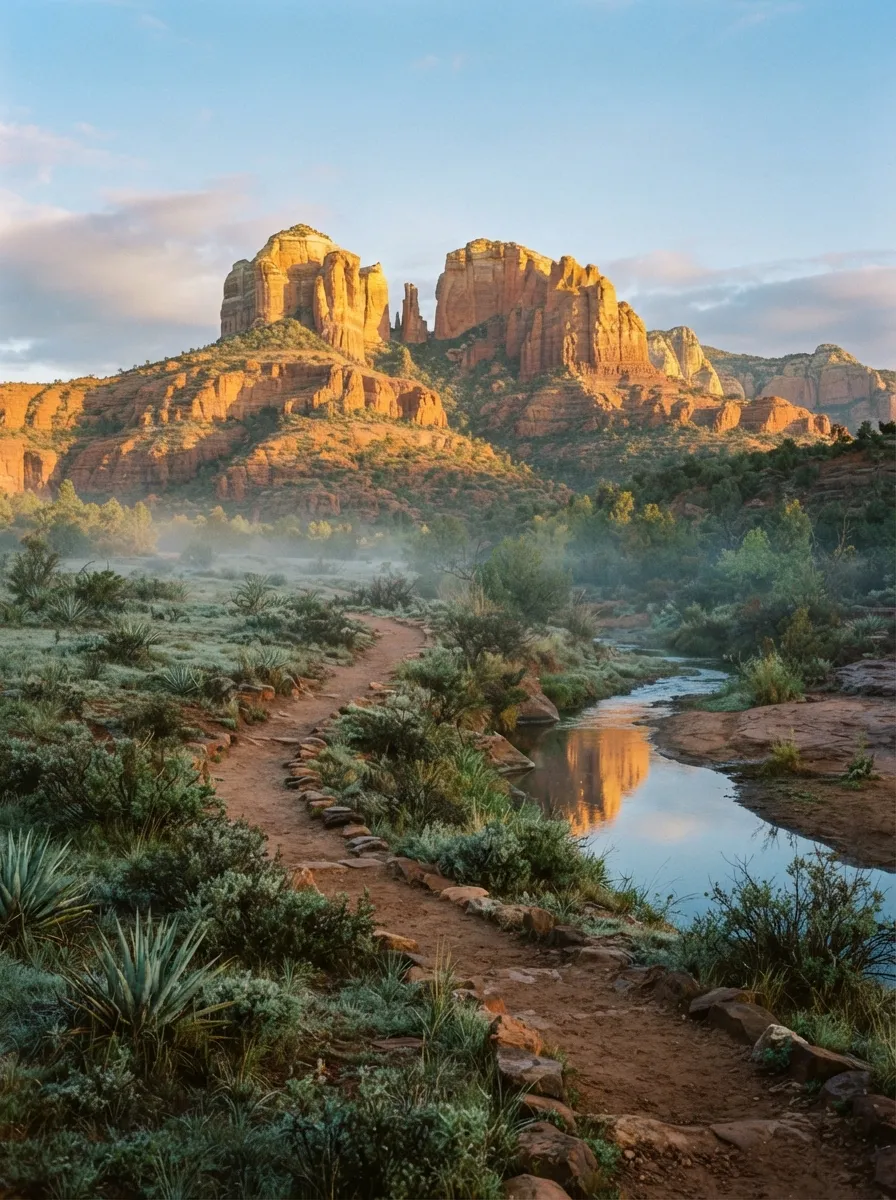
Sedona is one of those rare destinations whose fame does not fully prepare you for the first encounter.
Photographs capture the color, but not the scale. They show Cathedral Rock glowing at sunset, yet miss the sudden hush when the light changes or the way juniper scent hangs in cool morning air.
The best Sedona trip is not a race through every famous trail.
Wake early. Choose one meaningful hike. Leave room for a creek, a gallery, an unexpected overlook, or an afternoon when tired legs vote decisively for a shaded patio.
Use the shuttle. Respect trail closures. Give wildlife and other hikers space. Remember that the landscape is fragile even when the cliffs appear indestructible.
Sedona’s rocks have survived millions of years of wind, water, and geological upheaval.
They should not have to fear your snack wrapper.