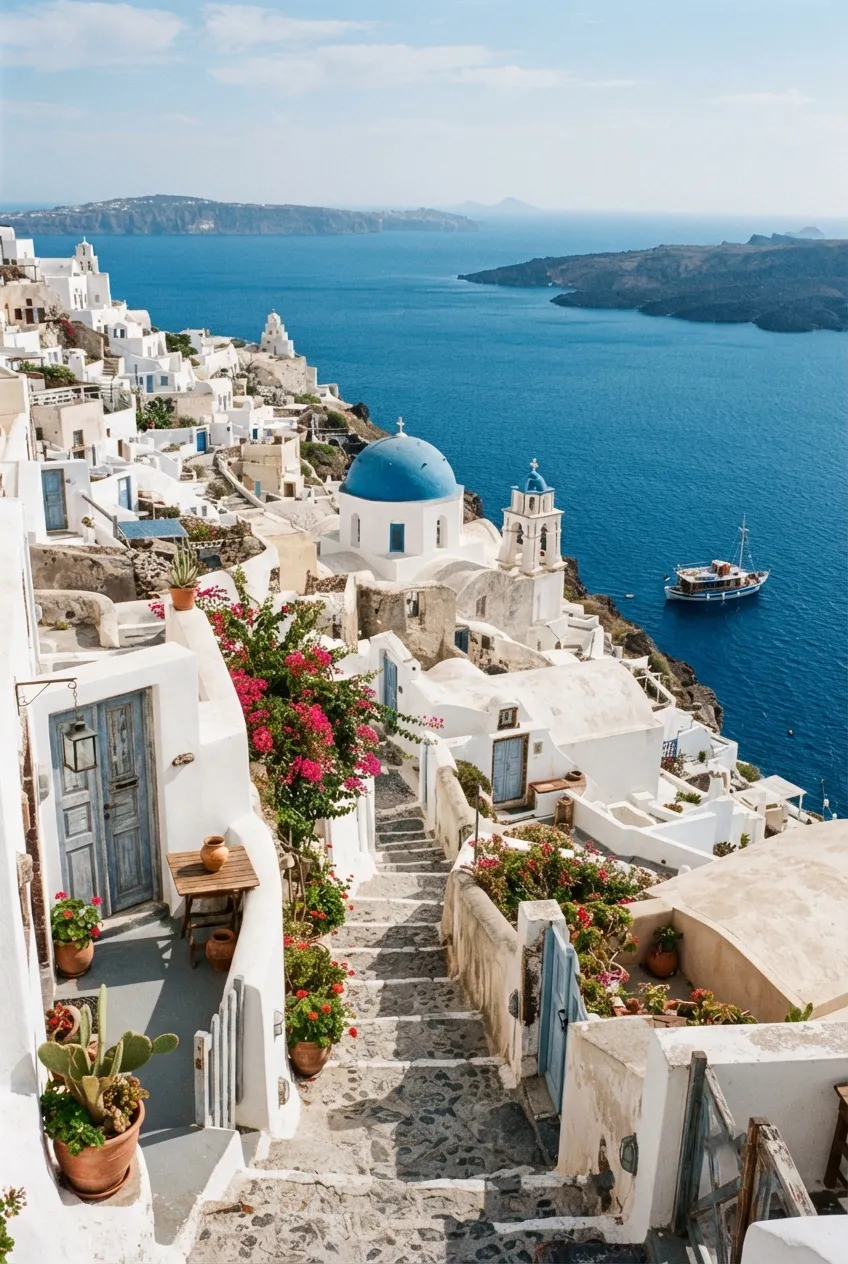
The Greek Isle Aesthetic: 15 Dreamy Places Where Whitewashed Villages Meet the Blue Aegean
The Greek isle aesthetic begins with white walls and blue water, but it does not end there.
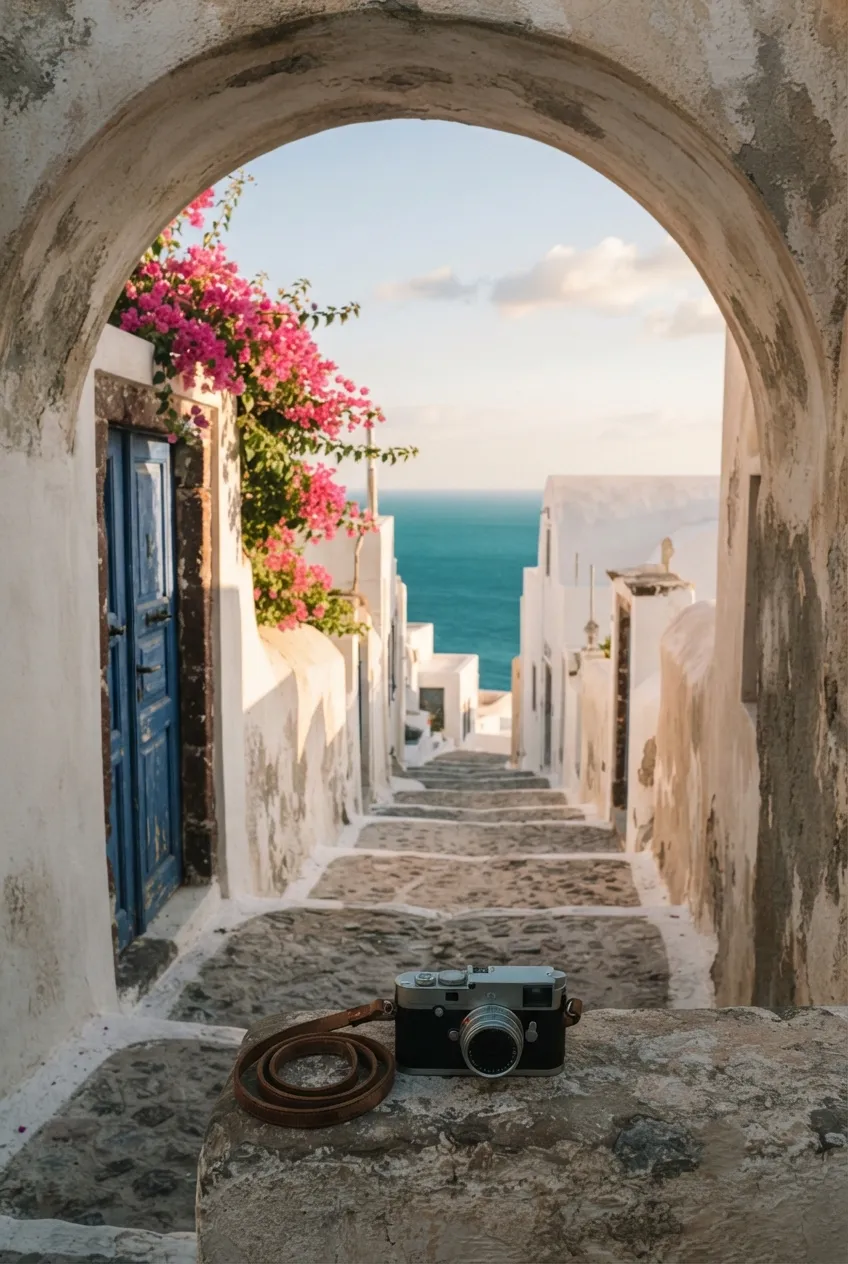
It lives in the shadow of a church dome at noon, the scrape of a wooden chair across a stone terrace, linen curtains lifting in the sea breeze and narrow lanes that seem to have been designed by sunlight rather than architects. It is chipped paint on a cobalt door, baskets of lemons beside a quiet kitchen and fishing boats rocking beneath waterfront houses.
From a distance, the Greek islands look almost impossibly polished. Up close, their beauty is more textured. Volcanic cliffs interrupt the clean white architecture. Old windmills stand above dry hills. Bougainvillea tumbles over cracked stone. Cats nap in the exact patch of shade you wanted for your photograph.
Santorini may have made this visual language famous, but the aesthetic stretches far beyond its blue domes. Paros has marble lanes and flower-covered courtyards. Milos replaces postcard perfection with moonlike rock formations and multicolored cliffs. Naxos adds green valleys, mountain villages and ancient ruins. Sifnos offers quiet chapels, pottery workshops and hilltop paths suspended above the Aegean.
This guide explores the places, colors, architecture, food, beaches and small everyday details that create the Greek isle aesthetic, along with a practical island-hopping route for experiencing it beyond the camera lens.
Recommended Travel Items for Your Trip
THE GREEK ISLE AESTHETIC AT A GLANCE
Signature colors: Chalk white, Aegean blue, terracotta, olive green and bougainvillea pink
Best islands for classic scenery: Santorini, Paros, Mykonos and Sifnos
Best island for dramatic geology: Milos
Best island for traditional villages: Naxos
Best months: May, June, September and early October
Ideal trip length: 10 to 14 days
Best travel style: Slow island hopping with three or four nights per island
What Is the Greek Isle Aesthetic?
The Greek isle aesthetic is a visual and emotional style inspired primarily by the Cyclades, an island group scattered across the central Aegean Sea.
Its most recognizable ingredients include:
- Whitewashed cube-shaped homes
- Blue doors, shutters and church domes
- Stone-paved pedestrian lanes
- Bougainvillea, geraniums and olive trees
- Small chapels on exposed hills
- Wooden fishing boats
- Sun-bleached textiles
- Terracotta pottery
- Limestone terraces
- Outdoor tavernas facing the sea
- Volcanic cliffs and turquoise coves
- Minimal interiors softened by handmade objects
Yet the aesthetic is not simply decorative.
Whitewashing traditionally helped reflect intense summer heat, while lime-based coatings also served practical sanitation purposes. Thick walls helped interiors remain cooler, and closely grouped homes offered protection from harsh winds and historical threats. Flat roofs, shaded courtyards and compact lanes were responses to climate and island geography rather than a coordinated branding campaign.
What now appears beautifully minimal was created through generations of practical adaptation.
Before planning a multi-island journey, read this complete Greece travel guide for essential information about transportation, local customs, money, seasonal conditions and itinerary planning.
The Colors of the Greek Islands
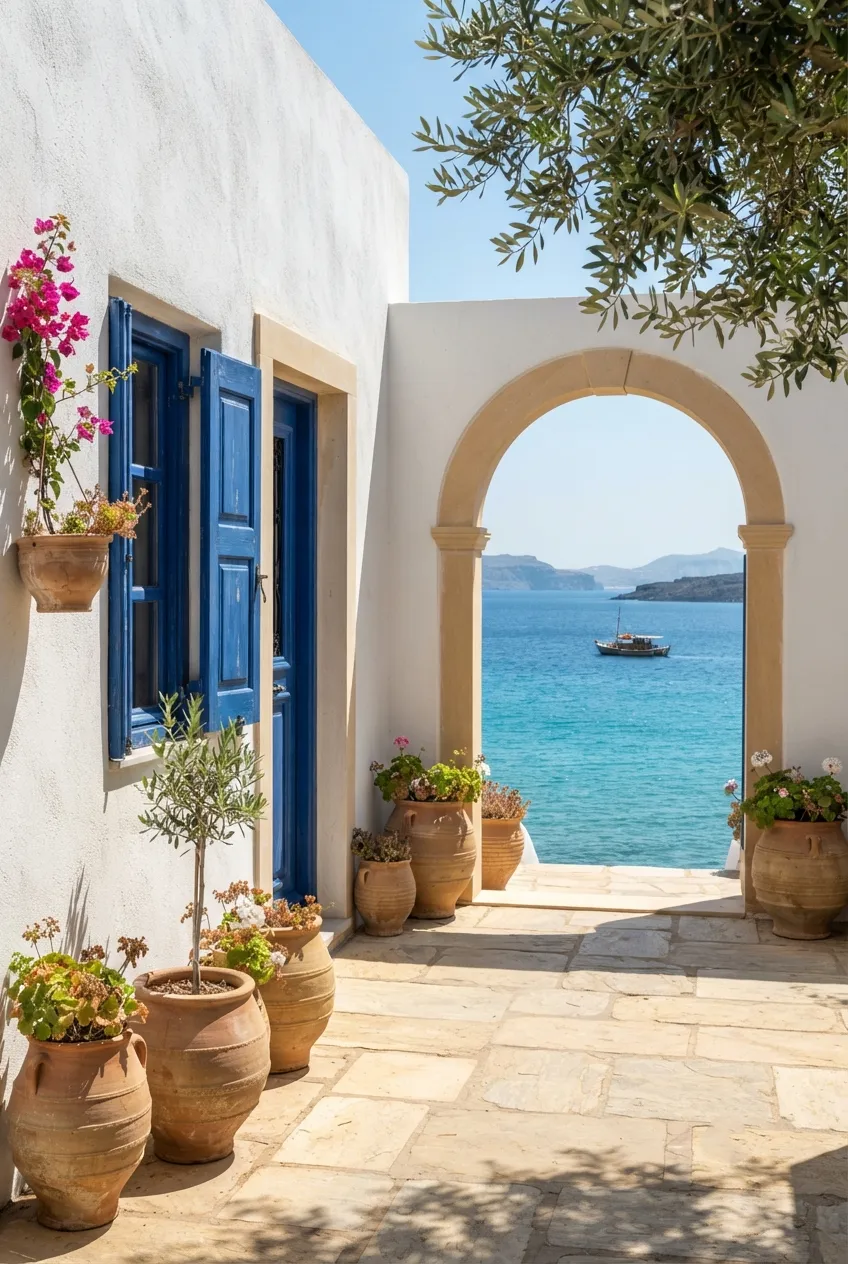
The Greek island palette appears simple until you start noticing how many shades it contains.
The sea changes from silver before sunrise to turquoise in shallow bays and almost black beneath volcanic cliffs. Whitewashed walls glow cream in the morning, become nearly blinding at midday and turn lavender as the sun drops.
Blue is everywhere, but rarely identical.
There is the deep cobalt of a Santorini dome, the faded powder blue of an old door, the green-blue water around Milos and the navy horizon beyond Naxos. Together, these colors have become so closely associated with Greece that one glimpse can awaken an entire travel memory.
That emotional relationship between place and color is beautifully explored in Santorini Blue and Beyond, where a single shade becomes a doorway into travel, nostalgia and the places we continue carrying long after we leave.
The Essential Greek Isle Color Palette
| Color | Where You See It | The Feeling It Creates |
| Chalk white | Houses, chapels and courtyard walls | Clean, bright and timeless |
| Cobalt blue | Domes, doors, shutters and railings | Bold and unmistakably Cycladic |
| Aegean turquoise | Shallow beaches and sheltered coves | Fresh, calm and inviting |
| Terracotta | Pottery, rooftops and tiles | Warm and earthy |
| Olive green | Groves, herbs and garden plants | Natural and rustic |
| Bougainvillea pink | Doorways, balconies and courtyards | Romantic and playful |
| Volcanic black | Santorini beaches and lava cliffs | Dramatic and elemental |
| Honey beige | Stone paths, cliffs and dry hills | Sun-baked and traditional |
15 Places That Capture the Greek Isle Aesthetic
1. Oia, Santorini
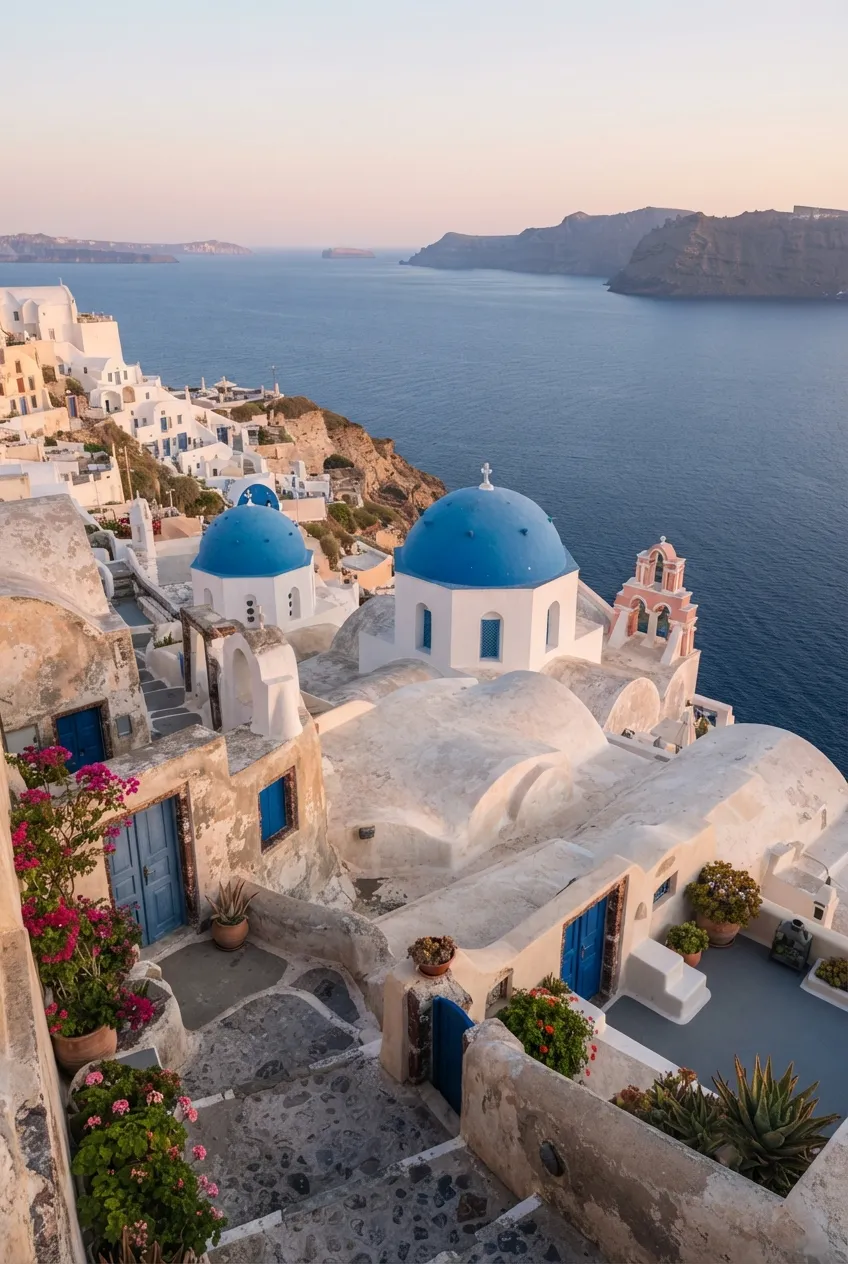
Oia is the image most travelers carry in their minds before they ever reach Greece.
White homes appear to pour down the volcanic cliff, interrupted by blue-domed churches, staircases and terraces overlooking the caldera. Some houses are carved directly into volcanic rock, a distinctive feature of Santorini’s cliffside settlements. Oia, Fira, Firostefani and Imerovigli all occupy positions around the caldera, with expansive views across the Aegean and the volcanic islets below.
The famous sunset is beautiful, but Oia feels most intimate early in the morning.
At that hour, delivery carts rattle across the lanes, shutters open gradually and the village belongs briefly to residents, cats and travelers willing to abandon breakfast for soft light.
Where to Find the Best Oia Aesthetic
- Blue domes near the Church of Agios Spyridonas
- The lanes behind Oia Castle
- Marble steps near quiet residential alleys
- Cave-house terraces overlooking the caldera
- Windmills at the western end of the village
- Ammoudi Bay beneath the cliffs
PHOTOGRAPHY TIP
Arrive shortly after sunrise rather than building your entire visit around sunset. The streets are quieter, the white buildings retain detail in softer light and the blue domes are easier to photograph without a small parliament of selfie sticks.
2. Imerovigli, Santorini
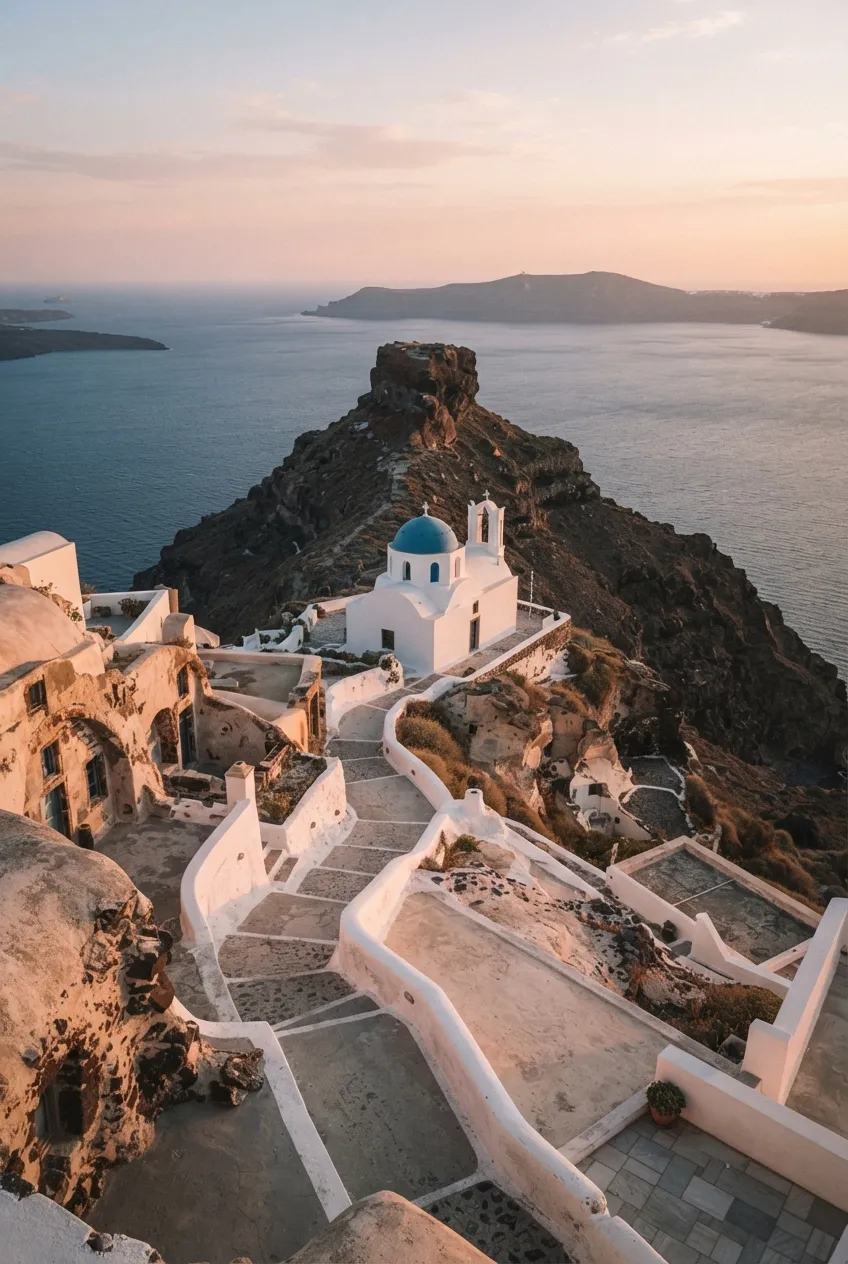
Imerovigli offers the Santorini look with slightly more breathing room.
The village sits high above the caldera between Fira and Oia. White paths curve around cave houses, small chapels and terraces that appear to hang above the sea.
Its most striking landmark is Skaros Rock, a massive formation projecting from the cliff. Walking toward it reveals tiny churches, volcanic terrain and quieter perspectives across the caldera.
Imerovigli is especially atmospheric during the final hour of daylight. Unlike Oia, where crowds often compress into a few famous viewpoints, the village offers numerous terraces and walking paths from which to watch the sky change.
Best for: Caldera views, elegant accommodation and peaceful mornings
Ideal stay: Two to three nights
Signature image: White chapel against Skaros Rock
3. Pyrgos, Santorini
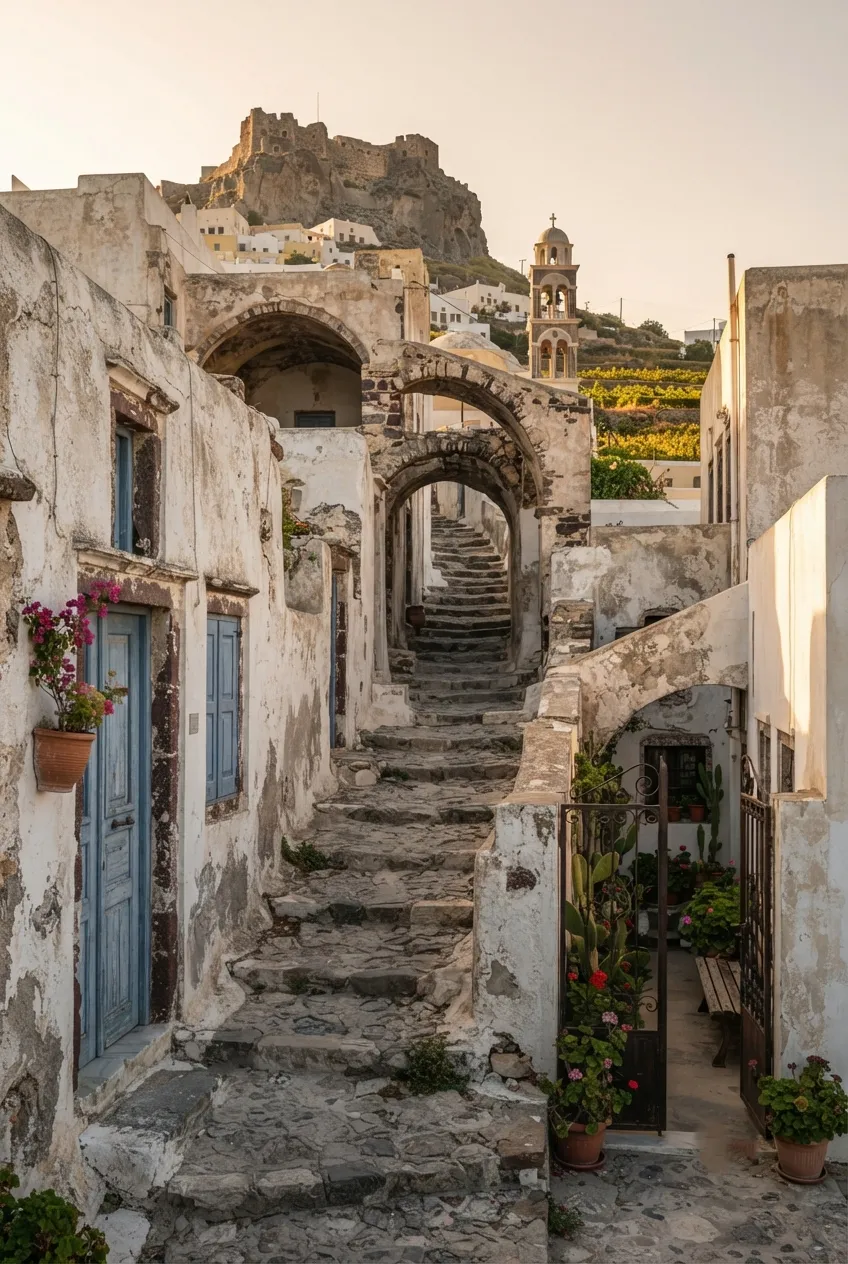
Pyrgos proves that Santorini’s charm does not belong only to the caldera edge.
This inland village climbs around the remains of a Venetian castle. Its narrow passages pass beneath arches, around churches and between old homes with worn doors and uneven stone steps.
The village is quieter than Oia and Fira, particularly in the morning. Climb toward the highest point for a broad view across vineyards, villages and the island’s volcanic landscape.
Pyrgos has a more lived-in appearance. Laundry dries on balconies. Small courtyards hide behind walls. Blue paint is often faded rather than freshly polished for photographs.
That imperfection gives the village its soul.
4. Naoussa, Paros
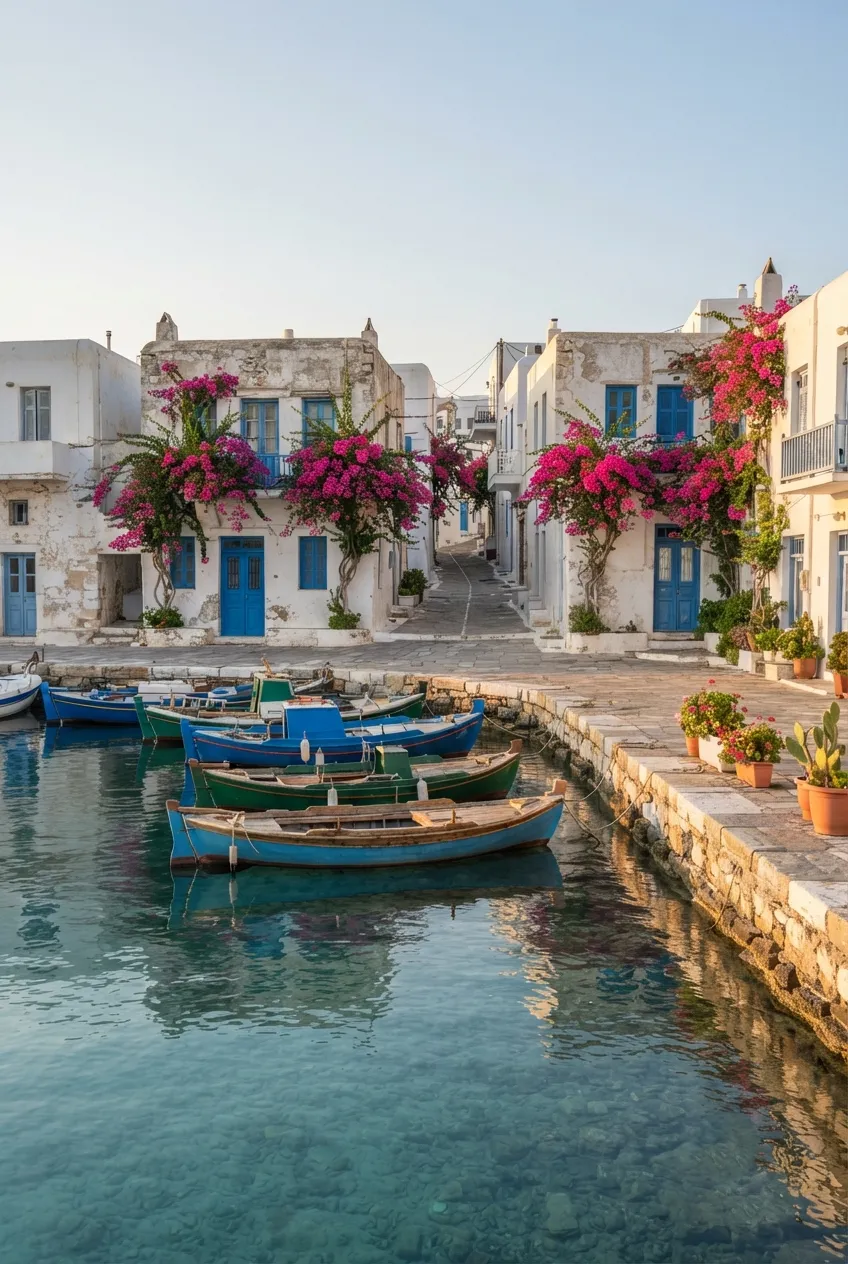
Naoussa is one of the loveliest harbor towns in the Cyclades.
Fishing boats fill the old port, while whitewashed lanes lead toward boutiques, chapels and small restaurants. Blue doors sit beneath cascades of bougainvillea, and old stone structures guard the harbor entrance.
Paros lies near the center of the Cyclades and combines clear-water beaches with traditional villages and striking island landscapes.
The waterfront is busiest in the evening, but the residential alleys behind it remain quieter. Walk without a strict route and look for tiny shrines, shaded courtyards and staircases decorated with clay pots.
Best time to explore: Before 9 a.m.
Best nearby beaches: Kolymbithres, Monastiri and Santa Maria
Ideal stay: Three to four nights
5. Lefkes, Paros
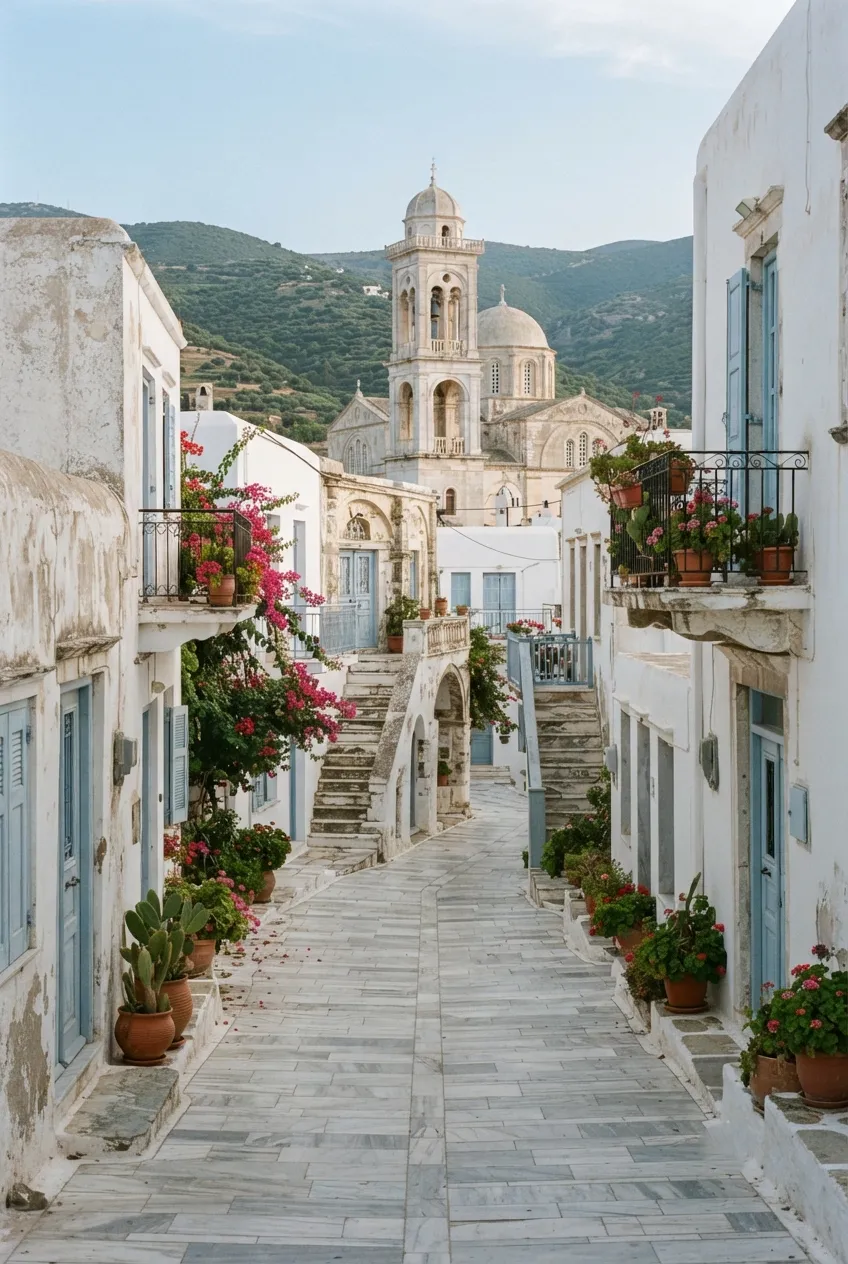
Lefkes sits inland among hills, olive trees and old footpaths.
It was once the island’s capital, and its architecture feels more traditional than the fashionable harbor scene in Naoussa. Marble-paved lanes twist between white homes, neoclassical buildings, blue shutters and flowering balconies.
The Church of Agia Triada rises above the village, while the surrounding hills create a softer, greener version of the Greek island aesthetic.
From Lefkes, travelers can follow part of the Byzantine Road, an old stone path connecting traditional settlements. It is best walked in the morning or during the cooler shoulder seasons.
Why Lefkes Feels Different
Lefkes is not built around sea views. Its atmosphere comes from courtyards, church bells, mountain air and glimpses of daily village life.
Here, the Greek isle aesthetic trades glamorous terraces for old stone walls and shaded doorways.
6. Chora, Mykonos
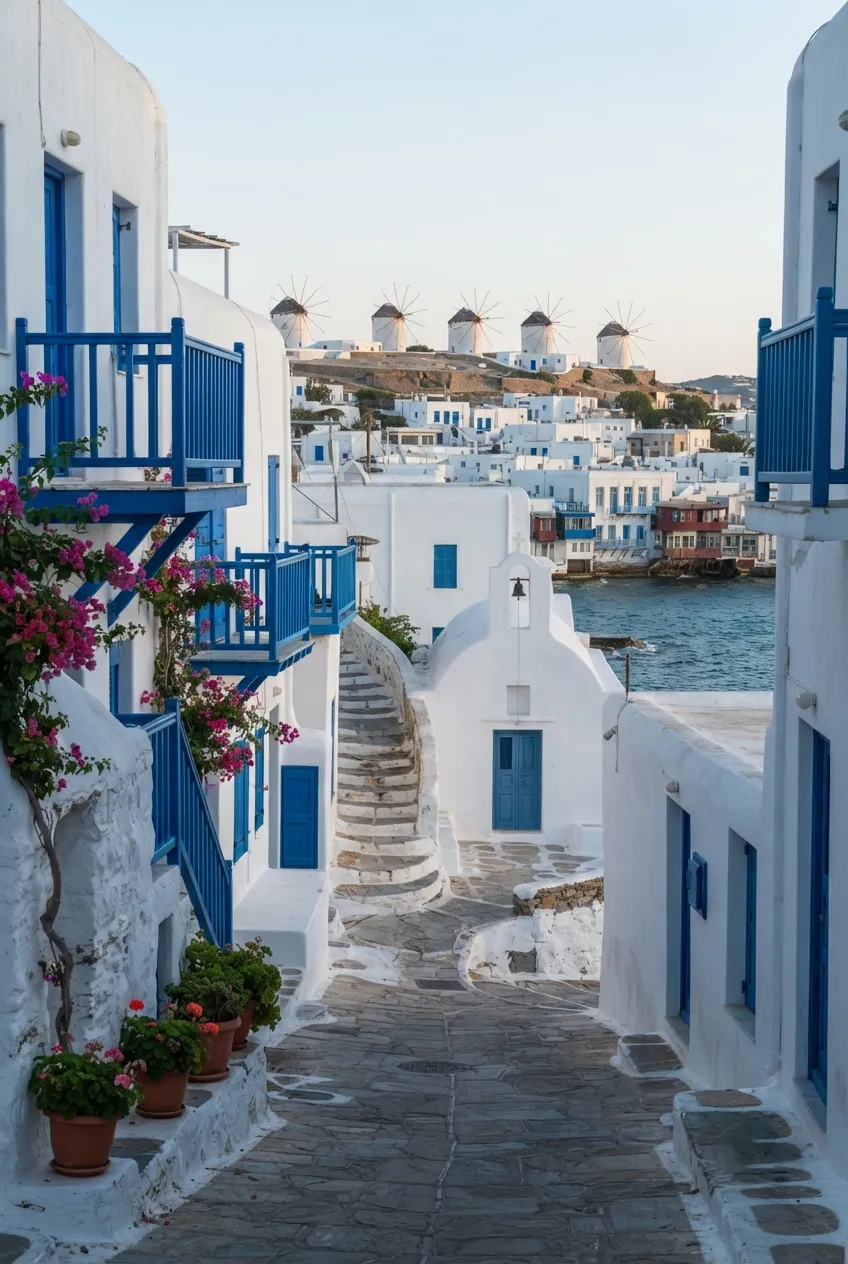
Mykonos Town, commonly called Chora, is a maze of narrow lanes, white buildings and painted wooden balconies.
The alleys were historically arranged in a confusing pattern that helped frustrate pirates. Today, they mostly bewilder travelers searching for the same shop they passed eight minutes earlier.
The best-known corner is Little Venice, where colorful waterfront houses stand directly above the sea. Nearby windmills overlook the town and provide one of Mykonos’s defining silhouettes.
Mykonos is known for stylish hotels and nightlife, but Chora also contains traditional churches, quiet residential passages and older architectural details. The official tourism site highlights the island’s Cycladic town, historic sites, beaches and traditional villages alongside its more glamorous reputation.
REALITY CHECK
Mykonos is one of Greece’s busiest and most expensive islands during summer. Visit in May, early June, late September or October for a calmer experience and more approachable accommodation rates.
7. Plaka, Milos
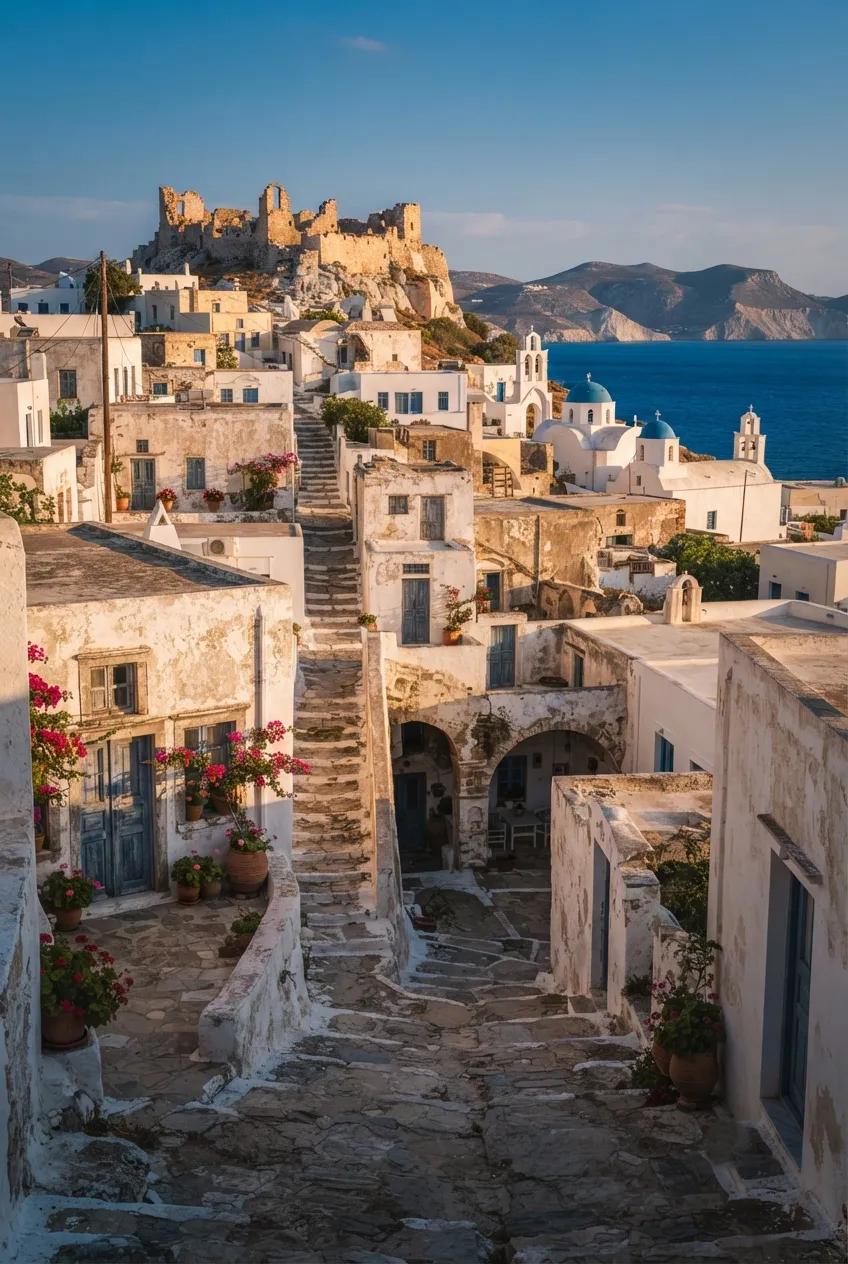
Plaka sits high above Milos in a tangle of white lanes, old churches and traditional homes.
The village becomes especially beautiful in the late afternoon, when warm light reaches its whitewashed walls and the sea appears between rooftops. Climb toward the Venetian castle above town for sweeping sunset views.
Milos belongs to the southwestern Cyclades and owes many of its unusual landscapes to volcanic activity. Its geology has created colorful soils, strange rock formations and a remarkable variety of beaches.
Plaka provides the classic Cycladic village aesthetic, while the rest of Milos supplies something wilder.
For a complete route through its villages, beaches and volcanic coastline, use this detailed Milos island travel guide.
8. Klima, Milos
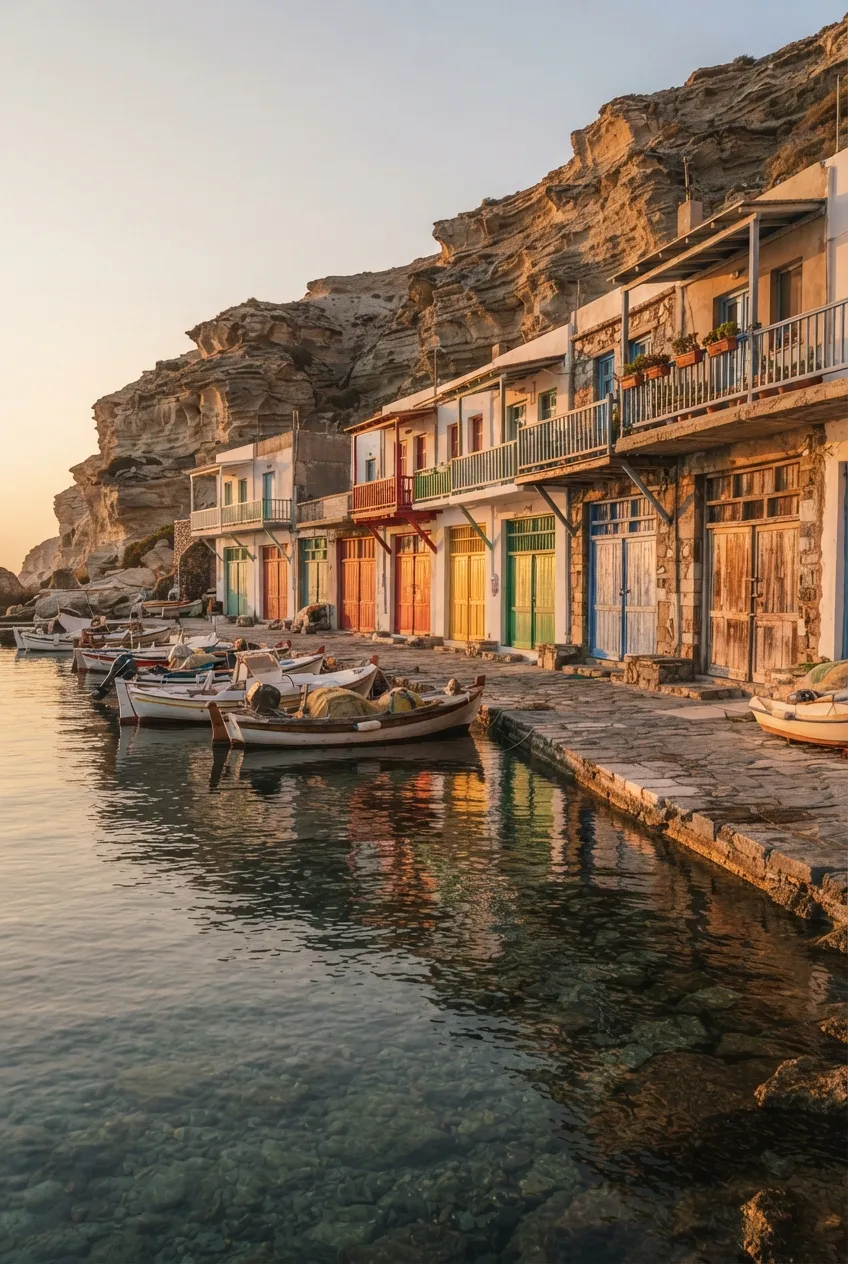
Klima looks less like the familiar white-and-blue Greek postcard and more like a row of paint boxes beside the sea.
The village is known for its syrmata, traditional fishermen’s houses built directly along the waterfront. Their lower-level doors are painted red, blue, yellow and green, originally helping owners recognize their properties from the water.
Boats were historically stored at ground level, while living quarters occupied the floor above.
Visit late in the afternoon when the sunlight warms the walls and reflections ripple beneath the houses. The waterfront path is small, so move respectfully and remember that many buildings remain private homes.
Best for: Colorful doors, waterfront photography and sunset
Combine with: Plaka and the ancient theater
Allow: One to two hours
9. Sarakiniko, Milos
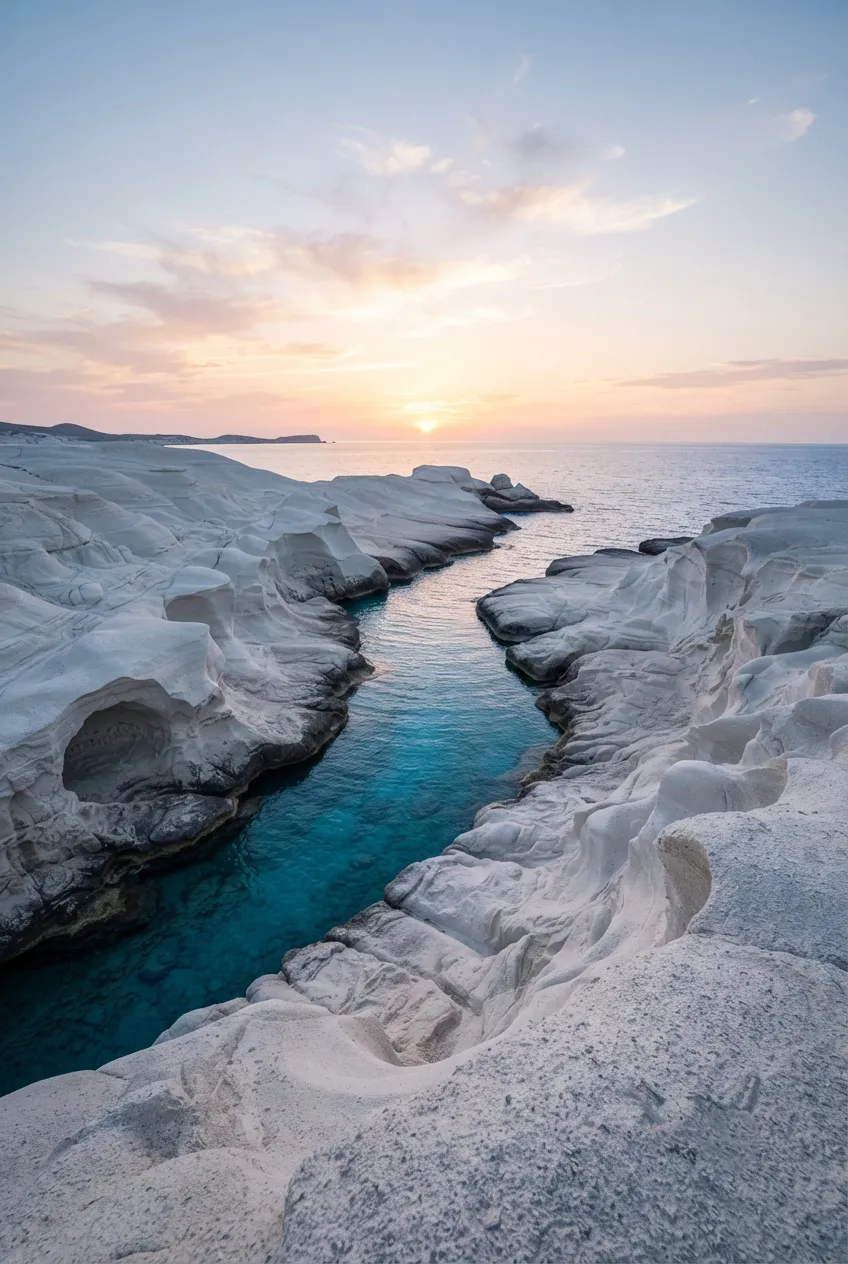
Sarakiniko removes almost every familiar element of the traditional Greek island picture.
Instead of whitewashed houses, it offers smooth white volcanic rock shaped by wind and sea. Narrow inlets cut through the formations, while the water shifts from pale turquoise to deep blue.
The landscape is frequently described as lunar, although the addition of swimmers, fishing boats and goats keeps it firmly within the Greek universe.
Milos has more than 70 beaches, many shaped by volcanic geology and erosion. Sarakiniko is among its most distinctive, with pale sculpted rock surrounding intensely blue water.
Arrive at sunrise for softer light and fewer visitors. There is little shade, and the white surface becomes fiercely bright during the middle of the day.
SAFETY WARNING
Do not jump from cliffs unless you have confirmed water depth, current conditions and a safe exit point. Waves and wind can change quickly, and surfaces around Sarakiniko may be slippery.
10. Chora, Naxos
Naxos Town combines Cycladic lanes with a busy waterfront and layers of ancient history.
Its best-known landmark is the Portara, the enormous marble doorway of an unfinished Temple of Apollo. It stands on a small islet beside the harbor and becomes particularly striking at sunset.
Behind the waterfront, the old town rises toward a Venetian castle. Arched passages, worn staircases, hidden courtyards and stone mansions create a richer, more medieval version of the island aesthetic.
Naxos is the largest and greenest island in the Cyclades, with fertile valleys, mountain scenery and traditional inland villages.
Best for: Travelers wanting beaches, villages, history and local food
Ideal stay: Four to five nights
Signature experience: Sunset near the Portara
11. Chalki, Naxos
Chalki sits in the fertile Tragea Valley, surrounded by olive groves and mountains.
Its neoclassical homes, faded shutters, stone lanes and small artisan shops feel different from the bright coastal settlements. The village palette is softer, blending white walls with ochre stone, dusty green foliage and pale blue doors.
This is an excellent place to experience the quieter, agricultural side of island life. Combine it with nearby churches, olive groves and the village of Filoti.
Chalki also rewards travelers interested in interior details: carved doorframes, antique furniture, embroidered textiles, ceramic vessels and shaded courtyards where the light arrives in fragments.
12. Apollonia, Sifnos
Apollonia stretches across several connected hills in the heart of Sifnos.
Its lanes pass whitewashed houses, small churches, pottery shops and cafés tucked into courtyards. Blue shutters and doors appear throughout the village, but the overall atmosphere is restrained and quietly elegant.
Sifnos is especially appealing to travelers who want Cycladic architecture without the visual intensity of Santorini or Mykonos. The island’s white houses, blue doors and stone lanes exemplify traditional Cycladic design.
The villages of Artemonas and Kastro are close enough to explore during the same stay, each offering a different interpretation of the island’s aesthetic.
13. Kastro, Sifnos
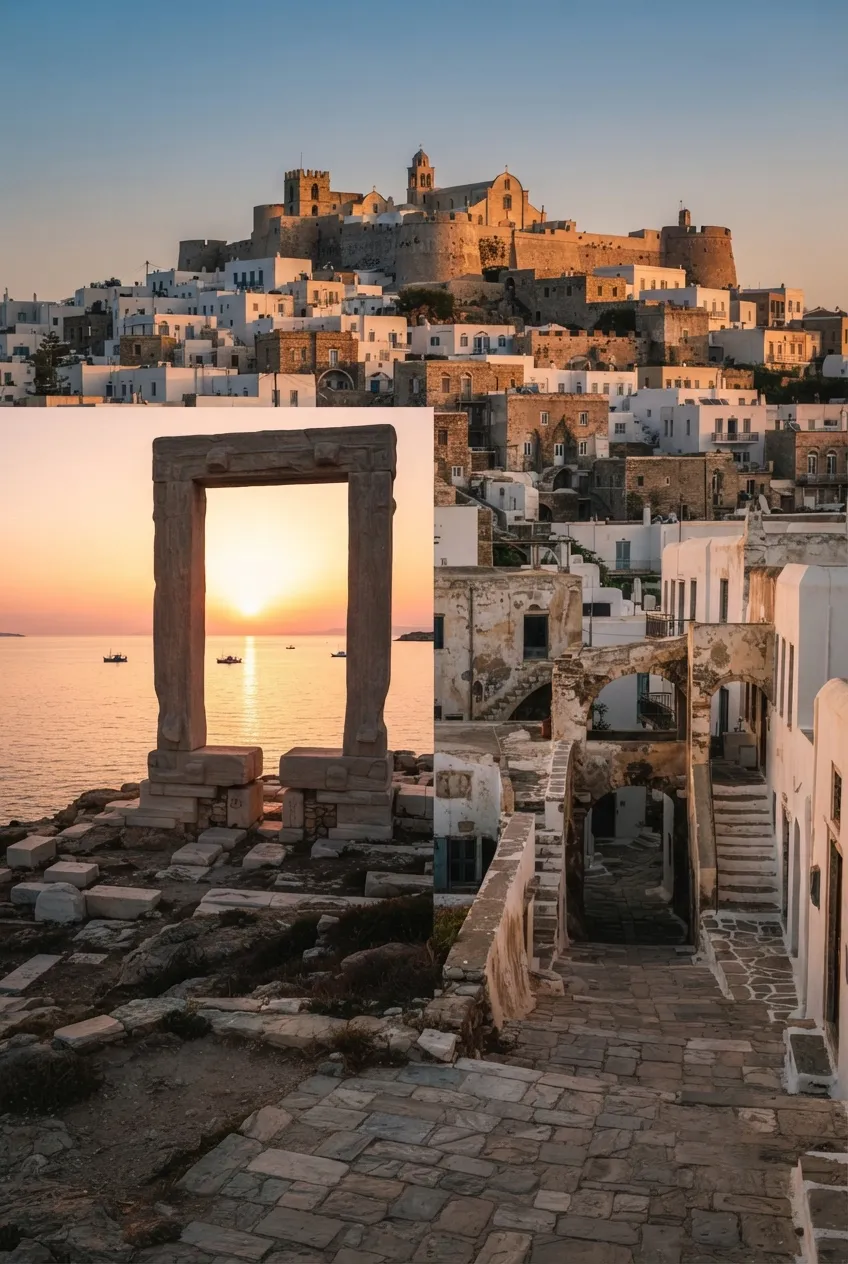
Kastro is a fortified settlement perched above the Aegean.
Unlike the open white lanes of Apollonia, its architecture feels enclosed and defensive. Homes were incorporated into the outer walls, while narrow entrances and twisting passages protected the village.
Below Kastro, the small Church of the Seven Martyrs occupies a rocky promontory connected by a stone path. It is one of the most photogenic chapels in the Cyclades, especially when waves break around the rocks.
The descent is straightforward in calm weather, but strong wind can make exposed sections uncomfortable.
Best for: History, sea views and chapel photography
Best light: Early morning
Ideal visit: Half a day
14. Chora, Folegandros
Folegandros has often been compared with Santorini because of its dramatic cliffs, whitewashed capital and expansive Aegean views.
Yet its Chora feels far more intimate.
A series of small squares is linked by pedestrian lanes, with churches, trees and white homes surrounding outdoor tables. The medieval Kastro quarter contains some of the oldest houses, while a zigzagging path climbs the hillside to the Church of Panagia.
The official Greek tourism site describes Chora as one of the Cyclades’ most beautiful and well-preserved settlements, with a medieval Kastro and a hilltop church overlooking the island.
Visit during late spring or September, when the lanes are lively without becoming overwhelmed.
15. Chora, Amorgos
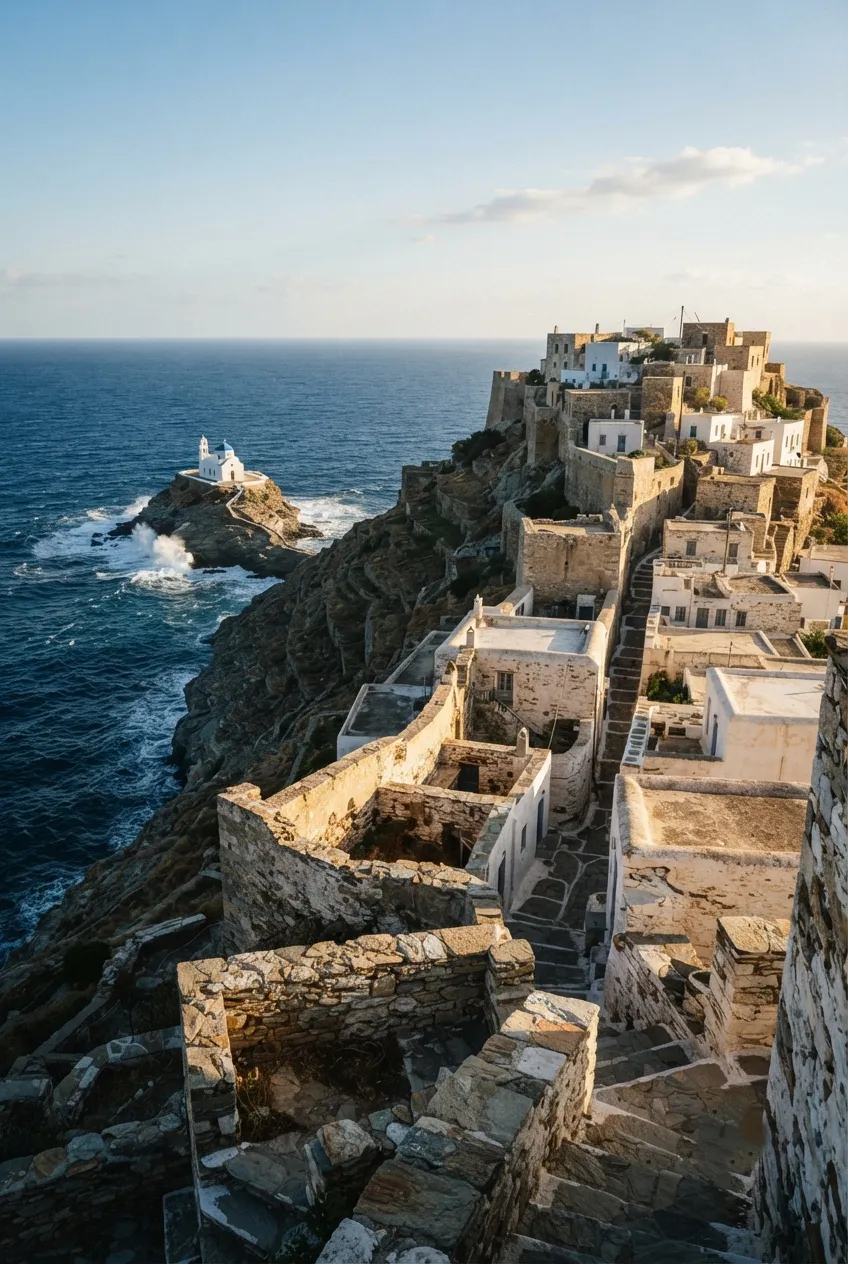
Amorgos offers one of the rawest and most contemplative expressions of the Greek island aesthetic.
Its Chora is a dense village of whitewashed homes, tiny squares, old windmills and blue-domed chapels set among rugged mountains. The surrounding landscape is steep and dry, making the white architecture appear even brighter.
The island’s most extraordinary structure is the Monastery of Hozoviotissa, built into a cliff high above the Aegean. Its long white façade seems pressed into the rock rather than placed upon it.
Amorgos requires more effort to reach than Santorini or Paros, but that distance preserves its slower rhythm.
Beyond Blue and White: The Details That Create the Look
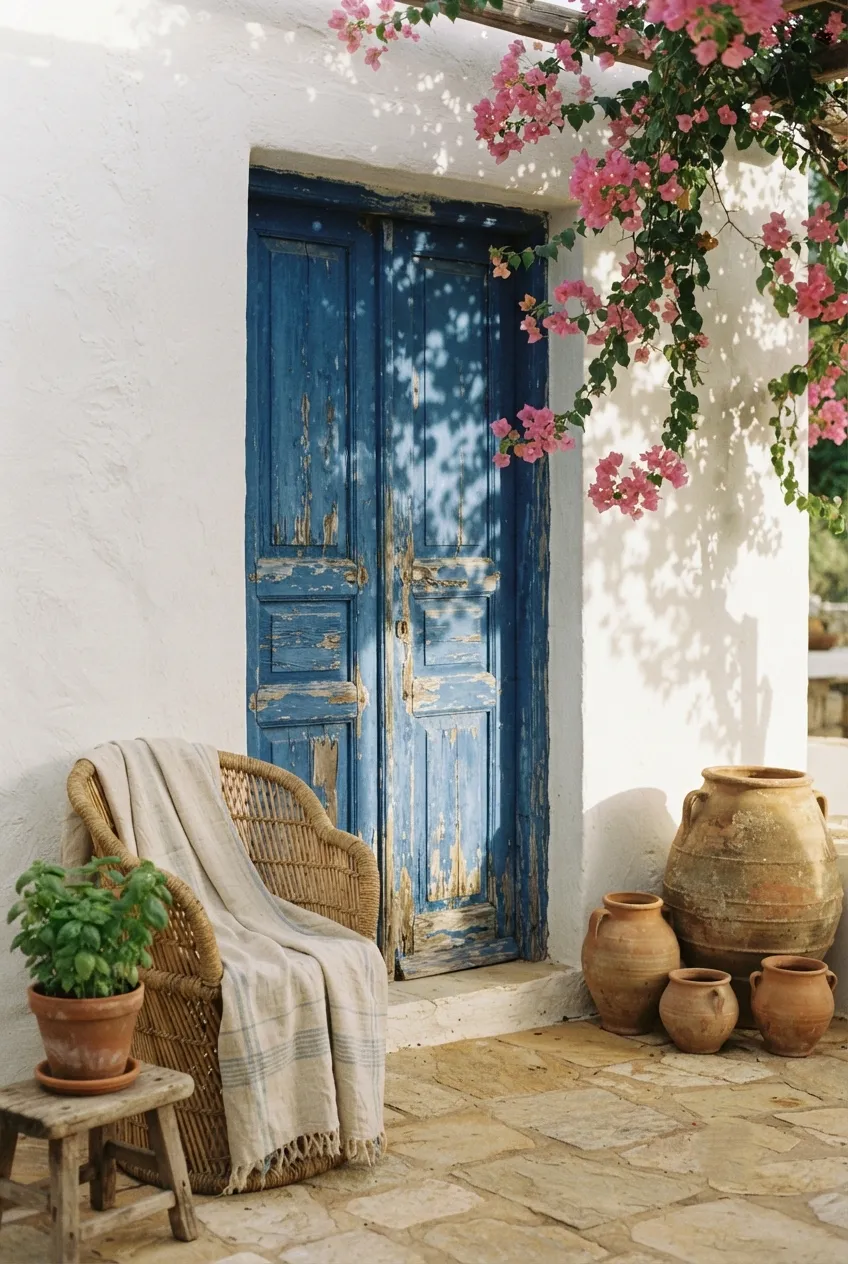
The most compelling Greek island scenes are rarely composed of only two colors.
Look closer and you will find:
Weathered Doors
Old doors often carry several layers of paint. Cobalt chips away to reveal green, gray or natural wood beneath it.
Bougainvillea
Its bright flowers soften angular buildings and cast intricate shadows across walls. The plant is most abundant during the warmer months.
Handmade Pottery
Ceramic jugs, bowls and amphora-inspired vessels connect island interiors with long local craft traditions.
Woven Textiles
Linen curtains, striped cushions and embroidered cloth introduce softness into otherwise minimal spaces.
Natural Materials
Stone floors, wooden beams, cane chairs and lime-plastered walls give rooms a tactile quality that polished imitations often miss.
Small Chapels
Chapels appear on cliffs, hills, harbor edges and even isolated rocks. Many are whitewashed, but their domes may be blue, red or left in natural stone.
Food as Color
Tomatoes, lemons, olives, figs, herbs and grilled vegetables create a palette every bit as memorable as the architecture.
The Greek Isle Aesthetic in Fashion and Beauty
Greek island style tends to favor clothes that move easily in heat and wind.
Think breathable linen, cotton shirts, relaxed trousers, woven bags, leather sandals and sun hats that can survive being chased down a harbor lane.
The palette often draws directly from the landscape:
- White from limewashed villages
- Blue from domes and sea
- Beige from stone paths
- Green from olive leaves
- Terracotta from pottery
- Pink from bougainvillea
The same visual language has moved into beauty and nail design. Travelers looking for playful inspiration can explore this Santorini Blues nail art story, which translates domes, waves and Mediterranean color into miniature travel souvenirs worn on the fingertips.
Where to Stay for the Full Aesthetic
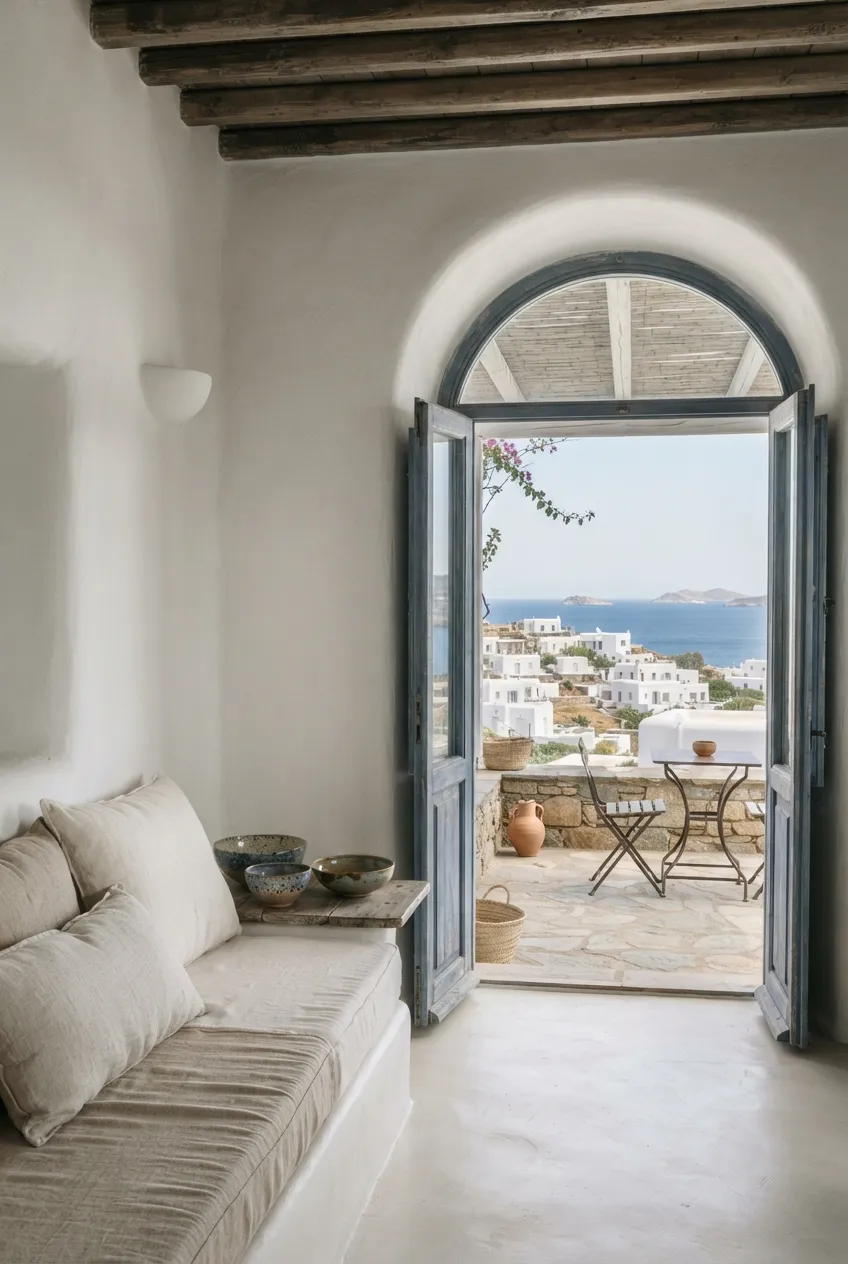
A beautiful Greek island stay does not need an infinity pool suspended over Santorini’s caldera.
Some of the most atmospheric accommodation options are simpler:
- Restored village homes
- Small family-run guesthouses
- Cave rooms
- Farm stays
- Harbor apartments
- Stone cottages
- Converted fishermen’s houses
- Boutique hotels built around old courtyards
Look for These Features
- White or lime-plastered walls
- Traditional shutters
- Shaded outdoor seating
- Sea or village views
- Natural ventilation
- Local ceramics and textiles
- Walkable access to the village center
- Clear information about stairs and luggage access
BOOKING WARNING
Many Cycladic villages contain steep steps and pedestrian-only lanes. A property that looks close to the road on a map may require a considerable uphill walk. Confirm luggage assistance, accessibility and the exact route before booking.
Greek Isle Aesthetic Comparison Table
| Island | Signature Look | Best Place for It | Crowd Level in Summer | Ideal Stay |
| Santorini | Blue domes and volcanic cliffs | Oia and Imerovigli | Very high | 3–4 nights |
| Paros | Marble lanes and floral courtyards | Naoussa and Lefkes | High | 3–4 nights |
| Mykonos | White alleys and windmills | Chora | Very high | 2–3 nights |
| Milos | Volcanic beaches and colorful boathouses | Plaka, Klima and Sarakiniko | High | 4 nights |
| Naxos | Historic lanes and green valleys | Chora, Chalki and Apeiranthos | Moderate | 4–5 nights |
| Sifnos | Minimal villages and hilltop chapels | Apollonia and Kastro | Moderate | 3–4 nights |
| Folegandros | Cliffside simplicity | Chora | Moderate | 3 nights |
| Amorgos | Mountain villages and isolated chapels | Chora and Hozoviotissa | Low to moderate | 3–4 nights |
A 12-Day Greek Isle Aesthetic Itinerary
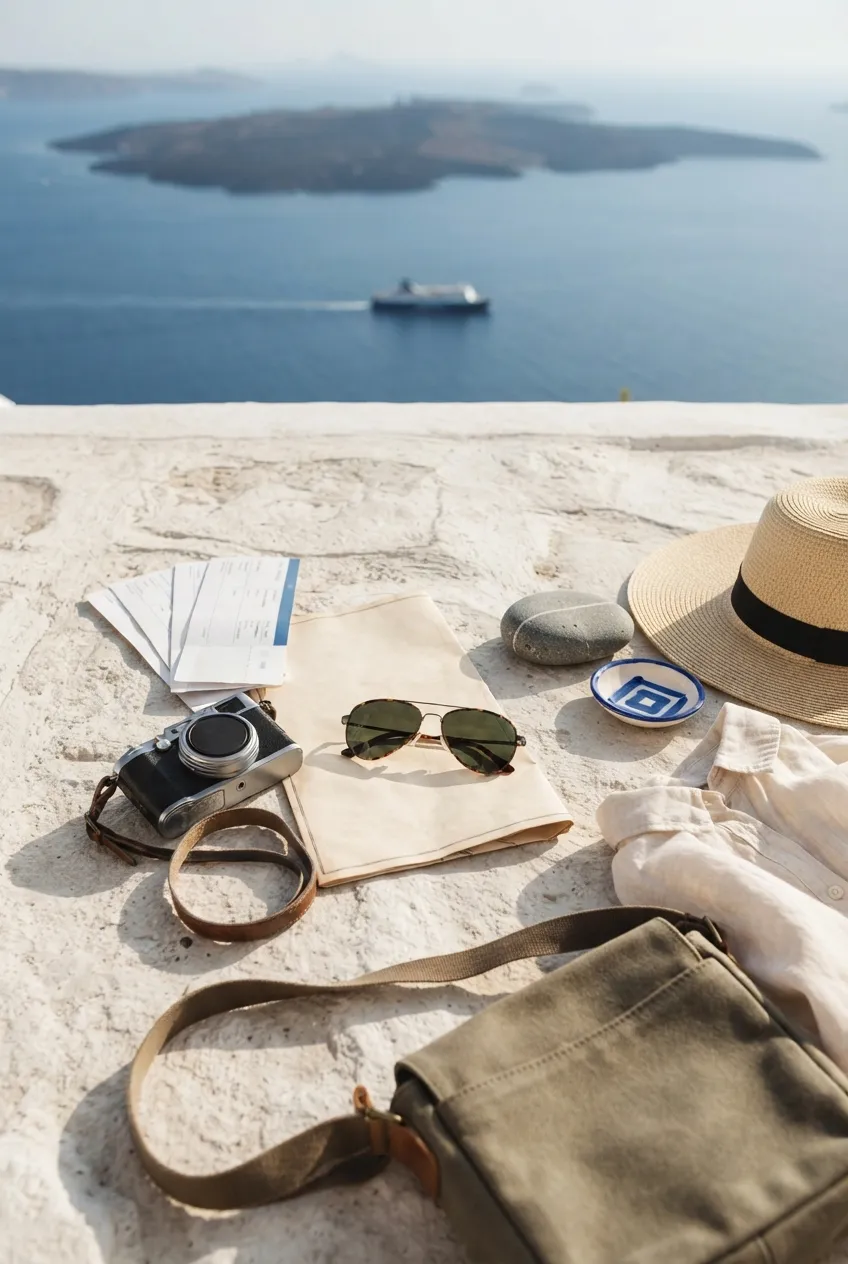
This route combines the famous caldera scenery of Santorini with the volcanic landscapes of Milos and the softer village atmosphere of Paros.
Ferry schedules vary by season, so confirm direct connections before booking nonrefundable accommodation.
Days 1–3: Santorini
Base yourself in Firostefani, Imerovigli or Pyrgos.
Explore:
- Oia at sunrise
- The Fira-to-Oia walking route
- Imerovigli and Skaros Rock
- Pyrgos village
- Akrotiri Archaeological Site
- The caldera coast
- A volcanic boat excursion
Santorini’s volcanic landscape includes the caldera, lava formations and the volcanic islets of Nea Kameni and Palia Kameni. Visitors can take boat trips to explore the crater area and nearby thermal waters.
Days 4–7: Milos
Take the ferry to Milos and stay near Pollonia, Adamas or Plaka.
Explore:
- Sarakiniko at sunrise
- Klima in late afternoon
- Plaka and its castle
- Firopotamos
- Mandrakia
- Kleftiko by boat
- Firiplaka or Tsigrado
- The catacombs and ancient theater
Milos is where the clean Cycladic aesthetic collides with geological fireworks. Its white villages remain beautiful, but its cliffs, caves and mineral colors are the true headliners.
Days 8–11: Paros
Continue to Paros and divide your time between Naoussa, Parikia and the inland villages.
Explore:
- Naoussa before breakfast
- Lefkes and the Byzantine Road
- Parikia’s old town
- Kolymbithres Beach
- Marpissa
- Prodromos
- Antiparos as a day trip
Day 12: Return to Athens
Travel by ferry or domestic flight, depending on your route and seasonal availability.
Leave a generous connection window before any international flight. Wind can delay ferries, and the Aegean has little interest in your tightly color-coded spreadsheet.
SLOWER ALTERNATIVE
Remove one island and stay five or six nights on each of the remaining two. Greek island travel improves when mornings are allowed to unfold without luggage, checkouts and ferry-port negotiations.
The Best Time to Experience the Greek Isle Aesthetic
May
May brings mild-to-warm weather, green hillsides and abundant flowers. Villages feel awake but not yet overwhelmed.
Sea temperatures may remain cool, particularly early in the month, but conditions are excellent for walking and photography.
June
June offers long sunny days, warm water and a lively atmosphere before the heaviest crowds of July and August.
It is one of the best months for combining beaches, dining and village exploration.
July and August
These are the busiest, hottest and often most expensive months.
The islands are energetic, ferries operate frequently and nearly every seasonal business is open. However, famous locations can become extremely crowded, accommodation prices rise and strong seasonal winds may affect beach conditions or ferry journeys.
Plan outdoor sightseeing early in the morning and reserve accommodation well ahead.
September
September is arguably the best all-around month.
The sea remains warm, evenings are pleasant and crowds usually begin easing after the first part of the month. Restaurants and hotels are generally still operating across the popular islands.
October
Early October can be wonderfully peaceful, but weather becomes less predictable as the month progresses.
Some seasonal properties and restaurants begin closing, while ferry schedules may become less frequent.
Winter
Winter reveals a very different Greece.
Santorini, Syros, Naxos, Crete and several other islands retain year-round communities, but many beach-oriented businesses close. The atmosphere becomes quieter, local and occasionally stormy.
Travelers curious about a less familiar side of the country can explore these Greece winter destinations, including islands, mountain towns and historic cities that remain compelling beyond summer.
Greek Island Packing Checklist
Clothing
- Lightweight linen or cotton shirts
- Comfortable shorts or relaxed trousers
- A light sweater for windy evenings
- Modest clothing for monasteries and churches
- Swimwear
- A sun hat with a secure fit
- Comfortable sandals
- Walking shoes with good grip
Travel Essentials
- High-SPF sunscreen
- Sunglasses
- Reusable water bottle
- Portable charger
- Small daypack
- Offline maps
- Ferry confirmations
- Motion-sickness medication if needed
- Compact waterproof layer
- Copies of important travel documents
Photography Items
- Lens cloth for sea spray and dust
- Extra memory card
- Spare battery
- Protective camera pouch
- Phone wrist strap
- Small tripod where permitted
PACKING NOTE
Wheeled suitcases and Cycladic staircases maintain a historic rivalry. A light bag or compact suitcase is much easier to manage through pedestrian villages, ferry ramps and cobbled lanes.
How to Photograph the Greek Isle Aesthetic
Begin Before the Shops Open
Early morning offers empty lanes, cooler temperatures and gentle shadows. It also reveals the practical side of village life before the day becomes performance and commerce.
Photograph Layers
Use arches, doorways, plants and staircases to frame the sea or another building. The most compelling images often contain several planes rather than one famous object centered against the sky.
Look Beyond Famous Blue Domes
A faded wooden chair, coiled fishing rope or potted basil may communicate island life more effectively than another identical sunset photograph.
Respect Private Homes
A beautiful doorway is not automatically a public photography set. Do not enter terraces, sit on walls, move personal objects or block residents’ entrances.
Use Midday Light Carefully
Greek midday sunlight is intense. Instead of fighting it, photograph strong architectural shadows, geometric walls and bright color contrasts.
Stay Out After Sunset
The blue hour produces softer walls, glowing windows and deep cobalt skies. Villages often feel more cinematic after the sun disappears.
How to Bring the Greek Isle Aesthetic Home
The goal is not to turn your living room into a themed seafood restaurant.
Instead, borrow the principles behind the aesthetic:
Keep the Palette Restrained
Use warm white as a foundation, then introduce blue, terracotta and olive green through smaller pieces.
Choose Texture Over Gloss
Linen, raw wood, limewash-style walls, woven baskets and handmade pottery feel more authentic than shiny mass-produced décor.
Allow Imperfection
Greek island homes are compelling because surfaces age. Wood fades, paint chips and stone becomes smoother through use.
Make Space for Light
Light is the invisible architect of Cycladic style. Use sheer curtains, uncluttered windows and mirrors that reflect natural brightness.
Bring in Useful Objects
Ceramic bowls, woven trays, linen cloths and wooden stools should be functional rather than merely decorative.
Add Plants Sparingly
Olive trees, rosemary, basil and geraniums evoke the Mediterranean without requiring a plastic bougainvillea invasion.
Responsible Greek Island Travel
The Greek islands are living communities with limited water, waste systems and infrastructure.
Travelers can reduce their impact by:
- Taking shorter showers
- Reusing towels
- Carrying a refillable bottle where local water is suitable
- Avoiding unnecessary laundry
- Choosing locally owned accommodation
- Eating at family-run tavernas
- Respecting churches and monasteries
- Staying on marked paths
- Avoiding illegal cliff access
- Never removing stones, shells or archaeological fragments
- Using buses or walking when practical
- Visiting beyond the busiest midday hours
Do Not Treat Villages as Film Sets
Residents still need to reach their homes, carry groceries and park vehicles. Keep entrances clear and avoid photographing people closely without permission.
Support Traditional Crafts
Purchase ceramics, woven goods, food products and artwork directly from local producers where possible. Authentic pieces carry more meaning than imported souvenirs painted with generic blue domes.
ENVIRONMENTAL WARNING
Wildfire risk can become serious during hot, dry and windy periods. Follow local restrictions, never discard cigarettes and avoid any open flame outdoors. Emergency instructions should take priority over sightseeing plans.
Frequently Asked Questions
Which island has the best Greek aesthetic?
Santorini has the most iconic blue-domed and cliffside scenery. Paros provides a softer combination of white villages, flowers and harbors, while Sifnos feels quieter and more traditional.
Is every Greek island white and blue?
No. Whitewashed architecture is especially associated with the Cyclades. Islands in the Ionian, Dodecanese and other regions may feature Venetian buildings, colorful neoclassical homes, tiled roofs, forests or very different landscapes.
Which Greek island is best for photography?
Santorini is ideal for architecture and caldera views. Milos is stronger for geological landscapes and unusual beaches. Paros and Sifnos are excellent for villages, while Naxos offers the broadest variety.
Where can I avoid the biggest crowds?
Consider Sifnos, Amorgos, Folegandros, Serifos, Kimolos or the Small Cyclades. Even on popular islands, staying in an inland village and visiting major sights early can produce a much calmer experience.
How many Greek islands should I visit in two weeks?
Three islands is comfortable. Four may work when ferry connections are direct and distances are short, but frequent transfers can consume valuable vacation time.
Is Santorini worth visiting despite the crowds?
Yes, particularly during shoulder season or with an itinerary built around early mornings and quieter villages. Its volcanic caldera and cliffside architecture remain genuinely extraordinary.
Is Milos similar to Santorini?
Both islands are volcanic, but their character differs. Santorini is defined by its enormous caldera and cliffside settlements. Milos is known for varied beaches, multicolored rock formations and small coastal villages.
What should I wear in Greek churches?
Dress respectfully. Cover shoulders and avoid very short clothing, especially at monasteries. Some religious sites may provide wraps, but carrying a light scarf is more reliable.
Can I experience Greek islands in winter?
Yes, but choose islands with substantial year-round communities and arrive expecting a quiet local atmosphere rather than a beach holiday. Many seasonal hotels, restaurants and ferry routes operate less frequently.
Final Thoughts
The Greek isle aesthetic is often reduced to a blue dome against a white wall. Beautiful as that image is, it captures only the cover of the story.
The deeper beauty appears in ordinary details.
It is the morning hush before a village wakes, the salt dried on a fishing boat, the scent of herbs along a footpath and the sudden rectangle of blue sea visible through an archway. It is a chapel built where the wind seems determined to remove it and a century-old door wearing every shade it has ever been painted.
Santorini offers the grandeur. Paros supplies the graceful lanes. Milos tears open the landscape and reveals its volcanic machinery. Naxos brings fertile valleys and old mountain villages. Sifnos whispers through courtyards and cliffside churches.
Visit for the famous colors, but remain long enough to notice the textures beneath them.
That is where the real Greek island aesthetic lives: not in perfect white walls, but in the beautiful conversation between sunlight, stone, sea and time.