15 Spectacular Uganda Travel Destinations That Reveal the Wild Heart of Africa
Uganda does not make travelers choose between rainforest, savanna, mountains and lakes. It gathers them all into one compact, intensely green country.
One morning may begin beneath the tangled canopy of Bwindi Impenetrable Forest, listening for mountain gorillas beyond walls of wet leaves. A few days later, elephants cross the road beside the Nile, lions rest in fig trees and snow-touched peaks rise above equatorial valleys.
Known as the “Pearl of Africa,” Uganda is often overshadowed by better-advertised safari destinations. Yet it offers an unusually varied journey: gorilla and chimpanzee trekking, classic game drives, thundering waterfalls, volcanic lakes, white-water adventures and some of East Africa’s most rewarding birdwatching.
This guide covers the best Uganda travel destinations, including famous national parks, quieter mountain regions, cultural stops and scenic lakes. You will also find a practical itinerary, a comparison table, packing checklist and important safety guidance for planning a responsible trip.
Recommended Travel Items for Your Trip
IMPORTANT TRAVEL UPDATE
As of July 2026, several governments have strengthened their Uganda travel advice because of an Ebola outbreak, crime, terrorism and potential unrest. The United States currently lists Uganda at Level 4: Do Not Travel, while Canada advises avoiding non-essential travel. Conditions may change quickly, so review your own government’s latest advisory, public-health guidance, insurance exclusions and airline requirements before booking or departing.
Uganda at a Glance
| Trip Detail | Recommendation |
| Best overall travel period | June to September and December to February |
| Ideal trip length | 10 to 14 days |
| Main international gateway | Entebbe International Airport |
| Best-known experience | Mountain gorilla trekking |
| Best destination for chimpanzees | Kibale National Park |
| Best classic safari parks | Murchison Falls and Queen Elizabeth |
| Best remote wilderness | Kidepo Valley |
| Best mountain adventure | Rwenzori Mountains |
| Best relaxation stop | Lake Bunyonyi |
| Best transport | Driver-guide or organized safari vehicle |
Why Visit Uganda?
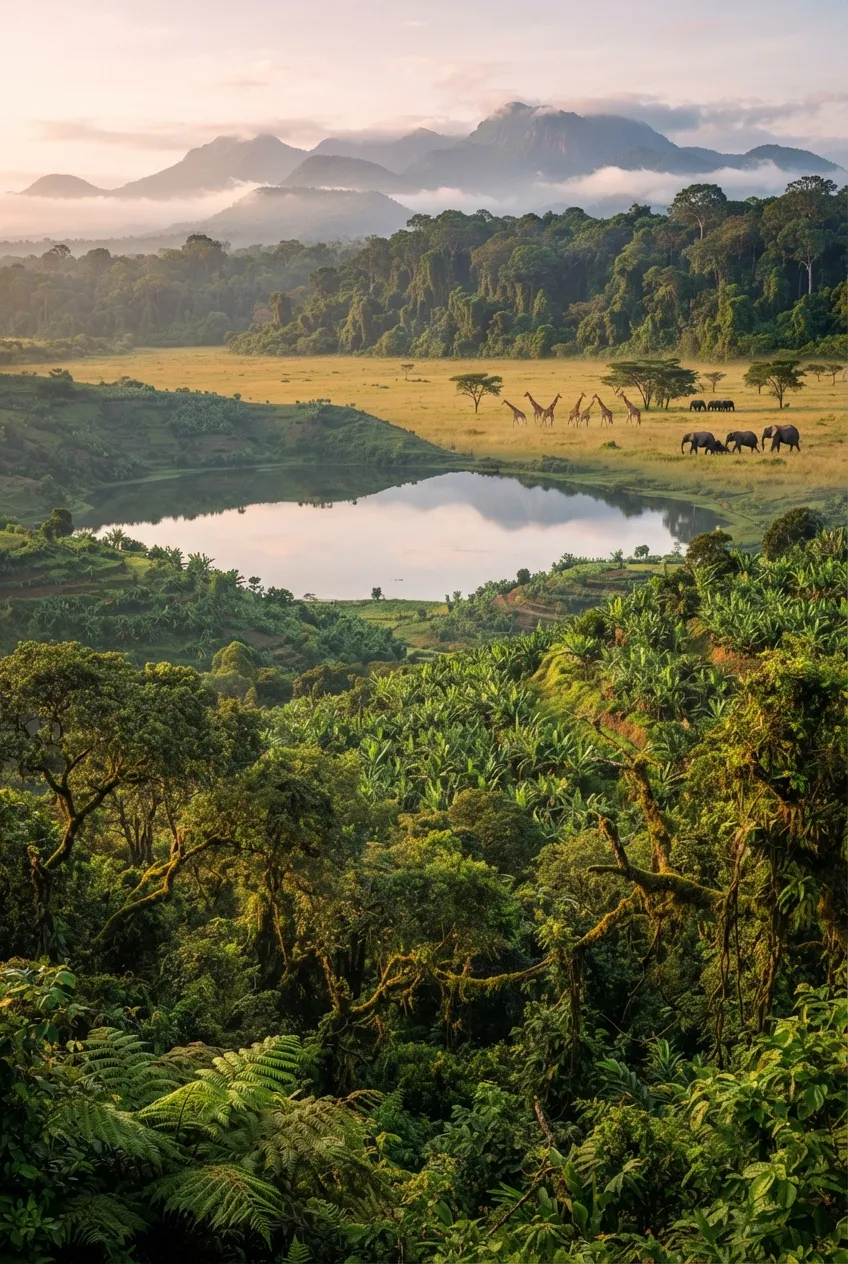
Uganda’s greatest strength is variety.
The Uganda Wildlife Authority manages ten national parks encompassing rainforests, wetlands, savannas, volcanoes and mountain systems. The country protects mountain gorillas in Bwindi and Mgahinga, chimpanzees in Kibale, tree-climbing lions around Ishasha and large populations of birds, primates and savanna animals across its protected areas.
Uganda also feels unusually immersive. Many journeys involve more than watching animals from a vehicle. Travelers may hike through rainforest, cross crater-lake country, follow wildlife tracks on foot or cruise the Nile beneath cliffs crowded with birds.
The roads between parks become part of the experience. Banana plantations climb green hills, cattle move through open plains and volcanic ridges appear behind villages. Travel times can be long, but the scenery rarely sits quietly in the background.
1. Bwindi Impenetrable National Park
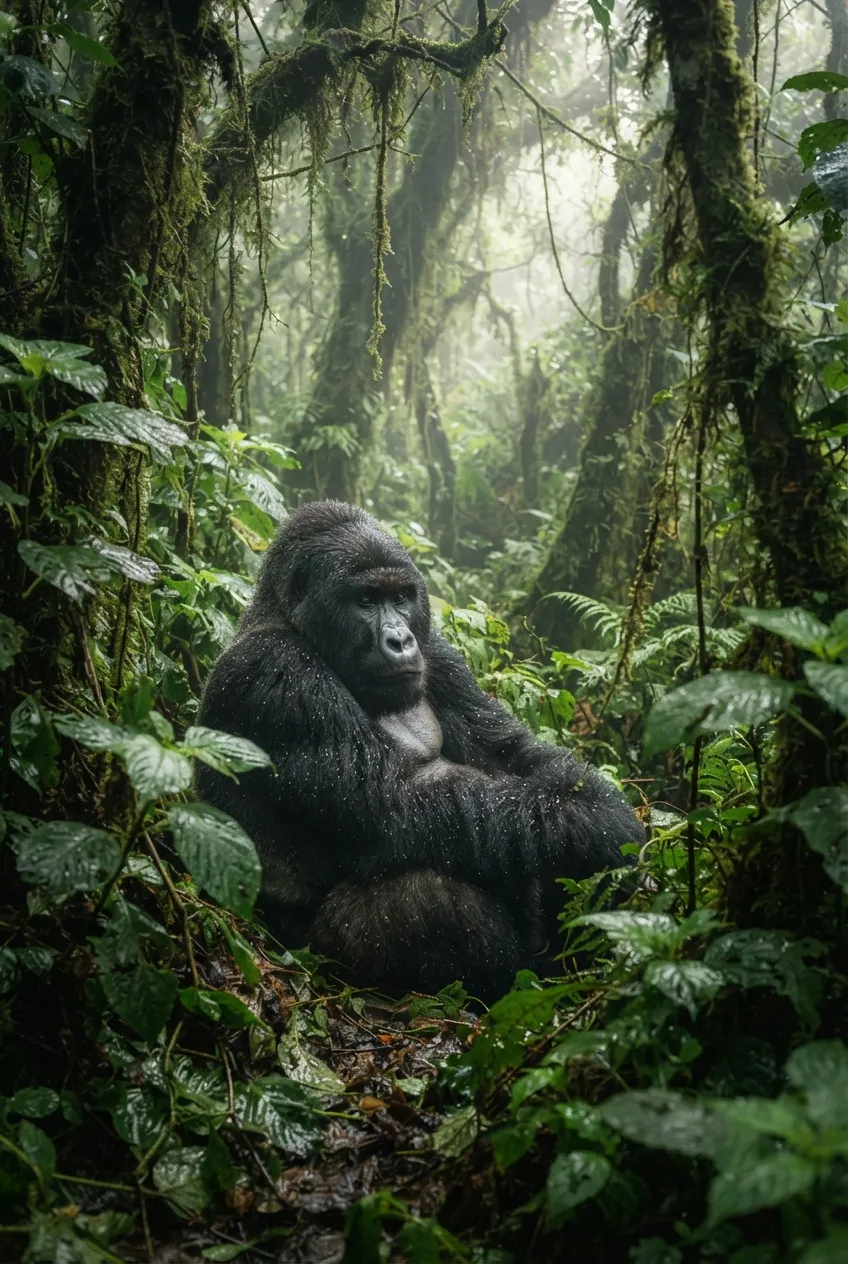
Bwindi is Uganda’s most celebrated travel destination and the setting for one of the world’s great wildlife encounters.
The forest spreads across steep hills in southwestern Uganda, its canopy layered with vines, ferns and ancient trees. Gorilla treks begin early and may last anywhere from a few hours to most of the day, depending on the location of the assigned family.
The walking can be demanding. Trails become slippery, vegetation grows densely and altitude adds an extra wrinkle to the adventure. Then the guides slow down, voices drop and a dark shape moves through the leaves.
Uganda Wildlife Authority says Bwindi protects approximately 459 mountain gorillas, representing almost half of the remaining global population. The forest also supports rich birdlife, primates, butterflies and hiking routes leading to waterfalls and viewpoints.
Best Things to Do in Bwindi
- Join a guided gorilla trek
- Book a longer gorilla habituation experience where available
- Walk to forest waterfalls
- Go birdwatching with a specialist guide
- Visit community-run cultural projects
- Explore the forest-edge villages
GORILLA TREKKING NOTE
Gorilla permits are limited and should be arranged well in advance through the Uganda Wildlife Authority or a reputable licensed operator. Permit prices, sectors, age limits and health rules can change, so confirm current conditions before paying.
Best Place to Stay
Choose accommodation near the exact trekking sector stated on your permit. Bwindi has several access areas, and traveling between them may take hours on mountain roads.
2. Murchison Falls National Park
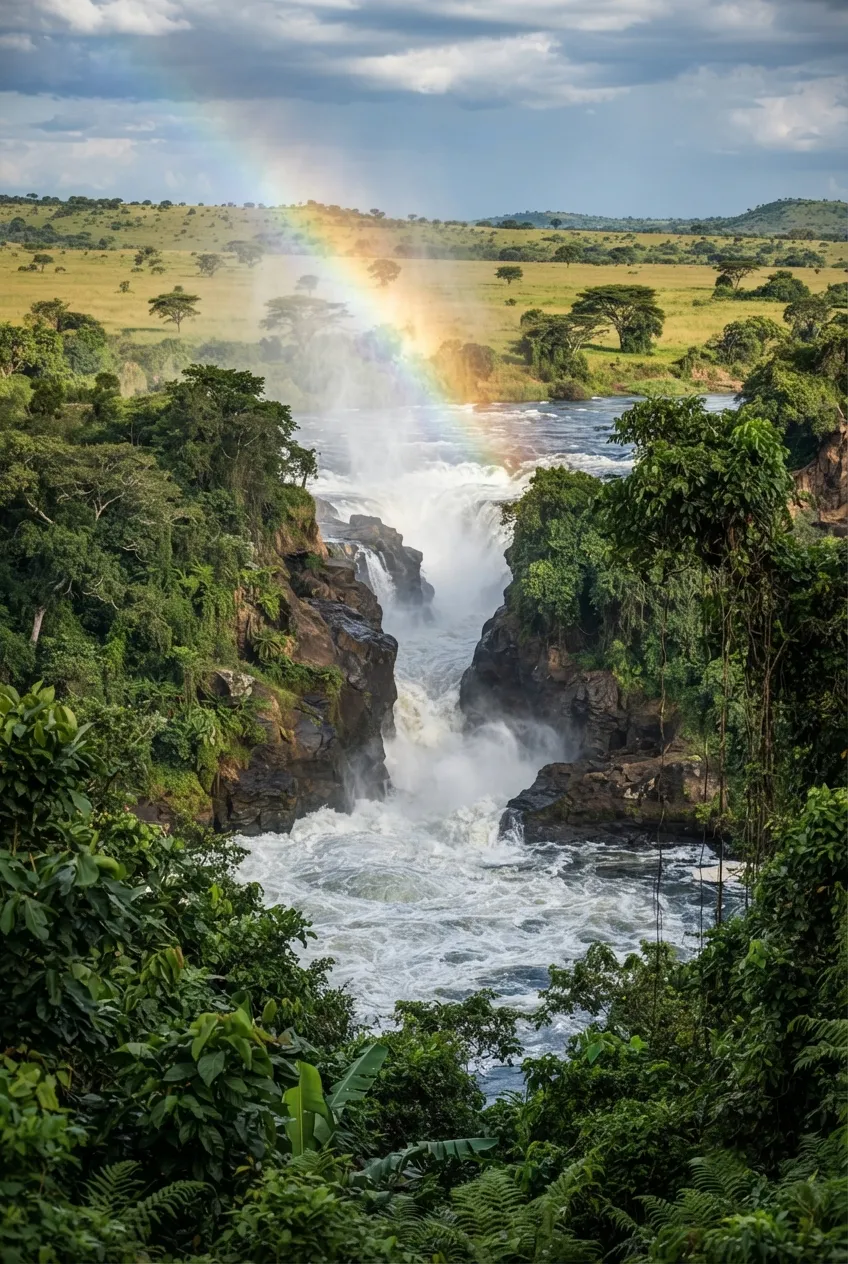
Murchison Falls delivers both classic safari scenery and one of Africa’s most forceful displays of water.
The Victoria Nile is squeezed through an eight-meter-wide gorge before dropping approximately 45 meters into a roaring cauldron. Spray rises above the rocks, rainbows appear in the mist and the river broadens downstream toward Lake Albert.
The falls are only part of the experience.
North of the river, game drives cross palm-dotted savanna inhabited by elephants, giraffes, buffaloes, antelopes and lions. Boat trips toward the base of the waterfall often reveal hippos, crocodiles and dense birdlife along the banks.
Uganda Wildlife Authority identifies Murchison Falls as the country’s oldest and largest conservation area, containing savanna, woodland and riverine forest habitats.
Do Not Miss
- A morning game drive
- A Nile boat cruise
- The waterfall viewpoints
- Sunset along the river
- Birdwatching for kingfishers, bee-eaters and fish eagles
PARK-HOURS WARNING
Uganda Wildlife Authority states that Murchison Falls National Park operates between 7:00 a.m. and 7:00 p.m., with transit entry allowed only early enough to leave before closing. Do not plan to arrive at the gates late at night.
3. Queen Elizabeth National Park
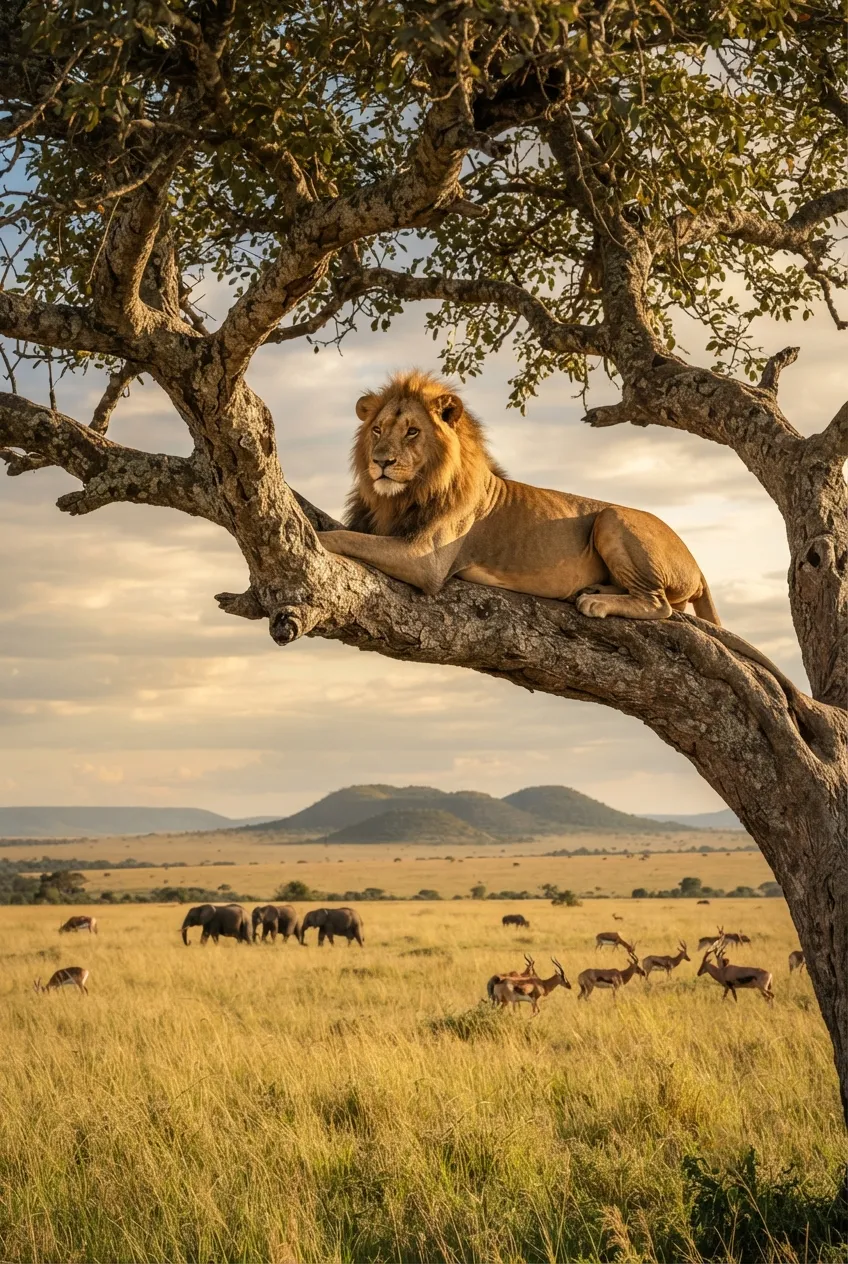
Queen Elizabeth National Park may be Uganda’s most varied traditional safari destination.
The park stretches across volcanic crater country, open plains, wetlands, forested gorges and the shores of Lakes Edward and George. Its changing habitats support elephants, buffaloes, hippos, antelopes, primates and an extraordinary range of birds.
The Kazinga Channel is the park’s liquid centerpiece. Boat trips pass crowded hippo pods, crocodiles, elephants drinking at the edge and birds arranged along the banks like a very noisy committee.
In the southern Ishasha sector, lions are known for resting in fig and acacia trees. Sightings are never guaranteed, but the possibility adds a distinctive thrill to game drives. Uganda Wildlife Authority highlights Ishasha’s tree-climbing lions among the country’s signature wildlife experiences.
Best Experiences
- Game drives on the Kasenyi Plains
- Kazinga Channel boat safari
- Crater-lake viewpoints
- Tree-climbing lion searches in Ishasha
- Chimpanzee walks in Kyambura Gorge
- Birdwatching around wetlands and lakeshores
Ideal Stay
Allow at least two nights, or three if you plan to visit both the northern sector and Ishasha.
4. Kibale National Park
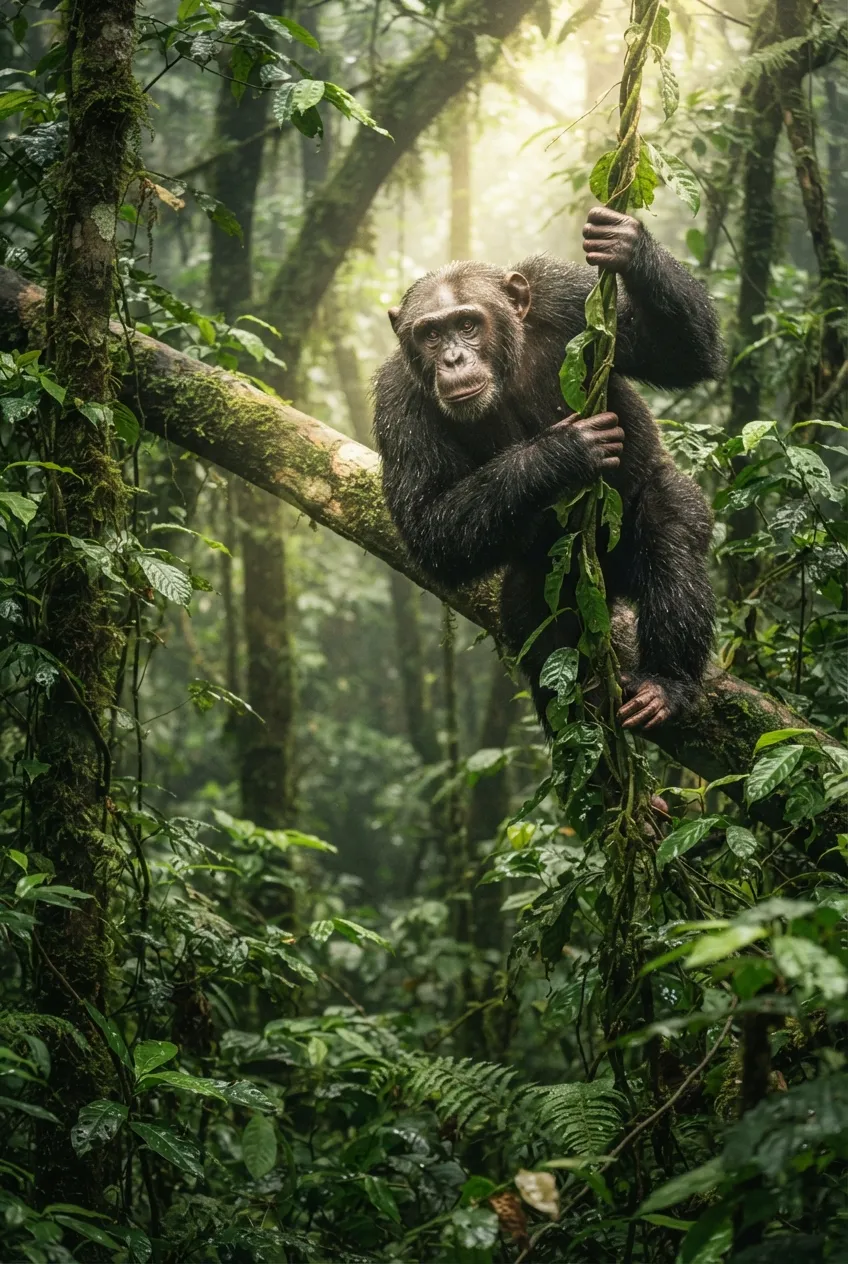
Kibale is Uganda’s primate capital.
The forest is best known for guided chimpanzee tracking, when visitors follow calls, broken branches and fresh nests beneath a high tropical canopy. Chimpanzees are considerably noisier than gorillas. A quiet forest may suddenly erupt into shrieks, drumming and the crash of bodies moving overhead.
Uganda Wildlife Authority reports that Kibale supports 13 primate species. Along with chimpanzees, travelers may encounter red colobus, black-and-white colobus, L’Hoest’s monkeys and grey-cheeked mangabeys.
Combine Kibale With
- Bigodi Wetland Sanctuary
- Fort Portal
- The Ndali-Kasenda crater lakes
- Semuliki National Park
- Queen Elizabeth National Park
RESPONSIBLE PRIMATE TRAVEL
Follow guide instructions carefully, maintain the required distance and never trek while ill. Respiratory infections can be dangerous to great apes because of their close biological relationship with humans.
5. Kidepo Valley National Park
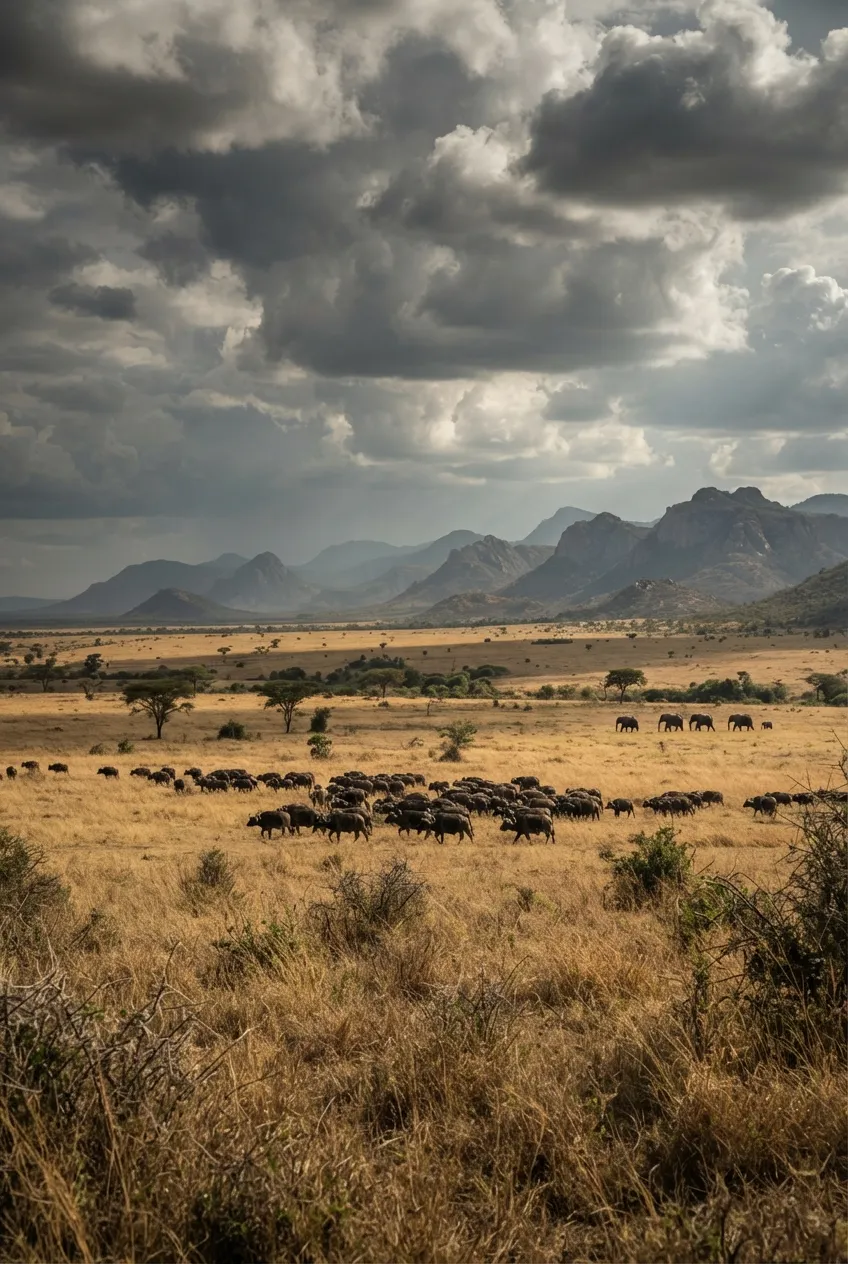
Kidepo is the Uganda of enormous horizons.
Located in the remote northeast, the park contains dry savannas, rocky mountain ranges, seasonal rivers and sweeping valleys that feel far removed from the greener southwest. Wildlife appears against dramatic open scenery, while the relative isolation often means fewer safari vehicles.
Kidepo appeals to travelers who value wilderness over convenience. Reaching it by road requires considerable time, although scheduled or chartered flights can shorten the journey.
The park is known for large buffalo herds, elephants, lions, giraffes and species less frequently seen in Uganda’s southwestern parks.
Best For
- Remote safari atmosphere
- Landscape photography
- Uncrowded game drives
- Birdwatching
- Travelers returning to East Africa for a deeper journey
Allow
Spend at least three nights. Kidepo is too far away to treat as a speedy detour.
6. Lake Bunyonyi
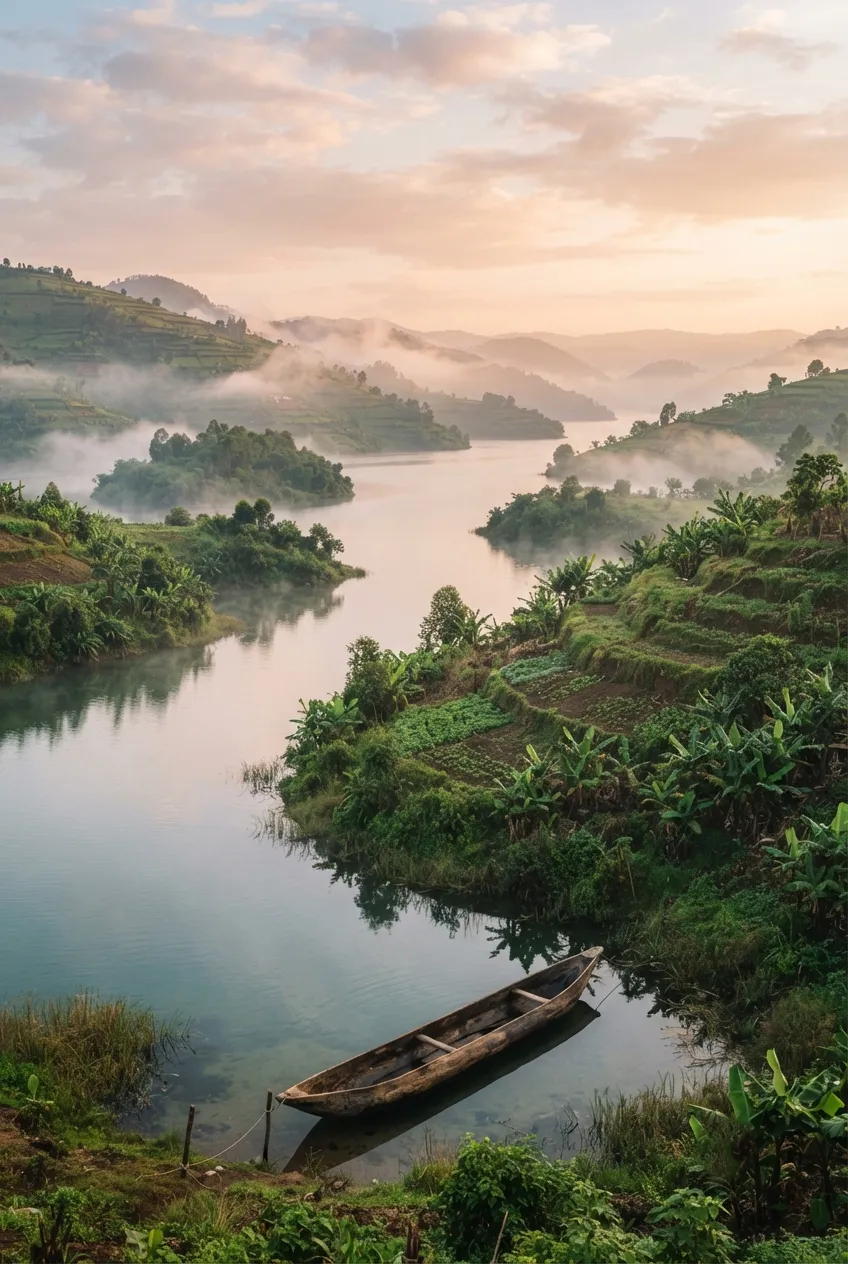
Lake Bunyonyi is where a busy Uganda itinerary loosens its shoulders.
The lake lies among terraced hills in the southwest, dotted with numerous islands and surrounded by small farms and villages. Morning mist drifts over the water, dugout canoes move between shorelines and evenings arrive with cool mountain air.
It is a natural stop between gorilla trekking and the road toward Queen Elizabeth National Park or Rwanda.
Things to Do at Lake Bunyonyi
- Take a guided canoe trip
- Walk through terraced hills
- Visit local communities with a responsible guide
- Watch birds around the shoreline
- Read on a lakeside veranda
- Recover from the Bwindi trek without moving very much at all
Lake Bunyonyi is often described as suitable for swimming because it lacks the large wildlife risks found in some African lakes. However, local water safety, bilharzia advice and rescue availability should always be checked with your accommodation before entering.
7. Rwenzori Mountains National Park
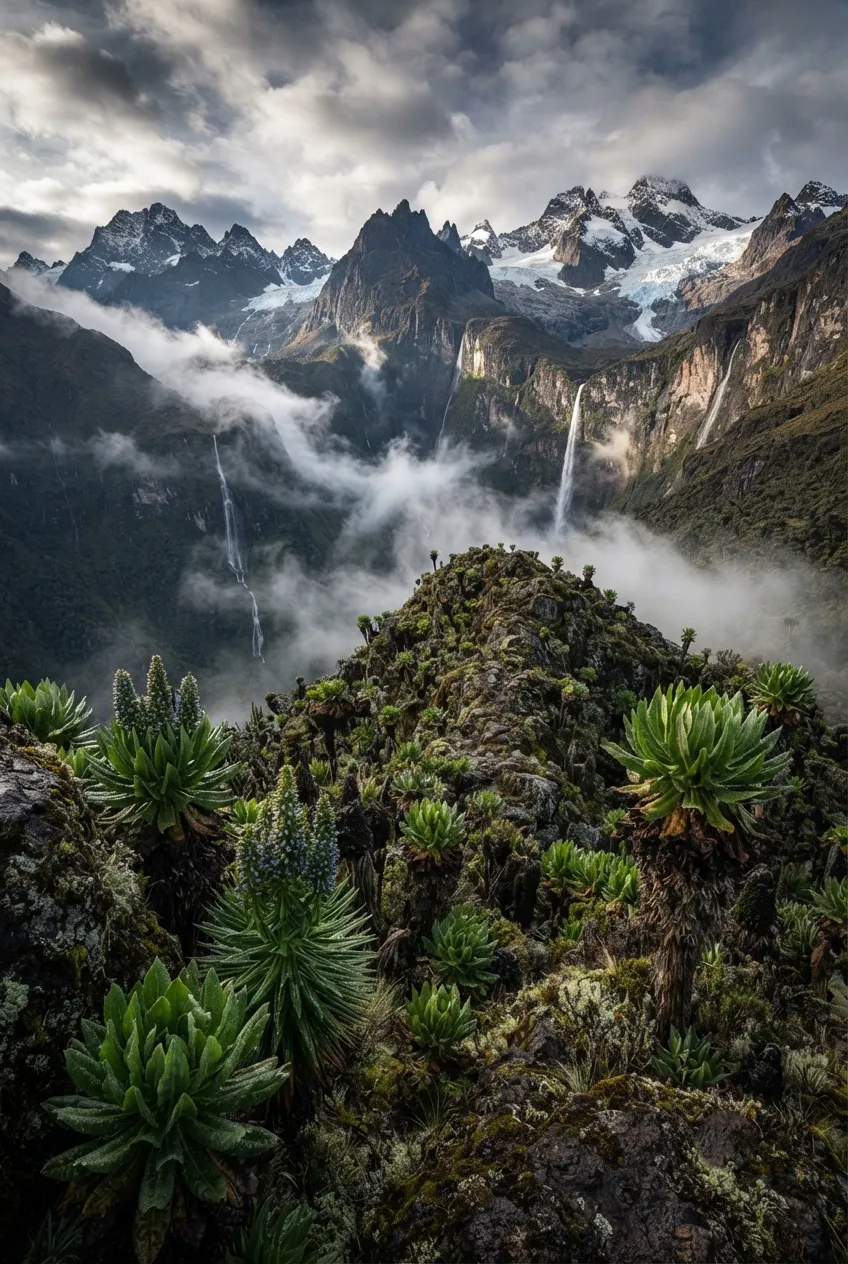
The Rwenzori Mountains are one of Africa’s strangest and most beautiful landscapes.
Often called the Mountains of the Moon, the range rises along Uganda’s border with the Democratic Republic of the Congo. Its habitats change dramatically with altitude, passing through rainforest, bamboo, giant heather and surreal Afro-alpine vegetation before reaching rock, glaciers and equatorial snowfields.
Uganda Wildlife Authority describes the range as approximately 120 kilometers long and 65 kilometers wide, with landscapes stretching from montane forest to snow-capped peaks.
Multi-day expeditions toward Mount Stanley and Margherita Peak require strong fitness, specialist guides and proper mountain equipment. Shorter foothill walks provide a more accessible glimpse of waterfalls, forest and mountain communities.
Best For
- Serious trekking
- Rare alpine landscapes
- Botanical photography
- Multi-day expeditions
- Travelers seeking an alternative to Kilimanjaro
BORDER-REGION WARNING
The Rwenzori range lies near the Democratic Republic of the Congo. Security conditions can change, particularly around border areas. Travel only with an established operator and check current government guidance immediately before departure.
8. Jinja and the Source of the Nile
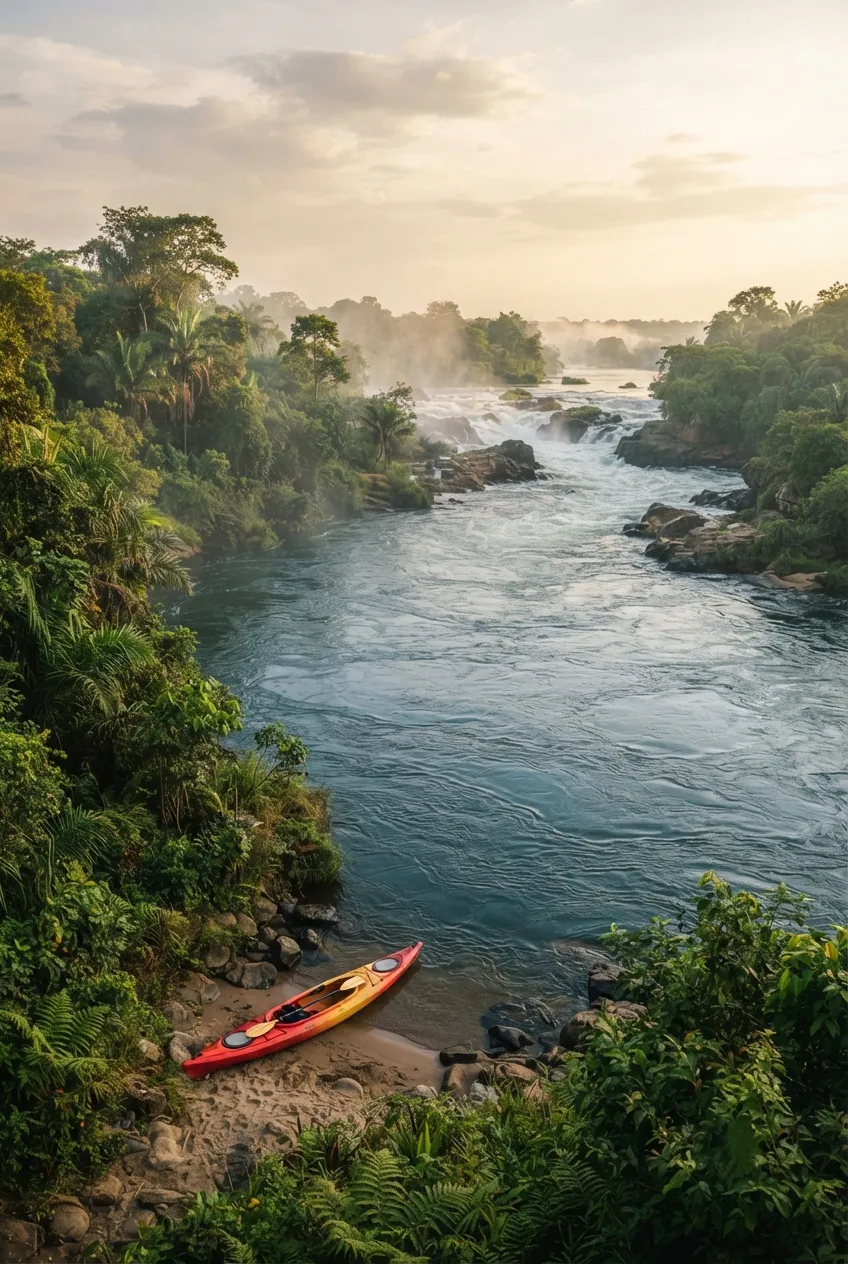
Jinja is Uganda’s adventure capital and one of the most popular escapes from Kampala.
The city sits near the place where the Nile flows north from Lake Victoria. The surrounding area offers kayaking, rafting, cycling, river cruises and relaxed stays overlooking the water.
White-water rafting has long been the flagship activity, although routes and rapids have changed following river development projects. Choose an operator with modern equipment, trained guides and clearly explained emergency procedures.
Best Things to Do in Jinja
- Visit the Source of the Nile area
- Go rafting or kayaking
- Take a sunset river cruise
- Cycle through nearby villages
- Explore Jinja’s historic streets
- Stay in a riverside lodge
Jinja works well at the beginning or end of a safari, especially for travelers who need a day to wake up properly after an international flight.
9. Mgahinga Gorilla National Park
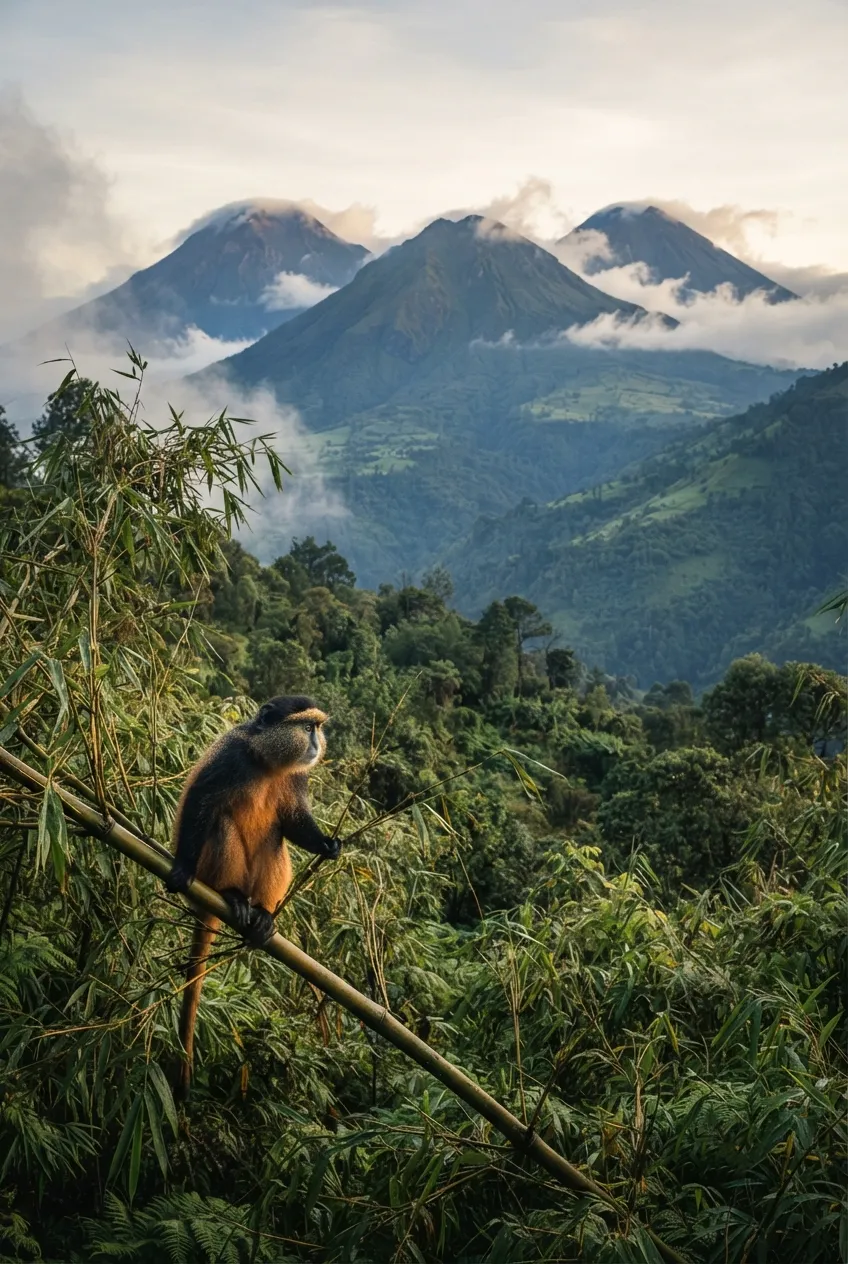
Mgahinga may be Uganda’s smallest national park, but it rises with volcanic swagger.
The park covers the Ugandan slopes of the Virunga volcanoes near Rwanda and the Democratic Republic of the Congo. It protects mountain gorillas, golden monkeys, bamboo forest and high-altitude trails leading toward volcanic summits.
Uganda Wildlife Authority lists the park at 33.7 square kilometers, with elevations reaching 4,127 meters.
Top Experiences
- Gorilla trekking when groups are available
- Golden monkey tracking
- Hiking Mount Gahinga
- Climbing Mount Sabyinyo
- Hiking Mount Muhabura
- Exploring Batwa cultural heritage through approved programs
Mgahinga is especially attractive for active travelers who want more than a single primate trek.
10. Lake Mburo National Park
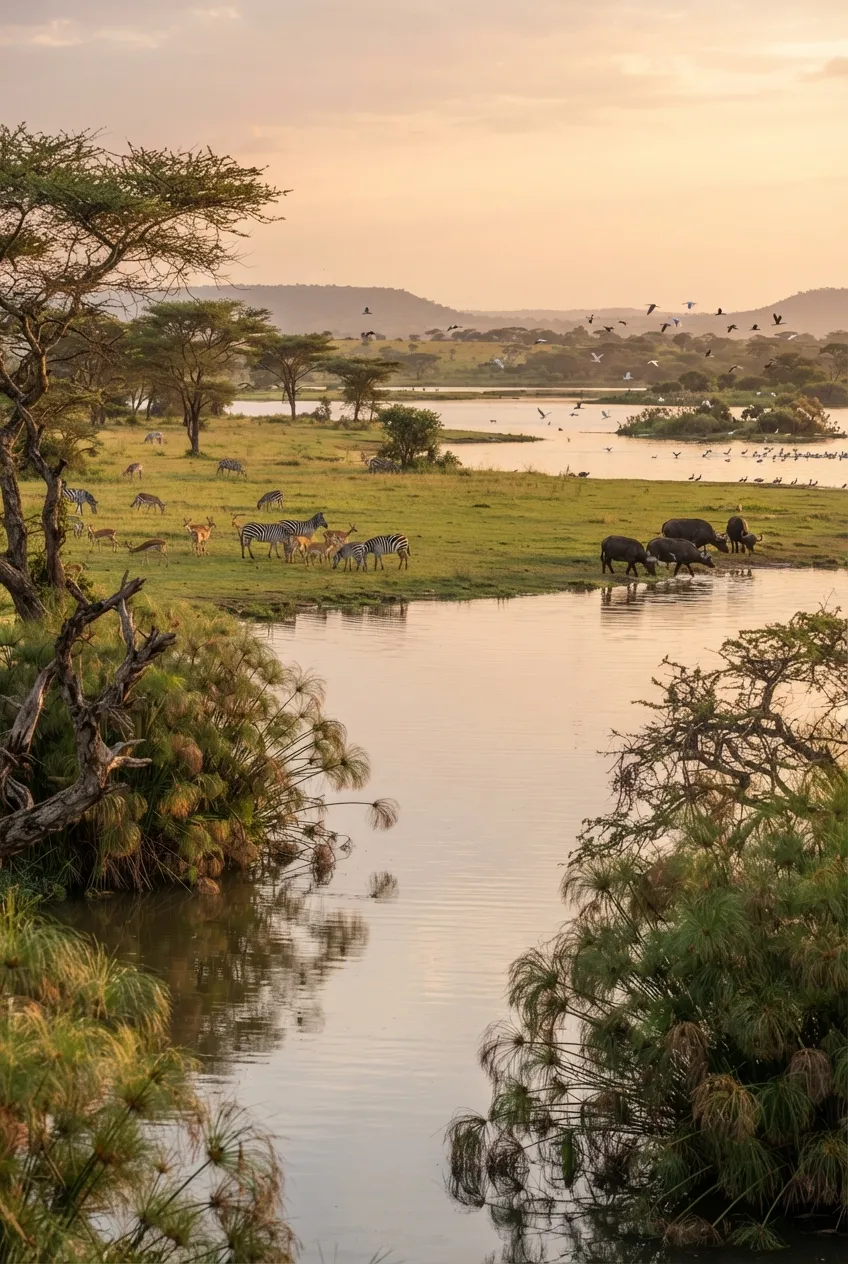
Lake Mburo is compact, accessible and refreshingly different from Uganda’s larger safari parks.
Located between Kampala and Mbarara, it is often included as the first or final wildlife stop on a southwestern circuit. Uganda Wildlife Authority describes it as the national park closest to the capital, roughly 228 kilometers away by road.
The park is known for zebras, impalas, elands, buffaloes, hippos and rich birdlife. The relative absence of certain large predators allows activities not commonly offered elsewhere, including guided walking safaris and horseback excursions through selected areas.
Best Experiences
- Walking safari
- Boat trip on Lake Mburo
- Horseback safari
- Cycling outside protected wildlife zones
- Evening game drive
- Birdwatching
Lake Mburo is ideal for travelers who want wildlife without spending another full day sealed inside a vehicle.
11. Mount Elgon and Sipi Falls
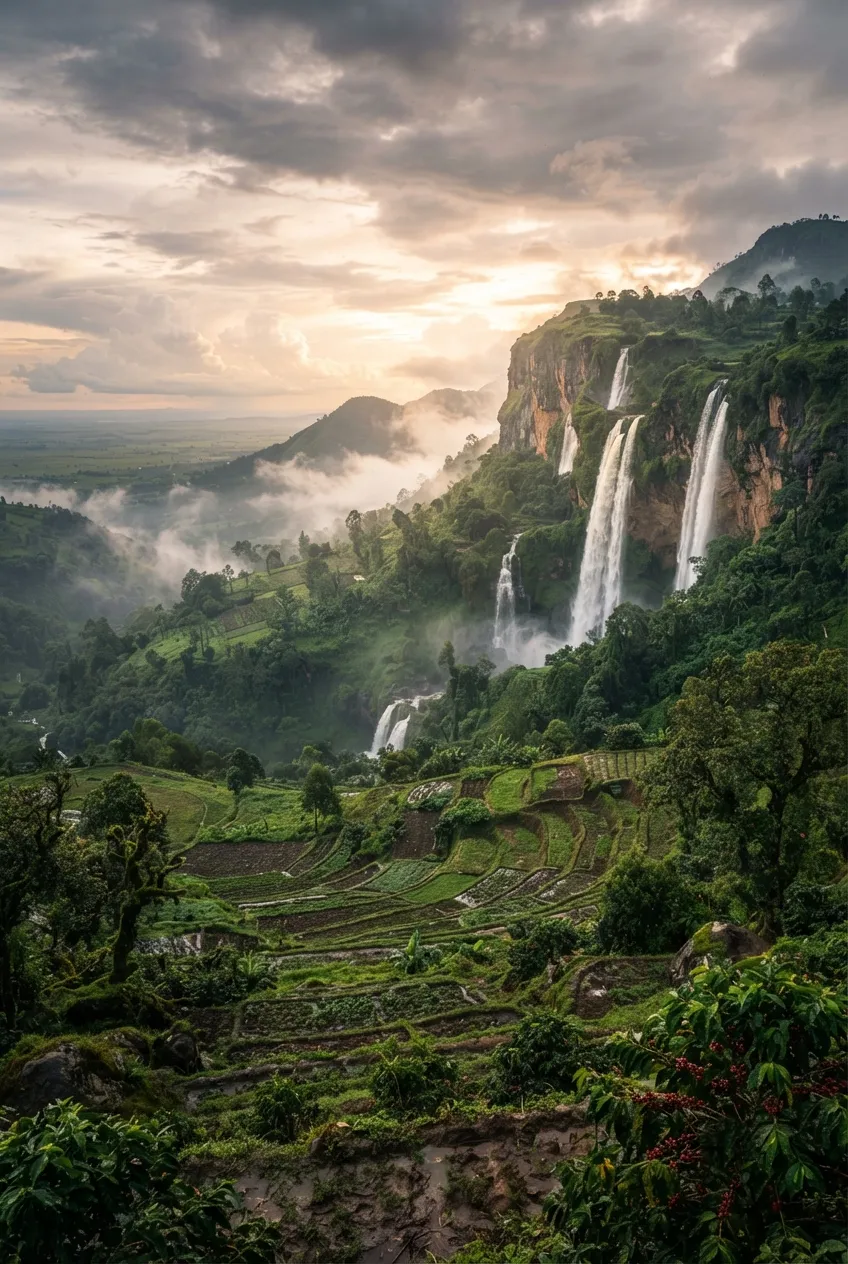
Eastern Uganda trades savanna for waterfalls, caves and volcanic highlands.
Mount Elgon is an ancient extinct volcano on the Uganda-Kenya border. Uganda Wildlife Authority lists its highest point at 4,321 meters and describes it as one of the country’s oldest geological formations.
The nearby Sipi Falls area contains a series of waterfalls spilling from the highlands. Guided walks pass farms, cliffs, caves and viewpoints across the plains below.
The region is also known for coffee cultivation. Community-based coffee tours can introduce travelers to growing, harvesting, roasting and brewing, with the welcome side effect of making the rest of the hike feel more energetic.
Best For
- Waterfall hikes
- Coffee tours
- Multi-day mountain trekking
- Rock climbing and abseiling with qualified operators
- Cooler weather
- Rural landscape photography
12. Semuliki National Park
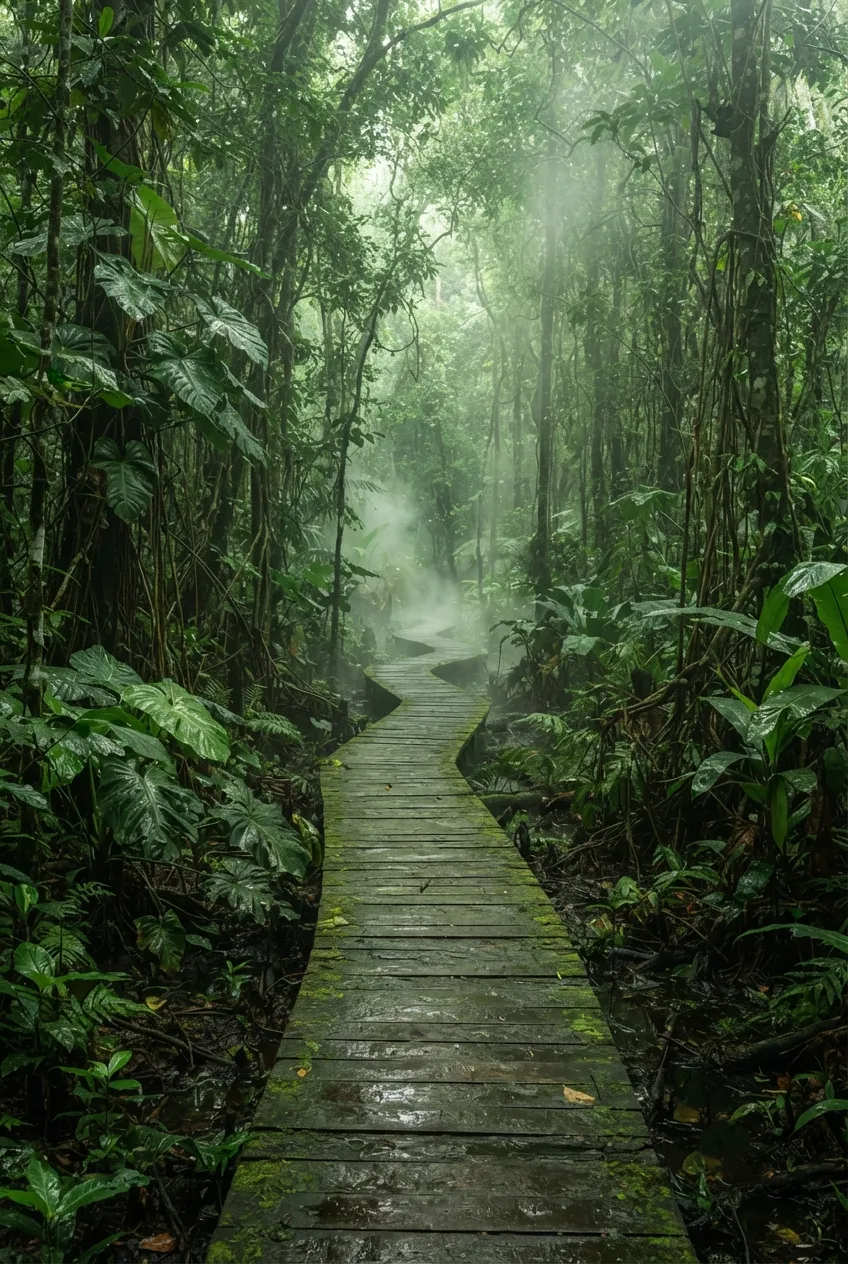
Semuliki feels less like East Africa and more like a green corridor reaching in from the Congo Basin.
The park lies west of the Rwenzori Mountains and protects lowland tropical rainforest, wetlands and hot springs. Uganda Wildlife Authority describes it as East Africa’s only true lowland tropical rainforest and the easternmost extension of the Ituri Forest.
Its biodiversity makes it particularly rewarding for birdwatchers and travelers interested in butterflies, forest ecology and less-visited protected areas.
The Sempaya Hot Springs are the best-known landmark. Wooden walkways lead through forest and swamp to steaming pools associated with local cultural traditions.
Why Visit Semuliki?
Come for atmosphere rather than a checklist of large animals. The appeal lies in dense forest, unfamiliar bird calls, humid air and the sense of entering a completely different ecological world.
13. Ziwa Rhino Sanctuary
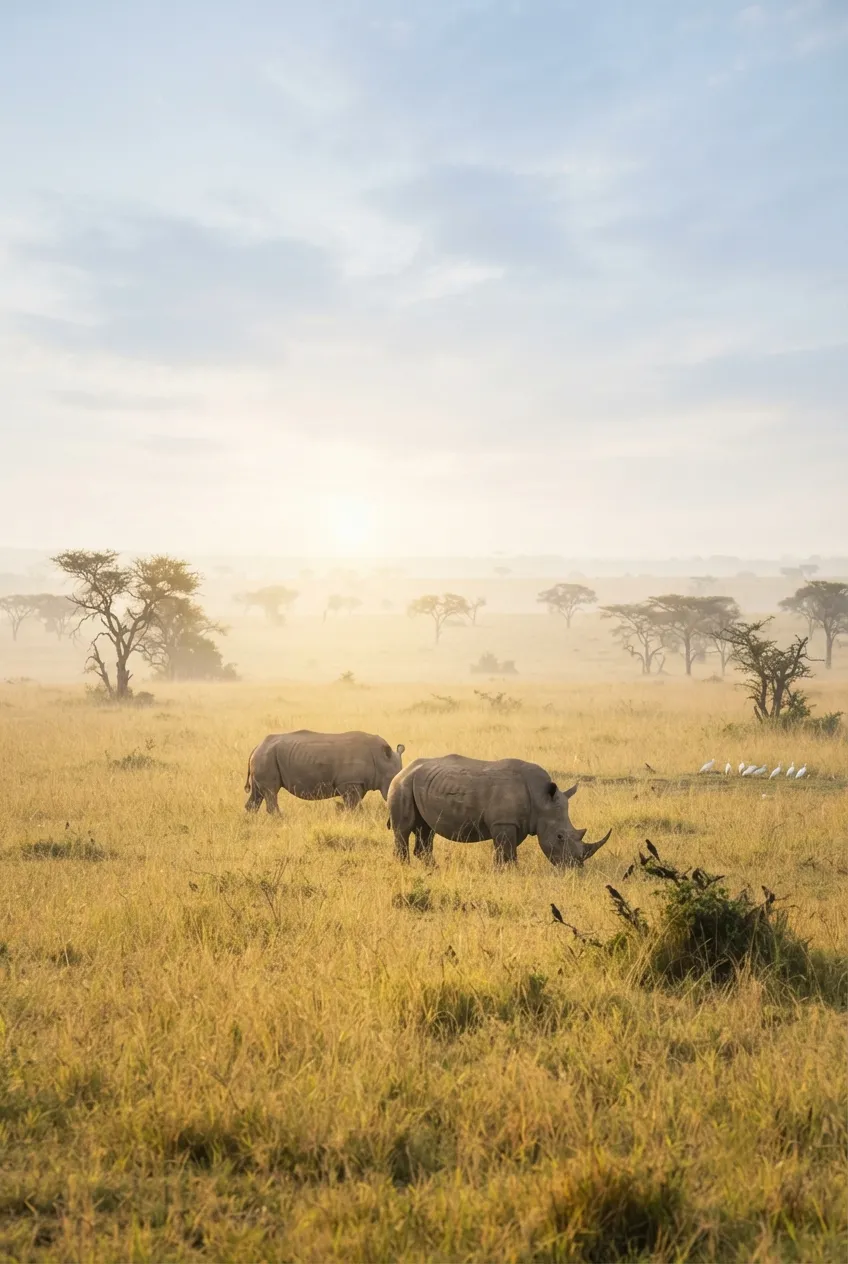
Ziwa Rhino Sanctuary is commonly visited en route between Kampala and Murchison Falls.
Guided walks allow visitors to observe southern white rhinos on foot while accompanied by trained rangers. The experience is tightly controlled, and instructions about distance and movement must be followed.
Ziwa plays an important role in Uganda’s rhino conservation story and gives safari travelers the opportunity to see a species no longer roaming freely in the country’s national parks.
Practical Tip
Wear closed shoes, neutral clothing and a hat. Even when the rhinos seem deeply committed to doing nothing, they remain extremely large wild animals rather than oversized lawn furniture.
14. Fort Portal and the Crater Lakes
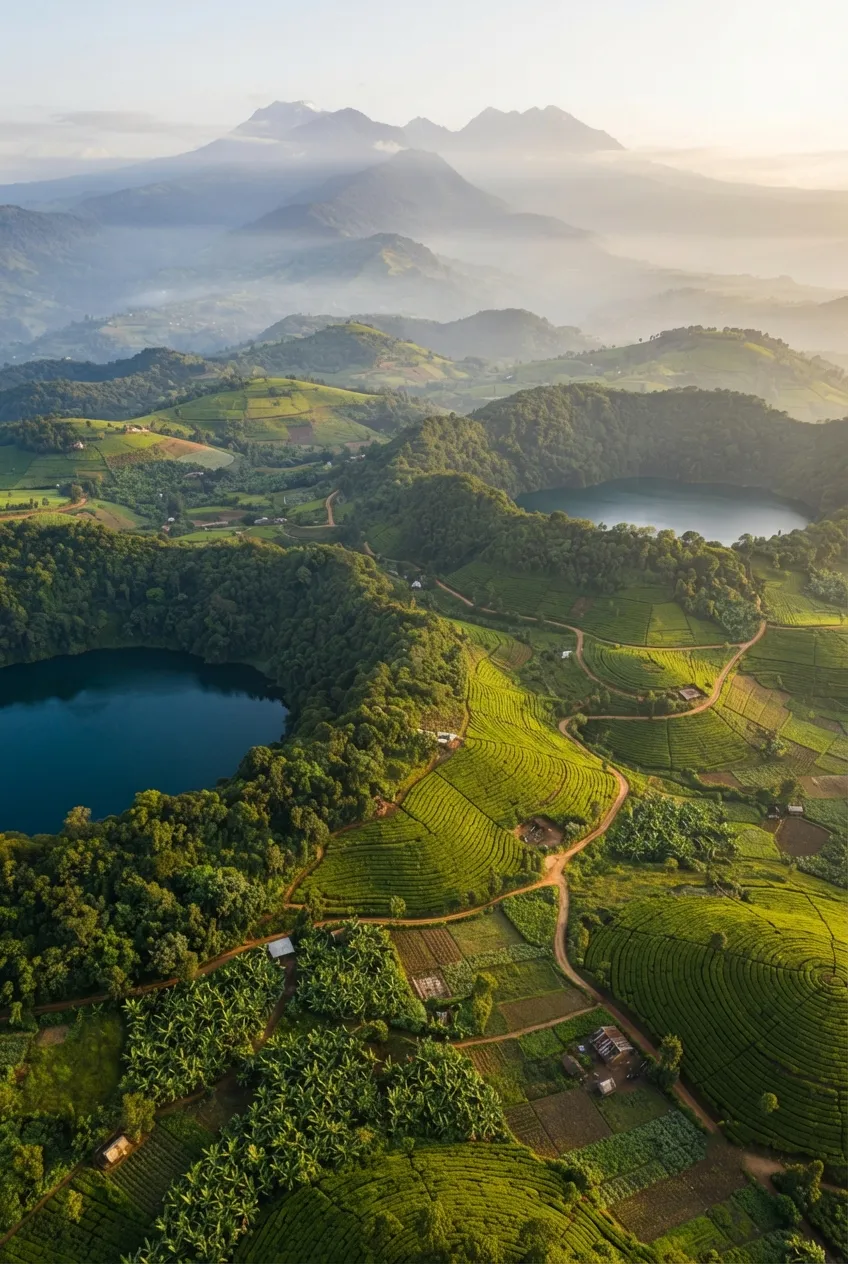
Fort Portal is one of Uganda’s most useful travel bases.
The town sits near Kibale National Park, the Rwenzori foothills, Semuliki and a landscape filled with volcanic crater lakes. Tea fields stretch across rolling hills, while several lakes can be reached through walks, scenic drives and local community tours.
The Ndali-Kasenda region is especially photogenic. Some crater lakes are surrounded by farms and villages, while others sit below steep forested rims.
Best Things to Do
- Hike between crater lakes
- Visit tea estates
- Explore Tooro cultural sites
- Use the town as a base for Kibale
- Visit nearby wetlands and community projects
- Enjoy cooler evenings between safari stages
Fort Portal is less about a single blockbuster attraction and more about making a western Uganda route feel richer and less hurried.
15. Entebbe
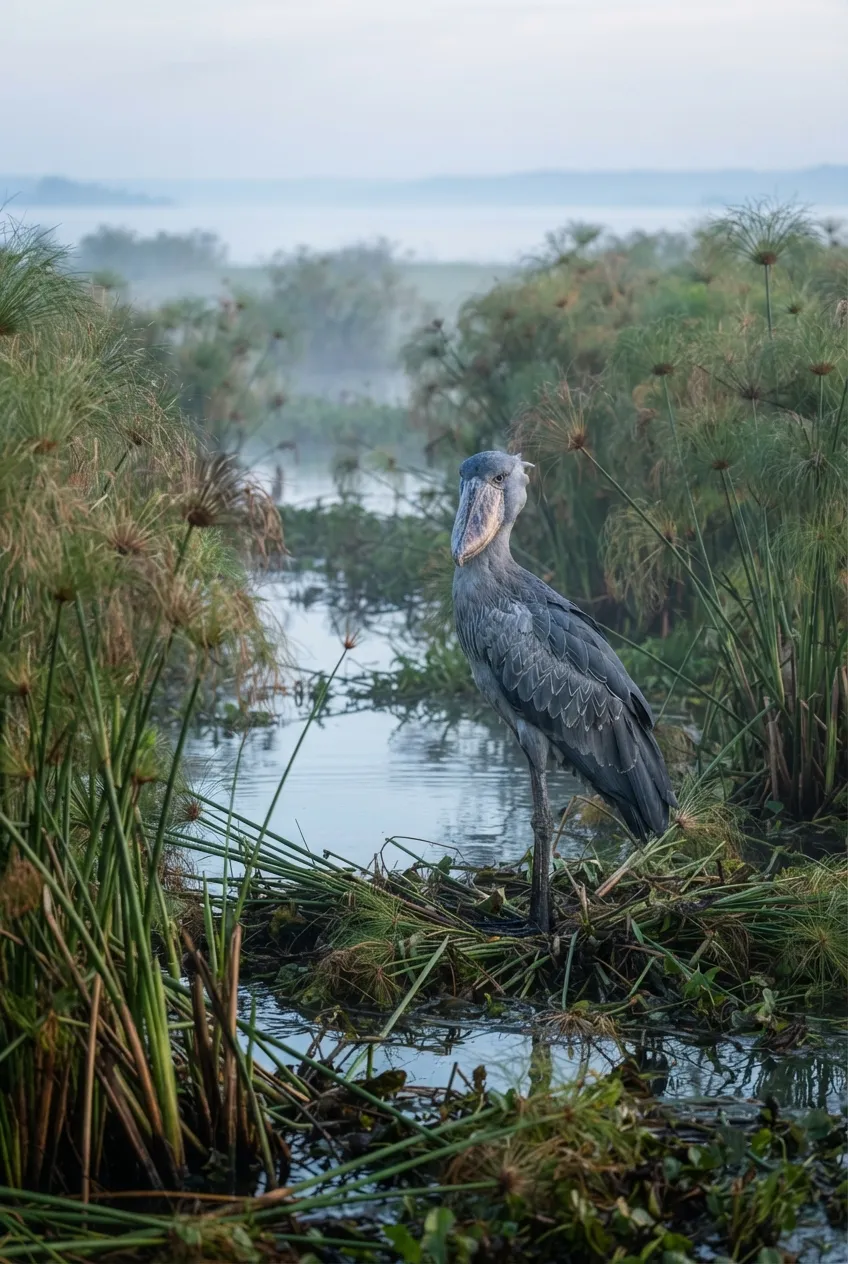
Many travelers pass through Entebbe without really seeing it.
Located on the shore of Lake Victoria, the town is home to Uganda’s main international airport, botanical gardens, beaches, wildlife centers and boat departures for Mabamba Swamp.
Mabamba is one of the best-known places near Kampala and Entebbe for searching for the prehistoric-looking shoebill. Canoe trips pass through papyrus channels where the enormous birds stand with the concentration of librarians guarding a forbidden shelf.
Best Things to Do in Entebbe
- Visit the botanical gardens
- Take a shoebill excursion to Mabamba
- Walk beside Lake Victoria
- Visit conservation and wildlife education centers
- Rest before or after a safari
- Explore local craft markets and cafés
Spend at least one night in Entebbe before an early international flight. Uganda’s road traffic has a lively relationship with estimated arrival times.
Uganda Travel Destinations Comparison Table
| Destination | Main Experience | Recommended Stay | Physical Effort | Best For |
| Bwindi | Gorilla trekking | 2–3 nights | High | Once-in-a-lifetime wildlife |
| Murchison Falls | Safari and Nile waterfall | 2–3 nights | Low to moderate | First safari |
| Queen Elizabeth | Game drives and boat safari | 2–3 nights | Low | Wildlife variety |
| Kibale | Chimpanzee tracking | 2 nights | Moderate | Primates |
| Kidepo Valley | Remote savanna | 3 nights | Low | Wilderness |
| Lake Bunyonyi | Lake scenery and rest | 2 nights | Low | Relaxation |
| Rwenzori Mountains | Alpine trekking | 3–10 nights | Very high | Serious hikers |
| Jinja | Nile adventures | 2 nights | Variable | Rafting and activity |
| Mgahinga | Gorillas and volcanoes | 2–4 nights | High | Active travelers |
| Lake Mburo | Walking and horseback safari | 1–2 nights | Moderate | Short safaris |
| Mount Elgon | Waterfalls and hiking | 2–4 nights | Moderate to high | Mountains |
| Semuliki | Rainforest and birdlife | 1–2 nights | Moderate | Birdwatchers |
| Ziwa | Rhino tracking | Half or full day | Moderate | Conservation |
| Fort Portal | Crater lakes and tea country | 2 nights | Moderate | Scenic road trips |
| Entebbe | Lake Victoria and shoebills | 1–2 nights | Low | Easy arrival stop |
The Perfect 12-Day Uganda Itinerary
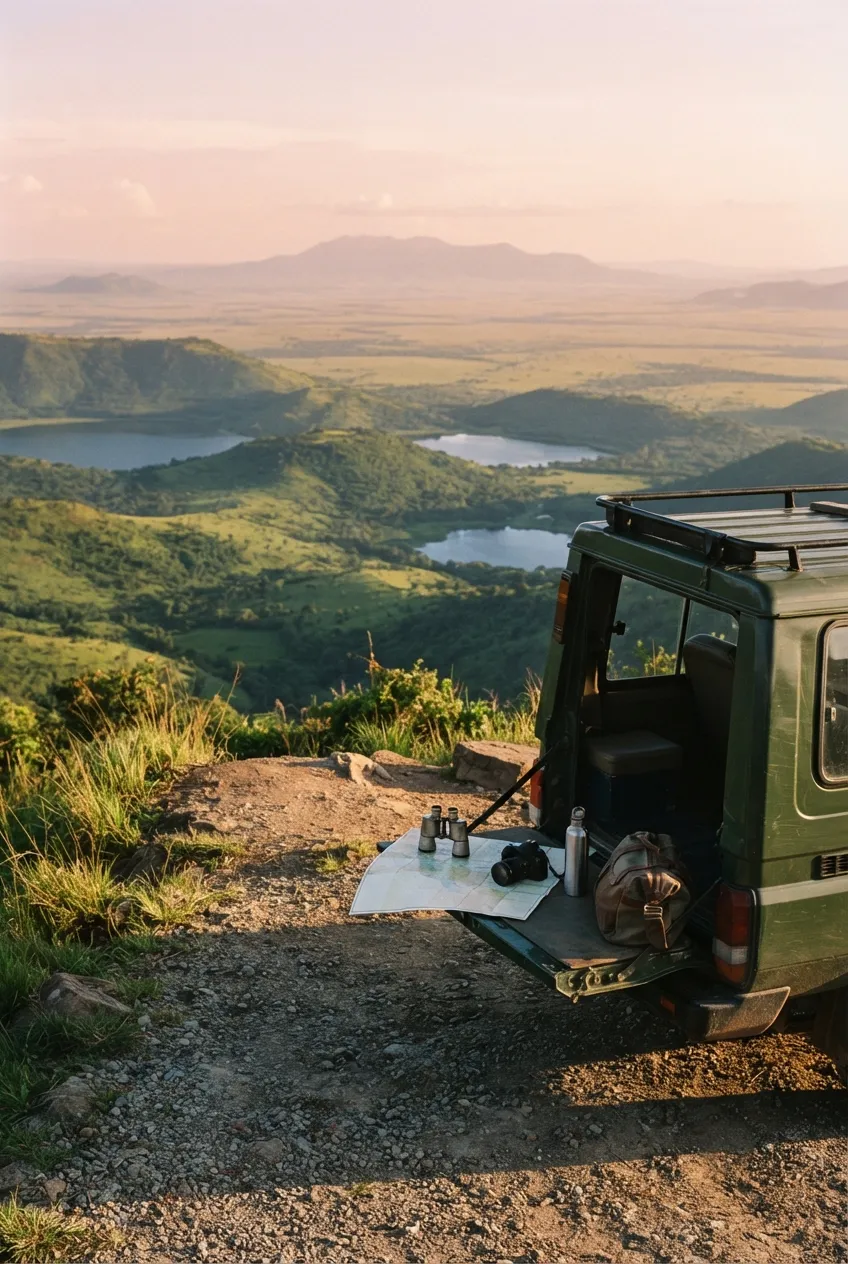
This route covers Uganda’s most famous wildlife regions without turning every morning into a luggage evacuation drill.
Day 1: Arrive in Entebbe
Rest near Lake Victoria and recover from the flight.
Day 2: Entebbe to Murchison Falls
Stop at Ziwa Rhino Sanctuary before continuing north.
Day 3: Murchison Falls
Take a morning game drive and an afternoon Nile cruise.
Day 4: Murchison Falls to Kibale
Travel south toward Fort Portal and Kibale.
Day 5: Kibale National Park
Join a chimpanzee trek and visit a nearby wetland community.
Day 6: Kibale to Queen Elizabeth National Park
Drive through crater-lake country and enter the park.
Day 7: Queen Elizabeth National Park
Combine a morning game drive with a Kazinga Channel boat safari.
Day 8: Ishasha to Bwindi
Search for tree-climbing lions before continuing to Bwindi.
Day 9: Gorilla Trekking
Complete the gorilla trek and rest near the forest.
Day 10: Bwindi to Lake Bunyonyi
Travel to the lake for a slow afternoon.
Day 11: Lake Bunyonyi to Lake Mburo
Break the return journey with a final wildlife stop.
Day 12: Return to Entebbe
Continue to the airport or stay overnight before flying home.
BETTER-PACED OPTION
Add two or three days for Kidepo, Jinja or Mgahinga. Uganda’s roads are improving in many areas, but long drives, roadworks and weather can still rearrange an itinerary with the confidence of a buffalo standing in the road.
Best Time to Visit Uganda
Uganda can be visited throughout the year, but rainfall affects trekking conditions and road access.
June to September
This is one of the main drier periods. Trails may be less muddy, wildlife often gathers near water and safari roads are generally easier to navigate.
It is also a popular season, so gorilla permits and well-located lodges may sell out.
December to February
The second broadly drier period is another strong time for gorilla trekking, game drives and mountain travel.
Temperatures vary greatly by altitude. Entebbe may feel warm and humid while Bwindi mornings remain cool.
March to May
The heavier rainy period can make forest trekking muddy and some rural roads difficult.
The landscapes become intensely green, visitor numbers may be lower and photographers often enjoy dramatic skies.
October and November
These months can also bring rain, though weather patterns are increasingly difficult to predict precisely.
Pack for both strong sun and tropical downpours regardless of season.
Uganda Travel Planning Checklist
Before Booking
- Review current government travel advisories
- Check Ebola and other public-health updates
- Confirm that travel insurance covers Uganda
- Verify visa requirements for your nationality
- Ask an authorized clinic about vaccines and malaria prevention
- Reserve gorilla and chimpanzee permits early
- Choose a licensed, well-reviewed operator
- Confirm park sectors before booking accommodation
- Leave flexibility for road and weather delays
Packing Essentials
- Waterproof jacket
- Sturdy hiking boots
- Long trekking trousers
- Gardening-style gloves for forest vegetation
- Warm layer for highland mornings
- Wide-brimmed hat
- High-SPF sunscreen
- Insect repellent
- Reusable water bottle
- Binoculars
- Power bank
- Small dry bag
- Personal medication
- Copies of travel documents
Entry, Visa and Health Requirements
Most travelers who require a Ugandan visa must apply online before arrival. Entry rules differ by nationality and may change, so use Uganda’s official immigration portal rather than unofficial visa agents.
Yellow fever requirements have recently been reported inconsistently across sources. The CDC’s Uganda page currently says vaccination is recommended for travelers aged nine months or older and that proof is required for arriving travelers aged one year or older. Confirm the latest rule with Uganda immigration, your airline and an authorized travel-health clinic before departure.
Travelers should also seek professional advice regarding malaria prevention, routine vaccinations, food and water precautions and medical evacuation insurance.
HEALTH WARNING
Uganda and neighboring countries were affected by an evolving Ebola outbreak in 2026. Public-health screening, border arrangements and return-entry rules may change with little notice. Do not rely on an older blog post for current health decisions. Check official health authorities immediately before travel.
Staying Safe in Uganda
Travel conditions differ significantly between Kampala, national parks, border regions and remote roads.
Avoid demonstrations, large political gatherings and unnecessary travel after dark. Use established drivers, keep valuables discreet and do not walk alone in unfamiliar urban districts at night.
In wildlife areas:
- Never leave a vehicle without guide approval
- Keep food away from animals
- Follow ranger instructions
- Avoid standing between wildlife and an escape route
- Do not use flash around sensitive animals
- Never approach elephants, hippos or buffaloes on foot
- Keep windows and doors secured where advised
Boat safety standards can vary. Use reputable operators, insist on a life jacket and avoid overloaded vessels. New Zealand’s current travel advice specifically warns that some ferries may be overcrowded or operate below familiar safety standards.
Responsible Travel in Uganda
Wildlife tourism can support conservation and local livelihoods, but only when travelers choose carefully.
Book permits through authorized channels, use licensed guides and favor accommodation that employs local staff transparently. Avoid experiences that encourage touching, feeding or performing with wild animals.
When visiting communities, choose programs developed with community consent and clear local benefit. Ask before photographing people, particularly children.
Plastic waste becomes difficult to manage in remote areas. Carry refillable bottles where safe, minimize disposable packaging and bring depleted batteries or electronic waste home for proper disposal.
Frequently Asked Questions
What is Uganda best known for?
Uganda is best known for mountain gorilla trekking in Bwindi and Mgahinga. It also offers chimpanzee tracking, Nile cruises, traditional safaris, volcanic lakes and mountain trekking.
How many days do you need in Uganda?
Ten to fourteen days is ideal for a first trip covering Murchison Falls, Kibale, Queen Elizabeth, Bwindi and Lake Bunyonyi. Seven days can work for a focused southwestern route.
Is gorilla trekking difficult?
It can be physically demanding. Treks may involve steep, muddy slopes, thick vegetation and several hours of walking at altitude. Porters are strongly recommended and directly support local livelihoods.
Is Uganda good for a first African safari?
Under normal travel conditions, Uganda can be an excellent choice for travelers who want both primates and traditional safari wildlife. However, the current 2026 health and security advisories should be carefully considered before planning.
Can you see the Big Five in Uganda?
Travelers may see lions, leopards, elephants and buffaloes in national parks, while rhinos are generally encountered at Ziwa Rhino Sanctuary rather than roaming freely in the main parks.
Is Uganda expensive?
Gorilla permits and private safari transportation make Uganda more expensive than a simple independent holiday. Midrange lodge itineraries can still offer good value compared with some luxury safari destinations.
Can you travel around Uganda independently?
Independent travel is possible, but a driver-guide is often more practical for national parks, remote roads and tightly scheduled permit activities. Self-driving requires confidence with variable road conditions and limited roadside assistance.
Which Uganda destination is most beautiful?
Bwindi is unmatched for rainforest atmosphere, Kidepo for open wilderness, the Rwenzoris for mountain drama and Lake Bunyonyi for peaceful scenery.
Final Thoughts
Uganda’s landscapes seem to compete gently for attention.
The Nile crashes through a narrow gorge. Bwindi closes around the trail in layers of green. Kidepo opens toward distant mountains, while Lake Bunyonyi rests quietly between terraced hills as though someone turned down the volume.
Yet Uganda’s greatest travel experience is not a waterfall, a lion or even the first astonishing sight of a mountain gorilla.
It is the combination.
Few countries allow travelers to move from equatorial mountains to lowland rainforest, volcanic lakes and classic savanna within a single journey. Uganda feels ecologically oversized, a small country carrying an entire continent’s worth of scenery.
For now, that beauty must be weighed against the serious and evolving health and security situation in 2026. Travelers should postpone or proceed only in accordance with current government advice, medical guidance and appropriate insurance.
When conditions permit safe travel again, Uganda will still be there: mist rising from the forest, shoebills waiting among papyrus and the Nile continuing its long conversation with the rocks.