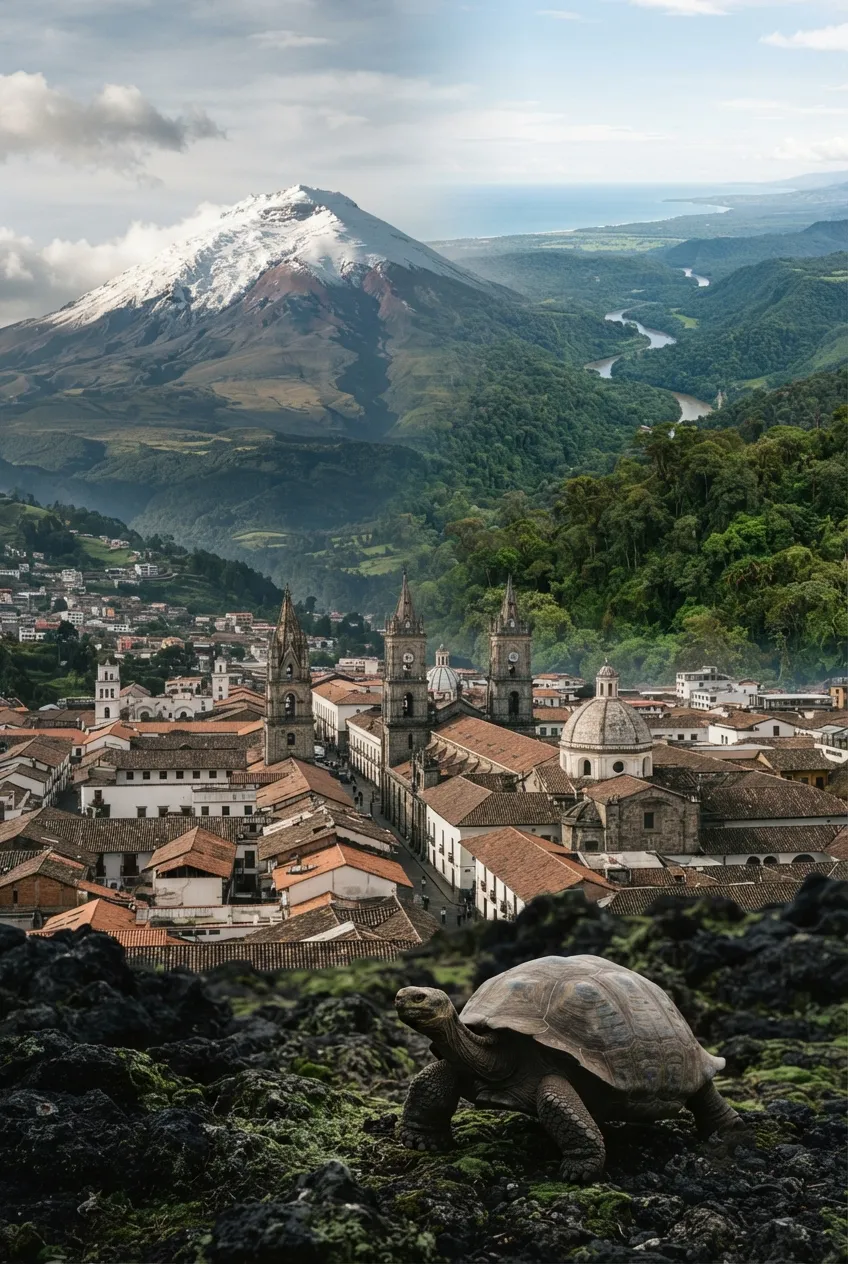
17 Breathtaking Ecuador Travel Destinations That Feel Like Several Countries in One
Ecuador is small only when measured on a map.
Travel through it and the country expands into four completely different worlds: snow-streaked volcanoes, humming cloud forests, Pacific beaches and Amazon waterways disappearing beneath a roof of green. Then, roughly 620 miles offshore, the Galápagos Islands add lava fields, giant tortoises and wildlife that often behaves as though humans are merely another mildly curious species.
You can wake beneath Quito’s church towers, stand beside a turquoise volcanic crater by lunchtime and descend toward tropical forest the following day. Few destinations pack this much ecological and cultural variety into such manageable distances.
Ecuador’s compact size also makes it ideal for travelers who dislike choosing. You can combine colonial cities, mountain hiking, wildlife watching, indigenous markets, jungle lodges and coastal villages in a single trip without crossing an international border.
This guide covers the best Ecuador travel destinations, including famous highlights, quieter alternatives, a practical itinerary, seasonal advice, a comparison table, a packing checklist and important safety information for planning your journey.
Recommended Travel Items for Your Trip
ECUADOR AT A GLANCE
Best overall months: June to September for much of the Andes
Ideal first trip: 12 to 16 days
Main gateways: Quito and Guayaquil
Best wildlife experience: Galápagos Islands
Best mountain scenery: Cotopaxi, Quilotoa and Chimborazo
Best colonial cities: Quito and Cuenca
Best rainforest experiences: Yasuní and Cuyabeno
Best adventure base: Baños de Agua Santa
Currency: US dollar
Official language: Spanish, with several recognized Indigenous languages
Why Ecuador Belongs on Your Travel List
Ecuador is commonly divided into four travel regions: the Andes, the Amazon, the Pacific coast and the Galápagos Islands.
Each could support an entire vacation.
The Andean corridor contains colonial cities, indigenous communities, crater lakes and some of the world’s highest volcanoes. To the east, the land drops into the Amazon basin. West of the mountains, beaches, fishing towns, mangroves and tropical forests line the coast. Far offshore, the Galápagos form an ecological universe of their own.
Ecuador’s official tourism platform describes the country as a place where the sea, mountains, rainforest and Galápagos can all be experienced within one journey.
That diversity is Ecuador’s great travel trick. The scenery keeps changing before familiarity has time to unpack.
1. Quito
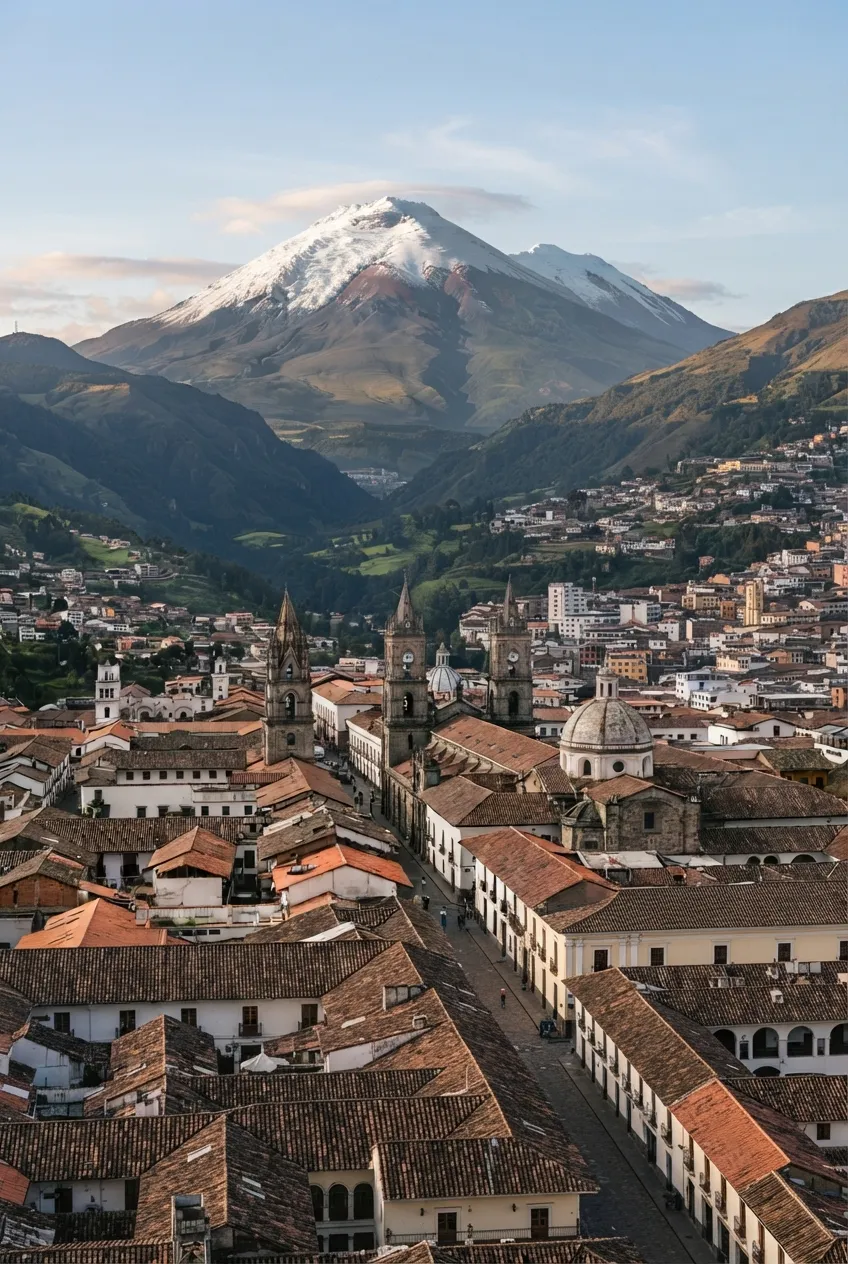
Quito is not merely the doorway to Ecuador. It deserves several days of its own.
The capital stretches through a narrow Andean valley beneath the Pichincha volcano. At its heart lies a dense historic center of churches, monasteries, plazas, tiled courtyards and steep streets lined with pastel buildings.
Quito’s old quarter was among the first places designated a UNESCO World Heritage Site. The city’s official tourism information highlights its exceptionally well-preserved historic center and important cultural heritage.
Begin in Plaza Grande, then wander toward La Compañía de Jesús, whose highly decorated interior is one of the city’s architectural showpieces. Continue to the Basilica del Voto Nacional, where unusual gargoyles take the forms of Ecuadorian animals.
Best Things to Do in Quito
- Explore Plaza Grande and the historic center
- Visit La Compañía de Jesús
- Climb the Basilica towers where access is permitted
- Ride the TelefériQo above the city
- Visit museums connected with Ecuadorian history and art
- Explore La Floresta’s cafés and street art
- Take a day trip to the equatorial region north of Quito
Altitude Warning
Quito sits at roughly 2,850 meters above sea level. Arrive gently, drink plenty of water and avoid planning a punishing hike immediately after landing.
The first day should involve plazas and soup, not declaring war on a volcano.
2. The Galápagos Islands
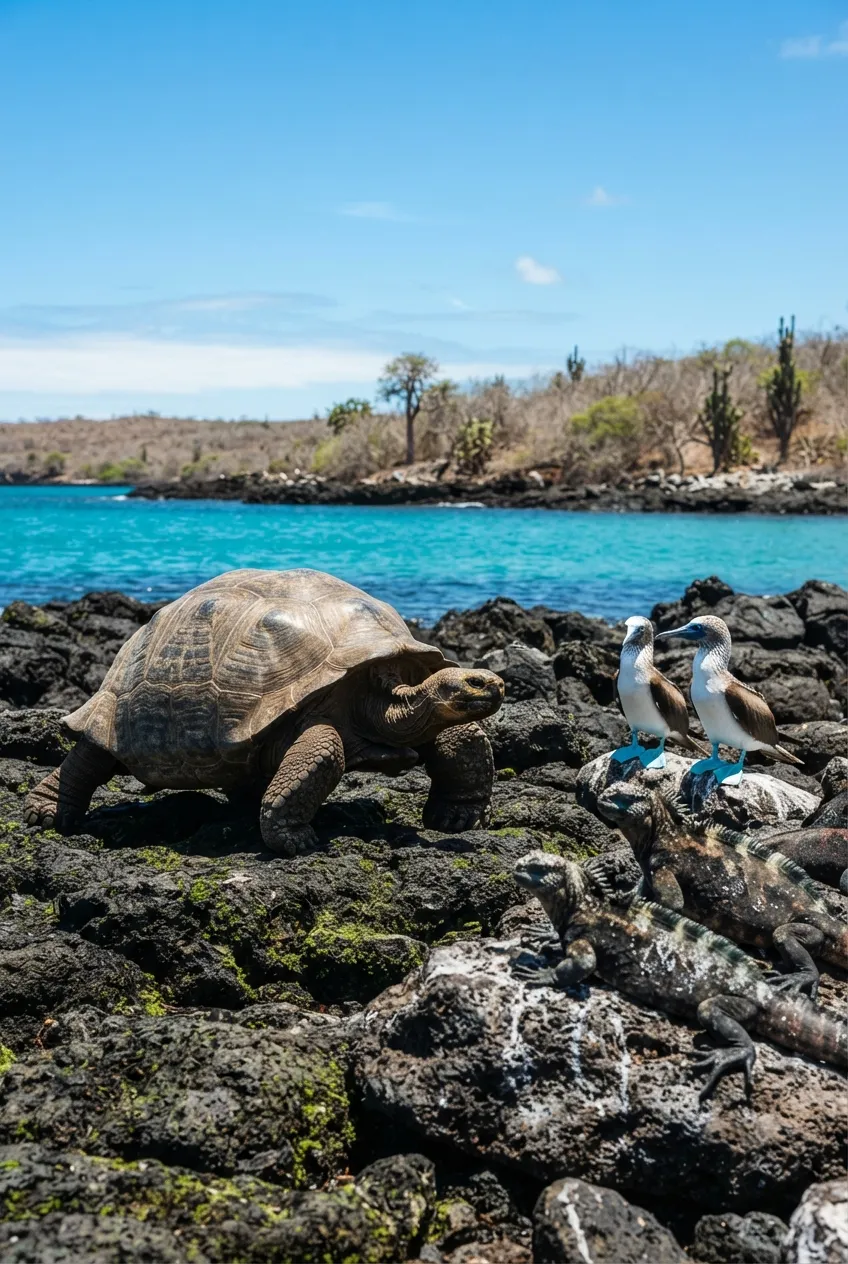
The Galápagos are Ecuador’s most famous destination and one of the planet’s great wildlife journeys.
Marine iguanas bask on black lava. Blue-footed boobies perform elaborate courtship displays. Giant tortoises move through highland vegetation with the calm authority of creatures that have never needed to hurry for anyone.
Travelers can explore the islands through a multi-day cruise or a land-based itinerary using inhabited islands such as Santa Cruz, San Cristóbal, Isabela and Floreana.
The Galápagos National Park protects roughly 7,970 square kilometers of land across the archipelago.
Best Islands for First-Time Visitors
Santa Cruz: Best for easy logistics, tortoise reserves and day tours
San Cristóbal: Best for sea lions, snorkeling and a relaxed waterfront
Isabela: Best for volcanic landscapes, beaches and marine wildlife
Floreana: Best for history, remoteness and quieter excursions
Cruise or Island Hopping?
A cruise reaches more isolated visitor sites and reduces repeated packing. Land-based travel is usually more flexible and may be easier to manage on a moderate budget.
Neither style is universally better. The right choice depends on your priorities, mobility, budget and tolerance for sleeping on a moving object.
GALÁPAGOS RULES
Use authorized tourism services, keep the required distance from wildlife and never feed animals. Visitors are also expected to manage waste responsibly and follow the instructions of naturalist guides.
Travelers flying to the Galápagos must complete additional procedures, including obtaining the Transit Control Card before departure from mainland Ecuador. Ecuador’s tourism authority currently lists the card cost as USD 20, but fees and procedures should be checked again before travel.
3. Cotopaxi National Park
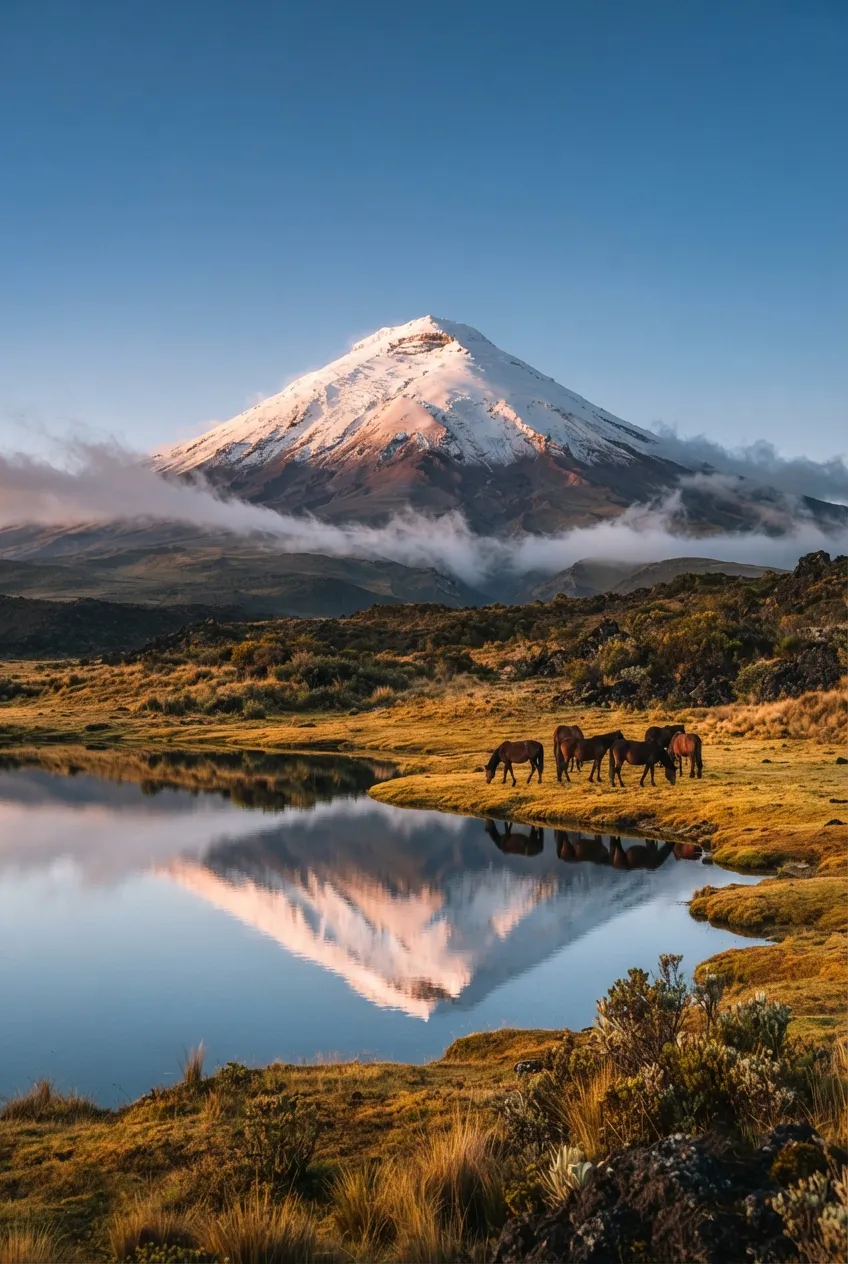
Cotopaxi rises above the Andean plateau with almost unreasonable symmetry.
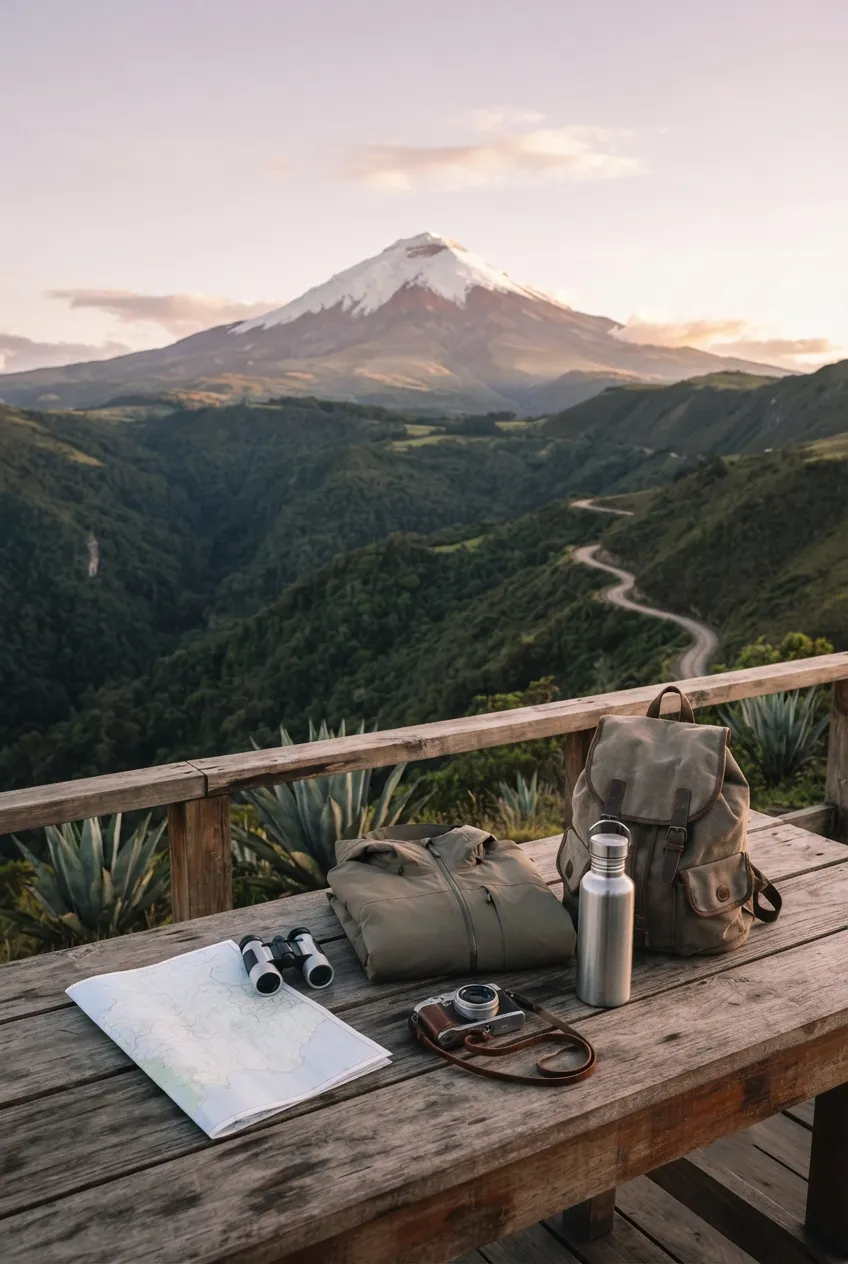
On clear mornings, its snow-covered cone appears above grasslands where wild horses graze and clouds trail across the lower slopes. The volcano is among Ecuador’s most recognizable natural landmarks and an easy addition to a route between Quito and the central Andes.
Most visitors explore the high-altitude landscapes around Limpiopungo Lagoon or travel toward the José Rivas Refuge when volcanic and road conditions allow.
Things to Do in Cotopaxi
- Walk around Limpiopungo Lagoon
- Cycle selected downhill routes with a guide
- Photograph the volcano at sunrise
- Stay in a nearby historic hacienda
- Hike toward the mountain refuge
- Watch for Andean birds and wild horses
Cotopaxi is an active volcano. Access may change because of volcanic activity, weather, conservation work or road conditions. Check official park information shortly before visiting.
4. Quilotoa Crater Lake
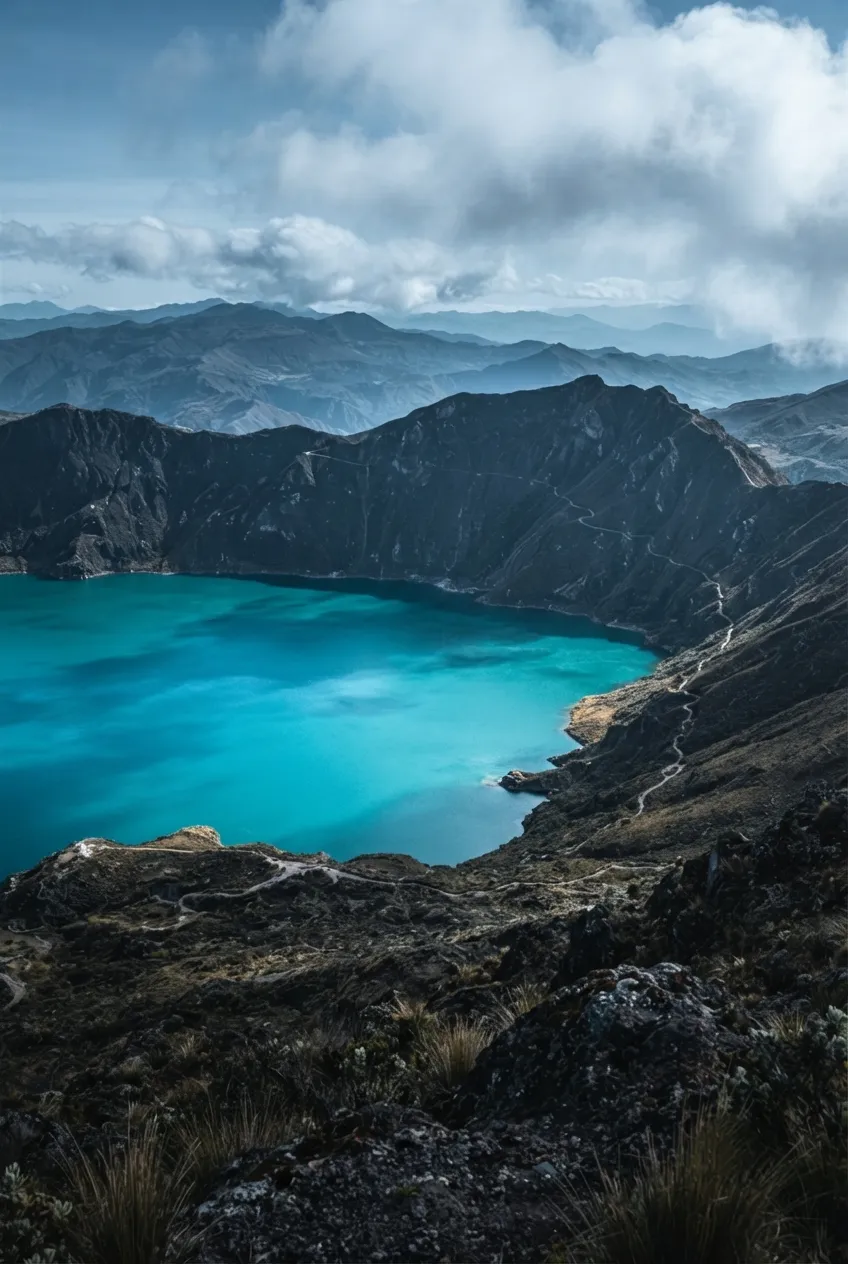
Quilotoa is a volcanic crater filled with mineral-rich water that shifts between green, turquoise and deep blue according to light and weather.
The first sight from the crater rim is startling. Steep walls plunge toward the lake, while Andean ridges continue into the distance behind it.
Quilotoa lies at approximately 3,900 meters above sea level. Travelers can walk down to the water, hike sections of the crater rim or follow the multi-day Quilotoa Loop through nearby villages.
Ecuador’s tourism information promotes activities around Quilotoa including hiking, cycling and kayaking, along with visits to nearby communities and the Toachi Canyon.
The Quilotoa Loop
The broader loop connects highland settlements such as Sigchos, Isinliví, Chugchilán and Quilotoa. It is popular with independent hikers, although trail conditions, markings and luggage arrangements should be researched carefully.
ALTITUDE WARNING
The climb from the lake back to the rim is much harder than the descent. Cold wind and altitude can turn a cheerful downhill stroll into a slow negotiation with your lungs.
5. Baños de Agua Santa
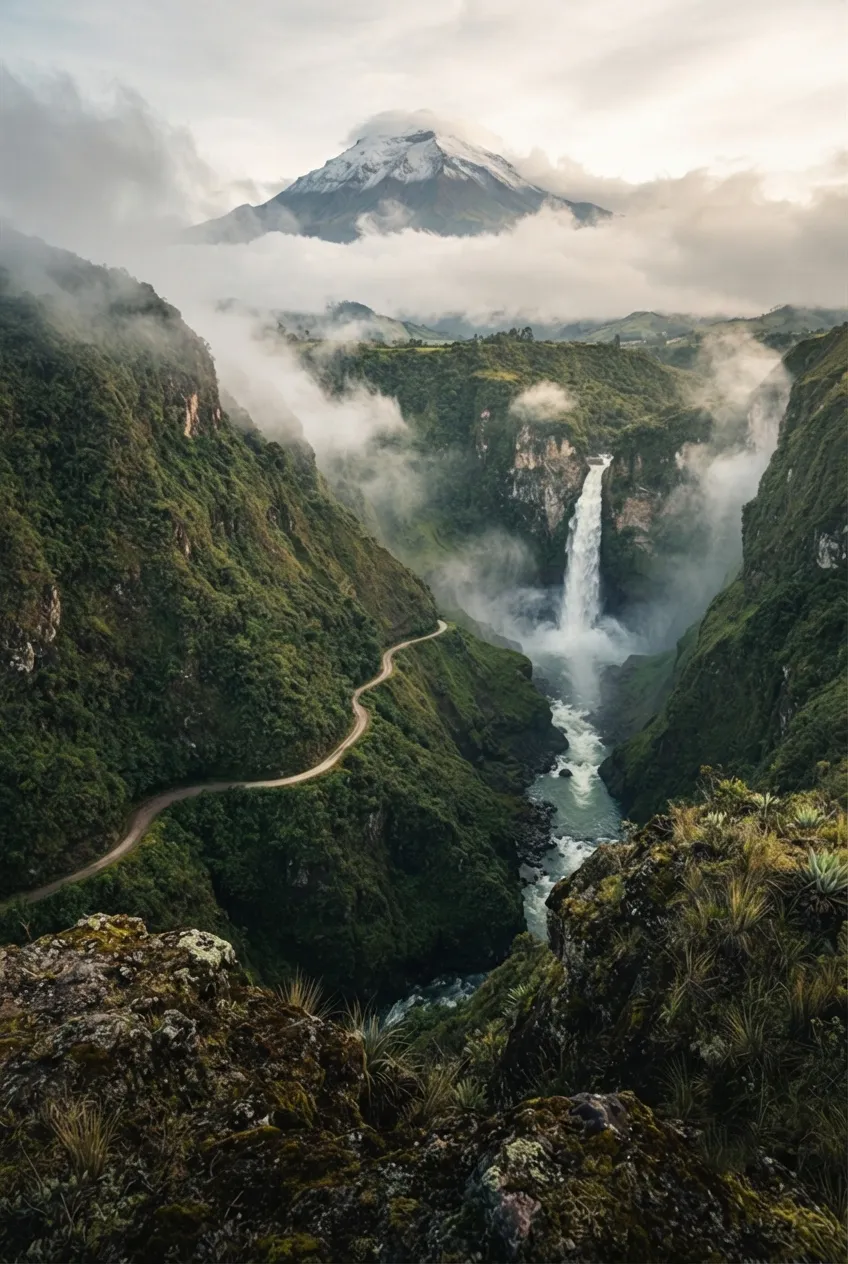
Baños sits where the Andes begin collapsing toward the Amazon.
Waterfalls spill down green cliffs, the Tungurahua volcano rises nearby and rivers rush through deep gorges. The town is Ecuador’s best-known adventure base, but it also works for travelers who prefer thermal pools, scenic roads and extended café research.
Best Things to Do in Baños
- Cycle the Route of the Waterfalls
- Visit Pailón del Diablo
- Soak in thermal baths
- Go rafting or canyoning with a certified operator
- Ride a cable car across a river gorge
- Hike to mountain viewpoints
- Visit the Casa del Árbol swing
- Continue east toward the Amazon basin
The tourism authority notes that Baños offers thermal facilities across different price ranges, including public pools and more elaborate spa experiences.
Route of the Waterfalls
The road east from Baños passes a chain of waterfalls and viewpoints. Many travelers rent bicycles and arrange transportation back after reaching the Pailón del Diablo area.
Traffic shares parts of the route, so reflective gear, a helmet and careful riding matter far more than obtaining a dramatic video.
6. Cuenca
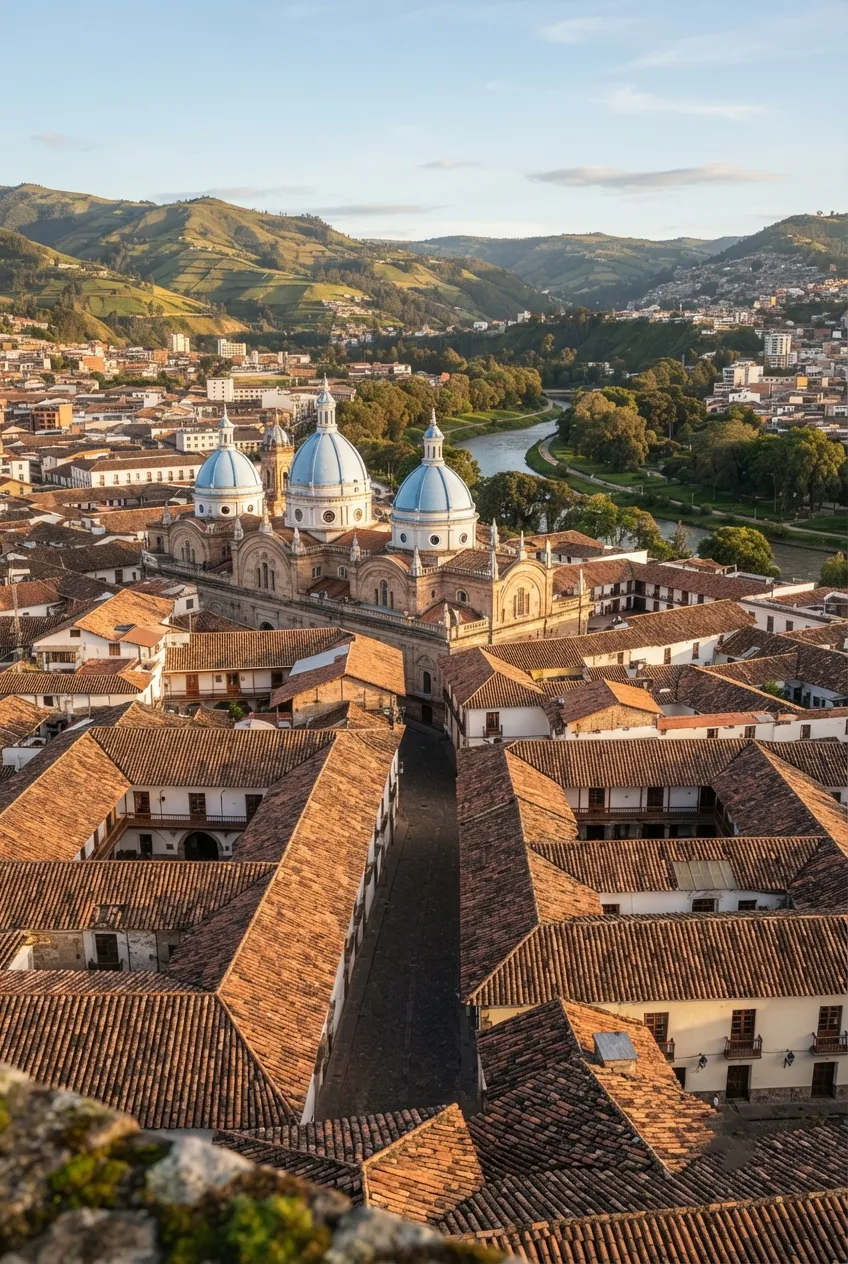
Cuenca is Ecuador at its most graceful.
Domes rise above terracotta rooftops. Rivers pass through leafy neighborhoods, while cobbled streets lead between churches, museums, cafés and restored colonial buildings.
The historic center is compact enough to explore on foot, although the surrounding hills and nearby villages reward a longer stay.
Ecuador’s tourism platform describes Cuenca as one of the country’s most beautiful cities, with a scenic urban environment that invites slow exploration.
Do Not Miss
- The blue domes of the New Cathedral
- Plaza Calderón
- The Tomebamba River
- El Vado neighborhood
- Pumapungo Museum and archaeological areas
- Mirador de Turi
- Local markets and craft workshops
Cuenca is an excellent place to pause midway through a busy Ecuador itinerary. It has enough architecture to satisfy the ambitious and enough cafés to rescue the exhausted.
7. Cajas National Park
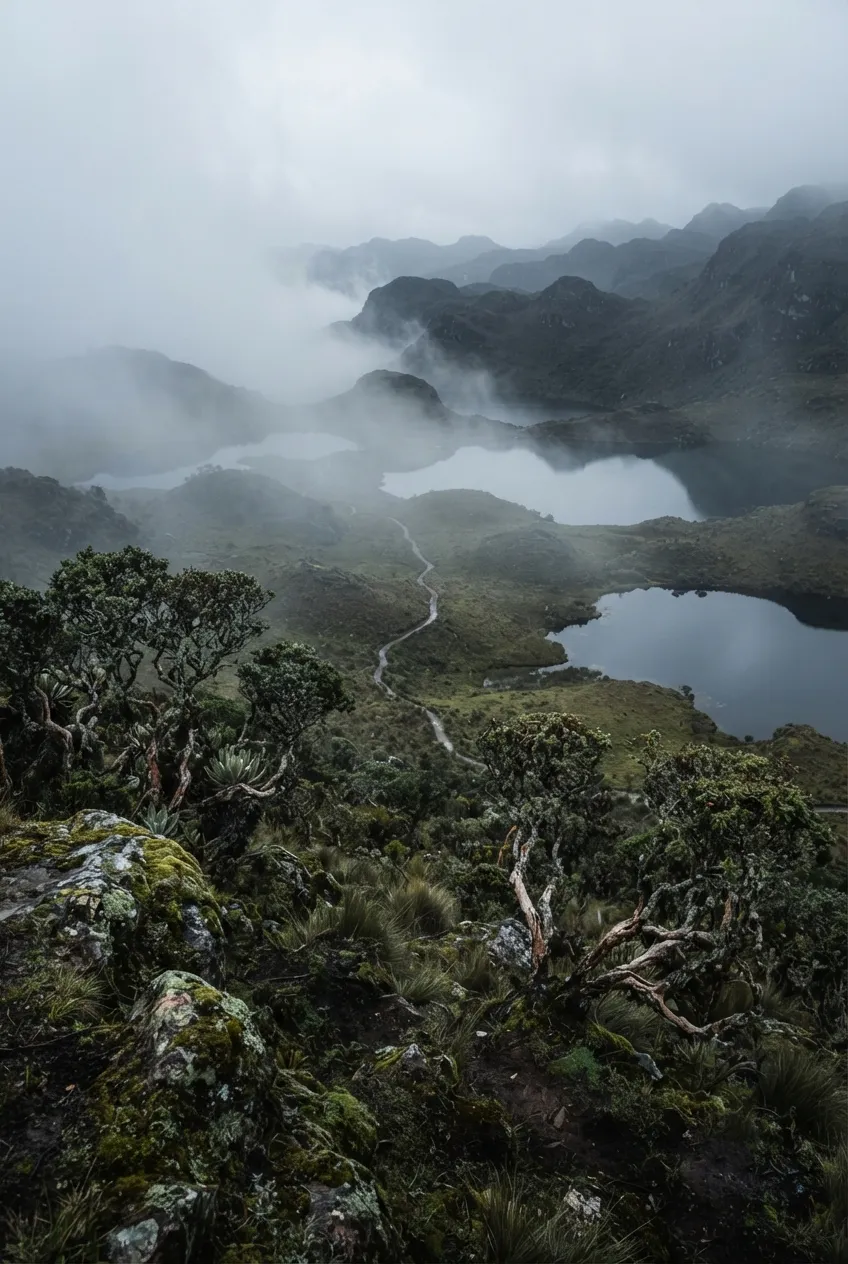
Cajas National Park lies west of Cuenca in a high-altitude landscape of glacial lakes, grassland, cloud and twisted polylepis trees.
The environment feels austere and strangely delicate. Trails cross open páramo, skirt dark lagoons and disappear into mist with theatrical regularity.
Elevation ranges significantly across the park, and weather can turn cold and wet without much ceremony.
Best Experiences
- Short walks around accessible lakes
- Full-day hiking routes
- Birdwatching
- Landscape photography
- Visits combined with Cuenca
Carry waterproof clothing, warm layers and offline navigation. Longer trails should not be treated casually, especially in fog.
8. Otavalo and the Northern Andes
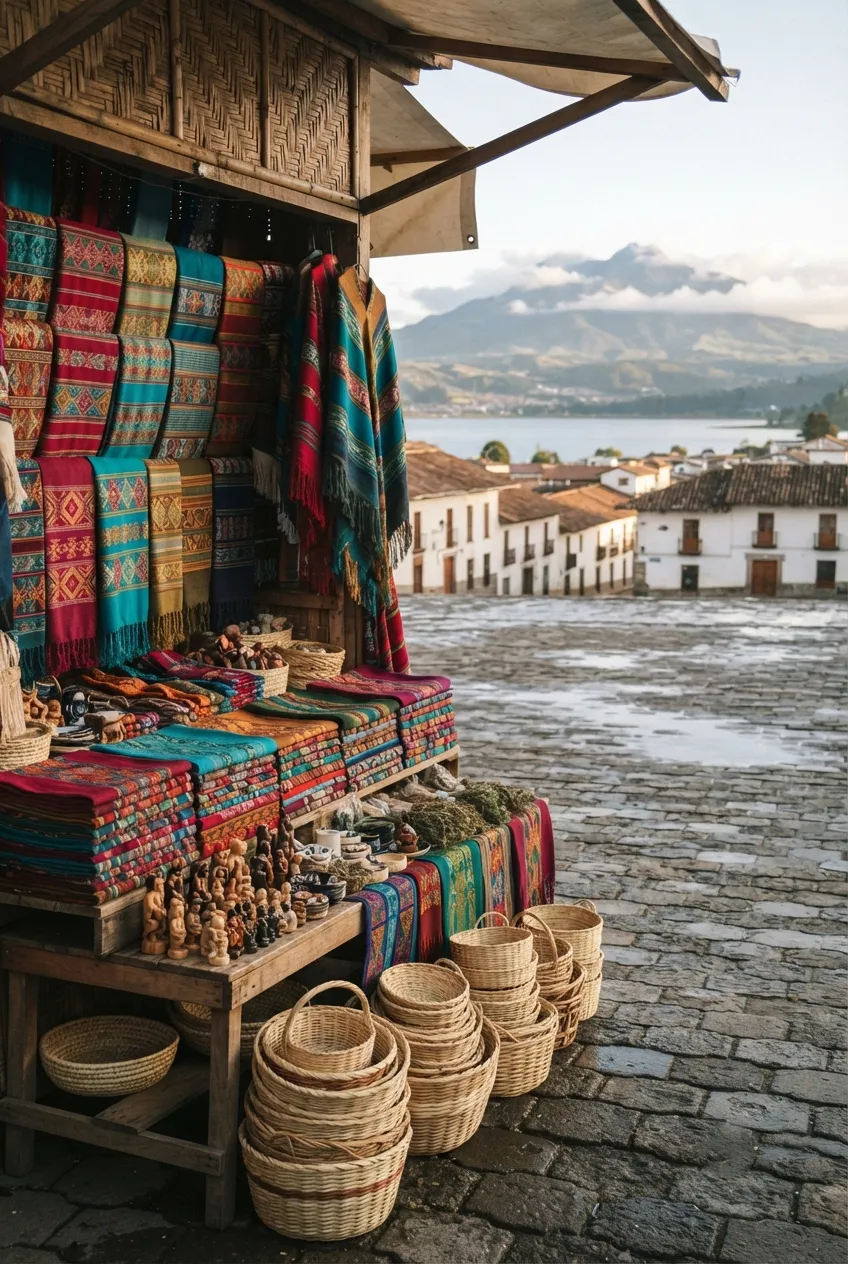
Otavalo is famous for its market, but the surrounding region is equally compelling.
Textiles, woven goods, jewelry and handicrafts fill the stalls around Plaza de los Ponchos. Beyond town, volcanoes, lakes and indigenous communities create one of Ecuador’s richest cultural landscapes.
Nearby Places Worth Adding
- Peguche Waterfall
- Cuicocha Crater Lake
- Cotacachi
- San Pablo Lake
- Mojanda Lakes
- Traditional weaving communities
Visit the market with curiosity rather than treating it as a competitive shopping tournament. Ask permission before photographing people, handle crafts respectfully and bargain without grinding a small producer into geological submission.
9. Mindo Cloud Forest
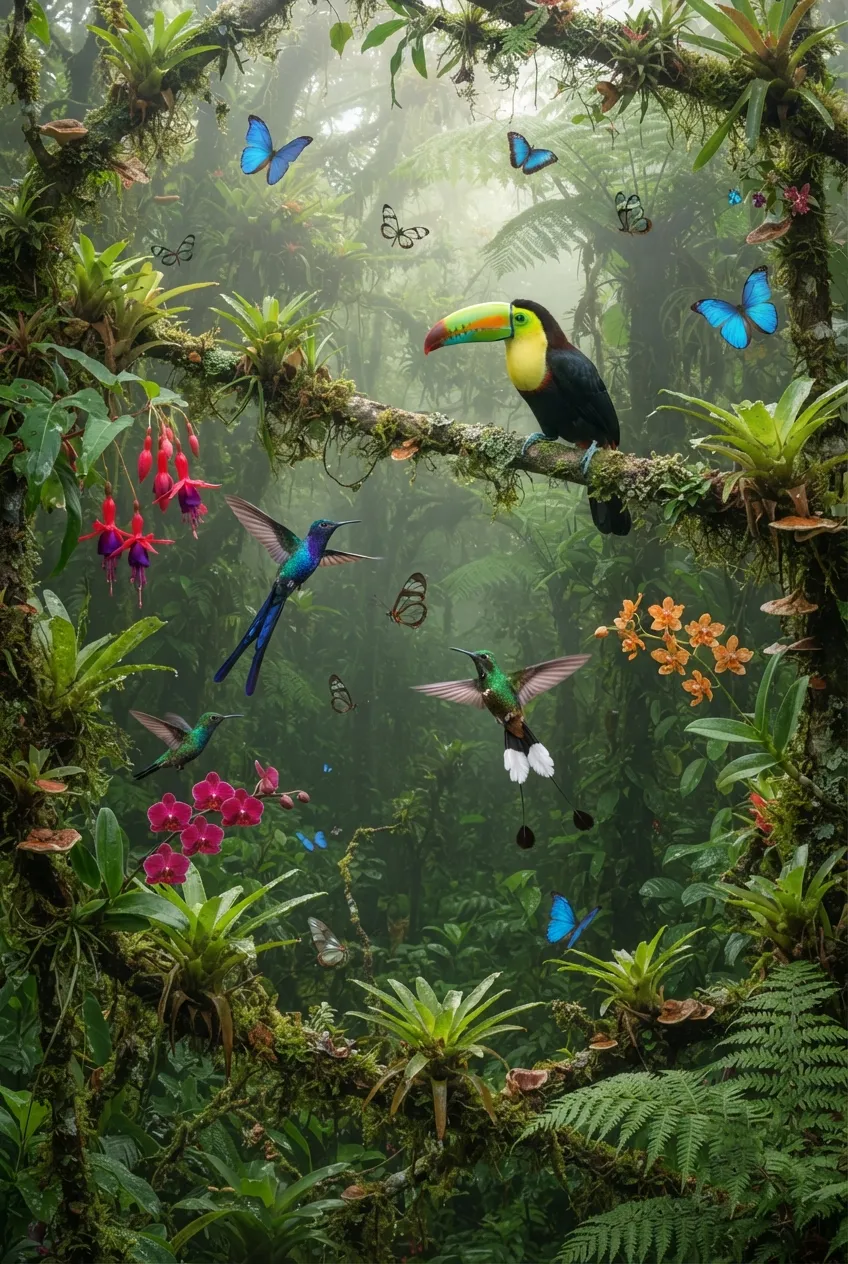
Mindo lies only a few hours from Quito but feels ecologically distant from the capital.
Warm mist drifts through forested hills. Hummingbirds gather around flowering gardens, while toucans, tanagers and butterflies turn the canopy into a moving color chart.
Mindo is one of Ecuador’s most accessible destinations for birdwatching and cloud-forest adventures. Ecuador’s official Andean tourism pages include Mindo among the region’s major destinations.
Things to Do in Mindo
- Join an early-morning birding walk
- Hike to waterfalls
- Visit butterfly gardens
- Tour chocolate producers
- Ride a cable car above the forest
- Go tubing or zip-lining with reputable operators
- Stay in a forest lodge
Spend at least two nights. A rushed day trip misses the cool mornings when birds are most active and the forest feels freshly assembled.
10. Chimborazo Wildlife Reserve
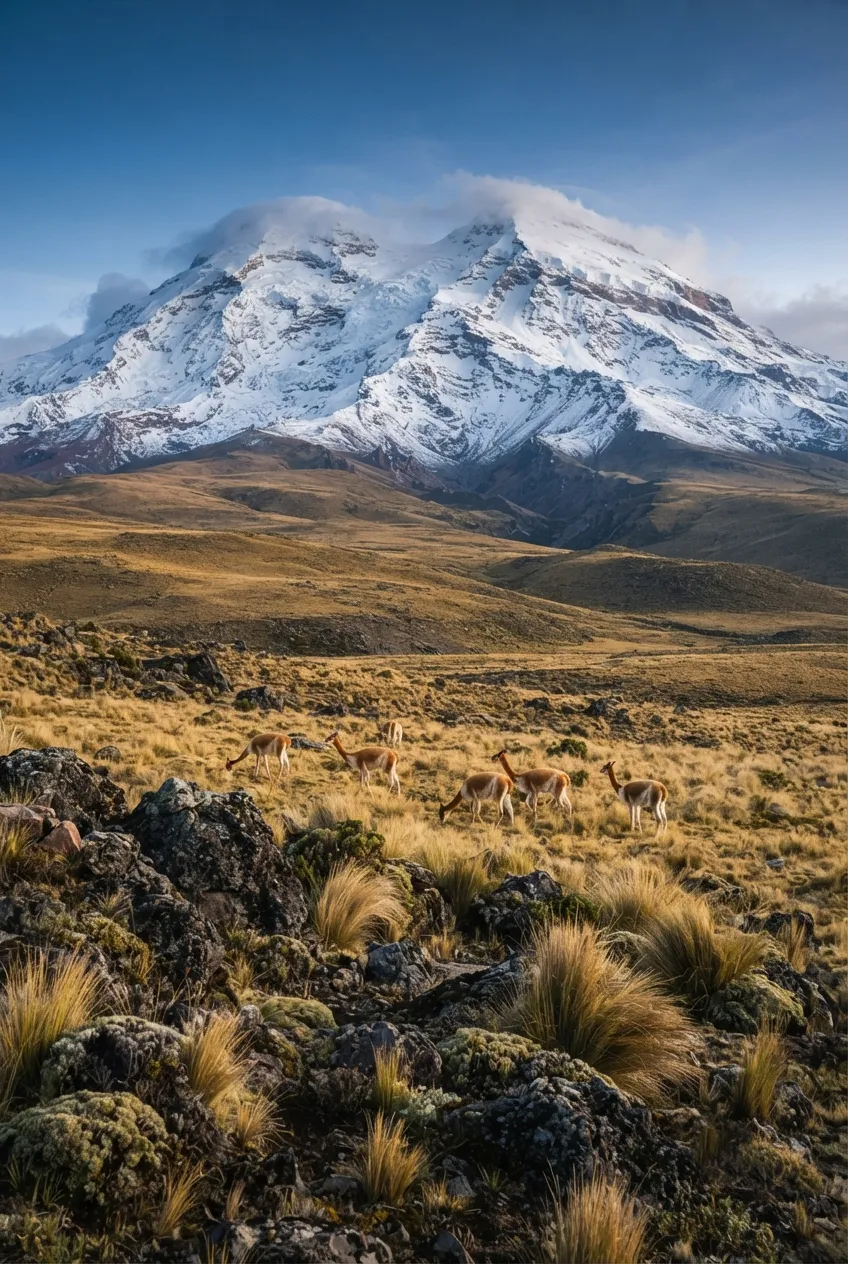
Chimborazo is Ecuador’s highest mountain.
Because of the Earth’s equatorial bulge, its summit is also the point on the planet’s surface farthest from the Earth’s center. That geographical curiosity is impressive, although considerably less useful when your legs are objecting to the altitude.
The reserve protects high Andean páramo where vicuñas graze beneath immense volcanic slopes.
Visiting Chimborazo
Most travelers drive into the reserve, walk around lower refuge areas and enjoy the surrounding landscapes. Reaching the summit is a technical mountaineering expedition requiring acclimatization, equipment and qualified guides.
Even casual visits occur at extreme altitude. Move slowly, dress warmly and pay attention to symptoms of altitude illness.
11. Yasuní National Park
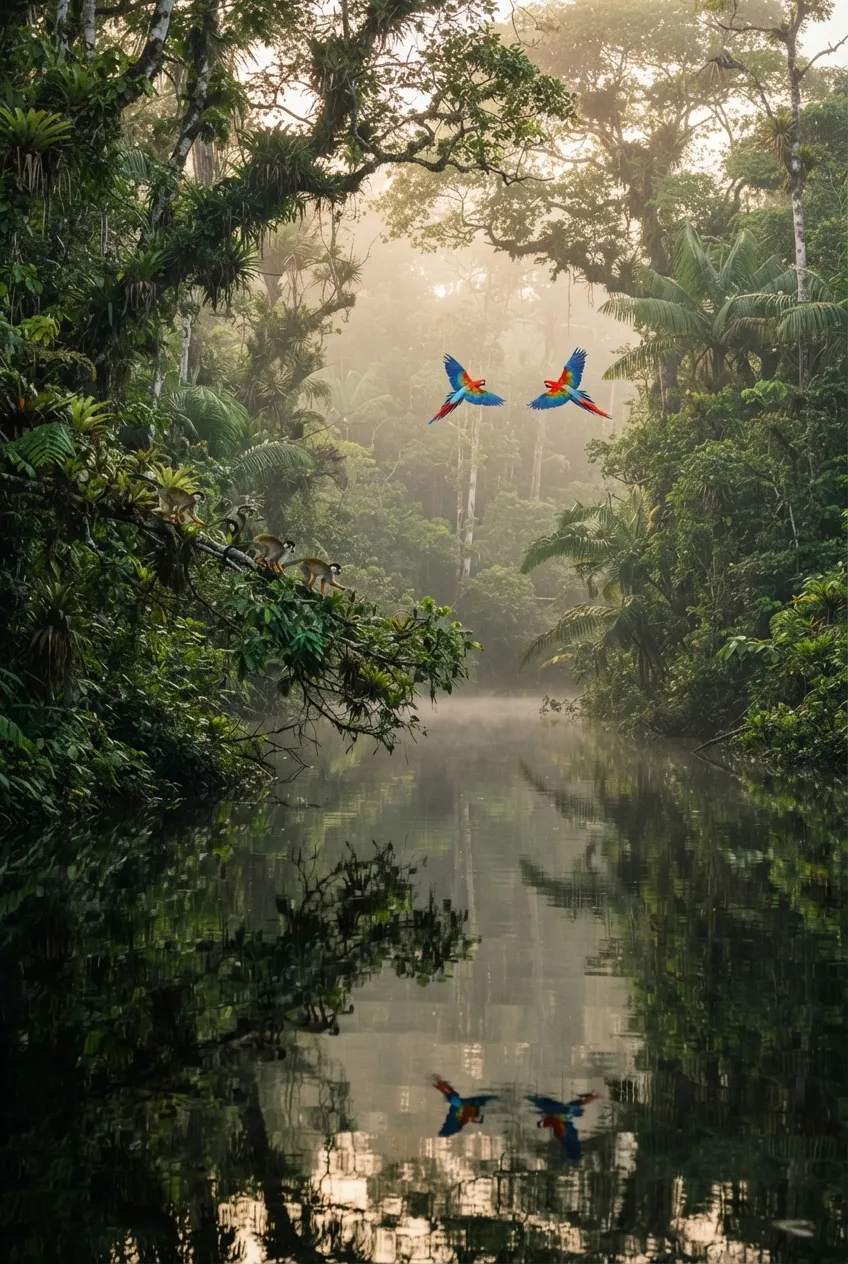
Yasuní protects one of the most biodiverse regions of the Amazon basin.
Rivers wind beneath dense canopy inhabited by monkeys, macaws, river dolphins, caimans, insects and an extraordinary variety of plants. The forest is not a silent wilderness. It clicks, rattles, whistles and occasionally drops something large enough to make everyone glance upward.
Access usually involves a flight or long overland journey followed by boat transport to a lodge or community-based tourism project.
Best Experiences
- Guided canoe excursions
- Canopy towers
- Dawn birdwatching
- Night walks
- Wildlife observation from riverbanks
- Cultural visits developed with local communities
Choose accommodation carefully. Look for transparent conservation practices, qualified naturalist guides and respectful partnerships with Indigenous communities.
12. Cuyabeno Wildlife Reserve
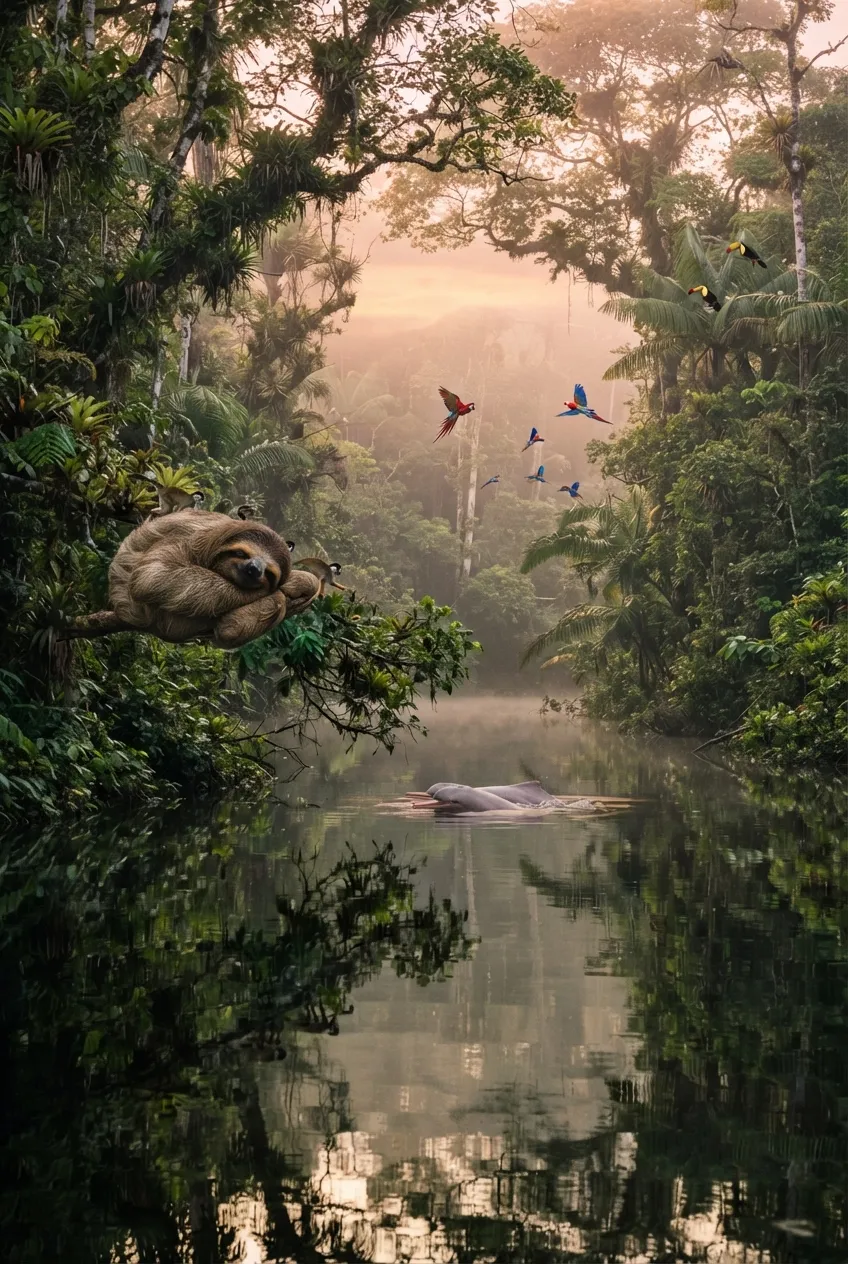
Cuyabeno is one of the most popular Amazon destinations for travelers seeking a multi-day jungle experience.
Flooded forests, blackwater lagoons and river channels create a landscape designed for canoe travel. Pink river dolphins, monkeys, sloths, caimans and colorful birds may appear, although wildlife sightings remain wonderfully beyond human scheduling.
Why Choose Cuyabeno?
Cuyabeno often suits travelers looking for:
- Small-group jungle trips
- Canoe-based wildlife watching
- Lodge stays of three to five nights
- Sunset excursions on lagoons
- Guided forest walks
- A more budget-friendly Amazon experience than some luxury lodges
Pack light clothing that covers the skin, quick-drying layers and a genuine rain jacket. The rainforest regards “water-resistant” as a charming little joke.
13. Puerto López and Machalilla National Park
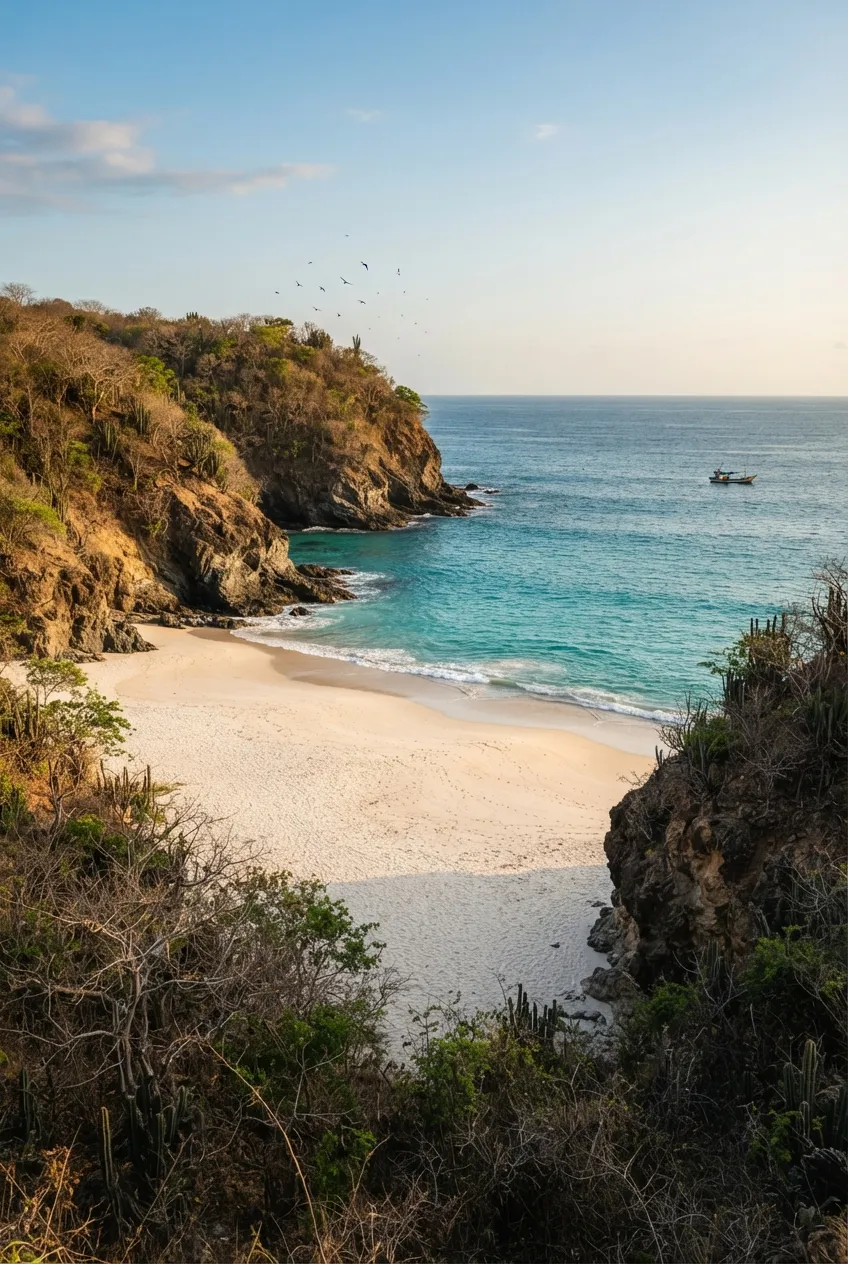
Puerto López is a relaxed Pacific town and the main base for exploring Machalilla National Park.
The surrounding region combines dry forest, cliffs, beaches, archaeological sites and marine wildlife. It provides a completely different atmosphere from the highlands and Amazon.
Best Things to Do
- Visit Los Frailes Beach
- Take a boat trip to Isla de la Plata
- Join seasonal whale-watching excursions
- Explore coastal forest trails
- Visit Agua Blanca community
- Eat fresh seafood along the waterfront
Isla de la Plata is sometimes called a more affordable alternative to the Galápagos, although the two experiences should not be treated as interchangeable. The island offers nesting seabirds and marine excursions, but not the scale or ecological complexity of the archipelago.
14. Guayaquil
Guayaquil is Ecuador’s largest city and a major gateway to the coast and Galápagos.
Its most enjoyable visitor areas include the Malecón 2000 waterfront and the brightly painted hillside neighborhood of Las Peñas. From Santa Ana Hill, stairs lead toward wide views over the river and city.
Guayaquil works well as a short stop rather than the centerpiece of a first Ecuador itinerary.
Safety Considerations
Security conditions vary considerably across the city. Use trusted transportation, avoid displaying valuables and ask your accommodation which neighborhoods and routes are currently appropriate.
Current government advisories identify crime, kidnapping, terrorism and unrest as concerns in Ecuador, with some areas carrying higher levels of risk.
15. Montañita and the Ruta del Sol
Montañita is Ecuador’s best-known surf town.
Its beaches, hostels, cafés and nightlife attract backpackers and surfers from across South America. The atmosphere is energetic rather than serene, especially during weekends and high season.
Travelers seeking quieter beaches can continue along the coast to smaller communities such as Olón, Ayampe or villages farther north.
Best For
- Surf lessons
- Beach time
- Social hostels
- Coastal road trips
- Younger travelers seeking nightlife
Montañita is not the right choice for everyone. Those imagining empty sand and meditative silence may discover that the beach has brought speakers.
16. Ingapirca
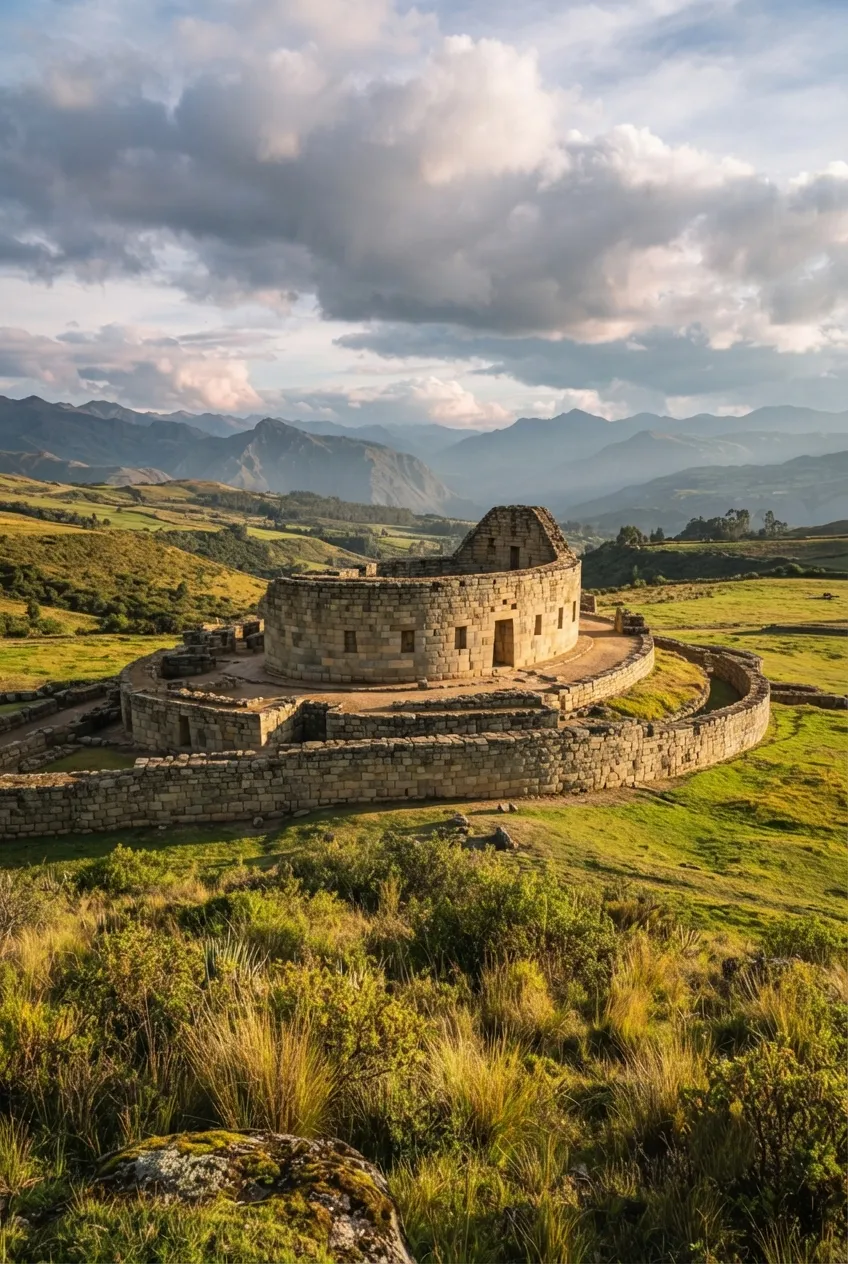
Ingapirca is Ecuador’s most important surviving Inca archaeological complex.
Located in the southern highlands, the site contains stone foundations, ceremonial areas and the distinctive Temple of the Sun. It reflects both Inca influence and the earlier presence of the Cañari people.
The complex is commonly visited as a day trip from Cuenca or included on an overland journey through the Andes.
A guide adds considerable value by explaining the relationship between architecture, astronomy, ritual and the cultures that shaped the site.
17. Vilcabamba and Loja
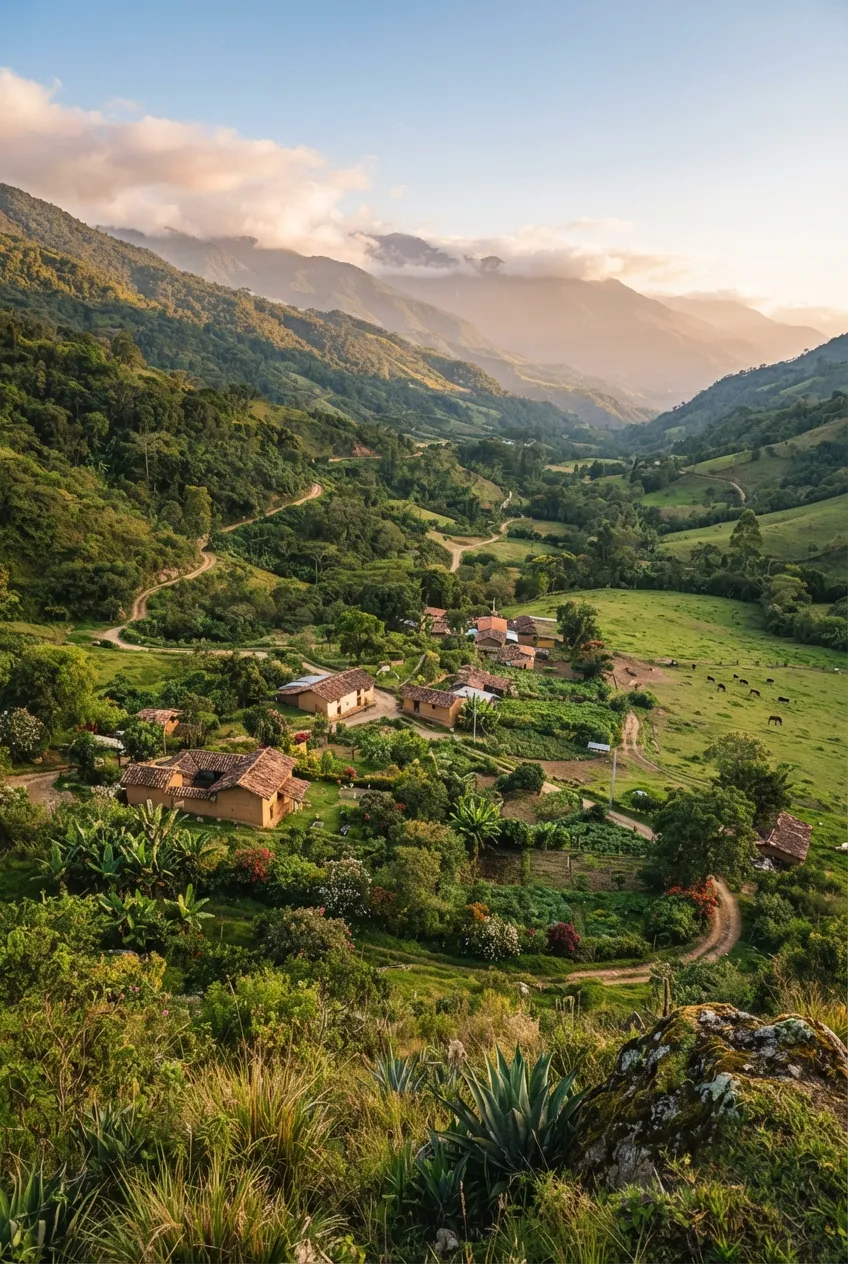
Southern Ecuador receives fewer international visitors than Quito, Cotopaxi or Baños.
Loja is known for music, culture and a relaxed urban atmosphere. South of the city, Vilcabamba lies within a green valley surrounded by mountains and hiking routes.
The area attracts long-stay travelers, wellness seekers and hikers. Its slower rhythm makes it a natural final stop after a busy route through the central Andes.
Things to Do Around Vilcabamba
- Walk mountain trails
- Visit nature reserves
- Explore the village and valley
- Take guided horseback rides
- Continue toward Podocarpus National Park
- Spend an afternoon doing absolutely nothing with impressive commitment
Ecuador Travel Destinations Comparison Table
| Destination | Main Experience | Recommended Stay | Physical Effort | Best For |
| Quito | Colonial architecture and culture | 2–3 nights | Moderate | First-time visitors |
| Galápagos | Wildlife and marine adventures | 5–8 nights | Variable | Wildlife lovers |
| Cotopaxi | Volcano scenery | 1–2 nights | Moderate to high | Hiking and photography |
| Quilotoa | Crater lake and village trekking | 1–3 nights | High | Active travelers |
| Baños | Waterfalls and adventure sports | 2–3 nights | Variable | Outdoor activities |
| Cuenca | Historic city and culture | 2–3 nights | Low | Slow travel |
| Cajas | High-altitude lakes and hiking | 1 day | Moderate to high | Mountain scenery |
| Otavalo | Market and indigenous culture | 1–2 nights | Low | Crafts and culture |
| Mindo | Cloud forest and birding | 2 nights | Moderate | Nature lovers |
| Chimborazo | High-altitude volcanic landscapes | 1–2 nights | High | Adventure |
| Yasuní | Deep Amazon wildlife | 3–5 nights | Moderate | Rainforest immersion |
| Cuyabeno | Canoe-based Amazon experience | 3–5 nights | Moderate | Budget jungle trips |
| Puerto López | Beaches and marine wildlife | 2–4 nights | Low | Coastal travel |
| Guayaquil | Urban gateway | 1–2 nights | Low | Transit and city culture |
| Montañita | Surfing and nightlife | 2–3 nights | Variable | Backpackers |
| Ingapirca | Archaeology | Half or full day | Low | History |
| Vilcabamba | Valleys and slow travel | 2–4 nights | Variable | Relaxation |
The Perfect 14-Day Ecuador Itinerary
This route balances cities, mountains, cloud forest and Amazon scenery. The Galápagos can be added as a separate five-to-eight-day extension.
Day 1: Arrive in Quito
Rest, acclimatize and take a gentle walk near your accommodation.
Day 2: Historic Quito
Explore the old town, major churches and central plazas.
Day 3: Mindo
Travel into the cloud forest and join an afternoon nature walk.
Day 4: Mindo
Go birdwatching, visit waterfalls and stay a second night.
Day 5: Cotopaxi
Return toward the Andes and explore Cotopaxi National Park.
Day 6: Quilotoa
Visit the crater lake or begin a section of the Quilotoa Loop.
Day 7: Baños
Travel toward Baños and spend the evening in thermal pools.
Day 8: Route of the Waterfalls
Cycle or drive toward Pailón del Diablo.
Day 9: Amazon Journey
Continue east toward a selected Amazon lodge or transport hub.
Days 10–11: Amazon Experience
Take guided forest walks, canoe excursions and wildlife outings.
Day 12: Return to the Andes
Travel back toward Quito or fly onward depending on your route.
Day 13: Otavalo
Visit the market and surrounding northern highlands.
Day 14: Departure
Return to Quito for your flight.
GALÁPAGOS EXTENSION
Add at least five full days for the Galápagos, excluding mainland connection time. Seven or eight nights allow a more satisfying combination of islands and wildlife excursions.
A Longer Three-Week Ecuador Route
Travelers with around 21 days can combine:
Days 1–4: Quito and Mindo
Days 5–8: Cotopaxi, Quilotoa and Baños
Days 9–12: Amazon lodge
Days 13–15: Cuenca and Cajas
Days 16–21: Galápagos Islands
Avoid attempting the coast, Amazon, Galápagos and the entire Andean corridor in two weeks. Ecuador is compact, but travel days still consume time, particularly when mountains, rivers and ferry connections join the conversation.
Best Time to Visit Ecuador
There is no single perfect season because Ecuador’s regions follow different weather patterns.
The Andes
June through September is often among the drier periods in Quito and the central highlands. Mornings may be clearer, while cloud and rain remain possible at any time.
December and January can also offer favorable periods, depending on the year and exact location.
The Amazon
Rain falls throughout the year. Some months are wetter, but conditions vary between river systems and regions.
Higher water levels can improve canoe access to flooded forest, while lower water may expose trails and riverbanks.
The Pacific Coast
The warm, wetter coastal period generally runs from approximately December through May. Conditions may be sunnier and warmer, despite more rainfall.
The cooler, cloudier season is broadly associated with June through November.
Galápagos
The warmer season, roughly December through May, brings warmer seas and more tropical conditions.
The cooler season, broadly June through November, often brings nutrient-rich water, stronger currents and active marine life. Sea conditions can be rougher.
Wildlife is present year-round, so the best month depends on the species, activities and sea conditions you prefer.
Entry and Visa Planning
Visa rules depend on nationality. Many visitors receive a limited visa-free tourist stay, but rules may differ according to passport, travel history and recent policy changes.
The UK currently states that its citizens can visit Ecuador for up to 90 days within a 12-month period without a visa, but travelers of other nationalities should check directly with Ecuadorian authorities.
Confirm:
- Passport validity requirements
- Visa rules for your nationality
- Proof of onward travel
- Galápagos-specific documents
- Health documentation
- Rules affecting minors traveling alone or with one parent
- Requirements for entry from neighboring countries
Never rely on another traveler’s screenshot of a visa rule. Immigration policy has a habit of aging faster than bananas in a hostel kitchen.
Ecuador Packing Checklist
Andes and Cities
- Warm fleece or insulated layer
- Waterproof jacket
- Comfortable walking shoes
- Sun hat
- High-SPF sunscreen
- Reusable water bottle
- Daypack
- Lip balm
- Compact umbrella
Amazon and Cloud Forest
- Quick-drying long trousers
- Lightweight long-sleeved shirts
- Insect repellent
- Dry bag
- Headlamp
- Binoculars
- Spare socks
- Waterproof phone pouch
- Sandals or lodge shoes
Galápagos and Coast
- Reef-conscious sunscreen where appropriate
- Swimwear
- Rash guard
- Secure sandals
- Motion-sickness medication
- Reusable bottle
- Light rain layer
- Underwater camera or waterproof case
- Small backpack rather than bulky luggage
Important Documents
- Passport
- Travel insurance details
- Flight confirmations
- Accommodation addresses
- Galápagos Transit Control Card details
- Emergency contacts
- Copies stored securely online
Staying Safe in Ecuador
Ecuador continues to welcome visitors, but security conditions require thoughtful planning.
The US State Department currently advises travelers to exercise increased caution because of crime, terrorism, unrest and kidnapping, with stronger warnings applying to certain areas.
The UK advises against all but essential travel within parts of the northern border region and provides additional regional restrictions that should be reviewed before building an itinerary.
Armed robbery and violent crime are reported risks, including in major urban areas.
Practical Safety Measures
- Use authorized airport transportation
- Avoid intercity road travel after dark
- Ask hotels about current neighborhood conditions
- Keep phones and cameras discreet in crowded areas
- Do not resist during an armed robbery
- Avoid political demonstrations
- Use registered taxis or reputable ride services
- Do not leave bags unattended on buses
- Keep copies of important documents separate
- Avoid isolated beaches after dark
- Review local conditions before visiting border regions
SAFETY WARNING
Conditions can change between provinces and even between neighborhoods. Read current government advisories shortly before departure and again during the trip. Insurance may be invalid in areas covered by official “do not travel” advice.
Transport in Ecuador
Domestic Flights
Flights connect Quito and Guayaquil with the Galápagos and selected mainland destinations. They are useful when combining distant regions within a limited itinerary.
Intercity Buses
Buses are inexpensive and extensive, but comfort and security vary. Use major terminals, keep valuables close and avoid overnight routes when current safety guidance advises against them.
Private Drivers
A private driver can be worthwhile for Cotopaxi, Quilotoa, Otavalo and multi-stop highland routes.
Rental Cars
Driving provides flexibility, but mountain weather, landslides, roadworks and urban traffic require confidence.
Avoid leaving luggage visible, do not drive unfamiliar roads at night and confirm whether the rental agreement allows travel on rough or remote routes.
Altitude and Health
Quito, Cotopaxi, Quilotoa, Chimborazo and Cajas all involve significant elevation.
Symptoms of altitude illness may include headache, nausea, unusual fatigue, dizziness and sleep disruption. Severe symptoms require descent and medical attention.
Reduce the Risk
- Ascend gradually
- Hydrate regularly
- Avoid excessive alcohol
- Eat light meals initially
- Rest during the first day
- Do not ignore worsening symptoms
- Consult a medical professional before high-altitude travel if you have relevant health conditions
Travelers should also obtain professional advice about vaccinations, mosquito-borne illnesses and food-and-water precautions.
Responsible Travel in Ecuador
Ecuador’s ecosystems are extraordinary and often fragile.
In the Galápagos, remain on marked paths, follow naturalist instructions and keep your distance from wildlife. In the Amazon, choose lodges with credible environmental and community practices.
When visiting indigenous communities:
- Use locally approved guides
- Ask before taking photographs
- Avoid treating ceremonies as performances on demand
- Purchase crafts directly from makers
- Learn a few Spanish phrases
- Respect restrictions around sacred sites
Carry reusable items where practical and avoid removing stones, shells, plants or archaeological material.
The ideal souvenir is a woven textile or a memory, not a small ecological crime hiding in your sock.
Frequently Asked Questions
What is the most beautiful place in Ecuador?
The answer depends on the landscape you prefer. Quilotoa is among the most dramatic highland destinations, the Galápagos are unmatched for wildlife, Cajas offers moody mountain scenery and the Amazon delivers extraordinary biodiversity.
How many days do you need in Ecuador?
Allow at least 10 to 14 days for Quito, the central Andes and either the Amazon or coast. Add five to eight days for the Galápagos.
Is Ecuador expensive?
Mainland Ecuador can be relatively affordable for accommodation, transportation and meals. Galápagos travel is considerably more expensive because of flights, park-related fees, guided excursions and island logistics.
Is Ecuador good for solo travel?
Many solo travelers explore Quito, Cuenca, Baños, Mindo and the Galápagos. Current safety conditions make careful transport planning, reputable accommodation and updated local advice particularly important.
Can you visit the Amazon from Quito?
Yes. Travelers can reach Amazon gateways by road or domestic flight, followed by boat transport in some regions. Trips generally range from three to five nights.
Is Cotopaxi suitable for beginners?
Lower park walks and scenic visits are manageable for many travelers, but altitude can make even simple activity difficult. Summit climbing is technical and requires professional preparation.
Which is better, Yasuní or Cuyabeno?
Yasuní often offers deeper wilderness and high-end lodge options. Cuyabeno is known for flooded forest, canoe travel and a broader range of moderately priced tours.
Is Guayaquil worth visiting?
Guayaquil can be worthwhile for one day if your flights pass through the city. Most first-time visitors prioritize Quito, Cuenca, the Andes or the Galápagos.
Can I drink tap water in Ecuador?
Water safety varies. Many travelers use filtered, boiled or bottled water, particularly outside major cities. Ask your accommodation for current local guidance.
What language is spoken in Ecuador?
Spanish is the principal language. Kichwa, Shuar and other Indigenous languages are also spoken. English is used in parts of the tourism industry but should not be assumed everywhere.
Final Thoughts
Ecuador refuses to settle into one identity.
It is a country where colonial bell towers stand beneath active volcanoes, hummingbirds patrol cloud forests and Amazon rivers begin only a few hours from the high Andes. On the coast, fishing boats return beneath circling seabirds. Far offshore, giant tortoises move across islands built from fire.
The temptation is to race through it.
Do not.
Give Quito time to emerge beyond its traffic. Stay overnight near Cotopaxi and wait for the clouds to lift. Walk slowly at Quilotoa. Sit beside a river in the Amazon after dark and listen to a forest that has no interest in being quiet.
Ecuador’s distances may be short, but its landscapes are deep.
That is the real marvel of traveling here: every road seems to descend into another climate, another culture and another version of the planet.