17 Most Beautiful Places in Norway That Look Like Nature’s Wildest Masterpiece
Norway does not believe landscapes should arrive quietly.
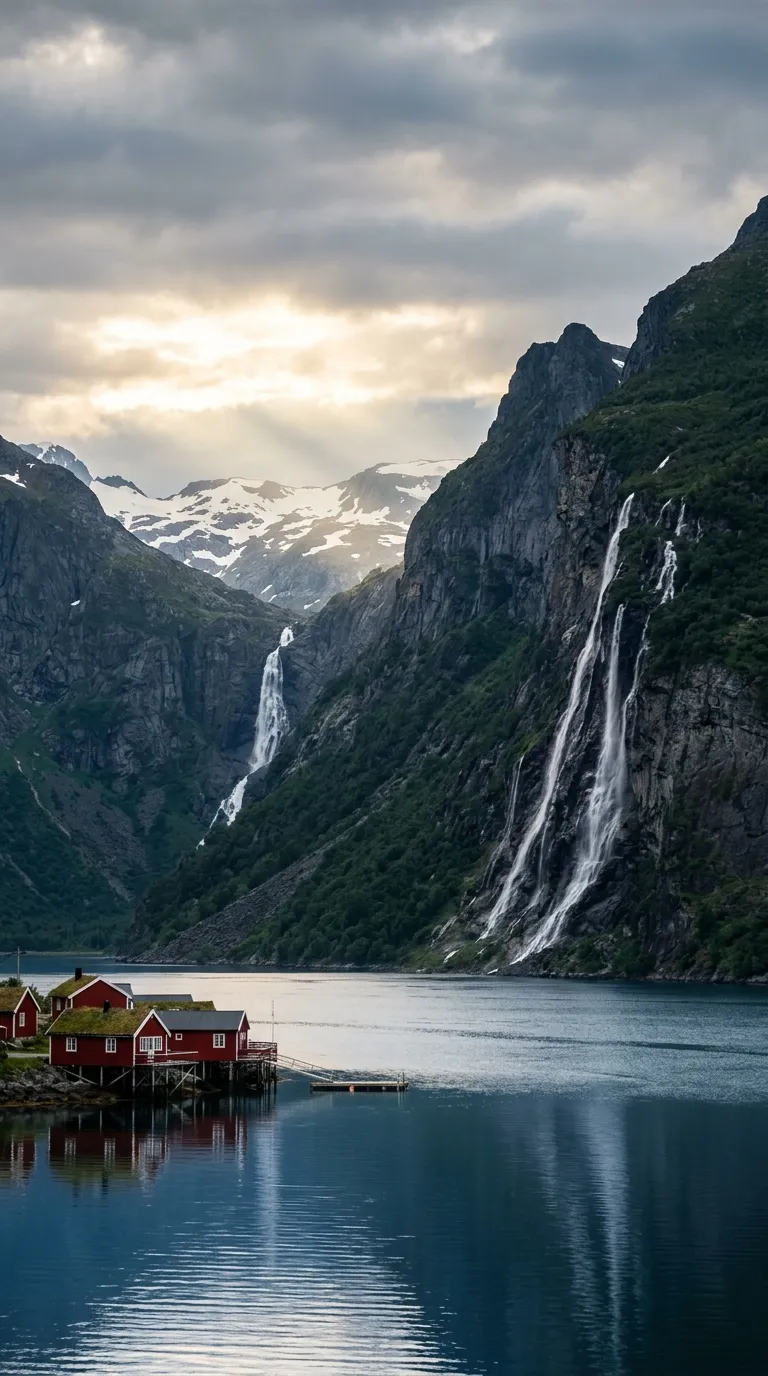
Mountains plunge directly into glassy fjords. Waterfalls unravel from cliffs hundreds of feet above the road. Red fishing cabins gather beneath jagged Arctic peaks, while railway lines thread across plateaus where snow survives deep into summer.
Then the light begins performing.
In northern Norway, the summer sun may remain above the horizon through the night. In winter, darkness creates a stage for the northern lights, which ripple above islands, frozen bays and snow-covered fishing villages. Norway’s official tourism authority notes that Northern Norway can experience up to 24 hours of daylight in summer, with the duration increasing the farther north you travel.
Norway is often described as expensive, but its greatest attractions are largely free: hiking trails, fjord viewpoints, beaches, forests and roads that curve through scenery dramatic enough to make ordinary driving feel suspiciously cinematic.
This guide explores Norway’s best travel destinations, from Oslo and Bergen to the Lofoten Islands, Geirangerfjord, Tromsø and remote Arctic coastlines. It also includes a practical itinerary, seasonal advice, transportation tips, a comparison table, a packing checklist and warnings that can save your road trip from becoming an icy little saga.
Recommended Travel Items for Your Trip
NORWAY AT A GLANCE
Best overall months: May to September
Best for fjord road trips: June to early September
Best for northern lights: Late September to late March
Best for midnight sun: Late May to July in Northern Norway
Ideal first trip: 10 to 14 days
Best city gateway: Oslo or Bergen
Best Arctic base: Tromsø
Best island scenery: Lofoten
Currency: Norwegian krone
Best trip style: Train-and-ferry journey or scenic road trip
Why Norway Belongs on Every Europe Bucket List
Norway’s geography seems designed to defeat ordinary travel expectations.
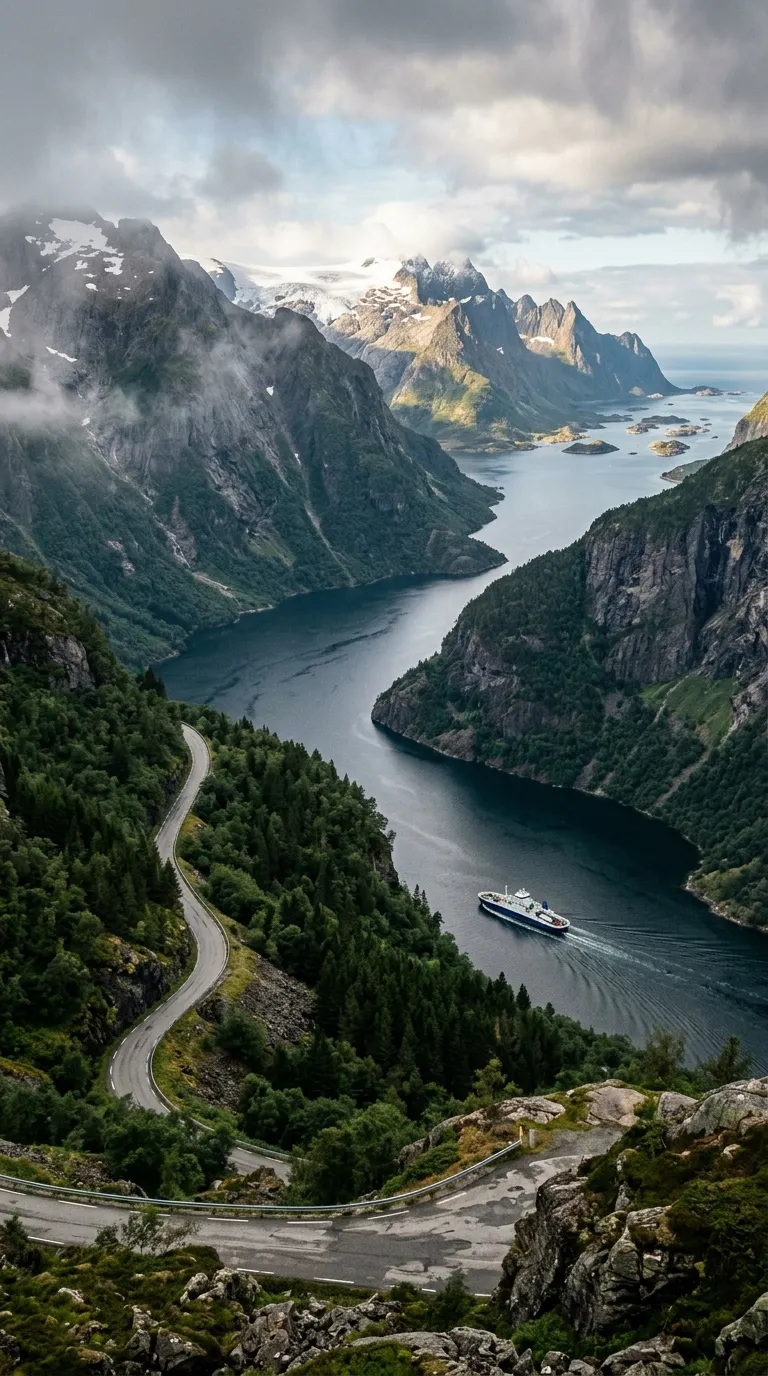
The western coastline is fragmented by deep fjords and thousands of islands. The interior contains mountain plateaus, glaciers and forested valleys. Beyond the Arctic Circle, settlements sit between sharp peaks and open ocean, connected by bridges, ferries and roads that occasionally appear to have been drawn by an enthusiastic ribbon.
The country’s most famous fjords include Geirangerfjord, Nærøyfjord, Sognefjord, Hardangerfjord, Lysefjord and Nordfjord. Geirangerfjord and Nærøyfjord form part of a UNESCO-listed natural landscape, while Sognefjord extends approximately 205 kilometers inland.
Norway also balances wilderness with efficient travel infrastructure. Trains, buses, ferries and express boats connect many major destinations, and the official Entur journey planner combines transport options across the country.
Travelers comparing potential European adventures can also browse these best European countries to see how Norway compares for scenery, transportation, culture and overall travel experience.
The Best Places to Visit in Norway
1. Oslo
Oslo is easy to underestimate.
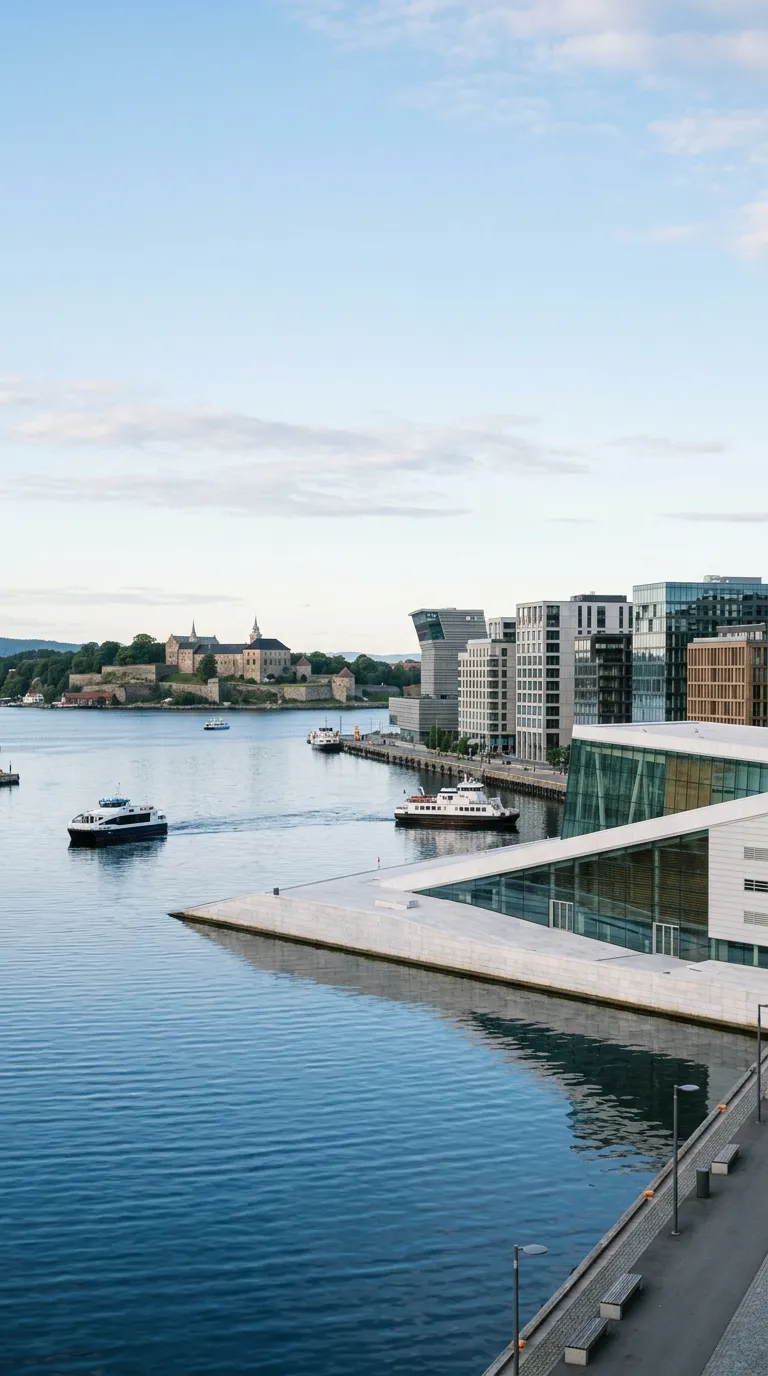
Many visitors treat the capital as a runway attached to the fjords, but the city deserves at least two days. It combines waterfront architecture, museums, forest access, island ferries and neighborhoods that move comfortably between sleek Nordic design and scruffy creative energy.
Begin around the harbor, where the Oslo Opera House slopes toward the water like a white geometric shoreline. From there, walk toward the new waterfront districts, the MUNCH museum and the central promenade.
Best Things to Do in Oslo
- Walk across the roof of the Oslo Opera House
- Visit the MUNCH museum
- Explore the historic Akershus Fortress
- See the sculptures in Vigeland Park
- Tour the Fram Museum or Kon-Tiki Museum
- Visit the National Museum
- Wander through Grünerløkka
- Take a public ferry into the Oslofjord
Public transport tickets can be used on selected Oslo ferries, making the islands one of the easiest low-cost excursions from the city center.
How Long to Stay
Two full days are enough for the principal attractions. Add a third if you enjoy museums, architecture or slow neighborhood exploration.
2. Bergen
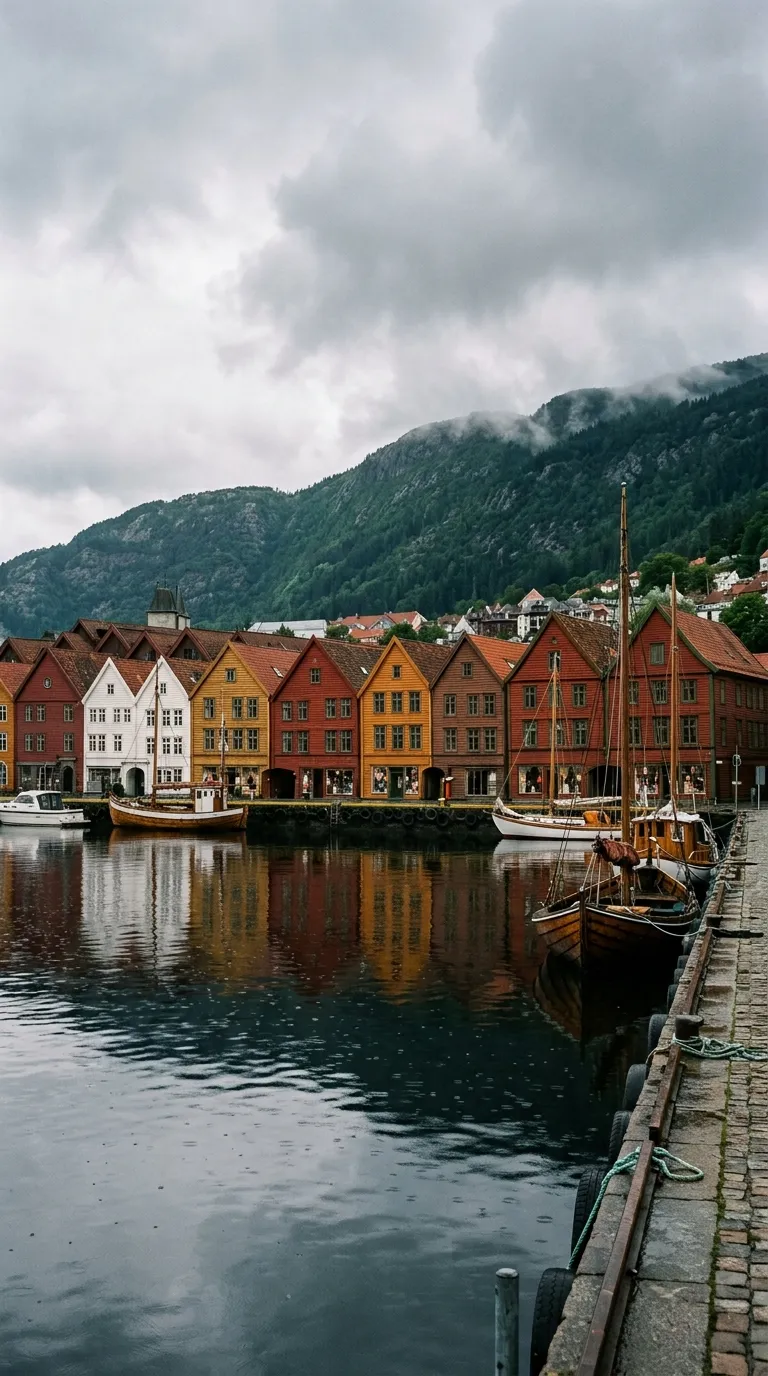
Bergen looks exactly where a city of fjords should stand.
Colorful wooden buildings line the historic Bryggen waterfront, mountains rise immediately behind the streets and boats depart toward some of western Norway’s most celebrated landscapes.
The city was shaped by maritime trade and remains one of Norway’s most useful bases for combining urban culture with fjord journeys. Visit Norway highlights Bergen’s UNESCO World Heritage history, museums, music scene and access to the surrounding western fjords.
Do Not Miss
- Bryggen’s wooden merchant buildings
- The Fløibanen funicular
- Mount Fløyen walking trails
- The fish market
- Bergenhus Fortress
- KODE art museums
- A fjord cruise
- The narrow lanes around Nordnes
Bergen is famous for rain, although residents seem to treat umbrellas as negotiable and weather forecasts as speculative fiction.
Pack a proper waterproof jacket.
3. Geirangerfjord
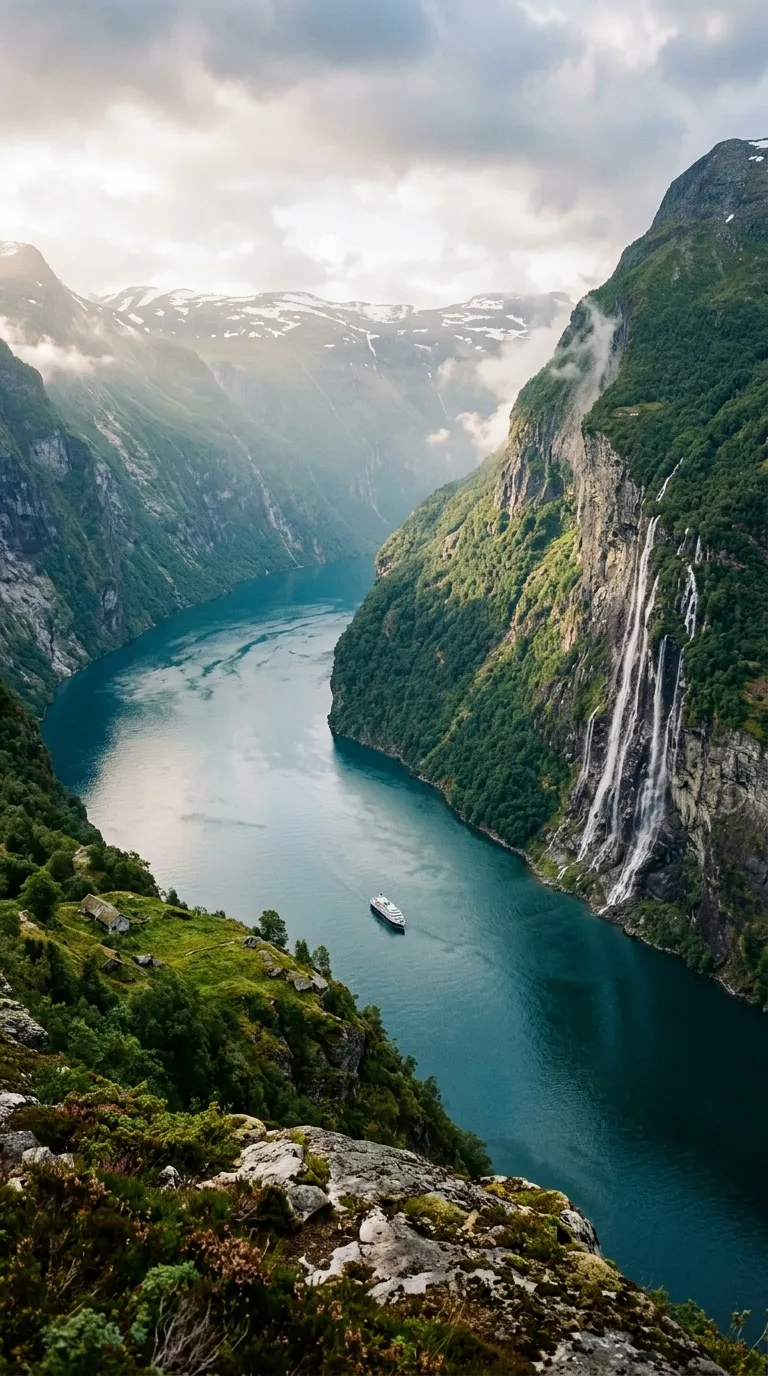
Geirangerfjord is the Norway that tourism posters keep trying to contain.
The narrow blue-green fjord cuts between steep mountains, abandoned farms and waterfalls descending from high cliffs. The Seven Sisters and the Suitor are among its best-known cascades, while elevated roads provide views that make cruise ships below look like bathtub toys.
Geirangerfjord is consistently listed among Norway’s most dramatic fjord branches and forms part of the UNESCO-listed western fjord landscape.
Best Viewpoints
Flydalsjuvet: The classic elevated panorama over Geiranger
Ørnesvingen: A sharp road bend overlooking the fjord and waterfalls
Dalsnibba: A high mountain viewpoint reached by a seasonal toll road
Skageflå: A historic mountain farm accessed by hiking and boat connections
Best Experiences
- Take an early fjord cruise
- Kayak with a qualified guide
- Hike to an abandoned farm
- Drive the Eagle Road
- Stay overnight after day-trip crowds leave
CROWD WARNING
Geiranger can become extremely busy when large ships and tour buses arrive. Stay overnight and explore early in the morning or later in the evening for a calmer experience.
4. The Lofoten Islands
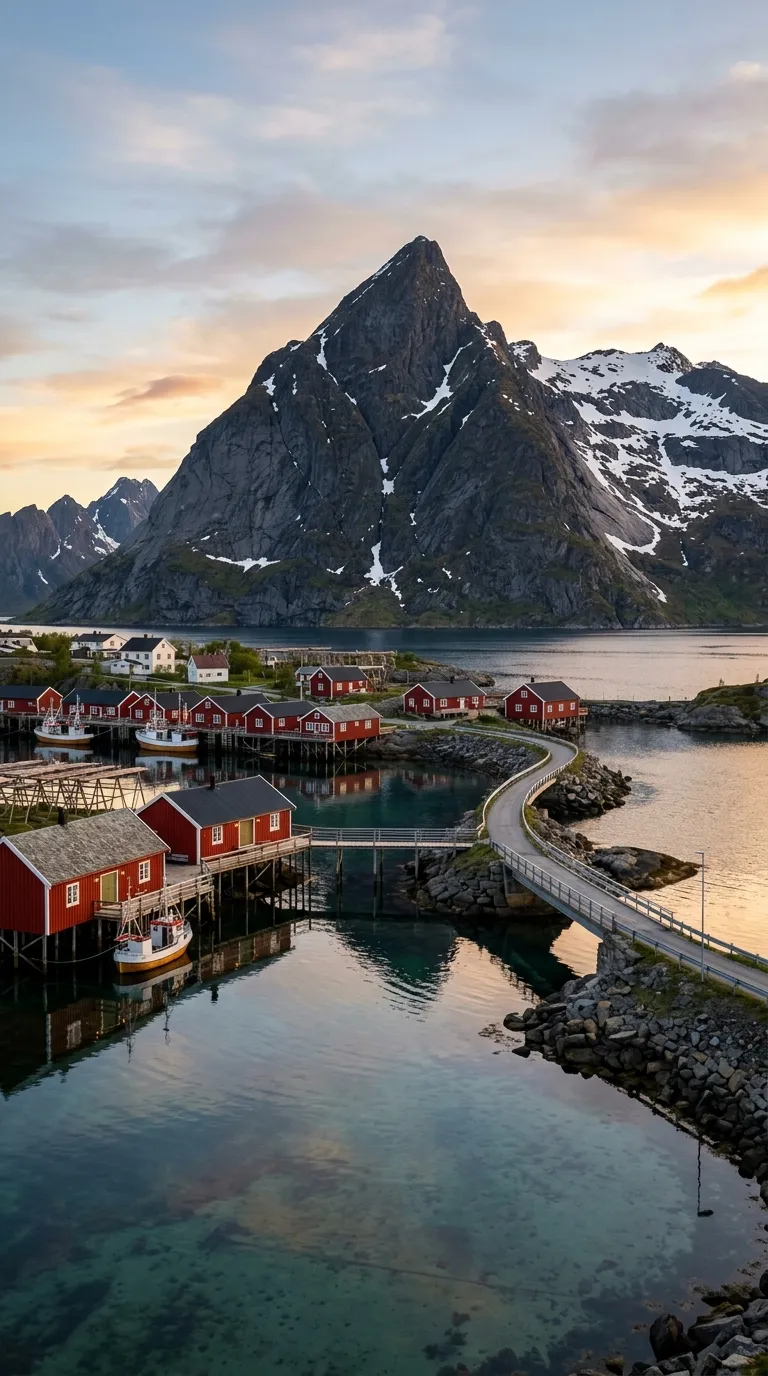
Lofoten compresses northern Norway into one sharp, beautiful chain of islands.
Granite mountains rise directly behind beaches and fishing villages. Red rorbuer, traditional fishermen’s cabins, stand over cold blue water. Bridges and roads link islands that seem too rugged to have accepted infrastructure so gracefully.
Reine is the most photographed village, but Henningsvær, Nusfjord, Å, Hamnøy, Ballstad and Kabelvåg all reveal different versions of island life. Visit Norway describes Lofoten as a destination of fishing villages, Arctic fjords, hiking, northern lights and midnight sun.
Best Things to Do in Lofoten
- Photograph Hamnøy and Reine
- Hike Reinebringen in suitable conditions
- Visit Haukland and Uttakleiv beaches
- Explore Nusfjord
- Kayak through sheltered bays
- Stay in a traditional fishing cabin
- Visit fishing museums
- Watch the midnight sun
- Search for northern lights in autumn or winter
For detailed road-trip stops, hiking ideas and seasonal guidance, use this complete Lofoten Norway travel guide.
How Long to Stay
Allow at least four nights. Five to seven nights are better if hiking, weather or photography are important.
LOFOTEN ROAD WARNING
Roads are narrow, popular parking areas are limited and stopping on bends or private property is unsafe. Use designated pullouts and never block access to homes, farms or fishing operations.
5. Tromsø
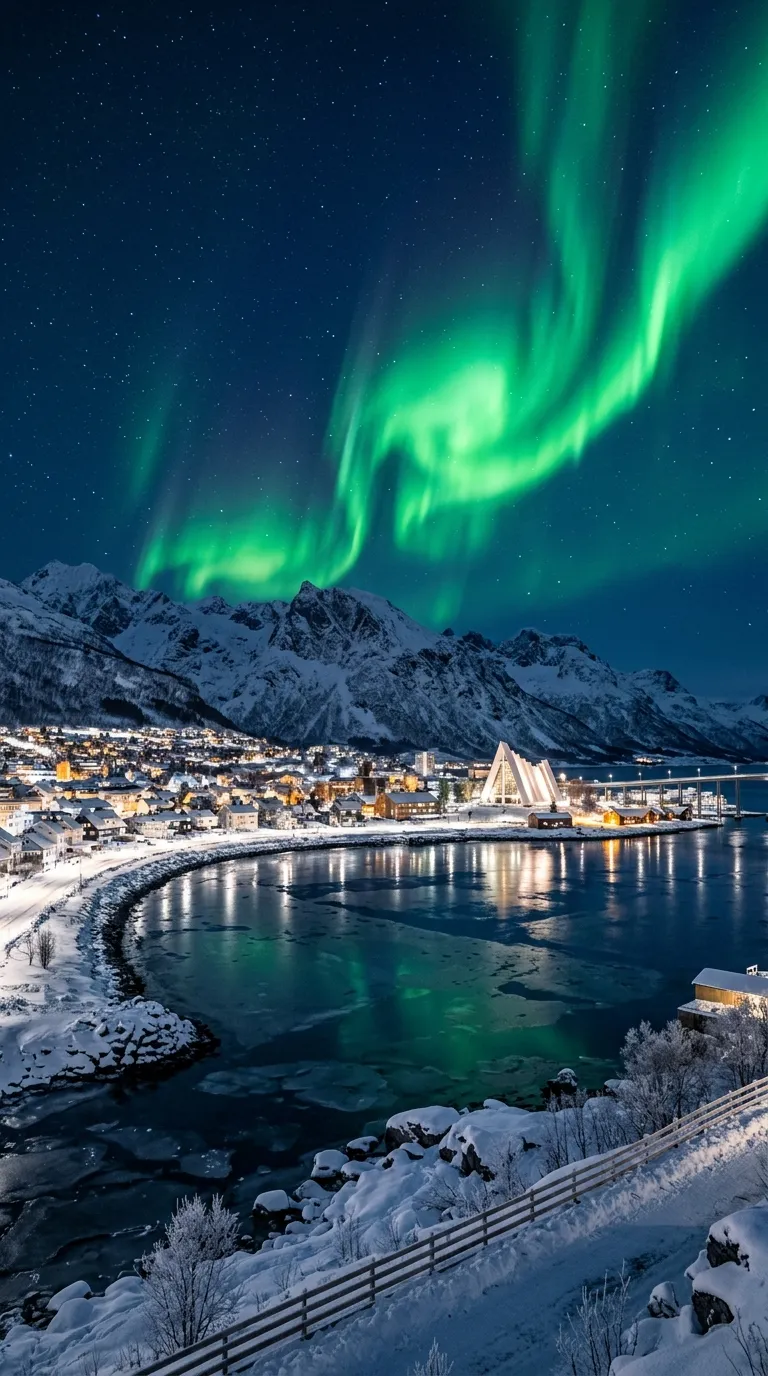
Tromsø is the gateway to Arctic Norway.
The city sits on an island surrounded by fjords and mountains, combining museums, restaurants and striking architecture with immediate access to wild landscapes.
During winter, travelers arrive for northern lights tours, dog sledding, whale excursions and snowy scenery. Summer replaces darkness with the midnight sun, opening long hours for hiking, kayaking and scenic drives.
Visit Norway identifies Tromsø as one of the main destinations for experiencing the northern lights and provides connections through Norway’s official Entur transport planner.
Top Experiences
- Ride the Fjellheisen cable car
- Visit the Arctic Cathedral
- Explore the Polar Museum
- Join a small-group northern lights chase
- Take a fjord excursion
- Go dog sledding in winter
- Explore Kvaløya or Sommarøy
- Visit local Sámi cultural experiences developed responsibly
Northern Lights Season
The most reliable dark season generally runs from late September through late March. Clouds are often a greater obstacle than solar activity, so staying several nights significantly improves your chances.
AURORA REALITY CHECK
Northern lights are natural phenomena, not scheduled entertainment. Photographs often show stronger color than the naked eye, especially during faint displays. Build the trip around Arctic experiences rather than making one green sky your entire emotional economy.
6. Flåm and the Aurlandsfjord
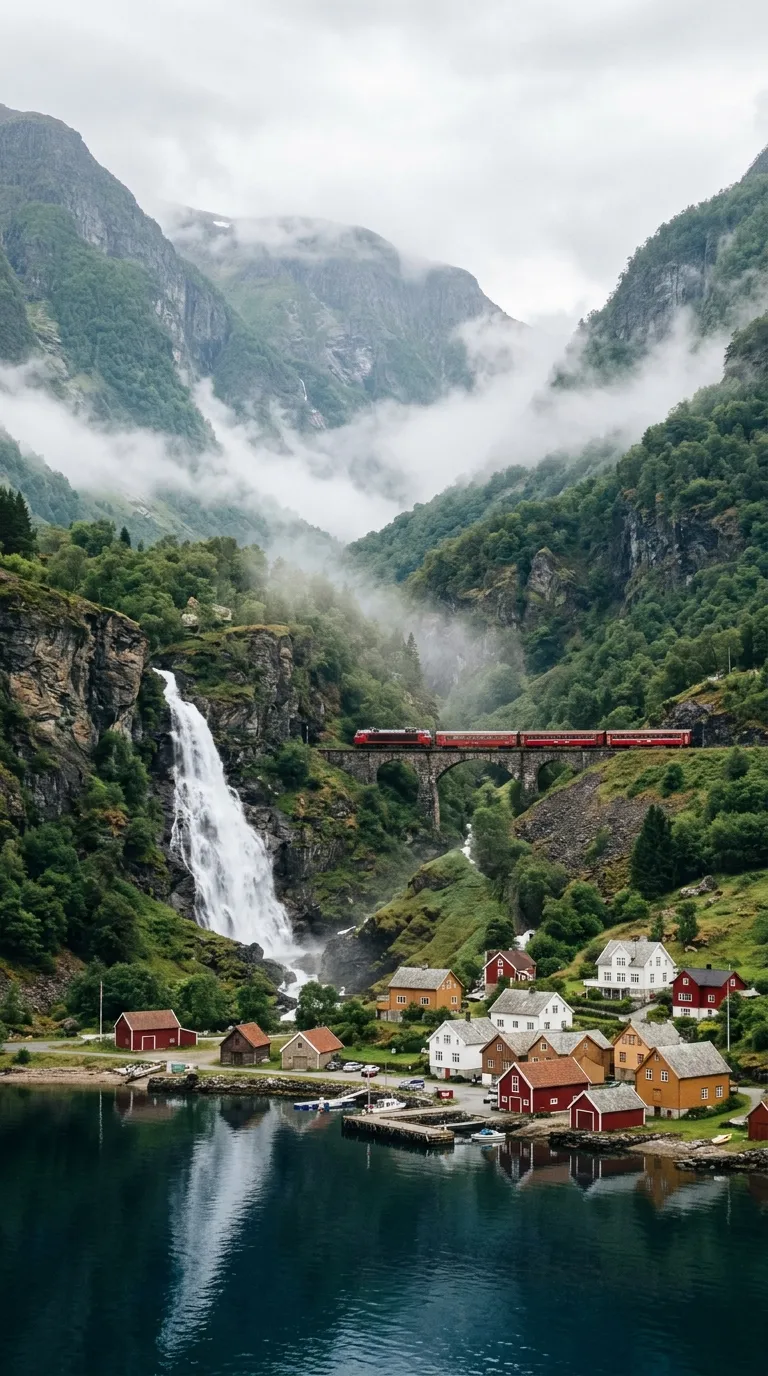
Flåm sits at the inner end of the Aurlandsfjord beneath steep mountains.
Its famous railway climbs from fjord level toward the high mountain station at Myrdal, passing waterfalls, tunnels and deep valleys. The journey connects with the Oslo-to-Bergen rail line and forms part of several popular car-free fjord itineraries.
Nearby attractions include the Stegastein viewpoint, Aurlandsvangen, the Nærøyfjord and the village of Undredal.
Best Things to Do
- Ride the Flåm Railway
- Cruise the Nærøyfjord
- Visit the Stegastein viewpoint
- Cycle the Flåm Valley
- Walk through Aurlandsvangen
- Explore Undredal
- Kayak with a guide
Flåm becomes very busy during cruise arrivals. Staying nearby allows you to experience the valley after the largest crowds leave.
7. Nærøyfjord and Gudvangen
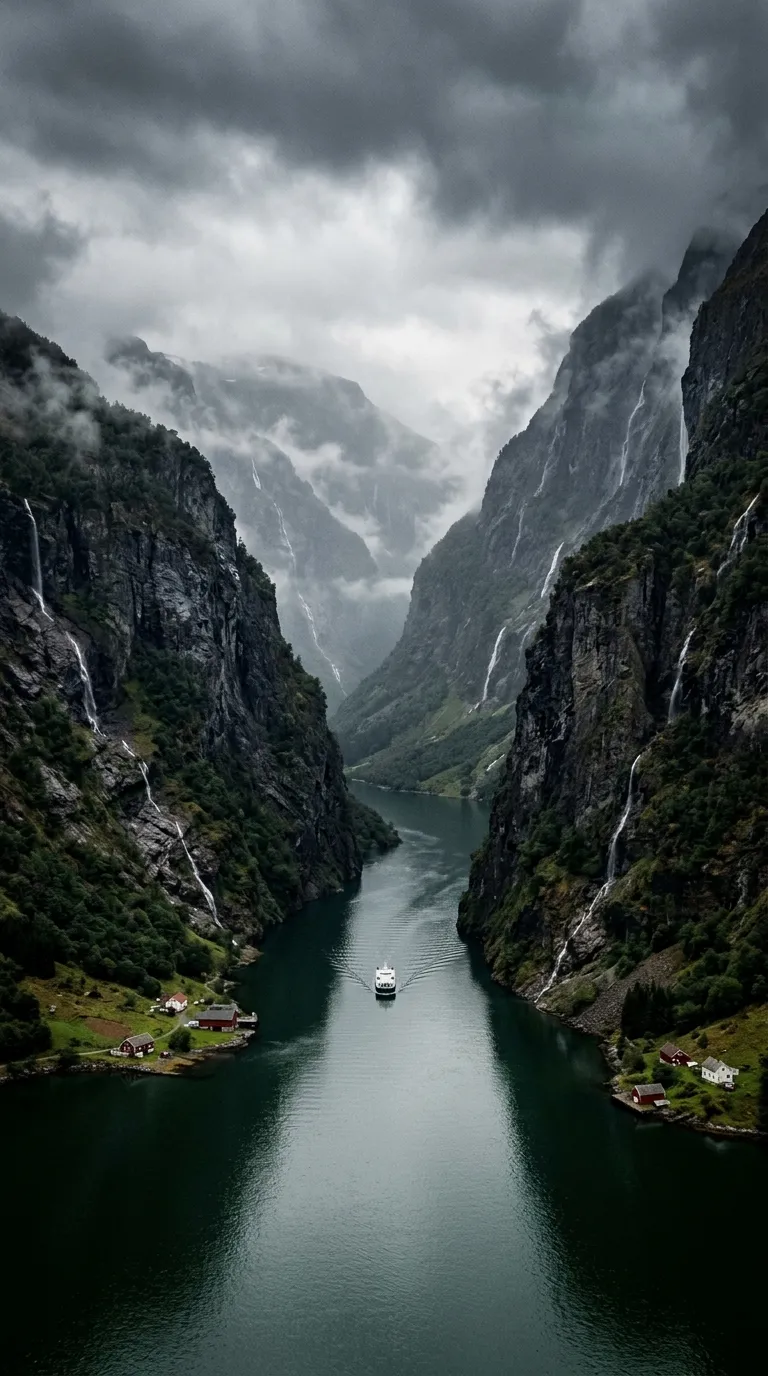
Nærøyfjord is narrow, steep and almost unnervingly dramatic.
Mountains rise more than a thousand meters from water that may appear black, silver or green depending on the sky. Small farms sit beneath cliffs, waterfalls spill from hidden valleys and boats seem to travel through a corridor cut directly into the mountains.
Nærøyfjord is recognized as one of Norway’s most dramatic fjord arms and is part of the UNESCO-listed western fjord landscape.
The village of Gudvangen provides access to cruises and surrounding valleys. It can be combined easily with Flåm by boat, bus or organized transport.
8. Stavanger and Lysefjord
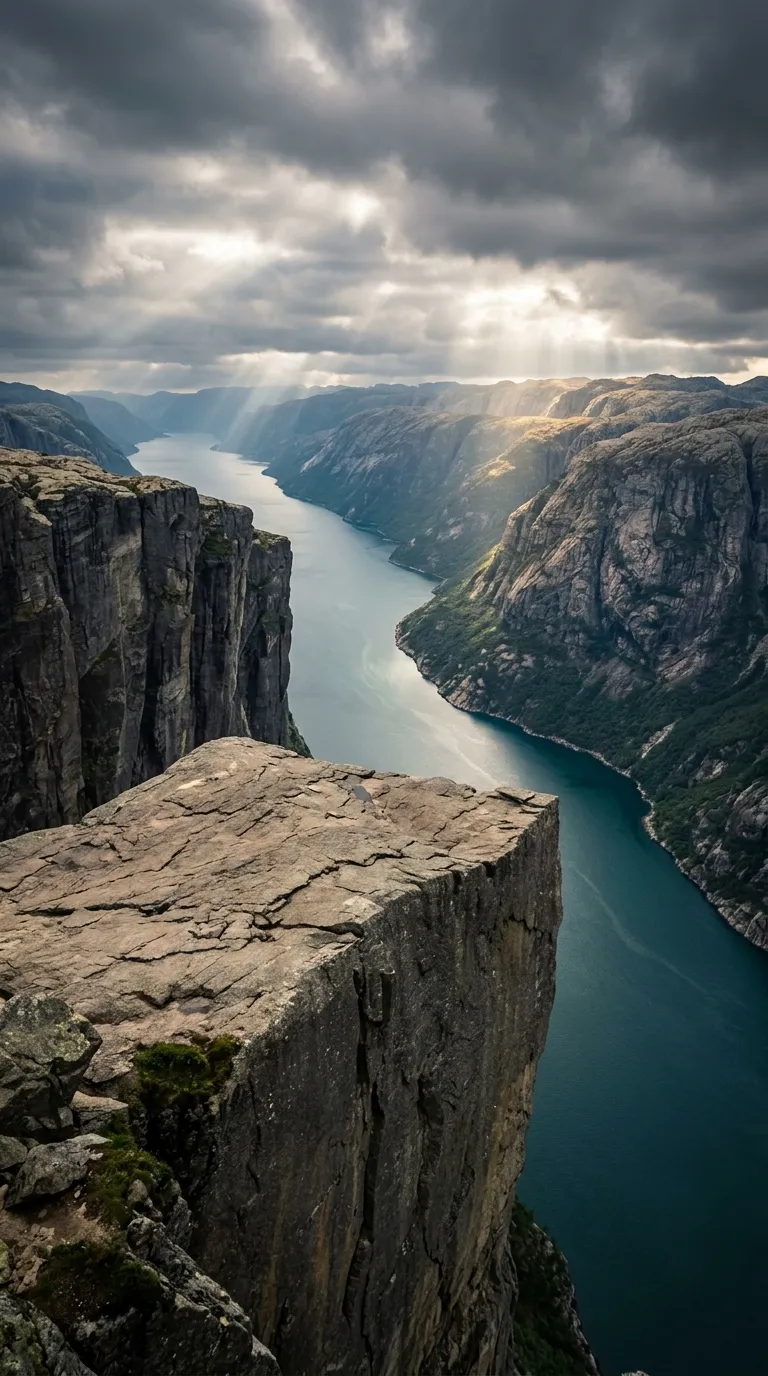
Stavanger combines a compact old town with access to one of Norway’s most exciting hiking regions.
White wooden houses line the streets of Gamle Stavanger, while colorful Øvre Holmegate offers a brighter urban contrast. Offshore history and energy-industry museums add depth beyond the postcard façades.
The city is also the main gateway to Lysefjord.
Famous Lysefjord Hikes
Preikestolen: The iconic plateau overlooking the fjord
Kjerag: A demanding hike known for the suspended Kjeragbolten boulder
Flørli 4444: A long wooden staircase beside a former hydroelectric installation
Preikestolen is the most accessible of the major hikes, but conditions can still be wet, windy and slippery.
CLIFF SAFETY WARNING
Norway’s famous viewpoints generally do not have extensive barriers. Stay well back from edges, supervise children closely and never attempt risky poses for photographs. Wind gusts and wet rock can turn confidence into gravity with alarming efficiency.
9. Ålesund
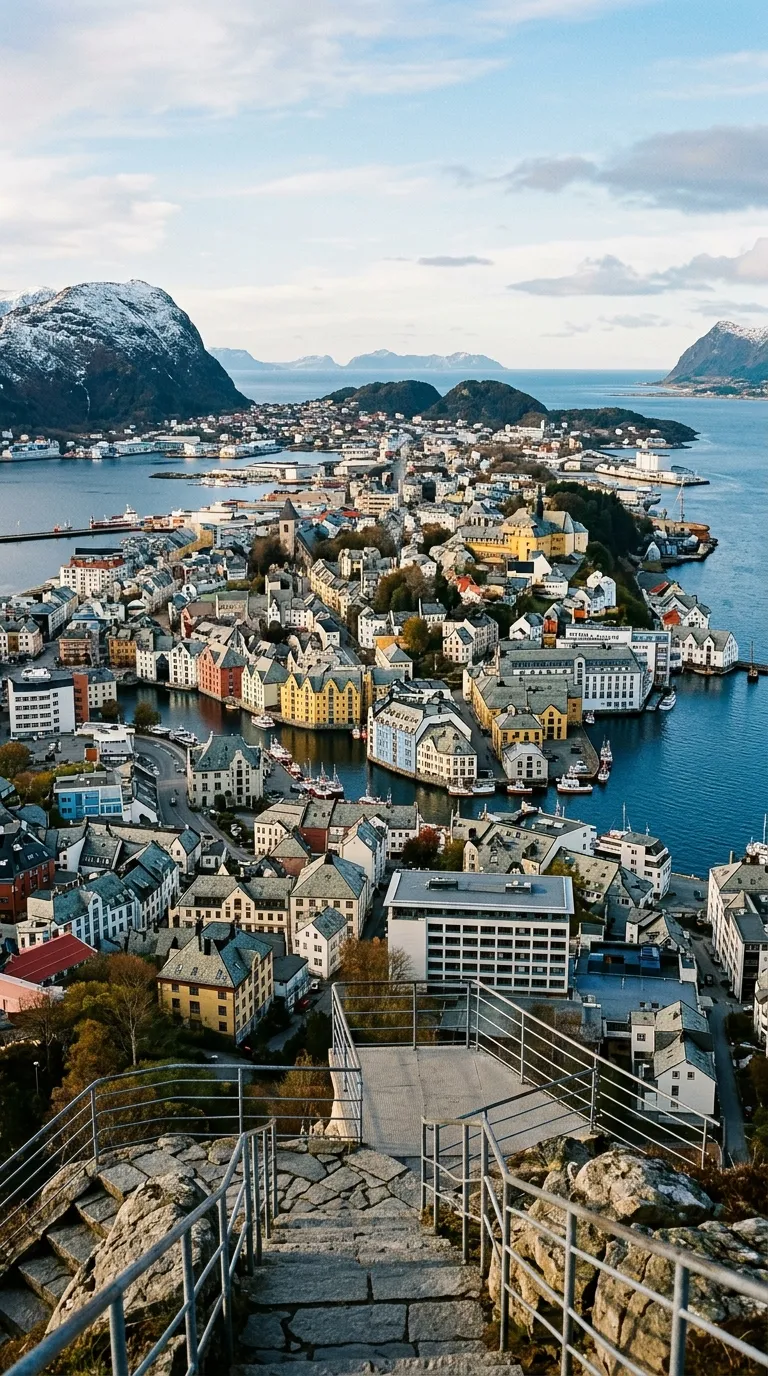
Ålesund spreads across islands on Norway’s western coast.
The city is known for Art Nouveau architecture rebuilt after a devastating early-20th-century fire. Decorative façades, towers and waterfront buildings give it a distinct character from Bergen or Oslo.
Climb the steps to the Aksla viewpoint for the classic panorama over rooftops, islands and distant mountains.
Best Things to Do
- Explore Art Nouveau streets
- Visit the Jugendstilsenteret
- Climb to the Aksla viewpoint
- Walk along the harbor
- Take a wildlife or island excursion
- Use the city as a gateway to Geirangerfjord
Ålesund works especially well in a western Norway itinerary linking Bergen, the fjords and the Atlantic coast.
10. Sognefjord
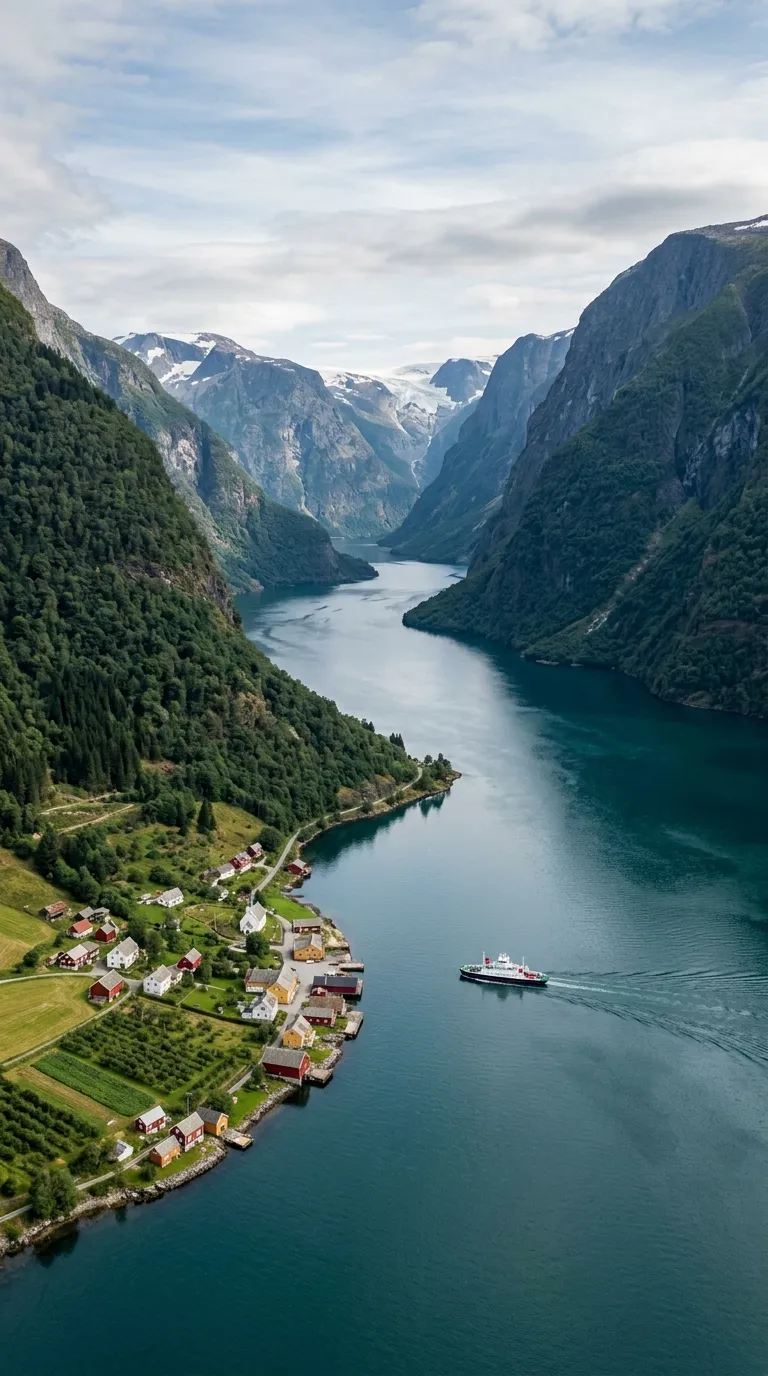
Sognefjord is Norway’s longest and deepest major fjord system.
It extends far inland from the coast and branches into smaller fjords, valleys and villages. This scale creates enough variety for several days rather than a single sightseeing cruise.
The region includes Aurlandsfjord, Nærøyfjord, Balestrand, Fjærland, Lærdal and numerous hiking and ferry routes. Visit Norway describes Sognefjord as approximately 205 kilometers long.
Best Bases
Balestrand: Historic hotels, fjord views and gentle hiking
Fjærland: Glacier scenery and the Norwegian Book Town
Lærdal: Traditional wooden architecture and valley landscapes
Aurland: Quieter than Flåm with excellent views
11. Hardangerfjord
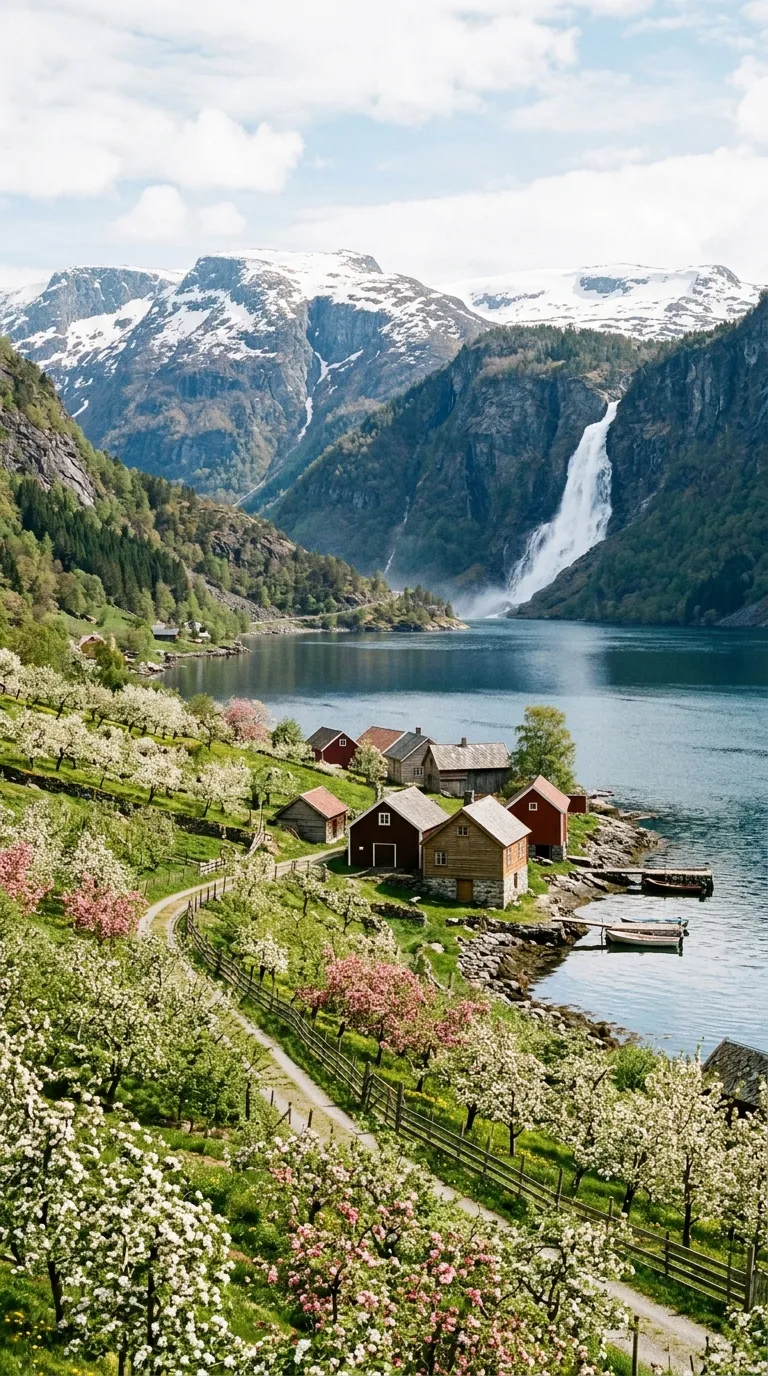
Hardangerfjord is where fjord scenery meets orchards, waterfalls and high mountain plateaus.
Spring brings fruit blossom to villages along the water, while summer opens famous hiking routes and scenic roads. The region also provides access to Vøringsfossen waterfall, Folgefonna glacier and the demanding Trolltunga hike.
Hardangerfjord is one of Norway’s best-known western fjord regions.
The Trolltunga Hike
Trolltunga is a horizontal rock ledge extending above Lake Ringedalsvatnet. The full hike is long, exposed and physically demanding.
Outside the main summer hiking period, guided travel may be required or strongly recommended because of snow, ice and rapidly changing conditions.
Never choose this hike solely because the final photograph looks cheerful. The mountain retains editorial control.
12. Jotunheimen National Park
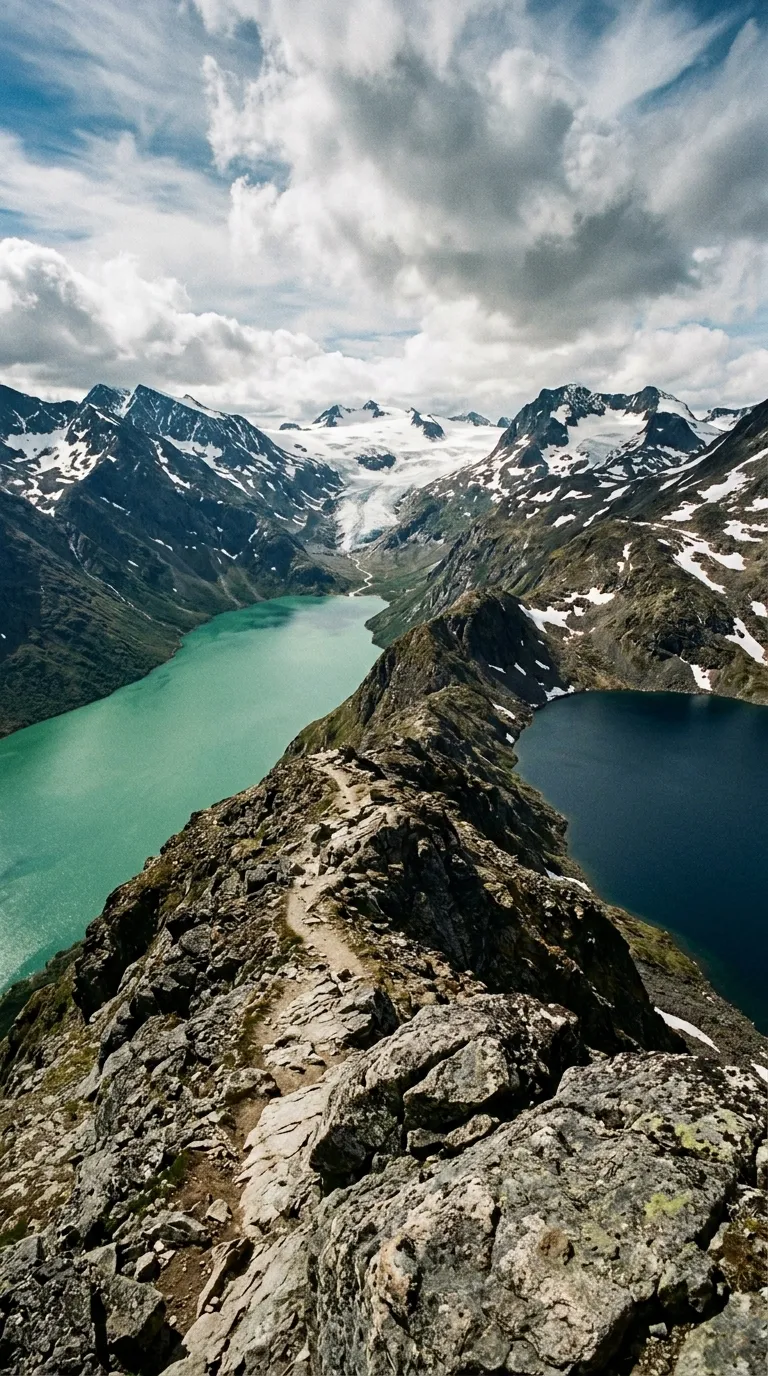
Jotunheimen contains many of Norway’s highest mountains.
Its name translates roughly as the “Home of the Giants,” which feels less poetic after several hours of climbing through wind.
The park is a paradise for hikers, with lakes, glaciers, mountain lodges and routes ranging from short walks to multi-day journeys.
Famous Experiences
- Hike the Besseggen Ridge
- Visit Gjende Lake
- Climb Galdhøpiggen with appropriate preparation
- Stay in a mountain lodge
- Walk sections of the national trail network
- Explore quieter valleys away from Besseggen
Besseggen is demanding and exposed in sections. Start early, check the forecast and carry proper clothing.
13. Senja
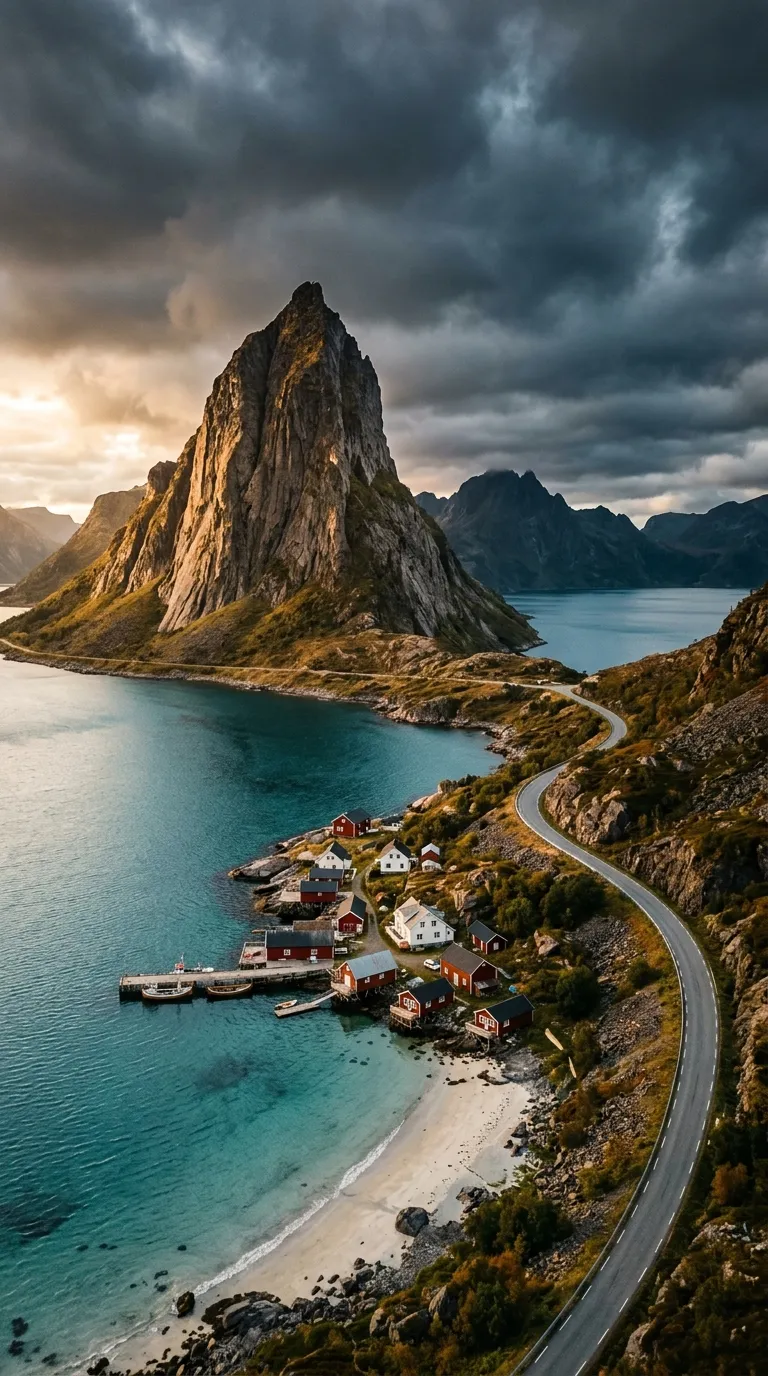
Senja is often introduced as an alternative to Lofoten, although it deserves more than substitute status.
Norway’s second-largest island combines jagged mountains, fishing settlements, beaches, forests and quiet roads. Its western coastline is especially dramatic, with viewpoints linked by one of Norway’s official scenic routes.
Highlights
- Bergsbotn viewing platform
- Tungeneset boardwalk
- Ersfjord Beach
- Husøy fishing village
- Segla mountain
- Hesten viewpoint
- Ånderdalen National Park
Senja receives fewer international visitors than Lofoten, though it is becoming increasingly popular.
Travelers attracted to remote North Atlantic landscapes may also enjoy this Faroe Islands adventure guide, where grass-covered cliffs, shifting weather and tiny settlements create a similarly elemental atmosphere.
14. Trondheim
Trondheim mixes medieval history with a young university atmosphere.
The city’s principal landmark is Nidaros Cathedral, built over the burial site traditionally associated with Saint Olav. Wooden warehouses line the river, while the Bakklandet neighborhood offers cafés, bicycles and colorful buildings.
Best Things to Do
- Visit Nidaros Cathedral
- Cross the Old Town Bridge
- Walk through Bakklandet
- Explore the Archbishop’s Palace
- Visit the Ringve Music Museum
- Walk along the Nidelva River
- Sample the city’s growing food scene
Trondheim is also a useful stop on the coastal journey between western and northern Norway.
15. Helgeland Coast
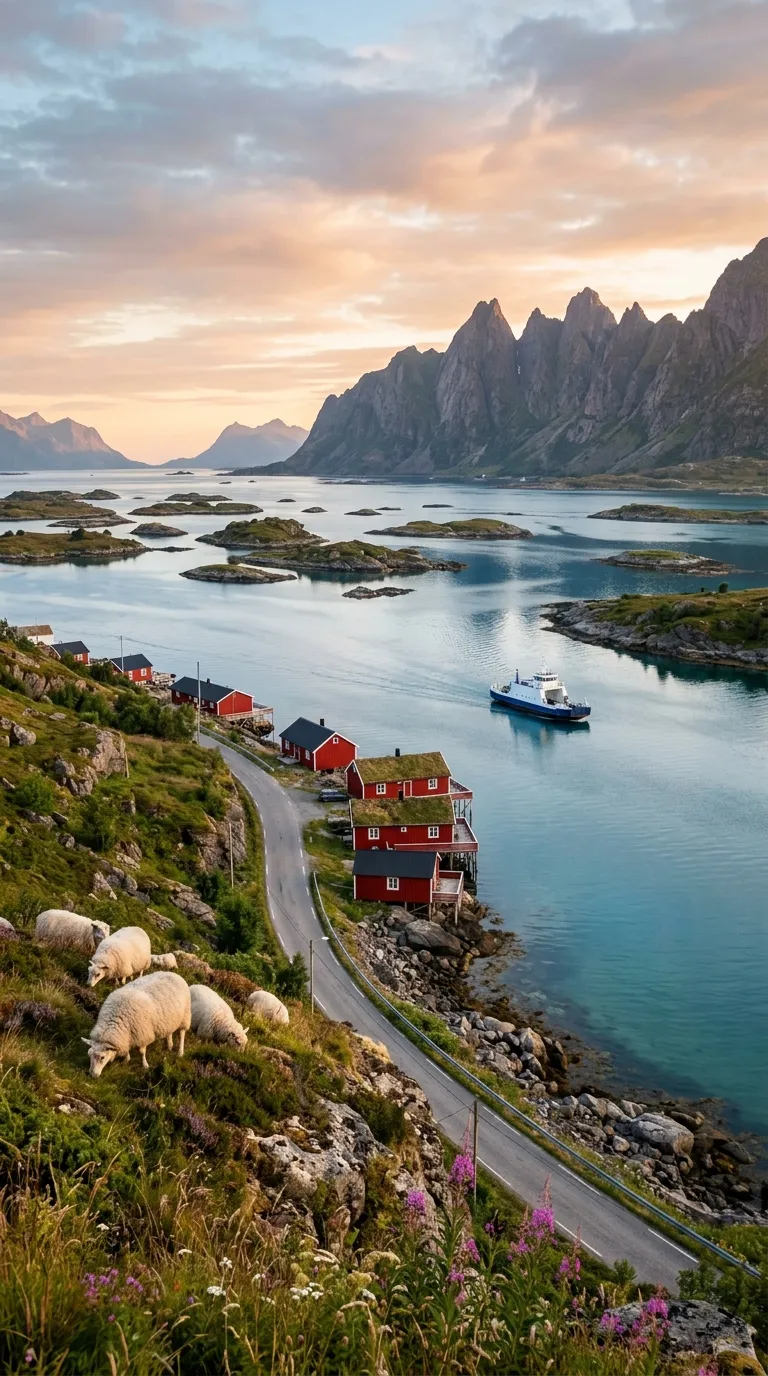
The Helgeland Coast is one of Norway’s finest regions for travelers who enjoy islands, ferries and roads with more sheep than tour coaches.
Thousands of islands scatter along the coast beneath unusual mountain formations. The Kystriksveien coastal route links beaches, ferry crossings, villages and hiking areas between Steinkjer and Bodø.
Visit Norway recommends Helgeland among the country’s rewarding public-transport and coastal travel regions.
Islands Worth Exploring
- Vega
- Dønna
- Herøy
- Træna
- Lovund
- Rødøy
For more coastal inspiration, this guide to amazing European islands includes additional destinations where dramatic shorelines and island culture shape the journey.
16. The Atlantic Ocean Road
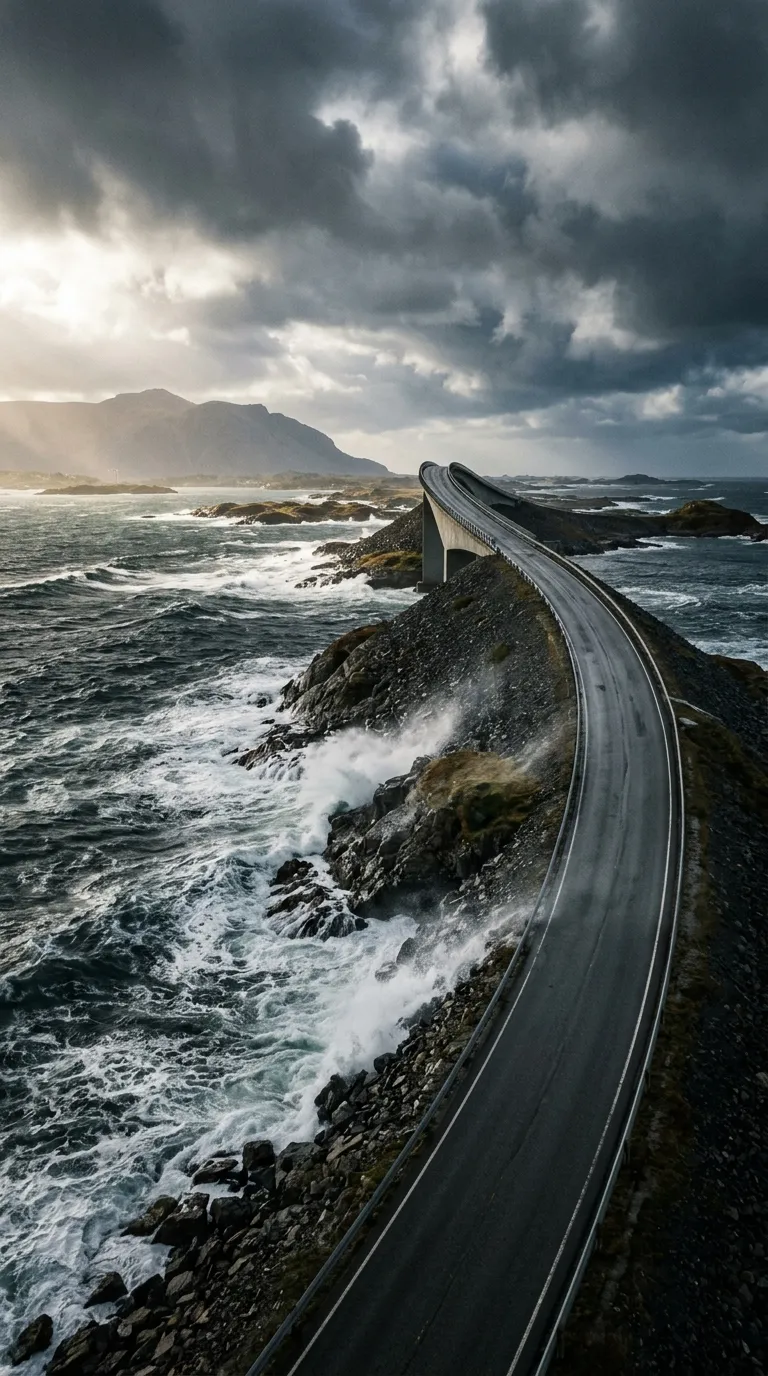
The Atlantic Ocean Road curves across small islands, bridges and exposed coastal skerries.
Its most recognizable structure is the Storseisundet Bridge, which appears to rise and vanish depending on your approach. In calm weather, the route feels elegant. During Atlantic storms, it feels like someone allowed the sea to direct a road movie.
The road itself is short, but the broader area deserves time.
Combine it with:
- Kristiansund
- Molde
- Bud fishing village
- Coastal walking paths
- The Romsdal region
- Scenic viewpoints around Hustadvika
Check wind and traffic conditions before driving during severe weather.
17. Svalbard
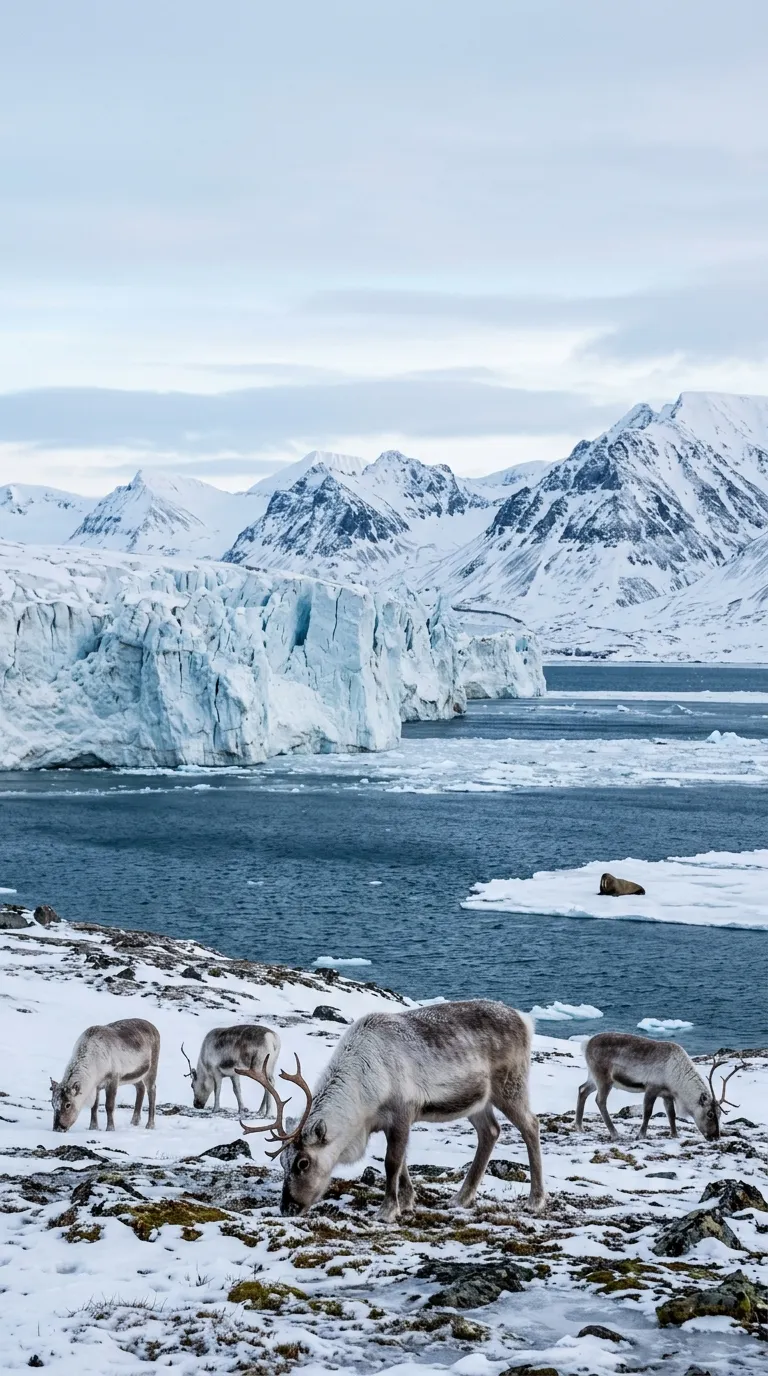
Svalbard lies far north of mainland Norway in the high Arctic.
Glaciers, tundra, mountains and sea ice surround the settlement of Longyearbyen. Wildlife may include Arctic foxes, reindeer, walruses and polar bears, although sightings are never guaranteed.
Independent travel outside settlements is restricted by serious environmental hazards, including polar bears. Guided excursions are the practical choice for hiking, snowmobiling, boating and wildlife observation.
Best Experiences
- Explore Longyearbyen
- Join a glacier or fjord excursion
- Visit museums and historic mining sites
- Take a guided snowmobile trip
- Search for Arctic wildlife
- Experience polar night or midnight sun
- Visit former mining settlements on organized tours
POLAR BEAR WARNING
Never leave settled areas without understanding current safety rules and local guidance. Polar bears are powerful predators, not distant white decorations for the horizon.
Norway Destination Comparison Table
| Destination | Main Experience | Best Season | Recommended Stay | Crowd Level |
| Oslo | Museums, architecture and islands | May–September | 2–3 nights | Moderate |
| Bergen | Historic waterfront and fjords | May–September | 2–3 nights | High |
| Geirangerfjord | Waterfalls and classic fjord scenery | June–September | 1–2 nights | High |
| Lofoten | Mountains, beaches and fishing villages | May–September | 4–7 nights | High |
| Tromsø | Northern lights and Arctic activities | October–March | 3–5 nights | High |
| Flåm | Railway and fjord cruises | May–September | 1–2 nights | Very high |
| Nærøyfjord | Narrow UNESCO-listed fjord | May–September | 1 day | High |
| Stavanger | City culture and major hikes | May–September | 2–3 nights | Moderate |
| Ålesund | Architecture and coastal scenery | May–September | 2 nights | Moderate |
| Sognefjord | Extended fjord exploration | May–September | 3–5 nights | Moderate |
| Hardangerfjord | Orchards, waterfalls and hiking | May–September | 3 nights | Moderate |
| Jotunheimen | Mountain hiking | July–September | 3–5 nights | Moderate |
| Senja | Arctic island road trip | June–September | 3–4 nights | Low to moderate |
| Trondheim | History and food | May–September | 2 nights | Moderate |
| Helgeland | Island hopping and coastal roads | June–August | 4–6 nights | Low |
| Atlantic Road | Coastal driving | May–September | 1–2 days | Moderate |
| Svalbard | High-Arctic wilderness | March–September | 4–6 nights | Low |
The Perfect 14-Day Norway Itinerary
This route combines cities, trains and fjords without forcing you to drive the entire country.
Days 1–2: Oslo
Explore the harbor, museums, parks and Oslofjord islands.
Day 3: Oslo to Flåm
Take the train toward Myrdal and continue on the Flåm Railway.
Day 4: Nærøyfjord and Bergen
Cruise through the fjord system and continue toward Bergen by bus or train connection.
Days 5–6: Bergen
Explore Bryggen, Mount Fløyen and the waterfront.
Day 7: Bergen to Ålesund
Travel north by flight, coastal route or a combination of boat and bus, depending on seasonal schedules.
Day 8: Ålesund
Explore the city and climb to Aksla.
Days 9–10: Geirangerfjord
Continue to Geiranger and spend a full day on the fjord.
Day 11: Travel to Tromsø
Fly north, usually via Oslo or another major connection.
Days 12–14: Tromsø
Explore the city, Kvaløya and surrounding Arctic landscapes.
Optional Lofoten Swap
Replace Tromsø with four nights in Lofoten during summer. Fly to Bodø, Leknes or Evenes depending on your route, then rent a car or use regional transport.
BETTER-PACED OPTION
Norway rewards regional trips. A week divided between Bergen and two fjord areas will often feel richer than a frantic national sweep involving six flights, four ferries and a suitcase developing abandonment issues.
The Best Norway Road-Trip Route
A classic western Norway road trip can follow:
Bergen → Hardangerfjord → Voss → Flåm → Sognefjord → Loen → Geiranger → Ålesund → Atlantic Road
Allow 10 to 14 days.
Driving times on digital maps often underestimate sightseeing stops, ferry waits, narrow roads and weather. A route listed as three hours may consume most of the day once waterfalls start appearing beside every bend.
The Norwegian Public Roads Administration provides live information about roads, mountain passes, ferries, webcams and closures. Its traffic app also supplies current travel information.
Getting Around Norway
By Train
Norway’s rail journeys are attractions in their own right.
Popular routes include:
- Oslo to Bergen
- Flåm Railway
- Oslo to Trondheim
- Trondheim to Bodø
- Dovre Line
- Rauma Railway
Reserve long-distance trains early during summer and holidays.
By Ferry and Express Boat
Ferries are a normal part of daily transportation in the fjord regions and along the northern coast.
Some routes function like bridges across water, while others are longer passenger journeys. Departure times and seasonal frequency vary. Norway’s road authority provides updated information for ferry departures, delays and cancellations.
By Bus
Buses connect railway stations, fjord villages and remote destinations. The official Entur planner combines buses with trains, ferries, trams and other public transport.
By Car
A car provides the greatest flexibility in Lofoten, Senja, Hardanger and the western fjords.
However, roads can be narrow, tunnels are common and seasonal closures affect high mountain routes.
By Domestic Flight
Flying is practical when combining southern Norway with Tromsø, Lofoten, Kirkenes or Svalbard.
The country is long. Oslo to Tromsø is not a charming afternoon drive unless your afternoon lasts several days.
Driving in Norway: Essential Rules
Norwegian roads are generally well maintained, but weather and terrain demand attention.
Before Driving
- Check live road conditions
- Confirm ferry times
- Learn how toll roads are charged
- Reserve rental cars early in summer
- Request an automatic vehicle if needed
- Confirm winter equipment
- Download offline maps
- Keep fuel or battery levels healthy in remote areas
Drivers are responsible for ensuring their tires provide adequate grip for the conditions. In winter, tires must meet minimum tread requirements and be suitable for the road surface and weather.
WINTER DRIVING WARNING
Mountain roads may close, operate in controlled convoys or become impassable during storms. The road authority advises convoy drivers to carry sufficient fuel or battery charge and follow the lead vehicle closely and steadily.
The Best Time to Visit Norway
Spring: April to May
Spring arrives at different speeds.
Southern cities begin blooming while mountain roads may remain buried under snow. Waterfalls grow powerful as snow melts, and orchard regions such as Hardanger become especially attractive.
May is excellent for lower-altitude travel, though some hiking routes and scenic roads may still be closed.
Summer: June to August
Summer is the easiest season for first-time visitors.
Days are long, ferries operate frequently and most mountain roads and hiking trails are accessible. North of the Arctic Circle, travelers may experience continuous daylight.
July is usually the busiest month. Reserve popular accommodation, rental cars and trains early.
Autumn: September to October
September often provides an excellent balance of lighter crowds and accessible roads.
Autumn colors spread through forests and valleys, while darkness begins returning to northern Norway. Late September may bring the first opportunities to see the northern lights.
Weather becomes more unpredictable as October advances.
Winter: November to March
Winter suits travelers seeking snow, northern lights, skiing and Arctic activities.
Cities remain accessible, but daylight is limited and road travel requires greater preparation. The western fjords can still be visited through selected cruises, trains and guided activities.
Norway Travel Budget
Norway is expensive, but costs can be managed.
Save Money By
- Booking trains and flights early
- Staying in cabins or apartments with kitchens
- Shopping at supermarkets
- Carrying a reusable water bottle
- Using public ferries
- Choosing free hiking and nature activities
- Traveling in May or September
- Camping where permitted and appropriate
- Using the Entur planner to compare transportation
Visit Norway recommends early booking for discounted transport and accommodation and suggests using Entur for complete public-transport planning.
Typical Budget Categories
| Expense | Budget Approach | Higher-Cost Approach |
| Accommodation | Hostel, cabin or campsite | Waterfront hotel |
| Meals | Supermarkets and bakeries | Full-service restaurants |
| Transport | Trains, buses and ferries | Rental car and flights |
| Activities | Hiking and city walks | Cruises and guided tours |
| Arctic travel | Independent city stay | Multiple guided excursions |
Norway may appeal to remote workers because of its infrastructure and quality of life, but the high cost of accommodation and daily expenses can be challenging. This comparison of the best digital nomad countries examines how Norway performs against more affordable European bases.
Norway Packing Checklist
Year-Round Essentials
- Waterproof jacket
- Warm mid-layer
- Comfortable walking shoes
- Reusable water bottle
- Power bank
- Daypack
- Offline maps
- Travel insurance details
- Sunglasses
- Sunscreen
Summer Road Trip
- Sleep mask for midnight sun
- Light gloves and hat
- Quick-drying hiking trousers
- Insect repellent
- Hiking boots
- Compact picnic kit
- Swimsuit for saunas or brave fjord dips
Winter Journey
- Insulated coat
- Thermal base layers
- Waterproof boots
- Wool socks
- Warm hat
- Insulated gloves
- Ice grips
- Reflective accessories
- Spare camera batteries
PACKING NOTE
Norway’s summer can contain sunshine, wind, rain and near-winter cold before dinner. Dress in layers and keep waterproof clothing accessible rather than entombed beneath the suitcase.
Hiking Safely in Norway
Norway’s mountain trails are beautiful but frequently exposed.
Weather may change quickly, mobile coverage can disappear and snow can remain on high routes during summer.
Before Any Major Hike
- Check the local forecast
- Confirm trail conditions
- Carry sufficient food and water
- Wear suitable boots
- Bring waterproof layers
- Tell someone your route
- Know sunset times
- Turn back when conditions worsen
- Use a guide for winter or technical routes
Do not underestimate Preikestolen, Trolltunga, Kjerag, Besseggen or Reinebringen merely because social media has photographed them from flattering angles.
Responsible Travel in Norway
Norway’s popularity has placed pressure on famous trails, small fishing villages and roadside viewpoints.
Travel more thoughtfully by:
- Parking only in designated areas
- Taking all waste with you
- Using public toilets
- Staying on marked trails
- Avoiding private property
- Supporting local cafés and guesthouses
- Respecting fishing operations
- Reducing unnecessary short flights
- Using trains and ferries when practical
- Visiting major destinations outside peak hours
Norway’s right-to-roam traditions provide broad access to nature, but they do not remove the responsibility to protect land, avoid disturbance and follow local restrictions.
Frequently Asked Questions
What is the most beautiful place in Norway?
Lofoten is arguably Norway’s most visually dramatic island region. Geirangerfjord offers the classic fjord panorama, while Senja, Sognefjord and the Lyngen Alps provide equally powerful scenery with different levels of crowds.
How many days do you need in Norway?
Allow at least seven days for Oslo, Bergen and one fjord region. Ten to fourteen days are better for combining cities, western fjords and northern Norway.
Is Norway suitable for a first trip to Europe?
Yes. Transportation is reliable, English is widely understood in tourism settings and destinations are well organized. Prices and long distances require advance planning.
Can you visit Norway without a car?
Absolutely. Oslo, Bergen, Trondheim, Flåm and several fjord routes are accessible through trains, buses, ferries and express boats. Visit Norway publishes complete public-transport fjord itineraries.
Which is better, Bergen or Oslo?
Bergen is better for immediate fjord atmosphere and historic waterfront scenery. Oslo offers more museums, contemporary architecture, urban neighborhoods and international connections.
Is Lofoten worth the journey?
Yes. Few destinations combine mountains, beaches, fishing heritage and Arctic light so powerfully. Stay several days rather than trying to squeeze it between flights.
When can you see the northern lights?
Northern Norway’s aurora season generally runs from late September through late March. Clear, dark skies are essential, and no sighting is guaranteed.
When can you see the midnight sun?
The season varies by latitude. Northern Norway experiences midnight sun mainly between May and July, with longer periods farther north.
Is Norway expensive?
Yes, particularly for accommodation, restaurants, rental cars and guided activities. Costs can be reduced through early booking, public transportation, supermarket meals and free outdoor experiences.
Is Norway good for island hopping?
Yes. Lofoten, Vesterålen, Senja, Helgeland and the Oslofjord islands all offer very different island experiences, ranging from Arctic mountains to relaxed summer ferries.
Final Thoughts
Norway makes geography feel alive.
Fjords are not simply bodies of water. They are roads, weather channels, village boundaries and mirrors for mountains. Islands are not decorative additions to the coast. They hold fishing communities, bird cliffs, beaches and entire ways of life shaped by wind.
The temptation is to chase every celebrated viewpoint.
Resist it.
Spend an evening beside a fjord after the tour buses leave. Take a ferry without treating it as dead travel time. Walk through Bergen in the rain. Stay awake beneath the midnight sun even when your body insists the clock has become unreliable.
Norway’s greatest moments often happen between headline attractions: a waterfall beside an empty road, a red cabin reflected in still water or a mountain briefly appearing through clouds before vanishing again.
The country is widely recognized among Europe’s strongest nature destinations, but its real magic comes from scale. Norway makes people feel small without making them feel unwelcome.
It simply opens another fjord, raises another mountain and quietly lets the landscape finish the sentence.