How to Build a Travel Budget That Actually Covers Your Real Expenses
A travel budget sounds simple until you actually start planning a trip.
You find a flight for $350, a hotel for $700, and suddenly you think, “This trip will cost about $1,050.”
Then reality arrives.
There are airport transfers, baggage fees, hotel taxes, meals, attraction tickets, rental car costs, parking, tips, travel insurance, coffee stops, souvenirs and a dozen other little expenses that seemed insignificant when you were booking the trip.
This is why many travelers underestimate the real cost of a vacation.
A useful travel budget isn’t just a list of flights and hotel prices. It should give you a realistic picture of what the entire trip is likely to cost from the moment you leave home until you return.
The good news is that building one doesn’t require complicated spreadsheets or financial expertise.
You just need to account for the right categories, estimate them realistically, and leave some room for things you didn’t expect.
Recommended Travel Items for Your Trip
Why Most Travel Budgets Are Too Low

The biggest travel budgeting mistake is focusing on the expenses that are easiest to see.
For example:
- Flight: $400
- Hotel: $800
Estimated trip cost: $1,200
Looks reasonable.
But what about:
- Checked baggage
- Airport parking
- Airport transportation
- Rental car
- Gas
- Hotel taxes
- Resort fees
- Breakfast
- Lunch
- Dinner
- Coffee and snacks
- Attraction tickets
- Tours
- Travel insurance
- Tips
- Souvenirs
- Currency exchange fees
- Emergency expenses
The actual cost can be significantly higher.
The solution is to create your budget around the whole trip, not just the major bookings.
The Basic Travel Budget Formula
A simple travel budget can use this formula:
Total Trip Budget = Transportation + Accommodation + Food + Activities + Local Transportation + Travel Documents + Insurance + Shopping + Miscellaneous + Emergency Buffer
You can make the categories as detailed as you want.
For most trips, these are enough to get a realistic estimate.
| Budget Category | What to Include |
| Getting there | Flights, trains, buses, fuel |
| Accommodation | Hotel, apartment, resort, taxes, fees |
| Food | Breakfast, lunch, dinner, snacks, drinks |
| Local transportation | Public transit, taxis, rideshares, parking |
| Activities | Tours, attractions, museums, excursions |
| Travel documents | Visas, permits, passport-related costs |
| Insurance | Travel insurance |
| Connectivity | SIM, eSIM, roaming |
| Shopping | Souvenirs and personal purchases |
| Miscellaneous | Tips, laundry, small purchases |
| Emergency buffer | Unexpected expenses |
Now let’s break these down.
Step 1: Decide Your Total Travel Budget

Before researching flights and hotels, determine how much you’re actually comfortable spending.
This is important.
Don’t start with:
“How much does this trip cost?”
Start with:
“How much can I reasonably spend on this trip?”
Those are two very different questions.
Suppose your maximum comfortable budget is $2,500.
That number becomes your boundary.
You can then decide how much should go toward accommodation, transportation, food and experiences.
Without a total limit, travel planning can slowly turn into an expensive game of “just $50 more.”
Step 2: Decide What Type of Trip You’re Taking

Not every vacation needs the same budget structure.
A backpacking trip, family vacation and luxury getaway can have completely different spending patterns.
Budget Travel
You might prioritize:
- Affordable accommodation
- Public transportation
- Free attractions
- Grocery meals
- Low-cost activities
Mid-Range Travel
You might spend more on:
- Comfortable hotels
- Restaurants
- Organized tours
- Convenient transportation
Luxury Travel
The biggest expenses may include:
- Premium flights
- Luxury hotels
- Private transportation
- Fine dining
- Exclusive experiences
The point isn’t to put yourself into a particular category.
It’s to understand your own priorities.
You might want a budget hotel but spend heavily on food.
Or stay in a beautiful hotel and save money by using public transportation.
There isn’t one correct way to divide your money.
Step 3: Calculate the Cost of Getting There

Transportation is often the first major expense.
For flights, don’t look only at the advertised ticket price.
Calculate the real transportation cost.
For example:
| Flight Expense | Estimated Cost |
| Base airfare | $350 |
| Checked bag | $60 |
| Seat selection | $25 |
| Airport transportation | $40 |
| Parking | $30 |
| Total | $505 |
The $350 flight actually costs $505.
This is why comparing only headline fares can produce misleading budgets.
Don’t Forget Your Journey Home
Your transportation budget should cover both directions.
For a round trip:
Outbound transportation + return transportation = transportation cost
For a road trip, include:
- Fuel
- Tolls
- Parking
- Vehicle rental
- Insurance
- Ferry charges
- Roadside expenses
If you’re traveling by train or bus, include transfers to and from stations.
Step 4: Calculate Your Accommodation Cost Correctly

Accommodation is another area where travelers underestimate the total.
If a hotel advertises a room at $150 per night, don’t automatically multiply $150 by seven.
Check the final price.
Depending on the destination and property, you may encounter:
- Hotel taxes
- Resort fees
- Destination fees
- Cleaning fees
- Parking charges
- Breakfast charges
- Extra guest fees
- Service charges
Your actual accommodation budget should use the final payable amount whenever possible.
Use This Formula
Nightly Cost × Number of Nights + Mandatory Fees = Accommodation Budget
For example:
$150 × 5 nights = $750
If mandatory taxes and fees add another $120:
Real accommodation cost = $870
That $120 difference can matter when you’re working with a tight budget.
Step 5: Budget for Food Realistically
Food is one of the hardest travel expenses to estimate because everyone eats differently.
Instead of asking:
“How much does food cost in this city?”
Ask:
“How do I normally eat when I travel?”
Do you:
- Eat breakfast at the hotel?
- Grab coffee in the morning?
- Eat casual lunches?
- Have sit-down dinners?
- Order room service?
- Buy snacks throughout the day?
- Drink alcohol?
- Visit expensive restaurants?
Your habits matter more than a generic daily estimate.
Create a Daily Food Budget
For example:
| Meal | Daily Estimate |
| Breakfast | $10 |
| Lunch | $15 |
| Dinner | $30 |
| Snacks/coffee | $10 |
| Daily food budget | $65 |
For a seven-day trip:
$65 × 7 = $455
You can adjust the numbers according to your destination and travel style.
Remember Arrival and Departure Days
Your food costs may not be identical every day.
A travel day might involve:
- Airport food
- Train station meals
- Snacks
- Coffee
- Higher-priced convenience food
Budgeting the same amount for every day is easy, but not always realistic.
Step 6: Calculate Local Transportation

Once you arrive, how are you getting around?
This can have a surprisingly large effect on your total budget.
Consider:
- Public transportation
- Taxis
- Rideshares
- Rental cars
- Fuel
- Parking
- Trains
- Tourist buses
- Airport transfers
- Bike rentals
Rental Cars Need a Full Budget
If you rent a car, don’t stop at the rental price.
Your actual cost may include:
Rental + insurance + fuel + parking + tolls + taxes + fees
A $45-per-day rental can become much more expensive after everything is added.
For a five-day rental:
$45 × 5 = $225
But if you spend another $100 on fuel, $75 on parking and $50 on tolls:
Actual transportation cost = $450
That’s double the basic rental price.
Step 7: Research Activities Before Setting Your Budget

This is where your trip can quietly become expensive.
Make a list of the experiences you genuinely want.
For each one, write down:
- Ticket price
- Taxes or fees
- Transportation
- Equipment rental
- Tips
- Optional extras
For example:
| Activity | Ticket | Transport | Extras | Total |
| Museum | $25 | $5 | $0 | $30 |
| City tour | $60 | $10 | $10 | $80 |
| Boat trip | $75 | $15 | $10 | $100 |
| Hiking excursion | $40 | $20 | $10 | $70 |
Total planned activities:
$280
This is much more useful than simply writing “activities: $200.”
Step 8: Separate Must-Pay Expenses From Optional Spending
This is one of the best ways to control a travel budget.
Divide expenses into two groups.
Fixed or Essential Expenses
These are things you probably need to pay:
- Flight
- Hotel
- Transportation
- Required visa
- Basic food
- Necessary travel insurance
- Essential activities
Flexible Expenses
These can usually be adjusted:
- Shopping
- Souvenirs
- Extra tours
- Fancy restaurants
- Premium seats
- Room upgrades
- Extra excursions
- Specialty coffee
If your trip is getting too expensive, reduce the flexible category first.
You don’t need to cancel the entire vacation.
Step 9: Include Travel Insurance

Travel insurance is often forgotten because it isn’t exciting.
But if you’re taking an expensive international trip, it can be an important part of your travel planning.
Depending on the policy, coverage may include things such as:
- Trip cancellation
- Trip interruption
- Emergency medical expenses
- Baggage problems
- Travel delays
Coverage varies significantly between policies, so read the terms carefully rather than assuming every policy covers everything.
Put the cost of appropriate coverage into your original travel budget instead of treating it as an optional surprise expense.
Step 10: Budget for Travel Documents
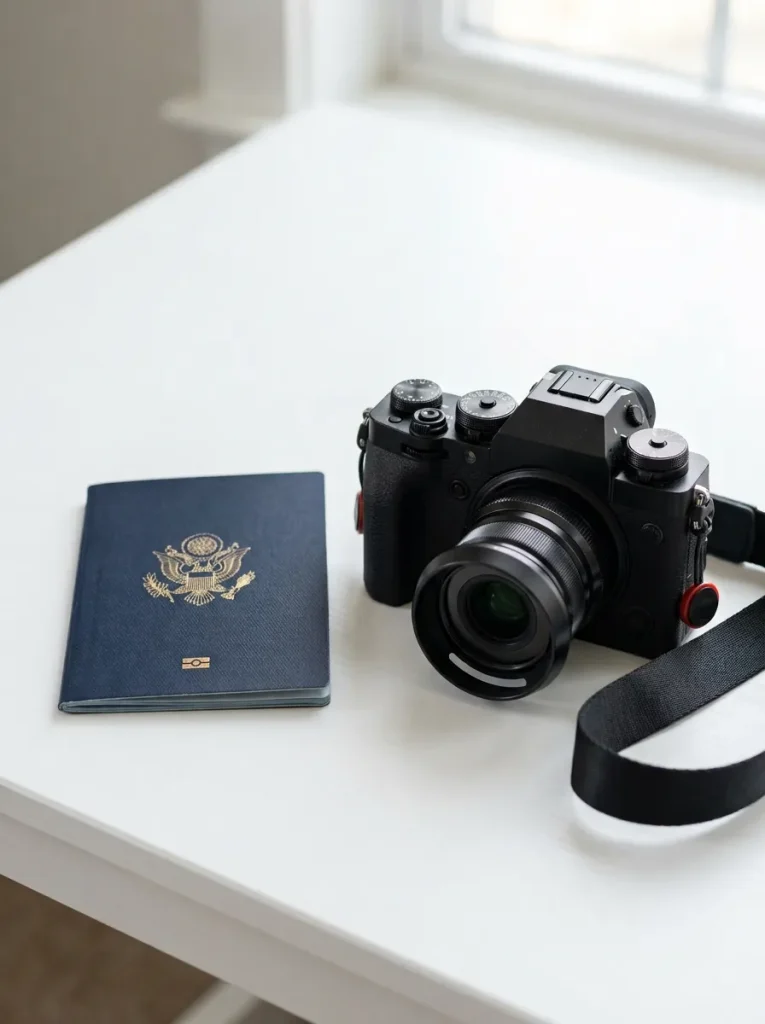
International travel can involve expenses that don’t exist on a domestic trip.
Depending on your destination and nationality, you may need to budget for:
- Visa fees
- Electronic travel authorizations
- Passport fees
- Required permits
- Passport photos
- Special documentation
Check the current requirements for your destination before finalizing your budget.
Don’t rely on an old travel blog post for visa rules because entry requirements can change.
Step 11: Don’t Forget Connectivity

Your phone can become another travel expense.
Depending on your destination, you may pay for:
- International roaming
- Local SIM card
- eSIM
- Mobile data
- Wi-Fi
- International calls
Research your options before leaving.
Sometimes an international roaming package is convenient. In other cases, a local SIM or eSIM may make more financial sense.
The important thing is to include connectivity in the budget rather than discovering the cost after returning home.
Step 12: Create a Miscellaneous Category
This category exists because real life exists.
You may need:
- Laundry
- Toiletries
- Snacks
- Tips
- Umbrella
- Sunscreen
- Medicine
- Bottled water
- Extra transportation
- Small entrance fees
- Hotel incidentals
These aren’t necessarily major expenses individually.
But small expenses have a funny habit of forming a small army.
A $5 purchase here and a $12 purchase there can become $100 before you notice.
Step 13: Add an Emergency Buffer
This is one of the most important parts of a realistic travel budget.
Your emergency buffer is not money you’re planning to spend.
It’s money you’re keeping available in case something unexpected happens.
For example:
- Flight changes
- Unexpected hotel night
- Lost luggage
- Medical expense
- Emergency transportation
- Phone replacement
- Weather-related changes
- Unexpected booking fees
The appropriate amount depends on the trip, destination and your financial circumstances.
The important thing is to have a buffer rather than budgeting every dollar with no room for surprises.
A Realistic 7-Day Travel Budget Example
Let’s put everything together.
Imagine a seven-day trip for one person.
| Category | Estimated Cost |
| Round-trip flight | $450 |
| Accommodation | $900 |
| Food | $420 |
| Local transportation | $180 |
| Activities | $250 |
| Travel insurance | $60 |
| Connectivity | $30 |
| Miscellaneous | $100 |
| Emergency buffer | $200 |
| Estimated total | $2,590 |
Notice that the original flight and hotel might have made the trip appear to cost only $1,350.
The realistic budget is closer to $2,590.
That is exactly why building the complete budget before booking everything matters.
How Much Should You Budget for Food Per Day?
There isn’t one universal number.
Instead, estimate based on your destination and habits.
A simple framework is:
Budget Traveler
Breakfast: $5–10
Lunch: $8–15
Dinner: $10–20
Snacks/drinks: $5–10
Mid-Range Traveler
Breakfast: $10–20
Lunch: $15–25
Dinner: $25–45
Snacks/drinks: $5–15
Higher-End Traveler
Breakfast: $20+
Lunch: $25+
Dinner: $50+
Snacks/drinks: $10+
These are planning examples, not universal prices. Costs can vary dramatically between destinations.
Research current local prices before finalizing your numbers.
How to Reduce Your Travel Budget Without Ruining the Trip
Saving money doesn’t always mean choosing the cheapest option.
Instead, protect the experiences that matter most and cut expenses that don’t.
Spend More on What You Care About
If you’re traveling to a famous food destination, perhaps food is where you should spend more.
If you’re visiting for hiking, spend more on transportation to the trails and less on unnecessary attractions.
If you’re visiting museums, prioritize museum admission over shopping.
Your budget should reflect your priorities, not someone else’s.
Travel During Shoulder Season
Traveling immediately before or after peak season can sometimes reduce accommodation and transportation costs while still offering good weather.
However, check seasonal conditions carefully because shoulder season varies by destination.
Stay Near Public Transportation
A cheaper hotel far from everything may not actually save money.
You might spend the difference on taxis every day.
Use Free Attractions
Many destinations offer:
- Free walking routes
- Parks
- Beaches
- Public markets
- Historic neighborhoods
- Scenic viewpoints
- Free museums on certain days
You don’t have to pay for every memorable experience.
Eat Like a Local
Instead of eating every meal near the biggest tourist attraction, explore local neighborhoods.
Prices can vary significantly within the same destination.
Avoid Automatic Upgrades
Airline seat upgrades, hotel upgrades, premium transfers and add-ons can quietly inflate a trip.
Before paying for one, ask:
Will this meaningfully improve my experience?
If not, keep the money.
How to Track Your Spending During the Trip
Building the budget is only half the job.
You also need to know whether you’re staying within it.
You can use:
- A spreadsheet
- A budgeting app
- A notes app
- A simple daily spending log
You don’t need to record every penny if that makes the trip feel like accounting homework.
A simple daily total is often enough.
For example:
Day 1: $87
Day 2: $112
Day 3: $65
At the end of each day, compare your spending with your expected daily budget.
If you’re spending more than planned, adjust early.
It’s much easier to cut $15 a day for the remaining four days than to discover you’ve blown the entire budget on the final night.
Create a Daily Spending Allowance
After paying your fixed costs, calculate how much flexible money remains.
For example:
Total budget: $2,500
Prepaid costs: $1,400
Remaining: $1,100
If you’re traveling for seven days:
$1,100 ÷ 7 = about $157 per day
That $157 doesn’t necessarily have to be spent every day.
You might spend $90 one day and $200 the next.
The purpose is to give yourself a reference point.
Don’t Budget Your Entire Vacation Down to the Last Dollar
This is another common mistake.
If your maximum budget is $2,500 and your plan already uses exactly $2,500, you’re vulnerable to anything unexpected.
A better approach is:
Planned spending < Maximum comfortable budget
That gap gives you flexibility.
Think of it as financial breathing room.
A Simple Travel Budget Template

You can copy this structure into a spreadsheet or notes app.
Trip Information
Destination:
Travel dates:
Number of travelers:
Number of nights:
Maximum budget:
Transportation
Flights: $
Baggage: $
Airport transfers: $
Rental car: $
Fuel: $
Parking: $
Public transportation: $
Transportation total: $
Accommodation
Hotel: $
Taxes: $
Resort/destination fees: $
Parking: $
Other fees: $
Accommodation total: $
Food
Breakfast: $
Lunch: $
Dinner: $
Snacks: $
Drinks: $
Food total: $
Activities
Attractions: $
Tours: $
Excursions: $
Equipment: $
Activities total: $
Other Expenses
Travel insurance: $
Visa/documents: $
Phone/data: $
Shopping: $
Laundry: $
Miscellaneous: $
Other total: $
Emergency Buffer
Emergency fund: $
Final Estimate
Total planned trip cost: $
Maximum comfortable budget: $
Remaining buffer: $
If your planned trip cost is higher than your maximum budget, don’t panic.
You now know exactly where the problem is.
What to Cut When Your Trip Is Too Expensive
Don’t randomly start deleting things.
Look at the largest flexible categories first.
If Accommodation Is Too Expensive
Consider:
- Different neighborhood
- Different dates
- Smaller room
- Apartment
- Hotel with fewer amenities
- Shorter stay
If Transportation Is Too Expensive
Consider:
- Alternative airport
- Different departure date
- Public transportation
- Fewer destination changes
- A destination closer to home
If Activities Are Too Expensive
Choose your top three experiences and eliminate lower-priority activities.
If Food Is Too Expensive
Try:
- Breakfast included accommodation
- Casual lunches
- Grocery shopping
- Local markets
- Fewer expensive dinners
The goal isn’t to make the trip cheap.
It’s to make the trip fit your budget without sacrificing what matters most to you.
Travel Budget Checklist
Before you book your trip, ask:
- Do I know my maximum budget?
- Have I estimated transportation?
- Have I included baggage fees?
- Have I checked the hotel’s final price?
- Have I included taxes and mandatory fees?
- Have I estimated daily food costs?
- Have I budgeted local transportation?
- Have I priced my main activities?
- Have I checked visa/document costs?
- Have I considered travel insurance?
- Have I budgeted phone/data costs?
- Have I allowed money for shopping?
- Have I included miscellaneous expenses?
- Do I have an emergency buffer?
- Is the total below my maximum comfortable budget?
If you can answer yes to these questions, you’re much less likely to be surprised by the final cost.
Frequently Asked Questions About Travel Budgets
What is the best way to budget for a vacation?
Start by setting a maximum total budget. Then divide it into transportation, accommodation, food, local transportation, activities, insurance, documents, miscellaneous expenses and an emergency buffer. Estimate each category before making major bookings.
How much extra money should I bring on a trip?
There isn’t one correct amount. Your emergency reserve should reflect your destination, trip length, transportation arrangements and personal circumstances. The important thing is to avoid spending your entire maximum budget on planned expenses.
Should I include shopping in my travel budget?
Yes. Even if you don’t plan to shop, small purchases and souvenirs are common during vacations. Give yourself a specific amount so shopping doesn’t quietly consume money intended for essential expenses.
How do I calculate a daily travel budget?
First subtract prepaid or fixed expenses from your total budget. Then divide the remaining flexible spending money by the number of travel days. Use that figure as a guide rather than a strict daily spending limit.
Is it cheaper to book everything myself?
Not always. The answer depends on the destination, trip type, available packages and your ability to compare prices. Independent booking can provide flexibility, while packages may sometimes combine transportation, accommodation or activities at a competitive price.
Should I use a travel credit card to save money?
Travel rewards and card benefits can be useful, but only if you understand the fees, interest rates, foreign transaction policies and redemption rules. Don’t spend more than planned simply to earn rewards.
What is the biggest travel budgeting mistake?
One of the biggest mistakes is budgeting only for flights and accommodation. Food, local transportation, activities, taxes, fees and unexpected expenses can make a significant difference to the final cost.
Final Thoughts
A travel budget isn’t supposed to make your vacation feel restrictive.
It should do the opposite.
When you know what your trip is likely to cost, you can make decisions with much less stress. You know what you can afford, where you can splurge, where you can save and how much room you have for surprises.
Start with your total budget.
Then work backward.
Calculate transportation, accommodation, food, local transportation, activities, documents, insurance and miscellaneous expenses. Add an emergency buffer. Finally, compare the total with the amount you’re genuinely comfortable spending.
And remember one of the most useful rules in travel budgeting:
Don’t plan for the cheapest possible trip. Plan for the realistic trip you actually want to take.
A realistic budget may not produce the lowest number on your spreadsheet, but it can prevent that unpleasant moment when your vacation is halfway over and you realize your money isn’t.