Solo Female Travel Safety: Why a Small Action Camera Could Be One of Your Smartest Travel Tools
Traveling alone can give you an incredible sense of freedom. You choose the destination, set your own schedule, stop whenever you want, and experience a place at your own pace.
But solo travel also comes with one responsibility that should never be ignored: knowing how to protect yourself if a situation suddenly feels unsafe.
Most travelers think about obvious safety tools such as a charged phone, emergency contacts, travel insurance, a portable power bank, and a personal safety alarm.
There is another tool worth considering that can serve a very different purpose: a small action camera.
A compact camera such as the GoPro HERO13 Black can be used to continuously document parts of a solo trip. If something unusual, threatening, or concerning happens, having a recording may give you a useful record of what happened.
It is not a bodyguard. It cannot stop someone from approaching you. But as part of a broader solo travel safety plan, a camera can add another layer of documentation and awareness.
Recommended Travel Items for Your Trip
Why a Camera Can Be Useful for Solo Female Travelers
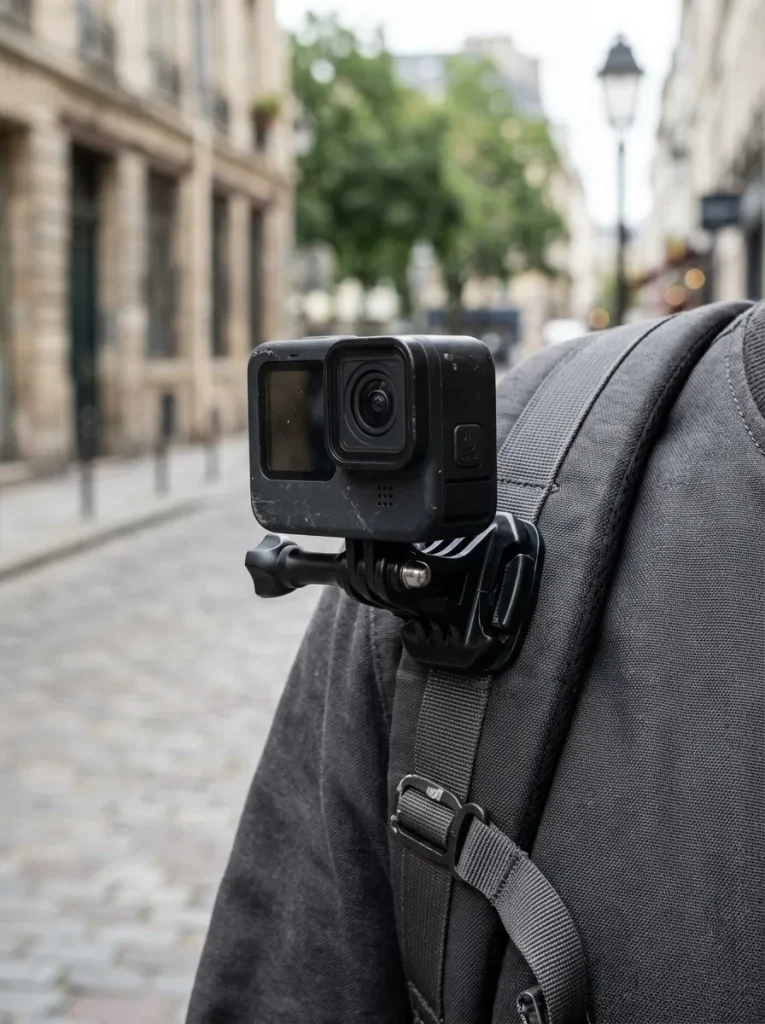
Imagine walking through an unfamiliar neighborhood during the afternoon.
You are exploring normally when you notice that someone appears to be following you.
Your first priority should not be getting the perfect video.
Your priority should be getting somewhere safe.
You might enter a busy store, hotel, restaurant, police station, tourist information center, or another populated location. You might call someone you trust or contact local emergency services.
If it is safe to do so, a camera that is already recording can preserve what is happening around you.
That distinction matters.
The camera should be treated as a documentation tool, not a weapon or a substitute for common-sense safety.
What Makes an Action Camera Different From Your Phone?
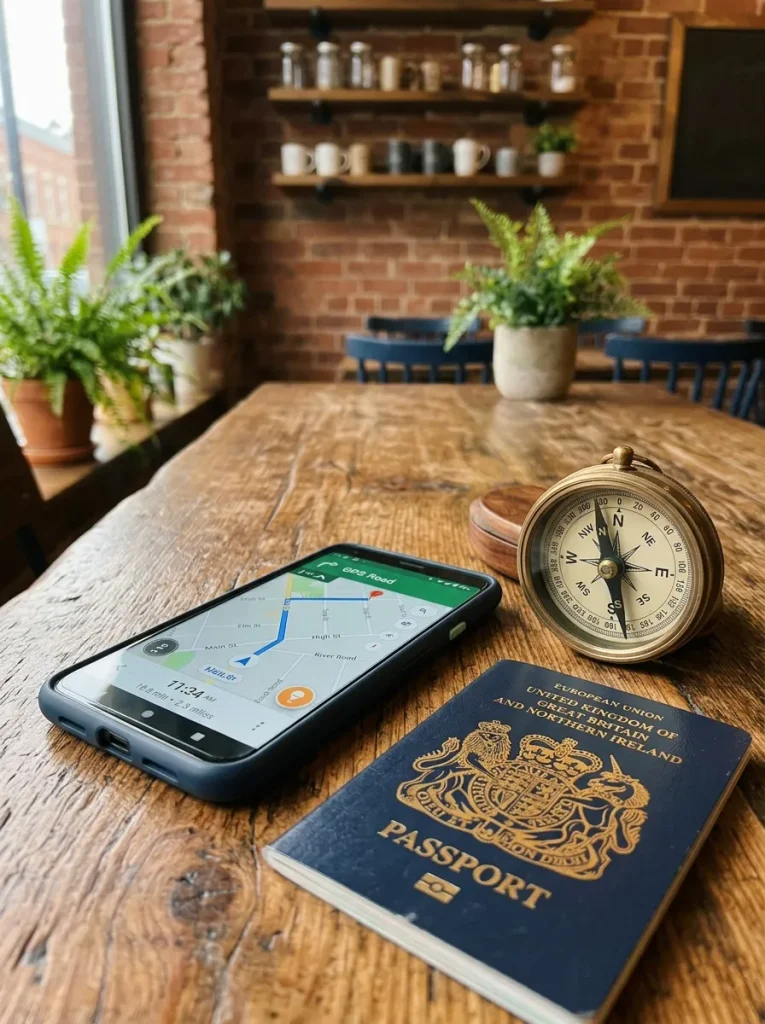
Your smartphone is probably already your most important travel device.
You use it for maps, translation, reservations, transportation, payments, communication, photographs, and emergency calls.
That is exactly why using a separate camera can make sense.
If your phone is busy displaying navigation, connected to a rideshare, being used for a phone call, or running low on battery, you may not want to use it as your primary recording device too.
An action camera can remain mounted and ready.
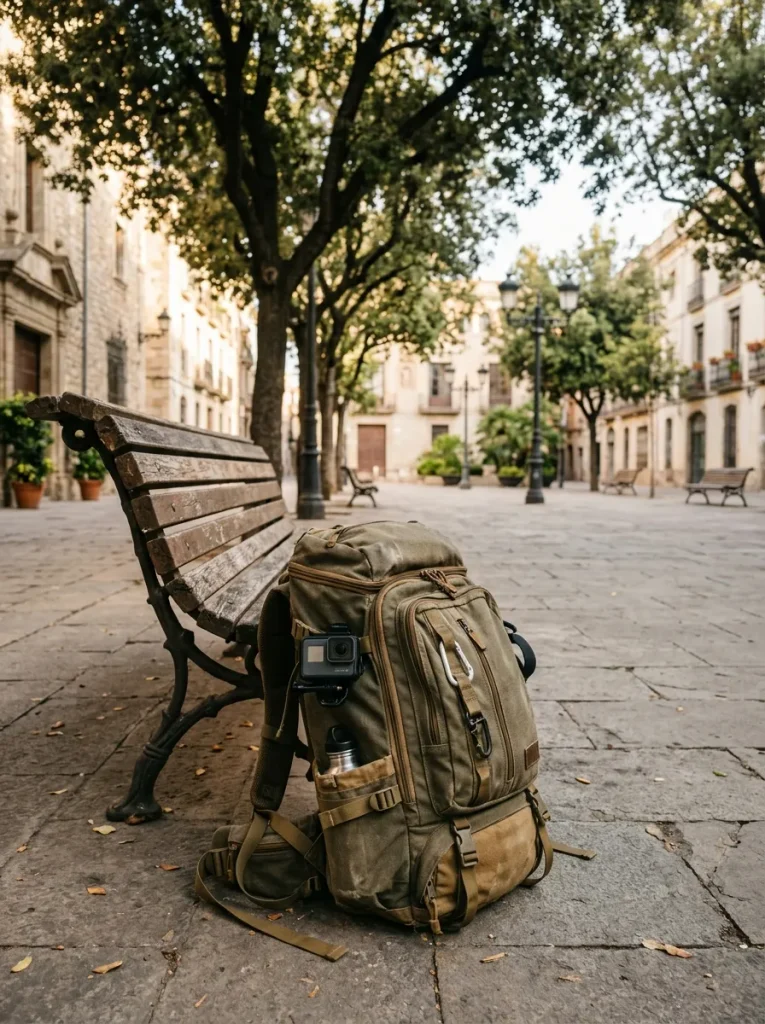
You can attach it to a backpack strap, chest mount, handle, or another suitable mounting system depending on the situation.
The GoPro HERO13 Black also supports built-in mounting fingers and 1/4-20 tripod compatibility, giving travelers several ways to configure the camera.
My Pick: GoPro HERO13 Black
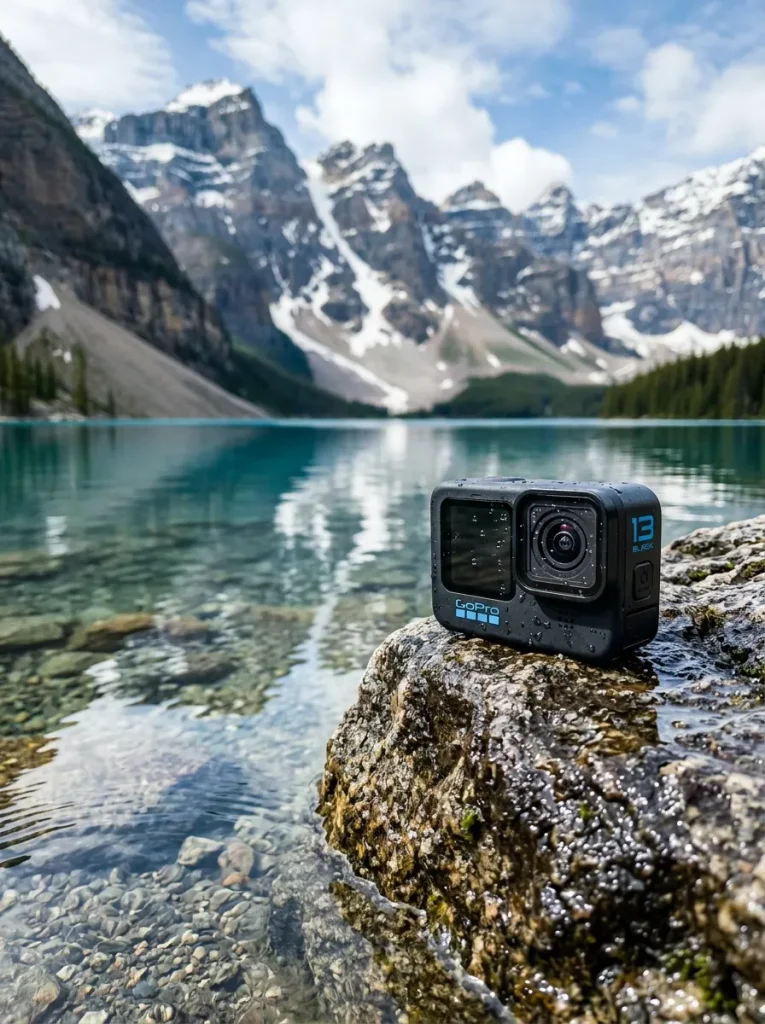
For travelers who want one compact camera that can handle ordinary travel photography while also being useful for documentation, the GoPro HERO13 Black is an interesting option.
It records up to 5.3K60 video and includes HyperSmooth 6.0 stabilization. It is also waterproof to 33 feet (10 meters) without a separate waterproof housing under the manufacturer’s stated conditions.
That combination is useful for travel because the camera does not have to be treated like a fragile piece of equipment.
You can use it during a city walk, hike, road trip, beach day, excursion, or other outdoor activity.
The camera also has voice commands and Bluetooth audio support, which can be useful when you want to operate it without constantly reaching for it.
Check the GoPro HERO13 Black on Amazon
See the GoPro HERO13 Black on Amazon
Amazon listings, prices, bundles, and availability can change, so check the current listing before purchasing.
How I Would Use an Action Camera for Solo Travel Safety
The key is to make the camera part of your normal travel routine rather than waiting until something goes wrong.
1. Record While Exploring
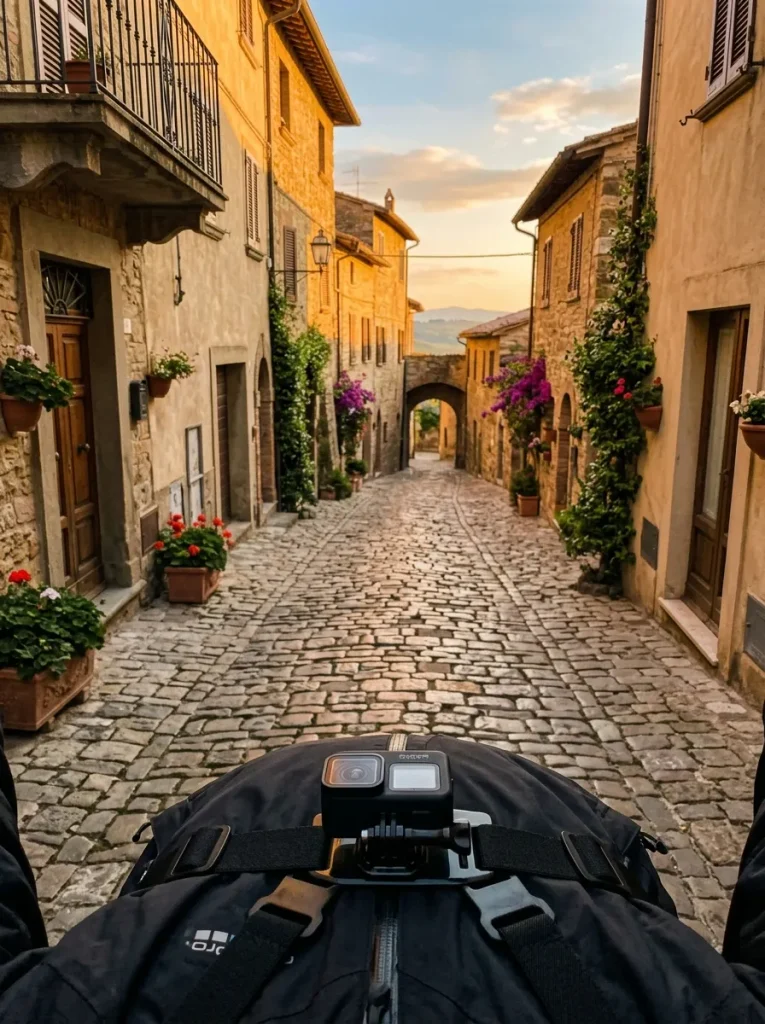
When walking around an unfamiliar destination, you can record portions of your journey.
You do not necessarily need to record every second of your entire vacation.
Instead, you might record particular walks, excursions, transportation experiences, or areas where you want a visual record.
For example, imagine taking an unfamiliar walking route back to your hotel.
A camera mounted on your bag could document the journey while you remain focused on your surroundings.
2. Keep Your Phone Available
This is one of the biggest advantages of using a separate camera.
Your phone can remain available for:
- GPS navigation
- Emergency calls
- Messaging family or friends
- Rideshare apps
- Translation
- Hotel information
- Travel documents
- Maps
- Sharing your location
Meanwhile, the action camera handles video recording.
That gives you two separate devices performing two different jobs.
3. Use Voice Commands When Appropriate
The HERO13 Black supports voice commands, which can reduce the need to physically handle the camera while walking.
This can be particularly convenient when the camera is mounted somewhere that is difficult to reach.
However, do not assume a voice command will always work. Noise, language settings, battery status, and environmental conditions can affect how practical hands-free operation is.
Before your trip, test the feature several times.
4. Keep Spare Battery Power
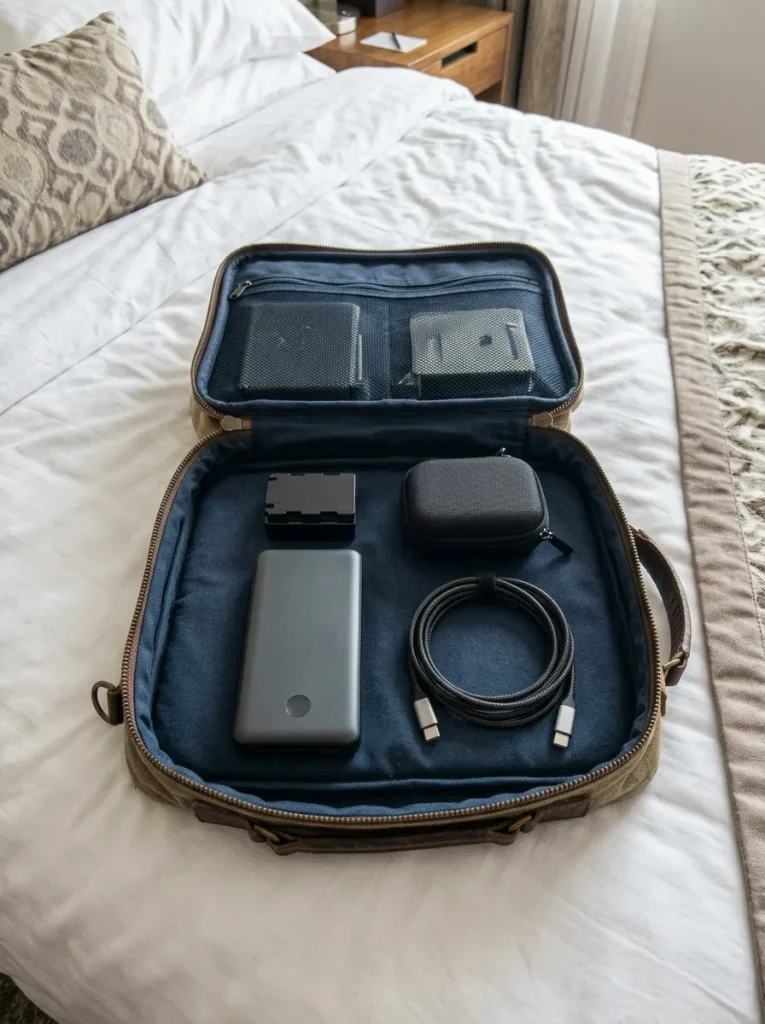
A camera is only useful when it has power.
GoPro says the HERO13 Black’s 1900mAh Enduro battery can provide up to 2.5 hours of continuous recording at 1080p30 under its specified test conditions, with shorter runtimes possible at higher resolutions and depending on settings and conditions.
For travel, I would still carry:
- A spare battery
- A power bank
- A charging cable
- A suitable microSD card
- A small protective case
Do not plan your safety strategy around the maximum advertised battery figure.
Real-world battery life can vary considerably.
What If Something Actually Happens?
This is where expectations are important.
If someone is threatening you, following you, attempting to rob you, or behaving aggressively, do not stand there just to get footage.
Your safety comes first.
If possible, move toward a populated and secure location.
Depending on the situation, that could mean entering a hotel, restaurant, shop, police station, transportation hub, or another public place.
Contact local emergency services if necessary.
Contact someone you trust.
Use your phone’s location-sharing features if appropriate.
The camera can continue to serve as documentation if it is already recording and doing so does not increase your risk.
The goal is not to confront someone with a camera.
The goal is to preserve useful information while getting yourself out of the situation.
What Kind of Evidence Could a Camera Capture?
Depending on where the camera is positioned and what happens, video may potentially document details such as:
- A person’s appearance
- Clothing
- Direction of travel
- Vehicle details
- License plate information
- Approximate location
- Time of an incident
- Surrounding environment
- Conversations or sounds captured by the camera
- The sequence of events
Video does not automatically prove everything that happened, and audio/video quality can vary.
Still, having a contemporaneous recording may provide information that is difficult to remember accurately after a stressful event.
GPS Data Can Add Another Layer of Context
The HERO13 Black supports GPS data and can overlay information such as speed and altitude through the GoPro Quik app.
For a traveler documenting an incident, location and timing can potentially make footage easier to organize afterward.
However, remember that recording GPS information can also reveal sensitive details about where you have been.
Think carefully before publicly uploading raw footage containing your location history.
Don’t Upload Everything Immediately
This is an important part of the safety strategy.
If you record something concerning, you do not necessarily need to post it on social media immediately.
First, preserve the original file.
Keep a backup.
If appropriate, send a copy to someone you trust.
You may also want to keep information about when and where the recording was made.
If the footage relates to an incident that may require police or legal assistance, preserve the original file rather than editing it and deleting the original.
A Camera Is Not a Replacement for Other Safety Measures
An action camera should be one small piece of a larger travel safety plan.
Before traveling alone, consider:
Keep Your Phone Ready
Make sure your phone is charged and has a working cellular connection or appropriate international service.
Download offline maps for destinations where connectivity may be unreliable.
Share Your Itinerary
Someone you trust should know where you are staying and, when practical, your major travel plans.
For longer trips, establish a simple check-in routine.
Know the Local Emergency Number
Emergency numbers are not the same everywhere.
Save the appropriate emergency contact information before arriving.
Research Your Accommodation
Look at the surrounding neighborhood, transportation options, entrance arrangements, and how you will get back to the property at night.
Trust Your Instincts
You do not need to prove that a situation is dangerous before leaving it.
If a location or interaction makes you uncomfortable, leave when you can do so safely.
You can always change your plans.
The Best Way to Carry the Camera
There is no single perfect setup.
For ordinary sightseeing, a small backpack or chest-mounted configuration may work.
For hiking, a suitable backpack mount can keep your hands free.
For walking tours, a handheld grip may be convenient.
For situations where you want the camera to remain stationary, a small tripod can be useful.
The important thing is accessibility.
If you have to dig through three bags to find the camera, it is not particularly useful as an everyday documentation tool.
Consider a Visible Camera Versus a Discreet Setup
There is an important judgment call here.
A visible action camera can make it obvious that you are documenting your surroundings.
In some circumstances, that may discourage unwanted behavior.
In other situations, drawing attention to a camera may be exactly what you do not want.
There is no universal answer.
Think about the destination, local customs, the situation, and your own comfort level.
Most importantly, do not deliberately provoke someone by pointing a camera at them.
Your objective is to remain safe, not to turn an uncomfortable interaction into a confrontation.
Check Local Recording Laws Before Your Trip
This part should not be skipped.
Privacy, photography, video recording, and audio-recording laws differ between countries and sometimes between states or regions.
Audio recording can be particularly complicated because some jurisdictions have specific consent requirements.
There can also be special restrictions around government buildings, military facilities, border areas, airports, museums, private property, and other sensitive locations.
Before traveling, check the relevant local rules.
Also consider the privacy of other people who appear in your footage.
Just because your camera can record something does not necessarily mean you should publish it online.
Don’t Turn Your Camera Into a False Sense of Security
This may be the most important point in this entire article.
A camera can document an event.
It cannot physically protect you.
It cannot guarantee that someone will behave differently because they are being recorded.
It cannot replace situational awareness.
It cannot replace emergency services.
It cannot replace a trusted contact knowing where you are.
And it certainly should not encourage you to remain in a dangerous situation simply because you want to capture footage.
Think of it as another tool in your travel kit.
Your first layer of protection is still awareness and good decision-making.
Why I Like the GoPro HERO13 Black for This Idea
The HERO13 Black makes sense for this use because it combines several characteristics that travelers generally want from an action camera.
It is compact, rugged, waterproof to 10 meters, stabilized, capable of high-resolution video, and designed for multiple mounting configurations.
It is also a genuine travel camera rather than a device designed solely for security.
That matters because you are much more likely to actually carry and use a camera that also captures your hikes, road trips, snorkeling adventures, city walks, and memorable travel moments.
In other words, the camera does not have to sit unused in your luggage waiting for an emergency.
It can be part of your normal travel routine.
Shop the GoPro HERO13 Black
Check the current GoPro HERO13 Black options on Amazon
Look at the current bundles as well as the camera-only option. Depending on your travel style, an additional battery, memory card, mount, and compact case may be more useful than buying a larger accessory bundle.
A Simple Solo Travel Camera Checklist
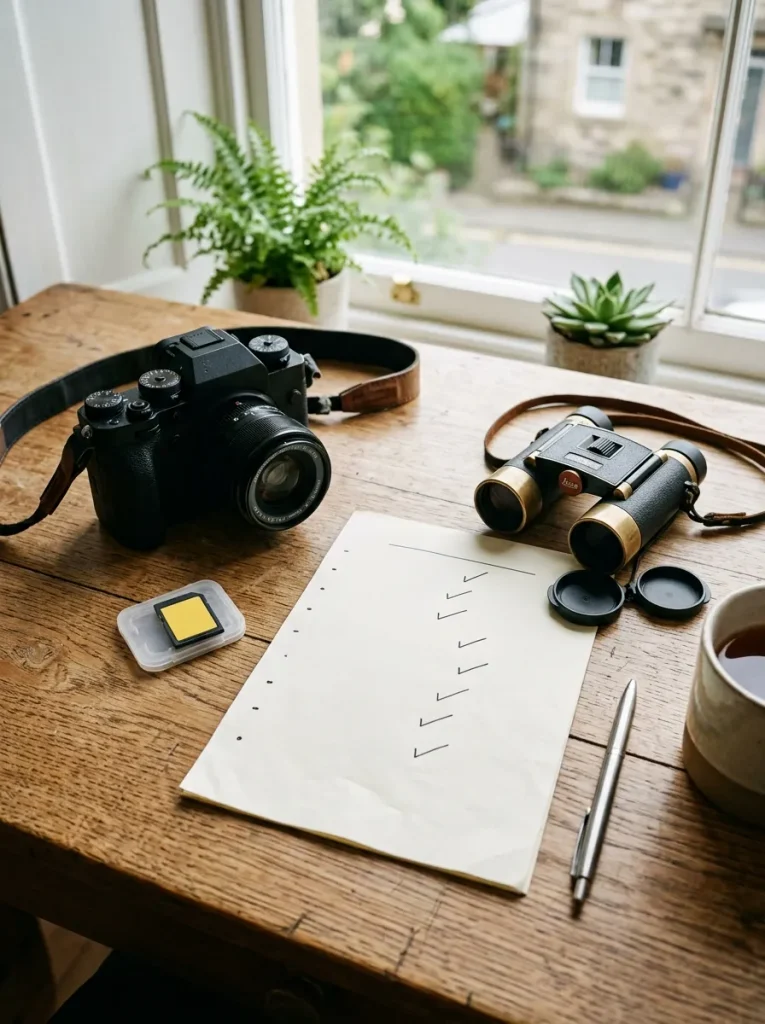
Before leaving for your trip, check:
- Camera fully charged
- Spare battery packed
- Power bank packed
- Memory card installed
- Enough storage available
- Recording settings tested
- Voice commands tested
- Mount securely attached
- Camera firmware updated
- Important footage backed up
- Local recording rules researched
- Emergency contacts saved
- Accommodation address saved offline
- Offline maps downloaded
A five-minute check before leaving your hotel can prevent a surprisingly frustrating day later.
Final Thoughts
Solo travel should not be about being afraid of every unfamiliar street.
It should be about being prepared enough that you can focus on experiencing the destination.
A small action camera can be part of that preparation.
The GoPro HERO13 Black is particularly interesting because it can function as a normal travel camera while also giving solo travelers the option to document their surroundings when appropriate. Its stabilization, rugged construction, waterproofing, high-resolution video, mounting options, voice control, and GPS capabilities make it a versatile piece of travel gear.
But remember the golden rule: if something feels genuinely dangerous, stop worrying about the footage and get yourself somewhere safe.
The best travel recording is the one you never have to use as evidence.
And the best safety device is still a traveler who stays aware, keeps communication available, knows when to leave, and has a plan for getting help.
Affiliate disclosure: This article contains affiliate links. If you purchase a product through a link on this page, we may earn a commission at no additional cost to you.