What to Pack for a Europe Trip: The Ultimate 2026–27 Packing List for Every Season
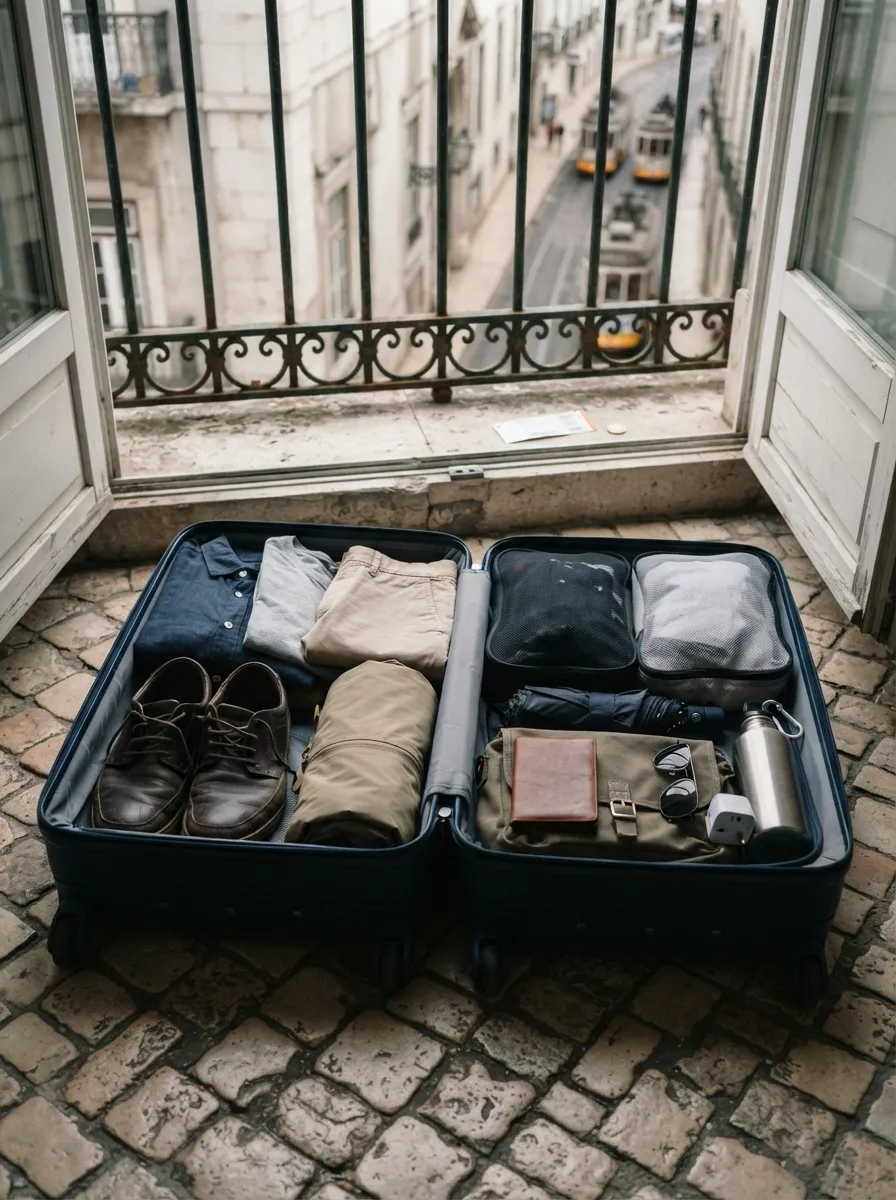
Figuring out what to pack for a Europe trip sounds easy until your suitcase is open on the floor and somehow contains four jackets, six pairs of shoes, enough toiletries to open a small pharmacy, and absolutely no room for anything you might buy in Europe.
The truth is that packing for Europe is less about bringing more and more about bringing the right combination of things.
European trips frequently involve cobblestone streets, railway platforms, hotel staircases, budget-airline baggage limits, sudden rain, long sightseeing days and dramatic weather differences between destinations. A traveler spending two weeks between London, Paris, Switzerland and Rome could experience cold rain, mountain temperatures and Mediterranean sunshine on the same vacation.
That makes versatility far more valuable than quantity.
This complete guide explains what to pack for a trip to Europe, including clothes, shoes, electronics, toiletries, documents, medications, money essentials and seasonal items. There is also a dedicated section on what to pack for a backpacking trip to Europe, plus printable-style checklists for travelers who want to avoid hauling half their bedroom across the Atlantic.
Recommended Travel Items for Your Trip
EUROPE PACKING AT A GLANCE
Best strategy: Pack for roughly one week and do laundry
Best luggage: Carry-on suitcase or 35–45L travel backpack
Ideal shoes: Two pairs for most trips
Most useful clothing: Layers that mix and match
Most forgotten item: European plug adapter
Best space saver: Packing cubes
Important rule: Check airline baggage dimensions before packing
Best anti-overpacking trick: Leave 15–20% of your bag empty
For longer trips: Pack more strategically, not substantially more
What to Pack for Europe Trip: Complete Checklist
Here is the quick version before we unpack the suitcase piece by piece.
| Category | What to Pack |
| Documents | Passport, reservations, insurance information |
| Money | 2 payment cards, small amount of cash |
| Tops | 5–7 versatile shirts |
| Bottoms | 3–4 pants, jeans, skirts or shorts |
| Layers | Sweater/fleece + lightweight jacket |
| Underwear | 7–8 pairs |
| Socks | 5–7 pairs |
| Shoes | Walking shoes + second versatile pair |
| Rain protection | Packable waterproof jacket |
| Electronics | Phone, charger, adapter, power bank |
| Toiletries | Travel-size essentials |
| Medication | Regular prescriptions + basic essentials |
| Day bag | Small backpack or secure crossbody |
| Extras | Sunglasses, reusable bottle, laundry bag |
The exact quantities should change according to weather and personal style, but this is a strong starting point for a 7–14 day European vacation.
The Golden Rule: Pack for 7 Days, Not 21
One of the biggest mistakes first-time travelers make is packing a separate outfit for every day.
You rarely need to.
For a two or three-week European vacation, pack approximately one week’s worth of versatile clothing and plan to do laundry.
A laundromat, hotel laundry service or apartment washing machine weighs considerably less than eleven additional shirts.
A useful packing formula is:
- 5–7 tops
- 3–4 bottoms
- 1 sweater or fleece
- 1 lightweight jacket
- 1 rain layer
- 7–8 underwear
- 5–7 pairs of socks
- 1 sleep outfit
- 2 pairs of shoes
The objective is to create multiple combinations from relatively few pieces.
Choose Your Luggage Before Your Clothes
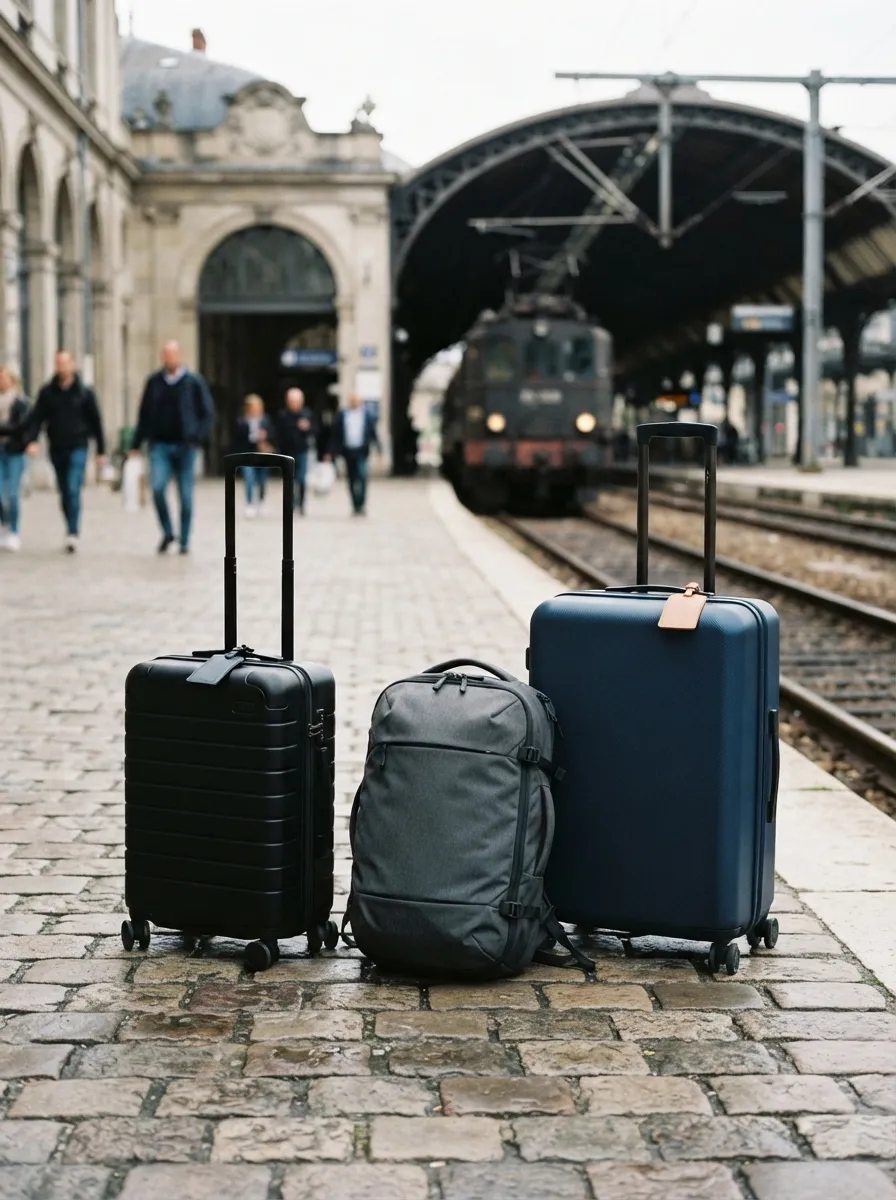
Your bag determines how much you will bring.
Choosing luggage first creates a physical limit before the “perhaps I need this” pile begins reproducing.
Carry-On Suitcase
A carry-on roller works particularly well for:
- City-based vacations
- Hotels with elevators
- Shorter trips
- Travelers with back problems
- Trips involving relatively few hotel changes
Hard-shell cases also protect electronics and fragile souvenirs well.
However, wheels become less delightful on cobblestones.
Travel Backpack
A 35–45L travel backpack works particularly well for:
- Multi-city trips
- Frequent train journeys
- Hostels
- Budget travel
- Trips involving stairs
- Travelers moving accommodation frequently
Choose a front-opening travel backpack rather than a traditional top-loading hiking pack when possible. Opening it like a suitcase makes organization considerably easier.
Checked Suitcase
A checked bag makes sense for:
- Winter vacations
- Ski trips
- Long family vacations
- Special events requiring formal clothing
- Travelers carrying specialized equipment
But remember that you must transport it between every airport, train, hotel and apartment.
Europe has many beautiful staircases. They become substantially less charming while carrying 50 pounds.
What Clothes to Pack for a European Trip
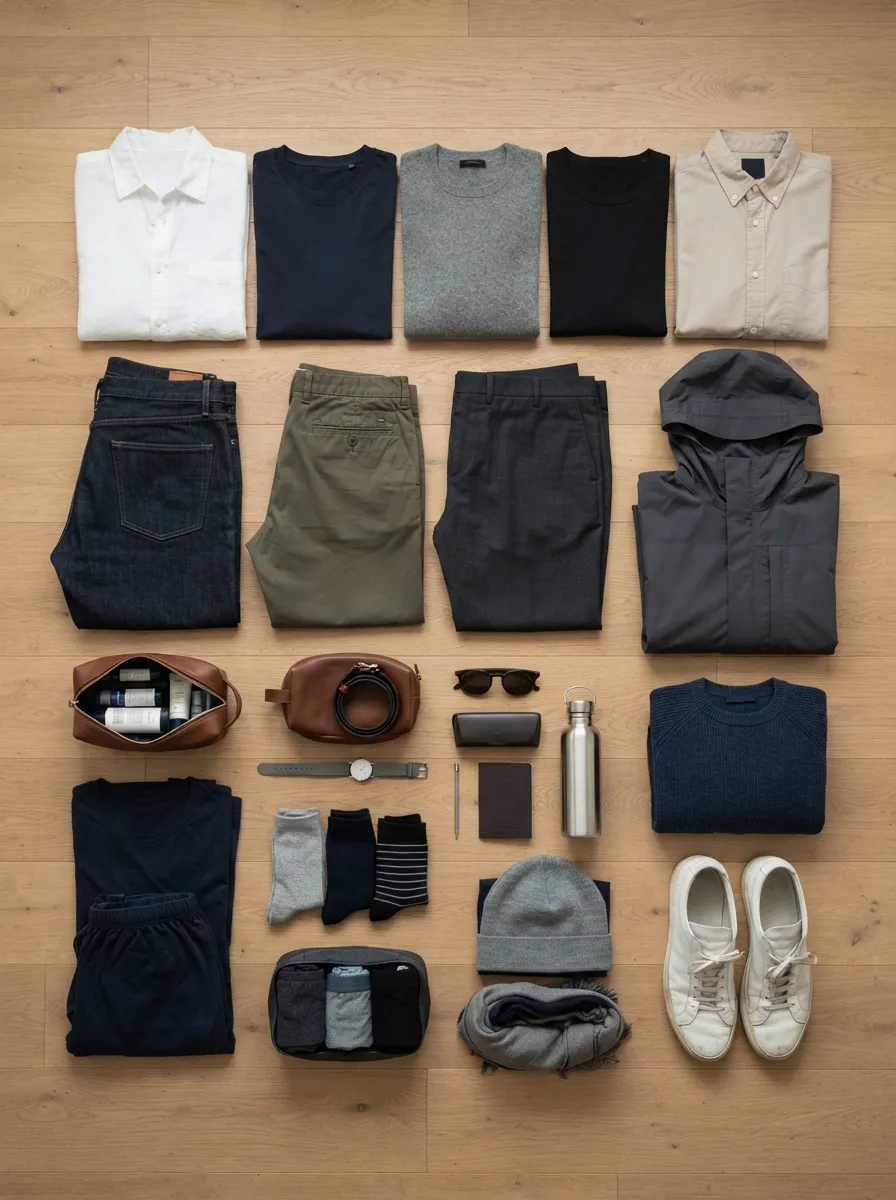
European packing should revolve around layers.
Weather can change quickly, particularly in Northern and Central Europe.
Instead of one extremely heavy piece, combine lighter layers.
Tops
Pack approximately:
- 3–4 casual T-shirts
- 1–2 long-sleeve tops
- 1 nicer shirt
- 1 lightweight sweater
Choose colors and styles that coordinate with several bottoms.
Bottoms
Pack approximately three or four:
- Comfortable trousers
- Jeans
- Lightweight travel pants
- Shorts in warm weather
- Skirt if preferred
Avoid packing anything that only works with one particular outfit unless you have a specific event requiring it.
Outer Layers
For most European trips, bring:
- Lightweight sweater or fleece
- Packable waterproof jacket
During colder months, add:
- Insulated jacket
- Thermal base layer
- Hat
- Gloves
- Scarf
Travelers planning multiple destinations should decide clothing based on the coldest location rather than the warmest one.
If you haven’t chosen your itinerary yet, these dream destinations for 2026 can help narrow the route before you start packing.
What Shoes to Pack for Europe
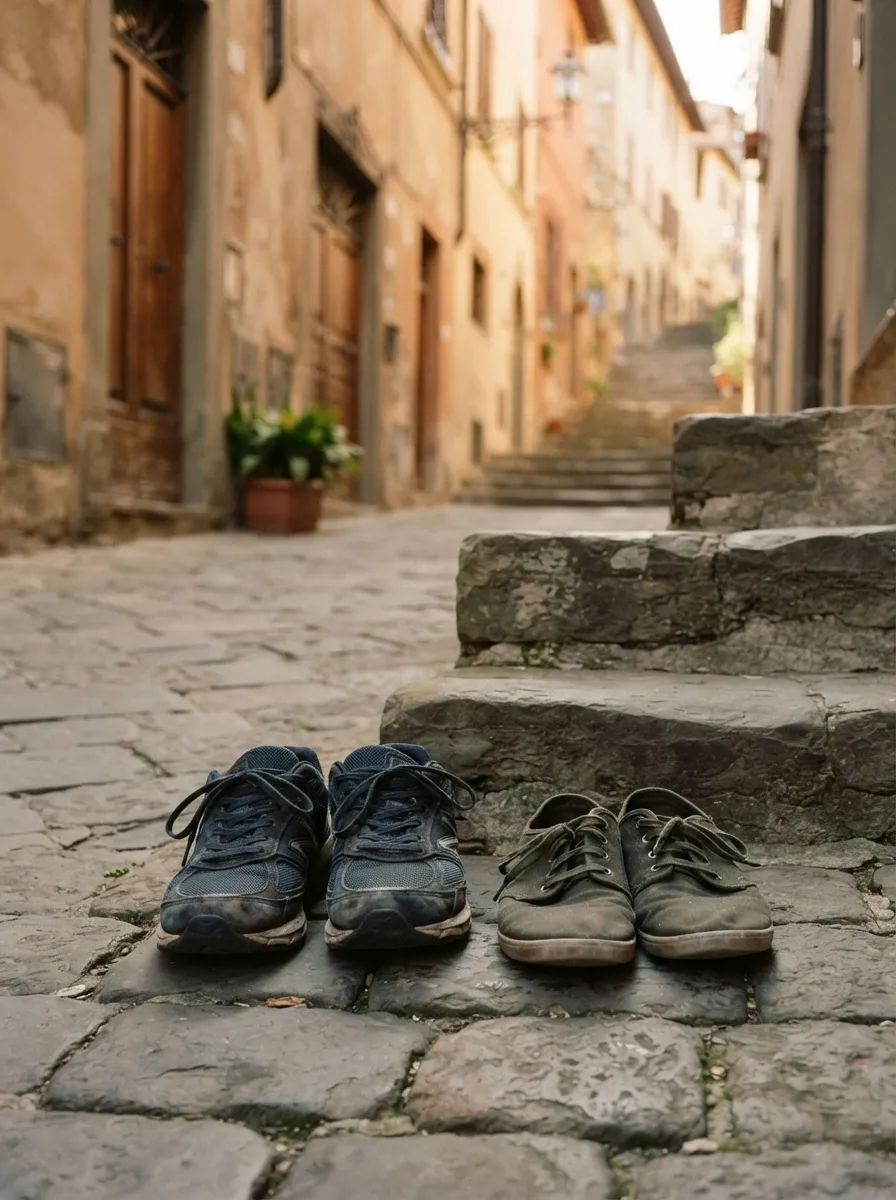
Shoes quietly consume enormous amounts of luggage space.
Most travelers need only two pairs.
Pair 1: Comfortable Walking Shoes
This is non-negotiable.
European sightseeing can easily involve 15,000–25,000 steps in a day.
Choose shoes you have already worn extensively.
Do not break in new shoes while walking through Rome.
Your feet will file a formal complaint somewhere near the Colosseum.
Pair 2: Versatile Alternative
Depending on your itinerary:
- Casual sneakers
- Comfortable sandals
- Lightweight boots
- Dressier walking shoes
For hiking-focused trips, bring appropriate trail shoes.
Shoes You Probably Don’t Need
Avoid packing:
- Several formal pairs
- Heavy boots for warm destinations
- Multiple nearly identical sneakers
- Uncomfortable shoes chosen only for photographs
Wear your bulkiest footwear during flights and train transfers.
What to Pack for Europe in Spring
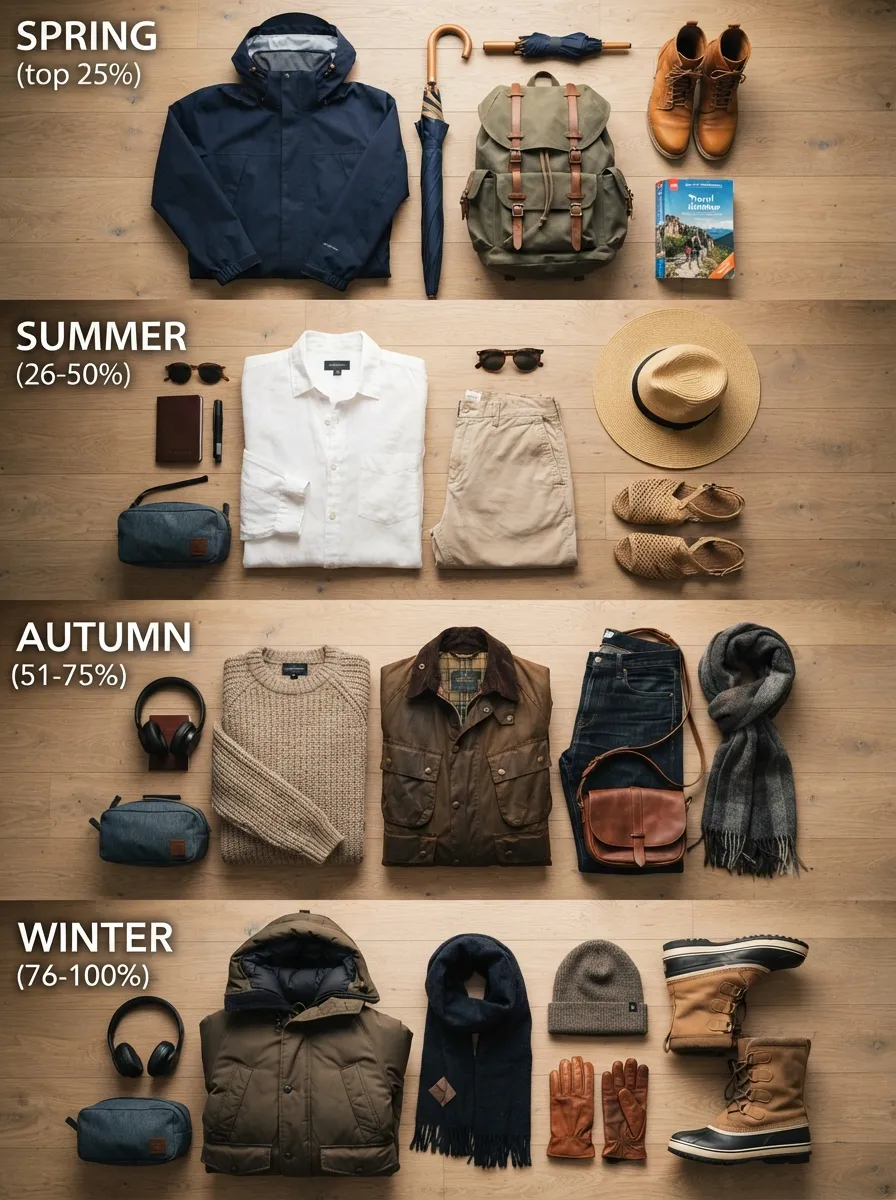
March through May can be unpredictable.
Pack:
- Lightweight waterproof jacket
- Sweater
- Long pants
- T-shirts
- Long-sleeve tops
- Comfortable water-resistant shoes
- Compact umbrella
- Light scarf
- Sunglasses
Southern Europe can already feel warm while Northern Europe remains chilly.
For multi-country trips, layers are essential.
What to Pack for Europe in Summer
June through August can range from pleasant Northern European temperatures to serious heat around the Mediterranean.
Pack:
- Lightweight breathable shirts
- Shorts
- Light trousers
- Comfortable sandals
- Walking shoes
- Sunglasses
- Hat
- Sunscreen
- Refillable water bottle
- Lightweight rain jacket
- Swimwear
A thin long-sleeve layer is still useful for flights, evenings, mountains and aggressively air-conditioned interiors.
Don’t assume every hotel has air-conditioning
Air-conditioning is not universal, particularly in older European accommodation.
Check the room description before booking if summer heat is a concern.
What to Pack for Europe in Fall
September through November requires flexibility.
Early September can feel like summer in Italy, Greece, Spain and Portugal, while November may feel decidedly wintry farther north.
Bring:
- Waterproof jacket
- Sweater
- Long-sleeve shirts
- Jeans or trousers
- Comfortable walking shoes
- Light scarf
- Compact umbrella
- Warmer layer for evenings
Late-fall travelers should add a warmer coat depending on destination.
What to Pack for Europe in Winter
Winter packing is bulkier, so every piece should earn its luggage space.
Bring:
- Warm insulated coat
- Thermal base layers
- Sweaters
- Long pants
- Warm socks
- Waterproof shoes or boots
- Gloves
- Hat
- Scarf
- Compact umbrella
- Moisturizer and lip balm
Wear your heaviest coat and boots while traveling instead of putting them inside your suitcase.
What to Pack for a Backpacking Trip to Europe
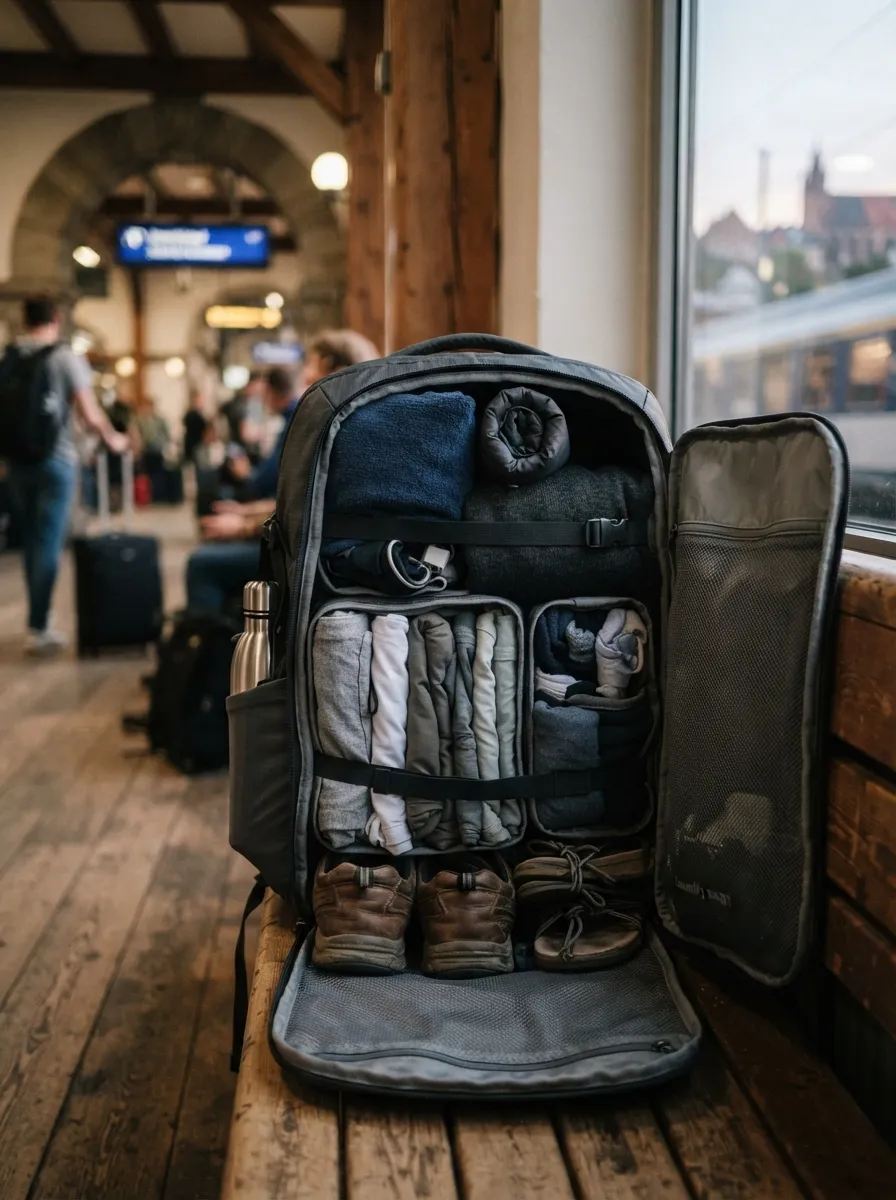
If you’re researching what to pack for a backpacking trip to Europe, the priorities change.
Mobility becomes more important than wardrobe variety.
Your backpack may accompany you through railway stations, metro systems, hostel staircases and city streets. Every unnecessary item eventually develops the approximate gravitational pull of a bowling ball.
Backpacking Europe Packing List
Aim for:
Backpack
- 35–45L front-opening travel backpack
Clothing
- 4–5 shirts
- 2–3 bottoms
- 1 sweater/fleece
- 1 waterproof jacket
- 5–7 underwear
- 4–6 socks
- Sleepwear
- Swimwear
Shoes
- Walking shoes
- Lightweight sandals or second pair
Organization
- 2–3 packing cubes
- Laundry bag
- Small toiletry pouch
Electronics
- Smartphone
- Charger
- Plug adapter
- Power bank
- Earbuds
Daily use
- Small collapsible backpack
- Water bottle
- Sunglasses
Laundry every five to seven days keeps the system working.
BACKPACKING RULE
If you’re uncertain whether you’ll use something, leave it behind unless it is difficult, expensive, or unsafe to replace abroad.
The Best Day Bag for Europe
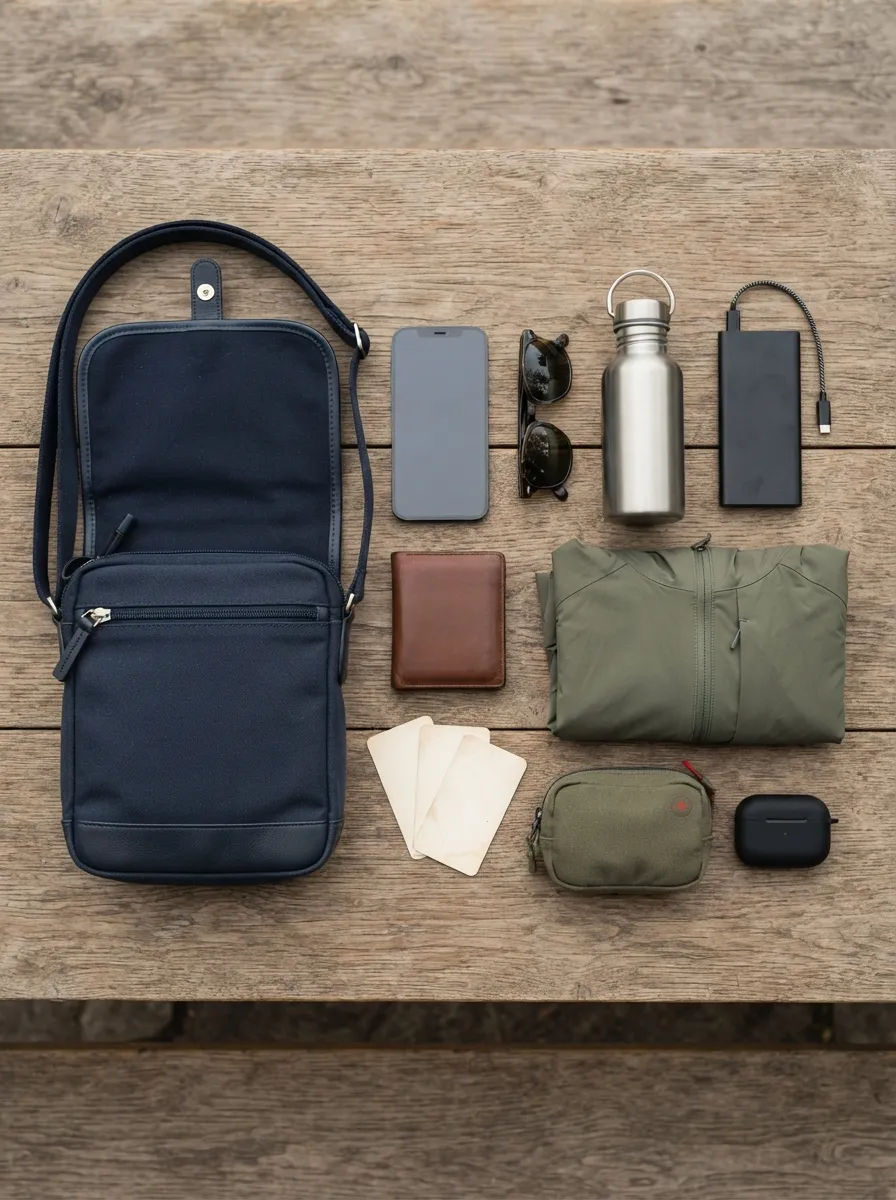
Your main suitcase should stay at the hotel.
For sightseeing, use a small:
- Crossbody bag
- Sling bag
- Backpack
- Secure daypack
It should hold:
- Phone
- Wallet
- Water
- Power bank
- Sunglasses
- Light jacket
- Medication
- Tickets
Choose zipped compartments rather than open totes in crowded cities.
Keep your passport secured at accommodation when appropriate and legally permissible rather than carrying it unnecessarily all day. Some destinations or situations may require identification, so check local requirements.
Packing Cubes: Worth It or Not?
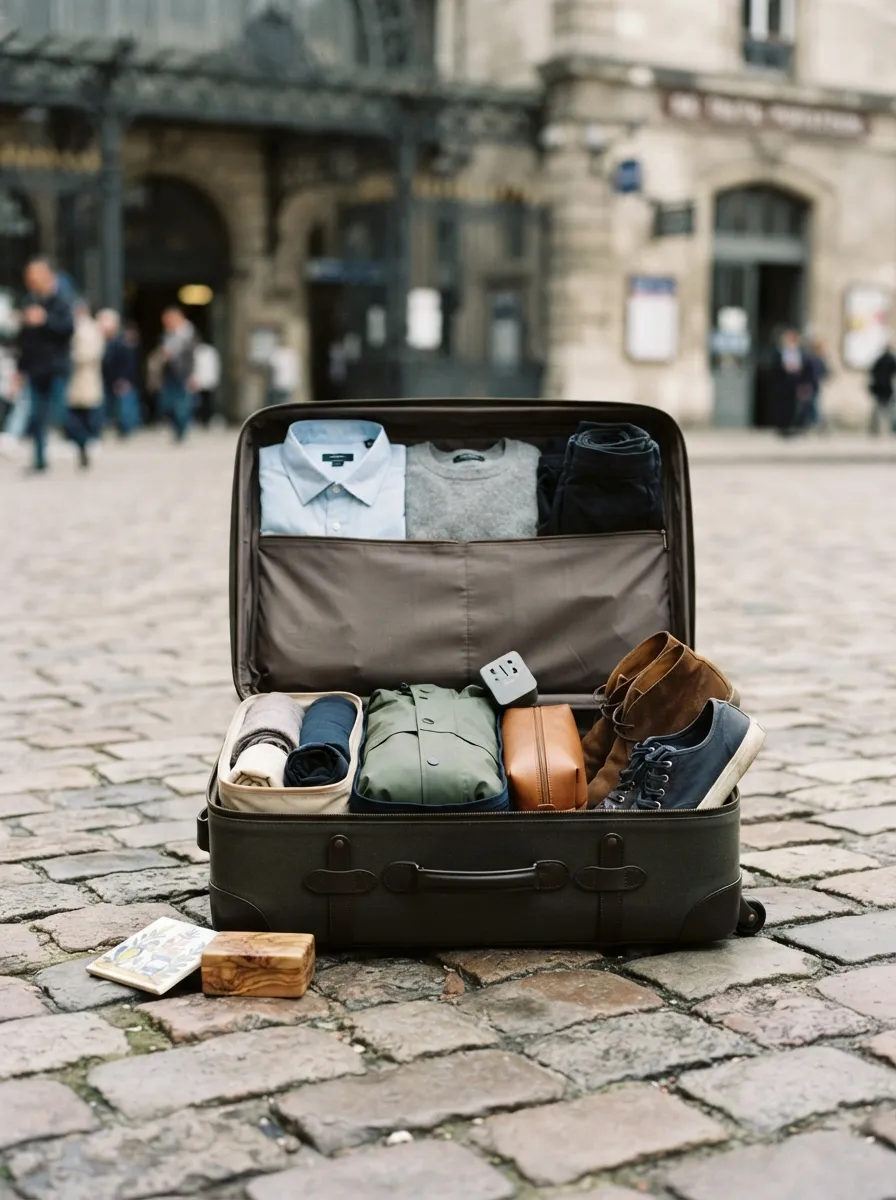
Yes, particularly on multi-city trips.
Packing cubes do not magically make luggage weight disappear, but they improve organization.
Use separate cubes for:
- Tops
- Bottoms
- Underwear
- Sleepwear
When changing hotels every few nights, you can remove one cube instead of excavating your suitcase each evening.
Compression cubes can save volume, but beware: compressing clothing makes your suitcase smaller, not lighter.
Airlines remain stubbornly interested in physics.
Toiletries to Pack for Europe
Keep toiletries simple.
Bring:
- Toothbrush
- Toothpaste
- Deodorant
- Shampoo
- Conditioner
- Face wash
- Moisturizer
- Sunscreen
- Razor
- Hairbrush
- Personal hygiene products
Most everyday toiletries can easily be purchased in European cities.
Unless you require a particular product for medical or personal reasons, don’t bring a six-week supply.
Carry-on liquids
For travelers departing from U.S. airports, TSA’s standard carry-on liquids rule generally limits liquids, gels and aerosols to containers of 3.4 ounces (100 ml) or less, placed inside one quart-size bag.
Airport screening technology and local rules can differ on the return journey, so check the departure airport’s current requirements rather than assuming every European airport follows identical procedures.
Medications and First-Aid Essentials
Bring enough prescription medication for the entire trip, plus a reasonable buffer.
Keep essential medication in your carry-on rather than checked luggage.
Pack a small health kit containing items you personally use, potentially including:
- Pain relief
- Bandages
- Blister treatment
- Motion-sickness medication
- Allergy medication
- Oral rehydration products
- Prescription medicine
Medication legality differs by country. Travelers carrying controlled or unusual prescriptions should check the destination’s official rules before departure.
Electronics to Pack for Europe
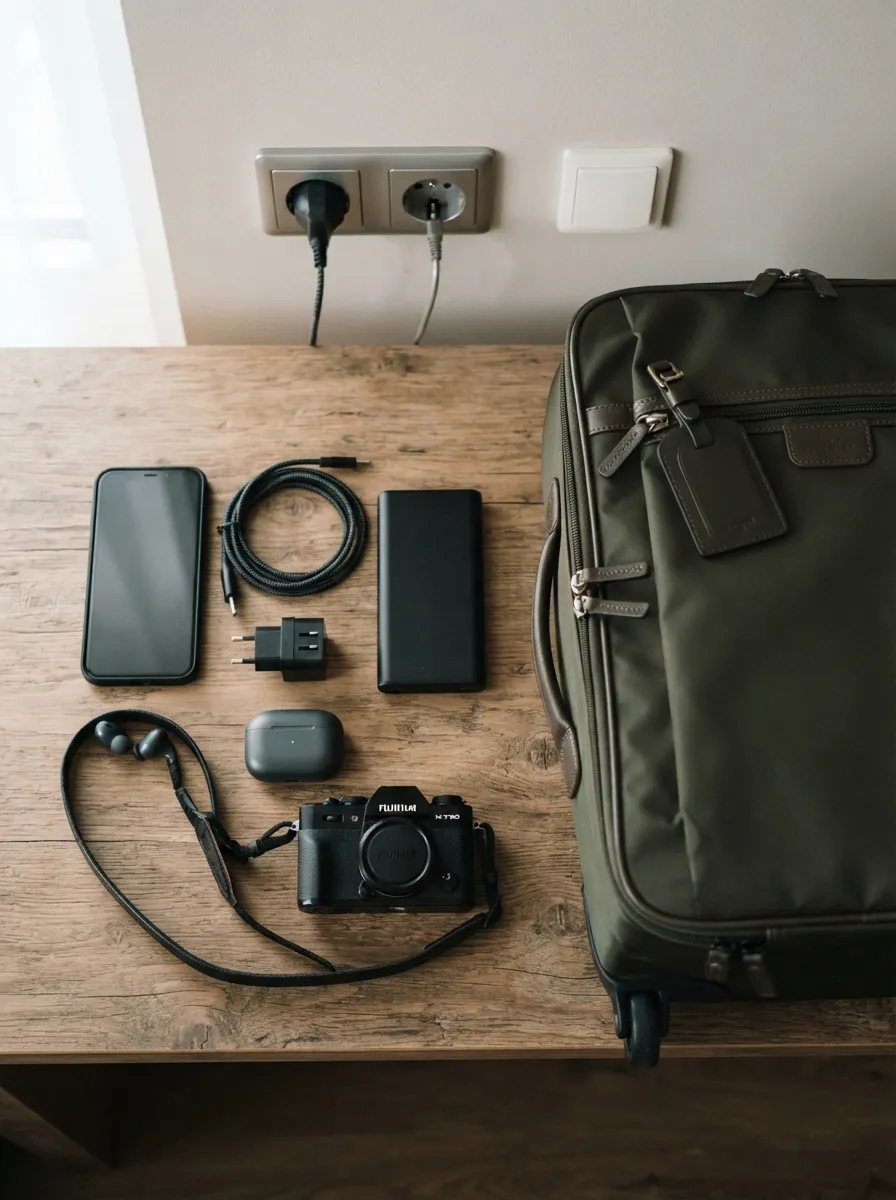
Most travelers need surprisingly little:
- Smartphone
- Charging cable
- Power adapter
- Power bank
- Earbuds
- Camera if photography matters
- Laptop only when genuinely necessary
Do You Need a European Plug Adapter?
Usually, yes, if your home-country plug differs from the destination socket.
Many continental European destinations use Type C and related sockets, while the UK and Ireland use Type G. Switzerland has its own Type J configuration, although some two-pin European plugs may fit.
A compact multi-country adapter is useful when visiting several countries.
Adapter vs. voltage converter
These are different things.
A plug adapter changes the physical plug shape.
A voltage converter changes electrical voltage.
Many modern phone and laptop chargers accept 100–240V automatically. Check the tiny input label on your actual device before plugging it in.
Hair dryers, curling irons and other high-power appliances require particular caution. If they are not dual-voltage, leave them home or use a suitable device at your destination.
Don’t Forget a Power Bank
A portable battery is extremely useful during long sightseeing days.
Your phone may simultaneously handle:
- Navigation
- Train tickets
- Boarding passes
- Hotel bookings
- Translation
- Photography
- Restaurant research
- Contactless payments
That workload eats batteries for breakfast.
Airline rules generally require spare lithium batteries and power banks to travel in carry-on baggage rather than checked luggage. Confirm your airline’s current capacity restrictions before flying.
Documents to Pack for a European Trip
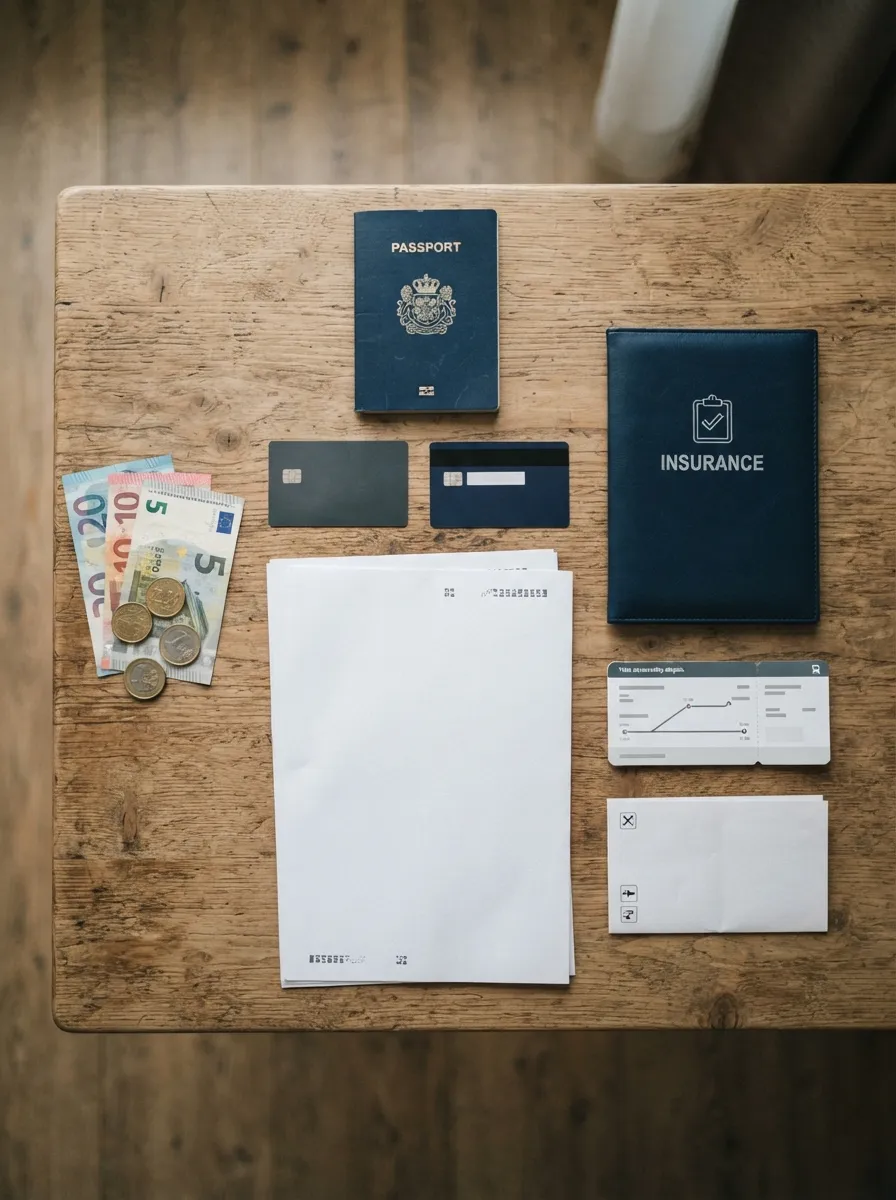
Create one secure document system.
Bring or securely store:
- Passport
- Required visas/authorizations
- Flight confirmation
- Hotel reservations
- Travel insurance details
- Train reservations
- Rental-car documentation
- Driver’s license when needed
- Emergency contacts
The U.S. State Department recommends keeping copies of important travel documents separate from the originals and leaving another set with someone trusted.
For Americans entering the Schengen Area, the State Department says a passport should be valid for at least three months beyond the planned departure from the EU. Some destinations elsewhere require longer validity, so verify every country on your itinerary rather than applying one rule to all of Europe.
ETIAS and European Entry Changes for 2026–27
This matters if you’re packing for Europe later in 2026 or during 2027.
The EU’s Entry/Exit System (EES) is already being used for short-stay non-EU travelers entering participating European countries. It records information such as passport details, facial images, fingerprints and entry/exit information.
ETIAS is different.
As of August 2026, ETIAS is not yet operating, and travelers should not apply or pay anyone claiming to provide an active ETIAS authorization. The European Union says ETIAS is expected to begin in the last quarter of 2026, with the exact date to be announced in advance.
Once active, it will become a travel authorization requirement for eligible visa-exempt nationals visiting 30 participating European countries for short stays.
ETIAS WARNING
If you’re traveling later in 2026 or in 2027, recheck the official EU website shortly before departure. Do not purchase an “ETIAS” from an unofficial site simply because it appears high in search results.
Money and Cards
Bring at least two payment cards.
Ideally:
- Primary credit card
- Backup credit/debit card
- Small amount of local cash
Keep backup cards separately from your main wallet.
Notify your bank when necessary and understand:
- Foreign transaction fees
- ATM fees
- Daily withdrawal limits
Contactless payments are widespread across many European destinations, but cash remains useful for small businesses, markets, rural areas and emergencies.
Avoid carrying a large quantity of cash.
What NOT to Pack for Europe
This section can save more luggage space than any packing technique.
Usually leave behind:
Too many shoes
Two pairs are enough for most travelers.
Full-size toiletries
Buy replacements locally.
Excessive clothing
Laundry exists in Europe.
Valuable jewelry
It creates unnecessary worry.
Multiple heavy books
Use an e-reader or download reading material.
“Just in case” outfits
If the imagined situation requires the sentence “perhaps we’ll unexpectedly attend something formal,” the outfit can probably remain home.
Large amounts of cash
Use cards and ATMs strategically.
Unnecessary electronics
If you haven’t used the device during your normal life recently, Europe probably won’t awaken its hidden destiny.
What to Pack for European Train Travel
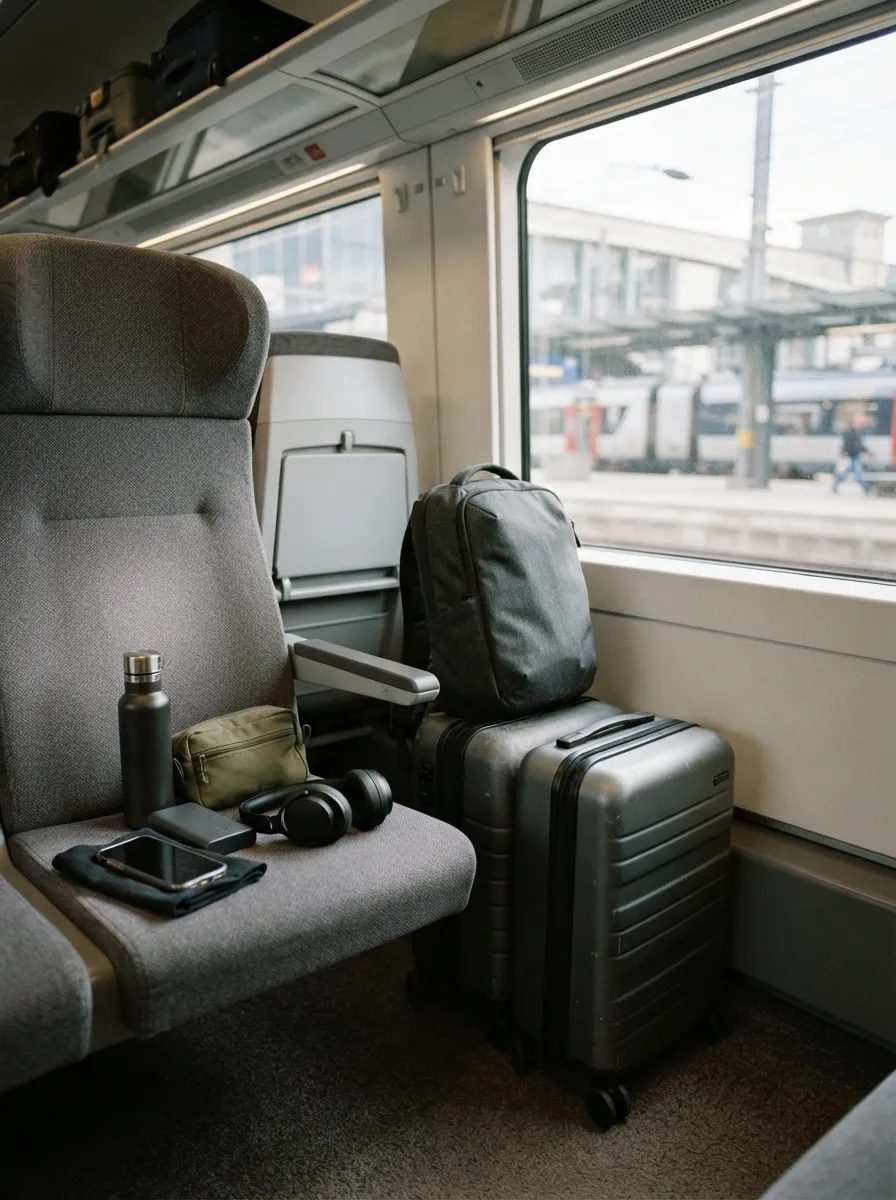
Train travel changes the luggage equation.
Unlike checking a suitcase at an airport, you usually handle your own luggage through:
- Stations
- Platforms
- Escalators
- Stairs
- Train doors
- Luggage racks
Pack something you can lift yourself.
For train-heavy trips, prioritize:
- Carry-on-sized luggage
- Backpack or compact roller
- Secure luggage tags
- Easy-access ticket pocket
- Refillable water bottle
- Small snacks
- Power bank
- Downloaded entertainment
Keep passports, wallets and electronics with you rather than in luggage stored farther away.
What to Pack for European Budget Airlines
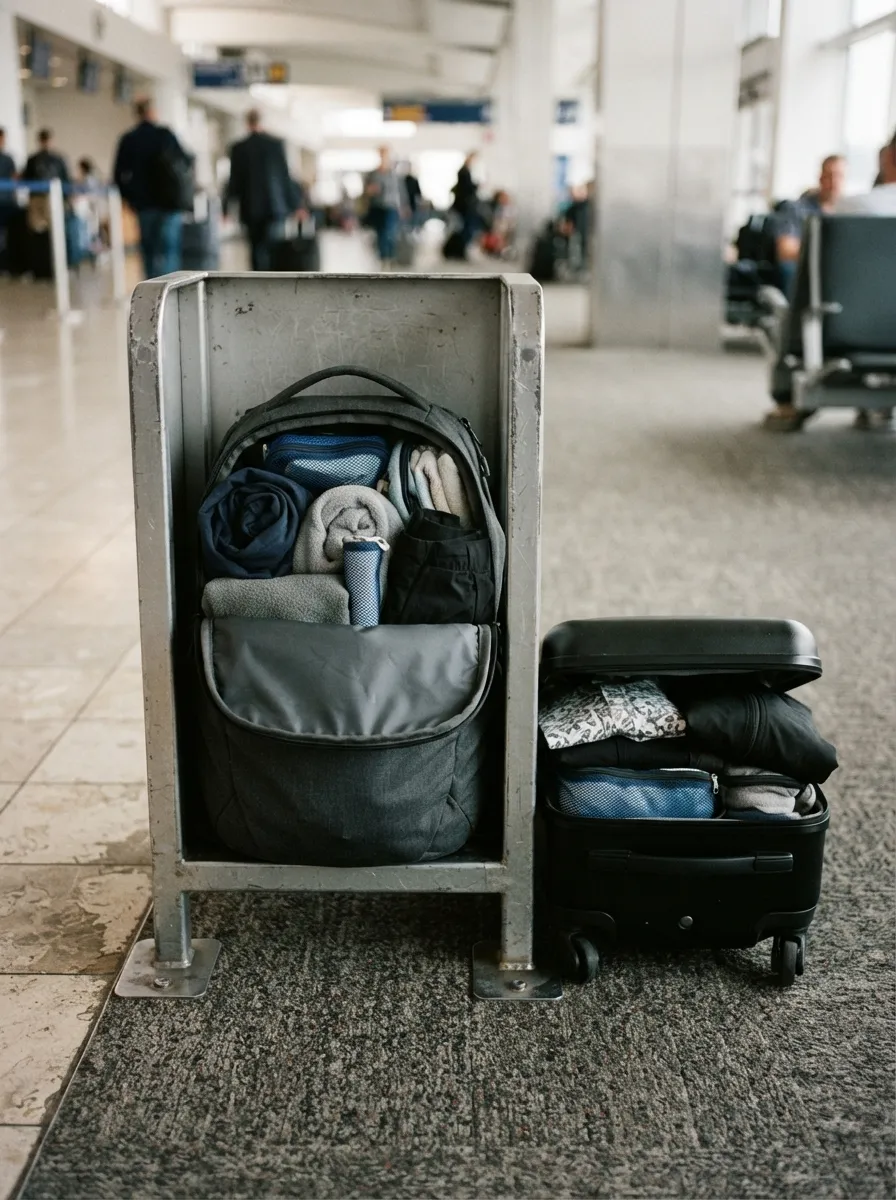
European low-cost carriers can have stricter baggage limits than travelers expect.
A bag considered “carry-on” by one airline may be too large for another.
Before every flight, check:
- Personal-item dimensions
- Cabin-bag dimensions
- Weight limit
- Checked-bag allowance
- Online baggage fees
- Airport baggage fees
Do this before packing, not while standing beneath the gate’s metal baggage sizer conducting emergency wardrobe negotiations.
Packing for European Churches and Religious Sites
Some religious sites require modest clothing.
For destinations containing churches, monasteries or other religious sites, carry:
- Lightweight layer
- Clothing covering shoulders where required
- Bottoms meeting local dress requirements
Rules differ by location, so check important attractions before arriving.
This takes almost no luggage space and prevents disappointment at the entrance.
What to Pack for Europe With Kids
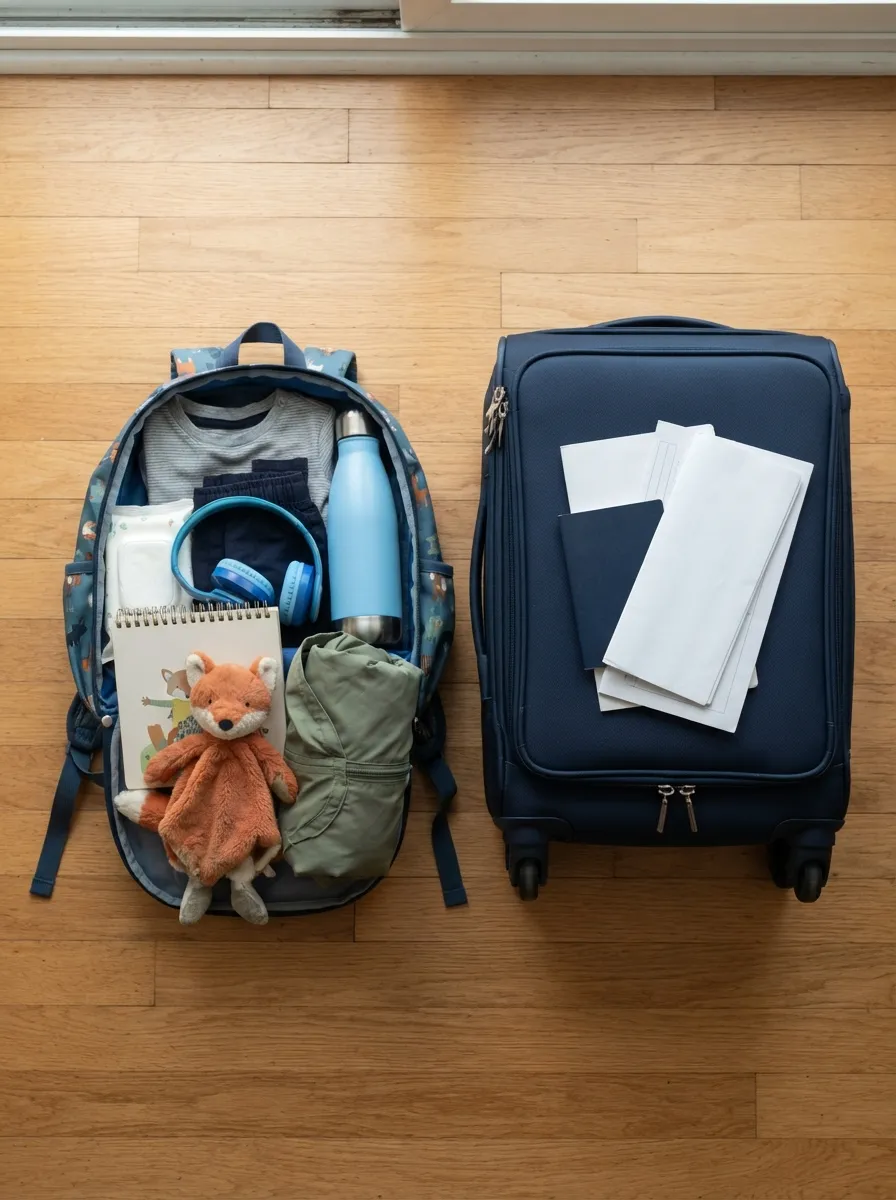
Family travel requires additional organization rather than dramatically more luggage.
Bring:
- Extra outfit in carry-on
- Snacks
- Entertainment
- Medication
- Refillable bottle
- Comfort item
- Compact wipes
- Child-sized headphones
- Weather layers
- Age-appropriate travel documents
Older children can carry a lightweight backpack containing some of their own essentials.
For age-specific advice, read the guide to travelling with kids when traveling with children aged 6–12.
Families with older children can use this travelling with teens guide for packing, independence and activity-planning ideas.
Carry-On Essentials You Should Never Check
Your checked suitcase can be delayed. Your essentials shouldn’t be inside it.
Always keep these in your carry-on:
- Passport
- Wallet
- Payment cards
- Prescription medication
- Phone
- Chargers
- Electronics
- Keys
- Travel documents
- Valuable items
- One change of clothes
- Essential toiletries within security limits
If traveling for a wedding, cruise or important event, carry anything difficult to replace on arrival whenever airline rules permit.
The 5-4-3-2-1 Europe Packing Method
Travelers who struggle with overpacking can use a simplified formula:
5 tops
4 bottoms
3 layers/accessories
2 pairs of shoes
1 versatile outer jacket
The exact numbers aren’t sacred. The value lies in forcing every item to coordinate with several others.
For a longer trip, wash and repeat rather than multiplying everything by the number of weeks.
Example 10-Day Europe Packing List
For a mild-weather city trip:
Clothing
- 5 T-shirts/tops
- 1 long-sleeve shirt
- 2 pants
- 1 pair jeans
- 1 optional shorts/skirt
- 1 sweater
- 1 waterproof jacket
- 7 underwear
- 6 pairs socks
- 1 sleepwear set
- 1 swimsuit
- 2 pairs shoes
Accessories
- Sunglasses
- Small day bag
- Reusable bottle
- Compact umbrella
Electronics
- Phone
- Charger
- Adapter
- Power bank
- Earbuds
Toiletries
- Travel-size personal products
- Sunscreen
- Essential medication
- Small first-aid kit
That is enough.
Example Two-Week Backpacking Europe Packing List
For backpackers:
Bag: 40L backpack
Clothes:
- 5 tops
- 2 pants
- 1 shorts
- 1 sweater
- 1 waterproof shell
- 6 underwear
- 5 socks
- Sleepwear
- Swimwear
Shoes:
- Walking sneakers
- Lightweight sandals
Gear:
- Packing cubes
- Laundry bag
- Small daypack
- Water bottle
- Combination lock where useful
- Microfiber towel if accommodation doesn’t provide one
Technology:
- Smartphone
- Adapter
- Charger
- Power bank
- Earbuds
Wash clothes approximately once per week.
Europe Packing Checklist
Documents
- Passport
- Required visa/authorization
- Travel insurance details
- Flight reservations
- Accommodation confirmations
- Train tickets
- Emergency contacts
- Copies of important documents
Clothing
- 5–7 tops
- 3–4 bottoms
- Sweater/fleece
- Waterproof jacket
- Underwear
- Socks
- Sleepwear
- Swimwear
- Weather-specific accessories
Footwear
- Comfortable walking shoes
- Second versatile pair
Toiletries
- Toothbrush
- Toothpaste
- Deodorant
- Shampoo/conditioner
- Skincare
- Sunscreen
- Personal hygiene items
Electronics
- Smartphone
- Charger
- European/multi-country adapter
- Power bank
- Earbuds
- Camera if needed
Health
- Prescription medication
- Pain relief
- Bandages
- Blister treatment
- Personal medical essentials
Daily Essentials
- Day bag
- Sunglasses
- Water bottle
- Packing cubes
- Laundry bag
- Small umbrella
Frequently Asked Questions About What to Pack for Europe Trip
What should I pack for a 10-day trip to Europe?
Pack approximately five to seven tops, three or four bottoms, two pairs of shoes, underwear, socks, one sweater and a waterproof outer layer. Add weather-specific items based on your itinerary.
What should I pack for a two-week European trip?
You don’t need two weeks of clothing. Pack approximately one week’s worth and do laundry halfway through the trip.
What should I pack for a trip to Europe for the first time?
Prioritize a valid passport, comfortable walking shoes, versatile layers, rain protection, a plug adapter, payment cards, medication and a small day bag.
What should I pack for a backpacking trip to Europe?
Use a 35–45L backpack and keep clothing minimal: around five tops, two or three bottoms, one warm layer, a waterproof shell and two pairs of shoes. Plan weekly laundry.
Should I bring jeans to Europe?
Yes, if you normally wear them. One pair is enough for most trips because denim is relatively bulky and slow to dry.
How many shoes should I pack for Europe?
Two pairs are enough for most travelers: one excellent walking pair and one alternative suitable for your itinerary.
Do I need a plug adapter?
Usually, yes. Plug types differ between continental Europe, the UK, Ireland and some other destinations. Check every country on your itinerary.
Do I need a voltage converter?
Often not for modern phone and laptop chargers that accept 100–240V, but always read the input rating on the device. High-power appliances require extra caution.
Should I take a carry-on or checked bag?
A carry-on is ideal for many 7–14 day city trips. Winter vacations, ski trips and family travel may justify checked luggage.
Are packing cubes worth it?
Yes, particularly for multi-city trips. They improve organization even though they don’t reduce luggage weight.
Should I bring cash to Europe?
Bring or withdraw a modest amount. Cards and contactless payments are widely accepted in many destinations, but cash remains useful.
What should I wear in Europe?
Wear what makes you comfortable. Prioritize clean, versatile clothing and excellent walking shoes rather than trying to imitate an imagined “European” wardrobe.
What should I pack for European train travel?
Pack luggage you can lift yourself, plus water, snacks, a power bank, downloaded tickets and a small valuables bag that remains with you.
Is ETIAS required for Europe in 2026?
Not yet as of August 2026. The EU says ETIAS is expected to begin during the last quarter of 2026, with the precise date still to be announced.
What is the biggest Europe packing mistake?
Overpacking. Heavy luggage becomes particularly frustrating during railway transfers, cobblestone walks, stairs and frequent hotel changes.
Final Thoughts: Pack Less and Experience More
When deciding what to pack for Europe trip, the best question isn’t “What might I possibly need?”
Ask instead: “What will I definitely use?”
Build your suitcase around comfortable walking shoes, versatile layers, a weatherproof outer layer, essential medication, basic toiletries, documents and a compact collection of electronics. Pack approximately one week’s worth of clothing even when the vacation lasts two or three weeks, then use laundry facilities along the way.
If you’re wondering what to pack for a European trip involving several countries, prioritize adaptability. London rain, Swiss mountain evenings and Italian summer afternoons require layers, not three separate wardrobes.
For travelers researching what to pack for a backpacking trip to Europe, become even more ruthless. A compact 35–45L backpack, two pairs of shoes and a small mix-and-match wardrobe can handle weeks on the road.
Most importantly, leave some empty space.
Europe has markets, bookstores, local crafts, clothing, food souvenirs and all manner of small treasures capable of following you home. A suitcase packed to maximum capacity before departure leaves no room for any of them.
And if your European trip is part of a bigger travel year, you can borrow ideas from experiences closer to home, from an unforgettable NYC helicopter experience to an overnight Niagara Falls trip.
Pack lighter than you think you need. Your shoulders, your railway transfers and the version of you climbing to a third-floor European hotel room will all be grateful.