Best European Christmas Markets to Visit in 2026: Magical Cities, Dates, Budgets & Travel Tips
Introduction
European Christmas markets are one of the most magical ways to experience winter travel. Historic squares glow with fairy lights, wooden stalls sell handmade ornaments, the smell of roasted chestnuts fills the streets, and cities feel like real-life holiday postcards.
The best part is that every market has its own personality. Some are grand and famous, like Vienna and Strasbourg. Some feel traditional and historic, like Nuremberg and Dresden. Others are romantic, snowy, budget-friendly, or perfect for Pinterest-style photography.
This guide covers the best European Christmas markets to visit in 2026, including where to go, when to visit, what to do, how much to budget, safety advice, packing tips, transportation tips, mistakes to avoid, and the most beautiful photo spots.
Recommended Travel Items for Your Trip
Why This Travel Topic Is Worth Planning
Christmas market trips look simple at first, but the best experiences require early planning. Hotels near the main squares can sell out quickly, weekend crowds can be intense, and some markets close before Christmas Eve while others continue into early January.
Planning ahead helps you choose the right destination for your travel style. Germany and Austria are excellent for classic market traditions. France is perfect for fairytale towns and charming streets. Central and Eastern Europe can offer better value. Northern Europe brings snowy scenery, cozy lights, and a more wintery atmosphere.
For Pinterest travelers, this topic is also ideal because Christmas markets are naturally visual. Think decorated streets, festive food, cozy outfits, warm drinks, charming hotels, and romantic winter city breaks.
Best Time to Go
The best time to visit European Christmas markets in 2026 is usually from late November to mid-December. This period gives you the strongest festive atmosphere while avoiding the absolute final-week rush.
If you want lower hotel prices and fewer crowds, visit during weekdays in late November or early December. If you want the most festive energy, visit in the second and third weeks of December. If you want markets after Christmas, choose places such as Vienna, Prague, Brussels, Tallinn, Copenhagen, Innsbruck, or Colmar, where at least some festive attractions often continue after December 24.
Best Months for 2026 Christmas Markets
| Month | What to Expect | Best For |
|---|---|---|
| Mid-November 2026 | Early markets begin in some cities | Lower crowds, early festive trips |
| Late November 2026 | Most major markets open | Good value, fresh decorations |
| Early December 2026 | Strong atmosphere, manageable crowds on weekdays | First-time visitors |
| Mid-December 2026 | Peak Christmas feeling | Couples, families, photographers |
| Late December 2026 | Some markets close before Christmas Eve; others continue | New Year trips, winter city breaks |
| Early January 2027 | Limited markets remain open | Tallinn, Prague, Brussels, Tivoli, Innsbruck |
Quick Travel Overview Table
| Destination | Best For | Typical 2026 Market Season | Suggested Stay | Budget Level |
|---|---|---|---|---|
| Vienna, Austria | Grand festive atmosphere | Mid-November to late December/early January | 3–4 days | Mid to high |
| Strasbourg, France | Classic fairytale Christmas | Late November to Dec 24 | 2–3 days | Mid |
| Prague, Czech Republic | Beautiful architecture + value | Late November to early January | 3 days | Mid |
| Cologne, Germany | Cathedral views + multiple markets | Mid/Late November to Dec 23 | 2–3 days | Mid |
| Nuremberg, Germany | Traditional German market | Nov 27 to Dec 24 | 2 days | Mid |
| Dresden, Germany | Historic market culture | Nov 25 to Dec 24 | 2 days | Mid |
| Budapest, Hungary | Food, lights, value | Mid-November to late December/early January | 3 days | Budget to mid |
| Tallinn, Estonia | Medieval winter scenery | Late November to early January | 2–3 days | Mid |
| Brussels, Belgium | Food + light shows | Late November to early January | 2–3 days | Mid |
| Copenhagen, Denmark | Cozy Tivoli magic | Mid-November to early January | 3 days | High |
| Colmar, France | Fairytale Alsace streets | Late November to late December | 2 days | Mid |
| Krakow, Poland | Budget-friendly festive city | Late November to late December/early January | 2–3 days | Budget to mid |
| Innsbruck, Austria | Alpine Christmas views | Mid-November to early January | 2–3 days | Mid |
| Riga, Latvia | Baltic charm + value | Late November to early January | 2–3 days | Budget to mid |
| Salzburg, Austria | Music, old town, romance | Late November to late December | 2–3 days | Mid to high |
1. Vienna, Austria
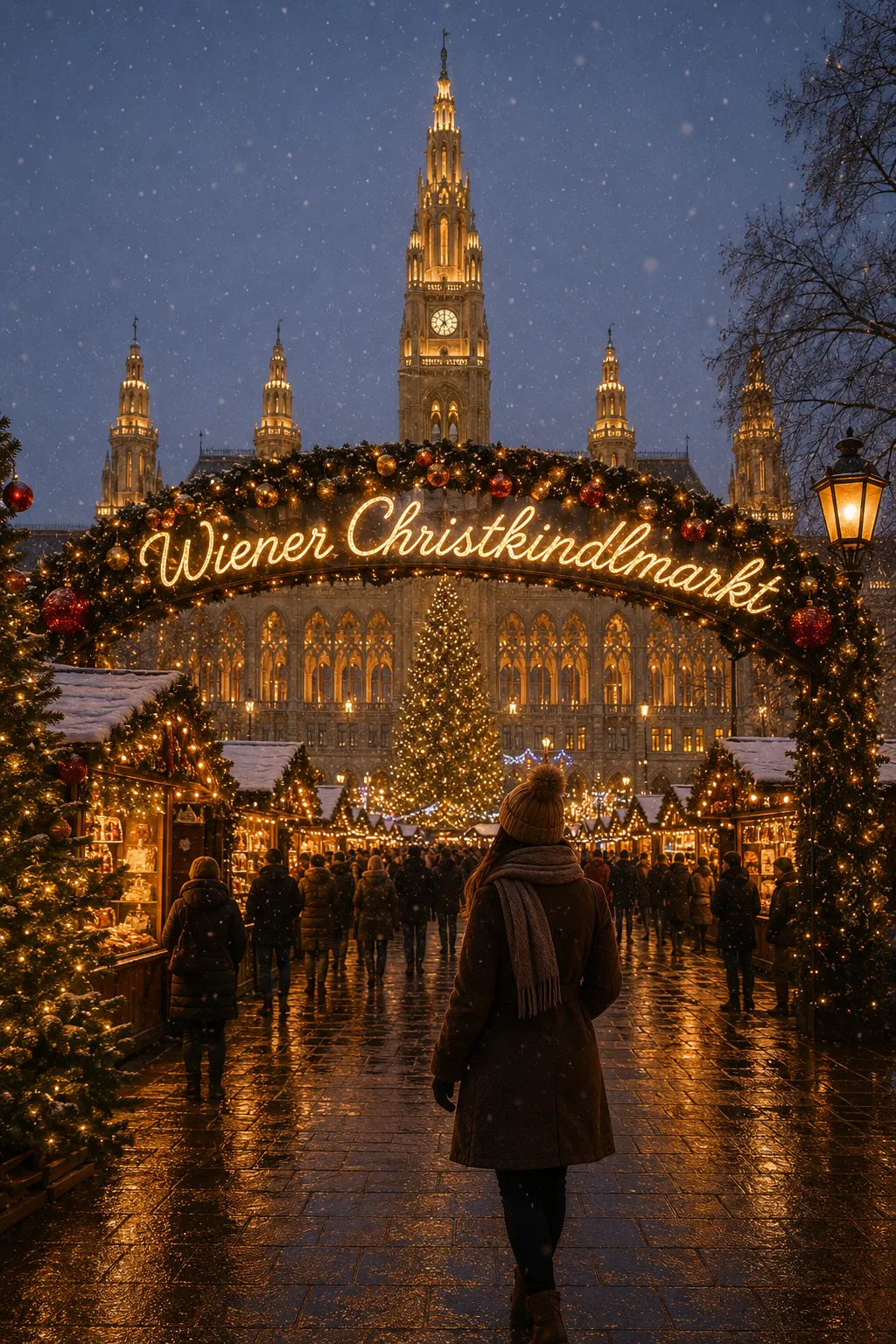
Vienna is one of the most elegant Christmas market cities in Europe. The Austrian capital combines imperial buildings, glowing boulevards, classical music, palace backdrops, and beautifully designed market stalls.
Why Visit
Vienna is ideal if you want a grand Christmas market trip with many options in one city. You can visit the famous Rathausplatz market, stroll around Schönbrunn Palace, explore Belvedere Palace, and enjoy smaller craft-focused markets such as Spittelberg and Karlsplatz.
Best Time to Visit
The best time to visit Vienna’s Christmas markets is from late November to mid-December. Weekday evenings are atmospheric, but weekends can get busy around Rathausplatz and the central markets.
Things to Do
Visit the Rathausplatz Christmas Market, go ice skating near City Hall, explore Schönbrunn Palace, warm up in a traditional coffee house, attend a classical concert, and walk along the decorated streets near Graben and Kärntner Strasse.
Estimated Budget
Plan around €100–€180 per day, depending on hotel choice. Budget travelers can reduce costs by staying outside the historic center and using public transport.
Safety Tips
Vienna is generally easy to navigate, but crowded markets can attract pickpockets. Keep your phone and wallet zipped away, especially near busy food stalls and metro stations.
How Many Days to Spend
Spend 3 to 4 days in Vienna if you want to visit several markets, palaces, coffee houses, and winter attractions without rushing.
Best Photo Spots
Rathausplatz entrance arch, Schönbrunn Palace market, Belvedere Palace reflections, Graben Christmas lights, and Spittelberg’s narrow lanes.
Who It Is Best For
Vienna is best for couples, families, first-time Christmas market travelers, luxury winter trips, and anyone who loves elegant city breaks.
2. Strasbourg, France
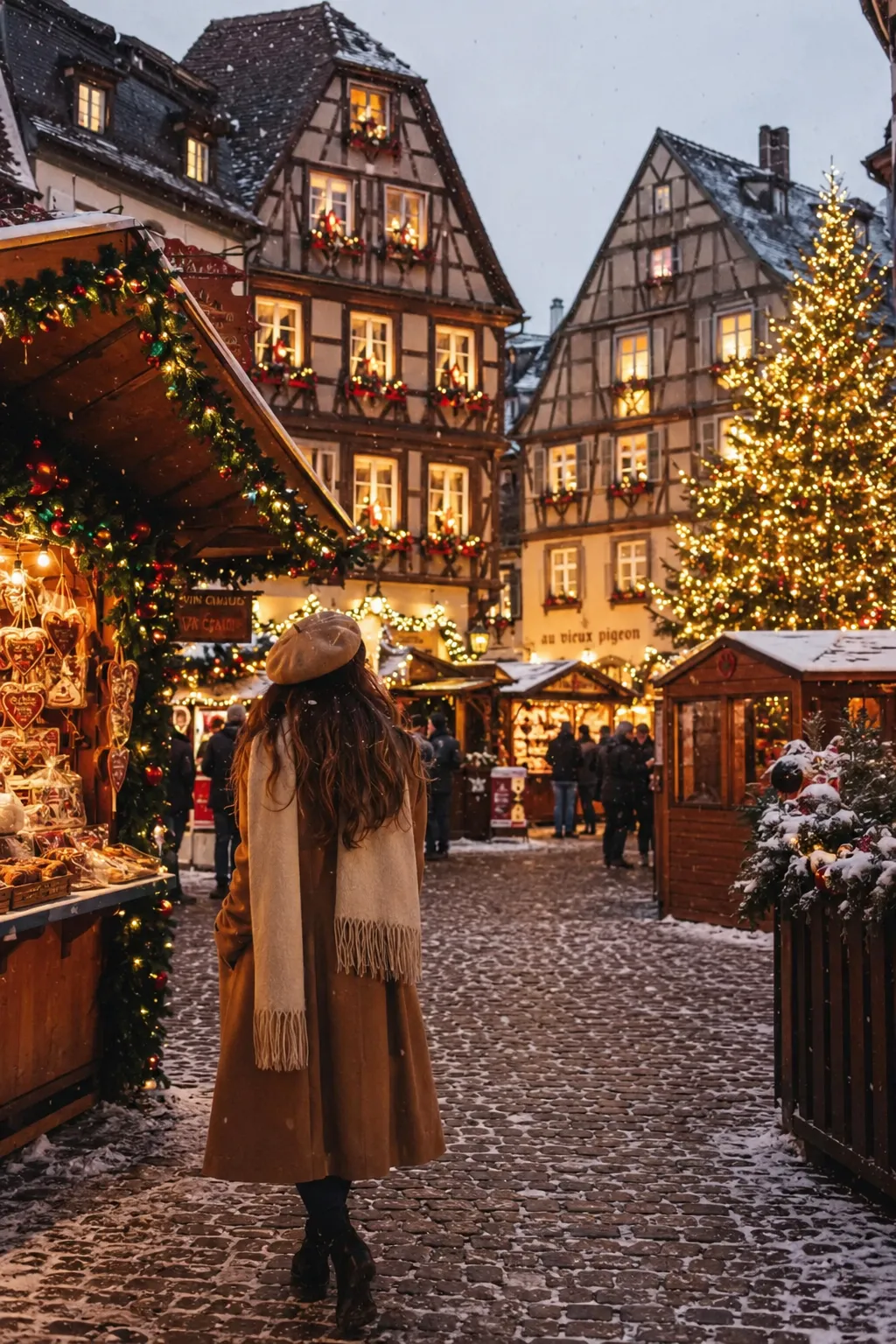
Strasbourg is often called one of Europe’s most iconic Christmas destinations, and it is easy to see why. Its half-timbered houses, glowing streets, and festive squares create a storybook atmosphere.
Why Visit
Strasbourg is perfect for travelers who want a classic Christmas market experience in a beautiful old town. The city has multiple themed markets, charming lanes, Alsatian food, and one of the most famous Christmas trees in Europe.
Best Time to Visit
Visit in late November or early December for fewer crowds. December weekends can be extremely busy, especially around Place Kléber and the cathedral.
Things to Do
Explore the markets around Place Kléber, Strasbourg Cathedral, Place Broglie, and Petite France. Try bredele cookies, tarte flambée, vin chaud, and local Alsatian specialties. Take a canal-side walk through Petite France for quieter views.
Estimated Budget
Expect around €80–€150 per day. Strasbourg can be expensive during peak weekends, so booking accommodation early is important.
Safety Tips
Security checks and crowd controls may be in place during busy periods. Carry only what you need, allow extra time to move around, and avoid bringing bulky luggage into market areas.
How Many Days to Spend
Spend 2 to 3 days in Strasbourg. Add an extra day if you want to visit nearby Alsace towns such as Colmar, Riquewihr, or Kaysersberg.
Best Photo Spots
Place Kléber Christmas tree, Strasbourg Cathedral market, Petite France bridges, Rue des Orfèvres decorations, and half-timbered shopfronts.
Who It Is Best For
Strasbourg is best for fairytale lovers, couples, photographers, food travelers, and anyone planning an Alsace Christmas itinerary.
3. Prague, Czech Republic
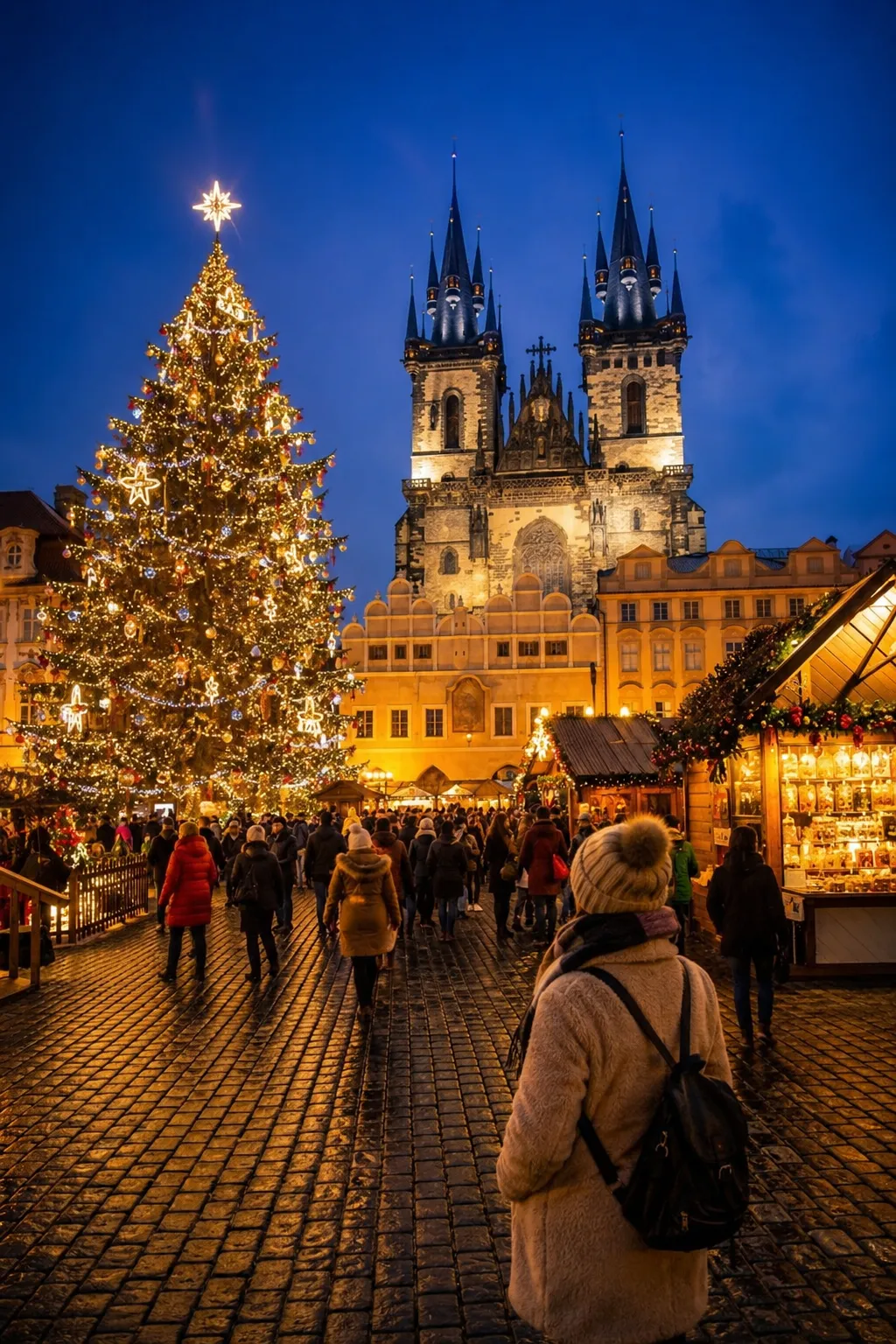
Prague is one of the most beautiful winter cities in Europe. Gothic towers, red rooftops, cobblestone lanes, and glowing market stalls make it a dream destination for Christmas travelers.
Why Visit
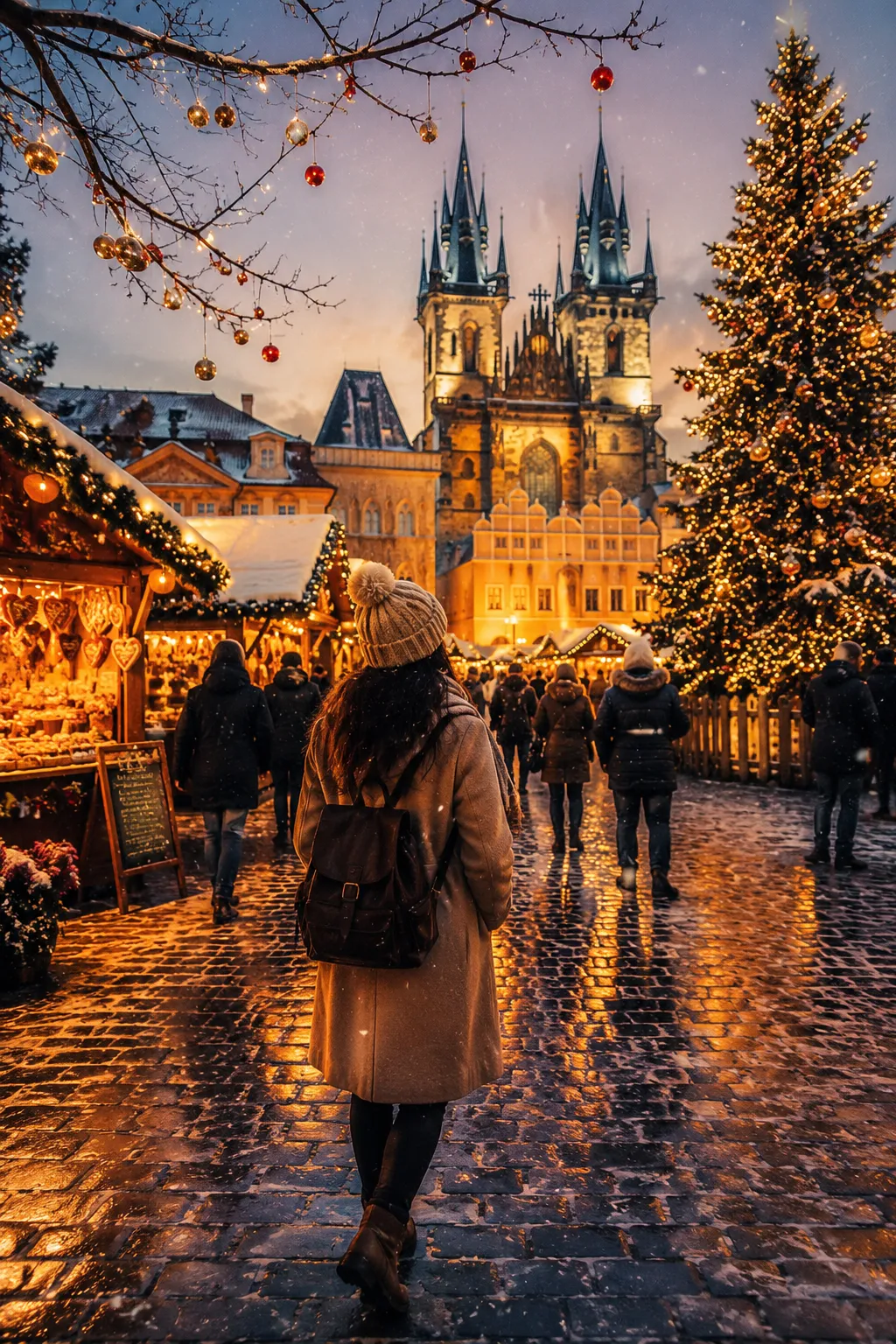
Prague offers a strong mix of atmosphere, architecture, food, and value. The Old Town Square market is especially photogenic, with the Church of Our Lady before Týn rising behind the Christmas tree.
Best Time to Visit
Early December is a great time to visit. The markets feel festive, but the city is usually easier to enjoy than during Christmas week or New Year.
Things to Do
Visit Old Town Square, Wenceslas Square, Náměstí Míru, Prague Castle, Charles Bridge, and the riverside viewpoints. Try trdelník, sausages, roasted ham, potato pancakes, and hot mulled wine.
Estimated Budget
Plan around €60–€120 per day. Prague is not as cheap as it once was in the tourist center, but it can still offer good value compared with many Western European capitals.
Safety Tips
Watch for pickpockets around Old Town Square, Charles Bridge, and busy tram stops. Use official taxis or ride-hailing apps, and check restaurant menus before ordering in the most tourist-heavy areas.
How Many Days to Spend
Spend 3 days in Prague. This gives you enough time for the main markets, the castle area, a scenic river walk, and a relaxed café break.
Best Photo Spots
Old Town Square from above, Charles Bridge at sunrise, Prague Castle viewpoints, Náměstí Míru church, and the Christmas tree in Old Town Square.
Who It Is Best For
Prague is best for first-time Europe travelers, couples, photographers, budget-conscious travelers, and travelers who want markets that continue into early January.
4. Cologne, Germany
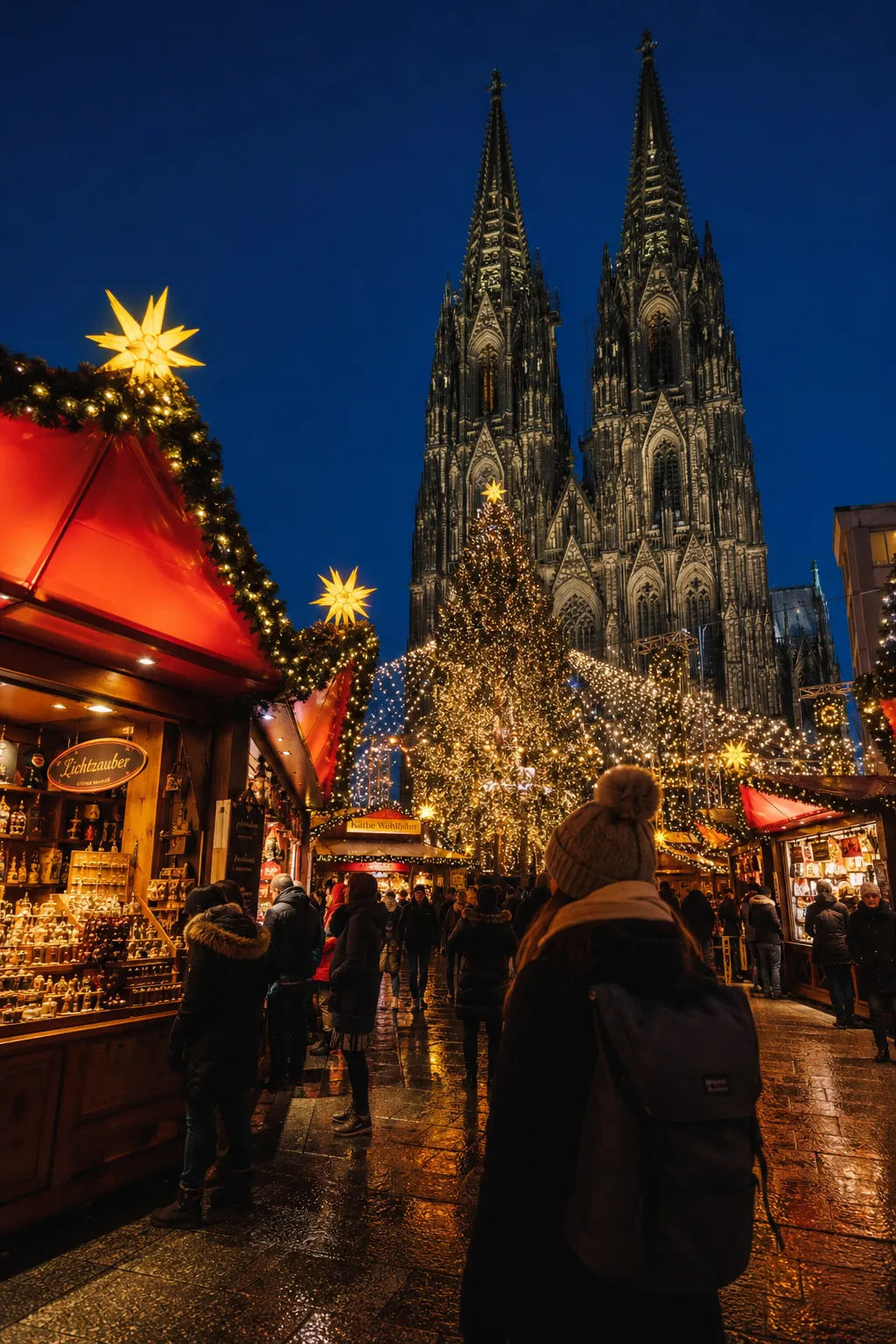
Cologne is a fantastic choice for travelers who want several different Christmas markets in one easy city. Its most famous market sits beside Cologne Cathedral, creating one of the most dramatic backdrops in Germany.
Why Visit
Cologne’s Christmas markets are spread across the city, each with a different theme. You can visit the cathedral market, the Old Market, the Harbour Market, the Angels’ Market, and other festive areas in a single trip.
Best Time to Visit
Go during weekdays in late November or early December for a more relaxed experience. The cathedral market becomes especially busy on weekends.
Things to Do
Visit the Cologne Cathedral Christmas Market, climb or photograph the cathedral, explore the Old Town, walk along the Rhine, and try local snacks such as bratwurst, potato pancakes, roasted nuts, and glühwein.
Estimated Budget
Plan around €90–€160 per day. Cologne has good public transport, and staying one or two train stops away from the center can reduce hotel costs.
Safety Tips
The area around the main train station and cathedral is very busy. Keep bags close, avoid leaving phones on tables, and use cross-body bags in crowded areas.
How Many Days to Spend
Spend 2 to 3 days in Cologne. Add one more day if you want a Rhine-side day trip or another nearby German market.
Best Photo Spots
Cologne Cathedral market, Hohenzollern Bridge, Alter Markt, Rhine riverfront, and the cathedral from across the river.
Who It Is Best For
Cologne is best for first-time Germany travelers, group trips, food lovers, and travelers who want multiple markets without changing hotels.
5. Nuremberg, Germany
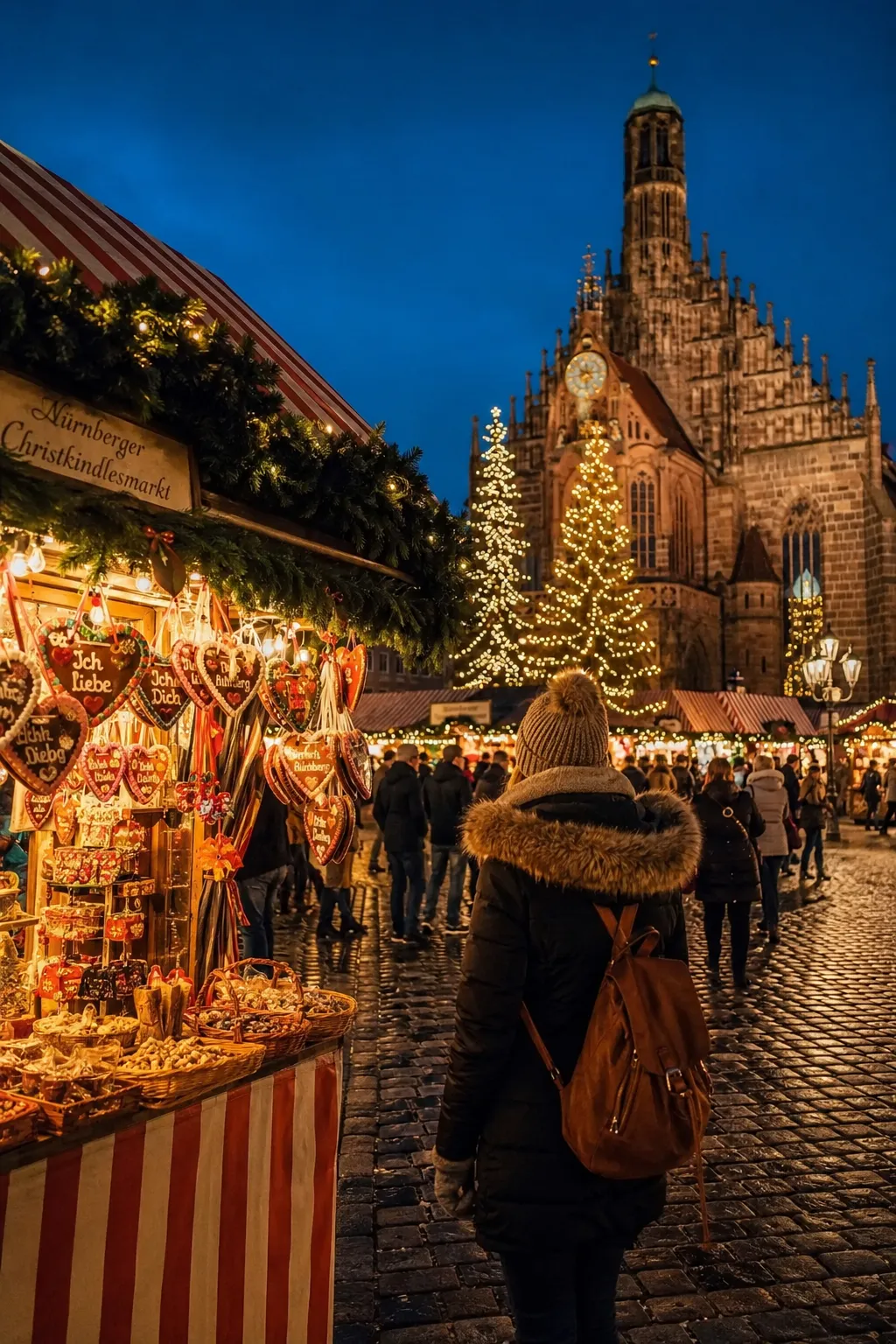
Nuremberg’s Christkindlesmarkt is one of Germany’s most traditional and famous Christmas markets. It is known for its historic setting, classic red-and-white stalls, handmade goods, and festive food.
Why Visit
Nuremberg is a strong choice if you want a traditional German Christmas market rather than a modern winter festival. The market has a strong focus on heritage, local products, and classic seasonal food.
Best Time to Visit
Early December is ideal. The opening weekend is exciting but crowded, while weekdays offer more space for browsing.
Things to Do
Explore the Hauptmarkt, visit the Children’s Christmas Market, try Nuremberg bratwurst, gingerbread, roasted almonds, and warm drinks. Walk up to Nuremberg Castle for city views.
Estimated Budget
Plan around €80–€140 per day. Two nights are usually enough, making it a good add-on to Munich, Bamberg, or Rothenburg.
Safety Tips
Crowds can build quickly around the main square. Choose a meeting point if traveling with family or friends, and keep children close in the busiest areas.
How Many Days to Spend
Spend 2 days in Nuremberg. This is enough for the main market, old town, castle, and a few relaxed meals.
Best Photo Spots
Hauptmarkt stalls, Frauenkirche backdrop, Nuremberg Castle viewpoint, and the red-and-white striped stalls from above.
Who It Is Best For
Nuremberg is best for traditional market lovers, families, history travelers, and people visiting Germany for the first time.
6. Dresden, Germany
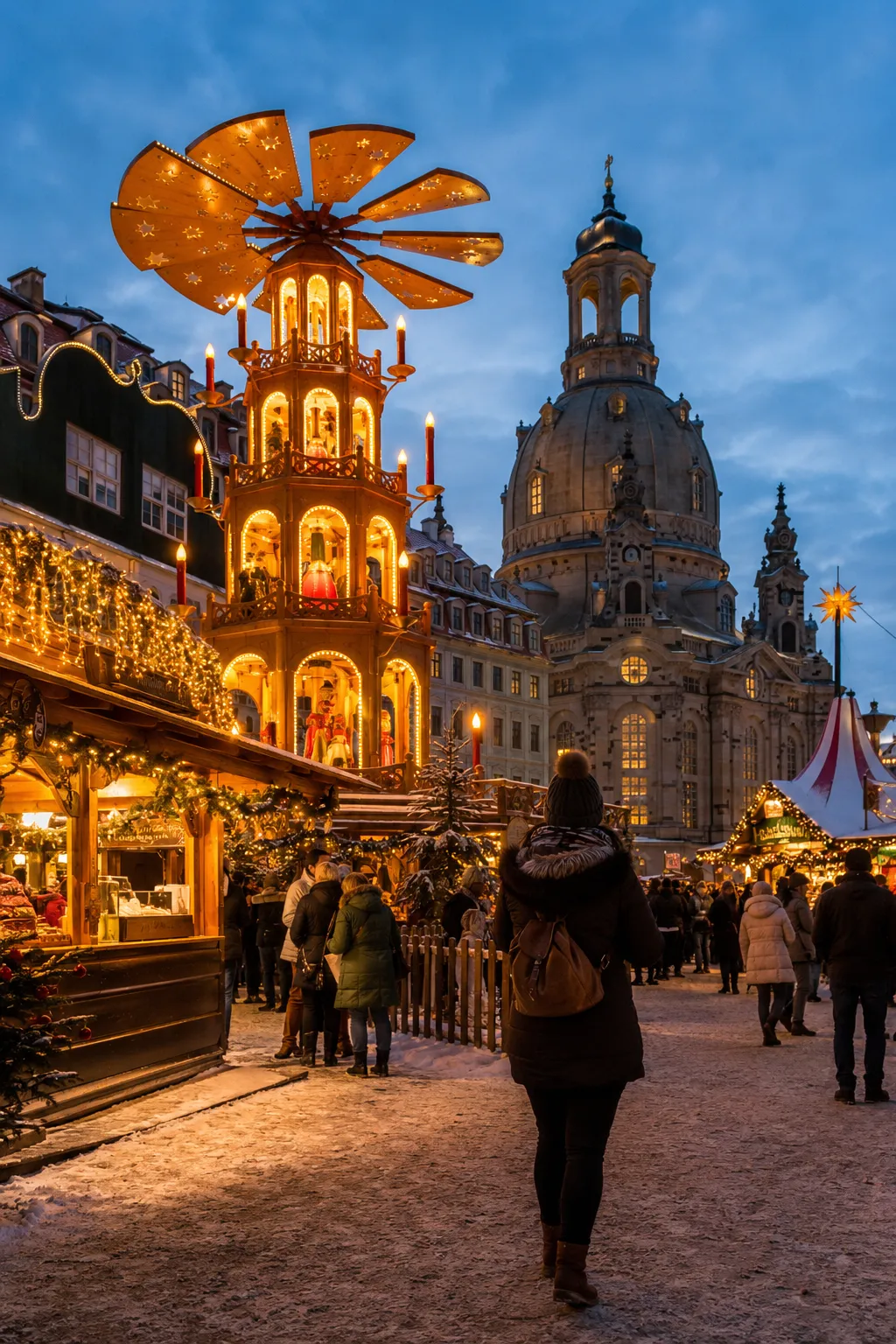
Dresden is home to the historic Striezelmarkt, one of Germany’s oldest and most atmospheric Christmas markets. The city also has several smaller markets, making it a rewarding winter destination.
Why Visit
Dresden combines Christmas market heritage with beautiful Baroque architecture. The Striezelmarkt is known for traditional crafts, festive pyramids, regional food, and a strong local identity.
Best Time to Visit
Late November or early December is ideal. Visit during the day for shopping and return in the evening for lights and atmosphere.
Things to Do
Visit the Striezelmarkt at Altmarkt, explore the Frauenkirche area, walk along Brühl’s Terrace, visit the Royal Palace, and try Dresdner Stollen, a traditional Christmas bread associated with the city.
Estimated Budget
Plan around €80–€150 per day. Dresden is often better value than Munich or Vienna, especially if you book early.
Safety Tips
Use trams for getting around at night and stay aware near busy squares. Winter pavements can be slippery, so wear shoes with good grip.
How Many Days to Spend
Spend 2 days in Dresden. Add a third day for museums or a day trip to Saxon Switzerland if weather allows.
Best Photo Spots
Altmarkt Striezelmarkt, Frauenkirche square, Brühl’s Terrace, Neumarkt, and the Elbe river view.
Who It Is Best For
Dresden is best for history lovers, craft shoppers, couples, and travelers who want a classic German market with a strong local feel.
7. Budapest, Hungary
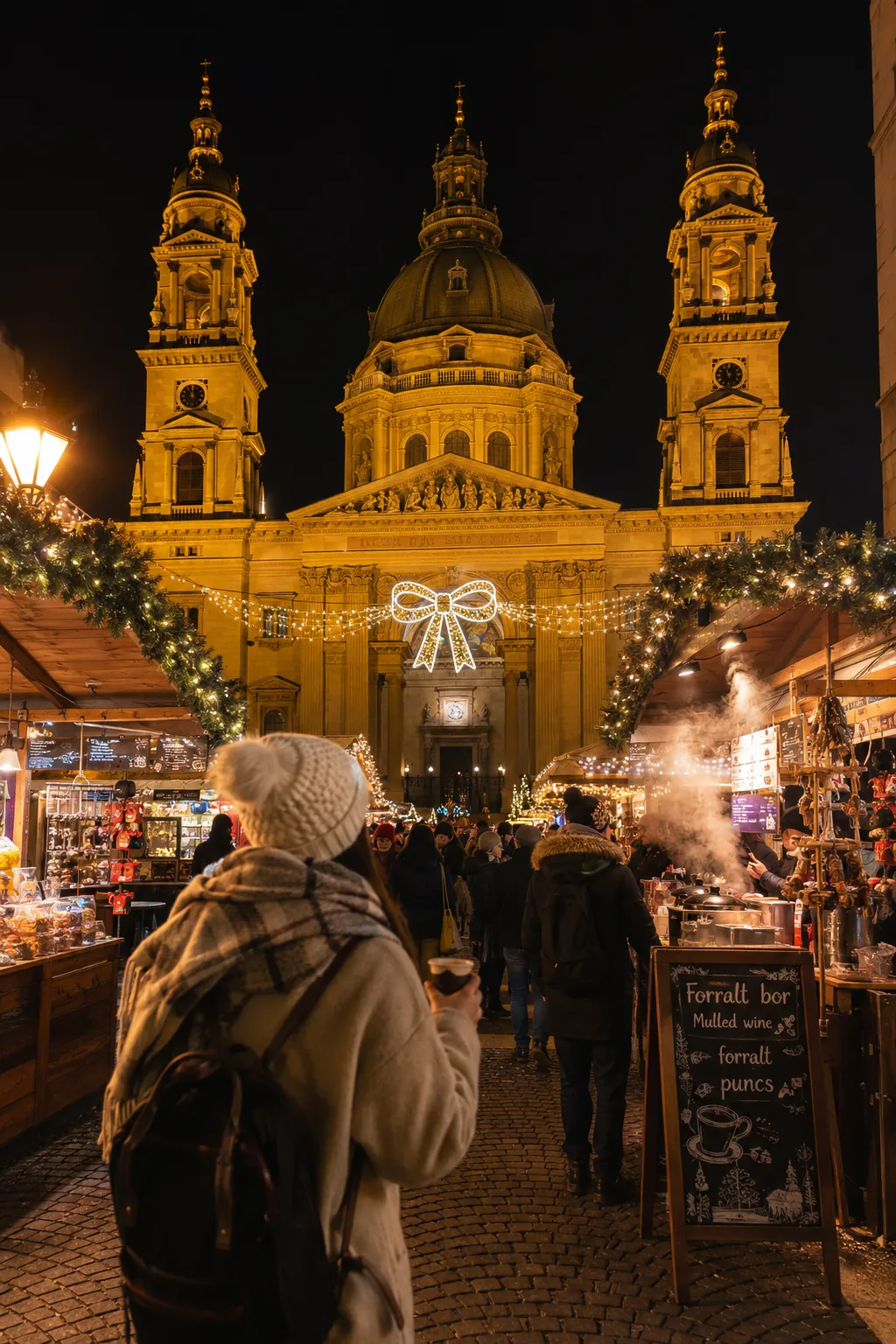
Budapest is one of the best European Christmas market destinations for travelers who want atmosphere, food, lights, and value. The city’s grand architecture makes every festive square feel dramatic.
Why Visit
Budapest has beautiful Christmas markets around Vörösmarty Square and St. Stephen’s Basilica. The basilica area is especially popular for lights, food stalls, and festive projections.
Best Time to Visit
Visit from late November to mid-December for strong festive energy. Budapest is also a good choice if you want a winter city break with thermal baths.
Things to Do
Visit the Basilica market, explore Vörösmarty Square, walk along the Danube, see the Parliament building at night, relax in thermal baths, and try chimney cake, goulash, lángos, and mulled wine.
Estimated Budget
Plan around €60–€120 per day. Budapest can be very good value if you book accommodation outside the most central tourist streets.
Safety Tips
Use official taxis or ride-hailing apps, watch belongings in crowded tram stops, and be cautious around overly touristy bars or unclear pricing.
How Many Days to Spend
Spend 3 days in Budapest. This gives you time for Christmas markets, thermal baths, Buda Castle, river views, and cozy cafés.
Best Photo Spots
St. Stephen’s Basilica market, Fisherman’s Bastion, Parliament from across the Danube, Chain Bridge, and Vörösmarty Square.
Who It Is Best For
Budapest is best for food lovers, budget-conscious travelers, couples, winter spa trips, and travelers who want a festive city with nightlife and architecture.
8. Tallinn, Estonia
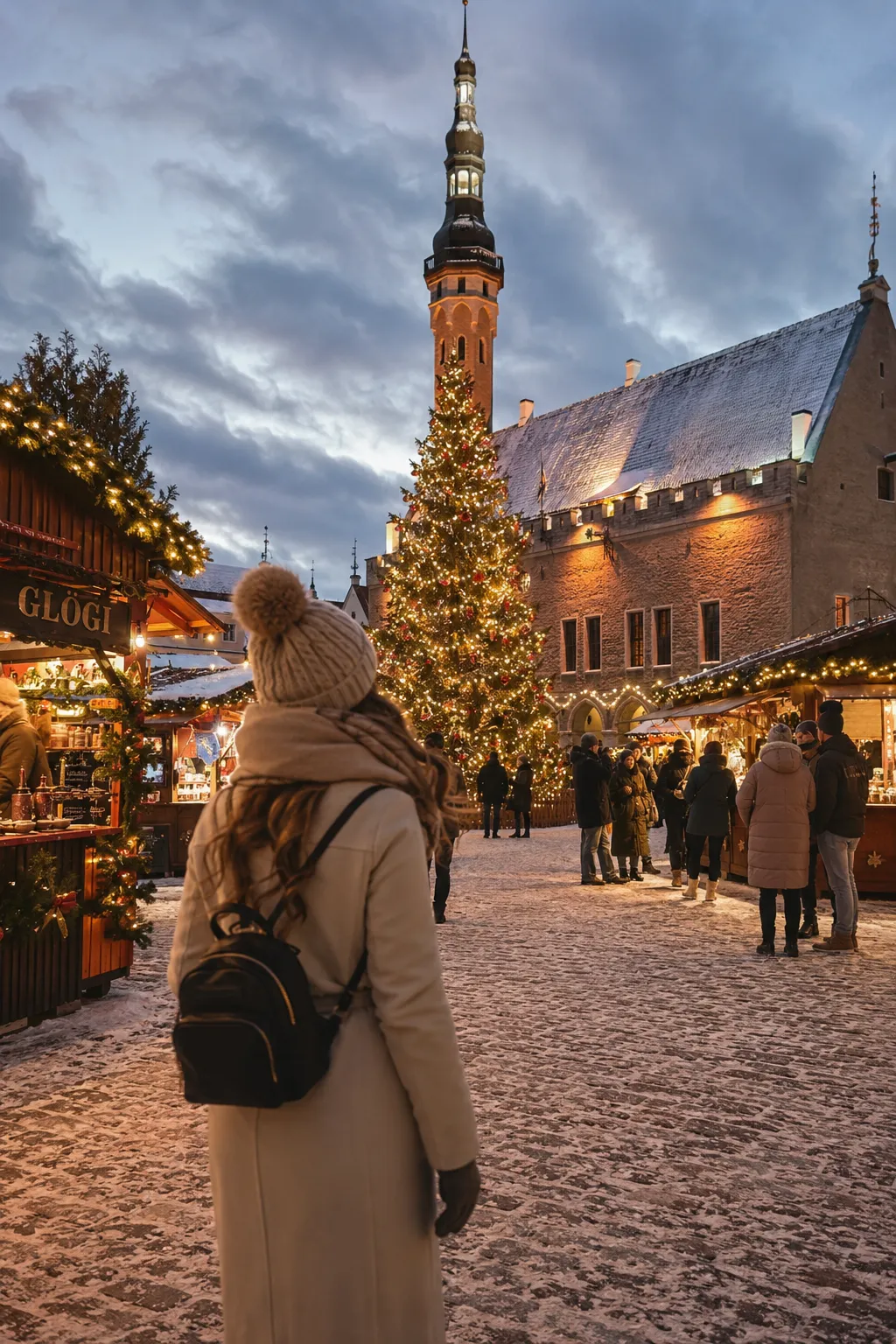
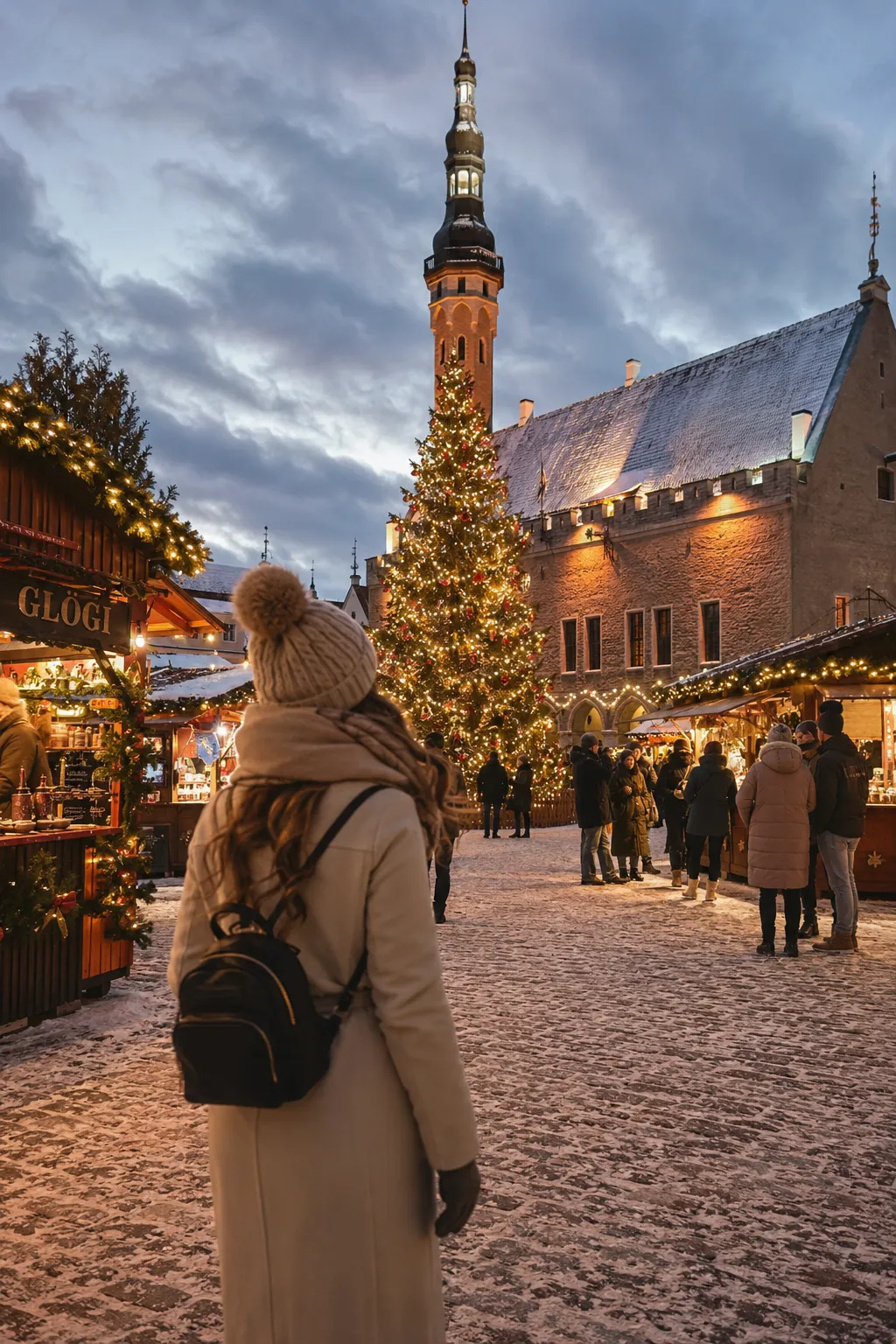
Tallinn feels like a medieval snow globe in winter. Its Christmas market takes place in the Town Hall Square, surrounded by pastel buildings, cobblestone streets, and old-world charm.
Why Visit
Tallinn is smaller than many major Christmas market cities, but that is part of its appeal. The setting is intimate, cozy, and extremely photogenic, especially if snow arrives.
Best Time to Visit
December is the best time for atmosphere. If you want a chance of snow and fewer Western Europe-style crowds, Tallinn is a strong choice.
Things to Do
Visit the Town Hall Square market, walk through the Old Town, climb to viewpoints such as Kohtuotsa and Patkuli, visit cozy cafés, and try Estonian winter food.
Estimated Budget
Plan around €70–€130 per day. Tallinn can be moderate in price, but winter accommodation near the Old Town should be booked early.
Safety Tips
Tallinn is compact and walkable, but cobblestones can be icy. Wear proper winter shoes and take care on steep old-town lanes.
How Many Days to Spend
Spend 2 to 3 days in Tallinn. Add a day if you want to take the ferry to Helsinki or explore more museums.
Best Photo Spots
Town Hall Square Christmas tree, Kohtuotsa viewpoint, Patkuli viewpoint, Viru Gate, and the narrow lanes of the Old Town.
Who It Is Best For
Tallinn is best for cozy winter trips, medieval city lovers, photographers, couples, and travelers looking for a quieter Christmas market destination.
9. Brussels, Belgium
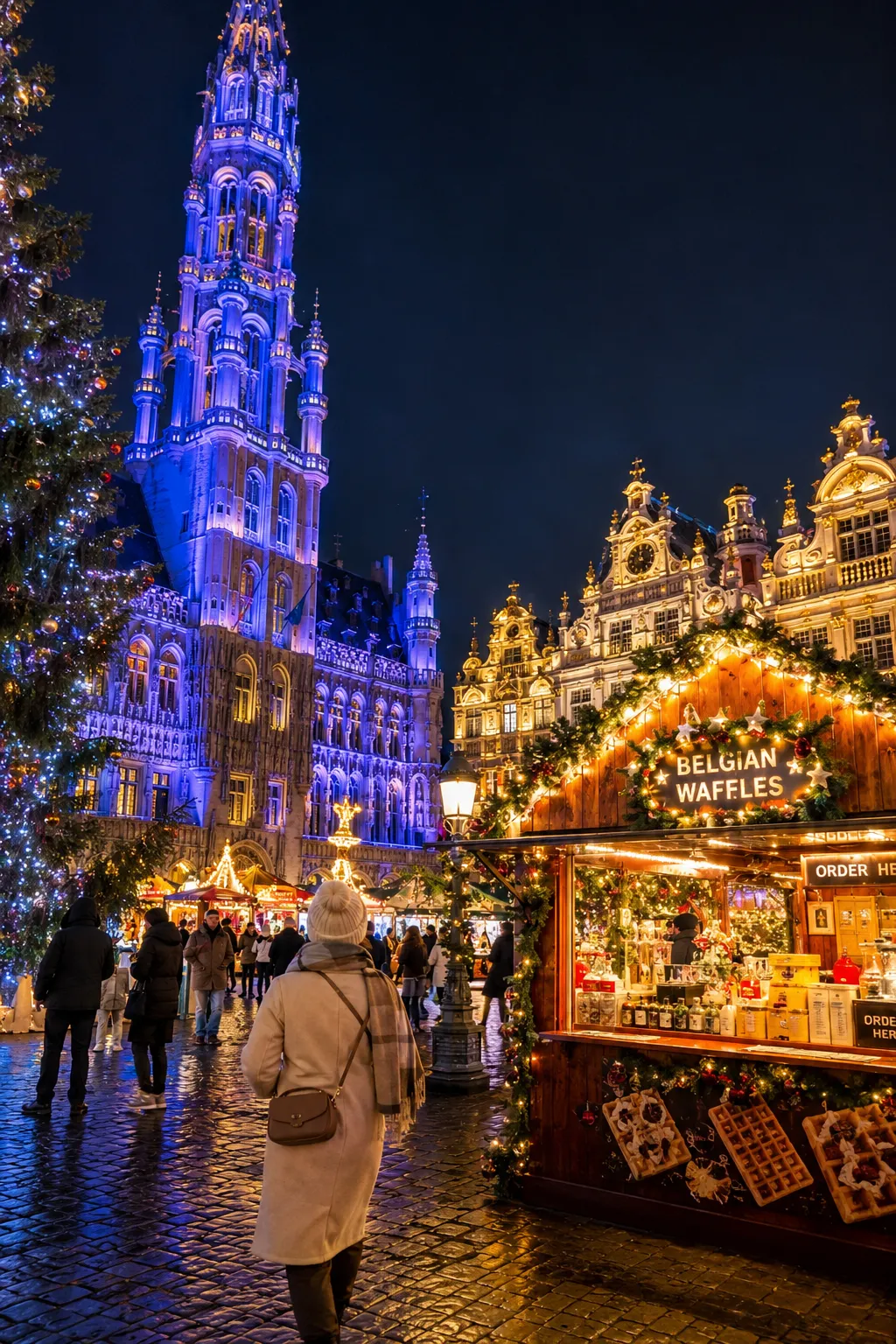
Brussels offers a lively Christmas experience with food, lights, markets, and a festive city-center route. The Winter Wonders event spreads across several central locations, making the city feel bright and active.
Why Visit
Brussels is great if you want more than one market square. You can enjoy the Grand-Place light show, food stalls around Sainte-Catherine, a Ferris wheel, Belgian waffles, chocolate, fries, and festive shopping.
Best Time to Visit
Early to mid-December is ideal. Visit Grand-Place after dark for the light displays, but expect crowds.
Things to Do
See the Grand-Place lights, walk through the Winter Wonders route, try Belgian waffles and chocolate, visit Sainte-Catherine, explore Galeries Royales Saint-Hubert, and take a chocolate shop tour.
Estimated Budget
Plan around €90–€160 per day. Food costs can rise quickly if you snack often, so mix market treats with casual local restaurants.
Safety Tips
Keep belongings close around crowded areas and public transport. Stay aware late at night near busy nightlife zones and train stations.
How Many Days to Spend
Spend 2 to 3 days in Brussels. Add an extra day for Bruges, Ghent, or Antwerp if you want a Belgium Christmas market itinerary.
Best Photo Spots
Grand-Place light show, Sainte-Catherine stalls, Galeries Royales Saint-Hubert, Mont des Arts, and the Ferris wheel area.
Who It Is Best For
Brussels is best for food lovers, families, weekend trips, chocolate fans, and travelers combining Belgium with France, Germany, or the Netherlands.
10. Copenhagen, Denmark
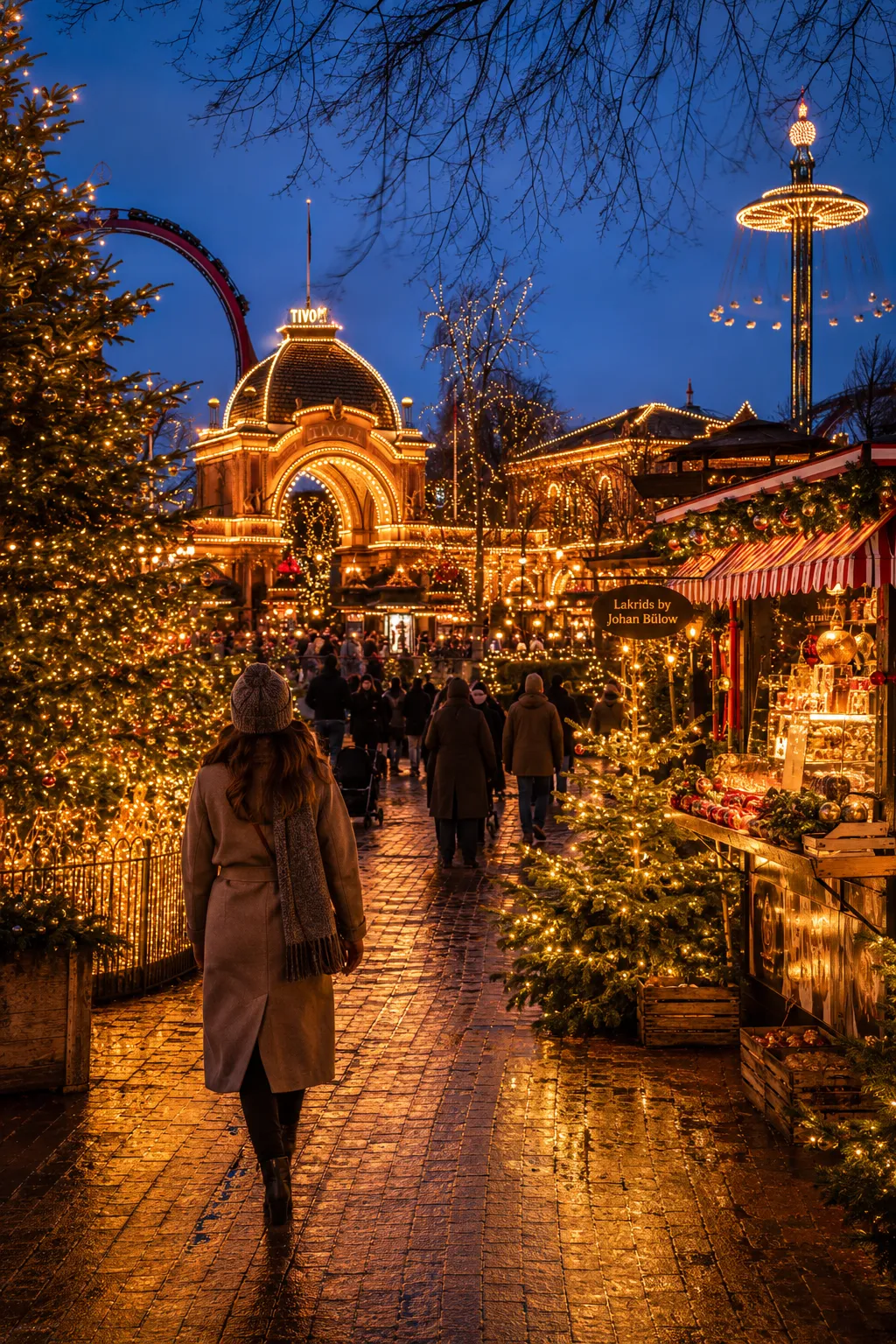
Copenhagen brings a cozy Scandinavian feeling to Christmas market travel. Tivoli Gardens is the highlight, with lights, rides, stalls, decorations, and a fairytale winter atmosphere.
Why Visit
Copenhagen is ideal if you want a polished, cozy, family-friendly Christmas trip. Tivoli Gardens feels like a festive theme park, while the city offers design shops, bakeries, canals, and hygge cafés.
Best Time to Visit
Visit from late November to mid-December for the best balance of decorations and manageable crowds. Evenings are especially beautiful at Tivoli.
Things to Do
Visit Tivoli Gardens, walk around Nyhavn, explore Kongens Nytorv, shop for Danish design gifts, try æbleskiver, drink hot chocolate, and enjoy cozy cafés.
Estimated Budget
Plan around €130–€220 per day. Copenhagen is one of the more expensive destinations on this list, so book flights and hotels early.
Safety Tips
Copenhagen is easy to explore, but cyclists move fast. Always check bike lanes before crossing and wear warm layers because wind can make temperatures feel colder.
How Many Days to Spend
Spend 3 days in Copenhagen. This gives you time for Tivoli, festive streets, food halls, museums, and relaxed winter walks.
Best Photo Spots
Tivoli Gardens lights, Nyhavn at blue hour, Kongens Nytorv decorations, Amalienborg area, and cozy café windows.
Who It Is Best For
Copenhagen is best for families, couples, design lovers, cozy winter travelers, and anyone who wants a premium Scandinavian Christmas experience.
11. Colmar, France
Colmar is one of the most charming Christmas market towns in Europe. Its colorful half-timbered houses, canals, lights, and small-town atmosphere make it a favorite for fairytale winter trips.
Why Visit
Colmar is smaller than Strasbourg but incredibly picturesque. It has several themed markets across the old town, making it easy to explore on foot.
Best Time to Visit
Visit on weekdays if possible. Colmar is very popular during December weekends, and the old-town lanes can feel crowded.
Things to Do
Explore the old town markets, walk through Little Venice, shop for ornaments, try Alsatian food, and visit nearby villages such as Eguisheim, Riquewihr, or Kaysersberg.
Estimated Budget
Plan around €80–€150 per day. Accommodation can be expensive in the old town, so consider staying nearby and arriving by train.
Safety Tips
The old-town streets are narrow and busy. Keep bags secure and avoid pushing through crowds with large luggage.
How Many Days to Spend
Spend 2 days in Colmar. Add extra days if you want a full Alsace Christmas villages itinerary.
Best Photo Spots
Little Venice, Rue des Marchands, Koïfhus area, decorated half-timbered houses, and canal bridges.
Who It Is Best For
Colmar is best for photographers, couples, fairytale-town lovers, and travelers planning an Alsace Christmas market route.
12. Krakow, Poland
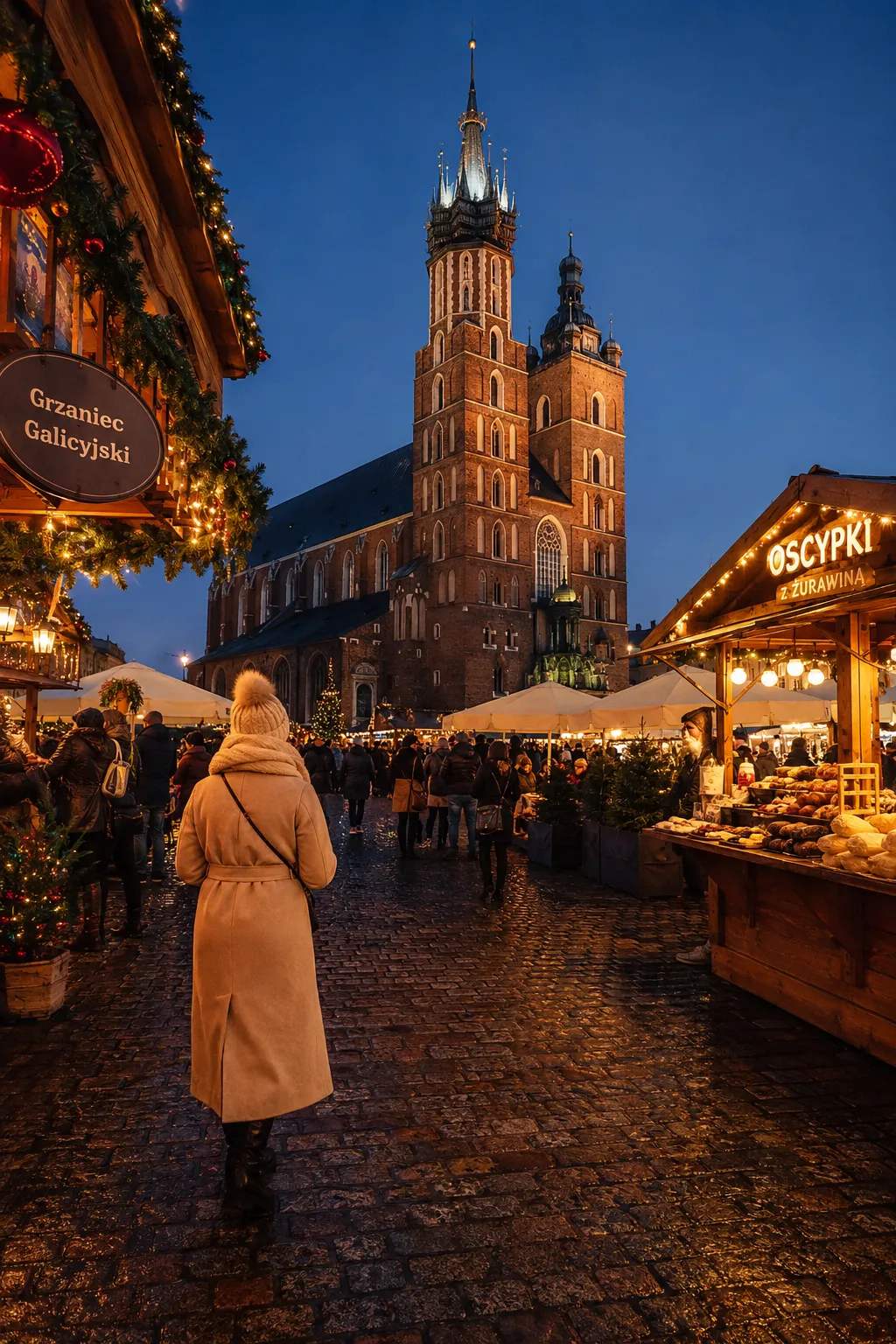
Krakow is a great Christmas market destination for travelers who want festive atmosphere, historic architecture, and better value. The main market takes place in Rynek Główny, one of Europe’s largest medieval squares.
Why Visit
Krakow offers a beautiful old-town setting, hearty Polish food, affordable hotels compared with many Western European cities, and a strong winter atmosphere.
Best Time to Visit
Early December is ideal. The market is festive, hotels can still be reasonable, and the city feels lively without the highest holiday rush.
Things to Do
Visit the Christmas market in the Main Market Square, explore Wawel Castle, walk through Kazimierz, try pierogi, oscypek cheese, Polish soups, gingerbread, and mulled wine.
Estimated Budget
Plan around €50–€110 per day. Krakow is one of the better-value options on this list, especially for food and accommodation.
Safety Tips
Use common sense in crowded tourist areas, especially around the Main Market Square and public transport. Winter ice can also be an issue on sidewalks.
How Many Days to Spend
Spend 2 to 3 days in Krakow. Add an extra day for museums, Wieliczka Salt Mine, or a more relaxed food-focused trip.
Best Photo Spots
Rynek Główny, Cloth Hall, St. Mary’s Basilica, Wawel Castle, Floriańska Street, and snowy side streets.
Who It Is Best For
Krakow is best for budget travelers, food lovers, history travelers, and people who want a beautiful Christmas market without the highest Western Europe prices.
13. Innsbruck, Austria
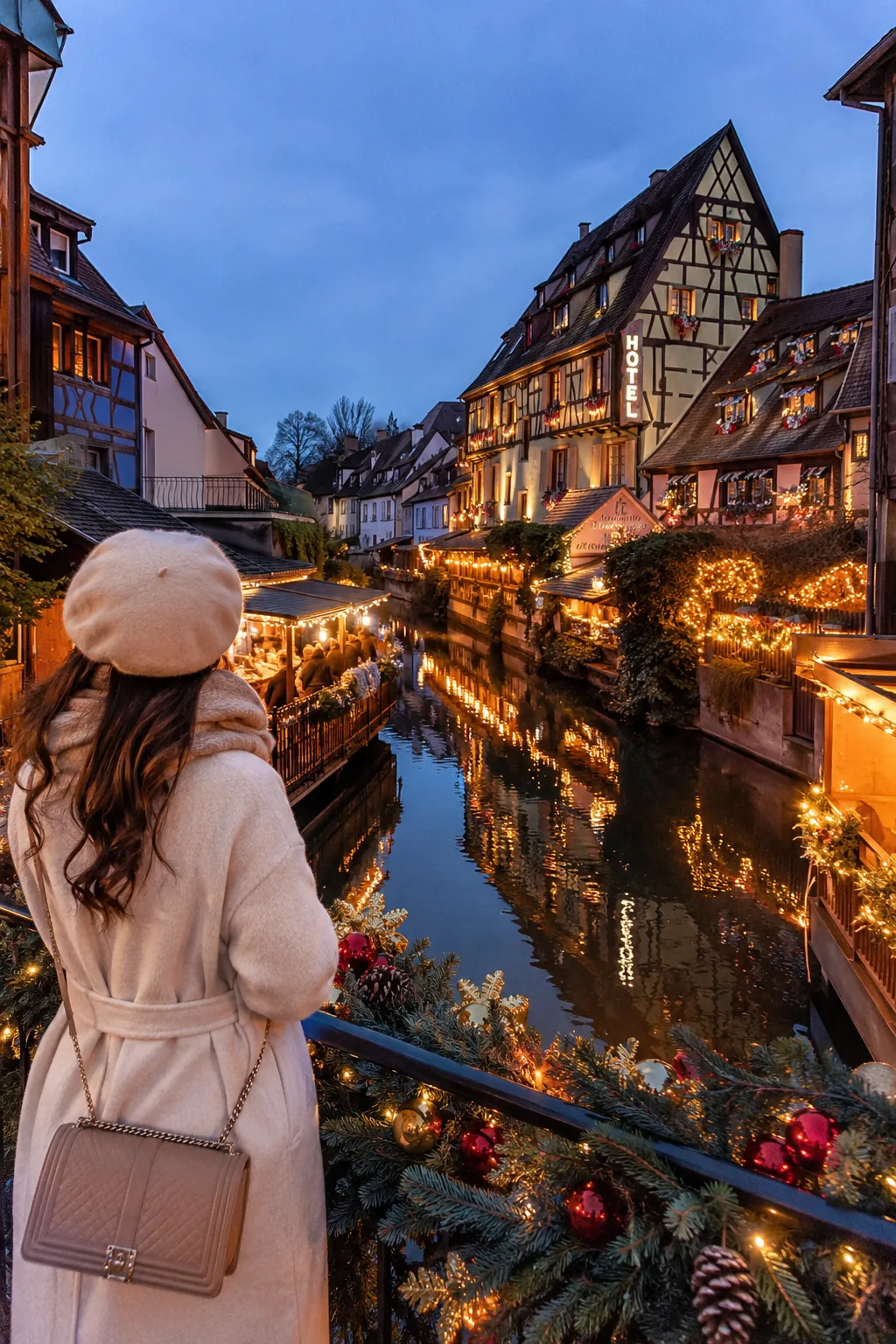
Innsbruck is one of the best European Christmas market destinations if you want mountain views with your festive lights. The city sits in the Alps, giving its markets a dramatic snowy backdrop.
Why Visit
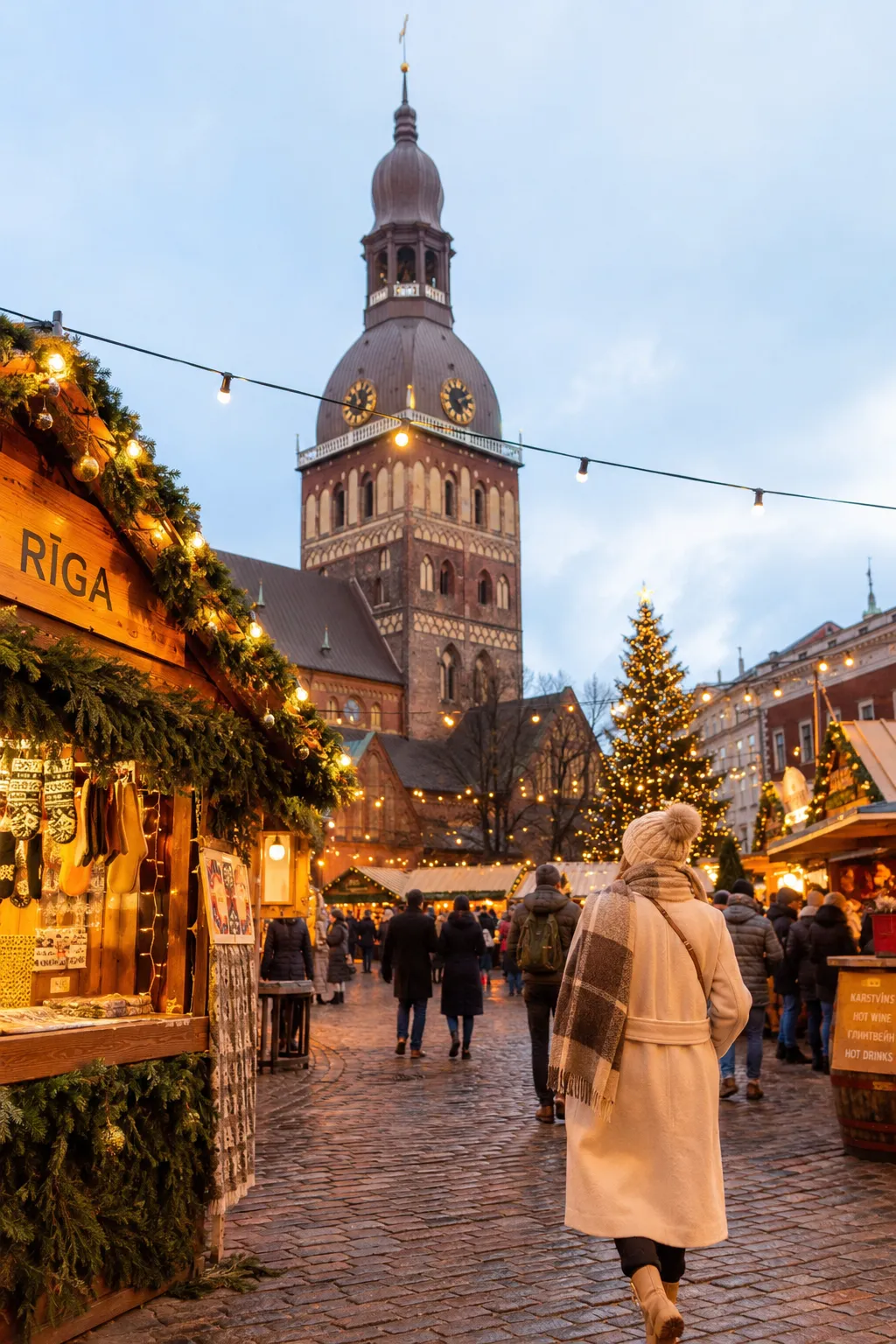
Innsbruck combines Christmas stalls, old-town charm, mountain scenery, and easy winter activities. It feels different from big-city markets because the Alps are always part of the view.
Best Time to Visit
Late November to mid-December is excellent. Some markets open earlier than many European destinations, while others continue into early January.
Things to Do
Visit the Old Town market, Maria-Theresien-Strasse, Hungerburg market, and the Marktplatz family market. Ride the Nordkette cable car for mountain views if weather is clear.
Estimated Budget
Plan around €90–€170 per day. Mountain activities can add costs, but public transport and walking make the city center easy.
Safety Tips
Dress for cold weather and icy surfaces. Check mountain weather before heading to viewpoints, and wear proper winter shoes.
How Many Days to Spend
Spend 2 to 3 days in Innsbruck. Add more time if you want skiing, snow activities, or day trips in Tyrol.
Best Photo Spots
Golden Roof, Maria-Theresien-Strasse with mountain backdrop, Hungerburg viewpoint, Inn River houses, and Old Town stalls.
Who It Is Best For
Innsbruck is best for mountain lovers, photographers, winter sports travelers, couples, and anyone who wants an Alpine Christmas market experience.
14. Riga, Latvia
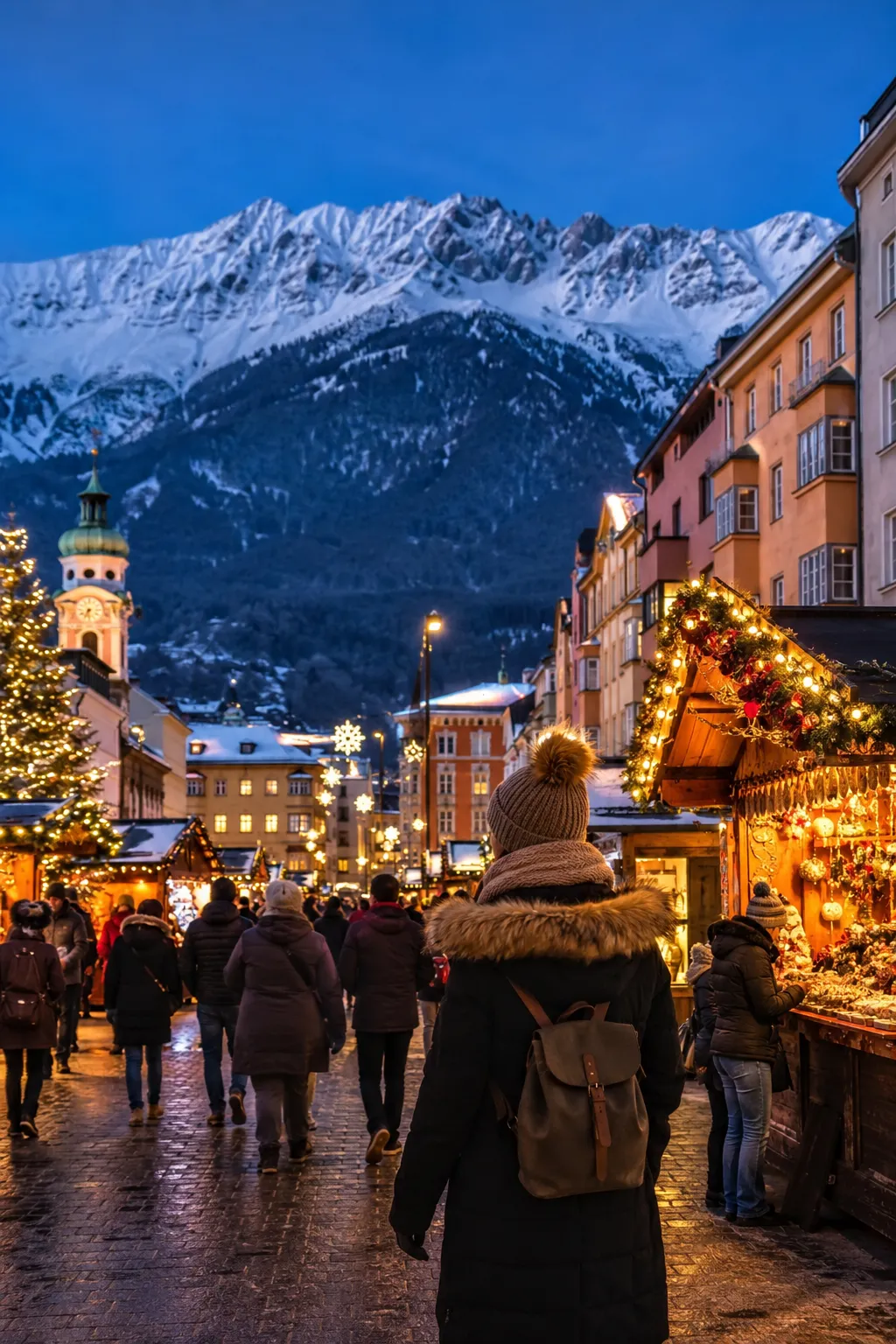
Riga is a beautiful Baltic Christmas market destination with good value, Art Nouveau architecture, and a cozy Old Town atmosphere. It is less crowded than many famous Western European cities.
Why Visit
Riga is a strong choice for travelers who want a festive market with local crafts, warm drinks, Baltic food, and a charming old-town setting. It also works well for budget-conscious winter travel.
Best Time to Visit
Early to mid-December is ideal. You get the Christmas feeling without the biggest holiday travel rush.
Things to Do
Visit the Old Town Christmas Market around Doma Square, explore Riga Cathedral, walk through the Art Nouveau district, try local pastries, and enjoy warm drinks in cozy cafés.
Estimated Budget
Plan around €50–€110 per day. Riga can be one of the more affordable Christmas market city breaks in Europe.
Safety Tips
Old Town can be slippery in winter, and temperatures can be cold. Keep valuables close in nightlife areas and use registered taxis or ride-hailing apps.
How Many Days to Spend
Spend 2 to 3 days in Riga. This is enough for the market, Old Town, Art Nouveau streets, and a relaxed food itinerary.
Best Photo Spots
Doma Square, House of the Black Heads, Riga Cathedral, Art Nouveau streets, and Old Town lanes with Christmas lights.
Who It Is Best For
Riga is best for budget travelers, Baltic travel lovers, photographers, and travelers looking for a less obvious Christmas market destination.
15. Salzburg, Austria
Salzburg is a romantic Christmas market city with music, mountain views, church squares, and a beautifully preserved old town. It feels traditional, elegant, and cozy.
Why Visit
Salzburg is a strong choice if you want a smaller Austrian Christmas trip than Vienna but still want beauty, culture, and festive charm. The old town setting makes the markets feel intimate and historic.
Best Time to Visit
Early December is ideal. The city feels festive, and you can enjoy markets before the heaviest holiday crowds.
Things to Do
Visit the Salzburg Christkindlmarkt near the cathedral, explore Mirabell Gardens, walk through Getreidegasse, visit Hohensalzburg Fortress, and enjoy classical music or Advent concerts.
Estimated Budget
Plan around €90–€170 per day. Salzburg can be expensive in peak periods, so book early and consider guesthouses outside the old town.
Safety Tips
The old town is walkable but can be crowded. Wear warm shoes with grip and use public transport instead of driving into the center.
How Many Days to Spend
Spend 2 to 3 days in Salzburg. Add another day if you want a lake district or mountain day trip.
Best Photo Spots
Salzburg Cathedral square, Hohensalzburg Fortress view, Mirabell Gardens, Getreidegasse signs, and the river view toward the old town.
Who It Is Best For
Salzburg is best for couples, music lovers, culture travelers, and visitors who want a romantic Austrian Christmas market trip.
Best Europe Christmas Market Itinerary Ideas
7-Day Classic Christmas Market Route
| Day | Destination | Plan |
|---|---|---|
| Day 1 | Vienna | Arrive, Rathausplatz market, coffee house |
| Day 2 | Vienna | Schönbrunn, Belvedere, Spittelberg |
| Day 3 | Salzburg | Train to Salzburg, evening market |
| Day 4 | Salzburg | Old town, fortress, Advent concert |
| Day 5 | Prague | Train to Prague, Old Town Square |
| Day 6 | Prague | Prague Castle, Charles Bridge, Wenceslas Square |
| Day 7 | Prague | Local markets, final shopping, departure |
10-Day Fairytale Christmas Route
| Day | Destination | Plan |
|---|---|---|
| Day 1 | Strasbourg | Arrive and explore the old town |
| Day 2 | Strasbourg | Cathedral market and Petite France |
| Day 3 | Colmar | Day trip or overnight in Colmar |
| Day 4 | Cologne | Train to Cologne, cathedral market |
| Day 5 | Cologne | Multiple market route |
| Day 6 | Nuremberg | Travel to Nuremberg |
| Day 7 | Nuremberg | Christkindlesmarkt and castle |
| Day 8 | Dresden | Travel to Dresden |
| Day 9 | Dresden | Striezelmarkt and old town |
| Day 10 | Dresden/Berlin | Departure or continue to Berlin |
Budget Breakdown
Christmas market costs vary depending on the city, hotel location, and travel dates. Weekends in famous markets are usually the most expensive.
| Expense | Budget Traveler | Mid-Range Traveler | Comfort Traveler |
|---|---|---|---|
| Accommodation | €40–€90 | €90–€180 | €180+ |
| Food | €20–€40 | €40–€70 | €70+ |
| Local Transport | €5–€15 | €10–€25 | €25+ |
| Market Treats | €10–€25 | €25–€45 | €45+ |
| Activities | €0–€25 | €25–€60 | €60+ |
| Daily Total | €75–€160 | €160–€330 | €330+ |
Budget Tips
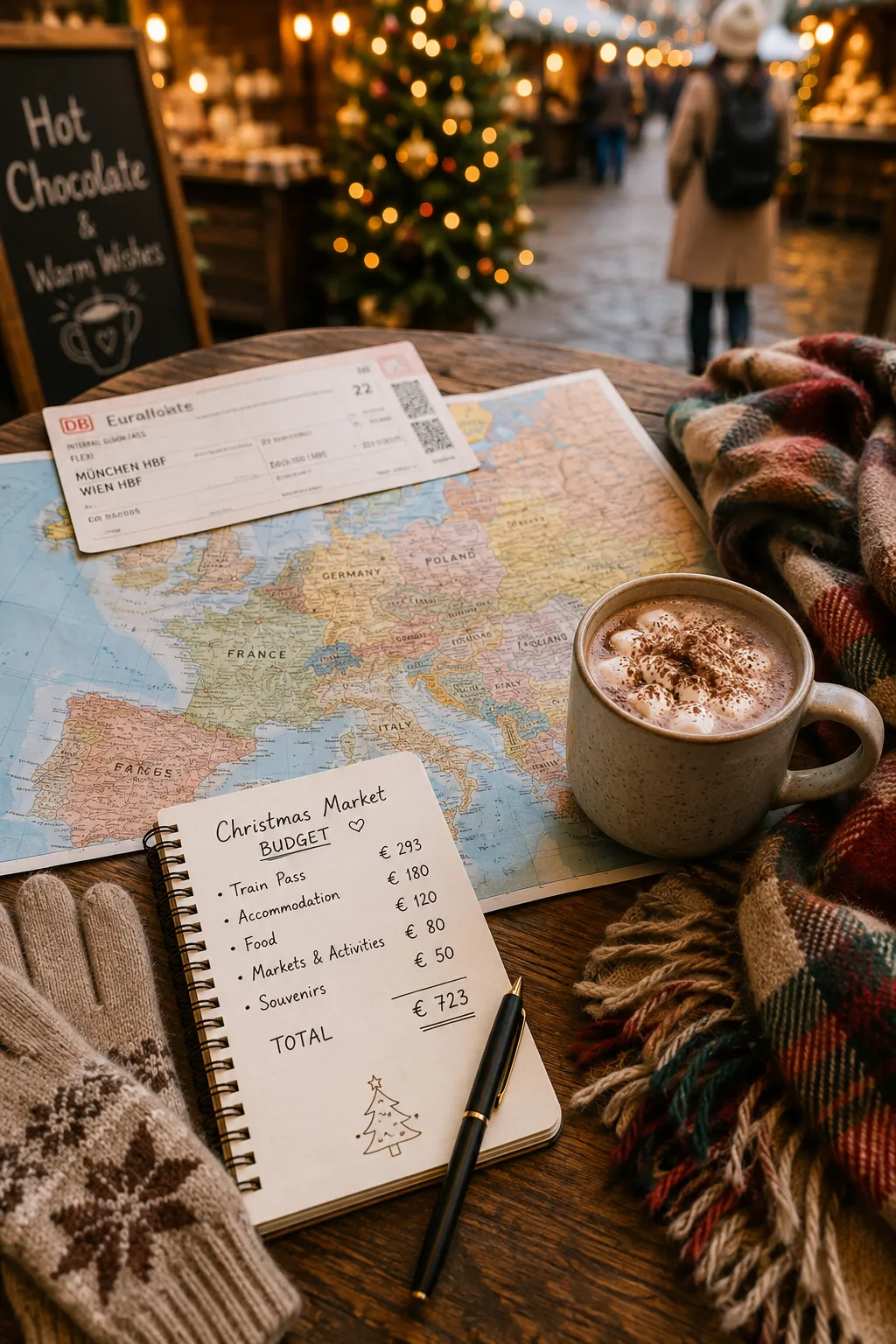
Book hotels early, especially for Strasbourg, Vienna, Copenhagen, Cologne, and Colmar. Visit weekdays instead of weekends. Stay near a tram or metro line rather than directly beside the main market. Eat one main restaurant meal per day and use market snacks for lighter meals. Bring a reusable water bottle and pack warm accessories so you do not need to buy emergency winter items.
Transportation Tips for Christmas Market Travel
Train travel is often the easiest way to connect Christmas market cities, especially in Germany, Austria, Belgium, France, and the Czech Republic. For routes like Vienna to Salzburg, Vienna to Prague, Cologne to Brussels, or Strasbourg to Colmar, trains can be more convenient than flying.
Book long-distance trains early when possible. Use local public transport inside cities because driving and parking near Christmas markets can be stressful. In old towns, walking is usually the best option, but wear comfortable shoes because cobblestones and ice can make distances feel longer.
For multi-country trips, avoid packing too many cities into one itinerary. A better route is 2 to 3 nights per city instead of changing hotels every night.
Safety Tips for European Christmas Markets
Christmas markets are generally family-friendly, but crowds, winter weather, and unfamiliar cities require common sense.
Keep your wallet and phone in a zipped pocket or cross-body bag. Avoid leaving your phone on food tables. Choose a meeting point if traveling with others. Carry a portable charger because cold weather can drain phone batteries quickly. Watch your footing on icy cobblestones. Use official taxis or trusted ride-hailing apps at night. Check local emergency numbers and save your hotel address offline.
Packing Checklist
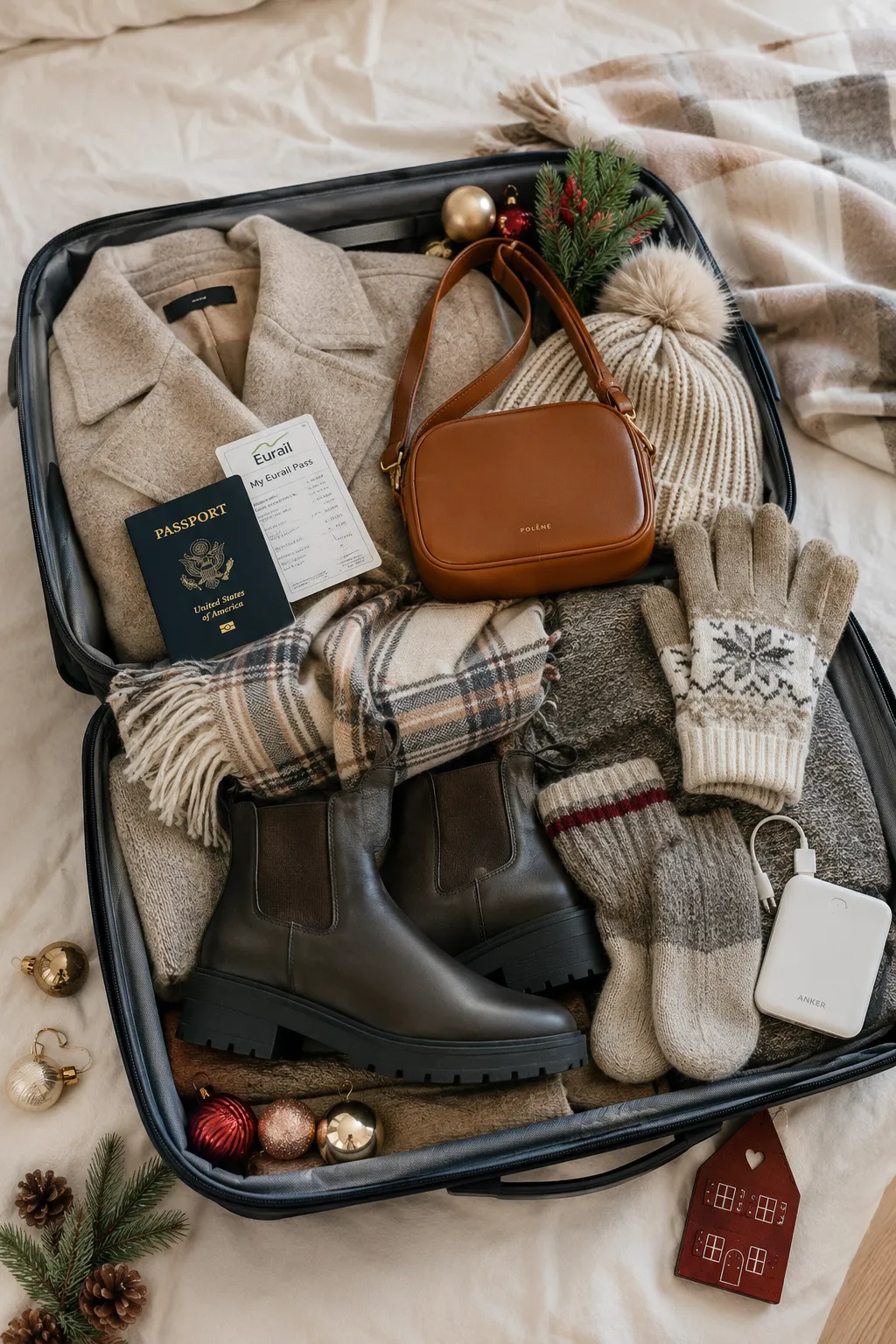
European Christmas markets are cold, crowded, and mostly outdoors. Packing well makes the trip much more enjoyable.
| Category | What to Pack |
|---|---|
| Outerwear | Warm coat, waterproof jacket, thermal layers |
| Shoes | Comfortable waterproof boots with grip |
| Accessories | Gloves, scarf, hat, warm socks |
| Tech | Portable charger, plug adapter, phone lanyard |
| Documents | Passport, travel insurance, hotel confirmations |
| Market Essentials | Small cross-body bag, reusable tote, cash and card |
| Comfort Items | Lip balm, hand cream, tissues, hand warmers |
| Photography | Phone tripod, extra battery, lens cloth |
Outfit Ideas
Choose warm but comfortable outfits. A long wool-style coat, thermal base layer, jeans or warm trousers, waterproof boots, scarf, and gloves work well for city markets. For destinations such as Tallinn or Innsbruck, add heavier layers, thicker socks, and a warmer hat.
Mistakes to Avoid
Do not assume every Christmas market stays open after December 24. Many traditional markets close on Christmas Eve or just before it. Always check official dates before booking flights.
Do not visit only on Saturday evening if you dislike crowds. Famous markets are most packed on weekends after dark. Try weekday mornings, afternoons, or early evenings.
Do not overpack your itinerary. Christmas markets are best enjoyed slowly, with time for warm drinks, photos, browsing, and cozy meals.
Do not rely only on card payments. Many stalls accept cards, but some smaller craft or food vendors may prefer cash.
Do not wear uncomfortable shoes. You will stand, walk, and browse for hours, often on cobblestones.
Travel Tips for First-Time Visitors
Start with one major city and one smaller town. For example, combine Vienna with Salzburg, Strasbourg with Colmar, Cologne with Aachen, or Prague with Dresden.
Book central accommodation if your budget allows, but do not panic if it is expensive. A hotel near a metro, tram, or train station can be just as practical.
Visit the most popular market twice: once during the day for shopping and once at night for lights. Bring a reusable tote for ornaments or snacks. Check opening hours for Christmas Eve, Christmas Day, and New Year if traveling during the holiday week.
Pinterest-Worthy Photo Ideas
Christmas markets are perfect for Pinterest content because they offer color, lights, cozy outfits, food, and destination inspiration.
Best Photo Ideas
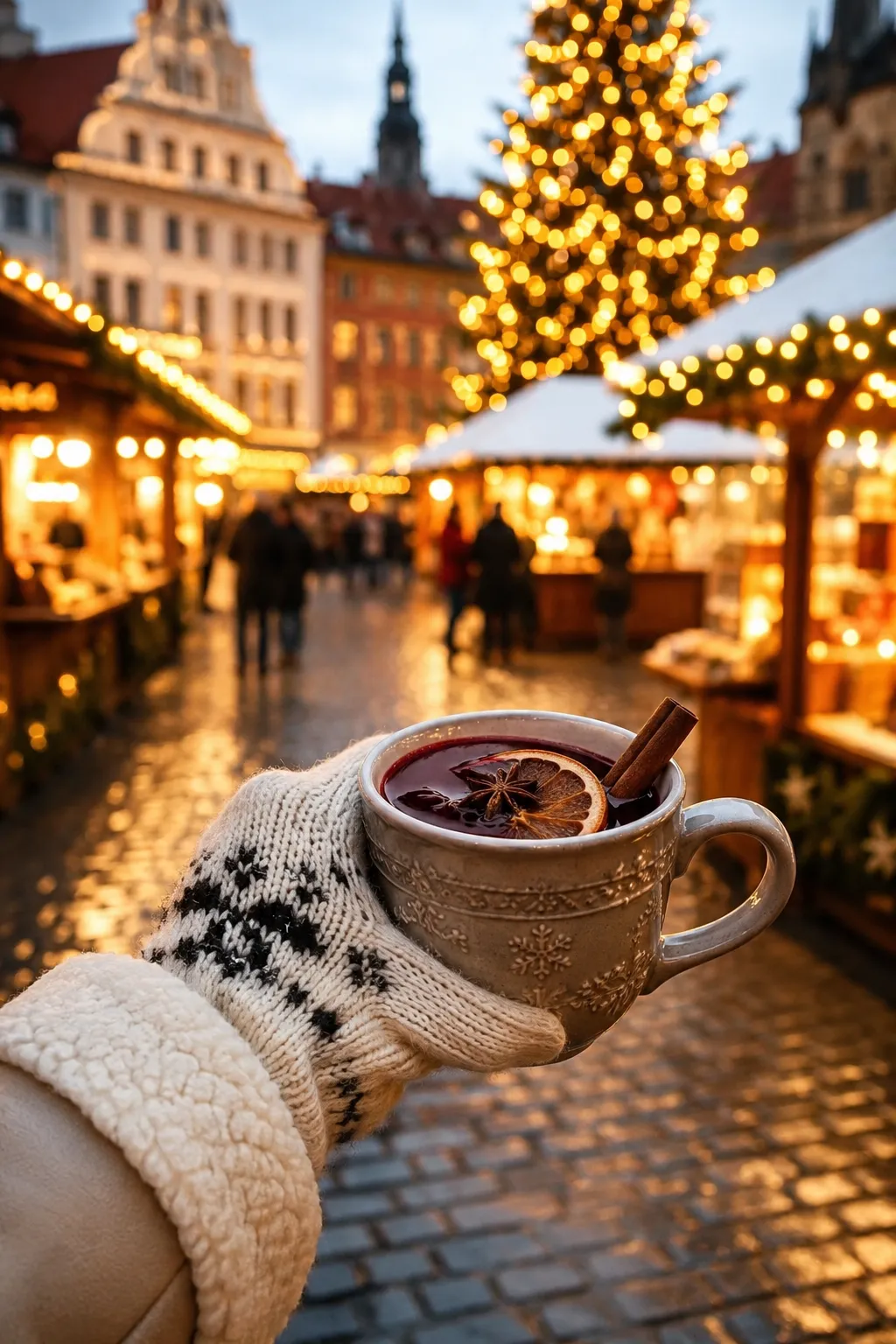
Take photos of glowing stalls from a slightly elevated angle. Capture hands holding a hot drink in front of lights. Photograph ornaments close up with blurred lights behind them. Shoot famous landmarks behind market stalls. Use early evening blue hour for the most magical balance of sky and lights.
Photo Spots to Save
| Destination | Pinterest-Worthy Shot |
|---|---|
| Vienna | Rathausplatz arch with City Hall |
| Strasbourg | Half-timbered houses with garlands |
| Prague | Old Town Square tree and Gothic towers |
| Cologne | Cathedral behind market stalls |
| Tallinn | Snowy Town Hall Square |
| Colmar | Little Venice with Christmas lights |
| Brussels | Grand-Place light show |
| Innsbruck | Market stalls with snowy Alps |
Best Food to Try at European Christmas Markets
Food is a huge part of the Christmas market experience. Each country has its own specialties, but many markets offer a mix of sweet, savory, and warm winter treats.
| Country/Region | Foods to Try |
|---|---|
| Germany | Bratwurst, lebkuchen, roasted almonds, potato pancakes |
| Austria | Kaiserschmarrn, sausages, pastries, punch |
| France/Alsace | Tarte flambée, bredele cookies, vin chaud |
| Czech Republic | Trdelník, sausages, roasted ham, potato pancakes |
| Hungary | Chimney cake, goulash, lángos |
| Belgium | Waffles, fries, chocolate, tartiflette-style dishes |
| Poland | Pierogi, oscypek cheese, soups, gingerbread |
| Baltics | Black pudding, sauerkraut, gingerbread, hot berry drinks |
| Denmark | Æbleskiver, hot chocolate, pastries |
Where to Stay
For Christmas market trips, location matters. Staying within walking distance of the main market is convenient but often expensive. A better value strategy is to stay near a tram, metro, or train stop with direct access to the old town.
Choose central stays for short 2-night trips. Choose slightly outside the center for longer stays or expensive cities like Copenhagen and Vienna. For small towns such as Colmar, book early because the best accommodation disappears quickly.
Final Planning Advice
The best European Christmas market trip in 2026 depends on your travel style. Choose Vienna or Prague for a classic first-time trip. Choose Strasbourg and Colmar for fairytale scenery. Choose Cologne, Nuremberg, or Dresden for traditional Germany. Choose Budapest, Krakow, or Riga for better value. Choose Tallinn or Innsbruck for winter scenery. Choose Copenhagen for cozy Scandinavian magic.
Whichever destination you choose, book early, check official dates, pack warm layers, and leave enough time to wander slowly. The magic of Christmas markets is not just in the stalls; it is in the lights, the music, the food, the cold air, and the feeling of stepping into a winter story.
FAQs
What are the best European Christmas markets to visit in 2026?
Some of the best European Christmas markets to visit in 2026 include Vienna, Strasbourg, Prague, Cologne, Nuremberg, Dresden, Budapest, Tallinn, Brussels, Copenhagen, Colmar, Krakow, Innsbruck, Riga, and Salzburg.
When do European Christmas markets open in 2026?
Most European Christmas markets open from mid to late November 2026 and run until December 23 or 24. Some destinations, including Prague, Tallinn, Brussels, Copenhagen, Vienna, and Innsbruck, may have markets or winter attractions that continue into late December or early January.
Which European Christmas market is best for first-time visitors?
Vienna, Prague, Strasbourg, and Cologne are excellent choices for first-time visitors because they offer beautiful scenery, easy transport, plenty of hotels, and a strong festive atmosphere.
Which Christmas markets in Europe are best for budget travelers?
Krakow, Riga, Budapest, and Prague can be better options for budget-conscious travelers compared with Copenhagen, Vienna, or Strasbourg. Prices still rise in December, so early booking is important.
Which European Christmas market is the most beautiful?
Beauty depends on your style. Strasbourg and Colmar are perfect for fairytale streets, Prague is stunning for Gothic architecture, Vienna is elegant and grand, Tallinn feels medieval and snowy, and Innsbruck offers Alpine mountain views.
Are European Christmas markets safe?
European Christmas markets are generally safe and family-friendly, but crowded places require basic precautions. Keep your belongings secure, avoid carrying too much cash, watch for icy streets, and stay aware in busy transport areas.
Do I need cash at European Christmas markets?
Cards are widely accepted in many cities, but smaller stalls may still prefer cash. Carry a small amount of local currency or euros where accepted, especially for food, drinks, and handmade items.
How many days do you need for a Christmas market trip?
For one city, 2 to 3 days is usually enough. For a multi-city Christmas market itinerary, plan 7 to 10 days and avoid changing hotels every night.
What should I pack for European Christmas markets?
Pack a warm coat, thermal layers, waterproof boots, gloves, scarf, hat, warm socks, portable charger, cross-body bag, and travel adapter. Comfortable shoes are especially important because markets involve lots of walking and standing.
Are Christmas markets open on Christmas Day?
Many traditional Christmas markets close by December 24, especially in Germany and parts of France. Some markets and winter attractions in cities like Vienna, Prague, Brussels, Copenhagen, Tallinn, and Innsbruck may continue after Christmas, but opening hours vary.
Final Thoughts
The best European Christmas markets to visit in 2026 are more than shopping spots. They are winter travel experiences filled with glowing streets, festive food, historic squares, cozy cafés, and unforgettable photo moments.
Whether you choose Vienna’s elegance, Strasbourg’s fairytale charm, Prague’s Gothic beauty, Cologne’s cathedral backdrop, or Tallinn’s snowy medieval atmosphere, a Christmas market trip can become one of the most memorable ways to experience Europe in winter.
Save this guide while planning your 2026 Europe Christmas market itinerary, compare your favorite destinations, and book early for the best routes, hotels, and festive experiences.