How to Prepare for a Winter Trip to Quebec City: Snow, Cold and What to Pack
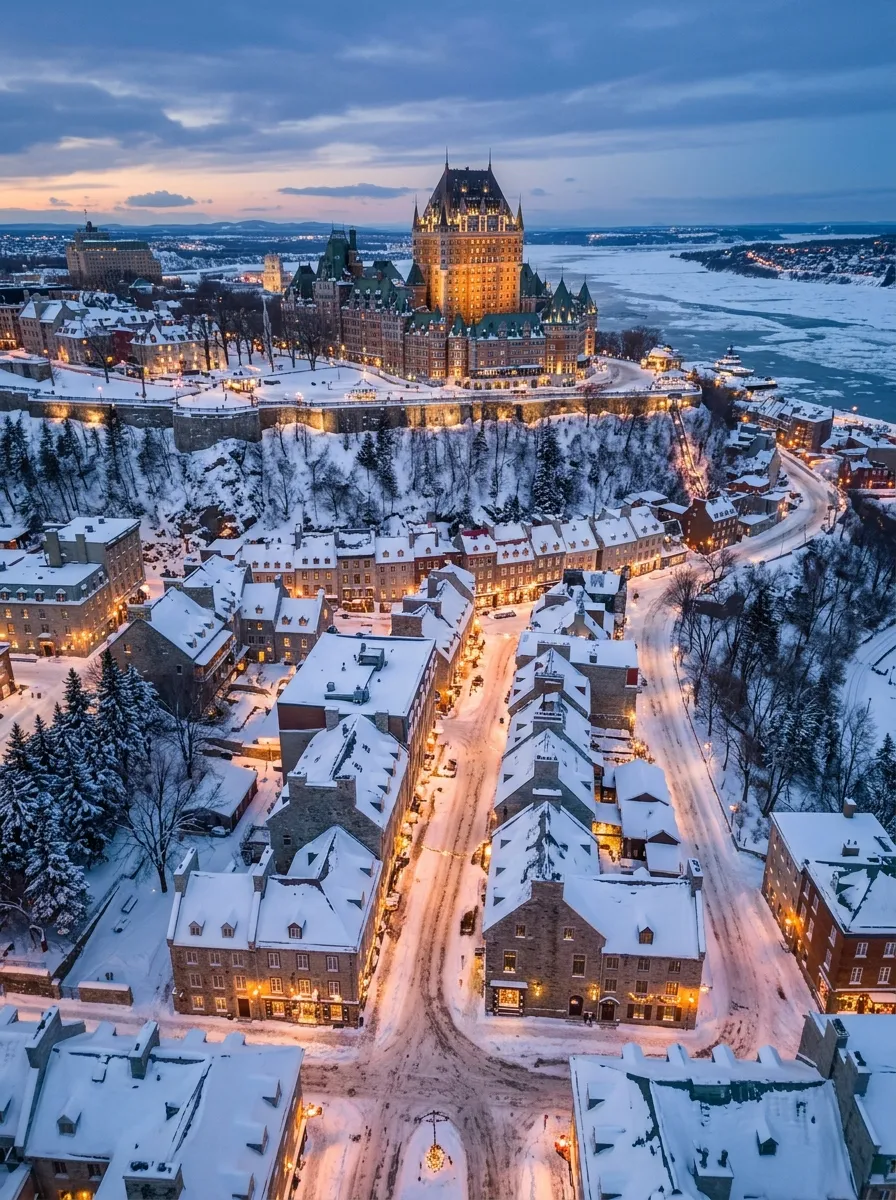
Québec City in winter can feel like stepping into a different world.
Old Québec’s stone streets are covered in snow, historic buildings glow under winter lights, and Petit-Champlain looks especially beautiful when everything is dusted white. But there is another side to that picture: temperatures can fall well below freezing, sidewalks can become icy, snow can disrupt travel, and a casual pair of sneakers suddenly becomes a very bad idea.
The good news is that you do not need to be an experienced winter traveler to enjoy Québec City.
You simply need to prepare for the weather instead of trying to ignore it.
Québec City typically sees snow from around December through March, with annual snowfall averaging about 305 cm (120 inches) in the city. January is usually the coldest month, with average highs around -8°C (18°F) and lows around -18°C (0°F). February remains very cold, with average highs around -6°C (21°F) and lows around -16°C (3°F).
Here is exactly how to prepare for a winter trip to Québec City, including what to pack, what to wear, how to get around, and how to stay comfortable when the temperature drops.
Recommended Travel Items for Your Trip
What Is Winter Really Like in Québec City?
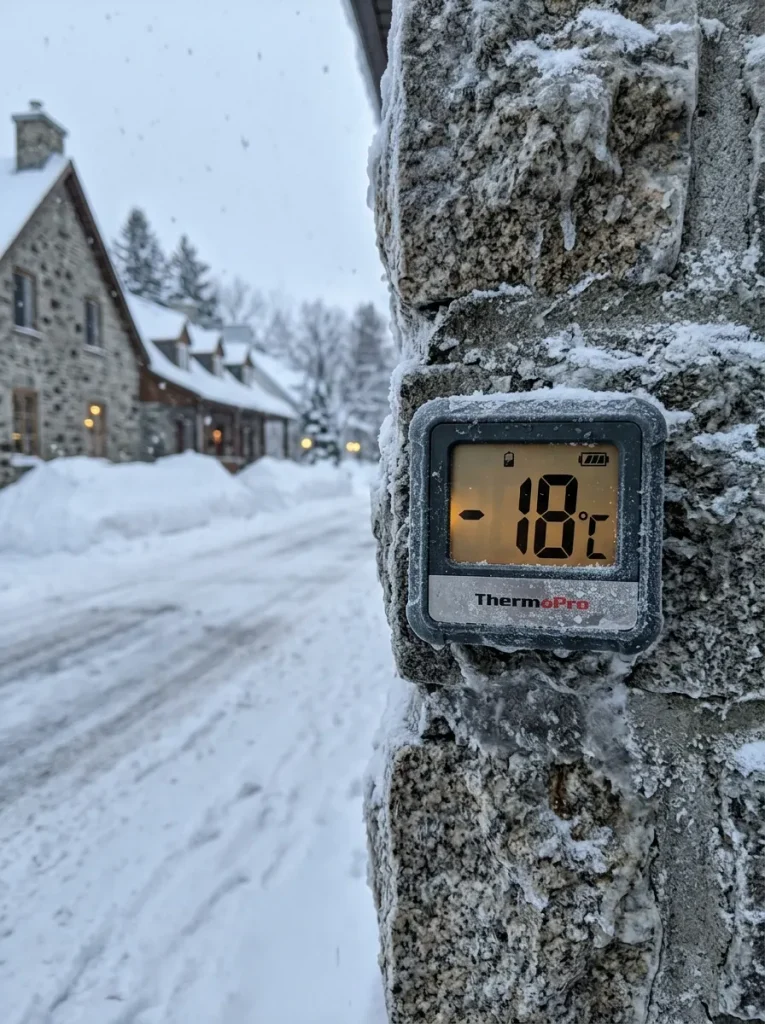
If you come from a warm-weather destination, Québec City’s winter may be much colder than you expect.
The biggest mistake is looking only at the temperature.
A forecast might say -10°C (14°F), but wind can make it feel considerably colder. Environment and Climate Change Canada warns that wind chill increases the risk of frostbite, particularly on exposed areas such as the fingers, toes, nose and ears.
Snow is another major part of daily life.
You may encounter:
- Fresh powder after a snowstorm
- Packed snow on sidewalks
- Slush around busy streets
- Ice beneath thin layers of snow
- Snowbanks along roads
- Strong winds and blowing snow
- Rapid changes between snow and freezing temperatures
Québec City is well equipped for winter, but that does not mean winter disappears.
You still need appropriate clothing and footwear.
How cold should you expect?
| Month | Average High | Average Low | What to Expect |
| December | Around -2°C | Around -10°C | Snowy, festive, variable |
| January | Around -8°C | Around -18°C | Coldest period |
| February | Around -6°C | Around -16°C | Very cold, snowy |
| March | Around 1°C | Around -7°C | Snow with occasional milder days |
These are averages, not guarantees. A winter trip can include relatively comfortable days as well as much colder weather.
Québec City’s tourism office notes that temperatures can swing from around -20°C (-4°F) to approximately 0°C (32°F) within only a few days.
That is why packing for a range of conditions is more useful than packing for one forecast.
When Is the Best Time for a Winter Trip to Québec City?
It depends on the type of winter experience you want.
December: Best for Christmas atmosphere
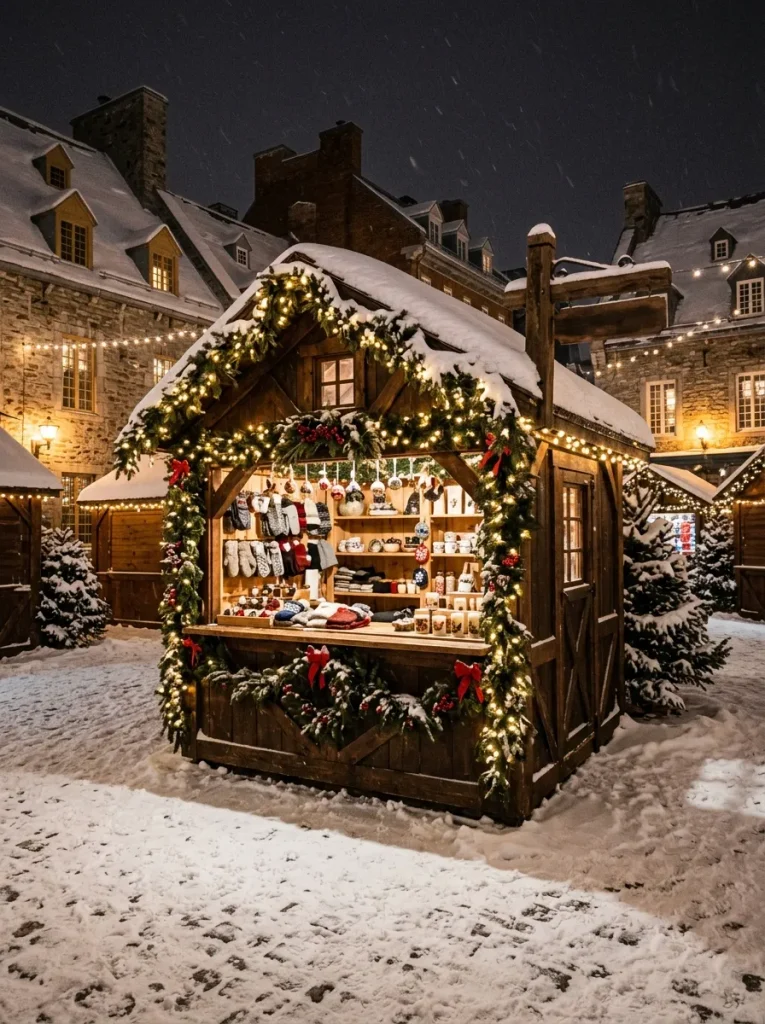
December is a wonderful choice if your dream Québec City trip involves Christmas lights, decorated streets and holiday markets.
Old Québec becomes especially atmospheric during the holiday season, and winter attractions begin taking center stage.
If Christmas markets are your main reason for visiting, you may also want to compare Québec City with other destinations in our guide to Christmas travel destinations.
January: Best for serious winter
January is for travelers who actually want the cold-weather experience.
Expect very cold temperatures, snow and potentially challenging conditions. It is also a good month for classic winter activities if you have the right clothing.
February: Best for winter events
February combines deep winter conditions with Québec City’s famous winter celebrations.
The Québec Winter Carnival is one of the major highlights of the season, and the city embraces winter rather than simply tolerating it. The 2026–27 winter season also includes a range of seasonal events and attractions.
March: Best for a slightly easier winter
March can offer a useful compromise.
You can still find snow and enjoy winter scenery, while some days may feel noticeably milder than January or February.
If you are nervous about your first serious cold-weather trip, March can be easier to handle.
The Most Important Rule: Dress in Layers
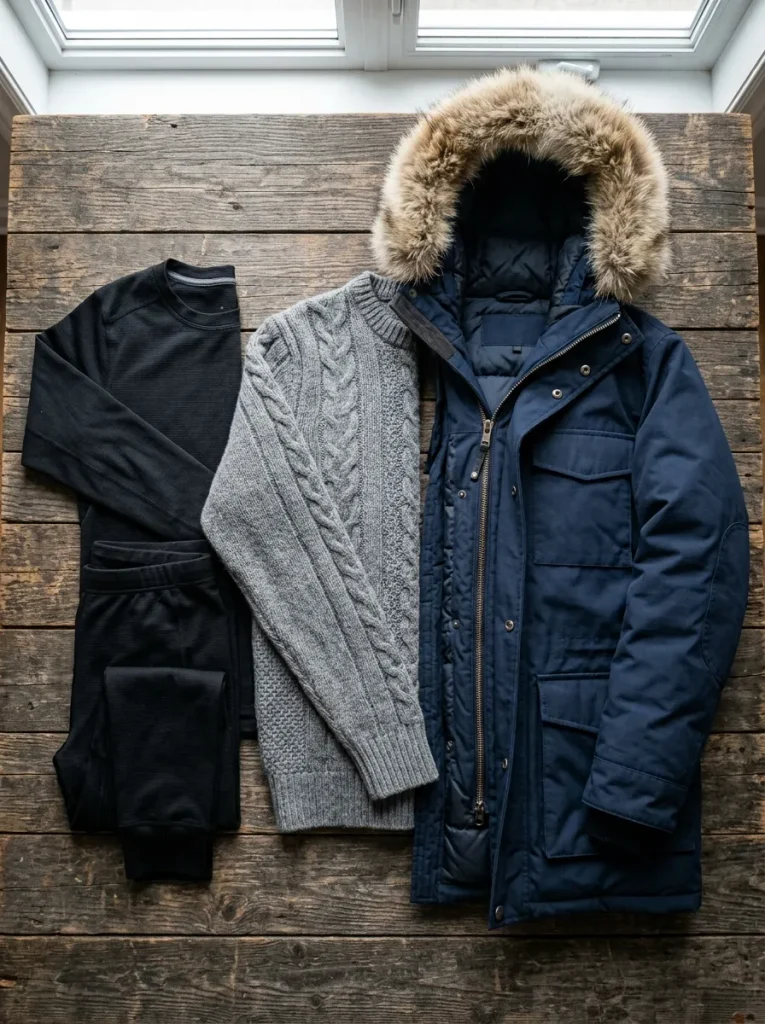
Do not make the mistake of bringing one enormous winter coat and assuming that solves everything.
Québec City’s tourism office recommends the three-layer system because conditions can change and different activities require different levels of insulation.
Layer 1: Base layer
This sits directly against your skin.
Choose:
- Merino wool
- Synthetic thermal fabric
- Moisture-wicking long underwear
- Thermal leggings or pants for very cold days
Avoid cotton as your main base layer when spending significant time outdoors. Once cotton becomes damp, it loses much of its insulating ability.
Layer 2: Insulating layer
This traps warm air around your body.
Good options include:
- Fleece jacket
- Wool sweater
- Down or synthetic insulated jacket
- Warm cardigan
You can add or remove this layer depending on the temperature.
Layer 3: Outer shell
Your outer layer needs to protect you from wind, snow and moisture.
Look for:
- Wind-resistant material
- Water-resistant or waterproof construction
- Hood
- Enough room for your other layers
A warm coat without wind protection can be surprisingly disappointing on a bitterly cold day.
What to Pack for Québec City in Winter
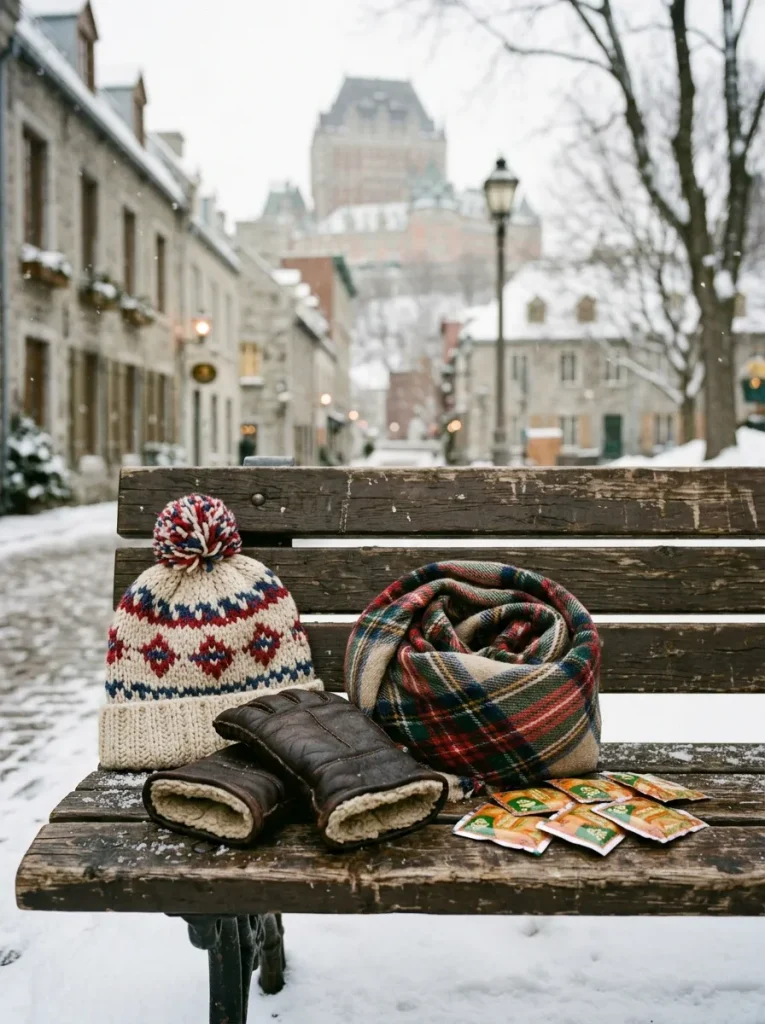
Here is the practical packing list.
Clothing
- Insulated winter coat
- Thermal base layers
- Fleece or wool mid-layer
- Warm sweaters
- Waterproof or water-resistant pants
- Wool or thermal socks
- Warm hat or toque
- Insulated gloves or mittens
- Neck warmer
- Face covering for very cold days
- Waterproof winter boots
- Comfortable indoor shoes
- Pajamas and normal clothing for evenings indoors
Winter accessories
These small items can make a surprisingly large difference:
- Hand warmers
- Lip balm
- Moisturizer
- Sunglasses
- Sunscreen
- Compact backpack
- Reusable water bottle
- Portable power bank
- Small umbrella if conditions call for it
- Tissues
- Medication you normally need
Yes, sunscreen belongs on a winter packing list.
Snow can reflect sunlight, and your face is still exposed to the elements.
Your winter footwear matters more than your fashion footwear
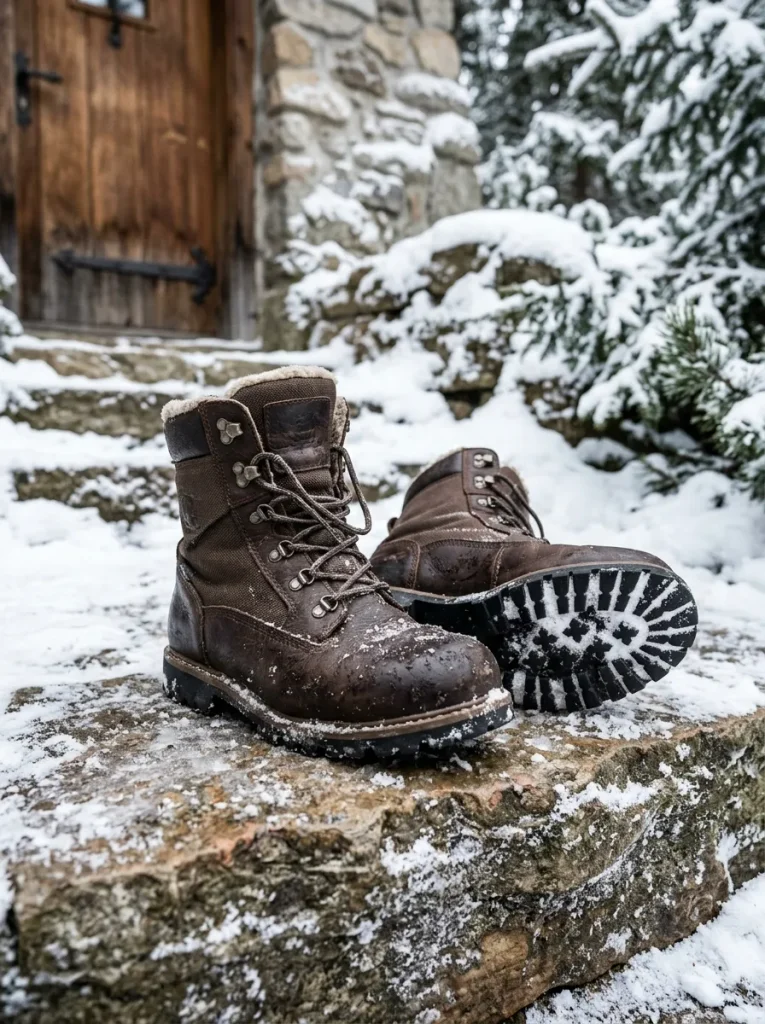
If you buy only one specialized item for this trip, make it a proper pair of winter boots.
Look for boots that are:
- Waterproof
- Insulated
- Comfortable for several hours of walking
- Designed for traction
- Large enough to wear with warm socks without squeezing your feet
Do not buy extremely tight boots.
Your feet need enough room for insulation and circulation.
You may be walking over packed snow, slush and ice for hours, so traction is much more important than how stylish the boots look in your hotel room.
Should You Bring Snow Pants?
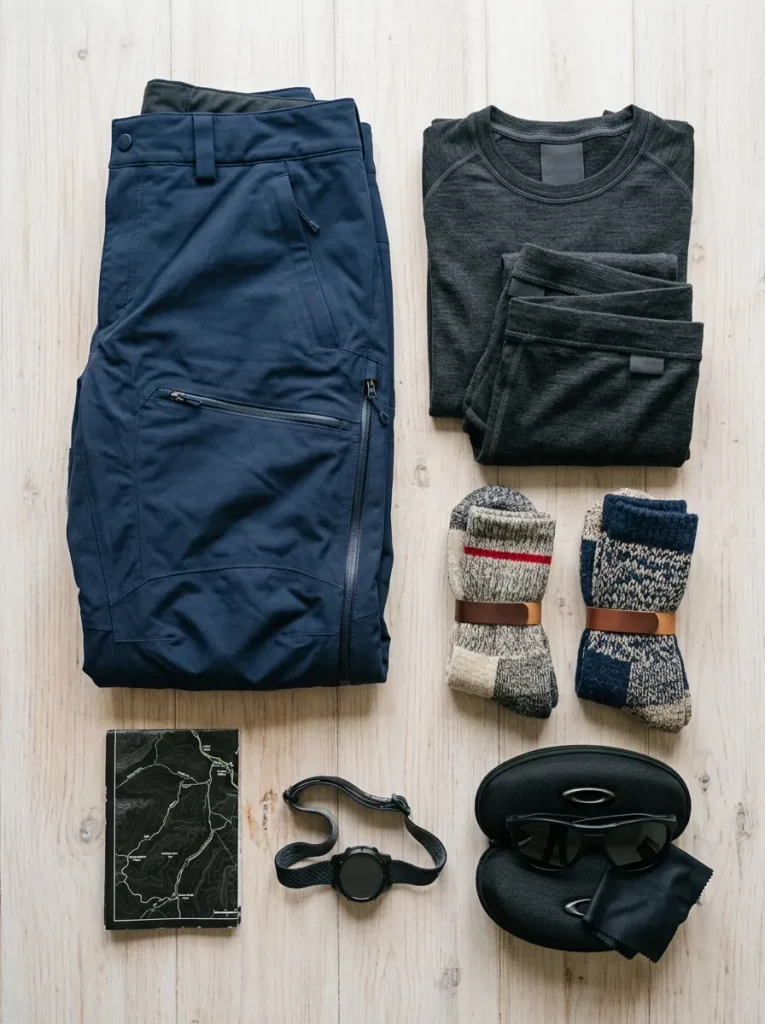
For a normal city sightseeing trip, probably not.
If your plan is mostly Old Québec, museums, restaurants, cafés and indoor attractions, regular winter pants combined with thermal layers should be enough for most travelers.
Snow pants become much more useful if you plan to:
- Snowshoe
- Ski
- Toboggan
- Spend hours outdoors
- Visit winter activity parks
- Take long snowy hikes
- Participate in outdoor winter events
Think about your activities rather than automatically packing for an expedition to the Arctic.
What to Wear When Exploring Old Québec
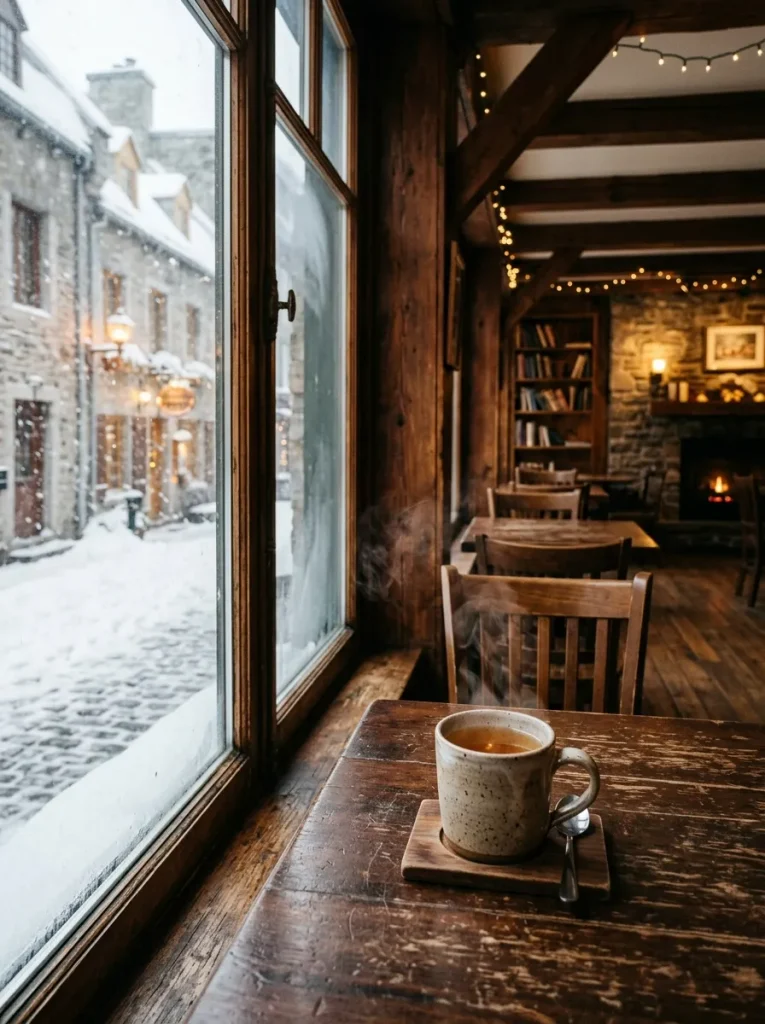
Old Québec is one of the places where winter preparation really matters.
You may walk much farther than expected because the historic district is enjoyable to explore on foot. Snow-covered streets and sidewalks can also slow you down.
A good sightseeing outfit would be:
Thermal base layer + sweater/fleece + insulated waterproof coat + thermal pants + wool socks + waterproof winter boots + hat + insulated gloves + neck warmer.
For very cold days, add a face covering that protects your cheeks and nose.
Take frequent indoor breaks.
A café, museum, restaurant or hotel lobby is not just a place to warm up. It is part of your winter strategy.
How to Deal With Snow and Ice While Walking
Snow itself is not necessarily the biggest problem.
Ice is.
A sidewalk can look perfectly walkable while hiding a slippery layer underneath.
Walk with shorter steps and avoid rushing.
Keep your hands reasonably free rather than burying both hands in your coat pockets. If you slip, being able to react quickly matters.
You can also consider traction aids such as removable ice cleats if you expect to spend a lot of time walking outdoors in difficult conditions.
They are especially useful for travelers who are uncomfortable walking on ice.
And remember that snow removal is an ongoing process. Québec’s transportation authorities use plowing, salt and abrasives to maintain roads, but very low temperatures can make de-icing less effective.
Do You Need a Rental Car in Québec City?
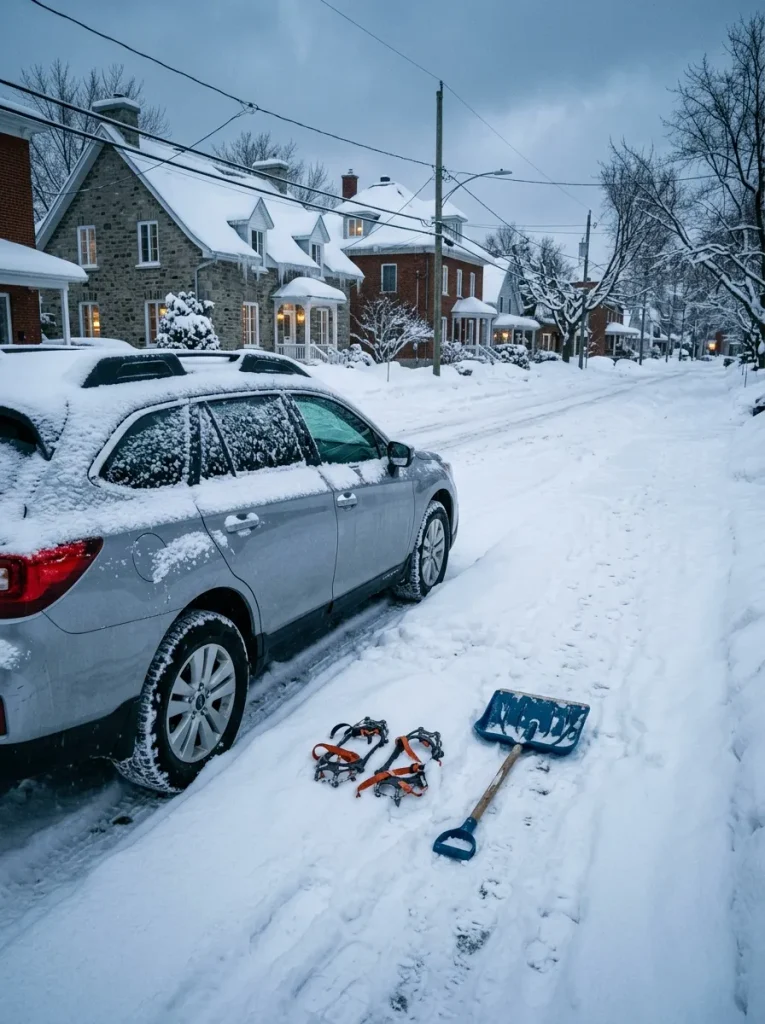
For a short Québec City city break, you may not need one.
The city’s RTC public transportation network connects many central neighborhoods, tourist attractions and the airport, and travelers can use its trip-planning tools and app to check routes and schedules.
For a first winter visit, avoiding a rental car can actually make the trip easier.
You do not have to worry about:
- Snow-covered vehicles
- Parking after a snowstorm
- Slippery roads
- Snow removal operations
- Clearing your windshield
- Winter driving unfamiliarity
- Changing road conditions
If you are planning a broader road trip through Québec, however, a car can make sense.
That is when our Lanaudière-Mauricie winter road trip becomes useful because the experience outside Québec City is very different from simply staying downtown.
If You Drive, Take Winter Conditions Seriously
Winter driving in Québec is not something to improvise.
Before setting out, check Québec 511 for current road conditions, closures, accidents and winter alerts. The Québec government specifically recommends checking road conditions and postponing non-essential travel when conditions become particularly unfavorable.
Also:
- Clear snow completely from the vehicle
- Clear windows and mirrors
- Check tire condition
- Keep windshield washer fluid rated for winter temperatures
- Maintain a reasonable fuel level
- Slow down on snow and ice
- Leave extra following distance
- Allow more time for your journey
- Never pass a snowplow convoy
Québec requires winter tires during the prescribed winter period, from December 1 through March 15, for vehicles registered in Québec.
If you are renting a vehicle, confirm the rental company’s winter-equipment policy before booking.
What About Public Transportation and Taxis?
Public transportation is a practical option for many travelers.
But remember that winter can affect travel times.
A bus may encounter snow-covered roads, traffic or delays after a storm. Do not schedule an airport transfer so tightly that a small delay turns into a major problem.
For airport travel, sightseeing tours and longer excursions, build a little breathing room into your schedule.
Winter rewards flexible travelers.
How to Stay Warm Without Spending the Whole Day Indoors
This is where many first-time winter travelers get the strategy wrong.
You do not need to spend eight consecutive hours outside.
Instead, alternate.
For example:
Morning: Old Québec walk
Late morning: Café or museum
Lunch: Warm restaurant
Afternoon: Indoor attraction and short outdoor walk
Evening: Winter lights, dinner and hotel
This lets you experience the snow without turning your trip into a cold-endurance contest.
Québec City’s tourism office highlights winter experiences throughout the city, from snowy Old Québec walks to seasonal attractions and outdoor activities.
Plan Your Winter Days Around the Weather
One of the smartest things you can do is avoid locking every activity into a rigid schedule.
Suppose your three-day forecast looks like this:
| Day | Conditions | Better Plan |
| Day 1 | Clear and cold | Outdoor sightseeing |
| Day 2 | Heavy snow | Museums, cafés, historic sites |
| Day 3 | Milder | Longer outdoor activities |
Move your itinerary around the weather.
A snowy day is not necessarily a wasted day. Québec City can look spectacular during snowfall, but you should adjust your walking distance and outdoor time.
A Simple 3-Day Winter Québec City Itinerary
Day 1: Old Québec
Start with Old Québec and explore the historic streets at a comfortable pace.
Visit:
- Château Frontenac area
- Dufferin Terrace
- Petit-Champlain
- Place Royale
- Old Port
- Historic streets and squares
Take warming breaks throughout the day.
If temperatures are particularly low, shorten the outdoor portions and spend more time inside museums, cafés and restaurants.
Day 2: Winter experience
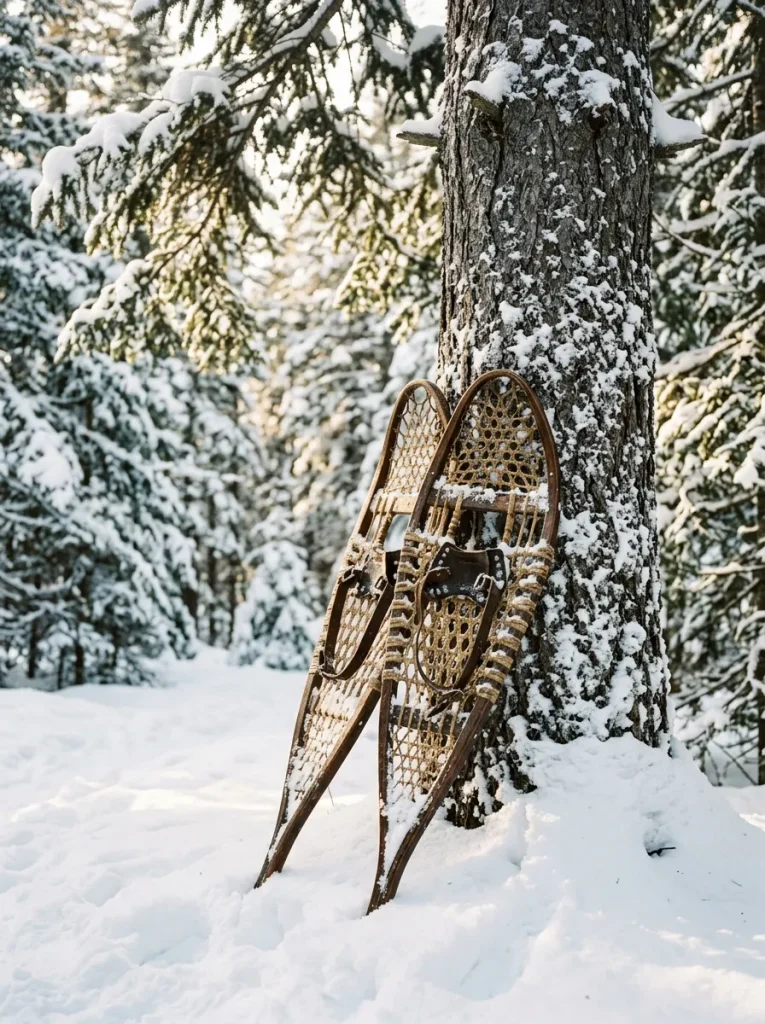
Make this your dedicated winter day.
Depending on the season and conditions, consider:
- Québec Winter Carnival
- Snow tubing
- Ice skating
- Snowshoeing
- Ice Hotel
- Winter walking
- A guided winter excursion
You do not need to do everything.
Choose one or two activities and enjoy them properly.
Day 3: Flexible exploration
Keep your final day adaptable.
If the weather is good, explore another neighborhood or take a winter excursion outside the city.
If the forecast turns nasty, make it an indoor day.
This is also a good time to extend your trip into other parts of Québec if you have a rental car and suitable winter-driving experience.
What to Do If You Are Not Used to Canadian Cold
If you normally live somewhere warm, your body may need time to adjust.
Do not plan a six-hour outdoor day immediately after arriving.
Start with shorter periods outside.
Use indoor breaks.
Keep your extremities covered.
And pay attention to how you feel.
Canada’s public health guidance warns that frostbite and hypothermia can occur in cold conditions, especially when people are inadequately dressed or remain outside too long. Warning signs of frostbite can include numbness and pale or white skin, while confusion, slurred speech and uncontrollable shivering can indicate serious hypothermia.
If you become very cold, get indoors and warm up rather than trying to prove you can tough it out.
Winter travel is not a competition.
A Few Things First-Time Visitors Often Forget
Your phone battery may suffer
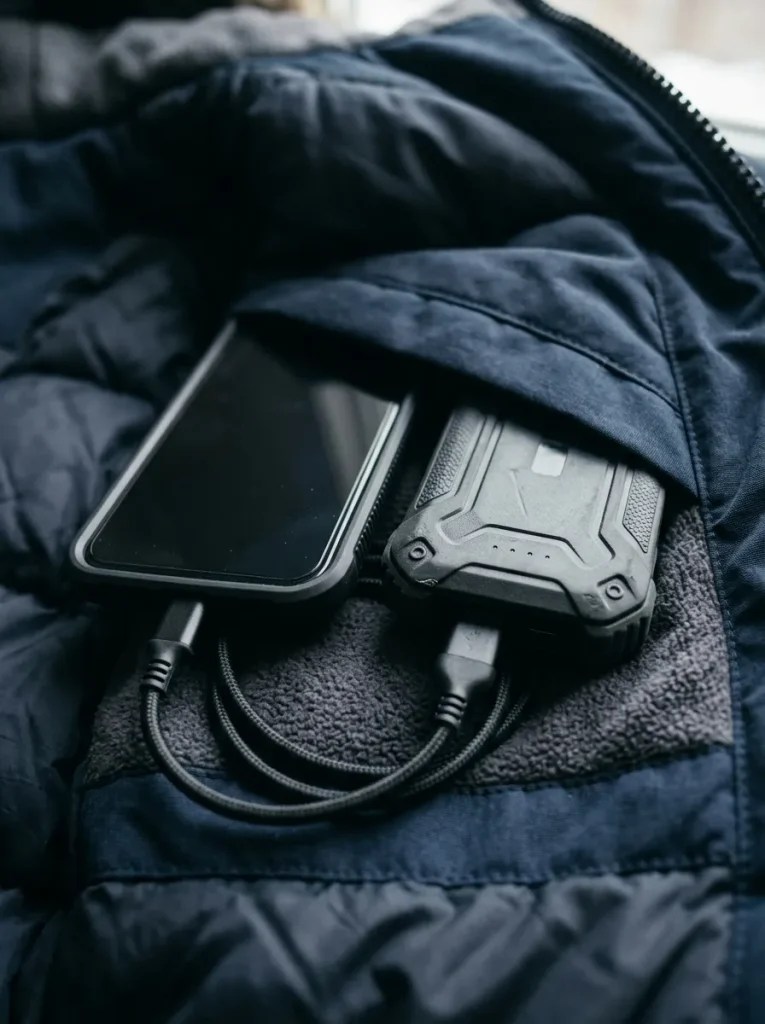
Very cold temperatures can reduce battery performance.
Carry a power bank and keep your phone somewhere reasonably protected from extreme cold.
Your glasses can fog
Moving repeatedly between freezing outdoor temperatures and warm indoor spaces can cause condensation.
A microfiber cloth is useful.
Your hotel room may feel extremely warm
Do not wear your entire outdoor outfit indoors.
Remove layers when you enter heated spaces so you do not sweat. Damp clothing becomes a problem when you head back outside.
Snow can make distances feel longer
A 15-minute summer walk may feel much slower through snow and ice.
Do not cram too many attractions into one day.
Your luggage should be winter-friendly
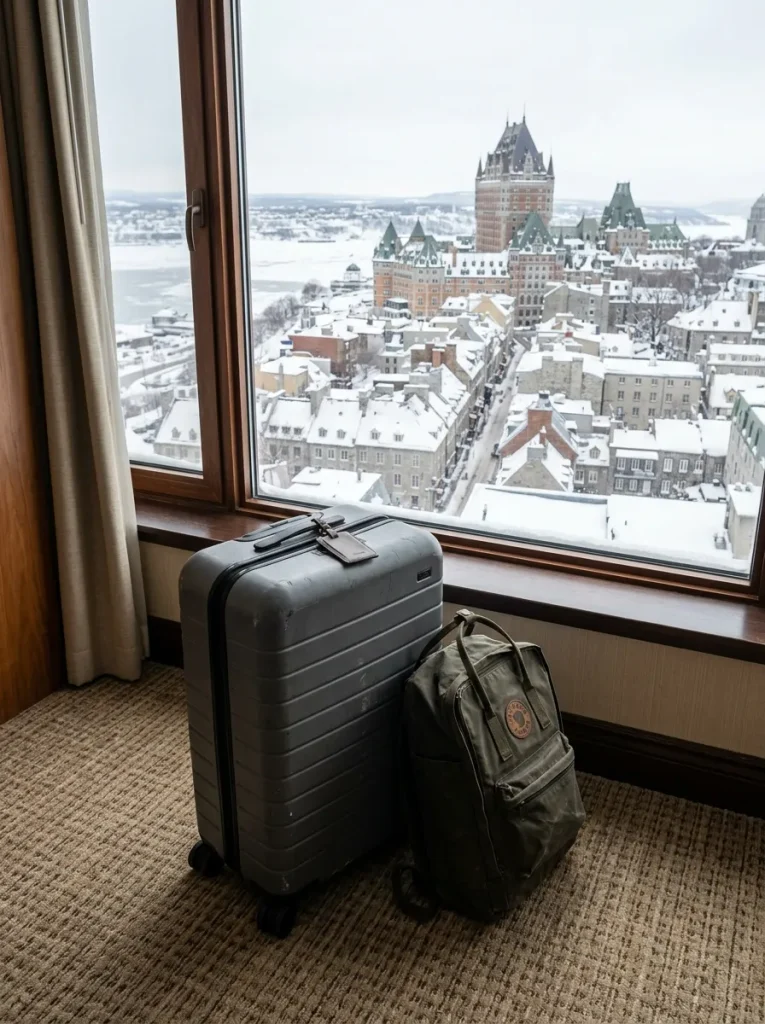
A huge suitcase with tiny wheels can become annoying when you have to move it through snow.
A sturdy rolling suitcase plus a small backpack is often easier.
What to Pack in Your Day Bag
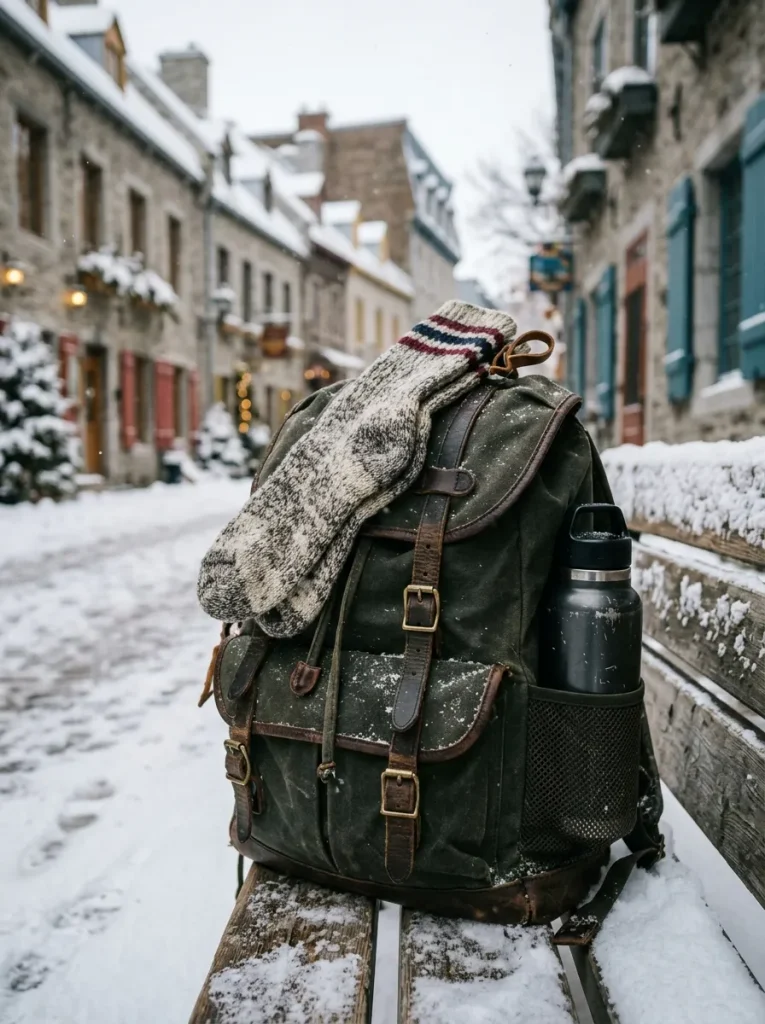
Your daily winter bag should contain:
- Phone
- Power bank
- Wallet
- Identification
- Water
- Lip balm
- Hand warmers
- Extra gloves
- Sunglasses
- Tissues
- Small snack
- Medication
- Compact charger
- Foldable tote or bag
An extra pair of gloves may sound excessive until you drop one into a snowbank.
Then it suddenly becomes the smartest thing you packed.
Winter Safety Checklist
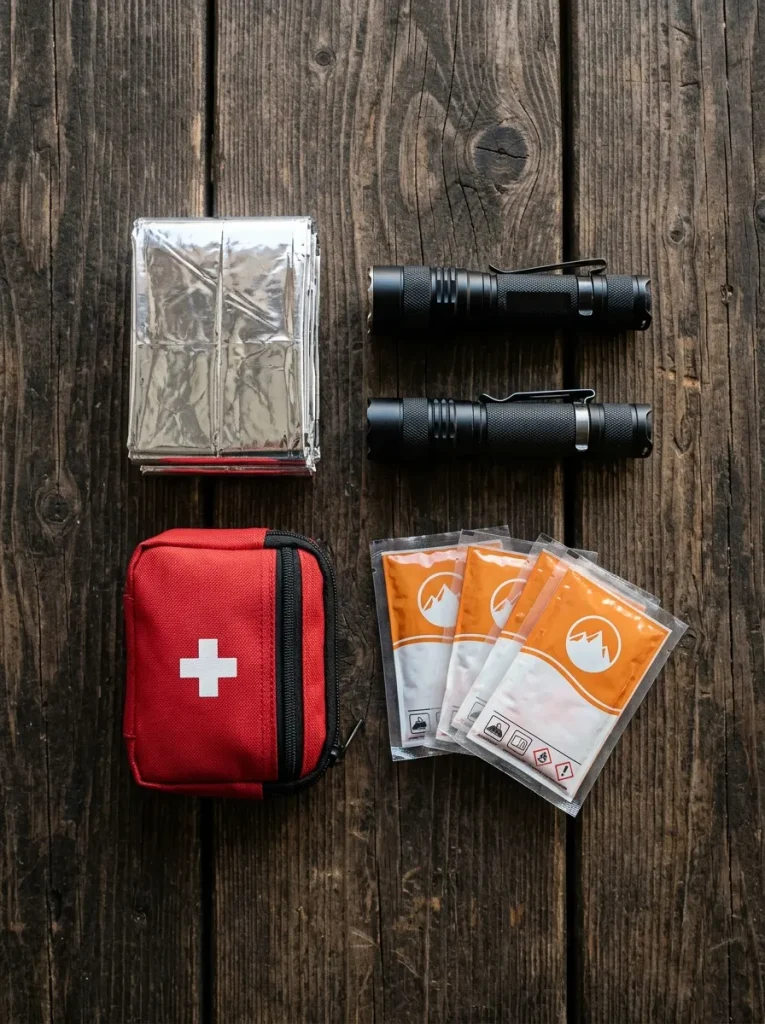
Before leaving your hotel each morning, check:
- Weather forecast
- Wind chill
- Snowstorm warnings
- Road conditions if driving
- Public transportation updates
- Outdoor attraction status
- Proper footwear
- Gloves
- Hat
- Neck and face protection
- Fully charged phone
- Power bank
Environment and Climate Change Canada recommends checking forecasts and wind chill before going outside and covering exposed skin during very cold conditions.
If an extreme cold warning is issued, reconsider long outdoor activities.
Is Québec City Too Cold for a Winter Vacation?
For some travelers, yes.
And that is completely fine.
If you dislike cold temperatures, wet footwear and short daylight hours, Québec City in January may not be your dream destination.
But if you enjoy snowy landscapes, historic streets, winter festivals, cozy cafés and the atmosphere of a genuine Canadian winter, it can be an unforgettable trip.
The secret is not trying to defeat the weather.
Prepare for it.
For a broader overview of handling Canadian winter conditions, our guide to surviving Quebec and Montreal cold covers additional practical cold-weather advice.
Winter Québec City Packing Checklist
Must-have
- Insulated winter coat
- Thermal base layers
- Fleece or wool mid-layer
- Waterproof insulated boots
- Wool socks
- Warm hat
- Insulated gloves or mittens
- Neck warmer
- Waterproof outer layer
- Lip balm
- Moisturizer
- Sunglasses
- Power bank
Very useful
- Hand warmers
- Extra gloves
- Traction cleats
- Waterproof pants
- Small daypack
- Face covering
- Winter-rated phone power bank
- Reusable water bottle
For outdoor activities
- Snow pants
- Extra thermal layers
- Goggles or protective eyewear
- Extra socks
- Activity-specific equipment
- Small thermos
Final Thoughts
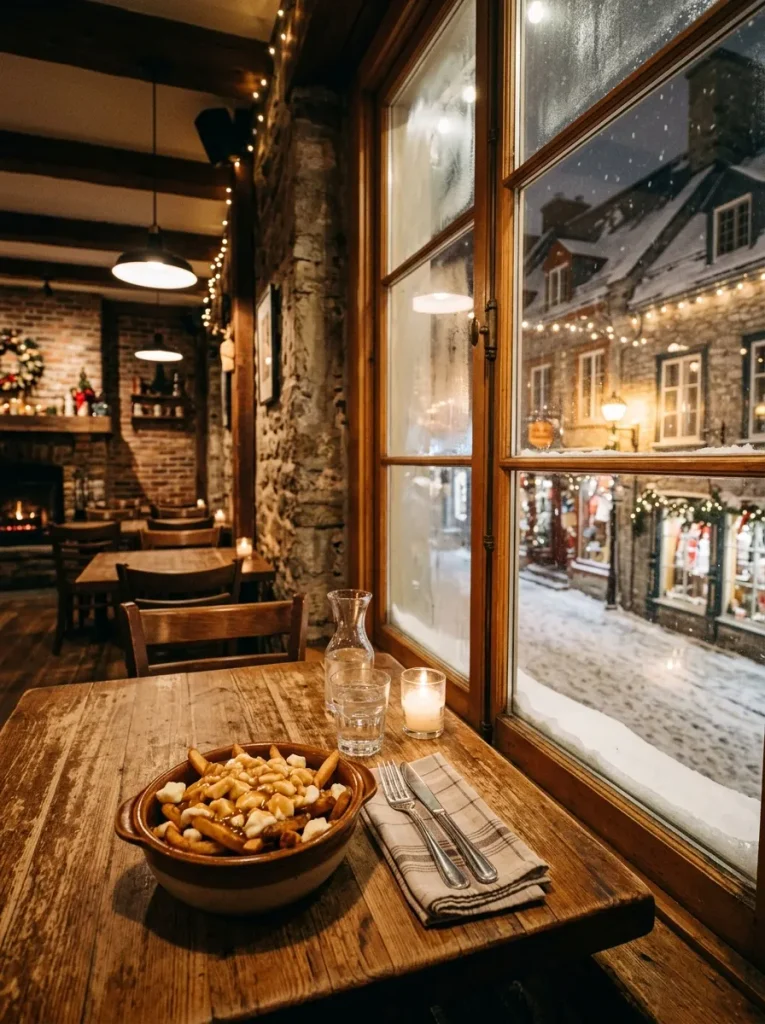
Preparing for a winter trip to Québec City is mostly about respecting the cold.
You do not need an enormous suitcase filled with specialist equipment. You need the right basics: warm layers, waterproof boots, gloves, a good coat and a plan that leaves room for weather changes.
The biggest upgrade you can make is changing your mindset.
Instead of asking, “How can I avoid the cold?” ask, “How can I experience winter comfortably?”
That means walking through snowy Old Québec for an hour, warming up over coffee, visiting an indoor attraction, heading outside again when the weather improves and keeping your itinerary flexible.
And if you are comparing Québec City with warmer destinations for another season, you can also explore our guide to September travel destinations for ideas when winter is still a long way off.
Pack smart, dress in layers, watch the forecast and give yourself permission to slow down.
That is how you turn Québec City’s freezing winter from a challenge into part of the adventure.