What to Keep in Your Car for a Winter Road Trip
A winter road trip can be one of the best ways to experience a destination.
Snow-covered mountains, frozen lakes, quiet forests and small towns glowing with holiday lights can make the drive feel like part of the vacation instead of simply a way to get somewhere.
But winter driving has a different set of rules.
A summer road trip might require little more than a phone charger, snacks and sunglasses. A winter road trip needs a little more preparation because a flat tire, dead battery, icy road or sudden snowstorm can turn a simple drive into a serious situation.
The good news is that you don’t need to fill your trunk with everything from a hardware store.
You just need the right winter car emergency kit, some warm clothing, basic vehicle supplies and a plan for dealing with unexpected delays.
Here’s exactly what to keep in your car for a winter road trip, plus what to check before you leave and what to do if you become stranded.
Recommended Travel Items for Your Trip
What to Keep in Your Car for a Winter Road Trip
The easiest way to organize your winter road-trip supplies is to divide them into five groups:
- Emergency and safety gear
- Warmth and clothing
- Food and water
- Car and recovery equipment
- Navigation and communication tools
This keeps the packing process simple and makes it easier to find something quickly when you need it.
1. Snow Shovel
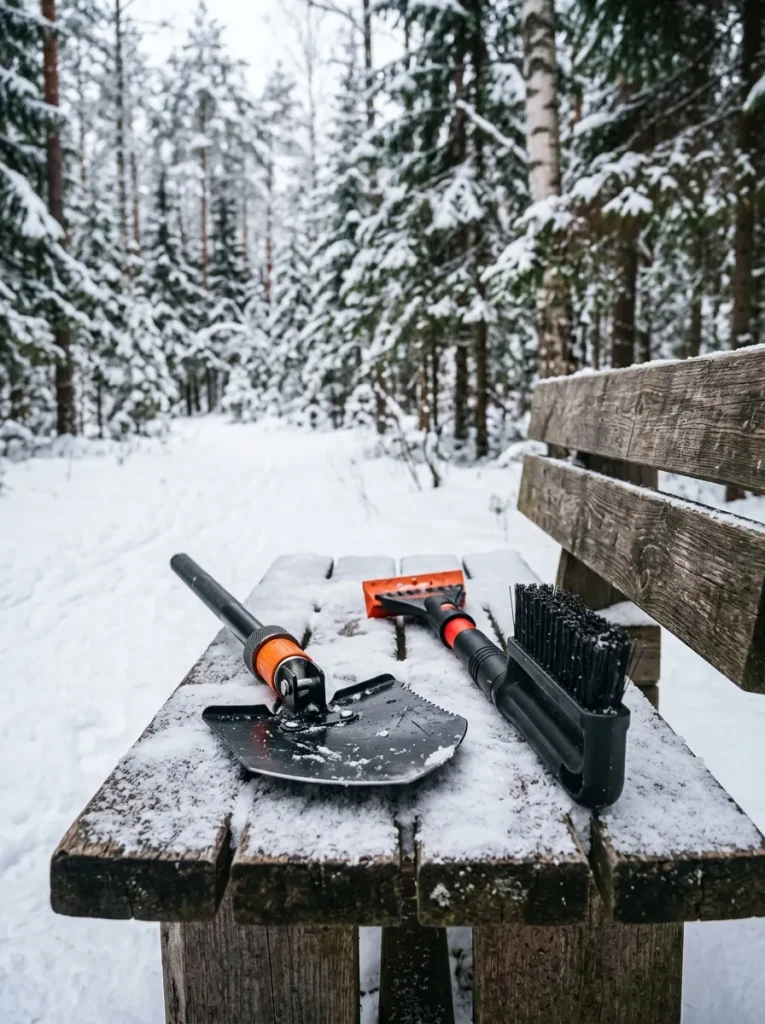
A compact snow shovel is one of the most useful items you can carry during a winter road trip.
It can help you clear snow around your tires if you get stuck, dig your vehicle out after a storm, or clear an area around the exhaust pipe.
Choose a sturdy folding shovel that doesn’t take up half your trunk.
A tiny emergency shovel is better than nothing, but make sure it is strong enough to move packed snow.
2. Ice Scraper and Snow Brush
Don’t rely on your windshield wipers or a credit card to remove ice.
Keep a proper ice scraper and snow brush in the vehicle, preferably somewhere you can reach without opening a completely snow-covered trunk.
Before driving, clear snow and ice from the windshield, windows, mirrors, lights and roof.
The National Weather Service specifically recommends clearing snow and ice from the vehicle before driving, while winter-driving authorities also emphasize keeping windows and lights completely clear.
A layer of snow flying off your roof at highway speed isn’t just annoying. It can become a hazard for vehicles behind you.
3. Warm Blanket or Emergency Blanket
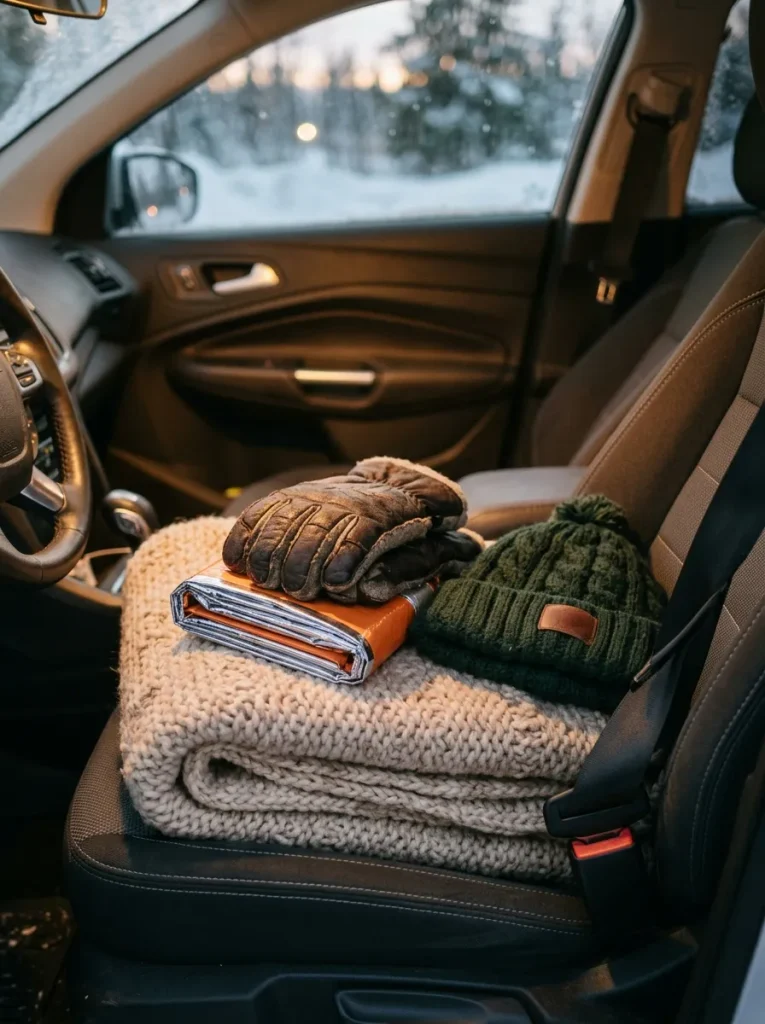
This is one of those items you hope never to need.
Pack at least one warm blanket for every passenger if you’re traveling through seriously cold conditions.
A compact emergency blanket is useful because it takes almost no space, but a proper fleece or insulated blanket is more comfortable if you’re stuck for several hours.
Alberta’s winter-driving guidance specifically recommends blankets and extra clothing as part of a vehicle emergency kit.
For long-distance winter trips, I would carry both:
- One emergency blanket
- One warm fleece or insulated blanket
4. Extra Winter Clothing
Don’t pack only the clothes you plan to wear at your destination.
Keep an emergency set in the car.
Think:
- Warm jacket
- Hat or beanie
- Gloves
- Wool or thermal socks
- Sweatshirt or fleece
- Waterproof footwear
- Extra pants
- Hand warmers
This becomes especially important if you need to leave the vehicle to change a tire, attach traction equipment or dig out your wheels.
And don’t make the mistake of packing all your warm clothes inside luggage buried under everything else.
Keep at least one complete warm layer accessible from inside the passenger compartment.
5. First-Aid Kit
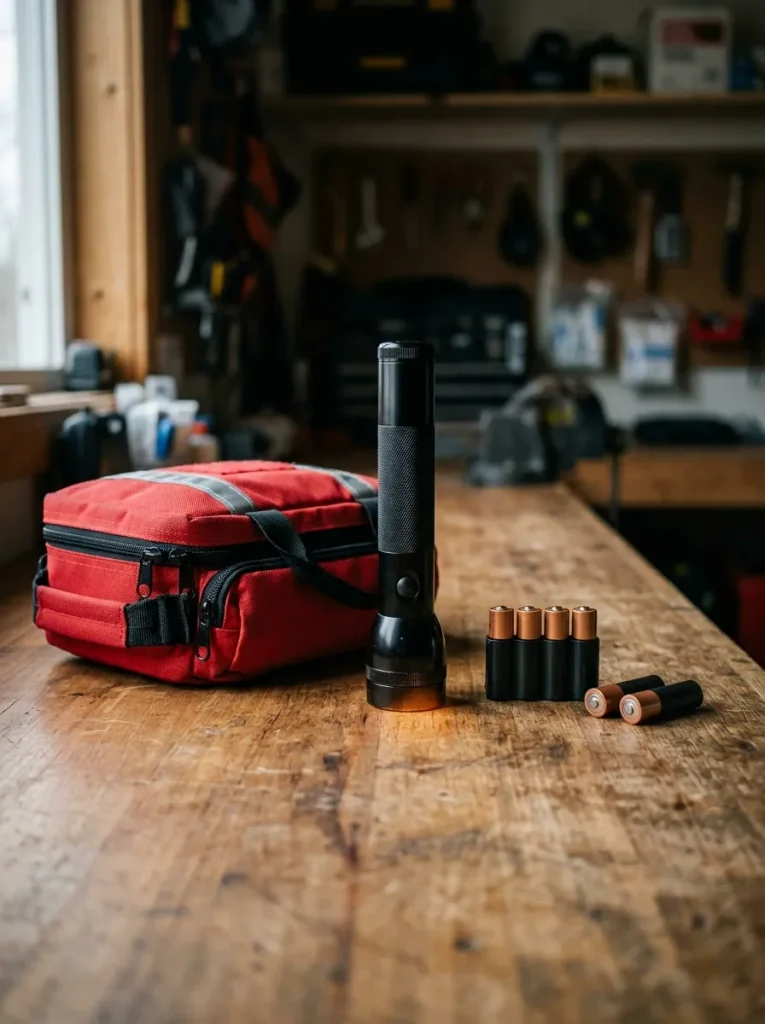
A basic first-aid kit belongs in every road-trip vehicle, but winter travel makes it even more important.
Include:
- Adhesive bandages
- Gauze
- Medical tape
- Antiseptic wipes
- Disposable gloves
- Pain reliever
- Blister treatment
- Small scissors
- Tweezers
- Any essential personal medication
NHTSA recommends carrying a first-aid kit as part of a winter vehicle emergency supply kit.
If someone in your group takes prescription medication, bring enough for the entire trip plus a reasonable backup supply.
6. Flashlight and Extra Batteries
Your phone flashlight is useful, but don’t make it your only light source.
A dedicated flashlight is easier to use when you’re changing a tire, checking under the hood or walking around a vehicle in darkness.
Pack:
- One strong flashlight
- Spare batteries
- Optional headlamp
A headlamp is particularly useful because it leaves both hands free.
7. Jumper Cables or a Portable Jump Starter
Cold weather is hard on car batteries.
A battery that seems perfectly healthy during mild weather may struggle when temperatures fall sharply.
Carry either:
- Heavy-duty jumper cables
- A fully charged portable jump starter
A jump starter is particularly useful when you’re traveling through remote areas because you don’t need another vehicle nearby.
If you use one, check its charge before every major trip.
There’s little value in carrying a dead jump starter.
8. Tire Pressure Gauge and Portable Air Compressor
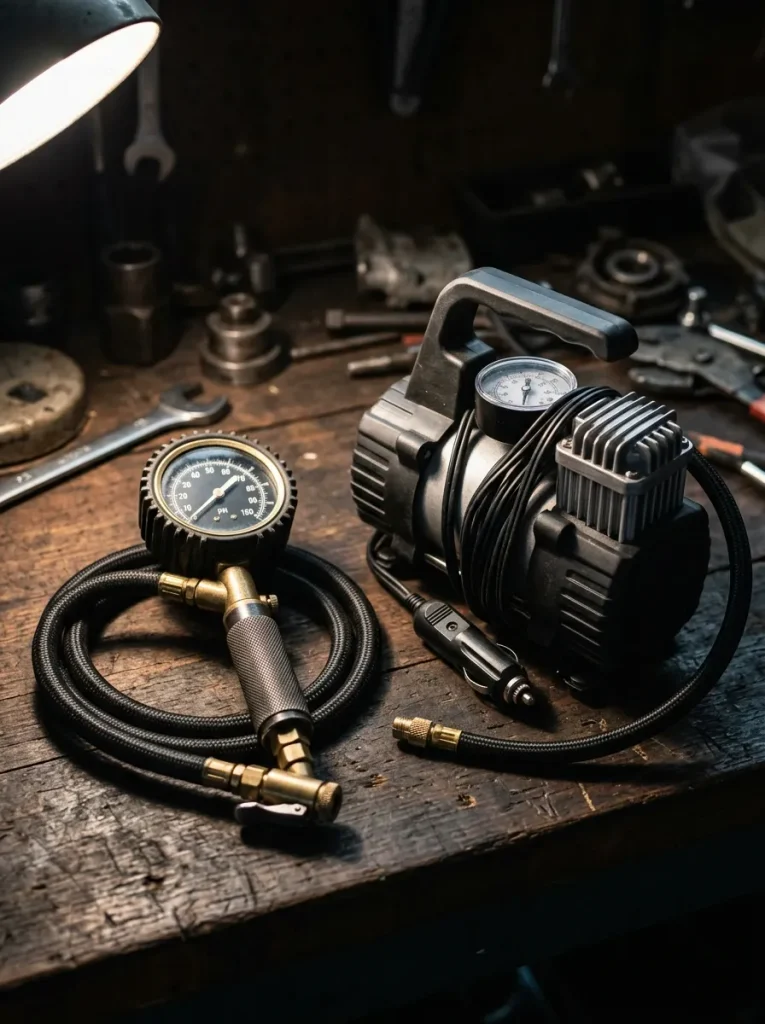
Cold temperatures can lower tire pressure, so checking your tires before and during a winter trip is important.
NHTSA recommends checking tire inflation against the vehicle manufacturer’s recommended pressure because tire pressure can drop as temperatures fall.
A compact tire-pressure gauge takes almost no room.
A small 12-volt or battery-powered air compressor adds another useful layer of protection.
It won’t repair a puncture, but it can help you deal with a slow leak or adjust pressure when needed.
9. Spare Tire, Jack and Lug Wrench
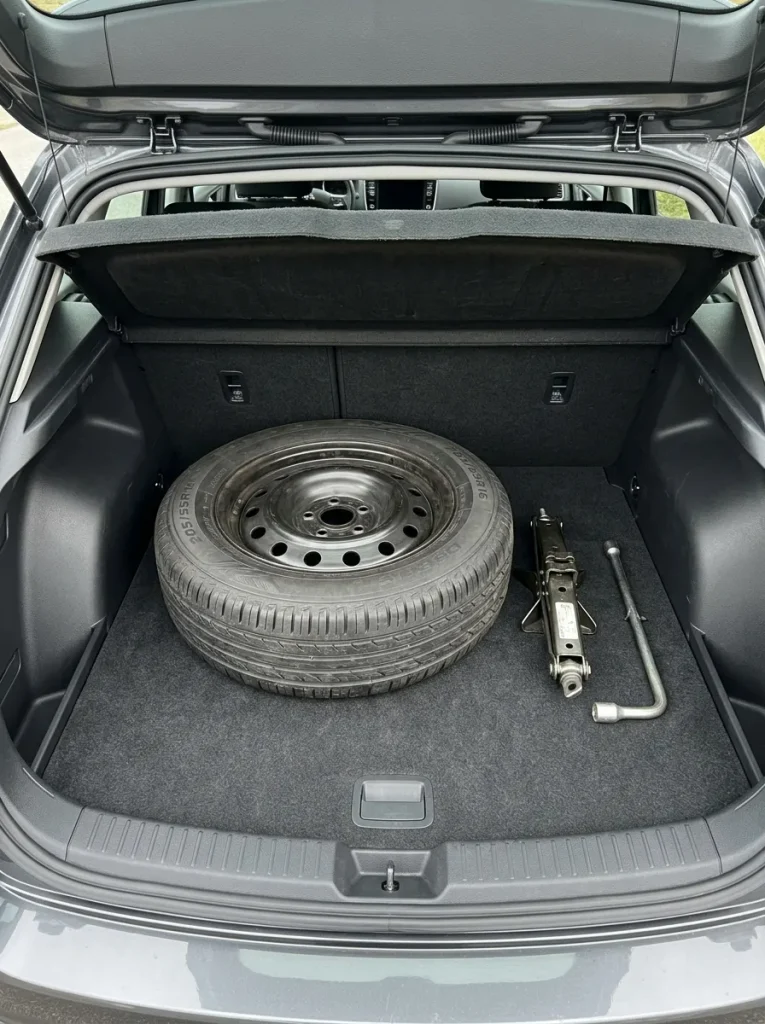
This sounds obvious until you discover that your rental car doesn’t have a traditional spare.
Before leaving, check:
- Does the vehicle have a spare?
- Is it inflated?
- Is the jack present?
- Is the lug wrench included?
- Do you know where they are stored?
Some modern vehicles use tire-repair kits instead of spare tires, so understand what your particular vehicle has before starting the trip.
If you’re renting a car, ask about the emergency equipment before driving away.
10. Tire Traction Material
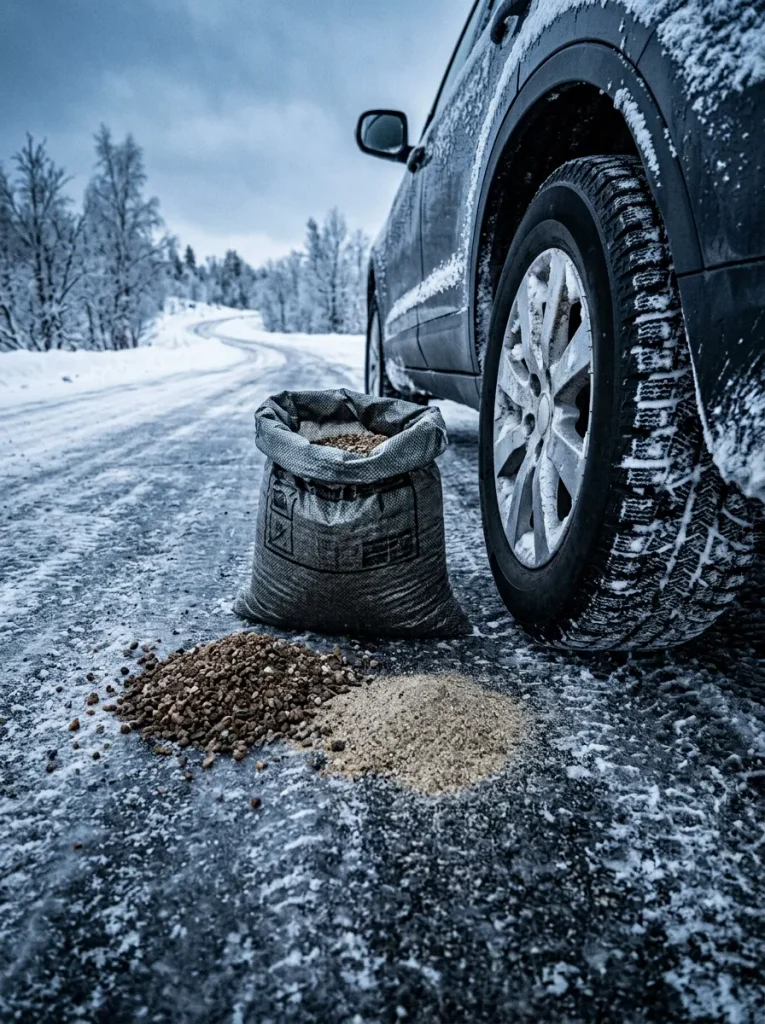
If your tires spin on packed snow or ice, a little extra traction can make a big difference.
Keep a bag of:
- Sand
- Road salt
- Non-clumping kitty litter
- Commercial traction grit
Alberta and NHTSA both recommend carrying abrasive material such as sand or kitty litter for situations where a vehicle becomes stuck.
Sprinkle it around the tires that are struggling for traction.
Don’t use a huge amount. You only need enough to create a rougher surface beneath the tire.
11. Warning Triangles or Roadside Markers
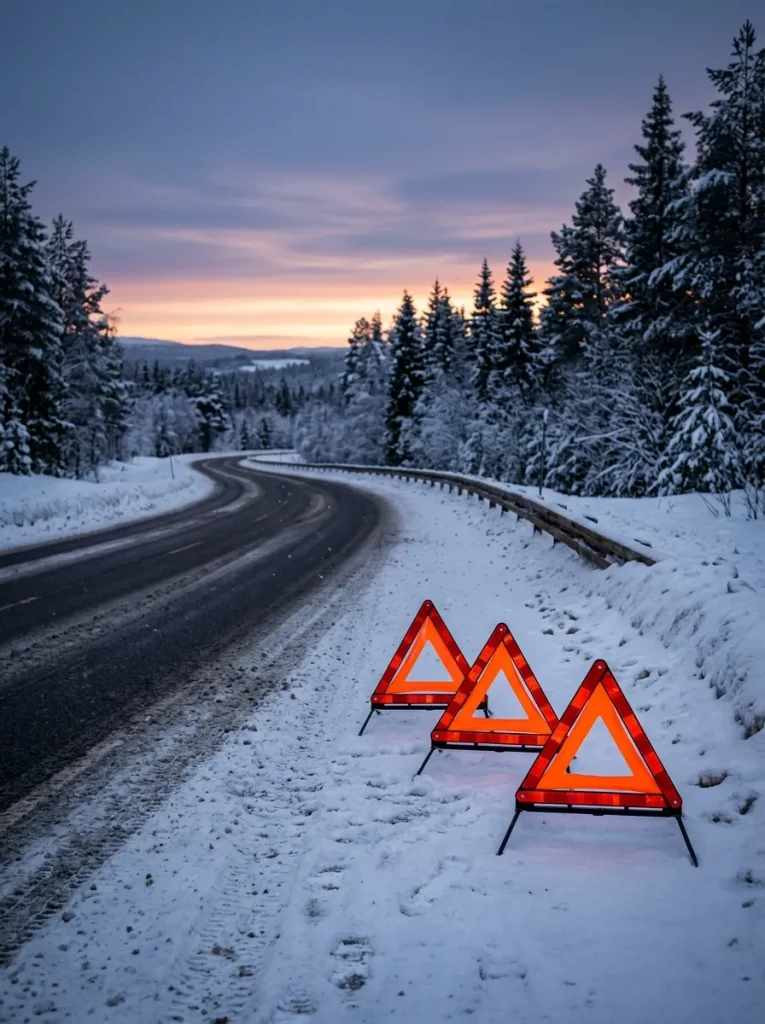
If your vehicle breaks down, you want approaching drivers to see you.
Pack reflective warning triangles, roadside markers or another appropriate warning device.
Flares can also be useful, although they require more caution when used.
Your emergency equipment should help you become visible without putting you in a dangerous position beside moving traffic.
12. Work Gloves
Changing a tire in freezing weather with bare hands is an experience nobody needs.
Keep a pair of sturdy work gloves in the car.
They can protect your hands from:
- Ice
- Sharp metal
- Dirty wheels
- Snow
- Road debris
A second pair is useful for passengers who may need to help.
13. Water
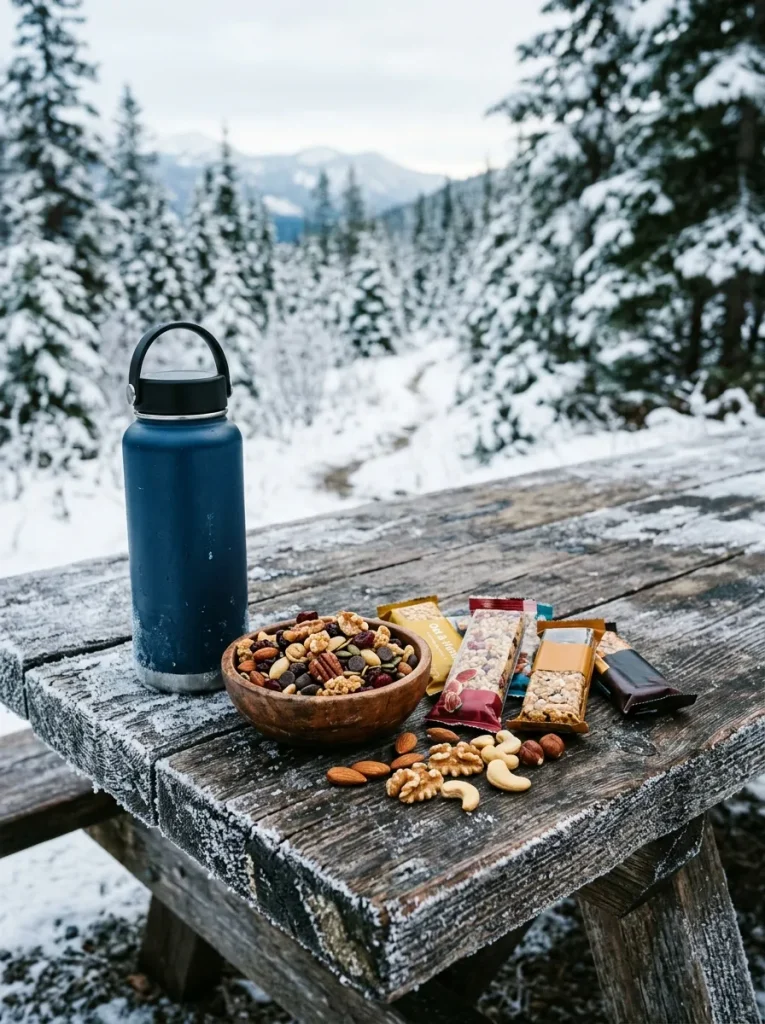
Carry drinking water even if you expect the trip to take only a few hours.
Winter emergencies can last much longer than expected.
Use insulated bottles or containers that are less likely to freeze quickly.
If you’re traveling in extremely cold weather, check your water periodically rather than leaving it buried in the coldest part of the trunk for days.
14. High-Energy, Non-Perishable Food
Keep food in the car that can survive being carried around for a while.
Good choices include:
- Granola bars
- Nuts
- Trail mix
- Crackers
- Energy bars
- Dried fruit
- Peanut butter packets
- Shelf-stable snacks
NHTSA and the National Weather Service both recommend carrying non-perishable food during winter travel.
Avoid packing anything that becomes useless when frozen solid.
15. Phone Charger and Power Bank
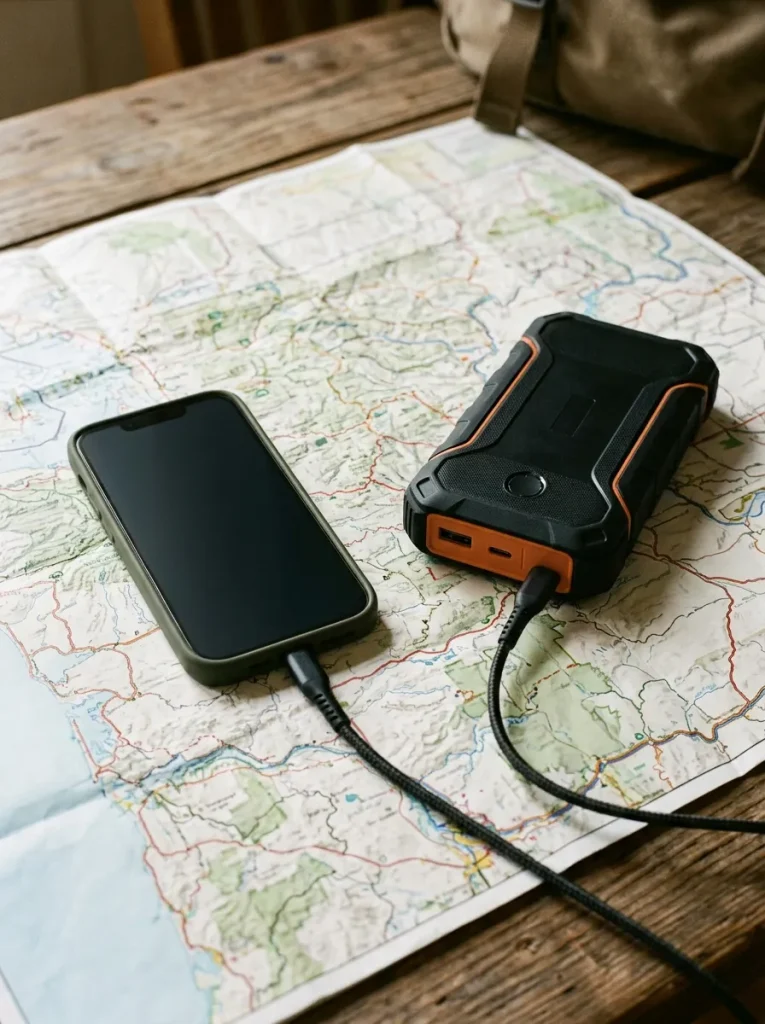
Your phone may be your connection to roadside assistance, emergency services, maps and family.
Carry:
- Car charger
- Charging cable
- Fully charged power bank
Cold weather can drain batteries faster, so keep the power bank somewhere reasonably protected from extreme cold.
If you’re traveling somewhere remote, consider carrying a satellite communicator if you regularly travel beyond reliable cellular coverage.
16. Offline Maps and a Paper Map
Google Maps or Apple Maps are incredibly useful.
Until there is no signal.
Some of the most scenic winter roads are also some of the least connected.
Download your route for offline use before leaving.
Then keep a physical road map as a backup.
This is especially valuable in remote mountain regions where cell coverage can disappear for long stretches. Alberta also recommends carrying a backup paper map because phone batteries can drain faster in cold weather.
For a long scenic drive through the Canadian Rockies, for example, don’t assume you’ll have reliable service everywhere. Plan the route before you leave.
Our guide to the best Icefields Parkway stops is a useful example of the kind of route where advance planning matters.
17. Extra Windshield Washer Fluid
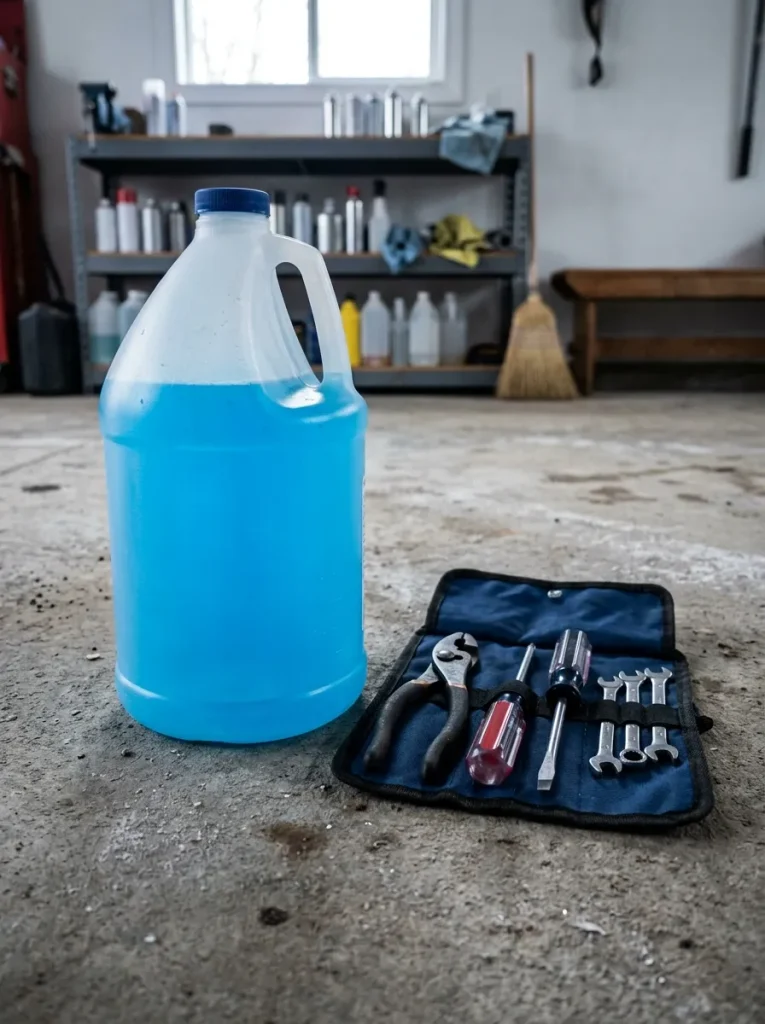
Winter road grime can become a major visibility problem.
Salt, slush and dirt can quickly cover your windshield.
Carry extra winter-rated windshield washer fluid and make sure the fluid is appropriate for the temperatures you’ll encounter.
Don’t wait until the reservoir is empty.
A dirty windshield at night can turn headlights from other vehicles into a wall of glare.
18. Basic Car Tools
You don’t need a full mechanic’s toolbox.
A compact tool kit is enough for most travelers.
Consider carrying:
- Adjustable wrench
- Screwdrivers
- Pliers
- Utility knife
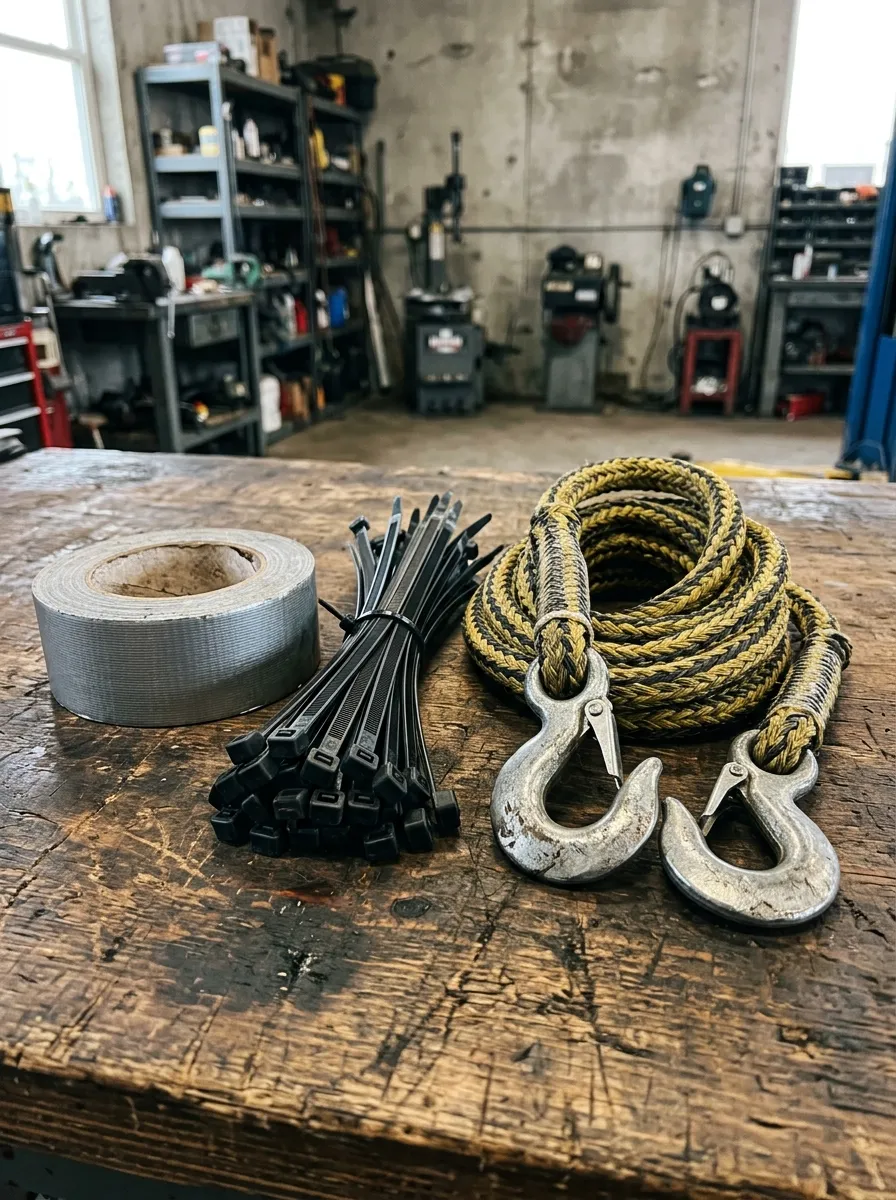
- Duct tape
- Zip ties
- Tire-pressure gauge
- Work gloves
- Small flashlight
These tools won’t fix every mechanical problem, but they can help with simple temporary repairs.
19. Tow Rope or Recovery Strap
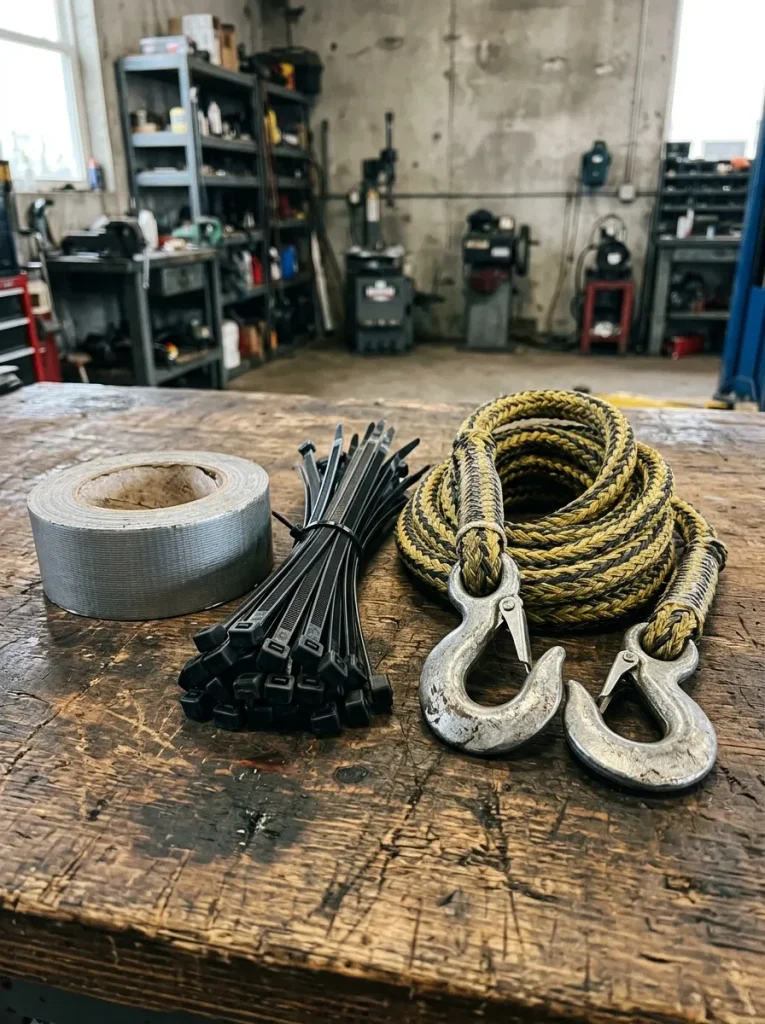
A recovery strap can be useful if your vehicle becomes stuck, but use it only when you understand the vehicle’s recovery points and the equipment’s limits.
Never attach a recovery strap to an unsuitable part of the vehicle.
If you’re traveling into deep snow or remote terrain, professional recovery equipment and knowledge matter more than simply throwing a rope into the trunk.
20. Cash and Important Documents
Don’t rely entirely on your phone or credit card.
Carry a small amount of emergency cash.
Also keep easy access to:
- Driver’s license
- Vehicle registration
- Insurance information
- Roadside-assistance details
- Hotel information
- Emergency contacts
- Any required travel documents
A photo or digital backup can be useful, but having key information available offline is even better.
21. Toilet Paper and Basic Hygiene Supplies
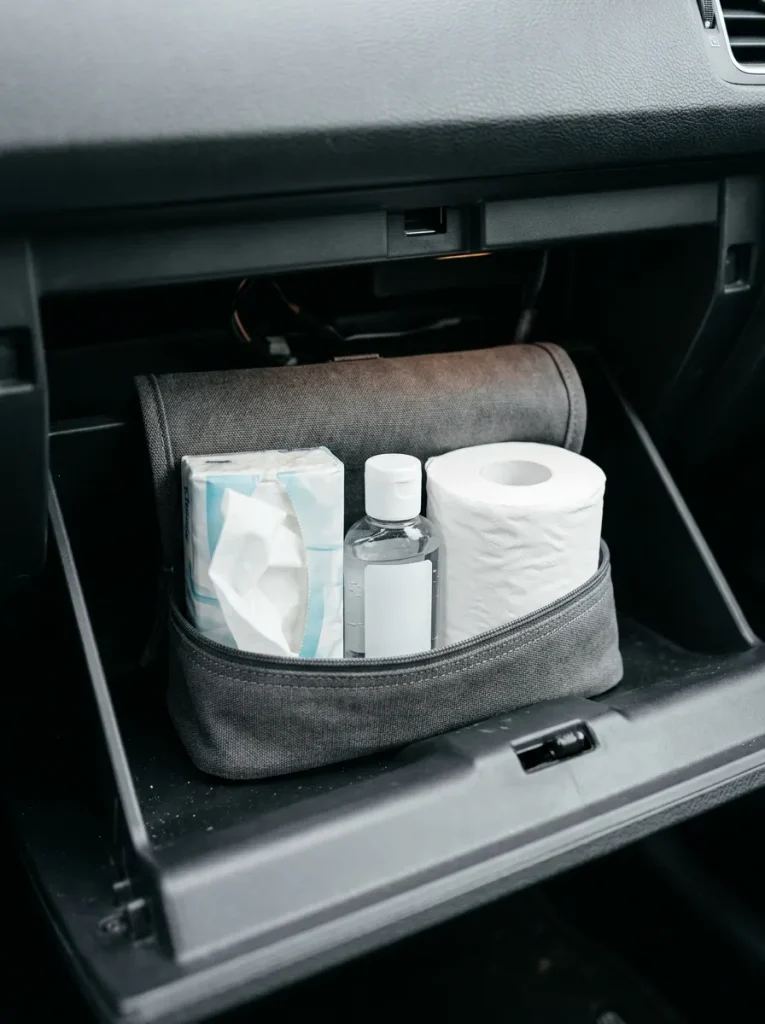
This one sounds boring until you need it.
Keep a small emergency hygiene pouch containing:
- Toilet paper
- Tissues
- Wet wipes
- Hand sanitizer
- Trash bags
- Paper towels
If a highway closes or traffic stops for hours, basic supplies suddenly become very valuable.
22. Candles and Emergency Heat Supplies
Some winter emergency kits include a candle in a deep container and waterproof matches.
Government winter-driving guidance in Alberta includes this type of equipment among recommended vehicle emergency supplies.
However, treat open flames inside a vehicle with extreme caution. A candle should never be considered a substitute for proper warm clothing, blankets and a safe vehicle heater.
Modern travelers can also carry purpose-built emergency warmth equipment designed for vehicle use.
23. Pet Supplies
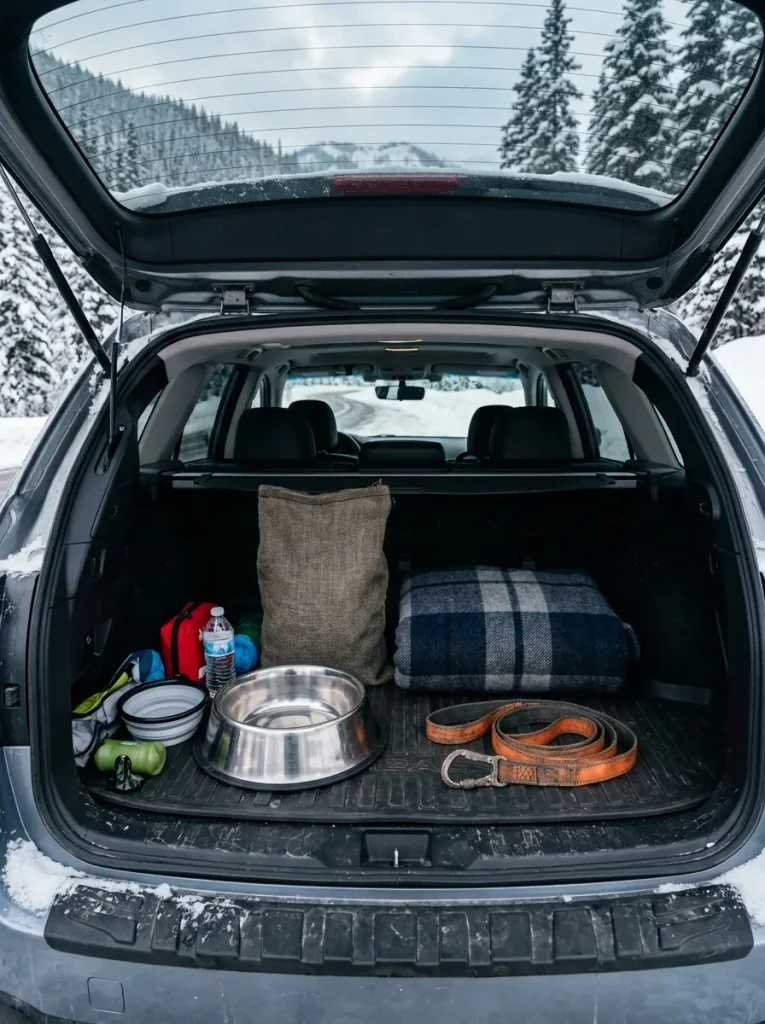
Taking your dog on the winter road trip?
Your emergency kit needs to include them too.
Pack:
- Extra food
- Water
- Bowl
- Leash
- Blanket
- Towels
- Waste bags
- Medication
- Pet first-aid supplies
Never assume that a pet-friendly roadside stop will have everything your animal needs.
24. Entertainment for Delays
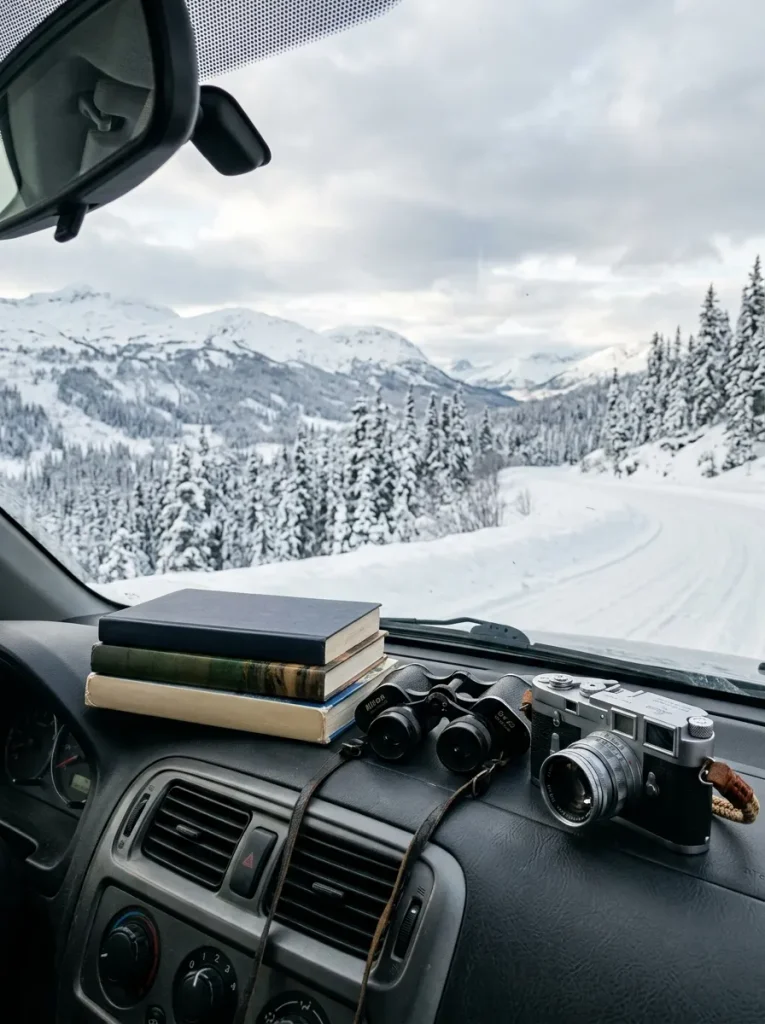
Not every road-trip item needs to be about emergencies.
Winter traffic jams and weather delays can create hours of unexpected downtime.
Pack:
- Downloaded podcasts
- Audiobooks
- Road-trip games
- Offline playlists
- Books
- Camera
- Binoculars
If you’re traveling with kids, bring a few activities that don’t require internet access.
You can even turn the journey itself into part of the vacation with some of these fun road trip activities.
Your Winter Road Trip Car Checklist
Before leaving, use this quick checklist.
Emergency gear
- First-aid kit
- Flashlight
- Extra batteries
- Emergency blankets
- Warning triangles
- Work gloves
- Snow shovel
- Ice scraper
- Snow brush
- Traction material
Vehicle equipment
- Spare tire
- Jack
- Lug wrench
- Jumper cables or jump starter
- Tire-pressure gauge
- Portable air compressor
- Basic tool kit
- Tow/recovery equipment
- Extra windshield washer fluid
Personal supplies
- Warm jacket
- Gloves
- Hat
- Extra socks
- Extra footwear
- Water
- Non-perishable food
- Personal medication
- Hygiene supplies
Technology
- Phone
- Car charger
- Power bank
- Downloaded offline maps
- Roadside-assistance information
- Paper map
What to Check on Your Car Before a Winter Road Trip
Packing the trunk is only half the job.
Your vehicle needs a winter inspection before you leave.
Check the tires
Look at tread depth, tire condition and pressure.
If you’re traveling somewhere with prolonged snow and ice, consider proper winter tires rather than assuming all-season tires will be sufficient.
Winter tires are designed to maintain better traction in low temperatures and snowy or icy conditions.
Also check the spare.
A spare tire with low pressure isn’t much of a backup.
Check the battery
Cold weather puts additional demands on a vehicle battery.
If the battery is old or showing signs of weakness, have it tested before the trip.
Check the coolant
Make sure the cooling system contains the appropriate coolant mixture for the temperatures you’re expecting.
NHTSA recommends checking the cooling system for leaks and testing or replacing old coolant as appropriate.
Check the brakes
Winter roads already reduce traction.
You don’t want questionable brakes making things worse.
Have unusual noises, vibrations or braking problems checked before leaving.
Check the wipers and defroster
You need clear visibility.
Make sure your wipers work properly and your windshield washer system is functioning.
Also check that the heater and defroster work correctly.
Keep the fuel tank topped up
Don’t run a winter road trip with the fuel light glowing like a tiny warning beacon.
Alberta recommends keeping the tank more than half full during winter travel, while NHTSA recommends keeping the tank close to full whenever possible.
This gives you more flexibility if traffic stops or you need to take an unexpected detour.
What About Electric Cars?
Electric vehicles can absolutely handle winter road trips, but cold weather affects battery performance and energy consumption.
Before leaving:
- Start with a high state of charge
- Know where charging stations are located
- Download charging information for offline access
- Plan extra charging time
- Precondition the vehicle when practical
- Keep warm clothing and emergency supplies inside the car
Don’t assume that a charger will always be available when you arrive.
For remote winter routes, identify backup charging locations before departure.
How to Pack the Emergency Kit
Don’t throw everything into one giant storage bin.
Organize your supplies into two groups.
Keep inside the passenger area
These should be immediately accessible:
- Blankets
- Warm clothing
- Water
- Snacks
- Phone charger
- Flashlight
- First-aid kit
- Medications
- Gloves
Keep in the trunk
Store heavier equipment here:
- Shovel
- Traction material
- Jumper cables
- Tools
- Air compressor
- Spare tire equipment
- Recovery gear
The goal is simple: if you’re stuck in snow, you should be able to reach the shovel and traction material without unpacking half your luggage.
What to Do If Your Car Gets Stuck in Snow
Don’t keep spinning the tires.
That can dig the vehicle deeper into the snow.
Instead:
- Stop and assess the situation.
- Turn on your hazard lights.
- Clear snow from around the tires.
- Clear the exhaust pipe.
- Use traction material beneath the drive wheels.
- Try gentle acceleration.
- If you’re still stuck, call roadside assistance or emergency services.
If the vehicle is safely off the road and conditions are dangerous, staying with the vehicle is generally safer than walking away in search of help. NHTSA advises stranded drivers to remain with the vehicle and make it visible to rescuers.
What to Do If You Are Stranded in a Snowstorm
This is where your emergency kit really earns its trunk space.
First, stay calm.
Keep your seatbelt on if you’re in or near traffic, turn on your hazard lights and make the vehicle visible.
Clear snow away from the exhaust pipe before running the engine.
If you need to run the engine for warmth, do so only periodically and make sure the exhaust remains unobstructed. Carbon monoxide can build up if exhaust gases cannot escape. NHTSA specifically warns stranded motorists about this risk.
Tell someone where you are and contact roadside assistance or emergency services.
Don’t leave the vehicle simply because another road appears nearby.
In a serious winter storm, visibility can deteriorate rapidly.
Check the Weather Before You Leave
The best winter emergency kit is the one you never have to use.
Before departure, check:
- Weather forecast
- Winter storm warnings
- Road closures
- Highway conditions
- Traffic
- Mountain pass conditions
- Avalanche warnings where relevant
- Fuel or charging locations
The National Weather Service recommends checking weather and road conditions before winter travel and changing plans when hazardous conditions are expected.
If officials advise against travel, listen.
There is no scenic overlook worth turning your winter vacation into a rescue operation.
Tell Someone Your Route
For longer winter road trips, especially through remote areas, tell someone:
- Where you’re going
- Which route you’re taking
- Where you’re staying
- When you expect to arrive
- When you’ll check in
This is particularly important if you’re driving through mountain or rural areas with limited cellular service.
A winter trip through Quebec’s snowy countryside, for example, can be spectacular, but you’ll want to prepare differently from a short urban drive.
If you’re planning a longer Canadian winter adventure, our Lanaudière-Mauricie winter road trip guide can help you think through the route and seasonal conditions.
Lanaudière-Mauricie winter road trip
Don’t Let Four-Wheel Drive Create False Confidence
Four-wheel drive and all-wheel drive can be helpful.
They don’t make your vehicle immune to ice.
Even SUVs and four-wheel-drive vehicles can lose traction on snowy or icy roads. The National Weather Service specifically warns that four-wheel-drive vehicles can still lose traction in winter conditions.
Your tires remain one of the most important connections between your vehicle and the road.
Slow down.
Leave more space.
Avoid sudden braking and sharp steering.
And don’t use cruise control on slippery winter roads. Alberta specifically advises against it in winter conditions.
Winter Road Trip Packing for Different Destinations
Not every winter road trip requires the same equipment.
Mountain road trip
Bring:
- Chains where legally required
- Extra blankets
- Shovel
- Traction material
- Offline maps
- Extra food
- Plenty of fuel
Snowy Canadian road trip
Add:
- Serious winter clothing
- Winter tires
- Extra windshield fluid
- Battery jump starter
- Paper map
- Emergency communication device for remote areas
Desert winter road trip
Winter doesn’t always mean snow.
A destination such as New Mexico can have cold nights, mountain snow and large temperature changes even when parts of the state remain relatively mild.
Our New Mexico travel guide is useful if you’re planning a winter road trip through the Southwest.
Pack layers rather than assuming desert winter means warm weather all day.
A Simple Winter Car Emergency Kit
If you don’t want to build a giant emergency kit, start with these essentials:
The 15-item version:
- Snow shovel
- Ice scraper
- Snow brush
- Blanket
- Warm clothing
- Flashlight
- First-aid kit
- Jumper cables or jump starter
- Tire-pressure gauge
- Spare tire equipment
- Traction material
- Phone charger
- Power bank
- Water
- Non-perishable food
Then add tools, recovery equipment and destination-specific supplies based on the trip.
Final Winter Road Trip Checklist
Before pulling out of the driveway, ask yourself five questions:
Is my vehicle ready?
Check tires, battery, brakes, coolant, wipers, lights and heater.
Can I stay warm?
Keep blankets and extra clothing accessible.
Can I get unstuck?
Carry a shovel, traction material and appropriate recovery equipment.
Can I communicate?
Charge your phone, carry a power bank and download offline maps.
Do I know what the weather and roads are doing?
Check the forecast and current road conditions immediately before leaving.
Winter road trips don’t have to feel intimidating.
The trick is to prepare for the boring possibilities before they happen. A shovel that stays unused for 1,000 miles isn’t wasted space. It’s insurance against the one snowy shoulder where you might desperately need it.
And once your vehicle is prepared, you can focus on the fun part: finding the scenic roads, stopping for hot drinks, discovering small towns and turning the drive itself into part of the adventure.