7 Travel Essentials You Actually Need Before Your Next Trip (Tested & Reviewed)
Every frequent traveler has a version of this story: standing in a security line watching their liquids bag get flagged, realizing their phone is at 4% with three hours until boarding, or hauling a suitcase that weighs 6 pounds more than the airline allows and now costs $75 to check.
Over the years of documenting my trips for this blog, I’ve slowly built a small kit of gear that solves these exact problems — not glamorous, not expensive relative to a flight or hotel stay, but genuinely the difference between a smooth trip and a stressful one. Below are the seven items I now consider non-negotiable, tested across real trips, with honest pros and cons for each so you can decide what’s actually worth buying for your own travel style.
1. Tolaccea Travel Backpack 40-50L — The Carry-On That Replaced My Suitcase
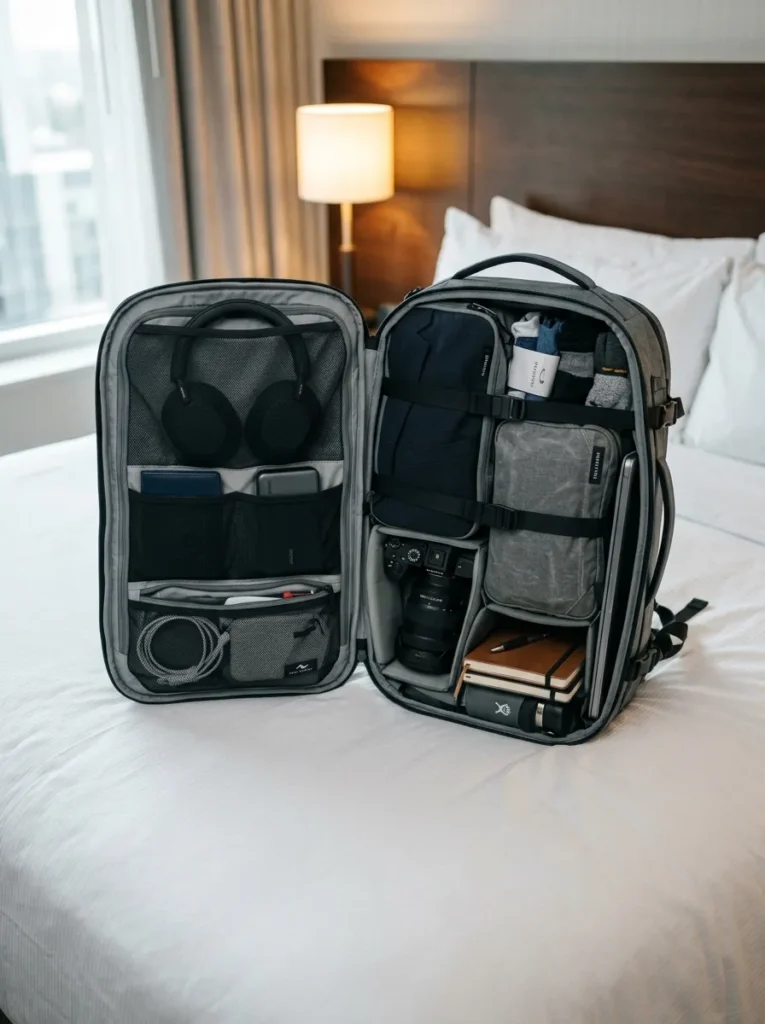
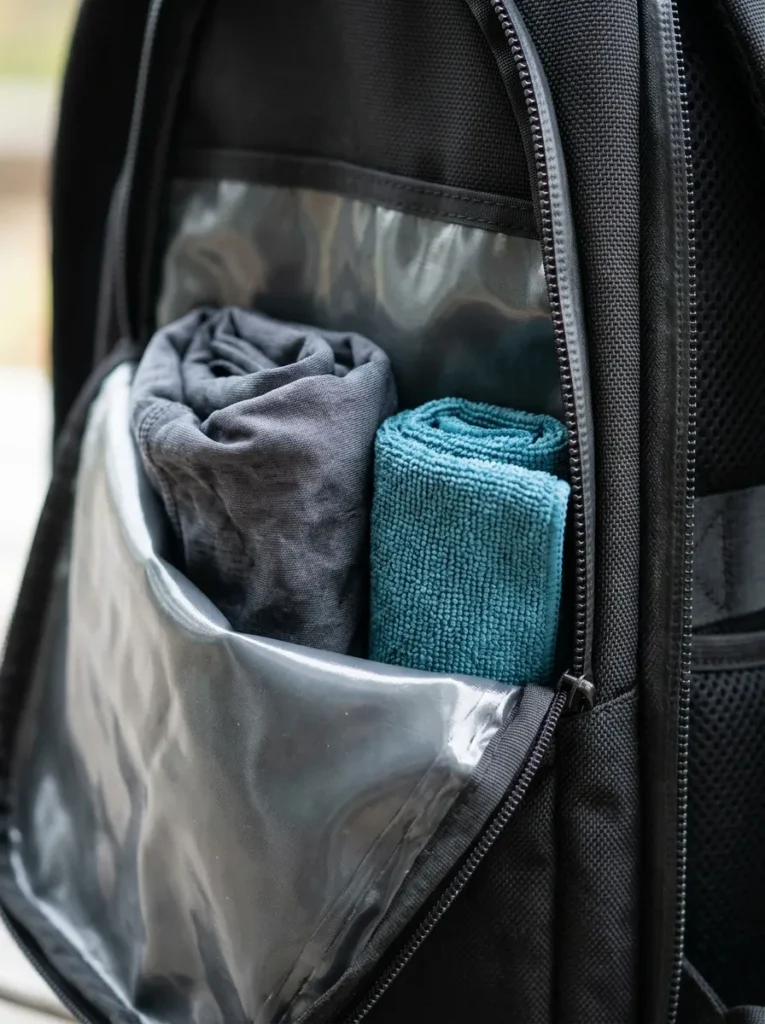
I switched from rolling luggage to a backpack for anything under two weeks, and this is the bag that made the switch stick. The headline feature is the 180° suitcase-style opening — it lays completely flat like a hard-shell case, rather than the awkward top-loading design most travel backpacks force on you. That alone changes how you pack: you can see everything at once and use packing cubes the same way you would in a suitcase.
It expands from 40L to 50L using a dual-compartment zip system, which gives you real flexibility. Packed at 40L, it comfortably meets carry-on standards for airlines like Delta, Spirit, Frontier, and JetBlue. Expanded to 50L, it becomes a genuine multi-day bag — I’ve used it expanded for 5-day trips without checking anything.
The 3L wet-dry pocket is the feature I use most and expected to use least. It’s a separate, sealed compartment for damp swimwear, worn gym clothes, or shoes, keeping them away from everything else in the bag. It sounds minor until you’re three days into a trip and grateful your clean shirts don’t smell like yesterday’s hike.
The bag is made from RPET fabric (recycled plastic bottles), which is a nice sustainability touch without any noticeable trade-off in durability. It also converts into three carrying styles — backpack straps, a top handle for briefcase-style carry, and a detachable waist belt for stability on longer walks through airports or cities.
Available on Amazon:
Pros:
- Lay-flat opening makes packing and repacking genuinely fast
- Expandable capacity adapts to trip length
- Separate wet/dry compartment is a real problem-solver
- TSA-friendly and sized for major US carriers’ carry-on limits
- Multiple carry configurations for comfort
Cons:
- Sized for overhead bins, not for under-seat storage — check this if you’re flying a strict budget carrier that only allows a personal item
- Laptop compartment fits up to 15.6″, so 16″+ laptop owners should double-check current listing specs before buying
- At 50L expanded, it’s bulky enough that it stops feeling like a “light” personal item
Bottom line: If you’re trying to move from checked luggage to carry-on-only travel, this is one of the more thoughtfully designed bags in its price range, largely because of the suitcase-style opening.
2. Sony WH-1000XM6 — Noise-Canceling Headphones for Actual Long-Haul Sanity
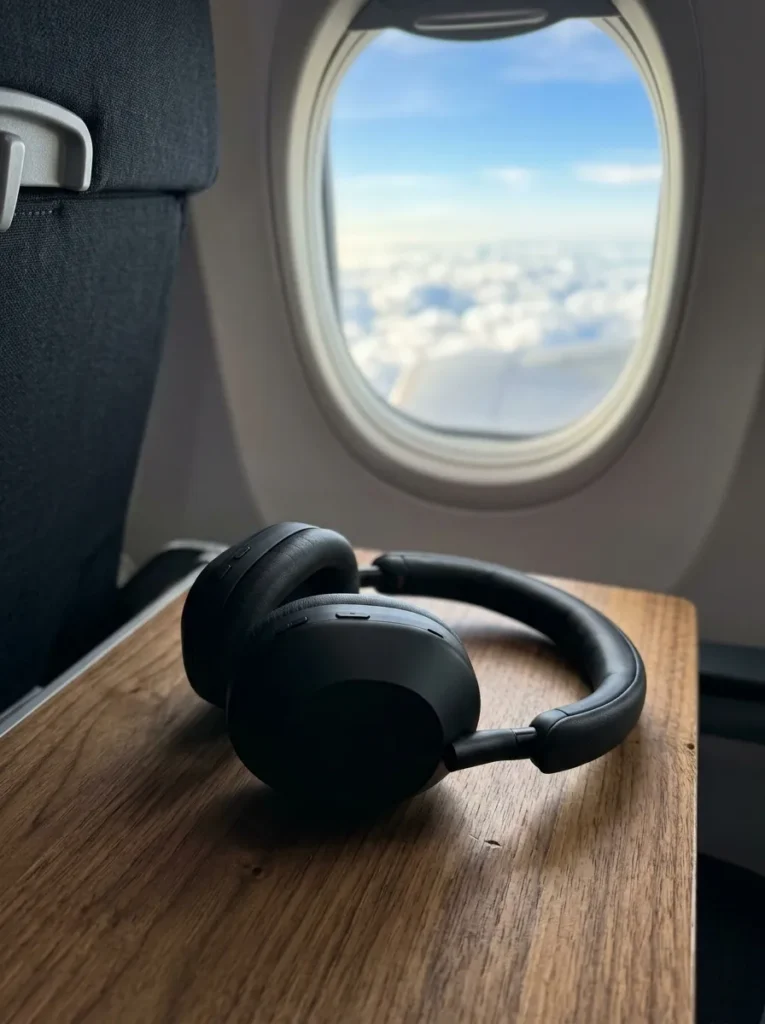
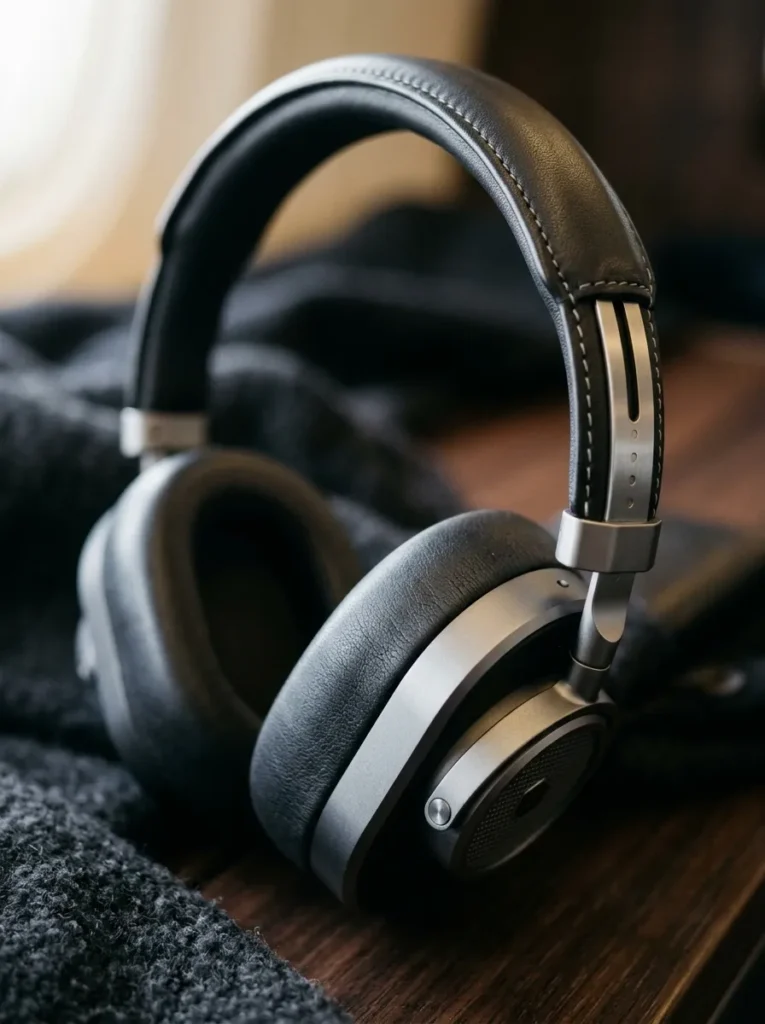
Sony’s 1000X line has been the benchmark for travel headphones for years, and the XM6 continues that reputation. The noise cancellation is the reason to buy these: engine drone on a long-haul flight becomes a distant hush rather than a constant hum, and it’s noticeably more effective in variable environments — train cabins, busy terminals, coffee shops — than most competing headphones I’ve tried.
Battery life is rated for around 30 hours with noise cancellation active, which comfortably covers even the longest transpacific or transatlantic routes without needing a mid-flight charge. Quick-charge functionality means a short charge during a layover buys you several more hours.
Comfort matters enormously for anything over 4-5 hours of wear, and Sony’s ear cushions and headband padding hold up well on genuinely long flights — better, in my experience, than several competitors that start pinching after hour six.
Available on Amazon:
Pros:
- Best-in-class noise cancellation for flights, trains, and noisy terminals
- Strong battery life; quick-charge covers short layovers
- Comfortable for multi-hour wear
- Multipoint Bluetooth pairing lets you switch between phone and laptop seamlessly
Cons:
- Premium price point compared to mid-range alternatives
- Case is on the bulkier side, taking up real space in a daypack
- Touch controls on the ear cup can be sensitive and occasionally misregister taps
Bottom line: If you fly regularly and value your peace of mind more than your budget, this is a justified upgrade. If you fly once or twice a year, a mid-range noise-canceling option will likely serve you fine at a fraction of the cost.
3. Etekcity Digital Luggage Scale — The $15 Fix for a $75 Problem
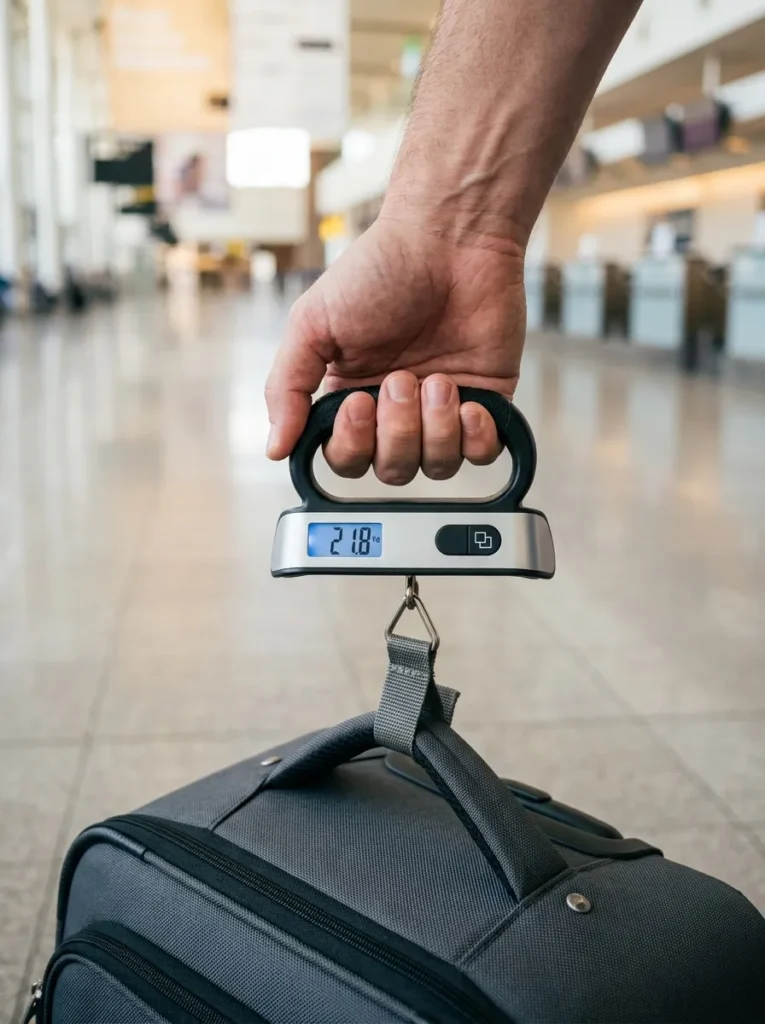
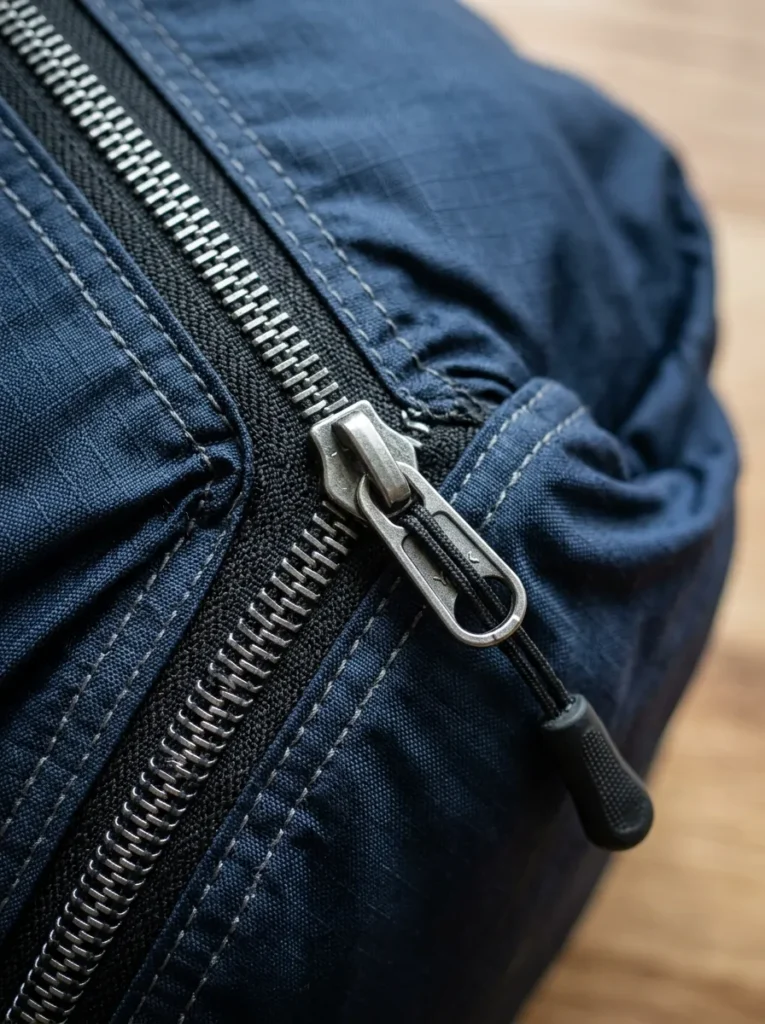
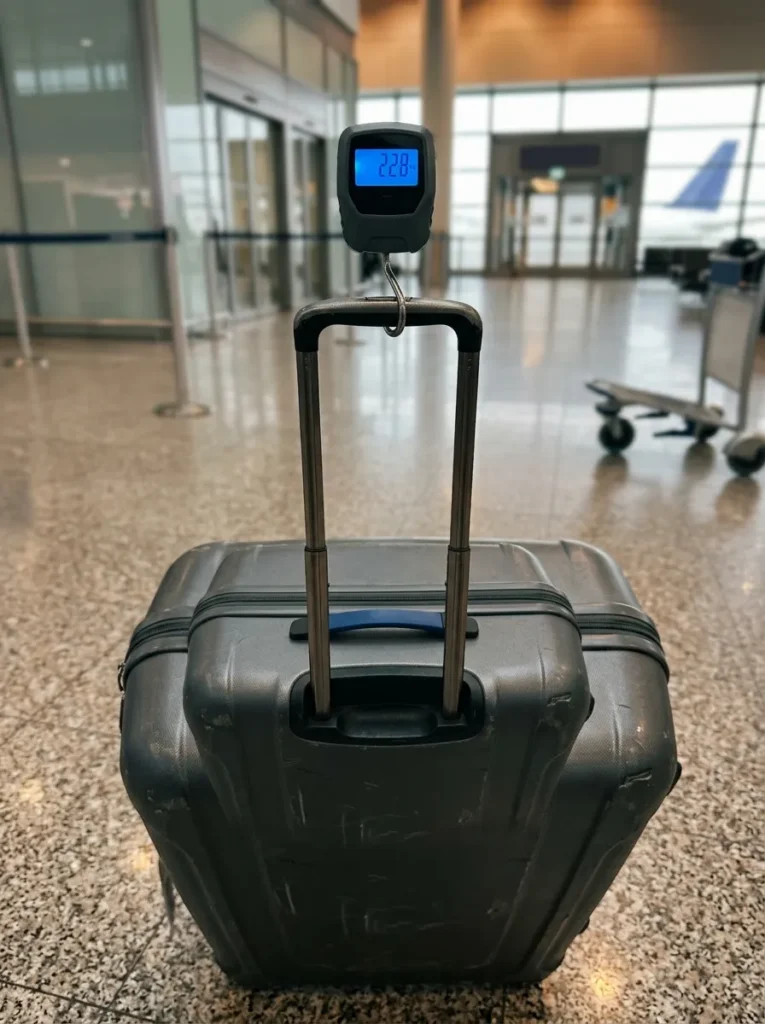
This is the cheapest item on this list and arguably one of the most consistently useful. Overweight baggage fees range from $50 to over $100 depending on the airline and route, and this small handheld scale removes the guesswork entirely.
It works by hooking onto your suitcase handle and lifting — the digital display shows weight up to 110 lbs, accurate to within a few tenths of a pound in my testing against airport scales. It runs on batteries, holds a reading, and folds into a shape smaller than a smartphone.
The real value here isn’t packing day — it’s the return leg. After buying souvenirs, gifts, or extra clothes, checking your bag’s weight before you leave your hotel avoids the stress of repacking at the check-in counter while a line forms behind you.
Available on Amazon:
Pros:
- Extremely cheap relative to the fees it prevents
- Accurate and consistent readings
- Tiny and lightweight — easy to pack without a second thought
- Battery-powered, no charging required
Cons:
- Manual hook-and-lift method takes a couple of tries to get a stable reading
- Digital display can be hard to read in dim hotel rooms
- It’s one more small item to keep track of and not lose
Bottom line: At this price, there’s very little reason not to own one if you check bags with any regularity.
4. Apple AirTag (2nd Generation) — Peace of Mind for Checked Luggage
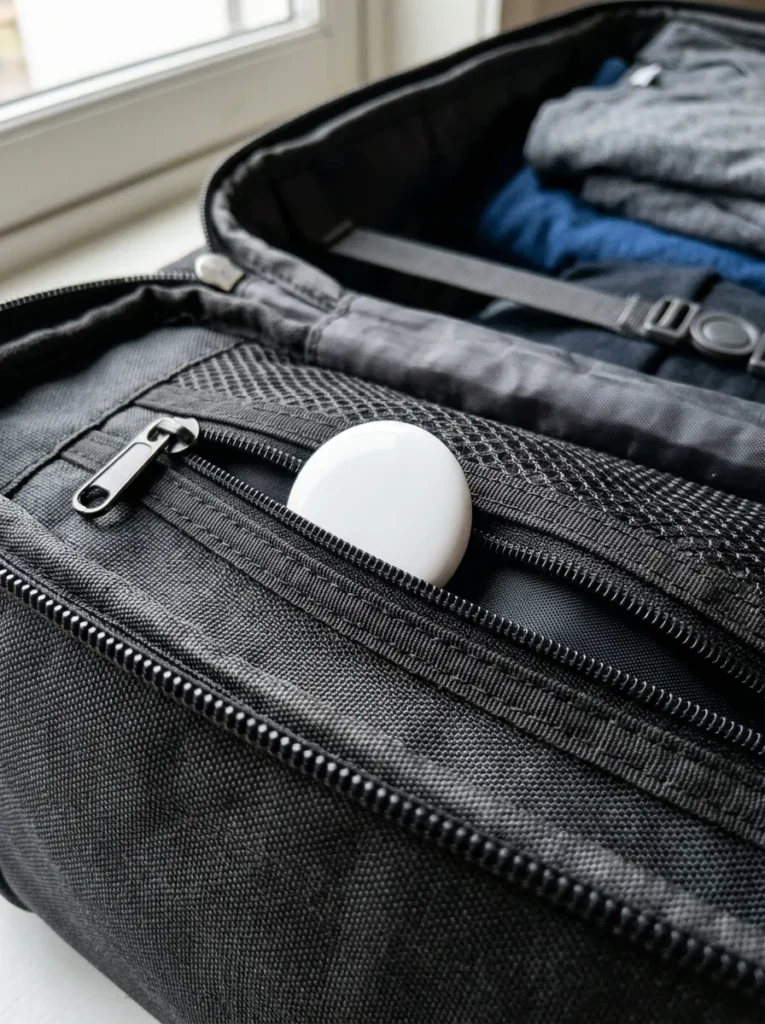
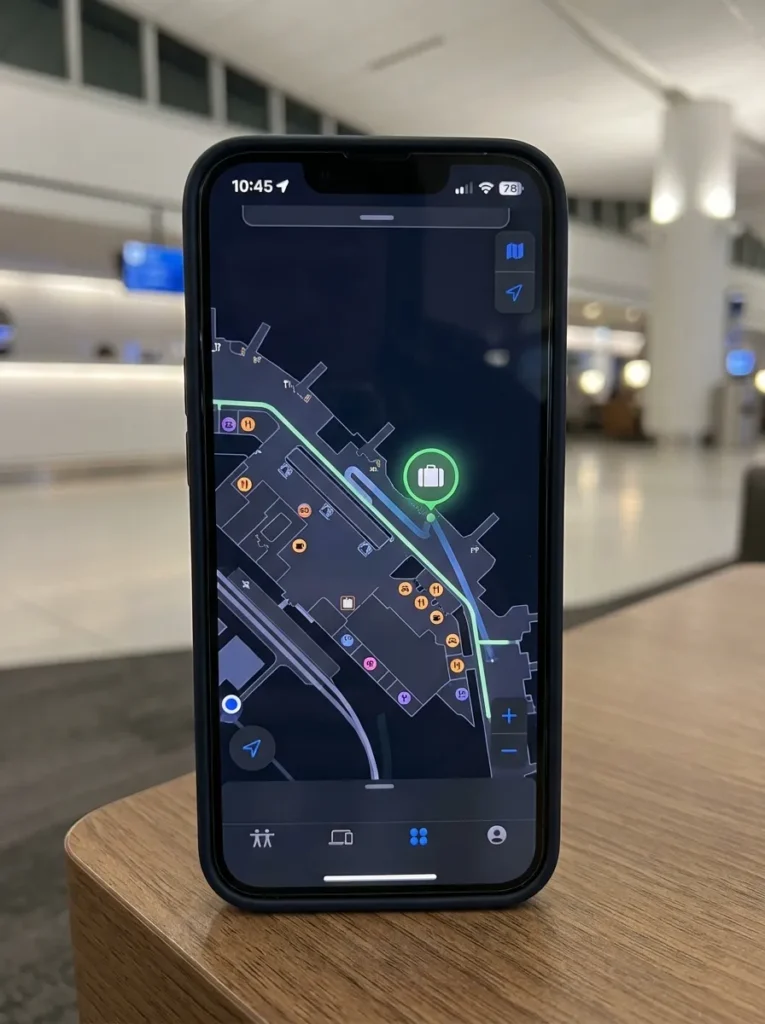
Lost luggage is one of travel’s most helpless feelings — you hand your bag over and simply hope it ends up where you’re going. An AirTag dropped into a checked bag or backpack removes a large part of that uncertainty.
The 2nd generation improves on the original with Precision Finding support across more iPhone models and improved Bluetooth range, meaning you can get a directional read on your bag’s location, not just a general area, once you’re near it. It also integrates with Apple’s Find My network, which is enormous — virtually any nearby iPhone can anonymously help relay your bag’s location, even when it’s out of your own Bluetooth range.
I’ve used mine to confirm that a delayed connecting bag was, in fact, still moving through the airport system rather than lost, which meaningfully reduced the anxiety of an already stressful travel day.
Available on Amazon:
Pros:
- Genuinely useful if your bag is delayed, misrouted, or lost
- Long battery life (roughly a year on the replaceable coin cell)
- Massive Find My network improves location accuracy almost anywhere
- Small and easy to hide inside a bag’s lining or pocket
Cons:
- Full functionality favors iPhone users; Android support is more limited
- Airlines’ own tracking systems still take priority for actually recovering a bag — this is a supplement, not a guarantee
- Anti-stalking detection features can occasionally trigger alerts on other people’s phones if you’re traveling in close proximity to strangers with AirTags of their own
Bottom line: A small, inexpensive insurance policy for anything you check or leave unattended, particularly valuable on multi-leg international itineraries where lost luggage risk is highest.
5. BAGAIL Compression Packing Cubes — The Organizational Upgrade You Didn’t Know You Needed
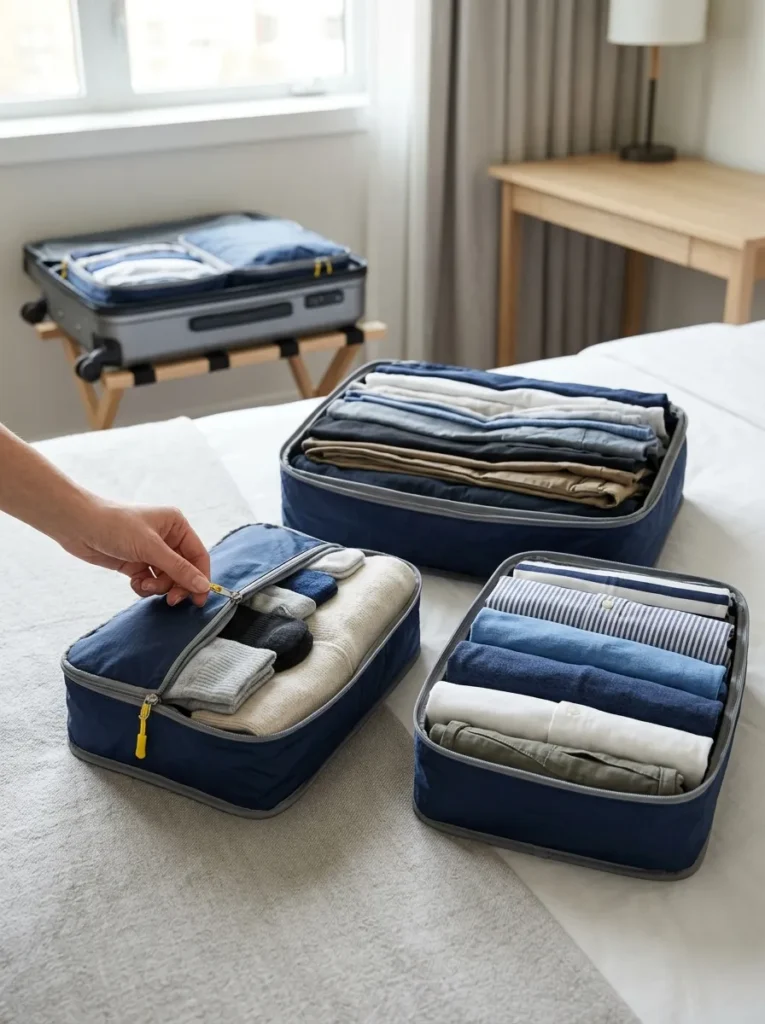
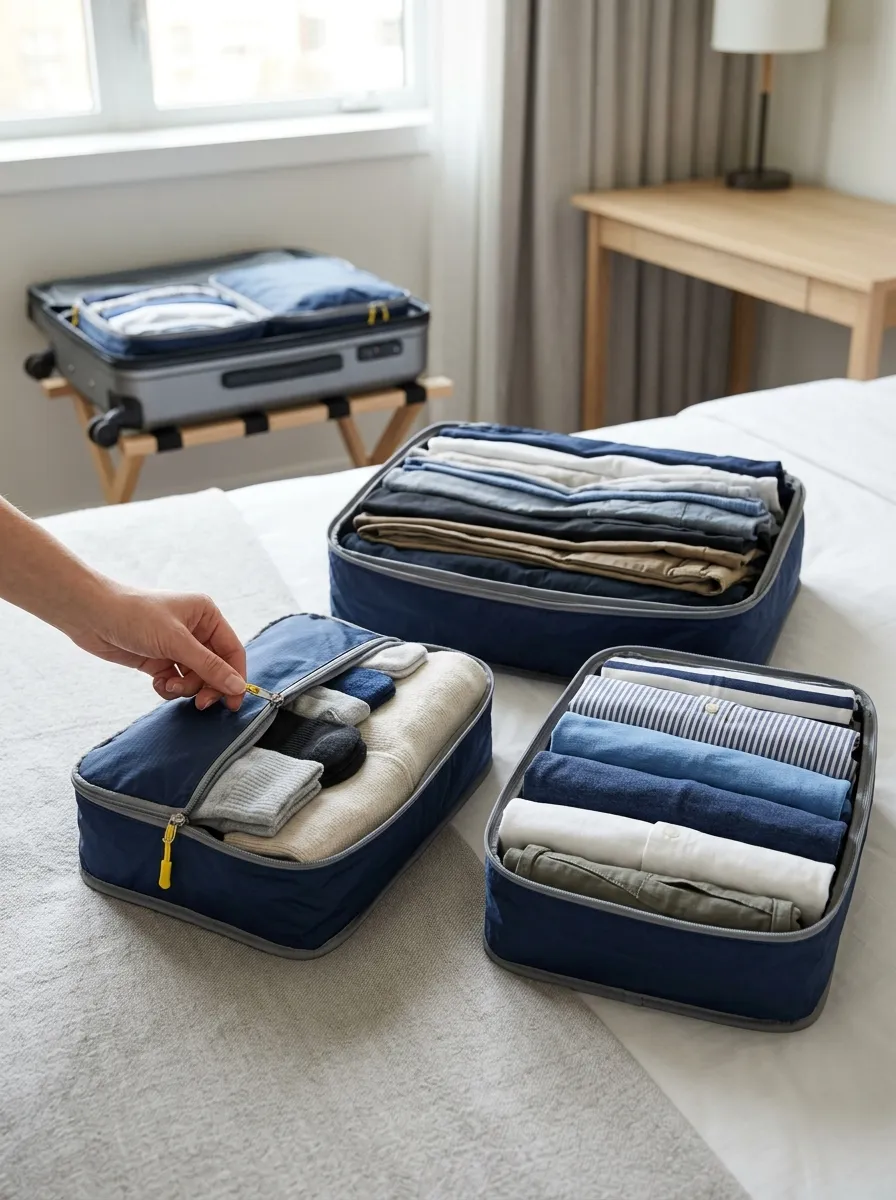
Packing cubes are one of those products that sound unnecessary until you use them once. The BAGAIL set adds compression zippers on top of standard cube organization, meaning you can physically compress clothing down to a smaller volume after packing — genuinely useful when you’re trying to fit a week’s worth of clothes into a carry-on.
Beyond space savings, the organizational benefit is significant: separating clothing by category (tops, bottoms, underwear, cables) means you’re not unpacking your entire bag to find one shirt. This pairs especially well with a lay-flat backpack like the Tolaccea above — you can see and access every cube at once rather than digging.
Available on Amazon:
Pros:
- Compression genuinely increases usable packing space
- Keeps clothing organized and wrinkle-reduced
- Multiple sizes in a set adapt to different item types
- Durable zippers that hold up to repeated compression
Cons:
- Compressing clothing tightly for a long period can increase wrinkling on delicate fabrics
- Adds a small amount of bulk and weight from the cube material itself
- Takes some upfront effort to learn an efficient packing system
Bottom line: Not essential in the way a passport is essential, but one of the highest value-for-cost upgrades to how you actually experience packing and unpacking.
6. EPICKA Universal Travel Adapter (TA-105) — One Adapter, Every Country
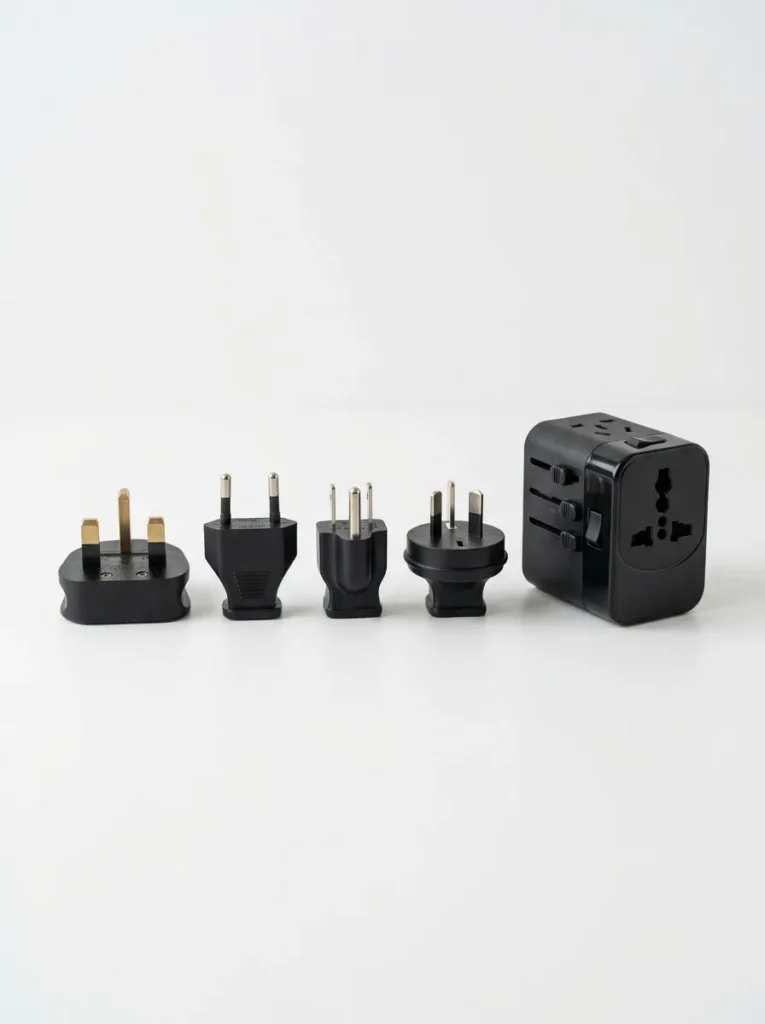
International plug standards are a genuine mess — the UK, EU, US, Australia, and much of Asia all use different configurations, and getting caught with the wrong adapter in a foreign hotel room is a familiar frustration. The EPICKA TA-105 solves this with a single compact unit that covers over 150 countries.
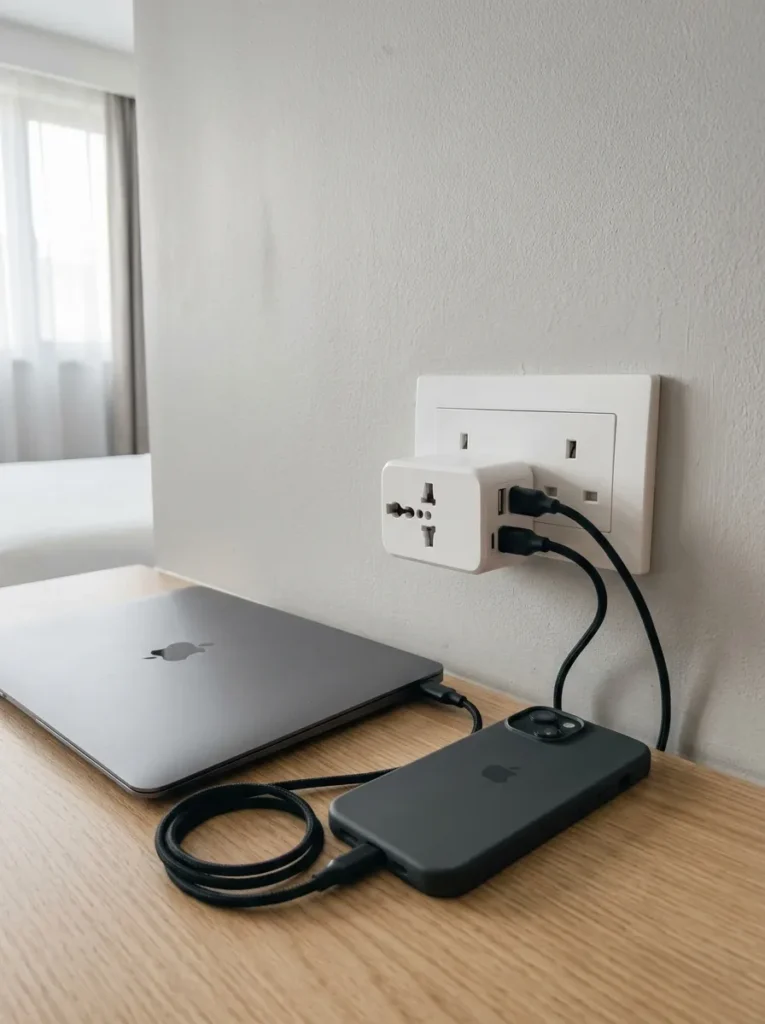
It includes multiple USB-A ports and a USB-C port alongside the standard AC outlet, meaning you can charge a phone, tablet, and laptop simultaneously from one wall socket — useful in hotel rooms that often have frustratingly few accessible outlets.
Available on Amazon:
Pros:
- Covers the vast majority of countries with one device
- Multiple simultaneous charging ports reduce the need for extra adapters or cables
- Compact and durable build for repeated use
- Built-in safety features (fuse protection) for inconsistent international power grids
Cons:
- It’s a plug adapter, not a voltage converter — high-wattage devices like hair dryers or straighteners from the US may not work safely on 220-240V systems abroad without a separate converter
- Slightly bulkier than single-country adapters if you only ever travel to one region
- USB-C output wattage may not fast-charge larger laptops
Bottom line: One of the simplest ways to eliminate a recurring international travel headache, provided you understand the voltage limitation for higher-wattage appliances.
7. Anker 20,000mAh 30W Power Bank — Because Every Outlet Is Occupied
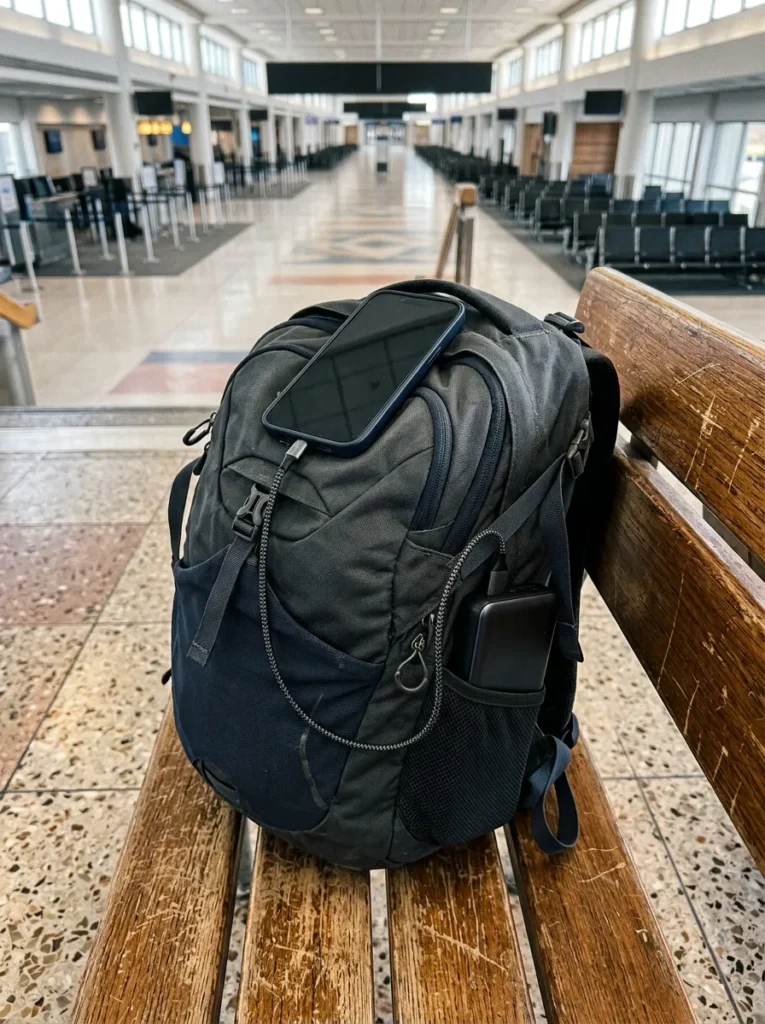
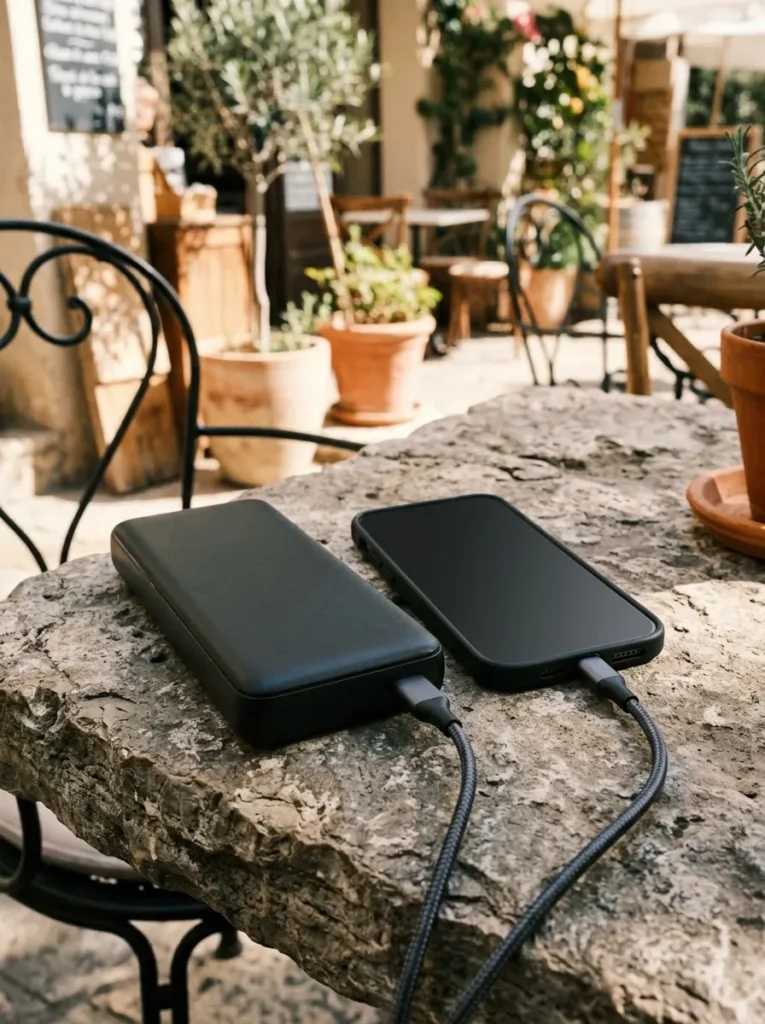
Airport outlets are a scarce resource, usually occupied the moment you find one. A quality power bank removes the dependency entirely. Anker’s 20,000mAh unit with 30W output charges most phones several times over on a single charge, and the 30W output means it charges devices quickly rather than trickling power in slowly.
I keep mine in my daypack at all times, not just for phones — it’s saved camera batteries, a tablet, and once, embarrassingly, someone else’s dying phone on a long delay, which turned into a fairly pleasant conversation while we both waited out a gate change.
Available on Amazon:
Pros:
- High capacity covers multiple full phone charges
- Fast 30W output charges devices quickly, not just eventually
- Compact enough for a daypack or even a large pocket
- Reliable brand with strong safety certifications
Cons:
- At 20,000mAh, it’s heavier than smaller power banks — a real consideration for ultralight packers
- TSA requires power banks in carry-on luggage only, never checked bags — an easy rule to forget
- Charging speed depends on your cable; an underpowered cable will bottleneck the 30W output
Bottom line: A power bank has moved from “nice to have” to “obvious necessity” for most travelers, and this is a reliable, well-specced option at a reasonable capacity-to-size ratio.
Final Thoughts: Building a Kit That Actually Gets Used
None of these seven items are exciting purchases on their own. What they have in common is that each one quietly removes a specific, recurring travel frustration — a dead phone, an overweight bag, a lost suitcase, a foreign outlet you can’t use. Individually minor. Collectively, they add up to noticeably less friction on every trip.
My honest recommendation if you’re building this kit gradually rather than all at once: start with the luggage scale and the power bank. They’re the cheapest, most universally useful, and solve the two problems every traveler encounters regardless of destination or trip length. Build outward from there based on how you actually travel — checked bags versus carry-on-only, international versus domestic, business versus leisure.
What’s in your own travel kit that you’d never leave home without? I’d love to hear what’s earned a permanent spot in your bag — drop it in the comments.
Disclosure: This post contains affiliate links. If you purchase through them, I may earn a small commission at no additional cost to you. All opinions are based on genuine product research and, where noted, personal use.