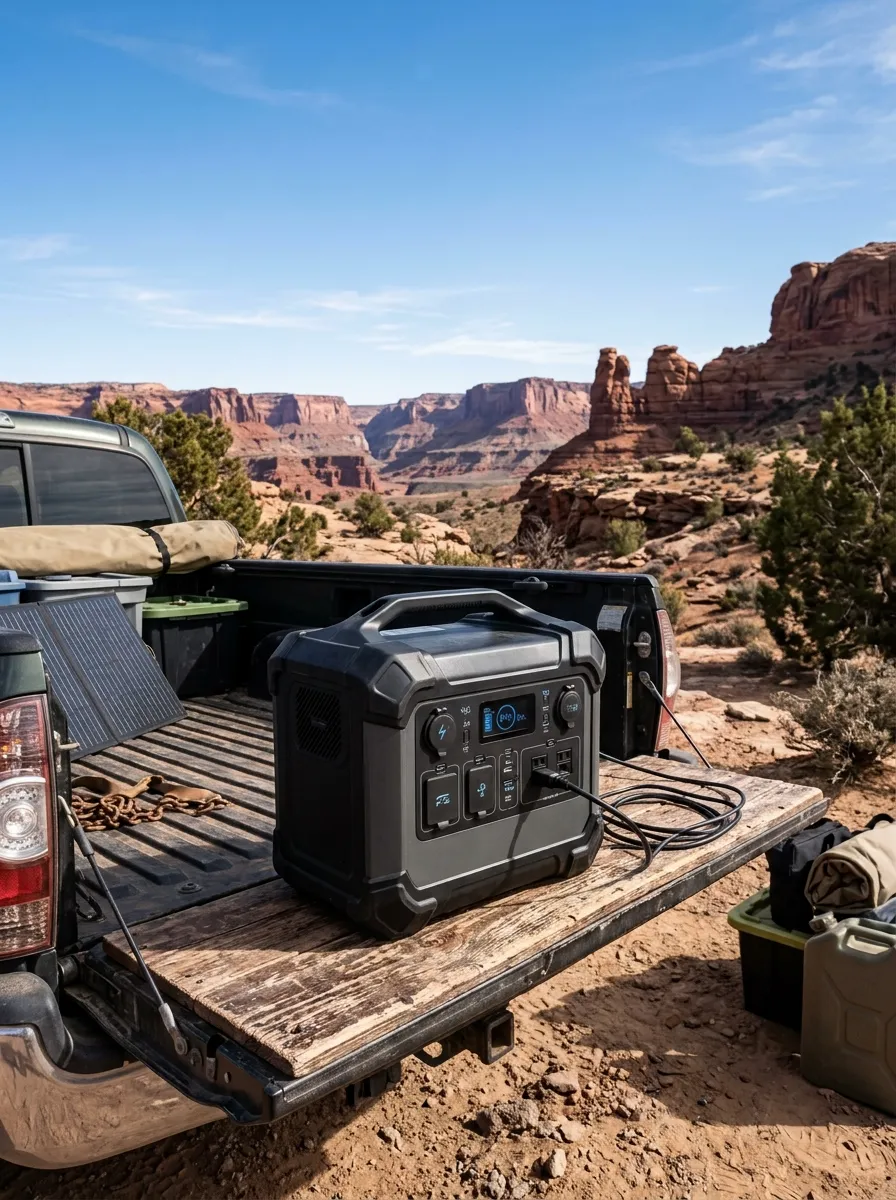
Jackery Explorer 2000 Plus Review: Eight Months of Off-Grid Travel Without a Single Dead Battery
I want to tell you about the night that convinced me to spend this much money on a battery.
I was three days into a trip through southern Utah, parked at a dispersed campsite with no hookups and no cell signal. I had a laptop at 12% with a client edit due, a camera with two dead batteries, a phone I was using as my only map, and a cooler full of food that was about to turn. My car’s 12V outlet had already tripped its fuse trying to run everything.
I ended up driving forty minutes to a gas station and sitting in the parking lot for two hours charging things off an outlet next to the ice machine. Not exactly the off-grid freedom I’d pictured.
That trip is why I bought the Jackery Explorer 2000 Plus. Eight months and roughly a dozen trips later — desert, coast, mountains, and one genuinely unpleasant power outage at home — here’s my honest assessment of whether a $1,500+ battery belongs in your travel setup.
Available on Amazon:
What This Thing Actually Is
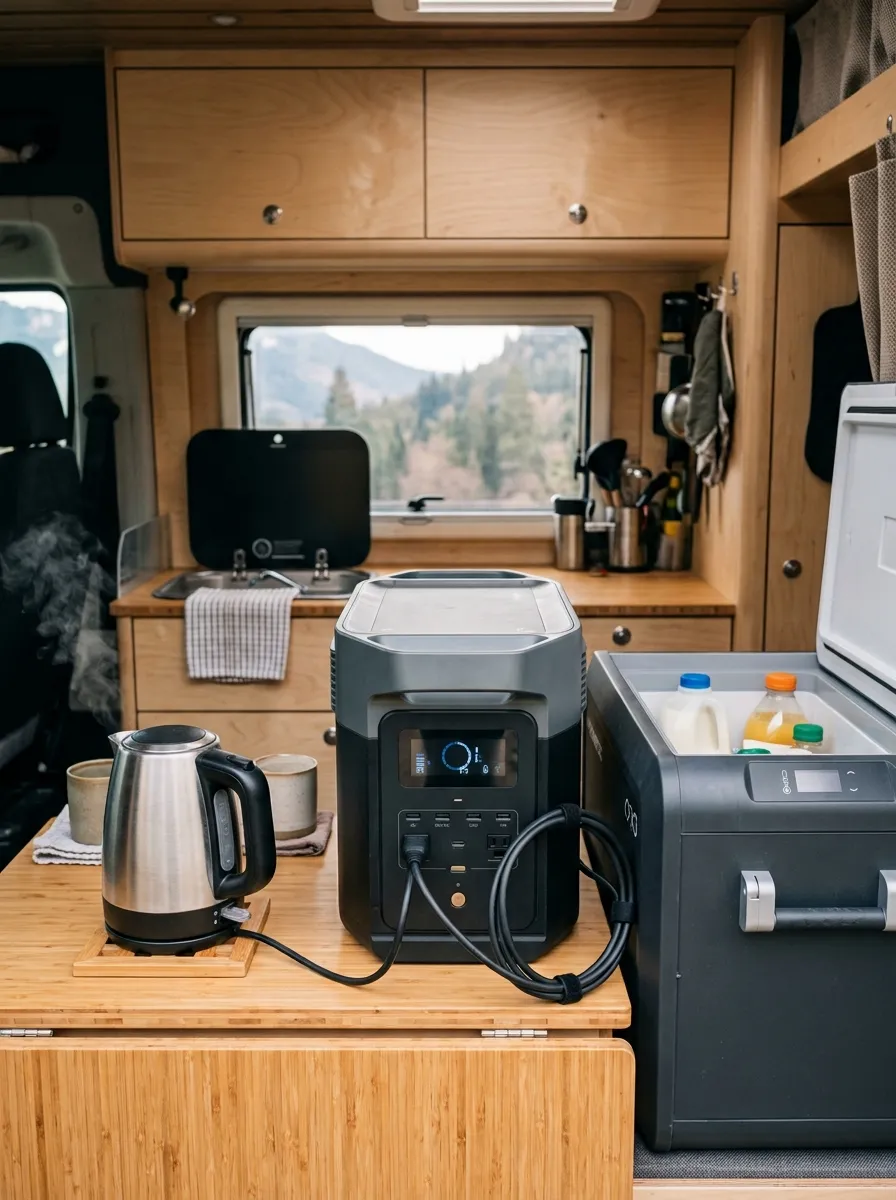
Let’s be clear about the category, because the marketing term “solar generator” confuses people. This is not a gas generator. There’s no engine, no fuel, no fumes, and no noise. It’s a very large lithium battery with an inverter, a bunch of outlets, and smart charging electronics built in.
The Explorer 2000 Plus holds 2,042 watt-hours of capacity and pushes 3,000 watts of AC output. Those numbers mean nothing in isolation, so here’s what they translate to in real travel use:
- Laptop (roughly 60Wh per full charge): dozens of full charges
- Camera batteries: effectively unlimited for a trip
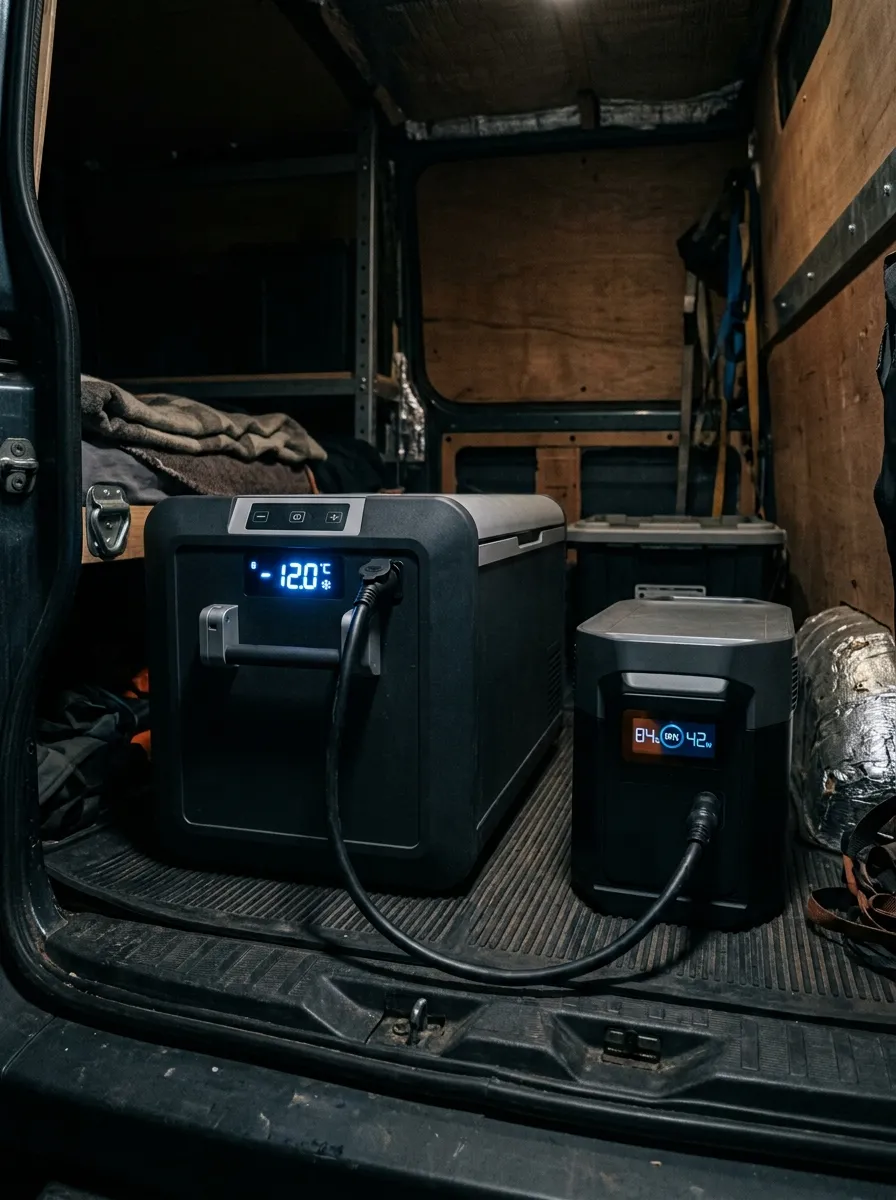
- 12V portable fridge: multiple days of continuous running
- Electric kettle or induction cooktop: yes, genuinely — this is where the 3,000W output matters
- CPAP machine: multiple nights, which matters enormously to a lot of travelers
- Starlink dish: viable for remote work setups
That 3,000W output is the specification that separates this from cheaper units. Most sub-$800 power stations cap out around 1,000–1,500W, which rules out anything that generates heat — kettles, coffee makers, hair dryers, induction burners, portable heaters. With 3,000W, you can actually cook.
The LiFePO4 Battery Is the Real Story
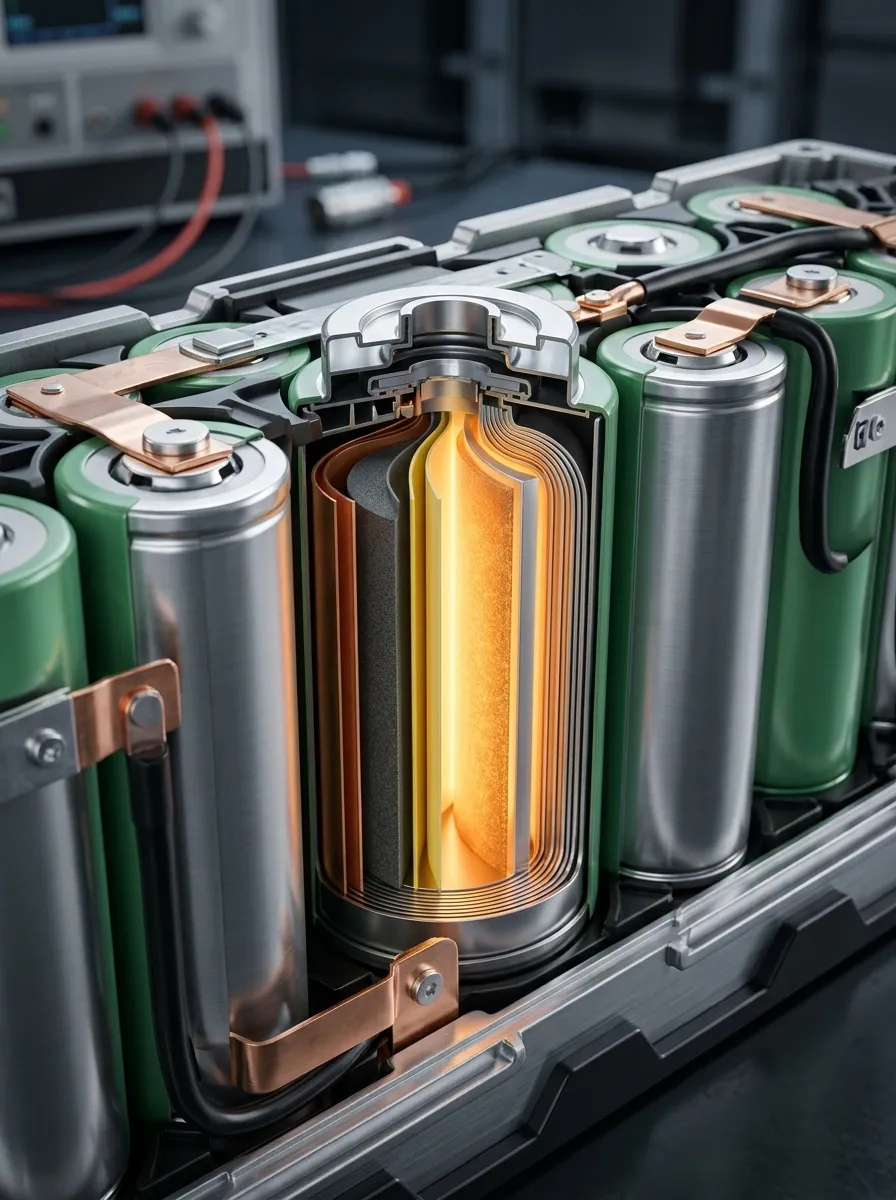
The Explorer 2000 Plus uses a LiFePO4 (lithium iron phosphate) battery rather than the older lithium-ion chemistry, and this is the most important upgrade in the category over the past few years.
Two reasons it matters:
Lifespan. LiFePO4 cells handle vastly more charge cycles before meaningful degradation. Jackery rates this unit for a ten-year usable lifespan. My previous power station — an older lithium-ion unit — noticeably lost capacity within two years of regular use. This one, after eight months of heavy cycling, shows no perceptible drop.
Safety. LiFePO4 is substantially more thermally stable. When you’re sleeping next to a large battery inside a vehicle, that’s not an abstract concern.
There’s also expandability. The unit supports add-on battery packs, letting you scale capacity significantly if your needs grow. This is genuinely useful — you can buy the base unit now and expand later rather than buying a bigger unit upfront.
Charging: Faster Than I Expected
Charging speed is the make-or-break practical factor when you’re traveling, because you’re usually charging opportunistically — during a hotel night, at a campground with power, or off solar while you hike.
From a wall outlet, the unit accepts high AC input and reaches roughly 80% in a little over an hour. In practice, this means a single lunch stop at a café with an outlet meaningfully recharges it. That changes trip planning entirely.
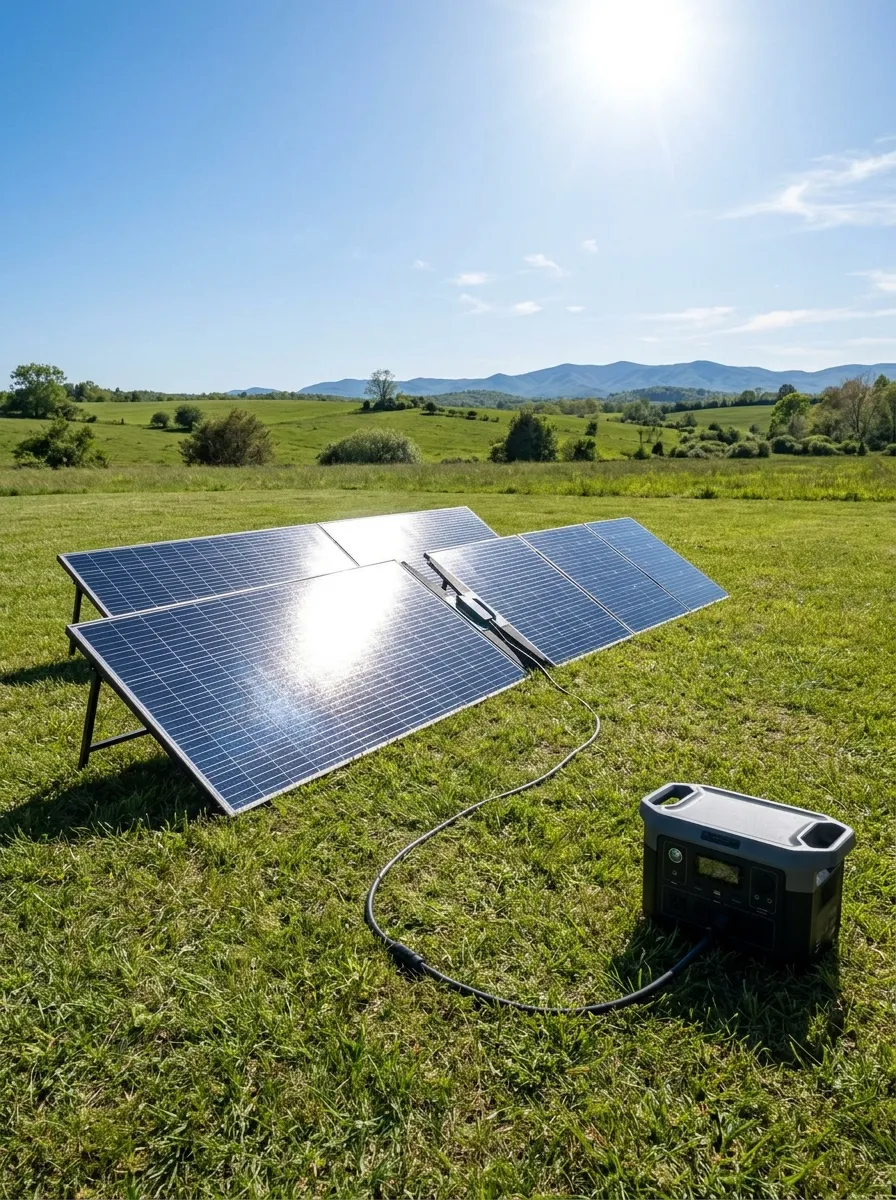
Solar charging is where it gets more interesting and more complicated. With enough panels connected, you can fully recharge in a few hours of strong sun. My honest experience: solar works well in the desert Southwest in summer and works poorly in the Pacific Northwest in autumn. Cloud cover, panel angle, and daylight hours affect it dramatically. Treat solar as a supplement that extends your range, not a guaranteed daily refill.
Pass-through charging is supported, so you can charge the unit while simultaneously drawing from it.
Available on Amazon:
Living With It: The Honest Cons
This is where I need to be direct, because the enthusiast reviews tend to skip these.
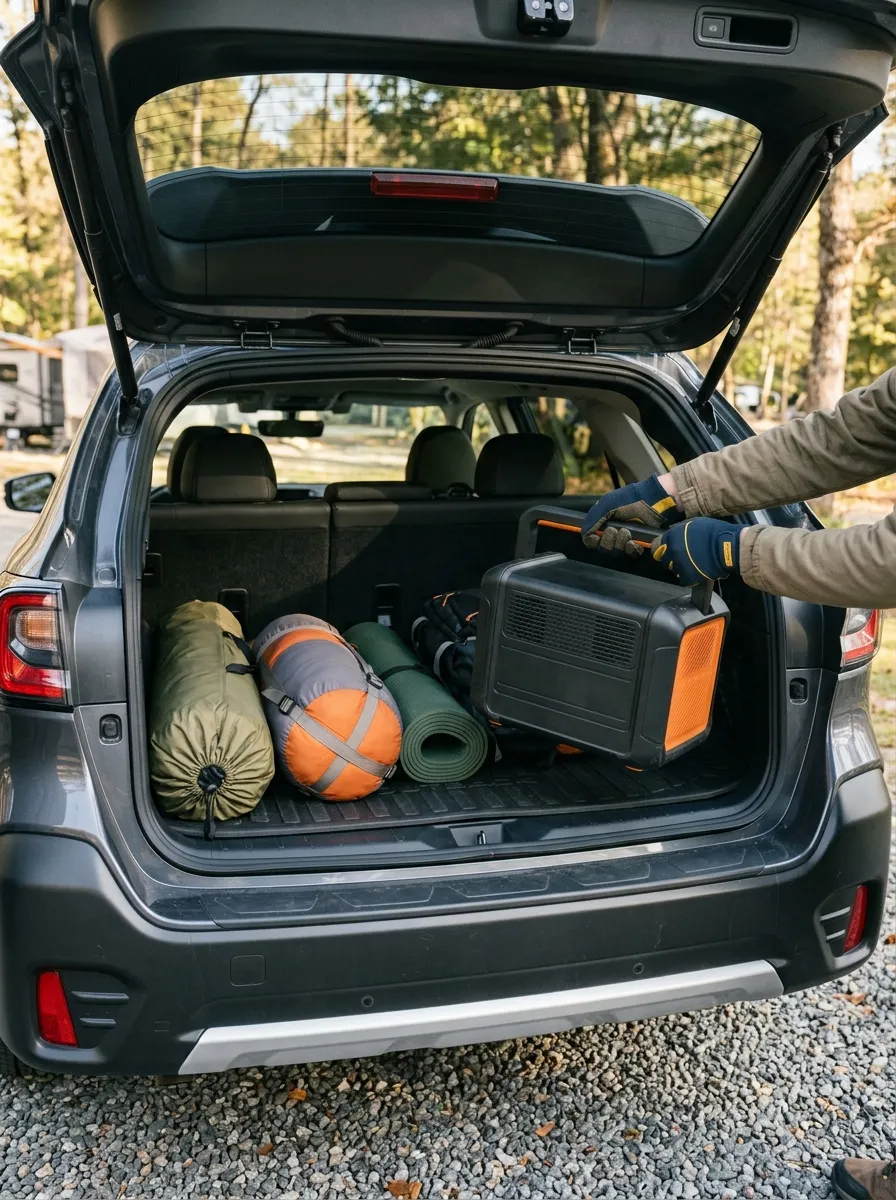
1. It is heavy. Genuinely heavy. This is a roughly 60-pound unit. It is not a backpacking item, a hiking item, or something you casually carry across a campsite. It lives in a vehicle. If your travel doesn’t involve a car, van, or RV, this product is simply not for you — full stop.
2. It takes up real cargo space. Between the unit itself, cables, and any solar panels, you’re giving up a meaningful chunk of your trunk or van storage. I had to rethink my packing layout entirely.
3. Solar panels are a separate, substantial cost. The base listing typically doesn’t include panels. Adding enough solar capacity to recharge meaningfully adds several hundred dollars and significant bulk. Budget for the complete system, not just the battery.
4. It’s overkill for a lot of people. If your power needs are phones, a laptop, and camera batteries, a much smaller and cheaper unit — around 1,000Wh — will serve you completely and cost less than half as much. The 2000 Plus makes sense when you’re running a fridge, cooking electrically, or supporting medical equipment. Be honest about which category you’re in.
5. Air travel is impossible. Airlines strictly prohibit lithium batteries of this capacity. This is a road-travel product exclusively. If you fly to destinations and rent vehicles, it doesn’t work for you.
6. Fan noise under heavy load. It’s quiet at low draw, but running high-wattage appliances spins up cooling fans audibly. Not loud, but not silent either.
The Unexpected Benefit: Home Backup
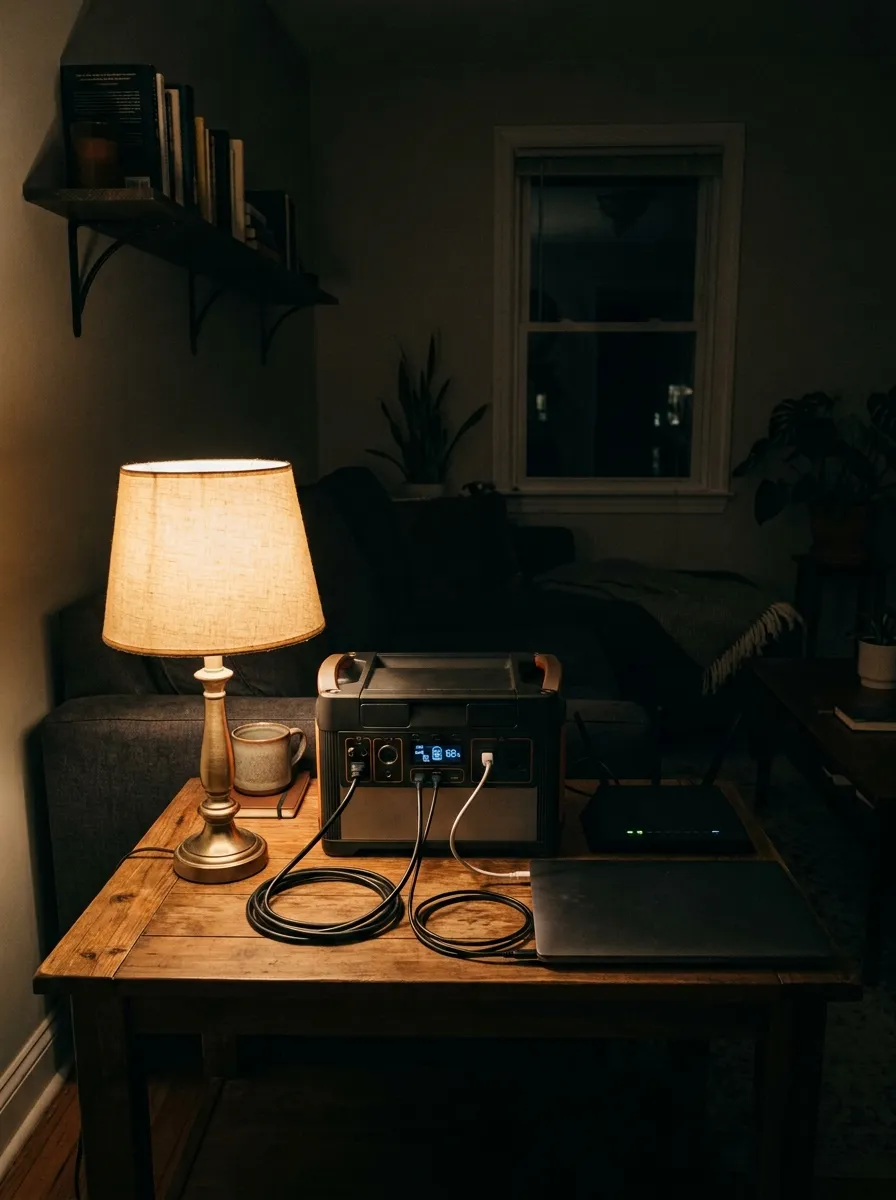
I bought this for travel, but it earned its keep during a multi-day power outage at home last winter. It ran my fridge, kept our phones and laptops alive, and powered a lamp and router for the duration. The unit supports UPS functionality, meaning it can act as an uninterruptible supply for sensitive electronics.
If you live anywhere prone to storms, hurricanes, or grid instability, this dual-purpose value materially changes the cost calculation. You’re not buying a travel accessory — you’re buying travel power and household insurance in one purchase.
Who Should Buy This
Buy it if: you road trip, van life, or RV regularly; you work remotely from remote places; you run a portable fridge or cook electrically while camping; you depend on medical equipment like a CPAP off-grid; or you want travel power that doubles as home emergency backup.
Skip it if: you fly to destinations; you backpack or travel light; your power needs are limited to phones and a laptop (get a 1,000Wh unit instead); or you don’t have vehicle space to spare.
Final Verdict

The Jackery Explorer 2000 Plus solved a problem I’d been working around for years with a tangle of car adapters, cheap battery banks, and gas station parking lots. Eight months in, I’ve never run out of power on a trip, never planned a route around finding outlets, and never had to cut a remote work day short.
It’s heavy, it’s expensive, and it demands vehicle space. But for road-based travel, it converts “how long can I stay out here” from a power question into simply a food-and-water question. That’s a meaningful shift in how you travel.
If you’re on the fence, my practical advice: audit your actual power draw for one trip. Write down everything you charge and roughly what it needs. If the total lands under about 500Wh a day and you never cook electrically, buy something smaller and save the money. If you’re above that or you run a fridge, this is the right tier.
What’s your worst dead-battery travel story? I’d love to hear it in the comments — mine involved a gas station ice machine.
Available on Amazon:
Disclosure: This post contains an affiliate link. If you purchase through it, I may earn a small commission at no additional cost to you. All opinions reflect my own extended use of this product.