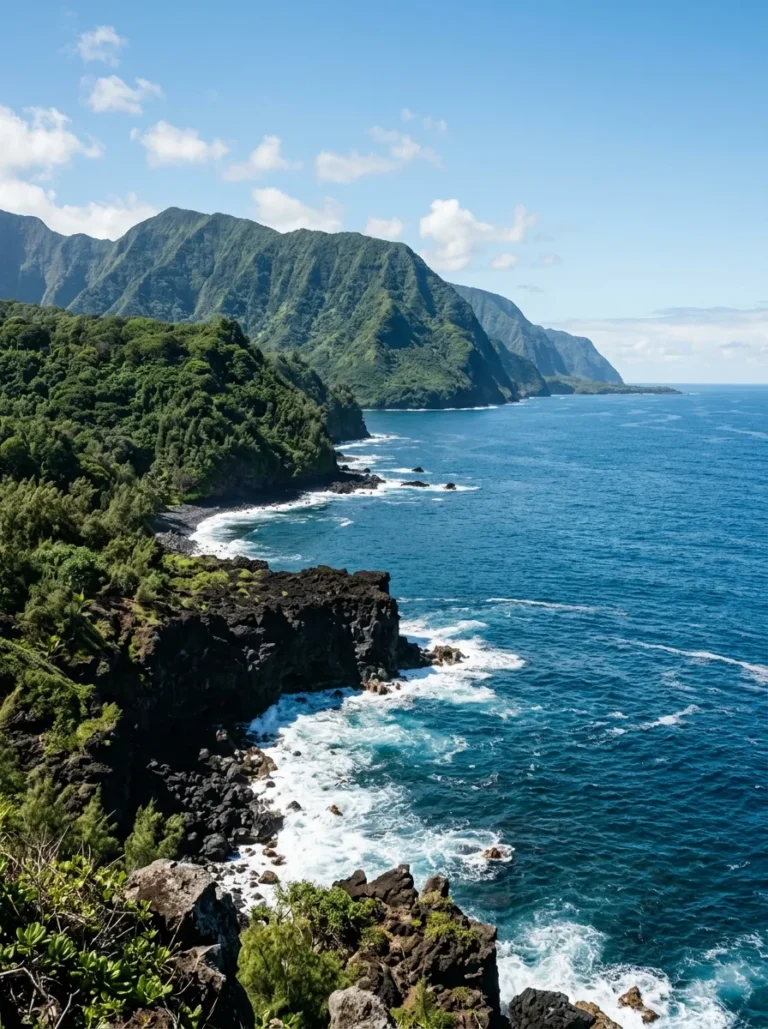
Catalina Island Travel Guide 2026–27: Best Things to Do, Where to Stay and a Perfect 3-Day Itinerary
Catalina Island sits only a short boat ride from Southern California, yet arriving in Avalon can feel like someone quietly swapped Los Angeles for a Mediterranean harbor town. Boats bob in a crescent-shaped bay, golf carts replace most private cars, pastel buildings climb the hills, and the island’s dry interior rises immediately behind the waterfront.
Officially called Santa Catalina Island, the destination has two very different visitor centers. Avalon is the lively side, with hotels, restaurants, beaches, tours and the famous Catalina Casino building. Two Harbors, on the island’s western end, is smaller, more rustic and built around hiking, camping, kayaking and boating. Choosing between them changes the entire trip.
Catalina works especially well for couples, families, weekend travelers and anyone who wants an island escape without an international flight. It can be visited as a day trip from Los Angeles or Orange County, but staying overnight is far better. Once the final wave of day-trippers boards the ferry, Avalon becomes noticeably calmer and the island begins to feel less like an excursion and more like a destination.
This Catalina Island travel guide covers ferry routes, where to stay, beaches, snorkeling, hiking, golf carts, Two Harbors, costs and a realistic three-day itinerary for 2026–27.
Recommended Travel Items for Your Trip
CATALINA ISLAND AT A GLANCE
Best first-time base: Avalon
Best for outdoor adventure: Two Harbors
Ideal stay: 2–4 days
Best broad season: April through October
Best quieter months: April, May, September and October
Best beach near Avalon: Descanso Beach
Best snorkeling: Casino Point area
Best major hike: Trans-Catalina Trail
Best way to arrive: Passenger ferry
Do you need a car? No
Main planning issue: Ferry schedules and limited accommodation
Is Catalina Island Worth Visiting?
Yes, particularly if you want a California trip that combines beaches, ocean activities and small-town atmosphere without spending half the vacation driving.
Catalina is strongest for:
- Couples
- Families
- Short romantic trips
- Snorkeling and diving
- Hiking
- Kayaking
- Boating
- Wildlife watching
- Weekend escapes from Los Angeles
- Travelers who enjoy walkable destinations
It is less suitable for travelers expecting a huge sandy-beach resort, major nightlife district or inexpensive vacation. Avalon can be costly, particularly on summer weekends, and many activities are priced like resort excursions rather than ordinary municipal attractions.
The island also has a surprisingly wild interior. Catalina Island Conservancy manages much of the island’s open space and maintains more than 165 miles of recreational trails and roads.
Travelers comparing island styles can contrast Catalina with this complete Greece travel guide, where ferry networks and island choices operate on a much larger scale.
Avalon vs Two Harbors
| Area | Best For | Atmosphere | Suggested Stay | Main Drawback |
| Avalon | First visits, hotels and restaurants | Lively and polished | 2–3 nights | Higher prices |
| Two Harbors | Hiking, camping and kayaking | Rustic and quiet | 1–3 nights | Limited dining and services |
Choose Avalon if:
You want easy ferry access, restaurants, hotels, beaches, snorkeling and organized tours.
Choose Two Harbors if:
You prefer hiking boots to restaurant reservations and would happily trade nightlife for a kayak, tent or quiet beach.
Two Harbors sits on a narrow isthmus separating Isthmus Cove from Catalina Harbor and is especially oriented toward camping, hiking, biking and water activities.
How to Get to Catalina Island
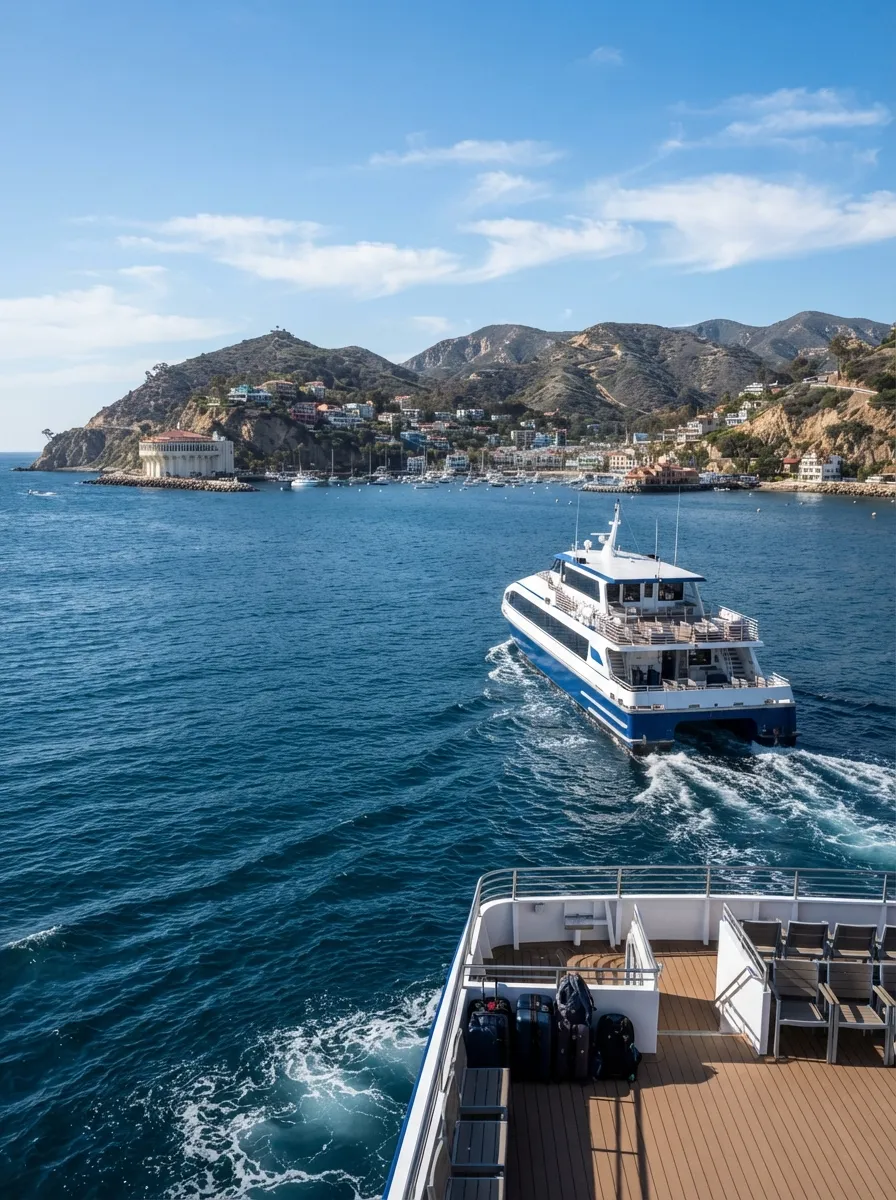
Most travelers arrive by passenger ferry.
Catalina Express operates service from:
- Long Beach
- San Pedro
- Dana Point
Current 2026 schedules show Long Beach to Avalon trips taking roughly one hour, San Pedro to Avalon about 1 hour 15 minutes, and Dana Point to Avalon approximately 1 hour 30 minutes. Direct San Pedro to Two Harbors service also takes around 1 hour 15 minutes. Schedules vary seasonally, so check your exact travel date.
Which ferry port should you use?
Long Beach: Usually best for travelers based in Los Angeles or Long Beach.
San Pedro: Useful for both Avalon and direct Two Harbors service.
Dana Point: Convenient for Orange County and parts of San Diego County.
Arrive early, especially on summer weekends. Boarding procedures, baggage handling and parking add time beyond the sailing itself.
FERRY TIP
Do not schedule a tight flight connection immediately after returning from Catalina. Wind, rough seas or operational delays can ripple through the day surprisingly quickly.
1. Explore Avalon on Foot

Avalon is compact enough that walking should be your default transportation.
Start along Crescent Avenue beside the harbor, then wander toward:
- Green Pleasure Pier
- Descanso Avenue
- Catalina Casino
- Metropole Avenue
- Local shops
- Beachfront restaurants
- Hillside viewpoints
The entire central waterfront is small enough to explore without a formal route.
The best time to walk Avalon is early morning before day-trip passengers arrive or in the evening after ferries begin leaving.
Avalon becomes particularly attractive after sunset when the harbor lights reflect across the water and golf carts hum quietly through the streets.
2. Visit the Catalina Casino

Despite the name, the Catalina Casino is not a gambling casino.
The iconic circular building at the edge of Avalon Harbor has long served as an entertainment and cultural landmark. It contains a historic theater and ballroom and is one of the island’s defining architectural sights.
Even travelers who skip an interior tour should walk around the exterior and waterfront.
The building is particularly photogenic from:
- Avalon Harbor
- Casino Point
- Descanso Beach route
- Elevated viewpoints above town
Allow an hour if taking a guided tour or simply combine it with snorkeling and a waterfront walk.
3. Snorkel at Casino Point
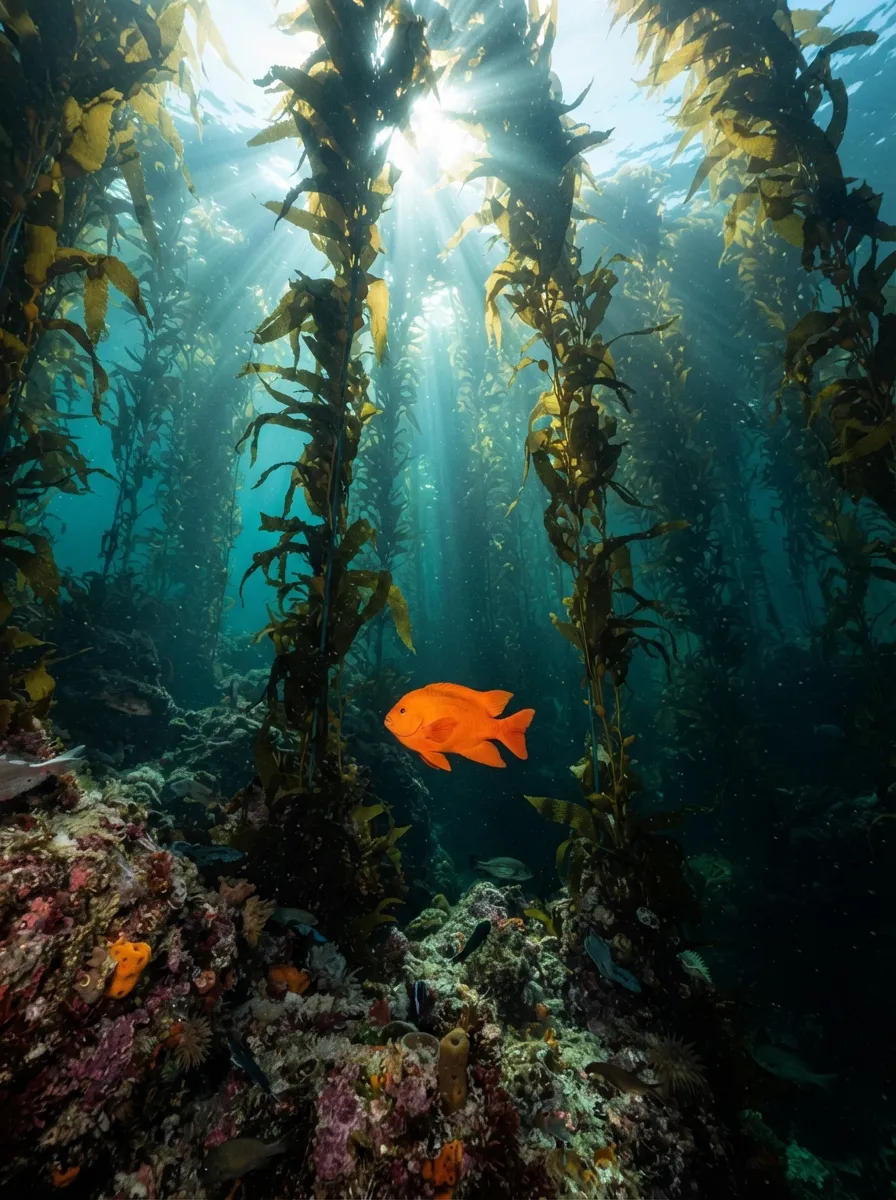
Catalina is one of Southern California’s best-known snorkeling and diving destinations.
Casino Point Dive Park sits beside Avalon and provides access to kelp forest habitat where swimmers may encounter bright orange garibaldi and other marine life.
Local dive operators offer guided snorkeling and equipment rental. Catalina’s underwater environment is one of the main reasons visitors return beyond a simple Avalon sightseeing trip.
Bring or rent:
- Mask
- Snorkel
- Fins
- Wetsuit depending on season
- Water shoes where appropriate
Pacific water is colder than many first-time visitors expect. Even in warm weather, a wetsuit can make a substantial difference.
If underwater travel is a major part of your vacation style, compare Catalina with this Maldives nurse shark tour, where tropical water and marine encounters create a very different snorkeling experience.
OCEAN SAFETY
Only snorkel within your swimming ability. Check local conditions, enter from appropriate access points and avoid touching kelp, fish or underwater habitat.
4. Spend a Few Hours at Descanso Beach
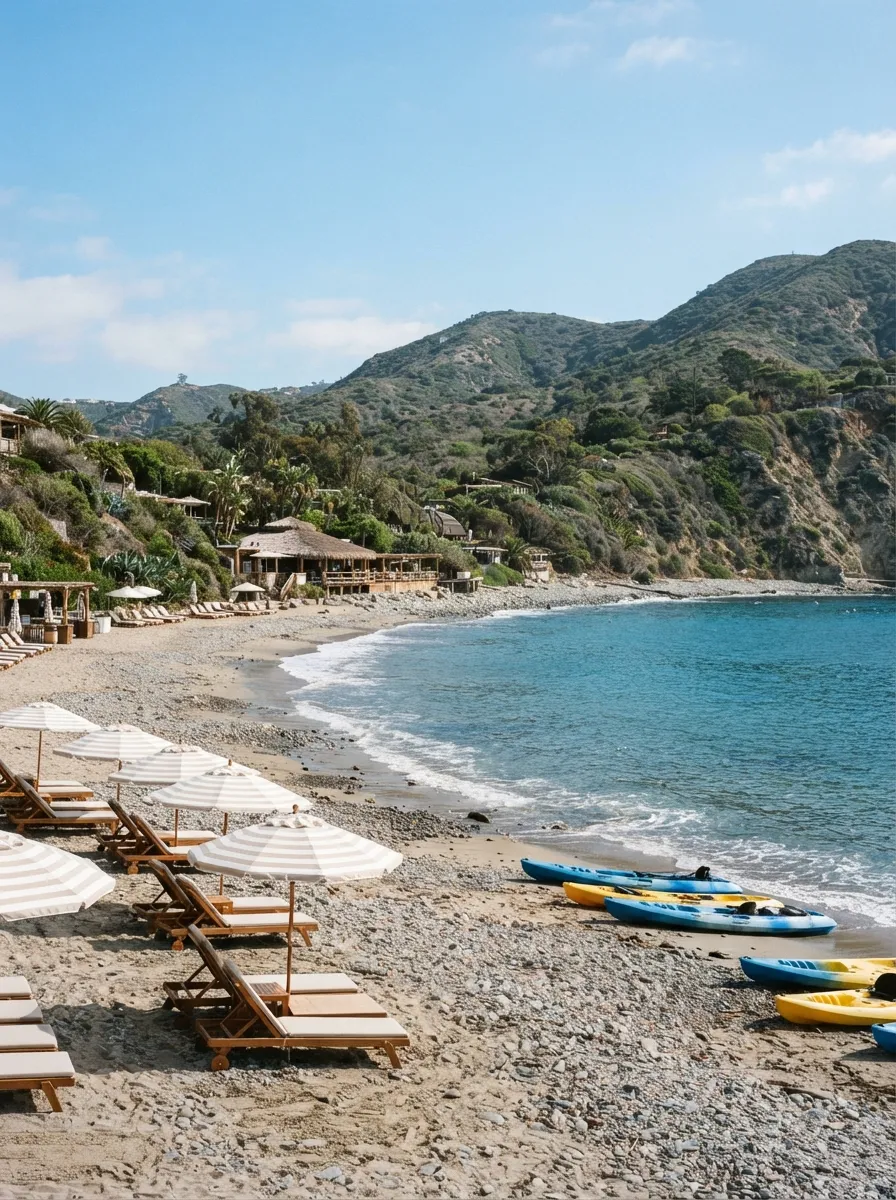
Descanso Beach lies a short walk beyond the Catalina Casino and provides one of Avalon’s easiest resort-style beach experiences.
The beach is associated with:
- Lounging
- Kayaking
- Paddleboarding
- Beach rentals
- Coastal views
- Nearby food service
It is more developed than many small coves around the island, making it practical for visitors who want a beach afternoon without bringing extensive equipment.
Expect premium pricing for loungers, cabanas and food compared with a public California beach.
The area is best combined with Casino Point and an evening walk back toward Avalon.
5. Rent a Golf Cart Around Avalon

Golf carts are one of Catalina’s defining transportation quirks.
Most Avalon residents use golf carts for local travel, and visitors can rent them by the hour or day. Public transportation is also available through COAST, an on-demand service within Avalon, with fares beginning at $2 per rider.
A golf cart is useful for reaching hillside viewpoints and residential roads beyond the immediate waterfront.
Typical sightseeing loops include:
- Scenic overlooks
- Wrigley Memorial area
- Hills above Avalon
- Harbor viewpoints
Always follow posted traffic rules and rental-company instructions.
You do not need a golf cart merely to move between restaurants and the harbor. Walking is usually faster in central Avalon.
6. Visit Wrigley Memorial and Botanic Garden

The Wrigley Memorial and Botanic Garden introduces visitors to Catalina’s plant life and island history.
The garden is inland from central Avalon and works well as a quieter break from the waterfront.
Spend approximately one to two hours exploring the grounds and memorial.
The site also connects with trails leading deeper into the island, so hikers may use it as part of a longer day.
Catalina has several endemic plant species and a distinct ecology protected in large part by the Catalina Island Conservancy.
7. Take an Interior Island Tour
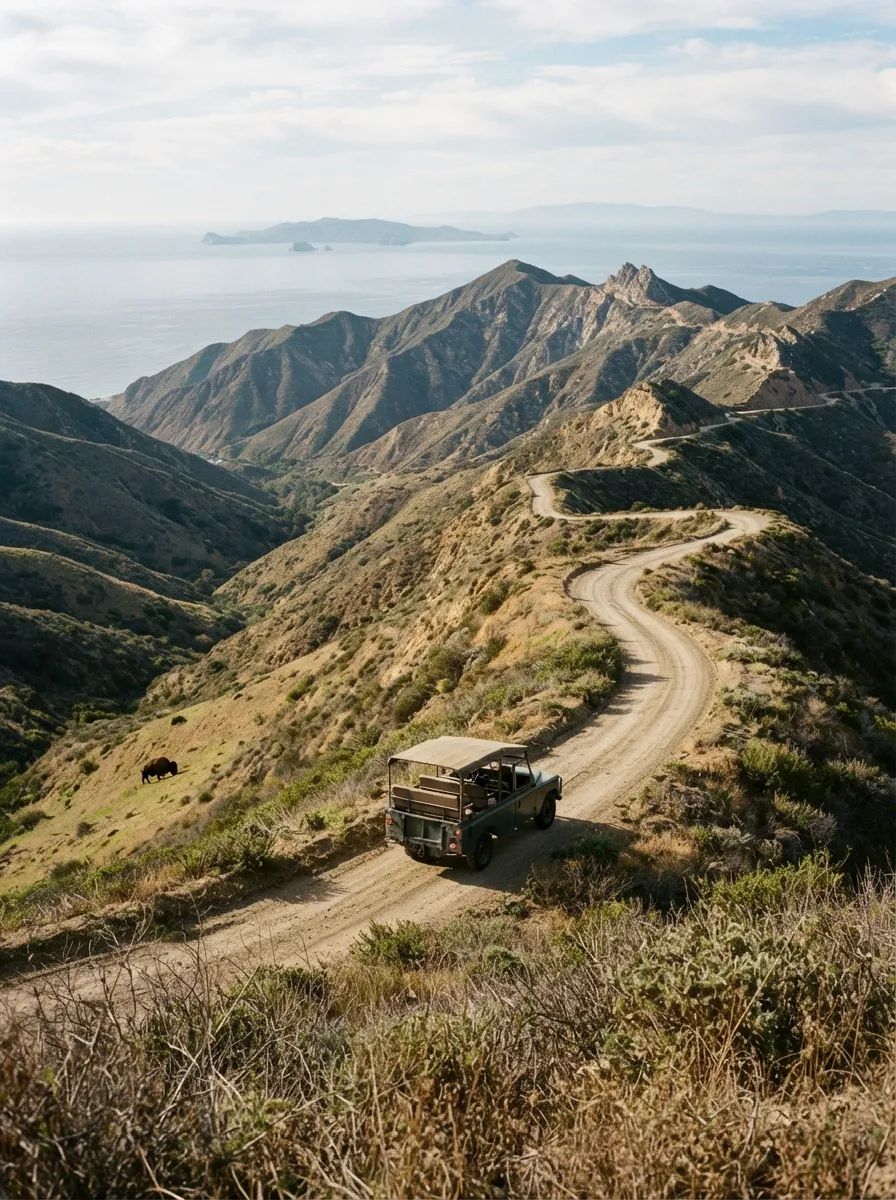
Avalon occupies only a tiny piece of Catalina.
One of the best ways to understand the island is to leave town and travel into the interior.
Guided tours use authorized vehicles and may include:
- Mountain ridges
- Interior valleys
- Remote viewpoints
- Wildlife habitats
- Historic ranch areas
- Conservancy lands
Tour operators advertise open-air and off-road experiences reaching elevations around 1,500 feet.
Possible wildlife sightings include:
- Catalina Island foxes
- Bison
- Bald eagles
- Quail
Wildlife is never guaranteed.
Do not approach bison. They may appear slow and unconcerned until they decide otherwise.
8. Hike Catalina Island
Catalina is far more serious as a hiking destination than many day visitors realize.
The Conservancy manages more than 165 miles of recreational trails and roads across the island.
Do you need a hiking permit?
Yes.
Catalina Island Conservancy requires hikers entering Conservancy lands to obtain a permit. The permit is free and available online or at locations including the Trailhead Visitor Center and Two Harbors Visitor Services.
Carry:
- Plenty of water
- Sun protection
- Trail map
- Hat
- Sturdy shoes
- Emergency supplies
Shade is limited on many routes.
Catalina’s dry hills can become brutally hot during summer afternoons, so start early.
9. Hike the Trans-Catalina Trail
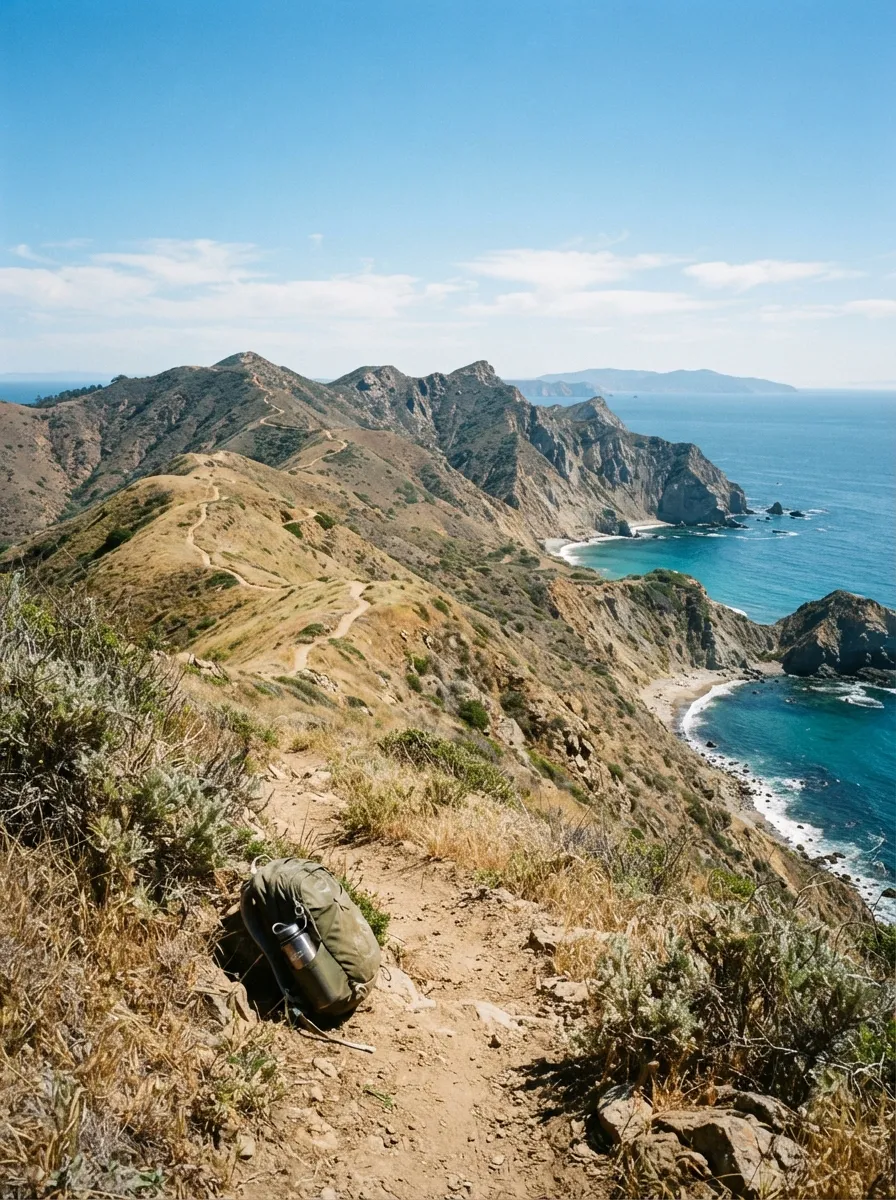
For serious hikers, the Trans-Catalina Trail is the island’s signature adventure.
The official Conservancy route covers approximately 38.5 miles, crossing rugged terrain between Avalon, the island interior, west-end camps and Two Harbors.
The trail generally requires several days.
The Conservancy notes that cell service is limited or unavailable along substantial sections and recommends considering a satellite communication device.
Best time to hike
Spring and fall provide the most comfortable temperatures.
Summer can be extremely hot with limited shade.
Winter may bring rain and mud but can also produce green landscapes.
A mandatory hiking permit is required.
In October 2026, the Conservancy is also beginning a guided five-day Trans-Catalina Trek option covering the full 38.5-mile trail, with gear transport and meals included.
10. Take a Day Trip to Two Harbors
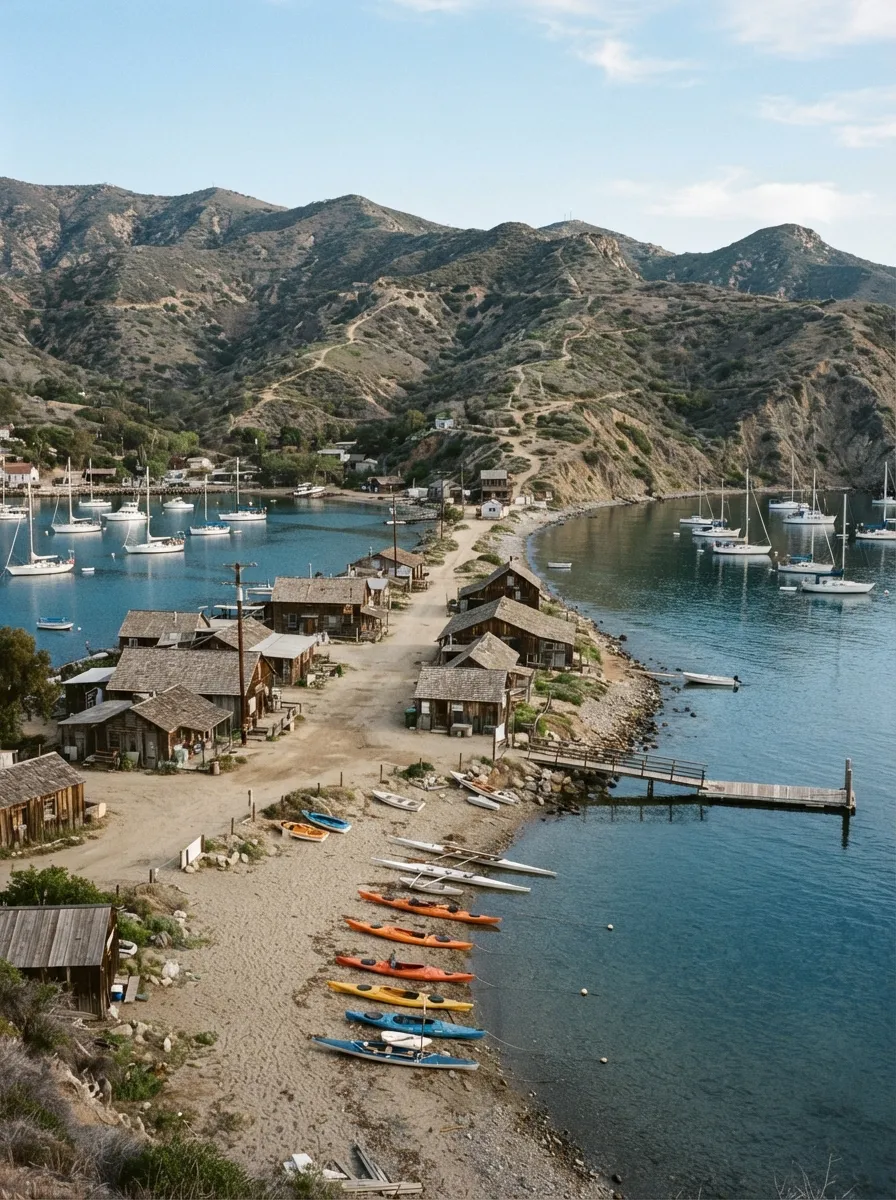
Two Harbors feels almost like another island compared with Avalon.
The village has limited buildings, quieter beaches and immediate access to hiking, camping and kayaking.
It works particularly well for:
- Outdoor travelers
- Couples seeking quiet
- Kayakers
- Divers
- Campers
- Hikers
During summer, the seasonal Cyclone boat links Avalon and Two Harbors in roughly 40 minutes. Service generally operates from June through early September.
Alternatively, Catalina Express offers direct service between San Pedro and Two Harbors.
What to do in Two Harbors
Try:
- Kayaking
- Snorkeling
- Hiking
- Mountain biking
- Beach time
- Camping
- Diving
- Harbor walks
Two Harbors Visitor Services operates daily from 8 a.m. to 5 p.m. and can assist with ferry tickets, activity information, camping and hiking permits.
11. Kayak the Coast
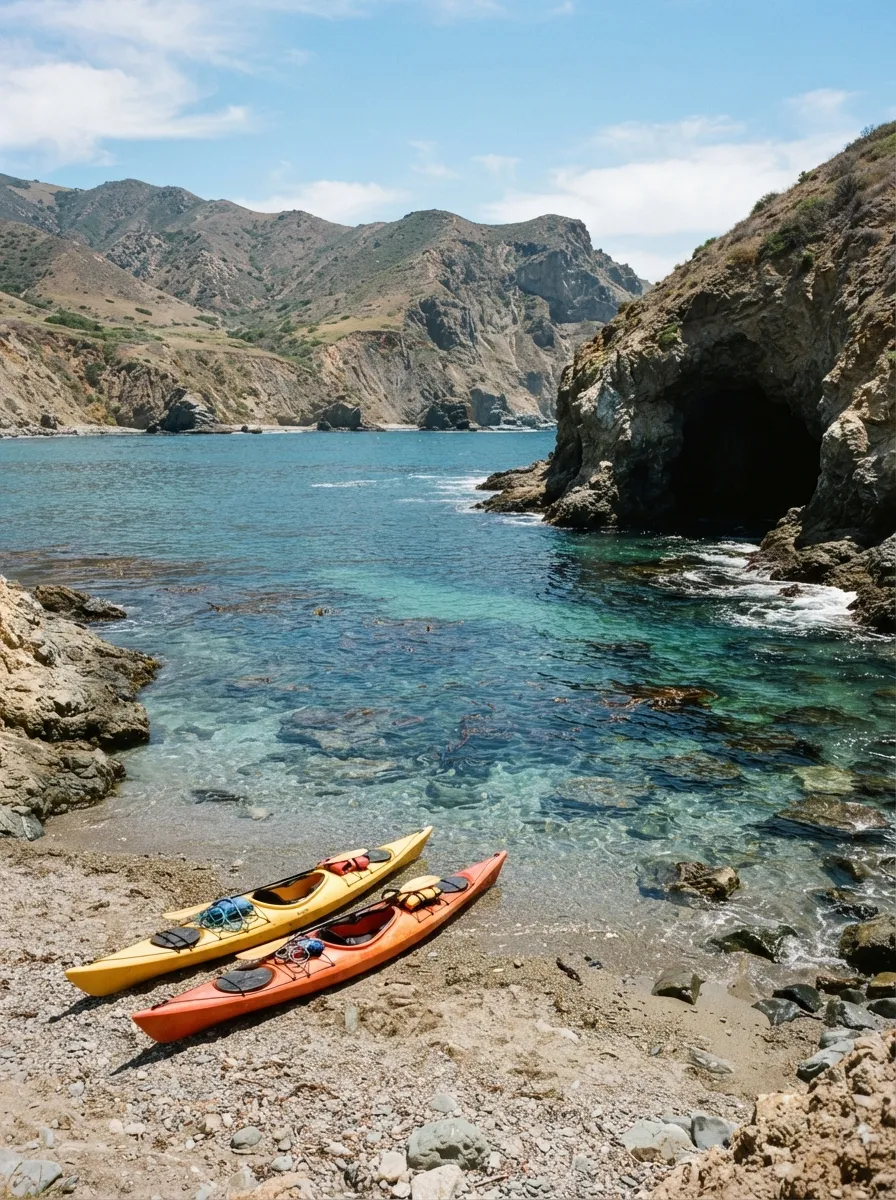
Kayaking is one of the most satisfying ways to experience Catalina’s shoreline.
Avalon and Two Harbors both provide rental and guided options.
Paddlers may explore:
- Protected coves
- Rocky shorelines
- Kelp beds
- Clear-water bays
Two Harbors is particularly strong for kayaking because the surrounding coast feels less developed and more remote.
Choose a guided excursion if you are unfamiliar with Pacific currents or local wind patterns.
12. Go Scuba Diving
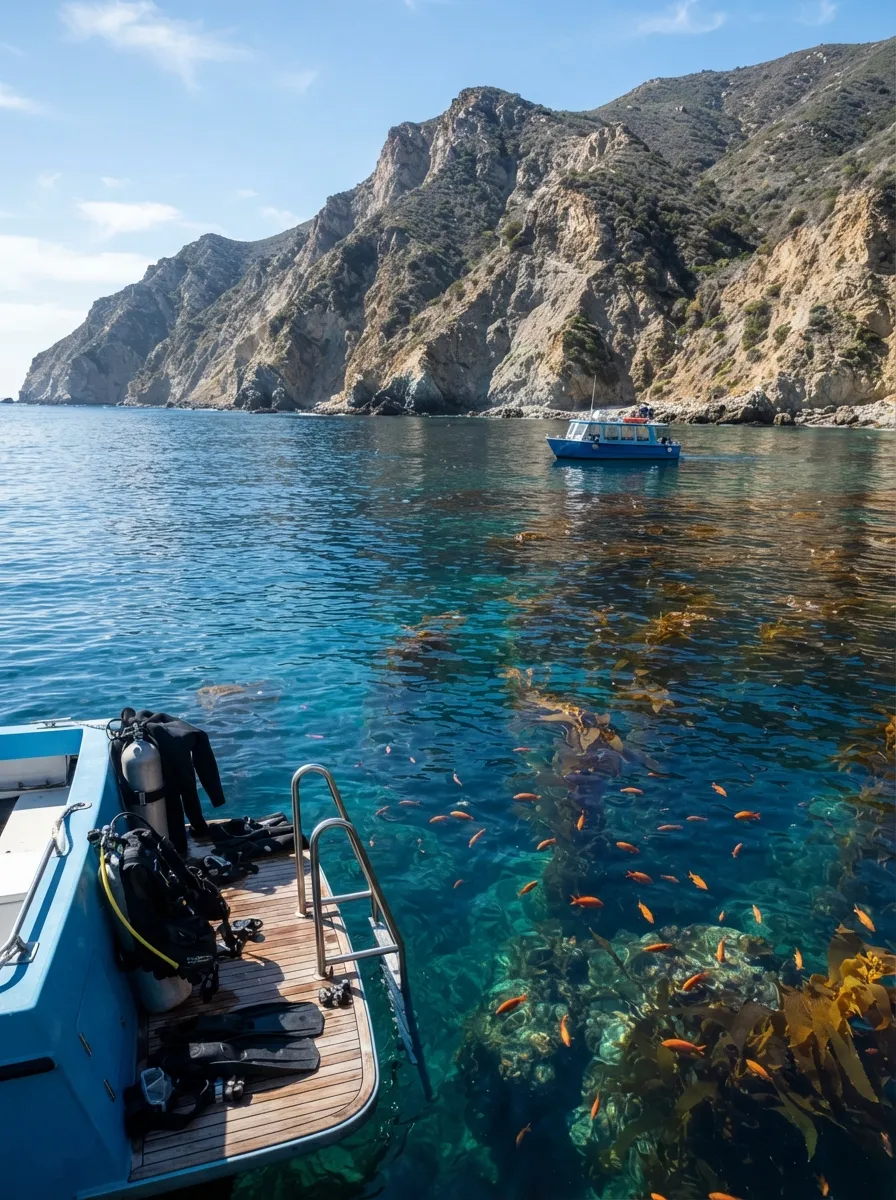
Catalina is a celebrated diving destination because of its kelp forests, marine life and relatively clear water.
Casino Point is the easiest well-known dive location near Avalon, while Two Harbors and other coves provide additional options for experienced divers.
Certified divers can rent equipment or arrange guided dives.
Beginners can book introductory experiences with qualified operators.
Always check:
- Certification requirements
- Water temperature
- Visibility
- Boat conditions
- Equipment inclusions
Visitors accustomed to warm-water island travel may find Catalina dramatically colder than destinations such as the Philippines or Maldives.
This two-week Philippines itinerary offers a useful comparison for travelers whose ideal island vacation revolves around beaches and underwater exploration.
13. Try Parasailing or a Coastal Boat Tour
Visitors who prefer seeing Catalina from above rather than below can choose parasailing.
Local operators offer single and multi-person flights from Coast Guard-inspected vessels.
Other boat excursions may focus on:
- Coastal scenery
- Wildlife
- Glass-bottom viewing
- Underwater observation
- Sunset
- Two Harbors
Wildlife sightings are never guaranteed.
Book morning departures when calm conditions matter most, especially during windier seasons.
Best Time to Visit Catalina Island
Spring: March Through May
Spring is one of the strongest overall periods.
Expect:
- Comfortable hiking temperatures
- Greener hills after winter rain
- Smaller crowds than summer
- Cooler water
- Occasional cloudy or rainy days
April and May are excellent for travelers prioritizing hiking and Avalon sightseeing.
Summer: June Through August
Summer provides:
- Warmest air temperatures
- Full tour schedules
- Longer daylight
- Strongest beach atmosphere
- Seasonal Avalon–Two Harbors boat service
It also brings:
- Peak hotel rates
- Crowded ferries
- Busy weekends
- Hot interior trails
Reserve early.
Fall: September Through October
September and October may be Catalina’s sweet spot.
The ocean retains some summer warmth, crowds ease after Labor Day and hiking becomes more comfortable.
Seasonal services may begin reducing schedules later in fall, so confirm tours and ferries.
Winter: November Through February
Winter is quieter and cheaper but more weather-dependent.
Expect cooler evenings, occasional rain and reduced activity schedules.
The island can become beautifully green after winter storms.
Rough seas may also affect ferry comfort or schedules.
Where to Stay on Catalina Island
Avalon: Best for First-Time Visitors
Stay in Avalon for:
- Hotels
- Restaurants
- Beaches
- Tours
- Shopping
- Snorkeling
- Easy ferry access
Choose accommodation based on walking distance rather than simply ocean views.
A property only several blocks uphill can feel surprisingly far when dragging luggage.
Two Harbors: Best for Outdoor Travelers
Two Harbors offers:
- Camping
- Rustic lodging
- Beach facilities
- Kayaking
- Hiking
- Diving
It has dramatically fewer dining and shopping choices than Avalon.
In 2026, Catalina Island Company transitioned Two Harbors operations to a cashless payment system, accepting cards and mobile payments, with a cash-to-card kiosk available.
Catalina Island Travel Costs
Catalina can become expensive quickly because nearly everything must reach the island by boat.
| Expense | Budget Estimate | Mid-Range Estimate |
| Ferry round trip | $80–$100+ | Port and class dependent |
| Hotel | $150–$250 | $275–$450+ |
| Casual meal | $15–$25 | $30–$60 |
| Golf cart rental | $60–$100+ | Duration dependent |
| Snorkel rental/tour | $30–$80 | Guided options cost more |
| Kayak rental | $30–$70 | Guided tour $80+ |
| Interior tour | $60–$150 | Tour dependent |
| Beach rental | $40–$150+ | Loungers/cabanas vary |
These are broad planning estimates rather than guaranteed rates.
Two Harbors beach rentals can include dining credits and automatic gratuity, so always compare the complete package rather than headline rental prices.
How to save money
- Travel Sunday through Thursday
- Stay two nights rather than one expensive Saturday
- Bring refillable water bottles
- Walk instead of renting a golf cart
- Choose public beaches
- Book ferries early
- Pack snacks
- Visit in April, May or October
A Perfect 3-Day Catalina Island Itinerary

Day 1: Avalon and the Harbor
Take a morning ferry to Avalon.
After checking in:
- Walk Crescent Avenue
- Explore Green Pleasure Pier
- Visit the Catalina Casino area
- Relax at Descanso Beach
Have dinner near the harbor and walk Avalon after day-trip crowds leave.
Day 2: Snorkeling and the Island Interior
Start early at Casino Point for snorkeling or diving.
Return to town for lunch.
In the afternoon, take an interior island tour or rent a golf cart for nearby viewpoints.
End with sunset above Avalon or along the harbor.
Day 3: Two Harbors or Hiking
Choose one of two approaches.
Option A: Two Harbors
Take the seasonal Cyclone when operating, explore the village, kayak and return to Avalon.
Option B: Hiking
Obtain a free Conservancy permit and complete a suitable day hike from Avalon.
Take an evening ferry back to the mainland or stay one additional night to avoid rushing.
Catalina Island With Kids
Catalina works well for families, particularly those staying in Avalon.
Good family activities include:
- Glass-bottom or semi-submersible tours
- Descanso Beach
- Golf cart sightseeing
- Harbor walks
- Easy snorkeling
- Kayaking with older children
- Short hikes
- Ice cream and waterfront restaurants
Families should stay close to the central harbor to minimize walking uphill.
Bring motion-sickness medication when appropriate for the ferry after discussing it with your healthcare professional.
Catalina Island Without a Car
Catalina may be one of California’s easiest destinations without a private vehicle.
Avalon is highly walkable.
Other transportation includes:
- Golf carts
- Taxis
- COAST on-demand transportation
- Tours
- Boats
- Hiking
COAST provides point-to-point transportation within Avalon, with fares starting at $2 per rider.
You cannot simply bring a mainland rental car onto the island for ordinary tourism.
Driving on Conservancy roads requires permits, appropriate vehicles and eligibility conditions.
Wildlife Safety and Responsible Travel

Catalina supports unique island ecosystems.
Possible wildlife includes:
- Catalina Island fox
- Bison
- Bald eagles
- Dolphins
- Sea lions
- Marine birds
Do not feed wildlife.
Stay well away from bison and give animals an escape route.
Remain on marked trails and respect closures designed to protect habitat.
In January 2026, California approved a major Catalina Island Conservancy restoration permit supporting long-term habitat restoration, freshwater protection and wildfire-risk reduction.
Visitors can help by staying on trails, carrying out trash and avoiding disturbance of sensitive habitat.
Catalina Island Packing Checklist
- Ferry confirmation
- Government-issued identification
- Comfortable walking shoes
- Hiking shoes if exploring the interior
- Lightweight layers
- Windbreaker
- Swimsuit
- Reef-conscious sunscreen
- Sunglasses
- Sun hat
- Refillable water bottle
- Small daypack
- Portable battery
- Dry bag
- Motion-sickness supplies if needed
- Snorkeling gear if preferred
- Hiking permit when required
- Offline maps
- Reservation confirmations
Travelers who enjoy making their island photographs a bigger part of the experience may also enjoy this Maldives underwater photoshoot, where photography itself becomes the excursion.
Frequently Asked Questions About Catalina Island
Where is Catalina Island?
Catalina Island lies off Southern California, southwest of Los Angeles and Orange County.
How long is the ferry to Catalina?
Long Beach to Avalon takes roughly one hour. San Pedro to Avalon takes about 1 hour 15 minutes, while Dana Point takes around 1 hour 30 minutes under current schedules.
How many days do you need on Catalina Island?
Two nights is enough for Avalon and one major excursion. Three or four nights allows hiking, snorkeling and Two Harbors without rushing.
Can Catalina Island be visited as a day trip?
Yes. Avalon is popular as a day trip, but an overnight stay is better because the town becomes calmer after the ferries leave.
Do you need a car?
No. Avalon and Two Harbors are walkable, while golf carts, taxis and local transportation are available.
Is Catalina Island expensive?
It can be. Ferry fares, accommodation and activities add up quickly, particularly during summer weekends.
What is Catalina Island best known for?
Catalina is known for Avalon Harbor, the Catalina Casino, snorkeling, diving, golf carts, hiking, bison and its rugged island interior.
Is Avalon or Two Harbors better?
Avalon is better for first-time visitors, hotels and restaurants. Two Harbors is better for camping, hiking and quiet outdoor travel.
Is Catalina good for snorkeling?
Yes. Catalina’s kelp forests and marine protected areas make it one of Southern California’s most popular snorkeling destinations.
Do you need a hiking permit?
Yes. Hiking permits are required for Conservancy trails and are free.
How long is the Trans-Catalina Trail?
The official route is approximately 38.5 miles.
Can you see bison?
Yes, bison live in Catalina’s interior, but sightings are not guaranteed. Never approach them.
Can you go from Avalon to Two Harbors?
Yes. A seasonal Cyclone boat operates during summer and takes approximately 40 minutes.
Is Catalina Island good for families?
Yes. Avalon is especially family-friendly because beaches, restaurants and many attractions are within walking distance.
When is the best month to visit Catalina?
May, September and October provide an excellent balance of weather, reduced crowds and active tour schedules.
Can I scuba dive at Catalina?
Yes. Catalina is one of Southern California’s premier diving destinations.
Is Catalina Island romantic?
Very. Avalon’s harbor, waterfront restaurants and sunset views make the island one of Southern California’s easiest couples escapes.
For travelers considering something far more urban after an island getaway, this Malé city tour review offers a fascinating contrast between a compact island capital and Catalina’s resort-town pace.
Conclusion: Is Catalina Island Worth the Trip?
Catalina Island is one of those destinations where the transportation is already part of the vacation. The skyline of Southern California disappears behind the ferry, open water takes over and, about an hour later, Avalon appears beneath dry hills with boats filling the harbor.
For a first visit, stay in Avalon for two or three nights. Spend the first day exploring the waterfront and Descanso Beach, the second snorkeling and seeing the island interior, and reserve the third for hiking or Two Harbors.
Choose Two Harbors instead when your ideal island vacation involves tents, kayaks and trail permits rather than restaurants and golf carts.
Spring and fall provide the best balance for many travelers. Summer offers the fullest activity schedule but brings the highest prices and biggest crowds. Winter is quieter and can be beautiful, though ferry conditions and tour availability become more unpredictable.
Most importantly, do not treat Catalina as only Avalon Harbor. The town may be the postcard, but the island’s personality expands once you step onto a trail, paddle beyond the bay or cross the ridge into the Conservancy-managed interior.
Catalina is close enough to Los Angeles for a weekend, but once the mainland disappears from view, it has a pleasant habit of feeling much farther away.