How To Hike The Kalalau Trail In Kauai, Hawaii
The Kalalau Trail is not just another hike in Hawaii.
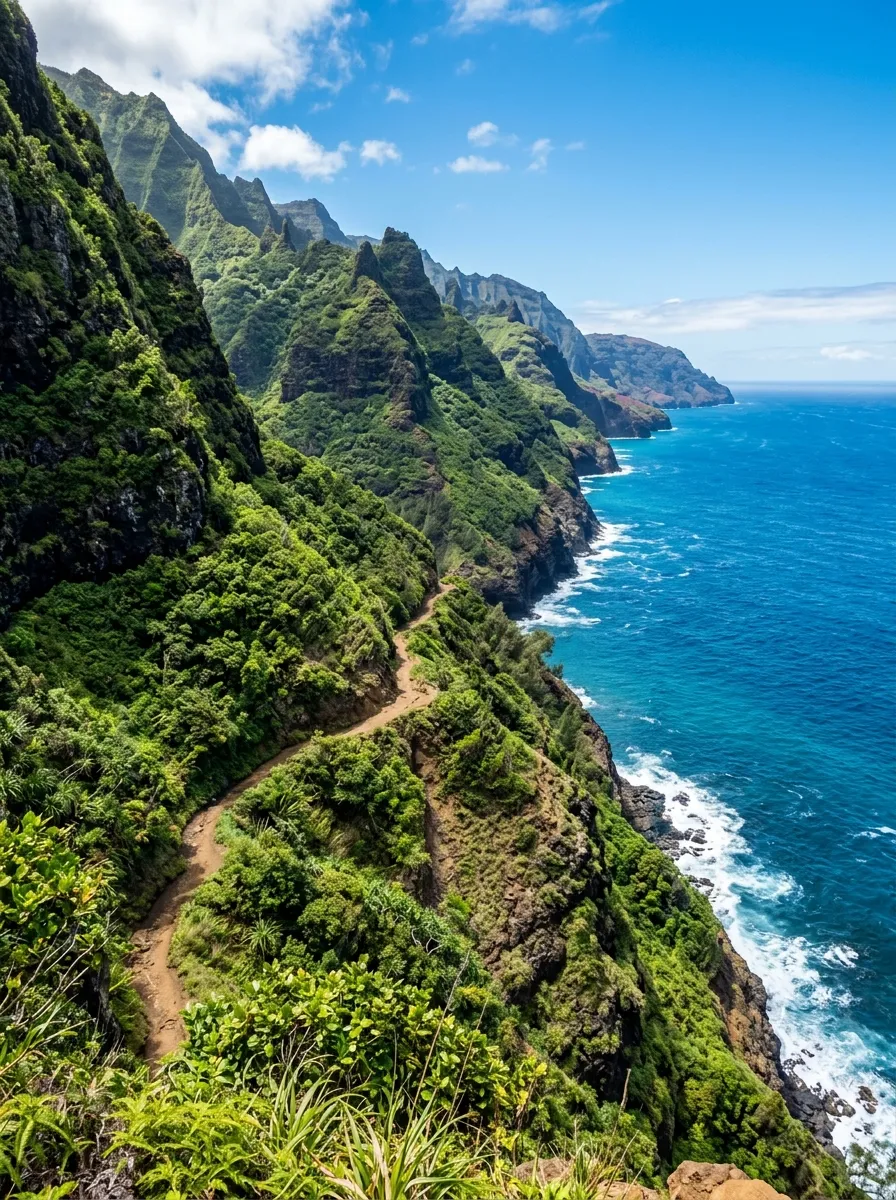
It is a journey along Kauai’s legendary Nāpali Coast, where narrow trails cling to green mountainsides, waterfalls drop through tropical valleys, and the Pacific stretches endlessly below.
The full Kalalau Trail runs 11 miles one way from Hāʻena State Park to Kalalau Beach. That means a complete out-and-back journey is about 22 miles, making it a serious backpacking adventure rather than a casual day hike.
The reward is one of the most spectacular coastal hiking experiences in Hawaii.
But there is a catch.
The Kalalau Trail can be muddy, slippery, hot, exposed and physically demanding. Some sections have steep drop-offs, and weather can change quickly. Beyond Hanakāpīʻai, overnight camping permits are required.
So if you’re planning to hike Kalalau, preparation matters almost as much as fitness.
This guide explains how the trail works, where to camp, what to expect, how many days you need, what to pack and how to plan a safer Kalalau adventure.
Recommended Travel Items for Your Trip
Where Is the Kalalau Trail?
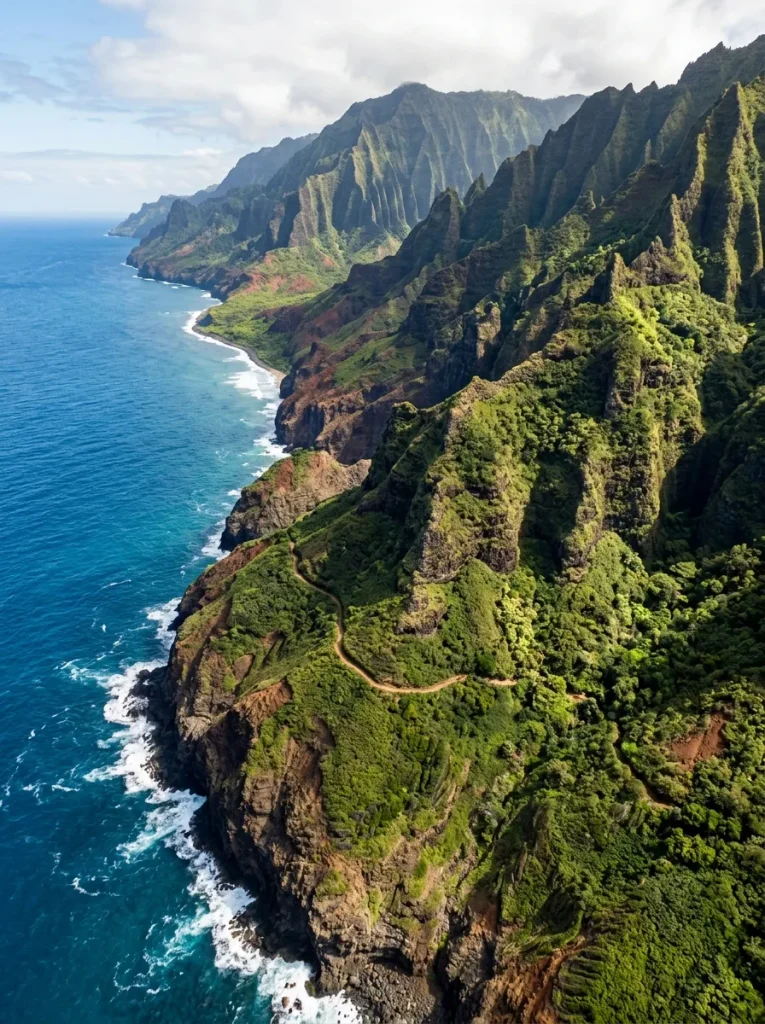
The Kalalau Trail is on the northwestern side of Kauai along the Nāpali Coast.
The trailhead is at Hāʻena State Park near Kēʻē Beach, at the end of Kūhiō Highway on Kauai’s north shore.
From Līhuʻe Airport, the trailhead is roughly 41 miles away, although actual driving time can vary considerably depending on traffic and road conditions.
The trail crosses five major valleys before reaching Kalalau Beach.
It was originally developed in the late 1800s and follows an ancient coastal route that connected Hawaiian settlements in the area.
Today, it is one of Kauai’s signature wilderness adventures.
How Long Is the Kalalau Trail?
The official trail distance is 11 miles one way.
That makes the full round trip approximately 22 miles.
But distance alone doesn’t tell the whole story.
The trail is graded but rarely flat. You repeatedly climb and descend through valleys, cross streams and navigate sections of narrow, uneven terrain.
The official elevation gain is about 800 feet, but you’ll experience substantially more up-and-down movement than that simple number suggests.
| Trail Section | Distance | Typical Experience |
| Hāʻena to Hanakāpīʻai | 2 miles | Popular day-hike section |
| Hanakāpīʻai to Hanakoa | 4 miles | Steeper, more strenuous |
| Hanakoa to Kalalau Beach | 5 miles | More exposed and remote |
| Total one way | 11 miles | Full backpacking route |
| Round trip | 22 miles | Serious multi-day hike |
The first two miles are the section most day hikers experience.
Once you continue beyond Hanakāpīʻai Valley, you enter a much more remote part of the Nāpali Coast.
Do You Need a Permit for the Kalalau Trail?
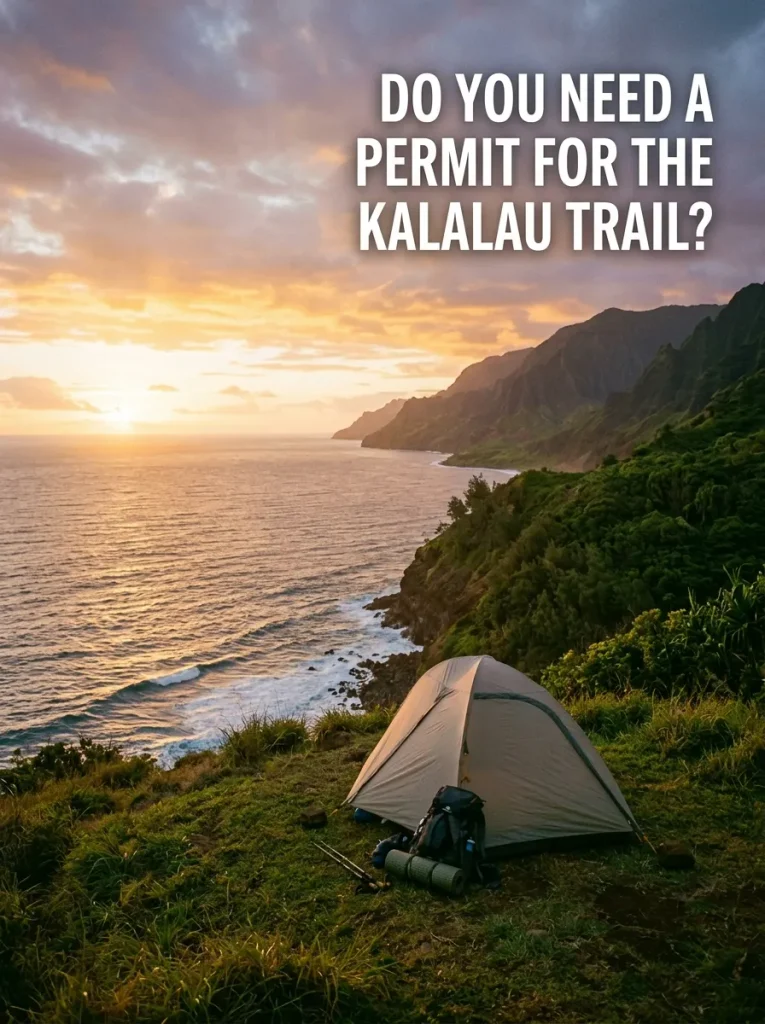
Yes, if you’re going beyond Hanakāpīʻai Valley.
This is one of the most important things to understand before planning the hike.
For a day hike to Hanakāpīʻai Beach or Hanakāpīʻai Falls, you need the appropriate Hāʻena State Park entry or parking reservation.
Anyone continuing beyond Hanakāpīʻai Valley must have a valid overnight camping permit for the Nāpali Coast State Wilderness Park.
You cannot simply decide on the trail that you feel like continuing another few miles.
Camping permits are limited, and the popular dates can disappear quickly.
The state currently allows Kalalau camping permits to be reserved in advance, subject to availability and park operating conditions.
How Many Nights Can You Camp?
A stay of up to five nights is permitted in the Nāpali Coast State Wilderness Park.
You can camp at designated areas including Hanakoa and Kalalau.
There are restrictions on consecutive nights at Hanakoa, so check the current permit rules when booking.
Because park policies can change, always verify the current reservation system and rules before your trip.
Current Access Is Especially Important
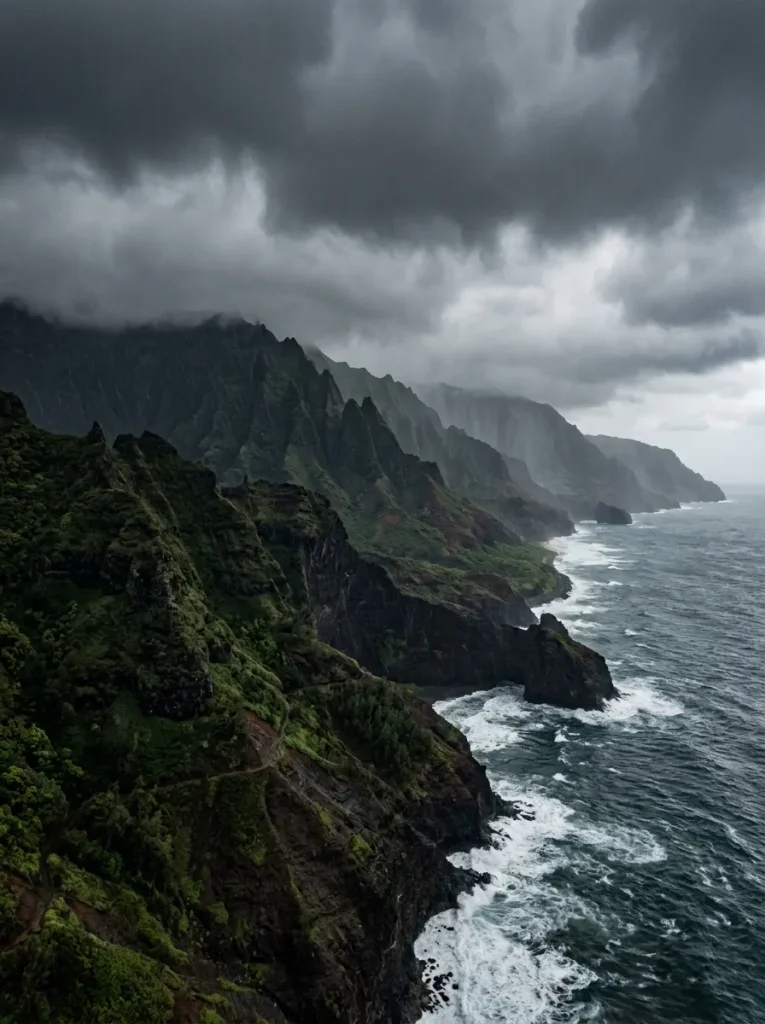
Kauai’s northwestern parks are vulnerable to heavy rain, flooding, landslides, storms and infrastructure damage.
That means a permit does not automatically guarantee that the trail will be open on your hiking date.
Check official park notices immediately before traveling.
This is especially important after major storms or hurricanes.
Never assume that an older blog post, social media post or even a previously purchased itinerary reflects current trail conditions.
How Hard Is the Kalalau Trail?
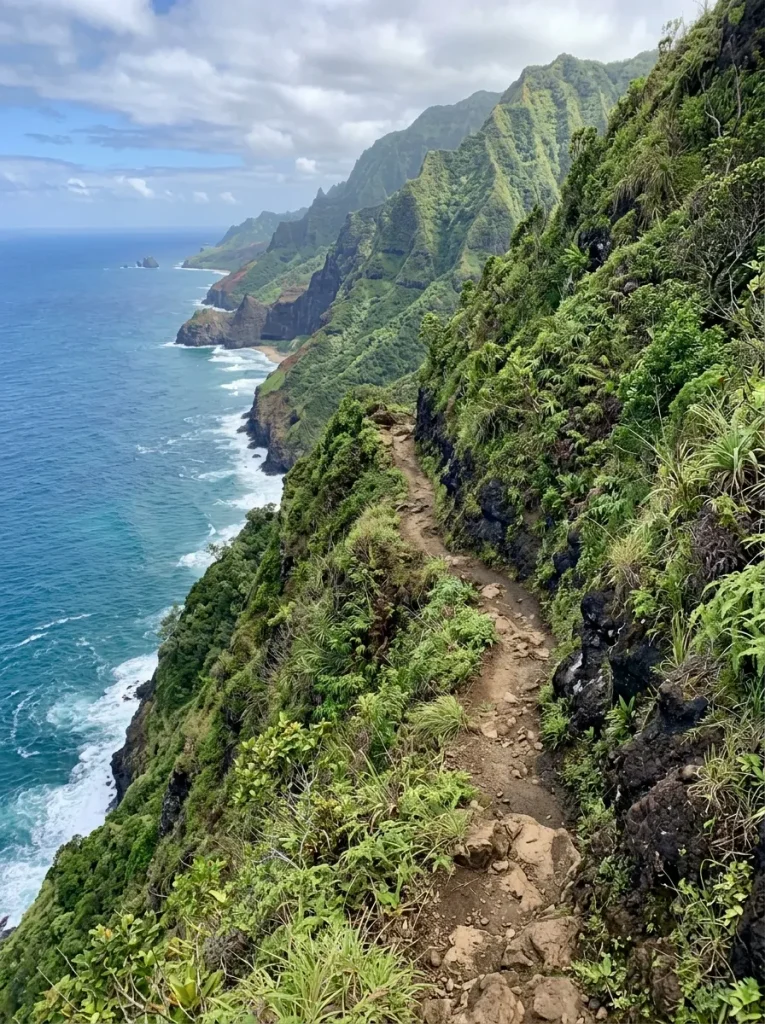
The Kalalau Trail is officially rated difficult.
That rating makes sense.
The trail combines:
- Long distances
- Repeated elevation changes
- Mud
- Uneven rocks
- Stream crossings
- Narrow sections
- Heat and humidity
- Limited shade in places
- Steep drop-offs
- Remote terrain
The first two miles to Hanakāpīʻai are much more approachable than the complete trail.
Once you’re beyond Hanakāpīʻai, the character of the hike changes.
You’re no longer simply taking a scenic walk along the coast.
You’re entering a remote wilderness environment where turning around can mean several hours of hiking.
The Kalalau Trail Route
Understanding the route before you arrive makes the hike much easier to visualize.
Hāʻena State Park to Hanakāpīʻai Beach
The first two miles take you from the trailhead toward Hanakāpīʻai Valley.
This section quickly delivers the scenery people associate with the Nāpali Coast.
You’ll encounter lush vegetation, ocean views and steep green mountains rising dramatically above the coastline.
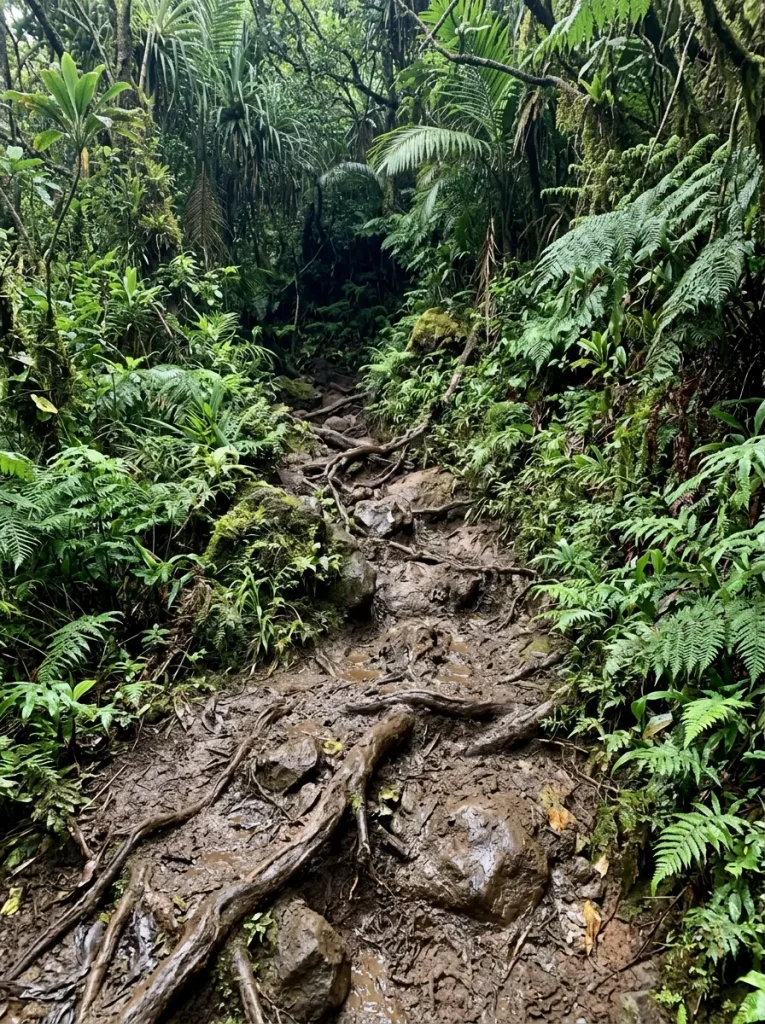
The trail is often muddy after rain.
Expect roots, rocks and slippery sections.
Hanakāpīʻai Beach is a popular destination, but don’t make the mistake of treating it like a normal Hawaiian swimming beach.
The surf and currents can be extremely dangerous.
Swimming or wading is not recommended.
Hanakāpīʻai Valley and Waterfall
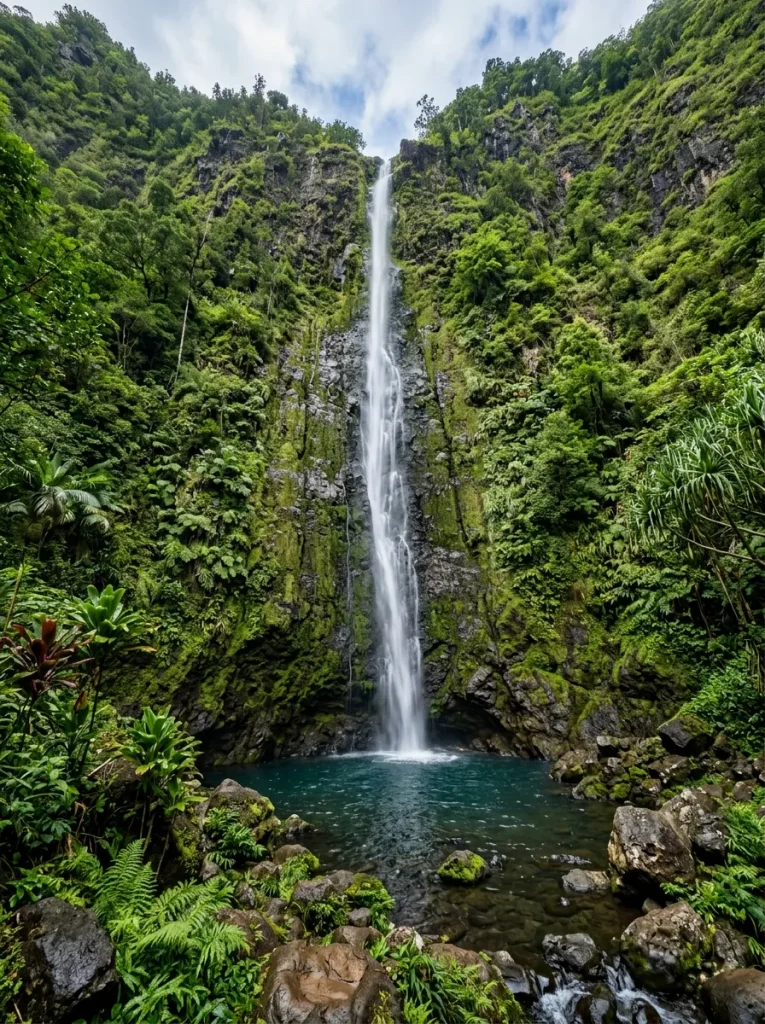
A separate trail continues inland from Hanakāpīʻai Beach toward Hanakāpīʻai Falls.
The waterfall route adds another two miles each way, making the hike approximately eight miles round trip from Hāʻena State Park.
This section can become considerably more difficult after heavy rain.
Stream crossings, slippery rocks, fallen trees and flash-flood danger are real concerns.
If rain is falling heavily or the weather is deteriorating, turning around is the smart move.
A waterfall isn’t worth gambling with a flooded valley.
Hanakāpīʻai to Hanakoa
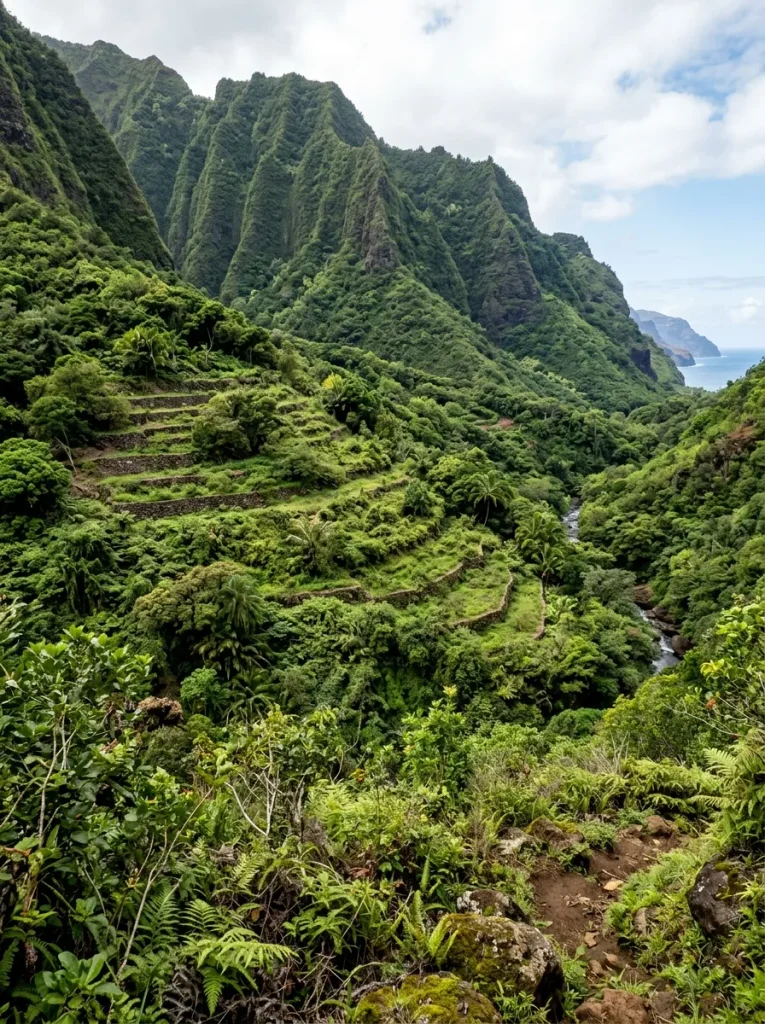
This is where the Kalalau Trail begins feeling much more serious.
The trail climbs steeply out of Hanakāpīʻai Valley before continuing through hanging valleys and lush vegetation.
You’ll encounter more elevation changes and fewer casual day hikers.
Hanakoa has a rest area, composting toilet and covered shelters.
The valley also contains old agricultural terraces that provide a fascinating glimpse into the area’s Hawaiian history.
Experienced hikers should still treat the section as demanding.
Hanakoa to Kalalau Beach
The final five miles are arguably the most dramatic.
The trail becomes drier and more exposed as you move toward Kalalau.
Shade becomes less reliable, which can make the afternoon heat particularly uncomfortable.
You’ll also encounter narrow sections where the terrain falls steeply toward the ocean.
This is where fatigue becomes a serious factor.
The views may be spectacular, but tired legs and exposed terrain are not a good combination.
Slow down.
Watch your footing.
And don’t let the scenery convince you to walk closer to an edge than you should.
Eventually, the trail reaches Kalalau Stream and continues toward Kalalau Beach.
What Is Kalalau Beach Like?
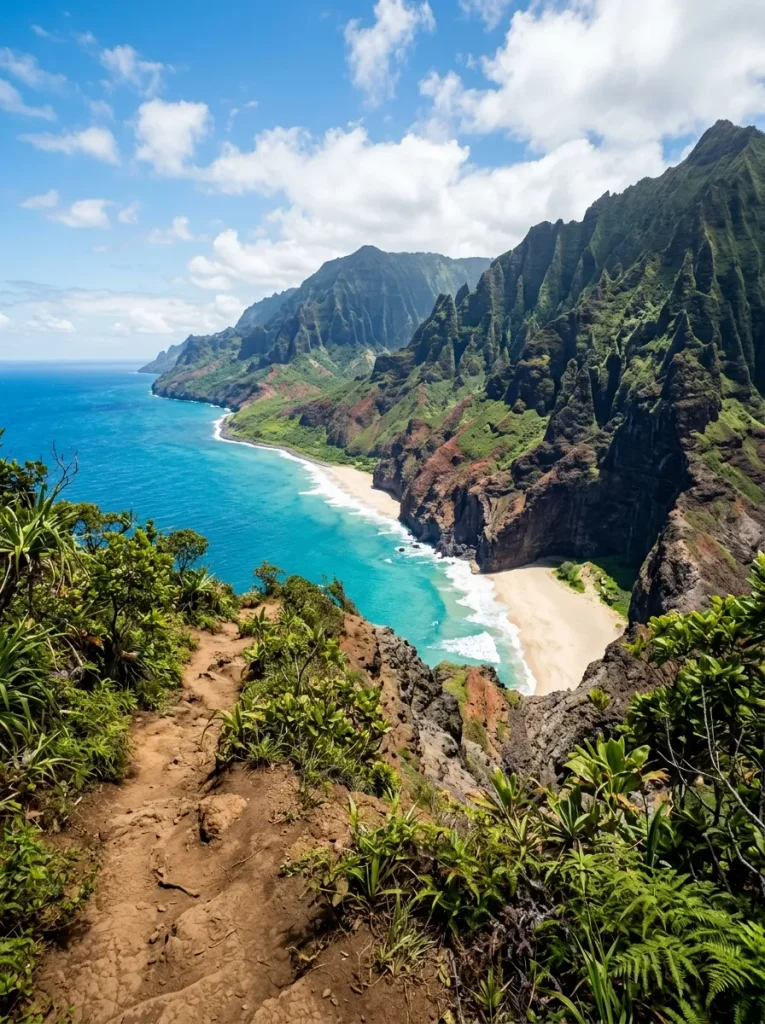
Kalalau Beach sits beneath the enormous cliffs of Kalalau Valley.
After hiking 11 miles to reach it, the beach can feel like an entirely different world.
The valley rises dramatically behind the coastline, while the Pacific stretches out in front of you.
Camping is permitted behind the beach in designated areas.
There are shaded campsites and basic facilities, but this is wilderness camping, not a beach resort.
Don’t expect showers, restaurants, electrical outlets or a little convenience store waiting behind the palm trees.
That is part of the appeal.
How Many Days Do You Need?
For most hikers planning to reach Kalalau Beach, three days and two nights is a comfortable starting point.
A simple itinerary looks like this:
| Day | Route | Approx. Distance |
| Day 1 | Hāʻena to Hanakoa | 6 miles |
| Day 2 | Hanakoa to Kalalau Beach | 5 miles |
| Day 3 | Kalalau Beach to Hāʻena | 11 miles |
However, many hikers prefer four days and three nights.
That gives you more time at Kalalau and reduces the pressure to complete the entire return journey in one long day.
A More Relaxed 4-Day Plan
Day 1: Hāʻena to Hanakoa
Day 2: Hanakoa to Kalalau Beach
Day 3: Explore Kalalau Valley and relax at camp
Day 4: Kalalau Beach to Hāʻena
This is the version I’d favor for travelers who have enough vacation time.
You’re hiking through one of Hawaii’s most beautiful landscapes. There’s little reason to turn it into a race.
Can You Hike Kalalau in One Day?
Theoretically, a very fit and experienced hiker can cover the 22-mile round trip in a day.
But that’s not how the state recommends approaching the trail for people without a camping permit.
The official guidance notes that most backpackers in good condition need a full day to hike the 11 miles one way, and people without a Kalalau camping permit are prohibited from attempting the complete 22-mile round trip.
The trail is simply too demanding to treat as a normal day hike.
If your schedule only allows one day, consider hiking to Hanakāpīʻai instead.
That gives you a spectacular taste of the Nāpali Coast without requiring an overnight backpacking permit.
Kalalau Trail vs. Hanakāpīʻai Falls
These two experiences are easy to confuse.
They are not the same hike.
| Experience | Distance | Permit |
| Hāʻena to Hanakāpīʻai Beach | 4 miles round trip | Hāʻena reservation |
| Hāʻena to Hanakāpīʻai Falls | 8 miles round trip | Hāʻena reservation |
| Hāʻena to Kalalau Beach | 22 miles round trip | Camping permit required |
If you’re short on time, the Hanakāpīʻai section is the logical choice.
If you’re an experienced backpacker looking for a multi-day wilderness adventure, continue toward Kalalau.
When Is the Best Time to Hike Kalalau?
Weather is one of the biggest variables.
Kauai is famously wet, especially along the north shore.
That rain is part of what keeps the mountains so intensely green, but it also creates muddy trails, slippery rocks and potential flash-flood conditions.
Summer
Summer can offer more stable weather and calmer ocean conditions, although conditions can still change quickly.
The trail can also become hot, particularly on exposed sections.
Fall
Fall can be beautiful, but rainfall begins becoming more important.
Check conditions closely before setting out.
Winter
Winter brings increased rainfall and rougher ocean conditions.
Hanakāpīʻai Beach is particularly dangerous during periods of high surf.
Some sections of the trail can also become extremely muddy.
Spring
Spring can bring lush scenery and waterfalls, but rain remains a factor.
The most important rule is simple:
Don’t choose your hiking date based only on a calendar. Check the actual weather and park conditions immediately before you go.
What Should You Pack for the Kalalau Trail?
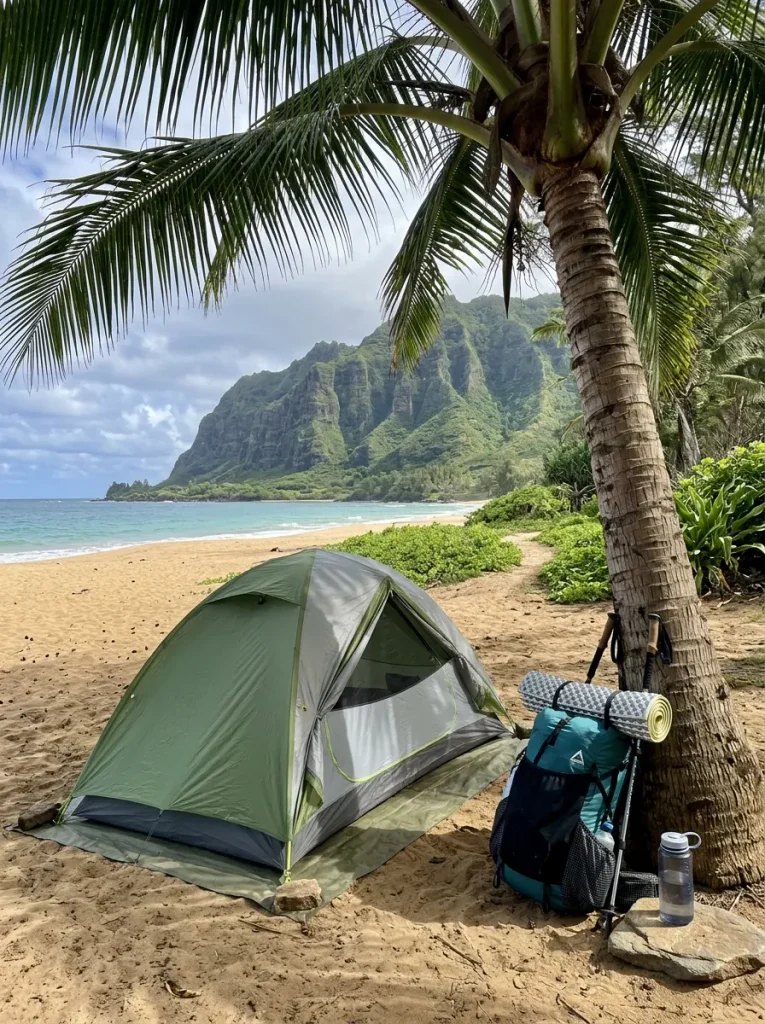
Pack lighter than you think you need, but don’t cut safety essentials.
Kalalau Backpacking Checklist
- Lightweight backpack
- Tent or approved shelter
- Sleeping bag
- Sleeping pad
- Plenty of water capacity
- Water filter or purification system
- High-energy food
- Electrolytes
- Headlamp
- Extra batteries
- Rain jacket
- Lightweight layers
- Sun protection
- Hat
- Insect protection
- Hiking poles
- First-aid kit
- Blister treatment
- Offline maps
- Fully charged phone
- Portable battery
- Emergency communication device
- Trash bags
- Toilet supplies
The official camping areas do not have drinking-water facilities, so water planning is essential.
Composting toilets are available at Hanakāpīʻai, Hanakoa and Kalalau.
How Much Water Should You Carry?
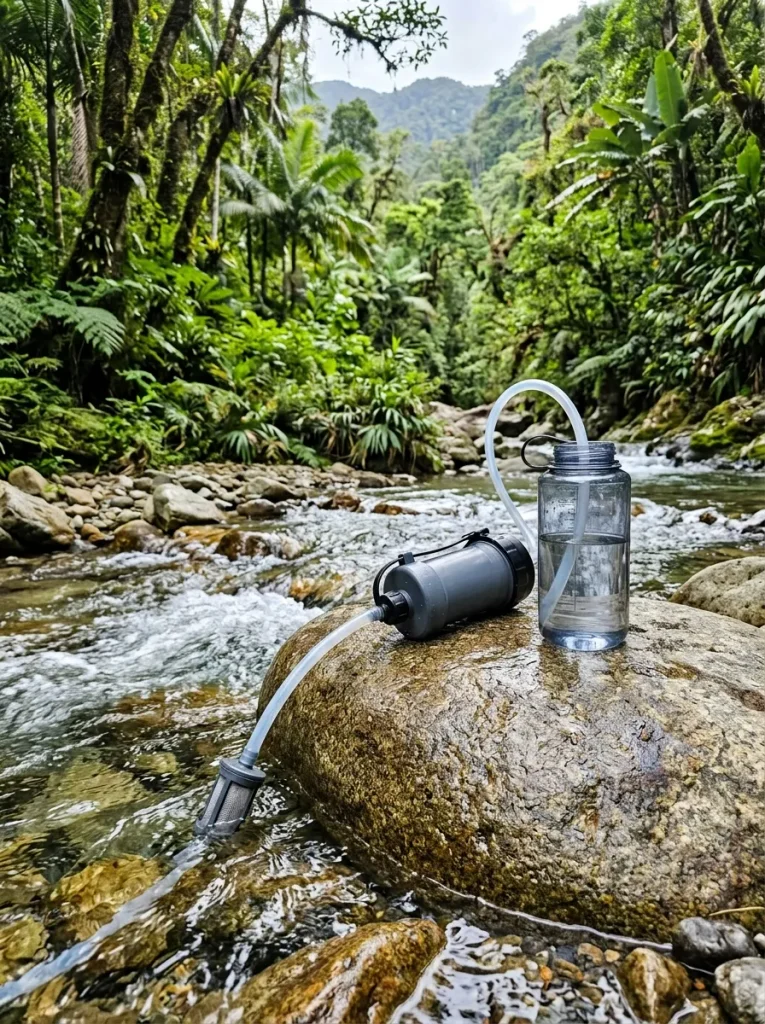
There isn’t one perfect amount for every hiker.
Temperature, fitness, body size, pace and food all affect your water requirements.
But don’t approach Kalalau assuming you’ll simply find a convenient drinking fountain along the trail.
Carry sufficient water and a reliable treatment method.
Streams may look wonderfully clean, but untreated natural water can contain microorganisms that cause illness.
A water filter or appropriate purification system is a much better plan than trusting your eyes.
Food for the Kalalau Trail
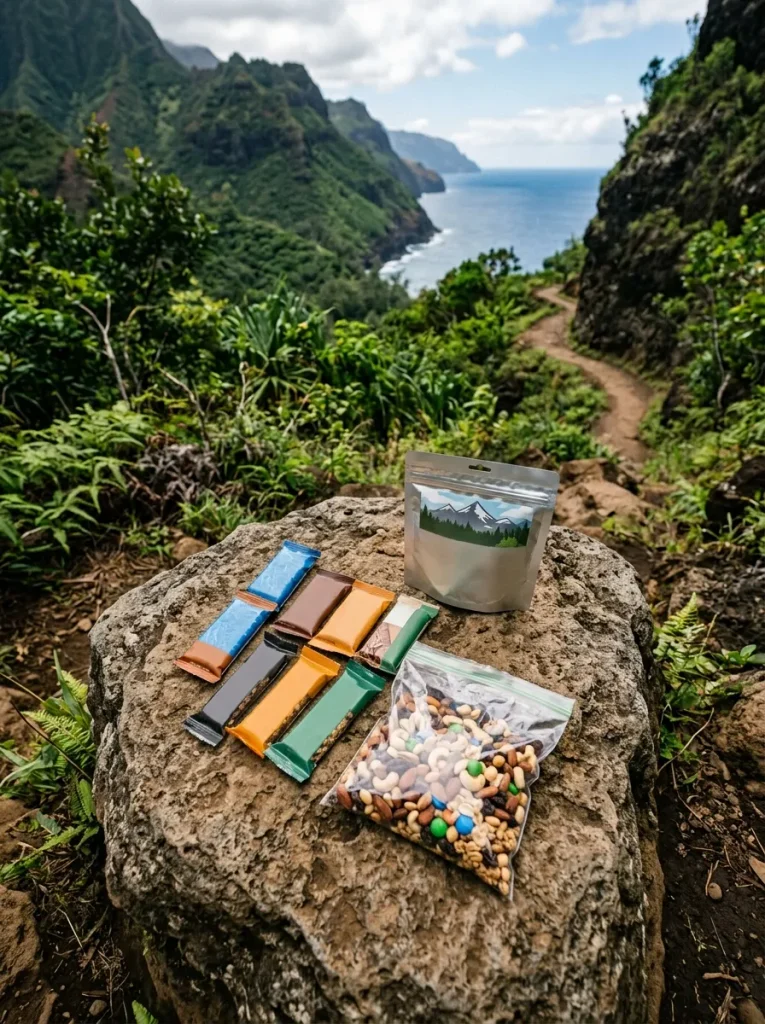
Backpacking food should be lightweight, calorie-dense and easy to prepare.
Good options include:
- Tortillas
- Peanut butter
- Trail mix
- Dried fruit
- Jerky
- Energy bars
- Instant oatmeal
- Dehydrated meals
- Crackers
- Nuts
- Electrolyte packets
- Instant coffee
Avoid packing a gourmet picnic for every night.
After hiking several miles through tropical terrain, your priority will probably be calories rather than culinary artistry.
How Dangerous Is the Kalalau Trail?
The trail deserves respect.
It isn’t dangerous because every step is a cliffhanger.
It is dangerous because several ordinary hazards can combine.
Rain creates slippery mud.
Heat causes dehydration.
Fatigue reduces concentration.
Heavy rain can turn streams into dangerous torrents.
Narrow sections can become intimidating when the trail is wet.
And the coastline itself has powerful surf.
Stay Away From the Edges
Some sections between Hanakoa and Kalalau have narrow trail sections and steep ocean-side drop-offs.
Don’t attempt to take a better photograph by moving closer to the edge.
The photograph is not going anywhere.
You might.
Be Careful Around Water
Never assume that a tropical stream is safe to cross simply because it looks shallow.
Heavy rain upstream can cause water levels to rise quickly.
If a crossing looks unsafe, wait or turn around.
Avoid Hanakāpīʻai Beach Swimming
This deserves repeating.
Hanakāpīʻai Beach has dangerous currents and surf.
The official state parks guidance specifically warns that swimming and wading there are not recommended.
What About the Kalalau Trail Mud?
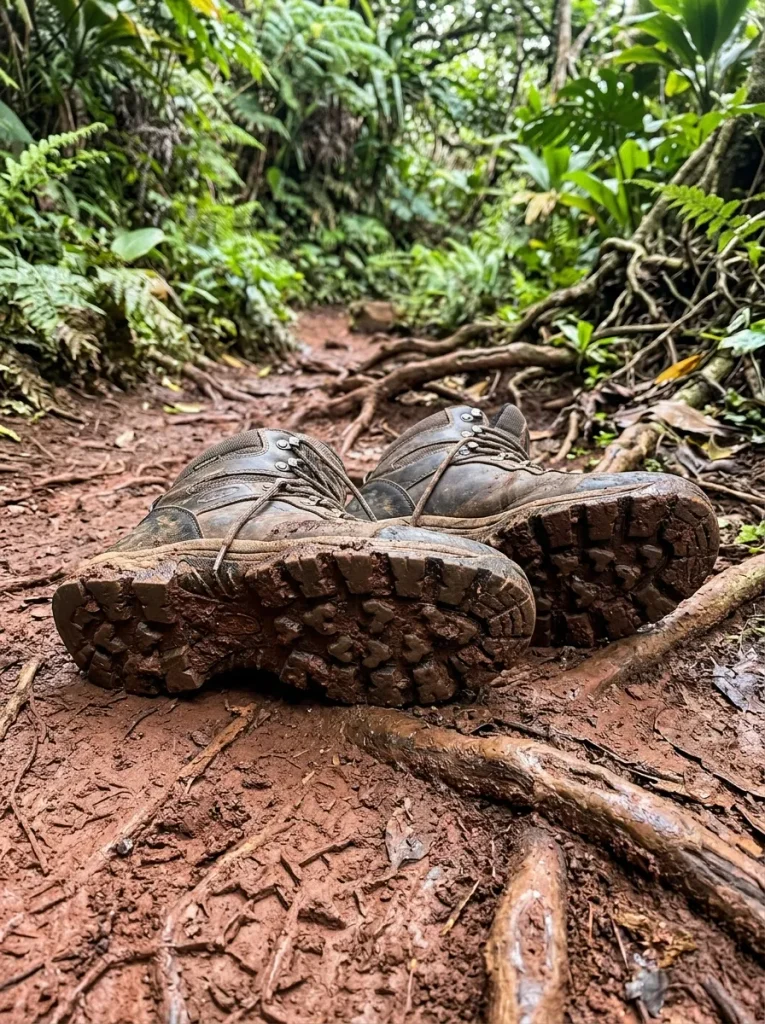
Yes, you’re probably going to encounter mud.
Kauai does not maintain its reputation for tropical greenery by keeping everything dry.
Wear shoes with excellent traction.
Don’t bring your favorite white sneakers.
And don’t panic when the trail becomes muddy.
Move carefully, use trekking poles if you like them, and accept that your footwear may return home looking like it has been through a small geological event.
Where Should You Stay Before the Hike?
For most travelers, staying somewhere on Kauai’s north shore before the hike makes the morning easier.
Princeville, Hanalei and nearby areas can work well depending on your plans and budget.
Staying closer to Hāʻena reduces the amount of driving on your hiking morning.
If you’re staying elsewhere on Kauai, build plenty of time into your schedule.
You don’t want to begin an 11-mile wilderness hike while already exhausted from an early-morning island drive.
Getting to the Kalalau Trailhead
The trailhead is located at Hāʻena State Park at the end of Kūhiō Highway.
Access to Hāʻena State Park is controlled.
Non-Hawaii residents generally need an advance park entry or parking reservation unless covered by an applicable camping permit.
Parking reservations are limited.
If you’re camping overnight at Kalalau and driving your own vehicle, you also need to arrange the appropriate overnight parking reservation.
The state does not allow you to simply leave your car overnight wherever you find an empty space.
Can You Take a Shuttle?
Yes, shuttle access is an important part of the Hāʻena State Park system.
If you don’t want to deal with parking, using the authorized shuttle can make the logistics easier.
However, availability, schedules and operating arrangements can change.
Check the official Hāʻena State Park information before your trip.
Can You Take a Boat to Kalalau?
Be careful with this one.
Commercial boat transportation for drop-off or pickup at Kalalau or Milolii camping areas is not authorized under the state’s current rules.
The same applies to commercial guided camping trips involving boat and hiking access.
Don’t build your itinerary around an unofficial boat taxi.
Kalalau Trail Camping
Camping is allowed only in designated areas with the appropriate permit.
There are no traditional campgrounds with extensive facilities.
Think wilderness camping.
You’ll have basic toilets and natural surroundings, but you need to carry in what you need and carry out your waste and trash as required.
The state currently lists camping fees for the Nāpali Coast at $25 per person per night for Hawaii residents and $35 for non-residents, although fees and booking conditions can change.
Always confirm the current amount during the reservation process.
What Makes the Kalalau Trail Special?
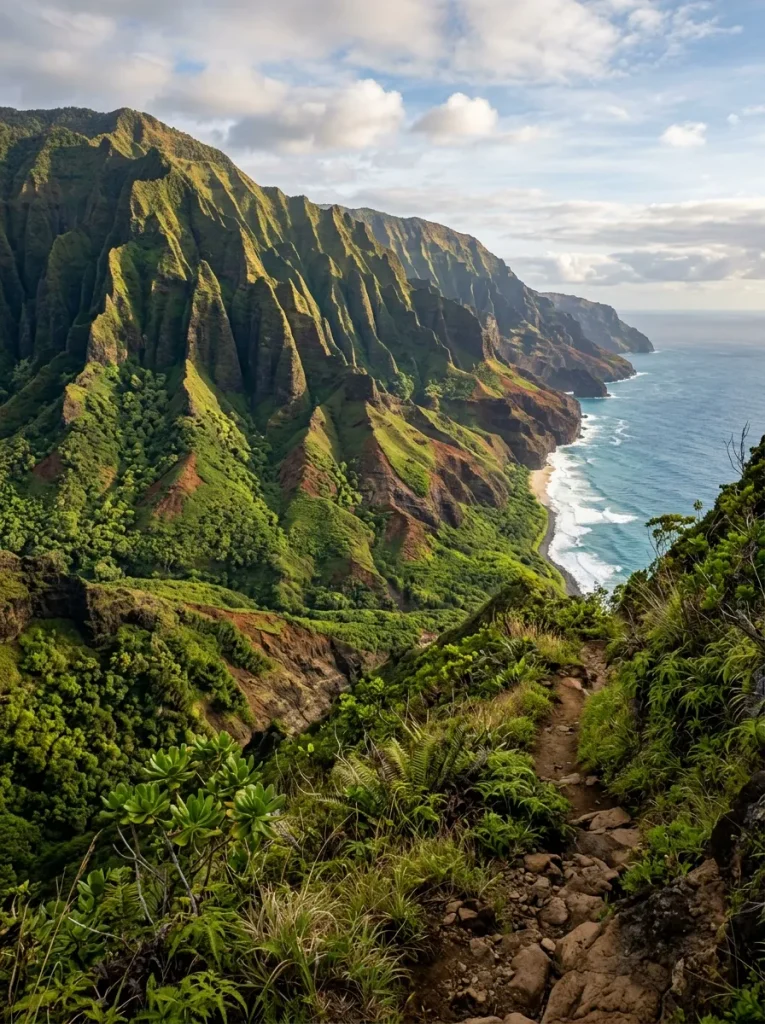
The scenery is obviously a huge part of it.
But the experience is more than a collection of viewpoints.
You’re moving through an extraordinary landscape where steep volcanic cliffs meet the ocean, narrow valleys disappear into the mountains, and vegetation changes as the trail moves from lush valleys toward drier coastal terrain.
The trail also carries cultural history.
Ancient Hawaiian communities used routes through this rugged coastline, and agricultural terraces remain visible around places such as Hanakoa and Kalalau Valley.
You’re not simply walking through pretty scenery.
You’re moving through a landscape shaped by geology, weather, plants, people and centuries of Hawaiian history.
What Other Hawaii Hikes Should You Try?
If Kalalau is on your Hawaii itinerary, there are plenty of other hikes worth adding.
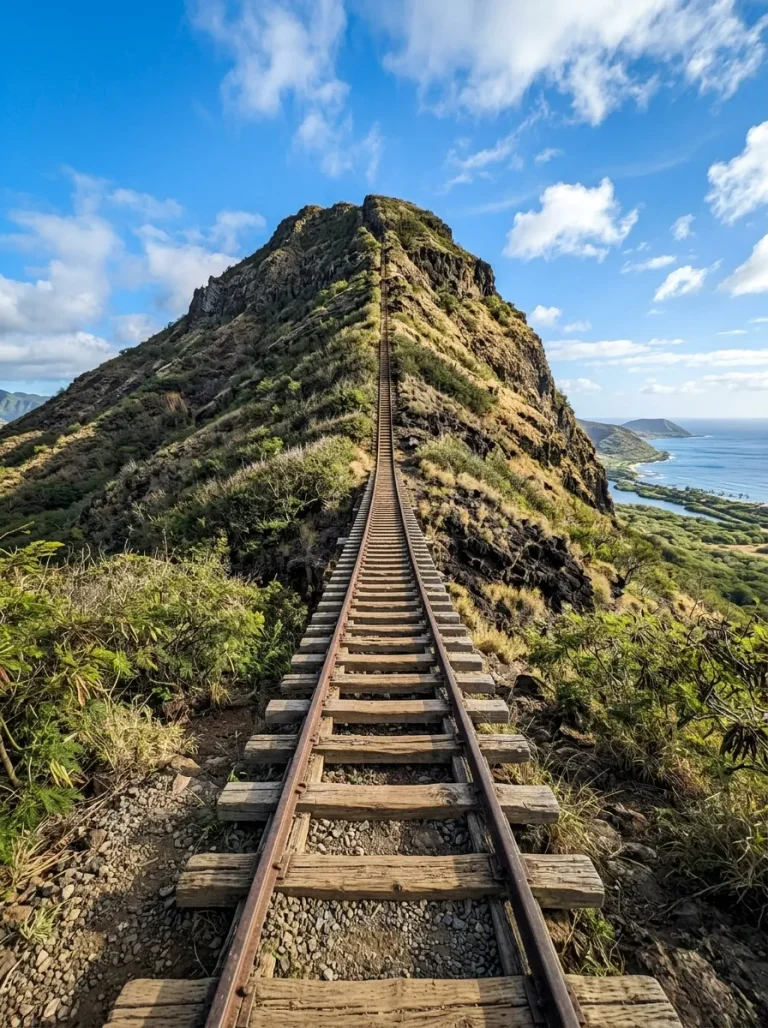
On Oahu, the famous Koko Head hike offers a completely different experience, with a steep climb up an old railway track.
You can read our guide to the Koko Head hike.
On the Big Island, volcanic landscapes create an entirely different hiking experience. Our Big Island Hawaii guide covers volcanoes, beaches and outdoor adventures across the island.
And if you’re still deciding which Hawaiian island fits your trip, our Hawaiian Islands guide breaks down the major islands and what each one offers.
For travelers staying around Oahu before flying to Kauai, you can also work through this Honolulu bucket list before heading north.
A Perfect 4-Day Kalalau Itinerary
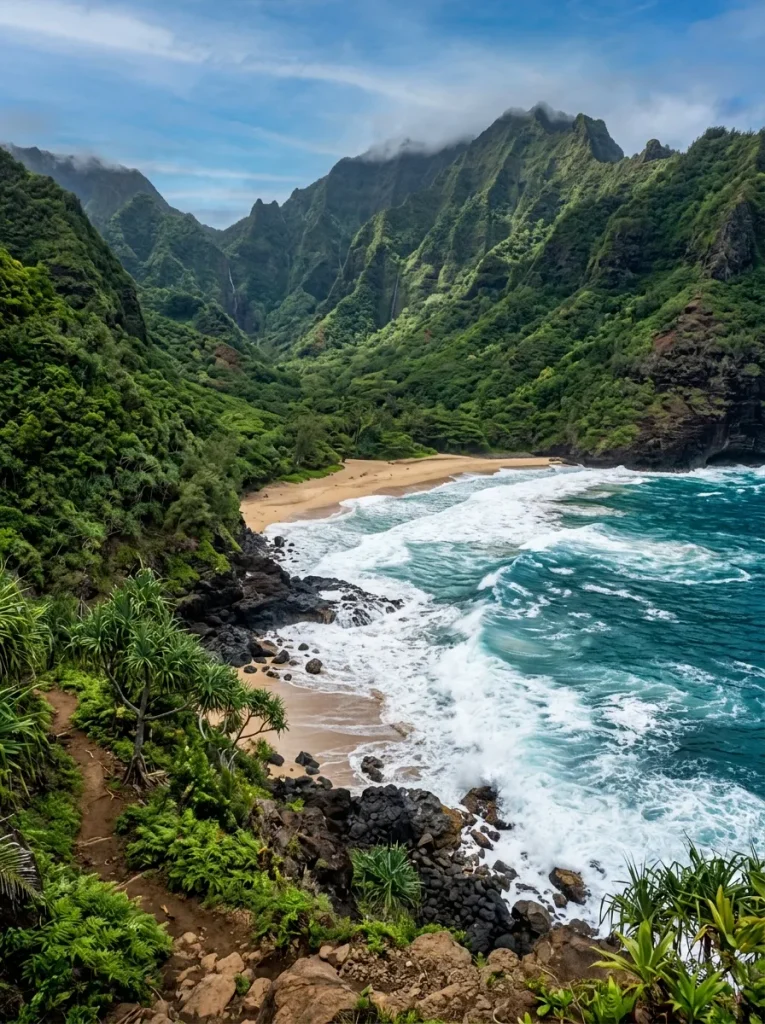
Here’s a simple plan for experienced hikers who have secured the necessary permits.
Day 1: Hāʻena to Hanakoa
Start early.
Hike the first two miles to Hanakāpīʻai, then continue toward Hanakoa.
Take your time.
This is your first full day on the trail, so don’t burn all your energy early.
Set up camp at Hanakoa and rest.
Day 2: Hanakoa to Kalalau
This is the big scenic day.
The landscape gradually changes as you approach Kalalau.
Take plenty of breaks, especially during exposed sections.
Arrive at Kalalau Beach, establish camp and enjoy the evening.
Day 3: Explore Kalalau Valley
Use your extra day to slow down.
Explore the valley rather than immediately turning the trip into another endurance challenge.
The trail into Kalalau Valley follows the stream and passes through old agricultural terraces.
Conditions can be challenging, so stay within your ability and follow current trail guidance.
Day 4: Hike Back to Hāʻena
Start early.
The return journey is approximately 11 miles.
You already know the route, but don’t underestimate it.
The final miles can feel surprisingly long when your pack is heavier with tired legs and your mind is focused on the trailhead.
Kalalau Trail Tips for First-Time Backpackers
A few small decisions can make a huge difference.
Start Early
You’ll have cooler temperatures and more daylight.
Keep Your Pack Light
Every unnecessary kilogram becomes much more noticeable after several miles.
Bring Rain Protection
Even if the forecast looks perfect.
Protect Your Feet
Blisters can turn an incredible trip into a slow-motion nightmare.
Use Trekking Poles
They can be especially helpful in mud and on uneven terrain.
Don’t Rush
The landscape is the reason you’re here.
Respect the Weather
A beautiful morning doesn’t guarantee a safe afternoon.
Check Park Notices
Closures can happen because of storms, flooding, landslides, fires or infrastructure problems.
Frequently Asked Questions
How long is the Kalalau Trail?
The Kalalau Trail is 11 miles one way, making the complete round trip approximately 22 miles.
Is the Kalalau Trail hard?
Yes. It is officially classified as difficult and includes muddy terrain, elevation changes, stream crossings, exposed areas and steep drop-offs.
Do you need a permit for Kalalau Trail?
You need the appropriate Hāʻena State Park reservation for the day-use section to Hanakāpīʻai. Anyone continuing beyond Hanakāpīʻai Valley needs a valid Nāpali Coast State Wilderness Park camping permit.
Can you hike the Kalalau Trail in one day?
The full 22-mile round trip is not an appropriate casual day hike. Without a camping permit, visitors are prohibited from attempting the complete round trip. For a one-day experience, hike to Hanakāpīʻai instead.
How many days should you spend on the Kalalau Trail?
Three days and two nights can work for experienced backpackers. Four days and three nights gives you a more relaxed experience and time to explore Kalalau Valley.
Can beginners hike the Kalalau Trail?
The first two miles to Hanakāpīʻai are far more approachable than the complete trail. The full Kalalau route is a difficult wilderness backpacking trip and is better suited to hikers with experience in long, remote trails.
Can you swim at Kalalau Beach?
Ocean conditions can be dangerous and change quickly. Only experienced swimmers familiar with local conditions should consider entering the water, and even then, conditions must be assessed carefully.
Is the Kalalau Trail open all year?
The trail’s accessibility depends on weather, safety conditions, park operations and official closures. Check current Hawaiʻi State Parks notices before traveling.
Final Thoughts
The Kalalau Trail is the kind of hike that requires a little humility.
You don’t conquer the Nāpali Coast.
You move through it.
The mountains decide when the trail is muddy. The rain decides whether a stream is safe to cross. The ocean decides whether the beach is welcoming or dangerous.
Your job is to prepare, pay attention and know when to turn around.
For experienced hikers with the right permits, enough time and favorable conditions, the journey to Kalalau Beach can become one of the defining adventures of a Hawaii trip.
And if 22 miles of backpacking sounds like too much, don’t write off the Nāpali Coast.
The first two miles to Hanakāpīʻai still deliver an unforgettable introduction to the landscape.
Sometimes the smartest adventure is the one that leaves you wanting to come back.