Roosevelt Island Travel Guide 2026–27: Tram Views, Hidden History and the Perfect Half-Day NYC Escape
Roosevelt Island is one of New York City’s strangest little geographic plot twists.
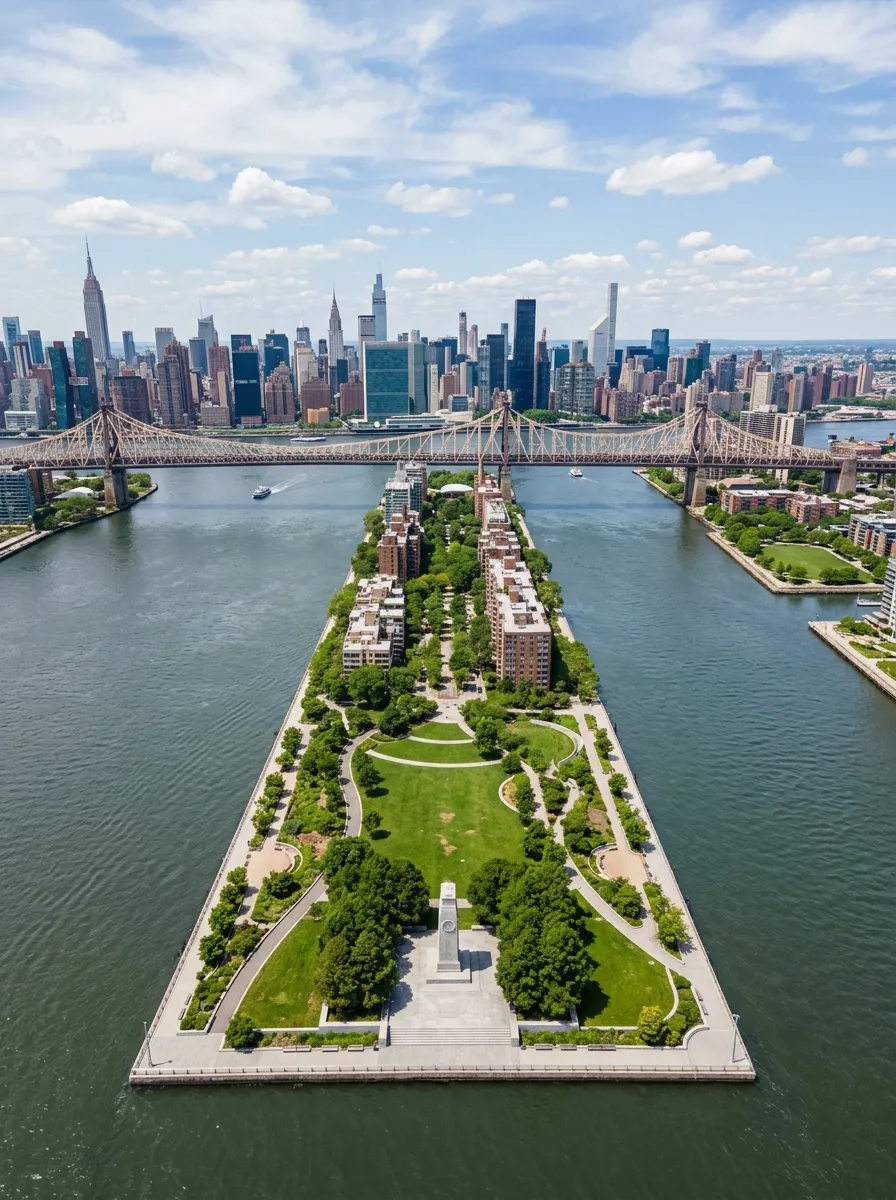
It sits in the East River between Manhattan and Queens, close enough to Midtown that you can stare directly at skyscrapers across the water, yet the atmosphere feels dramatically calmer than the streets only a few minutes away. There are waterfront promenades, lawns, historic ruins, a lighthouse, cherry trees, modern university buildings and one of New York’s most unusual forms of public transportation: the bright red Roosevelt Island Tramway.
The island is only about two miles long, which makes it ideal for a half-day or relaxed afternoon rather than a full conventional sightseeing day. Roosevelt Island Operating Corporation manages its roads, parks, transit and public spaces, including the tram and free Red Bus.
For first-time visitors, the best plan is beautifully simple: take the tram from Manhattan, walk south through Cornell Tech and Southpoint Park to Franklin D. Roosevelt Four Freedoms State Park, then work your way north along the waterfront before returning by ferry, subway or tram.
The trip is inexpensive, photogenic and refreshingly light on logistics. You do not need attraction passes, complicated reservations or a heroic 20,000-step itinerary.
Recommended Travel Items for Your Trip
ROOSEVELT ISLAND AT A GLANCE
Location: East River, New York City
Best for: Skyline views, walking, photography and quiet NYC breaks
Ideal visit: 3–5 hours
Best first experience: Ride the Roosevelt Island Tram
Best viewpoint: Four Freedoms State Park
Best historic sight: Smallpox Hospital ruins
Best northern landmark: Roosevelt Island Lighthouse
Best broad seasons: Spring and fall
Best spring attraction: Cherry blossoms
Tram fare: Standard MTA fare
Island bus: Free Red Bus
Do you need a car? Absolutely not
Is Roosevelt Island Worth Visiting?
Yes, particularly if you have already seen some of New York’s major landmarks and want a quieter experience that still feels unmistakably connected to Manhattan.
Roosevelt Island is best for:
- First-time visitors with an extra half-day
- Repeat NYC travelers
- Couples
- Families
- Photographers
- Architecture enthusiasts
- Travelers seeking skyline views
- Budget sightseeing
- Spring cherry-blossom walks
- Anyone who simply enjoys unusual transportation
It is less suitable if you are trying to fit the absolute headline attractions of New York into a very short first visit. Someone with only one day in the city should probably prioritize Central Park, Times Square, Lower Manhattan or the major museums first.
But once you have a little breathing room, Roosevelt Island becomes one of those rare NYC experiences where the journey itself is half the attraction.
For travelers who enjoy slow exploration rather than racing between landmarks, the island has something in common with a good Route 66 road trip: the spaces between the obvious stops become part of the experience.
Best Things to Do on Roosevelt Island
| Experience | Best For | Time Needed | Cost |
| Roosevelt Island Tram | Everyone | 5–15 min + wait | Standard MTA fare |
| Four Freedoms Park | Views and architecture | 45–60 min | Free |
| Smallpox Hospital ruins | History and photography | 10–20 min | Free exterior viewing |
| Southpoint Park | Walking and skyline views | 30–60 min | Free |
| Cornell Tech campus | Architecture | 20–40 min | Free public areas |
| Waterfront promenade | Walking and jogging | 1–2 hours | Free |
| Blackwell House | History | 15–30 min | Access varies |
| Lighthouse Park | Picnics and quiet views | 30–60 min | Free |
| NYC Ferry ride | Scenic transportation | Route dependent | $4.50 one-way |
| Cherry blossoms | Spring photography | Flexible | Free |
1. Ride the Roosevelt Island Tram
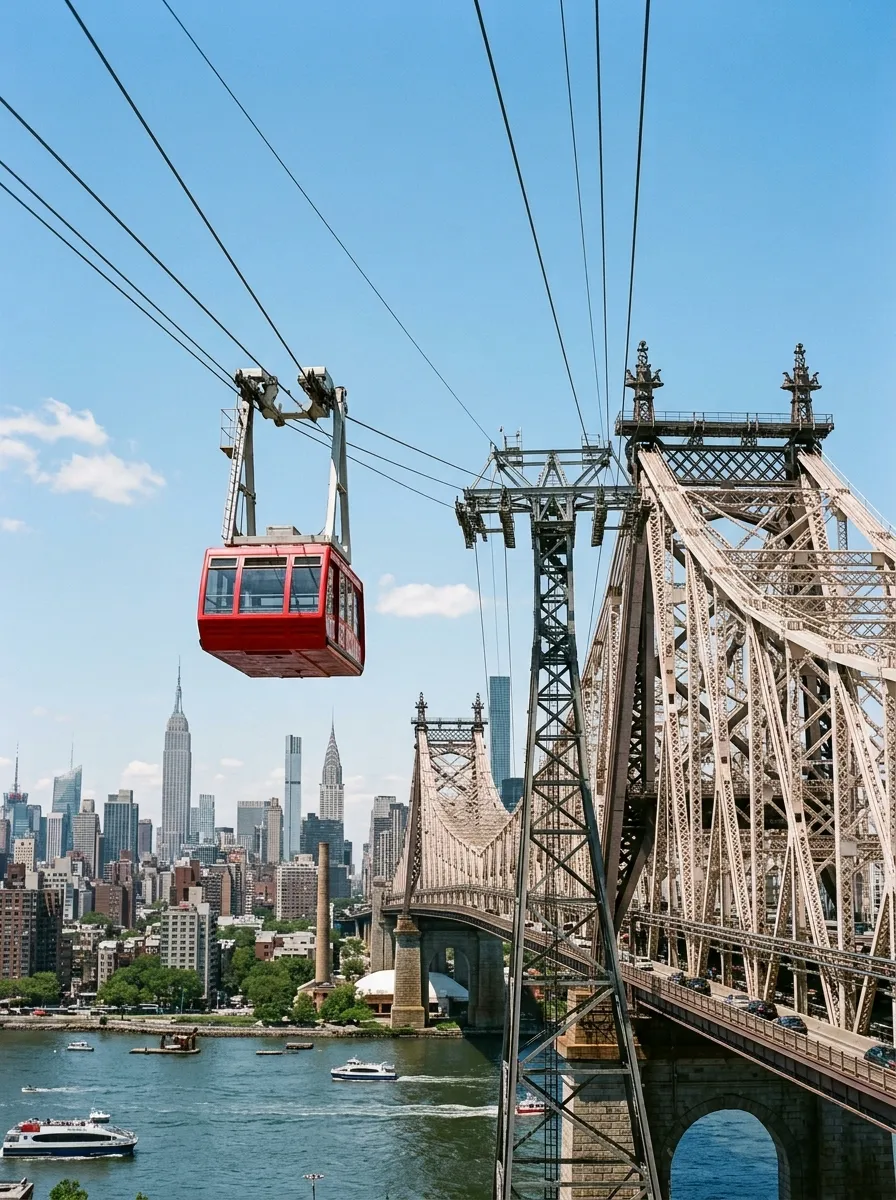
The tram is the reason many visitors first discover Roosevelt Island.
It travels between Manhattan at East 59th Street/Second Avenue and Roosevelt Island, rising beside the Queensboro Bridge and crossing the East River with views toward Midtown.
The ride lasts only a few minutes, but it manages to feel like a miniature sightseeing attraction disguised as public transportation.
RIOC says the tram accepts the standard MTA fare, including OMNY tap-to-pay and qualifying unlimited passes. It is also accessible for mobility devices, strollers and bicycles.
Current tram hours
As of 2026:
Sunday–Thursday: 6:00 a.m.–2:00 a.m.
Friday–Saturday: 6:00 a.m.–3:30 a.m.
The tram also celebrated its 50th anniversary in 2026, having become one of the island’s defining symbols.
Which side should you stand on?
For the best Manhattan and Queensboro Bridge views, position yourself near the windows facing south or toward the bridge if space allows.
Rush hour can become crowded because the tram is real commuter transportation, not merely a tourist ride.
TRAM TIP
Avoid weekday commuter peaks if photography matters. Midmorning or early afternoon generally feels much less like trying to admire New York from inside a glass elevator full of briefcases.
2. Walk to Franklin D. Roosevelt Four Freedoms State Park
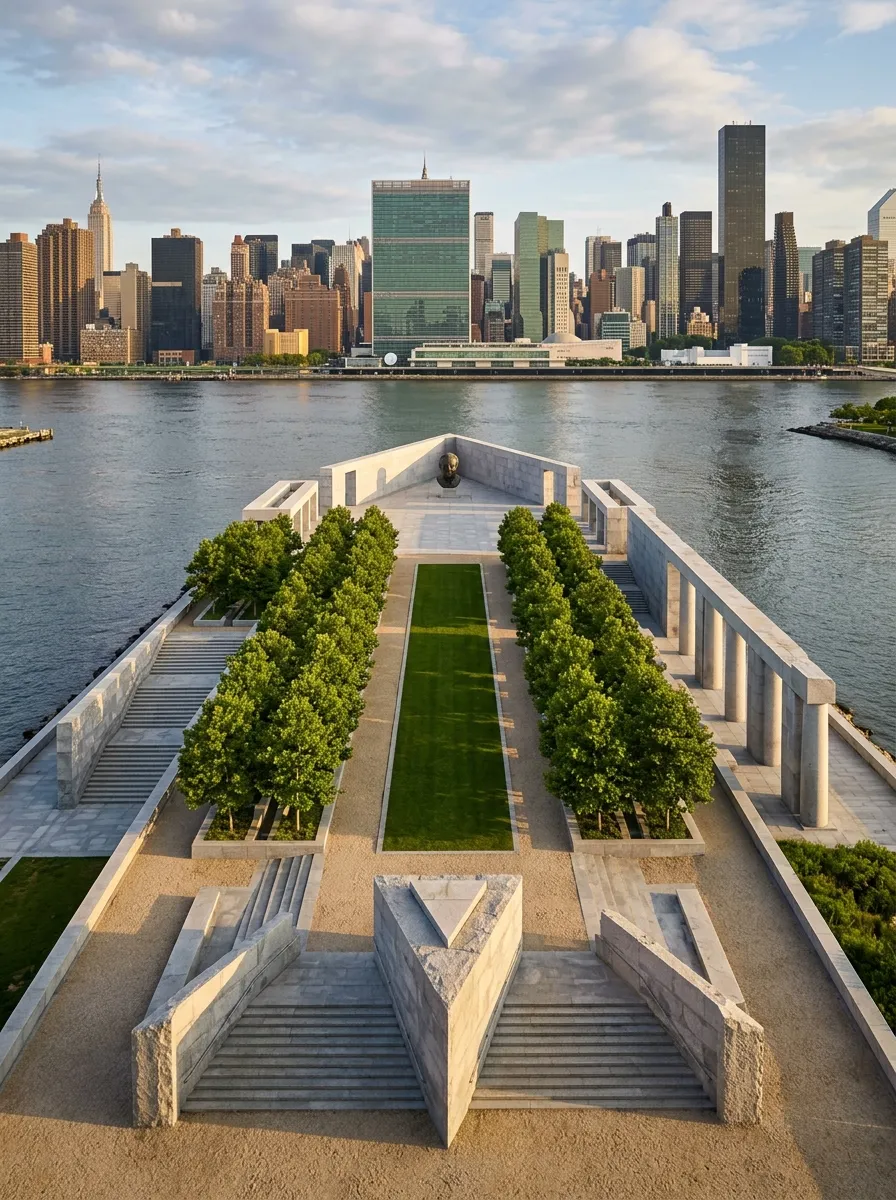
At the southern tip of the island sits Franklin D. Roosevelt Four Freedoms State Park, one of New York’s most striking modern memorial spaces.
Designed by architect Louis Kahn, the park honors Franklin D. Roosevelt and his famous Four Freedoms. The conservancy describes it as the first memorial dedicated to FDR in his home state and the final work of Kahn.
The geometry is deliberately simple:
- Tree-lined approach
- Broad lawn
- Monumental granite blocks
- FDR bust
- Open-air “Room” at the tip
- East River views
- United Nations skyline directly across the water
The visual drama comes from what is missing. There is little clutter, which allows Manhattan to become part of the memorial’s architecture.
Current opening hours
The park is currently open:
Sunday: 9 a.m.–7 p.m.
Monday: 9 a.m.–7 p.m.
Tuesday: Closed
Wednesday–Saturday: 9 a.m.–7 p.m.
It is closed on Christmas Day and New Year’s Eve, with reduced New Year’s Day hours.
Important practical detail
There are no public restrooms inside Four Freedoms State Park itself. Accessible bathrooms are available in nearby Southpoint Park.
That detail becomes unexpectedly important when traveling with children.
3. See the Smallpox Hospital Ruins
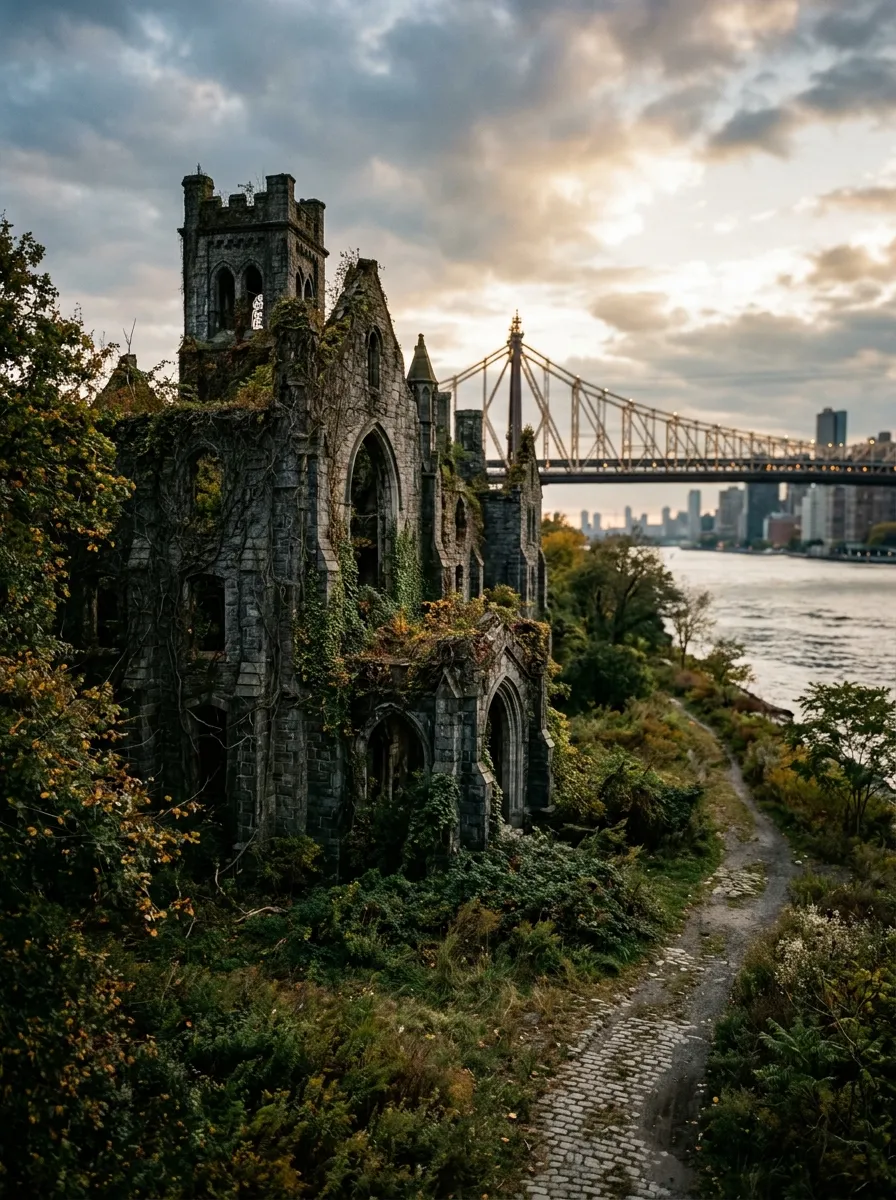
Immediately north of Four Freedoms Park stand the haunting Gothic ruins of the former Smallpox Hospital.
Designed by James Renwick Jr. and built in 1856, the structure is one of several historic sites preserved on Roosevelt Island. RIOC describes it as a striking Gothic ruin.
You cannot casually wander through the interior.
Instead, view the stabilized ruins from surrounding paths and Southpoint Park.
The combination of:
- Gothic stone
- Overgrown vegetation
- Modern skyline
- Queensboro Bridge
- Cornell Tech architecture
makes this one of the island’s most unusual photography locations.
It looks like somebody misplaced part of a Victorian ghost story between two New York boroughs.
4. Explore Southpoint Park
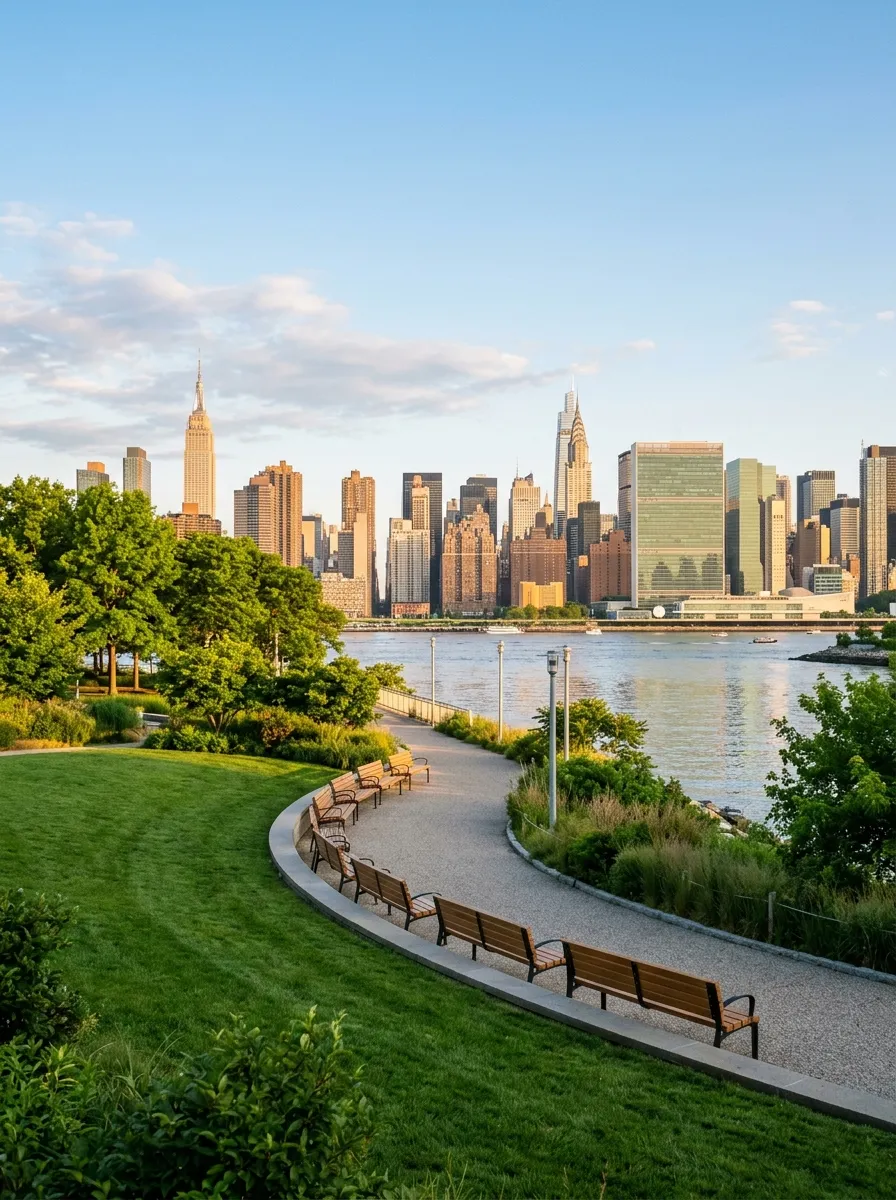
Southpoint Park sits between Cornell Tech and Four Freedoms Park.
It provides lawns, shoreline paths and excellent views toward Manhattan and Queens.
The park is a useful place to:
- Picnic
- Rest
- Photograph the skyline
- Let children run around
- Watch boats
- Explore the Smallpox Hospital exterior
- Catch sunset
RIOC continues to use Southpoint Park for community programming, including its 2026 outdoor summer movie series.
If Four Freedoms is architecturally formal, Southpoint feels much more relaxed.
Bring lunch and linger.
5. Walk Through Cornell Tech

Cornell Tech occupies a substantial part of southern Roosevelt Island and introduces a completely different architectural chapter.
The campus includes contemporary university buildings surrounded by landscaping, plazas and paths, creating a striking contrast with the nearby 19th-century hospital ruin.
For architecture lovers, the sequence is excellent:
Historic ruin → modern campus → Louis Kahn memorial → Manhattan skyline
You do not need to enter academic buildings to enjoy the public-facing exterior spaces.
Allow 20–30 minutes while walking between the tram and southern parks.
6. Walk the Waterfront Promenade
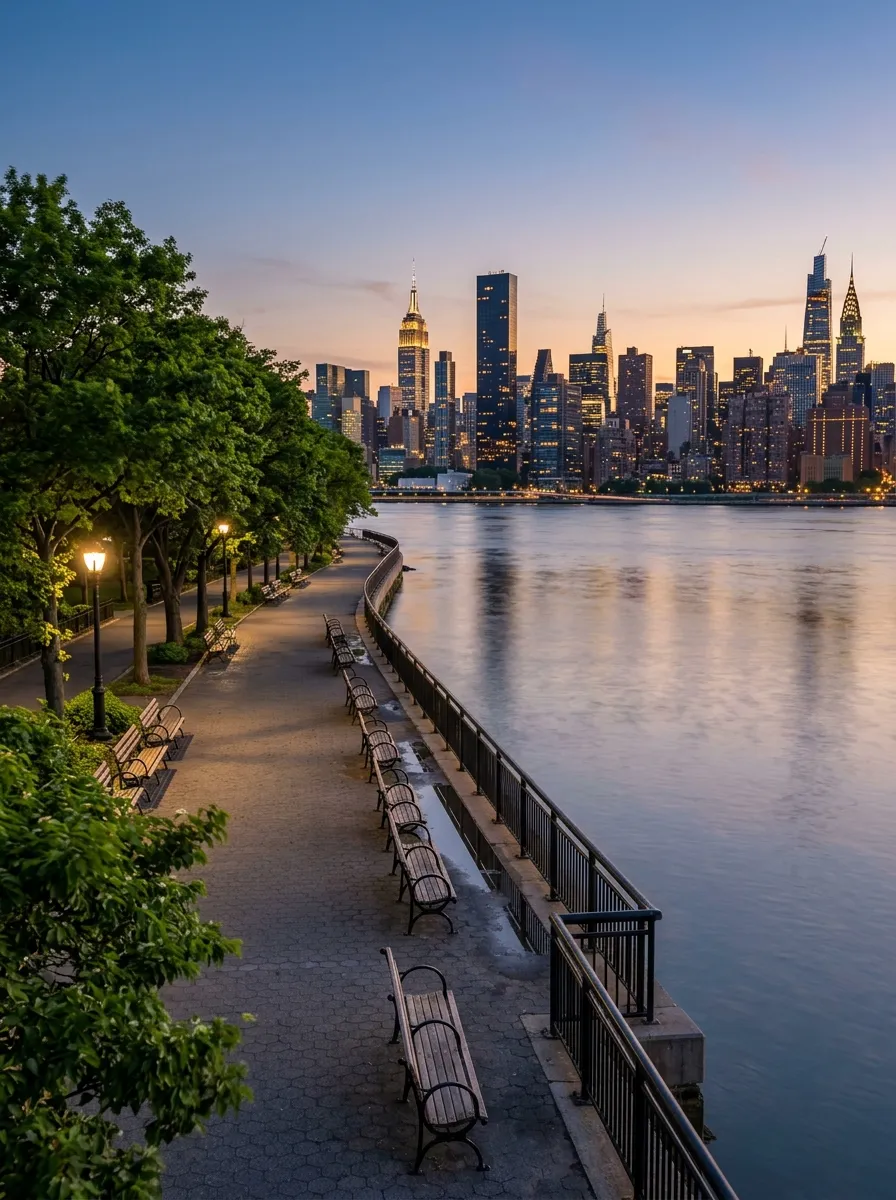
One of Roosevelt Island’s greatest assets is its waterfront.
Instead of walking between rows of buildings, you can follow sections of shoreline with:
- Manhattan views
- Queens views
- United Nations views
- Queensboro Bridge perspectives
- Benches
- Trees
- Lawns
Walking south is best for the Midtown skyline.
Walking north gradually replaces iconic skyscraper views with a quieter residential atmosphere.
The entire island is narrow enough that it is difficult to get genuinely lost.
A half-day visit works beautifully because the route itself becomes the attraction rather than merely the corridor between sights.
7. Ride the Free Red Bus
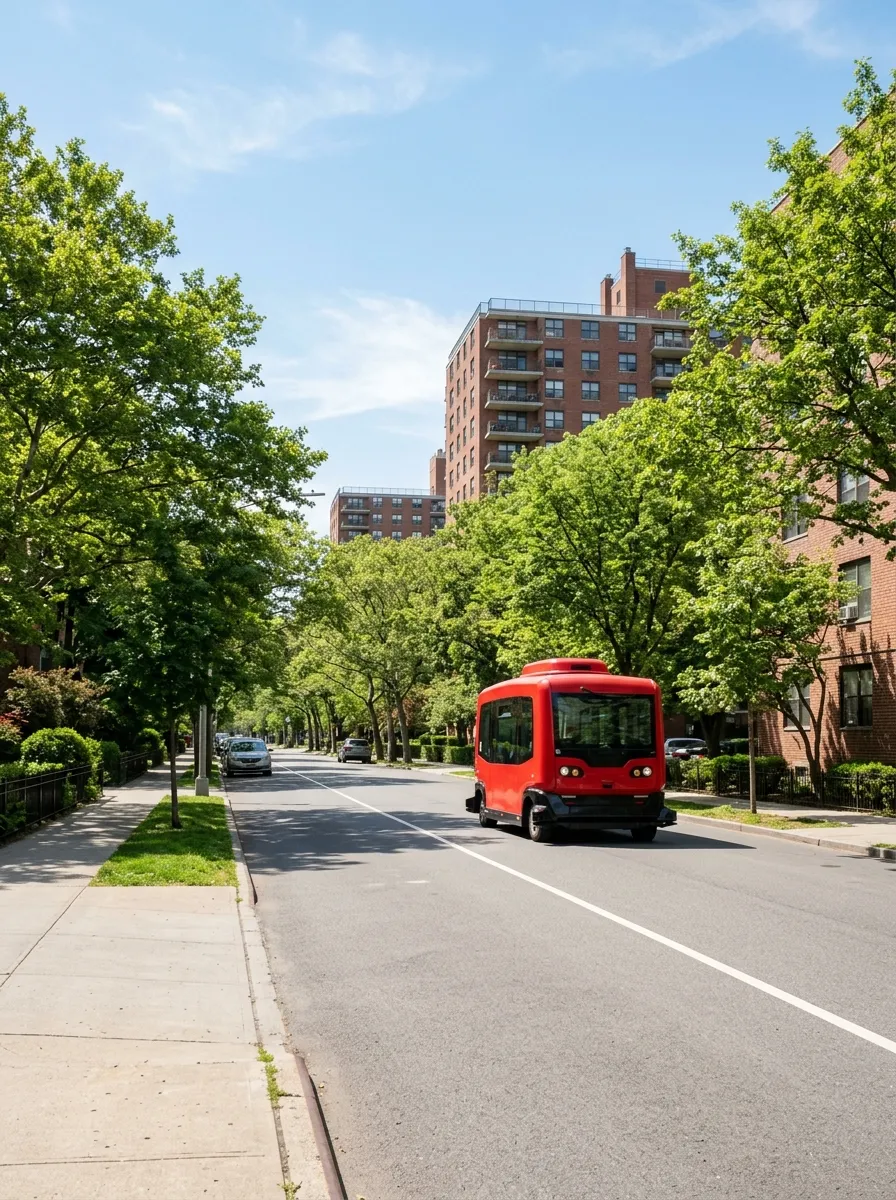
If your feet eventually file paperwork against you, use the Red Bus.
RIOC operates this fare-free circulator throughout Roosevelt Island for residents and visitors.
That makes it especially useful for:
- Families
- Older visitors
- Anyone walking to Lighthouse Park
- Hot summer afternoons
- Travelers with mobility limitations
Do not confuse it with the MTA Q102 bus, which also serves the island but requires the normal MTA fare.
The Red Bus transforms the island from “pleasant long walk” to “choose your own walking distance.”
8. See Blackwell House
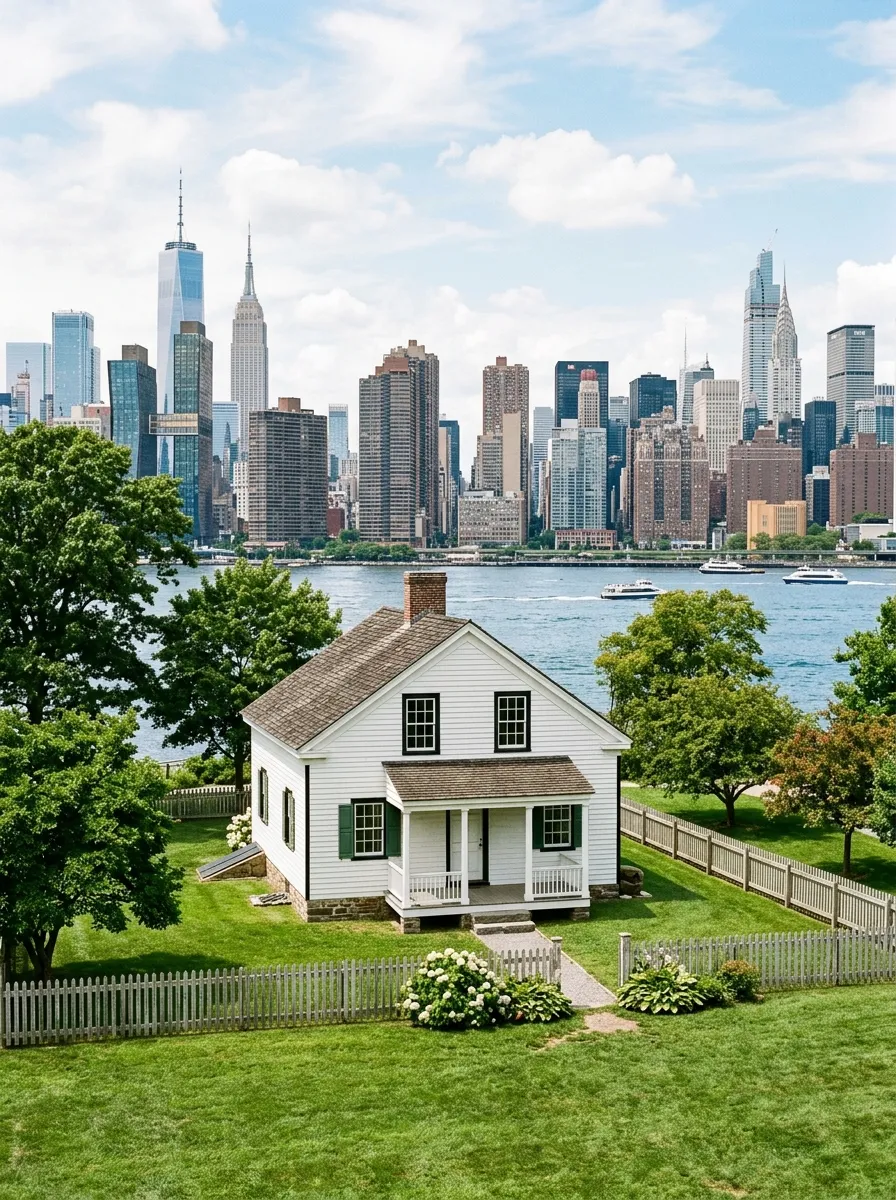
Blackwell House offers a glimpse of Roosevelt Island before its towers, tram and university campus.
Built in 1796, RIOC describes it as the sixth-oldest surviving farmhouse in New York City.
That alone makes it a wonderfully strange sight within view of Manhattan.
The farmhouse connects to the period when Roosevelt Island was known as Blackwell’s Island, long before its modern residential redevelopment.
Access inside can vary according to programs and events, so check current RIOC information if entering the building is important to you.
Even from outside, it makes a worthwhile stop during a walk along Main Street.
9. Visit the Chapel of the Good Shepherd
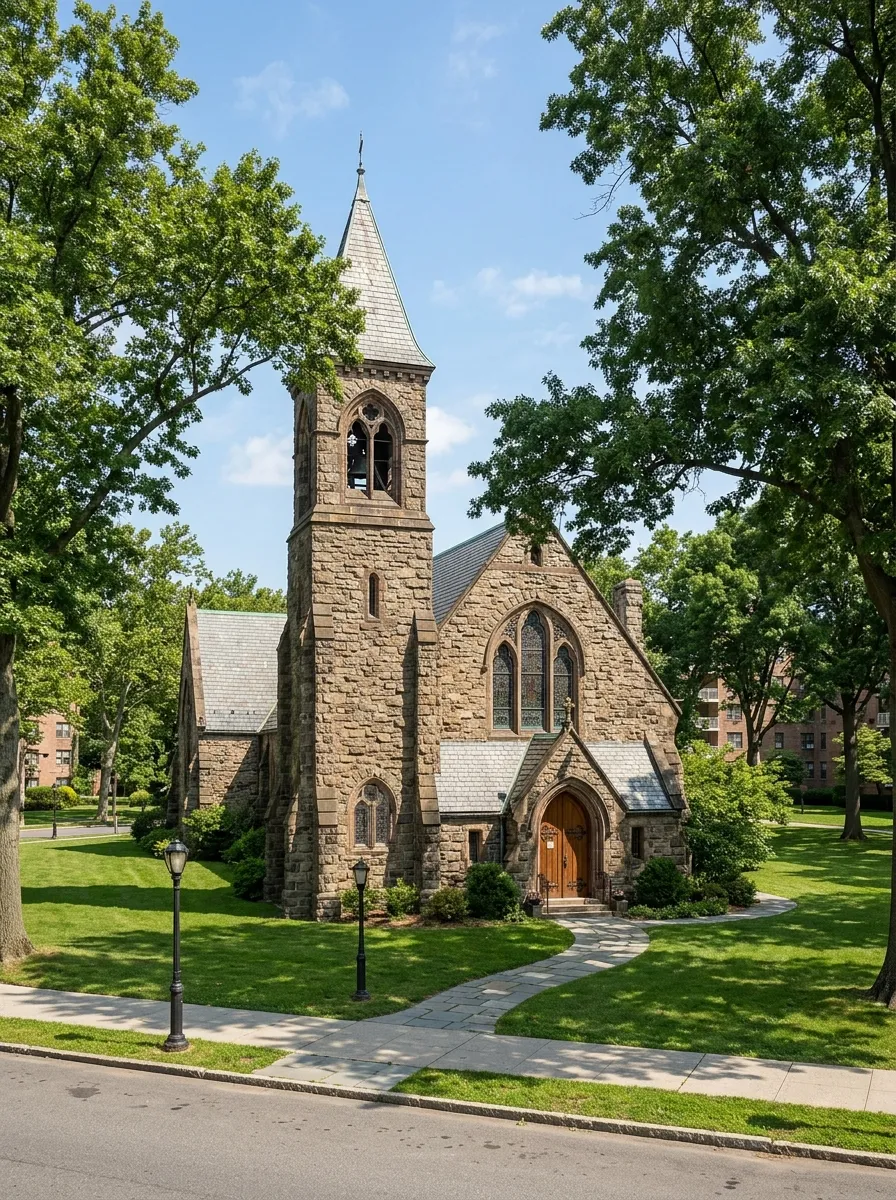
The Chapel of the Good Shepherd was built in 1889 and now functions as a community space.
RIOC highlights it among the island’s key historic landmarks.
The chapel sits near Main Street and is easy to combine with:
- Blackwell House
- Residential Roosevelt Island
- Waterfront walking
- Northern island exploration
It gives the middle of the island a very different architectural feel from Cornell Tech and Four Freedoms.
10. Walk North to Roosevelt Island Lighthouse
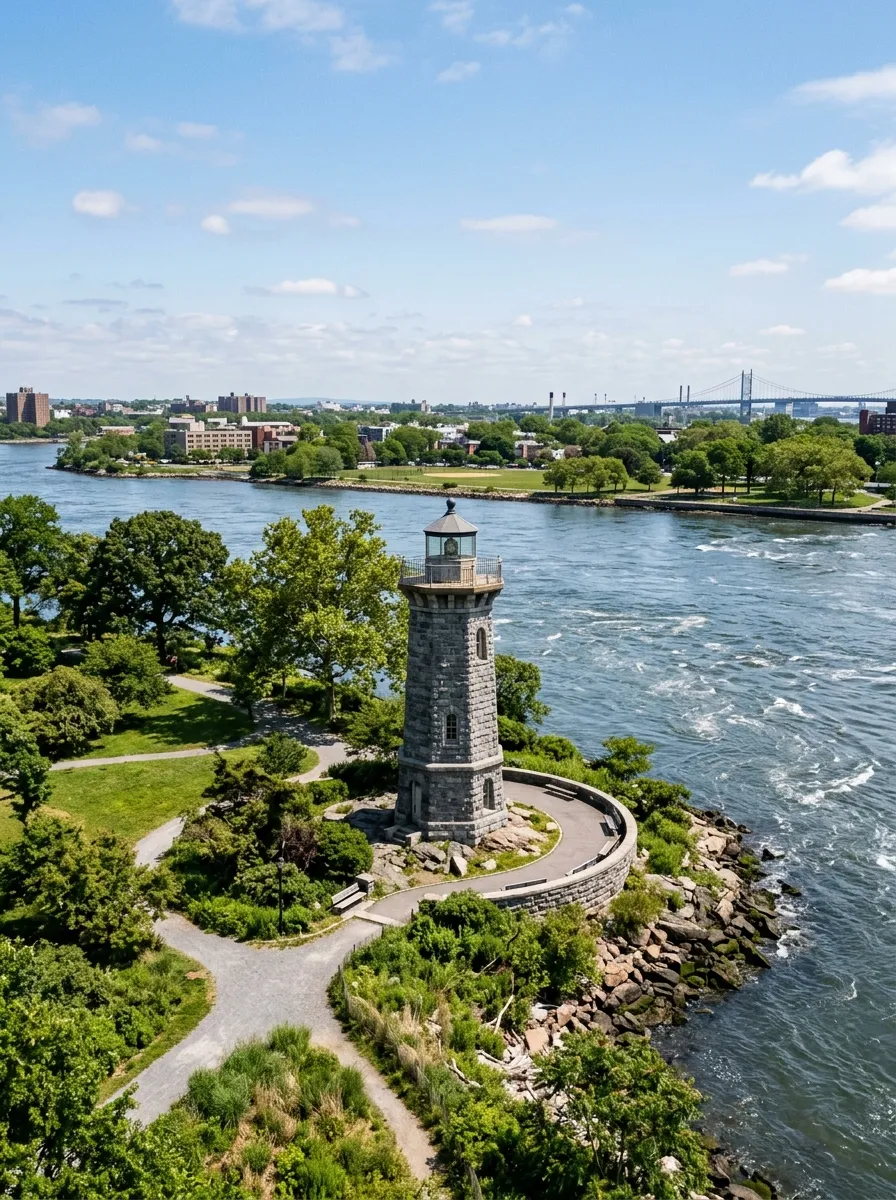
At the island’s northern tip stands the Roosevelt Island Lighthouse.
Built in 1872, the 50-foot lighthouse marks another important piece of the island’s maritime and institutional history.
The surrounding Lighthouse Park is one of the quietest areas on Roosevelt Island.
Come for:
- Picnic lawns
- East River views
- Queens shoreline views
- Photography
- A peaceful end to a long walk
In May 2026, RIOC confirmed that Lighthouse Park’s comfort station had reopened following a water-main repair, though temporary interruptions could still occur if additional work became necessary.
Because the lighthouse is at the opposite end of the island from Four Freedoms Park, doing both creates a fairly substantial walk.
Use the free Red Bus for one direction if needed.
11. Take the NYC Ferry
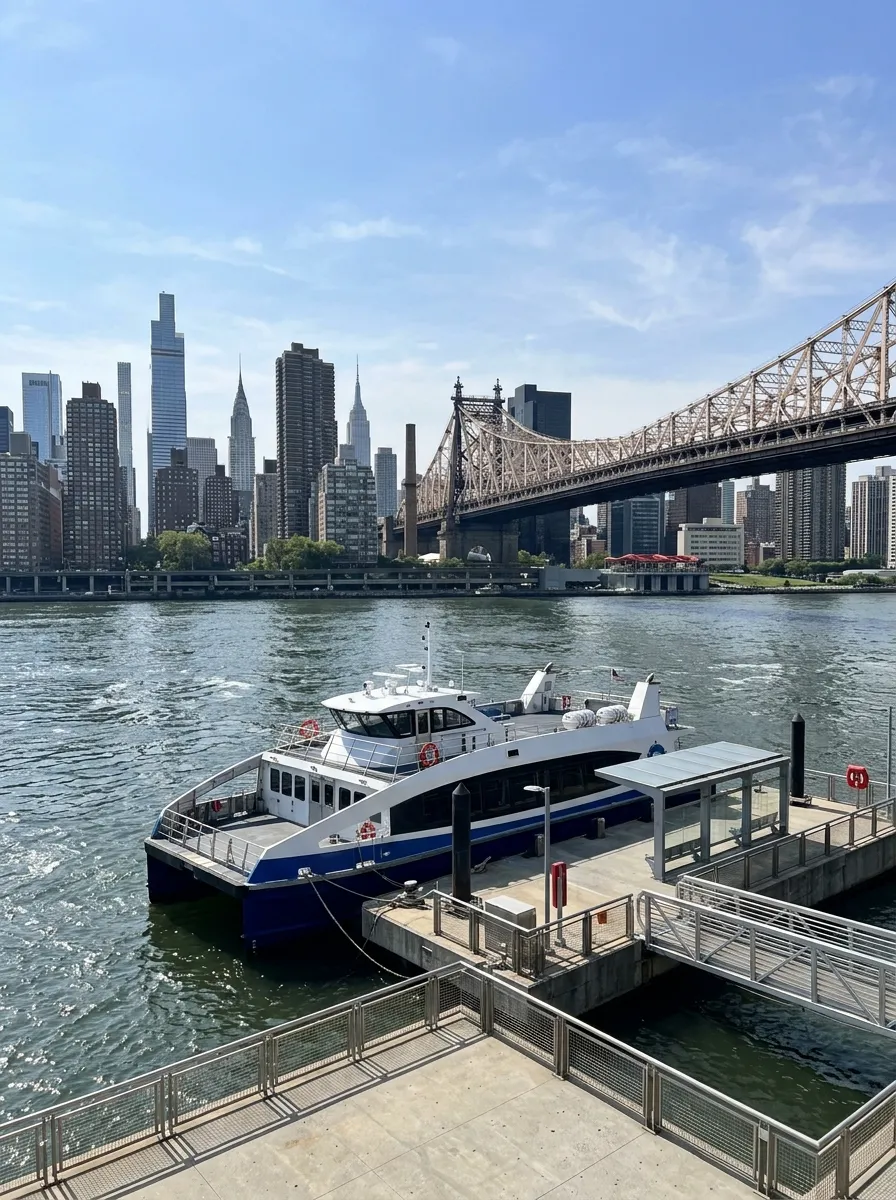
The ferry is an excellent way to leave Roosevelt Island differently than you arrived.
Roosevelt Island is served by NYC Ferry’s Astoria route, connecting it with destinations including Midtown, Long Island City, Astoria and Lower Manhattan connections through the broader ferry system.
Current NYC Ferry fares are:
One-way: $4.50
10-trip pass: $29
Unlimited two-day pass: $15
Schedules vary during the day, so use the official ferry app or live schedule rather than arriving casually and hoping a boat materializes.
Tram in, ferry out
This is my favorite first-time combination:
Manhattan → Tram → Roosevelt Island walk → NYC Ferry
You get two scenic transportation experiences instead of repeating the tram.
12. Visit During Cherry Blossom Season
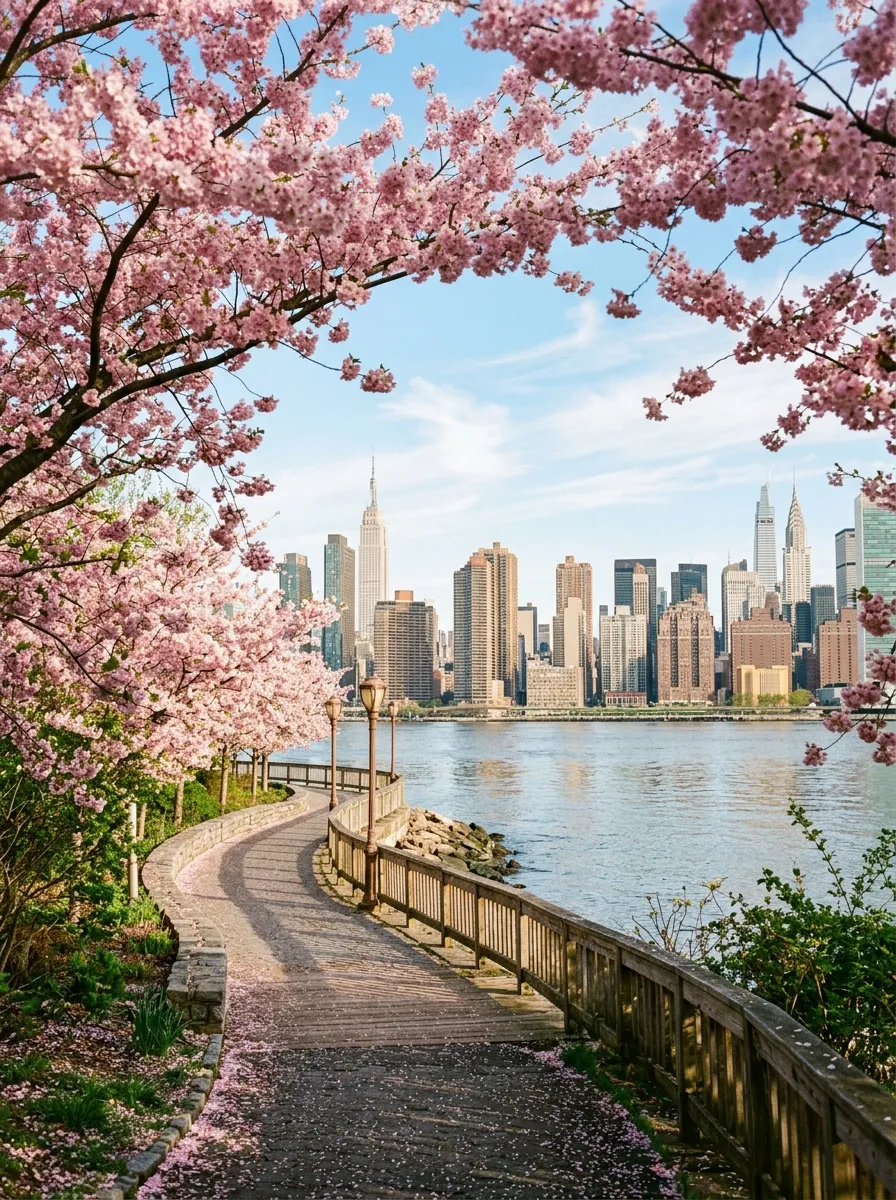
Spring transforms Roosevelt Island.
Cherry trees around the island, particularly waterfront areas, produce one of NYC’s most photogenic spring walks.
RIOC actively runs cherry-tree preservation initiatives, including its 2026 Petal Protectors volunteer program.
Bloom timing changes every year according to winter and early-spring temperatures.
The broad window is usually late March into April, but exact peak bloom cannot be predicted months ahead with precision.
Roosevelt Island can become crowded on beautiful bloom weekends, so go early.
Best cherry-blossom strategy
Aim for:
- Weekday morning
- Calm weather
- Early April as a broad planning target
- Flexible dates when possible
Unlike Washington’s famous festival, Roosevelt Island’s bloom experience feels more like an urban neighborhood walk than a giant event.
Travelers building an autumn version of the same seasonal trip can browse these best fall destinations for ideas beyond New York.
Best Time to Visit Roosevelt Island
Spring: March Through May
This is arguably the best season.
Expect:
- Cherry blossoms
- Comfortable walking temperatures
- Green parks
- Longer daylight
April is the star.
The main disadvantage is spring weekend crowds when flowers peak.
Summer: June Through August
Summer provides:
- Long daylight
- Outdoor events
- Waterfront evenings
- Full park access
It can also become:
- Hot
- Humid
- Exposed to strong sun
Four Freedoms has relatively open areas, so bring water and sunscreen.
Evening visits are excellent.
Fall: September Through November
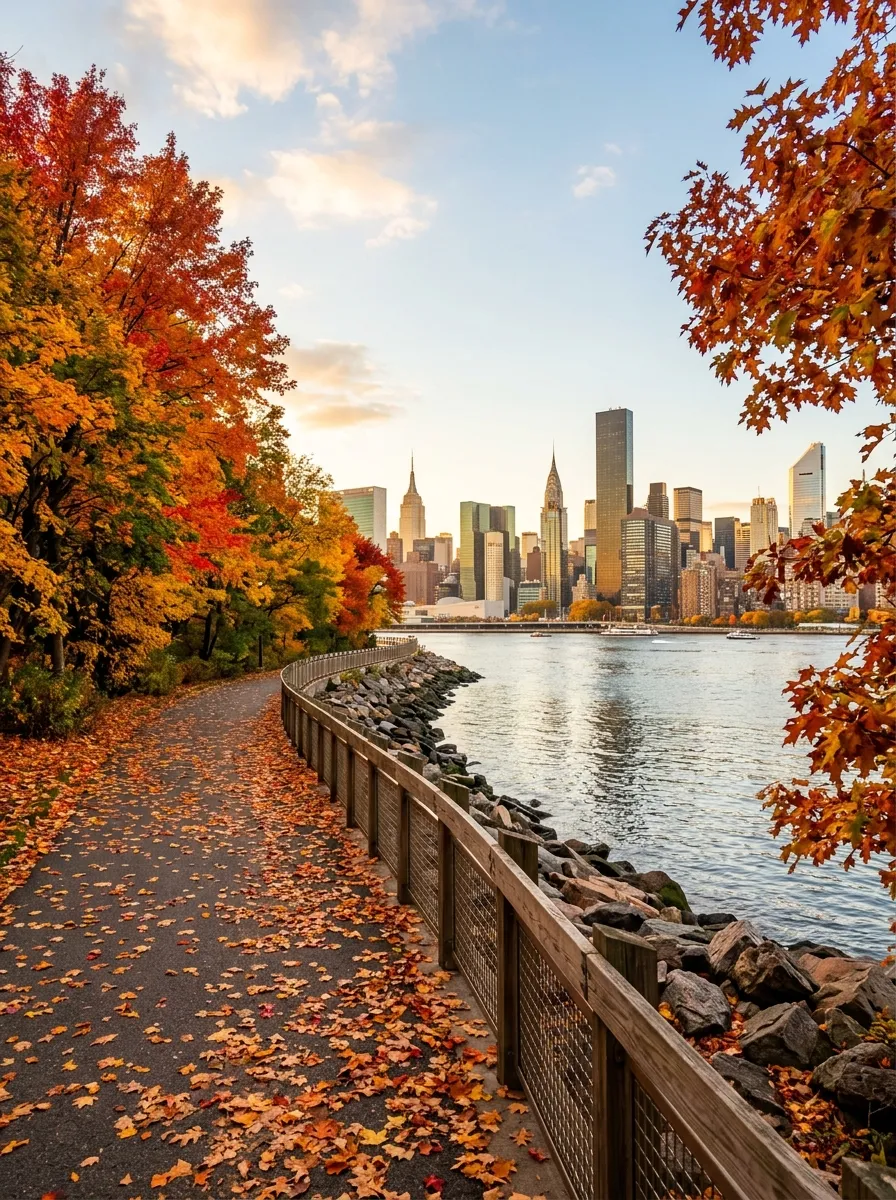
Fall may rival spring for overall comfort.
Expect:
- Cooler walking weather
- Changing leaves
- Lower humidity
- Beautiful skyline light
October is particularly good.
This is when Roosevelt Island becomes less flower postcard and more cinematic New York.
Winter: December Through February
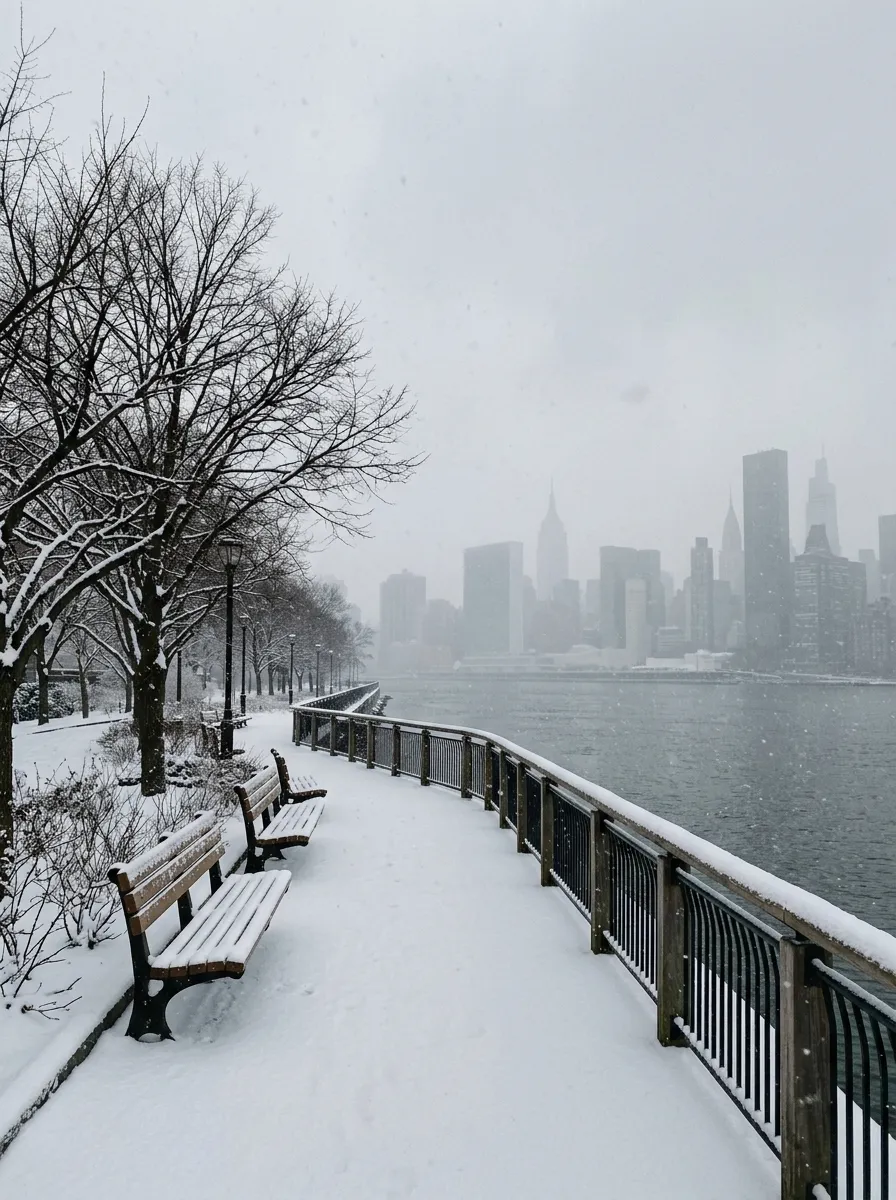
Winter is quiet and frequently windy.
The East River can make temperatures feel colder than those recorded a few blocks away in Manhattan.
But clear winter days provide sharp skyline views and fewer visitors.
Pack properly and you may have major sections of the waterfront nearly to yourself.
How to Get to Roosevelt Island
Option 1: Tram
The most memorable choice.
Take the tram from Manhattan at East 59th Street and Second Avenue using the standard MTA fare.
Option 2: Subway
The F train serves Roosevelt Island station.
This is often the fastest option depending on where you begin.
Service changes happen frequently in New York, particularly on weekends, so check the MTA shortly before departure.
Option 3: NYC Ferry
Use the Astoria route.
Option 4: Bus
The MTA Q102 connects Roosevelt Island with Queens and requires the normal MTA fare.
Option 5: Drive
Technically possible via the Roosevelt Island Bridge from Queens.
Practically unnecessary for tourists.
Parking is limited compared with arriving by public transit, and Four Freedoms Park has no on-site parking.
Leave the car elsewhere and enjoy the novelty of not thinking about it.
A Perfect Roosevelt Island Half-Day Itinerary
Roosevelt Island does not need a full multi-day itinerary. Four to five hours is the sweet spot.
10:00 a.m. – Take the Tram From Manhattan
Tap in with OMNY.
Enjoy the aerial ride beside the Queensboro Bridge.
10:15 a.m. – Walk Through Cornell Tech
Explore the modern architecture and continue south.
10:45 a.m. – Southpoint Park and Smallpox Hospital
Photograph the ruins and skyline.
Take a short waterfront break.
11:15 a.m. – Four Freedoms State Park
Spend approximately 45 minutes exploring the memorial and views.
Remember that it is closed Tuesdays.
12:15 p.m. – Walk North for Lunch
Head toward Main Street and the central island.
Choose a casual lunch or bring picnic food.
1:00 p.m. – Blackwell House and Historic Center
See Blackwell House and the Chapel of the Good Shepherd.
1:30 p.m. – Choose Your Ending
Short itinerary: return to the tram or subway.
Long itinerary: take the free Red Bus north to Lighthouse Park.
Scenic ending: walk to the NYC Ferry and depart by water.
That is enough.
Roosevelt Island should feel like a break from Manhattan, not another military campaign against a sightseeing checklist.
A 2-Hour Roosevelt Island Itinerary
Short on time?
Do this:
- Tram from Manhattan
- Cornell Tech
- Smallpox Hospital
- Four Freedoms Park
- Walk back to tram
You will still experience the island’s strongest sights.
Roosevelt Island With Kids
Roosevelt Island is an excellent family break because there is space to move around without constant traffic pressure.
Families can combine:
- Tram ride
- Parks
- Waterfront paths
- Historic ruins
- Free Red Bus
- Ferry ride
The tram itself is often the highlight for younger children.
Four Freedoms Park is accessible, and a platform lift is available at its Grand Stairs. Accessible restrooms are nearby in Southpoint Park.
Bring:
- Water
- Snacks
- Stroller if needed
- Sun protection
- Extra layer near the water
Avoid making children walk the full island from Four Freedoms to the lighthouse unless everyone actually enjoys long walks.
Roosevelt Island for Couples
Roosevelt Island is quietly one of NYC’s strongest inexpensive date ideas.
Try:
Tram → Four Freedoms Park → waterfront walk → sunset → ferry
There is very little to book, and the skyline does most of the decorative work.
Spring blossoms and fall evenings are particularly good.
For travelers whose idea of romance eventually involves a much bigger journey, these cheap destinations that feel expensive provide more places where atmosphere outperforms the budget.
Is Roosevelt Island Free?
Mostly.
There is no island admission fee.
You pay only for transportation and whatever food or activities you choose.
Typical cost
| Expense | Approximate Cost |
| Roosevelt Island Tram | Standard MTA fare |
| Subway | Standard MTA fare |
| Free Red Bus | $0 |
| Four Freedoms Park | $0 |
| Southpoint Park | $0 |
| Lighthouse Park | $0 |
| NYC Ferry | $4.50 one-way |
| Waterfront walking | $0 |
This makes Roosevelt Island one of Manhattan-adjacent New York’s best-value outings.
Is Roosevelt Island Walkable?
Very.
The island is only about two miles long, and many attractions are connected by waterfront paths and Main Street. RIOC itself describes Roosevelt Island as a two-mile-long community.
However, walking:
Four Freedoms Park → Lighthouse Park → return
can become several miles.
Use the Red Bus strategically.
Your vacation does not become more authentic simply because your knees are furious.
Accessibility
Roosevelt Island is relatively practical for travelers with mobility needs.
The tram accepts wheelchairs, mobility devices and strollers.
The free Red Bus provides another option for moving around the island.
Four Freedoms Park has:
- Accessible routes
- Platform lift at the Grand Stairs
- Service-animal access
Accessible bathrooms are located in nearby Southpoint Park.
Always check current transit elevator status before relying on the subway.
Photography Tips
Roosevelt Island offers some unusually strong NYC photography locations.
Best tram shot
Shoot toward:
- Queensboro Bridge
- Midtown Manhattan
- Tram cabins crossing
Best skyline shot
Four Freedoms State Park.
Best historical shot
Smallpox Hospital ruins.
Best spring shot
Cherry blossoms with Manhattan behind them.
Best northern shot
Roosevelt Island Lighthouse.
Best sunset shot
Western waterfront facing Manhattan.
Use a moderate zoom rather than carrying large equipment all day.
The island is compact enough that a phone and lightweight camera can cover almost everything.
Common Roosevelt Island Mistakes
Thinking Roosevelt Island is named after Theodore Roosevelt
The island was renamed for Franklin D. Roosevelt, whose memorial now anchors the southern tip.
Visiting Four Freedoms on Tuesday
It is closed Tuesdays.
Riding the tram during rush hour for fun
Commuters may be less enchanted by your skyline photo session.
Trying to walk everything
Use the free Red Bus.
Skipping the southern end
Four Freedoms and the Smallpox Hospital are the island’s strongest first-time sights.
Assuming the tram is expensive
It uses the standard MTA fare.
Returning exactly the way you arrived
Take the ferry back for a different view.
Expecting a major tourist district
Roosevelt Island is primarily a residential community, not Times Square floating in the East River.
Treat it accordingly.
Roosevelt Island Packing Checklist
For a half-day, keep it very simple:
- Comfortable walking shoes
- OMNY/card/payment method
- Water bottle
- Sunglasses
- Sunscreen
- Light rain layer
- Portable battery
- Camera or phone
- Small day bag
- Warm layer in spring/fall
- Gloves and hat in winter
- Picnic snacks if desired
Travelers continuing into a longer driving trip can use this road trip checklist to switch from minimalist city wandering to the considerably larger pile of equipment demanded by life on four wheels.
Frequently Asked Questions About Roosevelt Island
Where is Roosevelt Island?
Roosevelt Island sits in New York City’s East River between Manhattan and Queens.
Is Roosevelt Island worth visiting?
Yes. It is especially worthwhile for the tram, skyline views, Four Freedoms Park, waterfront walks and historic landmarks.
How long do you need?
Three to five hours is enough for most first-time visitors.
How much is the Roosevelt Island Tram?
The tram uses the standard MTA fare and accepts OMNY and eligible unlimited passes.
How long does the tram take?
The actual crossing lasts only a few minutes, though waiting and boarding add time.
What are the tram hours?
Current hours are 6 a.m.–2 a.m. Sunday through Thursday and 6 a.m.–3:30 a.m. Friday and Saturday.
Is Roosevelt Island free?
Yes. There is no island admission fee, and the main parks are free.
Is Four Freedoms Park free?
Yes.
When is Four Freedoms Park open?
It is currently open from 9 a.m.–7 p.m. six days a week and closed Tuesdays.
Is the free Red Bus really free?
Yes. RIOC operates it as a fare-free island circulator.
Can you take the subway?
Yes. The F train serves Roosevelt Island.
Can you take a ferry?
Yes. NYC Ferry’s Astoria route stops at Roosevelt Island.
How much is the NYC Ferry?
The current one-way fare is $4.50.
Is Roosevelt Island good for kids?
Yes. The tram, lawns, waterfront and free bus make it easy to turn into a low-pressure family outing.
When do cherry blossoms bloom?
Usually around late March through April, though peak bloom changes annually.
Can you visit the Smallpox Hospital?
You can view the stabilized ruins from outside, but ordinary visitors do not walk through the interior.
What is Blackwell House?
It is a farmhouse built in 1796 and is the sixth-oldest surviving farmhouse in New York City.
Is there a lighthouse?
Yes. Roosevelt Island Lighthouse was built in 1872 and stands at the northern tip.
Can you drive onto Roosevelt Island?
Yes, via the bridge from Queens, but public transportation is far more convenient for tourists.
Is Roosevelt Island crowded?
Generally much less than central Manhattan, although the tram, Four Freedoms Park and cherry-blossom areas can become busy on pleasant weekends.
What is the biggest Roosevelt Island travel mistake?
Treating the tram as the entire attraction. Ride it, absolutely, but continue south to Four Freedoms Park and the Smallpox Hospital. That is where the island becomes much more than an unusual commute.
Conclusion: Is Roosevelt Island Worth Adding to a New York Trip?
Roosevelt Island is not a substitute for New York City’s major attractions, and that is precisely why it works so well.
It offers a different rhythm.
Take the tram out of Manhattan, watch the Queensboro Bridge drift beside the cabin and step onto an island where the city suddenly feels both incredibly close and strangely far away.
For a first visit, give yourself three to five hours. Walk through Cornell Tech, see the Smallpox Hospital ruins, spend real time in Four Freedoms State Park, then continue north only if your energy and schedule allow.
Use the free Red Bus when necessary and consider taking the NYC Ferry back instead of repeating the tram.
Spring is best for cherry blossoms. Fall is arguably best for comfortable walking and clear skyline views. Summer works beautifully in the evening, while winter rewards travelers who do not mind dressing for East River wind.
And keep the budget modest. Roosevelt Island does not require a pile of paid attractions. The standard MTA fare gets you one of New York’s best aerial rides, while the parks, history and waterfront provide the rest.
If holiday lights and colder-weather travel are more your style, this guide to the best European Christmas markets offers a much larger seasonal adventure after Roosevelt Island gives you your miniature urban escape.
Roosevelt Island’s greatest trick is perspective. Manhattan is never more than a river away, but from the southern tip, framed by water and Louis Kahn’s granite walls, it briefly looks less like somewhere you are trapped inside and more like a skyline someone placed across the river just for you.