24/7 Emergency Travel Support: What It Covers, Who to Call, and How to Get Help Abroad
Travel is supposed to be about new places, memorable experiences, and stories worth telling. But when a flight is cancelled at midnight, your passport disappears, or you suddenly need medical treatment in a country where you do not speak the language, the adventure can change direction quickly.
That is where 24/7 emergency travel support becomes valuable.
Emergency travel support helps travelers find the right assistance when something goes wrong outside normal business hours. Depending on the provider, it may include medical referrals, emergency transportation, help with lost documents, travel changes, security advice, translation, and coordination with family members or local authorities.
The important thing to understand is that 24/7 support is not one universal service. Your travel insurer, airline, hotel, tour operator, credit-card provider, embassy, and local emergency services may all offer different types of help.
This guide explains how these services work, what they may cover, what they usually do not cover, and how to create a simple emergency plan before leaving home.
Recommended Travel Items for Your Trip
What Is 24/7 Emergency Travel Support?
24/7 emergency travel support is an assistance service available day and night to help travelers deal with urgent problems during a trip.
It is commonly included with:
- Travel insurance policies
- Medical evacuation memberships
- Airline and cruise bookings
- Tour packages
- Corporate travel programs
- Premium credit cards
- Some hotel or destination-support services
The service may be provided by a dedicated assistance company rather than directly by the insurer or airline. In many cases, the assistance team coordinates the response while the actual costs are handled according to your policy or booking terms.
For example, an assistance provider might help you locate a nearby hospital, contact your insurer, arrange a translator, or explain how to replace a lost passport. However, it may not automatically pay every bill or guarantee that transportation will be provided.
What Can 24/7 Emergency Travel Support Help With?
The exact services depend on your provider, but emergency travel assistance commonly covers several categories.
1. Medical Emergencies

Medical support is one of the most important reasons travelers purchase emergency assistance.
A support team may help you:
- Find a suitable hospital or clinic
- Locate an English-speaking doctor
- Arrange medical appointments
- Explain how to contact your insurance provider
- Coordinate hospital admission
- Organize medical transportation when covered
- Arrange evacuation or repatriation when medically necessary
- Contact a family member or emergency contact
- Help with communication between medical staff and your insurer
Travel insurance guidance from the U.S. Department of State recommends checking whether a policy includes emergency medical care and medical evacuation before departure. It also advises travelers to confirm whether their insurance covers the countries, activities, and length of the planned trip. citeturn0search8
Important: In a life-threatening situation, contact local emergency services first. Do not wait for an insurance assistance center to respond before seeking immediate medical help.
2. Lost or Stolen Passport Assistance

Losing your passport can be stressful, especially when you are far from home or preparing to cross a border.
A travel assistance provider may help you:
- Find the nearest embassy or consulate
- Explain the replacement process
- Locate passport photographs or printing services
- Contact local authorities if a police report is needed
- Confirm which documents you should bring
- Help you understand how the loss may affect your itinerary
The embassy or consulate is the authority that handles emergency travel documents. An insurer or assistance company may guide you, but it cannot issue a passport.
Keep digital and printed copies of your passport, visa, travel insurance policy, and important contact details in separate locations. Do not keep every original document in the same bag.
3. Flight Cancellations and Major Travel Disruptions

A cancelled flight can create a chain reaction involving hotels, connecting flights, airport transfers, tours, and car rentals.
Depending on your booking or insurance coverage, emergency travel support may help you:
- Understand your airline’s rebooking options
- Contact the airline after business hours
- Find alternative routes
- Arrange emergency accommodation
- Explain whether meals or transportation may be reimbursable
- Contact hotels or tour operators
- Start a travel insurance claim
- Identify what receipts and documents you need to keep
For flight refunds, cancellations, and schedule changes, the airline or travel provider is usually the first point of contact. Government travel guidance also recommends contacting your travel provider and insurer after a serious incident or emergency abroad. citeturn0search3
Do not assume that an assistance provider can override an airline’s fare rules. The help desk may explain your options, but the airline still controls ticket availability and many booking decisions.
4. Security Incidents and Civil Unrest

Travelers may need support during:
- Civil unrest
- Natural disasters
- Terrorist incidents
- Political demonstrations
- Border closures
- Severe weather
- Transport strikes
- Regional security emergencies
A provider may offer security updates, evacuation advice, alternative travel arrangements, or help contacting local authorities.
However, emergency assistance does not replace official government instructions. If local authorities order an evacuation, follow their directions and use the emergency contacts provided by your insurer, embassy, airline, or tour operator.
Government travel advisories often recommend having a communication plan with family or friends and keeping travel documents accessible during a crisis. citeturn0search1
5. Translation and Communication Help

Language barriers can make an already difficult situation much harder.
Some assistance services can help with:
- Finding interpreters
- Explaining medical terms
- Contacting police or hospitals
- Communicating with airlines
- Translating basic emergency information
- Locating local legal or administrative support
Translation support may be available by telephone, but it may not include an in-person interpreter. Ask what is included before relying on the service.
6. Legal and Administrative Assistance

Depending on your policy, emergency travel support may help you locate:
- Local lawyers
- Police stations
- Translation services
- Notaries
- Consular assistance
- Emergency document services
The provider generally does not act as your lawyer or pay legal expenses unless your policy specifically includes that coverage.
If you are involved in an accident, theft, or assault, ask local authorities how to obtain an official report. Keep copies of the report and any related receipts.
7. Help After a Death in the Family

Some travel insurance policies provide assistance if an immediate family member becomes seriously ill or dies while you are traveling.
Possible services include:
- Help arranging an early return
- Contacting airlines
- Explaining policy benefits
- Coordinating with family members
- Helping with documentation
- Arranging transportation after medical treatment
Coverage varies significantly. Some policies cover emergency return transportation, while others only provide assistance and require you to pay the costs first.
Who Should You Call During a Travel Emergency?
The correct contact depends on the problem. Calling the wrong organization first can waste valuable time.
| Situation | First contact | Additional contact |
| Immediate danger or serious injury | Local emergency services | Travel insurer and embassy |
| Medical treatment abroad | Hospital or local emergency services | Insurance assistance center |
| Lost passport | Embassy or consulate | Insurer and local police |
| Cancelled flight | Airline | Travel insurer or booking provider |
| Lost baggage | Airline baggage desk | Travel insurer |
| Theft | Local police | Embassy and insurer |
| Natural disaster | Local authorities | Embassy, insurer, family |
| Hotel or tour problem | Hotel or tour operator | Booking provider or insurer |
| Security evacuation | Local authorities | Insurer, embassy, employer |
| Payment or card emergency | Bank or card provider | Travel insurer if relevant |
In an emergency, use this order:
- Get immediate safety or medical help.
- Contact the organization responsible for the problem.
- Call your 24/7 travel assistance provider.
- Notify your emergency contact.
- Save reports, receipts, booking details, and written instructions.
Local Emergency Services Come Before Travel Insurance
Travel insurance is useful, but it is not a replacement for local emergency services.
If you are injured, threatened, trapped, or facing immediate danger, contact the local emergency number or alert nearby authorities. In remote areas, response times may be longer, so move to a safe and accessible location if possible.
For example, Pakistan’s official emergency information lists 1122 for rescue services and 15 for police in Sindh. The UK government’s Pakistan travel guidance also lists 1122 for ambulance and fire services and 15 for police. citeturn0search2turn0search3
Emergency numbers differ by country. Save the number for your destination before you travel rather than assuming your home country’s emergency number will work everywhere.
What Does Travel Insurance Usually Cover?
Travel insurance policies often combine several different types of protection.
Emergency Medical Coverage
This may cover:
- Doctor visits
- Hospital treatment
- Emergency surgery
- Prescribed medication
- Ambulance transportation
- Emergency dental treatment
- Medical evacuation
- Repatriation
Read the exclusions carefully. Pre-existing conditions, high-risk activities, alcohol-related incidents, and treatment without prior authorization may be handled differently depending on the policy.
Trip Cancellation and Interruption
This may help when you need to cancel or cut short a trip for a covered reason, such as:
- Serious illness
- Injury
- Death of a close family member
- Certain natural disasters
- Some travel provider failures
- Other specifically listed events
Trip cancellation coverage is not the same as emergency medical coverage. A policy may reimburse a cancelled flight but not pay for treatment abroad.
Baggage and Personal Belongings
Coverage may apply to:
- Lost checked baggage
- Stolen belongings
- Delayed luggage
- Emergency replacement clothing
- Essential toiletries
There are often limits for electronics, jewelry, cash, and individual items. Keep receipts and report theft or loss promptly.
Travel Delay
Travel delay benefits may reimburse certain additional expenses after a qualifying delay, such as:
- Hotel accommodation
- Meals
- Local transportation
- Essential purchases
The delay usually must meet a minimum number of hours and result from a covered reason.
Emergency Evacuation
Emergency evacuation can be especially important for:
- Remote trekking
- Skiing
- Diving
- Adventure tours
- Mountain travel
- Cruises
- Destinations with limited medical facilities
Medical evacuation may involve transportation to a better-equipped facility or, when medically appropriate, return to your home country. It is not automatically included in every basic travel policy.
What 24/7 Emergency Support Usually Does Not Cover
The phrase “24/7 assistance” can sound broader than it really is.
A support line may be available at all times, but that does not mean every request is covered.
Common exclusions or limitations include:
- Non-emergency medical treatment
- Routine checkups
- Expenses outside policy limits
- Activities excluded by the policy
- Travel to destinations excluded by the policy
- Claims caused by intoxication
- Losses caused by carelessness
- Pre-existing medical conditions without approval
- Unapproved medical evacuation
- Missed flights caused by arriving late
- Lost cash without documentation
- Voluntary changes to travel plans
- Costs incurred before contacting the provider when prior approval was required
Always check whether the policy requires you to call the assistance center before arranging expensive treatment, transportation, or evacuation.
How to Choose a 24/7 Travel Assistance Provider
Before purchasing a policy or booking a trip, look beyond the words “24/7 support.”
Check the Emergency Phone Number
Make sure the provider has a genuine emergency telephone number that works internationally.
Look for:
- A number reachable from abroad
- A collect-call option
- WhatsApp or internet calling, if offered
- Multilingual support
- A backup contact method
- Clear instructions for emergencies without internet access
Save the number in your phone and write it on paper in your wallet.
Confirm the Countries and Regions Covered
Some policies exclude specific countries, border regions, or areas under government travel warnings.
Confirm:
- Every country on your itinerary
- Transit airports
- Cruise destinations
- Remote excursions
- Border crossings
- Side trips
- Domestic travel within a larger country
A policy covering a city may not automatically cover a remote mountain region several hours away.
Review Adventure Activity Exclusions
If your trip includes activities such as diving, skiing, rafting, climbing, motorcycling, or extreme sports, check the wording carefully.
Some policies cover these activities only when:
- You use a licensed operator
- You wear required safety equipment
- You stay on marked routes
- You do not compete professionally
- You purchase an adventure-sports add-on
Do not wait until an accident happens to discover that your favorite activity was excluded.
Check Medical Evacuation Limits
Medical evacuation can be extremely expensive. Review:
- The maximum evacuation benefit
- Whether repatriation is included
- Who decides whether evacuation is medically necessary
- Whether the insurer must approve transportation
- Whether a companion can travel with you
- Whether evacuation from remote areas is covered
- Whether search and rescue is included
Understand Direct Billing
Some insurers can coordinate direct payment with hospitals, while others require you to pay first and submit a claim later.
Ask:
- Will the hospital accept the policy?
- Is a guarantee of payment available?
- Do I need to pay a deductible?
- What documents are required?
- How quickly must I notify the insurer?
The U.S. Department of State notes that many overseas medical providers may not accept a traveler’s domestic health insurance and that travelers may be responsible for medical bills abroad. citeturn0search8
What to Do Before Your Trip
A little preparation can turn a crisis into a manageable inconvenience.
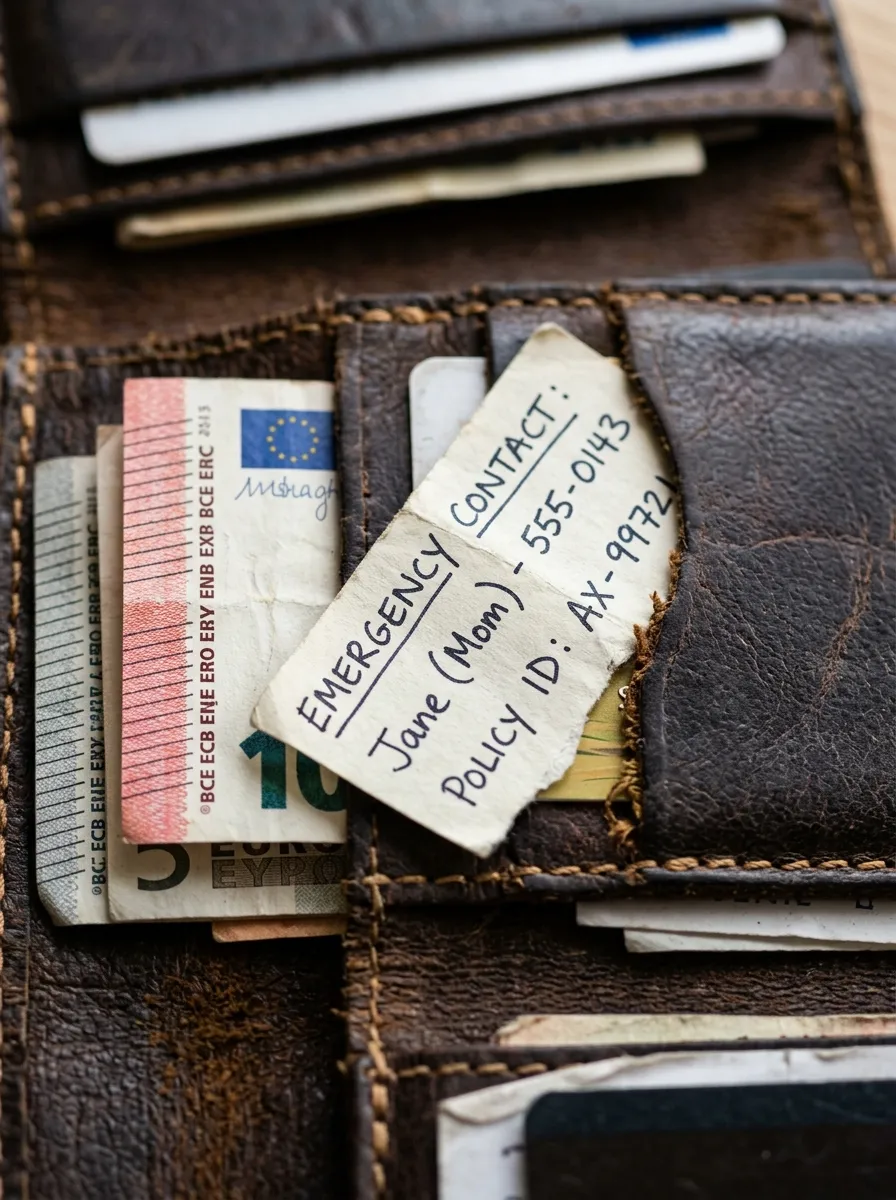
Create an Emergency Contact Card
Include:
- Full name
- Passport number
- Emergency contact
- Travel insurance provider
- Policy number
- Assistance phone number
- Embassy or consulate contact
- Airline booking reference
- Important medical information
- Allergies and medication details
- Hotel address
- Local emergency number
Keep one copy in your wallet and another in your luggage.
Save Important Documents Offline
Download copies of:
- Passport
- Visa
- Travel insurance policy
- Flight tickets
- Hotel reservations
- Driving license
- Prescriptions
- Vaccination records, if relevant
- Emergency contact list
Store them securely on your phone and keep a printed copy separate from your passport.
Tell Someone Your Itinerary
Share your:
- Flight details
- Accommodation
- Planned activities
- Contact information
- Expected return date
- Emergency communication plan
If you are heading into a remote area, agree on when you will check in and what should happen if you miss that check-in.
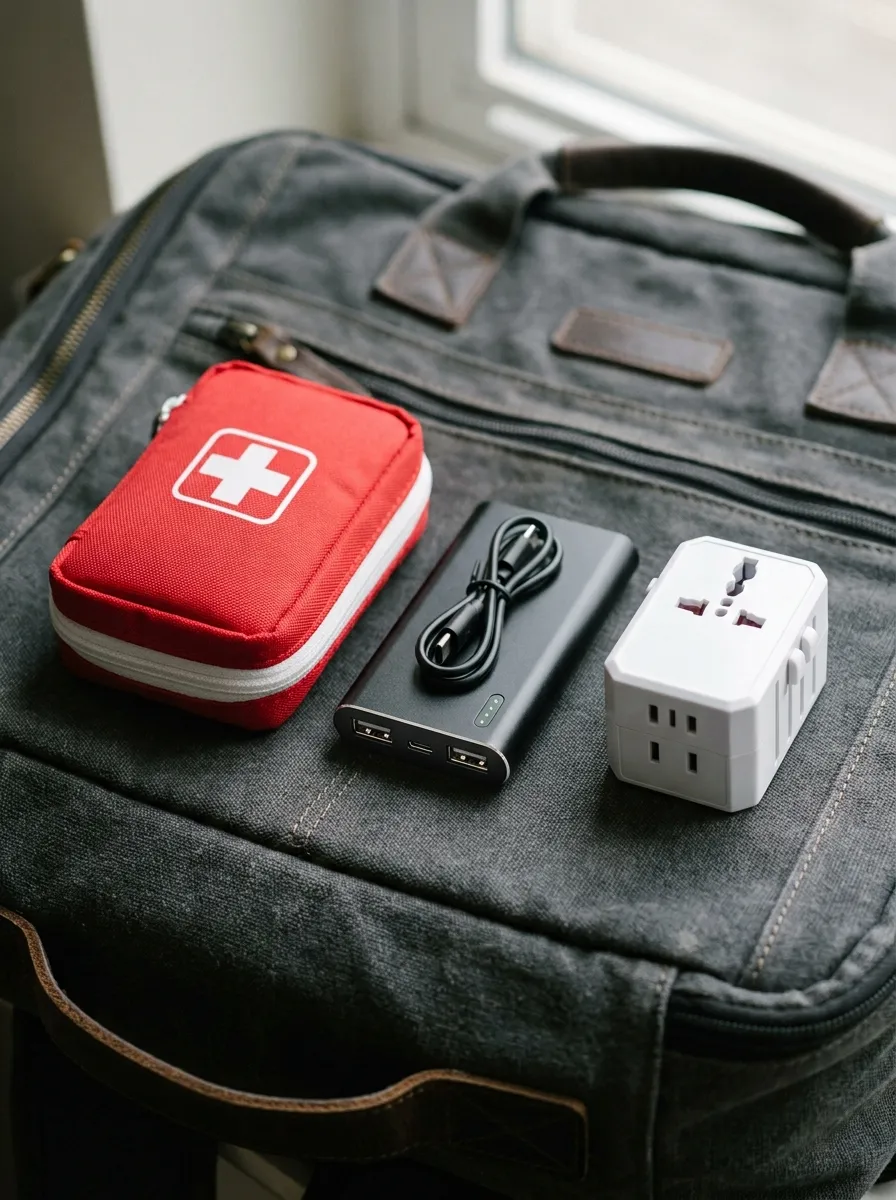
Pack a Small Emergency Kit
A useful travel emergency kit may include:
- Basic first-aid supplies
- Prescription medication
- Copies of documents
- Portable charger
- Universal travel adapter
- Small flashlight
- Backup payment card
- Emergency cash
- Reusable water bottle
- Essential toiletries
- A pen
- Printed contact information
For a one-bag trip, the goal is not to pack a miniature hospital. It is to carry a few items that become surprisingly valuable when plans fall apart. For more practical packing ideas, see One-Bag Travel Packing That Actually Works (With Outfit Ideas).
How to Handle Common Travel Emergencies
If Your Passport Is Lost
- Move to a safe place.
- Report the loss to local police if required.
- Contact your embassy or consulate.
- Call your travel insurer.
- Gather passport copies, identification, and photographs.
- Contact your airline if your departure is soon.
- Keep every receipt and official report.
Do not post photos of your passport or personal identification publicly.
If You Become Seriously Ill
- Call local emergency services if necessary.
- Go to a reputable medical facility.
- Contact your insurer’s assistance center as soon as possible.
- Ask whether the hospital needs a guarantee of payment.
- Keep medical records, prescriptions, and receipts.
- Do not arrange expensive evacuation without checking the policy unless delaying would put your life at risk.
If Your Flight Is Cancelled
- Check the airline’s app and airport information screens.
- Speak with the airline before purchasing a replacement ticket.
- Ask whether you can be rebooked on the next available service.
- Contact your insurer if the delay may qualify for coverage.
- Confirm hotel and transport arrangements.
- Keep written confirmation of the cancellation and all expenses.
If You Are Robbed
- Get somewhere safe.
- Contact the police.
- Cancel stolen cards.
- Contact your insurer.
- Call your embassy if travel documents were stolen.
- Ask your bank about emergency cash or replacement cards.
- Avoid carrying all your remaining documents and money in one place.
If You Are Stranded During a Disaster
- Follow local authority instructions.
- Avoid blocked roads, crowds, and damaged infrastructure.
- Contact your embassy or consulate.
- Call your insurer’s emergency assistance line.
- Tell your emergency contact that you are safe.
- Conserve battery power and keep your phone charged.
- Do not travel into an unsafe area simply to reach an airport or hotel.
Emergency Support for Adventure Travelers

Adventure travel creates a different set of risks because help may be far away.
Before booking a remote excursion, ask:
- Is the activity covered by my insurance?
- Does the operator carry emergency insurance?
- Is search and rescue included?
- Is evacuation available from the location?
- Does the guide carry a satellite communication device?
- What happens if weather prevents the group from returning?
- Is there a backup route?
- Does the operator have a documented emergency plan?
For example, travelers planning extreme activities in Thailand should confirm whether their policy covers the specific activity, equipment, and location. A standard policy may not cover every form of climbing, diving, motorcycling, or water adventure. See 10 Crazy Extreme Adventures in Thailand Not to Miss for inspiration, then check the insurance requirements before booking.
Similarly, a camping trip may require preparation for limited phone service, delayed transport, changing weather, and restricted access to medical facilities. Planning meals ahead can help reduce unnecessary stops and conserve time during remote trips. For ideas, explore The Ultimate Guide to Make-Ahead One-Pot Meals for Every Camping Trip.
What to Do if You Cannot Reach the Assistance Center
Sometimes the emergency line may be difficult to reach because of:
- Poor cell service
- Internet outages
- International calling restrictions
- Low battery
- Network congestion
- Local disasters
- Language barriers
Try the following:
- Move to a location with better reception.
- Use hotel, airport, police, or hospital telephones.
- Ask a trusted local person to help place the call.
- Try the collect-call number if available.
- Use the provider’s approved messaging service.
- Contact the airline, hotel, tour operator, or embassy.
- Keep screenshots of error messages and attempted calls.
If you are in immediate danger, do not delay local emergency assistance while trying to reach your insurer.
A Simple 24/7 Emergency Travel Plan
Use this five-part plan before every international trip.
Before Departure
- Purchase appropriate travel insurance.
- Save the 24/7 assistance number.
- Check medical evacuation coverage.
- Confirm activity and destination exclusions.
- Share your itinerary with someone you trust.
When Something Goes Wrong
- Get to safety.
- Contact local emergency services if needed.
- Call the organization responsible for the problem.
- Contact your travel assistance provider.
- Notify your emergency contact.
While Receiving Help
- Ask for the representative’s name.
- Record the case number.
- Confirm what is approved.
- Ask whether you must pay upfront.
- Keep receipts and written instructions.
Before Spending Money
- Ask whether the expense is covered.
- Confirm whether pre-approval is required.
- Get written confirmation when possible.
- Use a payment method you can document.
After the Emergency
- Save police, medical, airline, and hotel reports.
- Submit claims promptly.
- Replace lost documents and cards.
- Review what went wrong.
- Update your emergency plan for the next trip.
Frequently Asked Questions
Is 24/7 emergency travel support the same as travel insurance?
No. Travel insurance is a financial protection product, while emergency assistance is a service that helps coordinate support. A policy may include both, but the assistance line does not necessarily mean every expense is covered.
Can travel assistance arrange a hospital?
Often, yes. Many providers can help locate a hospital or clinic and explain how to access treatment. In a life-threatening emergency, contact local emergency services first.
Will travel insurance pay for every emergency?
No. Coverage depends on the policy, exclusions, benefit limits, destination, activity, and circumstances of the incident.
Should I call the insurer before going to a hospital?
If the situation is not immediately life-threatening, contact the insurer as soon as possible and ask whether prior authorization is required. In a serious emergency, seek urgent medical help first.
Can an embassy pay my medical bills?
Generally, travelers should not expect their government to pay medical expenses abroad. Government travel guidance recommends purchasing suitable medical insurance and checking whether it includes emergency evacuation. citeturn0search1turn0search8
Does emergency support work in remote destinations?
It may, but the quality and speed of assistance depend on local infrastructure, weather, communications, and access. Remote travel requires additional planning because evacuation may take longer.
What should I save in my phone?
Save your insurer’s assistance number, policy number, embassy contact, local emergency number, airline, hotel, emergency contact, and booking references.
Final Thoughts
24/7 emergency travel support is most useful when you understand its limits before you need it.
The best emergency plan combines several layers of protection:
- Local emergency services for immediate danger
- Travel insurance for eligible expenses
- An assistance provider for coordination
- Your airline or travel company for booking problems
- Your embassy for consular and document-related help
- A trusted person at home for communication
You do not need to expect disaster on every trip. You simply need to make sure that one bad night does not become a much bigger problem because you do not know whom to call.
Before your next journey, save the emergency numbers, read your insurance policy, and keep your essential documents accessible. Then you can focus on the good parts of travel, whether that means chasing a Belize bucket-list experience, planning a winter escape, or discovering a new destination far from the usual tourist trail.
For more seasonal travel inspiration, explore Winter Bucket List Ideas: 25 Magical Things to Do Before Spring Arrives, and for tropical trip planning, check out Belize Bucket List: 17 Incredible Things To Do in Belize Before Everyone Else Discovers Them.
Quick Emergency Checklist
- Save your insurer’s 24/7 assistance number.
- Keep your policy number accessible.
- Save your embassy or consulate contact.
- Download offline copies of travel documents.
- Learn the local emergency number.
- Share your itinerary with someone at home.
- Check medical evacuation coverage.
- Confirm adventure activity exclusions.
- Carry backup payment methods.
- Keep receipts and official reports after an incident.