
How to Pack Bulky Winter Coats in a Small Suitcase: 10 Space-Saving Tips
Packing for a winter trip sounds simple until you place your coat beside your suitcase. Suddenly, the jacket you need for freezing temperatures takes up space that was supposed to hold sweaters, boots, and everything else on your packing list.
The problem becomes even bigger when you’re traveling with a carry-on. Thick parkas, padded puffer jackets, wool coats, and insulated ski jackets can fill a small suitcase before you’ve packed a single pair of trousers.
i888888The good news is that you don’t necessarily need a larger suitcase or an expensive vacuum-packing system. With the right folding method, a little planning, and a realistic approach to winter clothing, you can make room for your essentials without sacrificing warmth at your destination.
This guide explains how to pack bulky winter coats in a small suitcase, which techniques work best for different materials, when compression bags are useful, and how to avoid damaging your favorite outerwear. These tips are especially helpful for winter trips to places such as the Swiss Alps, Banff, the Canadian Rockies, and Lake Tahoe, where packing efficiently matters but staying warm is essential.
Recommended Travel Items for Your Trip
1. Choose One Main Winter Coat Instead of Packing Several
The easiest way to save suitcase space is to reduce the number of bulky items you need to pack.
Before choosing your clothing, check the expected temperatures and weather conditions at your destination. Decide which coat will handle most of your outdoor activities, then build the rest of your wardrobe around it.
For many winter city breaks, one versatile insulated jacket is enough. You can wear it over a sweater during the day and add a thermal base layer when temperatures drop.
For a trip involving snow, rain, and outdoor activities, a waterproof shell paired with a suitable insulating layer may offer more flexibility than carrying two heavy coats.
If you’re planning a longer vacation with several different climates, think about whether your second jacket is genuinely necessary. A lightweight fleece or packable insulated layer may be more useful than another full-size parka.
A simple rule: Pack clothing that works together rather than packing a separate outfit for every possible situation.
Choose neutral colors that coordinate easily, and bring base layers that can be worn more than once when practical. This reduces the amount of clothing you need without leaving you unprepared for cold weather.
2. Wear Your Bulkiest Coat During Travel
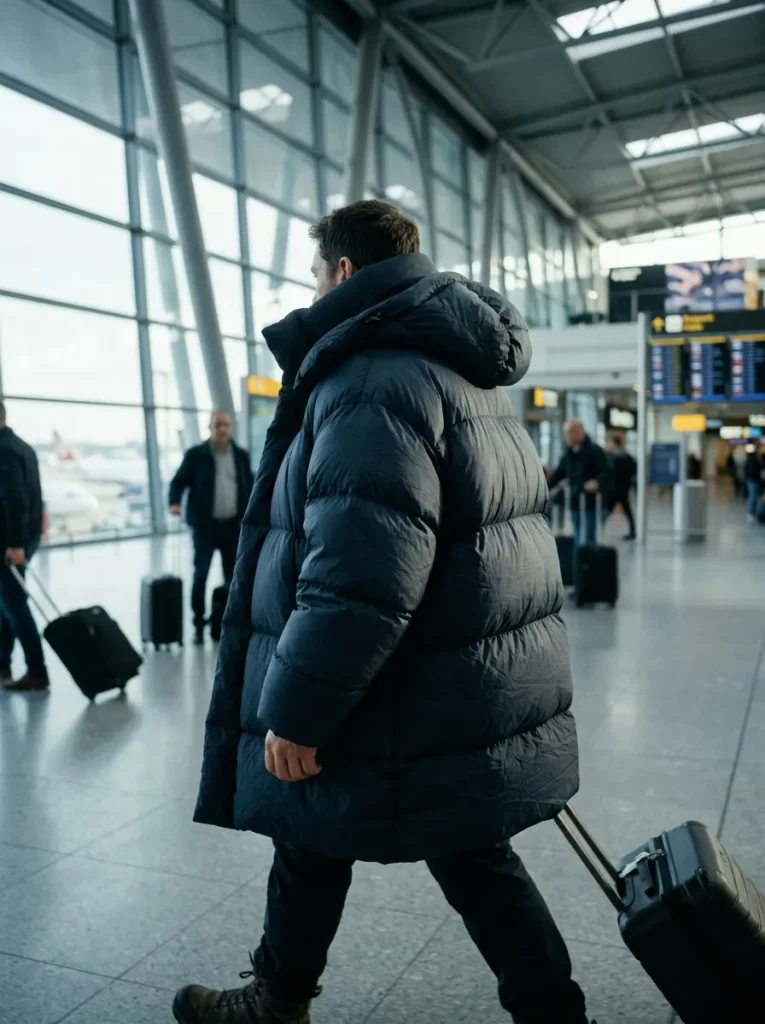
If your winter coat takes up a large part of your suitcase, consider wearing it during your journey.
This is one of the simplest ways to free up luggage space, especially when traveling with a carry-on. A thick parka or insulated jacket can be awkward to pack but relatively easy to carry when worn.
You can also wear your bulkiest sweater and heaviest comfortable footwear on travel day, provided they are suitable for the airport and the journey.
There is one important consideration: comfort. Wearing a heavy coat through a warm airport, crowded train station, or long flight can become uncomfortable. Choose a lightweight layer underneath that you can remove easily, and avoid carrying more clothing than you can manage comfortably.
If you don’t want to wear the coat for the entire journey, keep it accessible so you can put it on when you arrive somewhere cold.
This approach works particularly well for winter destinations where you need a substantial jacket outdoors but won’t need it during most of the flight.
3. Use the Right Folding Method for Your Coat
Not every winter coat should be packed the same way. The best method depends on its insulation, shape, and fabric.
A soft puffer jacket can often be rolled or folded into a compact bundle. A structured wool coat needs gentler handling to avoid deep creases. A tailored overcoat may be better packed flat.
Use this quick guide to choose the right approach.
| Coat type | Recommended packing method | What to avoid |
| Down puffer jacket | Fold or roll gently, then use a suitable packing cube | Leaving it tightly compressed for long periods |
| Synthetic insulated jacket | Fold or roll, with moderate compression if permitted | Forcing the zipper closed over an overfilled bag |
| Long wool coat | Fold along natural seams and pack flat | Tight rolling that creates hard creases |
| Structured overcoat | Fold carefully and place near the top of the suitcase | Heavy compression that distorts the shoulders |
| Waterproof ski jacket | Fold neatly or use a compression cube if the care instructions allow it | Assuming the jacket can be compressed indefinitely |
| Lightweight fleece | Roll or fold into gaps between other clothing | Packing it separately when it could fill unused spaces |
The key is to reduce unnecessary air space without crushing the coat or forcing it into a shape that damages the material.
How to Roll a Puffer Jacket
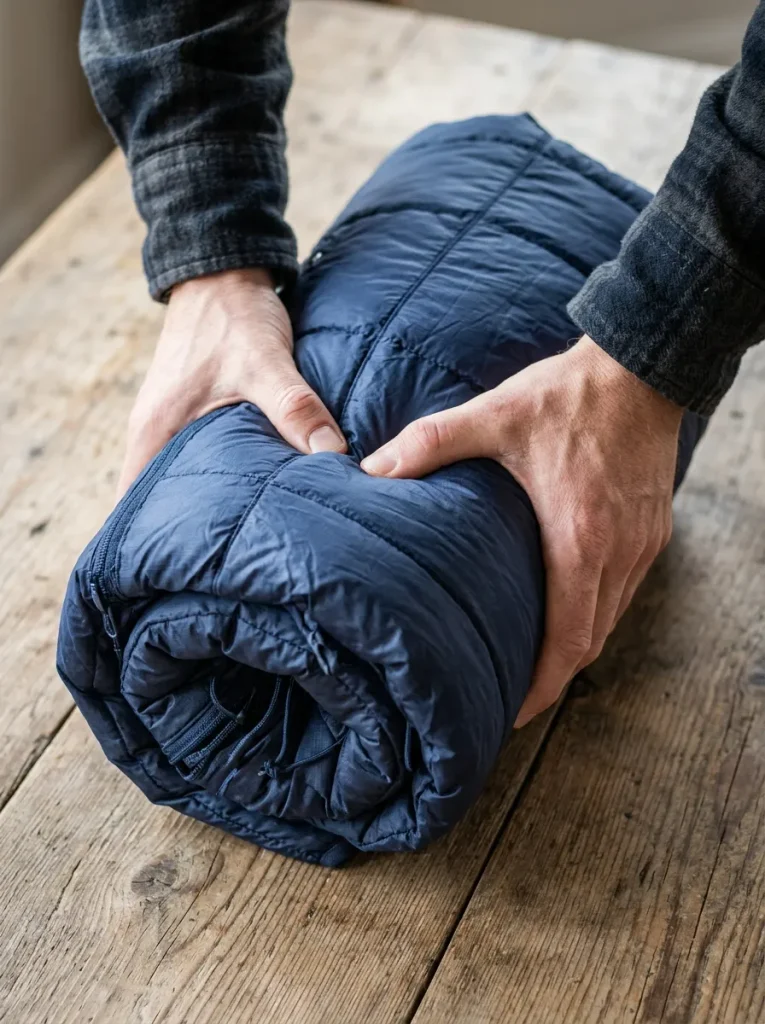
Rolling works well for many soft, casual insulated jackets.
- Lay the jacket on a clean, flat surface and close its zipper.
- Empty the pockets and smooth the sleeves.
- Fold both sleeves inward across the body.
- Fold the sides toward the center to create a long rectangle.
- Roll the jacket gently from the hem toward the collar.
- Secure the bundle with a packing cube or a loose strap if needed.
If the jacket has a hood, arrange it around the rolled bundle when the design allows. Some hooded jackets can be tucked into their own hood, but not every model is designed for this.
Avoid twisting the jacket tightly. You want a compact bundle, not a knot of crushed insulation.
How to Fold a Wool Coat
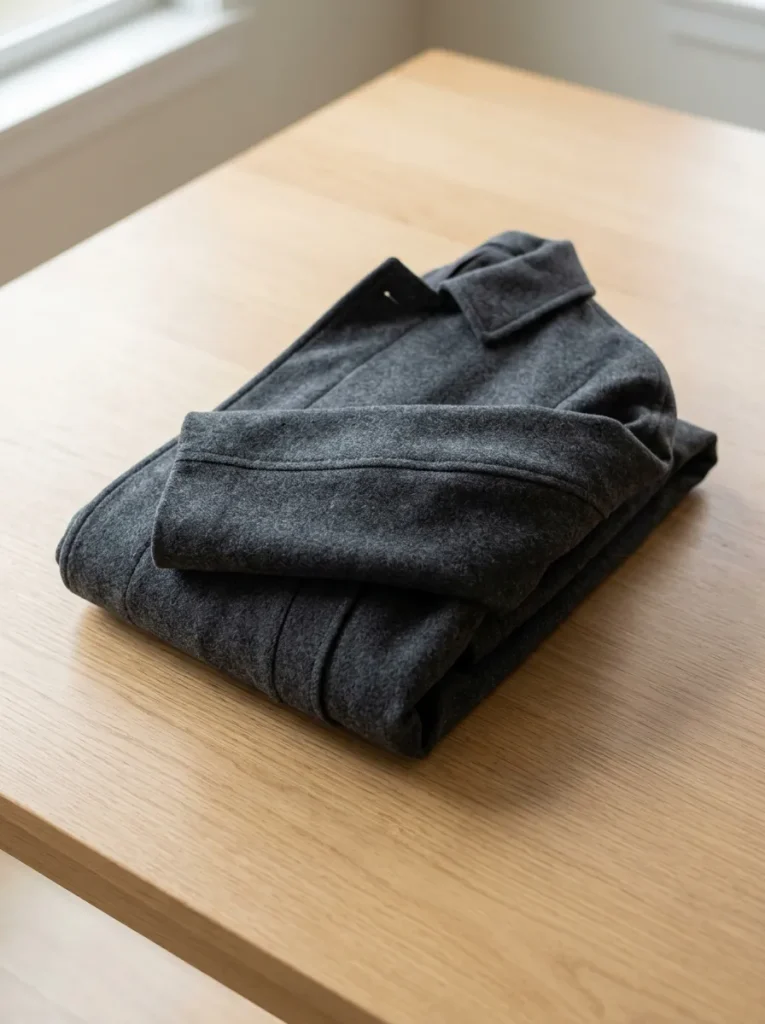
Wool coats generally benefit from careful folding rather than aggressive rolling.
- Button or fasten the coat to keep it aligned.
- Lay it flat with the front facing down.
- Fold the sleeves inward along their natural lines.
- Bring the sides toward the center.
- Fold the coat once or twice, depending on its length and your suitcase dimensions.
- Place it flat on top of softer clothing.
A layer of clean tissue paper between major folds can help reduce friction and creasing, particularly for delicate fabrics.
When you arrive, unpack the coat and hang it up as soon as practical. Allowing the fabric to relax can help minor creases fall out naturally.
4. Use Compression Packing Cubes for Soft, Bulky Clothing
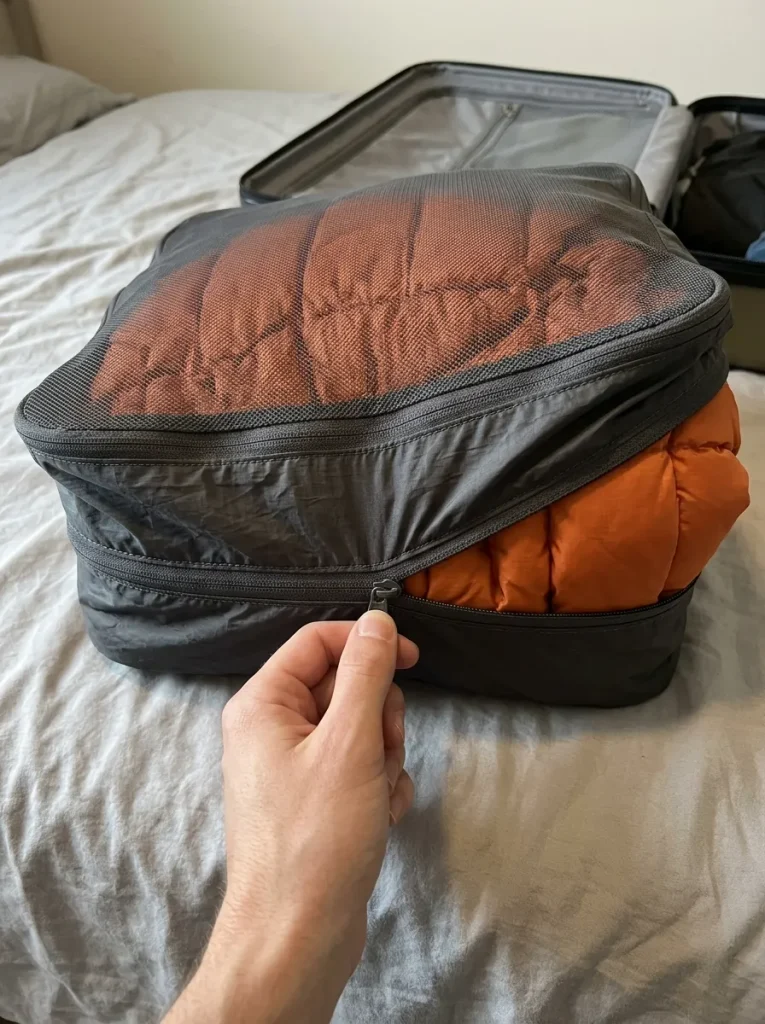
Compression packing cubes can help organize bulky winter clothes and reduce their volume. Unlike ordinary packing cubes, they have an additional zipper that tightens the fabric around the contents.
They are particularly useful for puffer jackets, fleece layers, sweaters, and other soft garments.
However, compression cubes do not make a suitcase larger, and they do not reduce the weight of your belongings. Their main benefit is reducing the space occupied by soft clothing and creating more manageable bundles.
How to Use a Compression Packing Cube
- Fold or roll the jacket before placing it inside.
- Fill the main compartment without forcing extra clothing into it.
- Close the main zipper completely.
- Use the compression zipper to reduce the bundle’s size gradually.
- Stop if the fabric becomes trapped or the zipper resists.
- Place the cube in your suitcase and arrange other items around it.
A compression cube can be a useful option if you want to keep your winter clothes organized and accessible throughout the trip.
Important: Check the care instructions for your coat before compressing it. Down jackets and other insulated garments need their loft to provide warmth. Brief compression during travel is different from storing insulation tightly compressed for days or weeks.
If you regularly travel with thick coats, compare the dimensions of compression cubes with your suitcase before purchasing a set. A cube that is too wide or tall may not fit efficiently in a small carry-on.
5. Be Careful With Vacuum Storage Bags
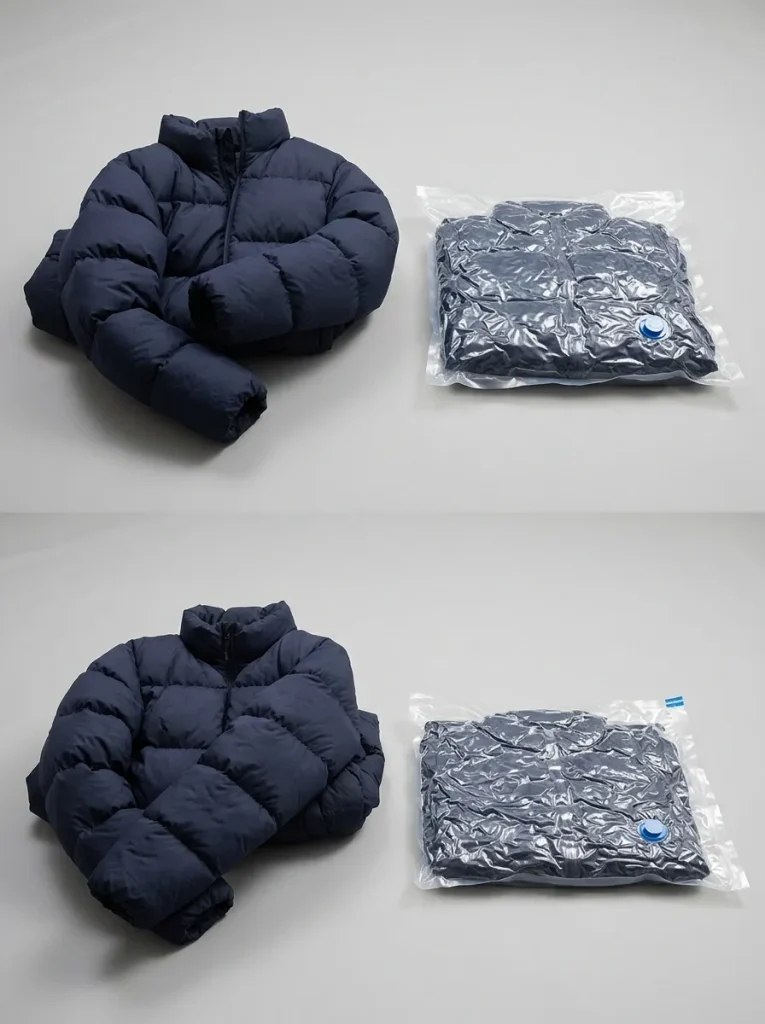
Vacuum storage bags can remove more air than ordinary packing cubes, which may help reduce the volume of some soft winter clothing. They are not, however, the best solution for every coat.
Removing air can substantially reduce the space occupied by bulky garments, but excessive or prolonged compression may affect the loft of insulated clothing. A vacuum bag can also make a coat difficult to unpack and repack during a multi-stop trip.
Before using one, check the manufacturer’s instructions for the jacket.
For a short journey, a suitable vacuum bag may work for clothing that tolerates compression. For delicate wool coats, structured outerwear, or jackets with specific storage requirements, a gentler packing method is usually safer.
Never seal a damp coat inside a vacuum bag. Moisture trapped in luggage can lead to unpleasant odors and may damage fabric or insulation.
Compression Bags vs. Compression Cubes
| Feature | Compression packing cube | Vacuum storage bag |
| How it works | Uses a zipper to reduce the bundle’s volume | Removes air from the bag |
| Best use | Organizing jackets and soft clothing for travel | Reducing the volume of suitable soft items |
| Repacking during the trip | Generally convenient | Can be less convenient, depending on the bag |
| Need for a pump | Usually no | Depends on the design |
| Suitability for delicate coats | Depends on the garment and compression level | Requires extra caution |
| Effect on luggage weight | Does not reduce weight | Does not reduce weight |
For most travelers, compression cubes offer a useful balance of convenience and space savings. Vacuum bags are worth considering only when the garment and travel plans make them appropriate.
6. Pack Your Suitcase in the Right Order
Even a well-folded coat can waste space if you place it in the wrong part of your suitcase.
Start by laying out everything you intend to bring. Remove unnecessary items before you begin packing. This makes it easier to see how much space you actually have.
Then organize your suitcase in layers.
Step 1: Place Heavy Items Near the Wheels
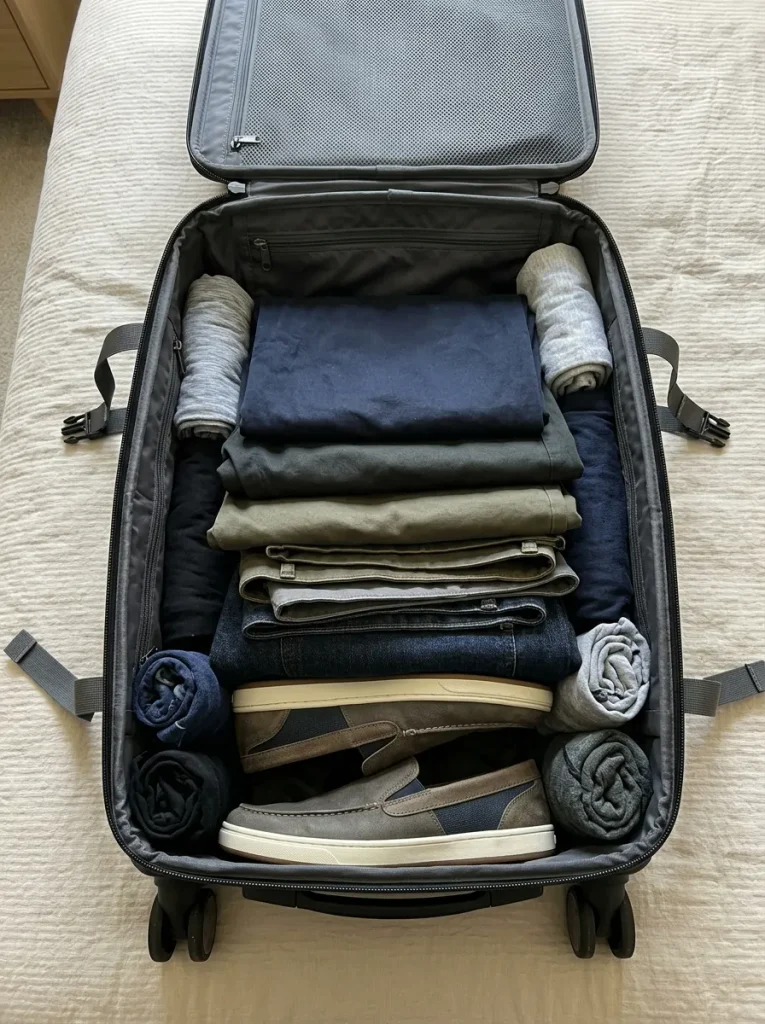
Pack heavier items near the wheel end of a rolling suitcase to help keep the bag balanced. Shoes, toiletry bags, and dense clothing should be arranged so they do not create uncomfortable pressure points against delicate garments.
Keep dirty shoes inside shoe bags or a separate compartment.
Step 2: Add Flat Clothing
Fold trousers, shirts, and other garments that benefit from a flat shape. Arrange them in a stable layer rather than stacking everything into one uneven pile.
Step 3: Add the Bulky Coat
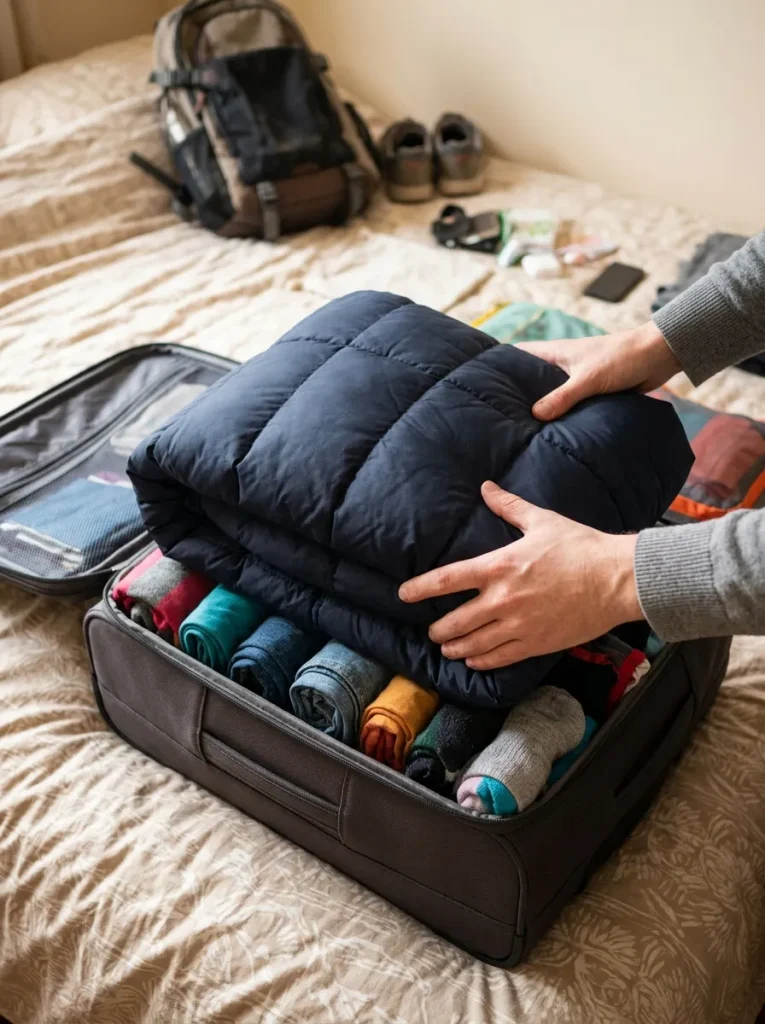
Place a folded or compressed coat where it fits most efficiently. A soft puffer may fit along the side of the suitcase, while a wool coat may be better placed flat across the top.
Do not automatically place the largest item at the bottom. The best position depends on the coat’s shape, the suitcase’s structure, and what needs protection.
Step 4: Fill Small Gaps
Use socks, gloves, scarves, and other soft accessories to fill gaps between packed items. These smaller pieces can make use of spaces that would otherwise remain empty.
Avoid forcing items into every available corner if doing so puts pressure on zippers or delicate clothing.
Step 5: Test the Suitcase Before Leaving
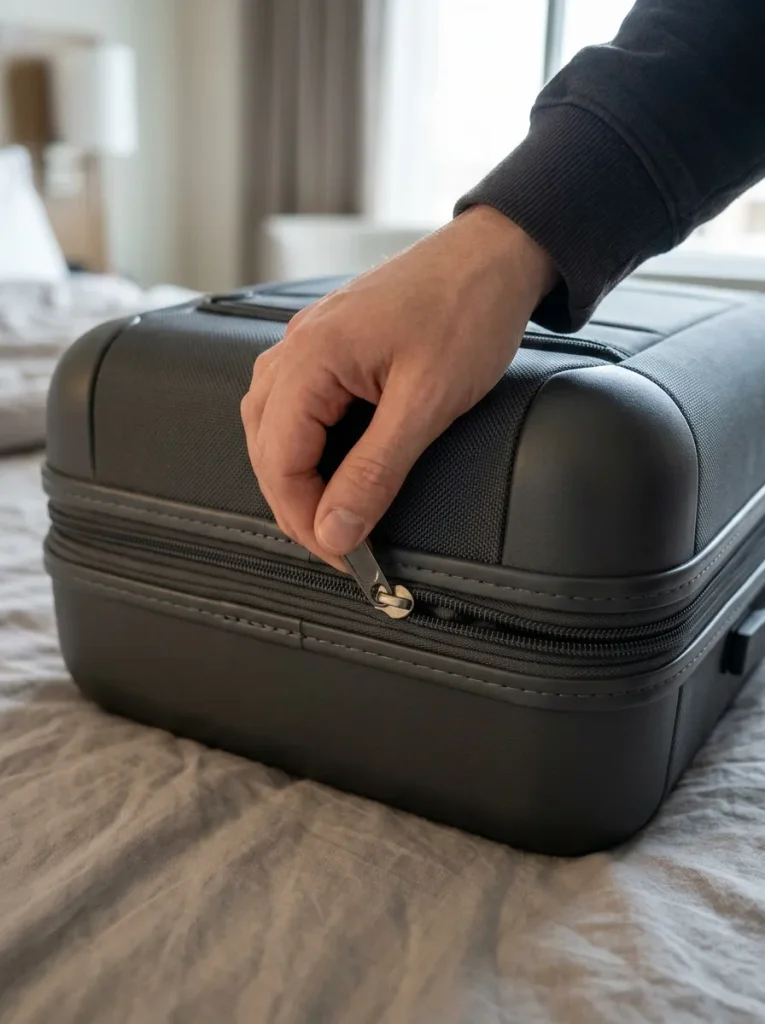
Close the suitcase gently. If you need to sit on it or pull hard on the zipper, remove something and rearrange the contents.
Overstuffing can strain the zipper, distort the luggage, and make the bag difficult to handle. A little spare space also helps when you need to repack during your trip.
7. Use the Coat’s Hood and Empty Spaces Wisely
Some hooded puffer jackets can be rolled into a compact bundle and partially secured using their own hood. This can be useful when the jacket’s design allows the hood to wrap around the roll.
The process is straightforward:
- Zip the jacket and lay it flat.
- Fold the sleeves inward.
- Fold the sides toward the center.
- Roll the jacket gently from the hem toward the hood.
- Use the hood to hold the bundle together if it fits naturally.
Do not force the bundle into a hood that is too small, and do not use this method for structured coats that should remain flat.
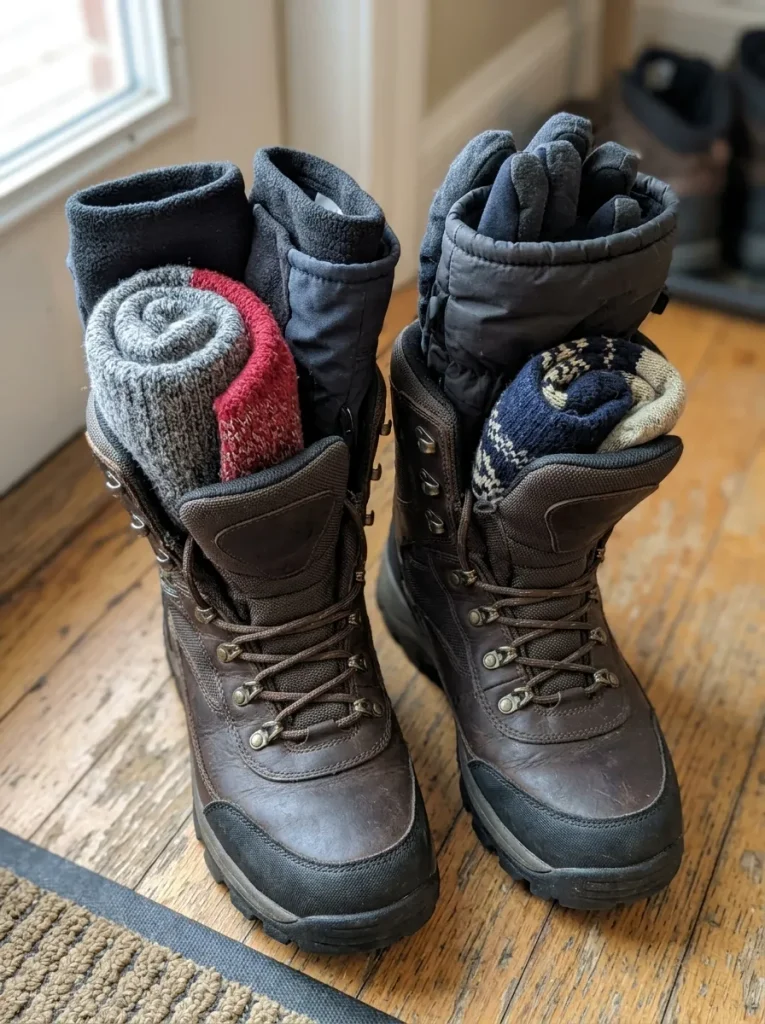
You can also make use of spaces inside packed shoes, provided they are clean and dry. Small accessories such as gloves or rolled socks can fit inside footwear without taking up much extra room.
Keep anything that touches shoes separate from clean clothing. A simple shoe bag helps protect your coat and other garments from dirt.
8. Pack a Layering System Instead of More Heavy Clothing
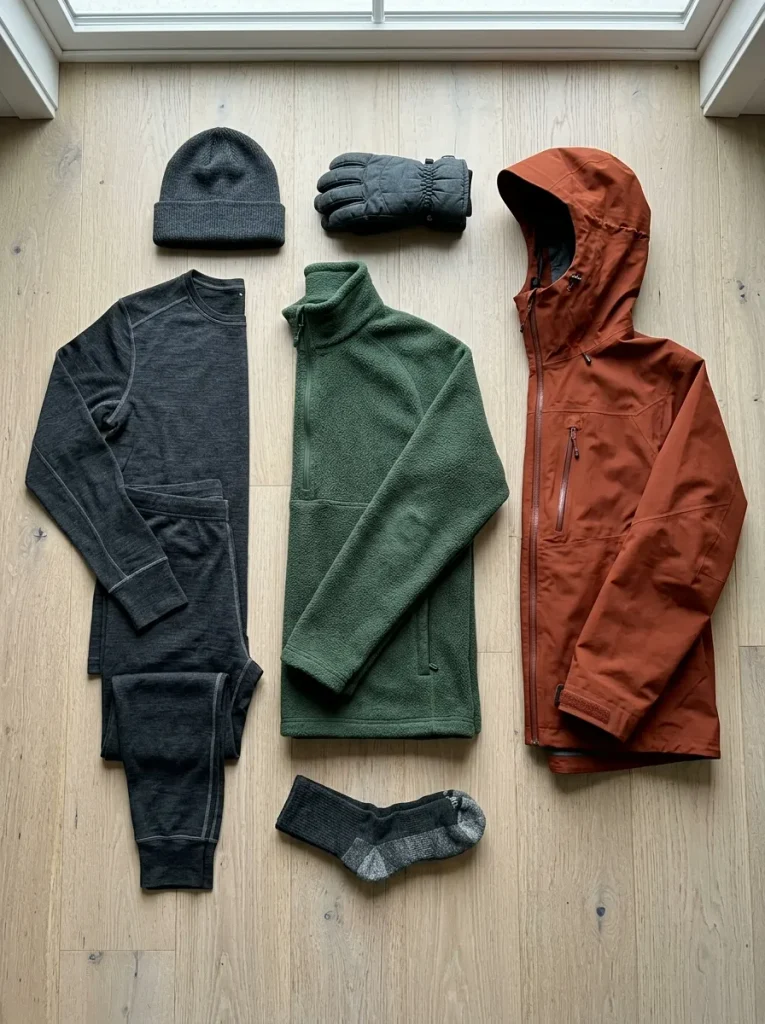
The best way to reduce winter packing bulk is often to rethink your clothing system.
Rather than bringing several thick sweaters and multiple coats, choose layers that work together.
A practical winter outfit may include:
- A moisture-managing base layer.
- A fleece or warm sweater.
- One insulated jacket.
- A waterproof shell when the main jacket does not provide sufficient weather protection.
- Warm socks, gloves, and a hat.
This system allows you to adjust your clothing as the temperature changes. You can wear the base layer and sweater indoors, add the insulated jacket for cold weather, and use the shell when rain or wet snow is expected.
The right combination depends on your destination. A winter city break may require a different setup from a snowy mountain holiday.
If you’re preparing for a winter trip to the Swiss Alps, read How to Prepare for a Winter Trip to the Swiss Alps: What First-Time Visitors Need for additional planning considerations.
Travelers heading to Banff or the Canadian Rockies should pay particular attention to weather conditions, outdoor activities, and the clothing needed for extended exposure to cold.
For more destination-specific preparation, see What to Know Before Visiting Banff in Winter: Weather, Roads, Clothing and Travel Tips and How to Visit the Canadian Rockies in Winter: Roads, Snow, Clothing and Safety Tips.
If Lake Tahoe is on your itinerary, How to Prepare for a Winter Trip to Lake Tahoe: What First-Time Visitors Should Know offers another useful starting point for planning your winter wardrobe.
9. Protect Your Coat From Moisture and Wrinkles

Packing efficiently is only half the job. You also want your coat to arrive in good condition.
Before packing, make sure it is completely dry. Snow, rain, and damp outdoor clothing should never be sealed inside luggage for a long journey.
If you have just come inside from wet weather, allow the coat to dry according to its care instructions before packing it away. Keep it separate from damp gloves, wet boots, and toiletries that could leak.
For a wool coat, use gentle folds and avoid placing heavy objects on top of it. A garment bag or a protective layer can help reduce friction and keep the coat separate from rough luggage surfaces.
For insulated jackets, avoid leaving them compressed longer than necessary. Unpack them after arrival and allow the insulation to recover.
If your coat looks wrinkled, hang it up and give it time to relax. Follow the manufacturer’s care instructions before using a steamer or iron, as some waterproof fabrics and technical materials can be damaged by excessive heat.
10. Leave Room for Winter Accessories and Return-Trip Items
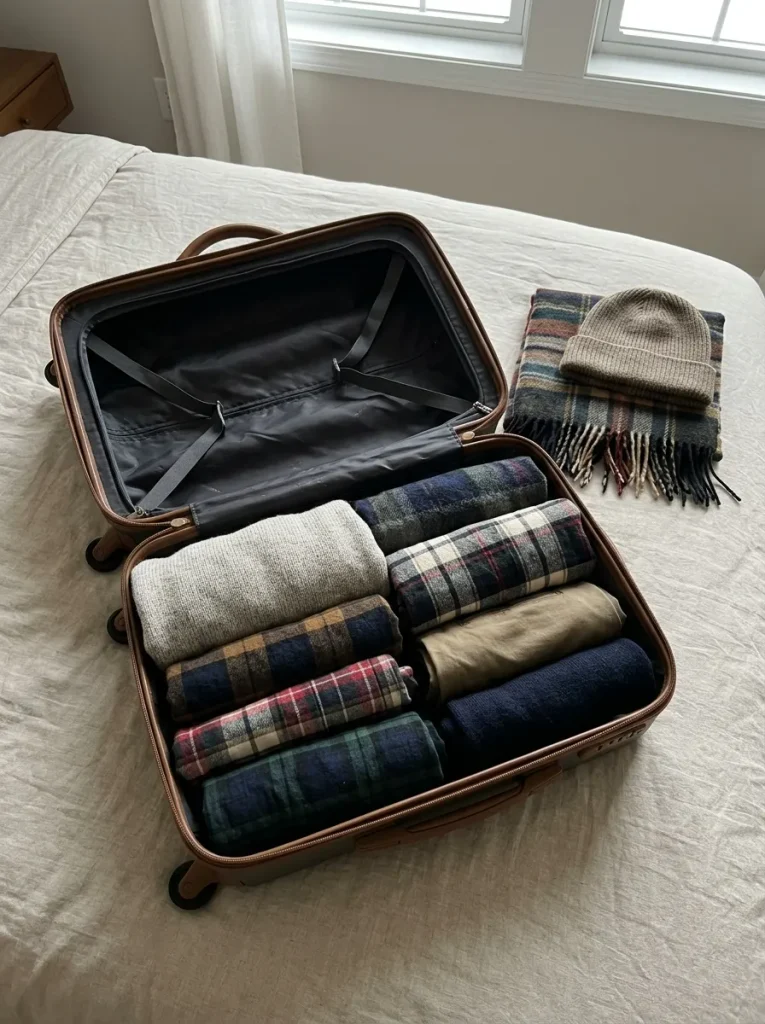
A suitcase that closes perfectly at home may be difficult to manage after several days of travel.
Winter trips often involve extra items such as gloves, hats, scarves, thermal socks, and damp-weather accessories. You may also buy souvenirs or need to pack clothing differently on the return journey.
Reserve a small amount of space rather than packing every inch tightly.
Keep frequently used items accessible. A hat, gloves, or thin warm layer may be needed before you reach your hotel, especially if you arrive in a cold destination.
If you expect to encounter snow, keep essential cold-weather accessories near the top of your luggage or in a separate day bag. You do not want to unpack the entire suitcase in a parking area just to find your gloves.
For a multi-stop trip, consider packing cubes by clothing category. This makes it easier to find what you need without rearranging every item at each hotel.
Common Mistakes When Packing Bulky Winter Coats
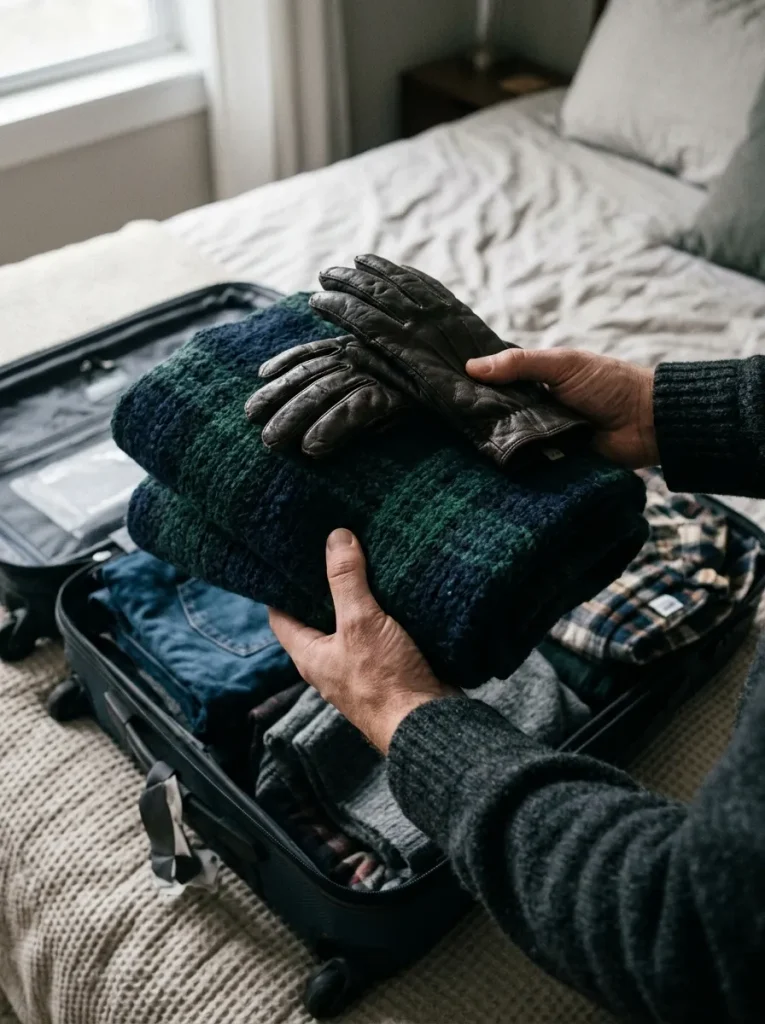
Avoid these common packing mistakes to save space without damaging your clothing.
| Mistake | Why it causes problems | Better approach |
| Packing several heavy coats | Uses valuable suitcase space | Choose one versatile main coat |
| Compressing every jacket aggressively | May damage insulation or fabric | Match compression to the garment |
| Packing a damp coat | Can trap moisture and cause odors | Dry the coat completely first |
| Rolling a structured wool coat tightly | Can create stubborn creases | Fold along natural seams |
| Overfilling compression cubes | Strains zippers and creates bulky shapes | Leave room for the compression panel |
| Forgetting luggage weight | Compression reduces volume, not weight | Weigh the packed bag before departure |
| Packing all accessories separately | Creates wasted gaps | Fill suitable spaces with small soft items |
| Leaving no room for repacking | Makes the return journey harder | Keep a little space available |
The biggest lesson is that packing efficiently is not about squeezing everything as tightly as possible. It is about bringing the right items and using the available space intelligently.
Frequently Asked Questions
Can you pack a bulky winter coat in a carry-on suitcase?
Yes. Many winter coats can fit into a carry-on if you choose one main jacket, use a suitable folding or rolling method, and organize the rest of your clothing carefully. Long parkas and thick ski jackets may take up considerable space, so wearing the bulkiest coat during transit can be a practical alternative.
Always check your airline’s current carry-on size and weight limits. A compressed suitcase can still exceed the permitted weight.
Is it better to roll or fold a winter coat?
It depends on the material. Soft puffer jackets and many synthetic insulated coats can be rolled or folded gently. Structured wool coats and tailored overcoats are generally better folded along their natural seams and packed flat.
Choose the method that reduces bulk without creating deep creases or excessive pressure on the insulation.
Do compression bags damage down jackets?
Brief compression during travel is not the same as long-term storage, but excessive or prolonged compression can affect a down jacket’s loft. Follow the manufacturer’s instructions and unpack the jacket when you arrive.
For long-term storage, down garments are generally best kept clean, dry, and loosely stored rather than left tightly compressed.
Are packing cubes worth buying for winter travel?
Compression packing cubes can be useful if you regularly travel with bulky clothing. They help organize soft garments and may reduce the space they occupy.
They are not essential, however. If you travel infrequently, careful folding, sensible clothing choices, and wearing your main coat during transit may be enough.
Should I use vacuum bags for winter coats?
Vacuum bags can reduce the volume of some soft garments, but they are not suitable for every coat. Check the garment’s care instructions before using one, and avoid prolonged compression of insulated clothing.
Never seal a damp coat in a vacuum bag. For many travelers, a compression cube is a simpler option for organizing clothing during a multi-stop trip.
How do I pack a long wool coat without wrinkles?
Fasten the coat, lay it flat, fold the sleeves inward, and bring the sides toward the center. Fold the coat along its natural lines and place it near the top of the suitcase, away from heavy objects.
When you arrive, hang it up promptly and allow minor creases to relax. Use a steamer only if the fabric’s care instructions permit it.
How can I pack winter clothes for a week in a small suitcase?
Choose a versatile coat, plan outfits around a small number of coordinating layers, and limit bulky footwear. Wear your heaviest comfortable items during transit when practical, use packing cubes to organize soft clothing, and leave room for accessories and return-trip items.
You may also want to plan laundry if your accommodation offers convenient facilities.
Does compressing a coat make my suitcase lighter?
No. Compression reduces the volume occupied by clothing, but it does not remove the clothing’s weight. If your airline has a strict luggage weight limit, weigh the suitcase after packing.
Final Thoughts
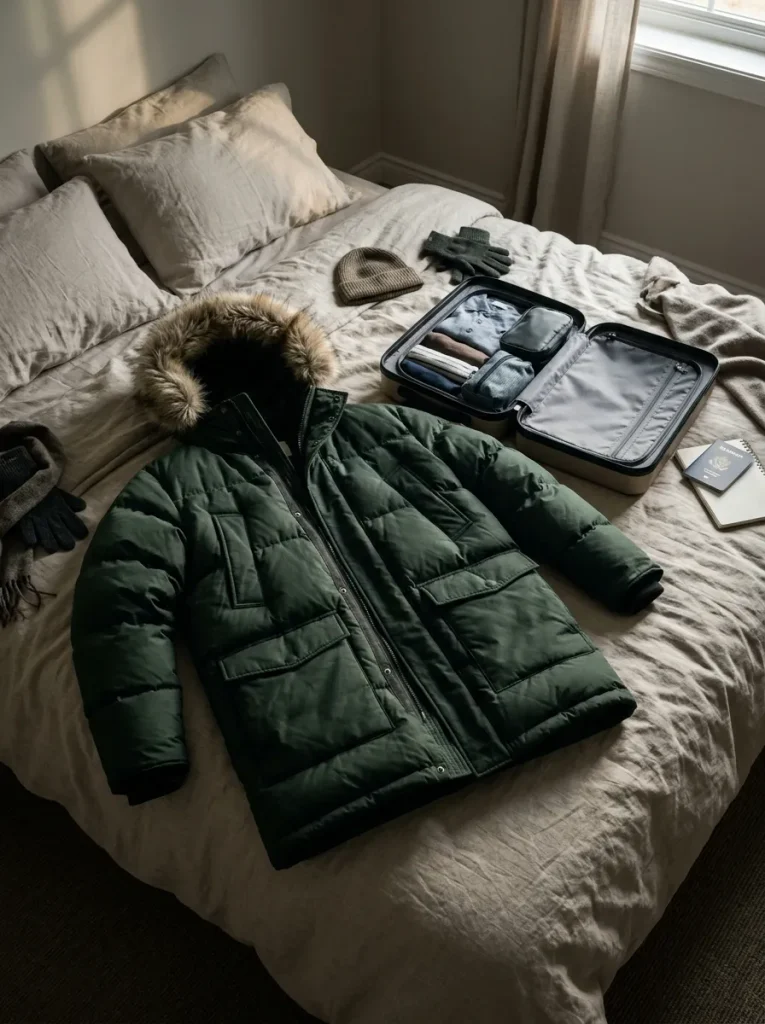
Learning how to pack bulky winter coats in a small suitcase can make winter travel much less stressful. The trick is to choose one main coat, use a folding method suited to its material, and avoid compressing delicate or insulated garments more than necessary.
Wear your bulkiest jacket during transit when practical, use compression cubes for suitable soft clothing, and pack your suitcase in a way that keeps everything balanced and accessible. Most importantly, do not sacrifice essential warmth just to save a little space.
Whether you’re heading to the Swiss Alps, Banff, the Canadian Rockies, or Lake Tahoe, thoughtful packing helps you arrive prepared for the cold without dragging an overstuffed suitcase through every airport and hotel.
Pack smart, keep your layers flexible, and leave a little room for the unexpected. Your suitcase will be easier to manage, and your winter adventure can begin with less fuss.