How to Visit the Canadian Rockies in Winter: Roads, Snow, Clothing and Safety Tips
The Canadian Rockies in winter are spectacular.
Snow-covered peaks rise above frozen lakes, pine forests look like they have been dusted with sugar, and places such as Banff and Jasper become quieter and more dramatic than they are during the busy summer season.
But winter in the Canadian Rockies is not simply summer with snow.
Road conditions can change quickly. Some roads close seasonally. Mountain weather can be very different from conditions in the nearest town. Trails become icy or snow-covered, daylight is limited, and a rental car that feels perfectly normal in the city may not be properly equipped for a mountain drive.
The good news is that you can absolutely visit the Canadian Rockies in winter.
You just need to plan differently.
This guide covers how to prepare for a winter trip to Banff, Jasper, Lake Louise and the surrounding Rocky Mountain region, including winter driving, road conditions, clothing, snow, footwear, safety, what to keep in your vehicle, and how to build a realistic itinerary.
Recommended Travel Items for Your Trip
What Is Winter Like in the Canadian Rockies?
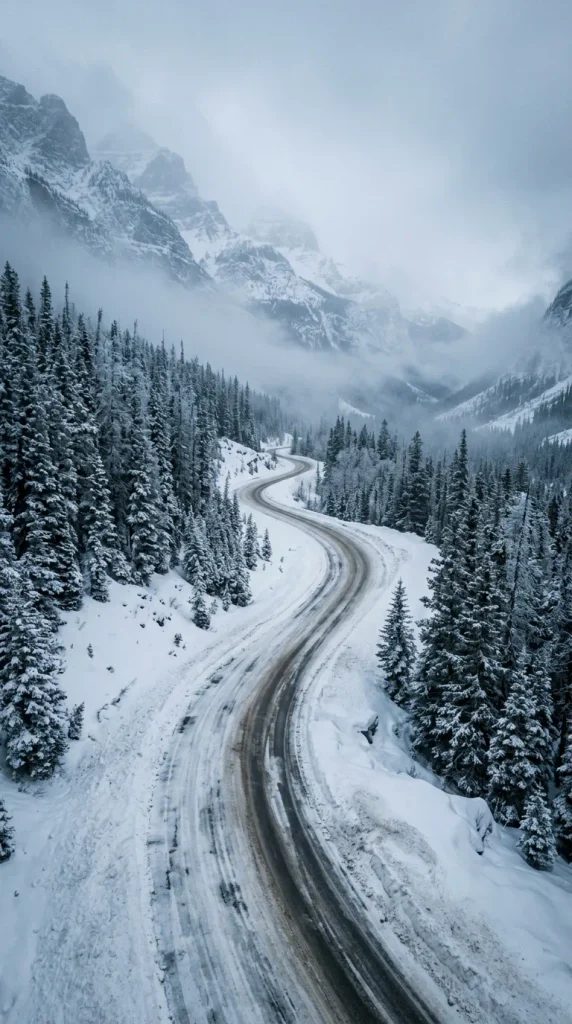
Winter arrives early and stays late in the mountains.
In the higher elevations, snow can remain well into spring, and conditions can vary dramatically from one location to another.
You might leave Banff under blue skies and encounter heavy snow farther along the road.
That is normal mountain weather.
Parks Canada notes that winter conditions on the Icefields Parkway can include snow-covered pavement, icy sections, poor visibility and avalanche-control closures. Weather can also change quickly along the route.
Expect some combination of:
- Deep snow
- Packed snow
- Black ice
- Freezing temperatures
- Strong winds
- Snowstorms
- Short daylight hours
- Icy trails
- Sudden visibility changes
- Seasonal road closures
The exact experience depends on when you visit.
December to February
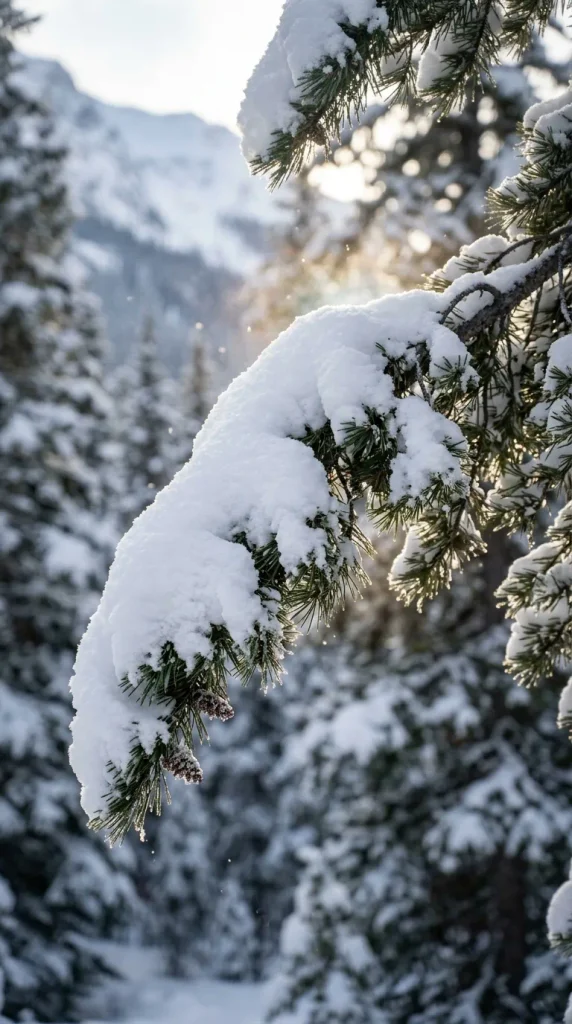
This is the heart of winter.
Expect cold temperatures, substantial snow in the mountains and excellent conditions for skiing, snowshoeing, skating and other winter activities.
March
March can still be fully winter in the Rockies.
Snow remains abundant in many mountain areas, while daylight starts increasing.
April
April is a transition month.
Some winter activities continue, but lower elevations can begin to see changing conditions.
May
Do not assume May means summer in the mountains.
Parks Canada notes that winter conditions on the Icefields Parkway can persist into mid-June, with alpine trails generally not becoming mostly snow-free until around mid-July.
That is an important point when planning a spring trip.
Which Places Should You Visit in Winter?
You have several strong options.
Banff
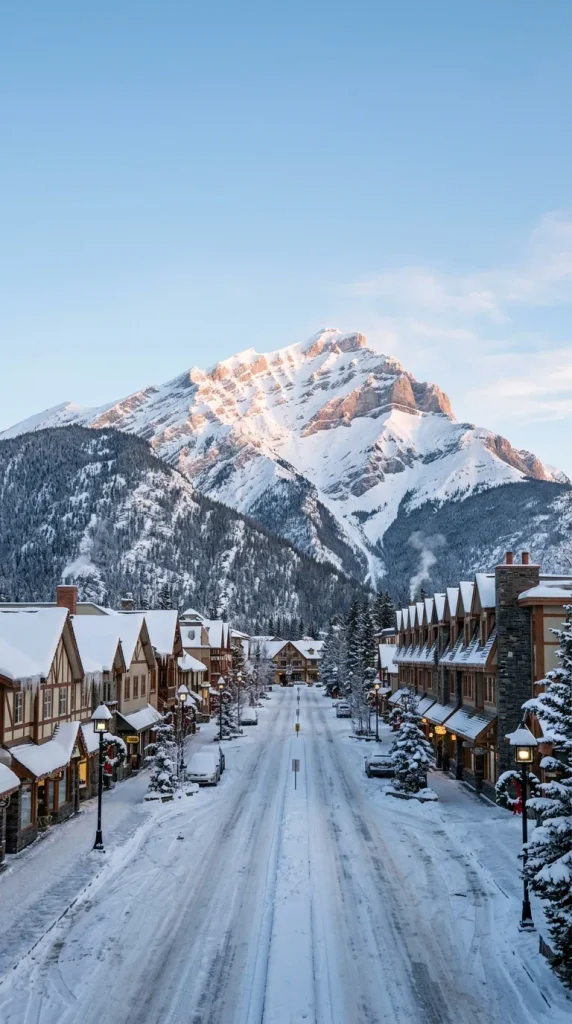
Banff is one of the easiest bases for a first winter trip.
You have:
- Restaurants
- Hotels
- Shops
- Winter activities
- Ski resorts
- Easy access to mountain scenery
It is also a good place to stay if you are nervous about winter driving because you can experience plenty of the Rockies without spending every day on remote roads.
Lake Louise
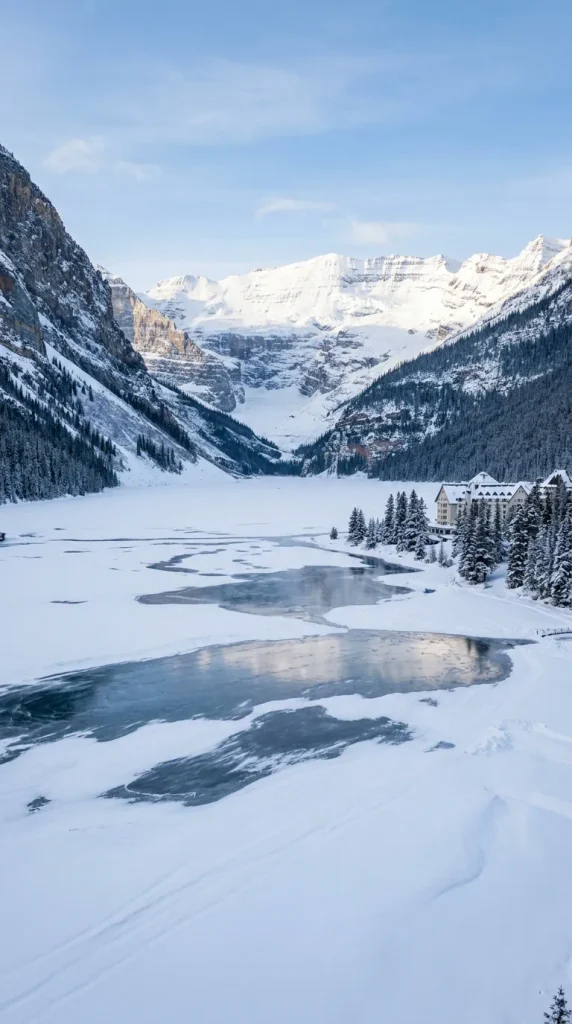
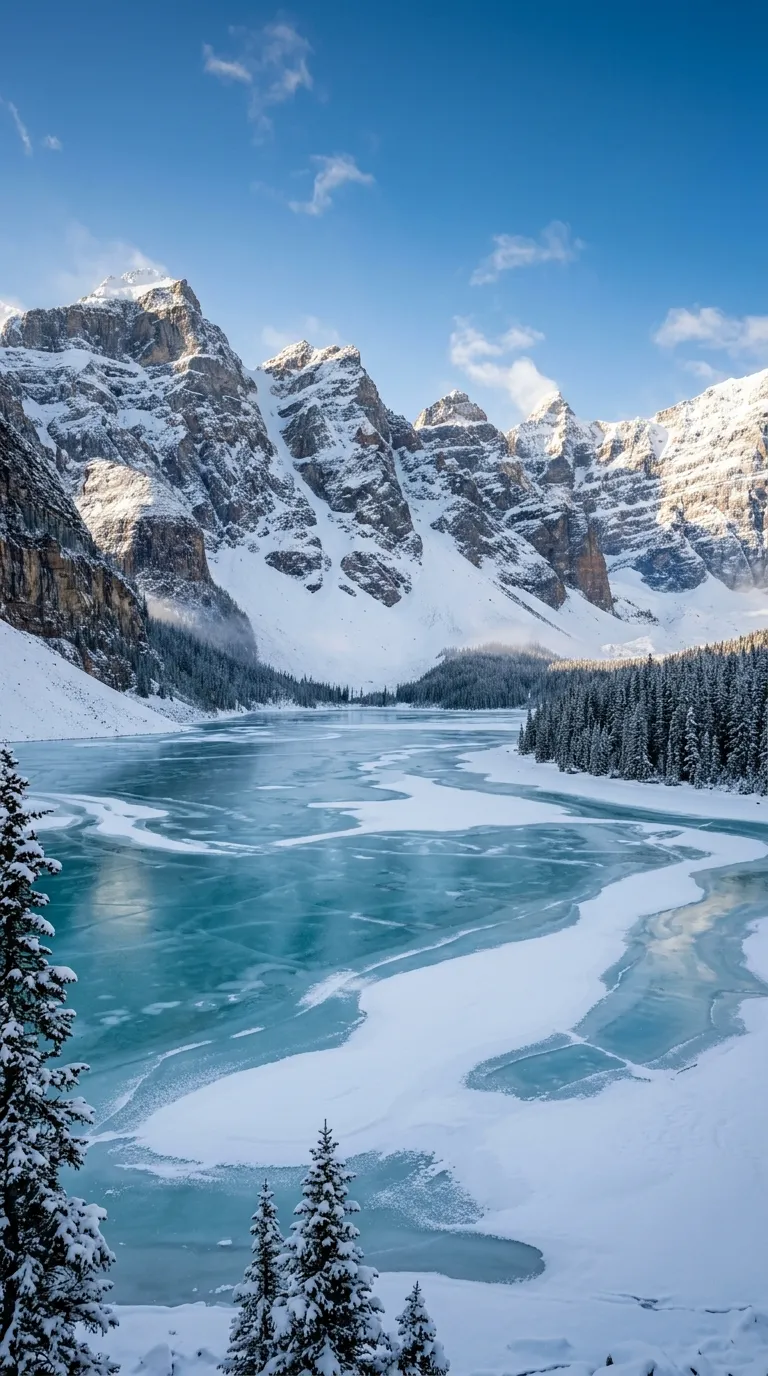
Lake Louise becomes a classic winter landscape.
The lake freezes and the surrounding mountains become heavily snow-covered.
Winter activities include skating, snowshoeing, skiing and cross-country skiing, depending on conditions.
Jasper
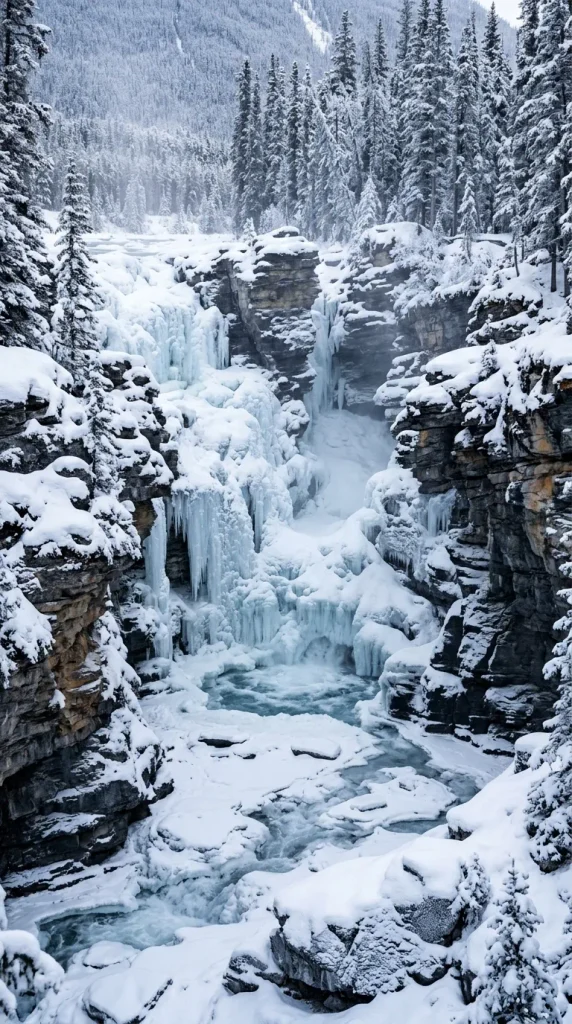
Jasper is an excellent choice for travelers who want a quieter mountain-town atmosphere.
Winter attractions include snowshoeing, cross-country skiing, skating and scenic drives when roads are open.
Parks Canada specifically highlights places such as Maligne Lake, Pyramid Island, Athabasca Falls and Sunwapta Falls as winter attractions in Jasper National Park.
Canmore
Canmore sits just outside Banff National Park and makes another useful base.
It has a mountain-town atmosphere with restaurants, accommodations and access to outdoor activities.
Kananaskis
Kananaskis offers more wilderness and outdoor recreation, but winter conditions can be serious.
It is better suited to travelers who are comfortable planning around weather, trail conditions and mountain safety.
Should You Drive in the Canadian Rockies in Winter?
You can, but you should be honest about your winter-driving experience.
If you have never driven on snow or ice, renting a car and immediately tackling a remote mountain highway during a snowstorm is not a great introduction.
Winter driving in the Rockies can involve:
- Snow-covered roads
- Reduced visibility
- Black ice
- Strong winds
- Wildlife
- Steep grades
- Curving mountain roads
- Long distances between services
Alberta recommends slowing down for winter conditions, increasing following distance, avoiding sudden braking or steering, and never using cruise control on winter roads.
If conditions become severe, staying off the road may be the safest option.
The Most Important Winter Driving Rule
Check the road conditions before every major drive.
Do not rely entirely on Google Maps, Apple Maps or another navigation app.
Parks Canada specifically advises travelers to check Alberta 511 for current road conditions and closures, and notes that popular navigation apps may not always have the latest information for Jasper National Park.
Check:
- Alberta 511
- Parks Canada alerts
- Weather forecasts
- Avalanche reports where relevant
- Trail conditions
- Your rental company’s road restrictions
And check again before leaving.
Not just the night before.
Winter Tires Are Not Optional on Some Routes
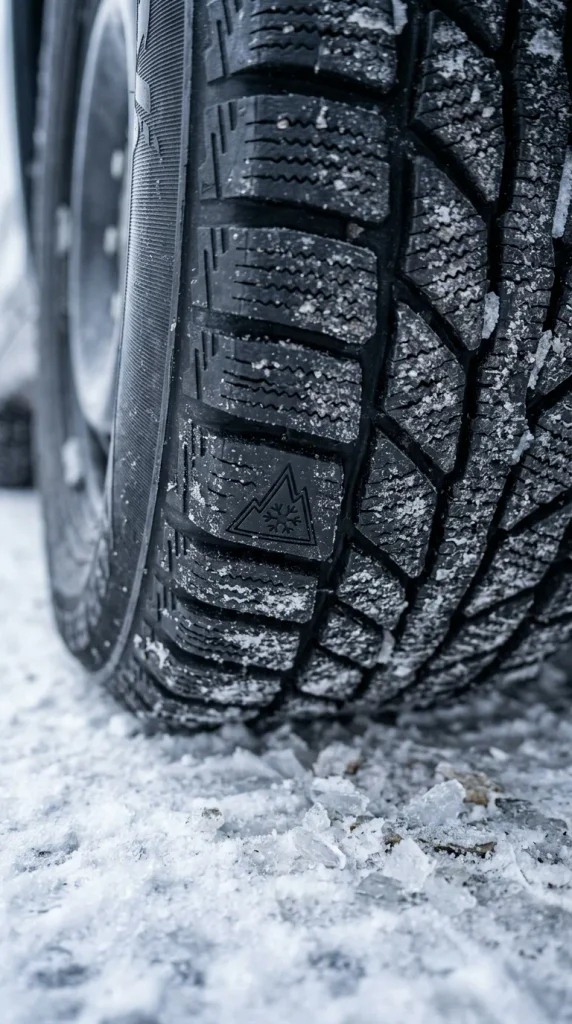
This is particularly important if you plan to drive the Icefields Parkway.
Parks Canada states that snow tires or chains are mandatory on the Icefields Parkway from November 1 through March 31, and during other periods when the road is covered with snow or ice. The tires must carry the appropriate snowflake or M+S marking.
Do not assume that “all-season” automatically means winter-ready.
When renting a car, specifically ask:
Does this vehicle have proper winter or snow-rated tires?
Get the answer before driving away from the rental lot.
What About AWD and 4WD?
All-wheel drive and four-wheel drive are useful.
They can help you maintain traction when accelerating on snowy roads.
But they do not magically give you shorter stopping distances.
A heavy AWD SUV traveling too quickly can still slide on ice.
Think of AWD as one part of a winter-driving setup, not a replacement for winter tires and careful driving.
Driving the Icefields Parkway in Winter
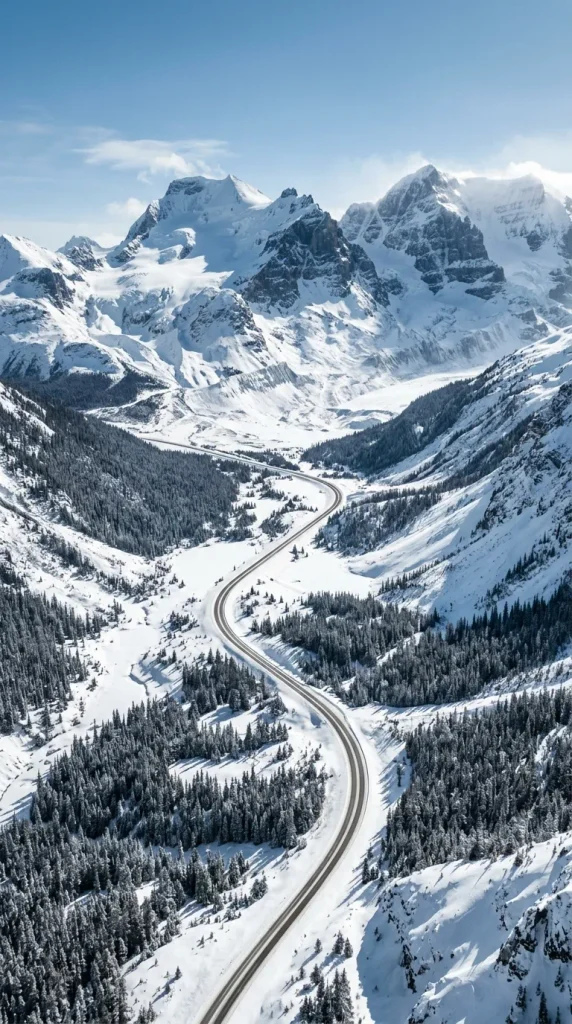
The Icefields Parkway is one of the most spectacular roads in Canada.
It connects Lake Louise and Jasper across roughly 232 kilometers of mountain scenery.
It is also considerably more demanding in winter.
Parks Canada describes the route as a remote roadway with limited services and no cell coverage along the Parkway.
There are no normal winter services along the route, so preparation matters.
Before leaving
- Fill the fuel tank
- Check Alberta 511
- Check the weather
- Check Parks Canada alerts
- Check avalanche information if entering backcountry areas
- Download maps
- Pack food and water
- Carry extra clothing
- Carry blankets
- Carry emergency supplies
- Tell someone your route
Parks Canada recommends completing the drive during daylight and notes that snow clearing and maintenance generally take place from about 7 a.m. to 3:30 p.m. during winter operations.
Do not underestimate the distance
Under good conditions, the basic drive can take several hours.
In winter, add time.
You may need to drive more slowly, encounter snow, stop for wildlife, wait for road maintenance or deal with changing conditions.
Do not schedule a flight immediately after your planned Parkway drive.
Give yourself a buffer.
The Icefields Parkway Has No Cell Service
This deserves its own warning.
There is no reliable cell coverage along the Icefields Parkway.
Parks Canada recommends downloading trip resources in advance and preparing to be self-reliant.
Download:
- Offline maps
- Your accommodation details
- Emergency contacts
- Road information
- Trail information
- Reservation confirmations
Do not assume you can simply pull over and search for the nearest gas station.
In winter, there are no regular services along the Parkway, so fill up before starting.
For a detailed look at the route and its major viewpoints, see our guide to the best stops on the Icefields Parkway.
Which Roads May Be Closed in Winter?
This is where winter planning gets interesting.
Some roads in the national parks close seasonally for wildlife protection or winter conditions.
For example, Parks Canada lists Moraine Lake Road as closed to personal vehicles year-round, while other roads have seasonal restrictions.
In Jasper, Cavell Road is seasonally closed for caribou conservation, and other roads can have seasonal restrictions or roadwork.
Never assume a road shown on a summer itinerary is available in winter.
Before traveling, check the current Parks Canada road and closure information.
What to Wear in the Canadian Rockies in Winter
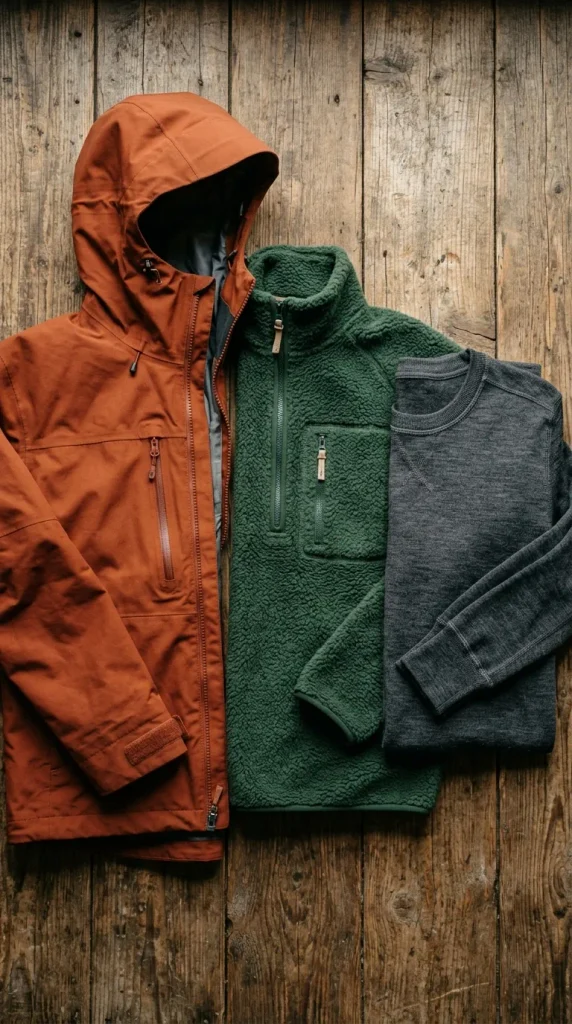
The biggest mistake first-time winter travelers make is relying on one enormous coat.
The better strategy is layers.
You want to be able to adjust your clothing as you move between:
- Outdoor trails
- Cars
- Restaurants
- Hotels
- Ski areas
- Shops
A good winter system has three basic parts.
Base layer
This keeps moisture away from your skin.
Good choices include:
- Merino wool
- Synthetic thermal fabric
- Thermal leggings
- Thermal tops
Avoid making cotton your main base layer during prolonged outdoor activities.
Insulating layer
This traps warm air.
Examples include:
- Fleece
- Wool sweater
- Down jacket
- Synthetic insulated jacket
Outer layer
This protects you from:
- Wind
- Snow
- Moisture
- Blowing weather
Look for a waterproof or highly water-resistant winter shell.
What to Wear on Your Feet
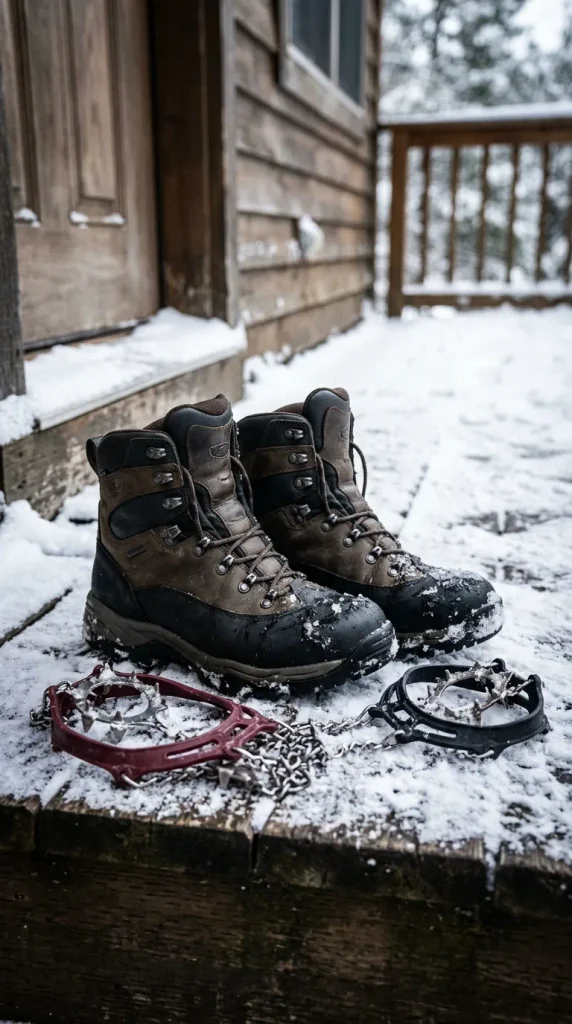
Your boots may be more important than your coat.
You need footwear that is:
- Waterproof
- Insulated
- Comfortable
- Designed for snow
- Suitable for ice
- Large enough for warm socks
Parks Canada recommends sturdy footwear with good traction and specifically advises full cold-weather clothing, including insulated waterproof boots, a warm jacket, hat and gloves for winter travel on the Icefields Parkway.
For winter walking, consider removable ice cleats.
Parks Canada recommends ice cleats for winter walking because many trails become packed with snow and slippery sections.
What to Pack for a Canadian Rockies Winter Trip
Clothing
- Insulated winter coat
- Thermal base layers
- Fleece or wool mid-layer
- Waterproof pants
- Insulated waterproof boots
- Wool socks
- Warm hat
- Neck warmer
- Insulated gloves
- Extra gloves
- Warm sleepwear
Outdoor gear
- Ice cleats
- Small backpack
- Sunglasses
- Sunscreen
- Hand warmers
- Headlamp
- Reusable water bottle
- Thermos
- Small first-aid kit
Electronics
- Phone
- Power bank
- Charging cables
- Offline maps
- Camera batteries
Cold temperatures can reduce battery performance, so keep spare batteries and power banks protected from extreme cold when possible.
For a deeper breakdown of staying warm during a winter trip, our guide on staying warm in freezing weather is useful before you start packing.
What to Keep in Your Car
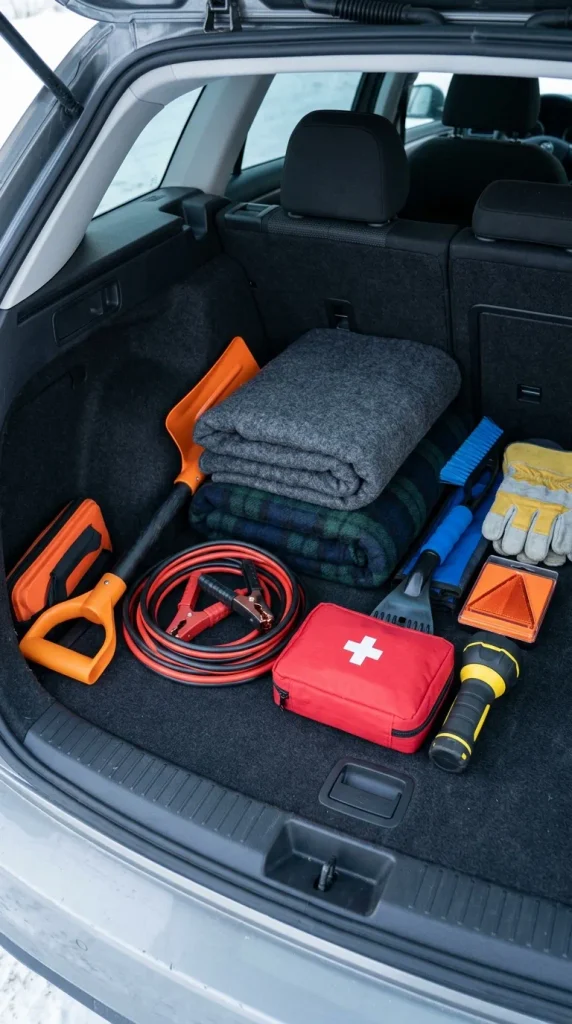
If you are driving into the Rockies, your car should be treated as part of your emergency equipment.
Alberta’s winter-driving guidance recommends carrying items such as blankets, extra clothing, food, a flashlight, an ice scraper, snowbrush, shovel, booster cables and traction material.
Your winter vehicle kit should include:
- Winter-rated tires
- Ice scraper
- Snow brush
- Small shovel
- Blankets
- Extra warm clothing
- Extra socks
- Gloves
- Water
- Non-perishable food
- Flashlight
- Spare batteries
- First-aid kit
- Booster cables or jump starter
- Phone charger
- Power bank
- Road map
- Traction material
- Windshield washer fluid
- Emergency candle and matches
You can also use our detailed winter road trip car checklist when preparing your vehicle.
What If Your Car Gets Stuck in Snow?
Do not keep spinning the wheels.
Wheelspin can dig your tires deeper into the snow.
Instead:
- Stay calm.
- Turn off unnecessary electrical equipment.
- Clear snow away from the tires.
- Clear the exhaust pipe.
- Use traction material if available.
- Try gentle acceleration.
- Call for help if you have service.
- Stay with the vehicle if conditions are dangerous.
Never run the engine in an enclosed space.
If you are stranded, conserve fuel and stay warm.
This is another reason not to travel through remote mountain areas with nothing but a phone and a half-full tank.
Winter Hiking in the Rockies
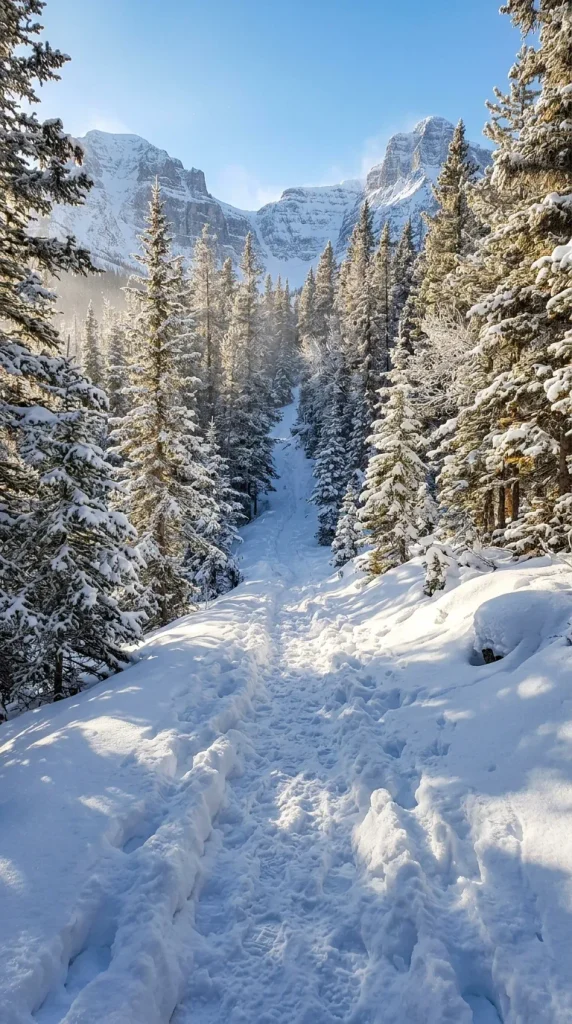
Winter hiking can be incredible.
It can also be much more demanding than summer hiking.
A trail that looks easy on a summer map may become:
- Snow-covered
- Icy
- Difficult to follow
- Avalanche-prone
- Extremely cold
- Much slower to complete
Parks Canada warns that winter hazards include avalanches, disorientation, thin ice, hypothermia and frostbite.
Check trail reports before leaving.
If avalanche terrain is involved, check the current avalanche forecast and make sure you have the appropriate knowledge and equipment.
Do not follow a summer itinerary blindly.
Be Careful Around Frozen Lakes
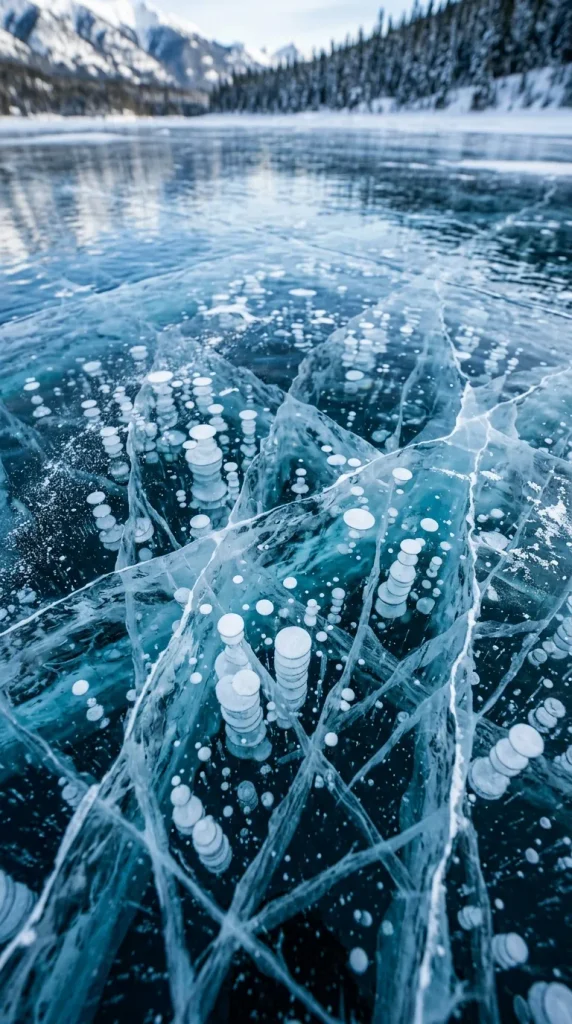
A frozen lake looks incredibly inviting for photography.
Do not assume it is safe to walk onto.
Parks Canada does not monitor natural ice surfaces for safety or mark potential hazards.
Ice thickness can vary because of:
- Springs
- Moving water
- Snow cover
- Temperature changes
- Currents
- Shoreline conditions
If a location has an officially maintained skating area, use the designated area.
Otherwise, admire the frozen landscape from a safe location.
Wildlife Still Matters in Winter
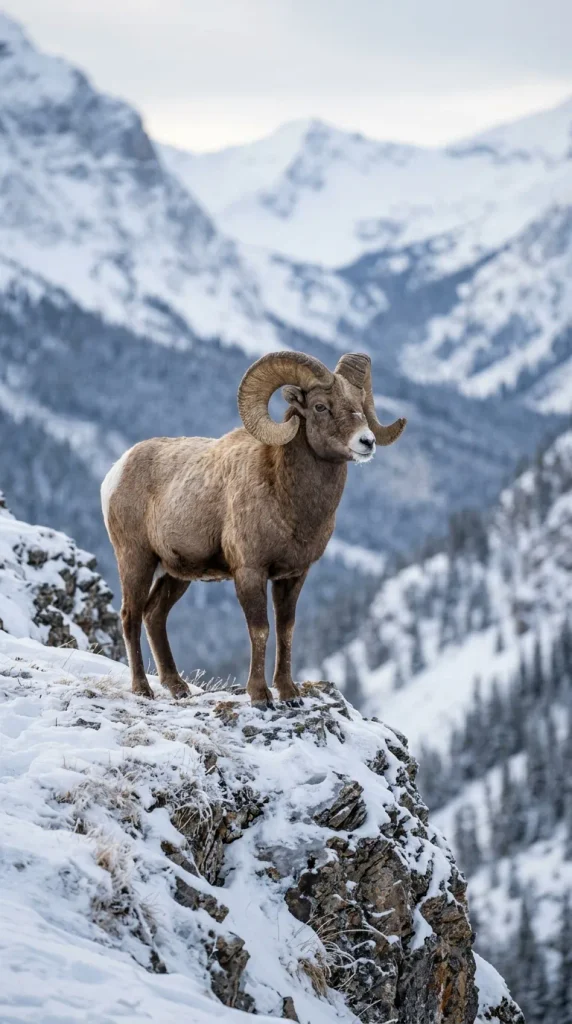
Winter does not mean wildlife disappears.
Bighorn sheep, mountain goats, coyotes, deer and other animals remain active.
Parks Canada specifically warns travelers to watch for wildlife along the Icefields Parkway and maintain a safe distance.
In Banff, winter wildlife can also include cougars, wolves and other species.
Never approach an animal for a photograph.
And do not stop your vehicle in an unsafe position simply because you spotted wildlife.
A beautiful photograph is not worth creating a traffic hazard.
How to Deal With Extreme Cold
Your first defense is good clothing.
Your second is knowing when to go inside.
Your third is paying attention to your body.
Watch for:
- Numbness
- Tingling
- Unusual skin color
- Severe shivering
- Confusion
- Loss of coordination
- Extreme fatigue
If you notice signs of frostbite or hypothermia, get somewhere warm and seek appropriate medical help.
Do not treat severe cold exposure as something you can simply walk off.
How to Plan Your Days
Winter daylight is limited.
That means you should avoid creating summer-style itineraries.
Instead of:
Banff → Lake Louise → Jasper → six hikes → dinner
try:
Morning scenic drive → one major outdoor activity → warm lunch → one short afternoon activity → dinner
Winter travel works better when you leave breathing room.
If you spend three hours snowshoeing in the morning, you may not want another three-hour outdoor activity afterward.
A Practical 5-Day Canadian Rockies Winter Itinerary
Day 1: Banff
Explore Banff townsite.
Take a relaxed walk and enjoy the mountain scenery.
Depending on conditions, add:
- Banff Upper Hot Springs
- Ice skating
- Gondola experience
- Short winter walk
Keep the first day relatively easy.
Day 2: Lake Louise
Head to Lake Louise.
Depending on current conditions, enjoy:
- Lake Louise
- Skating
- Snowshoeing
- Skiing
- Winter photography
Check road and parking conditions before leaving.
Day 3: Banff and Surroundings
Use this as a flexible weather day.
If conditions are excellent, explore another scenic area.
If snow is heavy, choose indoor attractions or a shorter outdoor activity.
Day 4: Icefields Parkway
Only attempt this drive if current road conditions, weather, vehicle equipment and your winter-driving experience make it appropriate.
Start early.
Carry emergency supplies.
Fill the fuel tank.
Stay on the main route.
Allow plenty of daylight.
Day 5: Jasper
If you have reached Jasper, explore around the town and accessible attractions.
Parks Canada highlights winter activities including snowshoeing, cross-country skiing and fat biking, along with scenic destinations such as Pyramid Island and Athabasca Falls when accessible.
Should You Drive From Banff to Jasper in Winter?
This is one of the most important decisions on a Canadian Rockies winter trip.
The route is spectacular.
It is also remote.
The Icefields Parkway has no cell coverage along much of the route, limited winter services, and conditions that can change quickly.
If you are an experienced winter driver with a properly equipped vehicle and good weather, it can be an incredible journey.
If you are inexperienced with snow and ice, consider using another transportation option or basing yourself in one area.
There is no prize for making a difficult drive simply because it appeared on your itinerary.
How Much Time Should You Allow for the Icefields Parkway?
Parks Canada suggests allowing around three to four hours for the basic drive, before adding sightseeing and stops.
In winter, give yourself additional time.
You may encounter:
- Snowplows
- Reduced visibility
- Compact snow
- Wildlife
- Road maintenance
- Slow traffic
- Temporary closures
And you will want to stop.
That is the entire point of driving the Parkway.
Common Winter Travel Mistakes
Mistake 1: Wearing regular sneakers
They become wet, cold and slippery.
Mistake 2: Packing one huge jacket
Layers are much more useful.
Mistake 3: Assuming AWD solves everything
It does not.
Mistake 4: Checking road conditions only once
Conditions can change rapidly.
Mistake 5: Driving after dark on remote mountain roads
Whenever possible, plan remote drives for daylight.
Mistake 6: Forgetting the windshield washer fluid
Snow, road spray and grime can quickly cover the windshield.
Mistake 7: Overpacking the itinerary
Winter slows everything down.
Mistake 8: Walking onto random frozen lakes
Natural ice is unpredictable.
Mistake 9: Ignoring avalanche conditions
If you are heading into backcountry terrain, this is a serious safety issue.
Mistake 10: Assuming every summer attraction is open
Seasonal closures are common.
Check before you go.
Canadian Rockies Winter Safety Checklist
Before leaving your accommodation:
- Check weather
- Check road conditions
- Check Parks Canada alerts
- Check trail conditions
- Check avalanche conditions if relevant
- Charge your phone
- Pack extra layers
- Pack water and food
- Wear proper footwear
- Tell someone your plans
Before starting a long drive:
- Fuel up
- Clear snow from the vehicle
- Check tires
- Check windshield washer fluid
- Pack emergency supplies
- Download offline maps
- Confirm your route is open
- Make sure you have enough daylight
Alberta specifically recommends checking your tires, battery, antifreeze, brakes, heater, defroster and windshield wipers before winter travel.
How to Make a Winter Rockies Trip More Comfortable
The easiest way to enjoy the Rockies in winter is to stop fighting the season.
Do not try to squeeze a dozen summer activities into a winter itinerary.
Instead:
Choose fewer places.
Stay longer.
Start early.
Take warming breaks.
Leave room for weather changes.
Keep one flexible day.
And build your trip around what conditions actually allow.
For additional cold-weather preparation, our guide to staying warm while traveling covers layering, footwear, cold-weather mistakes and how to recognize dangerous cold exposure.
Frequently Asked Questions
Is it worth visiting the Canadian Rockies in winter?
Yes. Winter offers snow-covered mountains, frozen landscapes, winter sports, quieter towns and a very different experience from summer.
Is it safe to drive in the Canadian Rockies in winter?
It can be, provided conditions are suitable and you have an appropriately equipped vehicle and experience with winter driving. Roads can become hazardous quickly, so check current conditions before every major drive.
Do I need winter tires?
For the Icefields Parkway, Parks Canada requires snow tires or chains from November 1 through March 31, and during other periods when the road is covered by snow or ice.
Other roads have their own requirements, so check current provincial and park guidance.
Can I drive from Banff to Jasper in winter?
Yes, when the Icefields Parkway is open and conditions are suitable. It is a remote mountain route with limited services and no cell coverage along the Parkway, so preparation is essential.
Is the Icefields Parkway open in winter?
It can be, but temporary closures can occur because of extreme weather, road conditions or avalanche control. Always check current Alberta 511 and Parks Canada information before leaving.
Is Banff colder than Jasper?
Both can be extremely cold in winter, and conditions vary by date and elevation. Rather than relying on a simple city-to-city comparison, check the current forecast for your exact destination.
What shoes should I wear in Banff during winter?
Wear insulated waterproof winter boots with good traction. Ice cleats can also be useful on packed-snow and icy trails.
Can I hike in the Canadian Rockies during winter?
Yes, but choose trails based on current conditions, your experience and avalanche risk. Some summer trails become significantly more difficult in winter.
Can I walk on frozen lakes?
Do not assume natural lake ice is safe. Parks Canada does not monitor natural ice surfaces for safety.
Final Thoughts
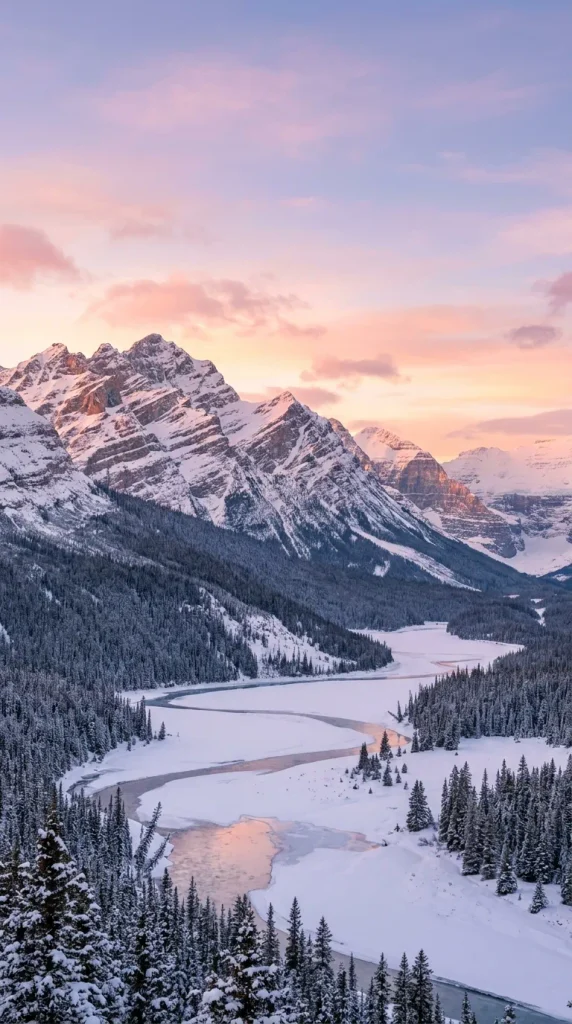
The Canadian Rockies in winter are not a destination you should approach casually.
But that does not mean they are off-limits.
With the right tires, warm clothing, emergency supplies, flexible plans and a healthy respect for mountain weather, winter can be one of the most rewarding times to visit.
The key is preparation. Check the roads. Check the weather. Dress in layers. Keep your vehicle equipped. Respect closures. Stay off unsafe ice.
Do not underestimate the mountains. And give yourself enough time to enjoy the scenery rather than racing through it. If you remember only one thing, make it this:
In the Canadian Rockies, winter is part of the destination, not an inconvenience between attractions. Once you plan around it, the snow-covered peaks, frozen lakes, quiet forests and winding mountain roads become the reason you came.