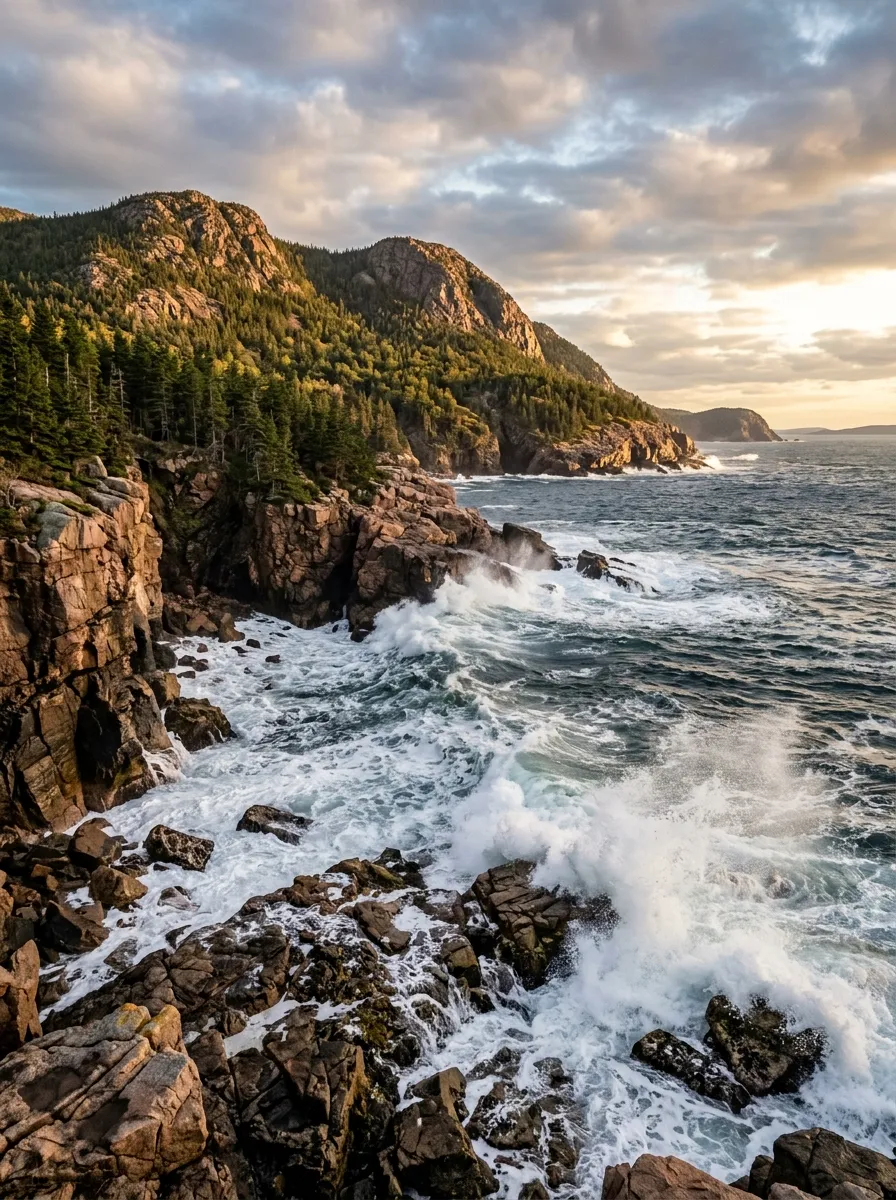
Acadia National Park: The Complete 2026–27 Guide to Maine’s Granite Peaks
Acadia does something almost no other national park in America manages: it puts granite mountains directly against the Atlantic Ocean, with barely any buildup in between. Cadillac Mountain’s pink stone summit, formed roughly 420 million years ago and later sanded into smooth domes by the last ice age, rises straight from Mount Desert Island’s rocky shoreline — and from mid-October through early March, it’s the first place in the continental United States to catch the sunrise each morning. That single geological fact has launched thousands of pre-dawn pilgrimages up the mountain, and it’s a reasonable summary of what makes Acadia worth the trip: nowhere else on the East Coast stacks granite peaks, crashing surf and old-growth forest into a park you can genuinely cover in two or three focused days.
This guide covers Acadia National Park for the rest of 2026 and into 2027, and a few genuinely important logistics have changed recently that older guides don’t reflect. Cadillac Summit Road now requires its own separate timed-entry reservation on top of the standard park entrance fee, a brand-new Gateway Center opened on the mainland in May 2026 to ease parking pressure, and the park continues to see record crowds that make advance planning less optional than it used to be. Get that planning right, and Acadia’s compact 49,075 acres deliver one of the most efficiently rewarding national park trips in the country — hike a granite summit at sunrise, eat lobster in Bar Harbor by lunch, and paddle a glacial pond before dinner, all without the multi-hour drives that define most Western parks.
Whether you’re chasing Cadillac’s famous first sunrise, deciding between the white-knuckle iron rungs of the Precipice Trail and its quieter neighbor Gorham Mountain, or simply trying to understand the new reservation system before you show up at the trailhead confused, this guide breaks down what’s actually worth your time, current 2026 fees and reservation windows, and how to build a realistic Acadia itinerary around the park’s granite peaks and rocky coast.
Recommended Travel Items for Your Trip
AT A GLANCE: ACADIA NATIONAL PARK
- Best overall time to visit: Mid-September through early October for cooler weather, thinner crowds and the start of fall color
- Signature landmark: Cadillac Mountain, the highest point on the US Atlantic coast at 1,530 feet
- Best easy hike: Jordan Pond Path, a flat 3.3-mile loop with views of the Bubbles
- Best moderate alternative to the crowds: Gorham Mountain, similar views to the Beehive with a fraction of the people
- 2026 entrance fee: $35 per vehicle (7-day pass), $80 for the America the Beautiful annual pass
- New in 2026: Acadia Gateway Center in Trenton, opened May 20, 2026, with 300 free parking spaces
- Ideal trip length: 2–3 days for the core park; a week to add Schoodic Peninsula and Bar Harbor properly
Acadia at a Glance: Where to Focus Your Time
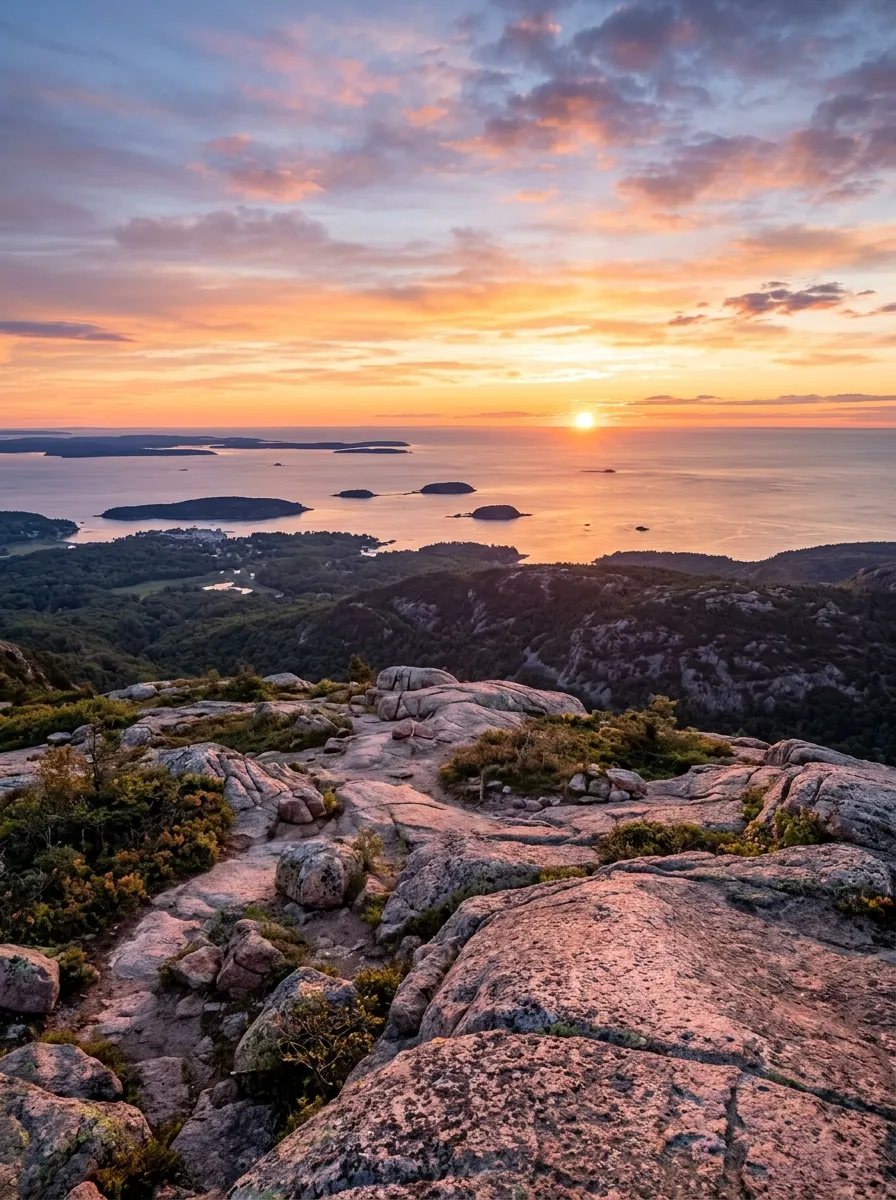
Mount Desert Island splits into a busier eastern half and a quieter western side, with the mainland Schoodic Peninsula and remote Isle au Haut rounding out the park’s full footprint.
| Area | Best For | Best Upcoming Time | Suggested Stay | Main Consideration |
| East side (Bar Harbor, Cadillac, Sand Beach) | The classic Acadia highlights, dining, lodging | Year-round, best May–Oct | 2–3 nights | The busiest, most reservation-dependent part of the park |
| West side (“Quiet Side”) | Fewer crowds, Somes Sound views, quieter hikes | May–Oct | 1–2 nights | Fewer restaurants and services |
| Schoodic Peninsula | Rugged mainland coast, minimal crowds | May–Oct | 1 night | Reached by ferry or a longer drive around Frenchman Bay |
| Isle au Haut | True backcountry solitude | Jun–Sep | Not a day-trip destination | Limited mailboat access, no real visitor infrastructure |
Why Acadia Is Unlike Any Other National Park
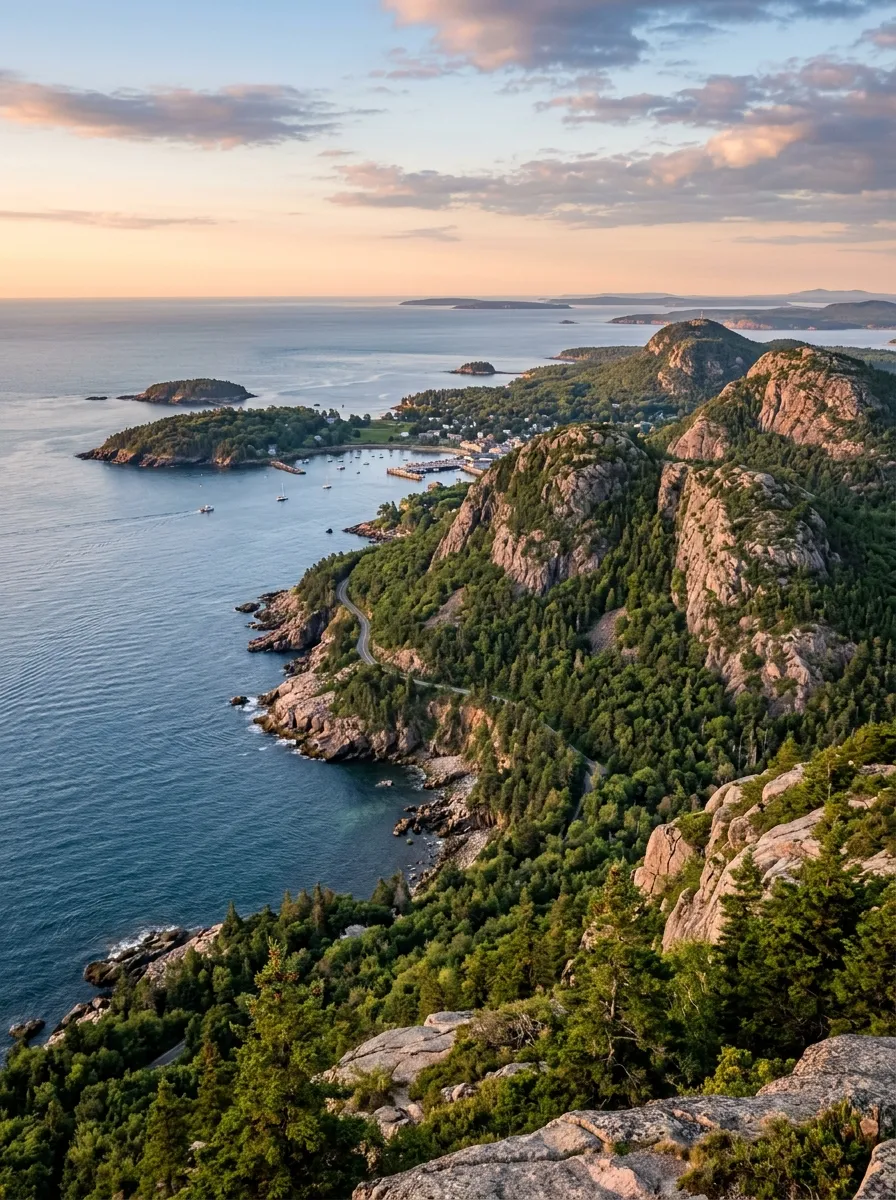
Acadia’s defining feature is its compactness relative to what it packs in. Unlike sprawling Western parks where major viewpoints sit hours apart, Acadia’s granite summits, carriage roads and coastline are close enough together that a single day can genuinely include a mountain sunrise, a mid-morning hike, lobster rolls in Bar Harbor by lunch, and a pond-side walk before dinner. That density, paired with the collision of granite and ocean found almost nowhere else on the East Coast, is why Acadia consistently ranks among the most-visited national parks in the country despite being one of the smallest.
When to Visit Acadia: Seasons, Weather and Foliage
Late 2026: What’s Left on the Season
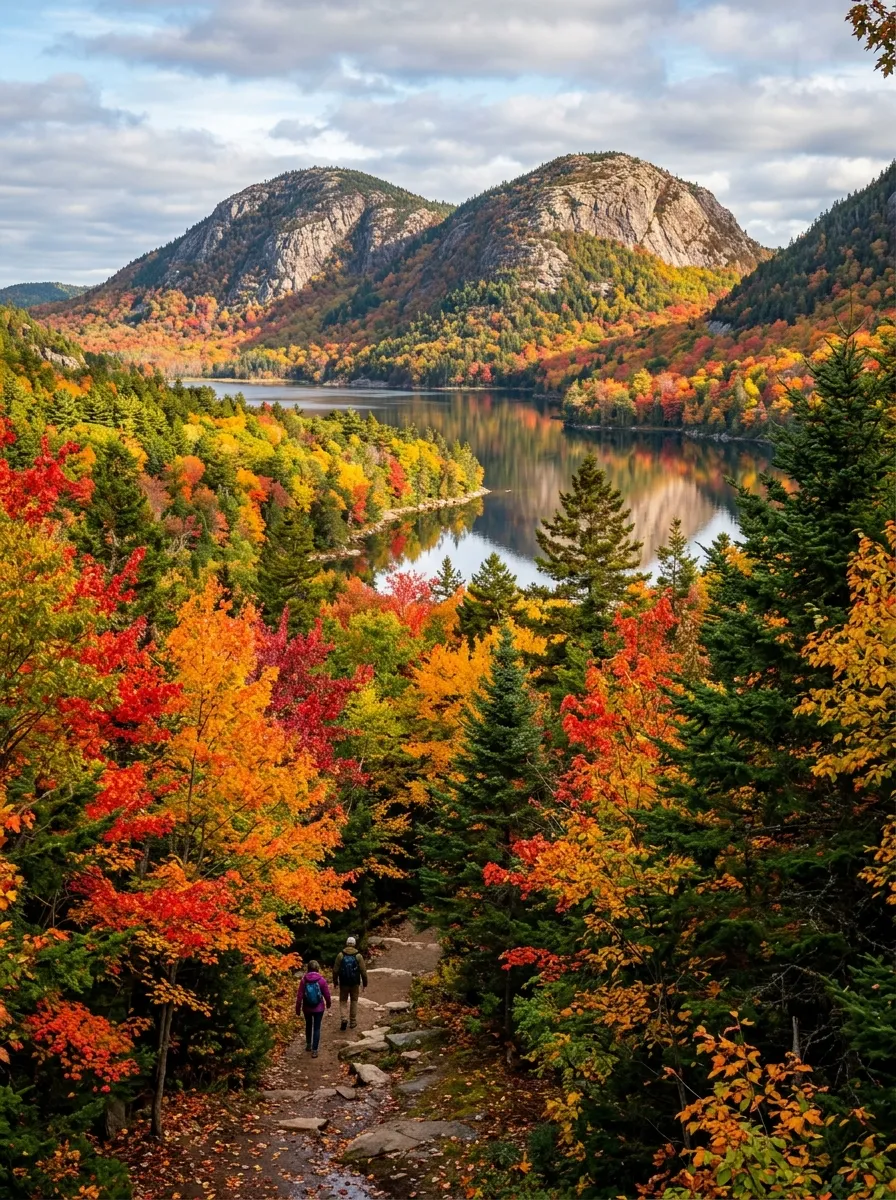
September remains widely considered the best month to visit Acadia, and if you’re planning a trip for the remainder of 2026, it’s genuinely worth prioritizing. Crowds drop sharply after Labor Day, temperatures settle into a comfortable mid-60s°F, summer’s coastal fog eases off, and parking at popular spots like Jordan Pond becomes realistic without a dawn arrival. Peak fall foliage on Mount Desert Island typically lands in the first two weeks of October, though timing shifts year to year with the weather — if your dates are flexible, the second week of October is generally the safer bet than the first. By mid-November, the Park Loop Road and most facilities close for the season, and the Cadillac Summit Road itself closes to vehicles.
2027 Planning: Reservation Windows
Based on the park’s consistent recent pattern, expect the 2027 Cadillac Summit Road reservation system to run on a similar late-May-through-late-October window, and the Park Loop Road’s seasonal one-way traffic pattern to resume each spring once the road reopens. Confirm exact 2027 dates on the National Park Service’s official Acadia site and recreation.gov as the season approaches, since reservation windows are typically finalized only a few months ahead.
Spring and Early Summer
Spring arrives late to Maine — expect mud, lingering snow and some facilities still closed into May. Early June offers a genuine sweet spot: wildflowers, light crowds, and most of the park’s infrastructure open, though the Island Explorer shuttle and Jordan Pond House may not yet be running full seasonal hours.
Winter
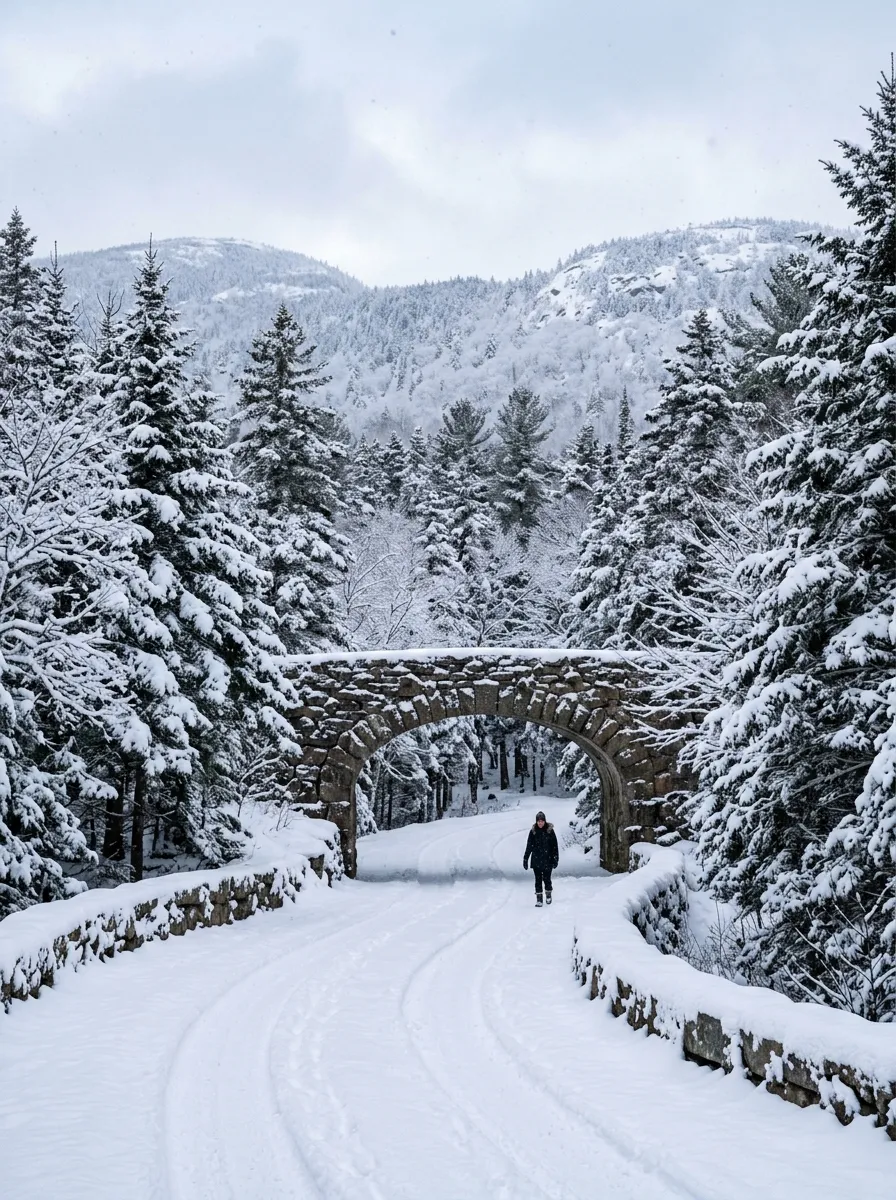
From November through March, most park services close and the Cadillac Summit Road itself shuts to vehicle traffic, but the carriage roads transform into a quiet cross-country skiing and snowshoeing network for visitors willing to trade convenience for genuine solitude.
WEATHER NOTE
Coastal Maine weather shifts fast enough to catch first-time visitors off guard — a foggy, 55°F morning can flip to sunny, 75°F afternoon within a few hours. A packable rain shell and a fleece mid-layer are worth carrying even on a forecast-clear summer day, especially for anyone spending real time on the exposed carriage roads or granite ridgelines.
2026 Entrance Fees and the New Reservation System
Acadia’s 2026 entrance fee runs $35 per vehicle (valid seven days), $30 per motorcycle, or 20perpersonforwalk-insandcyclists;theAmericatheBeautifulannualpass(80) covers entrance here and at every other national park. The park operates entirely cashless, so bring a card.
The single most important 2026 planning fact, separate from the base entrance fee, is that driving up Cadillac Summit Road requires its own timed-entry vehicle reservation from May 20 through October 25, 2026, booked in advance through recreation.gov for a small additional fee (around $6). Reservations grant roughly a 30-minute arrival window (longer for sunrise and sunset slots), after which you’re free to stay as long as you like. You do not need a reservation if you hike, bike or take a taxi to the summit instead of driving — a genuinely useful workaround for anyone who can’t secure a sunrise slot.
BOOKING TIP
Sunrise reservations for Cadillac Summit Road sell out weeks in advance during peak season — if watching the first sunrise in the continental US from the summit is a priority, book the moment the reservation window opens rather than waiting until closer to your trip.
To ease the park’s genuinely record-breaking crowds, the new Acadia Gateway Center opened in Trenton on May 20, 2026, just off the island on Route 3, offering 300 free parking spaces on the mainland before the causeway onto Mount Desert Island — a useful staging point worth knowing about if island parking looks tight on your travel dates.
Cadillac Mountain
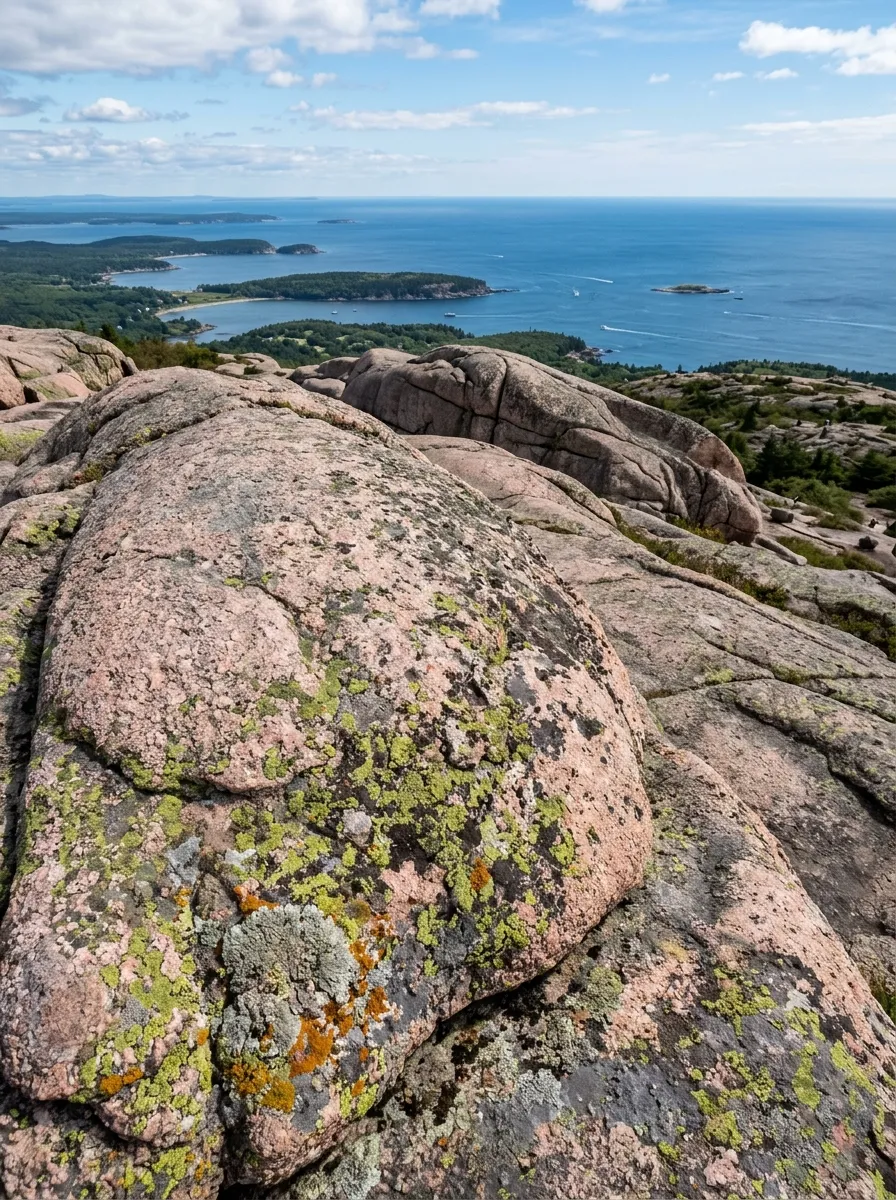
At 1,530 feet, Cadillac Mountain is the highest point on the entire US Atlantic coast, and it’s the park’s undisputed centerpiece. The pink granite summit — geologically around 420 million years old, later smoothed into its current dome shape by glaciers during the last ice age that ended roughly 18,000 years ago — offers 360-degree views across Frenchman Bay, Bar Harbor and the surrounding mountains and ocean. The paved, wheelchair-accessible Cadillac Summit Loop Trail circles the peak itself, while hikers looking for a more active route can take the Cadillac North Ridge Trail (a 4.4-mile round trip climbing through pine forest before breaking onto open granite) or the steeper, more technical South Ridge Trail. Whichever route you choose, take care to stay off roped-off sections — the granite’s exposed lichen and fragile alpine vegetation are easily damaged and slow to recover.
Park Loop Road
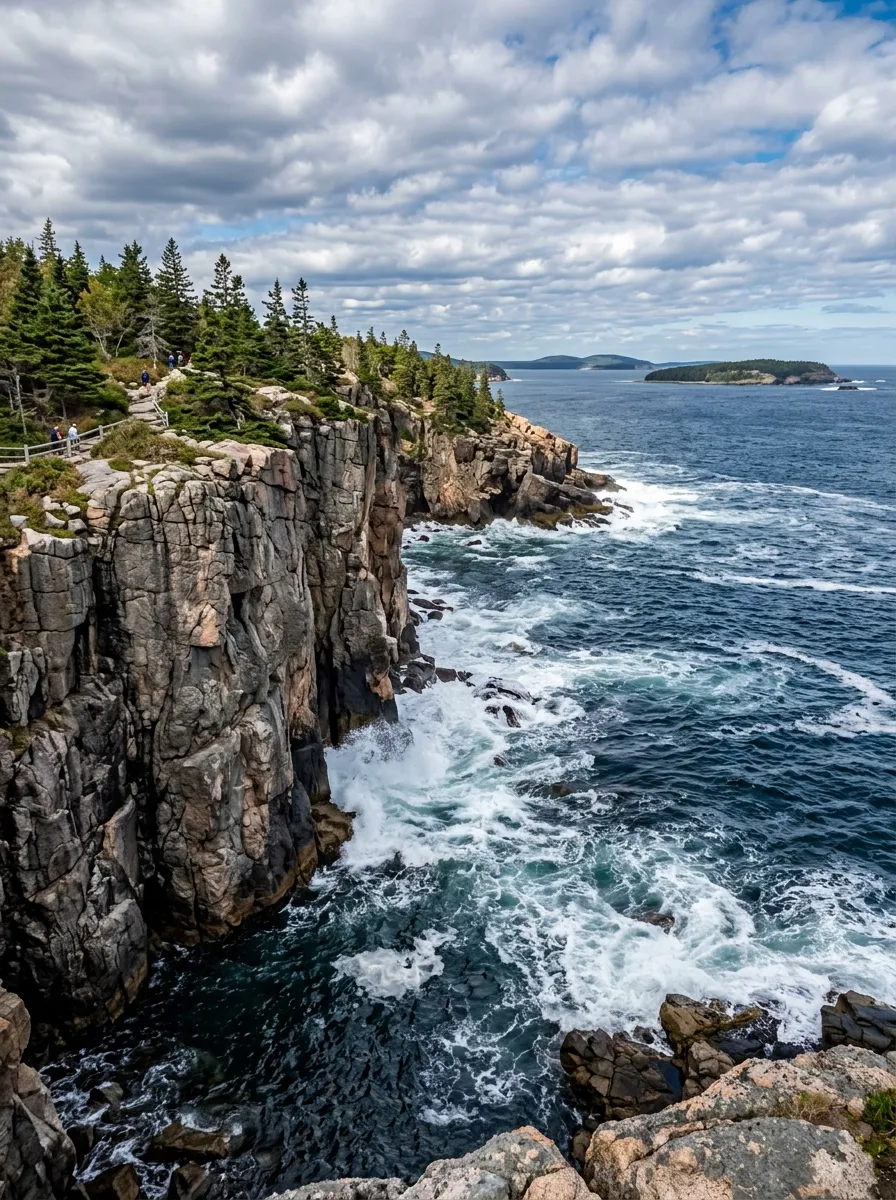
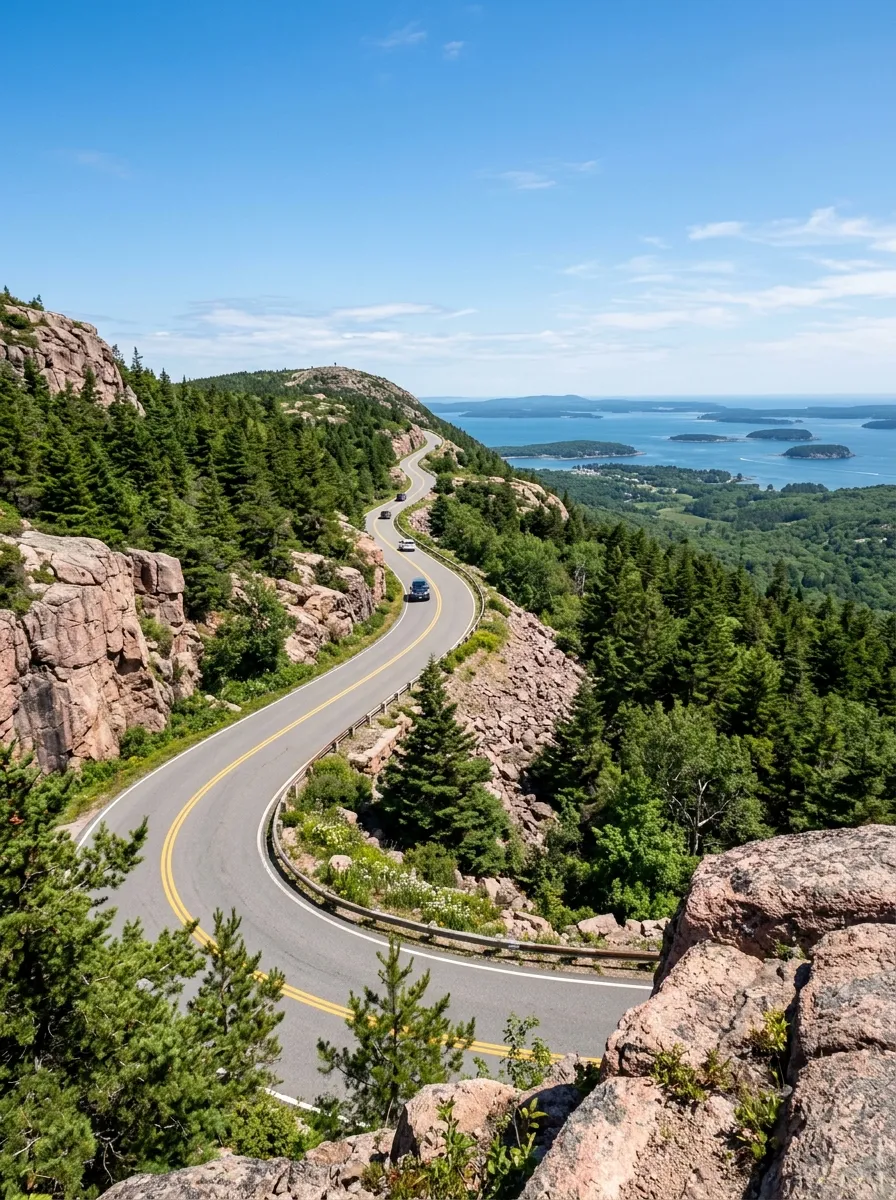
The 27-mile Park Loop Road is the spine of any Acadia visit, accessing nearly every major eastern-side highlight in a single continuous drive: Sand Beach (the only sand beach on Mount Desert Island, cold but swimmable), Thunder Hole (best experienced one to two hours before high tide, when waves boom into a narrow granite inlet), Otter Cliff (dramatic 60-foot granite cliffs dropping straight into the Atlantic), and Jordan Pond. Note that the section of road covering the Precipice Trail, Sand Beach, the Beehive and Thunder Hole runs one-way clockwise only during the summer season, while the western stretch near Jordan Pond House and Cadillac Summit Road remains two-way.
Jordan Pond and Jordan Pond House
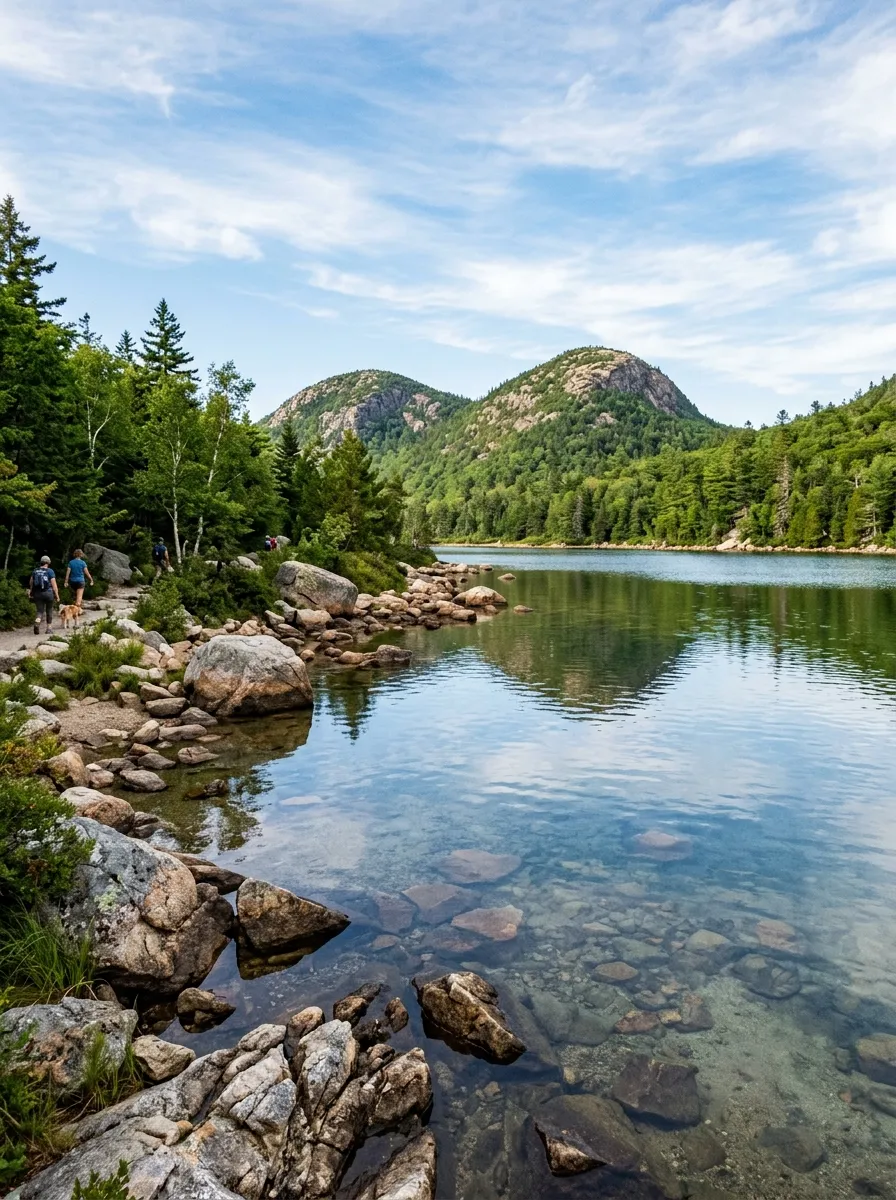
Jordan Pond is Acadia’s postcard moment, and it earns the reputation — a glacier-carved, famously clear pond reaching depths of 150 feet, framed by the twin rounded summits known as the Bubbles. The 3.3-mile Jordan Pond Path loops the shoreline on mostly flat terrain, with a wooden boardwalk crossing the wetter western sections (the eastern shore involves some rockier scrambling, making the full loop less suited to strollers). At the pond’s south end, Jordan Pond House has served visitors since 1870, and the tradition of afternoon popovers with butter and jam continues today — a genuine Acadia institution, though reservations aren’t accepted and a 20 to 40-minute wait at peak times is normal. Arrive before noon if you want a realistic shot at lunch without a long line.
The Precipice and Beehive Trails
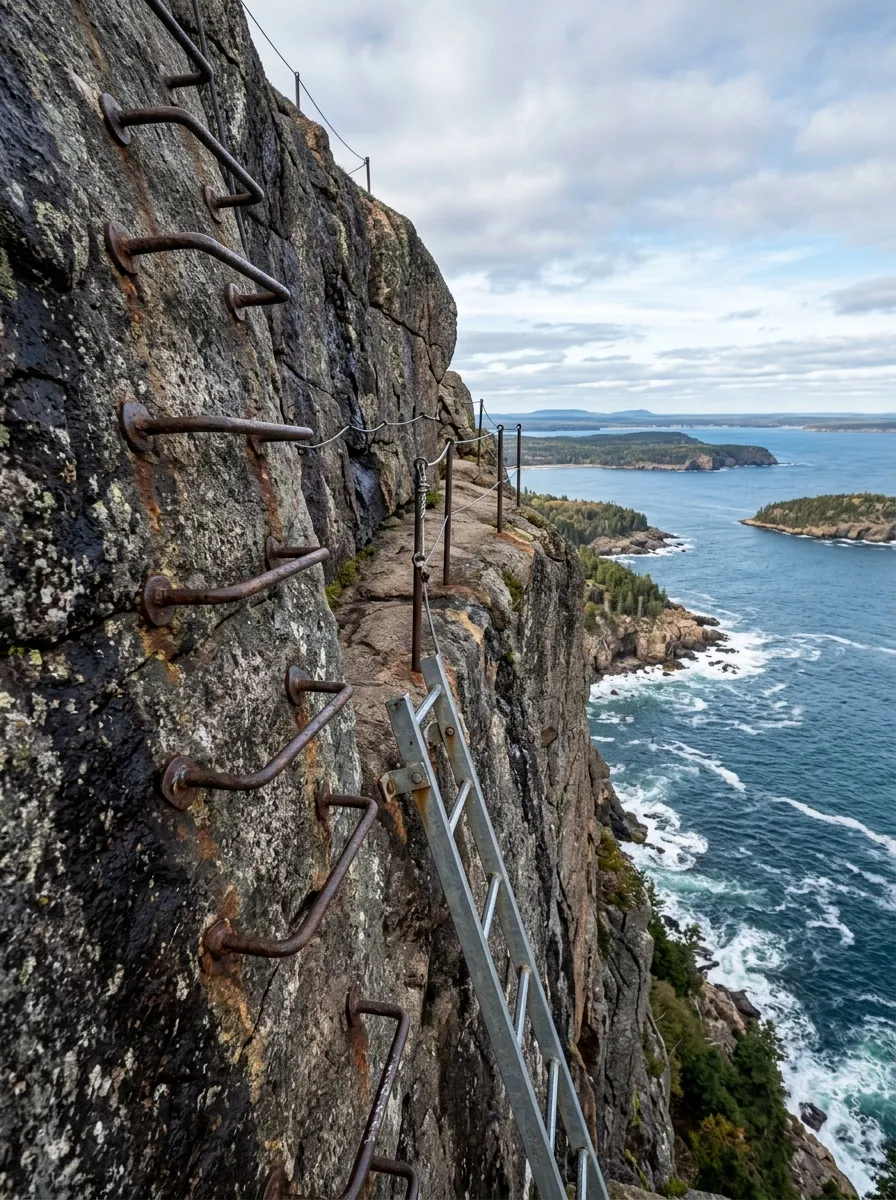
For hikers wanting the park’s most intense experience, the Precipice and Beehive trails both involve genuinely serious iron-rung ladder climbs bolted directly into exposed granite cliff faces, with sheer drops that make them unsuitable for anyone uneasy with heights or hiking in wet conditions. The Beehive (about 1.4 to 1.6 miles round trip) climbs to a 520-foot granite dome with sweeping views across Frenchman Bay; the Precipice is its bigger, more serious sibling, with more rungs and more exposure. Both close seasonally — most years from spring into early August — to protect nesting peregrine falcons, a closure that catches unprepared visitors off guard every single year, so check the NPS website before driving to either trailhead. For a calmer version of the same iron-rung experience when the Precipice is closed, the Beehive offers a similar (if still serious) climb; for an easier ladder-trail alternative to both, the Bowl Trail loops around a mountain pond near the Beehive trailhead without any cliff sections at all.
If Acadia’s mix of adrenaline-inducing trails and genuine safety considerations has you thinking about travel risk more broadly, it’s worth having a solid grasp of the more common ways trips go sideways — this complete guide to travel mistakes and scams rounds up the pitfalls worth knowing before any trip, national park or otherwise.
Gorham Mountain: The Trail Everyone Walks Past
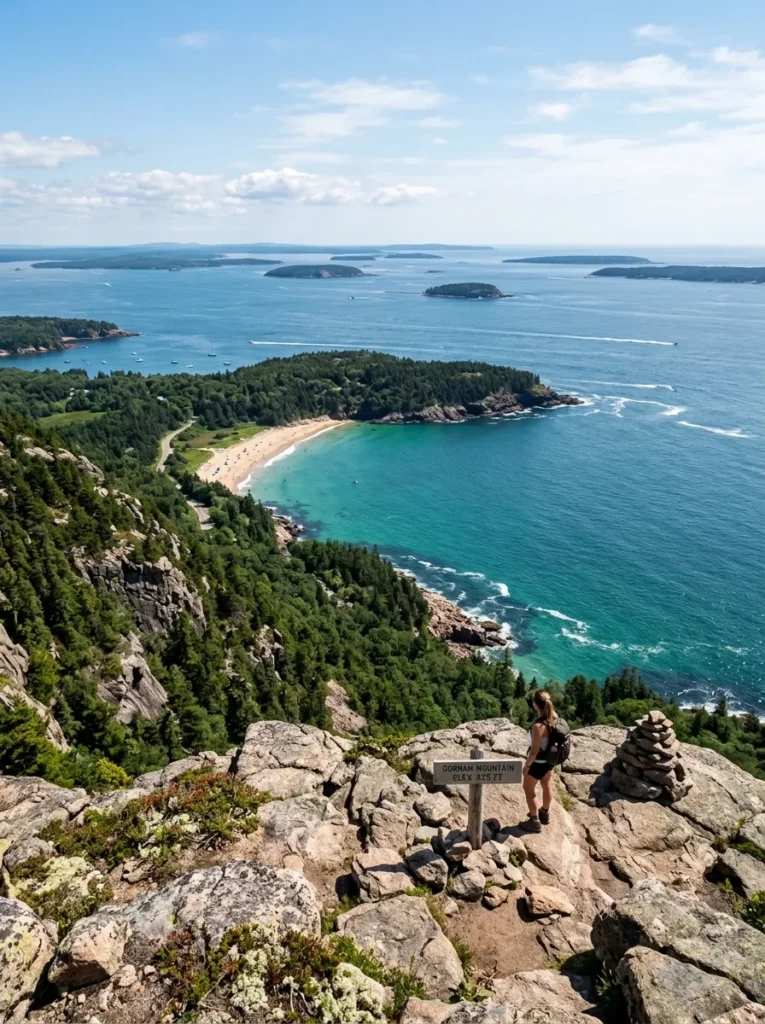
Sitting directly next to the Beehive trailhead, Gorham Mountain is the hike most first-timers skip entirely because they’re focused on the more famous iron-rung climbs nearby — which is exactly why it’s worth prioritizing. Gorham delivers better views of Sand Beach and the coastline than the Beehive, with a fraction of the crowd and considerably less white-knuckle exposure, making it one of the best moderate hikes on the entire island for visitors who want a real payoff without the ladder-climbing commitment.
Sand Beach, Thunder Hole and Otter Cliff
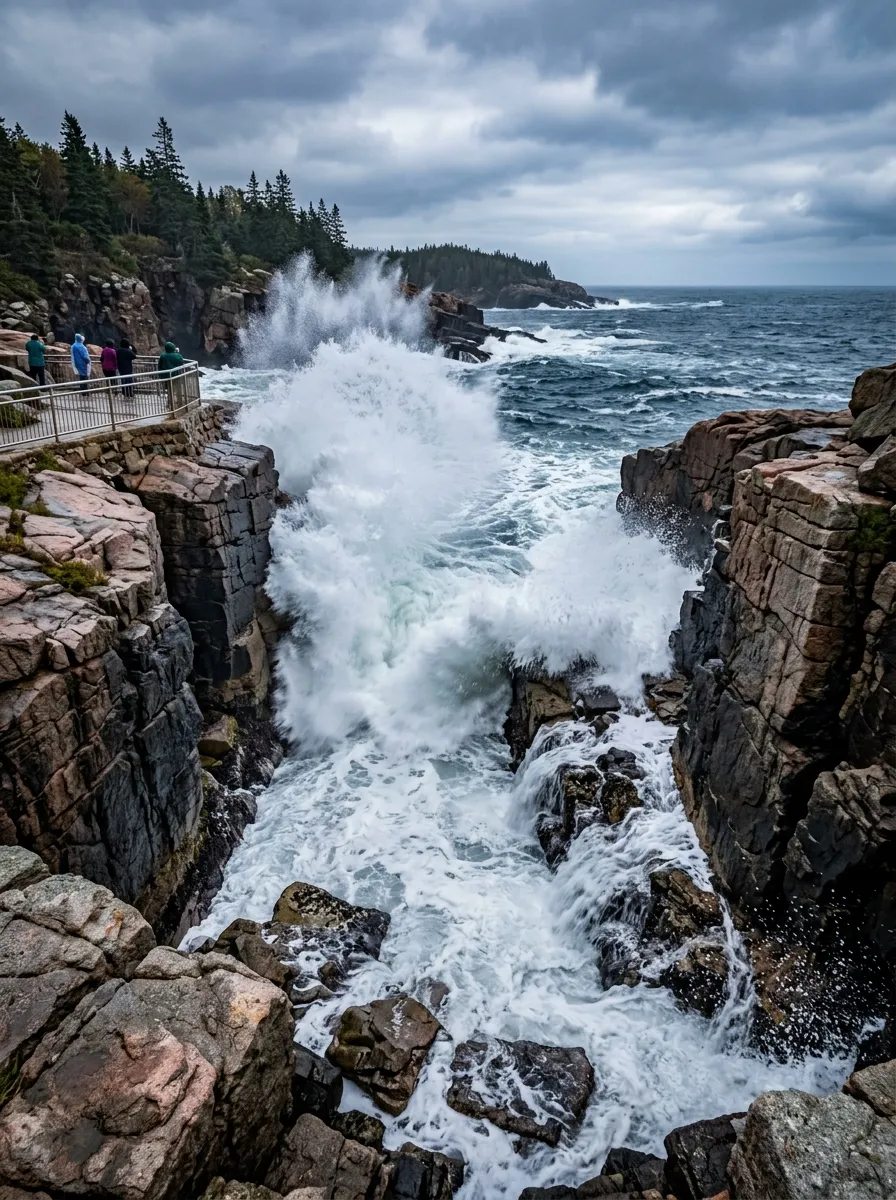
Sand Beach delivers exactly what its name promises — genuinely cold Atlantic water, but swimmable in summer, and the only true sand beach on Mount Desert Island. Thunder Hole, a short drive south along the Park Loop Road, is a narrow granite inlet where incoming waves compress and boom with genuine force, best timed for one to two hours before high tide for the most dramatic effect. Otter Cliff, just beyond, offers some of the most photographed granite cliff scenery in the park, dropping 60 feet straight into the ocean. All three sit close enough together on the Park Loop Road to cover in a single, focused morning.
SAFETY WARNING
Waves at Thunder Hole and Otter Cliff have swept visitors off the rocks in past years — stay behind railings and posted barriers regardless of how calm the water looks, since swell and wave force here can change quickly and without much warning.
Carriage Roads and Stone Bridges
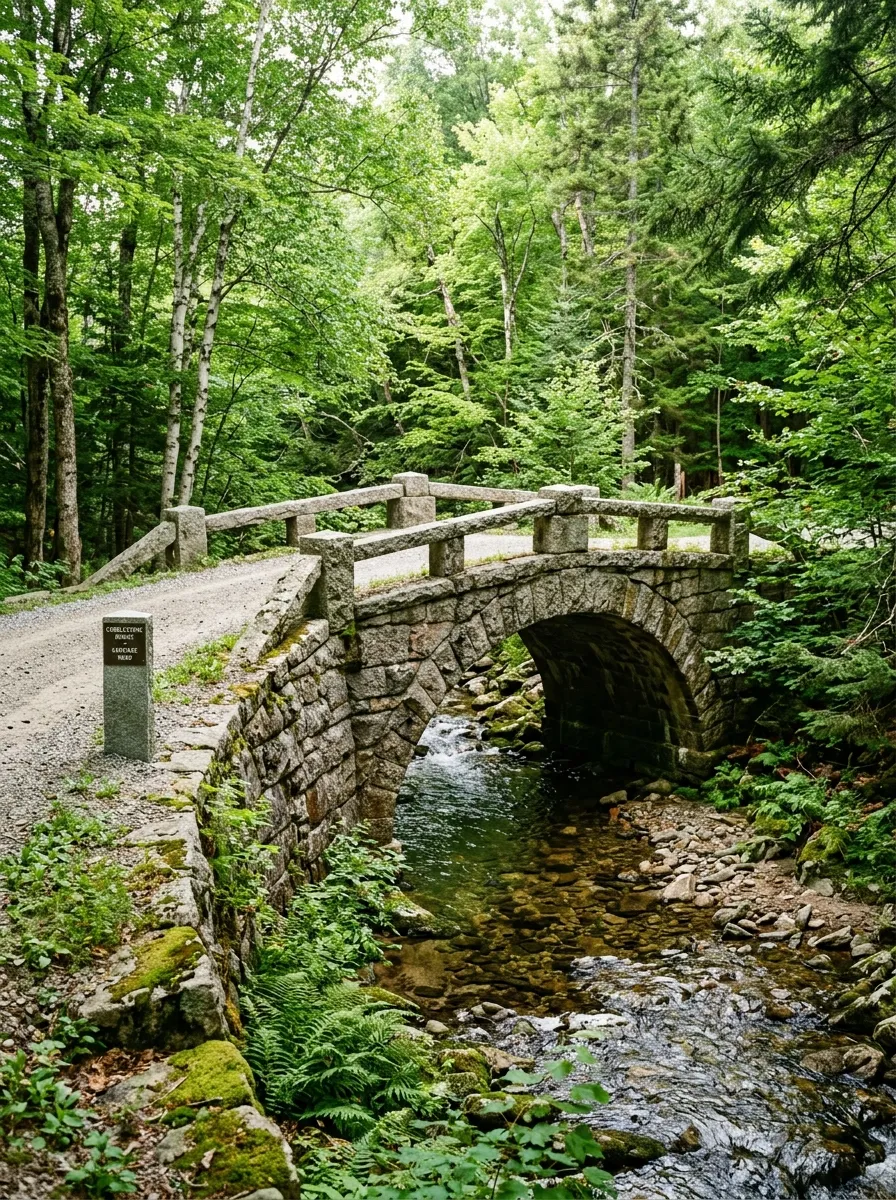
Between 1913 and 1940, John D. Rockefeller Jr. financed and personally directed the construction of 45 miles of broken-stone carriage roads through Acadia’s interior, complete with 17 hand-cut granite stone bridges, all built to keep foot, bike and horse traffic separate from motorized vehicles entirely — a rule that still holds today outside one short stretch near Jordan Pond. Grades never exceed 11%, making the network genuinely accessible for walking, biking, horseback riding and, in winter, cross-country skiing. It’s one of the best ways to experience Acadia’s quieter interior forest away from the Park Loop Road’s bigger crowds.
Bar Harbor
Acadia’s gateway town, Bar Harbor sits just outside the park’s eastern entrance and functions as the practical base for most visitors — restaurants, lodging and the departure point for boat tours and the Island Explorer shuttle. A lobster roll lunch in town remains one of the classic Acadia rituals, easily paired with a morning hike and an afternoon back on the Park Loop Road.
Schoodic Peninsula
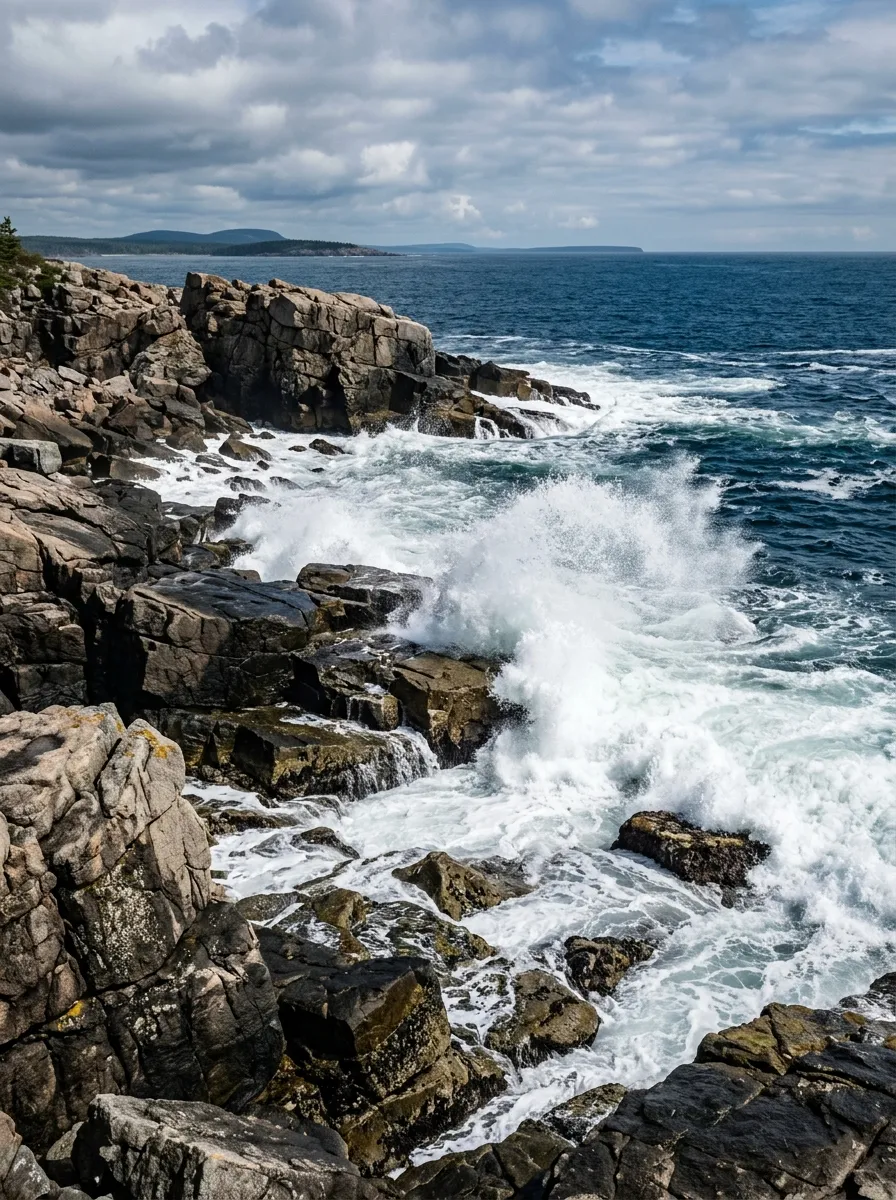
The only part of Acadia located on the mainland rather than Mount Desert Island, Schoodic Peninsula offers rugged granite coastline and dramatically fewer crowds than the island’s eastern side, reachable by a seasonal ferry from Bar Harbor or a longer drive around Frenchman Bay. The 6-mile Schoodic Loop Road delivers crashing surf views at Schoodic Point — a flat granite headland — without anything close to the parking pressure found at Sand Beach or Jordan Pond. The Island Explorer shuttle also runs a Schoodic route connecting to Winter Harbor, a useful car-free option for reaching the peninsula.
Acadia’s Granite Story
It’s worth pausing on the geology that makes Acadia’s landscape so distinctive. The park’s signature pink Cadillac granite formed roughly 420 million years ago from cooling magma deep underground, later exposed by millions of years of erosion. The last ice age, ending around 18,000 years ago, then sanded those exposed granite summits into their current smooth, rounded domes, carved the valleys between them, and scattered rounded cobblestones across the park’s beaches — meaning a walk across Cadillac’s summit is, quite literally, a walk across 420 million years of Earth’s history compressed into a single hike.
Granite landscapes shaped by deep geological time have a particular pull for travelers well beyond the coast of Maine — if that fascination extends to human history layered over equally old landscapes, this ultimate guide to exploring Poland covers a very different kind of deep-history destination worth bookmarking for a future trip.
Stargazing and Fall Hawk Watching
Acadia’s relative distance from major light pollution makes it one of the better stargazing destinations on the East Coast, with September and October offering the darkest skies and the best Milky Way visibility; Seawall Picnic Area, the Sand Beach parking lot after gates close, and the Cadillac Mountain summit itself all rank among the best viewing spots. Fall also transforms the park into one of the top hawk-watching locations in the northeast, with the shore path and Cadillac’s ridgeline drawing migrating raptors that reward anyone carrying binoculars.
Common Mistakes and Safety Considerations
Beyond the Cadillac Summit Road reservation requirement and the Precipice and Beehive’s seasonal falcon closures — both covered above — a few other planning mistakes catch visitors off guard consistently: underestimating how quickly Jordan Pond’s small parking lot fills (arrive before 9 a.m. in peak season), attempting the iron-rung trails in wet conditions (both close functionally, if not officially, whenever the granite and metal rungs are damp), and assuming Bar Harbor’s summer crowds match its off-season infrastructure, which they don’t. Given how compressed the park’s most popular stops are onto a single road system, a little advance planning goes further here than in almost any other national park.
Where to Stay and Camp in Acadia
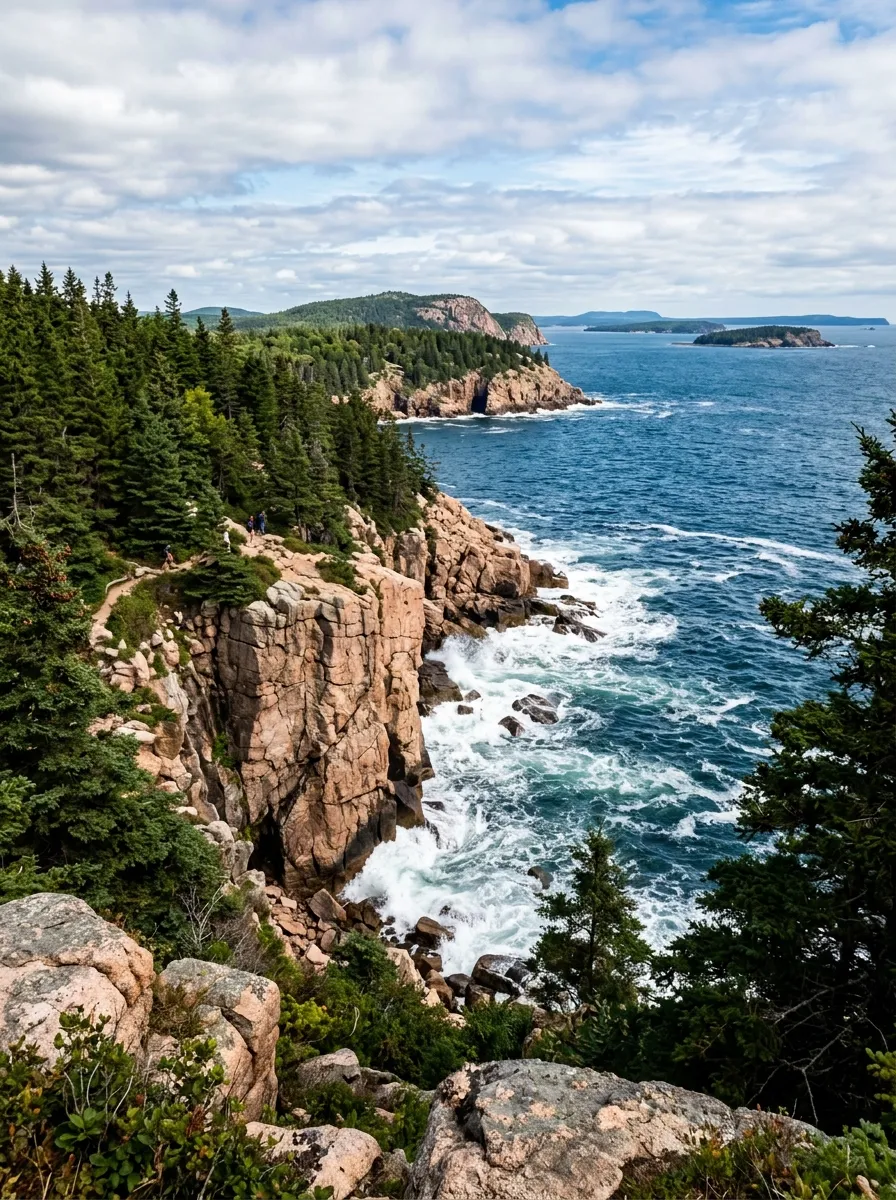
There are no hotels inside the park itself, but camping options are strong: the National Park Service runs campgrounds at Blackwoods and Seawall on Mount Desert Island and at Schoodic Woods on the mainland, all reservable and filling fast for summer and fall — book the moment your travel dates open. For non-camping visitors, Bar Harbor holds the widest range of hotels, inns and restaurants just outside the park’s eastern entrance, while the quieter western “Quiet Side” towns offer a calmer, less crowded base for visitors prioritizing solitude over proximity to Bar Harbor’s restaurant scene.
How to Get to Acadia and Around the Park
By car: The most common way to reach Mount Desert Island, typically via Route 3 through Ellsworth and Trenton; the new Acadia Gateway Center in Trenton offers 300 free mainland parking spaces as of May 2026 if island parking looks tight.
By air: Bangor International Airport (BGR), about 50 miles away, is the nearest larger airport with broader connections; a smaller regional airport in Bar Harbor itself offers limited seasonal service.
By shuttle: The free, propane-powered Island Explorer shuttle connects Bar Harbor, the park’s major trailheads and beaches, and the Schoodic Peninsula (via the seasonal ferry connection) during the warmer months — a genuinely strong option for visitors wanting to skip parking headaches at the park’s most popular stops. Note it doesn’t serve the Cadillac Mountain summit itself.
Within the park: Biking the carriage roads, driving the Park Loop Road, and walking between closely clustered stops all work well given Acadia’s compact footprint.
How Many Days Do You Need in Acadia?
Two days covers Acadia’s core highlights well — Cadillac Mountain, the Park Loop Road’s eastern stops, Jordan Pond, and one significant hike. Three full days allows a more comfortable pace: one day for the Park Loop Road’s coastal stops, one for Cadillac Mountain and the carriage roads, and one for Jordan Pond, the Bubbles, or a more serious trail like the Precipice or Beehive. A full week opens up the quieter Schoodic Peninsula, a boat trip to one of the outer islands, and considerably more time in Bar Harbor between hikes.
Three-Day Acadia Itinerary
Day 1: Park Loop Road eastern loop — Sand Beach, Thunder Hole, Otter Cliff, Gorham Mountain hike, lobster dinner in Bar Harbor.
Day 2: Cadillac Mountain at sunrise (reservation required in season) or sunset, carriage road bike ride through the interior, Jordan Pond House popovers.
Day 3: Precipice or Beehive Trail if conditions and closures allow (or the gentler Bowl Trail alternative), afternoon on the quieter western “Quiet Side” or a Schoodic Peninsula excursion.
Budget Travel in Acadia
Acadia is genuinely one of the more affordable national parks to visit relative to its scale of experience — the $35 vehicle entrance fee covers seven days and an entire carload of passengers, the free Island Explorer shuttle cuts transportation costs significantly during the season it runs, and many of the park’s best experiences (the carriage roads, most hiking trails, the Cadillac Summit Loop Trail itself) cost nothing beyond the base entrance fee.
Family Travel in Acadia
The flat, boardwalk-supported sections of the Jordan Pond Path, the paved Cadillac Summit Loop Trail, and the easy Ocean Path along the coast between Sand Beach and Otter Point all work well for families with younger kids, while the Precipice and Beehive’s serious iron-rung exposure make them unsuitable for young children regardless of hiking experience.
If Acadia is one stop on a bigger family travel year, it’s worth seeing how it stacks up against other strong options — this ultimate guide to the best family vacation spots for 2026 is a useful reference for planning the rest of your family’s travel calendar.
A Note From Someone Who Covers Trips Like This for a Living
Acadia’s blend of serious logistics (reservation systems, seasonal closures, tide-dependent viewpoints) and genuinely rewarding payoff is the kind of trip that benefits from planning advice grounded in real, current experience rather than outdated blog posts.
For that same kind of grounded, currently-informed travel perspective on planning trips well beyond Acadia, this travel expert interview with full-time travel writer Sophie Lane offers genuinely useful insight into how experienced travelers actually plan and adapt trips in real time.
Considering a Completely Different Kind of Trip Next
Acadia’s granite-and-ocean landscape is a genuinely specific kind of travel experience, and it’s worth knowing what sits at the opposite end of the spectrum for whenever this trip wraps up.
If Acadia’s quiet coastal rhythm has you craving something with entirely different colors, sounds and pace for a future trip, this ultimate guide to experiencing India’s rich culture covers a destination about as far removed from Maine’s granite coastline as travel gets.
Acadia Packing Checklist
- [ ] A packable rain shell, since coastal Maine weather shifts quickly regardless of forecast
- [ ] A fleece or warm mid-layer, even in summer, for the carriage roads and Cadillac’s exposed summit
- [ ] Sturdy hiking shoes with real grip for granite trails
- [ ] Trekking poles if attempting the Precipice or Beehive, particularly for the descent
- [ ] Binoculars for fall hawk watching and general coastal wildlife viewing
- [ ] A printed or downloaded Cadillac Summit Road reservation confirmation, given spotty cell service on the island
- [ ] Cash-free payment method, since the park operates entirely cashless
- [ ] A reusable water bottle for hiking and carriage-road days
Frequently Asked Questions About Visiting Acadia National Park
What is the best time of year to visit Acadia?
Mid-September through early October offers the best combination of cooler weather, thinner crowds and the start of fall foliage.
How many days do I need in Acadia?
Two days covers the core highlights; three days allows a more relaxed pace, and a full week opens up the Schoodic Peninsula and quieter western side properly.
Do I need a reservation to drive up Cadillac Mountain?
Yes, from May 20 through October 25, 2026, a separate timed-entry vehicle reservation is required through recreation.gov, in addition to the standard park entrance fee. Hiking, biking or taking a taxi to the summit doesn’t require this reservation.
What is Acadia’s 2026 entrance fee?
$35 per vehicle for a seven-day pass, $30 per motorcycle, or $20 per person for walk-ins and cyclists; the $80 America the Beautiful annual pass also covers entry.
Is the Precipice Trail open year-round?
No — it closes most years from spring into early August to protect nesting peregrine falcons, in addition to closing whenever conditions are wet, given the trail’s exposed iron rungs.
What’s the best alternative to the crowded Beehive Trail?
Gorham Mountain, right next to the Beehive trailhead, offers comparably strong views of Sand Beach and the coast with far fewer people and considerably less exposure.
Is Jordan Pond House worth the wait?
Yes, for most visitors — the popovers are a genuine Acadia tradition dating to 1870, though reservations aren’t accepted and a 20 to 40-minute wait is normal at peak times. Arriving before noon improves your odds.
What is the new Acadia Gateway Center?
A mainland parking and visitor facility in Trenton, opened May 20, 2026, offering 300 free parking spaces just before the causeway onto Mount Desert Island.
Is Acadia good for families?
Yes, particularly the Jordan Pond Path, the Cadillac Summit Loop Trail and the Ocean Path, all of which are flat or gently graded; the Precipice and Beehive are not appropriate for young children.
How do I get around Acadia without a car?
The free Island Explorer shuttle connects Bar Harbor to major trailheads, beaches and the Schoodic Peninsula during the operating season, though it doesn’t serve the Cadillac Mountain summit itself.
Is Acadia expensive to visit?
It’s genuinely affordable relative to its experience — the $35 vehicle fee covers seven days and a full carload, and many of the park’s best features cost nothing beyond that entrance fee.
Why is Cadillac Mountain famous for sunrise?
From mid-October through early March, it’s the first place in the continental United States to see the sunrise each day, a distinction that draws hundreds of pre-dawn visitors on clear mornings.
What’s the biggest mistake first-time visitors make?
Not knowing about the separate Cadillac Summit Road reservation requirement, or attempting the Precipice or Beehive trails without checking current seasonal closures and wet-condition warnings first.
Can I camp inside Acadia National Park?
Yes — Blackwoods and Seawall campgrounds on Mount Desert Island and Schoodic Woods on the mainland all take reservations and fill quickly for summer and fall.
Is Schoodic Peninsula worth visiting?
Yes, especially for visitors seeking a quieter version of Acadia’s granite coastline — it sees dramatically fewer crowds than the island’s eastern side.
What should I pack for Acadia?
Layers (including a warm mid-layer even in summer), a packable rain shell, sturdy hiking shoes, and trekking poles if attempting the iron-rung trails.
Final Thoughts on Visiting Acadia National Park
Acadia rewards a small amount of advance planning more than almost any other national park its size, given how much of its best experience now runs through a reservation system that didn’t exist a decade ago. Get the Cadillac Summit Road reservation locked in, know which trails close seasonally for falcon nesting, and the park delivers an extraordinarily efficient, dense trip — granite summits, crashing Atlantic surf, and a 45-mile carriage road network Rockefeller himself financed, all within a compact enough footprint to genuinely experience in two or three focused days.
If you’re building a first Acadia itinerary, anchor it around Cadillac Mountain and the Park Loop Road’s eastern stops, and consider Gorham Mountain over the more famous, more crowded Beehive if you want strong views without the iron-rung commitment. However you build it, Acadia National Park’s granite peaks add up into one of the most distinctive, well-earned national park trips available on the East Coast — 420 million years of pink stone meeting the Atlantic, with Rockefeller’s stone bridges and John D. Rockefeller Jr.’s carriage roads quietly threading it all together.