Krka National Park: The Ultimate Guide to Croatia’s Waterfalls, Nature & Unforgettable Experiences
There are places where nature seems to have turned the volume all the way up. Krka National Park is one of them.
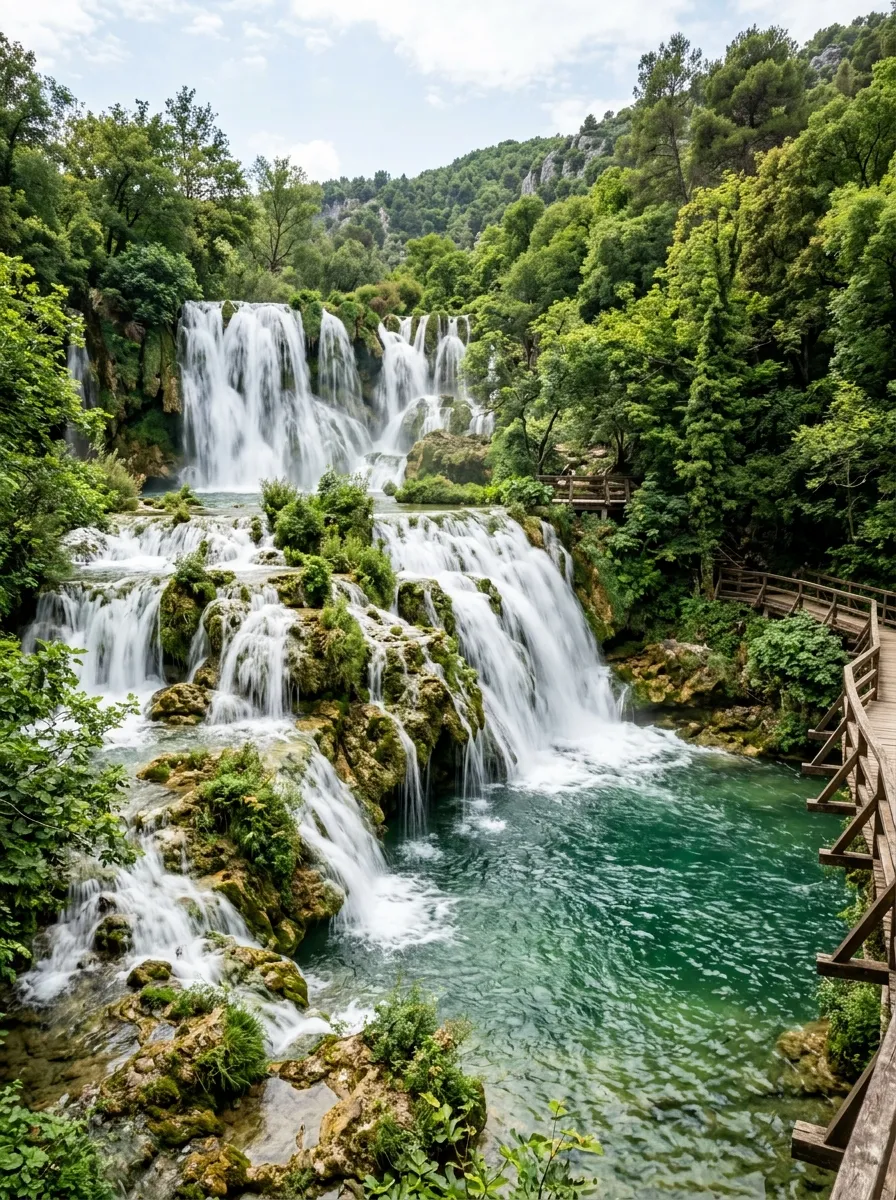
Located in southern Croatia, this spectacular protected area follows the Krka River through a landscape of emerald pools, limestone canyons, historic watermills, islands, monasteries, and some of the country’s most beautiful waterfalls. The park is especially famous for Skradinski Buk, a vast cascade system where the river tumbles over a series of travertine barriers surrounded by lush Mediterranean vegetation.
But Krka is more than one waterfall.
You can explore wooden trails over turquoise water, cruise along the river, visit centuries-old religious sites, wander through traditional villages, and discover quieter corners away from the busiest viewpoints. It also makes an excellent addition to a wider Croatia itinerary, particularly if you’re traveling between Split, Šibenik, Zadar, or the Dalmatian coast.
If you’re planning a visit, here’s everything you need to know about Krka National Park, including the best things to see, how to get there, when to visit, what to expect, and how to make the most of your day.
Quick answer: Krka National Park is one of Croatia’s best nature escapes for travelers who want dramatic waterfalls without giving up easy access to cultural attractions and coastal cities.
Recommended Travel Items for Your Trip
Why Visit Krka National Park?
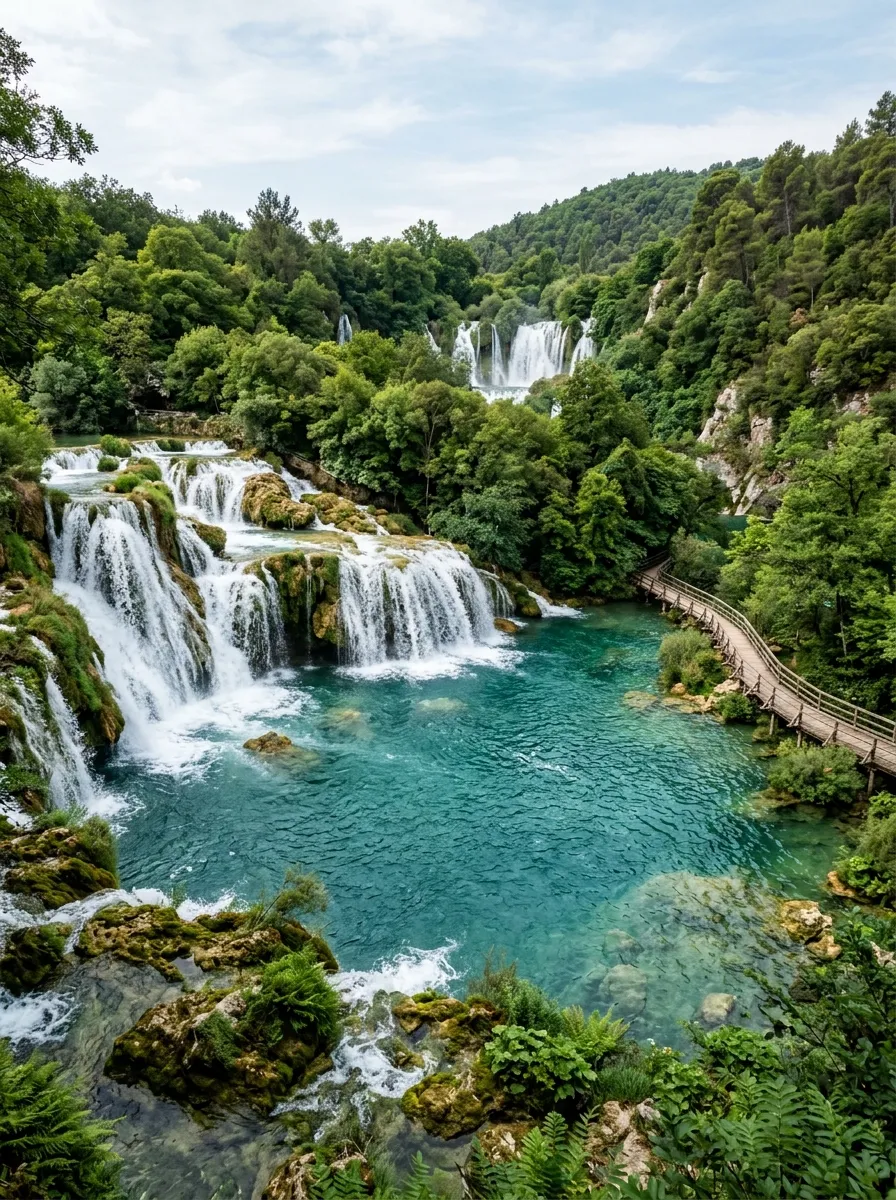
Krka has a rare combination of scenery and accessibility.
Unlike some national parks that require serious hiking to reach their major attractions, several of Krka’s highlights can be explored relatively easily. Wooden boardwalks take visitors through wetlands and across sections of the river, while boat excursions open up parts of the park that are difficult to experience on foot.
Here are a few reasons Krka deserves a place on your Croatia itinerary:
- Spectacular waterfalls and turquoise pools
- Scenic wooden walking trails
- Historic watermills
- River and boat excursions
- Monasteries and archaeological sites
- Mediterranean landscapes
- Excellent photography opportunities
- Easy access from several major Croatian destinations
- Options for both relaxed sightseeing and active exploration
And if you’re already planning a Croatia adventure, Krka fits beautifully alongside other European nature destinations. Travelers who enjoy dramatic landscapes may also want to explore our guide to Plitvice National Park when planning their Croatian itinerary.
Where Is Krka National Park?
Krka National Park is in Dalmatia, southern Croatia, following the course of the Krka River.
The park lies inland from the Adriatic coast, between the cities of Šibenik and Knin, with Šibenik being one of the most convenient coastal bases for visiting.
Its location makes it particularly convenient for travelers staying in:
- Šibenik
- Split
- Zadar
- Trogir
- Vodice
- Primošten
The exact travel time depends on which entrance or attraction you’re visiting.
Krka National Park at a Glance
| Feature | Details |
| Country | Croatia |
| Region | Dalmatia |
| Main river | Krka River |
| Famous waterfall | Skradinski Buk |
| Landscape | Rivers, waterfalls, limestone, forests and wetlands |
| Best for | Nature, photography, hiking, history and day trips |
| Nearby city | Šibenik |
| Popular bases | Šibenik, Split and Zadar |
Best Things to See in Krka National Park
Krka has several different areas worth exploring. Don’t make the mistake of assuming that visiting one waterfall means you’ve seen the whole park.
1. Skradinski Buk
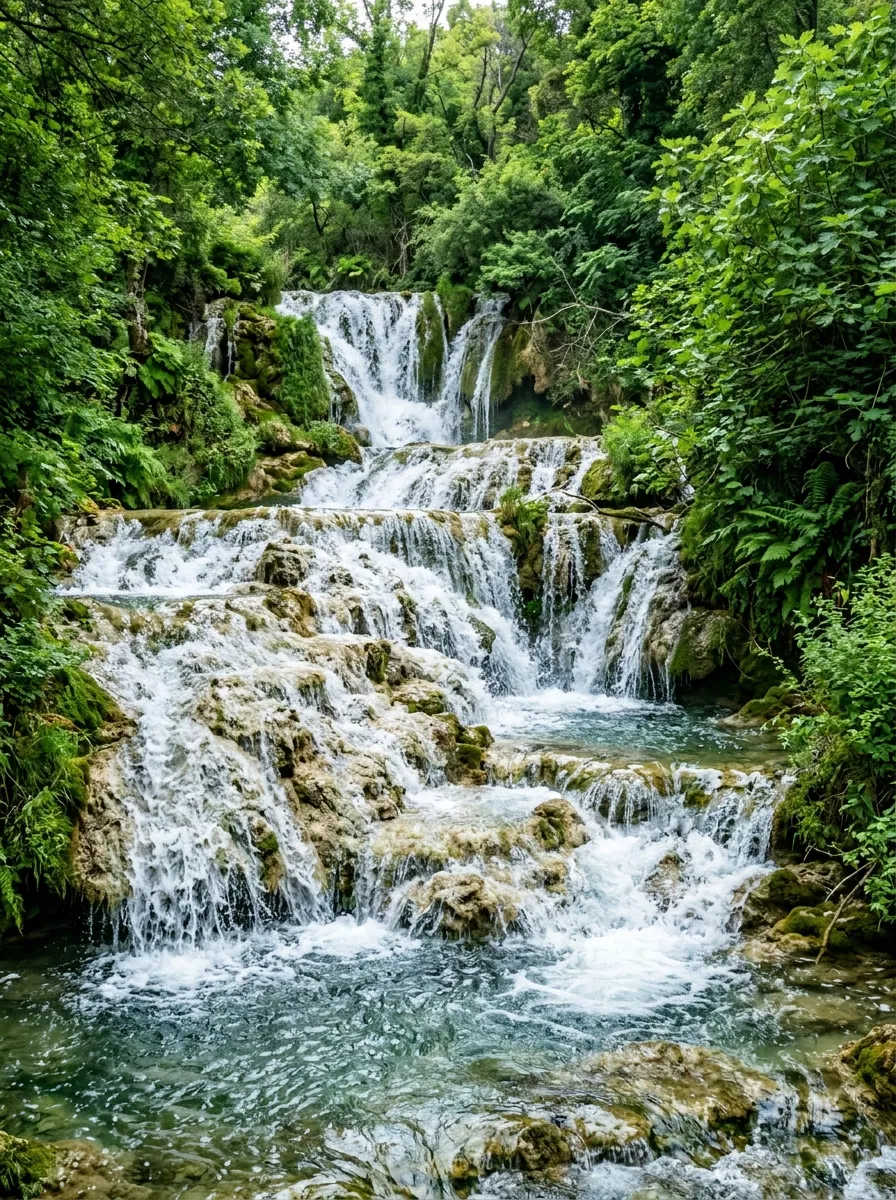
Skradinski Buk is the undisputed star of Krka National Park.
The waterfall isn’t one simple vertical drop. Instead, the Krka River flows across a broad series of travertine barriers, creating cascades, pools and smaller waterfalls surrounded by thick greenery.
It’s the scene most people picture when they hear “Krka.”
A wooden boardwalk winds through the area, giving visitors constantly changing views of the water. Depending on the season and water levels, the character of the falls can change dramatically.
Why Skradinski Buk Is Special
The area combines several things that make a great nature attraction:
- Moving water everywhere you look
- Dense vegetation
- Limestone formations
- Historic structures
- Wooden walkways
- Multiple viewpoints
- Plenty of photographic angles
Give yourself enough time here rather than rushing through for a single photograph.
2. The Wooden Boardwalks
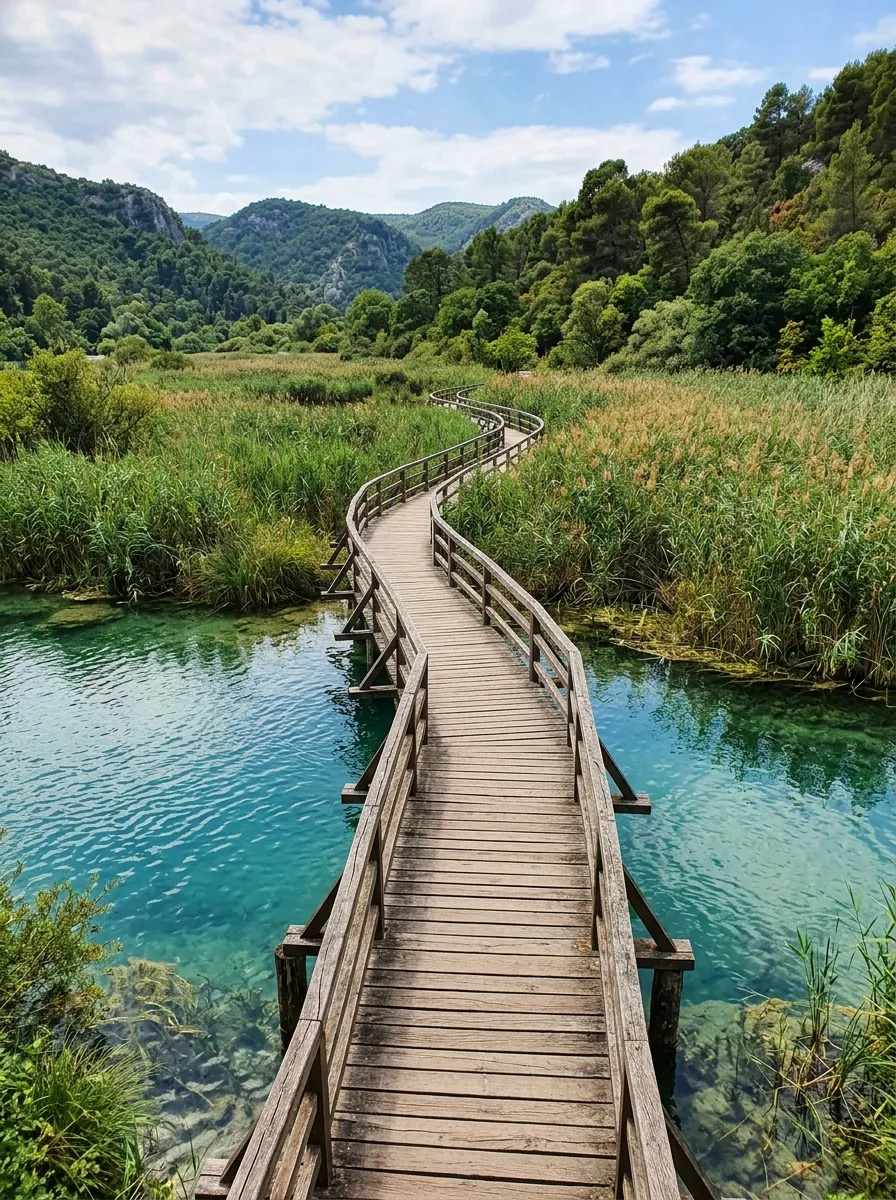
One of the most enjoyable ways to experience Krka is simply to walk.
The trails around the waterfalls take you across wooden bridges and boardwalks, allowing you to move through the landscape without needing an exhausting hike.
You’ll pass:
- Small cascades
- Pools
- Reed-covered wetlands
- Trees and vegetation
- Historic watermills
- River viewpoints
The experience is less about reaching a destination and more about letting the river reveal itself around every bend.
Travel tip: Comfortable shoes are still important. Even relatively easy trails become less enjoyable when you’re walking around all day in sandals with no support.
3. Roški Slap
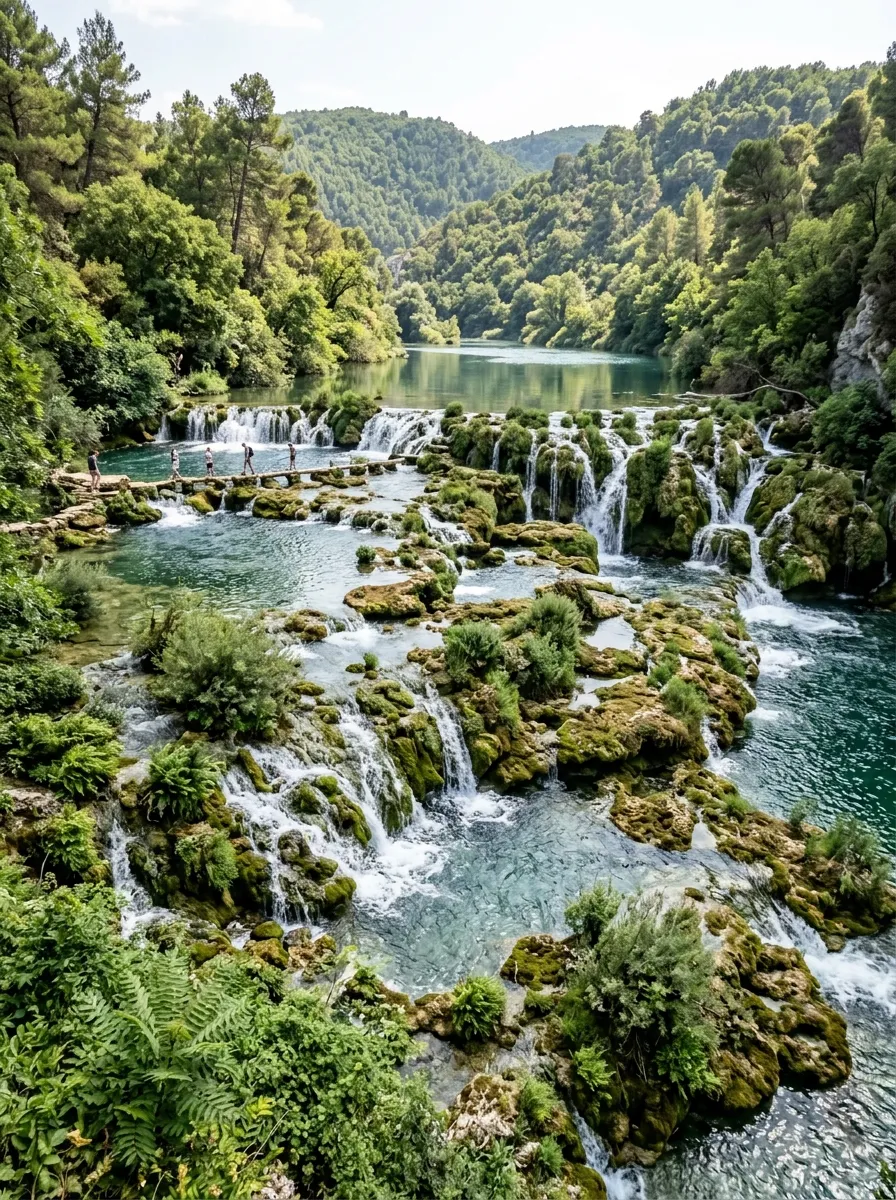
While Skradinski Buk receives most of the attention, Roški Slap is another major waterfall area worth seeing.
The landscape here feels somewhat different, with the river surrounded by dramatic rocky scenery and greenery.
A particularly interesting feature is the series of small cascades sometimes called the Necklaces, where water flows over numerous travertine formations.
If you have enough time, don’t limit your Krka experience to the park’s most famous attraction.
4. Visovac Island
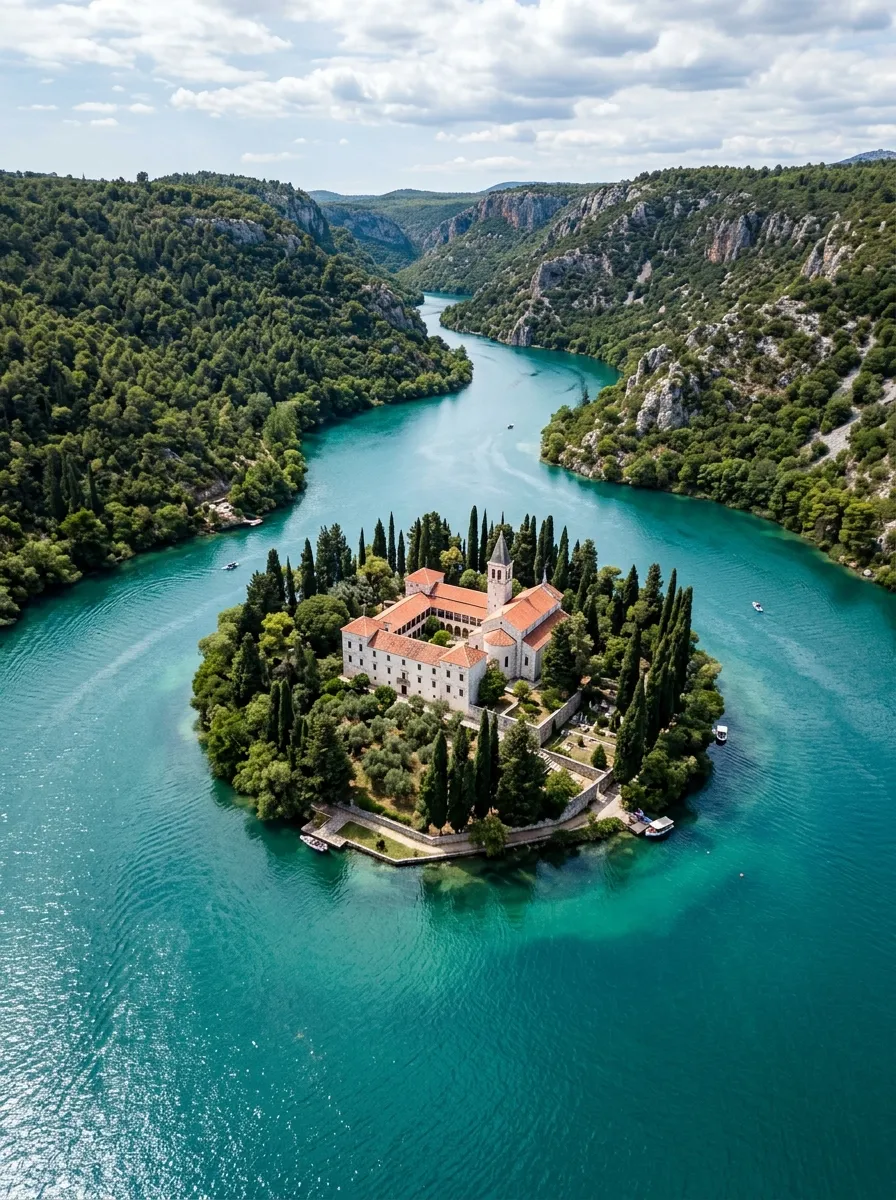
One of Krka’s most atmospheric sights is Visovac Island, a tiny island sitting in the middle of the river.
The island is home to the Franciscan Monastery of Our Lady of Mercy, creating a striking combination of nature and history.
The monastery has a long connection with Franciscan religious life in the region, while the surrounding water and vegetation give the island an almost storybook appearance.
Boat excursions can provide an opportunity to see Visovac from the water and, depending on the tour and conditions, visit the island.
5. Krka Monastery
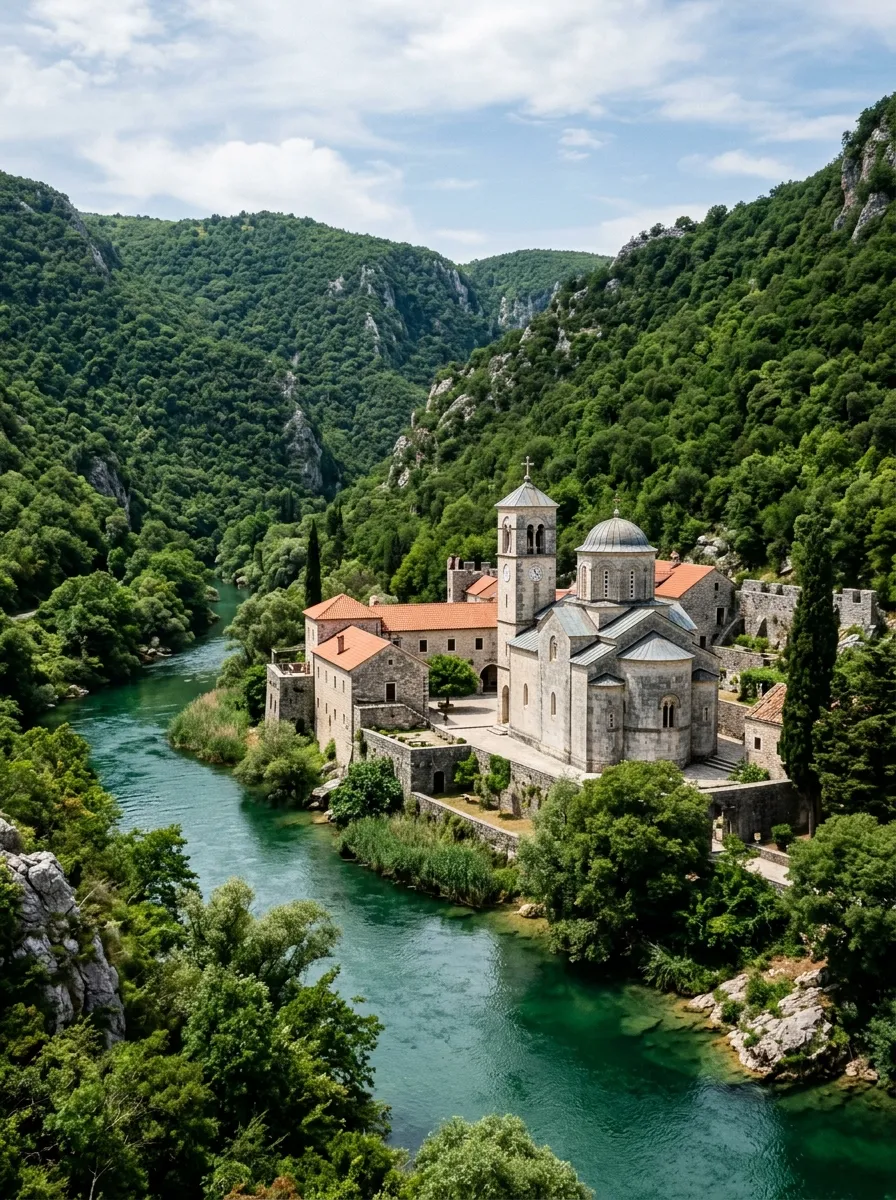
History lovers should look beyond the waterfalls.
The Krka Monastery is an important Serbian Orthodox religious site located along the river. The monastery complex has historical and cultural significance and adds another dimension to the park.
It’s a reminder that Krka isn’t simply a collection of scenic viewpoints. The river corridor has been shaped by human communities, religion, agriculture and water management for centuries.
6. Burnum Archaeological Site
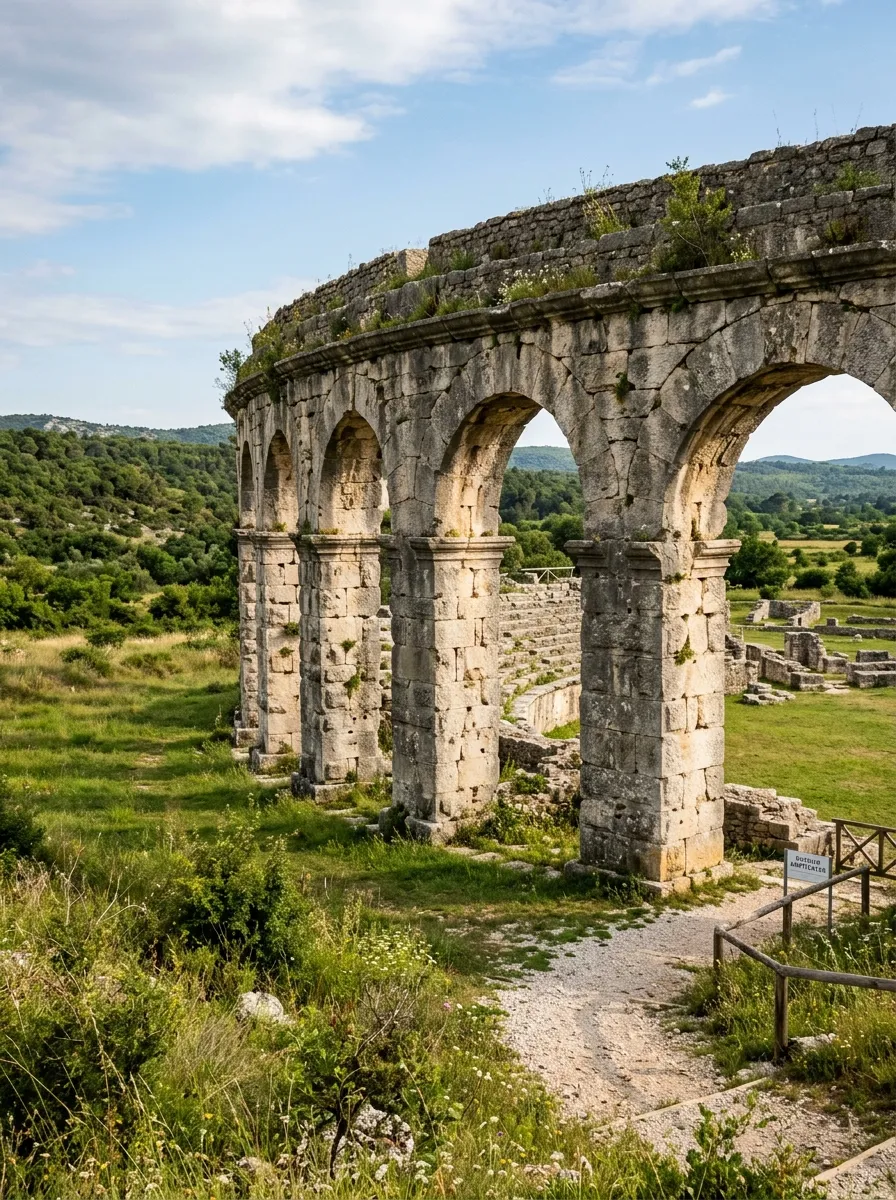
For something completely different, head toward Burnum.
This archaeological site contains remains associated with a Roman military settlement. The location once served as an important strategic position in the region.
Among the remains are parts of a Roman military amphitheater and other archaeological structures.
It can be easy to overlook this kind of attraction when you’re chasing waterfalls, but Burnum is fascinating for anyone interested in Roman history.
7. Traditional Watermills
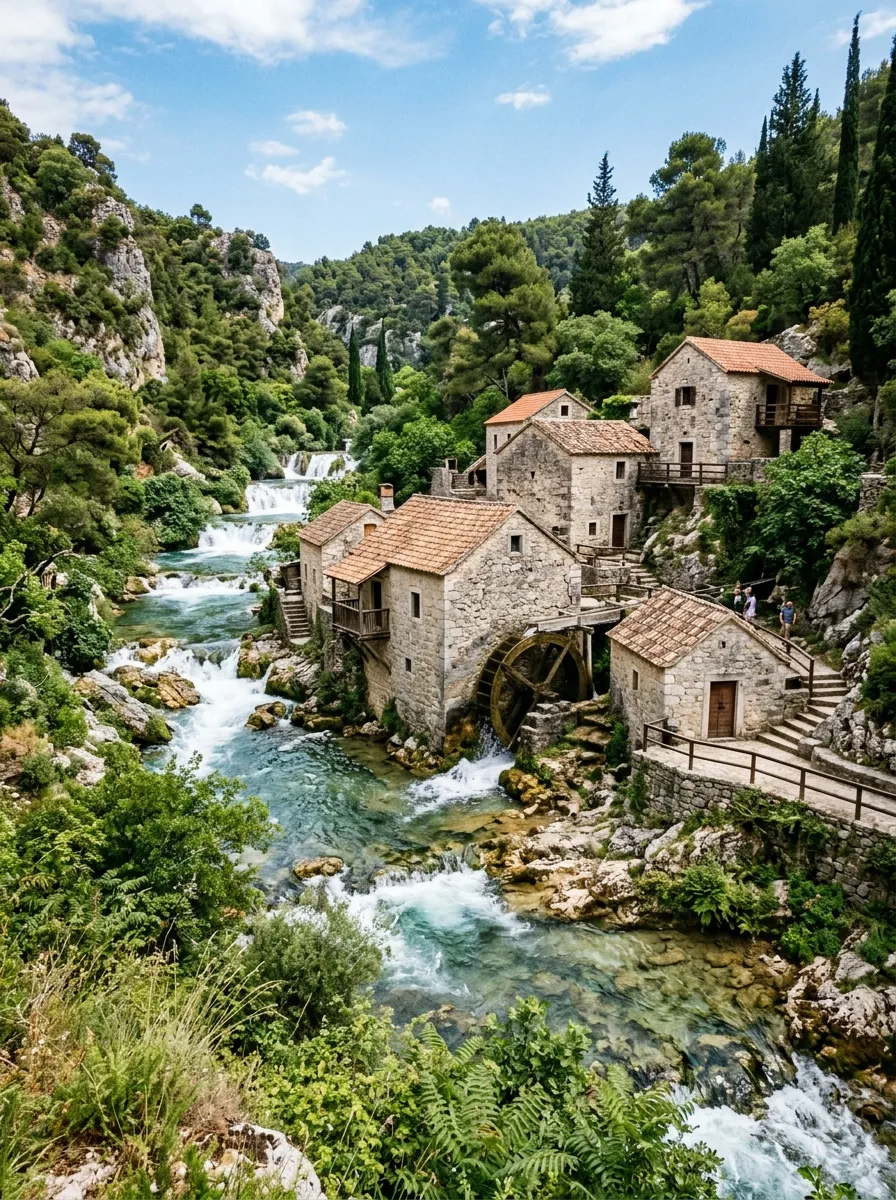
Water has always been central to life around the Krka River.
Historic watermills demonstrate how local communities once harnessed the river’s power for everyday work.
Several traditional structures have been preserved or restored, helping visitors understand how the landscape supported local communities long before tourism became an important part of the region’s economy.
These buildings also make great stops between the natural attractions.
Things to Do in Krka National Park
Krka isn’t just a place to photograph waterfalls and leave.
Here are some of the best ways to experience the park.
Walk the Nature Trails
The simplest option is also one of the best.
Follow the designated trails around the river and waterfalls, stopping at viewpoints whenever the scenery demands it.
Allow extra time for photographs because you’ll probably stop more often than expected.
Take a Boat Trip
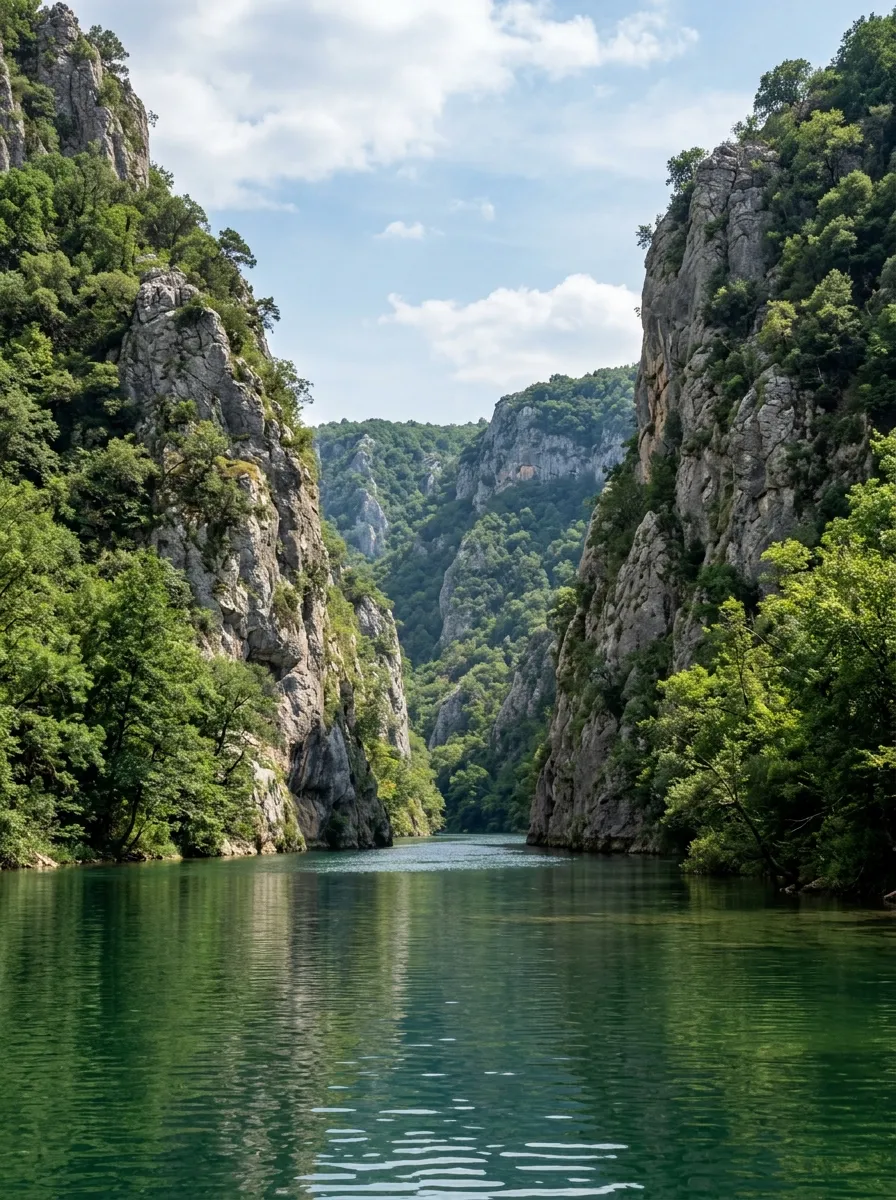
A boat excursion can completely change your perspective.
Instead of looking down toward the river from a trail, you’ll see the landscape from water level.
Depending on the route, boat excursions can connect different attractions and may include places such as Visovac or Roški Slap.
Check the current operating schedule before your visit, especially outside the main summer season, because boat services can vary.
Explore the Historic Sites
Make room for culture alongside nature.
Krka’s monasteries, archaeological sites and watermills give the park considerably more depth than a standard waterfall excursion.
If you enjoy combining history with scenery, this is one of the park’s biggest strengths.
Go Photography Hunting
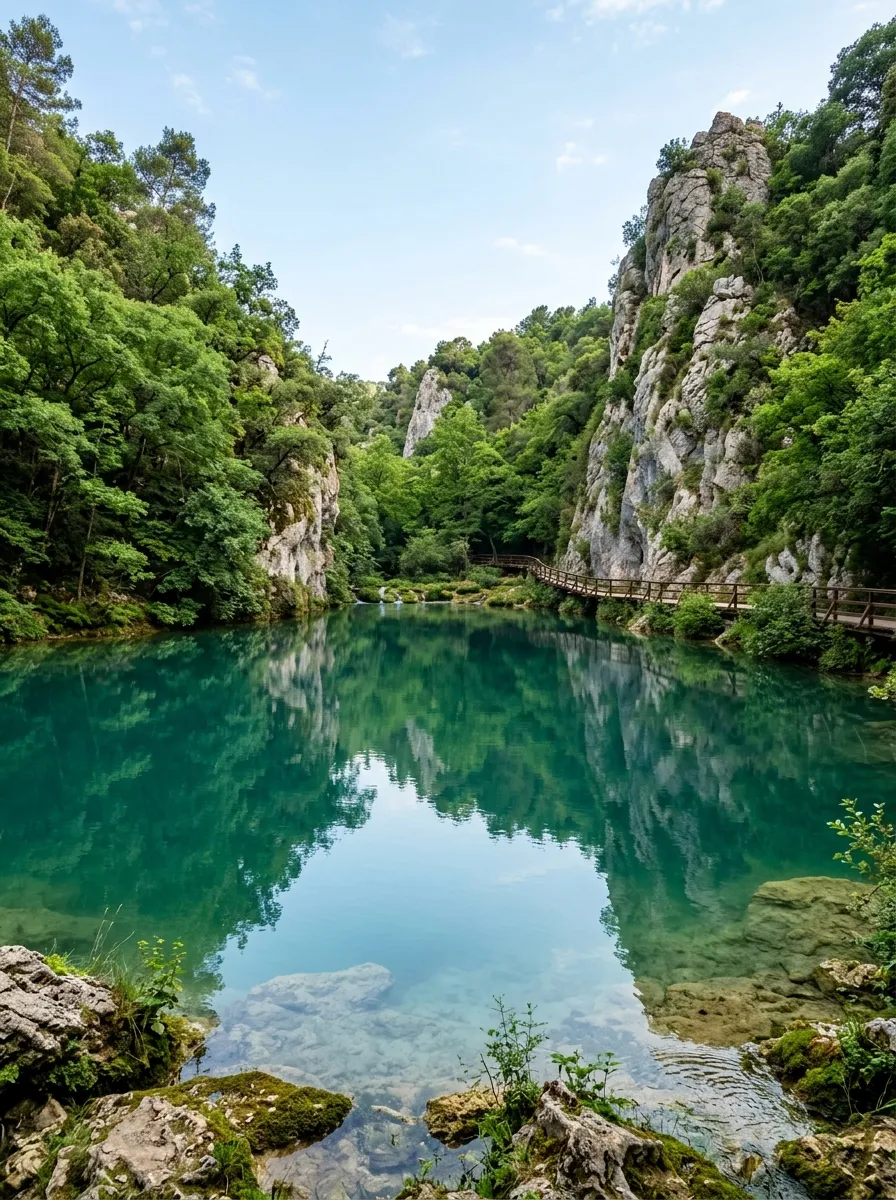
Krka is practically designed for landscape photography.
Look beyond the obvious waterfall shot.
Try photographing:
- Water flowing beneath wooden bridges
- Reflections in calm pools
- Tiny cascades
- Travertine formations
- Visovac Island
- Historic stone buildings
- Watermills
- Wide river landscapes
Early morning and late afternoon generally offer softer light and fewer harsh shadows than the middle of the day.
Can You Swim in Krka National Park?
This is one of the most important things to check before visiting.
Swimming rules in protected areas can change, and areas that were historically associated with swimming may have restrictions in place.
Do not assume that you can swim simply because you see beautiful turquoise water.
Always follow the current signs and park regulations when you arrive.
This is particularly important around waterfalls and fast-moving water, where apparently calm sections can conceal strong currents.
When Is the Best Time to Visit Krka National Park?
The best time depends on what you want from the experience.
Spring
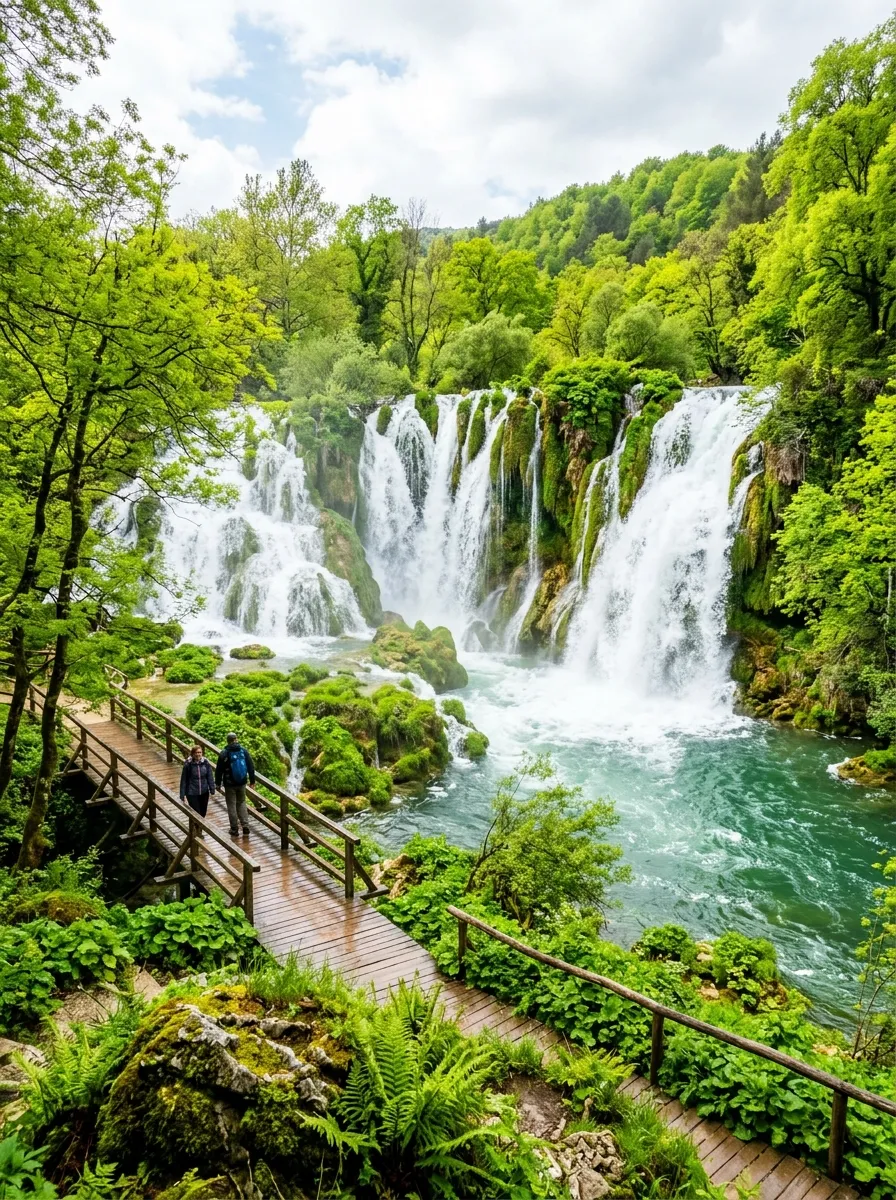
Spring can be beautiful because the landscape is lush and the river may have impressive water levels.
Best for:
- Green scenery
- Waterfalls
- Comfortable temperatures
- Photography
Summer
Summer is the busiest season.
The weather is generally ideal for combining Krka with a Croatian coastal vacation, but popular areas can become crowded.
Best for:
- Long daylight hours
- Combining Krka with coastal destinations
- Boat excursions
- Warm-weather sightseeing
Downside: Crowds and stronger midday heat.
Autumn
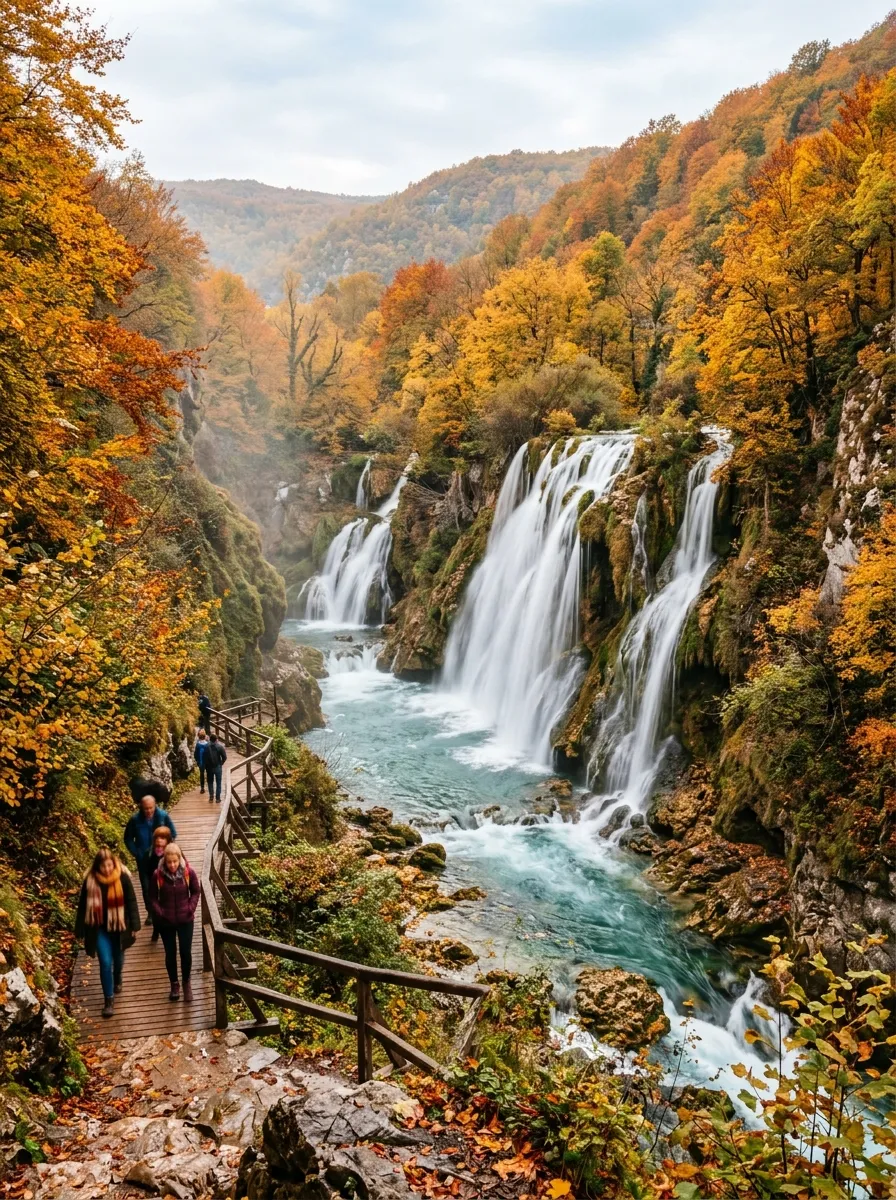
Autumn brings a different atmosphere, with changing vegetation and potentially cooler conditions.
Best for:
- Photography
- Quieter walks
- Pleasant temperatures
- Fewer peak-season crowds
Winter
Winter is the quietest period and can give waterfalls a dramatic appearance, especially after periods of heavy rainfall.
However, some visitor services, boat trips and facilities may operate on reduced schedules.
Best Overall Time
For the best balance between scenery, weather and manageable crowds, late spring and early autumn are excellent choices.
How Much Time Do You Need in Krka National Park?
For a first visit, one full day is a comfortable amount of time.
A shorter visit can work if you’re concentrating primarily on Skradinski Buk, but you’ll have less time for the park’s other attractions.
If You Have Half a Day
Focus on:
- Skradinski Buk
- Boardwalk trails
- Watermills and nearby viewpoints
If You Have One Full Day
You can potentially combine:
- Skradinski Buk
- A longer nature walk
- Boat excursion
- Visovac
- Another waterfall or historical site
If You Have More Than One Day
You can slow down and explore less-visited parts of the park rather than treating it as a checklist.
How to Get to Krka National Park
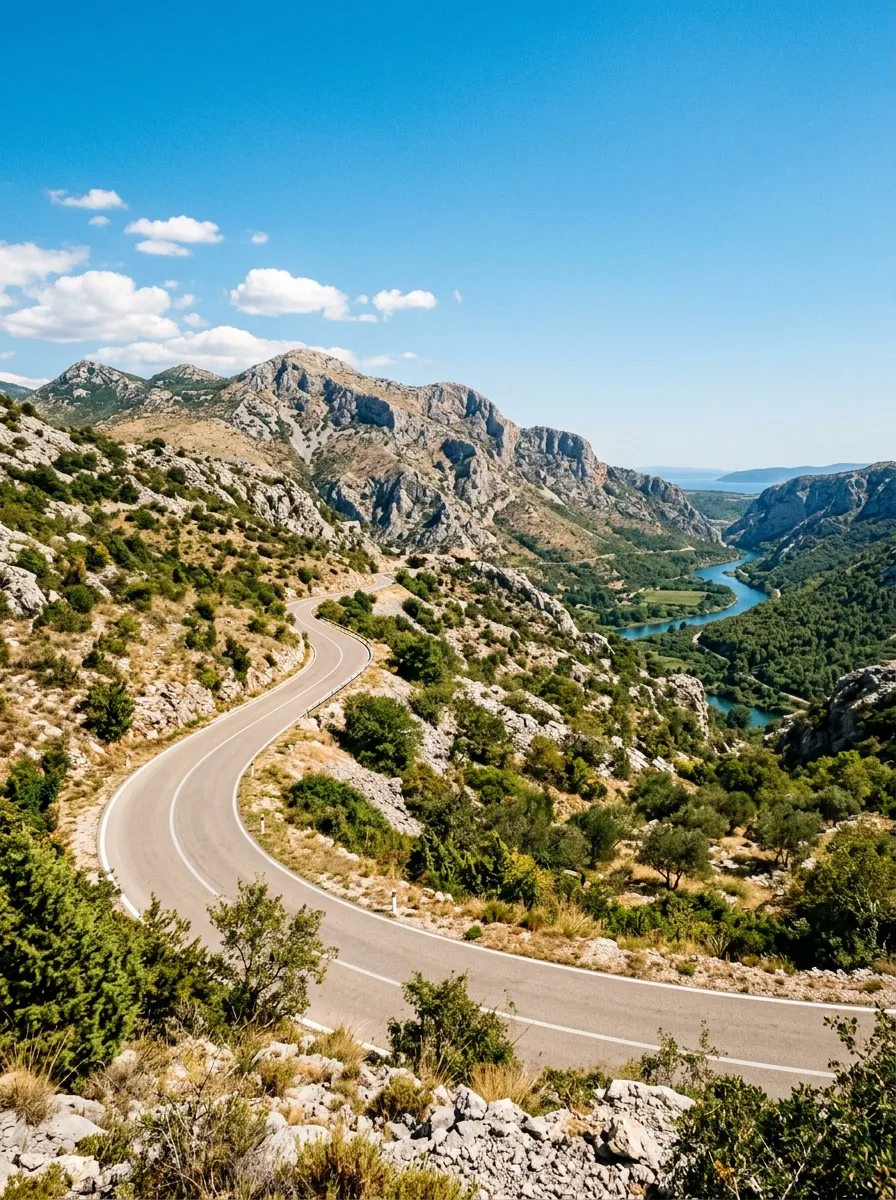
Krka is relatively accessible by road.
From Šibenik
Šibenik is one of the most convenient bases.
The proximity means you can visit Krka without sacrificing an entire day to transportation.
From Split
Krka is also a popular day trip from Split.
Driving gives you more flexibility, particularly if you want to visit multiple areas of the park.
From Zadar
Zadar is another practical starting point, especially for travelers building a northern Dalmatian itinerary.
By Organized Tour
If you don’t have a car, organized excursions can be convenient.
Tours often combine transportation with park entry and sometimes include additional stops.
The trade-off is flexibility. Independent travelers can decide how long to spend at each attraction, while organized tours usually follow a fixed schedule.
Krka National Park vs. Plitvice Lakes
If you’re trying to decide between Croatia’s two famous national parks, the choice depends on your travel style.
| Krka | Plitvice |
| Famous for waterfalls and river landscapes | Famous for interconnected lakes and waterfalls |
| Convenient for Dalmatian coast trips | Better suited to central Croatia itineraries |
| Historic monasteries and Roman sites | Exceptional lake-and-forest scenery |
| Boat excursions available | Extensive walking trails |
| Strong cultural component | Primarily nature-focused |
| Excellent day-trip option | Often deserves a full day |
If your Croatia itinerary already includes Split or Šibenik, Krka is particularly convenient.
If you’re traveling through inland Croatia, Plitvice may fit your route better.
And if you have enough time, visiting both gives you two very different interpretations of Croatia’s incredible freshwater landscapes.
What to Bring to Krka National Park
You don’t need an expedition pack, but a few things will make the day much easier.
Krka Day-Trip Packing List
- Comfortable walking shoes
- Reusable water bottle
- Sunscreen
- Sunglasses
- Hat
- Light jacket for cooler mornings
- Small backpack
- Phone or camera
- Portable charger
- Light snacks
- Waterproof bag for electronics
- Cash/card for incidental expenses
If you’re visiting during the hottest months, don’t underestimate the combination of walking and Mediterranean sun.
Where to Stay Near Krka National Park
You don’t necessarily need to stay inside or immediately beside the park.
Šibenik
Probably the most convenient choice for travelers who want a combination of:
- Historic streets
- Restaurants
- Adriatic views
- Easy access to Krka
Skradin
Skradin is particularly attractive if you want a smaller-town atmosphere and proximity to one of the park’s major access points.
Split
Choose Split if Krka is part of a larger coastal itinerary and you want a lively city base with more accommodation and dining choices.
Zadar
Zadar works well if you’re combining Krka with northern Dalmatia.
Tips for Visiting Krka National Park
A little planning goes a long way.
1. Arrive Early
Popular areas can become crowded, particularly during summer.
An early start can make the boardwalk experience much more enjoyable.
2. Check Official Conditions
Before leaving, check current information about:
- Entrance availability
- Opening hours
- Boat excursions
- Swimming restrictions
- Trail conditions
- Weather
Park operations can change seasonally.
3. Don’t Plan Only Around Skradinski Buk
It’s the famous one for a reason, but there’s much more to discover.
4. Wear Proper Shoes
The boardwalks may look easy, but you’ll spend hours on your feet.
5. Bring Water
Especially during summer.
6. Respect the Protected Environment
Stay on designated trails and follow park instructions. The scenery may look wild, but you’re visiting a protected ecosystem.
7. Don’t Overpack Your Day
Trying to see every attraction in a few hours can turn a beautiful nature experience into a race.
Krka rewards a slower pace.
Is Krka National Park Worth Visiting?
Absolutely.
Krka manages to pack an impressive amount into one destination: waterfalls, forests, rivers, islands, monasteries, archaeological remains, historic watermills and scenic trails.
Its biggest advantage is versatility.
You can spend the day walking through lush landscapes, take a boat across the river, explore centuries-old cultural sites, and still be back on the Dalmatian coast for dinner.
It’s also an excellent option for travelers who want the visual drama of Croatia’s famous natural attractions without building their entire trip around strenuous hiking.
If you’re planning a broader European adventure, you may also enjoy exploring destinations such as 16 breathtaking places in Portugal or 7 days in Jamaica for completely different landscapes and travel experiences.
Final Thoughts
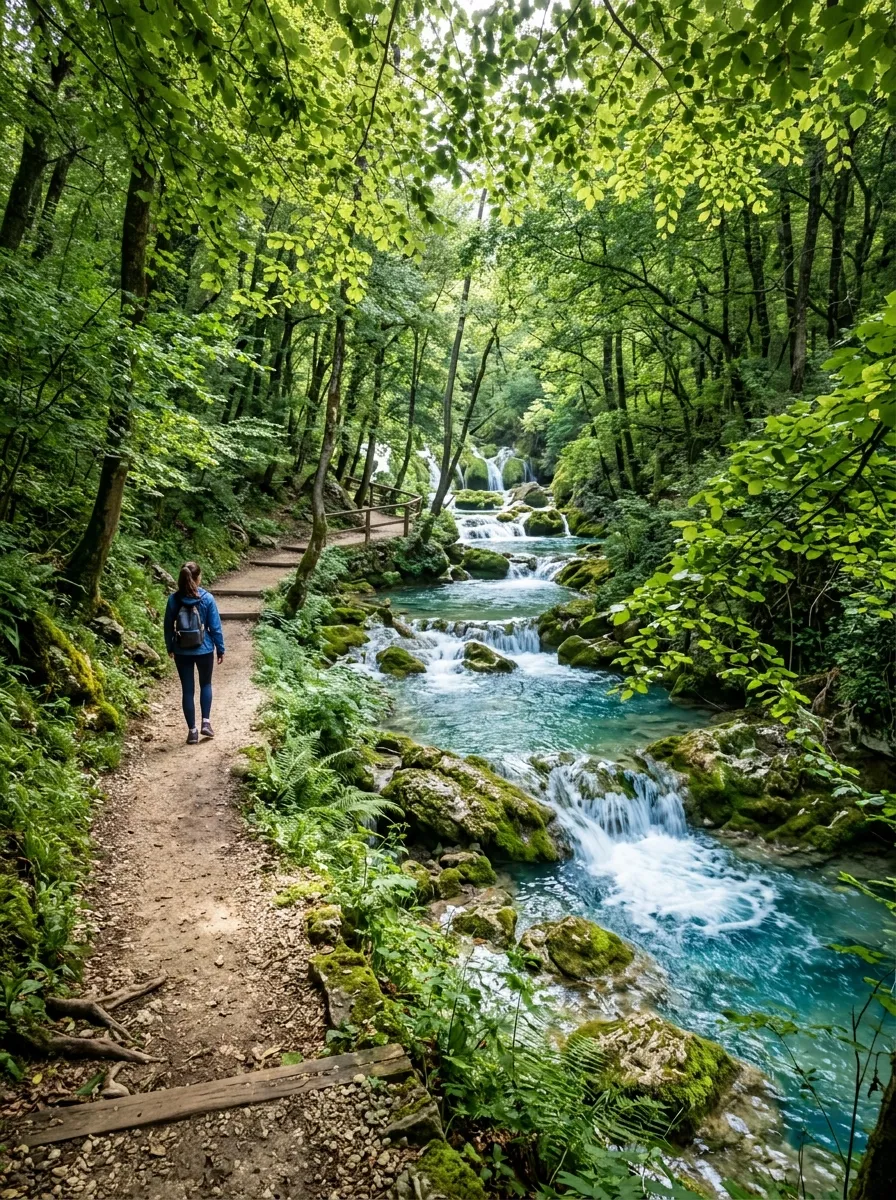
Krka National Park is one of those Croatian destinations that deserves more than a quick photo stop.
Yes, Skradinski Buk is spectacular. But the real magic comes from slowing down enough to notice everything surrounding it: water threading through limestone, old mills beside the river, boats crossing toward tiny islands, monasteries hidden among greenery, and trails that keep revealing another view.
For first-time visitors, a full day is ideal. Start early, explore the main waterfall area, add a boat trip or cultural attraction if time allows, and leave room for simply enjoying the landscape.
Croatia has no shortage of famous destinations, but Krka offers something wonderfully different: a day where the river becomes the itinerary. 🌿💧