Mount Rushmore Travel Guide: The Perfect Black Hills Road Trip Through Monuments, Mountains and Wild South Dakota
Mount Rushmore is one of those landmarks everyone recognizes long before seeing it in person.
Its four enormous faces appear on postcards, license plates, documentaries and countless American road-trip lists. Yet photographs rarely communicate the strange scale of the monument or the beauty of its setting. The sculpture does not stand alone on an empty mountain. It rises above pine forest, granite formations and winding roads deep within South Dakota’s Black Hills.
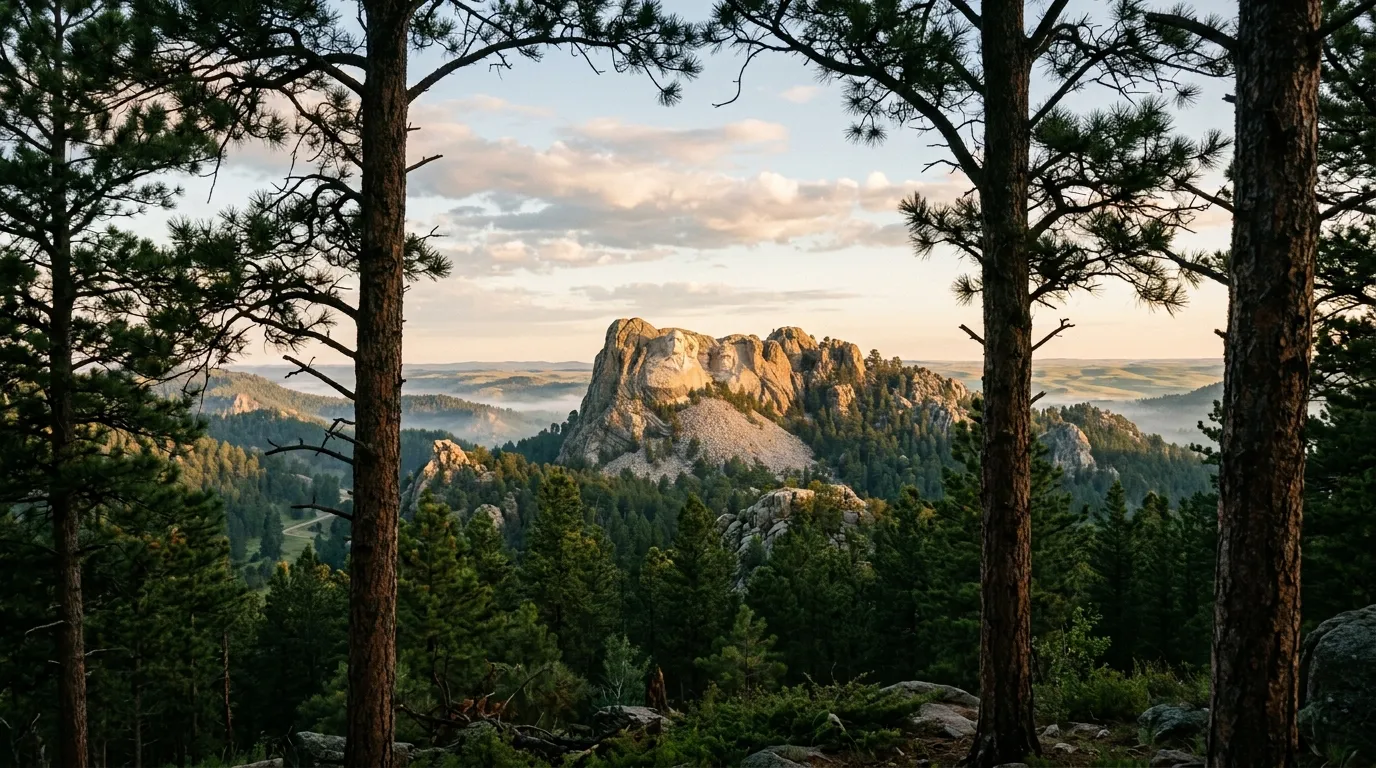
The first glimpse usually arrives between the trees.
George Washington appears first, pale against the darker granite. Then the road turns, the remaining faces slide into view and the monument suddenly feels much larger than expected. Each sculpted head is roughly 60 feet tall, with eyes measuring about 11 feet across and mouths around 18 feet wide.
Mount Rushmore can be explored in a few hours, but treating it as a quick roadside photograph misses the point. The surrounding Black Hills contain wildlife roads, mountain lakes, caves, historic towns, Indigenous cultural sites and some of the most entertaining scenic drives in the United States.
This guide covers everything you need to plan a Mount Rushmore trip, including the best time to visit, parking, trails, history, evening programs, photography locations, nearby attractions and a complete Black Hills itinerary.
Recommended Travel Items for Your Trip
MOUNT RUSHMORE AT A GLANCE
Location: Black Hills, South Dakota
Closest town: Keystone
Nearest major airport: Rapid City Regional Airport
Recommended visit: Three to five hours
Ideal regional trip: Three to five days
Entrance fee: None
Standard parking fee: $10 per noncommercial vehicle
Best months: May, June, September and early October
Best time of day: Before 9:00 a.m. or after 3:30 p.m.
Main walk: Presidential Trail
Best nearby drive: Iron Mountain Road
Best nearby wildlife experience: Custer State Park
Is Mount Rushmore Worth Visiting?
Yes, especially when it forms part of a broader Black Hills road trip.
Travelers sometimes expect Mount Rushmore to occupy an enormous national park filled with hiking trails and remote viewpoints. The main visitor area is more compact than that. You can walk the Avenue of Flags, view the sculpture, visit the museum, complete the Presidential Trail and explore the Sculptor’s Studio within half a day.
What makes the trip worthwhile is the combination of the monument and its surroundings.
Mount Rushmore sits within one of the most scenic corners of the Great Plains. The Black Hills rise like a forested island above the surrounding prairie, with granite spires, mountain roads and clear lakes hidden among ponderosa pine. The National Park Service sometimes describes this region as an “Island in the Prairie” because of the dramatic contrast between the wooded hills and the open plains around them.
Mount Rushmore receives just over two million visitors annually, with June, July and August being the busiest months. The National Park Service recommends arriving before 9:00 a.m. or after 3:30 p.m. during summer to avoid the largest crowds.
The Complicated History of Mount Rushmore
Mount Rushmore is both a celebrated national monument and a deeply contested landscape.
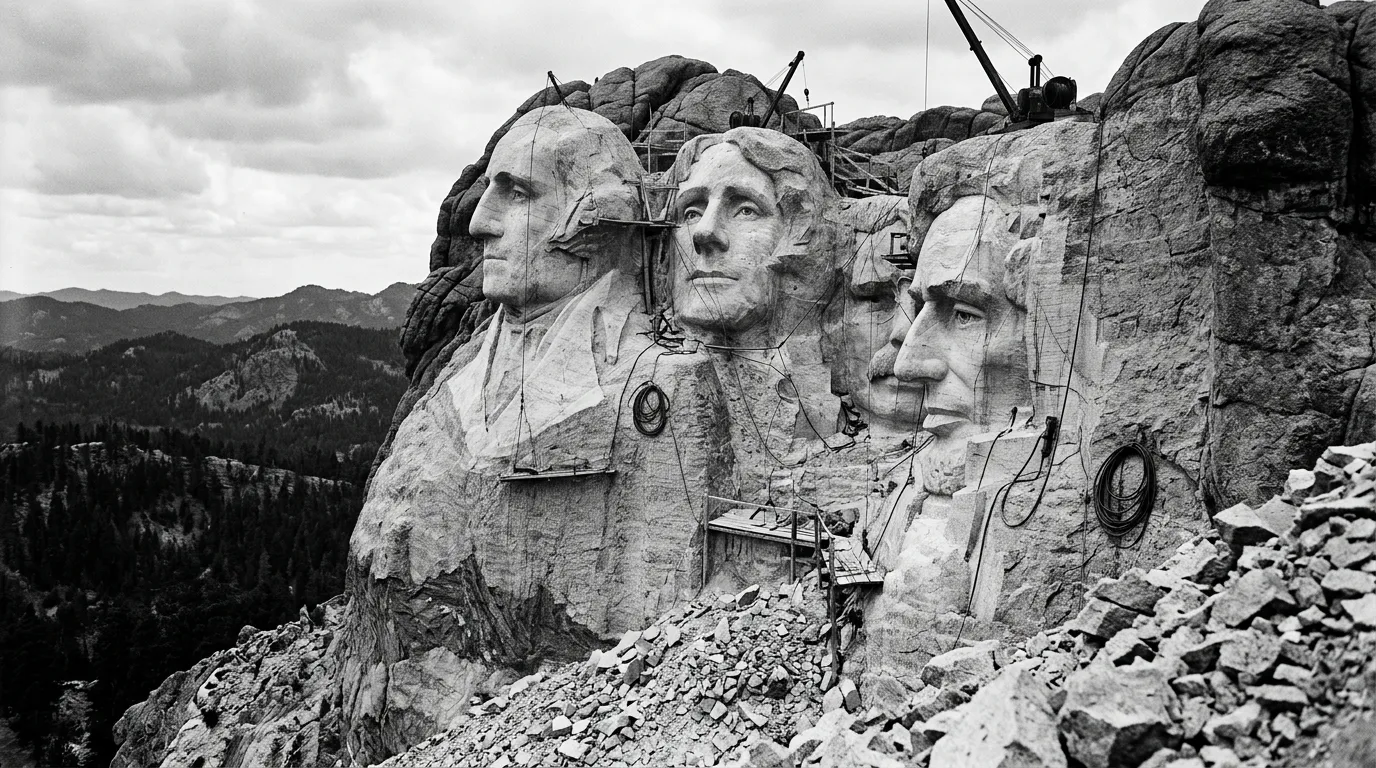
South Dakota historian Doane Robinson proposed a large Black Hills sculpture during the 1920s as a way to attract visitors. Sculptor Gutzon Borglum expanded the concept into a monument honoring George Washington, Thomas Jefferson, Theodore Roosevelt and Abraham Lincoln. Work began in 1927 and officially ended in 1941 following Borglum’s death and the approach of American involvement in World War II.
The four presidents were intended to represent what the project’s creators viewed as the birth, expansion, development and preservation of the United States.
Approximately 90 percent of the mountain was shaped using dynamite. Workers were lowered over the granite face in suspended chairs, drilling and blasting away enormous quantities of rock. Remarkably, no workers died during the carving itself, although the work was physically dangerous and exposed crews to dust, heights and harsh weather.
The Black Hills and Native Nations
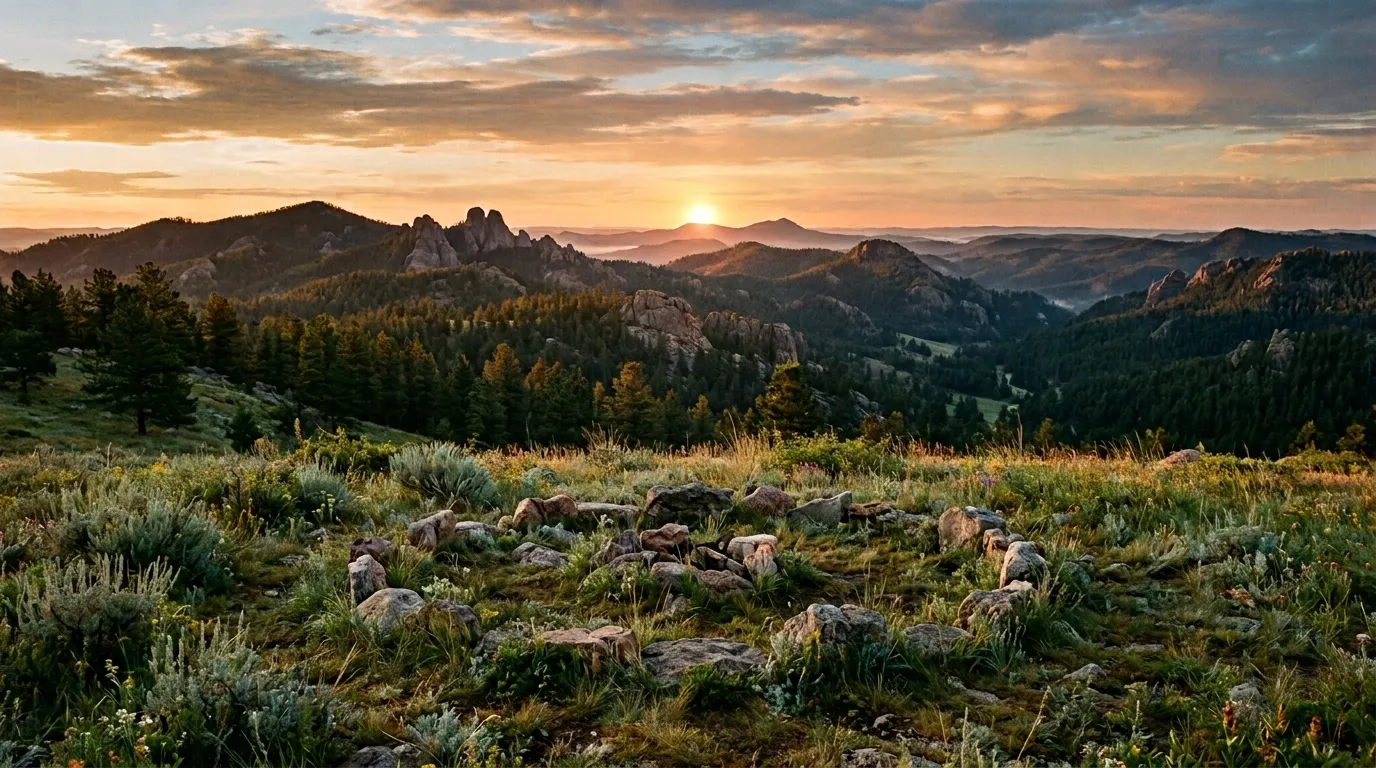
The monument cannot be understood fully without acknowledging the land beneath it.
The Black Hills hold profound historical, cultural and spiritual meaning for numerous Native nations, particularly the Lakota. The National Park Service recognizes the entire Black Hills as a Traditional Cultural Place for several tribes and describes Mount Rushmore as a controversial symbol because it was carved on sacred land.
For some visitors, the sculpture represents American democracy and national history. For others, it symbolizes broken treaties, dispossession and the expansion of the United States into Indigenous territory.
A thoughtful visit should leave room for both the engineering achievement and the history of the Black Hills’ original peoples. The Stone Hoop and Ethnobotanical Garden at the memorial presents cultural information created in connection with Tribal Nations associated with the region.
HISTORY NOTE
Mount Rushmore is not simply a monument floating above politics and history. It occupies a living cultural landscape. Approach the site with curiosity, listen to Indigenous perspectives and avoid reducing the Black Hills to a patriotic photo backdrop.
The Best Things to Do at Mount Rushmore
1. Walk the Avenue of Flags
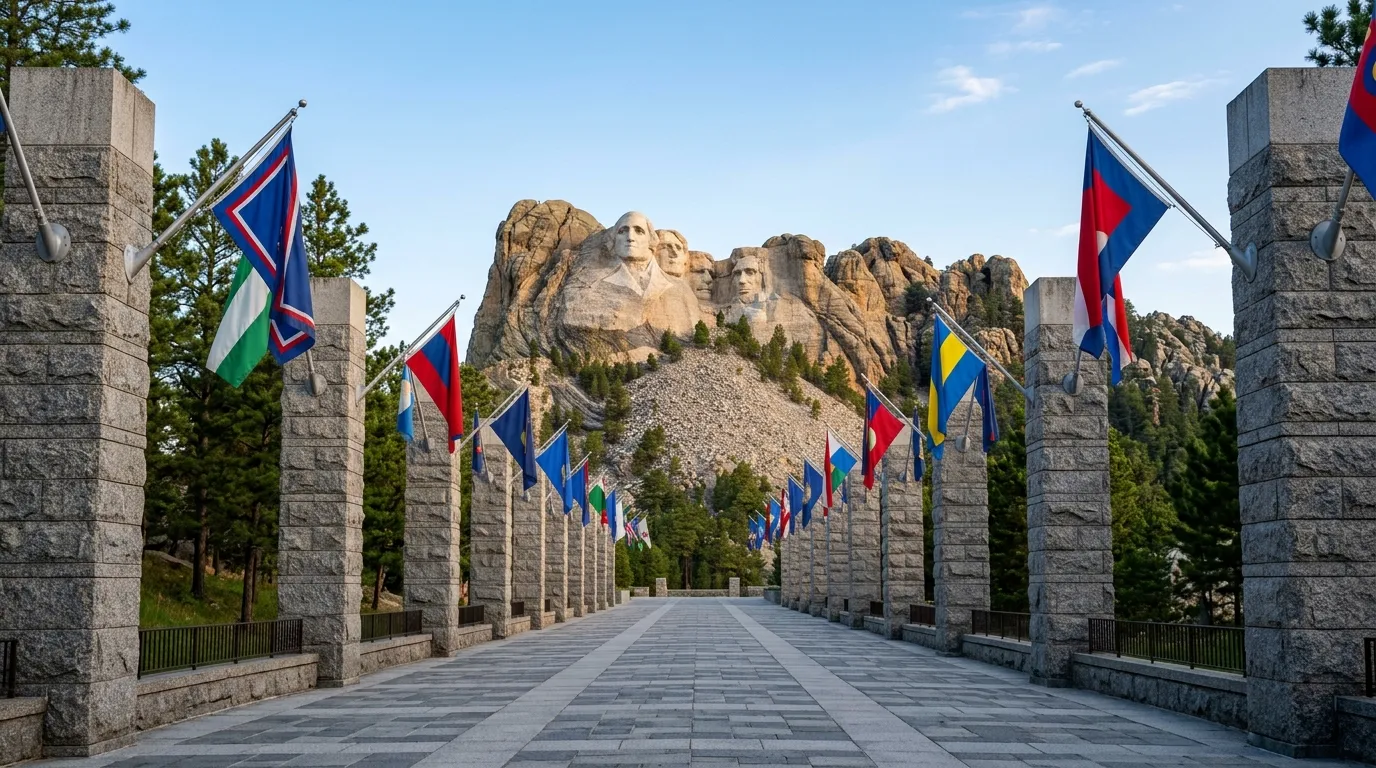
The Avenue of Flags creates the ceremonial approach to the monument.
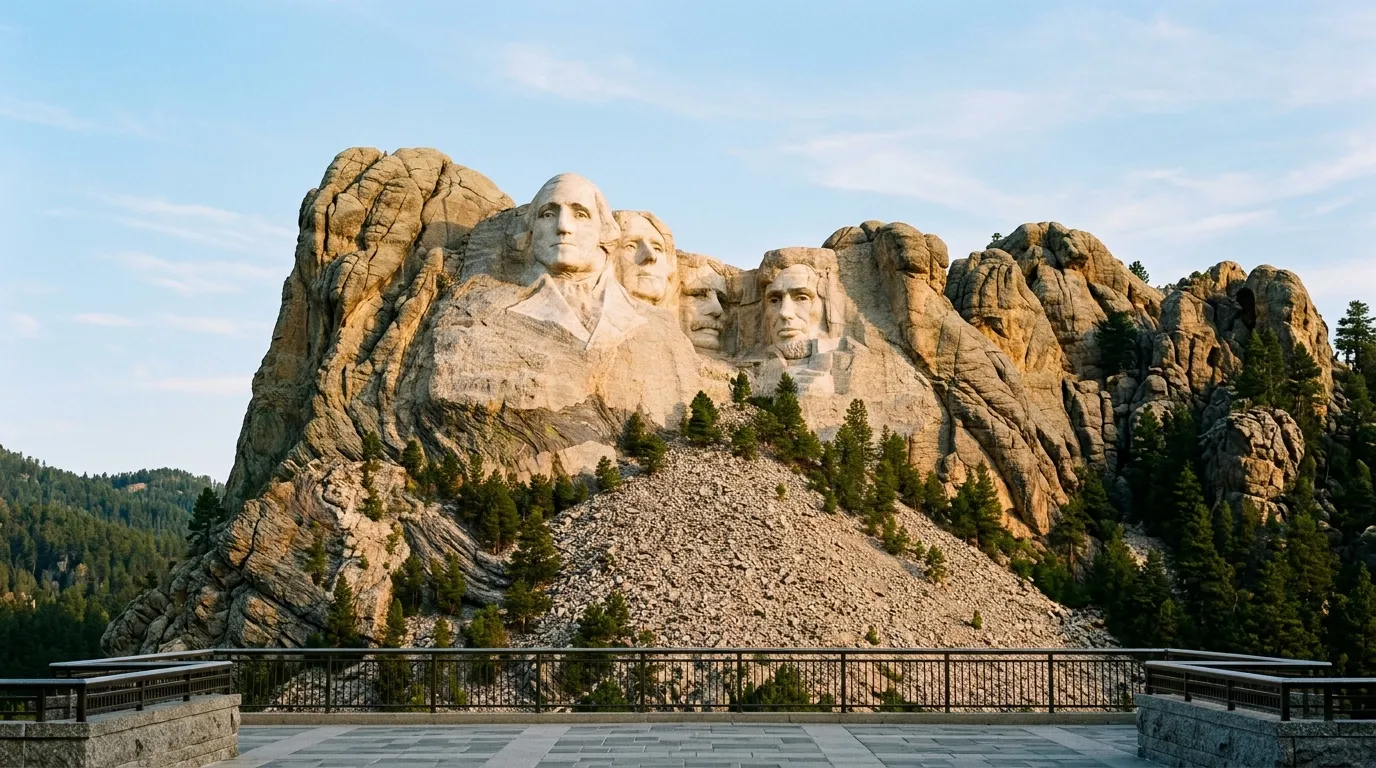
Stone pillars line a broad walkway beneath the flags of U.S. states, territories, districts and commonwealths. At the far end, the path opens dramatically onto the Grand View Terrace, where the four presidents appear above the granite slope.
This is the classic Mount Rushmore viewpoint and the best place for a first photograph.
Arrive early and the avenue may feel surprisingly peaceful. By late morning in summer, it becomes a busy stream of families, tour groups and photographers attempting to arrange all four presidents behind one human head.
2. See the Monument From Grand View Terrace
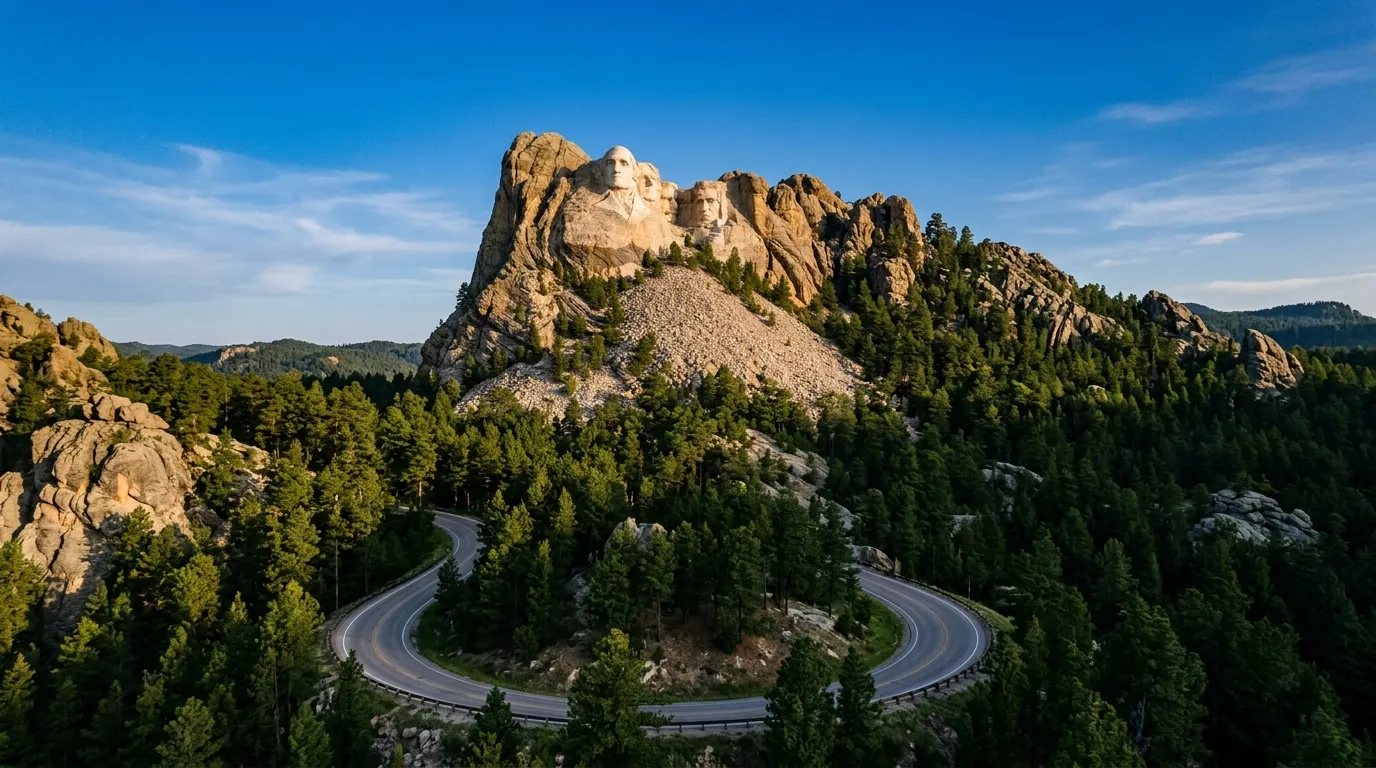
Grand View Terrace provides the main unobstructed frontal view.
The terrace is spacious, accessible and positioned directly beneath the sculpture. Benches and viewing areas allow travelers to spend time observing details that are easy to miss in photographs.
Look closely and each face has a distinct character:
- Washington appears strongest from the central terrace
- Jefferson sits partly behind Washington
- Roosevelt is recessed into the rock
- Lincoln occupies the far-right edge
- The loose granite below the faces reveals the enormous volume of removed stone
Morning light often illuminates the sculpture more evenly, while sunset may produce warmer tones on clear days.
3. Walk the Presidential Trail
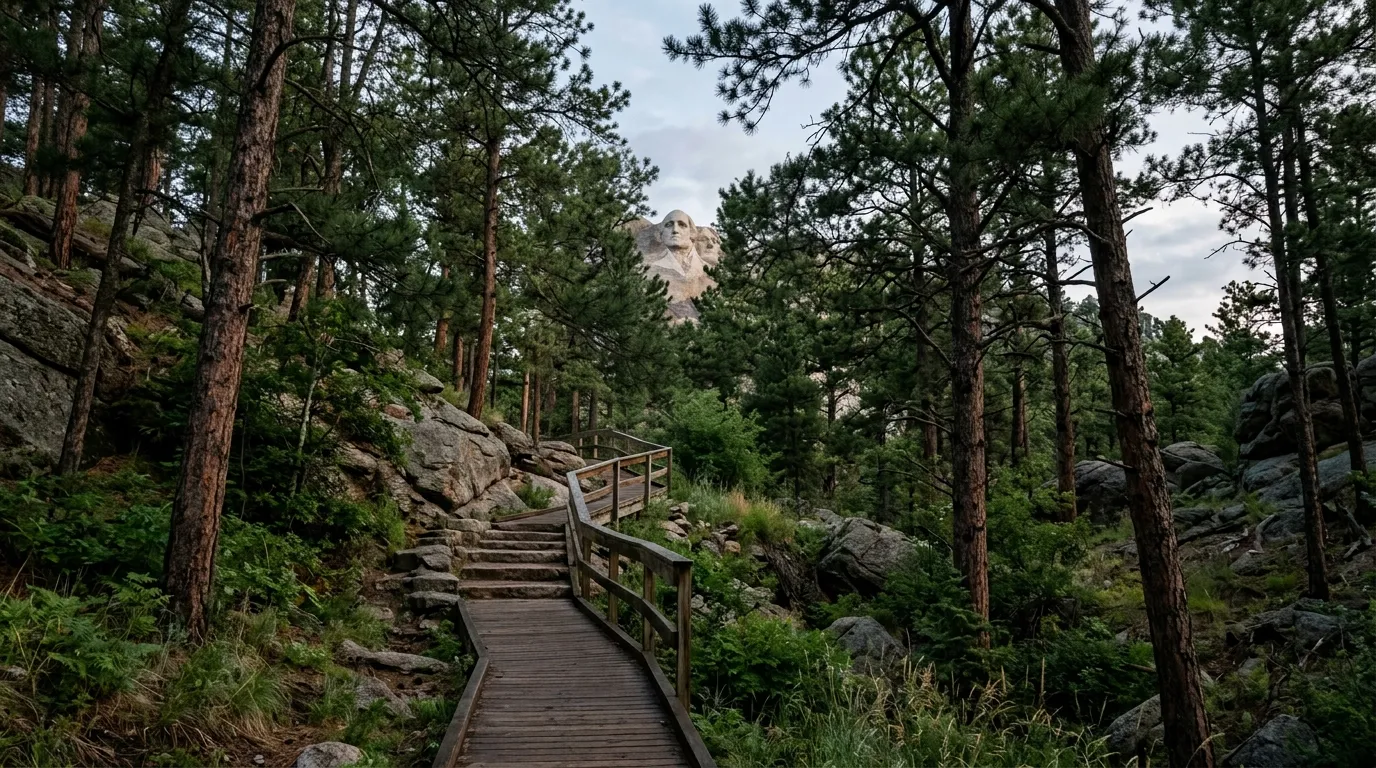
The Presidential Trail is the best way to see Mount Rushmore from changing angles.
The loop is approximately 0.6 miles long and passes through ponderosa pine and beneath granite outcrops. The first 0.2 miles from Grand View Terrace toward the base viewing areas are paved and accessible for wheelchairs. The remaining section contains 422 stairs and is not accessible to visitors with mobility limitations.
The trail takes roughly 20 to 45 minutes, depending on stops and crowds.
What You Will See
- Close views of individual presidential faces
- Pine forest and granite slopes
- Interpretive displays
- Mountain goats on occasional days
- Access to the Sculptor’s Studio
- Different photographic angles unavailable from the terrace
The trail is short, but the steps make it more physical than its distance suggests. Walking clockwise or counterclockwise changes where you encounter the steepest staircase sections.
ACCESSIBILITY NOTE
Visitors who cannot complete the stairs can still follow the paved portion from Grand View Terrace toward excellent lower viewing areas. You do not need to complete the entire loop to experience a closer view.
4. Visit the Lincoln Borglum Visitor Center
The visitor center explains how the monument was proposed, designed and carved.
Exhibits cover the workers, equipment, political decisions and engineering challenges behind the project. Historical photographs reveal the mountain before construction and show crews suspended from cables hundreds of feet above the ground.
This context transforms the sculpture from a distant image into a human undertaking.
A short film provides a useful introduction before walking the Presidential Trail.
5. Explore the Sculptor’s Studio
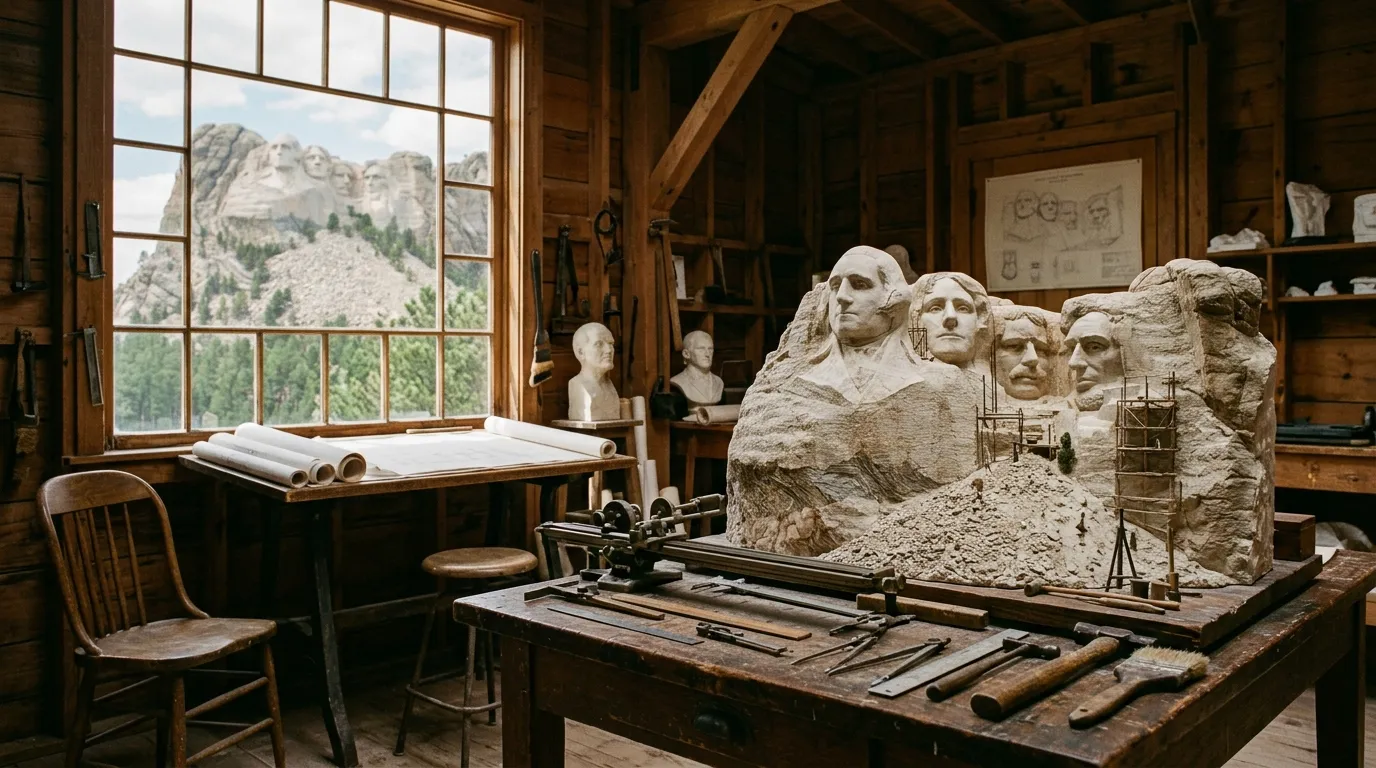
The Sculptor’s Studio contains models and displays connected with Gutzon Borglum’s design process.
The original plan was more ambitious than the monument seen today. Borglum imagined carving the presidents farther down their bodies and creating a grand historical record inside the mountain. Funding, Borglum’s death and World War II brought the work to an end before those ideas could be completed.
The studio provides one of the clearest explanations of how measurements were transferred from small models to the enormous granite surface.
6. Learn About the Hall of Records
Behind the carved faces is an unfinished chamber known as the Hall of Records.
Construction began in 1938, and workers blasted a roughly 70-foot tunnel into the mountain. Borglum intended the chamber to preserve important documents and explain the meaning of the monument to future civilizations. Work stopped before the hall could be completed.
Visitors cannot enter the chamber, but exhibits explain its history.
A repository was eventually placed inside the hall in 1998, containing porcelain panels that record information about the monument and American history.
7. Visit the Stone Hoop Garden
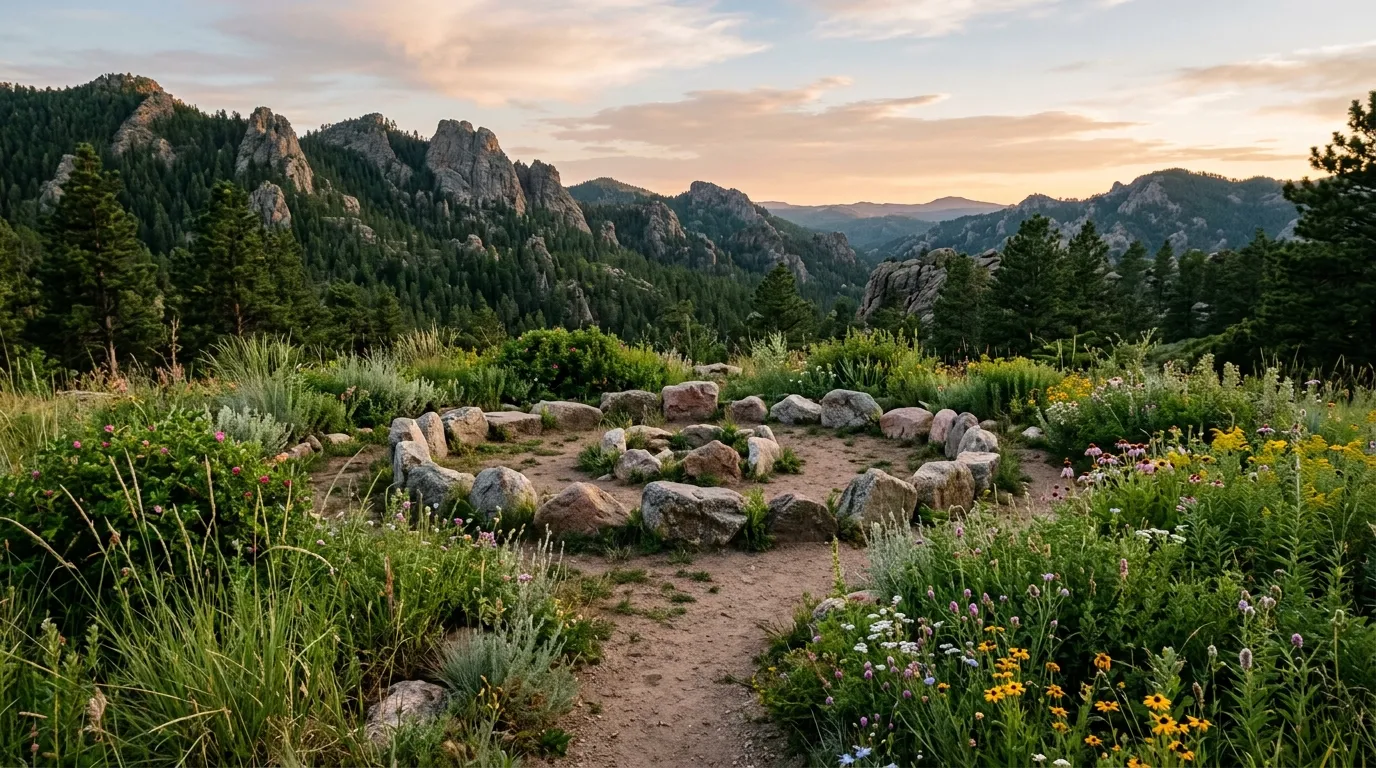
The Stone Hoop and Ethnobotanical Garden provides another perspective on the Black Hills.
Its exhibits discuss Indigenous history, regional plants, sacred geography and the relationship between celestial knowledge and important locations in the landscape. The project includes cultural information developed with Tribal Nations connected to the Black Hills.
This area is easy to overlook, but it adds essential context to the visit.
8. Attend the Evening Lighting Ceremony
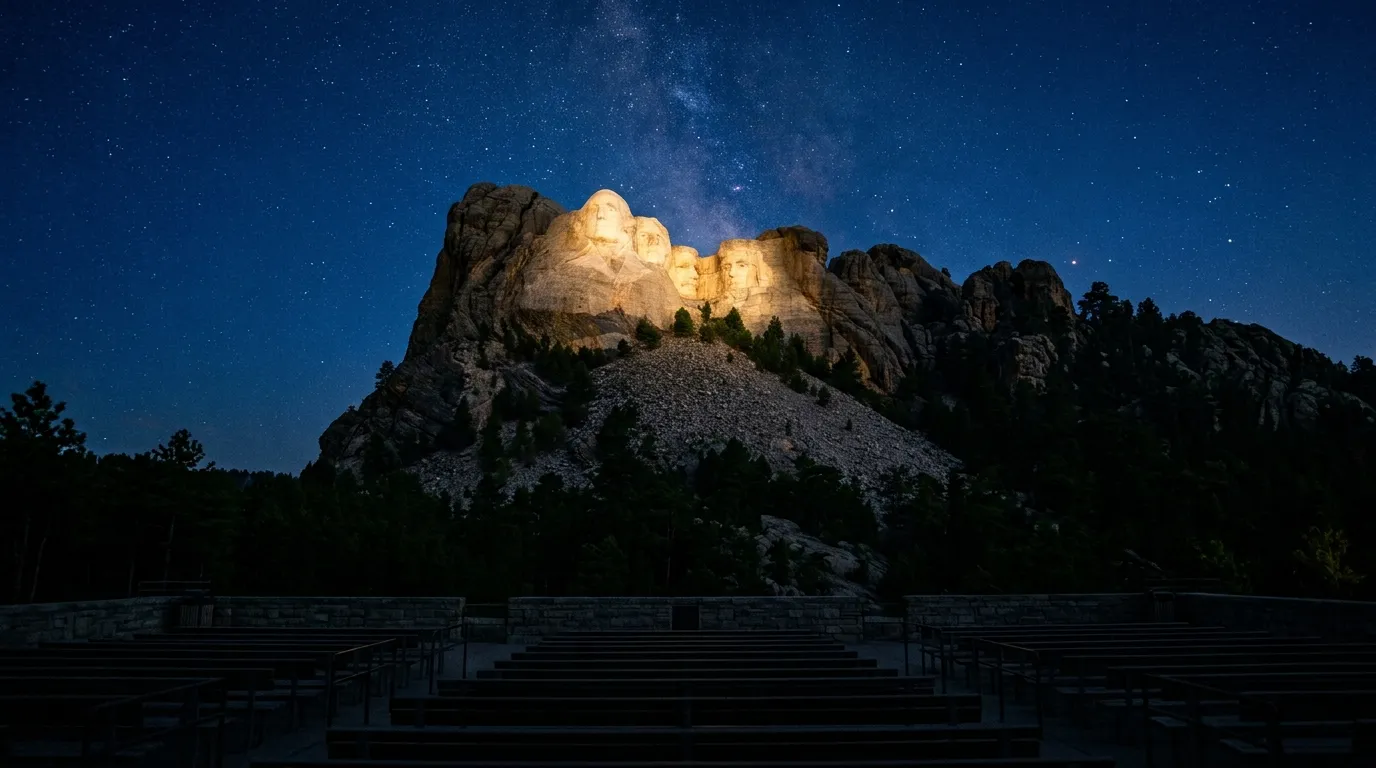
During the main visitor season, Mount Rushmore hosts an evening program in the amphitheater.
The ceremony typically includes a ranger presentation, a film and illumination of the monument after dark. Exact times and seasonal dates vary, so check the official daily schedule before arriving.
The experience has a strongly patriotic tone and attracts large summer crowds. Arrive early for seating, especially during weekends and holiday periods.
Outside the formal ceremony season, the sculpture may still be illuminated during evening hours.
EVENING TIP
Bring a warm layer. Temperatures drop quickly after sunset in the Black Hills, even following a warm summer afternoon.
9. Try the Famous Memorial Ice Cream
The memorial’s ice cream counter is frequently associated with Thomas Jefferson because he recorded an early American ice cream recipe.
The connection is somewhat theatrical, but ice cream beneath four enormous granite presidents feels like a respectable road-trip decision.
Carvers’ Café also serves meals and snacks, though hours change seasonally. The official operating schedule lists shorter hours outside the main summer period.
10. Hike the Blackberry Trail
Travelers wanting a quieter walk can explore the Blackberry Trail.
This moderately strenuous, one-mile gravel trail begins near the parking area and connects with the much longer Centennial Trail in the Black Elk Wilderness. It passes through forest away from the main visitor complex.
The route is far less famous than the Presidential Trail and offers a welcome pause from crowds.
How Much Does Mount Rushmore Cost?
Mount Rushmore National Memorial does not charge an entrance fee.
However, drivers must pay to use the concession-operated parking structure. As of the latest official schedule, standard parking costs $10 per noncommercial vehicle, $5 for visitors aged 62 or older and is free for active-duty military personnel. A parking ticket allows unlimited entry for one year from the purchase date.
Federal recreation passes do not cover the parking fee because the facility is operated under a concession arrangement rather than as a standard federal entrance station.
Approximate Visit Costs
| Expense | Typical Cost |
| Memorial entrance | Free |
| Standard vehicle parking | $10 |
| Senior parking | $5 |
| Active-duty military parking | Free |
| Presidential Trail | Free |
| Visitor center exhibits | Free |
| Evening program | Free |
| Food and souvenirs | Varies |
Always confirm current prices before departure because parking and concession charges may change.
Mount Rushmore Opening Hours
The memorial grounds and parking structure operate for extended hours throughout the year, but schedules vary by season.
The grounds generally open earlier and close later from spring through early autumn. Visitor facilities, food services, museums and studios have their own hours, and some close or reduce operations during winter. Christmas Day has additional closures.
Check the official National Park Service hours page immediately before visiting rather than relying on an old itinerary.
The Best Time to Visit Mount Rushmore
Spring: April to May
Spring brings cooler temperatures, lighter crowds and unpredictable weather.
April may include snow, icy roads or sudden storms, especially at higher elevations. By May, more regional attractions and scenic roads are usually operating, although cold mornings remain possible.
Travelers exploring the country during shoulder season can combine the Black Hills with some of these USA destinations in April, provided they prepare for highly variable mountain weather.
Summer: June to August
Summer is the busiest and most convenient season.
Visitor facilities operate for longer hours, ranger programs are frequent and the surrounding Black Hills offer the broadest selection of activities. Daytime temperatures are generally comfortable, but thunderstorms can develop quickly.
Expect crowds between late morning and midafternoon. Arrive before 9:00 a.m. or after 3:30 p.m. for a calmer visit, as recommended by the National Park Service.
Autumn: September to October
September is arguably the best month for a Mount Rushmore road trip.
Temperatures are often pleasant, summer crowds begin thinning and the Black Hills may show pockets of autumn color. October becomes colder and may bring early snow, but the roads and forests can feel beautifully quiet.
Winter: November to March
Winter transforms Mount Rushmore into a quieter and more severe landscape.
Snow may collect around the granite slopes and forests, creating striking photographs. However, visitor services operate on reduced schedules, mountain roads may be icy and sections of trails can become slippery.
Check South Dakota’s 511 road service and official weather information before driving. The National Park Service directs visitors to the National Weather Service and South Dakota 511 for current conditions.
The Best Time of Day to Visit
Sunrise and Early Morning
Early morning offers:
- Fewer visitors
- Easier parking
- Cooler temperatures
- Softer light
- Quieter trails
- Better opportunities for unobstructed photographs
The sculpture faces generally toward the southeast, making morning light particularly effective.
Late Afternoon
Late afternoon is another strong choice because many tour groups have departed.
The rock may take on warmer tones, and the evening program provides a natural reason to stay after sunset.
Midday
Midday produces the largest crowds and strongest overhead light.
It is still perfectly possible to enjoy the memorial, but photography becomes harsher and popular areas feel busier.
How Long Do You Need at Mount Rushmore?
Two Hours
Enough for:
- Avenue of Flags
- Grand View Terrace
- Quick museum visit
- Short portion of Presidential Trail
Four Hours
Enough for:
- Full Presidential Trail
- Visitor center
- Sculptor’s Studio
- Stone Hoop Garden
- Meal or ice cream
- Relaxed photography
Half a Day Plus Evening
Best for travelers wanting:
- Full memorial experience
- Hiking
- Museum exhibits
- Dinner nearby
- Evening lighting program
Most first-time visitors should plan three to five hours.
How to Get to Mount Rushmore
Mount Rushmore is located near Keystone in western South Dakota.
From Rapid City
The drive from Rapid City usually takes around 35 to 45 minutes, depending on traffic and the chosen route.
Rapid City is the region’s main transportation hub, with the closest commercial airport, rental cars, hotels and restaurants.
From Keystone
Keystone is only a few miles from the memorial and offers the most convenient nearby accommodation.
The town is highly tourist-oriented, with souvenir shops, restaurants and family attractions.
From Custer
Custer is farther away but better positioned for Custer State Park, Needles Highway, Wind Cave and southern Black Hills exploration.
Public Transportation
Public transportation to Mount Rushmore is limited.
Most travelers arrive by rental car, private tour or regional sightseeing bus. A vehicle provides the greatest flexibility for exploring the Black Hills.
The Most Scenic Drive to Mount Rushmore
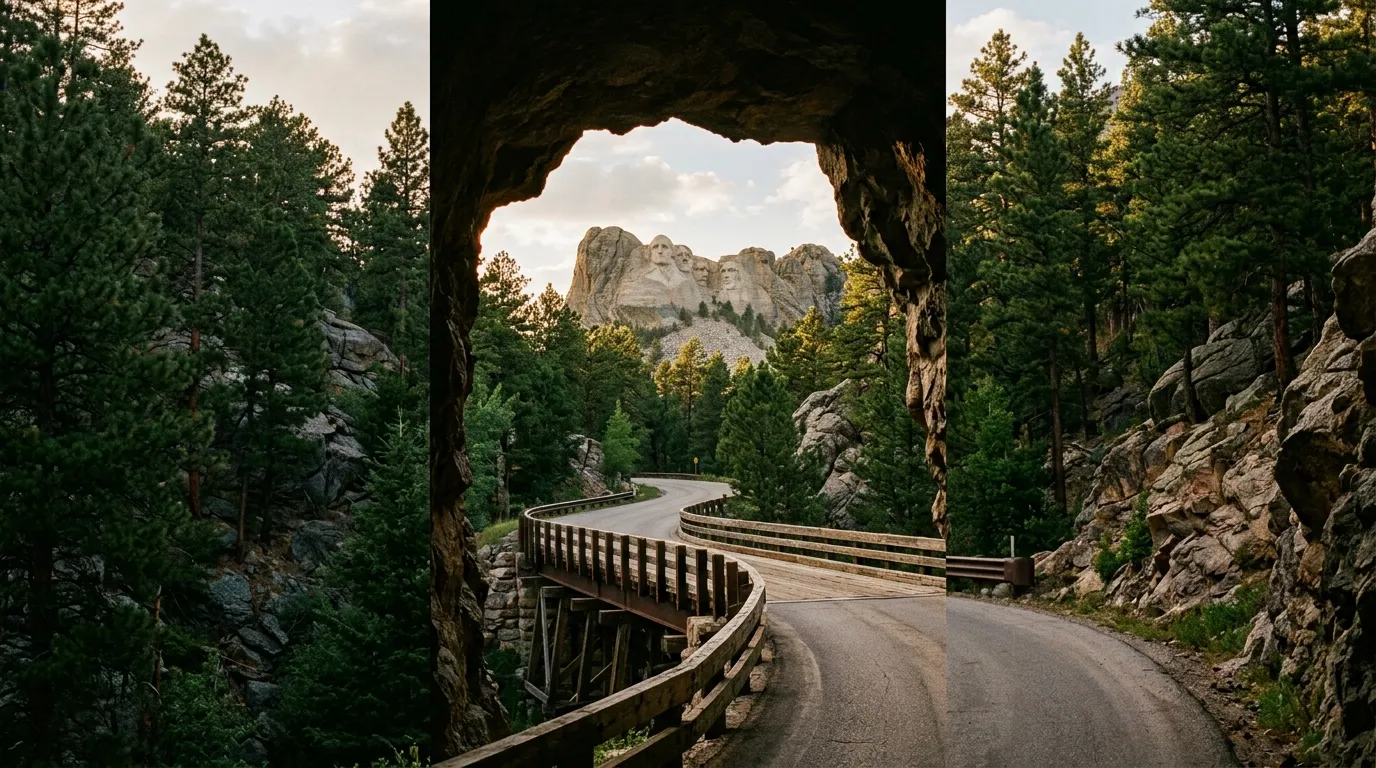
Iron Mountain Road is the grand entrance Mount Rushmore deserves.
This twisting section of U.S. Highway 16A passes through pigtail bridges, forest and narrow tunnels deliberately aligned with distant views of the monument. The road forms part of the Peter Norbeck National Scenic Byway and connects Mount Rushmore with Custer State Park.
Iron Mountain Road Tips
- Drive slowly
- Check tunnel dimensions if traveling in a large RV
- Use designated pullouts
- Watch for wildlife
- Allow substantially more time than navigation apps suggest
- Travel from Custer State Park toward Mount Rushmore for the best tunnel reveals
This road turns the approach into part of the attraction rather than a commute between parking lots.
DRIVING WARNING
Do not stop in tunnels or on blind curves for photographs. Wait for an official pullout. Granite walls are indifferent to your hazard lights.
The Best Places to Visit Near Mount Rushmore
1. Custer State Park
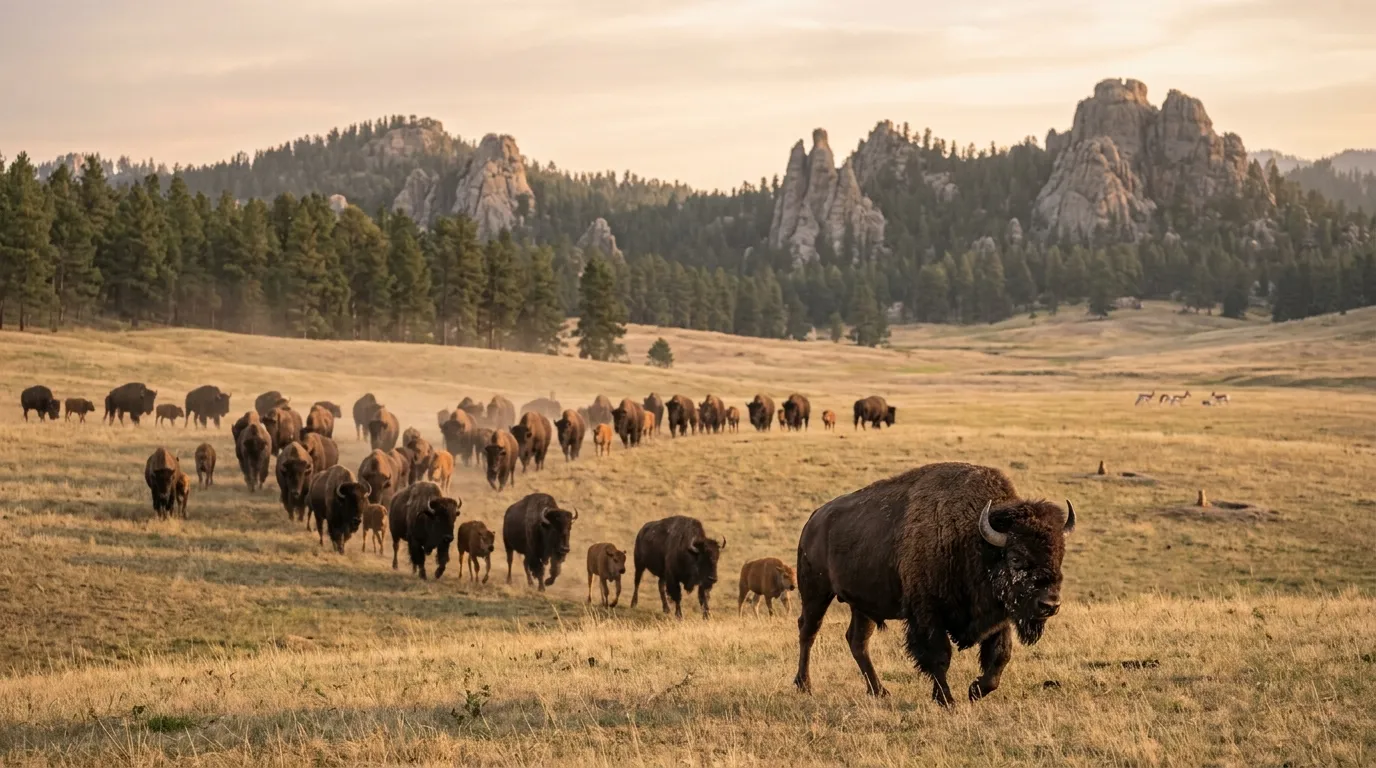
Custer State Park is the essential companion to Mount Rushmore.
The park covers roughly 71,000 acres of mountains, forests, lakes and grassland, with scenic roads passing bison, pronghorn, deer and prairie dogs.
Do Not Miss
- Wildlife Loop Road
- Sylvan Lake
- Needles Highway
- Cathedral Spires
- Iron Mountain Road
- Black Elk Peak trails
- Wildlife viewing around open grasslands
Plan at least one full day.
2. Crazy Horse Memorial
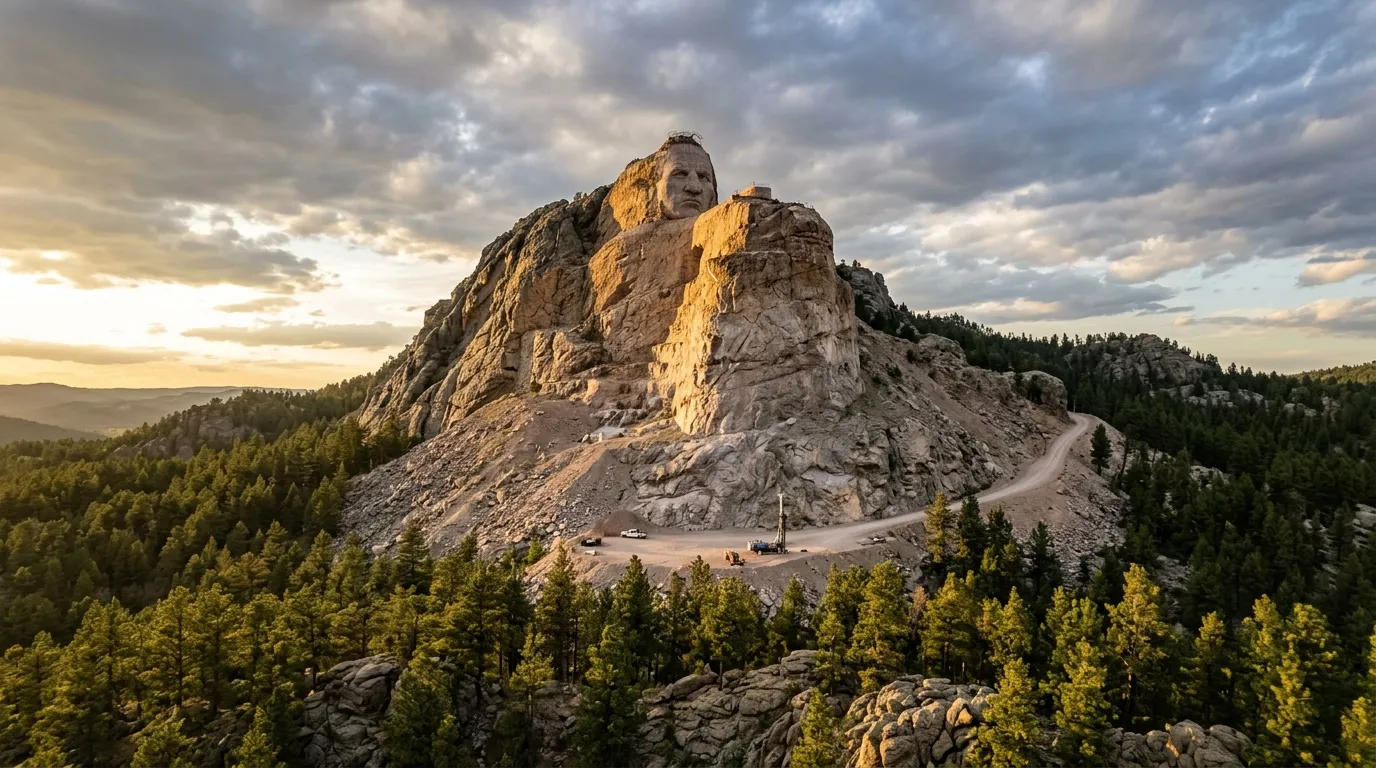
Crazy Horse Memorial is an enormous mountain-carving project honoring the Lakota leader Crazy Horse.
The privately operated site includes museums and cultural programming. Construction remains ongoing, and the experience differs significantly from Mount Rushmore.
Many visitors combine both monuments in one day, but allow time to engage with the exhibits rather than viewing the mountain only from the parking area.
3. Badlands National Park
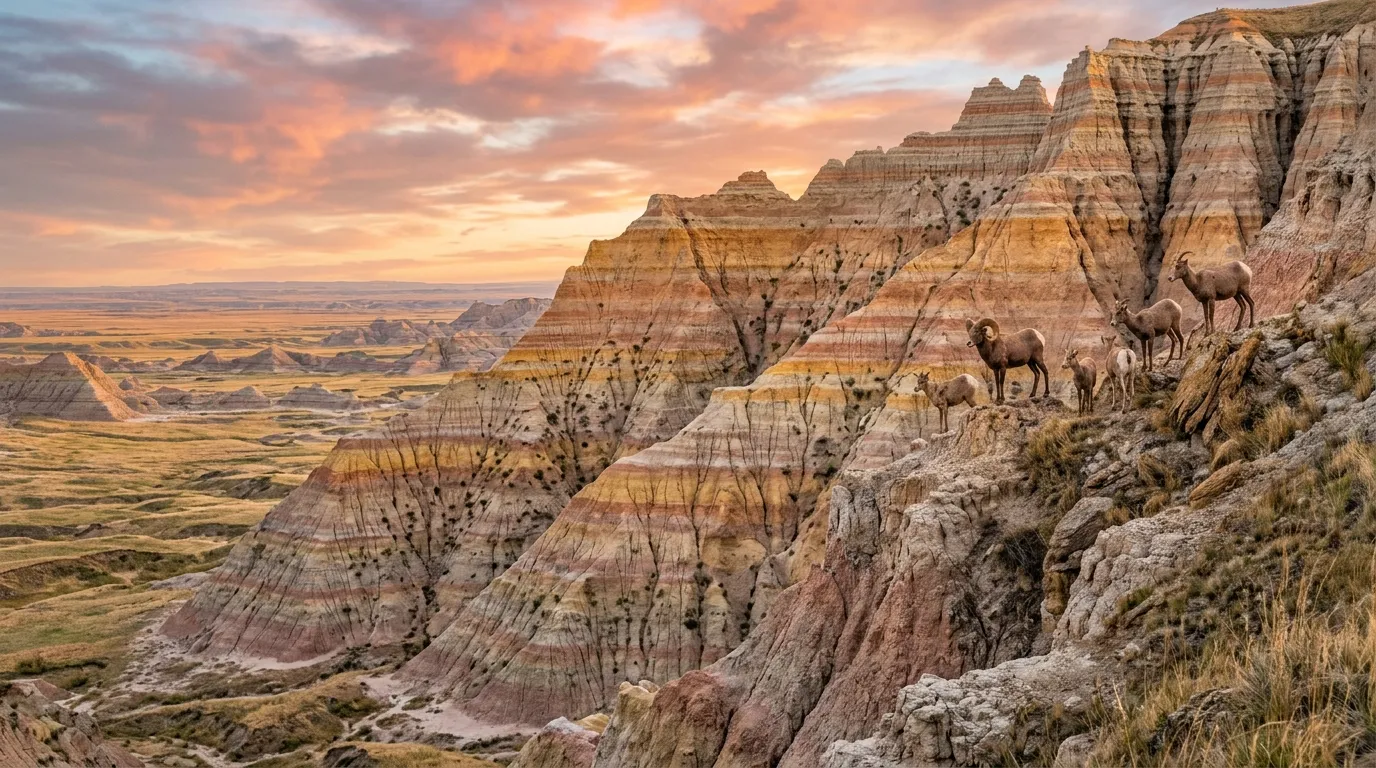
Badlands National Park replaces pine forest with eroded cliffs, striped formations and open prairie.
The landscape feels almost extraterrestrial, particularly at sunrise and sunset. Bison, bighorn sheep, prairie dogs and pronghorn may be visible along park roads.
Badlands can be reached on a longer day trip from the Black Hills, but an overnight stay near the park creates a better experience.
4. Wind Cave National Park
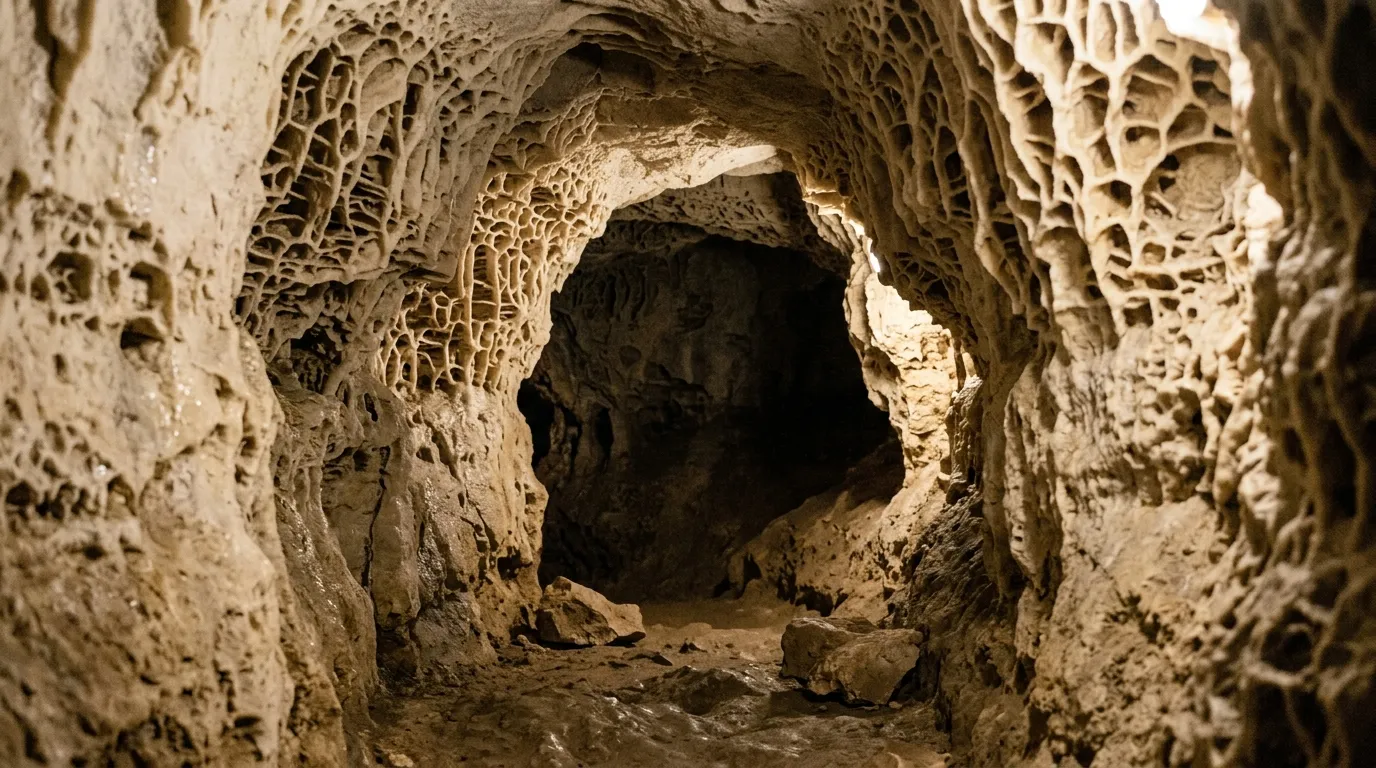
Wind Cave protects one of the world’s longest and most complex known cave systems, along with prairie landscapes above ground.
Cave tours require tickets and may sell out. Check tour availability before traveling because access and schedules can change because of elevator maintenance or operational conditions.
5. Jewel Cave National Monument
Jewel Cave is another enormous underground system west of Custer.
Guided tours reveal chambers, calcite formations and narrow passages. Advance reservations are strongly recommended during busy periods.
6. Deadwood
Deadwood preserves the mythology and history of the Black Hills gold-rush era.
Historic buildings, museums and cemeteries connect the town with figures such as Wild Bill Hickok and Calamity Jane. Modern casinos and entertainment share the streets with the historical sites, creating a curious mixture of frontier history and flashing slot-machine diplomacy.
7. Spearfish Canyon
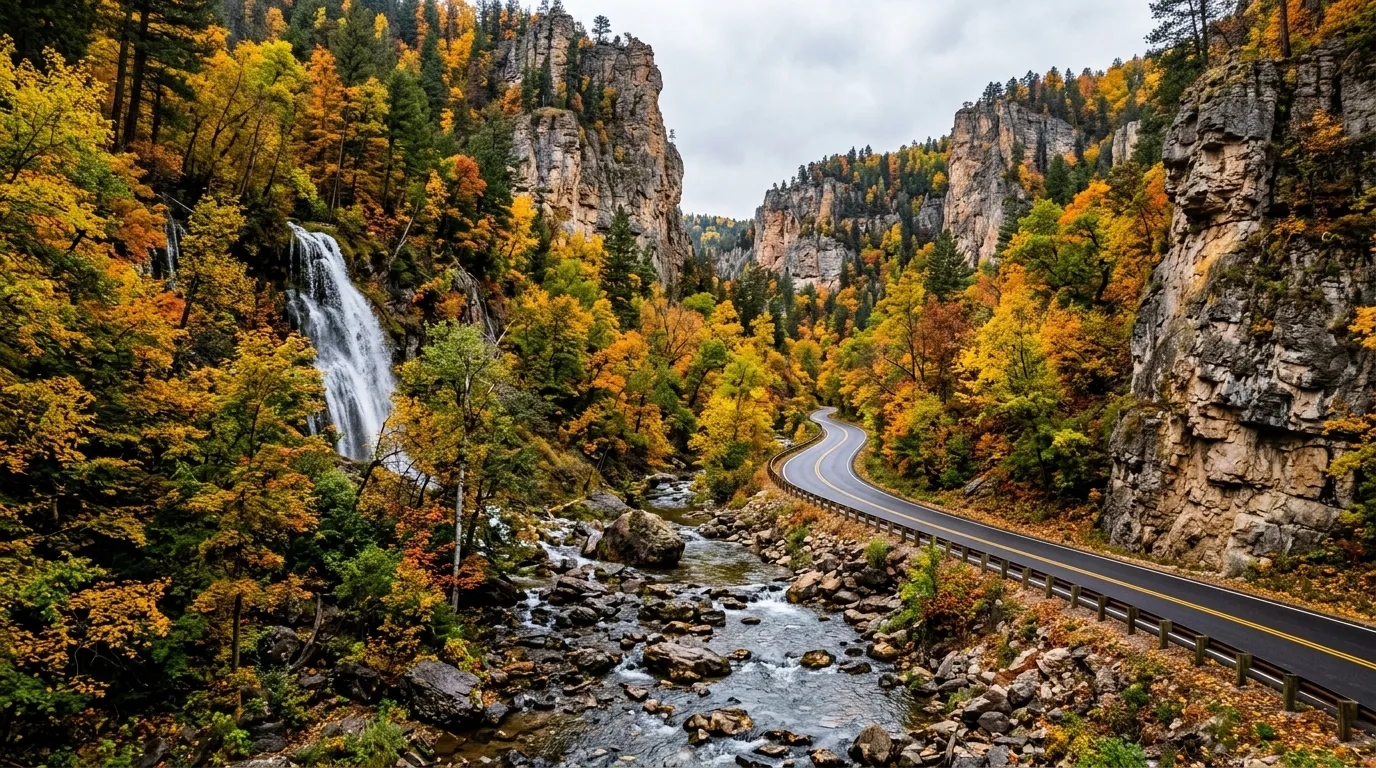
Spearfish Canyon is one of the region’s most beautiful scenic drives.
Limestone cliffs, waterfalls and forest surround the highway. Bridal Veil Falls, Roughlock Falls and Spearfish Falls are among the most popular stops.
Autumn is especially attractive.
8. Black Elk Peak
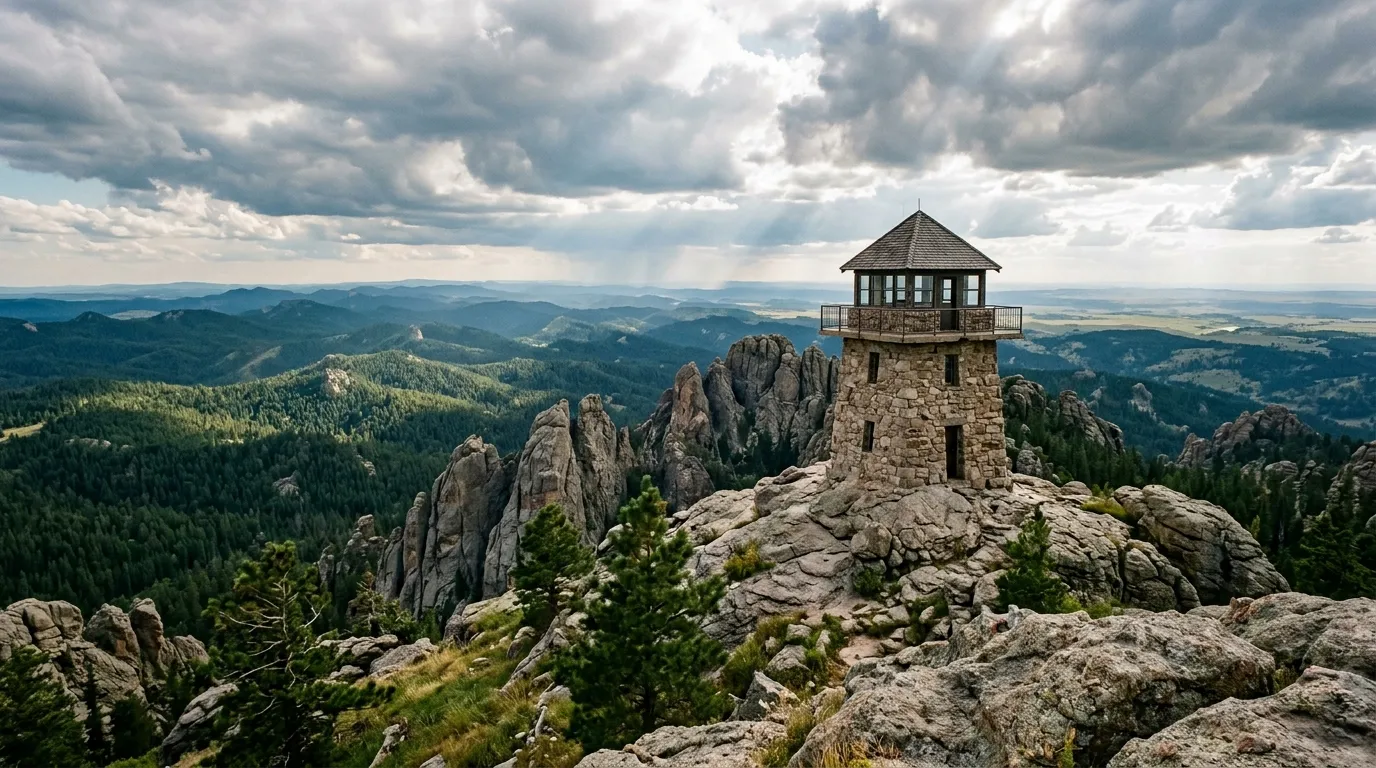
Black Elk Peak is the highest point in South Dakota at 7,244 feet and provides wide views over the Black Hills.
The most popular route begins near Sylvan Lake. It is a substantial hike requiring proper footwear, water and weather preparation.
9. Rapid City
Rapid City makes the most practical regional base.
Its downtown contains public sculptures, restaurants, museums and easy highway access. The city is less atmospheric than staying in the forest, but it offers broader accommodation choices and convenient services.
10. Nebraska Road-Trip Extension
Mount Rushmore can form part of a longer Great Plains road trip through South Dakota and Nebraska.
Travelers continuing south can use this detailed Nebraska road-trip guide to find scenic byways, unusual geological formations, historic towns and food stops beyond the Black Hills.
Mount Rushmore and Black Hills Comparison Table
| Destination | Main Experience | Recommended Time | Distance Style |
| Mount Rushmore | Monument, history and short trails | 3–5 hours | Central stop |
| Custer State Park | Wildlife, lakes and scenic roads | 1–2 days | Nearby |
| Crazy Horse Memorial | Monument and cultural exhibits | 2–3 hours | Nearby |
| Badlands National Park | Geological scenery and wildlife | 1 day | Longer drive |
| Wind Cave | Cave tour and prairie | Half to full day | Southern Black Hills |
| Jewel Cave | Guided cave exploration | Half day | West of Custer |
| Deadwood | Wild West history | Half to full day | Northern Black Hills |
| Spearfish Canyon | Waterfalls and scenic drive | Half day | Northern Black Hills |
| Black Elk Peak | Mountain hiking | 5–7 hours | Near Sylvan Lake |
| Rapid City | Accommodation and museums | 1–2 nights | Regional base |
The Perfect Three-Day Mount Rushmore Itinerary
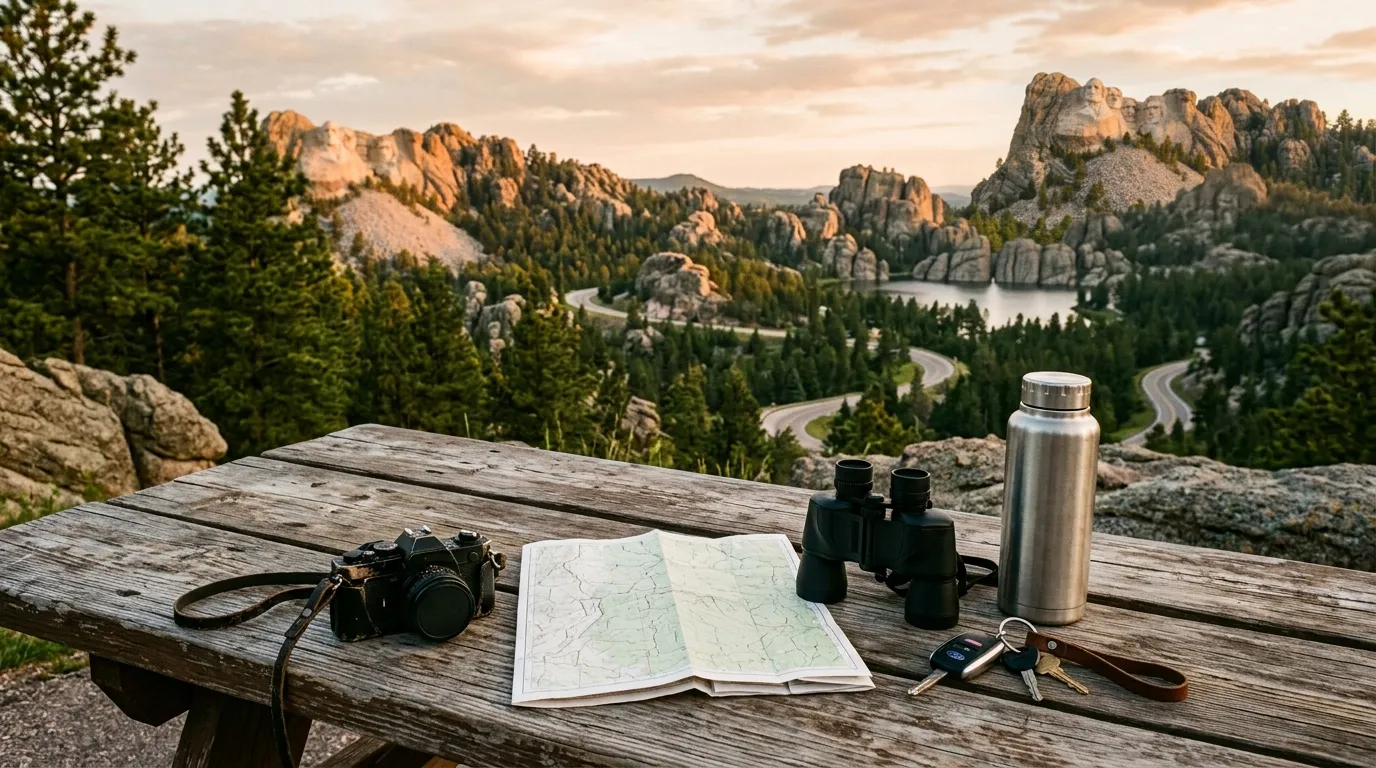
Day 1: Mount Rushmore and Iron Mountain Road
Begin early at Mount Rushmore.
Walk the Avenue of Flags, explore the visitor center and complete the Presidential Trail. Visit the Sculptor’s Studio and Stone Hoop Garden before lunch.
Drive Iron Mountain Road into Custer State Park in the afternoon.
Finish with sunset at Sylvan Lake or return for the Mount Rushmore evening program.
Day 2: Custer State Park
Drive the Wildlife Loop early in the morning.
Continue through Needles Highway, stopping at viewpoints and short trails. Visit Sylvan Lake and hike Cathedral Spires or a shorter lakeside route.
Stay in Custer, Keystone or Rapid City.
Day 3: Crazy Horse and the Caves
Visit Crazy Horse Memorial in the morning.
Continue to either Wind Cave National Park or Jewel Cave National Monument for a reserved tour.
Finish with dinner in Custer or Rapid City.
The Perfect Five-Day Black Hills Road Trip
Day 1: Rapid City and Mount Rushmore
Arrive in Rapid City, drive to Mount Rushmore and attend the evening program.
Day 2: Custer State Park
Explore Wildlife Loop Road, Iron Mountain Road, Needles Highway and Sylvan Lake.
Day 3: Crazy Horse and Black Elk Peak
Visit Crazy Horse Memorial and complete a suitable hike.
Day 4: Wind Cave and Southern Hills
Tour Wind Cave, explore nearby prairie and visit Custer.
Day 5: Deadwood and Spearfish Canyon
Drive north for waterfalls, canyon scenery and Wild West history.
ROAD-TRIP NOTE
Mount Rushmore is the headline, but Custer State Park usually becomes the plot twist. Do not allocate four days to the region and spend three of them repeatedly photographing the same granite noses.
Where to Stay Near Mount Rushmore
Keystone
Best for:
- Staying closest to the memorial
- Evening programs
- Families
- Short visits
- Minimal morning driving
Keystone is convenient but highly commercial.
Custer
Best for:
- Custer State Park
- Needles Highway
- Cave tours
- Longer road trips
- Restaurants and local atmosphere
Custer is often the strongest overall base for outdoor-focused travelers.
Hill City
Best for:
- Central Black Hills access
- Galleries and wineries
- Quieter evenings
- Travelers dividing time between north and south
Rapid City
Best for:
- Airport access
- Larger hotels
- Longer stays
- Broader dining options
- Badlands day trips
Inside Custer State Park
Best for:
- Wildlife viewing
- Early scenic drives
- Mountain-lodge atmosphere
- Minimizing daily driving
Accommodation inside the park can sell out far ahead of summer.
Mount Rushmore Packing Checklist
Everyday Essentials
- Comfortable walking shoes
- Reusable water bottle
- Sunscreen
- Sunglasses
- Hat
- Light daypack
- Portable charger
- Camera or phone
- Offline maps
- Parking payment method
Spring and Autumn
- Warm fleece
- Waterproof jacket
- Gloves
- Warm hat
- Ice-aware footwear when needed
Summer
- Light clothing
- Rain jacket
- Insect repellent
- Extra water
- Evening layer
- Sun protection
Hiking and Scenic Drives
- Trail map
- Snacks
- First-aid kit
- Sturdy shoes
- Emergency blanket
- Flashlight
- Vehicle charger
- Wildlife-safe food storage
Mount Rushmore Safety Tips
Weather
Black Hills weather changes quickly.
Summer thunderstorms may bring lightning, hail and intense rain. Winter creates icy roads and walking surfaces. Check the official forecast and South Dakota 511 before setting out.
Wildlife
Deer, mountain goats, chipmunks, birds and other animals may appear around the memorial. The National Park Service notes that mountain goats and several other species are regularly observed in the area.
Do not feed wildlife or approach animals for photographs.
Driving
The scenic roads contain:
- Sharp bends
- Narrow tunnels
- Steep grades
- Cyclists
- Wildlife
- Slow-moving sightseers
- Limited shoulders
Drive patiently and use designated pullouts.
Hiking
Carry water, wear suitable footwear and remain on marked routes. Granite surfaces become slippery when wet.
THUNDERSTORM WARNING
Do not remain on exposed viewpoints, ridgelines or open granite during lightning. Summer storms can form rapidly even when the morning begins beneath a flawless blue sky.
Responsible Travel in the Black Hills
Mount Rushmore and the Black Hills receive millions of visitors, but the region remains ecologically and culturally sensitive.
Travel responsibly by:
- Staying on established trails
- Parking only in designated areas
- Keeping food away from wildlife
- Taking all litter with you
- Respecting Tribal cultural sites
- Avoiding offensive costumes or mock ceremonies
- Learning Indigenous history from Native-led sources
- Supporting local and Native-owned businesses
- Avoiding drones where prohibited
- Following fire restrictions
- Using reusable water bottles
- Never carving names into trees or rocks
Travelers looking beyond the most famous American landmarks may also enjoy these hidden places in America, which highlight lesser-known landscapes and communities deserving thoughtful exploration.
Extending Your Trip Beyond South Dakota
A Black Hills journey can become part of a much longer American road trip.
The region pairs naturally with:
- Badlands National Park
- Theodore Roosevelt National Park
- Devils Tower
- Nebraska’s Sandhills
- Yellowstone and the Bighorn Mountains
- Colorado’s Front Range
- North Dakota’s western landscapes
Travelers craving a complete change of scenery could contrast the granite peaks and open prairie with this seven-day Jamaica itinerary, where waterfalls, tropical beaches and island towns replace bison roads and ponderosa forest.
For another warm-weather adventure mixing archaeology, wildlife and Caribbean coastline, this detailed Belize travel guide offers an entirely different style of history-and-nature journey.
Frequently Asked Questions
Is Mount Rushmore free?
There is no entrance fee, but most drivers pay a parking charge. The latest standard fee is $10 per noncommercial vehicle.
How long should I spend at Mount Rushmore?
Three to five hours provide enough time for the main viewpoint, Presidential Trail, visitor center, studio and exhibits. Add more time for the evening program.
Can you walk up to the carved faces?
No. Visitors cannot climb onto or approach the sculpture directly. The Presidential Trail provides the closest public views from below.
Is the Presidential Trail difficult?
The trail is short at 0.6 miles, but the complete loop contains 422 stairs. The first 0.2 miles are paved and accessible to wheelchairs, while the remaining section is not.
What are the four presidents on Mount Rushmore?
The sculpture depicts George Washington, Thomas Jefferson, Theodore Roosevelt and Abraham Lincoln.
Why were those presidents chosen?
The creators intended them to represent the founding, expansion, development and preservation of the United States.
Can you visit Mount Rushmore at night?
Yes, during operating hours. The sculpture is illuminated after dark, and seasonal evening programs are offered. Check the current official schedule before visiting.
Are dogs allowed at Mount Rushmore?
Pets are generally limited to designated areas such as parking facilities and pet exercise zones. They are not allowed on the Presidential Trail or within most visitor facilities, except for service animals. Confirm current rules before arriving.
Is Mount Rushmore crowded?
It can be extremely busy between June and August. Arrive before 9:00 a.m. or after 3:30 p.m. for lighter crowds.
What is the closest town?
Keystone is the closest tourist town. Custer, Hill City and Rapid City are also popular bases.
Can you see Mount Rushmore from the road?
Yes. Iron Mountain Road offers carefully framed views through several tunnels, and roadside glimpses appear near the memorial.
Is Mount Rushmore open in winter?
The grounds generally remain accessible, but operating hours and visitor services are reduced. Snow and ice may affect trails and roads.
Is one day enough for Mount Rushmore?
One day is enough for the memorial itself and a scenic drive through part of Custer State Park. However, three to five days are better for exploring the wider Black Hills.
What should I combine with Mount Rushmore?
Custer State Park, Crazy Horse Memorial, Badlands National Park, Wind Cave, Jewel Cave, Deadwood and Spearfish Canyon are the strongest additions.
Final Thoughts
Mount Rushmore is smaller than the mythology surrounding it and larger than photographs make it appear.
The visitor complex can be explored within a morning, but the questions raised by the monument stretch far beyond the granite. It is an engineering achievement, a national symbol, a tourism icon and a deeply contested carving within a sacred Indigenous landscape.
That complexity makes the visit more meaningful, not less.
Stand on Grand View Terrace and observe the monumental scale. Walk the Presidential Trail until the faces appear between ponderosa branches. Study photographs of workers hanging from steel cables, then spend time learning what the Black Hills mean to the Native nations connected to this land.
Afterward, keep driving.
Follow Iron Mountain Road through tunnels and pigtail bridges. Watch bison move across Custer State Park. Walk beside Sylvan Lake as evening settles onto the granite spires.
Mount Rushmore may bring travelers to western South Dakota, but the Black Hills are what persuade them to slow down.