The Blue Azulejo Tiles of São Bento Train Station: The Complete 2026–27 Guide
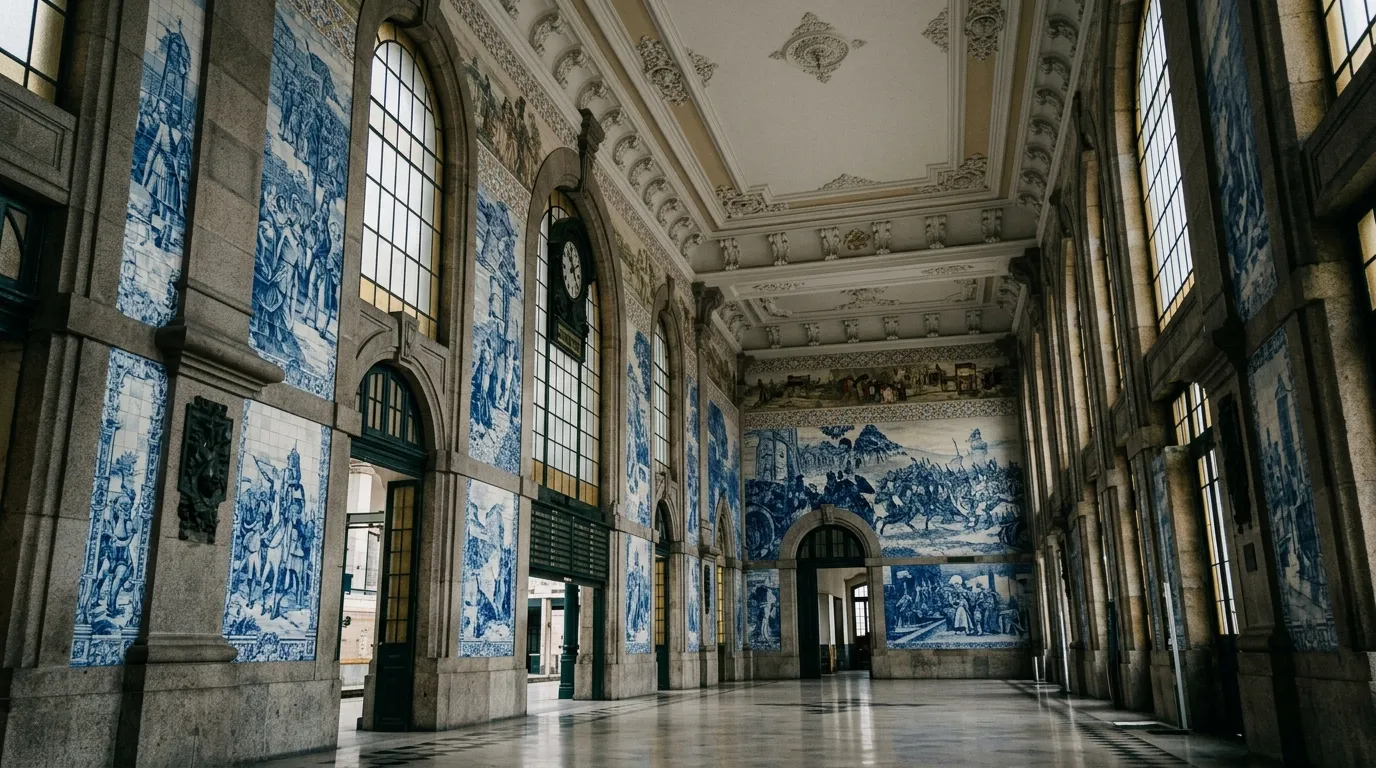
Most people don’t expect to be stopped in their tracks by a train station. São Bento does it anyway. Walk through its Beaux-Arts entrance in central Porto and the everyday business of checking a departure board suddenly happens beneath roughly 20,000 hand-painted blue-and-white ceramic tiles wrapping the entire main hall — battles, royal processions, harvest festivals and rural market scenes, all rendered in the traditional azulejo style that Portugal has spent centuries perfecting. It’s a working train station and a genuine art museum operating in the exact same room, and it costs nothing to walk in and stand beneath it for as long as you like.
This guide covers São Bento’s azulejo tiles for the rest of 2026 and into 2027, and it’s built to help visitors get more out of the station than the standard five-minute photo stop most itineraries allow. Understanding what the panels actually depict — and the eleven years artist Jorge Colaço spent completing them — transforms a quick “wow, look at that” glance into something considerably richer. This is also, genuinely, one of the most centrally located attractions in all of Porto, sitting a short, steep walk from the Ribeira waterfront and directly on the route most visitors already walk between the city’s other major sights.
Whether you’re stopping in for ten minutes on your way to catch a regional train, planning a dedicated visit to properly take in the historical scenes panel by panel, or using São Bento as a jumping-off point for a Douro Valley or Guimarães day trip, this guide breaks down what’s actually depicted in the tilework, the best time to visit for photography without a crowd of iPhones in every shot, and how the station fits into a broader Porto itinerary.
Recommended Travel Items for Your Trip
AT A GLANCE: SÃO BENTO TRAIN STATION AZULEJO TILES
- What it is: A working train station whose main hall is covered in roughly 20,000 hand-painted azulejo tiles depicting Portuguese history
- Artist: Jorge Colaço, who completed the tilework over 11 years, from 1905 to 1916
- Architect: José Marques da Silva, in the French Beaux-Arts style
- Admission: Free — it’s a public, functioning train station
- Status: Part of the Historic Centre of Porto UNESCO World Heritage Site; a National Monument of Portugal
- Best time to visit: Early morning (before 9 a.m.) or later evening for the fewest crowds
- Location: Praça de Almeida Garrett, a short walk from the Ribeira waterfront
- Ideal visit length: 15–30 minutes for the tiles alone; longer if using the station as a transit hub for day trips
São Bento and Porto’s Other Azulejo Sites at a Glance
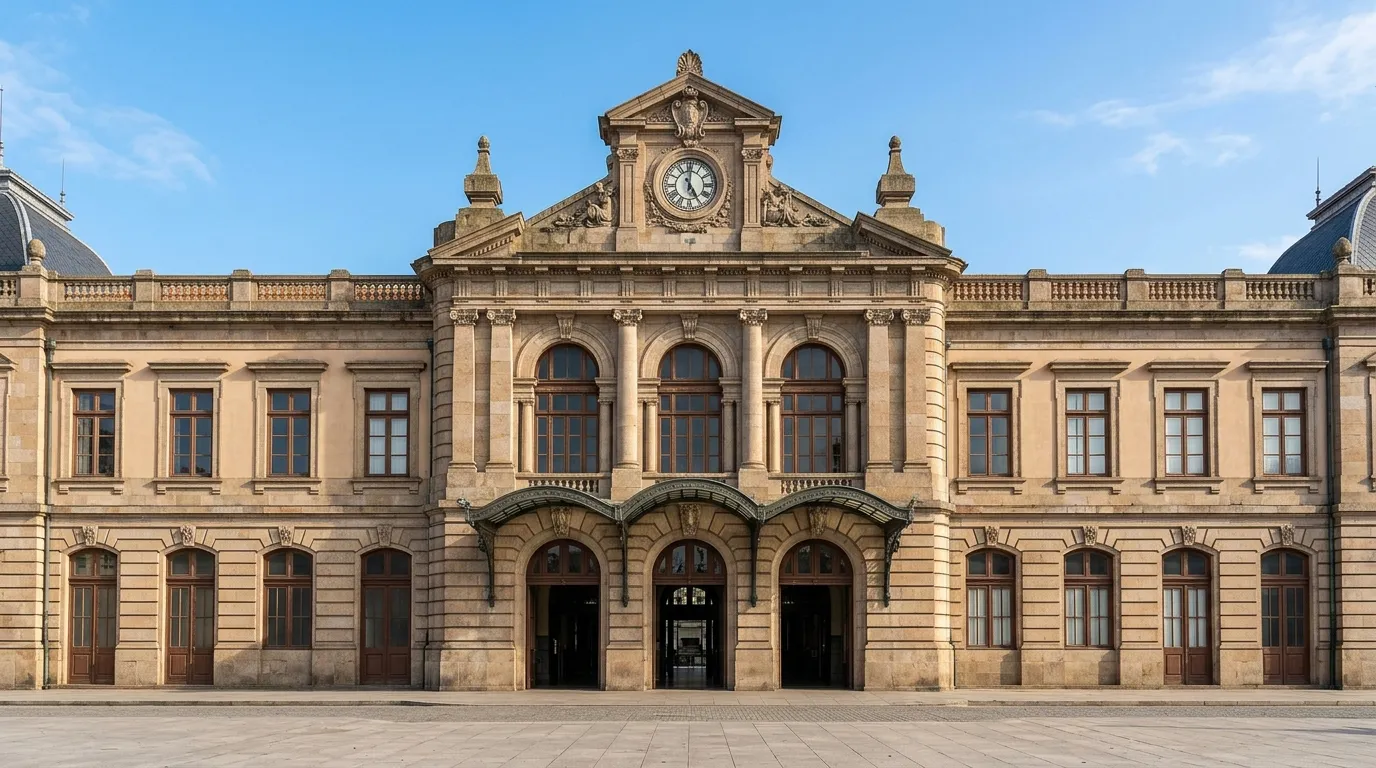
São Bento is Porto’s most famous tiled interior, but it’s far from the only one — a handful of other churches and buildings across the city hold their own striking azulejo work, worth knowing about if the tile tradition genuinely captures your interest.
| Site | Best For | Tile Style | Distance from São Bento | Main Consideration |
| São Bento Train Station | The definitive historical narrative in tile | Blue-and-white historical panels with colored ethnographic friezes | — | Still an active train station; can get crowded midday |
| Igreja do Carmo | An entire church exterior wrapped in blue tile | Blue-and-white, exterior facade | About 10 minutes on foot | Famous for its striking street-facing wall |
| Capela das Almas | One of Porto’s most photographed tiled facades | Blue-and-white, exterior facade, nearly 16,000 tiles | About 12 minutes on foot | Popular photo spot, can be busy at peak times |
| Igreja dos Congregados | A smaller, quieter tiled church facade | Blue-and-white, exterior facade | Directly across from São Bento | Easy to combine with a São Bento visit |
Why São Bento Is One of the Most Beautiful Train Stations in the World
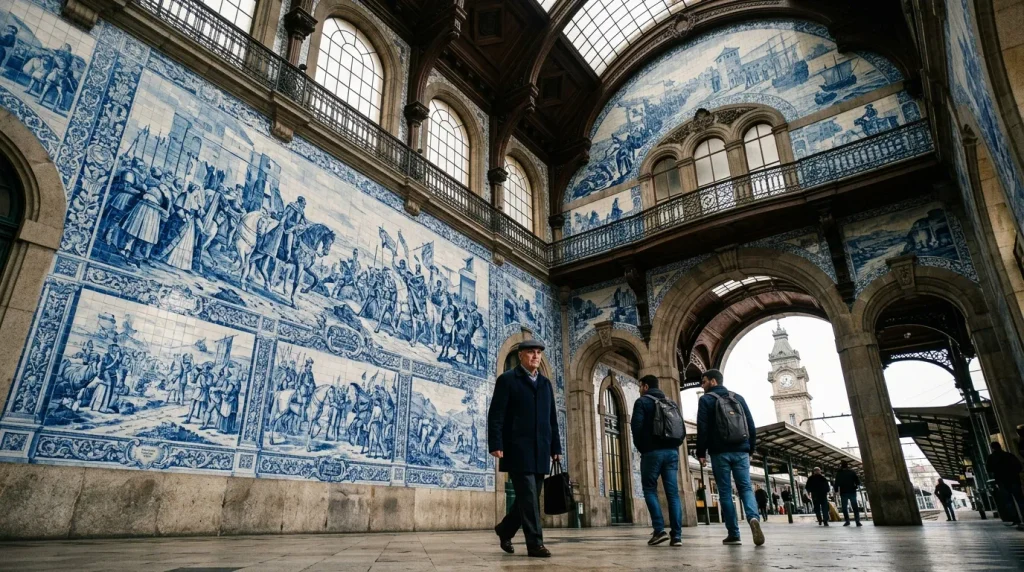
São Bento shows up on nearly every “world’s most beautiful train stations” list for a simple reason: nowhere else combines this scale of historical narrative art with a building still doing its everyday job. This isn’t a museum piece behind glass — it’s an active regional and metro train hub where locals rush to catch a 7:15 a.m. departure to Braga directly beneath a panel depicting a 12th-century battle. That collision of the mundane and the monumental is exactly what makes the station worth genuinely stopping for, rather than simply glancing at on the way somewhere else.
A Brief History of Azulejo Tiles in Portugal
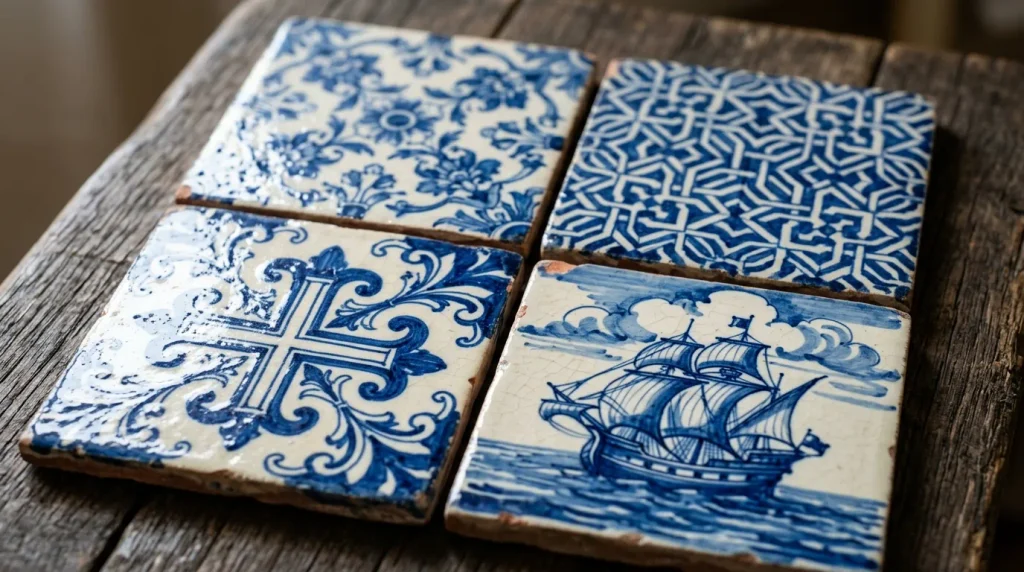
Azulejo tilework arrived in Portugal from Moorish Spain in the 15th century, evolving over the following centuries from geometric Islamic-influenced patterns into the distinctive Portuguese blue-and-white pictorial style most associated with the country today, heavily influenced by Dutch Delftware in the 17th and 18th centuries. By the early 20th century, when São Bento’s tiles were being installed, azulejo art had become deeply tied to Portuguese national identity, and Jorge Colaço’s work at the station reflects that moment precisely — a wave of romantic nationalism expressing itself through a centuries-old craft, applied at a genuinely unprecedented scale.
Since Portugal’s tile tradition traces its roots directly back across the border, it’s worth seeing where that shared Moorish-influenced style first took hold — this Spain travel guide covers the Andalusian cities where Iberian tilework has its deepest roots, a fitting companion trip for anyone captivated by São Bento’s craftsmanship.
The History and Construction of São Bento Station
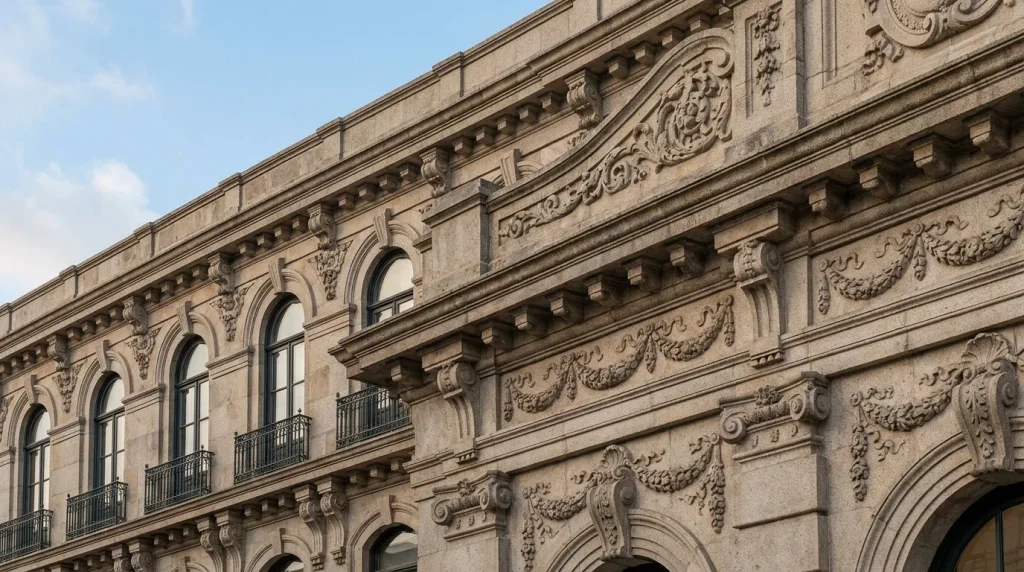
The station takes its name from a Benedictine monastery that once stood on the site, destroyed by fire in 1783 and later demolished to make way for Porto’s expanding railway network. King Carlos I himself laid the first stone in 1900, and architect José Marques da Silva — a Porto native trained at Paris’s École Nationale Supérieure des Beaux-Arts — designed the station in the French Beaux-Arts style, characterized by its grand, symmetrical granite facade and classical proportions. The building was completed and inaugurated in 1916, though the azulejo decoration inside had actually begun years earlier, in 1905, meaning Jorge Colaço’s tilework was already well underway before the station itself officially opened.
What the Tiles Actually Depict
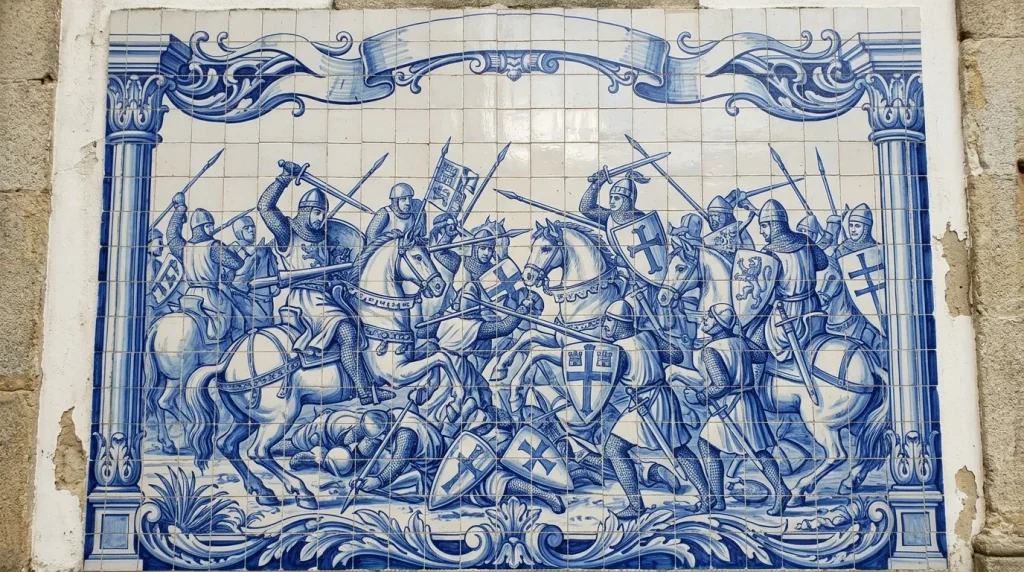
The scale of the artwork is genuinely worth pausing on: roughly 20,000 individual tiles, each measuring 15 by 15 centimeters, covering nearly every surface of the main hall. The panels split into two distinct registers. Large, dramatic blue-and-white historical scenes dominate the upper walls, depicting pivotal moments in Portuguese history — the Battle of Valdevez (1140), the 12th-century meeting between the knight Egas Moniz and King Alfonso VII of León, the 1387 arrival of King João I and Queen Philippa of Lancaster in Porto, and the 1415 Conquest of Ceuta, which marked the beginning of Portugal’s Age of Discovery. Below these grand historical narratives, bands of more colorful, smaller-scale tiles depict everyday Portuguese life across different regions: rural markets, religious processions, traditional festivals and the various forms of transportation used throughout the country’s history — a fitting theme for the walls of an active train station.
Jorge Colaço: The Artist Behind the Tiles
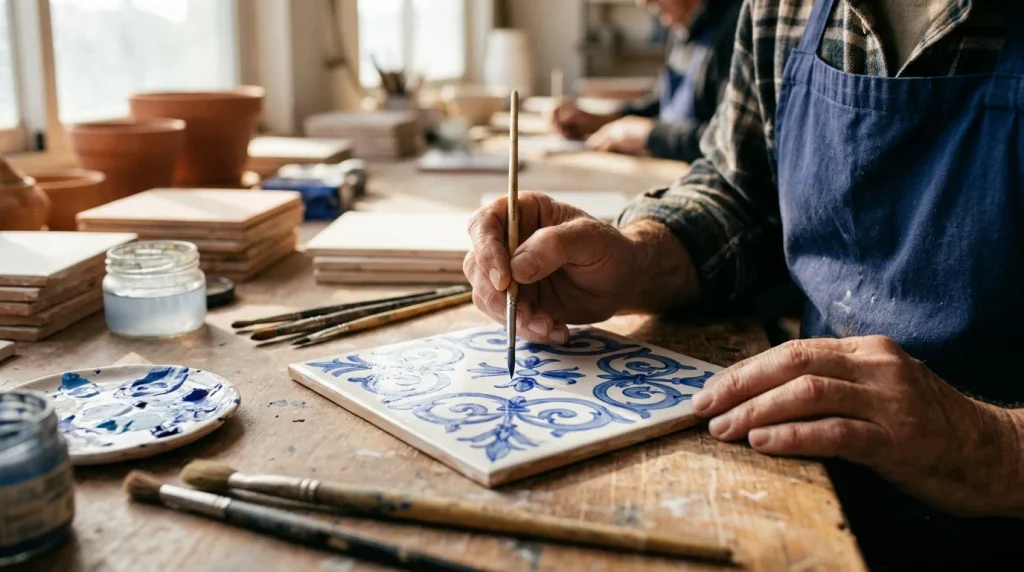
Jorge Colaço was already an established painter specializing in azulejo work by the time he began the São Bento commission in 1905, and the station remains widely regarded as his masterpiece. Completing the tilework took a full eleven years, running in parallel with the broader construction of the station itself, and the result is considered one of the most significant works of decorative art produced in Portugal during the early 20th century — a scale and ambition rarely attempted before or since in a single interior space.
Visiting São Bento: Practical Details
Because São Bento remains a fully functioning train station, there’s no admission fee and no set visiting hours beyond the station’s own operating times — walk in, look up, and take as long as you like. It primarily serves regional and metro trains within the Porto area; long-distance and international connections typically run through Porto’s Campanhã station instead, so don’t expect to catch an intercity train directly from here. The main hall is freely accessible to anyone, ticketed passenger or not, and station staff are generally accustomed to visitors stopping in purely for the tilework.
Best Time to Visit for Photography
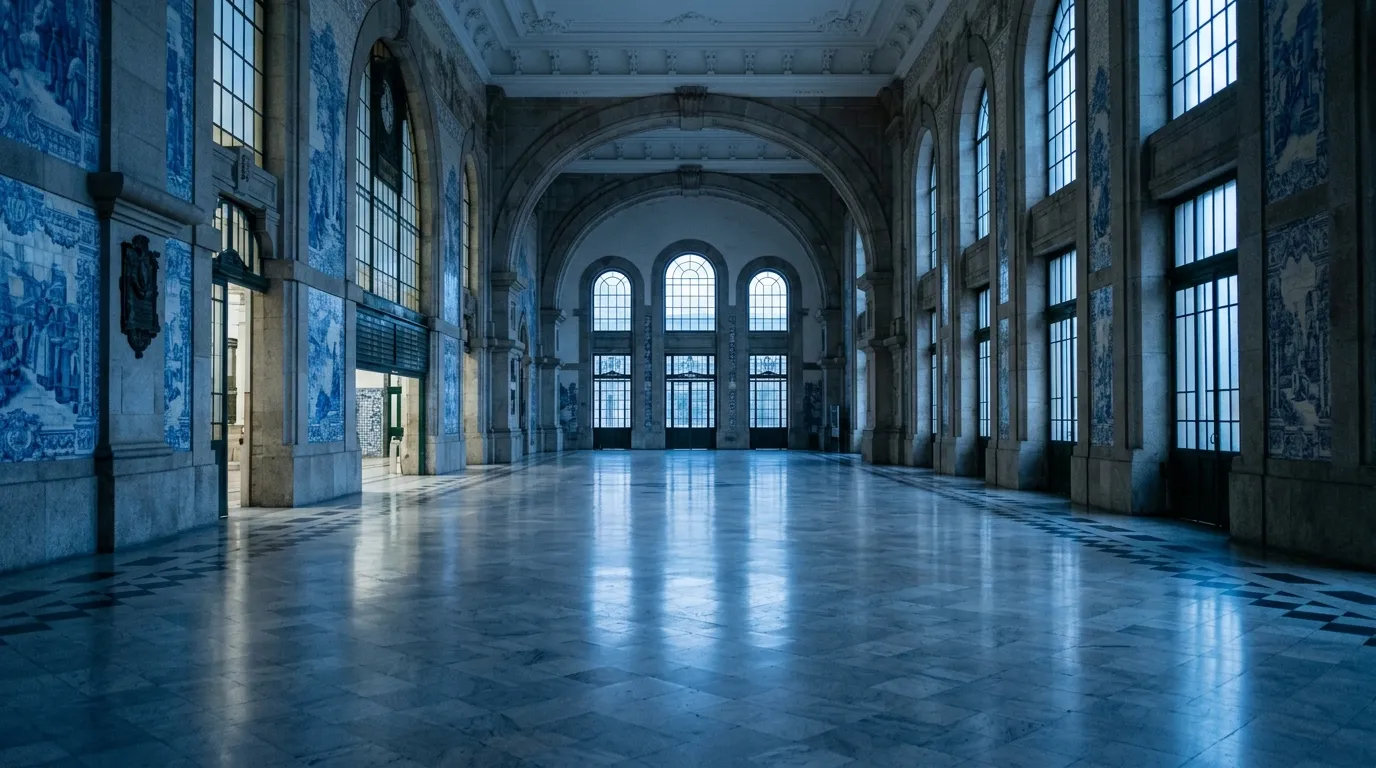
Like most of Porto’s headline attractions, São Bento draws real crowds by mid-morning through late afternoon, with tour groups and day-trippers frequently filling the main hall. Arriving before 9 a.m. or visiting in the early evening offers a genuinely better chance at photographing the tiles without dozens of other visitors in frame, and the softer, more diffused light at those hours also tends to photograph the blue-and-white tilework more evenly than the harsher midday light streaming through the hall’s windows.
Intricate, painstaking traditional craftsmanship — the kind that takes an artist over a decade to complete a single space — has its own devoted following well beyond Portugal’s tile tradition; if that fascination extends to other cultures’ ceramic and decorative arts, this complete guide to Japan travel for first-time and repeat visitors is worth bookmarking, given Japan’s own centuries-deep ceramic and craft traditions.
Beyond the Tiles: São Bento as a Travel Hub
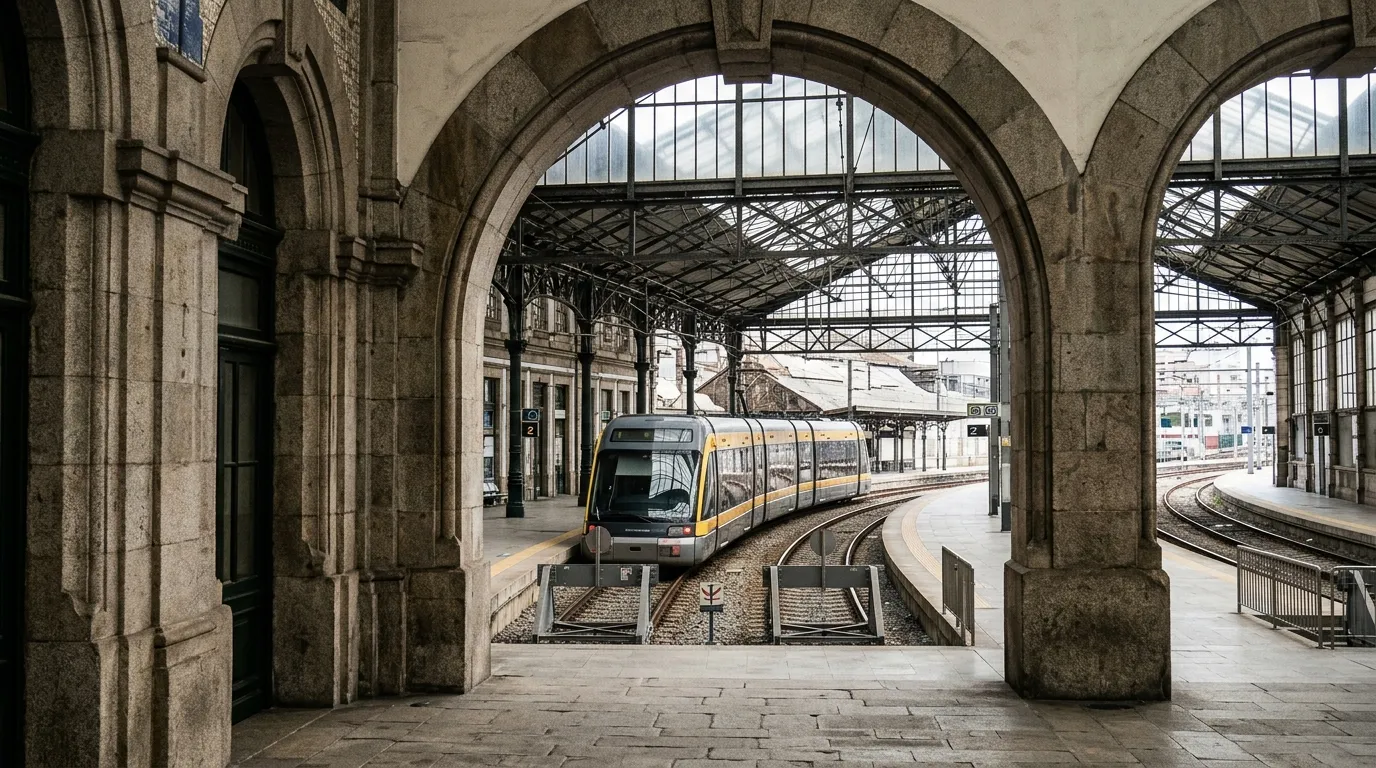
Once you’ve taken in the tilework, São Bento is also a genuinely useful practical stop for extending a Porto trip. Regional trains depart from here for Guimarães (Portugal’s “birthplace,” a UNESCO-listed medieval town) and Braga (one of Portugal’s oldest cities, known for its baroque churches), both realistic day trips at under an hour and a half away. The Douro Valley — Portugal’s stunning terraced wine region — is also reachable by a scenic train route that counts among the most beautiful rail journeys in Europe in its own right, making São Bento a fitting departure point for a day spent among vineyard-covered hillsides after a morning spent among tiled battle scenes.
If a scenic train ride through vineyard country has you thinking about entirely different landscapes for a future trip, it’s worth stepping even further outside Europe — this guide to planning a thrilling safari in Africa, covering everything from luxury lodges to budget trips, offers about as complete a contrast to a Portuguese train platform as travel gets.
The Broader Tradition: Telling History Through Art

What makes São Bento genuinely remarkable isn’t just the craftsmanship — it’s the ambition of using an entire building’s walls to tell a nation’s story in pictures, a tradition with roots stretching back much further than Portugal’s own azulejo history.
The idea of covering vast wall surfaces with detailed, narrative imagery meant to be read like a book is a genuinely ancient instinct that shows up across very different cultures and millennia — this Egypt travel guide covers a civilization that turned wall art into historical record thousands of years before Jorge Colaço picked up his first tile, worth bookmarking for a future trip that traces that same storytelling impulse back to its earliest form.
Other Azulejo Sites Worth Seeing in Porto

São Bento is the most famous tiled interior in the city, but Porto holds several other azulejo landmarks worth a stop if the tradition has caught your interest. Igreja do Carmo, about ten minutes on foot, wraps its entire street-facing exterior wall in blue-and-white tiles depicting the founding of the Carmelite order — one of the most striking single facades in the city. Capela das Almas, roughly twelve minutes away, is covered in nearly 16,000 tiles depicting scenes from the lives of various saints and remains one of Porto’s most photographed buildings. Directly across from São Bento itself, the smaller Igreja dos Congregados offers a quieter, less crowded tiled facade worth a quick look on the way out of the station.
Where São Bento Sits in Porto
São Bento’s location is genuinely central — it sits on Praça de Almeida Garrett, a short, steep walk down from the Torre dos Clérigos and Livraria Lello (Porto’s famously ornate bookshop), and an equally short walk uphill from the Ribeira waterfront district. Most visitors naturally pass through or near São Bento simply moving between these other major sights, which is exactly why it works so well as a quick, unplanned stop rather than requiring a dedicated separate trip.
Where to Stay Near São Bento
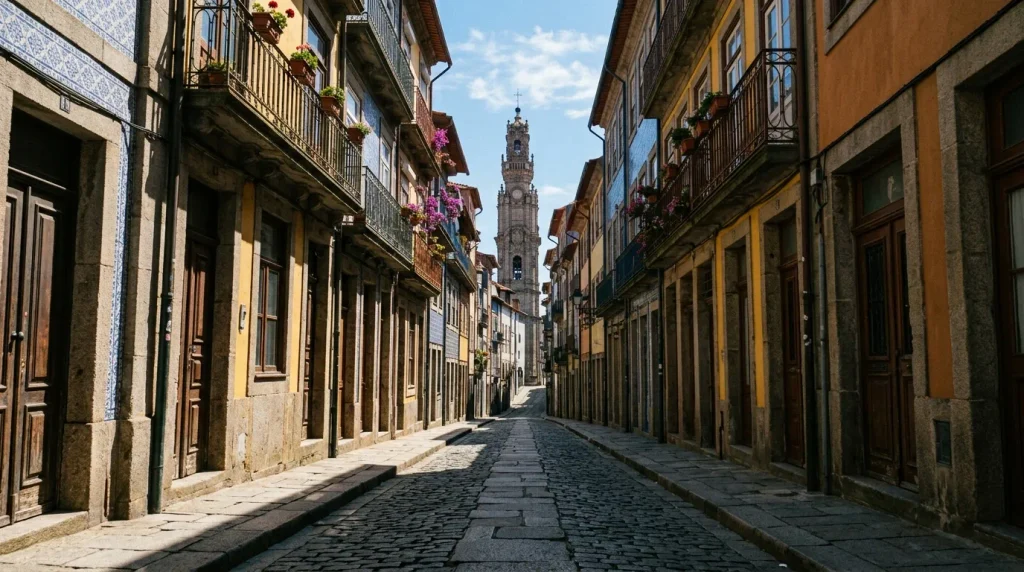
Baixa (downtown Porto): The most central option, placing São Bento, Livraria Lello and the Clérigos Tower all within easy walking distance.
Ribeira: A short, steep walk downhill from the station, with the added benefit of the colorful waterfront and Vila Nova de Gaia’s wine cellars nearby.
Near Trindade/Bolhão: A slightly quieter alternative still close enough to reach São Bento on foot, with easy Metro access for exploring further afield.
How to Get to São Bento
By Metro: São Bento has its own Metro station, making it one of the easiest major attractions in Porto to reach directly.
On foot: Central enough to reach easily from Ribeira, Baixa or the Clérigos Tower area, though expect some uphill walking depending on your starting point given Porto’s hilly terrain.
By train: As covered above, São Bento serves regional and metro lines; connect at Campanhã station for long-distance or international rail travel.
How Much Time Do You Need at São Bento?
A focused visit takes just 15 to 30 minutes — enough time to walk the full hall, take in both registers of tilework, and get a handful of photos. Visitors with a deeper interest in the historical scenes depicted, or those combining the stop with catching a regional train onward, should budget closer to 45 minutes to properly read through the panels rather than rushing past them.
Budget Travel and São Bento
This is about as good as free attractions get — no ticket, no timed entry, no restrictions beyond the station’s normal operating hours. It’s a genuinely excellent addition to a budget-conscious Porto itinerary specifically because it delivers museum-caliber artwork without a museum-caliber price tag.
Family Travel at São Bento
The station works well for families given its short visiting time and zero cost — kids generally respond well to the scale and color of the tilework even without understanding the historical context, and the visit is brief enough to slot in between other stops without testing anyone’s patience. The busy, echoing hall (and real train traffic) does mean keeping a closer eye on younger children than in a purpose-built museum setting.
A Different Kind of Colorful Landmark
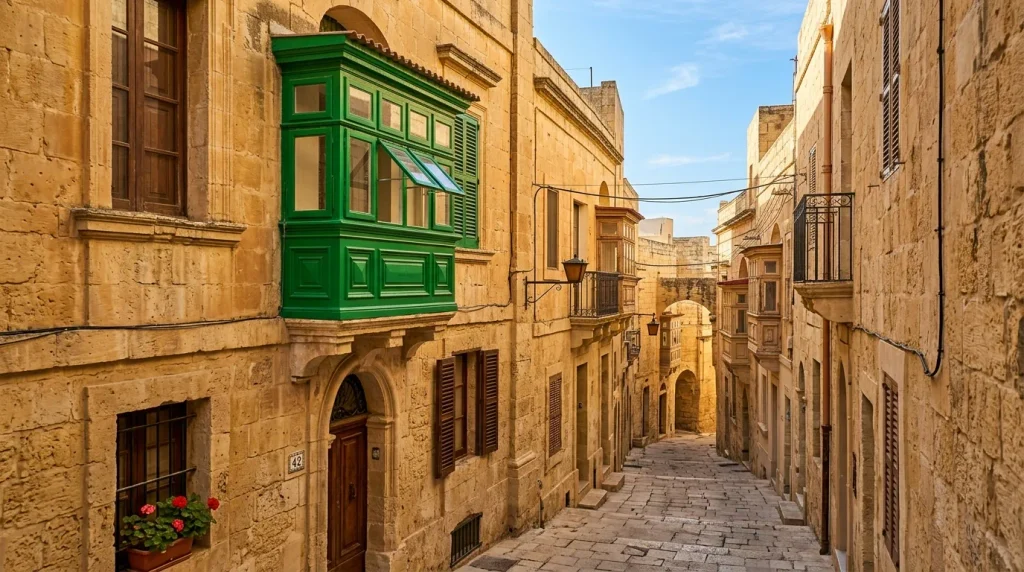
São Bento’s blue-and-white storytelling is a distinctly Portuguese tradition, but the instinct to build something visually striking and historically layered into everyday architecture shows up elsewhere in the Mediterranean too.
If São Bento’s blue tilework has you drawn to bold, colorful architecture more broadly, it’s worth knowing that same instinct shows up vividly on a much smaller Mediterranean island as well — this Malta travel guide covers a destination whose golden limestone towns and layered history offer their own strikingly different, equally photogenic version of that same idea.
Practical and Safety Tips
São Bento is a genuinely safe, well-monitored public space, though standard urban awareness applies given how busy the main hall gets with both tourists and daily commuters — keep an eye on belongings in the crowded midday hours. Since it’s an active train station, be mindful of platform areas and posted signage if your visit overlaps with catching a train, and remember that photography of the tilework itself is entirely permitted and expected, unlike some more restrictive museum settings.
São Bento Packing Checklist
- [ ] A camera or phone with adequate storage for detailed tile photography
- [ ] Comfortable walking shoes, given the uphill approach from Ribeira
- [ ] A regional train ticket if planning a same-day trip to Guimarães, Braga or the Douro Valley
- [ ] A portable charger if combining the visit with a longer day of sightseeing
- [ ] Layers, since Porto’s weather can shift throughout the day
Frequently Asked Questions About São Bento’s Azulejo Tiles
How much does it cost to visit São Bento’s tiles?
Nothing — it’s a free, publicly accessible train station, and there’s no admission fee to view the tilework.
How many tiles are in São Bento station?
Approximately 20,000 individual azulejo tiles, each measuring 15 by 15 centimeters.
Who created the tiles at São Bento?
Portuguese artist Jorge Colaço, who completed the work over 11 years, from 1905 to 1916.
What do the tiles depict?
Large historical scenes including the Battle of Valdevez (1140), the meeting of Egas Moniz and King Alfonso VII, the 1387 arrival of King João I and Queen Philippa in Porto, and the 1415 Conquest of Ceuta, alongside smaller, colorful bands depicting rural festivals, markets and everyday Portuguese life.
When was São Bento station built?
Construction began in 1900 under architect José Marques da Silva, with the station inaugurated in 1916.
Can I catch international or long-distance trains from São Bento?
No — São Bento primarily serves regional and metro trains; connect at Campanhã station for long-distance and international rail travel.
What is the best time to visit for photos without crowds?
Before 9 a.m. or in the early evening, when tour groups and day-trippers thin out considerably.
How long should I spend at São Bento?
15 to 30 minutes covers a focused visit; closer to 45 minutes if you want to properly take in the historical narrative panel by panel.
Is São Bento close to other Porto attractions?
Yes — it sits a short walk from Livraria Lello, the Torre dos Clérigos and the Ribeira waterfront, making it an easy stop between other sights.
Is São Bento a UNESCO World Heritage Site?
It’s part of the Historic Centre of Porto, inscribed as a UNESCO World Heritage Site, and is separately designated a National Monument of Portugal.
Are there other azulejo-covered buildings in Porto?
Yes — Igreja do Carmo, Capela das Almas and Igreja dos Congregados all feature striking tiled exteriors worth visiting alongside São Bento.
Is São Bento good for families?
Yes — it’s free, quick to visit, and generally holds children’s attention well given its scale and color, though the busy hall warrants keeping a closer eye on younger kids.
Can I take photographs inside São Bento?
Yes, photography of the tilework is entirely permitted and one of the main reasons visitors stop by.
What’s the significance of the name “São Bento”?
The station takes its name from a Benedictine monastery that previously stood on the site, destroyed by fire in 1783 and later demolished for the railway.
Final Thoughts on Visiting São Bento’s Azulejo Tiles
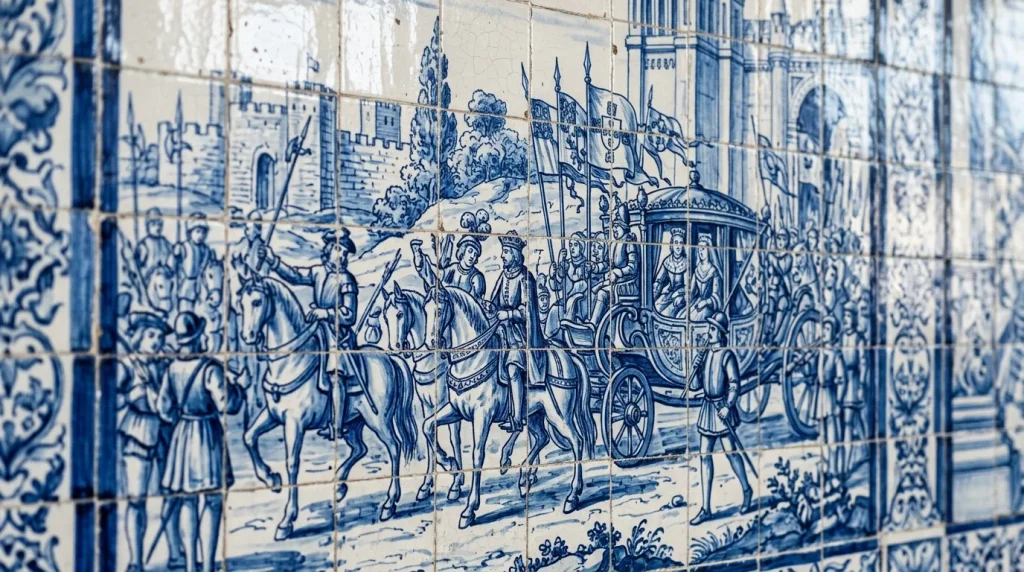
São Bento earns its reputation as one of the most beautiful train stations in the world through a combination that’s genuinely rare: roughly 20,000 hand-painted tiles telling centuries of Portuguese history, wrapped around a building that never stopped being exactly what it was built to be — a working transit hub moving commuters through the city every single day. Jorge Colaço’s eleven years of work here rewards more than the standard passing glance most itineraries allow.
If you’re building a Porto visit, let São Bento earn its place as more than a photo op between other stops — budget the extra fifteen minutes to actually read the historical panels, and consider timing your visit for early morning or evening if a crowd-free photograph matters to you. However you approach it, the blue azulejo tiles of São Bento deliver exactly what makes Porto’s historic centre worth its UNESCO status: centuries of craft and history, hiding in plain sight in the very last place most travelers think to look for it.