Travel From Milan to Venice by Train: The Complete 2026–27 Guide to Tickets, Stations and the Easiest Journey
Traveling from Milan to Venice by train is one of the simplest and most rewarding city-to-city journeys in Italy.
There is no airport transfer, no need to navigate Italian highways, and no tense conversation with a rental-car company about restricted traffic zones. You can board in central Milan, settle into a reserved seat and step off beside Venice’s Grand Canal roughly two and a half hours later.
Direct high-speed services are operated by Trenitalia’s Frecciarossa and Italo. The fastest scheduled journeys can take approximately 2 hours 15 minutes, although many services take closer to 2 hours 30 minutes depending on the departure, stops and current railway works. Italo currently advertises advance fares from €14.90, but actual ticket prices vary by date, demand, fare conditions and remaining availability.
The most important booking detail is surprisingly simple:
Choose Venezia Santa Lucia as your destination, not Venezia Mestre, when you want to arrive inside historic Venice.
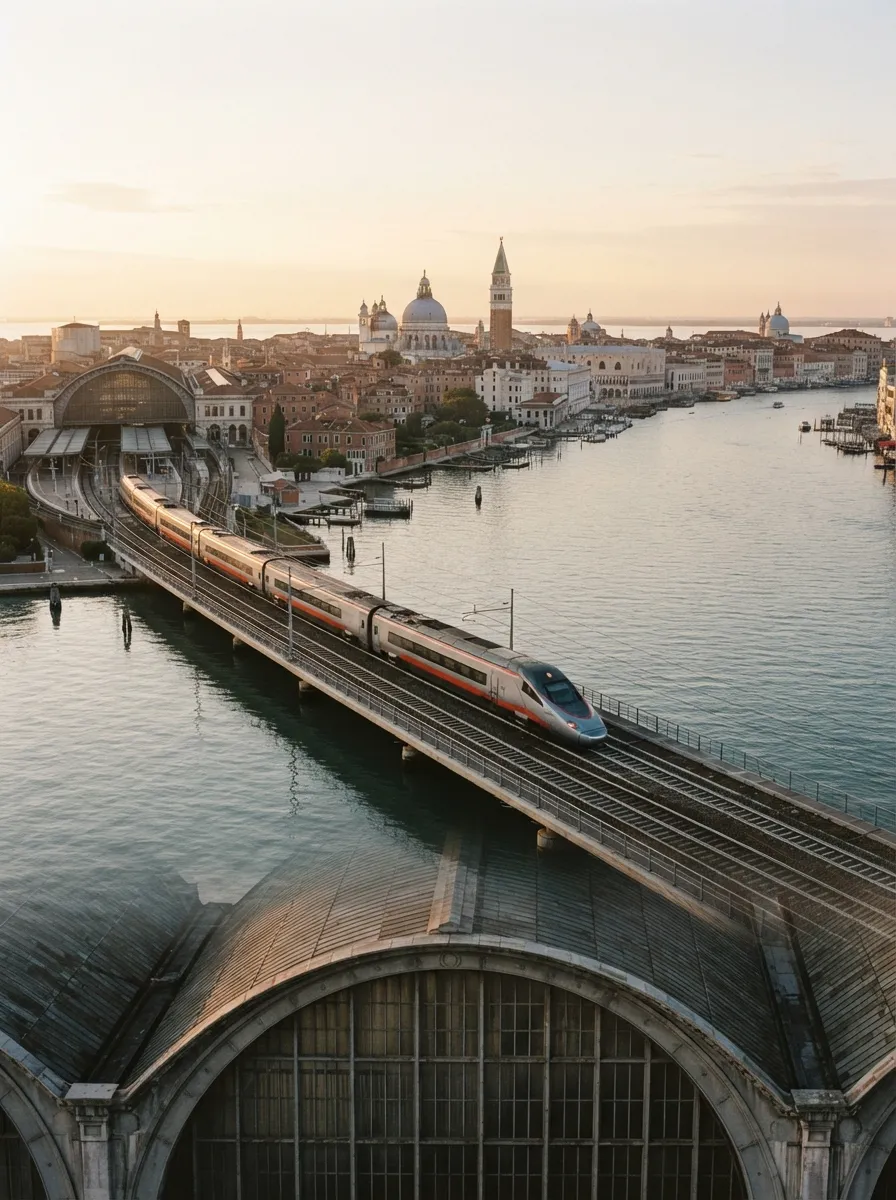
Santa Lucia station places you directly beside the Grand Canal. Mestre is on the mainland and requires another train, bus, tram or taxi journey to reach the islands.
This guide explains how to book the right train, compare Frecciarossa and Italo, understand Italian ticket rules, manage luggage and continue from Santa Lucia to your Venice hotel.
Recommended Travel Items for Your Trip
Milan to Venice by Train at a Glance

| Detail | What to Expect |
| Main departure station | Milano Centrale |
| Best arrival station | Venezia Santa Lucia |
| Alternative arrival | Venezia Mestre |
| Fastest advertised journey | Around 2 hours 15 minutes |
| Typical direct journey | About 2 hours 15–35 minutes |
| Distance | Approximately 268 kilometers |
| Main operators | Trenitalia Frecciarossa and Italo |
| Cheapest advertised Italo fare | From €14.90 when available |
| Seat reservation | Included on high-speed trains |
| Transfers required | None on direct services |
| Best booking time | As soon as firm travel dates are available |
| Best choice for most travelers | Direct high-speed train to Santa Lucia |
Frecciarossa trains can reach speeds of up to 300 kilometers per hour and connect major Italian city centers. Italo also operates direct high-speed services between Milan and Venice.
Is the Train the Best Way to Travel From Milan to Venice?
For most visitors, yes.
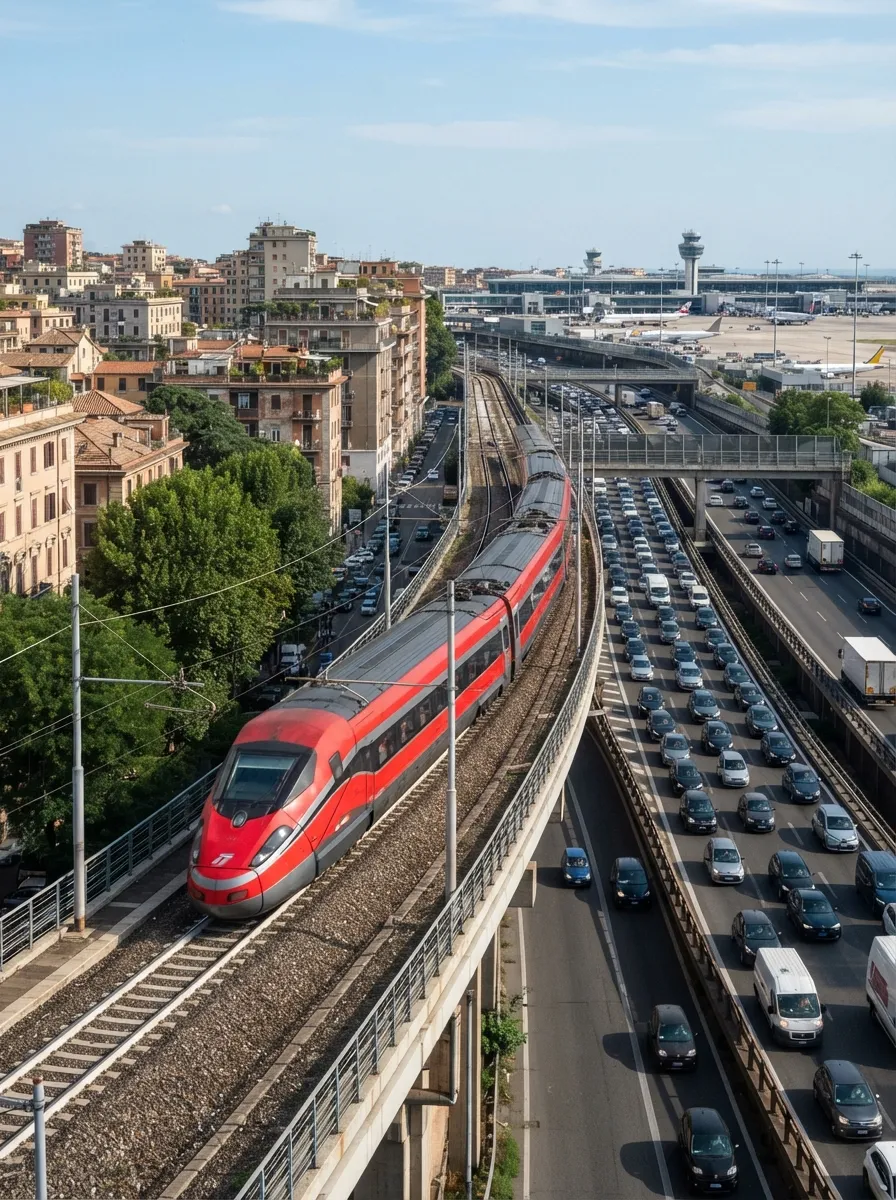
The train is usually more convenient than flying and less stressful than driving.
Why the Train Wins
- Both cities have centrally located railway stations
- Direct services run without a change
- High-speed tickets include a reserved seat
- There is no airport security process
- You avoid fuel, tolls and parking expenses
- Venice’s historic center is largely car-free
- Santa Lucia station opens directly onto the Grand Canal
- The journey is short enough for a same-day transfer
Flying between the two cities makes little practical sense once airport travel, check-in, security and transfers are added.
Driving can be worthwhile when Milan and Venice are merely two stops in a larger countryside itinerary. However, a car cannot be driven through historic Venice. It must be parked at the edge of the lagoon or on the mainland, introducing another layer of cost and luggage handling.
The train turns the journey into a clean two-city handoff: marble station, comfortable seat, lagoon reveal.
Which Train Should You Take?
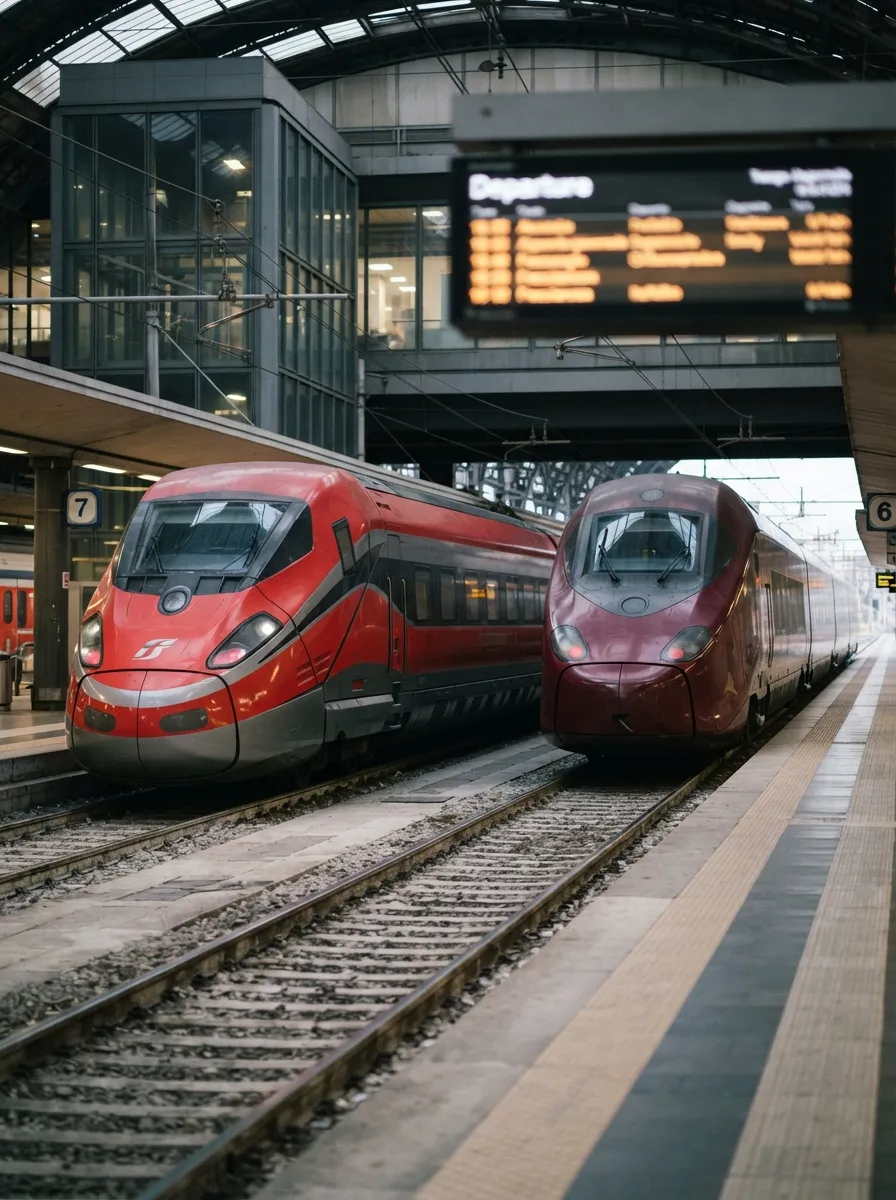
There are three broad possibilities:
- Frecciarossa high-speed trains
- Italo high-speed trains
- Regional or slower services
A direct Frecciarossa or Italo service is the best option for nearly every leisure traveler.
Frecciarossa
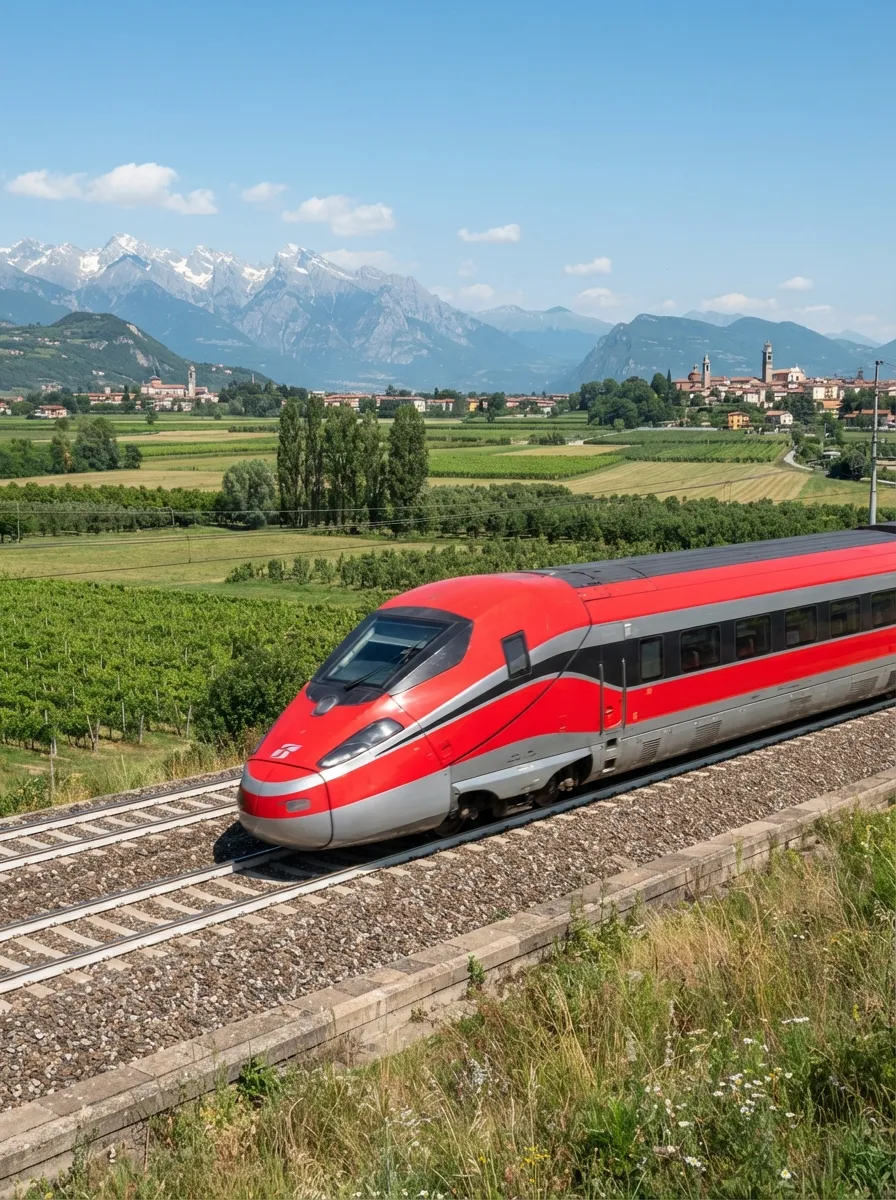
Frecciarossa is Trenitalia’s premium high-speed brand.
Its trains operate between major Italian cities and offer several service levels, reserved seating, onboard restrooms and luggage space. Frecciarossa trains are designed to reach city-center stations rather than remote airport-style terminals.
Depending on the train, stops between Milan and Venice may include cities such as:
- Brescia
- Verona
- Vicenza
- Padua
- Venezia Mestre
- Venezia Santa Lucia
Frecciarossa Service Levels
The exact names and inclusions depend on the train configuration, but options may include:
- Standard
- Premium
- Business
- Executive
Standard is perfectly adequate for the short Milan-to-Venice journey.
Premium or Business may provide wider seats, a quieter environment or additional service, but the value depends on the fare difference. Executive is difficult to justify unless comfort, privacy or a special occasion matters more than cost.
Italo
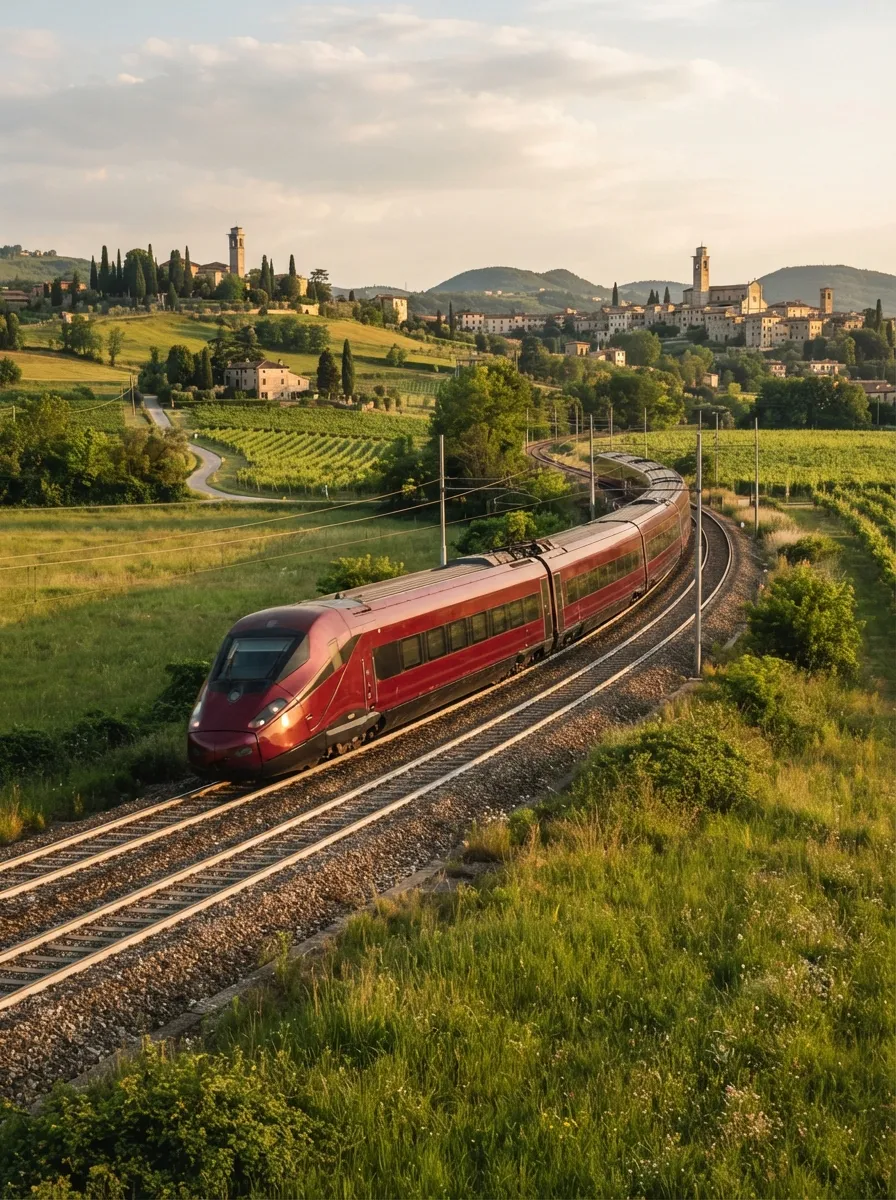
Italo is Italy’s private high-speed railway operator.
Its official Milan–Venice route page currently lists a journey of approximately 2 hours 15 minutes, a distance of 268 kilometers and promotional fares beginning at €14.90 when available. Other official Italo pages show times closer to 2 hours 30 minutes, demonstrating why travelers should check the exact train rather than rely on one general route estimate.
Italo generally offers several onboard environments, ranging from its entry-level seating to more spacious or premium cabins.
For this route, compare:
- Total price
- Departure time
- Arrival station
- Refund and change rules
- Seat location
- Included services
The operator matters less than the schedule and fare conditions.
Regional Trains
Regional trains can sometimes be used for part or all of the journey, but they are less attractive for a straightforward Milan-to-Venice trip.
They may involve:
- Longer travel time
- One or more changes
- Less predictable seating
- More luggage movement
- Different ticket-validation rules
Regional services can be useful for spontaneous stopovers or budget itineraries, but the savings may not justify the added time.
Frecciarossa or Italo: Which Is Better?
Neither company is universally better.
Choose the train that offers the best combination of:
- Direct service
- Convenient departure
- Venezia Santa Lucia arrival
- Acceptable fare restrictions
- Suitable price
| Feature | Frecciarossa | Italo |
| Operator | Trenitalia | Private high-speed operator |
| Direct Milan–Venice services | Yes | Yes |
| Reserved seating | Yes | Yes |
| Multiple service classes | Yes | Yes |
| Mobile tickets | Yes | Yes |
| Best reason to choose | More schedule and network options | Competitive fares and comfortable service |
| Main booking question | Is the fare flexible enough? | Does the train reach Santa Lucia? |
Do not automatically choose one operator because a travel forum declared it superior seven years ago. The 9:35 a.m. train that fits your itinerary is better than the theoretically magnificent 6:20 a.m. train you will miss.
Milano Centrale: Your Main Departure Station
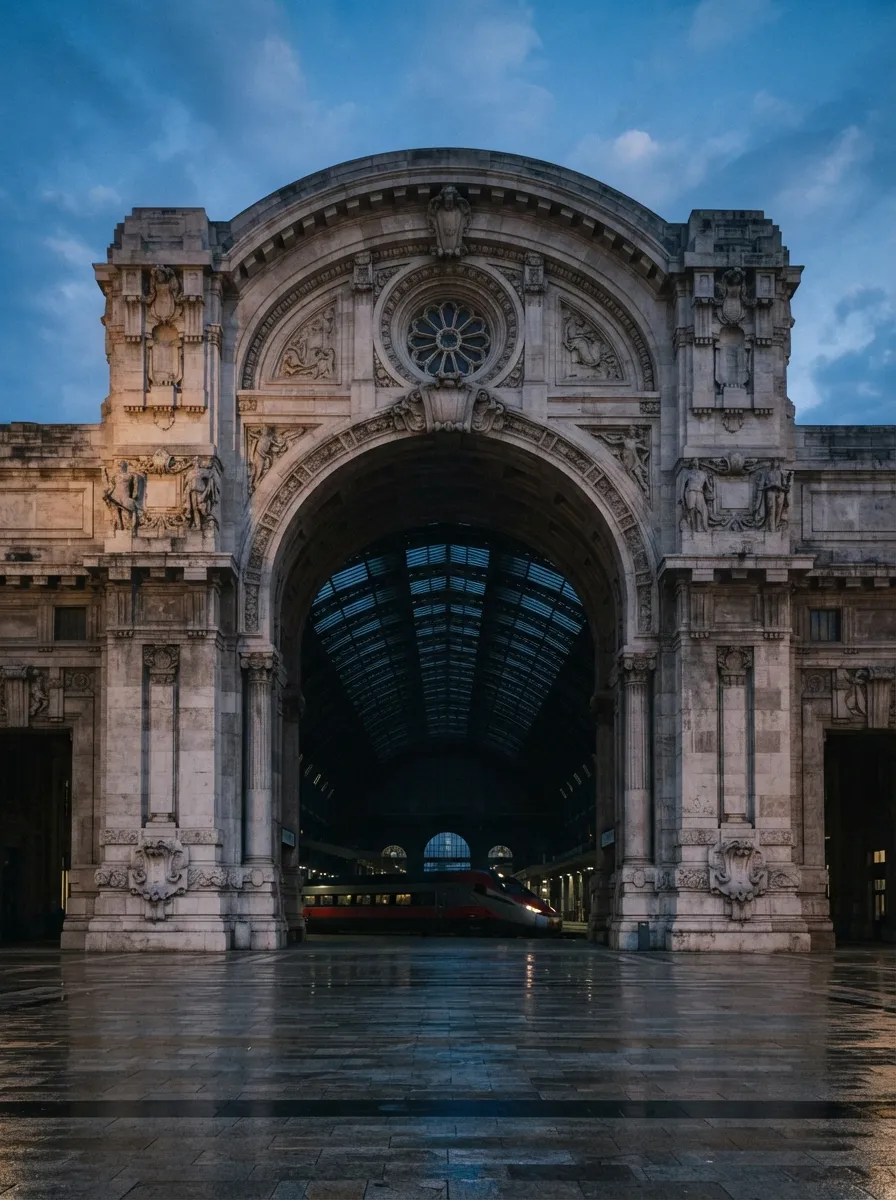
Most travelers depart from Milano Centrale, Milan’s vast central railway station.
The building is monumental, busy and slightly dramatic, as though an emperor commissioned an airport for trains.
How Early Should You Arrive?
Arrive approximately:
- 25–30 minutes early if you already have a digital ticket
- 40–45 minutes early if you need to find the station, collect food or manage substantial luggage
- At least 45 minutes early during a strike, holiday or unfamiliar connection
Italian high-speed trains do not normally require airline-style check-in.
Your ticket will show:
- Train number
- Departure time
- Coach number
- Seat number
- Departure and arrival stations
The platform, called binario in Italian, is normally displayed on station boards shortly before departure.
Security at Milano Centrale
Access to the platform area may be controlled.
Keep your ticket or QR code ready because staff may check it before allowing you toward the trains. This is not an airport security screening, but it can create a small queue.
Finding Your Train
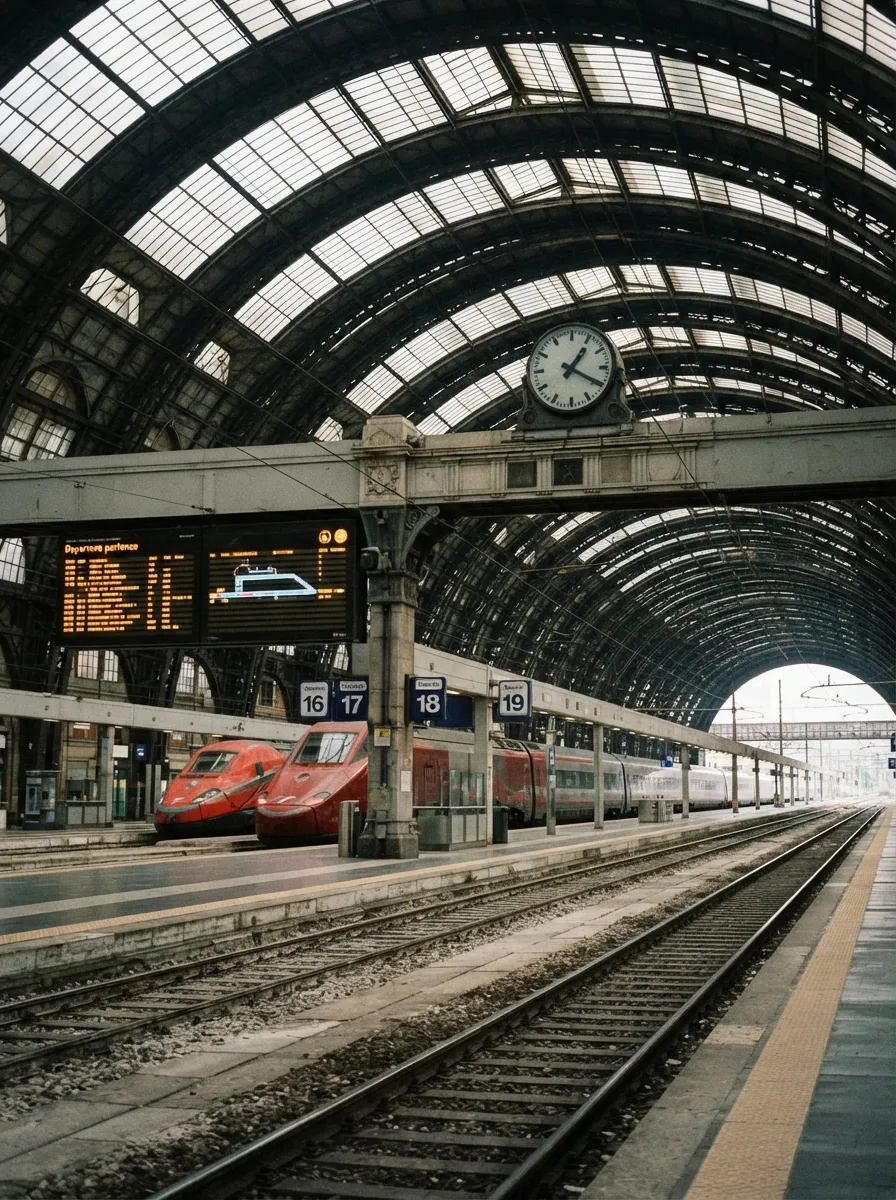
Match the station board using the train number, not only the destination.
A train traveling through Venice may display another final destination, while several trains may depart toward the same region within a short period.
Look for:
- Numero treno or train number
- Orario or departure time
- Binario or platform
- Delay information
- Intermediate stops
Food and Supplies
Milano Centrale contains cafés, shops and takeaway options.
Buy drinks or snacks before walking to the platform if you want more choice than the onboard service. Keep valuables close in busy public areas.
Venezia Santa Lucia vs. Venezia Mestre
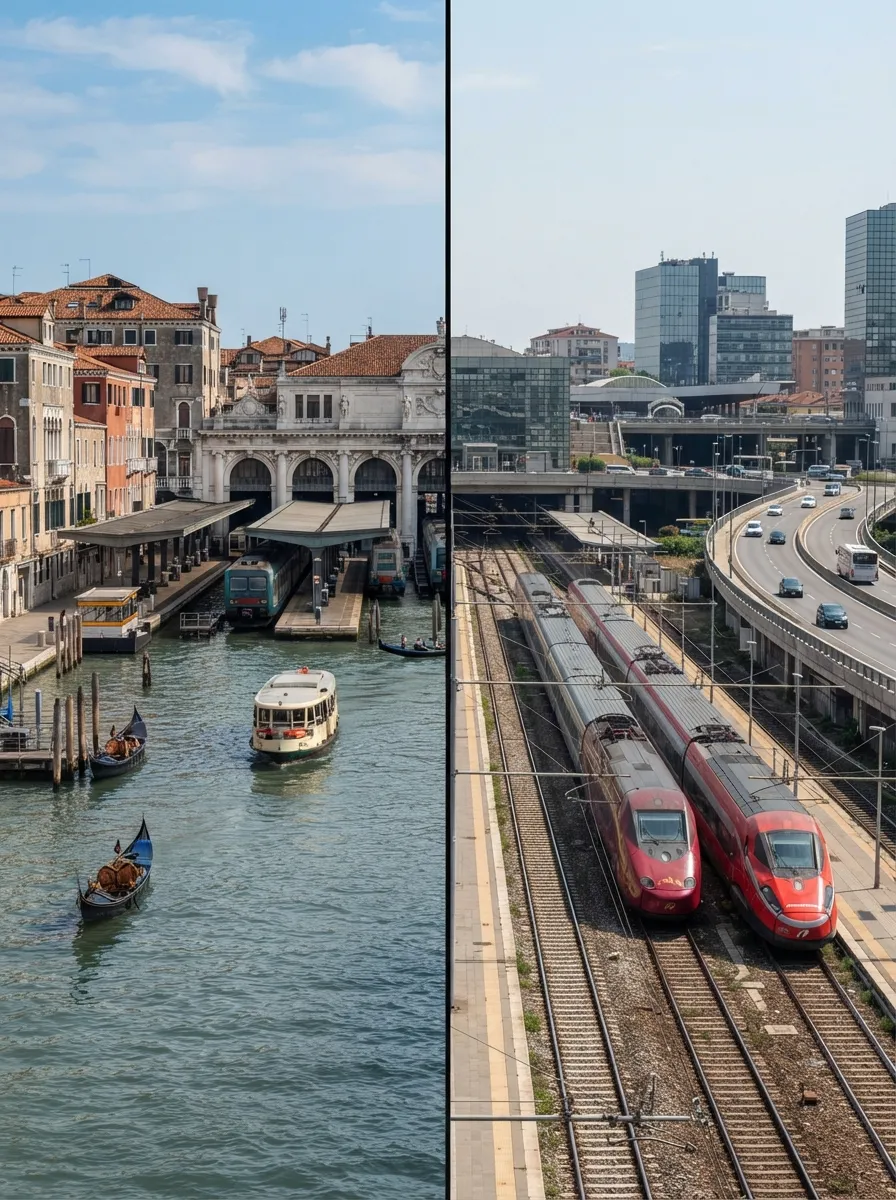
This is the most important station distinction in the entire journey.
Venezia Santa Lucia
Santa Lucia is the correct destination for most tourists staying in historic Venice.
When you leave the station, you emerge beside the Grand Canal. From there, you can:
- Walk to your accommodation
- Board a vaporetto
- Take a private water taxi
- Cross the Scalzi Bridge
- Continue toward Cannaregio, San Polo or Santa Croce
The arrival is spectacular. One moment you are inside a conventional railway station; the next, Venice is moving past in boats.
Venezia Mestre
Mestre is on the mainland.
It is a practical destination when:
- Your hotel is in Mestre
- You have rented a car
- You are staying near the airport
- Your chosen train does not continue to Santa Lucia
- Mestre accommodation is substantially cheaper
Frequent trains connect Mestre with Santa Lucia, and the final rail segment is short. Still, it is an extra transfer with luggage.
The Booking Trap
Some search engines display “Venice” without making the station sufficiently obvious.
Before paying, confirm that the arrival says:
Venezia S. Lucia or Venezia Santa Lucia
Do not assume every Venice-bound service ends there.
BEST BOOKING CHOICE
Select Milano Centrale to Venezia Santa Lucia, direct, with no changes.
How Long Does the Journey Take?
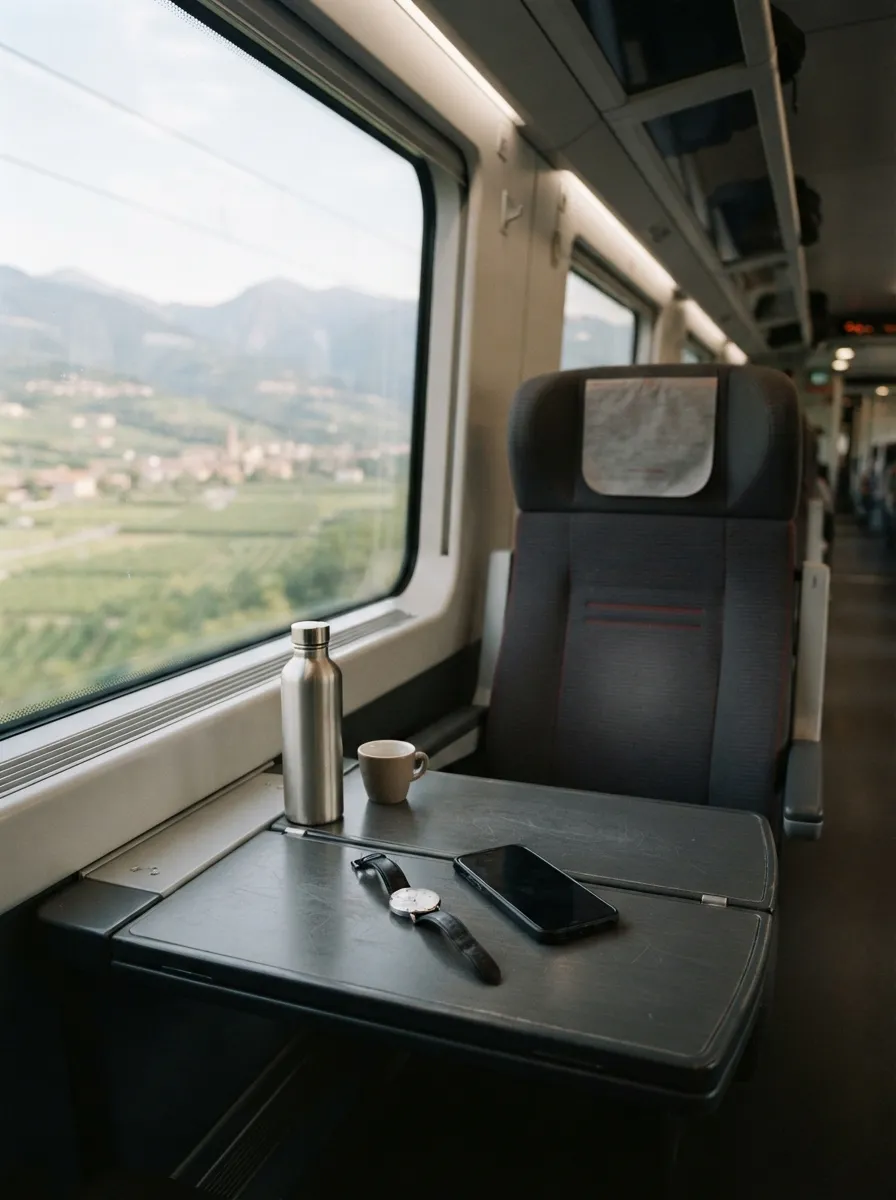
The fastest direct Italo schedules are advertised at approximately 2 hours 15 minutes. Other direct trains take around 2 hours 25–35 minutes, depending on the service and stops.
Infrastructure modernization work during summer 2026 may affect availability and journey times, so travelers should verify the schedule for their precise date rather than treating a general journey time as guaranteed.
Typical Journey Pattern
A direct train may follow this sequence:
- Milano Centrale
- Brescia
- Verona Porta Nuova
- Vicenza
- Padova
- Venezia Mestre
- Venezia Santa Lucia
Not every train makes every stop.
Is the Route Scenic?
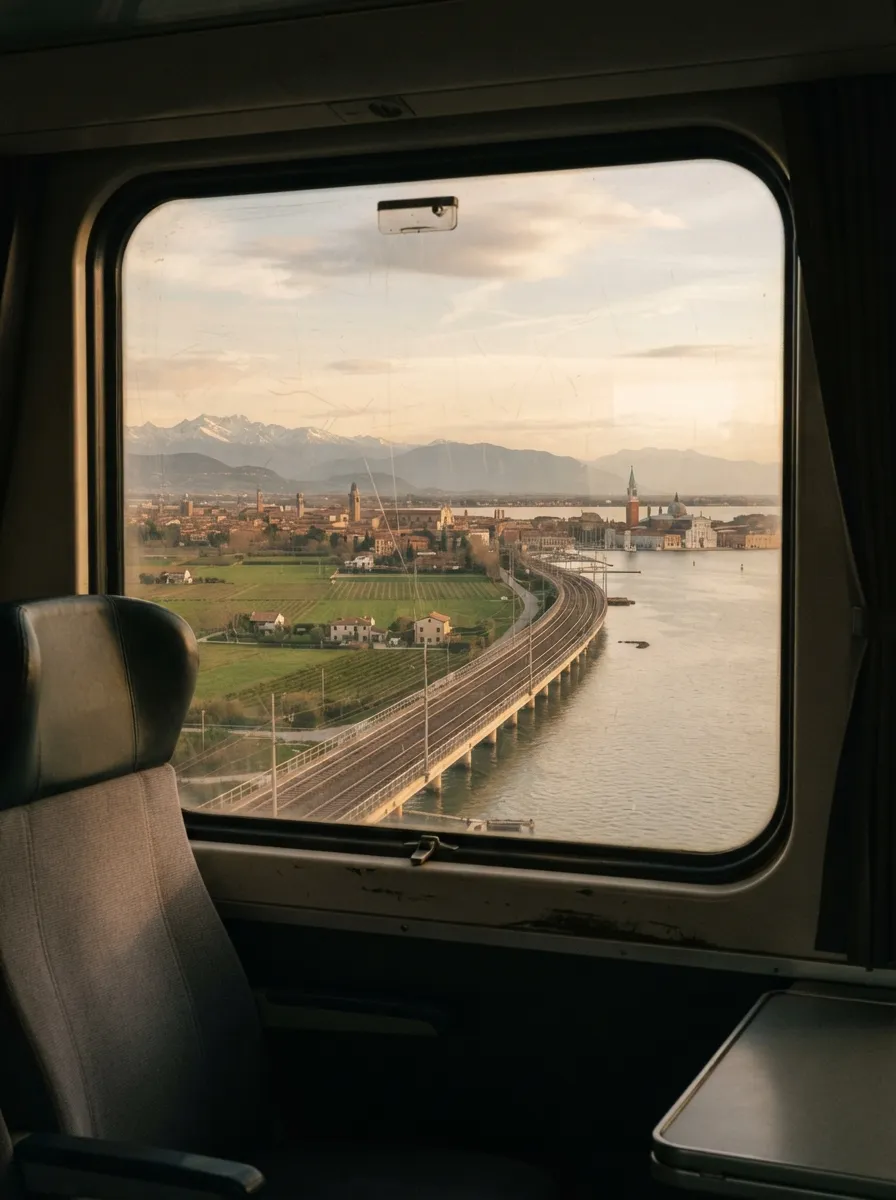
The Milan-to-Venice line is pleasant rather than continuously spectacular.
You may see:
- Northern Italian towns
- Agricultural plains
- Distant mountain outlines
- Verona and Veneto landscapes
- The Venice lagoon during the final approach
The most memorable section is the journey across the causeway between Mestre and Santa Lucia.
Keep your camera accessible for the final minutes, but do not spend the entire trip guarding the window like a museum artifact. Reflections can be strong.
How Much Do Milan-to-Venice Train Tickets Cost?
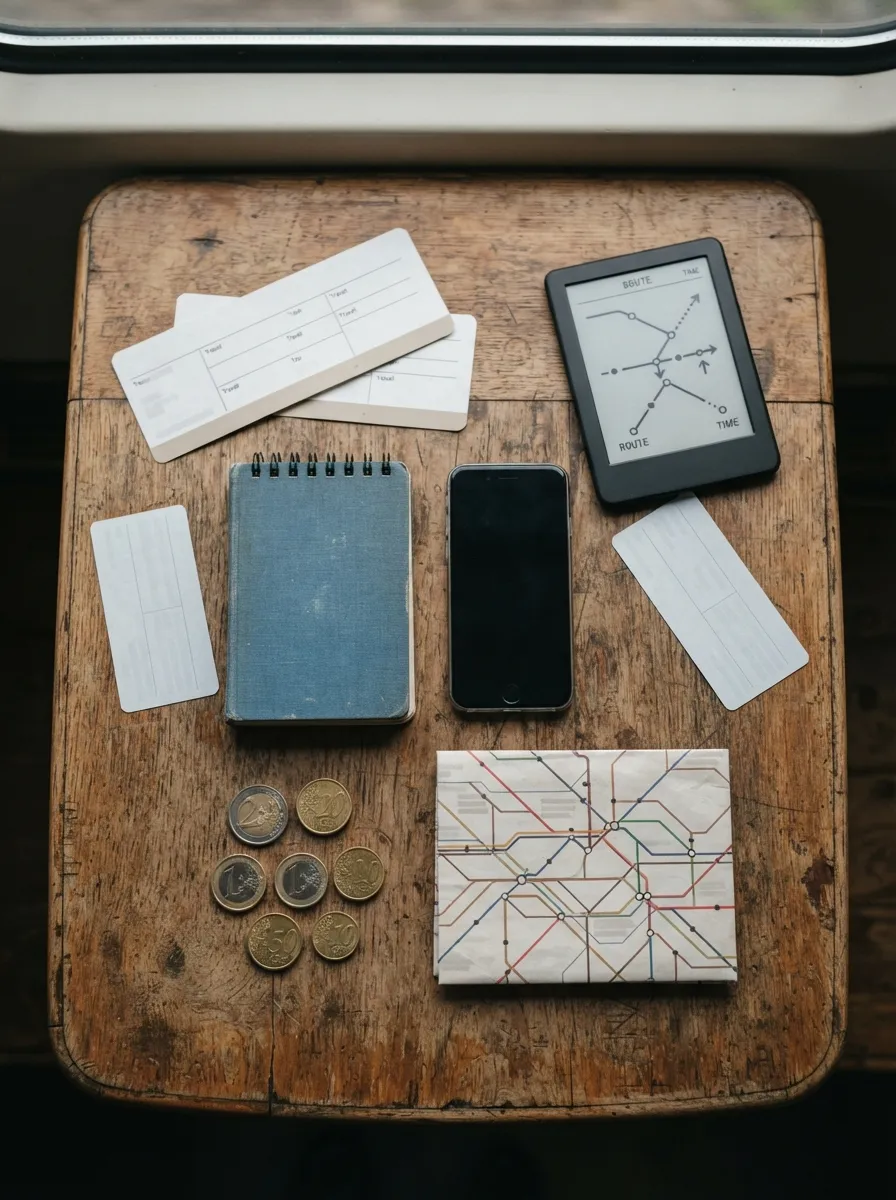
Prices change according to:
- Operator
- Travel date
- Departure time
- Demand
- Service class
- Fare flexibility
- How early you book
Italo currently advertises tickets from €14.90, but that is a starting promotional fare rather than a guaranteed price for every departure.
Advance high-speed fares commonly become more expensive as the cheapest inventory sells.
Practical Fare Expectations
Rather than planning around a single advertised minimum, use these broad categories:
| Booking Situation | Likely Result |
| Booked early on a quiet date | Best chance of a low promotional fare |
| Popular morning or Friday train | Usually more expensive |
| Holiday weekend | Higher fare and reduced choice |
| Flexible ticket | More expensive |
| Last-minute booking | Often expensive, though exceptions occur |
| Premium cabin | Higher cost but more space or service |
Exact prices should always be checked through the official operator for your date.
When Should You Book?
Book as soon as:
- Your accommodation dates are fixed
- Your Milan plans are unlikely to change
- The desired train appears in the timetable
Advance booking is particularly important for:
- Fridays and Sundays
- Easter travel
- Summer weekends
- Christmas and New Year
- Italian public holidays
- Major events in Milan or Venice
- Travelers requiring adjacent seats
Do not buy an inflexible promotional ticket months ahead if your flight connection is uncertain.
The cheapest fare can become the most expensive choice when a delayed flight forces you to purchase another ticket.
Where Should You Book Tickets?
The safest options are the operators’ official websites or apps:
- Trenitalia for Frecciarossa
- Italo for Italo trains
Trenitalia’s online booking process allows travelers to select a journey, seat and payment method before receiving the ticket details.
Official booking generally provides:
- Accurate fare conditions
- Direct access to modifications
- Live schedule information
- Fewer service fees
- Clearer support during disruptions
Third-party platforms can be useful for comparing operators, but fare changes and refunds may be more complicated when an intermediary controls the booking.
Understanding Italian Train Fares
High-speed tickets often appear under several fare names.
Although names and rules can change, they broadly fall into three groups:
Lowest Promotional Fare
Usually:
- Cheapest
- Limited in quantity
- Nonrefundable or heavily restricted
- Difficult or impossible to change
Best for travelers with fixed plans.
Semi-Flexible Fare
Usually:
- More expensive
- Changes permitted under conditions
- Fare difference may apply
- Refund may be partial
Best for most tourists with stable but not indestructible itineraries.
Flexible Fare
Usually:
- Highest price
- Better change conditions
- More generous refund rules
Best when connecting from a flight, cruise or unpredictable journey.
Read the exact conditions shown during booking. A ticket’s class and flexibility are separate concepts. A comfortable seat does not automatically come with a flexible fare.
Do You Need to Validate the Ticket?
High-speed Frecciarossa and Italo tickets are issued for a specific train, date, coach and seat.
They generally do not require stamping in a platform machine.
Regional-ticket procedures can differ. Digital regional tickets may have check-in rules, while paper tickets may need validation depending on the ticket type and current operator policy.
For a direct high-speed journey, use the exact train printed on your ticket.
You cannot normally board an earlier or later high-speed train simply because it travels to the same city.
Choosing the Best Departure Time
The ideal departure depends on whether Venice is your final base or a day trip.
Moving to Venice for Several Nights
A departure between 9:00 a.m. and noon works well.
It allows you to:
- Eat breakfast in Milan
- Avoid a painfully early start
- Reach Venice around lunchtime or early afternoon
- Check in or leave luggage
- Enjoy a first evening in Venice
Taking a Day Trip
Choose an early direct train, ideally arriving before 9:30 a.m.
Return during the evening, but leave a sensible buffer between your final activity and departure.
Venice is difficult to cross quickly because:
- Alleys do not always run directly
- Bridges slow wheeled luggage
- Vaporetti can be crowded
- Navigation apps occasionally send pedestrians into philosophical discussions with canals
A day trip is possible, but at least one overnight stay is far better.
Catching a Flight or Cruise
Avoid booking a train that leaves no recovery time.
Rail delays, strikes and infrastructure issues can occur. Stay overnight near the departure point when missing the flight or cruise would be financially disastrous.
Luggage on the Train
Frecciarossa trains provide overhead space and luggage compartments in at least some coaches.
There is no airline-style checked-luggage process.
You carry your bags onto the train and store them:
- Above your seat
- In luggage racks near carriage entrances
- In designated floor-level compartments
- In available spaces between seat backs
Luggage Tips
- Board promptly so you can find space
- Keep passports, electronics and money at your seat
- Use a bag you can lift independently
- Avoid blocking aisles or doors
- Add a visible luggage tag
- Watch your belongings during station stops
- Avoid placing valuables in an unattended suitcase
Large luggage is legal and common, but Venice punishes overpacking with bridges.
Every unnecessary suitcase wheel will eventually meet a staircase.
Luggage Storage
Trenitalia promotes several partner luggage services, including automated storage with a discount for eligible Frecce and Intercity customers. Availability and locations should be checked for the travel date.
Traveling With Children
The direct train is generally easier for families than flying or driving.
Advantages include:
- Ability to move around when safe
- Toilets onboard
- No airport transfer
- Reserved seats
- Short journey
- Central arrival
Book seats together rather than assuming the system will place the family in one group.
Bring:
- Snacks
- Water
- Headphones
- Small entertainment
- Light jackets
- Wipes
- Any essential medication
Frecciarossa service levels include restrooms, and Trenitalia states that changing tables are available across service levels on the Frecciarossa 1000.
Traveling With Pets
Trenitalia permits small dogs, cats and other small pets to travel free in a suitable carrier measuring no more than 70 × 30 × 50 centimeters.
Larger dogs may travel subject to ticket, leash and muzzle requirements.
Rules can vary by operator and train, so travelers using Italo should check its current pet policy separately before booking.
Accessibility and Reduced Mobility
Travelers requiring boarding assistance can use Italy’s Sala Blu assistance system.
Trenitalia advises passengers to arrange assistance through the SalaBlu online service, the Sala Blu+ app or designated station offices.
Request assistance early, particularly when traveling with:
- A wheelchair
- Reduced mobility
- Heavy medical equipment
- Visual impairment
- Hearing impairment
- A service animal
Venice itself presents additional accessibility challenges because of bridges and stepped routes. Research an accessible route from Santa Lucia to the accommodation before arriving.
What Happens When You Arrive at Santa Lucia?
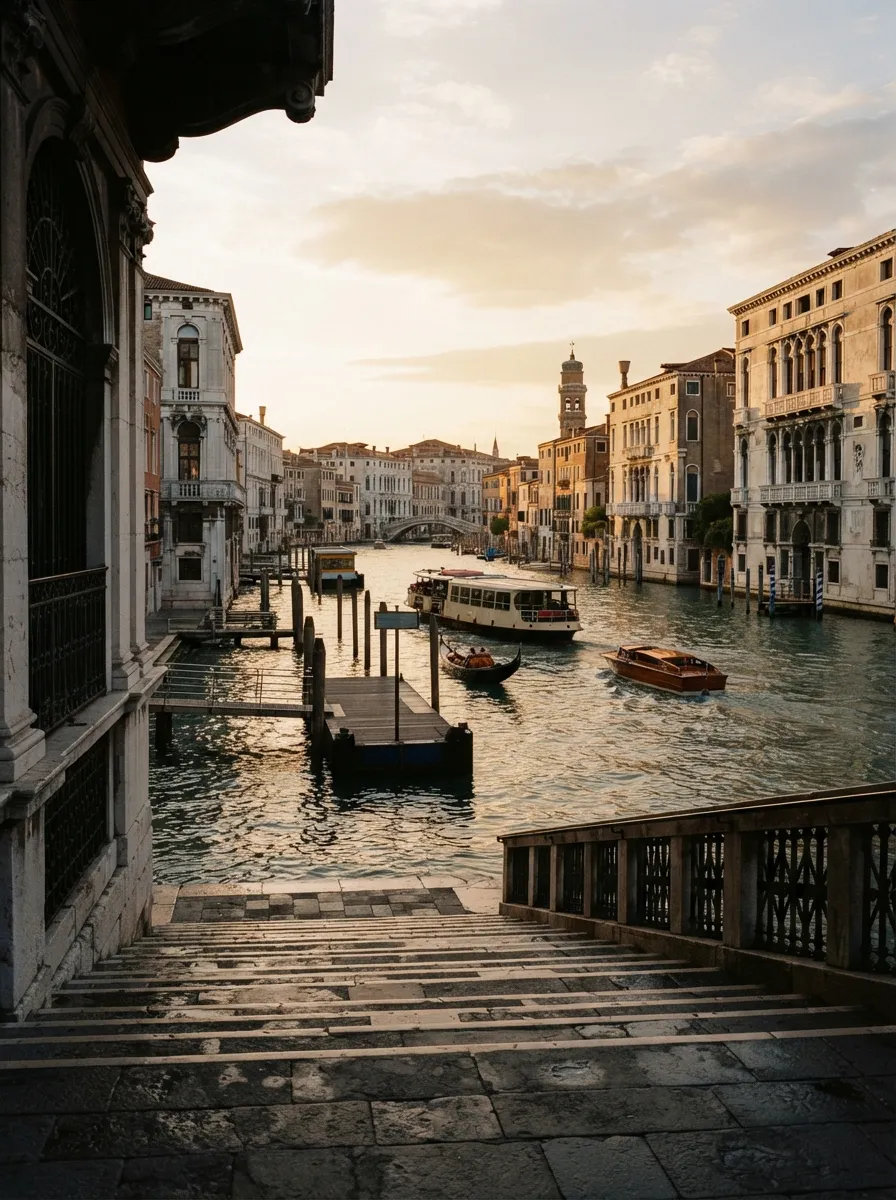
Walk through the station exit and the Grand Canal appears directly in front of you.
Pause for a moment. Venice has arranged the entrance theatrically and deserves the applause.
From the station, choose between walking, vaporetto or water taxi.
Walking
Walking is best when:
- Your hotel is nearby
- You have light luggage
- The route has few bridges
- You enjoy navigating Venice’s alleys
Approximate walking areas include:
- Santa Croce
- Western Cannaregio
- Parts of San Polo
A hotel that appears one kilometer away may require several bridges and confusing turns.
Ask the accommodation for its recommended route rather than relying only on a pin dropped onto a map.
Vaporetto
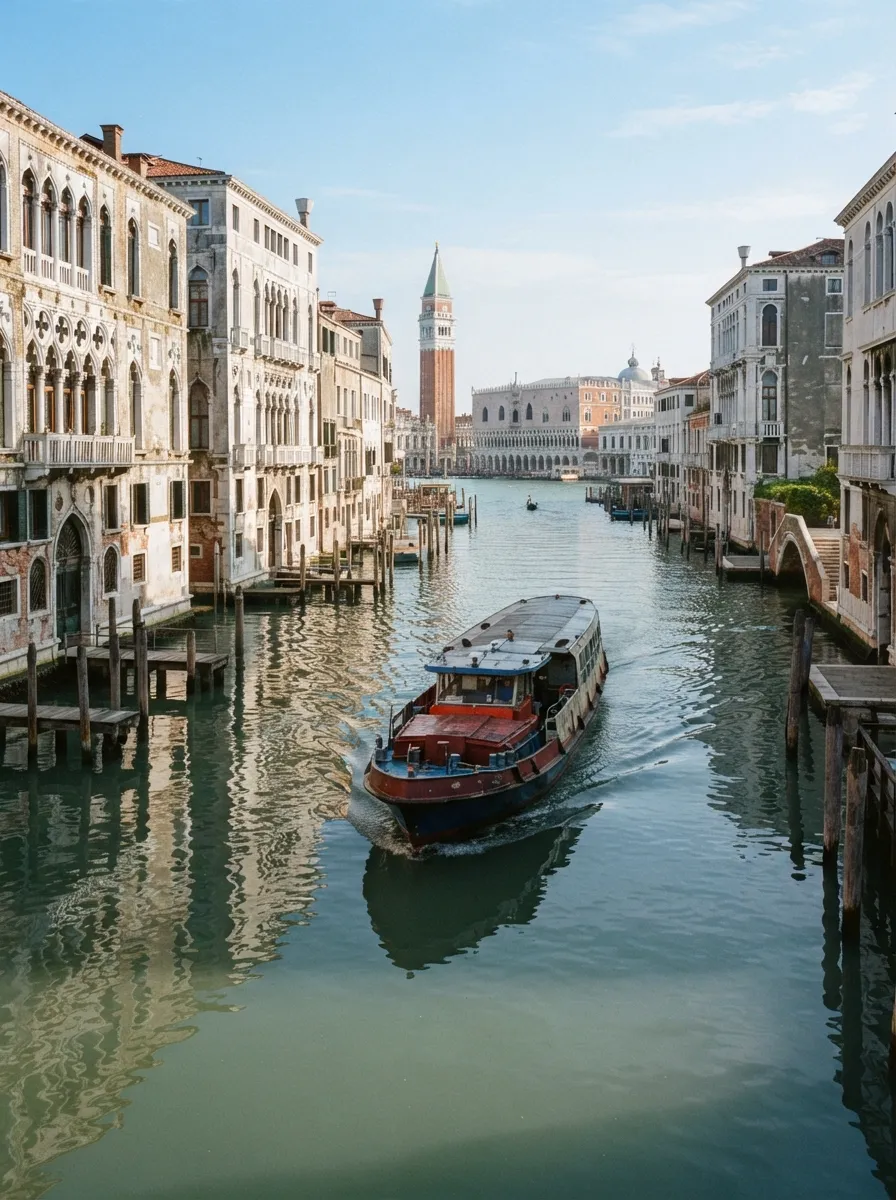
Vaporetti are Venice’s public water buses.
They are practical for reaching areas along the Grand Canal and certain islands.
Before boarding:
- Identify the correct line
- Check the direction
- Validate or activate the ticket as required
- Keep bags compact
- Allow room for passengers leaving
Multi-day transport passes may offer value when you plan repeated journeys.
Official public-transport tickets and city services are available through Venezia Unica.
Private Water Taxi
A private water taxi is faster and more comfortable but substantially more expensive.
It may be worthwhile for:
- A family splitting the cost
- Travelers with heavy luggage
- A special occasion
- A hotel with convenient water access
- Guests with limited walking ability
Confirm the fare and exact drop-off location before departure.
A “hotel water entrance” does not always mean the boat can deliver you directly into reception like a Venetian secret agent.
Should You Stay Near Santa Lucia?
Staying near the station is practical when:
- You have an early departure
- You carry substantial luggage
- You are staying only one night
- You prefer fewer bridges
- You plan day trips by rail
Cannaregio and Santa Croce offer convenient accommodation without placing you directly in the most crowded parts of San Marco.
The area around Santa Lucia is not the only authentic Venice. Residents live, shop and eat throughout these neighborhoods, while most day visitors race toward Rialto and San Marco.
Is a Milan-to-Venice Day Trip Worth It?
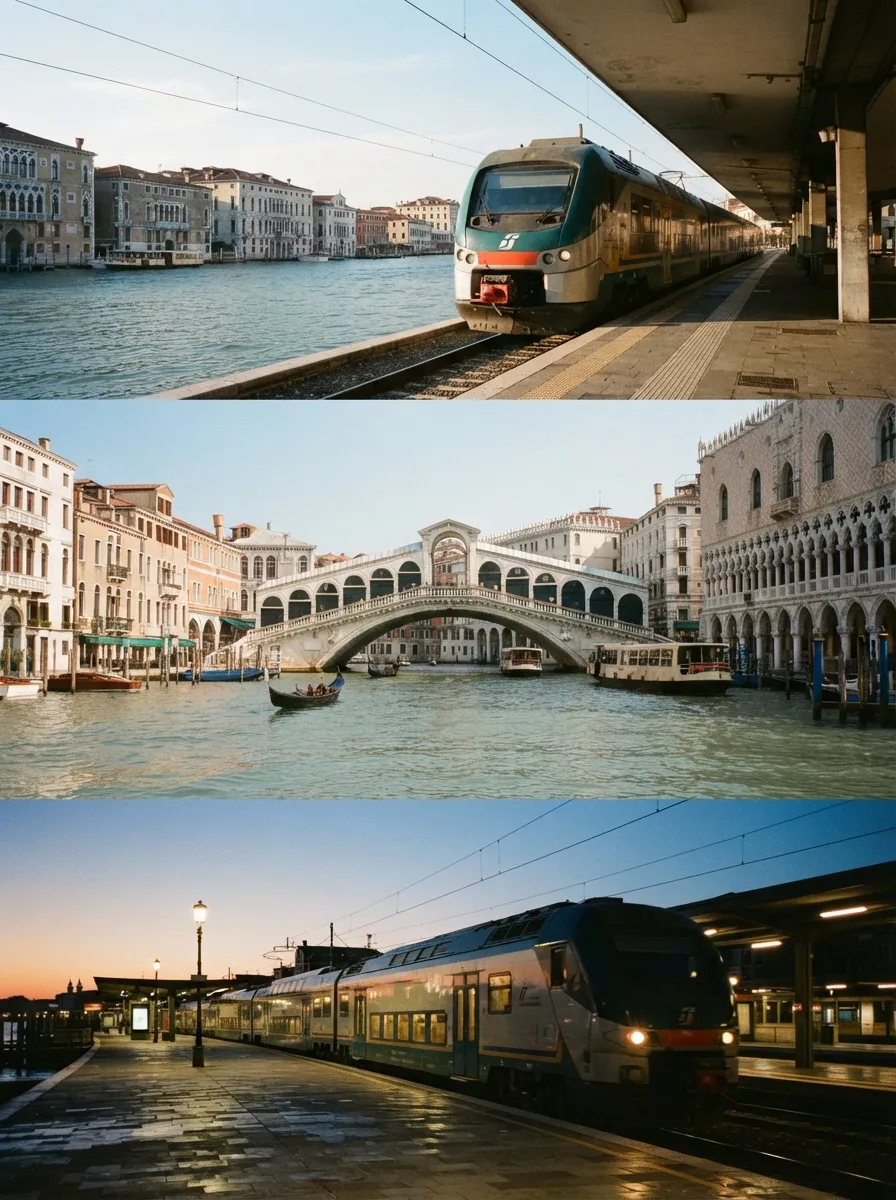
It is possible, but not ideal.
A direct train taking roughly two and a half hours each way means you may spend around five hours in transit.
A day trip works when:
- Milan is your fixed base
- You cannot change hotels
- You take an early train
- You focus on a limited part of Venice
- You accept that major islands will be omitted
Suggested Day-Trip Plan
8:30 a.m.: Arrive at Santa Lucia
Walk through Cannaregio or take a vaporetto along the Grand Canal.
9:30 a.m.: Rialto Area
Visit the market area and cross the bridge before peak congestion.
11:00 a.m.: San Marco
Explore the square and reserve timed admission for your highest-priority monument.
1:30 p.m.: Lunch Away From the Main Square
Move into Castello, Cannaregio or quieter San Polo streets.
3:00 p.m.: Neighborhood Walk
Choose one district rather than attempting Murano, Burano and every church on the map.
5:00 p.m.: Return Toward Santa Lucia
Allow generous navigation time.
Evening: Train to Milan
Arrive at the station at least 20 minutes before departure.
An overnight stay is considerably better because Venice changes after day-trippers leave.
A Better Two-Day Venice Plan
Day One: Grand Canal and Historic Venice
- Arrive at Santa Lucia
- Leave luggage at the hotel
- Take a Grand Canal vaporetto ride
- Explore Rialto
- Visit San Marco
- Walk through Castello
- Enjoy Venice after sunset
Day Two: Neighborhoods or Islands
Choose one:
Option One: Cannaregio and San Polo
Best for quiet streets, churches and local atmosphere.
Option Two: Murano and Burano
Best for islands, glassmaking traditions and colorful architecture.
Option Three: Dorsoduro
Best for art, waterfront walks and a slower day.
Return to Milan in the evening or continue toward Florence.
Travelers adding Tuscany can use this guide to Florence like a local to move beyond a checklist of the Duomo, David and Ponte Vecchio.
Can You Stop in Verona on the Way?
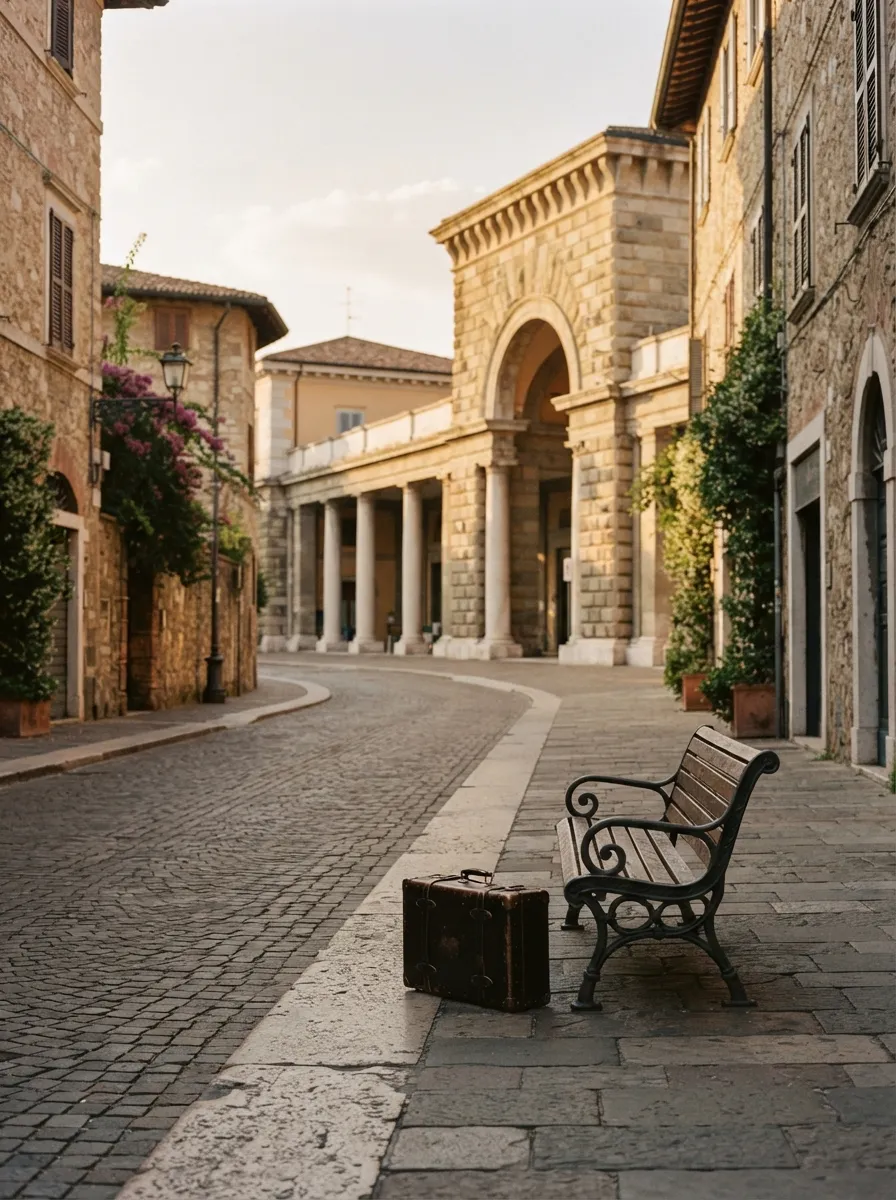
Yes, Verona is the most natural stopover between Milan and Venice.
Possible strategies include:
Same-Day Stopover
- Travel from Milan to Verona
- Store luggage
- Explore for several hours
- Continue to Venice
This requires two separate reservations or a fare that explicitly permits the intended stop.
Do not leave a reserved high-speed train and expect to board a later service using the same restricted ticket.
Overnight in Verona
This is easier and more relaxed.
Spend one night, then continue to Venice the following morning.
Other Possible Stops
- Brescia
- Vicenza
- Padua
Padua is particularly easy to combine with Venice because trains between the cities are frequent and the journey is short. Italo advertises Venice–Padua services taking around 28 minutes on selected trains.
Train Strikes and Delays
Rail strikes occasionally affect Italian travel.
A strike does not always mean that every train is canceled. Certain long-distance services may be guaranteed, while others operate with delays or alterations.
Before traveling:
- Check the operator’s official app
- Confirm the train number
- Review email or app notifications
- Arrive earlier than normal
- Keep accommodation contact details available
- Save your ticket offline
- Retain receipts if disruption creates expenses
Do not depend entirely on station announcements, particularly when you do not speak Italian.
Summer 2026 infrastructure modernization may also change journey times and train availability.
Venice Access Fee in 2026 and 2027
Venice operated an access-fee trial on selected dates in 2026.
However, the official system states that the 2026 trial ended and the fee ceased to apply from July 27, 2026. Visitors arriving after that date do not currently need to pay or request an exemption for the remainder of 2026.
Rules for 2027 had not yet been approved or announced as of July 29, 2026.
Travelers planning a 2027 trip should check the official Venice Access Fee portal close to departure rather than relying on the 2026 schedule.
When the fee applies, it has historically concerned qualifying day visitors on specified dates and times, with exemptions or exclusions for certain groups.
Do not pay through an unofficial website.
Best Time of Year for the Journey
The train runs year-round, but the Venice experience changes by season.
Spring
March through May provides:
- Comfortable city walking
- Longer daylight
- Increasing visitor numbers
- Occasional rain
- Strong conditions for combining Milan, Venice and Florence
Summer
June through August brings:
- Long days
- High demand
- Heat and humidity
- Crowded trains
- Busy Venice streets
- Higher accommodation prices
Book early and choose a morning train.
Autumn
September through October is one of the strongest periods.
Expect:
- Cooler temperatures
- Attractive evening light
- Fewer visitors than August
- Increasing rain later in the season
November can be atmospheric but may bring fog, rain and high-water events.
Winter
December through February offers:
- Fewer visitors outside holidays and Carnival
- Lower hotel prices on selected dates
- Cold, damp conditions
- Short daylight
- A quieter version of Venice
Carnival dates create a separate surge in demand.
Combining Milan and Venice With Other European Trips
Milan and Venice fit naturally into a larger Italian itinerary, but they can also form part of a broader Mediterranean journey.
Classic Northern Italy Route
- Milan
- Lake Como
- Verona
- Venice
- Bologna
- Florence
Italy and Malta
After northern Italy, fly south and use this Malta travel guide to plan Valletta, historic towns, limestone coastlines and Mediterranean islands.
Italy and Spain
Milan and Venice can be followed by a flight to Barcelona, Madrid or Seville. This complete Spain travel guide compares the country’s major regions and cities.
Italy and Greece
Travelers continuing toward the Aegean can explore these hidden Santorini villages for alternatives to the island’s most congested viewpoints.
City Travel and Island Rest
A trip filled with Milanese avenues and Venetian lanes may benefit from a slower finale. This Martha’s Vineyard guide offers a completely different island rhythm for a future US coastal journey.
Packing Tips for the Train and Venice
Keep With You at Your Seat
- Passport
- Wallet
- Phone
- Power bank
- Medication
- Train ticket
- Hotel address
- Water
- Light snack
Pack for Venice
- Supportive walking shoes
- Lightweight rain jacket
- Compact umbrella
- Small day bag
- Refillable bottle
- Sun protection in summer
- Warm layer in winter
- Minimal luggage
Avoid
- Oversized suitcases
- Shoes with poor grip
- Loose valuables in outer pockets
- Bags you cannot lift
- Carrying every item you own “just in case”
Venice contains hundreds of bridges. Your suitcase will remember each one individually.
Common Mistakes to Avoid
Booking Venezia Mestre by Accident
Mestre is useful, but it is not the historic island station.
Selecting a Connecting Train
Direct high-speed services are plentiful enough that most travelers do not need a change.
Choosing the Cheapest Nonrefundable Fare After a Flight
Leave a generous buffer or buy flexibility.
Arriving at Milano Centrale at the Last Minute
The station is large, and platform access can take time.
Looking Only at the Final Destination
Match the train number because the departure board may display a city beyond Venice.
Bringing Too Much Luggage
The train can handle it more gracefully than Venice can.
Assuming Any High-Speed Ticket Works on Any Train
Reservations are tied to a specific departure.
Planning a One-Day Visit With Ten Attractions
Venice is not slow because it lacks efficiency. It is slow because the streets occasionally become staircases, canals and wrong turns shaped like revelations.
Forgetting to Check 2027 Access Rules
The 2026 Venice fee trial has ended, but future measures may differ.
Milan-to-Venice Train Checklist
Before Booking
- Search Milano Centrale to Venezia Santa Lucia
- Compare Frecciarossa and Italo
- Select a direct service
- Review fare-change conditions
- Check the arrival time
- Confirm seats are together
- Verify passport name details when required
Before Departure
- Download the ticket
- Save an offline screenshot
- Check the train number
- Review service alerts
- Confirm hotel directions
- Reduce luggage where possible
- Arrive 25–30 minutes early
On Arrival
- Keep your ticket accessible until outside
- Confirm the vaporetto line or walking route
- Validate local transport tickets when required
- Watch luggage in crowded areas
- Avoid blocking the station steps
- Pause for the Grand Canal reveal
Frequently Asked Questions
How long is the train from Milan to Venice?
Direct high-speed journeys generally take approximately 2 hours 15–35 minutes. Italo advertises selected services at around 2 hours 15 minutes.
Is there a direct train from Milan to Venice?
Yes. Trenitalia Frecciarossa and Italo operate direct high-speed services.
Which Milan station goes to Venice?
Most travelers depart from Milano Centrale. Some services may use other Milan stations, so check the ticket carefully.
Which Venice station should I choose?
Choose Venezia Santa Lucia when staying in historic Venice. Choose Venezia Mestre only when staying on the mainland or making a planned transfer.
How much does the train cost?
Prices vary. Italo currently advertises promotional fares from €14.90, but popular trains and flexible tickets cost more.
Should I book in advance?
Yes, particularly for summer, weekends, holidays and popular morning services.
Is Trenitalia or Italo better?
Both are comfortable. Select the operator with the best direct schedule, fare conditions and Santa Lucia arrival.
Can I take luggage on the train?
Yes. Passengers carry their own luggage and use overhead racks or designated luggage areas.
Is there a luggage fee?
Ordinary personal luggage is generally carried onboard without an airline-style checked-bag fee. Travelers remain responsible for lifting, storing and watching it.
Do I need to print my ticket?
A digital ticket is normally sufficient when it displays correctly and remains accessible offline. Check the specific operator’s instructions.
Do I need to validate a Frecciarossa ticket?
A Frecciarossa ticket is tied to a specific train and seat and generally does not require platform stamping.
Can I use the ticket on a later train?
Only when the fare rules or an approved change permit it. Discount tickets are often restricted.
How early should I arrive?
Around 25–30 minutes is sufficient when you already have a ticket. Arrive earlier when managing luggage or navigating the station for the first time.
Can Milan to Venice be a day trip?
Yes, but the round trip involves roughly five hours of rail travel. Staying overnight provides a far better experience.
Is Venice Santa Lucia on the island?
Yes. The station is inside historic Venice and opens directly onto the Grand Canal.
How do I reach San Marco from the station?
Walk or take a vaporetto. Walking takes time and involves bridges, while a Grand Canal vaporetto provides a scenic introduction.
Does the train pass through Verona?
Many direct services stop at Verona Porta Nuova, although not every train follows the same stopping pattern.
Can I stop in Verona using the same ticket?
Not ordinarily with a restricted high-speed reservation. Book separate journeys when planning a stopover.
Is the train scenic?
Much of the route crosses northern Italian plains and cities. The most scenic moment is the final causeway crossing into Venice.
Is there Wi-Fi?
High-speed trains commonly advertise onboard connectivity, but performance may vary during the journey.
Is the Venice access fee required now?
The 2026 access-fee trial ended, and the fee ceased to apply after July 27, 2026. Rules for 2027 had not yet been announced as of July 29, 2026.
What happens if my train is canceled?
Follow instructions from the operator, check whether rebooking is offered and retain tickets and receipts. Passenger options depend on the cause, delay and fare conditions.
Final Thoughts
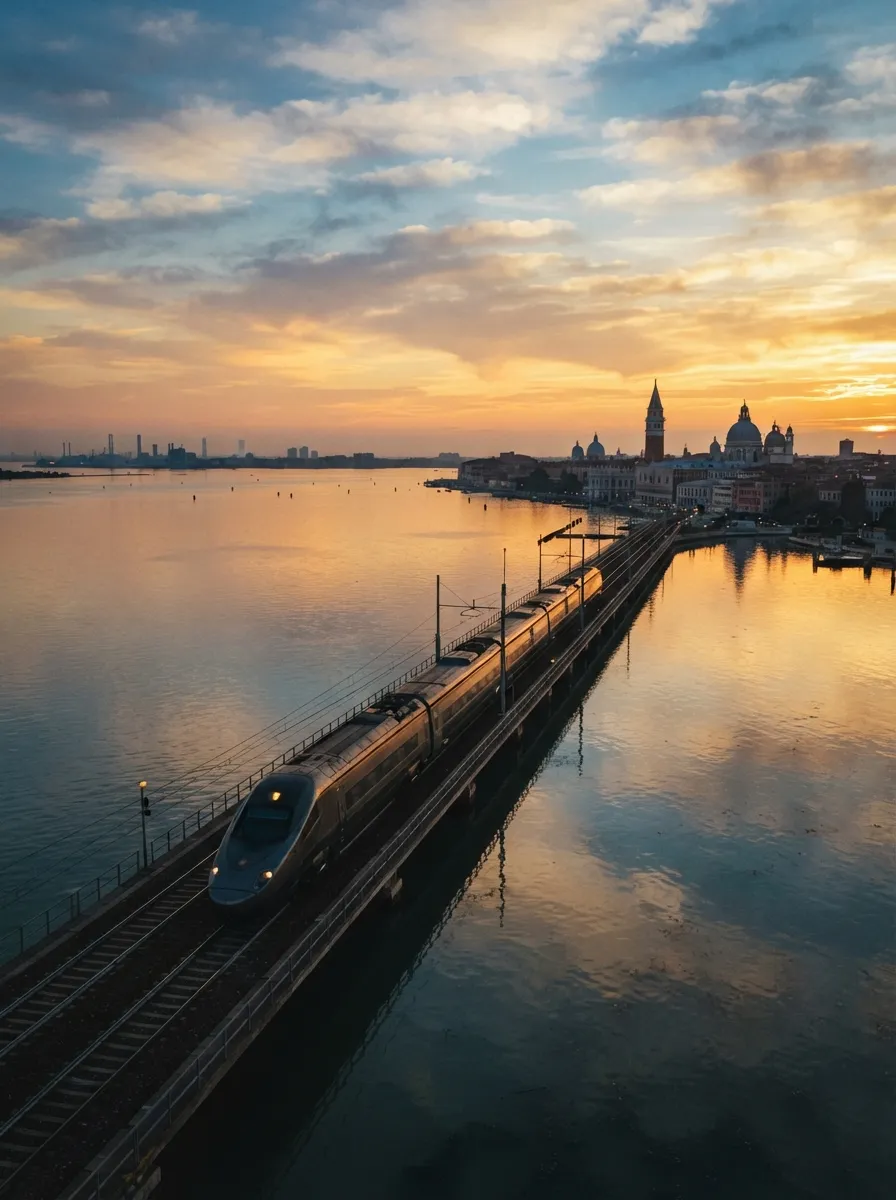
The train from Milan to Venice is not merely transportation between two Italian cities.
It is a wonderfully efficient change of worlds.
You leave Milan beneath the vast roof of Centrale, cross the plains of northern Italy and roll through cities such as Verona, Vicenza and Padua. Then the mainland loosens, the lagoon appears and the train glides across the causeway toward a station where roads surrender to water.
For the easiest journey, remember four things:
Book a direct high-speed train. Depart from Milano Centrale. Arrive at Venezia Santa Lucia. Read the fare conditions before choosing the cheapest ticket.
Everything after that is pleasantly straightforward.
The final challenge is Venice itself, waiting outside the station with hundreds of bridges, thousands of lanes and absolutely no interest in behaving like an ordinary city.