Things to Do in the San Juan Islands: The Complete 2026–27 Travel Guide
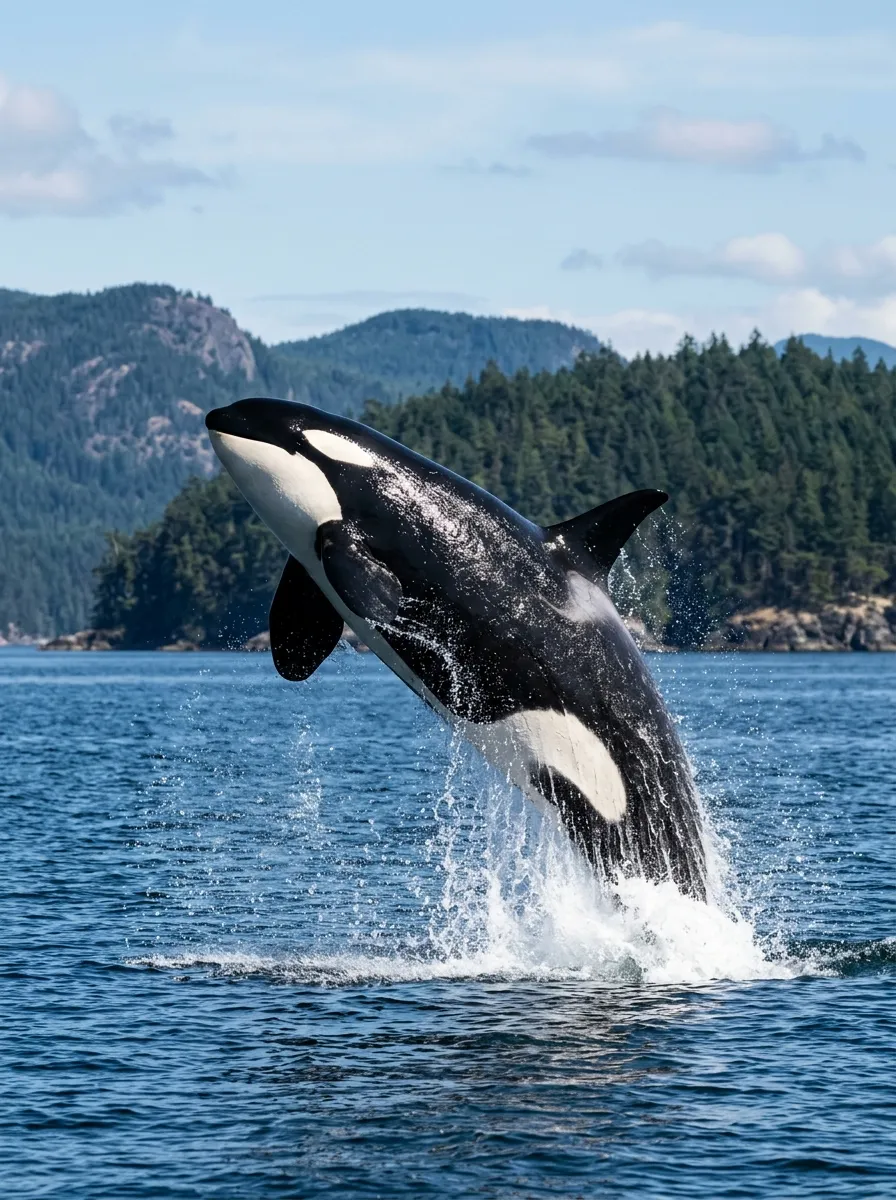
The San Juan Islands don’t announce themselves the way a beach destination does. There’s no dramatic first view from a plane window, no single postcard shot that captures the whole trip. Instead, the islands reveal themselves slowly — a ferry gliding past forested shorelines in the Salish Sea, a bald eagle circling over a farm stand, and then, if the timing and the light and a little luck align, the unmistakable dark fin of an orca breaking the surface a few hundred yards offshore. This is one of the best places on Earth to see wild orcas from land, and that alone puts the archipelago in a category most island destinations simply can’t compete with.
This guide covers things to do in the San Juan Islands for the rest of 2026 and into 2027, and getting the timing right matters more here than almost anywhere else in the Pacific Northwest. The islands run on a real seasonal rhythm tied directly to the ferry system and the whales themselves — a summer sailing schedule with a defined start and end date, a whale-watching window that peaks from late May through September, and an off-season that transforms the islands into something considerably quieter and slower. Get that timing right, along with an honest understanding of how the ferry reservation system actually works, and the San Juan Islands deliver one of the most genuinely rewarding slow-travel trips available in the United States.
Whether you’re chasing Southern Resident orcas from the cliffs at Lime Kiln Point, climbing Mount Constitution for the best view in the archipelago, or simply looking to disappear into Lopez Island’s quiet farm roads for a few days, this guide breaks down what’s actually worth your time across San Juan, Orcas and Lopez Islands, with honest, current notes on ferry logistics — genuinely the single biggest planning factor for any San Juan Islands trip.
Recommended Travel Items for Your Trip
AT A GLANCE: SAN JUAN ISLANDS
- Best overall time to visit: Late May through September for whale watching and full ferry service
- Best island for whale watching: San Juan Island (Lime Kiln Point State Park)
- Best island for scenery and hiking: Orcas Island (Mount Constitution, Moran State Park)
- Best island for cycling: Lopez Island, flat and quiet
- Best town base: Friday Harbor, San Juan Island
- Main gateway: Anacortes, Washington, via Washington State Ferries
- Peak whale-watching window: Late May through September
- Ideal trip length: 3–4 days for one island; 5–7 days to properly cover San Juan, Orcas and Lopez
The San Juan Islands at a Glance: Where to Focus Your Time
More than 170 islands make up the San Juan archipelago, but only three have the ferry service, hotels and restaurants to support a full visit — and each has a genuinely distinct personality.
| Island | Best For | Best Upcoming Time | Suggested Stay | Main Consideration |
| San Juan Island | Whale watching, Friday Harbor’s walkable town | May–Sep, though good year-round | 2–3 nights | Busiest island for tourism infrastructure |
| Orcas Island | Hiking, dramatic scenery, Mount Constitution | Apr–Oct | 2–3 nights | Hillier roads, more limited car rental |
| Lopez Island | Cycling, quiet farmland, minimal tourist crowds | May–Sep | 1–2 nights | Fewest restaurants and lodging options |
| Shaw Island | A genuine day-trip curiosity, minimal services | Year-round | Not typically an overnight stop | No real visitor infrastructure |
Why the San Juan Islands Reward Slow Travel
The San Juan Islands work against the instinct to pack a trip full — the ferry schedule alone forces a slower pace than most destinations, and that’s genuinely part of the appeal. This is a place built around tide tables and sailing times rather than a checklist of attractions, where a good trip means picking one or two islands and actually settling into them rather than racing across the whole archipelago. The reward for that patience is real: shore-based whale watching considered among the best in the world, dark-sky stargazing away from any significant light pollution, and a pace of life that longtime visitors describe as the entire point of coming here.
When to Visit: Ferries, Whales and Seasons
Understanding the Ferry System First
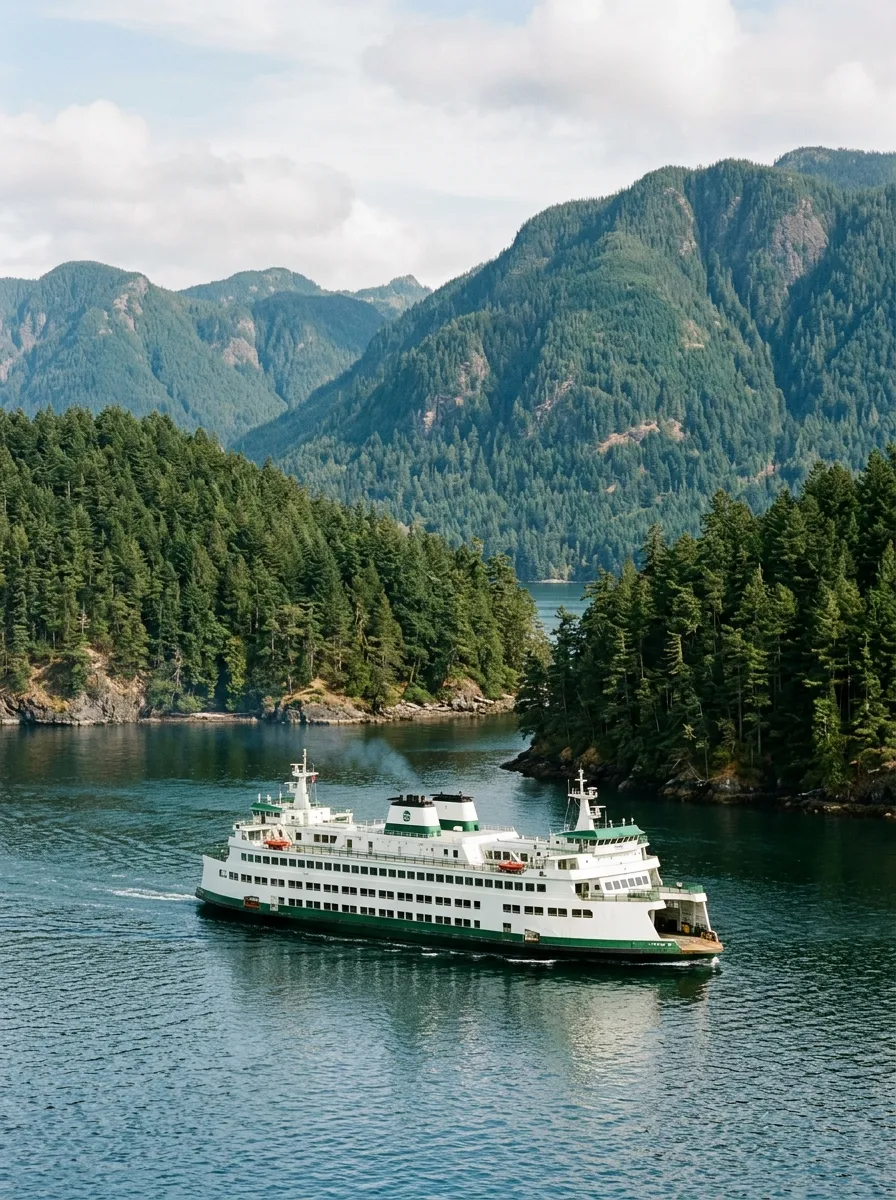
Washington State Ferries operates the Anacortes–San Juan Islands route connecting the mainland to Lopez, Shaw, Orcas and San Juan Islands, with crossing times running roughly one to two hours depending on your stop. Fares run $17–62 depending on vehicle size and route, and reservations are strongly recommended, though not required, for vehicles — walk-on and bicycle passengers never need one. For the 2026 summer season (June 14 through September 19), vehicle reservations were released in staged segments beginning in spring, with the remaining space opening two weeks and then two days before each sailing, and a final 10% held for same-day standby. If a car is part of your plan for summer 2027, treat reservations the way you’d treat a popular restaurant booking: the moment the relevant release window opens, not the week before you leave.
BOOKING TIP
Traveling without a car dramatically simplifies San Juan Islands logistics — walk-on passengers can typically just show up, and once you’re on San Juan Island, Friday Harbor is walkable, with bike, scooter and taxi options covering most of what a car would otherwise handle. Interisland eastbound sailings (heading back toward Anacortes) are free for foot passengers, while westbound interisland fares are purchased in advance or at the terminal.
Late 2026: What’s Left on the Calendar
If you’re planning a visit for the remainder of 2026, September holds onto strong whale-watching odds as Southern Resident orcas continue following salmon runs through the islands, and the weather remains genuinely pleasant with noticeably thinner crowds than peak summer. The 2026 summer ferry schedule runs through September 19, after which service shifts to a reduced fall and winter schedule — a meaningful factor if you’re planning a trip that straddles that date.
2027 Season Planning
Expect the 2027 summer ferry schedule to follow a similar mid-June-through-mid-September window, with vehicle reservations opening in staged releases beginning roughly one to two months ahead of the season start — confirm exact dates on the Washington State Ferries site as spring 2027 approaches. Peak whale-watching season runs late May through September, tied to the Chinook salmon runs that Southern Resident killer whales follow through the Haro Strait.
If you’re mapping out a spring 2027 trip and want it to line up with the islands’ best window, this roundup of amazing places to visit in April in the USA is a useful companion for planning the weeks just before whale season ramps into full swing.
The Quiet Off-Season
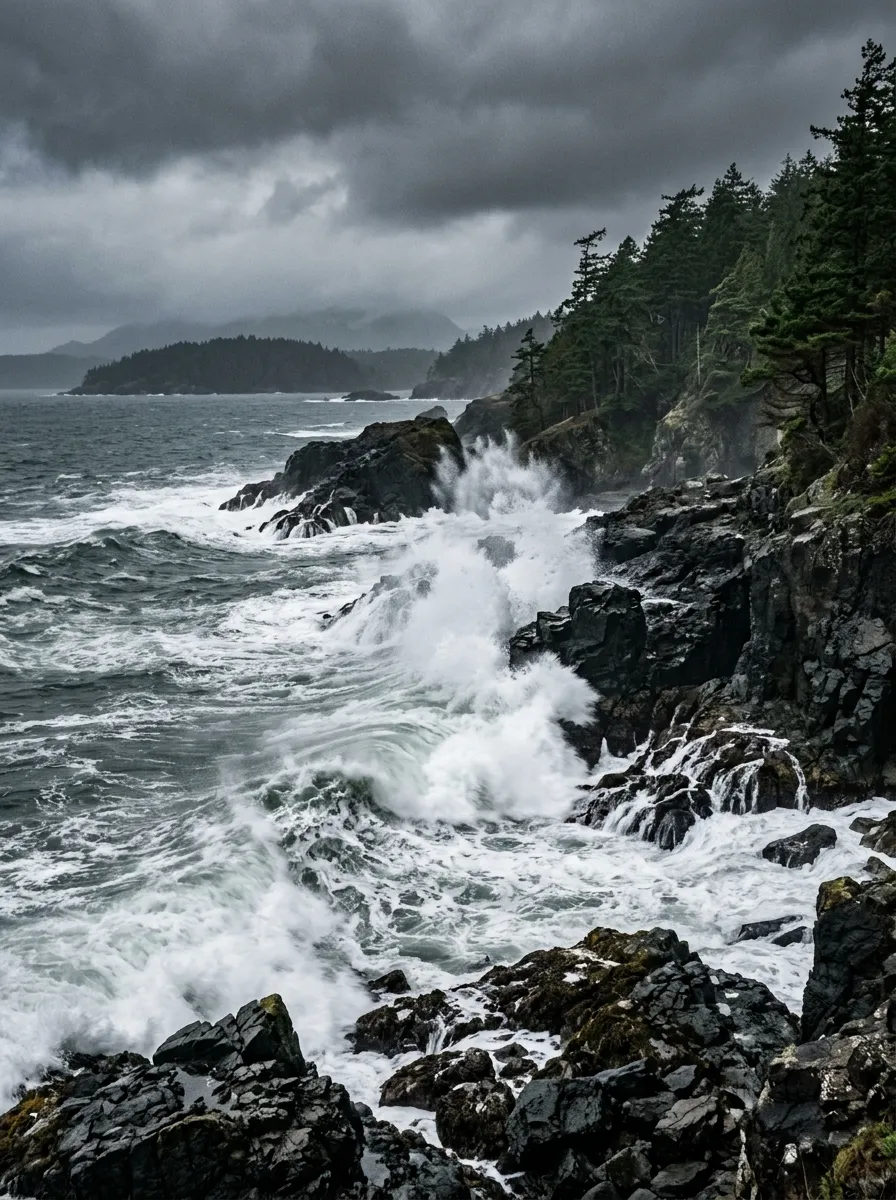
October through April brings a genuinely different version of the San Juan Islands — fewer ferries, many seasonal businesses closed, and a slower, more local pace. It’s not without appeal: winter storm-watching, quieter trails and lower lodging rates all have a following among repeat visitors, but don’t expect the whale-watching tours, full restaurant rosters or bustling Friday Harbor of peak summer.
San Juan Island and Friday Harbor
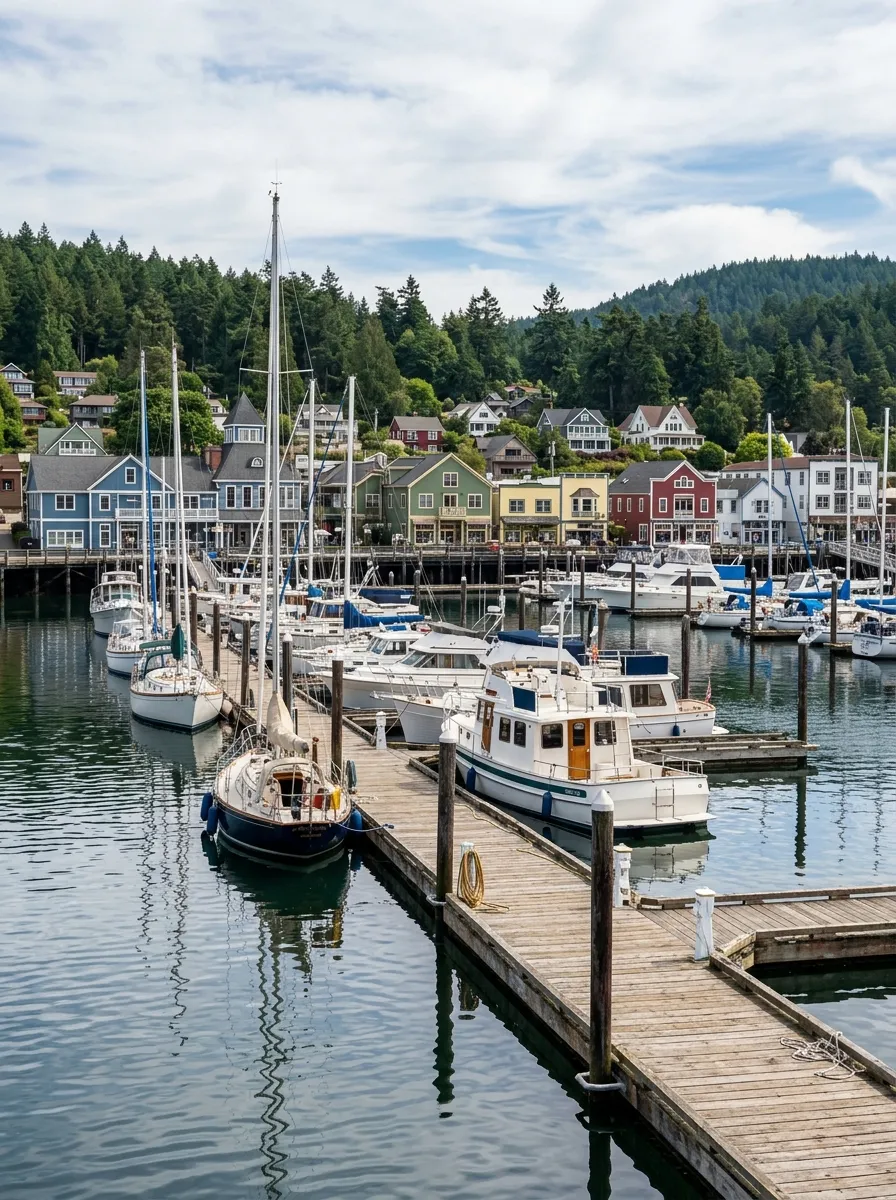
San Juan Island is the archipelago’s most visited and most populated island, anchored by Friday Harbor, a compact, walkable waterfront town holding the ferry landing, most of the island’s restaurants and galleries, and the departure point for the majority of whale-watching boat tours. It’s the natural first-timer’s base, offering the most complete visitor infrastructure of the three main islands.
Lime Kiln Point State Park
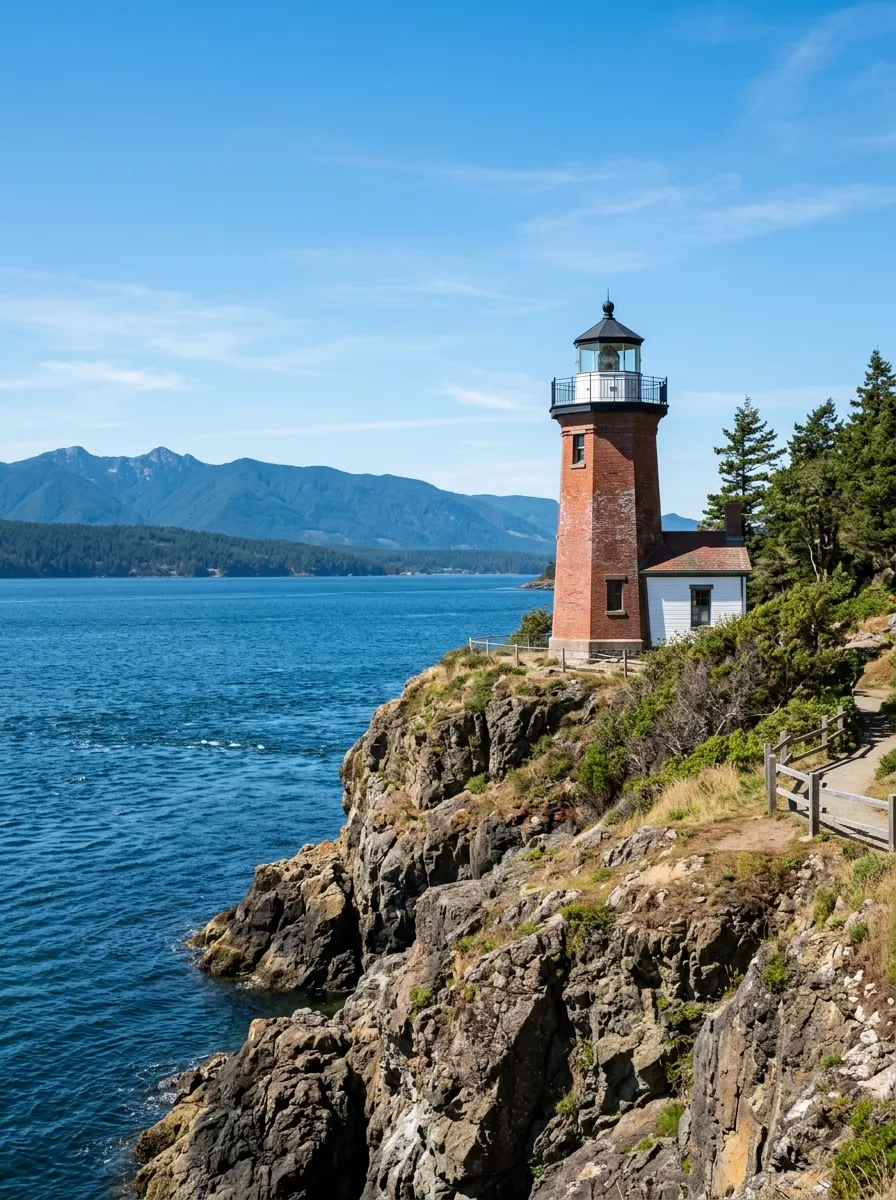
Known locally as Whale Watch Park, Lime Kiln Point on San Juan Island’s west coast is widely considered one of the best shore-based whale-watching locations in the world. The geography of the Haro Strait pushes Southern Resident killer whales close to shore here as they follow salmon runs, particularly from late May through October, and sightings from the rocky bluffs — no boat required — happen multiple times a week during peak season, though never guaranteed on any given day. Pack a picnic, bring binoculars, and plan to linger; this isn’t a five-minute photo stop.
The Whale Museum
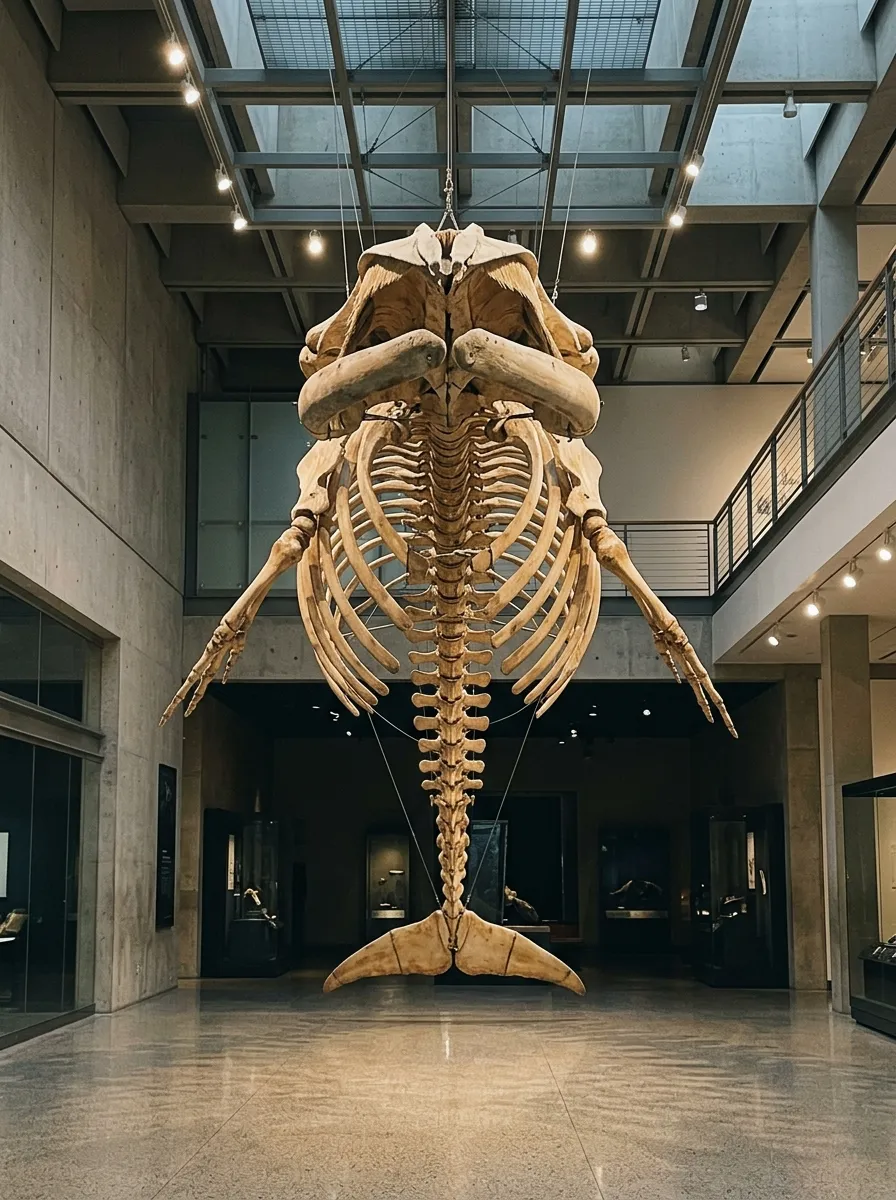
A short walk from the Friday Harbor waterfront, The Whale Museum offers genuinely engaging context on the region’s resident orca pods and broader marine ecosystem, including a fully reassembled orca skeleton. It pairs naturally with a Lime Kiln Point visit, either before to set context or after to make sense of what you saw.
Whale-Watching Boat Tours
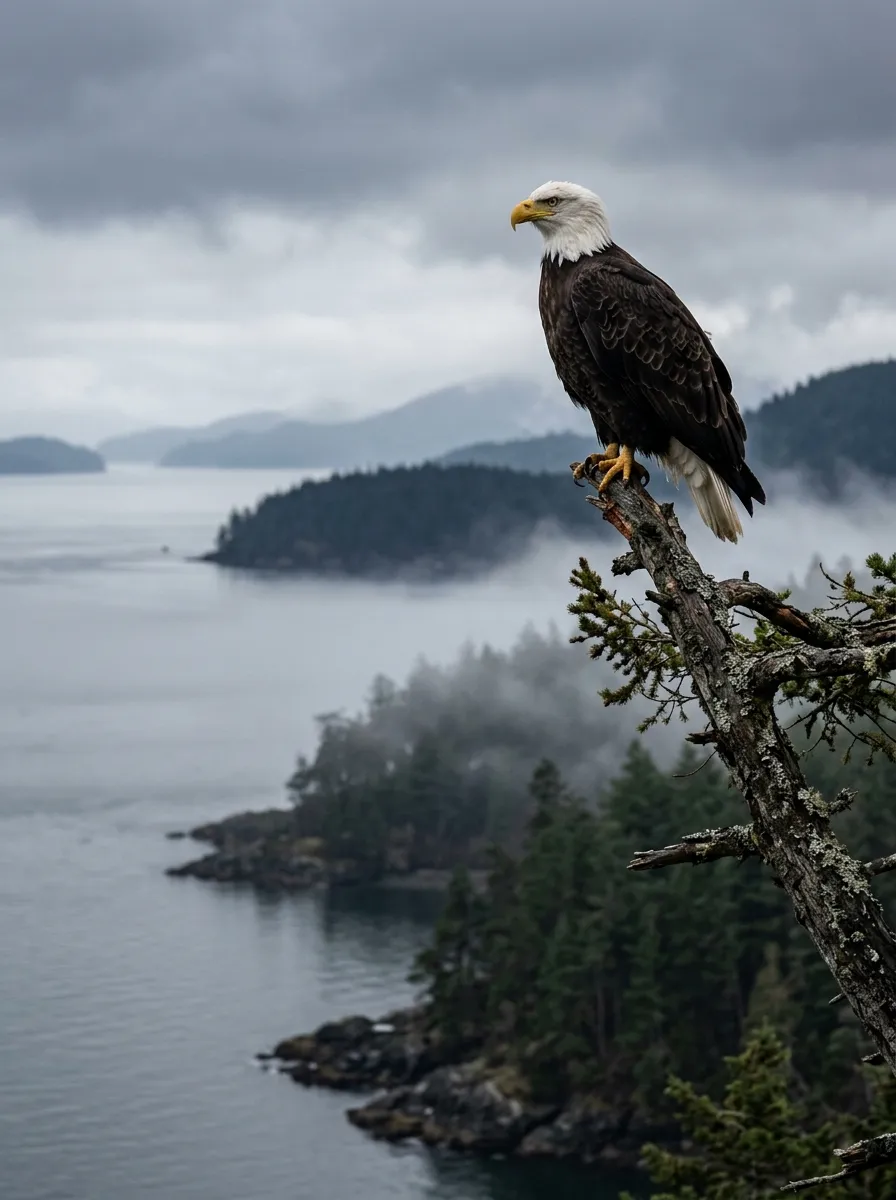
Beyond shore-based viewing, daily whale-watching boat tours depart from Friday Harbor throughout the season, running roughly April through October and meaningfully improving the odds of a close sighting compared to land alone — operators use hydrophone systems to let passengers hear orca and humpback vocalizations underwater, which regular visitors describe as just as memorable as the visual sighting itself.
Roche Harbor
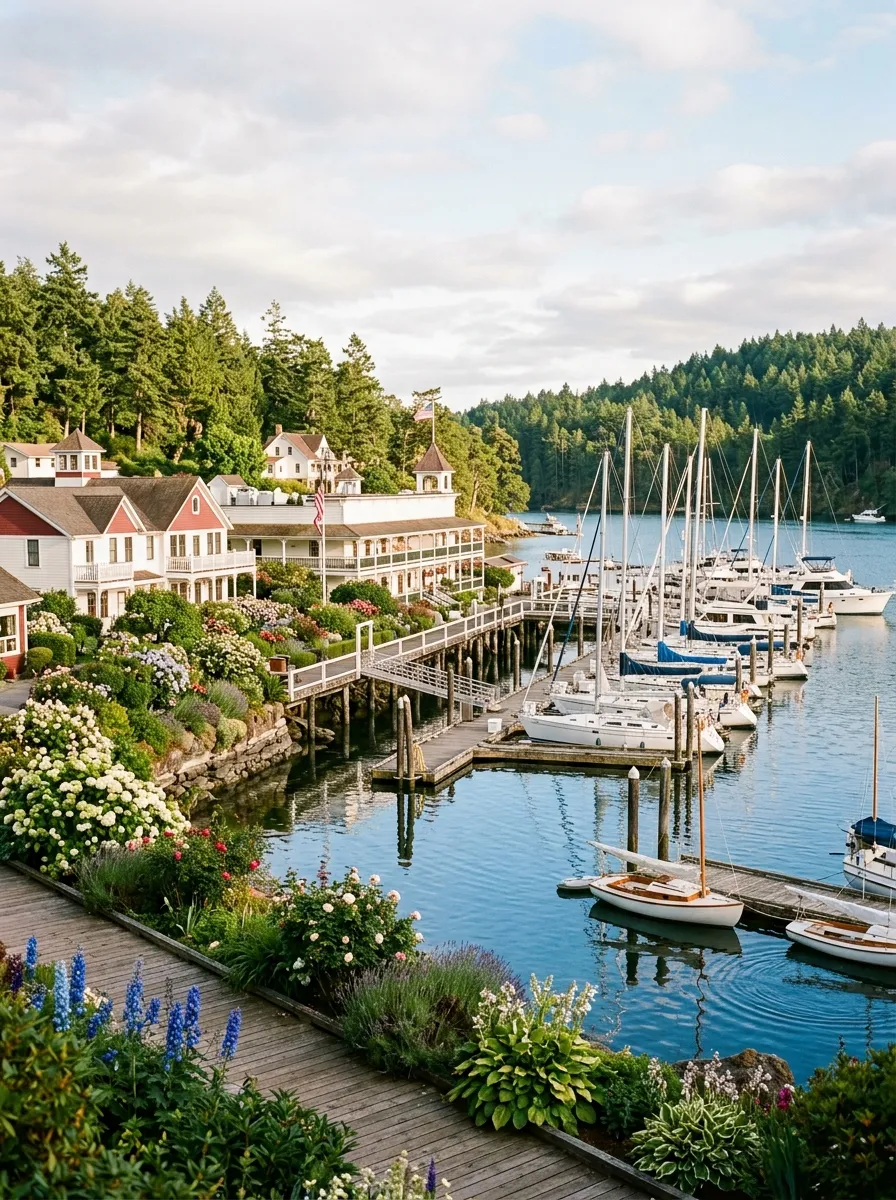
On San Juan Island’s northwest tip, historic Roche Harbor combines a scenic working marina with waterfront dining and the San Juan Islands Sculpture Park, an eight-hectare outdoor gallery holding more than 150 works. It’s also home to Afterglow Vista, the McMillin family’s striking open-air mausoleum reached via a short trail through an old cemetery — a genuinely unusual, slightly haunting stop that rewards the short detour.
San Juan Island National Historical Park
Split across two sites — American Camp and English Camp — this park preserves the story of the “Pig War,” an 1859 border dispute between the US and Britain that never escalated beyond a single unfortunate pig, resolved without a shot fired. Beyond the history, both camps offer genuinely rewarding coastal and prairie hiking with strong wildlife-viewing potential.
Orcas Island and Mount Constitution
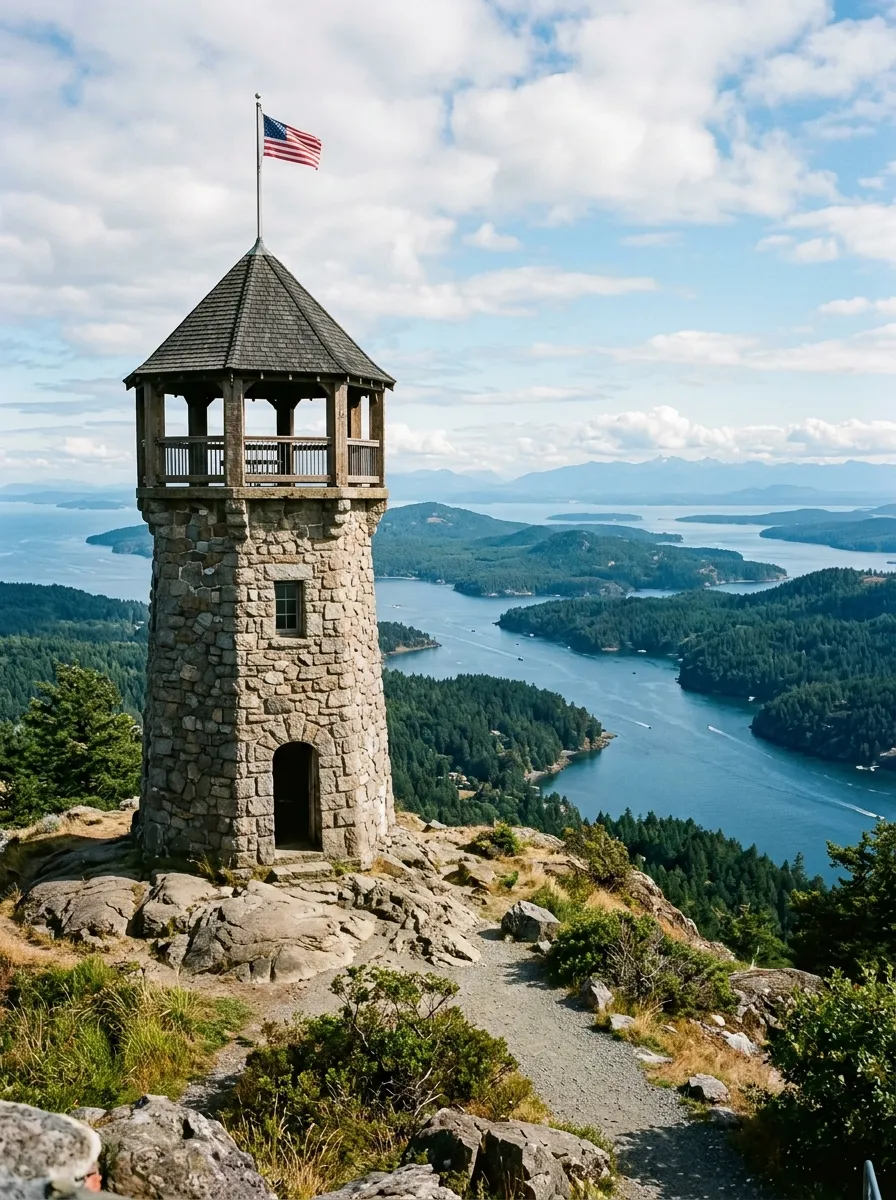
Horseshoe-shaped and the largest island in the archipelago at more than 58 square miles, Orcas Island trades San Juan Island’s whale-watching focus for dramatic scenery and serious hiking. Moran State Park’s more than 5,000 acres and 30-plus miles of trails anchor the island’s outdoor reputation, and Mount Constitution — the highest point in the San Juan Islands — rewards whichever route you choose to reach it. Hikers can tackle the full 6.2-mile loop or a shorter roughly 3-mile out-and-back to the summit, while drivers and cyclists can reach the same historic stone observation tower by road, taking in 360-degree views spanning the Salish Sea and, on clear days, Mount Baker’s snow-capped peak.
Moran State Park Beyond the Summit
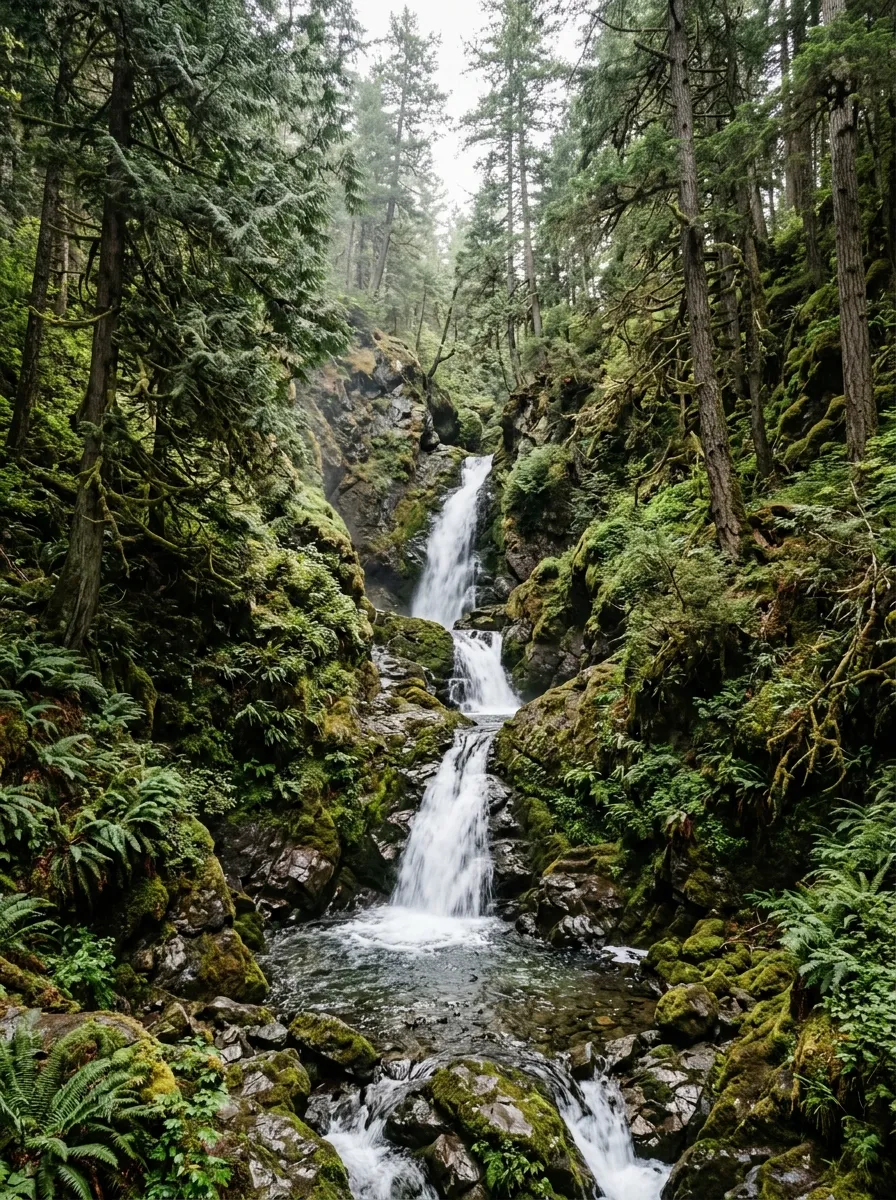
Beyond Mount Constitution, Moran State Park holds Cascade Falls (an easy, rewarding waterfall hike), Cascade Lake for kayak rentals and swimming, and enough trail mileage to fill several days without repeating a route. Wildlife sightings here are genuinely frequent — bald eagles, deer and more than 250 recorded bird species make the park a strong draw even without the Mount Constitution payoff.
Eastsound and Orcas Island’s Villages
Eastsound serves as Orcas Island’s central village and the most practical base for shops, galleries and restaurants, while smaller communities like Deer Harbor and West Sound offer quieter, marina-centered alternatives for whale-watching charters, kayak trips and sunset views. Orcas Island’s food scene punches above its size, with seasonal, hyper-local restaurants that have drawn national food-writer attention in recent years.
Lopez Island: Cycling and Quiet Farmland
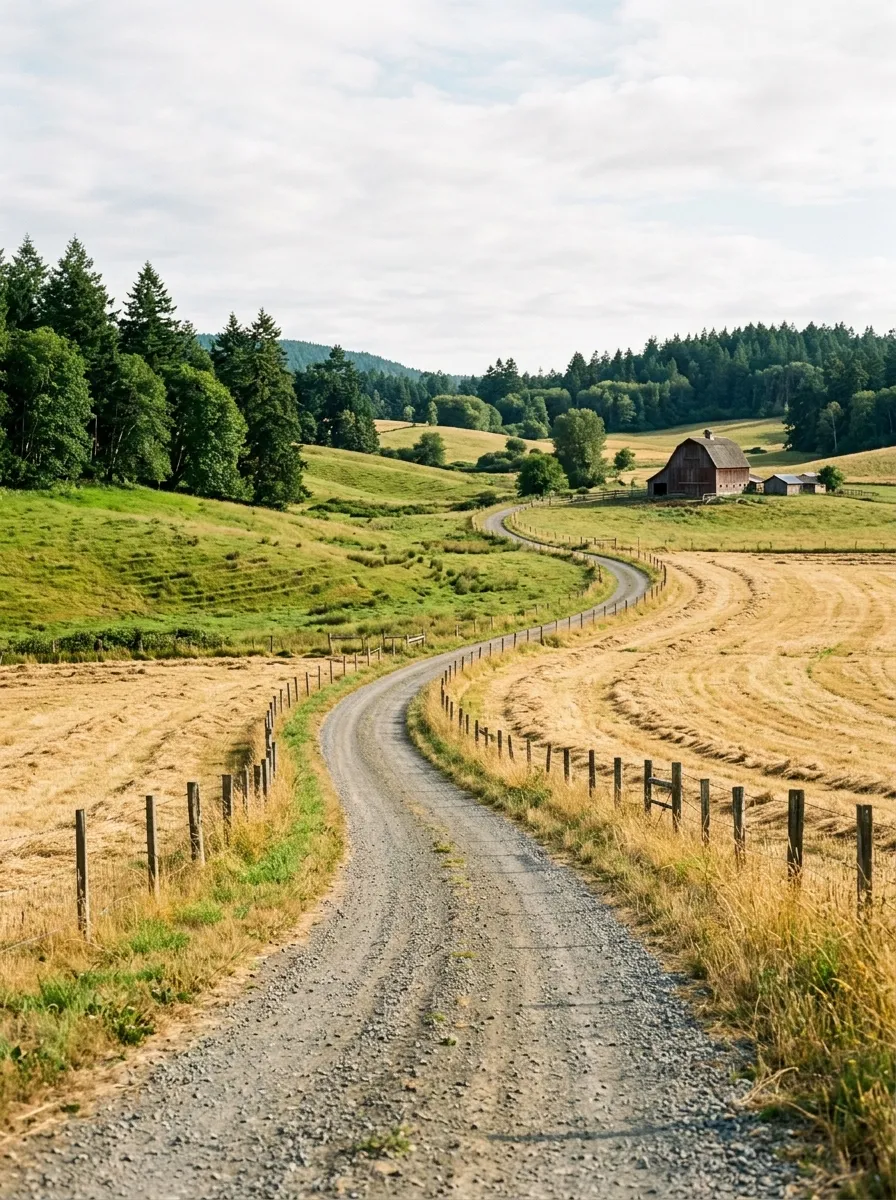
Lopez Island is the deliberate choice for visitors seeking the slowest, most rural version of a San Juan Islands trip — flat terrain, agricultural back roads and noticeably less tourist infrastructure than San Juan or Orcas. It’s widely regarded as the best of the three main islands for cycling, with routes like Fisherman Bay Road offering scenic, low-traffic riding that doesn’t demand serious climbing legs the way Orcas’s hillier roads do.
If Lopez Island’s quiet, under-the-radar character appeals to you, that same instinct for seeking out overlooked places pays off well beyond the Pacific Northwest — this guide to hidden gems in Italy applies the same philosophy to underrated corners of a much more heavily touristed country.
Kayaking the San Juan Islands
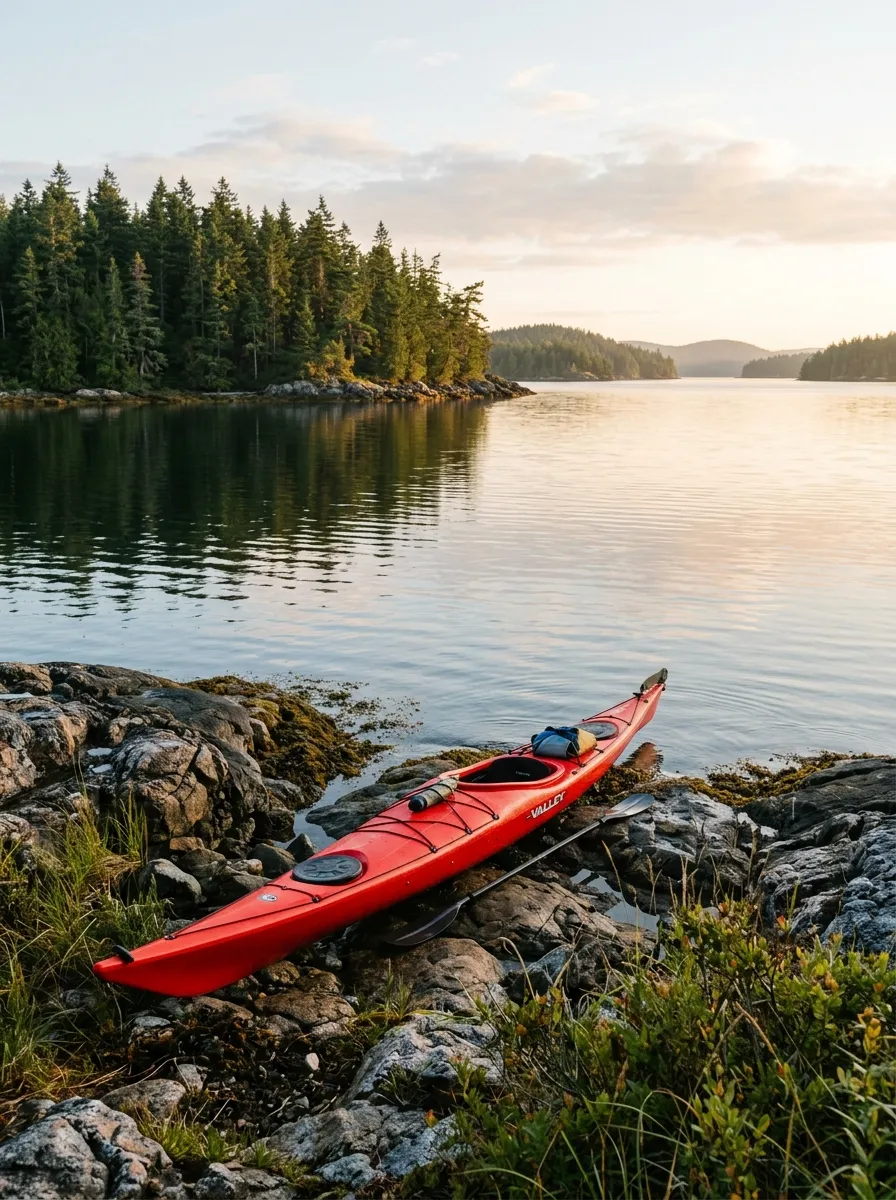
Guided sea kayaking is one of the most peaceful and popular ways to experience the islands’ coastline, with tours departing from Friday Harbor, Orcas Island and Lopez Island alike, paddling past rocky shorelines where harbor seals and seabirds are common sights. It’s a genuinely different, quieter angle on the same waters that whale-watching boats cover, and multi-hour guided trips are widely available for visitors without their own kayaking experience.
Local Food and Cider
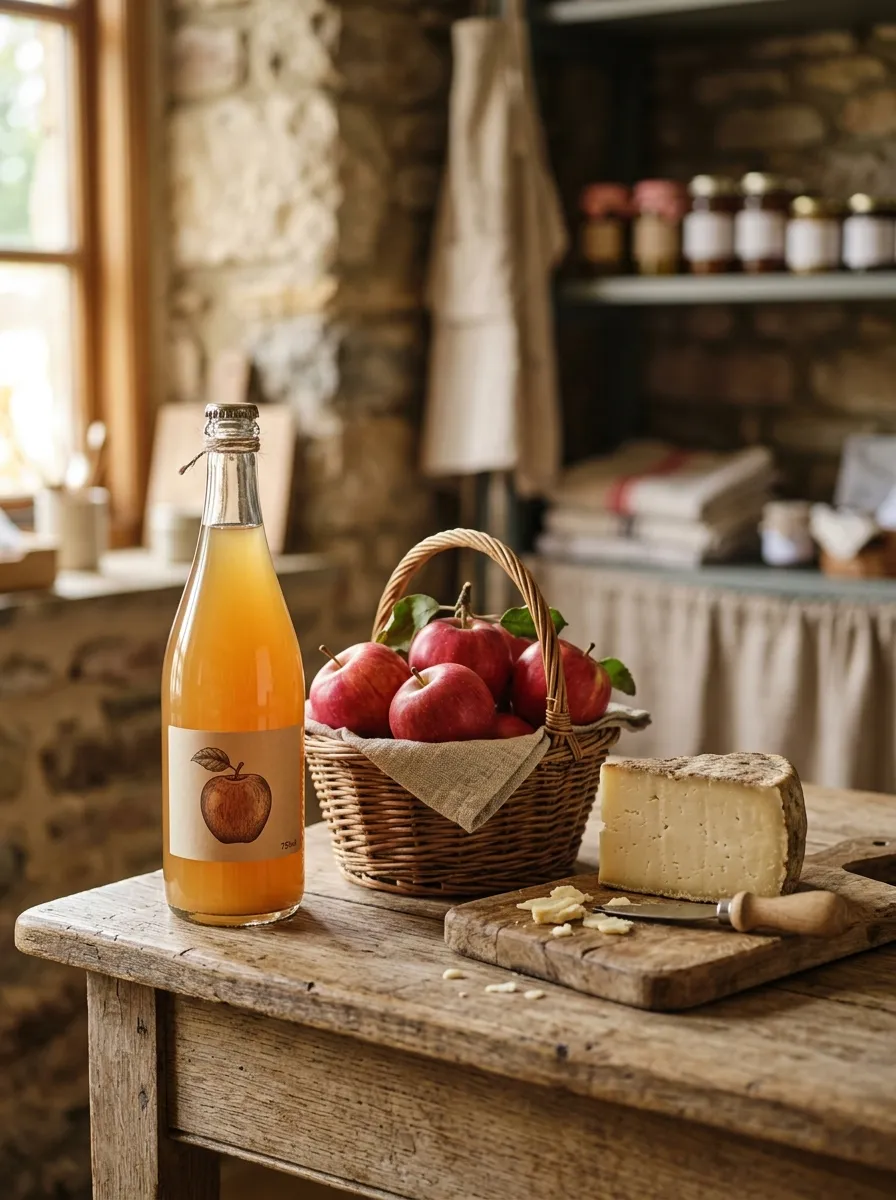
The islands support a genuinely strong small-producer food and drink scene — San Juan Island Distillery crafts gin near Roche Harbor, Westcott Bay Cider operates from the same area, and seasonal, farm-driven restaurants across all three main islands lean heavily on what’s actually being grown and caught locally that week rather than a fixed, year-round menu.
Shaw Island and the Outer Islands
Shaw Island, the smallest of the ferry-served islands, has essentially no visitor infrastructure — no hotels, minimal dining — making it more of a curiosity glimpsed from the ferry than a genuine destination stop. Beyond the four ferry-served islands, the broader 170-plus island archipelago includes dozens of smaller, largely inaccessible islands that hint at just how much of this corner of the Salish Sea remains genuinely untouched by tourism.
Places that exist just outside the usual travel radar have a particular pull, and the San Juans’ outer islands are a small taste of that — this list of 21 unique destinations you never knew existed is worth bookmarking for more of that same off-the-beaten-path instinct on a future trip.
Where to Stay in the San Juan Islands
Friday Harbor, San Juan Island: The most complete base for first-time visitors — walkable, close to the ferry, and central to whale-watching tours and Lime Kiln Point.
Eastsound, Orcas Island: The natural choice for hikers and scenery-focused travelers, with the island’s best concentration of restaurants and galleries.
Lopez Village, Lopez Island: The right pick for travelers prioritizing quiet and cycling over a fuller restaurant and activity roster.
How to Get to the San Juan Islands and Around
By ferry: Washington State Ferries from Anacortes is the primary way in, with fares from $17–62 depending on vehicle size and destination island; walk-on passengers travel without a vehicle reservation.
By seaplane: Seasonal seaplane service connects Seattle and the San Juan Islands directly, a scenic and time-saving alternative to the ferry, particularly useful for reaching Orcas Island’s smaller harbors.
Without a car: Friday Harbor is genuinely walkable, and bike, scooter and taxi rentals cover most of San Juan Island’s key sights without a vehicle reservation headache.
Between islands: Interisland ferry sailings connect San Juan, Orcas, Lopez and Shaw directly, with eastbound trips (toward Anacortes) free for foot passengers and westbound trips carrying a separate fare.
How Many Days Do You Need in the San Juan Islands?
Three to four days suits a single-island trip well — San Juan Island for whale watching, or Orcas Island for hiking and scenery. Five to seven days allows a genuine multi-island trip, pairing San Juan’s wildlife focus with Orcas’s outdoor scale and a day or two of Lopez Island’s quiet cycling. Given the ferry logistics involved, resist the urge to try covering all three islands in under a week — it tends to produce more time on ferries than actually on the islands themselves.
Five-Day San Juan Islands Itinerary
Day 1: Ferry to Friday Harbor, San Juan Island orientation, Whale Museum visit.
Day 2: Lime Kiln Point State Park morning, Roche Harbor and the Sculpture Park in the afternoon.
Day 3: Whale-watching boat tour, San Juan Island National Historical Park (American Camp) in the afternoon.
Day 4: Interisland ferry to Orcas Island, Moran State Park and the Mount Constitution summit.
Day 5: Eastsound village morning, Cascade Lake kayaking or Cascade Falls hike, ferry departure.
Weekend San Juan Island Itinerary
Day 1: Arrive in Friday Harbor, Whale Museum, waterfront dinner.
Day 2: Lime Kiln Point State Park morning, Roche Harbor afternoon, whale-watching boat tour if timing allows.
Day 3: San Juan Island National Historical Park, departure.
Budget Travel in the San Juan Islands
Traveling as a walk-on passenger rather than bringing a car meaningfully cuts costs and sidesteps the vehicle reservation system entirely, and Lime Kiln Point’s shore-based whale watching costs nothing beyond the drive or bike ride to get there. Off-peak shoulder-season travel (May or September rather than July–August) also brings noticeably lower lodging rates while still falling within the good-weather, active whale-watching window.
Family Travel in the San Juan Islands
San Juan Island’s Whale Museum and Friday Harbor’s walkable waterfront both work well for families, and shore-based whale watching at Lime Kiln Point removes the seasickness concerns that can come with a boat tour for younger kids. Orcas Island’s Moran State Park offers easier, shorter trail options alongside its more strenuous ones, making it flexible for mixed-age groups.
If your San Juan Islands trip is one leg of a bigger multi-stop family vacation, it’s worth planning the contrast deliberately — this 3-day Disneyland itinerary covers the opposite end of the family-travel spectrum for whichever half of the trip needs a different kind of energy.
Solo Travel and Couples in the San Juan Islands
Solo travelers benefit from Friday Harbor’s walkable, low-pressure pace and the genuine ease of a walk-on ferry trip without vehicle logistics. Couples looking for a romantic angle should consider Orcas Island’s Mount Constitution sunset — widely described as one of the best in the archipelago — paired with a quieter Eastsound dinner reservation booked well ahead, since the island’s most talked-about restaurants fill up fast in peak season.
Practical Tips and What to Pack
The Pacific Northwest’s famously unpredictable weather applies fully here — layers matter more than any single “right” outfit, since a sunny morning on the water can turn windy and cool within hours, especially on a whale-watching boat.
If packing smart for shifting weather and a mix of casual and slightly dressier evenings is a skill you’re building for a bigger trip too, this European vacation outfits style guide covers the same layering logic for a different kind of unpredictable-weather destination.
San Juan Islands Packing Checklist
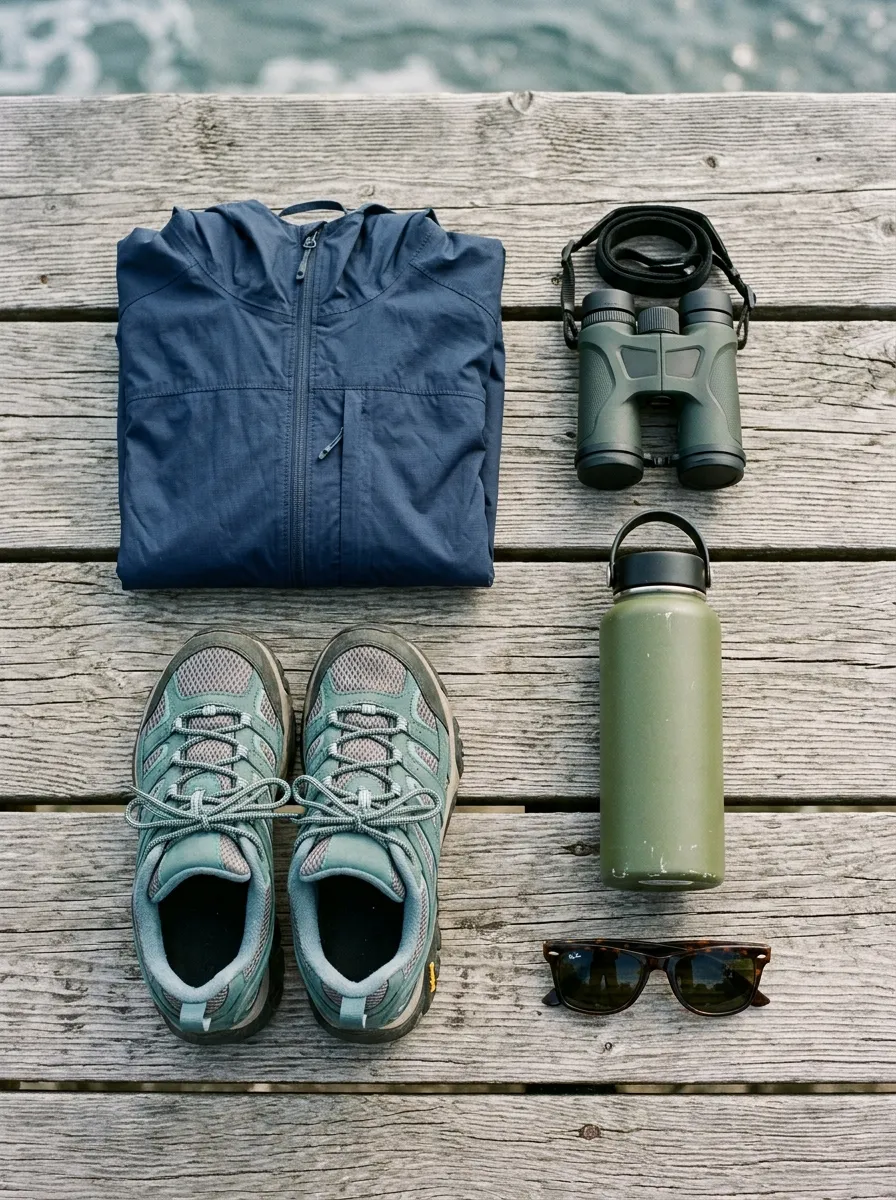
- [ ] Layers, including a windproof or waterproof outer layer for boat tours
- [ ] Binoculars for shore-based whale watching at Lime Kiln Point
- [ ] Comfortable, sturdy footwear for Moran State Park and coastal trails
- [ ] A vehicle ferry reservation confirmed well in advance, if bringing a car
- [ ] Sunscreen, even on overcast Pacific Northwest days
- [ ] A reusable water bottle for hiking and cycling days
- [ ] Cash or card for interisland ferry fares and smaller island vendors
- [ ] A bike, if planning to explore Lopez Island’s low-traffic roads
Frequently Asked Questions About Visiting the San Juan Islands
What is the best time of year to visit the San Juan Islands?
Late May through September offers the best combination of full ferry service, warm weather and peak whale-watching odds.
How many days do I need in the San Juan Islands?
Three to four days suits a single-island trip; five to seven days allows a proper multi-island visit across San Juan, Orcas and Lopez.
Do I need a car in the San Juan Islands?
Not necessarily — Friday Harbor is walkable, and bikes, scooters and taxis cover most of San Juan Island without a vehicle reservation. A car becomes more useful on Orcas Island given its hillier terrain and more spread-out sights.
How do I get to the San Juan Islands?
Via Washington State Ferries from Anacortes, Washington, with fares from $17 to $62 depending on vehicle size and destination, or by seasonal seaplane service from Seattle.
Do I need a ferry reservation?
Reservations are recommended but not required for vehicles on the Anacortes–San Juan Islands route; walk-on and bicycle passengers never need one. Book vehicle reservations as early as release windows allow, especially for summer travel.
Is whale watching guaranteed in the San Juan Islands?
No — sightings are common during peak season (late May through September) but never guaranteed on any given day, whether from shore at Lime Kiln Point or on a boat tour.
Which island is best for whale watching?
San Juan Island, particularly Lime Kiln Point State Park on the west coast, widely regarded as one of the best shore-based whale-watching spots in the world.
Which island is best for hiking?
Orcas Island, anchored by Moran State Park’s more than 30 miles of trails and the Mount Constitution summit.
Which island is best for cycling?
Lopez Island, thanks to its flat terrain and quiet agricultural roads.
Is the San Juan Islands ferry expensive?
Fares run $17–62 depending on vehicle size and route; walk-on passenger fares are considerably cheaper than bringing a vehicle.
Is a day trip to the San Juan Islands worth it?
It’s possible, particularly to Friday Harbor as a walk-on passenger, but the islands genuinely reward at least an overnight stay given the slower pace and ferry-dependent logistics.
Are the San Juan Islands good for families?
Yes — shore-based whale watching, the Whale Museum and Moran State Park’s flexible trail difficulty all work well across a range of ages.
Are the San Juan Islands good for solo travelers?
Yes, particularly a walk-on trip based in Friday Harbor, which keeps logistics simple and the pace low-pressure.
What should I pack for a San Juan Islands trip?
Layers for shifting Pacific Northwest weather, binoculars for whale watching, sturdy footwear for hiking, and sun protection even on overcast days.
Is the off-season (fall and winter) worth visiting?
It’s a genuinely different, quieter experience — reduced ferry service and many seasonal businesses closed, but appealing for storm-watching and lower rates if whale watching isn’t the priority.
What’s the biggest mistake first-time visitors make?
Trying to cover all three main islands in too short a trip — the ferry logistics reward picking one or two islands and settling in rather than rushing between all of them.
Can I see orcas from land without a boat tour?
Yes — Lime Kiln Point State Park on San Juan Island is specifically known for reliable shore-based sightings during peak season, no boat required.
Is Roche Harbor worth visiting?
Yes — the historic marina, waterfront dining and San Juan Islands Sculpture Park make it a worthwhile stop beyond Friday Harbor.
Final Thoughts on Visiting the San Juan Islands
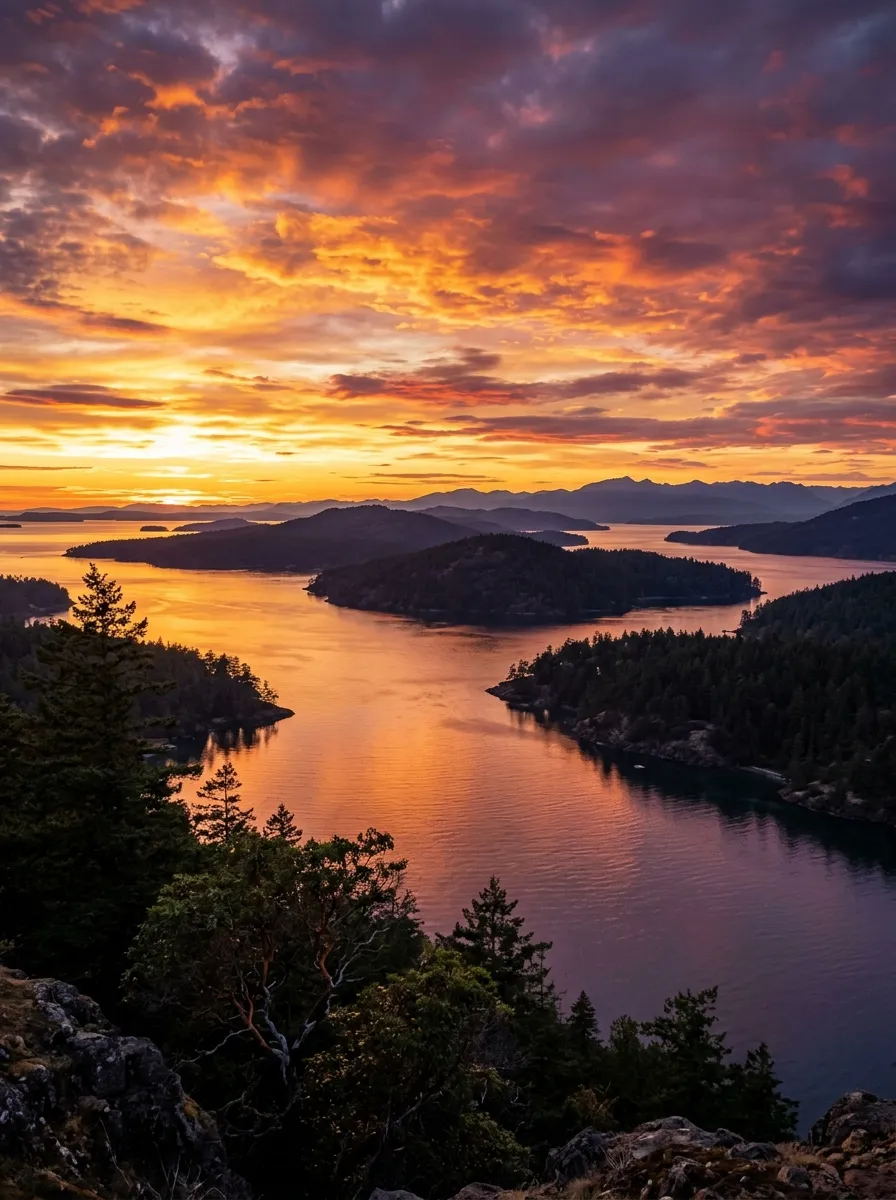
The San Juan Islands work best when you let the ferry schedule set the pace rather than fighting it. Three or four days on San Juan Island alone delivers a genuinely complete trip — Lime Kiln Point’s shore-based whale watching, Friday Harbor’s walkable core, and Roche Harbor’s marina and sculpture park. Stretch to five days or more and Orcas Island’s Mount Constitution summit and Lopez Island’s quiet farm roads round the trip out into something considerably richer.
If you’re building a first San Juan Islands itinerary, anchor it around the whale-watching season (late May through September) if that’s the priority, and book vehicle ferry reservations the moment release windows open if a car is part of the plan. However you build it, things to do in the San Juan Islands add up into one of the most genuinely peaceful, wildlife-rich trips available in the United States — an archipelago where the journey between islands is very much part of the destination, not just the way you get there.