Falkirk Travel Guide: Scotland’s Underrated City of Giant Kelpies, Roman Frontiers and Engineering Wonders
Falkirk is the kind of place many travelers pass through without realizing what they are missing.
Sitting almost halfway between Edinburgh and Glasgow, this Central Scotland town is surrounded by two of the country’s most imaginative modern landmarks, traces of the Roman Empire, woodland estates, canals, historic houses and roads that reach some of Scotland’s most famous landscapes within an hour.
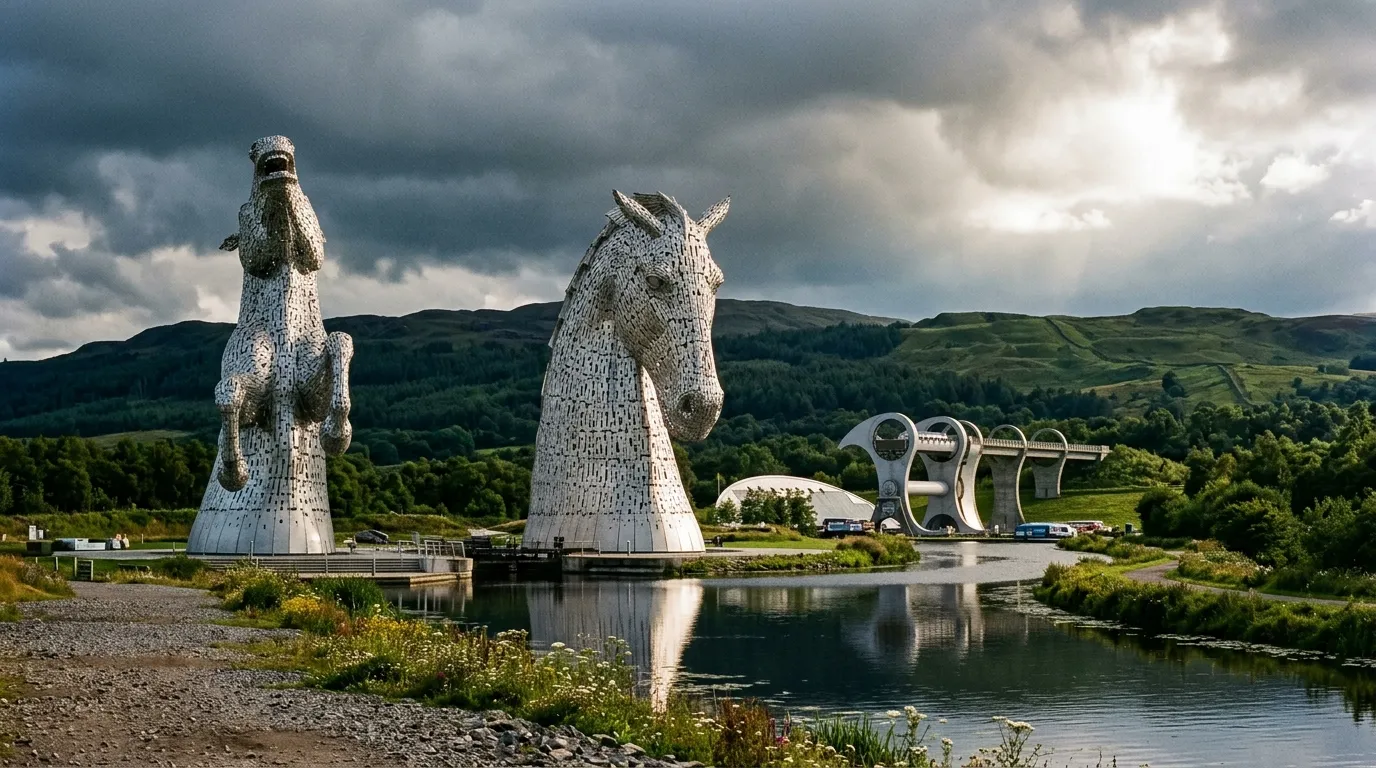
Its skyline is guarded by two enormous steel horse heads. On the other side of town, a rotating boat lift raises canal vessels through the air with the unhurried elegance of a giant mechanical swan. Beneath the modern spectacle lies the Antonine Wall, once the northernmost frontier of the Roman Empire.
Falkirk is not polished into a single postcard image. That is precisely why it works.
You can spend the morning inside one of the world’s largest equine sculptures, watch boats float through a piece of 21st-century engineering after lunch and finish the day walking through a park surrounding a historic mansion. With more time, you can follow canal paths, explore Roman remains, visit a medieval palace or ride a heritage railway beside the Firth of Forth.
This Falkirk travel guide covers the best things to do, how long to stay, where to base yourself, how to reach the main attractions and how to build the town into a wider Scotland itinerary.
Recommended Travel Items for Your Trip
FALKIRK AT A GLANCE
Best known for: The Kelpies and Falkirk Wheel
Best overall months: May, June and September
Ideal visit length: One full day or two nights
Nearest major cities: Edinburgh and Glasgow
Best for: Families, engineering fans, walkers and road-trippers
Main railway stations: Falkirk High and Falkirk Grahamston
Best local transport: Bus, bicycle, taxi or car
Essential nearby site: Antonine Wall
Best free experience: Walking around The Kelpies and Helix Park
Why Visit Falkirk?
Falkirk offers one of Scotland’s most unusual combinations of industrial heritage, public art and ancient history.
Its two headline attractions are genuinely distinctive. The Kelpies are the world’s largest equine sculptures, while the Falkirk Wheel is the world’s only rotating boat lift. The wider region also contains woodland trails, canals, historic estates and surviving sections of the Antonine Wall, which stretched approximately 60 kilometers across Central Scotland as the Roman Empire’s most northerly frontier.
Falkirk also makes logistical sense.
It sits between Edinburgh and Glasgow, making it accessible as a day trip from either city. Yet staying overnight produces a calmer experience and creates time for attractions beyond the two famous landmarks.
Travelers planning a broader Scottish journey can continue north using this Scottish Highlands travel guide, where canals and lowland woodland give way to castles, glens and mountain roads.
The Best Things to Do in Falkirk
1. Stand Beneath The Kelpies
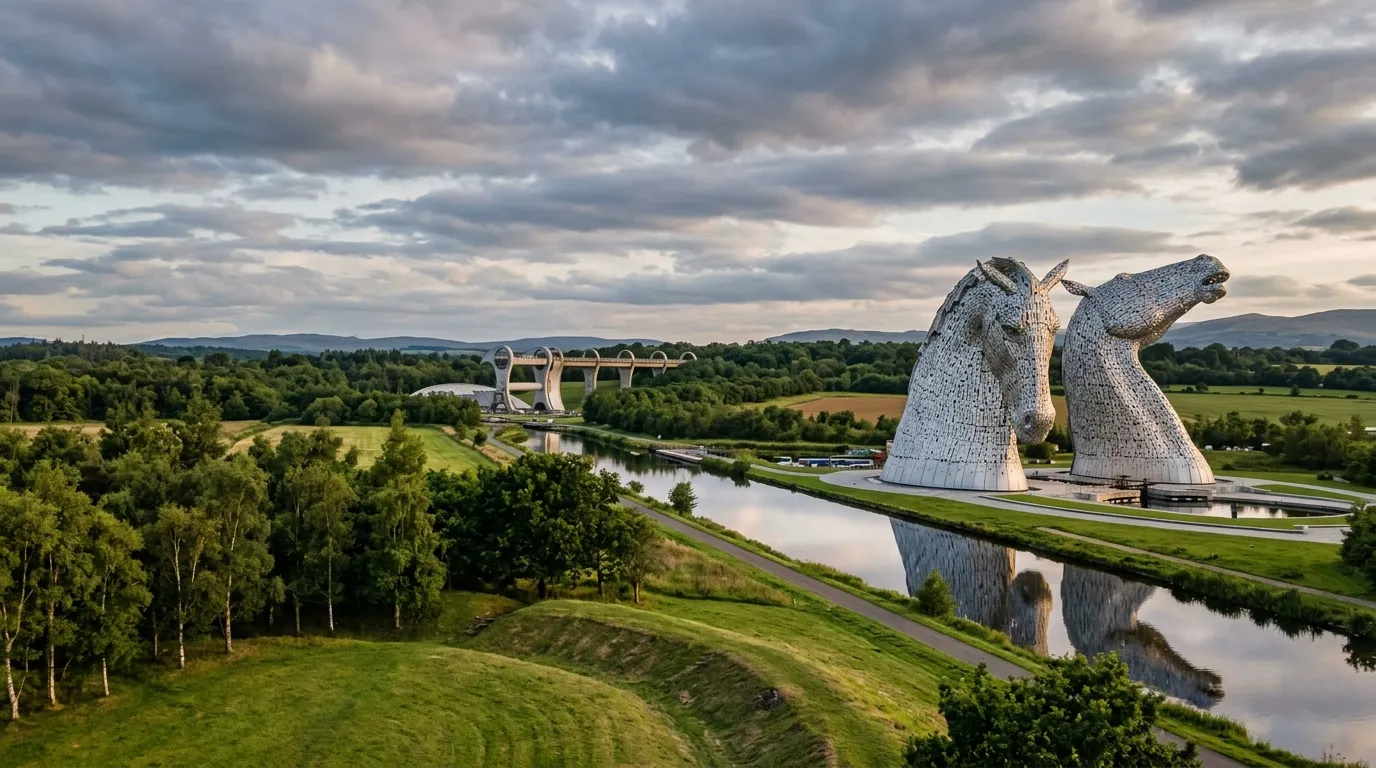
The Kelpies are Falkirk’s defining image.
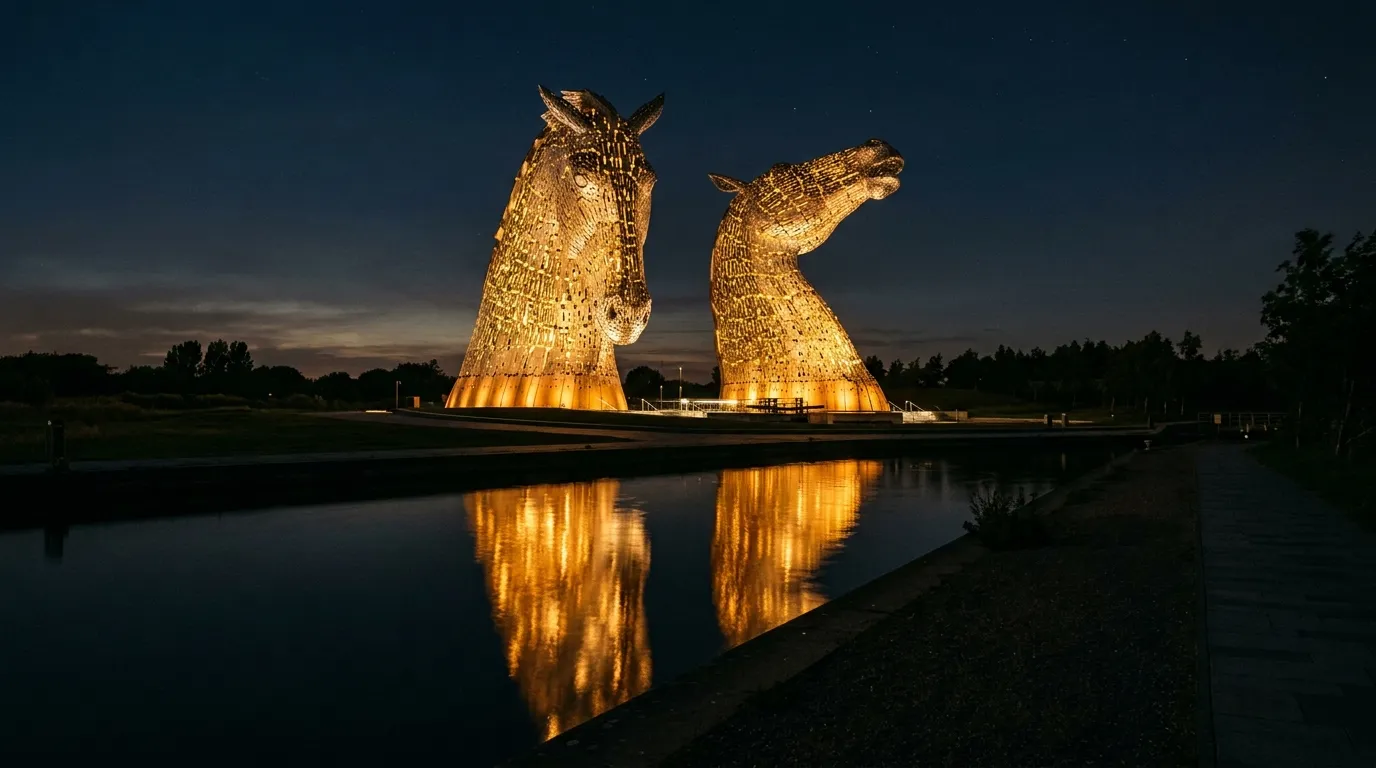
Two monumental horse heads rise beside the Forth and Clyde Canal at The Helix, a large parkland project covering roughly 350 hectares. Each sculpture stands around 30 meters high, their stainless-steel plates catching light, cloud and weather differently throughout the day.
Created by Scottish sculptor Andy Scott, the horses honor the role of working horses in Scotland’s industrial and agricultural history. Their name also refers to the shape-shifting water spirits found in Scottish folklore.
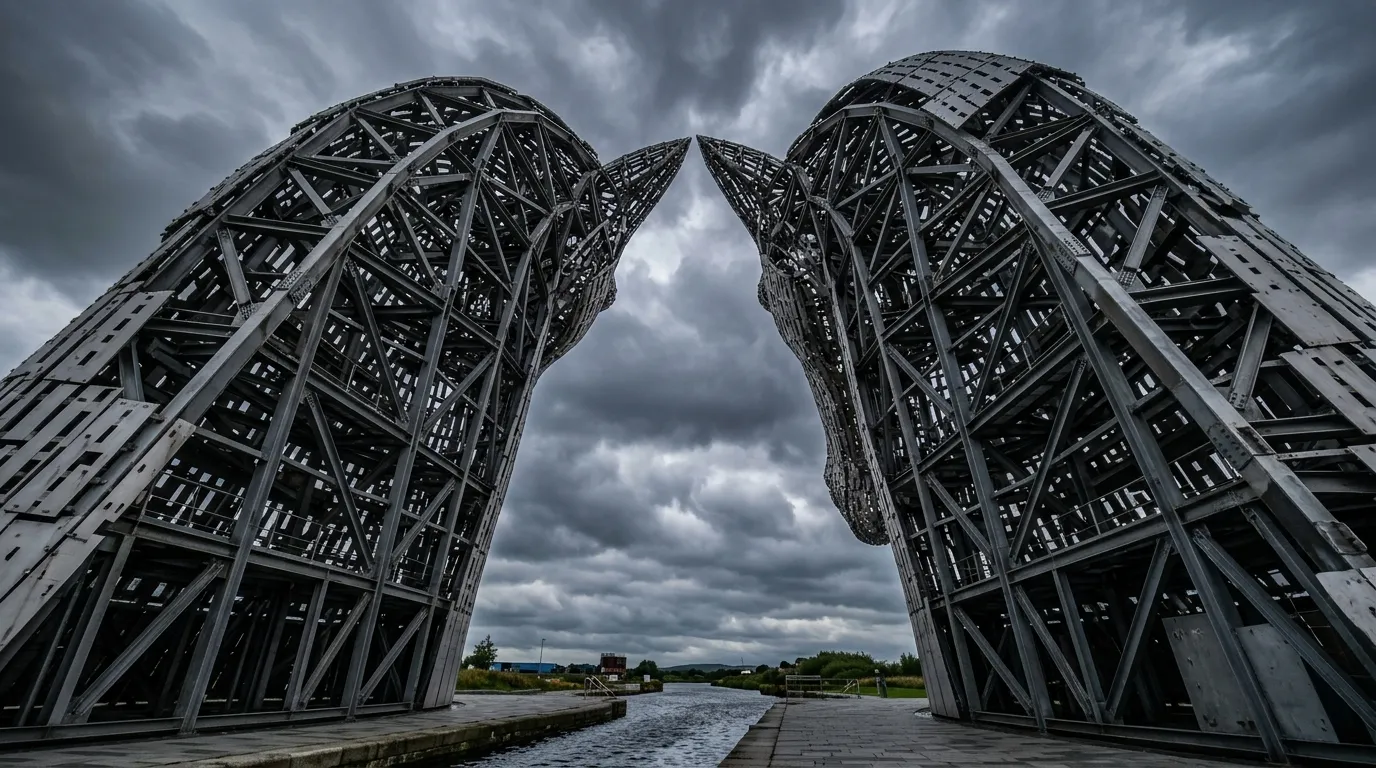
From a distance, they look smooth and almost weightless. Up close, the layered steel construction becomes visible, giving the sculptures a skeletal, engineered quality.
What to Do at The Kelpies
- Walk around both sculptures
- Photograph them from the canal
- Visit during daylight and after illumination
- Explore Helix Park
- Stop at the visitor center
- Join a guided interior tour
- Walk or cycle along the canal
The visitor center contains a café, gift shop and exhibition space. It serves as the main base for tours and visitor information.
Take a Kelpies Tour
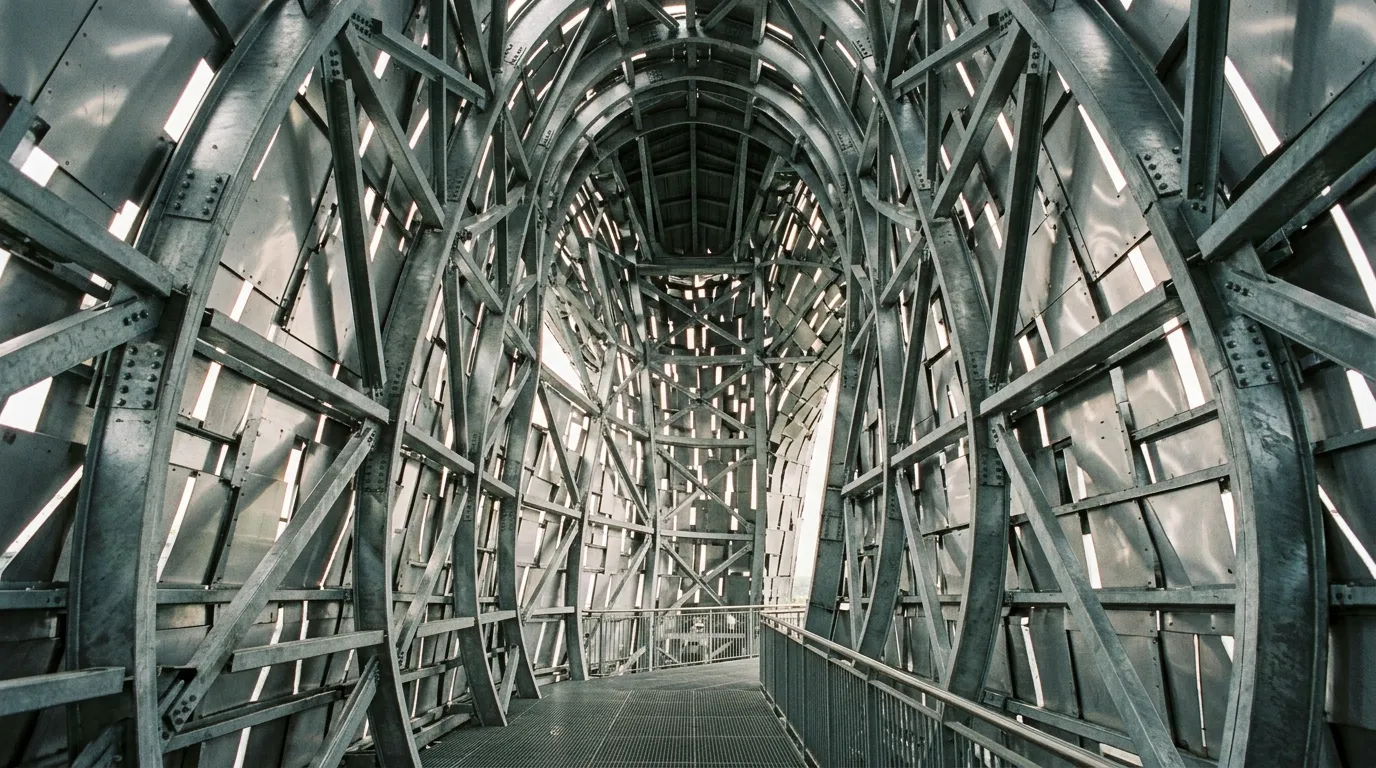
A guided tour is the only standard way to enter one of the sculptures.
The tour explains the engineering, artistic inspiration and working-horse heritage behind the project. Seasonal schedules and prices change, and advance booking is sensible during busy periods.
PHOTOGRAPHY TIP
Visit once during the late afternoon and remain until the lights come on. The steel changes from silver to blue-gray, then begins reflecting the warm illumination after dark.
2. Explore Helix Park
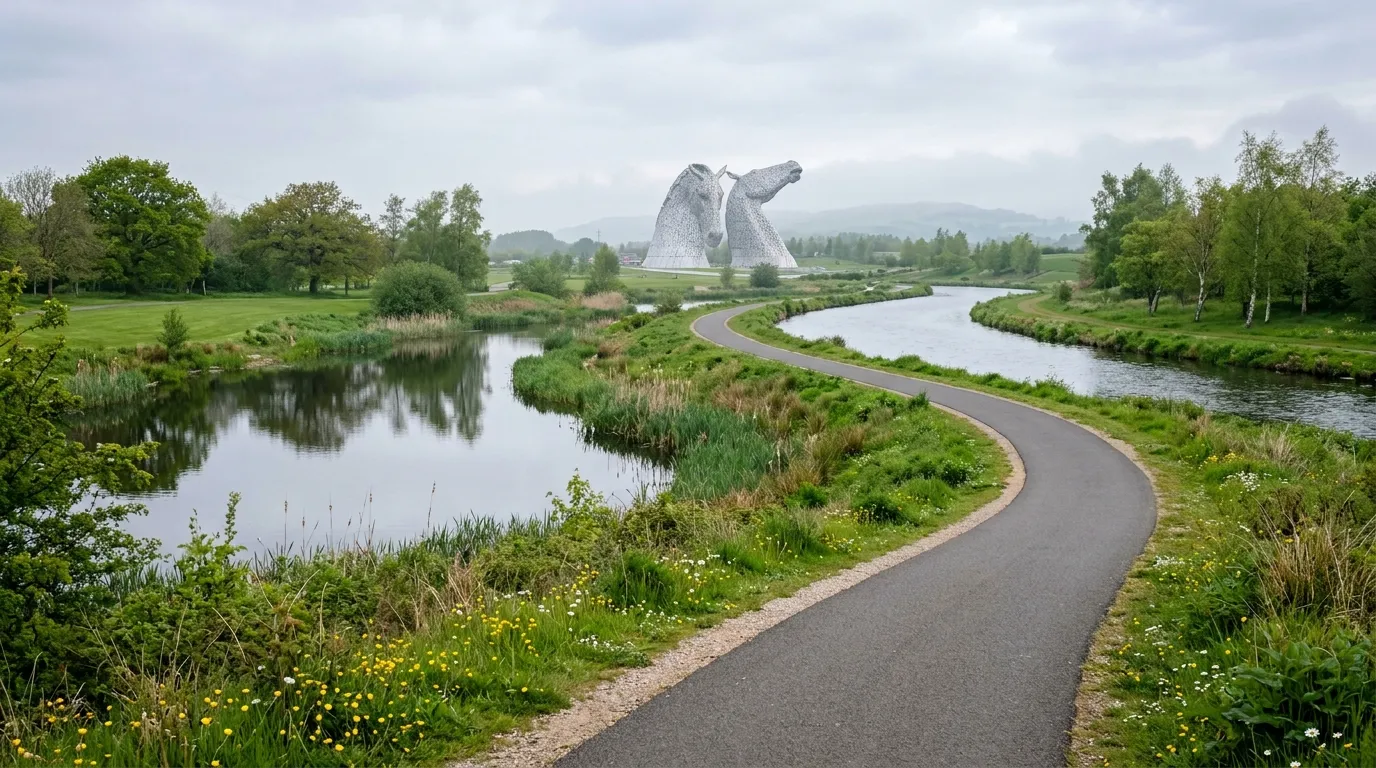
The Kelpies may dominate the landscape, but The Helix is more than a sculpture site.
The park includes paths, wetlands, waterways, recreational spaces and links to the wider canal network. It is suitable for walking, cycling and relaxed family outings.
The open paths allow you to view The Kelpies from different distances, including compositions with the canal and surrounding landscape. The park’s scale also prevents the experience from feeling like a quick monument stop.
Best Experiences in Helix Park
- Walk around the lagoon
- Follow the canal towpath
- Hire a bicycle where available
- Visit the play areas
- Enjoy a picnic with Kelpies views
- Watch the sculptures after sunset
- Continue toward the Falkirk Wheel on a longer route
The official Falkirk tourism site promotes a walking and cycling connection linking The Kelpies with the Falkirk Wheel and other local landmarks.
3. Watch the Falkirk Wheel Turn
The Falkirk Wheel looks like a piece of sculpture that accidentally learned how to move boats.
It connects the Forth and Clyde Canal with the Union Canal, replacing the historic series of locks that once handled the change in elevation. The Wheel lifts boats through a half rotation, allowing them to continue between the two canals.
The mechanism is remarkably graceful.
Two water-filled gondolas remain balanced as the structure rotates. Boats enter at one level and emerge far above or below, depending on their direction of travel.
The half-turn takes only about five minutes, although the complete visitor boat experience takes longer because it includes entering the gondola, rotating and continuing through the upper waterway.
Things to Do at the Falkirk Wheel
- Watch the Wheel operate from the basin
- Take a boat trip through the mechanism
- Visit the exhibition and visitor center
- Walk beside the canals
- Cycle along the towpath
- Explore nearby woodland
- Continue to Rough Castle on the Antonine Wall
The attraction receives hundreds of thousands of visitors annually and is now one of Scotland’s best-known engineering landmarks.
Is the Boat Trip Worth It?
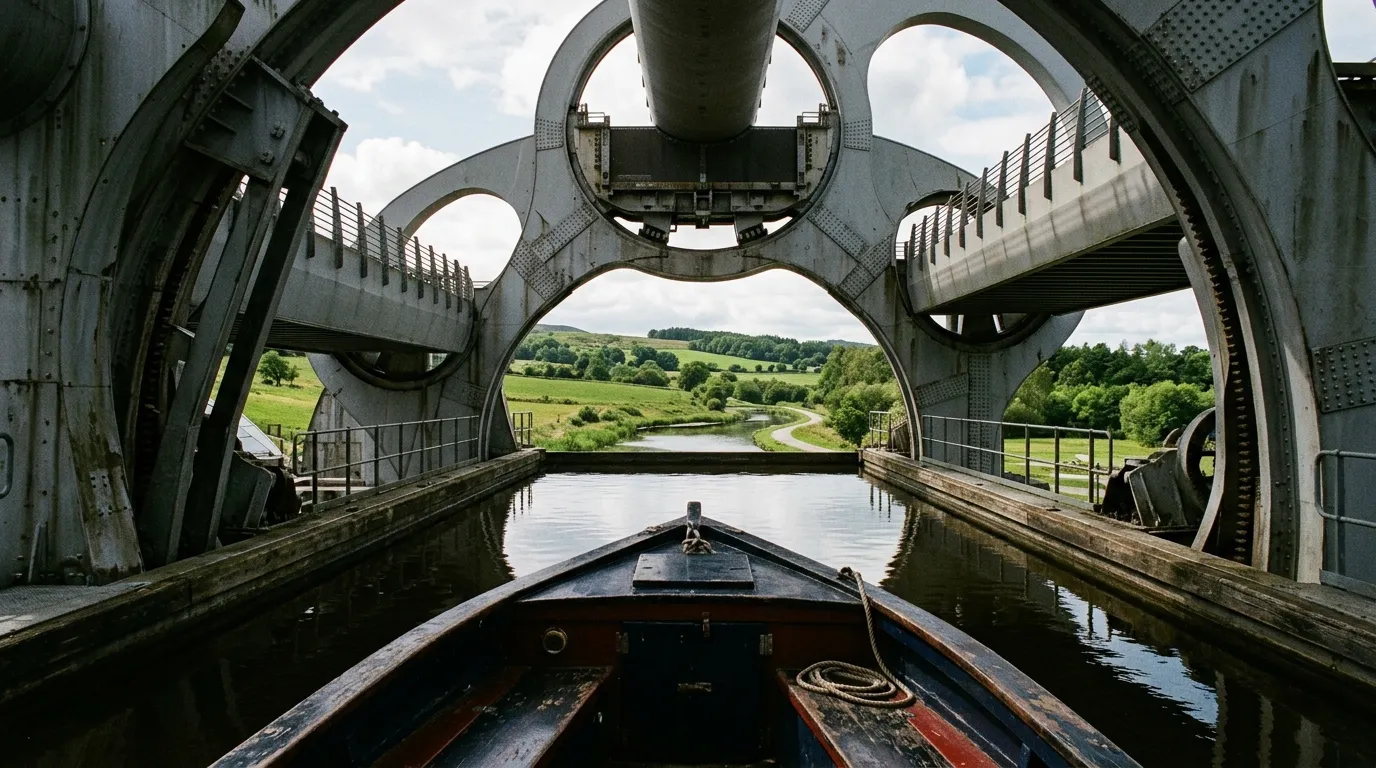
Yes, especially for first-time visitors.
Watching from the ground reveals the overall mechanism, but riding inside a gondola allows you to experience the lift itself. The transition is surprisingly smooth, with broad views opening as the boat rises.
Reserve ahead during weekends, school holidays and summer.
ENGINEERING NOTE
Stand beside the basin before boarding. Watching the gondolas rotate from ground level makes the scale and balance of the machine much easier to understand.
4. Walk Between The Kelpies and Falkirk Wheel
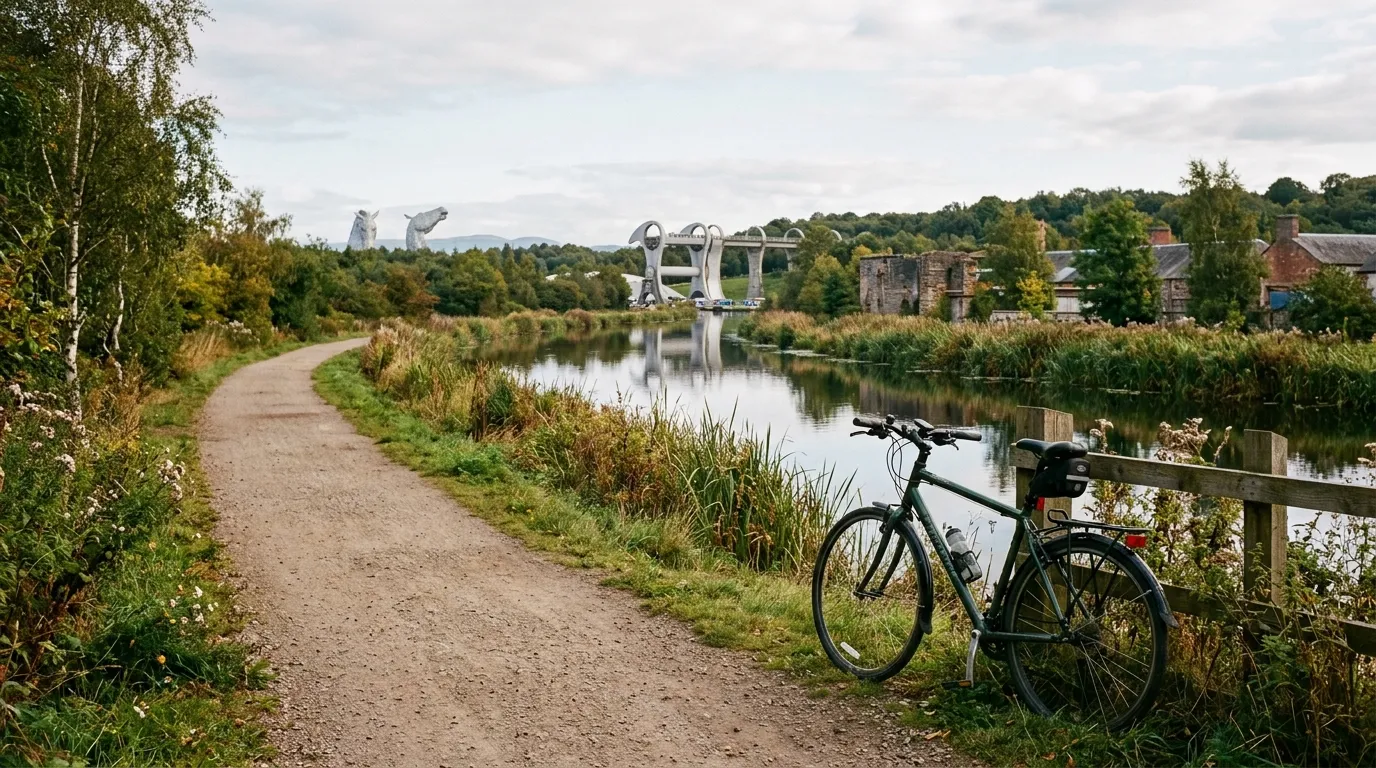
One of the best ways to understand Falkirk is to connect its two major landmarks on foot or by bicycle.
The route follows parts of the Forth and Clyde Canal and passes through the town’s regenerated waterways. Instead of treating The Kelpies and Wheel as isolated attractions, the journey reveals how canals, industry and landscape connect them.
The route is several miles long, so allow a few hours depending on your pace and stops.
Why Walk the Canal Route?
- It is mostly gentle
- You avoid repeated parking
- The canal provides continuous scenery
- You see quieter parts of Falkirk
- It works well for cycling
- It turns two landmarks into a complete day
Families may prefer cycling or walking only one direction and returning by taxi or bus.
5. Discover the Antonine Wall at Rough Castle
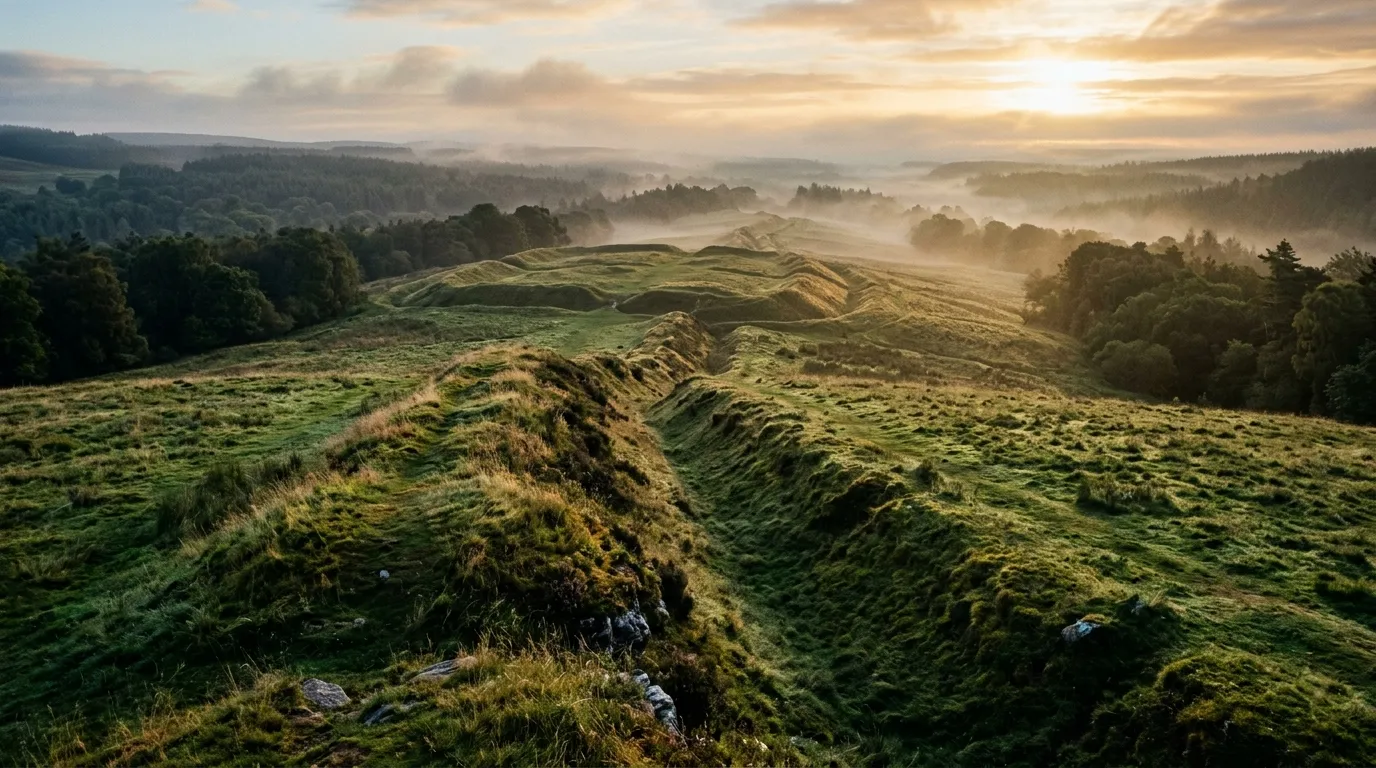
Nearly 2,000 years before Falkirk built rotating boat lifts and giant horses, Roman soldiers were constructing a frontier across Central Scotland.
The Antonine Wall was ordered by Emperor Antoninus Pius after AD 140. It ran roughly 60 kilometers from the Firth of Forth to the River Clyde and formed the northernmost frontier of the Roman Empire.
Unlike Hadrian’s Wall, much of it was constructed from turf rather than stone. Today, visitors encounter earthworks, ditches and fort remains rather than a continuous standing wall.
Rough Castle is one of the strongest surviving sections near Falkirk. It was one of 16 known forts positioned along the frontier.
What You Can See at Rough Castle
- The defensive ditch
- Turf rampart remains
- Fort earthworks
- Roman military landscape
- Woodland paths
- Interpretive information
The site is close to the Falkirk Wheel, making it easy to combine both during the same visit.
Why It Matters
The Antonine Wall was more than a barrier. It included forts, fortlets, roads and military installations designed to control movement and project Roman authority.
It was occupied for only a few decades before Roman forces withdrew south toward Hadrian’s Wall.
WALKING NOTE
Roman earthworks can be difficult to read without context. Look at a site plan before exploring, or use the interpretive boards to understand how the ditch, rampart and fort once fitted together.
6. Visit Callendar House
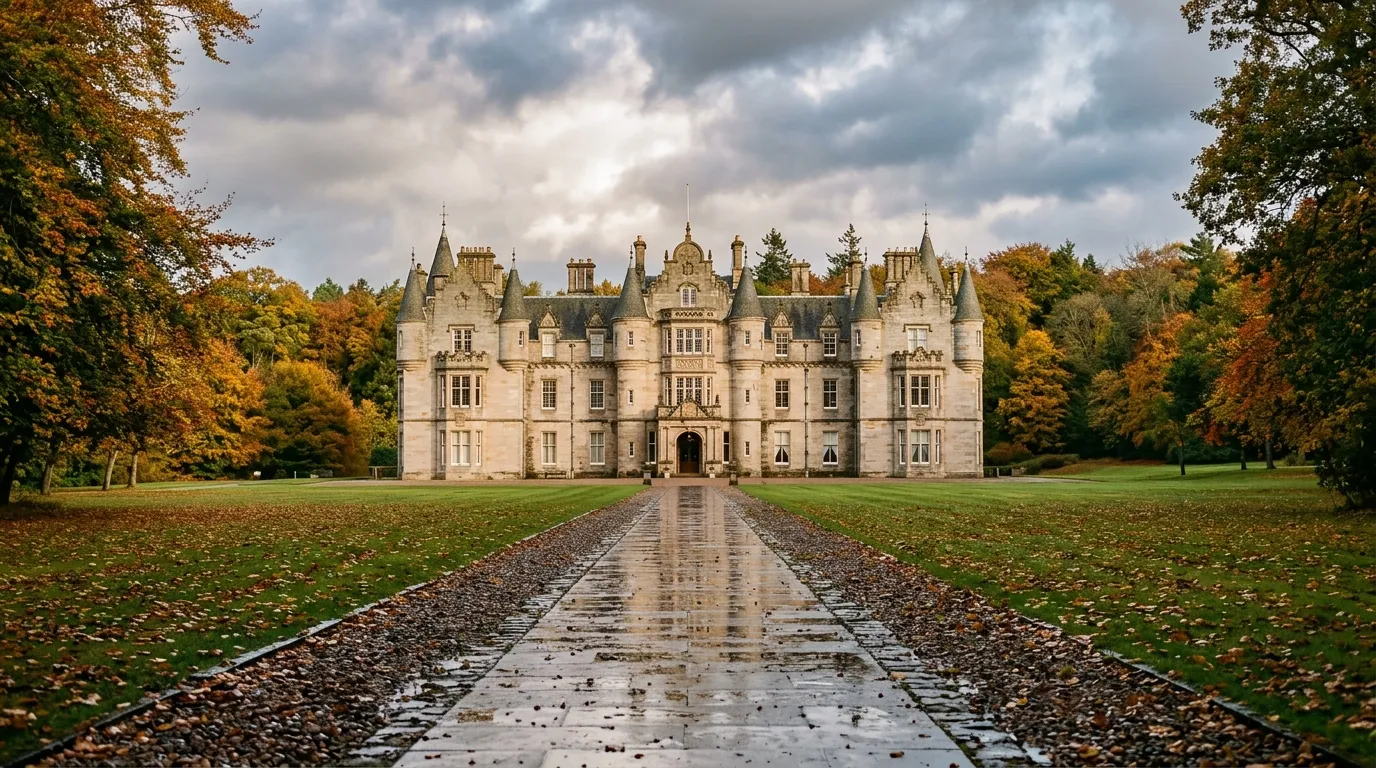
Callendar House brings stately architecture and local history into the same visit.
The mansion sits inside Callendar Park, surrounded by woodland, lawns and walking routes. Its history stretches across several centuries, with connections to Scottish political events, local industry and domestic life.
Inside, exhibitions explore Falkirk’s past, while restored rooms reveal different periods of the building’s history.
What to See
- Historic interiors
- Local-history displays
- Temporary exhibitions
- Period kitchen areas
- Parkland views
- Woodland trails
The official tourism site presents Callendar House and Callendar Estate as major parts of Falkirk’s heritage and outdoor network.
Allow
Spend one to two hours inside the house and longer if walking through the estate.
7. Walk and Cycle in Callendar Estate
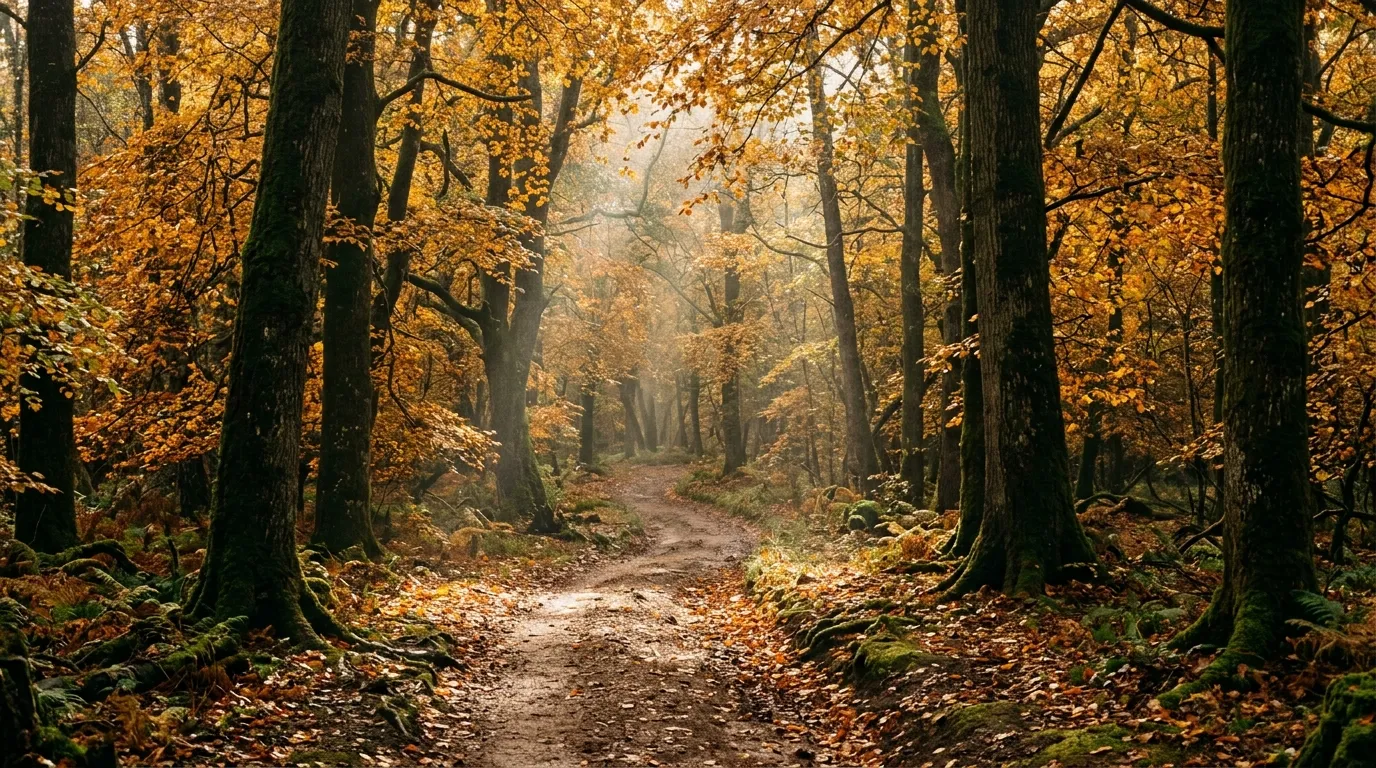
Callendar Estate offers a quieter contrast to Falkirk’s major attractions.
Woodland paths spread beyond the formal park, with routes suitable for walking, running and mountain biking. Family-friendly cycle trails are available, along with more challenging sections for experienced riders.
This is an excellent choice for travelers who have already visited The Kelpies and Wheel or those spending a second day in Falkirk.
Best For
- Woodland walks
- Family cycling
- Trail running
- Picnics
- Autumn color
- A break from busy attractions
8. Explore Falkirk Town Centre
Falkirk’s town center is practical rather than theatrical, but it adds context to the wider region.
Spend time exploring local shops, cafés and streets before walking toward Callendar Park. The town also provides useful transport links and accommodation for travelers without a car.
Falkirk’s appeal is spread across the district rather than concentrated within one historic center, so do not judge the destination solely by a quick walk from the railway station.
9. Visit Dollar Park
Dollar Park is a landscaped green space close to the town center.
It includes gardens, paths, sports facilities and open lawns. The park works well for a short walk, a picnic or downtime between larger attractions.
It is particularly useful for families and travelers staying locally rather than arriving on a tightly timed day tour.
10. Explore Bo’ness
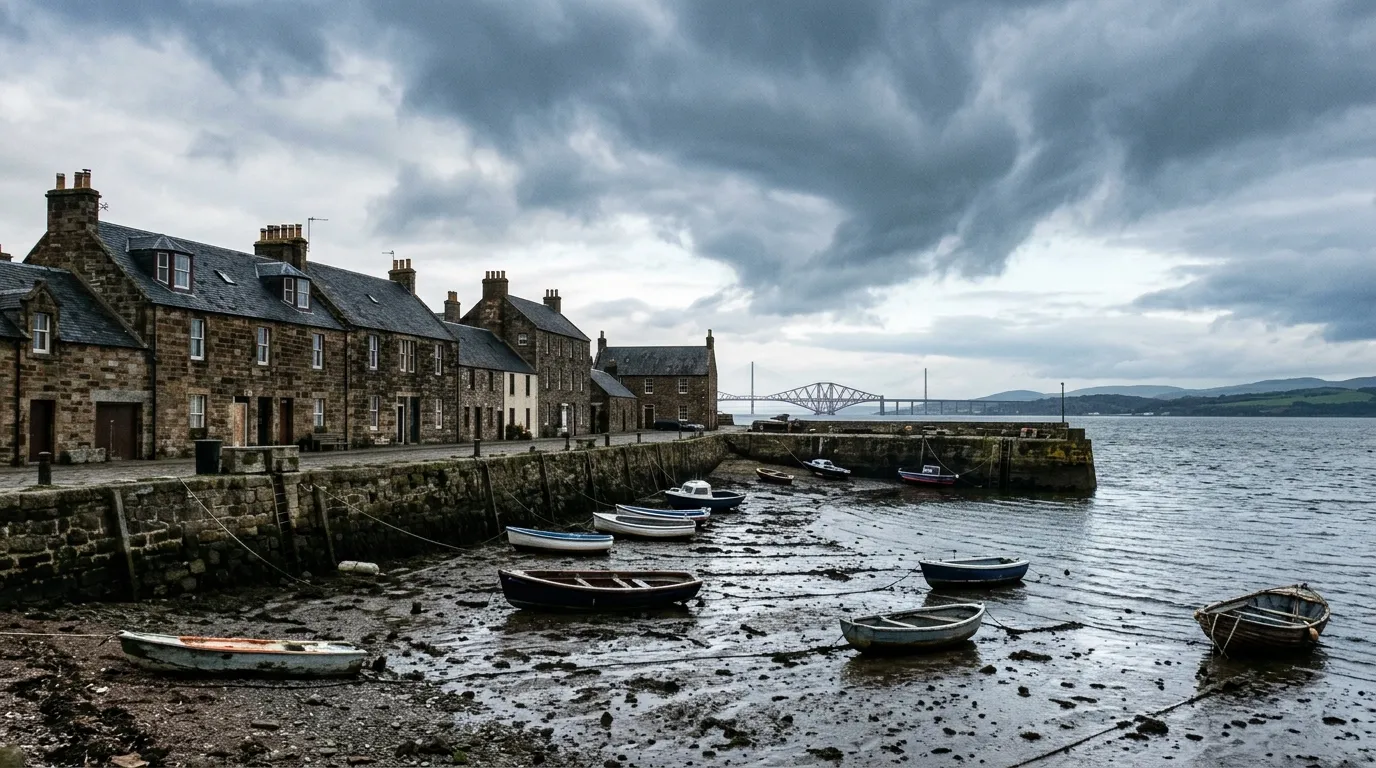
Bo’ness sits on the Firth of Forth east of Falkirk.
The town has maritime and industrial history, coastal views and access to heritage attractions. It also marks the eastern end of the Antonine Wall’s historic route.
Bo’ness makes an appealing half-day addition for travelers with a car or those spending more than one night in the Falkirk area.
Things to Do Around Bo’ness
- Walk beside the Firth of Forth
- Explore local heritage
- Visit Kinneil Estate
- Ride the heritage railway
- Continue toward Blackness Castle
11. Ride the Bo’ness and Kinneil Railway
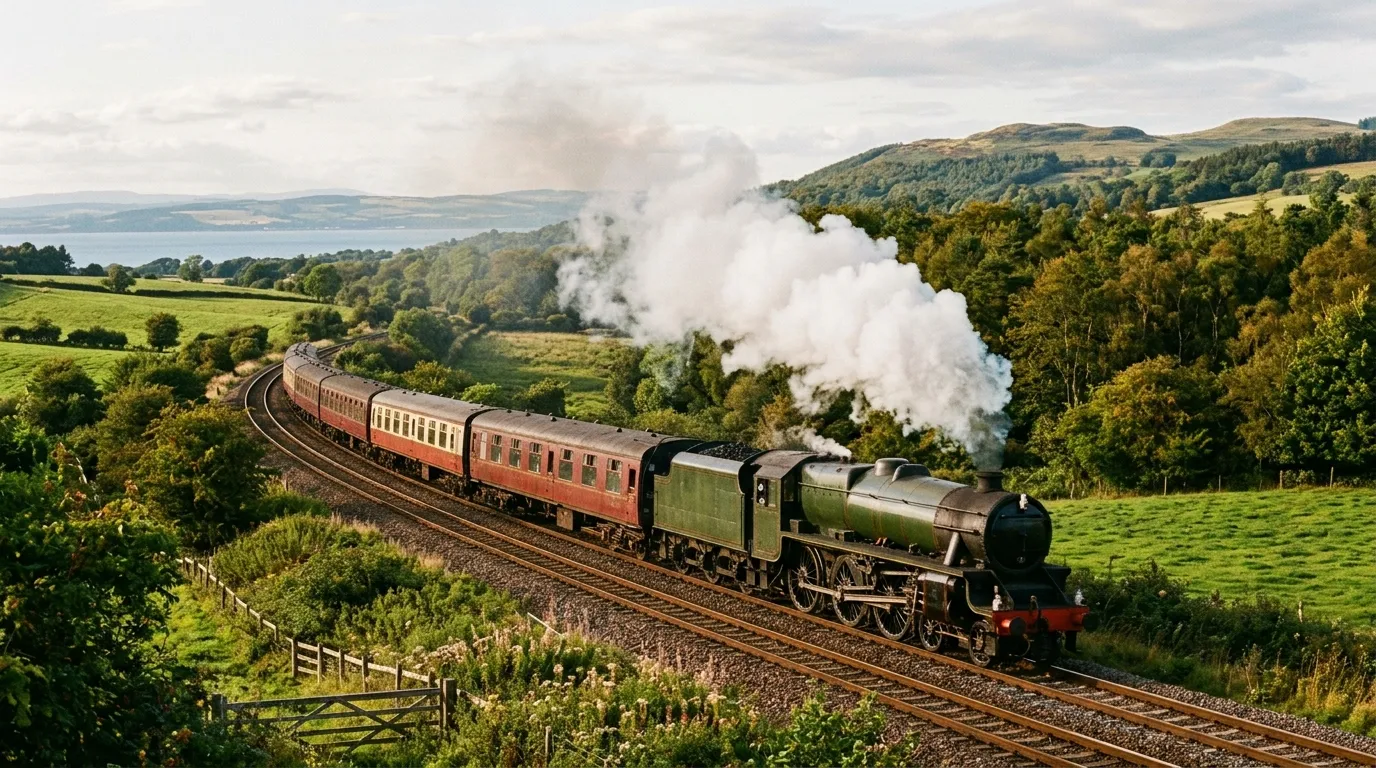
The Bo’ness and Kinneil Railway offers a heritage train experience through the local landscape.
Steam and diesel services operate on selected dates, making this particularly appealing for families and railway enthusiasts. Timetables vary seasonally, so check before planning the day.
The railway can be combined with Kinneil Estate or a coastal exploration of Bo’ness.
12. Discover Kinneil House and Estate
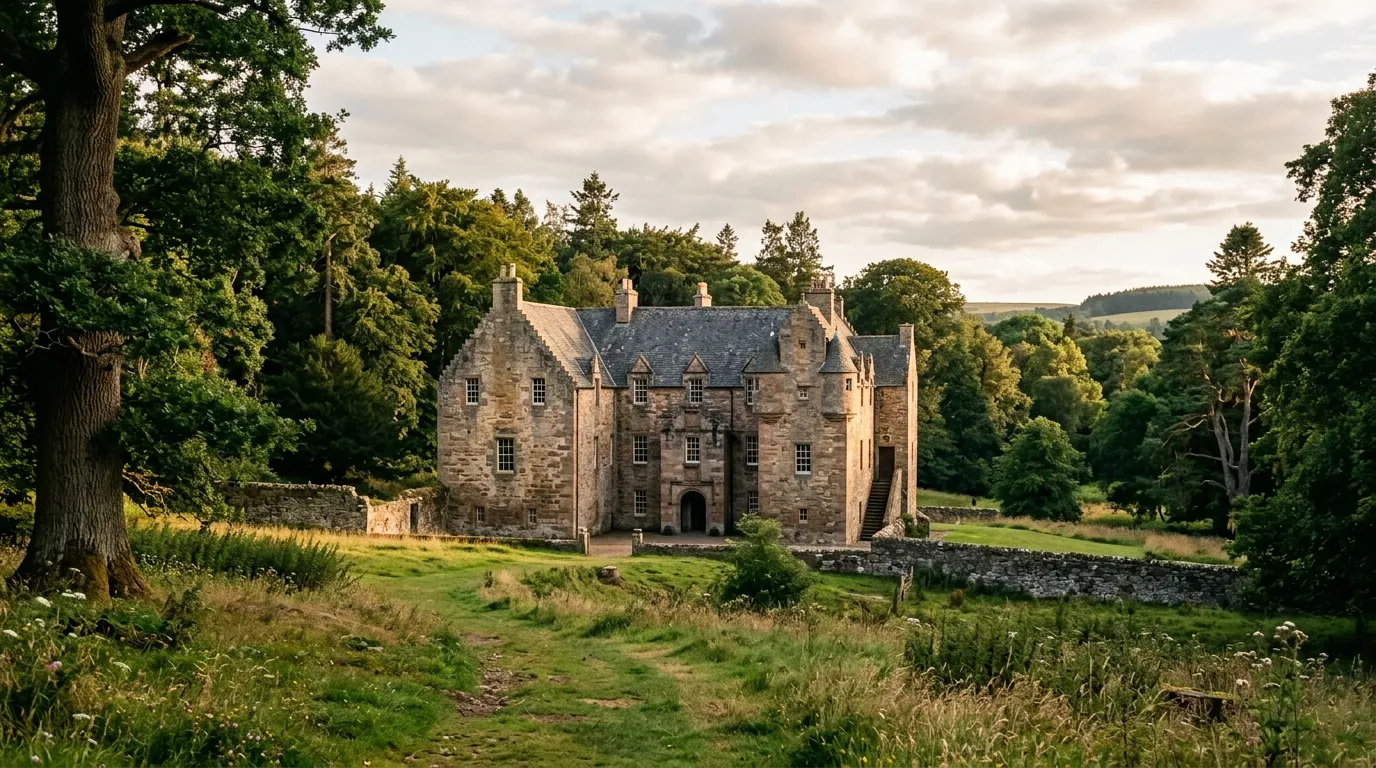
Kinneil Estate combines history, woodland and Roman heritage.
The estate contains Kinneil House, parkland and archaeological connections to the Antonine Wall. Access to the house itself may be limited to specific dates or events, but the surrounding grounds remain worthwhile.
The area offers another example of Falkirk’s layered history, where medieval and later buildings occupy a landscape shaped by Roman occupation.
13. Visit Blackness Castle
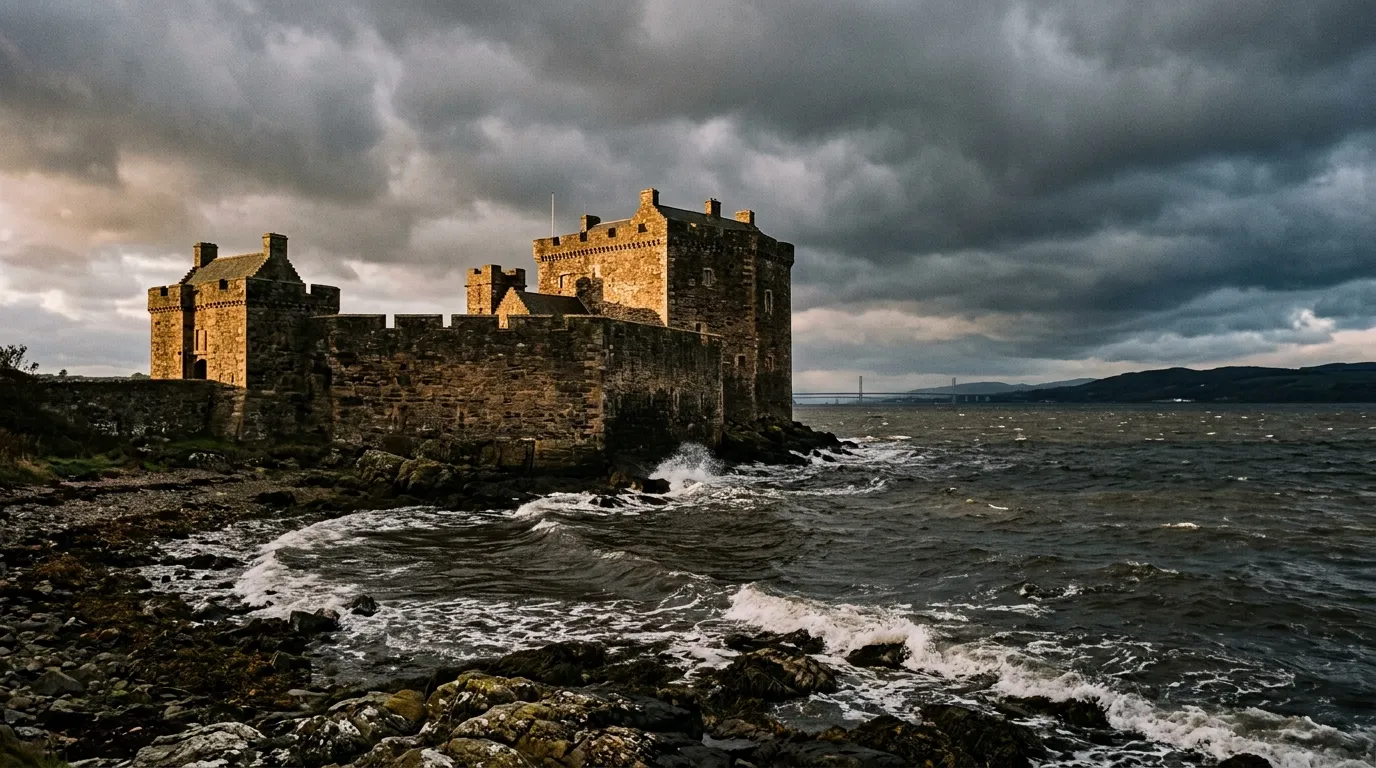
Blackness Castle stands on the southern shore of the Firth of Forth, east of Bo’ness.
Its long shape projecting toward the water has earned it the nickname “the ship that never sailed.” The fortress served military, royal and prison functions over several centuries.
From the walls, views extend across the Forth toward bridges, hills and distant shorelines.
Why Visit?
- Dramatic coastal setting
- Fortress architecture
- Wide Firth of Forth views
- Film and television associations
- Easy combination with Bo’ness
Check opening arrangements before traveling, particularly outside summer.
14. Find Scotland’s Best Viewpoints Nearby
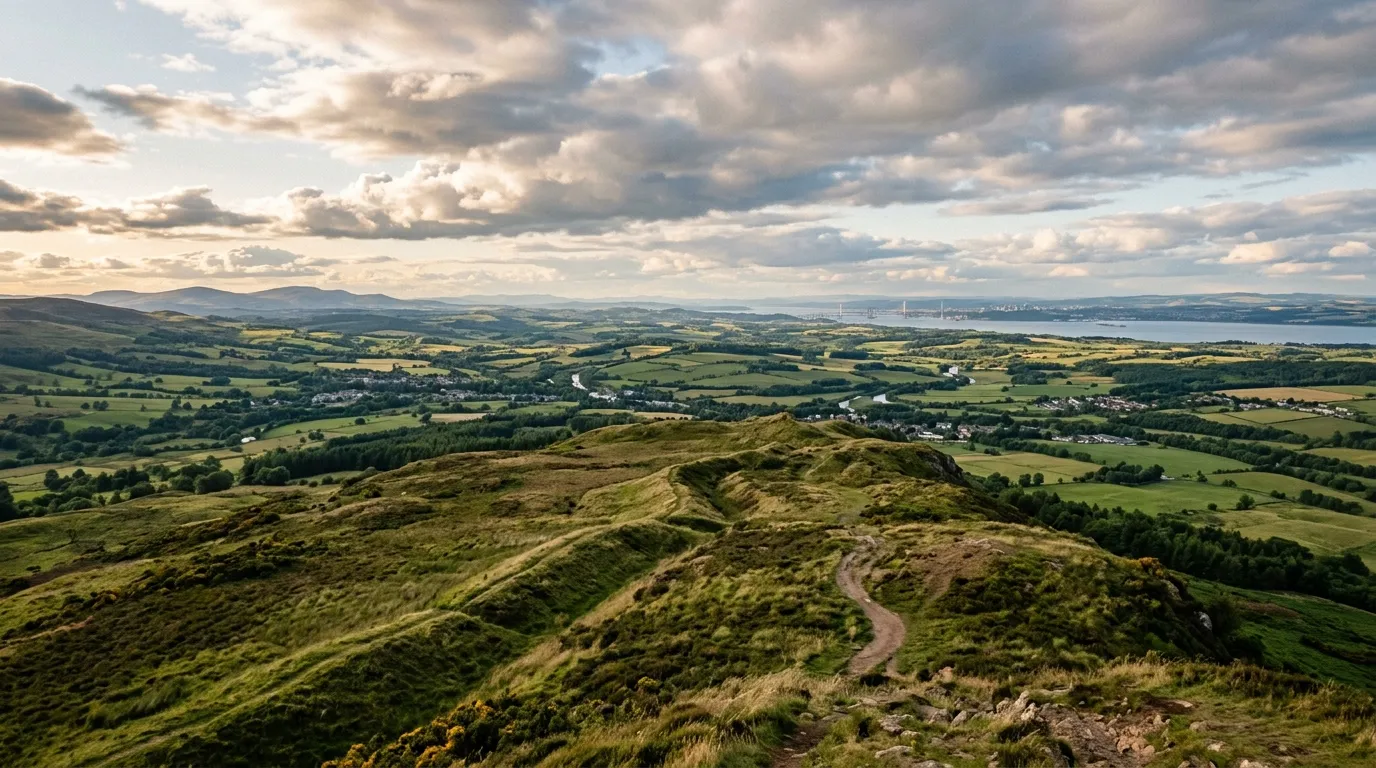
Falkirk occupies the Central Belt rather than the Highlands, but several elevated landscapes and historic sites lie within easy reach.
Croy Hill and Bar Hill, farther west along the Antonine Wall, provide broad views over valleys and surrounding hills. Bar Hill was the highest fort on the Roman frontier, while Croy Hill offers views toward the Firth of Forth, Fife and the Kilsyth Hills.
Travelers interested in broader landscape photography can continue with these jaw-dropping Scottish viewpoints, which include mountain, coastal and loch panoramas across the country.
15. Use Falkirk as a Central Scotland Base
Falkirk is well positioned for exploring several parts of Scotland without changing hotels repeatedly.
Possible day trips include:
- Stirling
- Edinburgh
- Glasgow
- Linlithgow
- South Queensferry
- Loch Lomond
- The Trossachs
- Fife
- Clackmannanshire
Its central location also makes Falkirk practical for travelers considering a longer stay in Scotland. This guide to dreamy places in Scotland explores other towns and regions where scenery, community and access to nature shape everyday life.
Falkirk Attractions Comparison Table
| Attraction | Main Experience | Recommended Time | Cost Level | Best For |
| The Kelpies | Monumental art and heritage | 1–2 hours | Free to moderate | First-time visitors |
| Helix Park | Walking, cycling and recreation | 1–3 hours | Free | Families |
| Falkirk Wheel | Engineering and boat trip | 2–3 hours | Free to moderate | Engineering fans |
| Rough Castle | Roman frontier remains | 1 hour | Free | History lovers |
| Callendar House | Mansion and exhibitions | 1–2 hours | Low | Local history |
| Callendar Estate | Woodland and cycling | 1–4 hours | Free | Outdoor travelers |
| Bo’ness Railway | Heritage train journey | Half day | Moderate | Families |
| Kinneil Estate | History and parkland | 1–2 hours | Low | Quiet exploration |
| Blackness Castle | Coastal fortress | 1–2 hours | Moderate | Castle lovers |
| Canal route | Walking and cycling | 2–5 hours | Free | Active travelers |
The Perfect One-Day Falkirk Itinerary
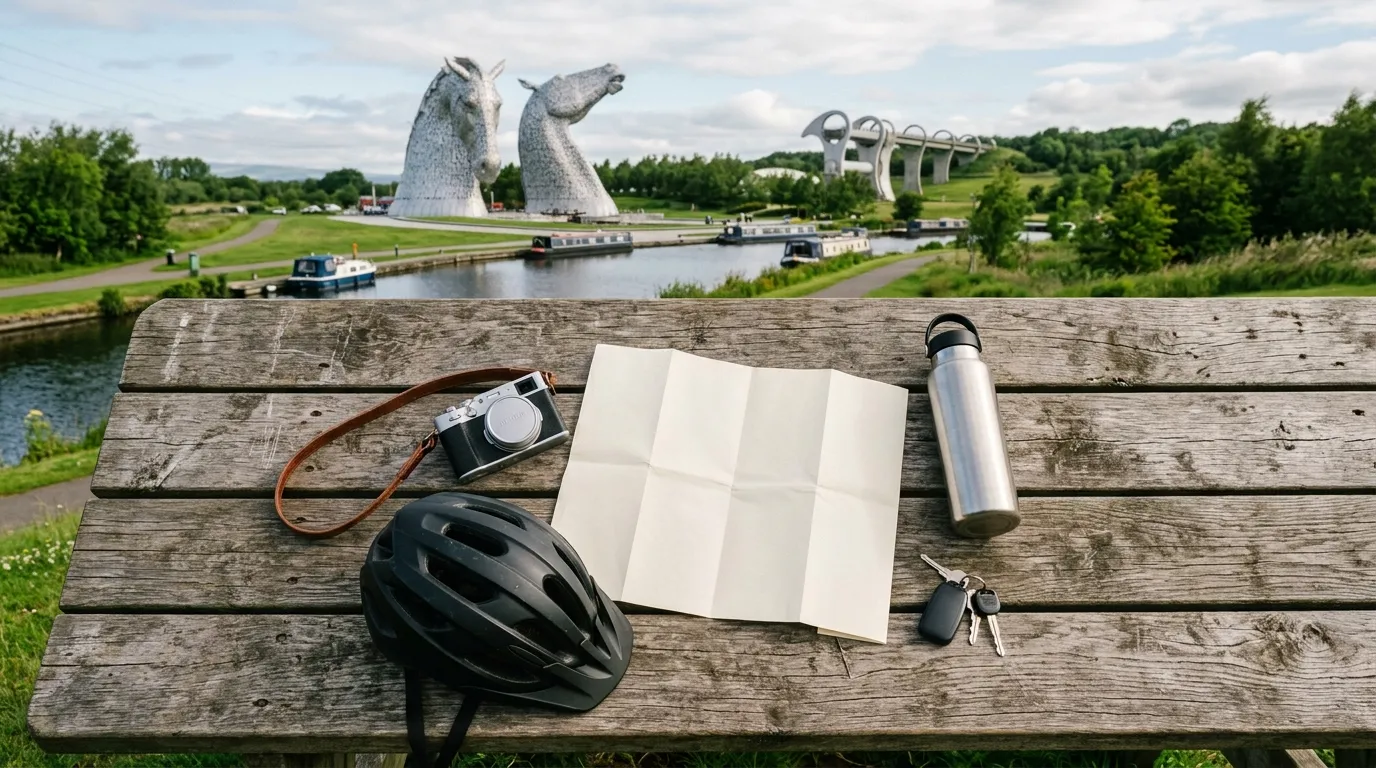
Falkirk can be visited in one day, but begin early.
Morning: The Kelpies
Arrive at The Helix before the largest crowds.
Walk around The Kelpies, visit the visitor center and take an interior tour if available. Spend time exploring the canal and lagoon rather than photographing only the closest viewpoint.
Late Morning: Travel to Falkirk Wheel
Drive, cycle or take local transport toward the Falkirk Wheel.
Those with more time can follow the canal route between the two attractions.
Lunch: Falkirk Wheel
Eat at the visitor center or bring a picnic.
Watch at least one full rotation before boarding a scheduled boat trip.
Afternoon: Rough Castle
Walk to the Roman remains at Rough Castle.
Use the interpretive signs to identify the ditch, rampart and fort landscape.
Late Afternoon: Callendar House
Finish at Callendar House and walk through the surrounding park.
Return to The Kelpies after sunset when the sculptures are illuminated, provided current access conditions allow.
ONE-DAY REALITY CHECK
The Kelpies and Falkirk Wheel fit comfortably into one day. Adding Callendar House, Rough Castle and a long canal walk requires an early start and efficient transport.
The Perfect Two-Day Falkirk Itinerary
Day 1: Modern Falkirk
- The Kelpies
- Helix Park
- Canal walk or cycle
- Falkirk Wheel
- Evening illumination
Day 2: Historic Falkirk
- Callendar House
- Callendar Estate
- Rough Castle
- Bo’ness
- Kinneil Estate or Blackness Castle
A second day transforms Falkirk from a two-landmark stop into a rounded Central Scotland trip.
How to Get to Falkirk
From Edinburgh
Direct trains connect Edinburgh with Falkirk High and Falkirk Grahamston.
Falkirk High is often more convenient for trains running between Edinburgh and Glasgow, while Grahamston lies closer to parts of the town center and some regional services.
From the station, continue by local bus, taxi or bicycle to The Kelpies and Falkirk Wheel.
From Glasgow
Direct rail services also connect Glasgow with Falkirk.
Journey times vary by route and departure station, but Falkirk works comfortably as a day trip.
From Stirling
Falkirk is a short rail or road journey from Stirling, making the two destinations easy to combine.
By Car
Driving provides the easiest access to:
- The Kelpies
- Falkirk Wheel
- Bo’ness
- Blackness Castle
- Antonine Wall sites
- Callendar Estate
Follow official visitor information for current parking, construction and access arrangements. Conditions can change because of events, flooding or improvement projects.
ACCESS WARNING
Check official attraction pages shortly before departure. Flooding, maintenance and events can temporarily alter vehicle access, visitor-center operations and tour schedules.
Getting Around Falkirk Without a Car
Falkirk is possible without driving, though planning matters.
Use a combination of:
- Local buses
- Taxis
- Walking
- Bicycle hire
- Canal towpaths
- Rail connections
The Kelpies and Falkirk Wheel are separated by several miles. Walking between them creates an enjoyable route, but it may not suit travelers with limited time or mobility.
A taxi between attractions can save time during a one-day visit.
The Best Time to Visit Falkirk
Spring: March to May
Spring brings longer days, fresh woodland growth and lighter crowds.
March can remain cold and wet. April and May are more suitable for walking and cycling, though rain remains possible.
Summer: June to August
Summer offers the longest daylight and broadest selection of tours and activities.
The Kelpies and Falkirk Wheel become busier, particularly during weekends and school holidays.
Begin early or visit later in the day.
Autumn: September to November
September is one of the best months for Falkirk.
Conditions may remain mild, summer crowds lessen and woodland around Callendar Estate begins changing color.
October can be beautiful but wetter.
Winter: December to February
Winter suits short visits and illuminated landmarks.
The Kelpies look particularly dramatic against dark skies, but daylight is limited and some tours or visitor facilities may operate reduced schedules.
Check weather and path conditions before canal walks.
Where to Stay in Falkirk
Falkirk Town Centre
Best for:
- Railway access
- Restaurants and shops
- Travelers without a car
- Callendar House
- Short stays
Near The Kelpies
Best for:
- Early and evening photography
- Helix Park access
- Families
- Canal walks
Near Falkirk Wheel
Best for:
- Canal activities
- Cycling
- Boat trips
- Antonine Wall walks
Stirling
Stirling is an alternative base for travelers combining Falkirk with castles and wider Central Scotland.
Edinburgh or Glasgow
Both cities work for day trips, though staying locally allows you to experience The Kelpies after dark and avoid compressing the day around train schedules.
Falkirk Packing Checklist
Everyday Essentials
- Waterproof jacket
- Comfortable walking shoes
- Warm mid-layer
- Reusable water bottle
- Portable charger
- Small backpack
- Offline map
- Camera or phone
- Advance tour confirmations
For Canal Walks and Cycling
- Shoes with wet-surface grip
- Light gloves outside summer
- Reflective layer
- Snacks
- Bicycle lock
- Waterproof phone pouch
For Winter
- Insulated jacket
- Warm hat
- Gloves
- Waterproof boots
- Extra socks
- Small flashlight
PACKING NOTE
Falkirk’s attractions are exposed to open sky, canal wind and rapidly changing Scottish weather. A blue morning does not constitute a binding agreement.
Falkirk Travel Safety
Falkirk is generally straightforward to explore, but outdoor and transport precautions remain useful.
Around Canals
- Keep children away from unprotected edges
- Watch for cyclists on towpaths
- Avoid slippery banks
- Do not enter operational structures
- Follow instructions around locks and boat lifts
At The Kelpies
- Follow tour instructions inside the sculptures
- Supervise children near water
- Use marked paths
- Avoid climbing barriers
On Roman and Woodland Trails
- Wear shoes with good grip
- Expect mud after rain
- Carry offline directions
- Check daylight hours
- Close gates where required
At Coastal Sites
Blackness and Bo’ness are affected by coastal weather and tides.
Remain behind barriers and avoid slippery rocks beside the Firth of Forth.
Responsible Travel in Falkirk
Falkirk’s most popular attractions are surrounded by working waterways, communities and historic landscapes.
Travel thoughtfully by:
- Taking litter home
- Staying on marked paths
- Respecting canal users
- Keeping private access clear
- Supporting local cafés and businesses
- Avoiding damage to Roman earthworks
- Cycling responsibly
- Keeping dogs controlled near wildlife
- Using public transport when practical
- Learning the region’s industrial and working-horse history
The Kelpies are not simply decorative horses. They represent the animals and workers who powered industries, farms and canals across Scotland.
Falkirk and Scotland’s Stranger Landscapes
Falkirk’s giant steel horses and rotating boat lift already feel slightly unreal.
Travelers drawn to places where engineering and landscape blur together may enjoy these unbelievable places on Earth, featuring natural formations and human-made scenes that appear digitally invented.
The mood changes again farther north and across the North Atlantic. This Faroe Islands adventure guide explores cliffside villages and storm-shaped islands where roads, tunnels and settlements cling to a far wilder landscape.
Frequently Asked Questions
Is Falkirk worth visiting?
Yes. The Kelpies and Falkirk Wheel are among Scotland’s most distinctive modern attractions, while the Antonine Wall, Callendar House and nearby castles add historical depth.
How many days do you need in Falkirk?
One full day covers The Kelpies and Falkirk Wheel. Two days are better for Callendar House, Roman sites, canal walks and Bo’ness.
Can you visit Falkirk from Edinburgh?
Yes. Direct trains make Falkirk an easy day trip from Edinburgh.
Can you visit Falkirk from Glasgow?
Yes. Falkirk is connected with Glasgow by regular rail services and major roads.
Are The Kelpies free to visit?
Walking around The Kelpies and Helix Park is generally free. Guided interior tours require a ticket.
Can you go inside The Kelpies?
Yes, but only through an official guided tour.
Is the Falkirk Wheel free?
You can visit the site and watch the Wheel without purchasing a boat ticket. Boat trips and certain activities carry a charge.
How long does the Falkirk Wheel take to rotate?
The Wheel completes its half-turn in approximately five minutes.
Can you walk between The Kelpies and Falkirk Wheel?
Yes. Canal paths connect the two areas, though the complete journey requires several miles of walking.
Is Falkirk suitable for families?
Yes. The Helix, Wheel, canal paths, play areas and heritage railway all suit family trips.
What is the Antonine Wall?
The Antonine Wall was the northernmost frontier of the Roman Empire. It crossed Central Scotland for roughly 60 kilometers and included forts, fortlets, ramparts and defensive ditches.
Where should I stay in Falkirk?
Stay near the town center for rail access, near The Kelpies for evening photography or near the Wheel for canal activities.
Can I explore Falkirk without a car?
Yes, using trains, buses, taxis, walking and cycling. A car makes outlying historical attractions easier to reach.
What should I combine with Falkirk?
Stirling, Edinburgh, Glasgow, Linlithgow, Blackness Castle, Loch Lomond and the Trossachs all combine well with Falkirk.
Final Thoughts
Falkirk is not Scotland’s most obvious destination.
That is part of its charm.
It does not compete with Edinburgh through medieval streets or with the Highlands through enormous mountain drama. Instead, it tells a story of movement: Roman soldiers crossing a frontier, horses pulling cargo, canal boats climbing between waterways and modern travelers following towpaths through a regenerated industrial landscape.
The Kelpies provide the spectacle.
The Falkirk Wheel supplies the mechanical wonder.
The Antonine Wall adds the historical shadow beneath them both.
Stay long enough to see more than the headline landmarks. Walk beside the canal after the tour groups leave. Stand beneath the steel horses as evening light slips through their plates. Follow the earthworks of Rough Castle and imagine this quiet strip of grass as the outer limit of an empire.
Falkirk’s great surprise is not that it contains two famous attractions.
It is that the space between them is just as interesting.